A gourd for drawing aguamiel
An acocote is a long, hollow gourd used to draw aguamiel, the sweet sap gathered from a maguey's central cavity. Its Nahuatl name is recorded as acocotl; Tylor glossed it as “water-throat.” The surviving sources describe a dried bottle gourd, hollow inside, light enough to handle, and pierced at both ends. The body is elongated, with a narrower end that reaches into the plant and a broader end held to the mouth.
That shape belongs to a particular job. The acocote is neither a drinking cup nor a fermentation jar. It is the portable implement that bridges the recessed sap cavity and a collecting container. A photograph of a tlachiquero holding one beside a maguey shows the tool's long, tapered silhouette in actual use; it also makes clear that the gourd is not the plant and not the vessel in which the later beverage is made.
Sources for this section
How the suction transfer works
The collector places the small opening at the plant end into the cavity where aguamiel has gathered, then draws air through the opposite opening. The pressure difference pulls liquid through the gourd. Once it is filled, the operator covers the mouth end with a finger and tips the liquid into another container. The two openings therefore have different roles: one meets the sap, while the other supports suction and then pouring.
This direct transfer is useful because the sap collects below the surrounding leaves, in a space that is awkward to reach with an ordinary open vessel. The acocote lets the collector draw liquid upward without lifting or cutting out the cavity itself. The accounts describe the operation but do not give a standard length, capacity or flow rate, so none should be inferred from a photograph or from one unusually large example.
Sources for this section
Extraction comes before fermentation
The acocote's place in pulque making ends when the fresh sap has been collected. The sap may then be carried in a separate container and poured into a tinacal or vat, where fermentation takes place. A Mexican microbiology review distinguishes these stages: it describes the acocote as the dried gourd used to suck up aguamiel, then describes fermentation in wooden tinacales. Calling the acocote a pulque fermenter would confuse a harvesting implement with the vessels that hold the ferment.
That distinction also separates pulque from mezcal. Pulque begins with agave sap; the vessel used to draw that sap is not a fermentation chamber. The source record for this item establishes the acocote's role in extraction, while other equipment such as a tinacal belongs to the later fermentation stage. The tool does not determine the starter, fermentation duration or final character of pulque.
Sources for this section
A documented Hidalgo practice
In a local pulque record from Hacienda Rancho Nuevo in Almoloya, Hidalgo, the acocote is named among the tools used to collect aguamiel. The record describes knowledge passed between generations and says that making the tool has declined; in that locality, a plastic bottle and hose are improvised as substitutes. That observation documents change in one place. It does not show that all producers have replaced the gourd, or that the substitute is identical in handling or effect.
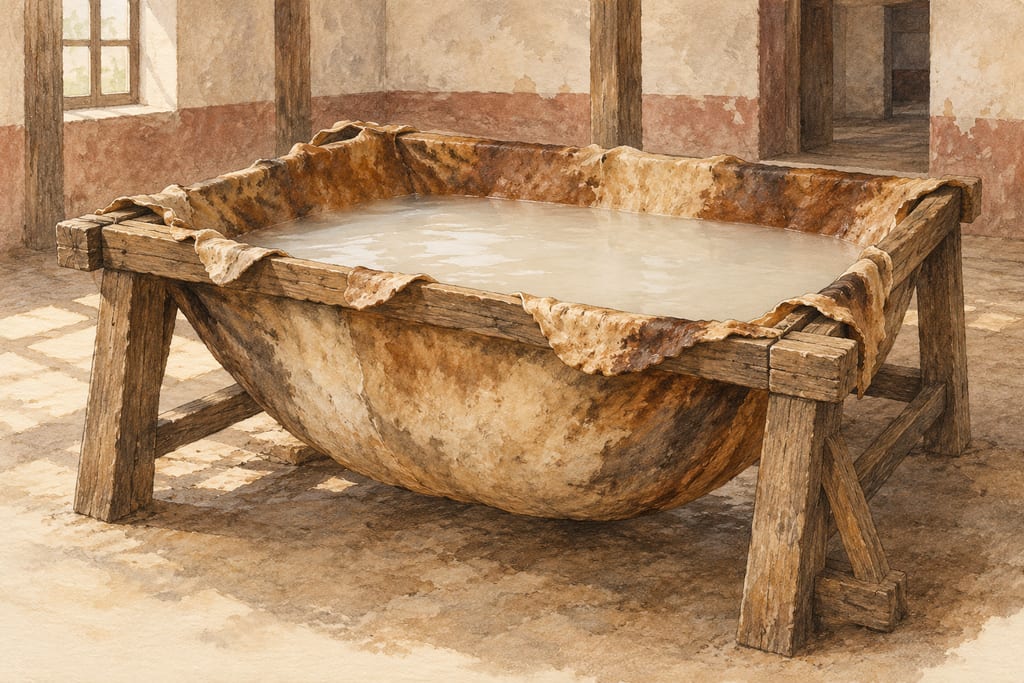
Tylor's 1861 travel account records a much earlier observation from the Atotonilco el Grande plateau. He describes the collector using a hollow gourd with a hole at each end, transferring the sap into a hide container, and later says that he bought the acocote. The two accounts give a useful historical comparison across time, while neither establishes the tool's first invention or a single exclusive place of origin.
Sources for this section
Materials and what the record cannot standardise
The sources identify the body as a hollow, dried bottle gourd, Lagenaria siceraria, but provide no standard dimensions or capacity. A particular gourd's outline follows the fruit from which it was made, so a single specimen cannot stand in for every acocote. The source records explain the basic perforation and suction method without establishing a common manufacturing specification.
The consulted sources do not describe a general cleaning, drying or storage regimen for the tool. They also do not establish a present-day maker or retail route. The Hidalgo record's note about declining production is the practical context available; it is not a basis for recommending an improvised substitute as equivalent. Details of the agave, the collection schedule and the ferment belong to the documented local practice or its recipe, not to a universal specification for the gourd.
Sources for this section
History
Edward B. Tylor describes seeing an acocote used during his 1856 Mexican journey and records its two openings and suction method. A 2024 Hidalgo cultural record documents acocote use in a locally transmitted pulque preparation, while noting that production has declined. These attestations do not establish when the tool was first invented.
Equipment details
CapacityThe sources consulted give no capacity measurement for an acocote; size and volume are not standardised here.
SizeNo inspected source gives standard length, diameter or capacity; Tylor's description is qualitative, not a measurement.
PowerHand or animal power The operator draws the sap by suction and plugs the opening with a finger to pour; no powered mechanism is described.
How you get oneGathered or grown The tool is made from a gourd grown as a plant fruit and hollowed and dried. A Hidalgo cultural record says acocote production has declined and describes a bottle and hose as a local substitute; it does not identify a current maker or sales route.
CareThe sources reviewed do not specify a general cleaning, drying or storage regimen for the gourd after use.
Made of
- Hollowed, dried bottle gourd (Lagenaria siceraria) — Body
The sources describe a hollow, dried calabash with an opening at each end; individual examples are not dimensioned.
Limits
The acocote draws unfermented agave sap; it is not the vessel in which pulque ferments. The source describes fermentation after the sap is transferred into separate vats.
Source →Places
Atotonilco el Grande plateau
Historical attestation · Region evidenceTylor places his journey on this plateau and describes meeting a sap collector there; this is a historical use record, not an origin claim.
Hacienda Rancho Nuevo, Almoloya
Documented use · Locality evidenceThe Hidalgo record associates acocote use with this local pulque preparation; it does not claim the tool originated here.