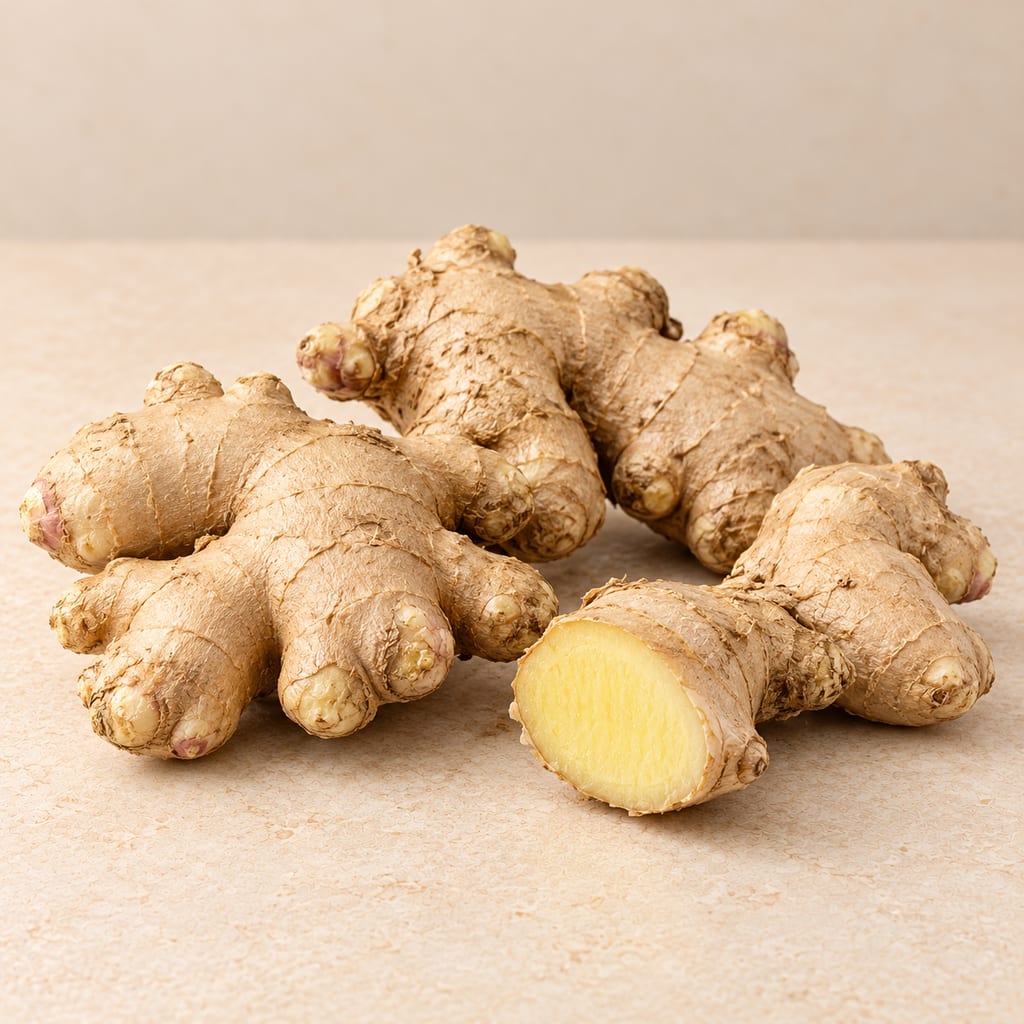
Ginger
Ginger is the aromatic rhizome of Zingiber officinale, used fresh, dried and preserved. Historical ginger wines sliced or bruised it to flavour a sugar-based ferment.
 FermenteaWhere food goes to change
Historical attestation
Adrak murabba · Ginger murabba
Adrak murabba preserves young ginger in sugar syrup, a sweet South Asian preparation recorded in Indian cookery and food-processing sources.

The oldest directly inspected recipe used for this entry is W. H. Dawe’s The Wife’s Help to Indian Cookery, printed in London in 1888. Recipe 635 is headed “Ginger Preserve (Adrak-Murabba).” The title is useful evidence: by the late nineteenth century, an English-language cookery manual aimed at Indian food could identify a ginger preserve by both a descriptive English name and the South Asian term adrak-murabba. The book gives a preparation rather than a story of discovery. It says nothing about who first made it, where it began, or how long the name had been in circulation before Dawe printed it. The date should therefore be read as a documented attestation, not an origin date.
The recipe’s concise format also limits what can be recovered. Dawe records a sequence—tenderize young green ginger, cover it with cold syrup, then repeatedly boil and refresh that syrup—but omits the ginger’s weight, the amount of water used for boiling, and the yield. The text does not name a community or locality. It is not safe to turn those silences into a supposedly traditional household formula. The record keeps the historical measures and omissions visible, while using later technical documents only as context.
NIFTEM-T’s present-day project material confirms ginger murabba as a named product in Indian food processing. Its detailed project report is an enterprise-planning template, and its processing handbook is a technical training document; neither is an ethnographic account tracing this preserve across generations. Read together, the printed recipe and the contemporary institutional documents support a long-standing association with Indian cookery and modern production, but do not fix a regional birthplace. The title Adrak / ginger murabba retains the attested name while avoiding a stronger claim than the evidence allows.
The geographic label is India at country precision. Dawe’s manual presents the recipe in a collection of Indian cookery and names it Adrak-Murabba; NIFTEM-T places ginger murabba within its Indian value-addition and food-enterprise material. These sources anchor the preparation in an Indian culinary and processing context. They do not say that it belongs uniquely to one state, town, caste, religious community, or household tradition. The location row accordingly identifies documented association rather than origin.
Ginger’s crop geography is broader than the preserve’s documented geography. NIFTEM-T describes ginger as a cultivated rhizome and lists multiple Indian growing states, including Kerala, Karnataka, West Bengal, Assam, Meghalaya, Mizoram, Nagaland and others in its project discussion. Its documents give different state lists in different sections, and those lists are production context rather than proof that murabba arose in those places. A model project recommends locating a processing unit near supply clusters; that is a logistics suggestion, not a map of culinary tradition.
The same handbook situates ginger in a much wider history of movement and use. It summarizes ginger as a spice that circulated across South and Southeast Asia and beyond, while treating maritime Southeast Asia as its likely botanical origin. That crop history should not be transferred to murabba: a plant’s domestication and trade routes cannot date a particular preserve. Likewise, the fact that ginger grows in a state does not prove that a recipe there is locally distinctive. The sound geographic conclusion is narrower: ginger murabba is documented in Indian cookery and Indian processing sources, while more precise cultural mapping remains unestablished.
Murabba is used here as a product-family name for a sweet preserve in syrup. The material being preserved need not be a fruit: the Indian food-standard text reproduced in NIFTEM-T’s handbook includes whole or cut fruit, rhizome, or vegetables impregnated with nutritive sweetener. That framing makes ginger a straightforward fit. Ginger’s edible part is a rhizome—an underground stem—not a root in the strict botanical sense and not a fruit. Calling this a ginger murabba describes its ingredient and style without suggesting fermentation.
The NIFTEM documents distinguish murabba from a dried candied product. They describe murabba as retaining a syrup around the pieces, while candied fruit is commonly coated and dried to a firmer finish. Their industry language overlaps because both approaches move sugar into plant tissue, but their final textures and handling differ. Dawe’s version plainly belongs on the syrup-preserve side: the ginger remains covered in liquid syrup and the syrup itself is the part repeatedly handled.
Ginger contributes fibrous texture, aroma, and pungency. NIFTEM-T attributes ginger’s characteristic flavor to aromatic and pungent constituents, though its handbook also makes broad medicinal claims that this recipe entry does not repeat. Culinary description is enough: the preserve combines a distinctly spicy rhizome with a sweet coating and syrup. The balance can vary with ginger maturity, piece size, how much pungency is extracted before sweetening, and the syrup concentration. Those factors help explain why different recipes need not taste identical, but they cannot be quantified for Dawe’s batch because he gives no ginger weight or finished concentration.
Dawe specifies young green ginger without strings and says to boil it until tender. He does not say to peel it, slice it, or cut away the fibrous core, and this entry does not add those operations to the historical method. The starting amount of ginger and the amount of boiling water are absent. “Until tender” is the source’s sensory endpoint; a fixed number of minutes would be invented. The directions then give a syrup proportion of one seer of white sugar to one pint of water. Because the seer is a historical measure whose value varied by place and period, it is left untranslated rather than assigned a false exact modern weight.
Once the ginger is tender, the text has it drained and placed in jars. The syrup is poured over the pieces cold. After a day, the syrup is removed, boiled for ten minutes, cooled, and poured back over the ginger. The cycle is repeated each day for a week. The repeated heating is applied to the syrup, not described as a sealed-jar process. The practical rhythm is therefore a sequence of steeping intervals separated by syrup treatment. The final direction is qualitative: the syrup should be thick and cover the ginger. If much has reduced, Dawe says to add sugar, but provides neither a quantity nor a measurement for “thick.”
The recipe is short and domestic in scale, but it is not a complete reproducible formula by current standards. It leaves the ginger quantity, cut, boil-water volume, yield, final concentration, jar preparation, and storage time unstated. A reader can understand what the author meant by the repeated syrup-refreshing method without pretending that every parameter is known. The sugar-to-water ratio alone cannot supply the missing ginger amount.
A sugar syrup is more than a coating. During steeping, water moves out of plant tissue and dissolved sugar moves inward; the surrounding liquid also carries flavor from the ginger. Reheating the separated syrup changes its water content and concentration, while cooling it before it returns to the ginger restores the day-long steeping phase. Dawe’s repeated cycle is one historical way to manage this exchange gradually. His account does not say that he measured soluble solids, nor does it show that he controlled the syrup to a particular concentration.
Kim’s study of osmotic dehydration of ginger examined mass transfer under experimental conditions and reports that syrup concentration and temperature affected moisture loss and sugar gain. This is useful process science for understanding why concentration and heat matter, but it is not a direct test of Dawe’s method. The study’s results cannot be used to back-calculate the old recipe’s syrup strength, prove a storage life, or turn its qualitative endpoint into an exact number. NIFTEM-T’s technical descriptions likewise treat sugar strength as a variable to be increased in stages in some modern processing approaches.
The fresh rhizome begins moist and fibrous. Heating softens it; syrup exchange sweetens it and can make the tissue more translucent and dense. The degree of softening and sweetness depends on the ginger, the cut, the cook, and the syrup management. Dawe’s “without strings” may be read as a preference for less fibrous young ginger, but it is not a botanical variety specification. A contemporary processor might sort rhizomes for size and process uniform slices so pieces behave more consistently; that industrial choice should not be retroactively attributed to Dawe.
NIFTEM-T’s processing handbook records more than one contemporary treatment. Its explanatory text describes washing and scrubbing away peel, slicing ginger crosswise, soaking pieces to limit browning, and briefly boiling them several times until the desired pungency is reached. It then describes syrup steeping that progresses from 40 percent total soluble solids to 60 percent and finally 70 percent, with day-long rests at the earlier strengths and a week at the strongest. This is a different technical design from Dawe’s daily removal and ten-minute boil of the syrup. The different stages and units should be kept with that modern account.
The same handbook’s flow diagram presents another sequence: slices of a stated thickness, blanching with citric acid, then heated dips in 40-degree and 75-degree Brix syrups, followed by steeping and packing under fresh syrup. Its process narrative and flow chart do not match in all particulars, including time, concentration, and treatment. The discrepancy is material; it would be misleading to combine the most attractive pieces of each into a synthetic “standard” method. This record notes that both are institutional process descriptions while preserving the 1888 directions as the recipe itself.
The NIFTEM detailed project report contains a separate model manufacturing flow, also with peeling, slicing, citric-acid blanching, staged syrup strength, steeping, straining, and filling with fresh syrup. It is designed as a business-planning template for a processing unit, with equipment, capacity and market assumptions. It is not a household adaptation of Dawe’s formula, and the template itself says its assumptions vary by location, supply, machinery and scale. These documents show how manufacturers can standardize raw-material size, heating and syrup strength; they do not validate the historical method for room-temperature storage.
The finished ginger and syrup are served together as a sweet preserve. NIFTEM-T’s overview describes syrup-preserved ginger as a sweetmeat or dessert in its own right and notes that preserved ginger may also be incorporated into cakes, fruit salads, yogurt, or ice cream. Those are documented product uses in the technical overview, not a claim that Dawe specified those pairings. In a home setting, the pieces can be eaten with a little syrup; the exact serving style depends on how firm the ginger remains and how fluid the syrup is.
Variation can begin before the syrup. A household may leave ginger in larger pieces or cut it into slices or cubes; smaller pieces expose more surface and are easier to portion, while larger pieces retain a more substantial, fibrous bite. Contemporary technical descriptions explicitly use slices or cubes. Some later methods boil ginger more than once to reduce pungency before sweetening, whereas Dawe simply says to boil until tender. This difference changes the balance between ginger heat and syrup sweetness.
Other differences concern the syrup schedule: historical cold covering and daily syrup boiling, modern staged concentration with soaking periods, or heated staged dips in the flow chart. Citric acid appears in the institutional modern process description but not in Dawe. Added spices or flavorings are also possible in modern household preserves, but the consulted 1888 recipe does not call for them and the available reports do not establish a canonical spice blend. The most defensible variation account is therefore comparative: identify what a particular source actually changes and leave unreported additions out.
Commercial products can be packaged as a syrupy preserve or as more candy-like pieces; the product’s moisture and sugar balance determine its final texture and handling. NIFTEM’s training material discusses packaging and moisture protection because sugar products can absorb moisture and crystallize. Its project report considers jars or pouches and organized retail as business options. Those are modern market formats, not proof that the historical domestic preparation was sold in the same way.
There are two geographic stories here and they should not be collapsed. Ginger as a crop moved through long-distance exchange and is cultivated across tropical regions. Murabba as this particular preparation is documented by Dawe in an Indian cookery context and by NIFTEM-T in Indian processing material. The crop’s broad distribution helps explain why ginger preserves can appear in multiple cuisines, but it does not make each preserve a version of this Indian preparation. Likewise, a modern seller’s location or a linked product photograph cannot establish the recipe’s historical homeland.
NIFTEM-T lists numerous states as ginger-producing regions and suggests that an industrial murabba line may benefit from proximity to raw-material clusters. The lists are part of a model report, not a current census and not a recipe map. Different sections provide non-identical state lists, a reminder to avoid treating them as a definitive ranking. Kerala and other named areas may be relevant to ginger supply, but this record does not attach the preserve to any one of them. More precise attribution would need a source that ties a local community or locality to ginger murabba itself, rather than merely identifying crop production.
The 1888 publication venue also needs care. Dawe’s book was printed in London, but it presents itself as a help to Indian cookery and gives an Indian name for the preserve. Publication in Britain does not make the food British; equally, the title alone does not identify a specific Indian region. The country label reflects the documented culinary frame and corroborating Indian processing context. It does not assert an origin story, exclusive national ownership, or a single authentic version.
The historical recipe’s repeated syrup heating is a preservation technique, but its presence is not proof of a validated shelf-stable process. The directions contain no documented jar sanitation step, sealed-container heat treatment, pH measurement, final soluble-solids measurement, or tested storage period. The instruction to pour cold syrup into a jar is not equivalent to modern hot-fill or pressure-canning guidance. No room-temperature storage claim is made for this version.
NIFTEM-T’s modern material discusses packaging in relation to the properties of the finished product. It describes ginger murabba as hygroscopic and notes that moisture exchange and sugar crystallization affect confectionery texture and keeping quality. The project handbook’s general packaging and storage statements belong to its own industrial context; the detailed project report is explicitly a model and notes that assumptions vary. They are not transferable validation of the 1888 domestic method. For that reason, this page explains product behavior without assigning a shelf life or instructing the reader to seal jars for pantry storage.
The National Center for Home Food Preservation advises that home canning procedures must be tested rather than invented or improvised. If a reader wants a shelf-stable product, they should select a current tested process appropriate to the food. The historical method can still be studied and its culinary logic described, but it should not be presented as a modern canning recipe. That distinction preserves the historical evidence without turning an incomplete account into unsafe advice.
W. H. Dawe’s 1888 Indian cookery manual records ginger preserve as Adrak-Murabba. This attests the name and preparation by that date, not its invention or earliest occurrence. A modern NIFTEM-T handbook places ginger murabba in Indian food processing. Neither source identifies a particular city, community, or inventor.
Scaling: source batch only
The historical method supplies no validated canning process or storage conditions.
Hazard sourceUse a tested current recipe and process for shelf-stable canning; do not infer one from this historical text.
Control sourceNot validated for sealed shelf-stable storage; ginger weight, yield, jar process and storage duration are absent.
A dated Indian cookery attestation and modern Indian processing context support this country association, not a point of origin.
Ginger is the aromatic rhizome of Zingiber officinale, used fresh, dried and preserved. Historical ginger wines sliced or bruised it to flavour a sugar-based ferment.

Aam panna is a tart Indian summer drink made by cooking unripe green mango until its flesh softens, then blending the pulp with sweetener, salt and spices and diluting it with water.
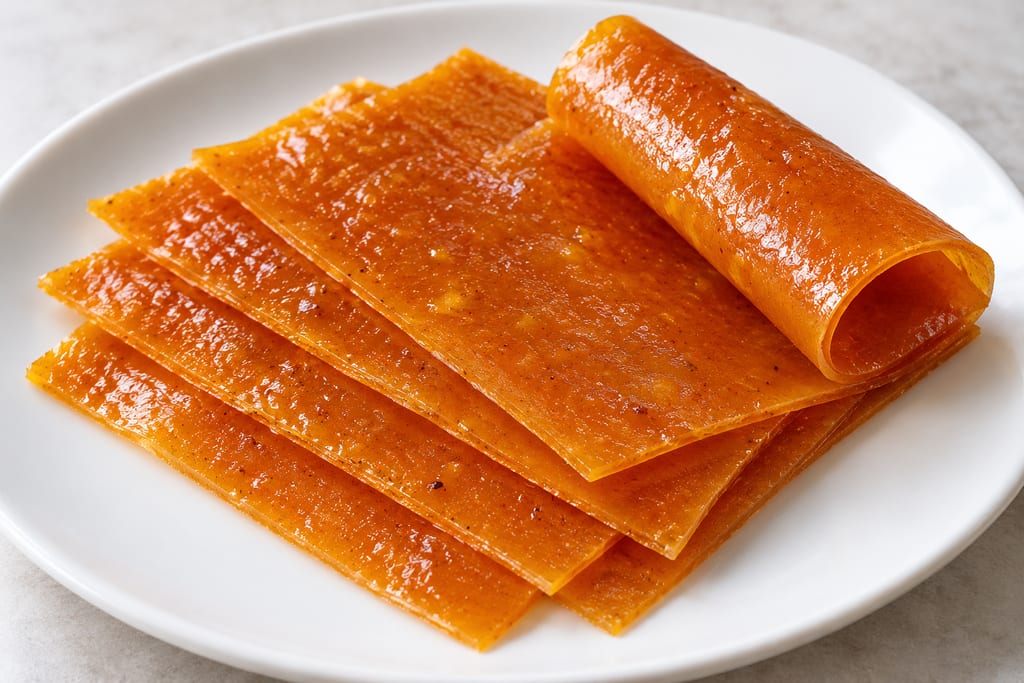
Ripe mango pulp spread thin and dried as a chewy fruit leather. This entry records one controlled unsweetened experiment and distinguishes it from Bengali sun-dried aamshotto and sweetened or spiced variants.
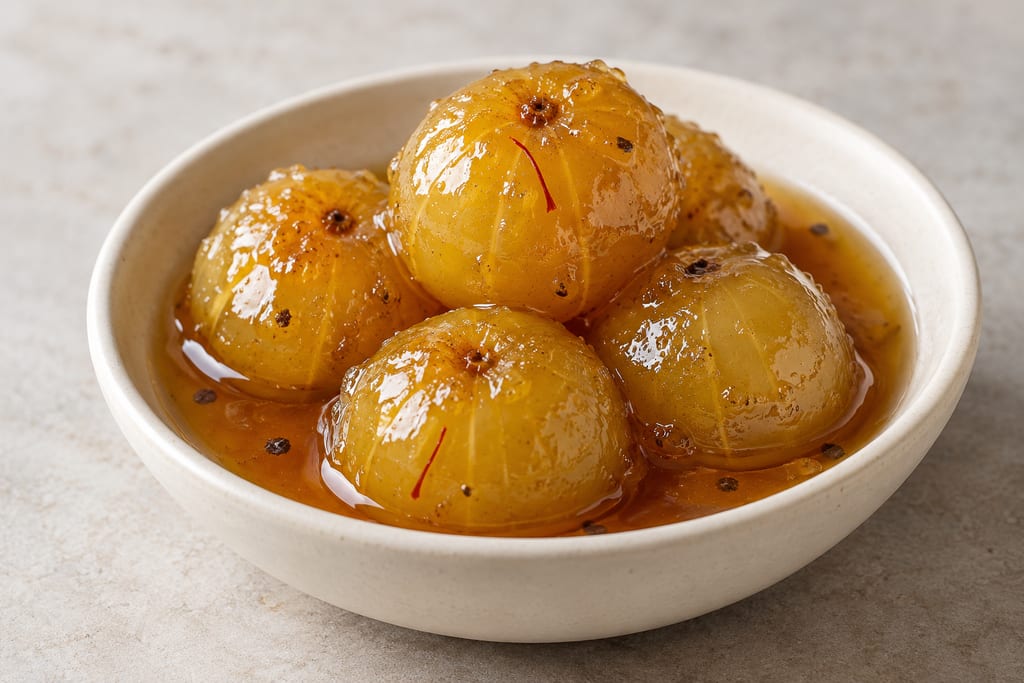
Amla murabba preserves whole Indian gooseberries in a heavy sugar syrup scented with cardamom and sharpened with pepper and black salt. This household method soaks the fruit before cooking.
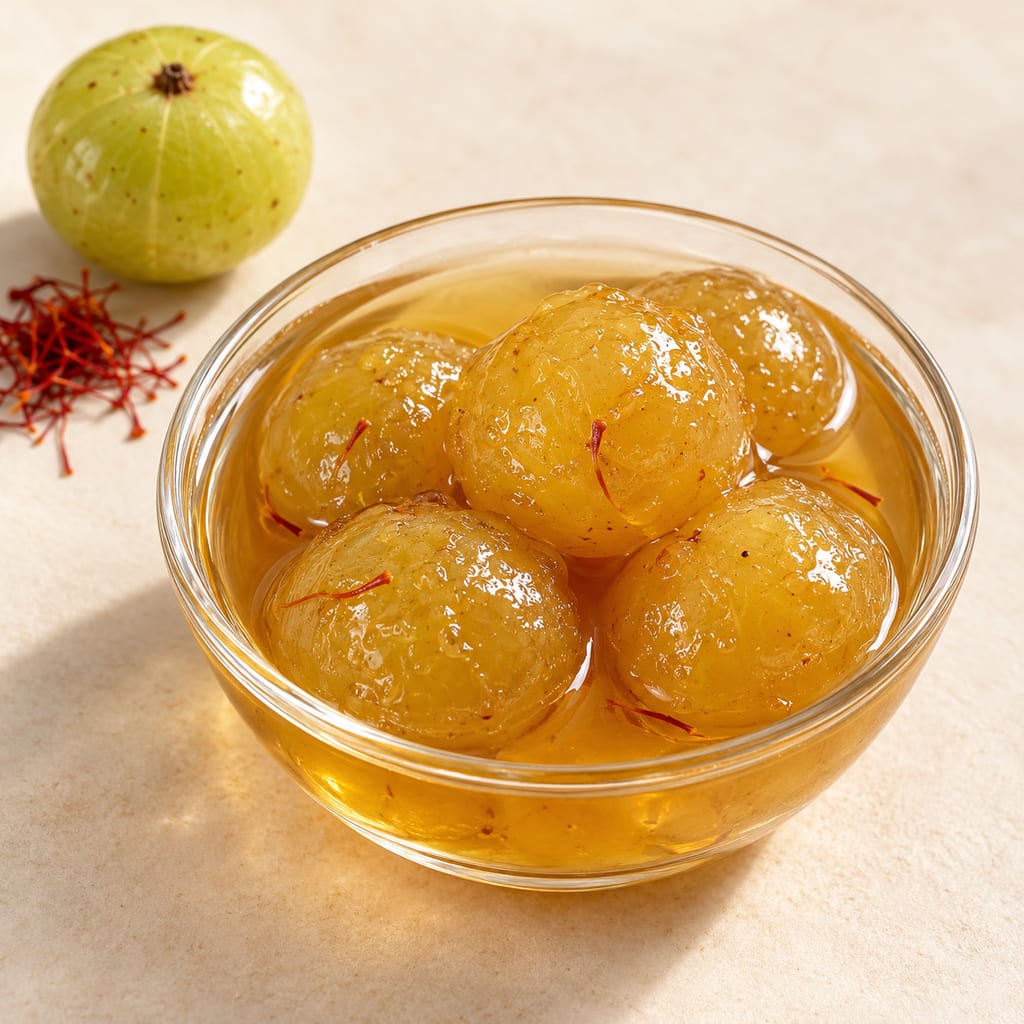
Whole amla simmer in sugar syrup with saffron, black cardamom and pepper in this chef's version of the Indian fruit preserve. The fruit is soaked overnight before cooking.
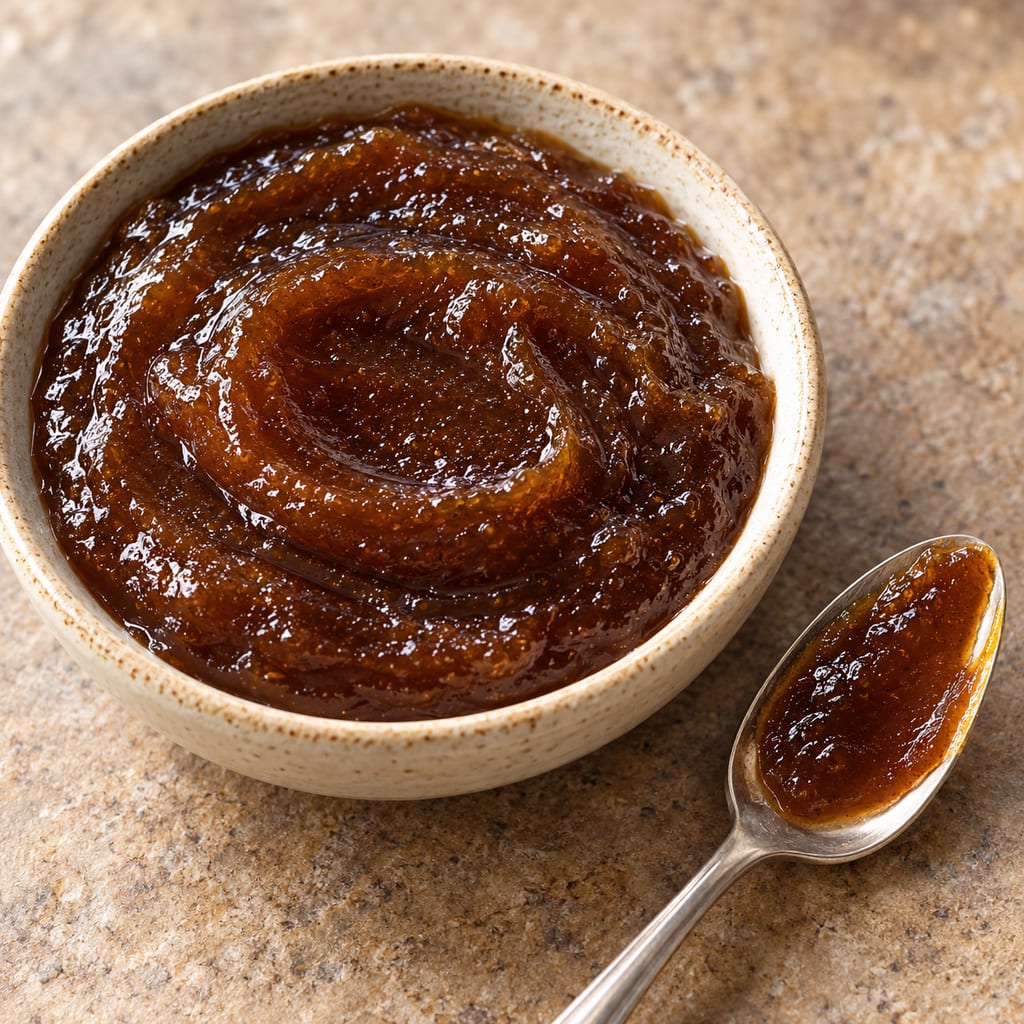
An experimental sweet mushroom preserve developed in Indian food-processing research, made by cooking mushroom pulp with sugar, added pectin and citric acid until concentrated into a thick, spreadable jam.
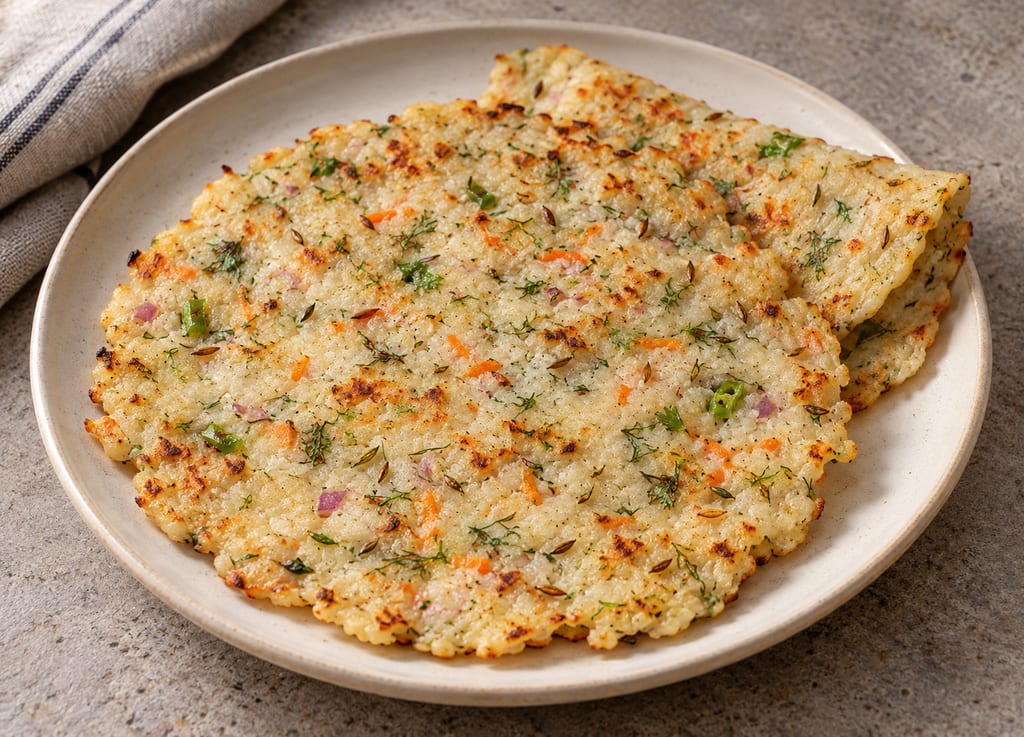
This Karnataka-style akki rotti mixes fine rice flour with vegetables, coconut, herbs and spices, then hand-pats and griddle-cooks the dough.
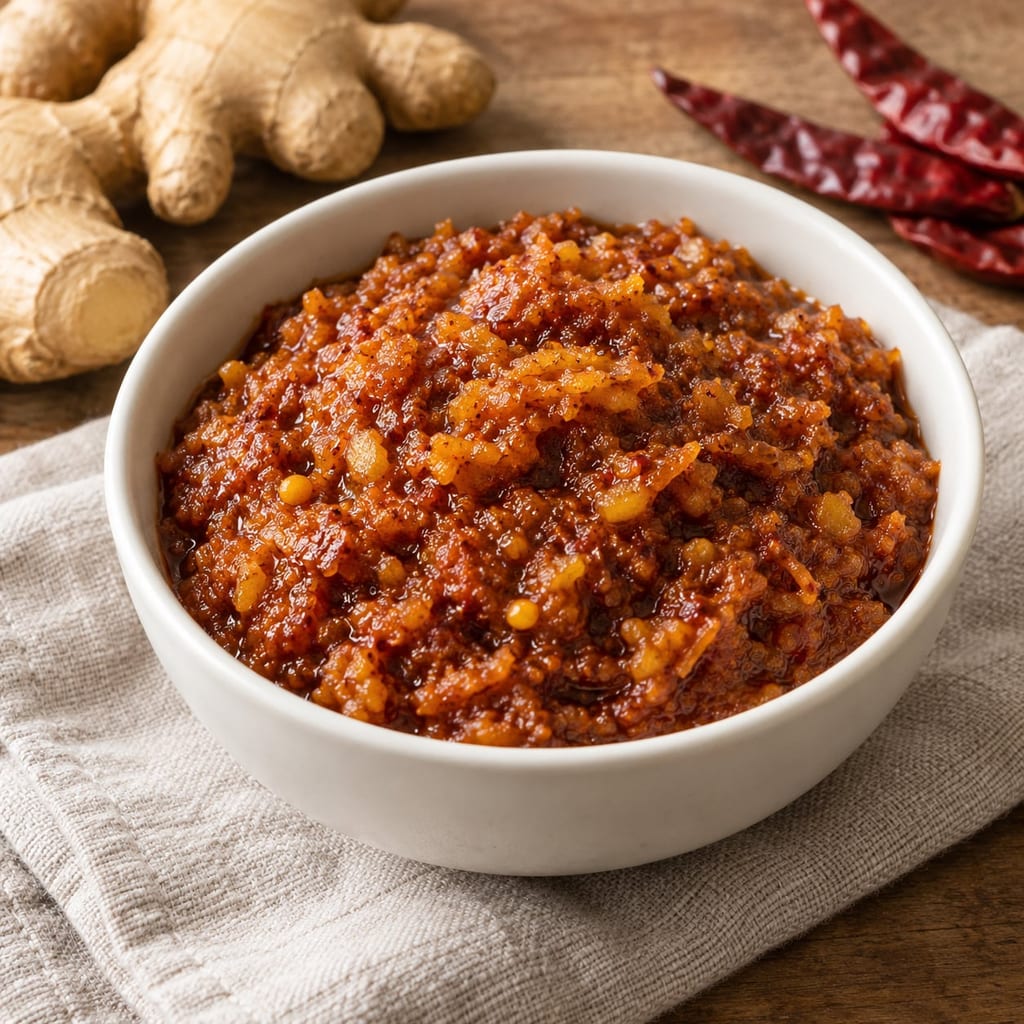
An Andhra ginger-and-urad chutney in which browned dal and briefly fried ginger and chillies are cooled, then ground with jaggery to a coarse paste.
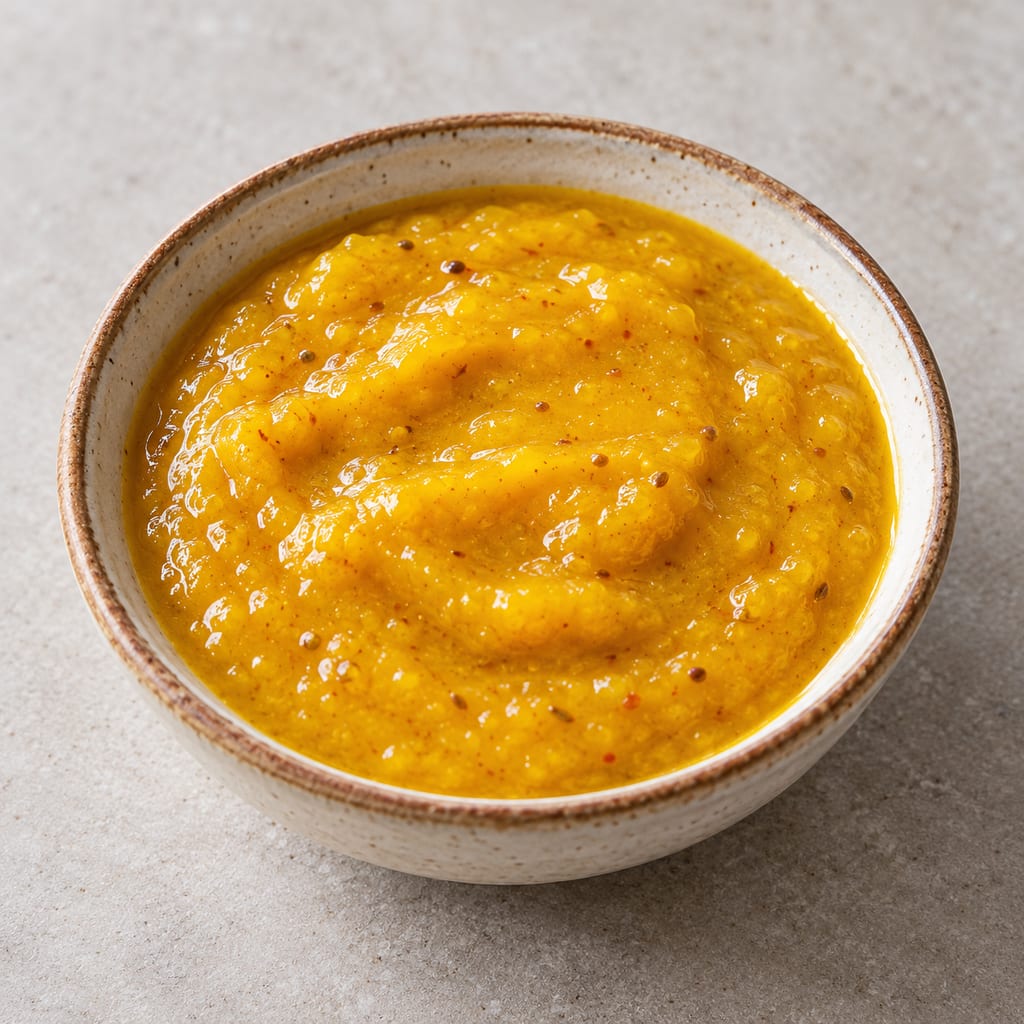
This cooked amba follows a Jewish Food Society recipe that simmers ripe mango with onion, garlic, mustard seed and warm spices into a tangy Middle Eastern condiment.
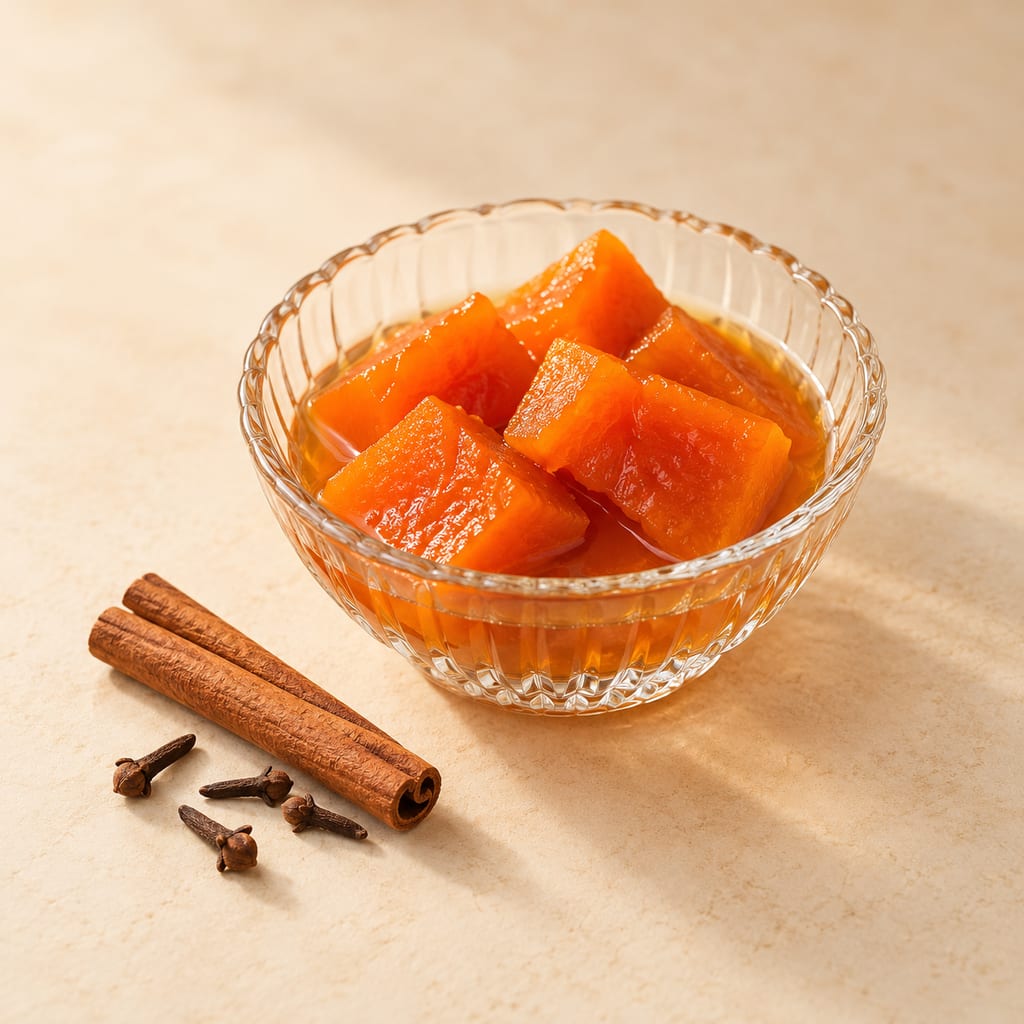
Brazilian doce de abóbora: Freeze for winter; small fresh portion refrigerated up to 48 hours.
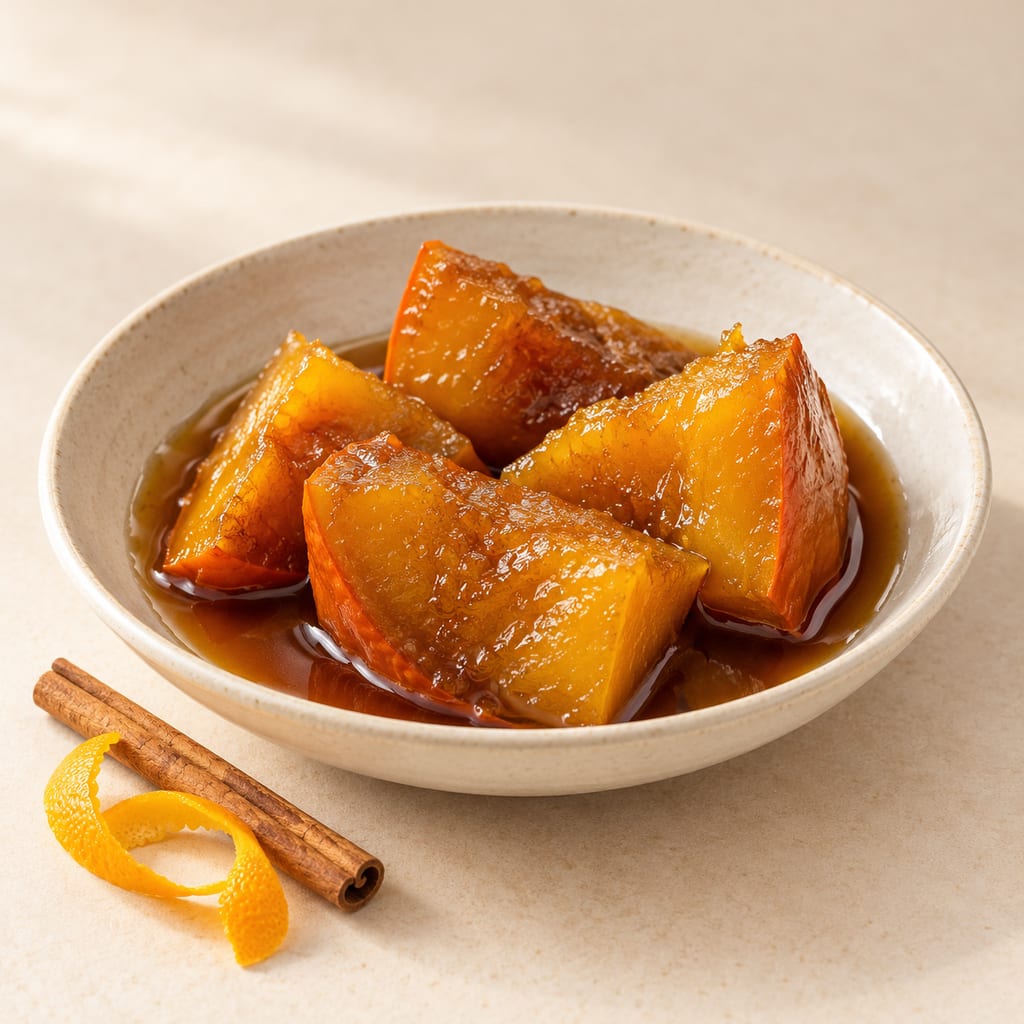
Rind-on pumpkin simmered with piloncillo, orange and cinnamon until glazed. This Mexican sweet keeps refrigerated for up to one week.
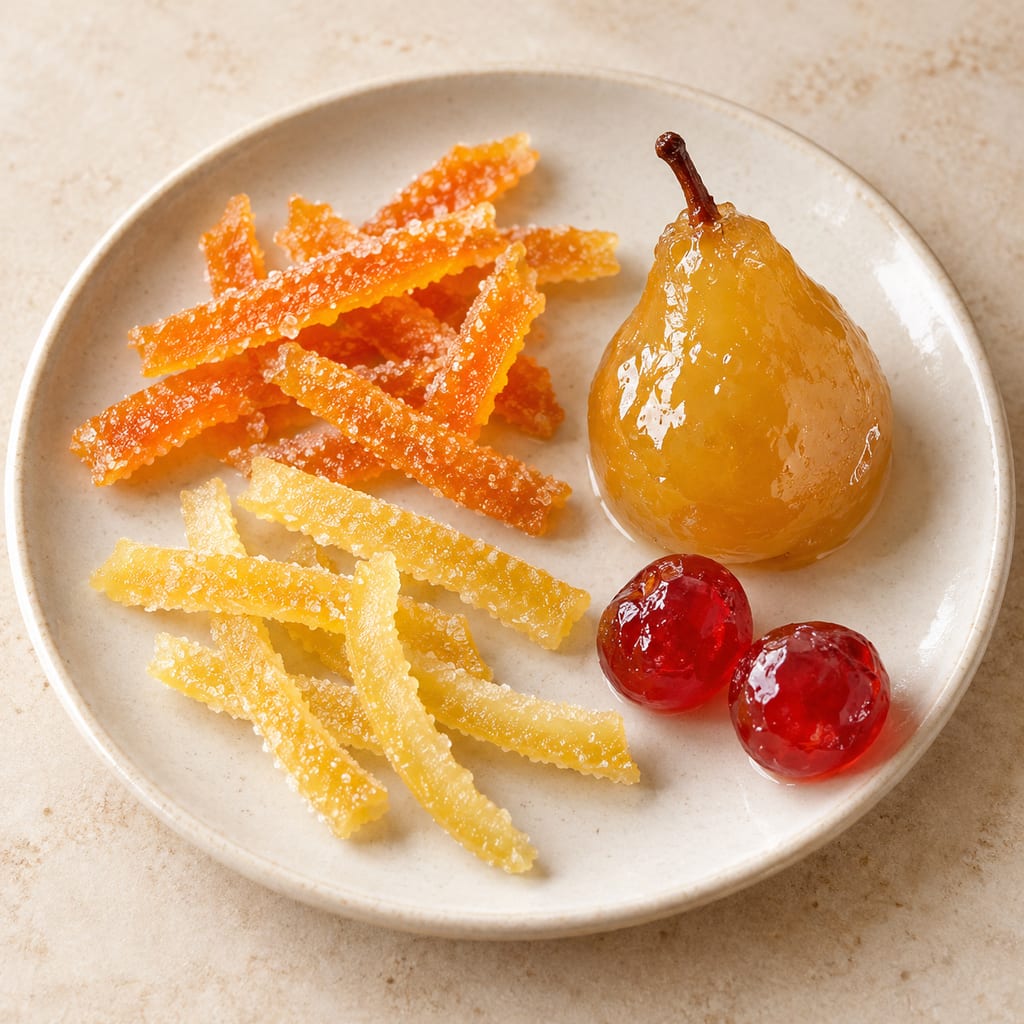
Candied fruit is fruit that has been repeatedly steeped in concentrated sugar syrup, which replaces part of its water with sugar, often followed by drying. It differs from fruit served in a thin syrup.
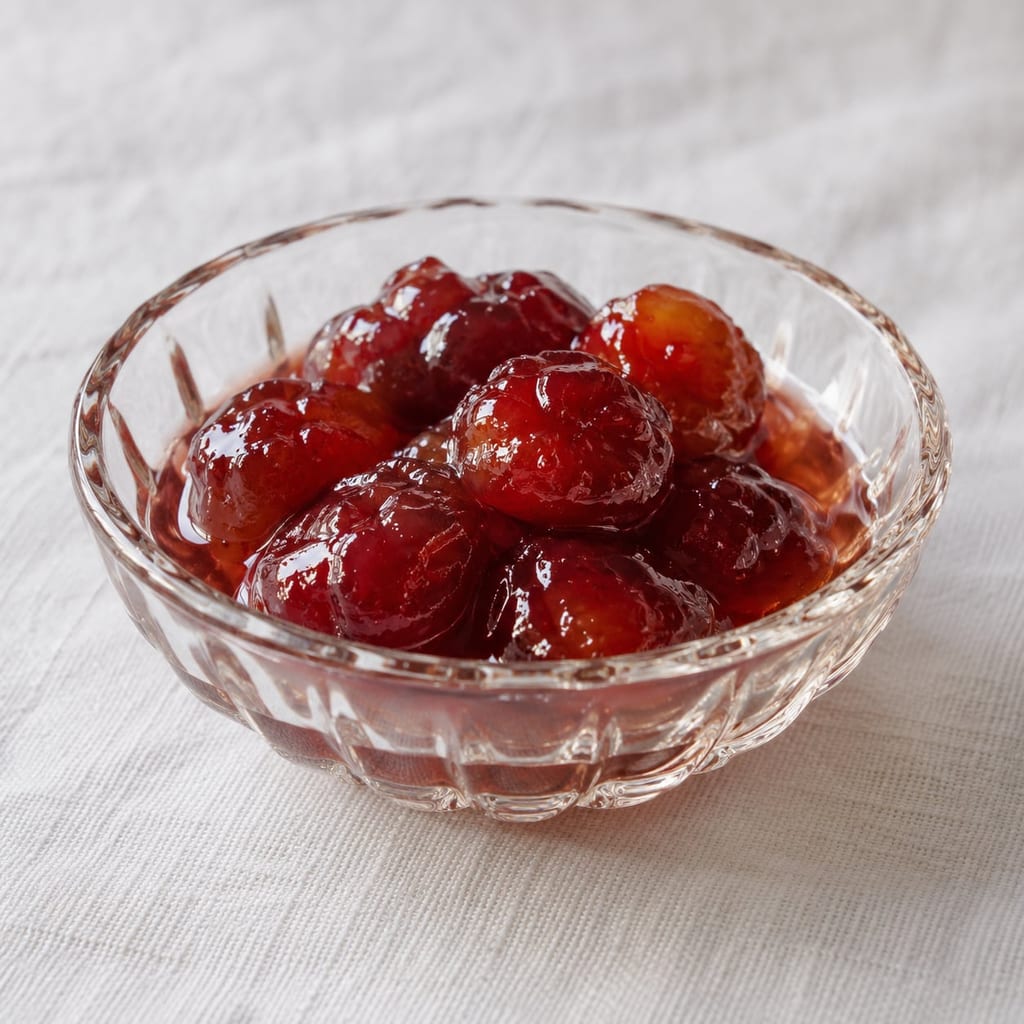
Cypriot cherry glyka made by layering firm pitted cherries with sugar, briefly boiling them, chilling overnight, and boiling again to concentrate the syrup. This version is refrigerated and has no shelf-stable canning process.
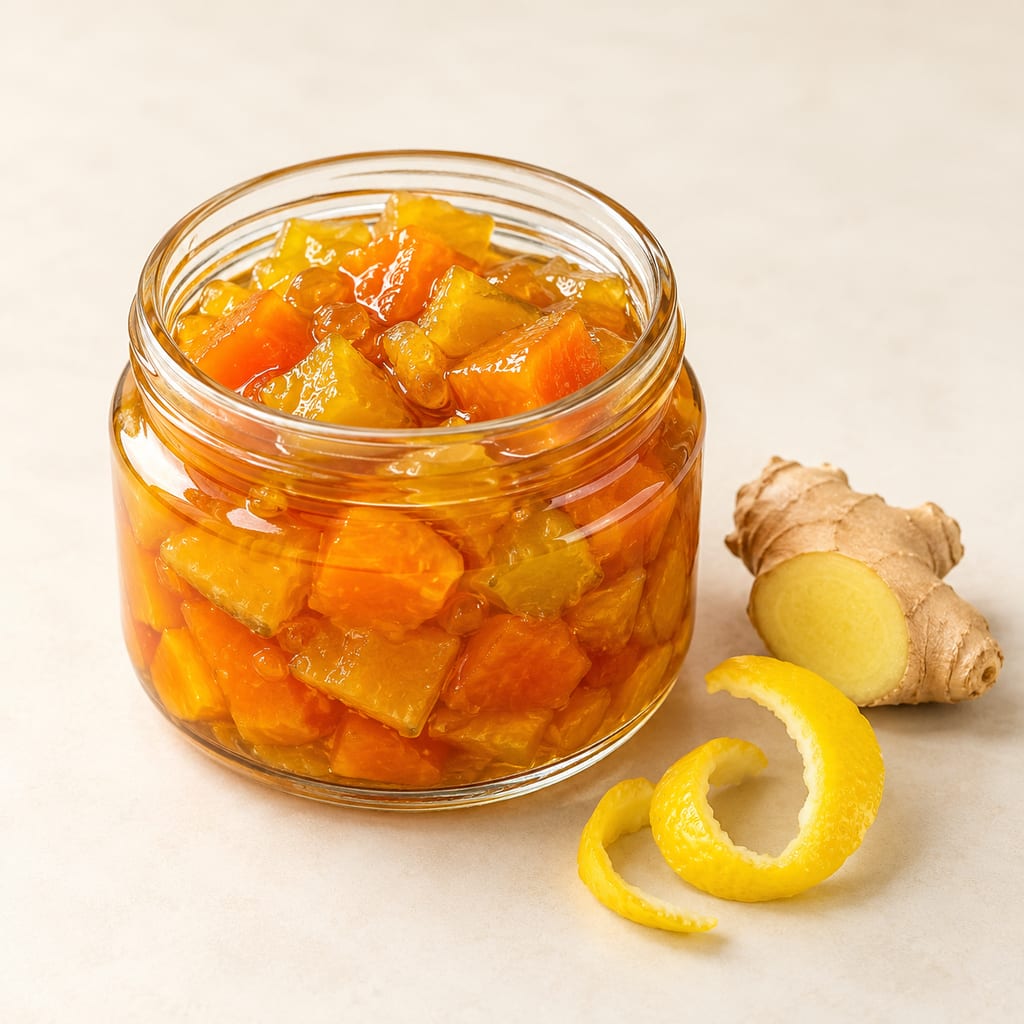
English lemon-and-ginger preserved pumpkin, after an 1861 recipe: Freeze for winter; small fresh portion refrigerated up to 48 hours.
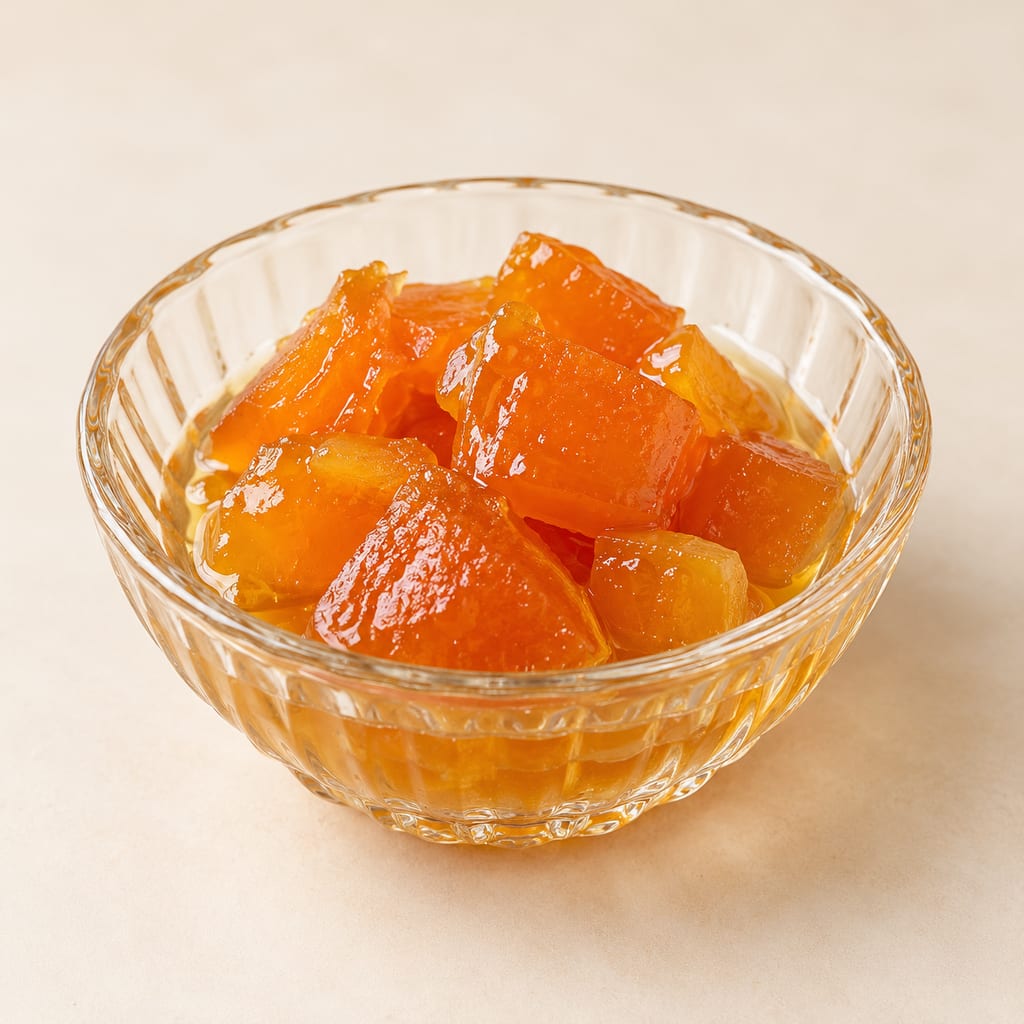
Greek pumpkin spoon sweet, with Cypriot context: Freeze for winter; small fresh portion refrigerated up to 48 hours.
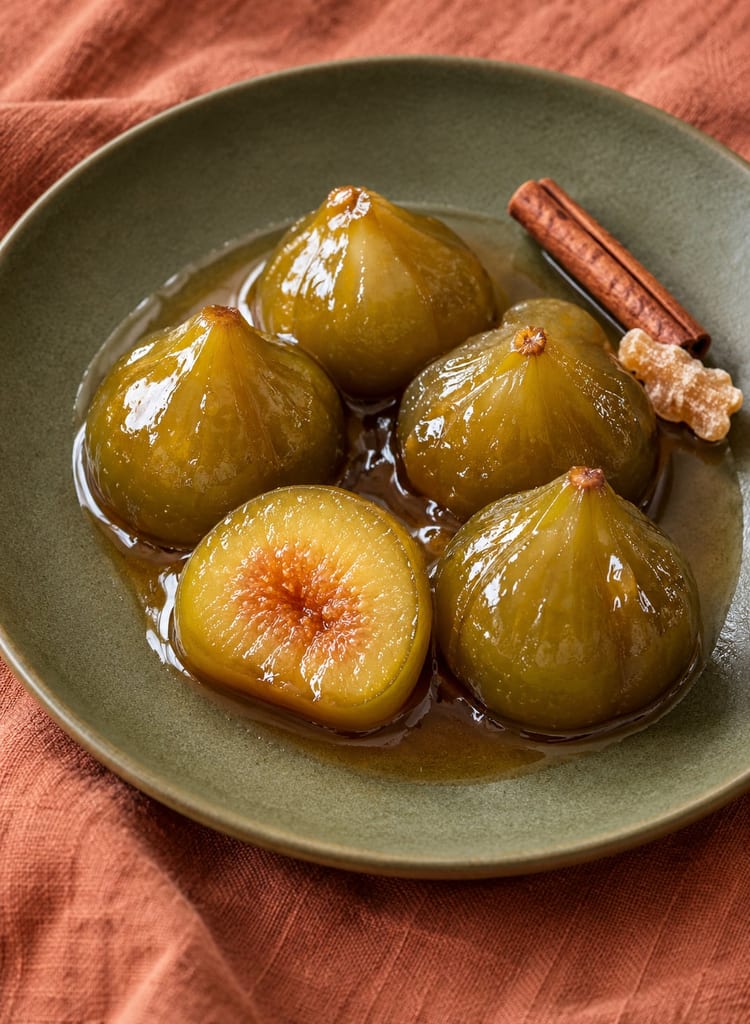
Whole unripe figs are softened and cooked in cinnamon and ginger syrup as a refrigerator-only South African konfyt; this method does not provide a shelf-stable canning process.
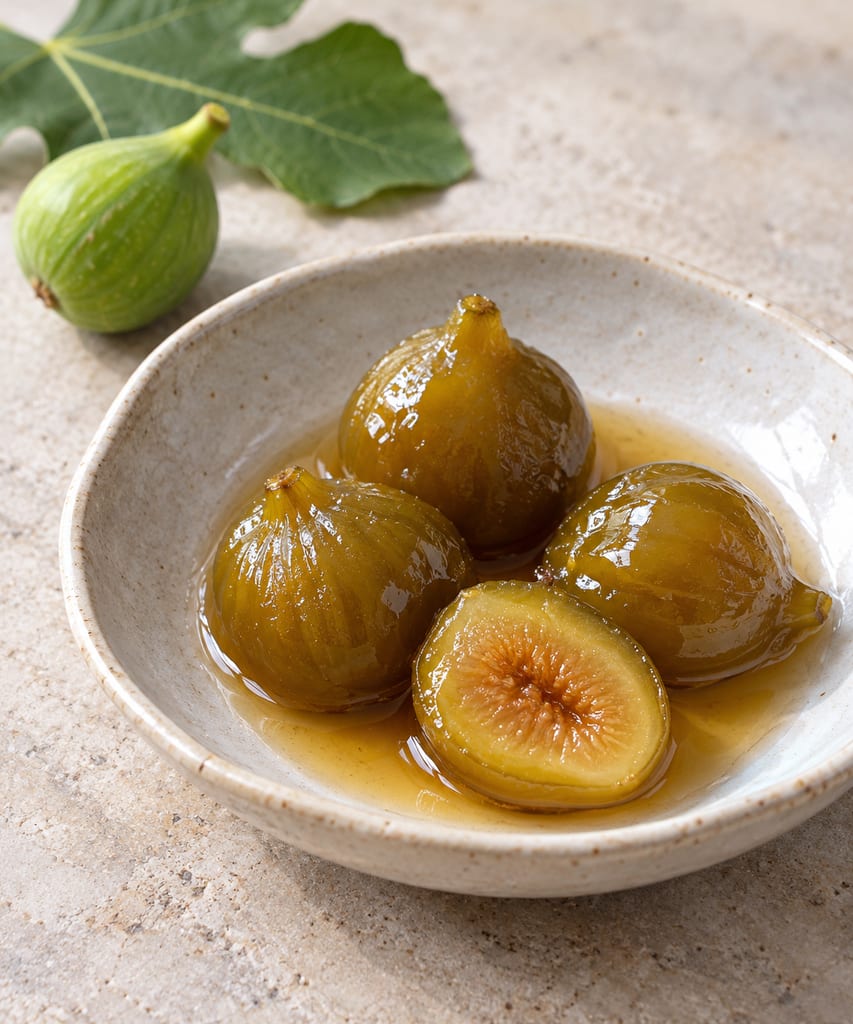
Hard green figs are parboiled and cooked whole in a lemon-sharpened sugar syrup as a refrigerator-only South African konfyt; the method does not establish shelf-stable canning.

A Cap-Pelé boucanière is an Acadian herring-smoking building. The documented Willie Niles example is a one-storey wood-frame structure with a ridge smoke vent and interior bays for hanging fish-bearing cannes.

Achcharu is a family of Sri Lankan vinegar pickles made with mixed vegetables or seasonal fruit and a piquant spice dressing. This version is a quick, refrigerated, non-fermented mixed-vegetable pickle.

The acocote is a long, hollowed and dried gourd used to draw aguamiel from a mature maguey. It is a harvesting tool: the sap is transferred to a separate vessel before it ferments into pulque.

Parkia biglobosa seeds are fermented into regional West African seasonings, including nététou, iru, dawadawa and soumbala. The yellow fruit pulp is a separate food, and names and methods vary by place.

Japanese reddish-brown vinegar from sake lees matured about three years, turned to vinegar by acetic bacteria; the vinegar of Handa and Edomae sushi rice.

A refined common-wheat flour blended for a broad range of baking; its protein and behavior vary with wheat, milling and market.

The almond mushroom, Agaricus subrufescens, was cultivated in eastern North America in the 1800s, lost its market, and returned as a cultivated mushroom from Brazil, where it is grown under several names.
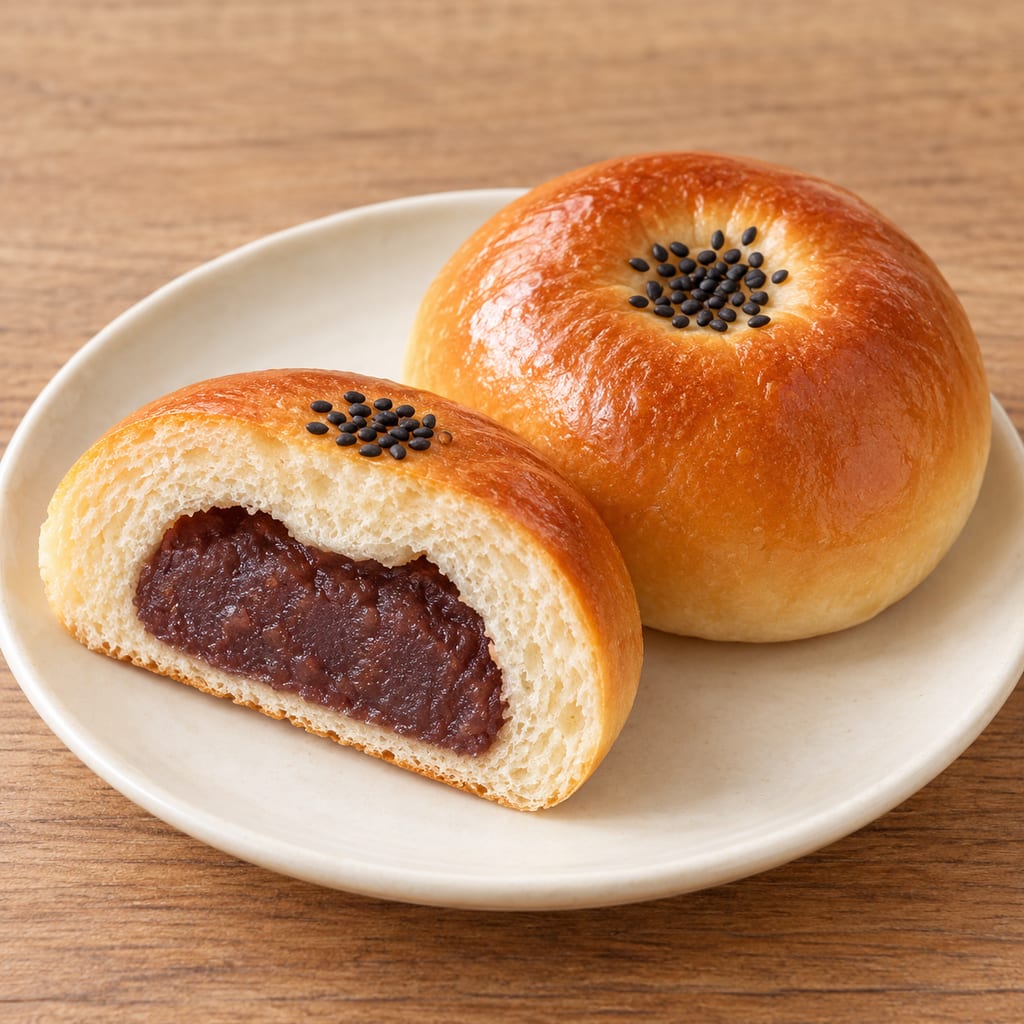
Anpan is a soft wheat bun filled with sweet red-bean paste and finished with egg wash and black sesame. This dough rises with commercial instant yeast.
No community contributions have been published for this entry yet.
Sign in to contribute. Published comments and photos are free to read.
Elliot Stock; Internet Archive scanHistory · Method
The Wife’s Help to Indian CookeryRecipe 635 names Ginger Preserve (Adrak-Murabba).
Young ginger without strings; one seer sugar to one pint water; boil tender; refresh syrup daily for a week.
No ginger weight, yield, converted seer, or validated canning process.
Cited in: What the dated record can—and cannot—tell us; Geography: an Indian preparation, without a claimed birthplace; Murabba, ginger, and the preserve family; The 1888 method: tender ginger and a week of refreshed syrup; What the syrup cycle does to texture and flavor; Serving, household variation, and commercial forms; Geographic continuity, crop movement, and the limits of inference; Preservation, packaging, and safety boundaries
NIFTEM-T, Ministry of Food Processing Industries, Government of IndiaGeography · Context
Ginger Murabba processing/DPR handbookDocuments ginger murabba in Indian processing context as a rhizome preserve.
Cited in: What the dated record can—and cannot—tell us; Geography: an Indian preparation, without a claimed birthplace; Murabba, ginger, and the preserve family; Later process descriptions are distinct variants, not one merged formula; Serving, household variation, and commercial forms; Geographic continuity, crop movement, and the limits of inference; Preservation, packaging, and safety boundaries
NIFTEM-T, Ministry of Food Processing Industries, Government of IndiaVariation
Processing of Ginger MurabbaDescribes industrial staged sugar processing; narrative and flowchart differ, so not merged into a home method.
Cited in: Murabba, ginger, and the preserve family; What the syrup cycle does to texture and flavor; Later process descriptions are distinct variants, not one merged formula; Serving, household variation, and commercial forms; Preservation, packaging, and safety boundaries
Korean Society of Food PreservationProcess science
Mass transfer Characteristic during Osmotic Dehydration of Ginger and Its Effect on QualityTested syrup concentration and temperature affected ginger moisture loss and sugar gain; mechanism context only.
Cited in: What the syrup cycle does to texture and flavor
National Center for Home Food Preservation, University of GeorgiaSafety
Backgrounder: Heat Processing of Home Canned FoodsUse tested processes for shelf-stable home canning; do not invent a process.
Cited in: Preservation, packaging, and safety boundaries