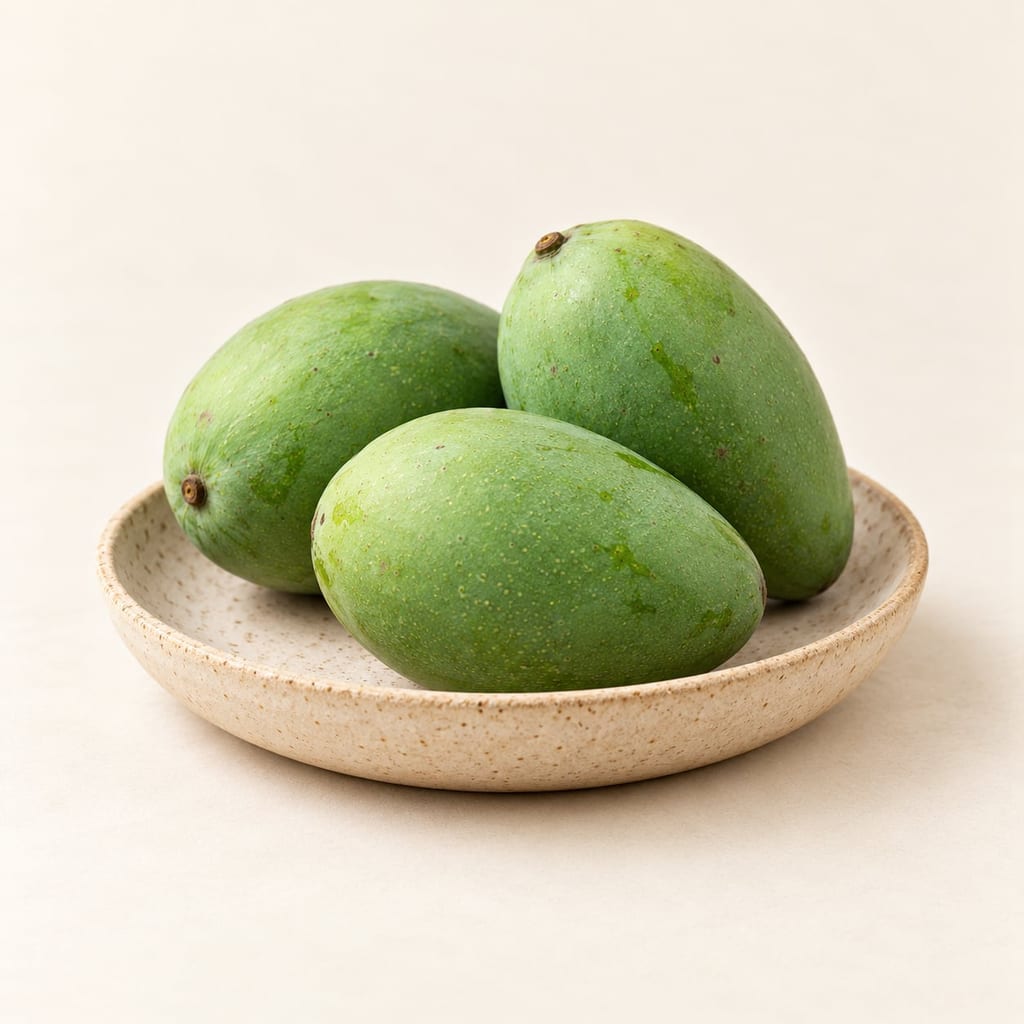
Unripe mango
Unripe mango offers sourness and firm texture at several maturity stages, from tender whole pickle fruit to mature-green slices for cooking or drying.
 FermenteaWhere food goes to change
आम पन्ना · aam pora sharbat
Aam panna is a tart Indian summer drink made by cooking unripe green mango until its flesh softens, then blending the pulp with sweetener, salt and spices and diluting it with water.

Aam panna is built around mango picked before ripening. Its character is not the lush sweetness of ripe mango juice but the sharp, mouth-watering acidity of green fruit, moderated with sugar or jaggery and made savoury with salt and spices. The cooked pulp remains suspended in the drink, giving it more body than clear fruit water. Depending on dilution and straining, a glass can be smooth and light or softly pulpy.
The name is used across India for a family of preparations rather than one immutable formula. The Panna district administration describes raw-mango panna as a popular Indian summer drink. The seasonal association is practical as well as culinary: the fruit's early harvest stage is the defining ingredient, while sweetener and seasoning bring its tartness into balance. The sourness is not evidence of fermentation; it comes from the fruit itself and the drink is made by cooking and blending.
The exact birthplace and first date of aam panna are uncertain. Modern food writing sometimes tells a very old story, including claims that panna appears in Sanskrit literature or was enjoyed at Mughal courts. Those claims are reported through interviews and secondary accounts; the sources used here do not reproduce a primary dated recipe that would let a reader verify that this particular mango drink existed in the same form. It is safer to recognize a long Indian practice of seasonal fruit drinks without turning attributed recollection into a proven origin date.
The wider word sharbat has a layered history. The Indian Express account traces the word through Persian and Arabic and contrasts flavoured sharbat with plain juice; it also notes panaka as an older Indian drink name. This wider history illuminates the cultural setting of fruit beverages, but it does not establish when aam panna took shape. The food's story is best understood through living regional practice: green mango is cooked, pulped, seasoned, sweetened and served as a drink, while its earliest chapter remains open.
Boiling, steaming and pressure cooking soften the fruit with moist heat. The flesh becomes tender enough to separate from peel and stone, and the cooking liquid can carry some mango flavour into the drink. Keeping that liquid avoids discarding a useful part of the preparation. This method gives a clean, direct fruit taste and is convenient when several mangoes are cooked together. The pulp may be blended with spices into a concentrate or mixed directly into water for a lighter drink.
Fire-roasting changes the sensory result. Mangoes are turned over flame until the skin blisters and chars and the flesh softens. Removing the burned skin reveals tender pulp with a lightly smoky aroma. The Bengal name aam pora points to this technique; a contemporary account of aam porar shorbot adds ginger, salt and sugar to the pulp and simmers it with water into a concentrate before dilution. That simmering is cooking and concentration, not fermentation: it disperses pulp and seasoning and makes a base that can be portioned into later glasses. The roasted and boiled routes are related, but their different heat and water exposure produce distinct drinks.
Unripe mango supplies the drink's sourness, aroma and pulp. Fruit size, cultivar and maturity change both yield and tartness, so recipes often ask the cook to season after extracting the pulp. A fibrous mango may leave strands in a glass; straining gives a smoother texture but removes some pulp. Cook the fruit whole until soft enough to peel and scrape cleanly, then remove the stone before blending.
Sweetener balances acidity and determines colour and flavour. White sugar gives a relatively neutral sweetness, while jaggery brings a deeper, darker taste; the recipe writer also mentions evaporated cane juice. Toasted, ground cumin contributes a warm savoury note, while cardamom adds fragrance. Black salt and ordinary salt make the mixture more savoury, and their amounts should be adjusted because saltiness and mineral notes vary. Mint or coriander, used in some household versions, shifts the drink toward a fresh herbal profile, but is not required to define panna.
The practical method separates extraction from serving. First soften the fruit, cool it enough to handle, peel it and recover the pulp. Cooling matters because hot fruit is difficult to handle and pulp is easier to blend once it is no longer steaming. Mix the pulp with sweetener and spices, then add cooking liquid gradually. A blender makes a uniform base; mashing leaves a more rustic texture. If fibers remain, strain the mixture. Chill the base and dilute each portion with cold water, adjusting strength at the glass rather than forcing one ratio on every mango.
A concentrate is useful for serving a group because it can be mixed by the glass. One recipe writer gives a mango-pulp-to-sugar ratio for its own syrup, but that is a household formula, not a universal preservation rule. Sugar does not make an untested fruit mixture shelf-stable. Keep the concentrate refrigerated and use it promptly; the sources here do not establish a validated storage life. For a one-time serving, blending pulp with water and seasoning directly is simpler. Serve chilled, with ice if desired, and stir before pouring if the pulp has settled.
Regional labels describe tendencies rather than borders. The recipe writer associates boiled panna with Maharashtra and Gujarat and fire-roasted mango with North India. In Bengal, aam pora shorbot foregrounds smoky roasted fruit and may include ginger and a briefly cooked concentrate. Households choose a sweeter or saltier balance, use jaggery instead of white sugar, or add cumin, cardamom, mint, coriander, pepper or ginger in differing combinations. The base can be served thin as a thirst-quenching drink or thick enough to retain a spoonable softness.
These differences should not be collapsed into an invented standard. A boiled mango drink is not simply a less smoky roasted recipe: it keeps a cleaner fruit note and uses water as part of extraction. Roasting brings char and smoke, while simmering a Bengal-style pulp into concentrate adds another cooking stage. Sweetener choice changes colour and flavour; herbs and spices make a household signature. The shared structure is cooked unripe mango balanced with seasoning, but named forms deserve their own description when the method or regional identity matters.
Aam panna is poured into a glass and diluted to taste. It belongs beside India's wider summer-drink repertoire: lemon drinks, spiced waters, sugarcane drinks and fruit sharbats. Aam pora's smoky edge sits naturally with savoury snacks and meals, while a sweeter, lighter boiled version works on its own. Mint, roasted cumin or ice may finish a contemporary serving.
The drink demonstrates how kitchens use fruit at more than one stage of ripeness. Ripe mangoes are prized for sweetness and fragrance; green mango brings sharp acidity to drinks, chutneys and cooked dishes. Aam panna concentrates that sourness into a balanced glass. Its defining taste is tart fruit meeting savoury seasoning, with the cook choosing whether clean mango or fire-kissed smoke leads.
Start with the fruit: a good batch should taste distinctly tart, because green mango is the centre of the drink rather than a background flavour. Sweetness should round that tartness rather than hide it. If the pulp is very sharp, a little more sweetener or a looser dilution makes the glass easier to drink; if a sweet mango gives a flat result, salt and cumin can sharpen its savoury edge. These are seasoning decisions, not evidence that the drink has fermented or that any safety condition has been met.
Texture follows fruit and handling. A fibrous cultivar leaves strands; straining gives a smoother drink but removes some fruit body. Water added during cooking becomes part of extraction, so retain it and add it gradually. A concentrate can be thick in its container and still become fluid when stirred into water. Serving strength is best adjusted in each glass because household sources do not establish one universal dilution.
Choose firm green fruit that is still unripe and tart; the recipe source specifically advises sour mangoes and warns that fibrous fruit can make a stringy drink. It prescribes no single cultivar. This is useful where mango varieties and local names differ widely: the preparation depends more on tartness and usable pulp than on a celebrated dessert mango. Avoid assuming every fruit described simply as mango behaves the same once cooked.
Wash fruit before cooking. Whole-fruit cooking softens the flesh around the stone and makes it easier to peel, while roasting softens the inside under a charred skin. Let cooked mango cool before handling, then remove peel and stone and collect the pulp. If steaming or pressure cooking instead of simmering, follow the appliance's directions; household recipes describe these as alternatives but do not establish a universal time for every cooker or fruit size. The practical endpoint is softness sufficient for easy pulp extraction, not a measured internal temperature.
Aam panna shares a table with an assortment of Indian summer drinks. Lemon-based shikanji, cumin-and-herb jaljeera, sugarcane juice and fruit sharbats all refresh, but their sourness and body come from different ingredients. The Indian Express account emphasizes that sharbat is flavoured, distinguishing it from plain juice. Panna's identity comes from cooking unripe mango and seasoning it, not from a generic label like cooler or a claim that all summer drinks are interchangeable.
Seasonality gives the drink a household rhythm. Green mango arrives before the ripe-fruit season peaks; cooking and pulping it turns a seasonal crop into a base that can be mixed for guests or poured by the glass. The Panna district government's culinary page places the drink within popular Indian summer refreshment. Contemporary recipe writers show how home preparation moves between fresh dilution and a jarred concentrate, reflecting different serving needs while keeping the fruit-and-spice combination.
Modern accounts sometimes describe aam panna as a traditional remedy for heat or dehydration. Such language reflects how people describe a seasonal drink and how its salt, sugar and water suit a hot-weather table; it is not a tested treatment claim. The historical and food-journalism sources used here do not provide clinical evidence or a tested oral-rehydration formulation. This recipe should be read as food and refreshment, not as a substitute for medical care or a medically formulated rehydration solution.
The same distinction applies to stories of antiquity. An interviewee quoted in contemporary reporting may associate panna with Sanskrit writing or early court records, but broad references to drinks do not prove the exact modern mango recipe. What is documented today is the regional names, cooking approaches and ingredients, and the precise first date of the drink remains unresolved.
Aam panna is often grouped with drinks that ferment because it is a traditional beverage, but its method has no fermenting stage. The fruit is softened by heat, its pulp is mixed with sweetener and spices, and water dilutes the mixture. There is no culture addition, monitored acidification or maturation in this recipe. The tart taste comes from green mango; the cooked pulp does not become a fermented mango product. This distinction matters both for the history of the drink and for the reader following the method: it belongs beside other seasonal refreshments, but should be prepared and described as a cooked fruit beverage.
Aam panna belongs to India's broad tradition of seasonal drinks made from mango at its unripe stage. Its exact origin and earliest dated recipe are not established by the sources used here. Modern accounts describe distinct regional preparations and report historical associations, but do not provide a primary dated recipe that fixes a date or birthplace.
Scaling: scale from the cooked pulp and season to taste; dilution varies by serving.
Government and food-history accounts document raw-mango panna as an Indian summer drink; no exclusive place of origin is claimed.
The cited recipe writer associates the boiled preparation with these regions, without claiming an exclusive boundary.
The cited recipe writer associates fire-roasted preparations with North India, without claiming uniform practice.
Aam pora shorbot is a related roasted-mango preparation; this row does not claim that every panna is made this way.
Unripe mango offers sourness and firm texture at several maturity stages, from tender whole pickle fruit to mature-green slices for cooking or drying.
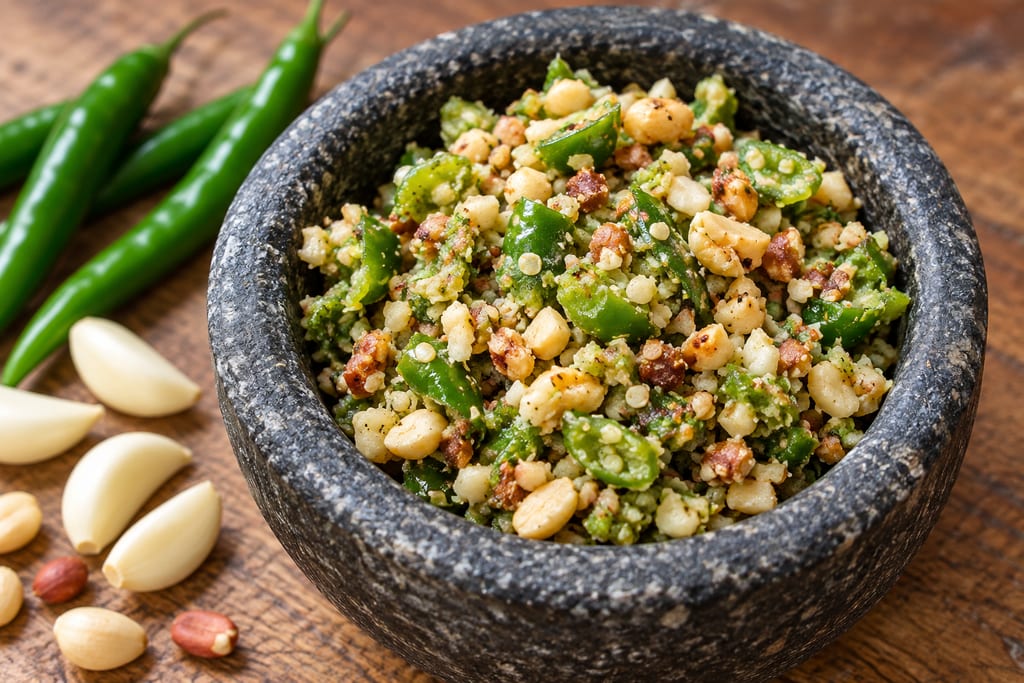
A fresh Maharashtrian thecha of green chillies, peanuts and garlic, roasted separately in the same oil and crushed with salt. Optional coriander joins the pan before grinding; serve with bhakari.
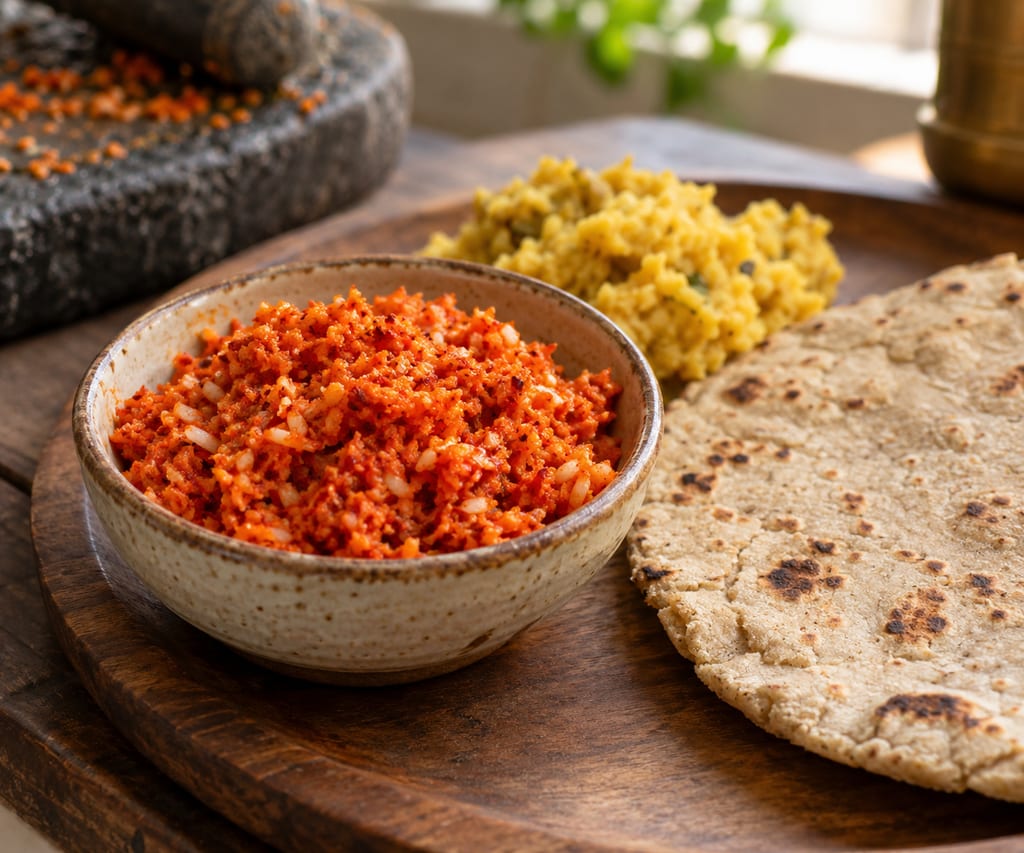
A fresh Maharashtrian chutney of wet coconut and garlic, ground with chilli and salt and finished with lemon; Royal Chef Sujata serves it with jhunka-bhakri.
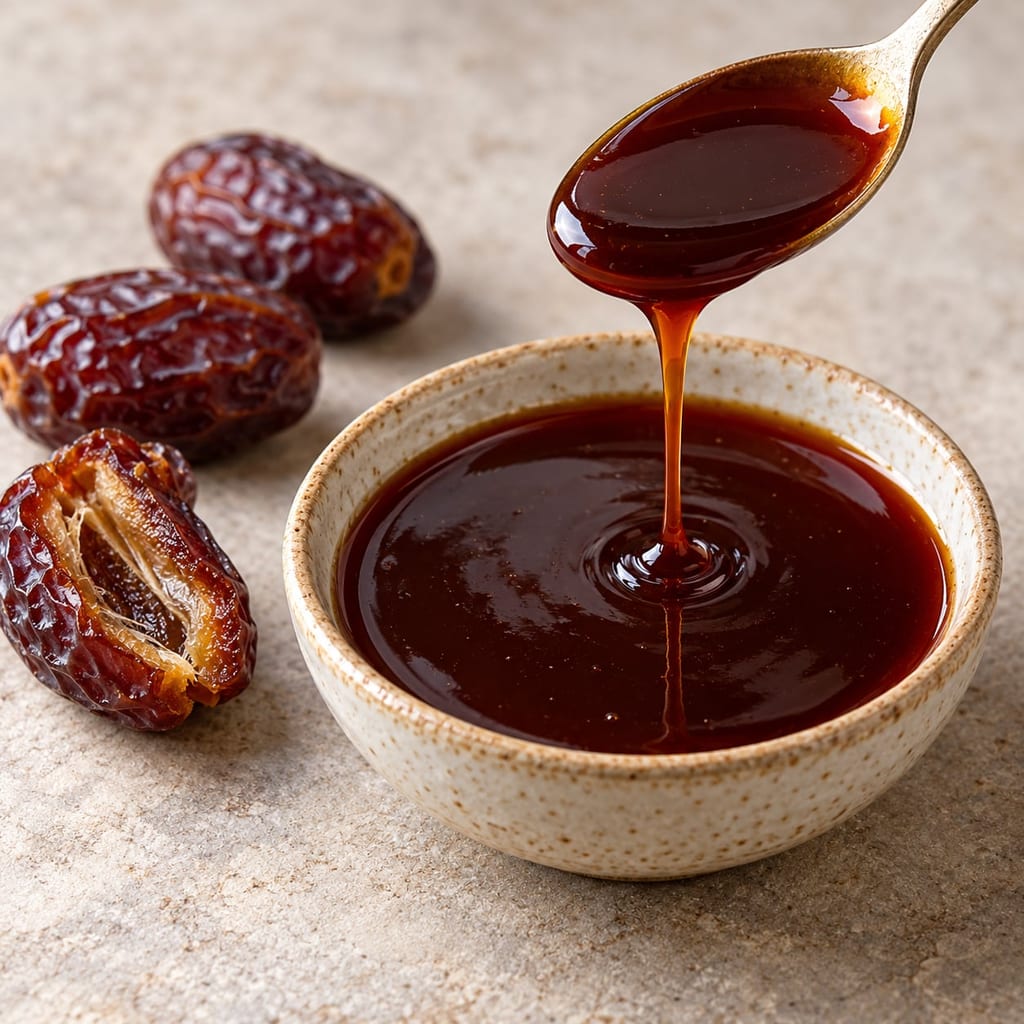
A thick, dark, very sweet syrup made from dates, known as dibs, rub, silan or date molasses. It sweetens tahini and desserts and glazes or sauces savoury dishes across the Middle East and North Africa.
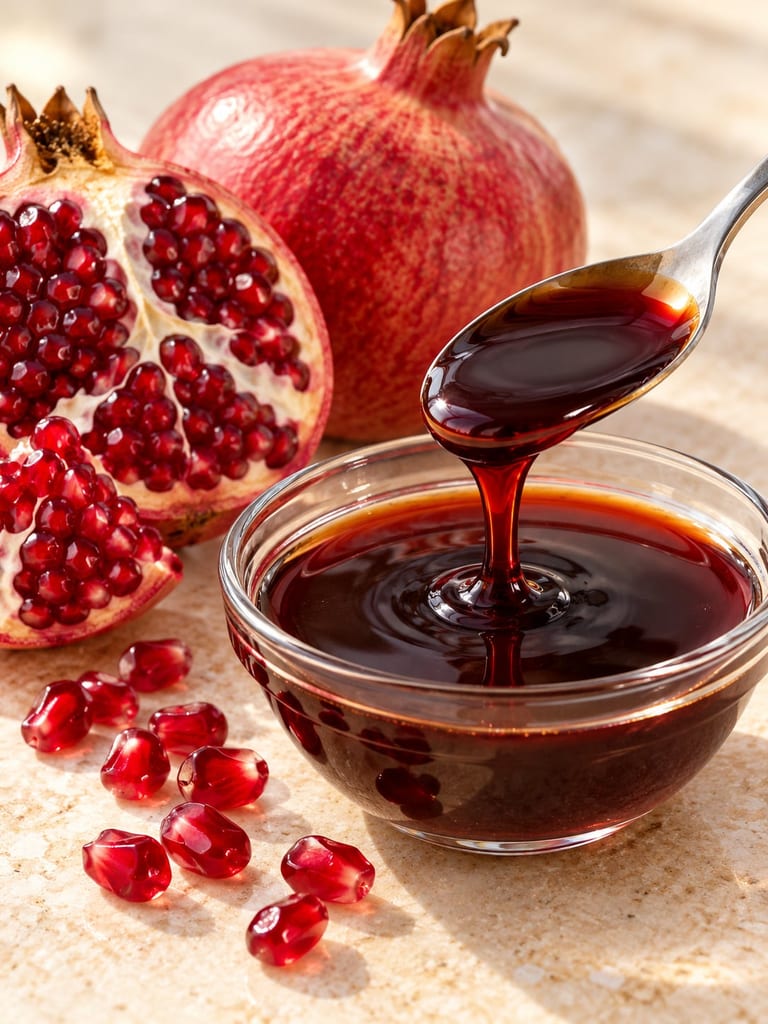
The registered Hatay method presses pomegranate arils and slowly concentrates the strained juice. Its 100 kg source batch and experienced-producer endpoint are retained; no home-scale time or shelf-life is inferred.
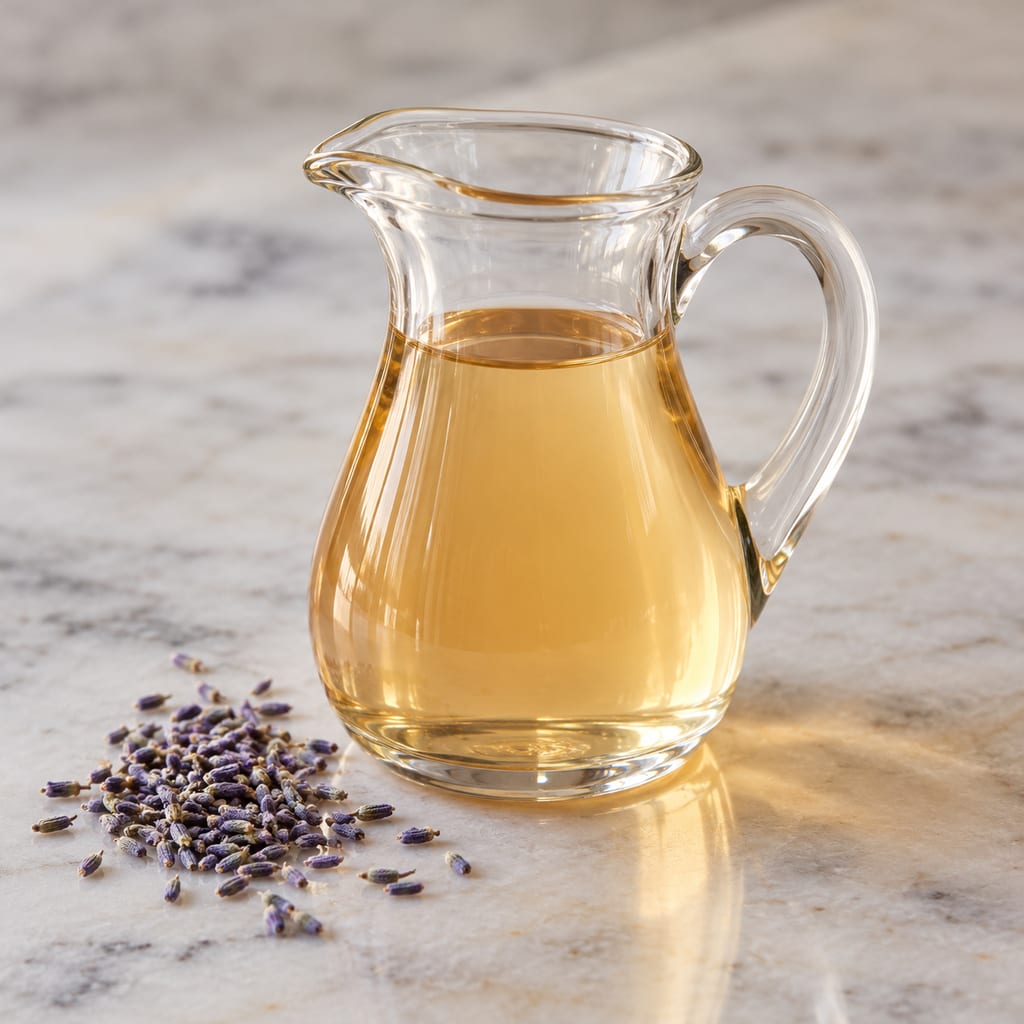
Sugar syrups flavoured by holding botanicals, sugar and water in sealed bags in a 135°F (57°C) water bath for an hour, then cooling and refrigerating; several can share one bath.
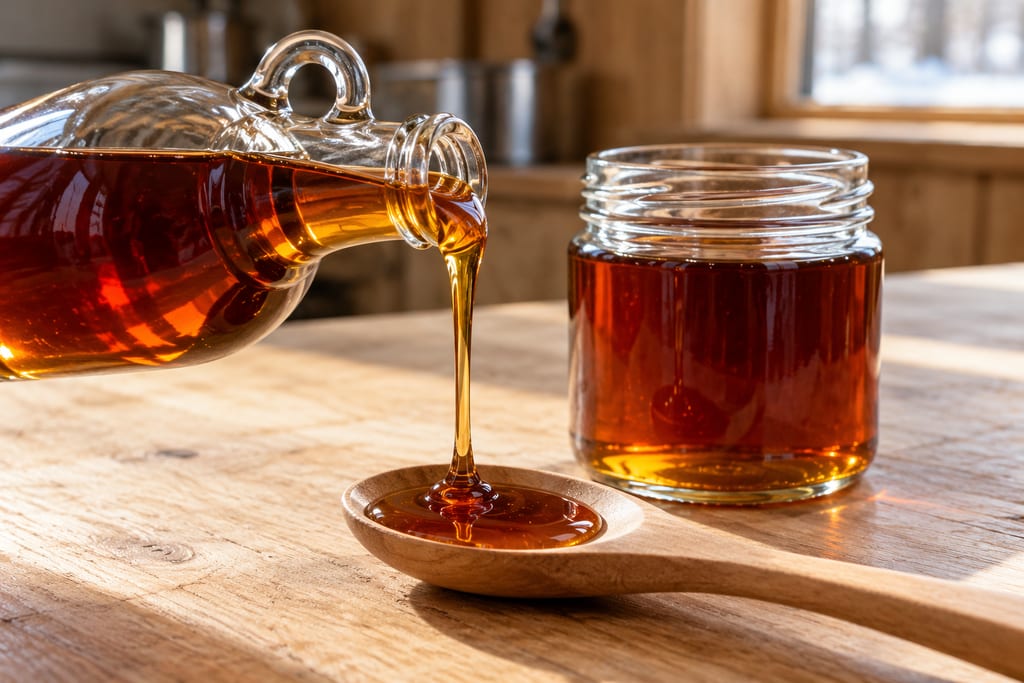
Maple sap of about two percent sugar boiled down in a shallow pan until it reaches syrup density, the sugar concentration the standard defines, then filtered hot and packed hot.
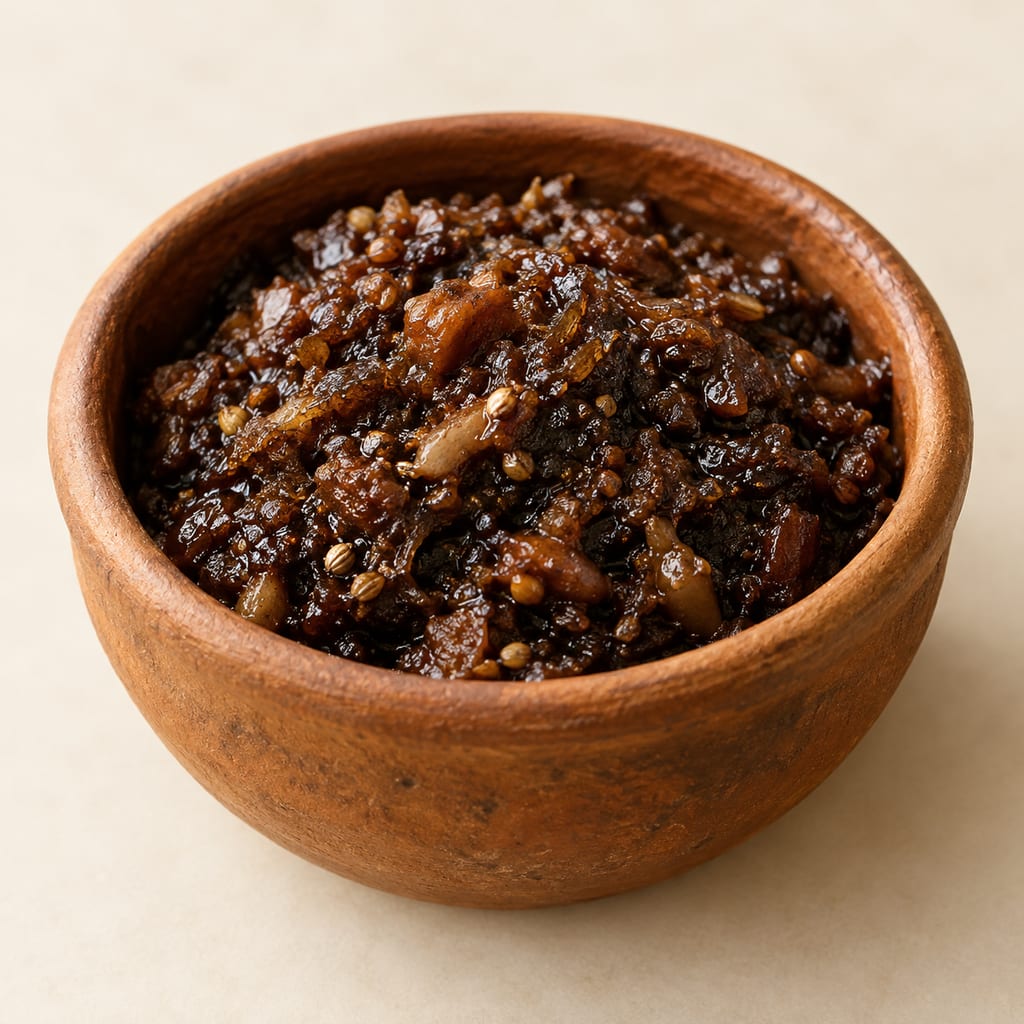
Must murri was a medieval Andalusi and North African seasoning of baked wheat dough, grape must and aromatics, cooked slowly in an oven.
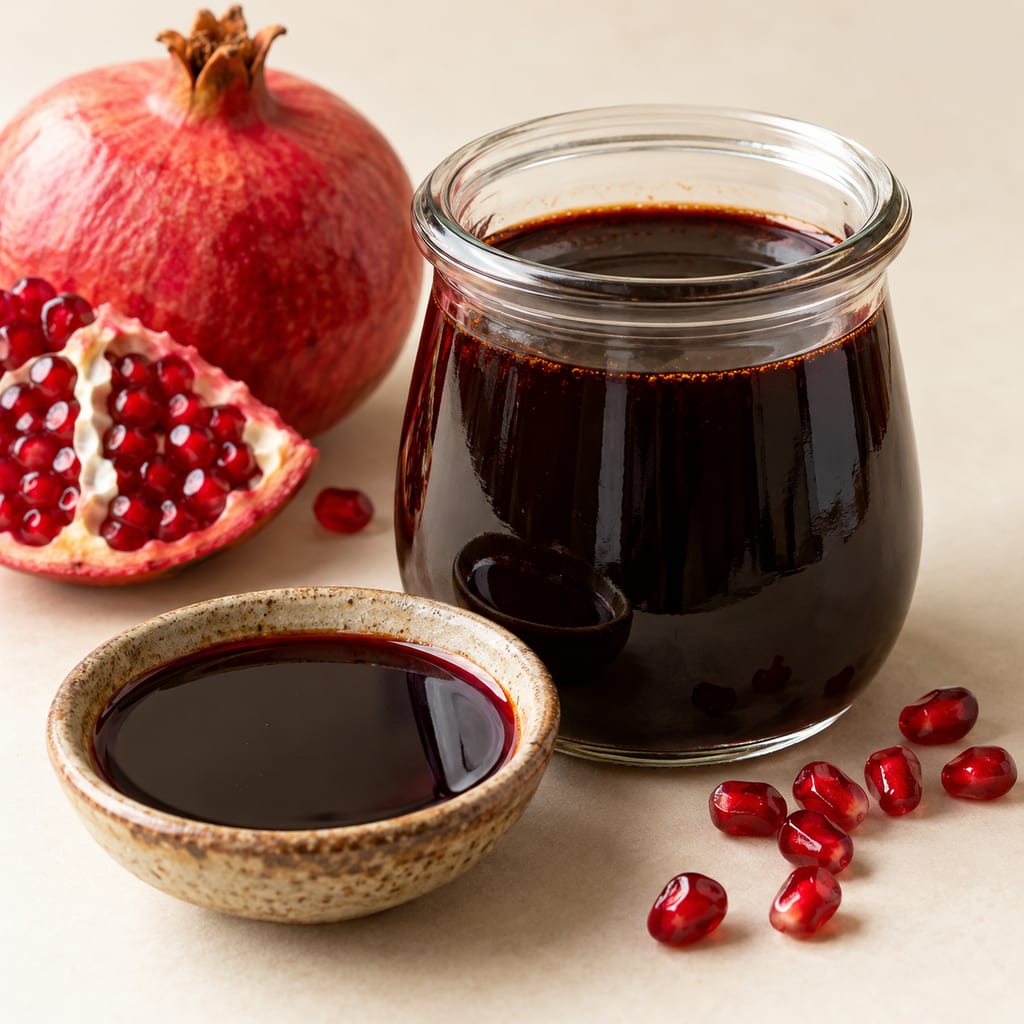
A thick, sour condiment made by reducing pomegranate juice over heat until it is concentrated, used across the Middle East, the South Caucasus and the Balkans in dressings, stews and grilled dishes.
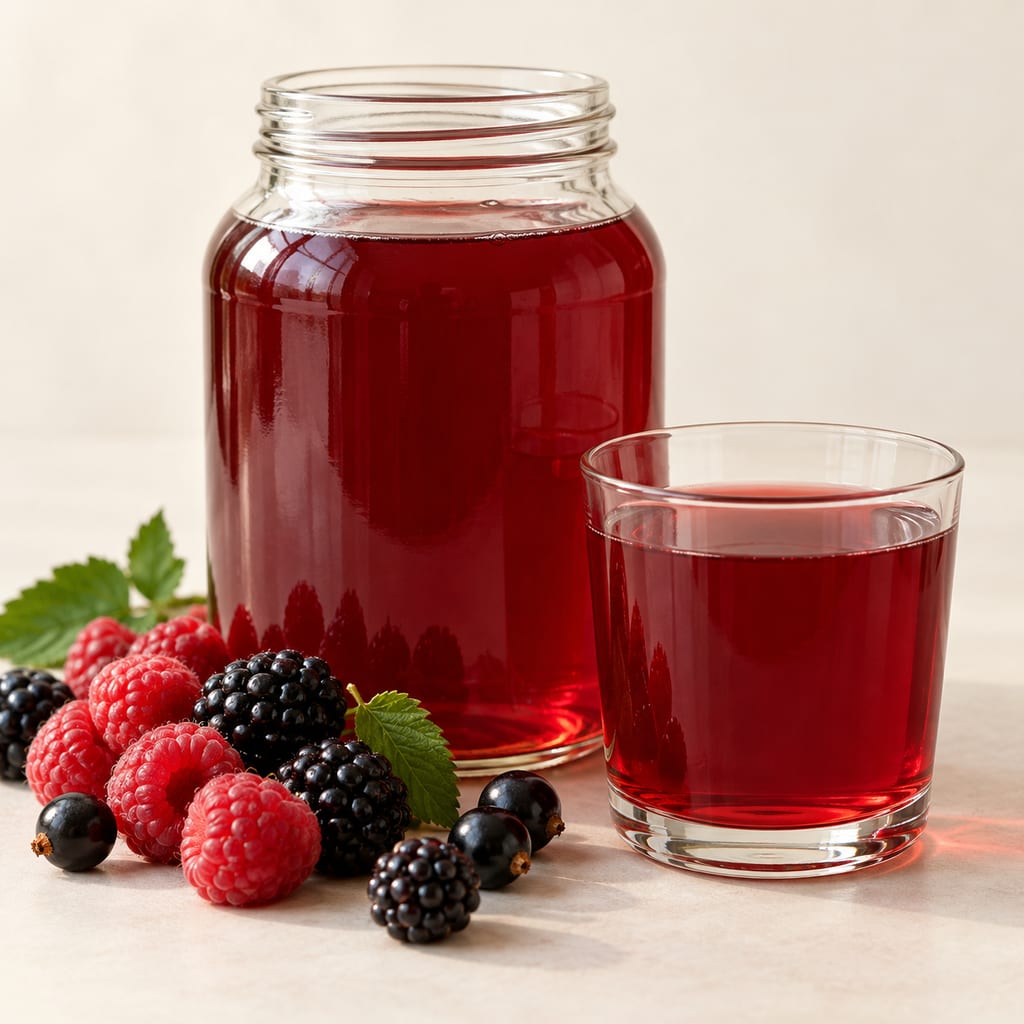
Clear juice that a stacked steam juicer draws out of ripe fruit by steam alone, without crushing it. It is the base for jelly, syrup or cordial and still needs its own keeping step.
No community contributions have been published for this entry yet.
Sign in to contribute. Published comments and photos are free to read.
Dassana's Veg Recipes of IndiaMethod · Variations · Ingredients
Aam Panna Recipe (With Boiled & Roasted Mangoes)Documents boiled or steamed and fire-roasted versions.
Associates boiled versions with Maharashtra and Gujarat and roasted versions with North India.
Describes sweetener, roasted cumin, black salt, dilution and concentrate.
Cited in: Boiling, steaming and roasting; The roles of fruit, sweetener and spice; Concentrate and glass; Regional and household forms; Reading the result; Choosing and preparing green mango; A distinct preparation, not a ferment
District Administration, Panna, Government of Madhya PradeshGeography · Cultural use
Mango PnaThe district administration describes raw-mango panna as a popular Indian summer drink.
Cited in: The green-mango season; At the table; Panna among summer drinks; Distinguishing history from health lore
Condé Nast Traveller IndiaHistory · Geography · Variations
Aam Panna: the Indian summer cooler that is older than you thinkDiscusses Maharashtra, Bengal and other regional versions and interviews food historians.
Reports historical claims as attributed accounts, not a reproduced primary dated recipe.
Cited in: The green-mango season; A cautious history; Regional and household forms; At the table; Panna among summer drinks; Distinguishing history from health lore
The Indian ExpressHistory · Geography · Method · Cultural use
Summer in a glass: From Bengal’s aam pora shorbot to the ancient history of Indian sharbatsDescribes Bengali aam porar shorbot as roasted green mango pulp with ginger, salt and sugar, simmered into concentrate and diluted.
Distinguishes flavoured sharbat from plain juice.
Cited in: A cautious history; Boiling, steaming and roasting; Regional and household forms; At the table; Panna among summer drinks; Distinguishing history from health lore; A distinct preparation, not a ferment
NDTV FoodMethod · Ingredients · Serving
Aam Panna RecipeDescribes boiling mangoes until soft, cooling and extracting pulp, blending with seasoning and water, then serving over ice.
Cited in: Boiling, steaming and roasting; The roles of fruit, sweetener and spice; Concentrate and glass; Reading the result; Choosing and preparing green mango