
Aam panna
Aam panna is a tart Indian summer drink made by cooking unripe green mango until its flesh softens, then blending the pulp with sweetener, salt and spices and diluting it with water.
 FermenteaWhere food goes to change
Substrates
Unripe mango offers sourness and firm texture at several maturity stages, from tender whole pickle fruit to mature-green slices for cooking or drying.
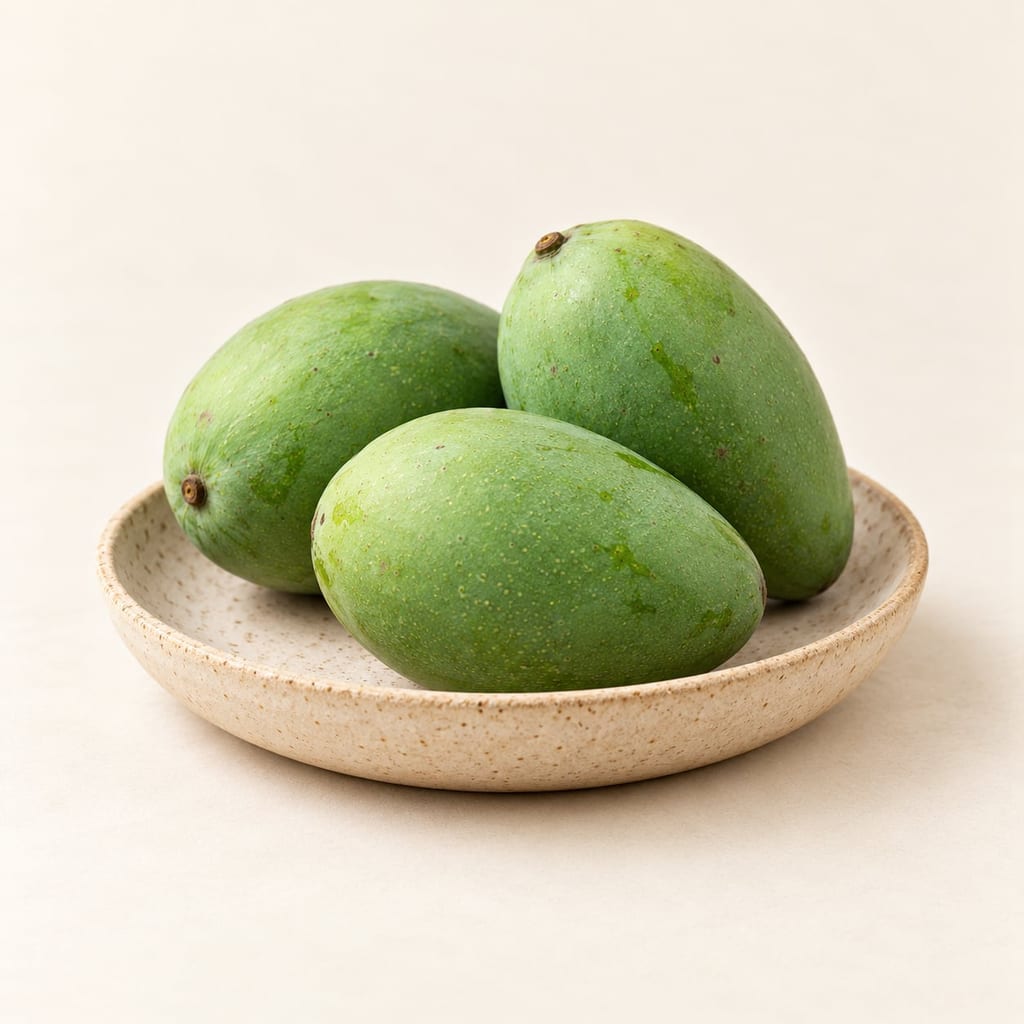
Mango belongs to the cashew family, Anacardiaceae. Mangifera indica L. ranges in its native distribution from Assam to southern Yunnan. Across its cultivated forms, fruit varies widely in shape, size and colour. Green skin alone does not identify a cultivar, tell where it grew, or predict whether its flesh will be sharply sour, mildly tart, fibrous or smooth.
In a kitchen, “unripe” can mean a very young fruit, still tender before a hard stone forms, or a later mature-green fruit that has grown nearly to full size but remains firm and sour. These stages are not interchangeable. Small fruit may be pickled whole while its interior is still tender; larger green fruit can be peeled and sliced or grated for curries and chutneys. A fruit left to ripen follows another path: it gradually softens and sweetens. For pickling and drying, the recipe’s maturity language matters more than the color of the peel.
The flesh’s role shifts with that stage. A sour slice can wake up lentils or vegetables; a whole tender fruit can hold its shape in a pickle; a firm, larger fruit gives more substantial pieces. The raw fruit contributes its own acidity, texture and characteristic aroma, so the same salt and spice mixture will not taste identical with every mango. Selection studies in India have found wide differences among local accessions in firmness, acidity, raw-fruit flavor and other traits important to pickle quality. “Green mango” is therefore a useful market phrase, but not a promise of one uniform ingredient.
Names keep particular uses local. Kairi panha is a Maharashtrian raw-mango drink; green mango pickle in the Philippines is known as burong mangga or dalok. Such names belong to their cuisines and should not be treated as universal labels for every unripe mango across South Asia.
The mango tree has been selected and carried across a broad region, giving cooks many local fruits rather than one standardized green cultivar. Its cultivated history links Indian and Southeast Asian gene pools, with regional selection and hybridisation shaping the diversity found today. This is a story of movement and selection across a region, not one securely identified birthplace.
That long cultivation produced a repertoire of fruit forms and uses. In India, local mangoes become raw slices in brine, amchur, pickle, murabba, chutney and panhe, while ripe mango is used in a different set of foods. The list spans products rather than a single national recipe. A horticultural overview contrasts local raw varieties for commercial pickle and brine with Alphonso fruit used for squash in India’s western coastal zone, showing how growers and processors match fruit to a product. The practical meaning is that harvest-stage choice affects what the fruit becomes: a souring ingredient for the pot, a sweet preserve, or a condiment that can accompany a meal after the harvest.
Seasonality gives preservation a central place in this story. Raw mango for pickling comes during a short harvest, and dry salting—storing pieces in layers of salt—is one traditional way to extend its use. Color and texture can change, and spoilage can complicate storage, so preservation is a craft as much as a way to stretch the season. But “preserved mango” is not one process. Brining, dry salting, oil pickling, cooking into chutney and drying produce different textures and flavors, and each belongs to its own method.
Ripening is a series of changes inside the fruit. As mango matures, starch is converted into sugars while acidity falls; the flesh softens and aroma develops. In ‘Irwin’ mangoes, citric acid was more abundant than malic acid, and both changed during ripening. A rise in fruit respiration accompanies the transition, while aroma may develop after color begins to change. These changes help explain the green fruit’s firmer, more tart character and the sweeter, softer fruit served ripe. The order and degree vary by cultivar and growing conditions, so there is no single timetable.
Red skin is not a dependable sign of maturity in some cultivars. Changes in cheek fullness and flesh color may help, while cultivars differ in sweetness, sourness, aroma and fiber. A green fruit can be mature enough for a firm pickle and still be far from ripe; another may have passed the tender stage sought for a whole-fruit preparation. Skin color is only one clue. At the market, “for pickle,” “sour,” or “tender mango” is more useful than assuming all green fruit is alike.
Cultivar and maturity are ingredients in their own right. For a sour curry, pieces that keep a little shape can be useful; for a smooth cooked chutney, grated or finely sliced flesh can collapse into the sauce. Whole tender fruit asks for a small form and a soft developing stone. A mature-green pickle may instead depend on firm pieces that retain their edge. A fruit sold for ripening may be excellent later, but its sweetness and softness can make it a poor fit for a recipe that depends on a clean, green sharpness.
There is no single “mango pickle.” Some preparations use small tender mangoes whole; others use mature-green fruit cut into pieces. Mature, firm fruit used for a brined green-mango pickle has a different quality from the tender whole fruit sought in some regional pickles. Fruit closer to ripeness brings a fruitier odor and loses some of the sharp, green-mango character. Pickle makers choose immature or mature unripe mango, with or without peeling and removing the stem; the right choice follows the method and the texture desired.
The seasoning and preserving method vary too. Salt pickles and oil pickles can use whole or sliced fruit, with different spice blends. In Tamil Nadu, mavadu preserves small sour mangoes whole; another familiar style cuts the fruit into slices before seasoning. The fruit’s acidity, firmness and raw-mango flavor affect how it meets salt, spices and oil. A soft, low-acid fruit would not deliver the same clean bite as a firm sour one. Named local mangoes are part of this knowledge, even when they are not standard supermarket varieties.
Some salted mango pickles ferment; others are brined, packed with oil, or cooked. These are not interchangeable operations. Salt draws liquid from the fruit and seasons it; a brine surrounds cut pieces; an oil pickle coats or covers the mixture; cooking softens mango for chutney. Fermentation is a biological change that can develop in a salted preparation, not another word for salting or soaking. Each style has its own balance of sour fruit, salt, spices and texture.
In the Philippines, green mango pickle is known by names including burong mangga and dalok. It is a sour, spicy condiment: a small, forceful bite beside rice or a main dish. Across regions, mango pickle can be a sharp side note or part of a household’s preserved stores; the cut, oil, salt and spice character belongs to its local preparation.
The FAO chapter reports green-mango pickle in many Asian, African and Latin American countries. It names India, Pakistan and Bangladesh as major producers and cites a 1978 estimate of more than 10,000 tonnes per year in South Africa; that figure is historical, not a current production estimate. It identifies burong mangga and dalok as Philippine names for the pickle.
Unripe mango does not have to wait in a jar. In Uttar Pradesh and Bihar, tart fresh mango is cooked with arhar dal (pigeon-pea lentils) or vegetables during its season. A little fruit brings a sour edge to a pot whose other ingredients are mellow, earthy or starchy. After the season, dried mango can supply sourness in another form. The fresh fruit and its dried counterpart are related, but not identical: drying changes texture and concentrates the ingredient into something used by a different measure and in a different way.
Maharashtra’s kairi panha makes another kind of seasonal use. It can be made by grating raw mango, blending and straining it; by cooking the fruit until soft before blending; or by roasting it under embers for a smoky flavor. Jaggery sweetens the sour pulp, while cardamom, rose water, saffron or mint can mark different versions. One drink keeps a fresher fruit character, another is rounded by cooking, and a third carries smoke from roasting. A mango can thus sharpen dinner or become a sweet-tart seasonal beverage.
The range goes further than pickle and dal. Green mango becomes chutney, sweet murabba, panhe, brined slices and amchur. A Tamil Nadu Agricultural University chutney formula combines mango slices or shreds with sugar or jaggery, onion, garlic, ginger, chilli, spices and vinegar. Cooked down, these ingredients turn the fruit’s tartness into a sweet-sour relish. Whole small sour mavadu differs from peeled sliced pickle. These dishes show the choices the fruit invites: leave it whole or cut it; retain its crispness or cook it down; balance its sourness with spice, salt or sweetness; preserve the harvest or serve it fresh.
At the table, green mango’s acid can cut through rich or starchy food, while its firm texture gives a pickle or salad-like preparation a bite that ripe mango would not provide. In cooked dishes, heat softens the flesh and disperses its tartness through the sauce, lentils or vegetables. Grating the fruit spreads that sourness through a pot of dal more evenly than leaving it in large pieces, which offer a sharper burst when bitten. The cut therefore changes how the fruit is experienced even before the choice of salt, oil or spice enters. In drinks, water and sweetener stretch the fruit into a refreshing seasonal preparation. These contrasts explain why recipes specify maturity and form: the ingredient is valued for the way its sourness and structure work with the rest of the meal.
Choose fruit that is sound and undamaged. Wash the whole mango under running water before peeling or cutting it; otherwise dirt or bacteria on the skin can transfer to the flesh. Use clean hands and utensils, trim damaged areas, and discard rotten fruit. Washing reduces surface bacteria but cannot remove all contamination.
Match the fruit to the dish. For whole-fruit pickle, look for small tender mangoes of a sour type. For slices, curry or chutney, choose firm green fruit whose flesh can be cut cleanly. If the recipe calls for mature-green fruit, do not substitute very young fruit just because it is also green. If it calls for tender whole mango, a large, nearly mature fruit may have a harder stone and a different texture. Peel or leave the skin according to the recipe; cutting size also changes how much of the fruit’s tartness spreads through a dish and how much structure remains.
Keep whole fruit intact until preparation, and refrigerate mango that is sold pre-cut or packaged. Once cut, follow the recipe’s storage instructions. In a pickle, salt, acidity, oil and fermentation work together as part of the method; no one of them alone establishes safety. Sour taste and bubbles are not safety tests.
Unripe mango is a seasonal ingredient whose usefulness depends on stage, cultivar and preparation. It can be tender enough to preserve whole, firm and mature enough to slice, or fresh and tart enough to cook with lentils and vegetables. It can become a spice-balanced pickle, a soft chutney, a sweet-tart panha, or a dried product for later use. The best choice is not the greenest fruit in the basket. It is the mango whose firmness, acidity and maturity suit the particular dish.
The National Horticulture Board and FAO document mango pickle and other raw-mango preparations; these are use associations, not crop-origin claims.
FAO names Pakistan among major mango-pickle-producing countries; no locality or birthplace is established.
FAO names Bangladesh among major mango-pickle-producing countries; no locality or birthplace is established.
FAO identifies burong mangga and dalok as Philippine names for green mango pickle.
FAO cites a production estimate from 1978; this records historical production evidence, not current output.
FAO reports mango-pickle production in many African countries; it does not identify every country in this broad statement.
FAO reports mango-pickle production in many Latin American countries but does not identify them in this passage.
Aam panna is a tart Indian summer drink made by cooking unripe green mango until its flesh softens, then blending the pulp with sweetener, salt and spices and diluting it with water.
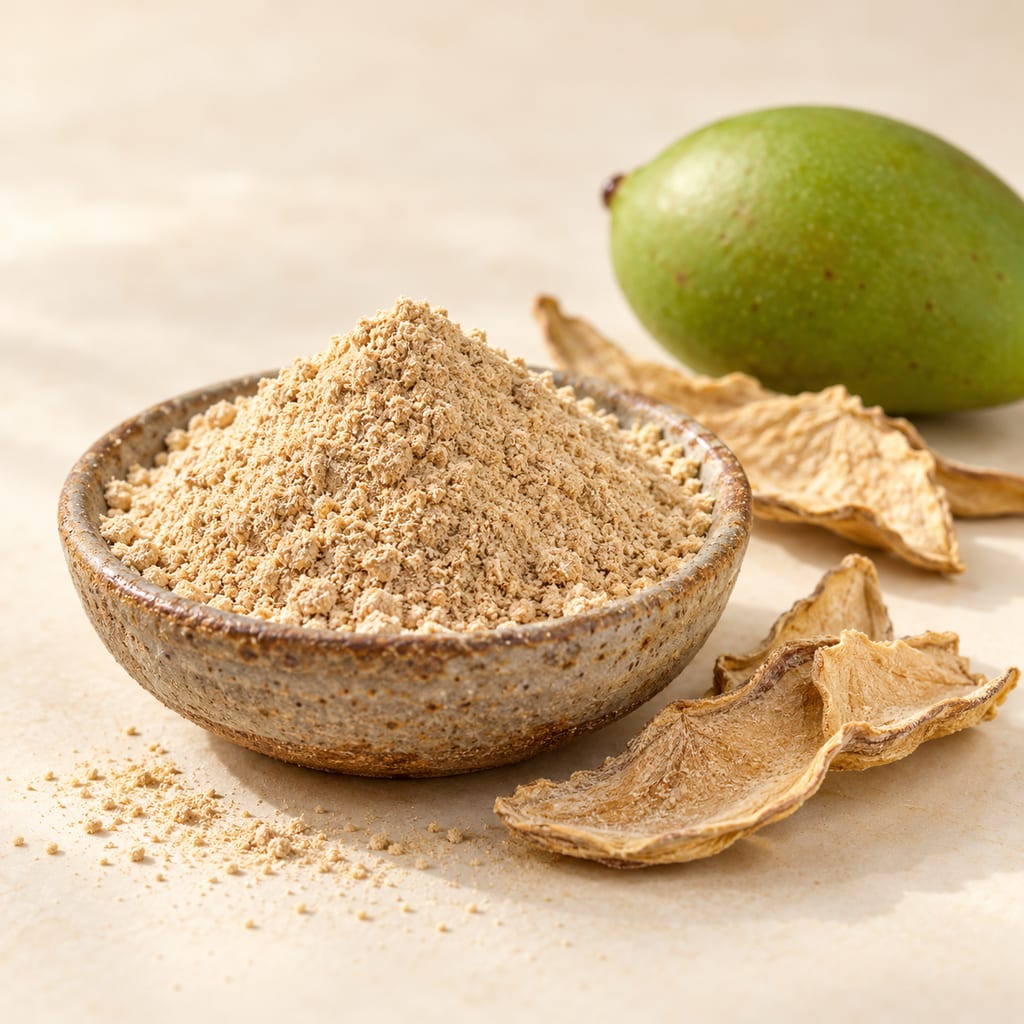
Thin slices of sour unripe mango are sun-dried over four days and ground into a tangy powder, following a five-fruit account published with an Indian mango study.
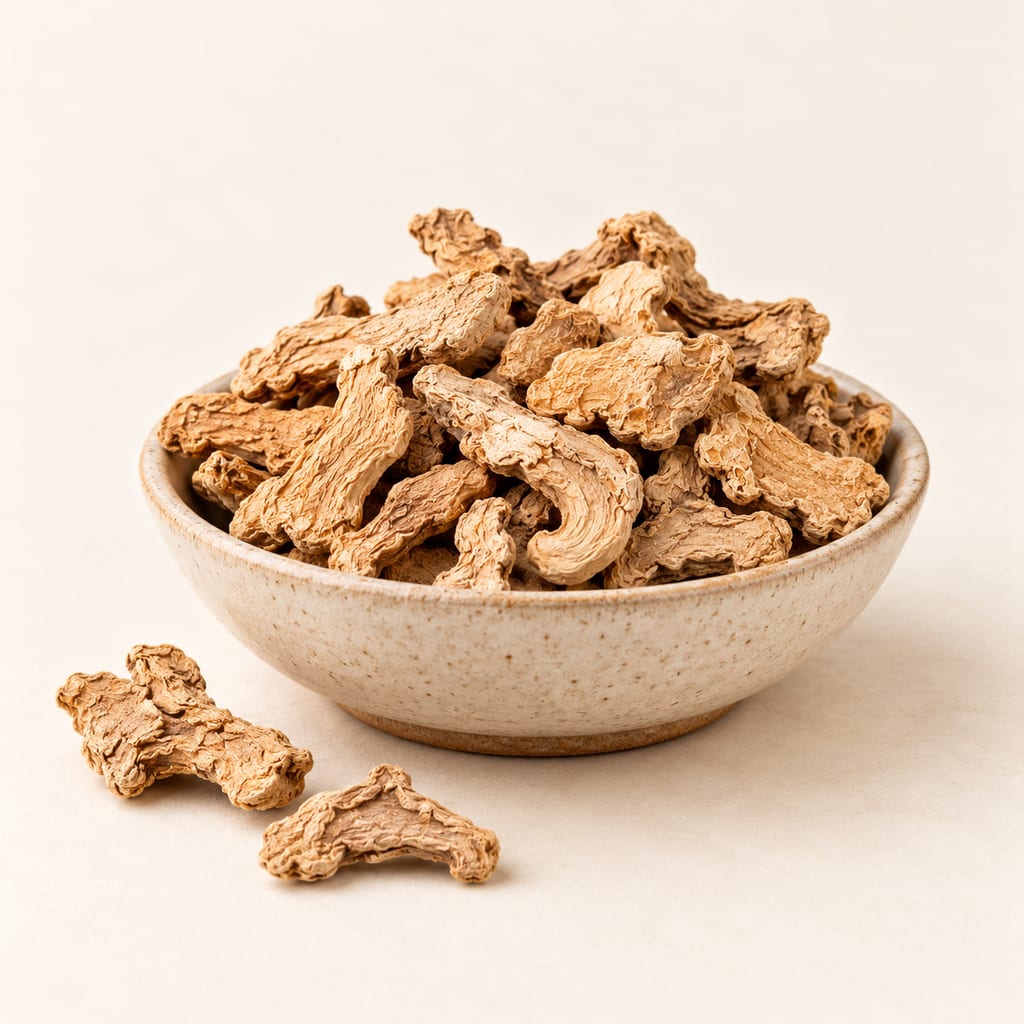
Dried ginger is the mature, dried rhizome of Zingiber officinale; its warm flavor and whole, sliced or ground forms serve different kinds of cooking.
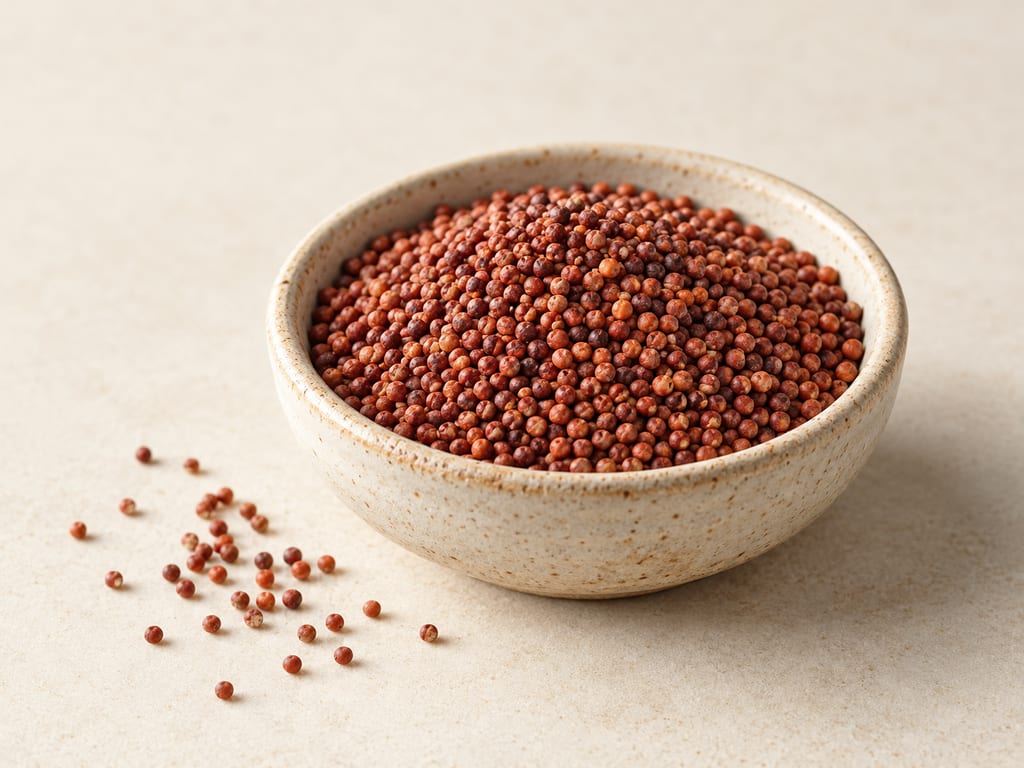
Finger millet (Eleusine coracana) is a small-grained cereal grown across parts of Africa and Asia. It is milled, cooked, malted and fermented in distinct food traditions.
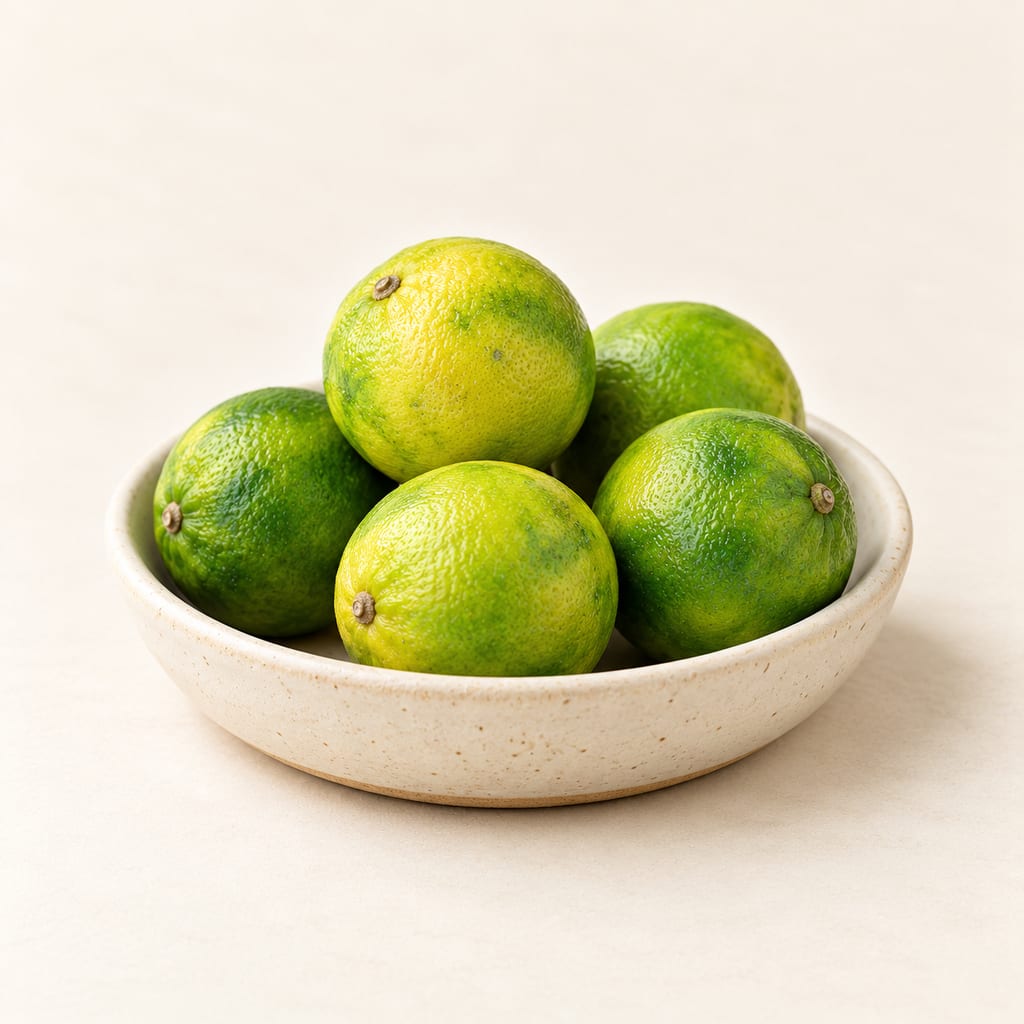
Lime brings sour juice, fragrant peel and firm rind to fresh food and preserved condiments; the fruit named in a recipe may belong to several citrus types.
No community contributions have been published for this entry yet.
Sign in to contribute. Published comments and photos are free to read.
Royal Botanic Gardens, KewTaxonomy · Native range · Species variability
Mangifera indica L. | Plants of the World OnlineAccepted species name Mangifera indica L. in Anacardiaceae
Native range Assam to southern Yunnan
Fruit varies greatly in size, shape and colour
Cited in: A green mango is a stage, not a single kind
PubMed / New PhytologistDomestication · Population genetics
Population genomic analysis of mango (Mangifera indica) suggests a complex history of domesticationCultivated mango has Indian and Southeast Asian gene pools
Results support complex domestication involving possible regional selection and hybridisation rather than one simple origin
Cited in: A cultivated tree, many food traditions
Journal of the Japanese Society for Horticultural Science / J-STAGERipening chemistry · Maturity
Changes in Respiration Rate, Saccharide and Organic Acid Content during the Development and Ripening of Mango Fruit (Mangifera indica L. 'Irwin') Cultured in a Plastic HouseIn cv. Irwin, ripening altered starch, sugars and organic acids
Citric acid was more abundant than malic acid; citric declined as fruit ripened
Respiration, skin color and flesh softening changed around the climacteric, with aroma emission later
Cited in: Why the fruit becomes sweeter and softer
Adel A. Kader, UC Davis Postharvest Research and Extension Center (fact sheet last updated February 1997)Postharvest maturity · Ripening synthesis
MangoRipening converts starch to sugars and decreases acidity while carotenoids and aroma volatiles increase
Red skin alone is not a dependable maturity index for some cultivars
Cultivars differ in flavor and fiber
Cited in: Why the fruit becomes sweeter and softer; Choosing, preparing and keeping it
Journal of Horticultural Sciences / Indian Institute of Horticultural ResearchTender whole pickle · Cultivar variation · Experimental method
Evaluation of Unique Mango Accessions for Whole-Fruit PickleTender whole-fruit pickle suitability varies with acidity, firmness, fruit shape and characteristic raw-mango flavor
The study identifies indigenous accessions as local examples rather than universal commercial cultivars
Cited in: A green mango is a stage, not a single kind; Pickles: tender fruit and firm slices; One fruit, several futures
India Science, Technology & Innovation Portal; developing agency: Indian Institute of Horticultural ResearchSeasonality · Preservation context · Maturity variants
Long term preservation of raw mango slices in brine for use in picklingPickles can use immature or mature unripe mango, with or without peeling and destemming
Acidic and fibrous fruit suits pickle production
Raw mango is seasonal; traditional layered dry salting helps extend availability but can bring colour, texture and spoilage problems
Cited in: A cultivated tree, many food traditions
Food and Agriculture Organization of the United NationsMaturity distinction · Product variants · Processing history
Fruit and Vegetable Processing, chapter 8: Fruit-Specific Preservation Technologies, section 8.9 Mango and Guava Processing TechnologiesGreen mango is used in chutney, pickle, curry and dried products
Pickle maturity is variety-specific, and salt and oil pickle are distinct styles
Chutney can use unripe or semi-ripe fruit
Dried slices and powder called amchoo are from immature fruit
Cited in: A green mango is a stage, not a single kind; Pickles: tender fruit and firm slices; One fruit, several futures
Food and Agriculture Organization of the United NationsPickle maturity · Culinary names · Variant method
Fermented Fruits and Vegetables: A Global Perspective, chapter 6, section 6.2.1 Green Mango PickleGreen mango pickle uses firm, fully mature but unripe fruit near full size in this documented variant
Riper fruit is described as fruitier and less characteristically green in flavour
Philippine names burong mangga and dalok are documented
This manual includes chemical treatment details not offered as home-preservation instructions
The chapter reports green-mango pickle in many Asian, African and Latin American countries; names India, Pakistan and Bangladesh as major producers; cites a 1978 South African production estimate; and names burong mangga and dalok in the Philippines.
Cited in: Pickles: tender fruit and firm slices
National Horticulture Board, Government of IndiaCulinary product repertoire · Regional products
MangoOverview lists local raw-variety products: brined slices, amchur, pickle, murabba, chutney and panhe
Contrasts raw-fruit processing with Alphonso squash in the western coastal zone
Old production/trade figures are not used as current statistics
Cited in: A cultivated tree, many food traditions; Fresh mango at the meal; One fruit, several futures
Uttarakhand Open UniversityCulinary use · Regional food context
Introduction to Indian Cookery, BHM-401TRegional teaching text describes tart mango with arhar dal or vegetables in season in Uttar Pradesh and Bihar
It contrasts fresh-season use with dried mango later
Cited in: Fresh mango at the meal
Tamil Nadu Agricultural University Agritech PortalDocumented recipe variants · Processing context
Post Harvest Technology: MangoSmall sour mavadu whole-fruit pickle is distinguished from sliced mango pickle and amchur
The listed mango chutney ingredients include mango, sugar or jaggery, aromatics, spices and vinegar
Its mavadu instructions include inconsistent oil references and are not reproduced as instructions
Cited in: Pickles: tender fruit and firm slices; Fresh mango at the meal
Isha Foundation, excerpt from Forest Flower, May 2014; webpage dated 13 February 2024Culinary use · Preparation variants · Regional name
Kairi Panha – Raw Mango DrinkKairi panha is identified with Maharashtra and raw mango
It records grated uncooked, cooked and ember-roasted preparations
Jaggery sweetens the sour drink, with ingredients such as cardamom, rose water, saffron and mint in variants
Cited in: A green mango is a stage, not a single kind; Fresh mango at the meal
U.S. Food and Drug AdministrationHandling · Food safety
Selecting and Serving Produce SafelyGeneral advice to wash produce under running water before peeling/cutting, avoid soap, discard rotten produce, trim damaged areas
Washing reduces but does not eliminate bacteria
Cited in: Choosing, preparing and keeping it