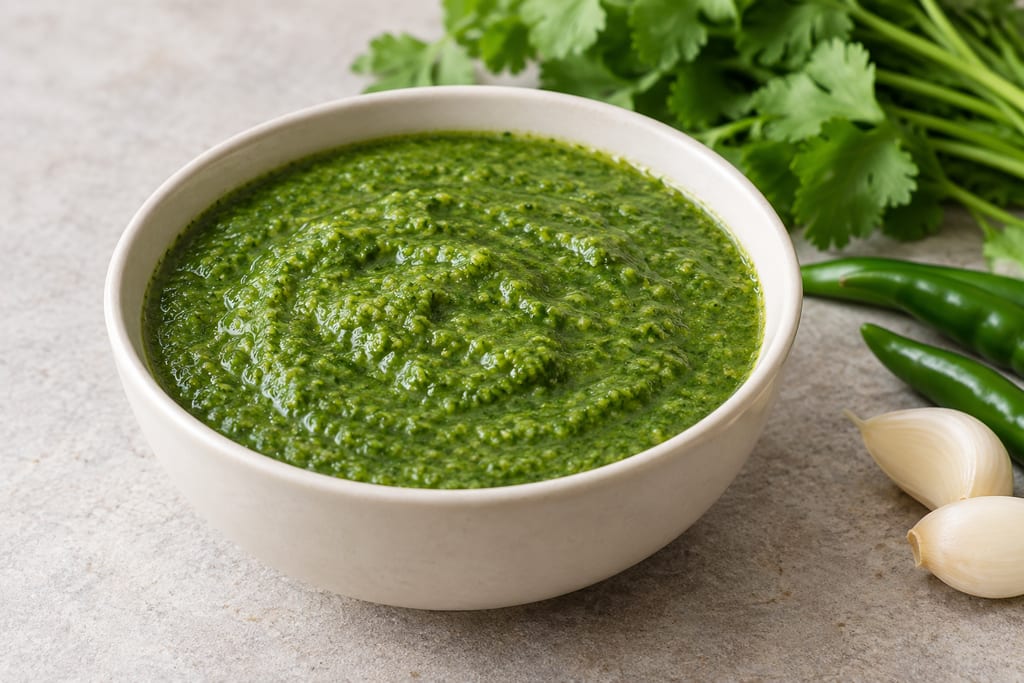
Afghan chutney (chatney)
Afghan coriander chatni is a sharp, hot herb sauce with garlic and vinegar. A 2008 Afghanistan manual records green or red pepper and optional walnut; heat and household versions vary.
 FermenteaWhere food goes to change
Kasundi-inspired cooked mango mustard sauce
A short-cooked green-mango and mustard sauce with chilli, ginger and turmeric. It borrows a flavour direction associated with Bengali kasundi but is an untested, non-fermented fresh sauce, not traditional kasundi or a shelf-stable pickle.
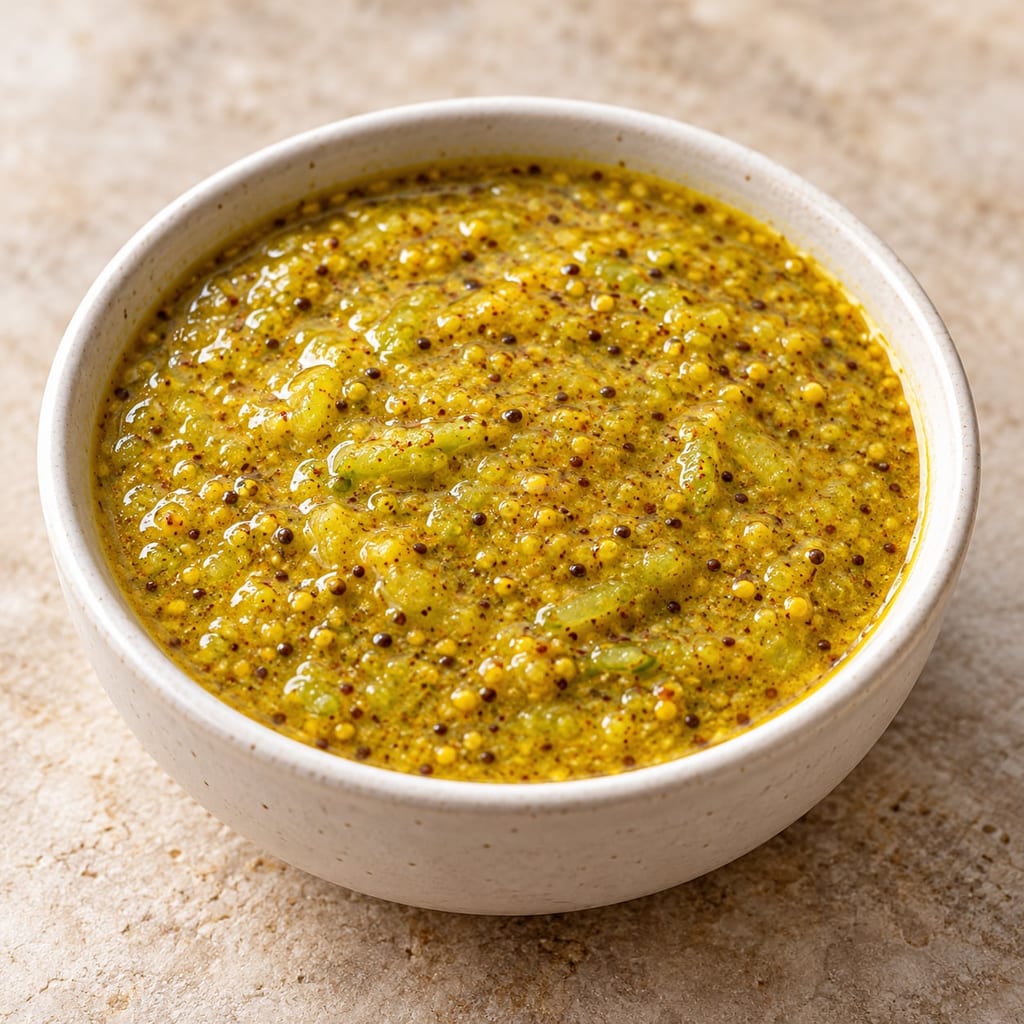
This quick sauce takes its flavour direction from Bengali kasundi, but it is a different preparation. Bong Eats describes paat shaak bhaja as a Bengali jute-leaf dish usually served with kashundi, a fermented condiment that usually contains mustard. That page supplies a serving context for the inspiration; it does not give the mango-and-mustard formula below.
Kasundi itself has more than one reported form. Fermentea’s separate research article records disagreement about mango and distinguishes quick, cooked versions from fermented preparations. This recipe keeps those distinctions visible: it is named as inspired by kasundi, and its steps do not include fermentation or claim to reproduce a traditional method.
The formula uses 90 g of peeled green mango, but it does not specify a cultivar or a precise maturity stage. FAO describes green mango in chutney and says chutney may use peeled, sliced or grated unripe or semi-ripe fruit. It also notes that mango varieties and processing maturity affect finished products. The fruit’s tartness and texture can therefore change the balance of a small batch.
Treat any water adjustment as a texture choice. It does not measure acidity or make the sauce safer to store. The archive formula does not record a target maturity, final acidity or a tested endpoint.
The exact ingredient weights and short-cooking method are retained from archive entry MU11 as an original development formula. It has not been kitchen-tested, sensory-validated or shelf-life tested. The approximately 300 g yield is an archive estimate; evaporation and any extra blending water change the final weight.
The ten-minute simmer moderates fresh mustard heat, but it is not a validated preservation process. Cool promptly and refrigerate. No recipe-specific storage duration is established, and the sauce is not intended for canning or room-temperature storage. Mustard is a listed allergen; check labels for mustard and any additional ingredients.
Bong Eats says Bengali paat shaak bhaja is usually served with kashundi, described as a fermented condiment usually containing mustard. This formula takes a green-mango and mustard flavour direction as inspiration but is cooked briefly and does not reproduce kasundi’s fermentation or preservation.
Yield 300 g approximately · Scaling: source batch only
Mustard seeds are ingredients and are a listed allergen.
Hazard sourceCheck labels for mustard and additional ingredients.
Control sourceCool promptly and refrigerate following general household chilled-food guidance; it does not validate this sauce or determine its shelf life.
Control sourceMustard is a listed allergen; check labels for any additional ingredients.
This is not fermented kasundi or a validated pickle. Do not can it or store it at room temperature.
The ten-minute simmer and variable green-mango acidity are not validated preservation controls. No recipe-specific shelf life is established.
Bong Eats documents Bengali cuisine and the use of fermented kashundi. Bengal spans present-day India and Bangladesh; this entry does not claim a precise birthplace.
Afghan coriander chatni is a sharp, hot herb sauce with garlic and vinegar. A 2008 Afghanistan manual records green or red pepper and optional walnut; heat and household versions vary.
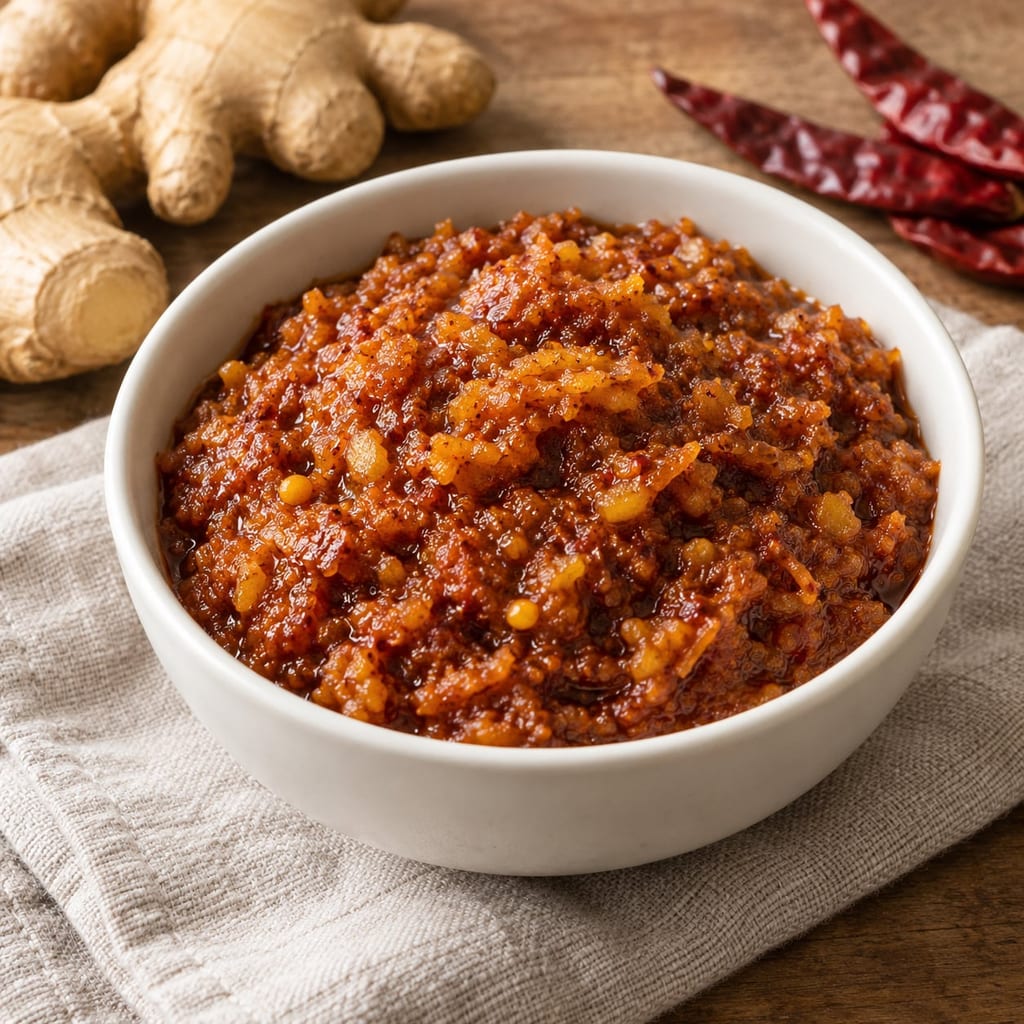
An Andhra ginger-and-urad chutney in which browned dal and briefly fried ginger and chillies are cooled, then ground with jaggery to a coarse paste.
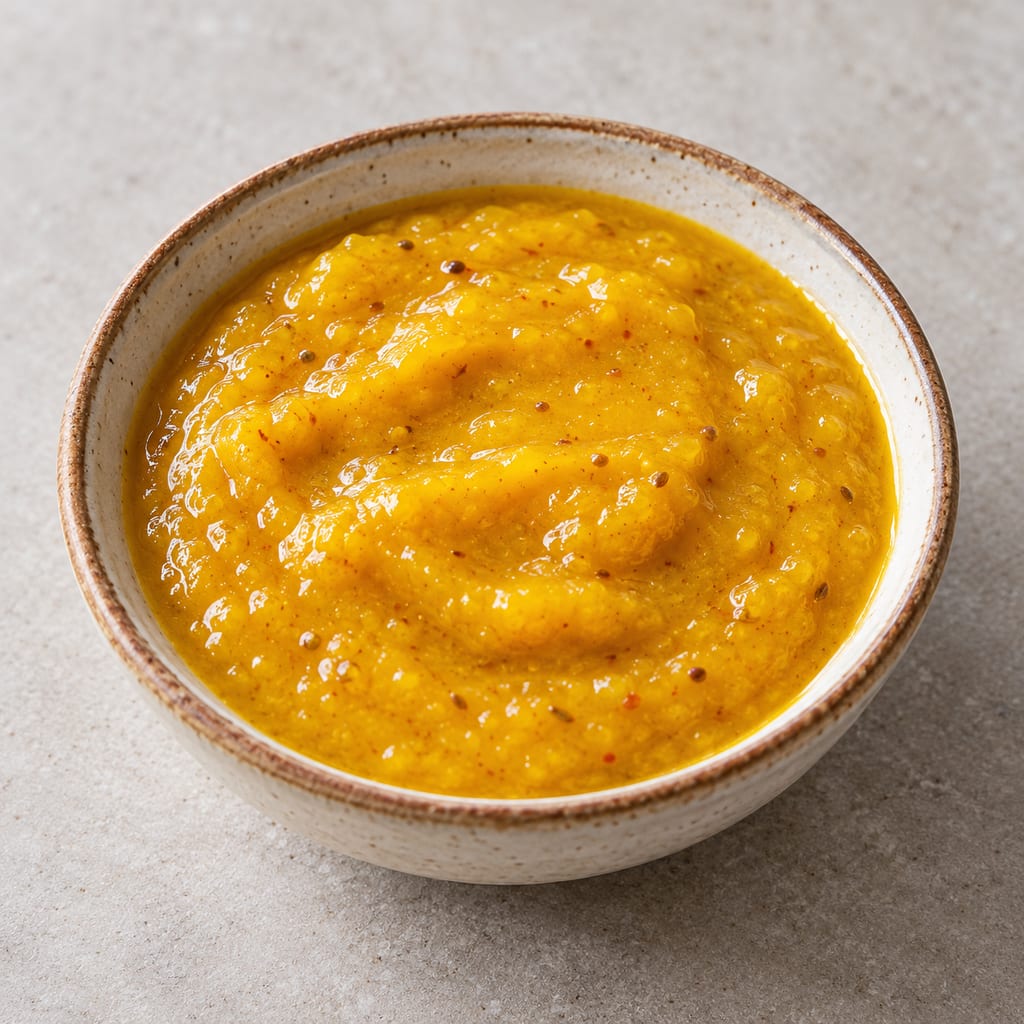
This cooked amba follows a Jewish Food Society recipe that simmers ripe mango with onion, garlic, mustard seed and warm spices into a tangy Middle Eastern condiment.
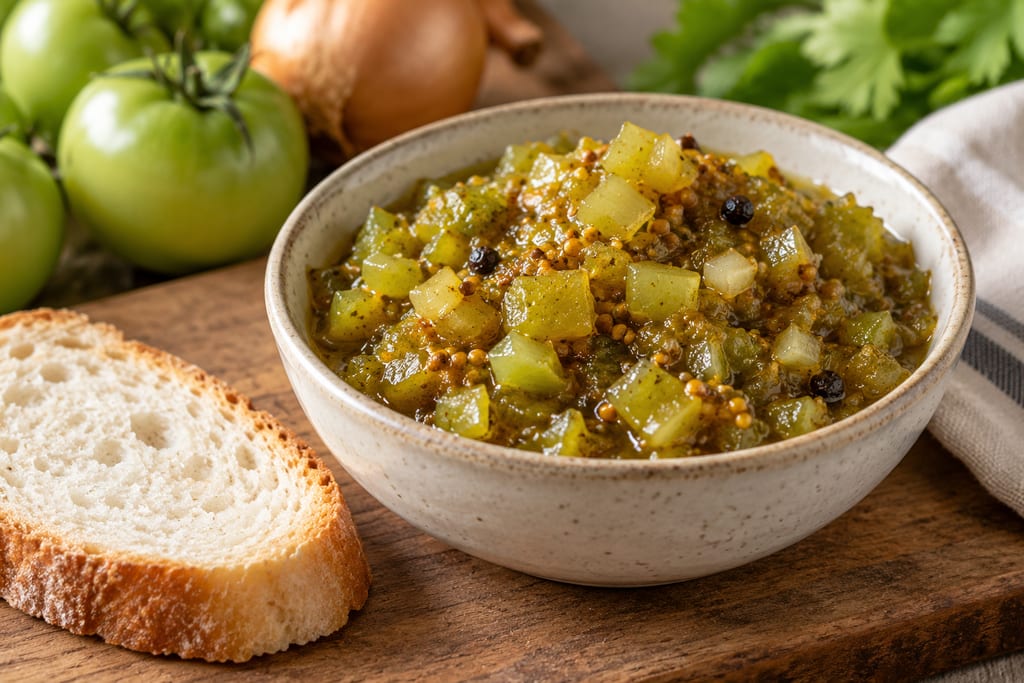
Australian green tomato pickles and relishes vary. This partial version follows ABC Western Victoria’s 2018 pickle recipe, not Beerenberg’s commercial formula. Sources document examples from 1944 onward, not a single origin.
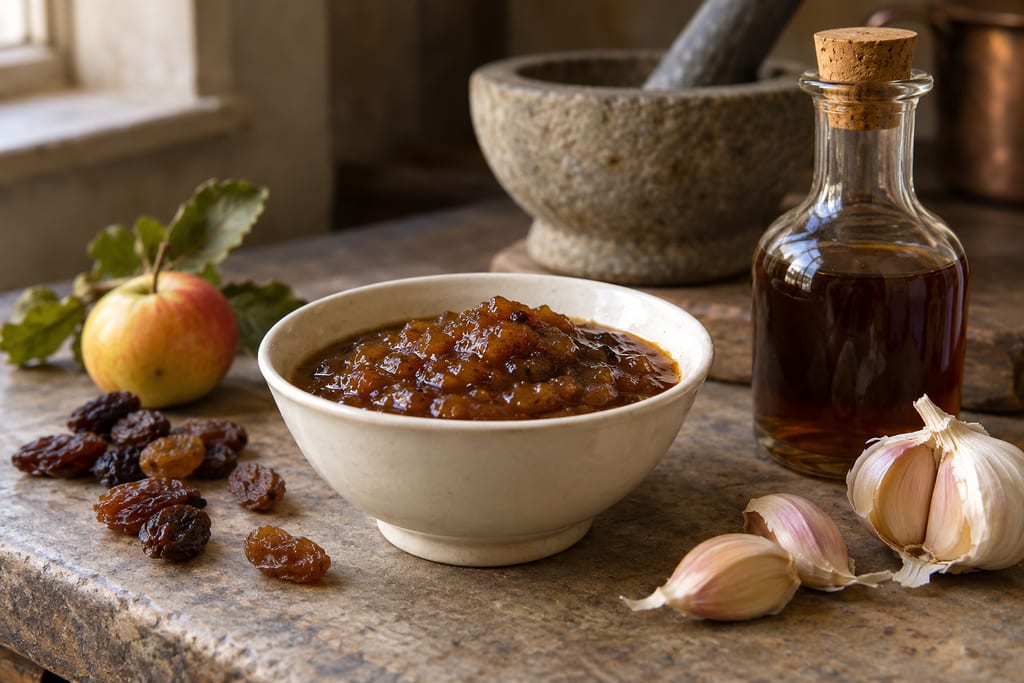
Eliza Acton's Bengal receipt for chetney sauce: stoned raisins and a hard acid fruit pounded with brown sugar, ginger, salt, cayenne and garlic, then thinned with vinegar to the consistence of thick cream.
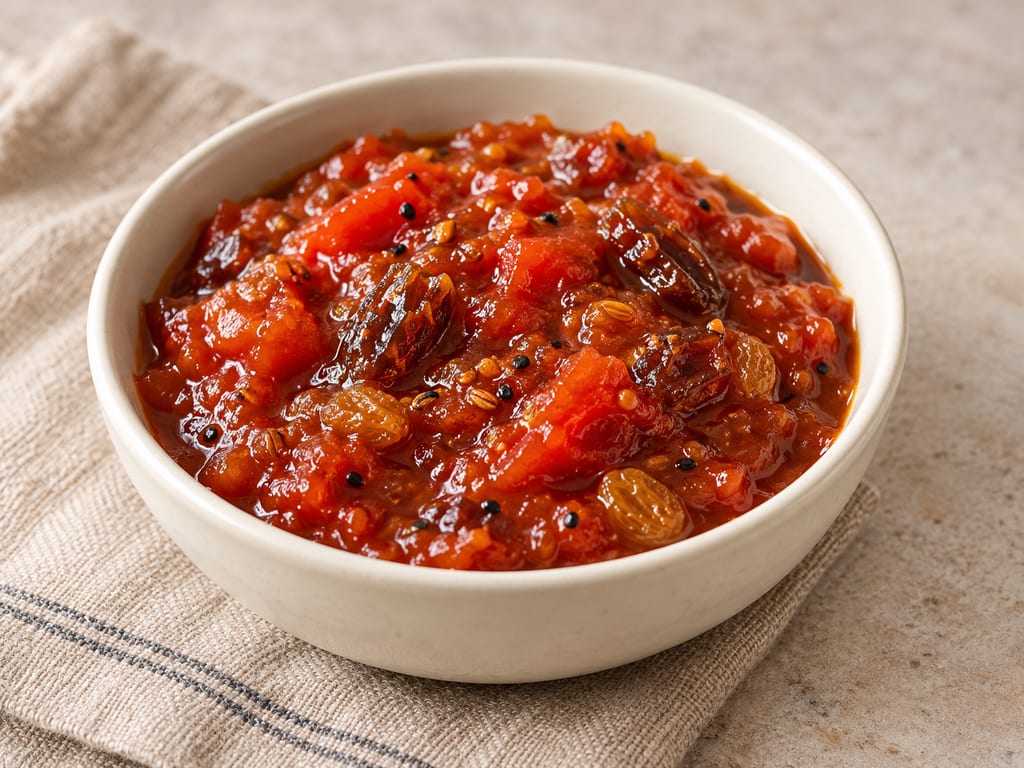
A cooked Bengali meal chutney combining tomatoes, dates, raisins, ginger and panch phoron.

A spicy South African vegetable relish of onion, carrot, pepper, tomato, curry seasoning and beans, cooked briefly and served warm or cold beside pap and grilled meat.
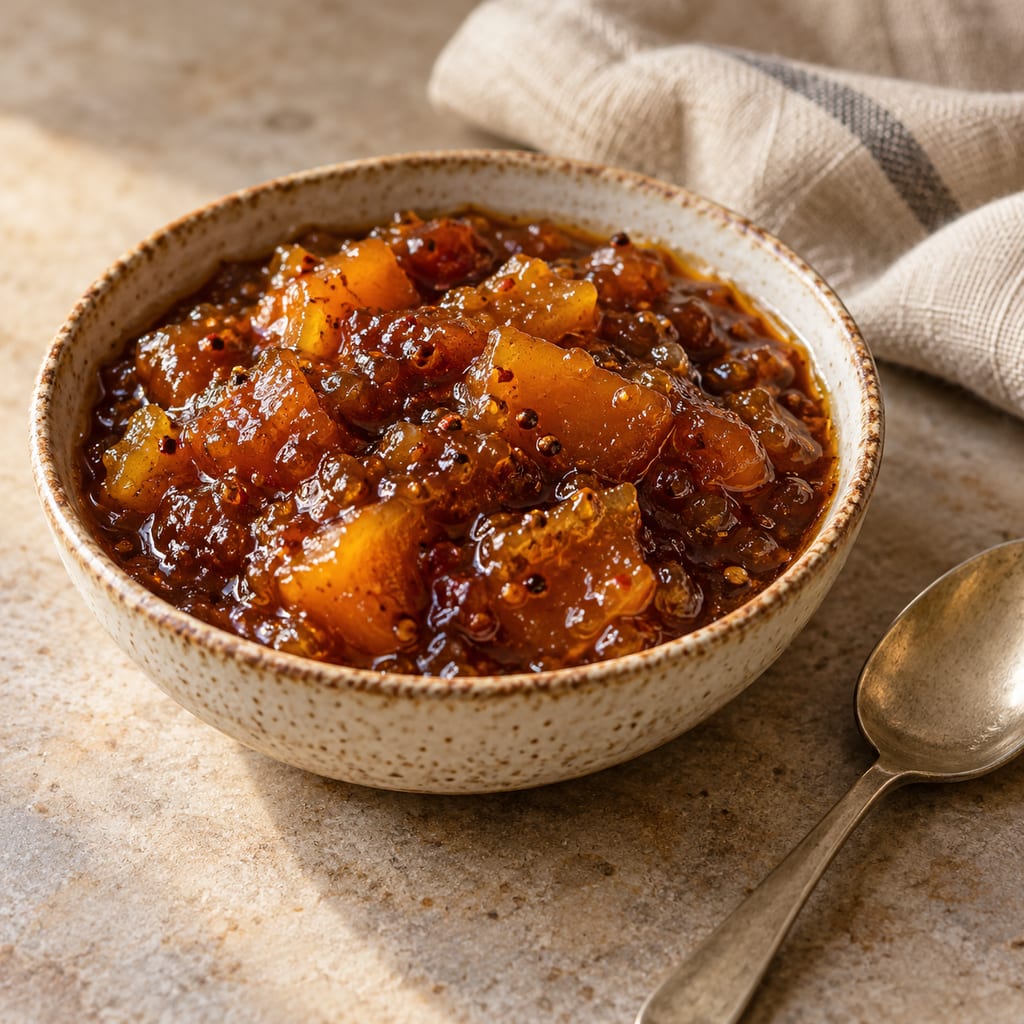
A broad account of cooked chutney traditions: fruit or vegetables combined with sugar, spices and sometimes acid, often boiled into a thick condiment. This record is historical and process context, not a formula or storage recipe.
No community contributions have been published for this entry yet.
Sign in to contribute. Published comments and photos are free to read.
Bong EatsHistory
Paat shaak bhajaBong Eats describes the dish as Bengali and says it is usually served with kashundi, a fermented condiment usually containing mustard; this is context for the adaptation, not evidence for its formula.
Cited in: Kasundi is the point of reference, not the formula
Food Standards AgencySafety
Allergen guidance for food businessesMustard seeds are included in the listed mustard allergen.
Cited in: An untested short-cooked sauce
Food Standards AgencySafety
Storing chilled foods at incorrect temperaturesGeneral household guidance advises prompt cooling and refrigeration within 1–2 hours, with a refrigerator at 5°C or below.
The guidance does not validate this recipe or establish its shelf life.
Cited in: An untested short-cooked sauce
Food and Agriculture Organization of the United NationsIngredient context
Fruit and vegetable processing, chapter 8: Mango and guava processing technologiesFAO describes green mango as an ingredient in chutney and says chutney methods may use unripe or semi-ripe fruit; it also notes that mango varieties and processing maturity affect product quality. This is ingredient context only, not validation of this formula or its storage.
Cited in: Green mango varies with maturity and variety