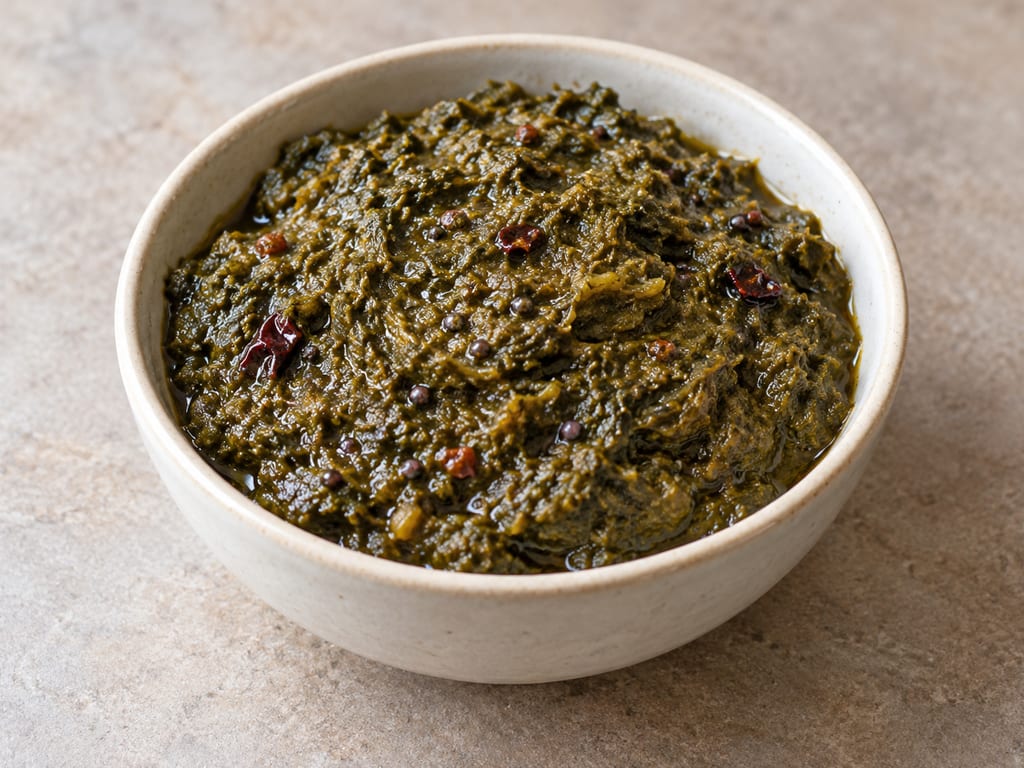
Gongura pachadi
A hot, sour Andhra chutney of gongura (sorrel) leaves cooked soft and ground with fried dried chillies, garlic and onion, then finished with a hot tempering of dals, mustard and curry leaves.
 FermenteaWhere food goes to change
Modern method
Allam Pachadi | Andhra Ginger Chutney · Andhra ginger chutney
An Andhra ginger-and-urad chutney in which browned dal and briefly fried ginger and chillies are cooled, then ground with jaggery to a coarse paste.
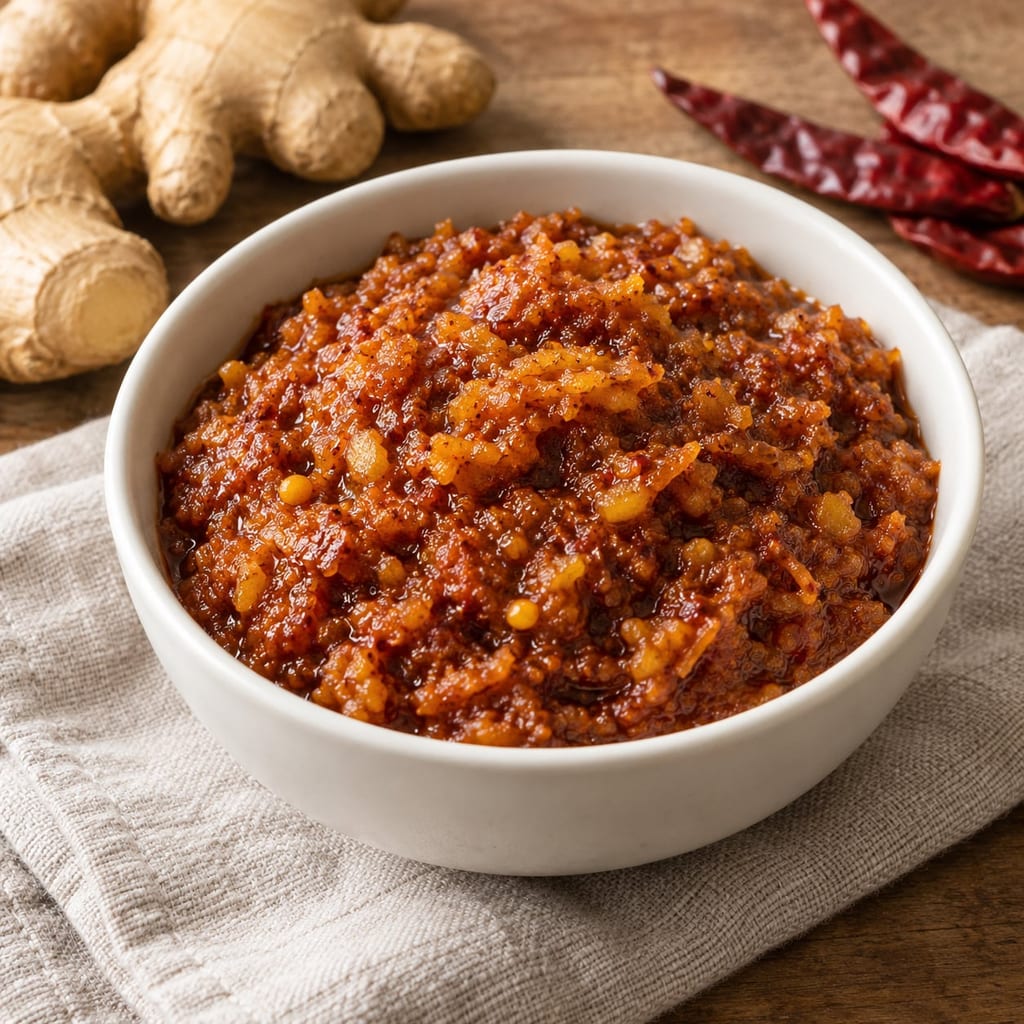
Allam pachadi is a strongly flavoured ginger chutney associated with Andhra Pradesh in southern India.
The Telugu name is అల్లం పచ్చడి.
Allam means ginger, while pachadi refers to a class of chutneys and condiments.
The defining flavour combines the pungency of ginger, the heat of dried red chillies, the sweetness of jaggery and the nutty flavour of fried urad dal.
This creates a condiment that is simultaneously hot, sweet and savoury.
Allam pachadi is especially associated with pesarattu, a savoury preparation made from mung beans. It is also served with idli, dosa and vada.
The recipe here uses a small quantity of oil to fry the dal, ginger and chilli, then grinds them with jaggery and a little water.
It is cooked and blended, not fermented.
Ginger chutneys occur in several South Indian food cultures, but allam pachadi is particularly associated with Andhra cooking.
Its importance is clearest in the combinations in which it is served.
Pesarattu and allam pachadi are a familiar pairing, the pungent-sweet chutney providing contrast to the savoury mung-bean pancake.
The documented modern recipe was first published in May 2012 and updated in October 2018.
That publication history does not establish the first historical preparation of the dish.
The source does not identify a single village or ancient period of origin.
The name and present culinary association are sufficiently well documented without inventing a much older chronology.
Ingredient — Quantity
Fresh ginger — 20 g
Split, husked urad dal — 20 g, approximately 2 tablespoons
Jaggery — 20–30 g, approximately 2–3 tablespoons
Dried red chillies — 2–3
Turmeric — One pinch
Oil — 2 teaspoons
Salt — To taste
Water — A little, for grinding; no volume specified
Yield: Four servings.
Published preparation: 10 minutes.
Published cooking: 10 minutes.
The original recipe does not include a separate tamarind addition.
Other Andhra ginger chutneys may contain tamarind, but it should not be inserted into this version.
Ginger is the rhizome of Zingiber officinale.
It contains gingerols and other pungent compounds.
Fresh ginger provides a sharp, warming sensation and distinctive aroma.
Frying changes some of those flavour compounds and softens the raw pungency.
The recipe does not require prolonged cooking.
Approximately one minute of frying is documented after the ginger and chillies are added.
This brief treatment develops aroma without attempting to dry or preserve the ginger.
Urad dal comes from black gram, Vigna mungo.
It contributes protein, starch and a characteristic roasted pulse flavour.
The dal is fried until golden.
As it browns, its aroma changes.
Grinding the cooked dal with ginger and jaggery gives the chutney body.
It also helps balance the strong ginger flavour.
The dal is therefore a functional component of both flavour and texture, not merely an optional garnish.
Jaggery is a minimally refined sugar product commonly prepared from concentrated cane juice, although other raw materials are used in different regions.
It contributes sweetness and caramel-like notes.
The published recipe gives 20–30 g, deliberately allowing variation.
More jaggery produces a sweeter balance.
Less allows ginger and chilli to dominate.
The range should be retained rather than replaced with an invented exact weight.
Measure 20 g fresh ginger.
Peel and chop.
The pieces need not be extremely fine because they will be ground later.
Measure 20 g urad dal.
Check that it is clean and free from unwanted material.
Place a kadai or wok over heat.
Add 2 teaspoons oil.
The source does not provide a numeric oil temperature.
Add the urad dal.
Fry until golden.
Stir to prevent burning.
The desired colour is a practical cooking cue, not a timed laboratory endpoint.
Add the chopped ginger and 2–3 dried red chillies.
Fry for approximately 1 minute, until aromatic.
Turn off the heat.
Add a pinch of turmeric and salt to taste.
The compact source card mentions turmeric twice, once before and once after heat is switched off. The illustrated method adds it once after switching off the heat.
This version follows the illustrated sequence and does not double the turmeric.
Allow the fried mixture to cool sufficiently for grinding.
The source does not give a numeric cooling temperature or duration.
Transfer the mixture to a grinder.
Add 20–30 g jaggery.
Add a little water.
Grind into a coarse paste.
The source does not specify the water volume.
Avoid turning the chutney into an unnecessarily thin liquid.
Transfer to a serving bowl.
Serve with pesarattu, dosa, idli or vada.
The dish combines different sensory mechanisms.
Ginger provides gingerol-associated pungency.
Dried chilli provides capsaicinoid heat.
Jaggery supplies sweetness.
Salt enhances overall flavour.
Roasted urad dal contributes a nutty and savoury character.
These compounds do not cancel one another chemically.
Instead, their combination changes how the condiment is perceived.
Sweetness can make the sharpness of ginger and chilli feel more balanced.
The dal provides body and gives the mixture a less purely fiery character.
The intended result is a coarse chutney.
The fried dal and ginger should remain part of a textured paste.
Fine grinding would produce a smoother mouthfeel, but that is not the documented target.
The amount of water influences whether the mixture remains thick enough to scoop.
Because no volume is specified, the cook should add only enough to permit grinding.
This is a culinary judgement rather than an invitation to invent a measured water ratio.
Andhra recipes vary in the amount of jaggery, chilli and ginger.
Some include tamarind.
Others use a different dal proportion or tempering.
The recipe here does not use a separate final mustard-seed tempering.
That absence should be respected.
The defining flavour remains ginger balanced with heat and sweetness, but each variant should retain its own source-backed quantities.
Home recipes for allam pachadi differ in their ratios and textures, and none of the pages gives a historical account. Veg Recipes of India writes a three-serving version with 60 g of ginger and tamarind soaked for 20 to 30 minutes, with a brief saute before grinding. Cooking With Shobana, in 2013, gives a half-cup batch of grated three-inch ginger with cumin, four chillies, tamarind and jaggery, optional garlic and a later tempering, and says it is adapted from Chandra Padmanabhan; her grinding water is 2 to 3 tablespoons. A separate transcription attributed to the same book says to add a quarter cup of water in a garbled sentence, and the book itself was not read, so the two sets of measures stay separate.
Vismai Food writes a 20-serving version that includes 50 g of dried chillies, 50 g of tamarind and 10 to 12 garlic cloves. These versions use tamarind and tempering that the batch above does not, and their quantities belong to their own authors.
Allam pachadi is particularly effective with pesarattu.
The mung-bean pancake has its own savoury, earthy flavour.
The chutney introduces a sharp, sweet contrast.
It also accompanies idli and dosa, foods that themselves may be made using fermented batter.
Allam pachadi does not acquire a fermentation stage simply because it is served with those foods.
It can also accompany garelu, the Andhra term for a familiar urad-dal fritter.
Shobana serves her version with pesarattu, and a course-note excerpt from CSJMU also mentions ginger-tamarind chutney with pesarattu. These are serving examples, not a survey of Telugu household practice.
Dal is burnt: The chutney may taste bitter. The desired endpoint is golden, not black.
Ginger remains harsh: Frying conditions and ginger maturity influence pungency.
The paste is too sweet: The jaggery amount may dominate.
Too spicy: Chilli variety and quantity matter.
The paste is too thin: Too much water may have been added during grinding.
Texture is too smooth: The original method calls for a coarse paste.
The recipe does not contain a fermentation phase, so bubbling or unintended souring during storage should not be interpreted as desirable development.
The source provides no validated storage period.
The finished chutney contains moisture and cooked ingredients and should be treated as perishable.
Refrigerate promptly if not served immediately.
Use clean utensils and avoid prolonged warm holding.
Veg Recipes of India gives 4 to 5 days in the refrigerator for its own version and Vismai Food asserts storage beyond two months for its larger one. Neither comes with a test, so neither is a shelf life, and neither should be applied to the batch above. The recipes involve frying, grinding and tempering, with no fermentation stage.
The recipe can be vegetarian and vegan when the jaggery and other products meet the required dietary standards.
Aahaaram's current page identifies the recipe as Andhra-style, says it is commonly paired in Andhra Pradesh with idli and dosa, and describes it as a favored accompaniment to pesarattu. It notes the recipe was first posted in May 2012 and updated with a recipe card in 2018; that is publication history, not an earliest food attestation.
Yield 4 servings · Scaling: source batch only
The source provides no finished-chutney storage interval or validated holding process.
Other home pages claim 4 to 5 days refrigerated, or more than two months, for their own versions; neither claim is tested and neither applies to this batch.
The author describes this as Andhra-style and names Andhra pairings; the page does not establish a dated origin or first attestation.
A hot, sour Andhra chutney of gongura (sorrel) leaves cooked soft and ground with fried dried chillies, garlic and onion, then finished with a hot tempering of dals, mustard and curry leaves.
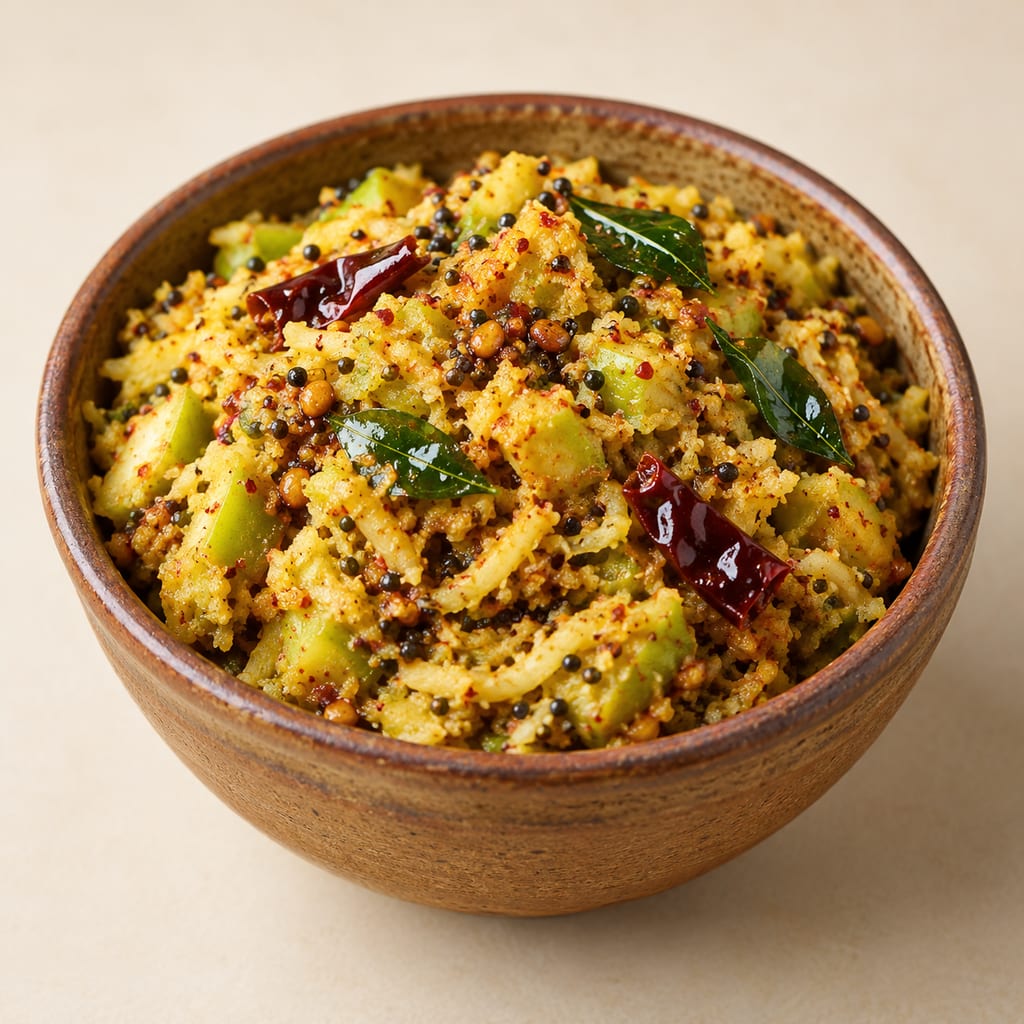
A Telugu coconut and raw mango pachhadi with a separately fried spice mixture.
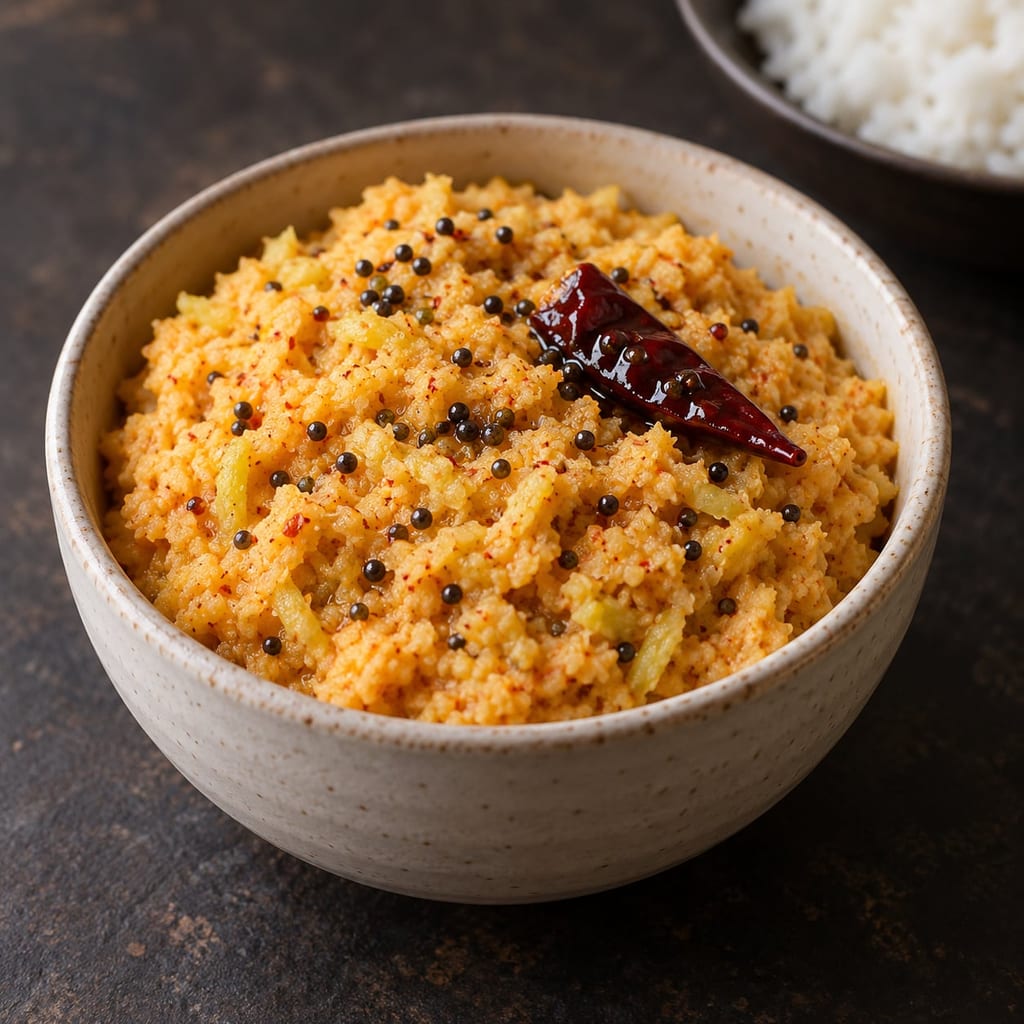
A coarse, sour Andhra chutney of raw mango and fresh coconut ground with browned urad dal and hot chillies, finished with a mustard tempering and eaten with hot rice.
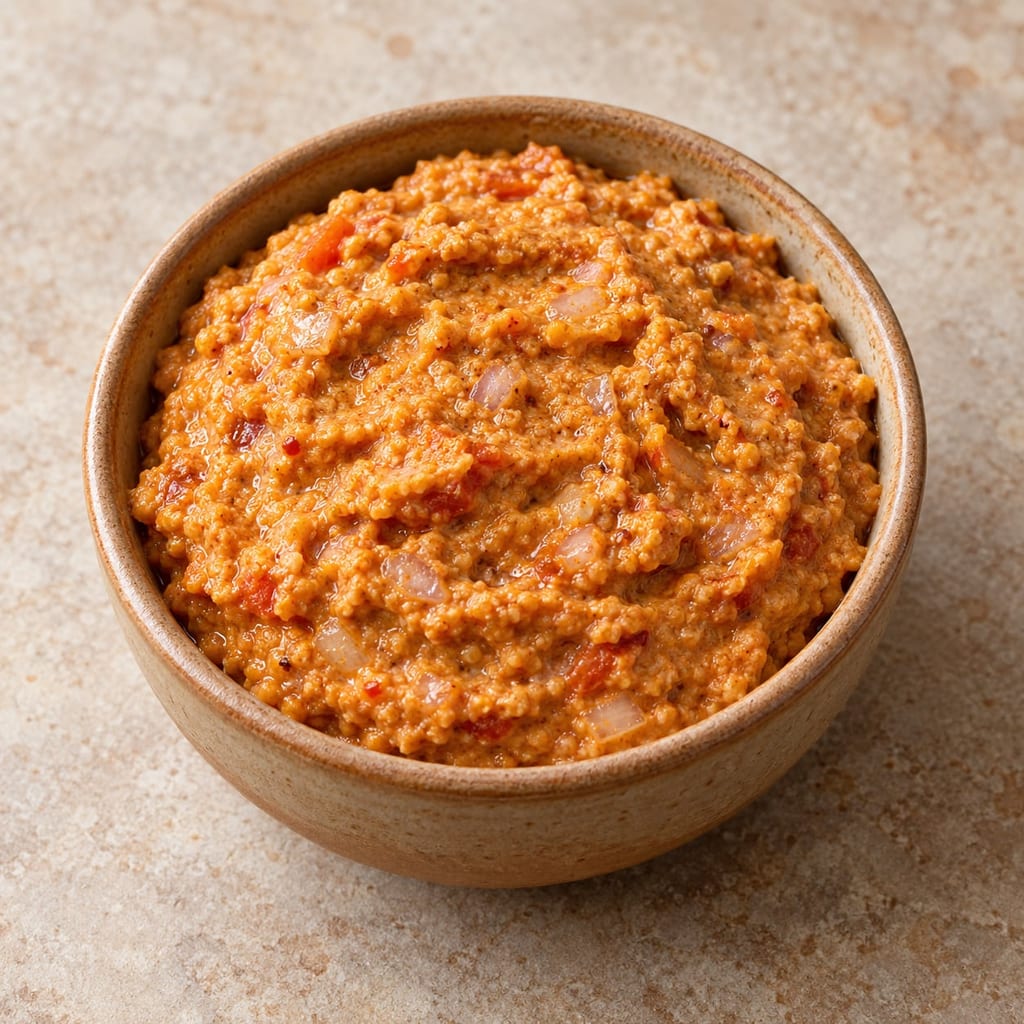
A moist Andhra peanut chutney: roasted groundnuts ground with fried dried chillies and tamarind, folded into a roasted tomato-and-spice mix with raw onion, and eaten with khichdi, attu or idli.
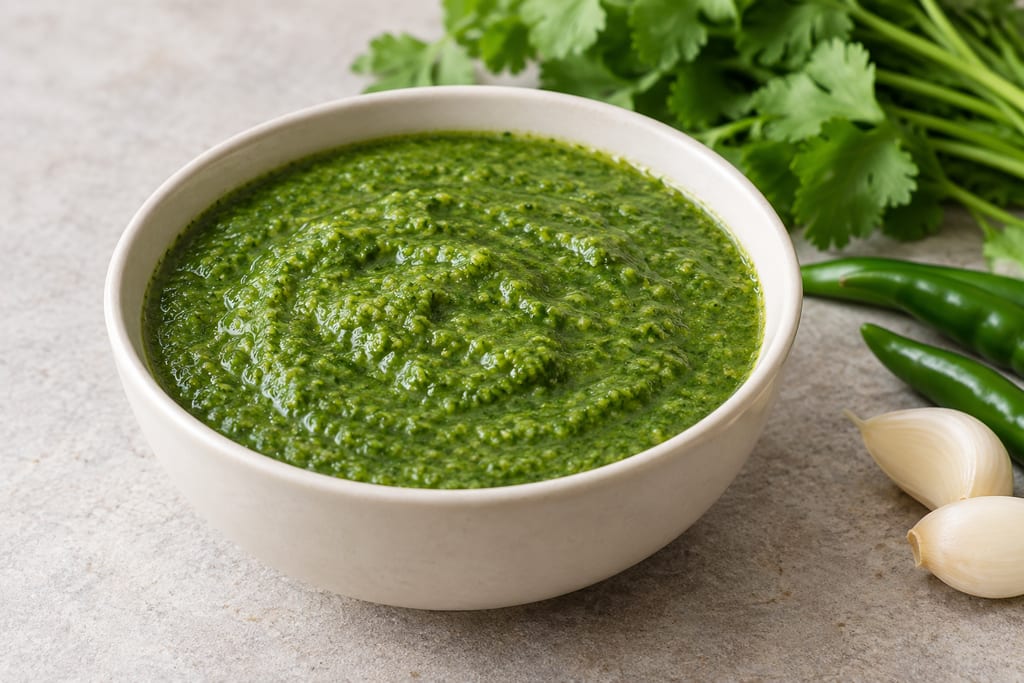
Afghan coriander chatni is a sharp, hot herb sauce with garlic and vinegar. A 2008 Afghanistan manual records green or red pepper and optional walnut; heat and household versions vary.
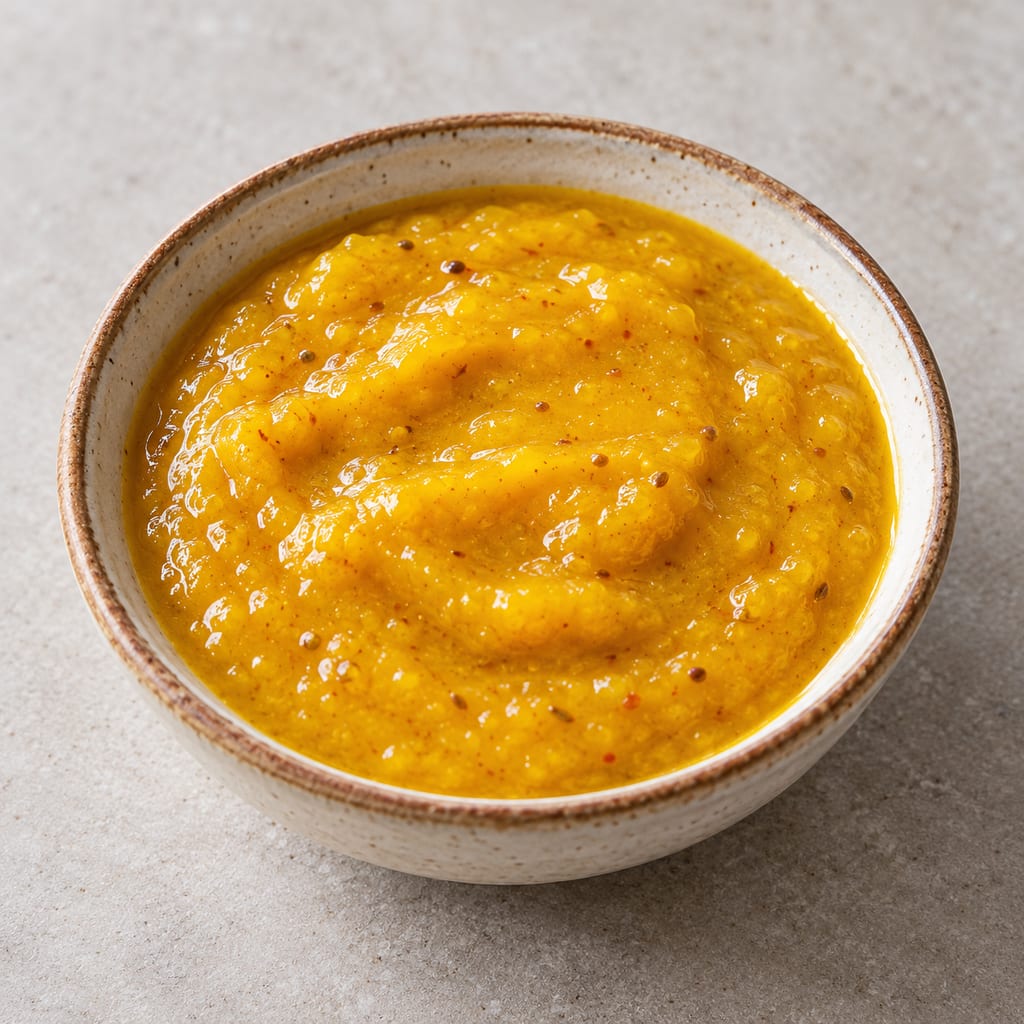
This cooked amba follows a Jewish Food Society recipe that simmers ripe mango with onion, garlic, mustard seed and warm spices into a tangy Middle Eastern condiment.
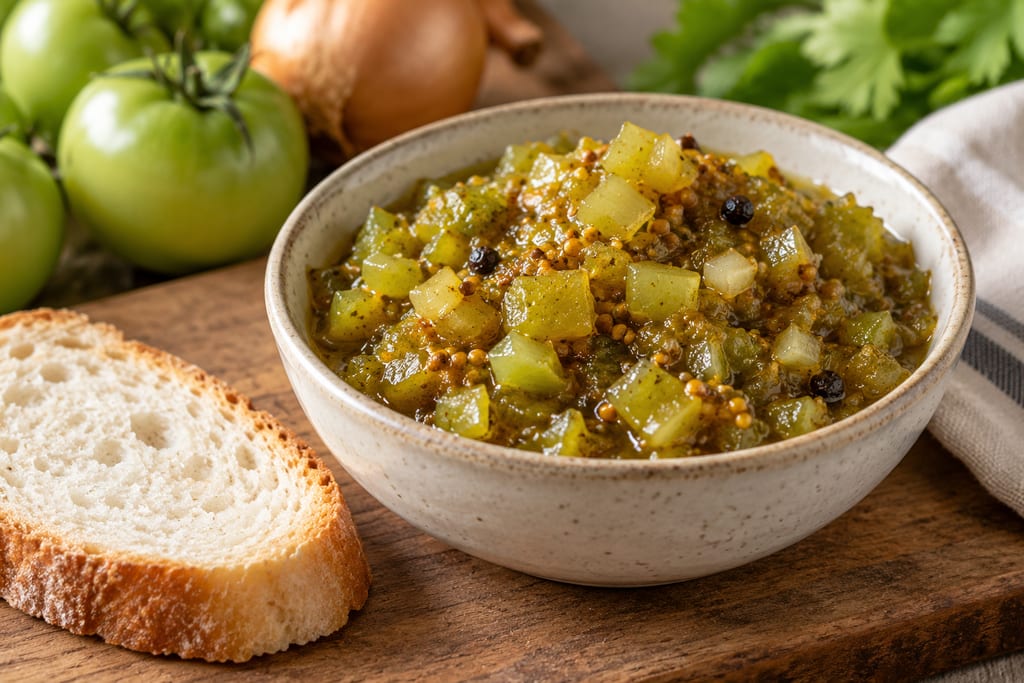
Australian green tomato pickles and relishes vary. This partial version follows ABC Western Victoria’s 2018 pickle recipe, not Beerenberg’s commercial formula. Sources document examples from 1944 onward, not a single origin.
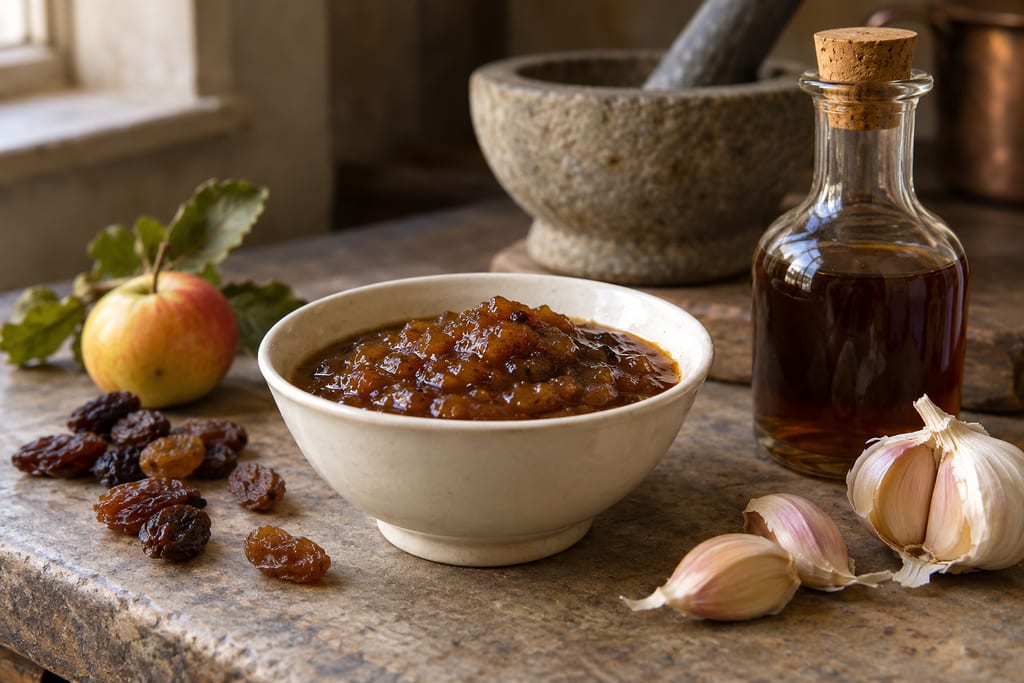
Eliza Acton's Bengal receipt for chetney sauce: stoned raisins and a hard acid fruit pounded with brown sugar, ginger, salt, cayenne and garlic, then thinned with vinegar to the consistence of thick cream.
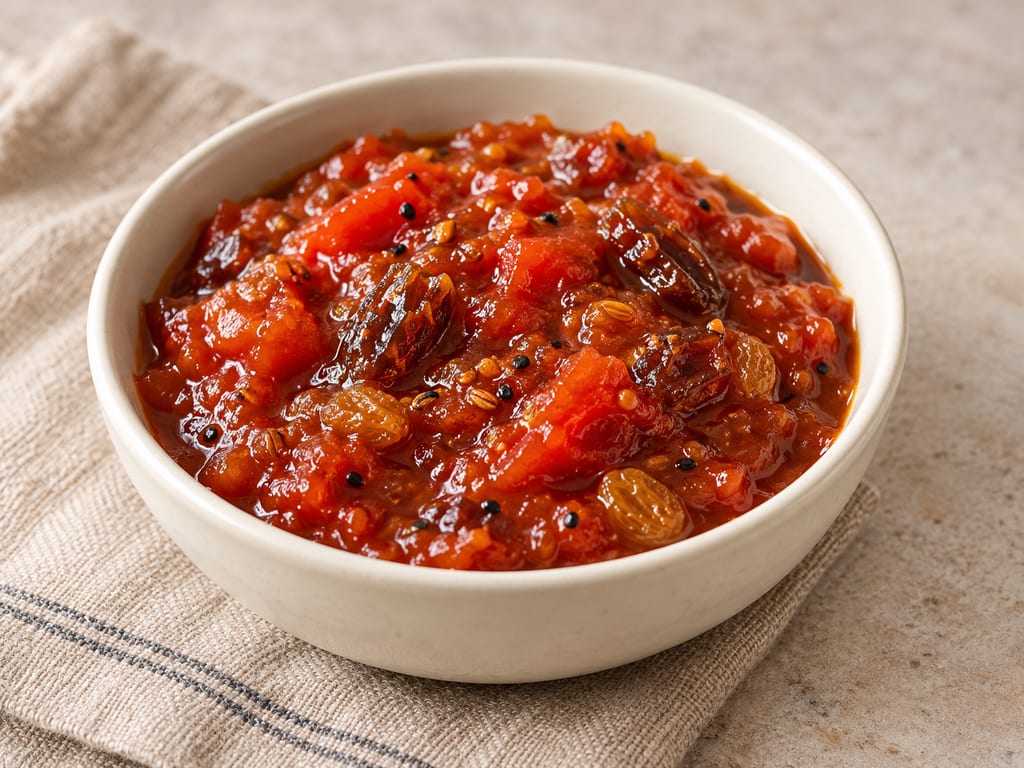
A cooked Bengali meal chutney combining tomatoes, dates, raisins, ginger and panch phoron.

A spicy South African vegetable relish of onion, carrot, pepper, tomato, curry seasoning and beans, cooked briefly and served warm or cold beside pap and grilled meat.
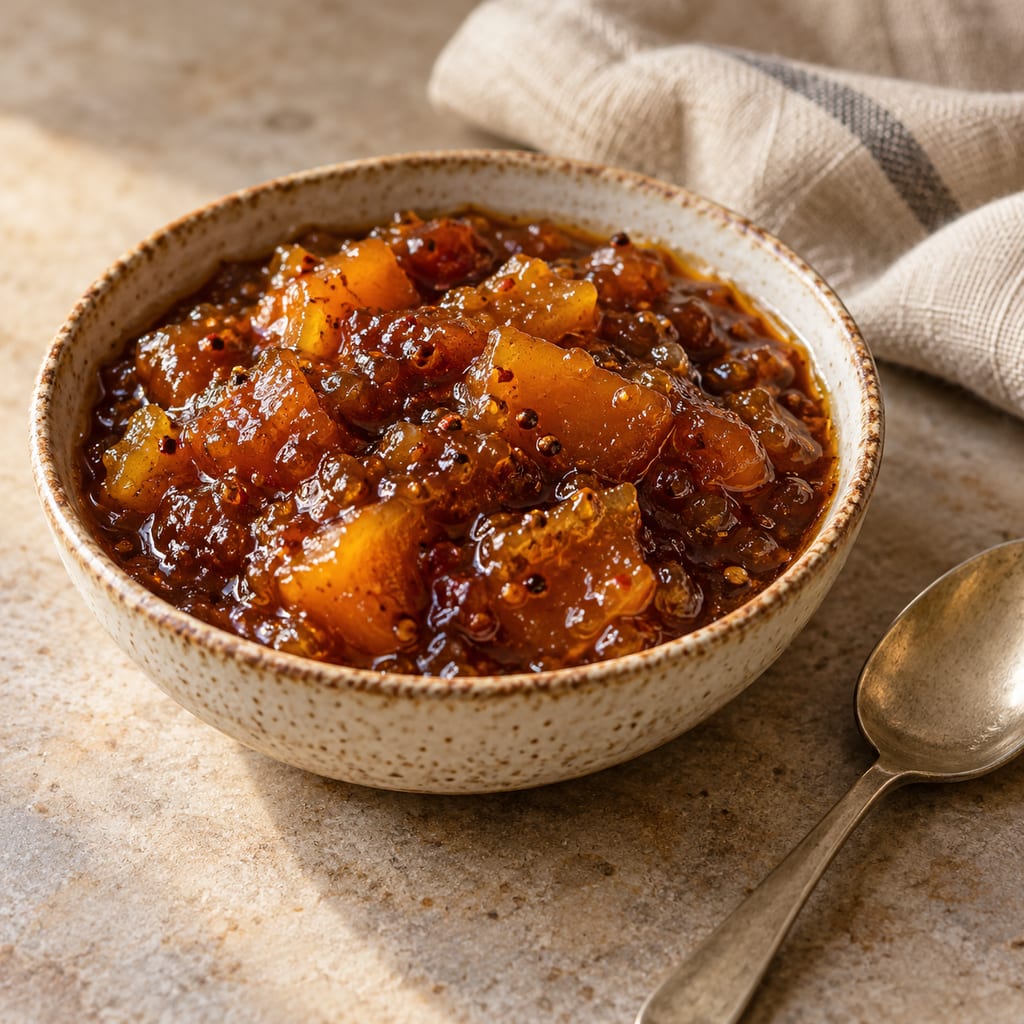
A broad account of cooked chutney traditions: fruit or vegetables combined with sugar, spices and sometimes acid, often boiled into a thick condiment. This record is historical and process context, not a formula or storage recipe.
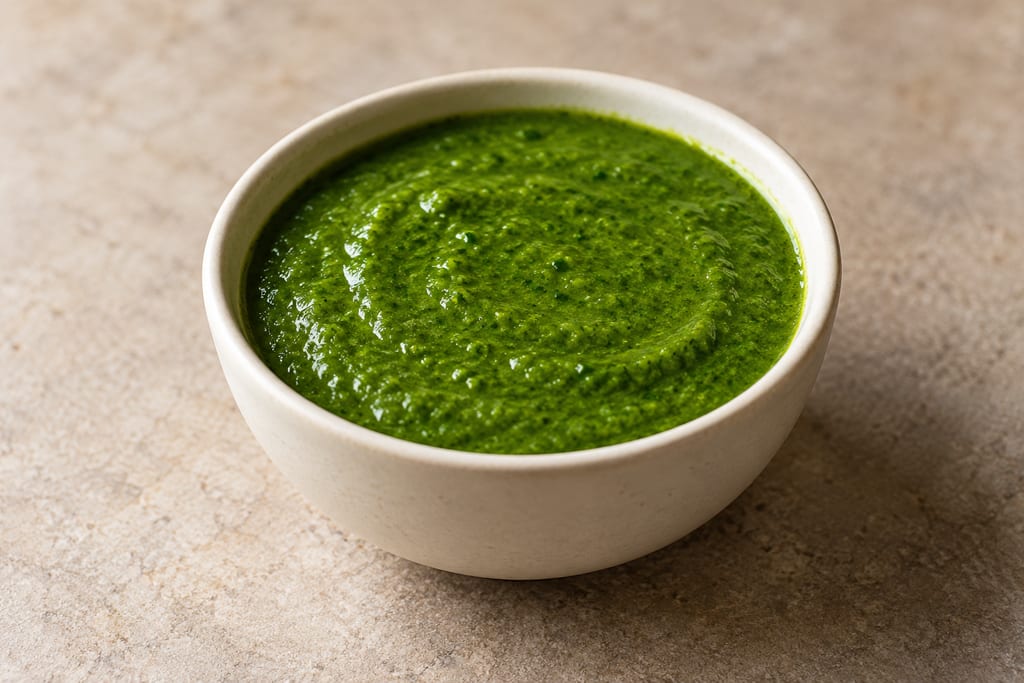
A cold-blended coriander and mint chutney with ginger, green chilli and optional cumin and lemon; the author serves it with snacks, chaat and sandwiches.
No community contributions have been published for this entry yet.
Sign in to contribute. Published comments and photos are free to read.
ãhãramRecipe · Geography · Current use
Allam Pachadi | Andhra Ginger ChutneyPublication and update date, author's 2012 first-post note, Andhra label and stated pairings.
Card time, four-person yield and ingredients (including one pinch turmeric, oil 2 tsp and water omitted from the ingredient list).
Numbered illustrated method: brown dal, fry ginger and chillies about one minute, turn off heat and add salt and turmeric once, cool, grind with jaggery and little water to a coarse paste. This differs from the compact card, which lists turmeric before and after heat.
Cited in: What is allam pachadi?; History and regional identity; Ingredients; Ginger and its chemistry; Urad dal; Jaggery; 1. Prepare ginger; 2. Measure the dal; 3. Heat oil; 4. Fry the dal; 5. Add ginger and chilli; 6. Finish seasoning off heat; 7. Cool; 8. Add jaggery; 9. Grind; 10. Serve; Why the flavours work together; Texture and grinding; Regional variations; Serving; Quality and troubleshooting; Safety and storage
Veg Recipes of IndiaVariant
Allam Pachadi (Ginger Chutney) | Easy Andhra RecipeA three-serving version with 60 g ginger, tamarind soaked 20 to 30 minutes and a brief saute; a 4 to 5 day refrigeration remark
Cited in: Other published home versions; Safety and storage
Cooking With ShobanaVariant · Use
Allam Pachadi (Ginger Chutney)A half-cup batch with three-inch ginger, cumin, four chillies, tamarind, jaggery and a later temper, adapted from Chandra Padmanabhan; served with pesarattu
Cited in: Other published home versions; Serving
Vismai FoodVariant
Andhra Allam Pachadi | Ginger Chutney | How to Make Ginger Chutney with tipsA 20-serving version with 50 g dried chillies, 50 g tamarind and garlic; a storage claim beyond two months
Cited in: Other published home versions; Safety and storage
I Camp in My KitchenVariant
Allam Pachadi/Ginger Chutney for Idly/Dosa/PesarattuA transcription attributed to Simply South with a quarter-cup water instruction
Cited in: Other published home versions
CSJMU GyansanchayUse
Andhra Pradesh cuisine—Pesarattu and ginger chutneyGinger-tamarind chutney served with pesarattu
Cited in: Serving