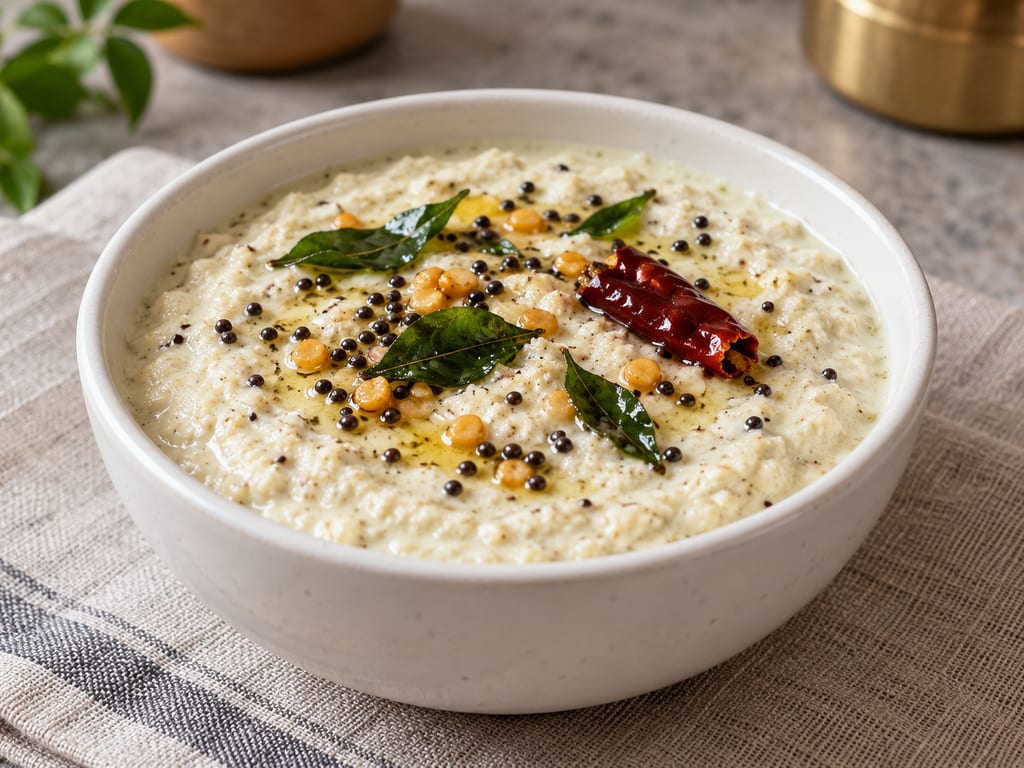
Coconut chutney
A coconut chutney whose ground base is finished with a separate oil tempering of mustard, urad dal, curry leaves and spices; the author pairs it with South Indian breakfast foods and snacks.
 FermenteaWhere food goes to change
మామిడికాయ కొబ్బరి పచ్చడి · Mamidikaya kobbari pachadi · Kobbari mamidikaya pachadi · Raw mango and coconut chutney · Andhra raw mango chutney
A coarse, sour Andhra chutney of raw mango and fresh coconut ground with browned urad dal and hot chillies, finished with a mustard tempering and eaten with hot rice.
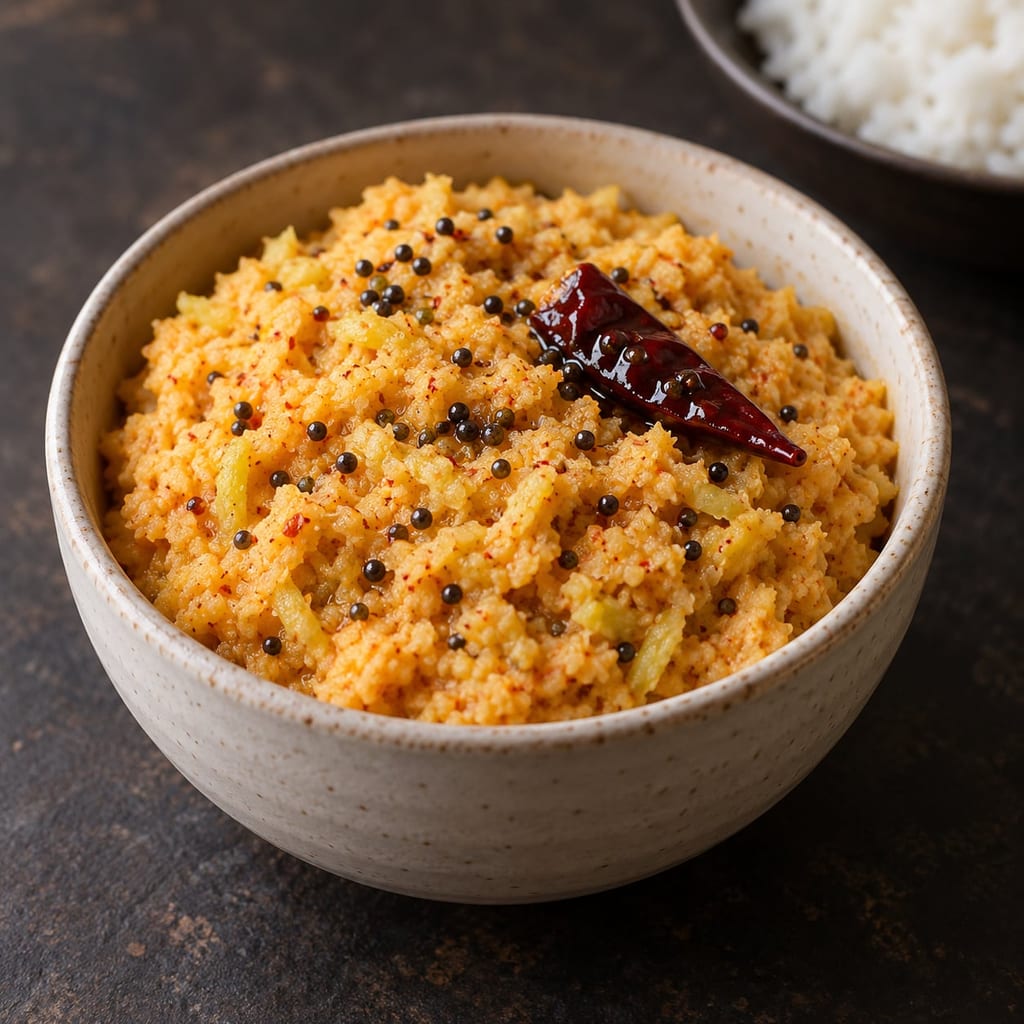
Mamidikaya kobbari pachadi is the Andhra way with an unripe mango and a fresh coconut. Both are ground, with browned urad dal and hot chillies, into a coarse, thick paste, and a quick mustard tempering is poured over it. It is sour first and hot second; the coconut rounds it and the dal gives body.
Raw mango chutney is not one dish. Andhra and wider South Asian cooks make several different preparations from unripe mango, and this page covers the coconut and mango chutney. The others are noted below.
The dal and chillies are fried first and cooled before grinding, so that they grind to a crisp, dry-roasted paste rather than a greasy one. The chillies spend only seconds in the oil: the page's two cards say 5 and 15 seconds. The raw mango and coconut then go in with the fried dal, salt and turmeric and are ground coarse with only the water the grinder needs. The tempering is added last, hot, so its mustard aroma stays sharp.
The main recipe tip is about the fruit and the chilli. Use sour (khatta) raw mangoes, or the pachadi will be bland, and use chillies that are properly hot for the same reason.
Another recipe for the same pairing, from Gayatri Vantillu, uses 125 g coconut and 145 g mango, grinds the mango coarsely and powders separately fried spices, and adds no water. A Telugu recipe on TeluguOne uses one mango with a cup of coconut and a fried mixture of mustard, fenugreek, asafoetida and chilli. Neither page gives a utensil size or fruit mass that could be reconciled with the main formula, so their figures are kept apart.
The reprinted Pedatha recipe is a grated-mango branch: fried lentils, mustard, fenugreek, chillies, curry leaves, coriander, asafoetida and jaggery are ground without water, grated mango is added and a second mustard-fenugreek tempering finishes it. It gives no mango quantity. A symbolic Ugadi pachadi of raw mango, jaggery or honey, neem flowers, chilli or pepper and salt, described in a Hyderabad ethnography, is a different preparation again.
The main page serves it with hot rice and a little sesame oil, and says to eat it at the start of the meal; the Pedatha reprint and Gayatri Vantillu mention rice with ghee. The author makes it at least once a week at home. The harvest calendar of the National Horticulture Board puts coastal Andhra mangoes in April and May and Rayalaseema in May, which is orchard timing, not the exact season of any household chutney.
The main page contradicts itself on coconut mass (about 30 g on one card, about 40 g on the other and in the ingredient list), on total time and on the chilli frying time. This page uses 40 g and records the rest as conflicts. The sources give no storage instruction and no pH or shelf-life data, and none of them dates the chutney.
The consulted pages are modern recipe pages and a reprinted family cookbook; none dates the chutney. The page used for the main formula says it was first published in December 2012.
Yield 4 servings · Scaling: source batch only
Wash the mango thoroughly under running water before cutting or peeling, with clean hands and surfaces.
Control sourceThe source page gives no storage instruction and none of the sources inspected validates a storage time for this chutney. Treat it as a fresh preparation, keep it cold and use it promptly.
Cooking the dal and tempering does not make the ground coconut and mango a preserved product.
Home-recipe pages describe it as an Andhra chutney; they give no town or date of origin.
A coconut chutney whose ground base is finished with a separate oil tempering of mustard, urad dal, curry leaves and spices; the author pairs it with South Indian breakfast foods and snacks.
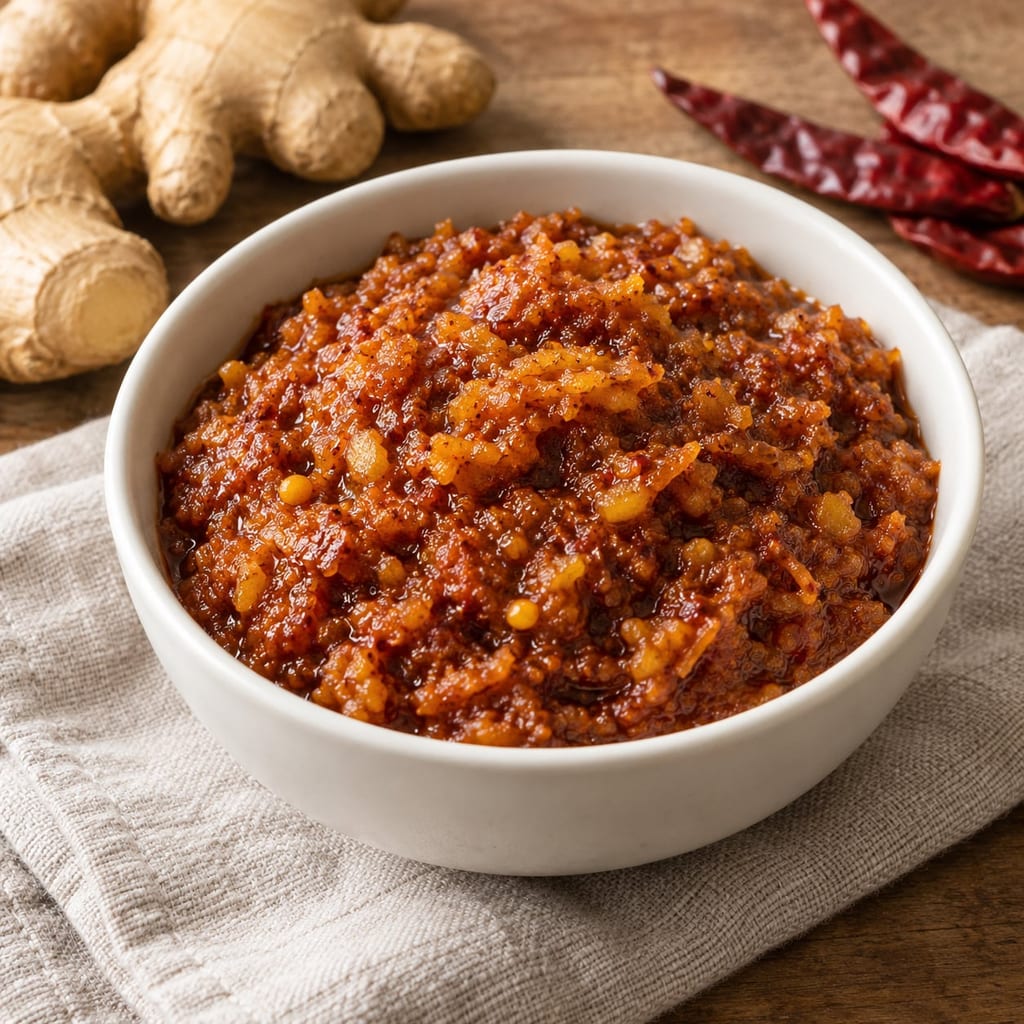
An Andhra ginger-and-urad chutney in which browned dal and briefly fried ginger and chillies are cooled, then ground with jaggery to a coarse paste.
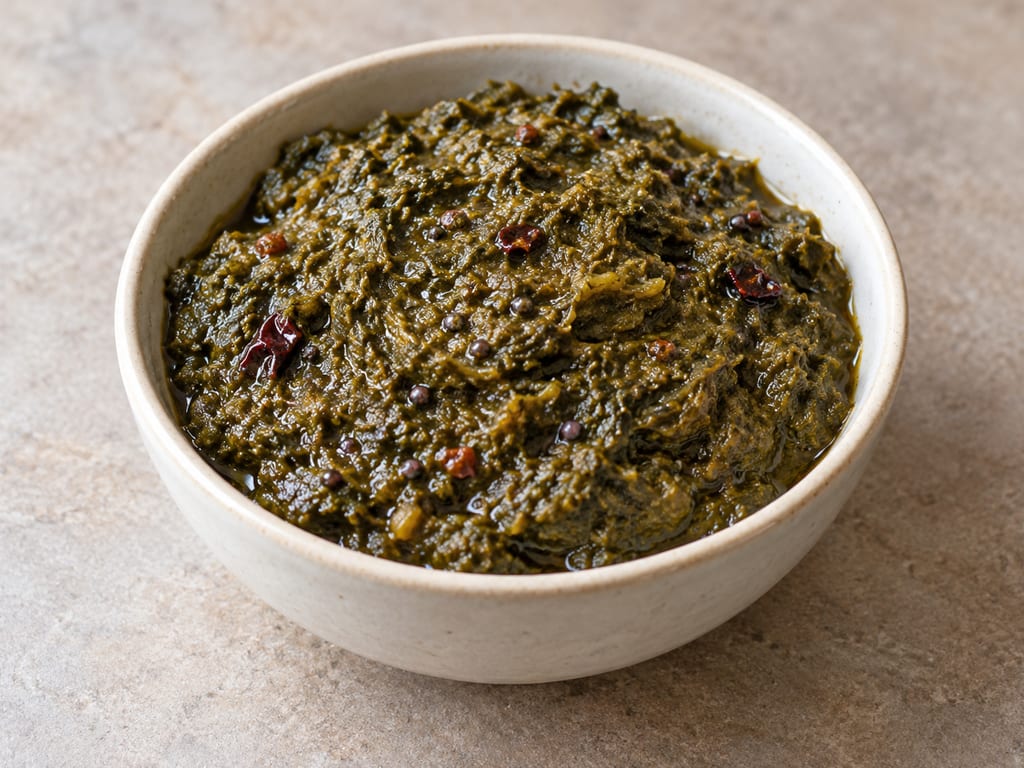
A hot, sour Andhra chutney of gongura (sorrel) leaves cooked soft and ground with fried dried chillies, garlic and onion, then finished with a hot tempering of dals, mustard and curry leaves.
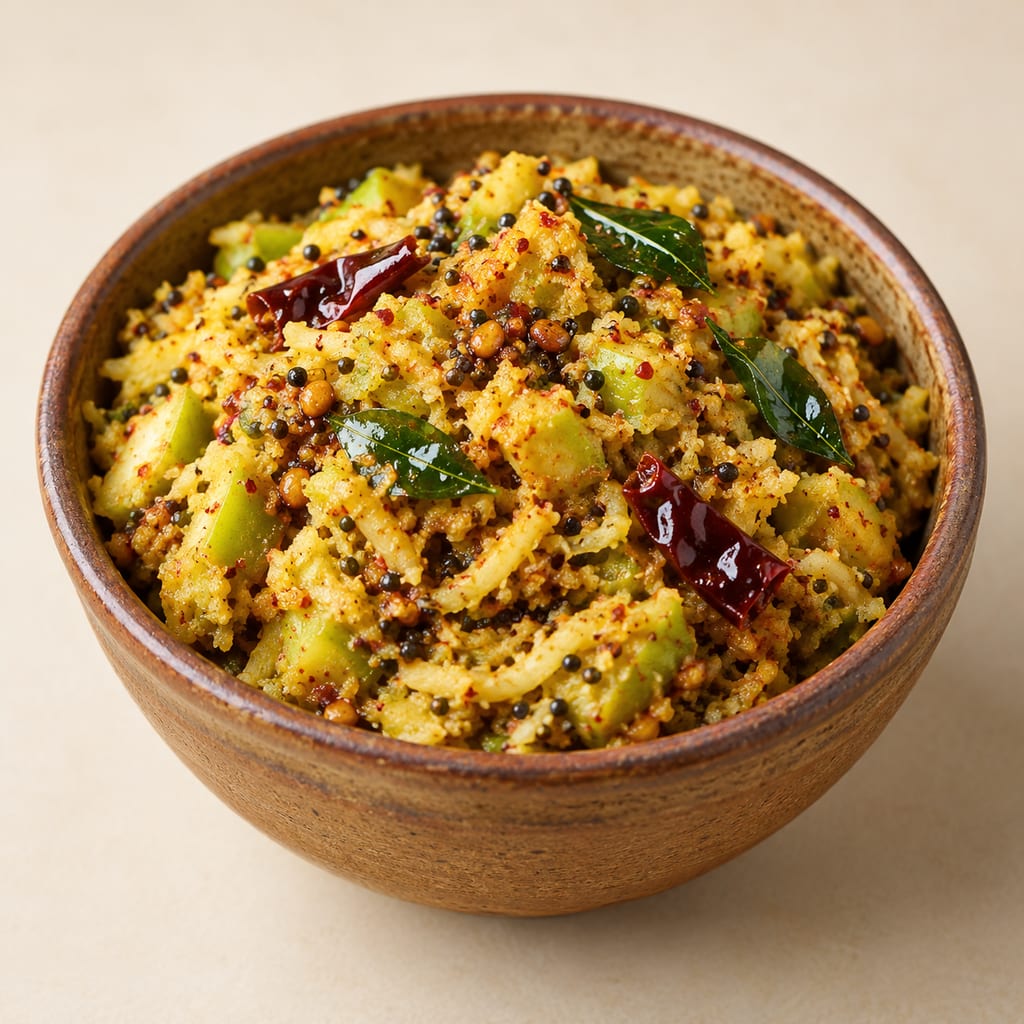
A Telugu coconut and raw mango pachhadi with a separately fried spice mixture.
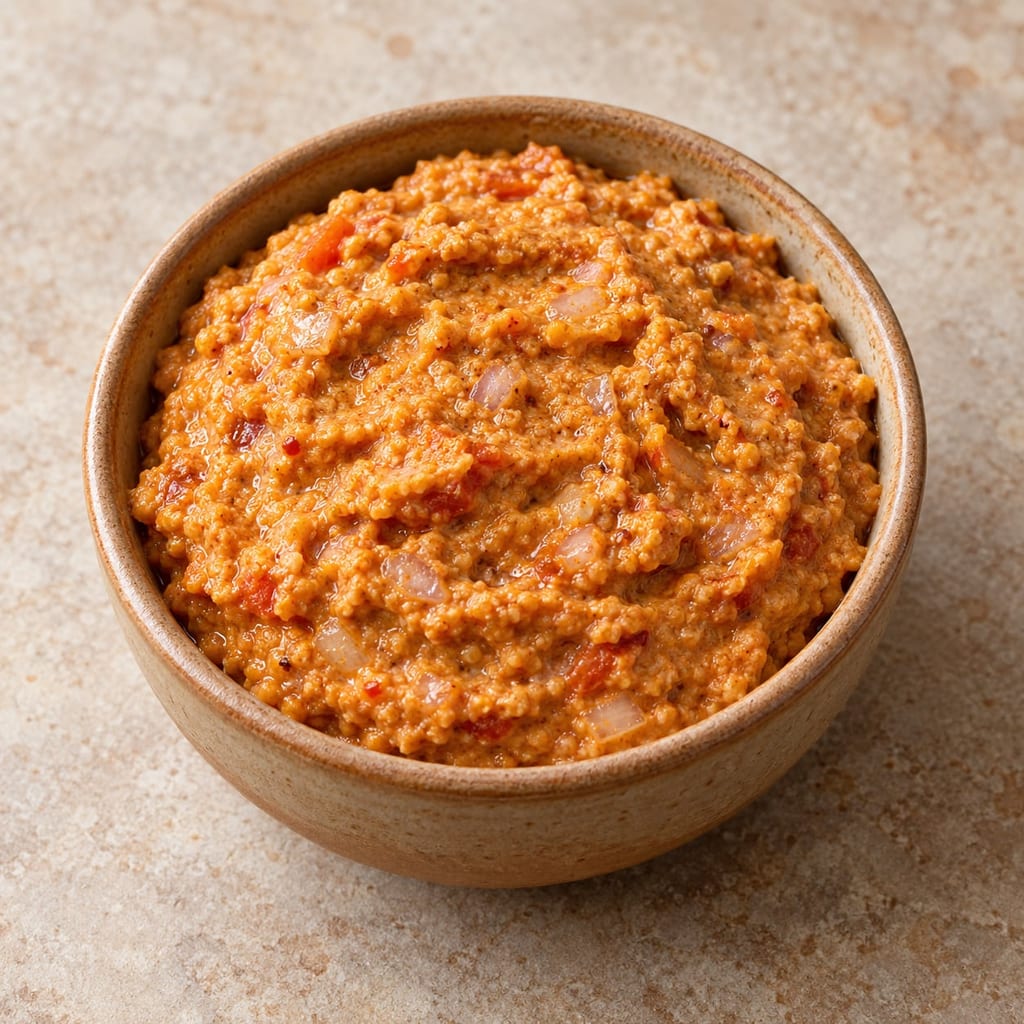
A moist Andhra peanut chutney: roasted groundnuts ground with fried dried chillies and tamarind, folded into a roasted tomato-and-spice mix with raw onion, and eaten with khichdi, attu or idli.
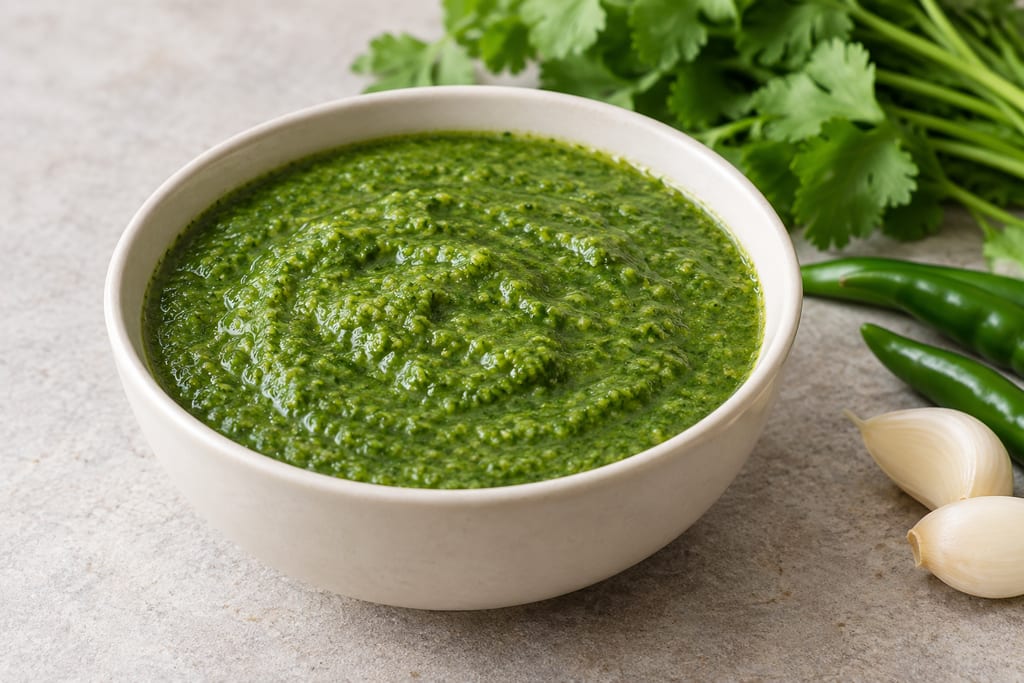
Afghan coriander chatni is a sharp, hot herb sauce with garlic and vinegar. A 2008 Afghanistan manual records green or red pepper and optional walnut; heat and household versions vary.
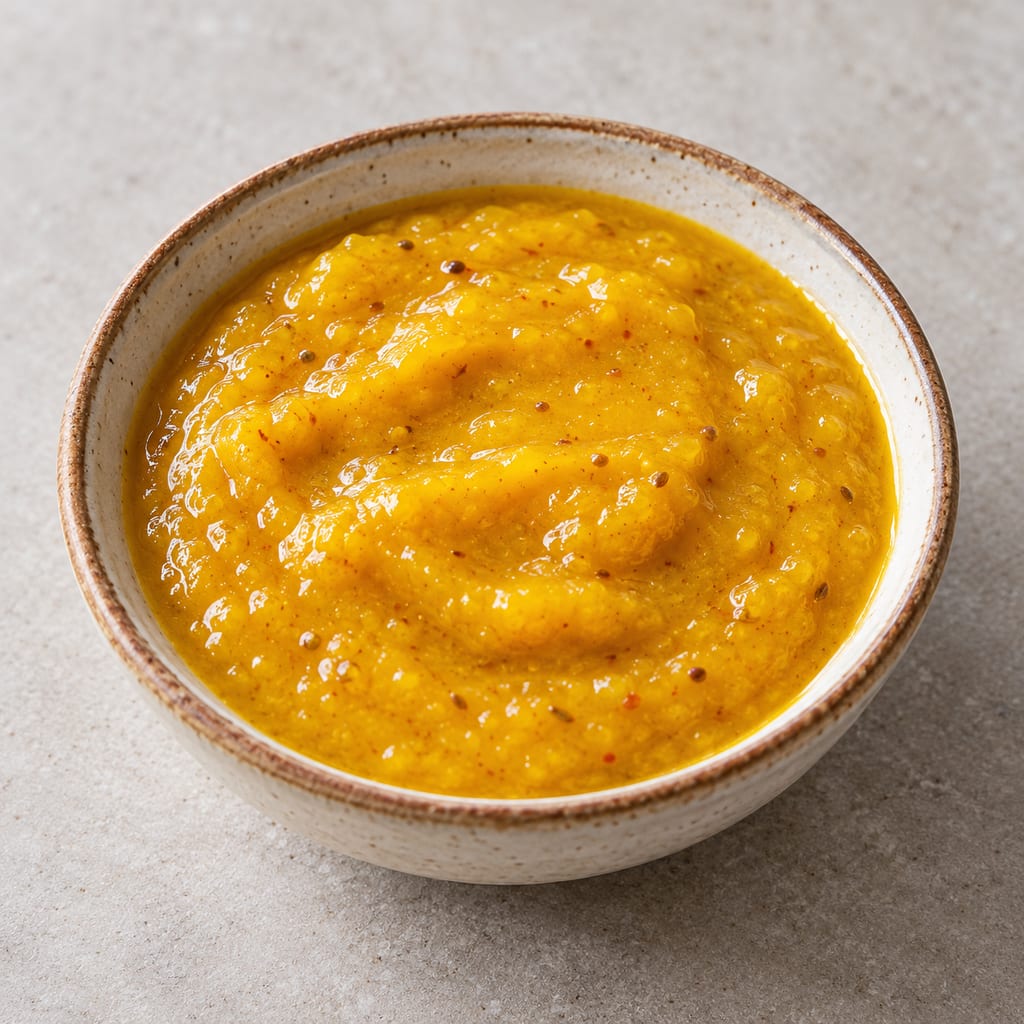
This cooked amba follows a Jewish Food Society recipe that simmers ripe mango with onion, garlic, mustard seed and warm spices into a tangy Middle Eastern condiment.
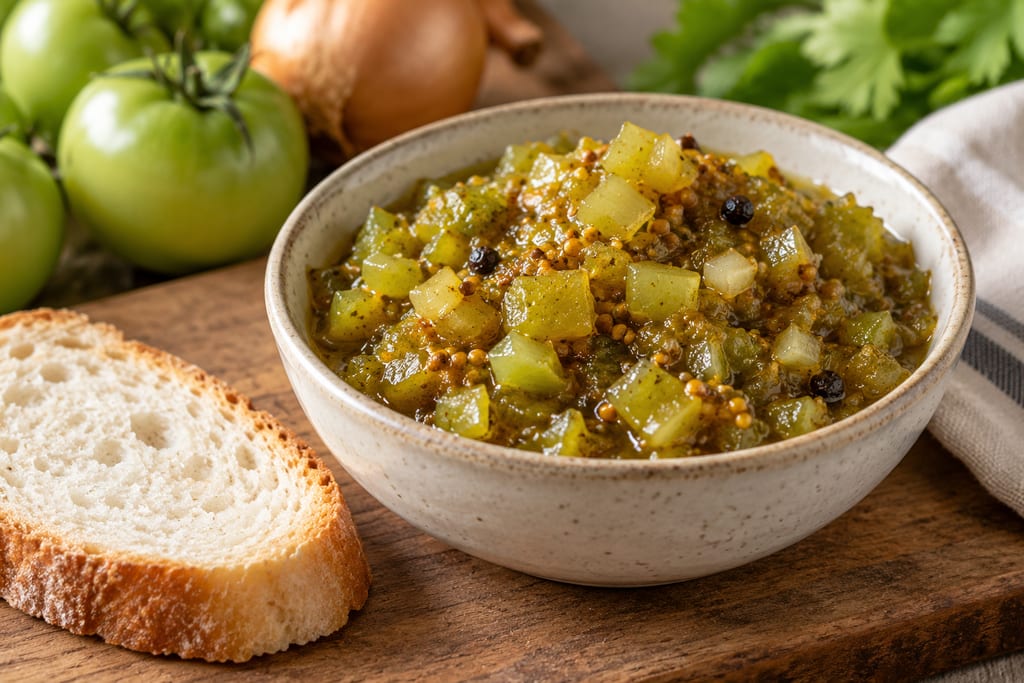
Australian green tomato pickles and relishes vary. This partial version follows ABC Western Victoria’s 2018 pickle recipe, not Beerenberg’s commercial formula. Sources document examples from 1944 onward, not a single origin.
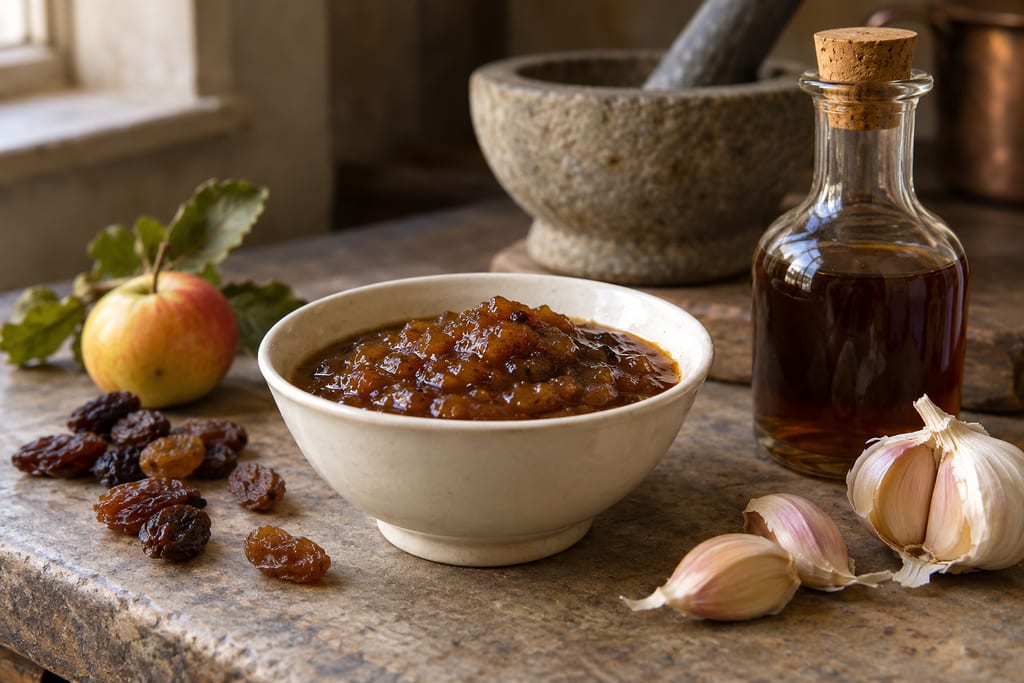
Eliza Acton's Bengal receipt for chetney sauce: stoned raisins and a hard acid fruit pounded with brown sugar, ginger, salt, cayenne and garlic, then thinned with vinegar to the consistence of thick cream.
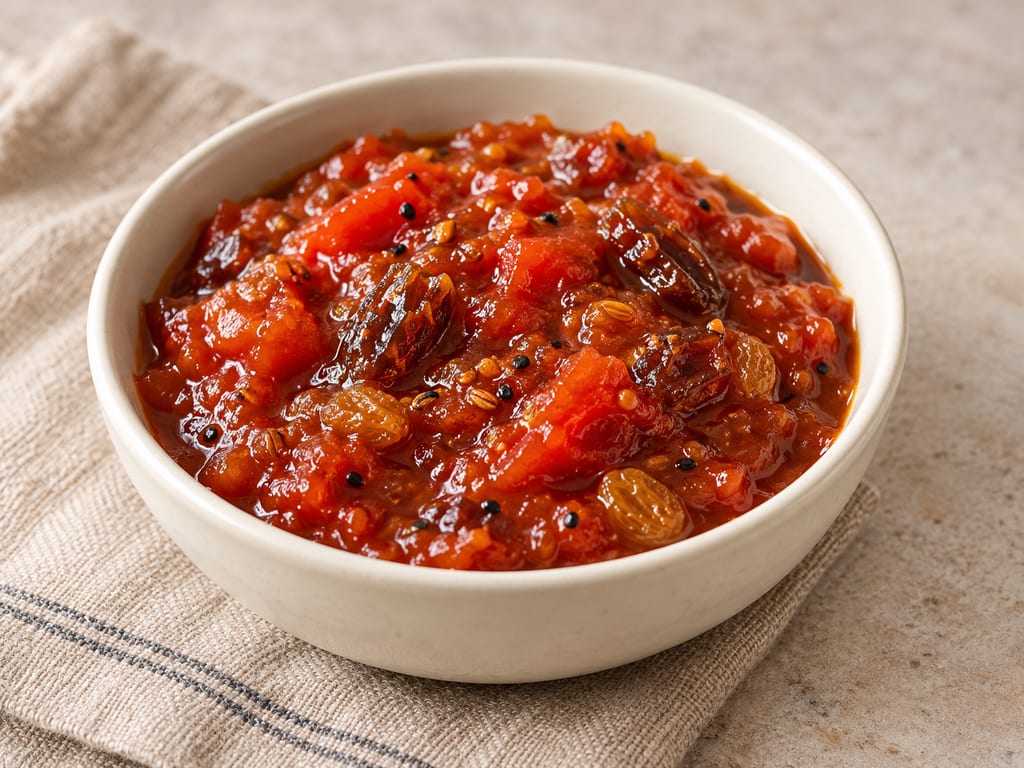
A cooked Bengali meal chutney combining tomatoes, dates, raisins, ginger and panch phoron.

A spicy South African vegetable relish of onion, carrot, pepper, tomato, curry seasoning and beans, cooked briefly and served warm or cold beside pap and grilled meat.
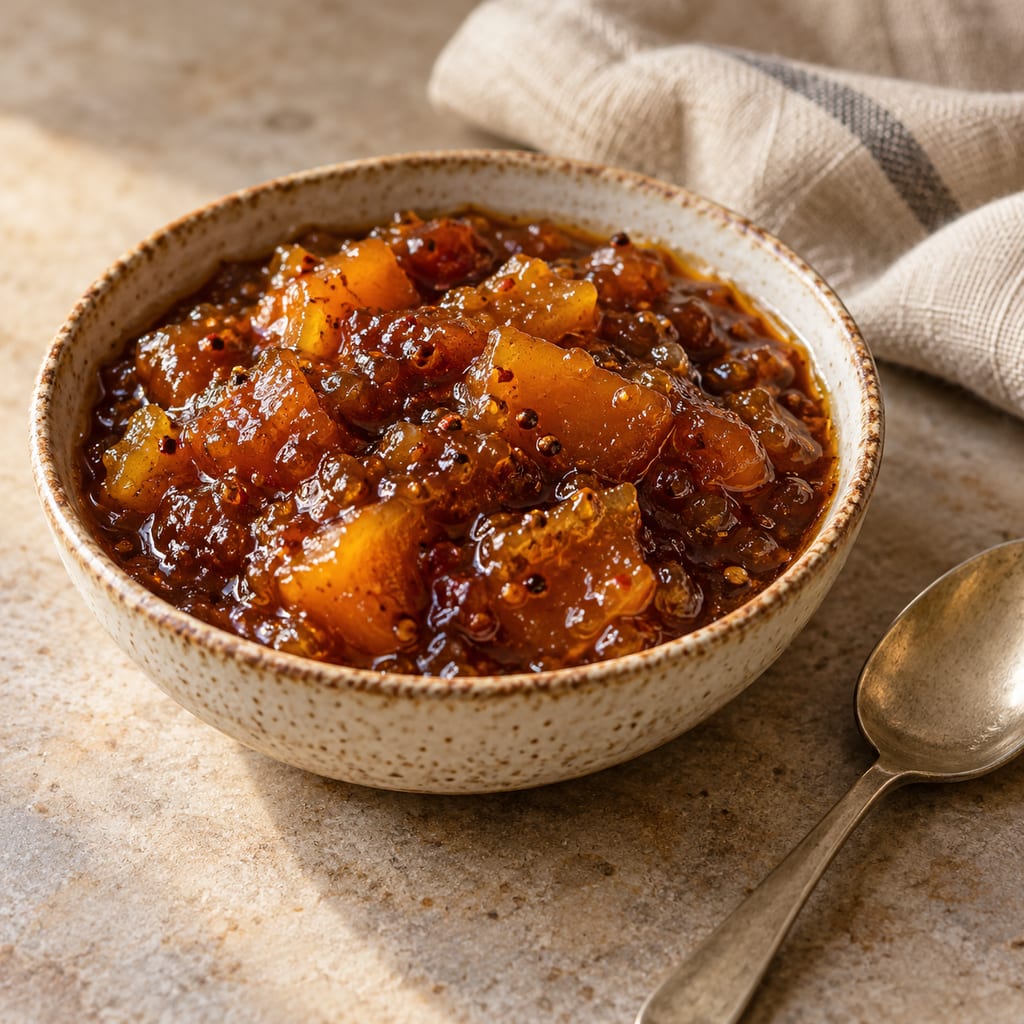
A broad account of cooked chutney traditions: fruit or vegetables combined with sugar, spices and sometimes acid, often boiled into a thick condiment. This record is historical and process context, not a formula or storage recipe.
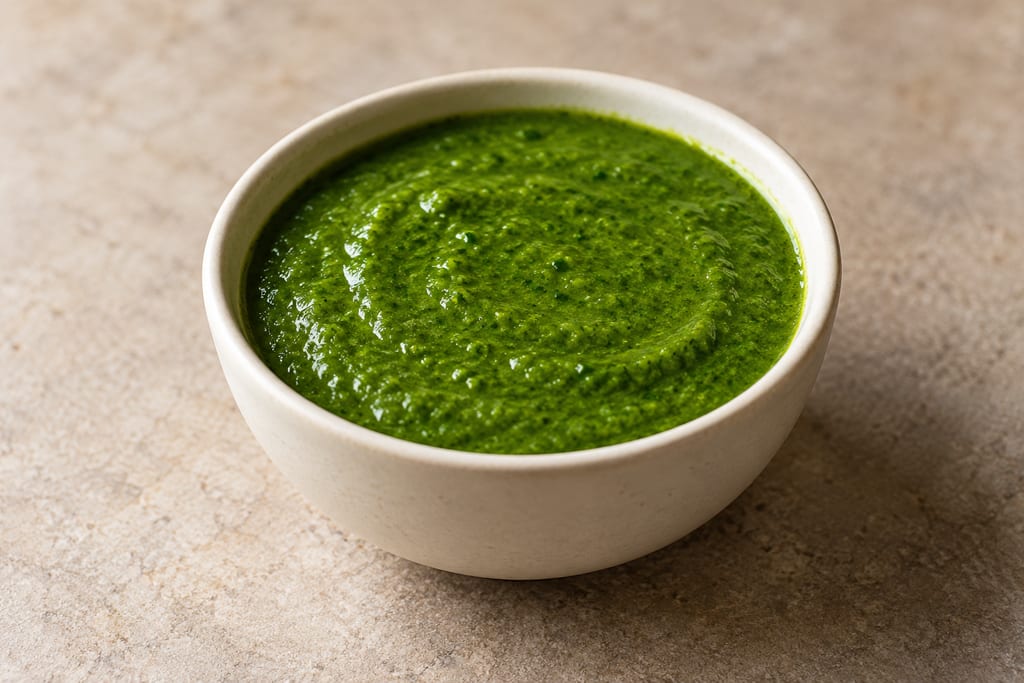
A cold-blended coriander and mint chutney with ginger, green chilli and optional cumin and lemon; the author serves it with snacks, chaat and sandwiches.
No community contributions have been published for this entry yet.
Sign in to contribute. Published comments and photos are free to read.
AahaaramMethod · Ingredients · Use
Mamidikaya Kobbari Pachadi | Andhra Raw Mango and Coconut ChutneyQuantities and method for four servings; served with hot rice and sesame oil, eaten at the start of the meal.
Discrepancies on the page: coconut about 30 g versus 40 g, 10 versus 15 minutes, 15 versus 5 seconds of chilli frying.
Use sour raw mangoes and spicy chillies; no storage instructions.
Cited in: What it is; How it is made, and why the order matters; Serving and season; What the sources leave open
Gayatri VantilluComparison
Kobbari Mamidikaya Pachhadi – Coconut and Raw Mango ChutneyA separate batch of 125 g coconut and 145 g mango, mango coarsely ground and separately fried spices powdered, with no water added; its prose and card disagree on total time (10 versus 15 minutes) and chilli frying (15 versus 5 seconds).
Cited in: Other raw mango chutneys
TeluguOneComparison
Kobbari Mamidi PachhadiA Telugu recipe using one mango with one cup of coconut and a fried mustard, fenugreek, asafoetida and chilli mixture; no fruit mass or utensil size.
Cited in: Other raw mango chutneys
India of the PastComparison · Use
Māmidikāya Pachchadi (Raw Mango Chutney)Reprinted Pedatha recipe: grated mango with fried lentils, mustard, fenugreek, chillies, curry leaves, coriander, asafoetida and jaggery; the tempering is ground without water, mango added, then another mustard-fenugreek tempering. Served with rice and ghee; no mango quantity.
Cited in: Other raw mango chutneys
University of Adelaide, School of Social SciencesUse
Embodied Measuring: Outwitting Type 2 Diabetes in Middle-class Urban IndiaEthnographic account of raw-mango availability and pickle-making in Hyderabad from late March, and a symbolic Ugadi pachadi of raw mango, jaggery or honey, neem flowers, chilli or pepper and salt.
Cited in: Other raw mango chutneys
Government of IndiaSeason
Fruits—Mango: HarvestingAndhra coastal mango harvest in April to May and Rayalaseema in May.
Cited in: Serving and season
U.S. Food and Drug AdministrationSafety
Selecting and Serving Produce SafelyWash produce thoroughly under running water before cutting or peeling; use clean hands and surfaces.