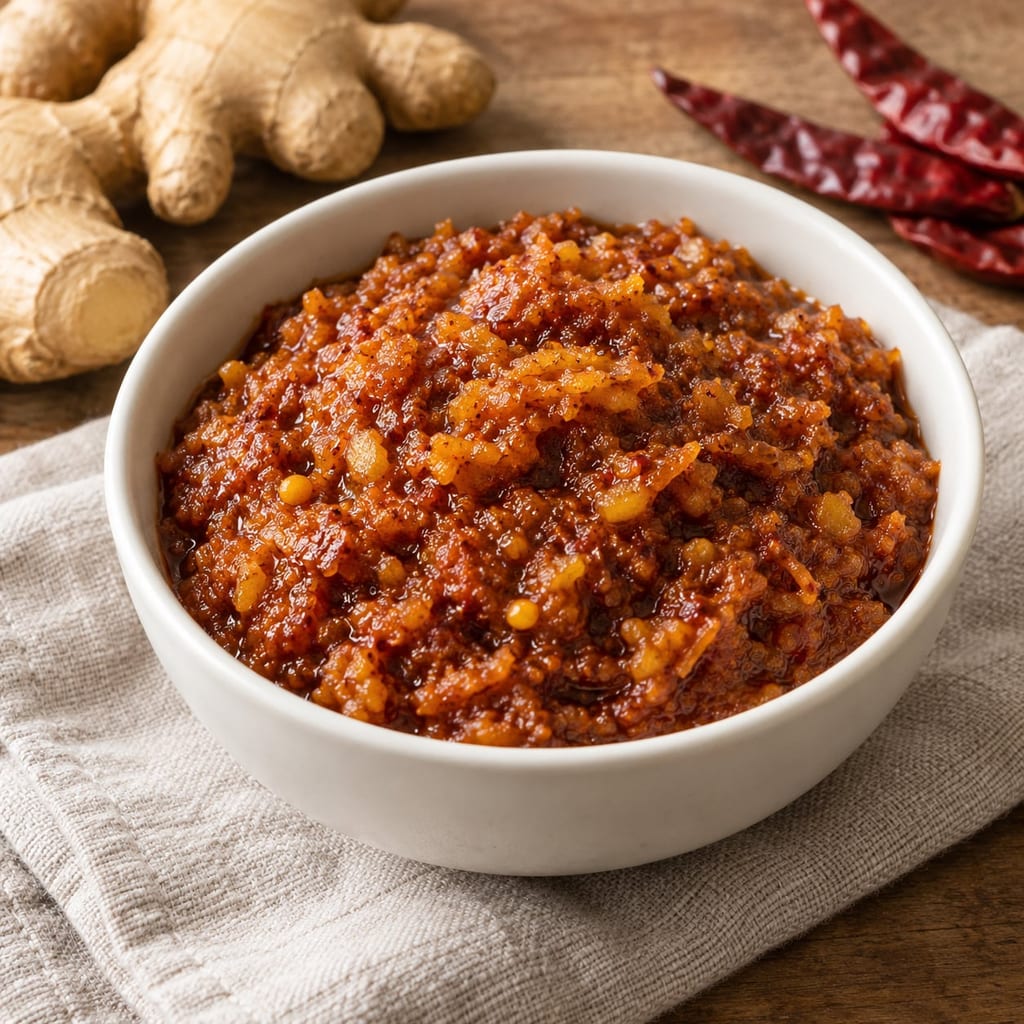
Allam pachadi
An Andhra ginger-and-urad chutney in which browned dal and briefly fried ginger and chillies are cooled, then ground with jaggery to a coarse paste.
 FermenteaWhere food goes to change
Traditional method
గోంగూర పచ్చడి (gongura pachadi) · Gongura chutney · Sorrel leaves chutney
A hot, sour Andhra chutney of gongura (sorrel) leaves cooked soft and ground with fried dried chillies, garlic and onion, then finished with a hot tempering of dals, mustard and curry leaves.
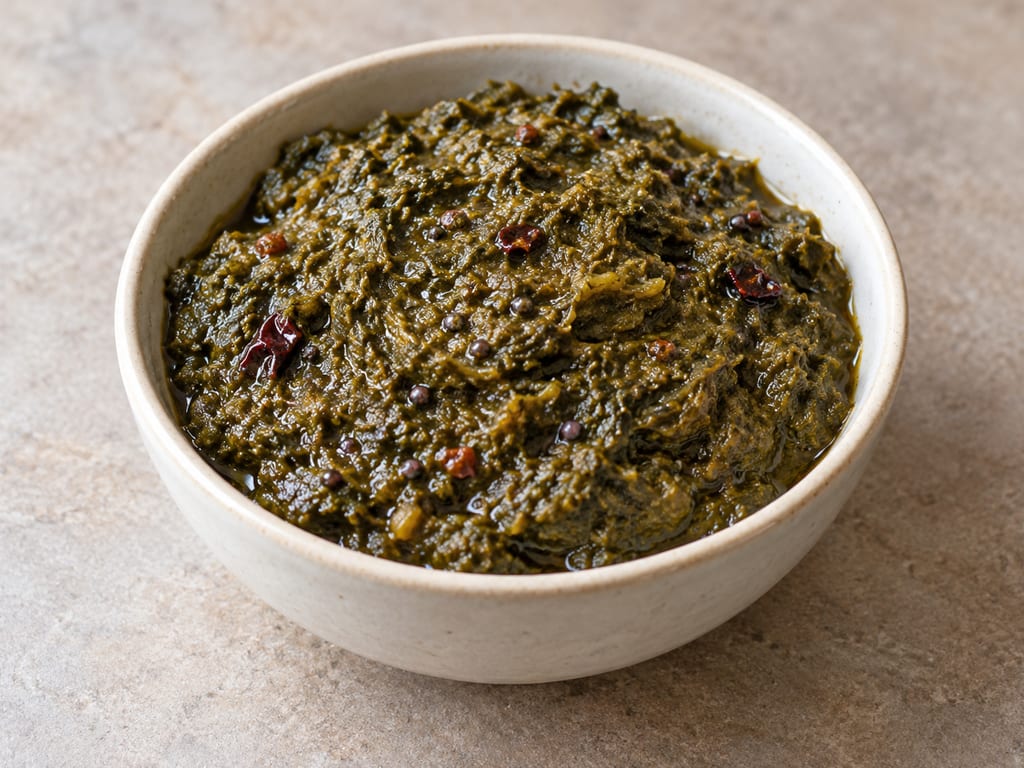
Gongura pachadi is a Telugu leaf chutney, sometimes called a pickle, built on the sour leaves of gongura. The Guntur District Administration names it pachadi or chutney, calls the leaves red sorrel with a sour taste and associates it especially with Andhra cooking in and around Guntur. It lists the plant's names in Telugu, Tamil, Kannada, Marathi and Hindi. The Indian Institute of Science's Flora of Peninsular India lists Telugu gonguru and yerragogu among the vernacular names of Hibiscus sabdariffa, a species native to tropical Africa and grown or naturalised in India.
That name match is context, not proof that every recipe uses that species. A recipe page does not identify the leaf, and photographs cannot. The leaves are also not the red calyces of roselle that are used in other foods.
The recipe above is RecipeTable's 2014 version. Two bunches of leaves are cooked down after a quick fry of dried chillies, cumin, coriander and fenugreek, then ground with salt, garlic and onion. A separate tempering of chana dal, urad dal, cumin, mustard seeds, curry leaves, red chillies and asafoetida is poured over while hot. The page gives no servings, yield or times, and the amounts of the seeds are small, so the heat comes from 15 to 20 dried chillies against two bunches of leaves.
TeluguOne prints a version from a reader, Bharathi, labelled a special for the Atla Taddi festival. It uses 4 to 5 bunches of leaves, 10 dried red chillies, 5 green chillies, 6 garlic cloves, 1 teaspoon cumin, half a teaspoon each of fenugreek, coriander seed and turmeric, a teaspoon of salt, a little tamarind and a quarter cup of oil. The leaves are washed and dried on cloth. Chillies and seeds are fried and set aside, the leaves are cooked with garlic, salt and turmeric to a thick mush and tamarind is mixed in, and the roasted spices are ground to powder and pulsed with the warm leaves, kept slightly coarse. A tempering of chillies, black gram, Bengal gram, mustard seeds, curry leaves and garlic goes over it.
A third description, from a 2020 video on the HomeCookingShow channel that was read only as a written description, roasts coriander, cumin, fenugreek and chillies, cooks the leaves until mushy, grinds them with garlic and salt and heats the mixture after the tempering is added. The quantities and the amounts in these versions differ, so they are separate formulas.
A course-note PDF on Andhra cuisine says gongura is widely eaten in Andhra Pradesh, that Guntur gongura is more popular, that it is a summer crop and that hotter places give more sour leaves. It distinguishes green-stem and red-stem leaves and names Pulla Gongura and Pulihara Gongura pickles. It also lists gongura pappu, mamsam and royyalu as separate dishes. The note has no named author, so these statements are not a botanical or seasonal study.
The Guntur page includes a household account in which leaves from a tightly packed 3-litre pot were washed several times, drained and spread on clean cotton cloth to wilt, which took ten hours on a hot day. It is one person's report without measured conditions and not a drying or preservation instruction. The page's title says pickle while its text says pachadi or chutney, and it gives no complete recipe or storage method.
Food and Drug Administration guidance for produce advises washing under running water and drying with a clean towel, notes that washing reduces but does not eliminate bacteria and says thorough cooking lowers risk. None of the sources supplies a pH, a water activity, a refrigeration time or a tested shelf-stable process. All of these preparations are cooked or ground, with no starter and no fermentation described.
The Guntur District Administration associates the dish with Andhra cooking, especially around Guntur. Its page, last updated in 2019, does not date the preparation.
Scaling: source batch only
Fresh produce can pick up harmful bacteria during growing, storage or preparation; washing reduces but does not eliminate them.
Hazard sourceWash the leaves thoroughly under running water and dry them with a clean towel, then cook them thoroughly.
Control sourceA second recipe says the pachadi keeps well but gives no duration, container or refrigeration advice. No source tests its storage.
A household account of wilting leaves on cotton cloth for ten hours on a hot day has no measured temperature or humidity and is not a preservation step.
The district administration associates the leaf preparation especially with cooking in and around Guntur; this is a regional association, not an origin claim.
Telugu recipe pages describe the chutney as an Andhra preparation; no narrower place is given.
An Andhra ginger-and-urad chutney in which browned dal and briefly fried ginger and chillies are cooled, then ground with jaggery to a coarse paste.
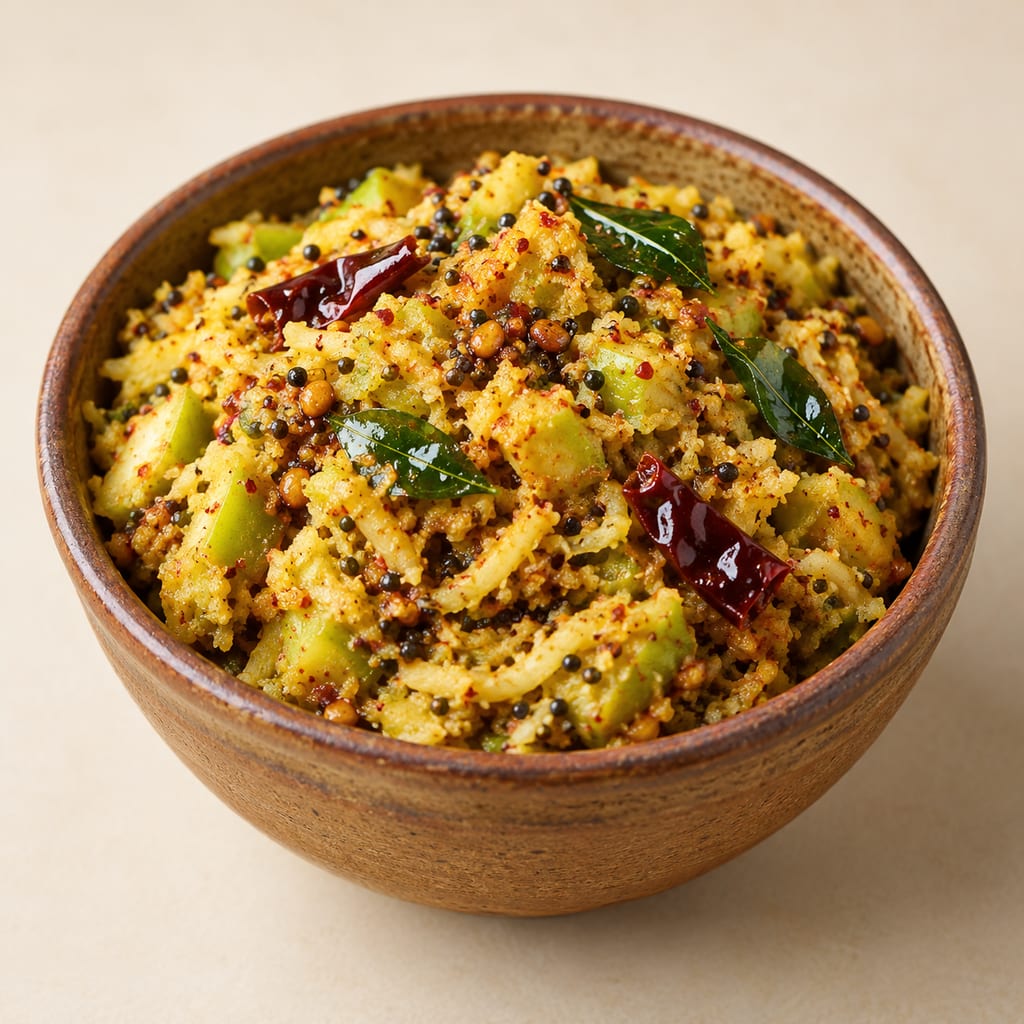
A Telugu coconut and raw mango pachhadi with a separately fried spice mixture.
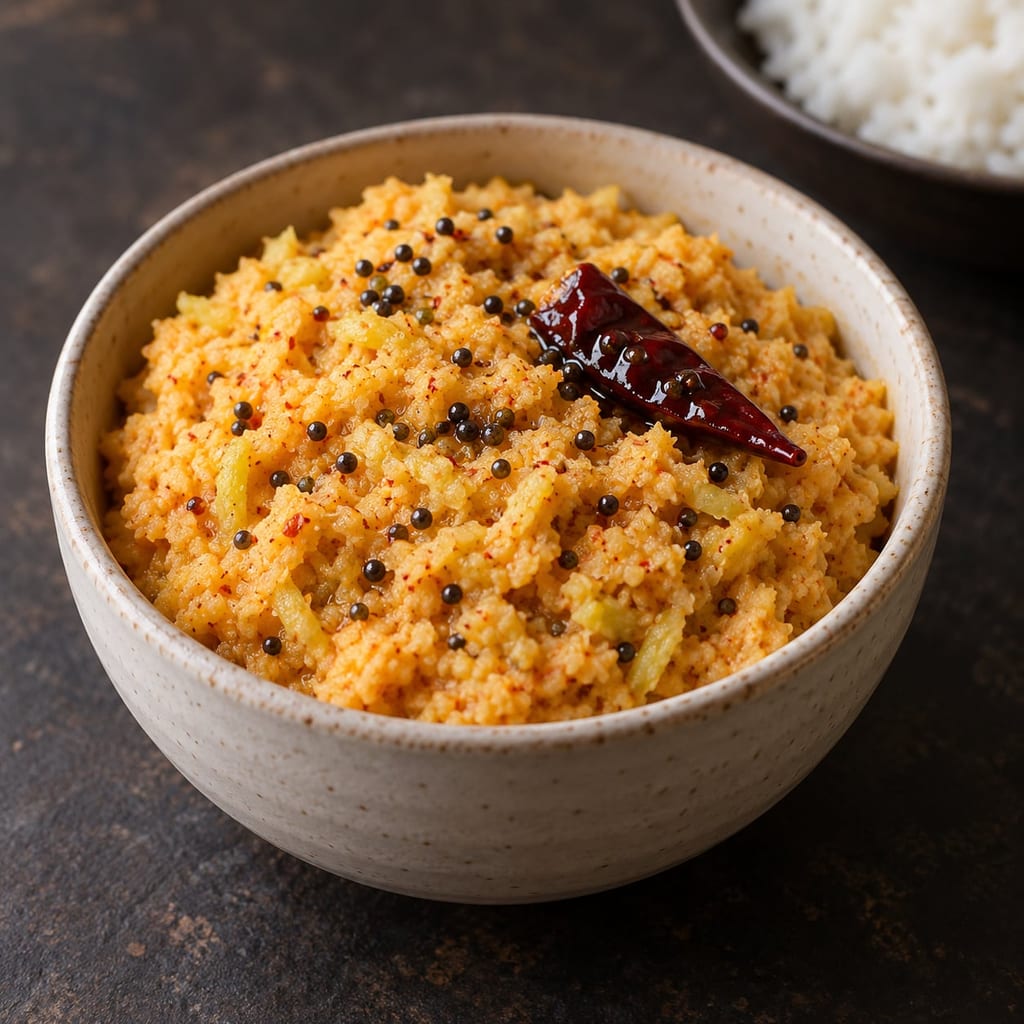
A coarse, sour Andhra chutney of raw mango and fresh coconut ground with browned urad dal and hot chillies, finished with a mustard tempering and eaten with hot rice.
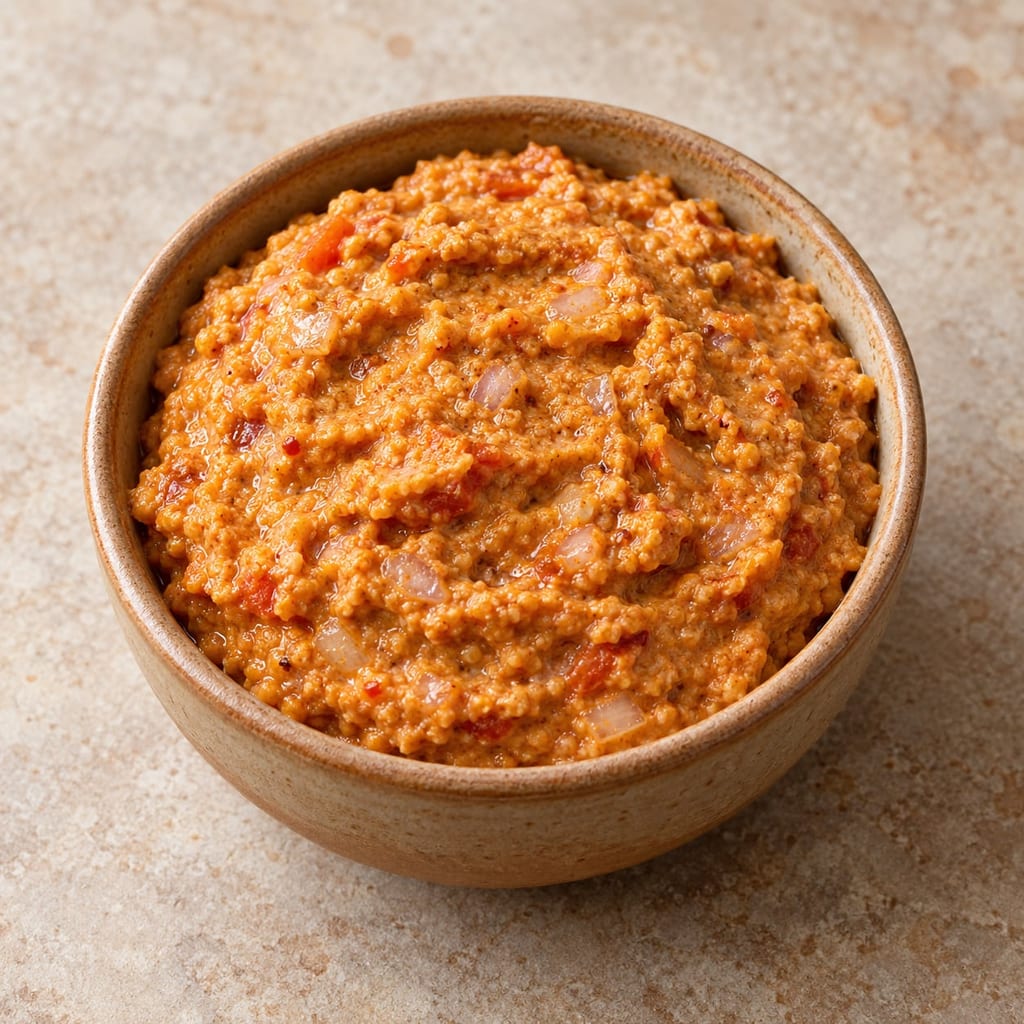
A moist Andhra peanut chutney: roasted groundnuts ground with fried dried chillies and tamarind, folded into a roasted tomato-and-spice mix with raw onion, and eaten with khichdi, attu or idli.
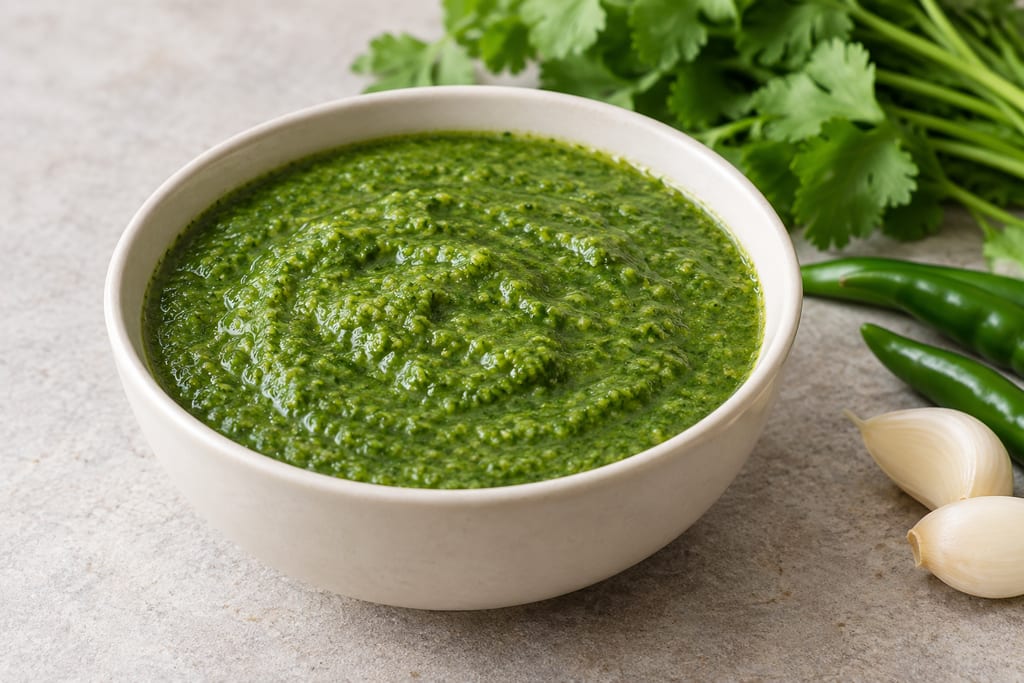
Afghan coriander chatni is a sharp, hot herb sauce with garlic and vinegar. A 2008 Afghanistan manual records green or red pepper and optional walnut; heat and household versions vary.
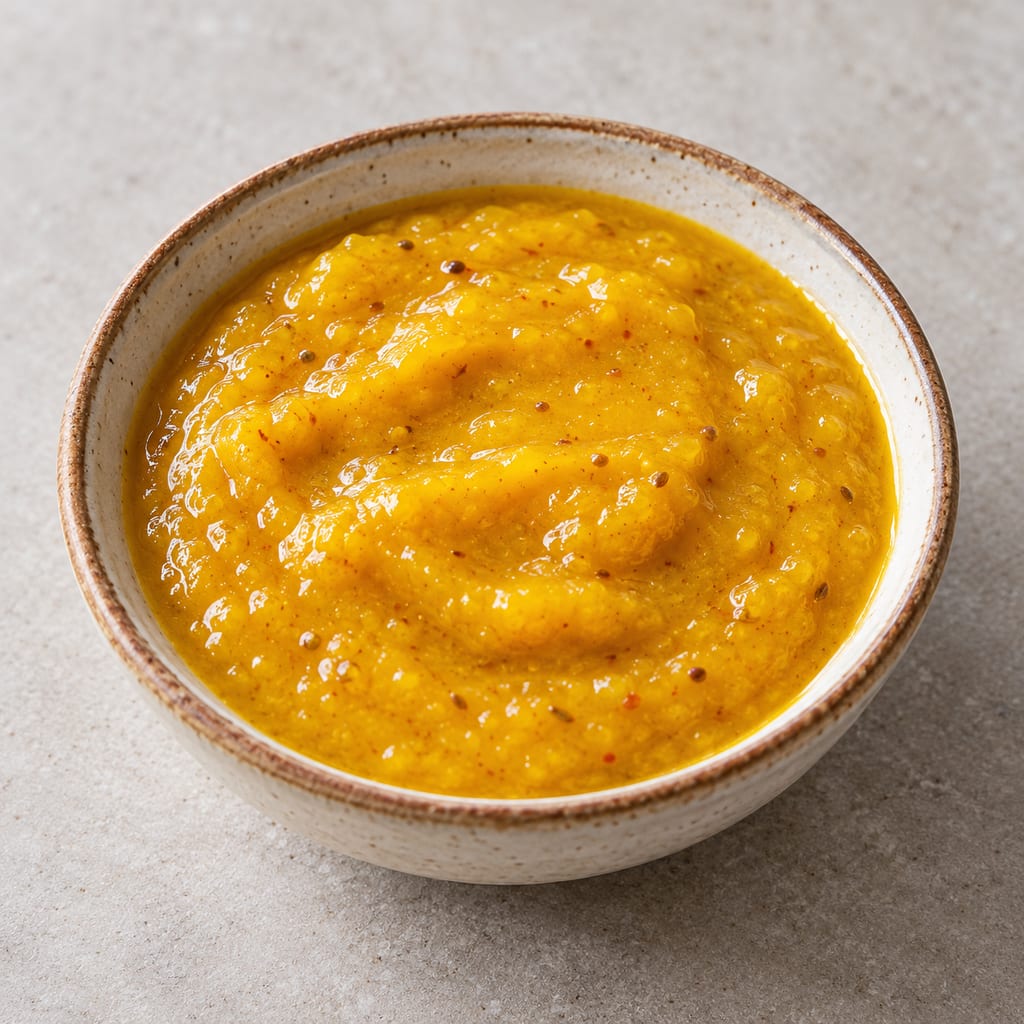
This cooked amba follows a Jewish Food Society recipe that simmers ripe mango with onion, garlic, mustard seed and warm spices into a tangy Middle Eastern condiment.
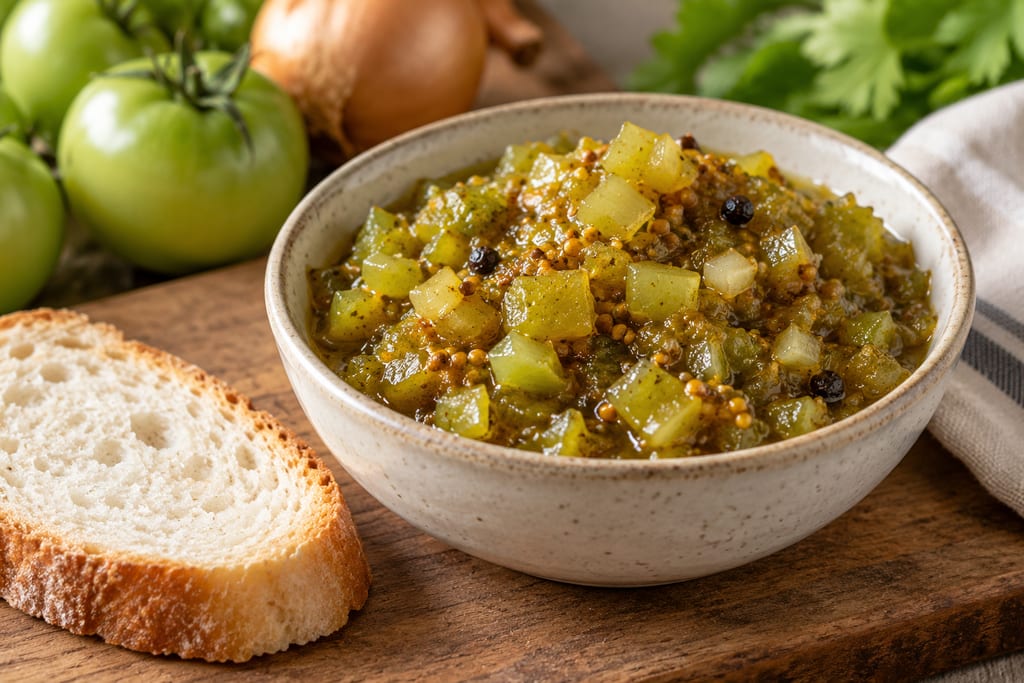
Australian green tomato pickles and relishes vary. This partial version follows ABC Western Victoria’s 2018 pickle recipe, not Beerenberg’s commercial formula. Sources document examples from 1944 onward, not a single origin.
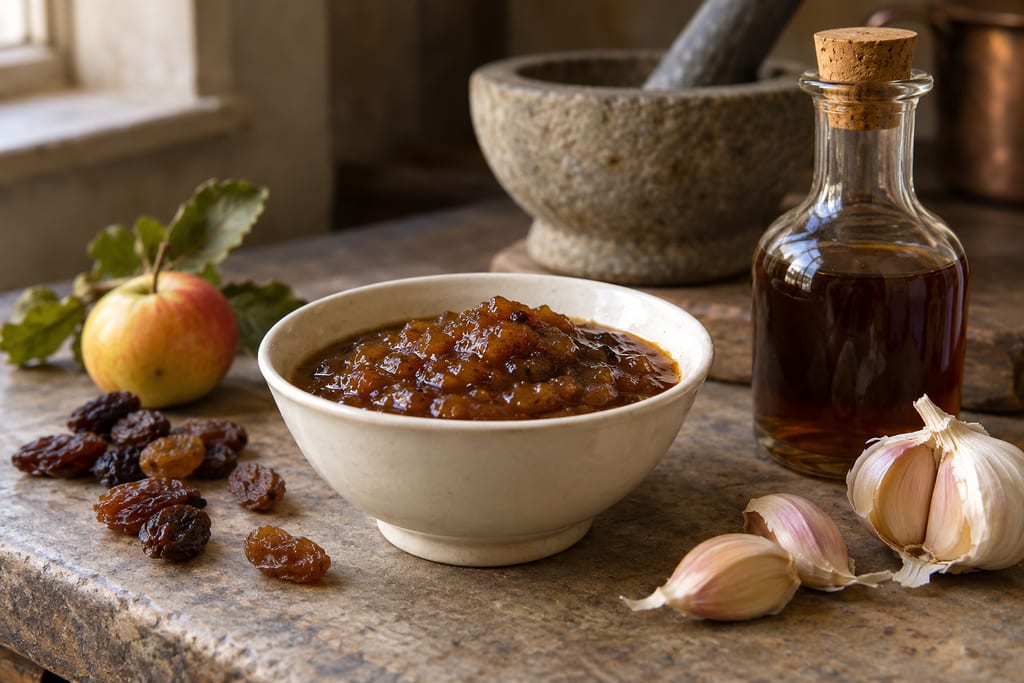
Eliza Acton's Bengal receipt for chetney sauce: stoned raisins and a hard acid fruit pounded with brown sugar, ginger, salt, cayenne and garlic, then thinned with vinegar to the consistence of thick cream.
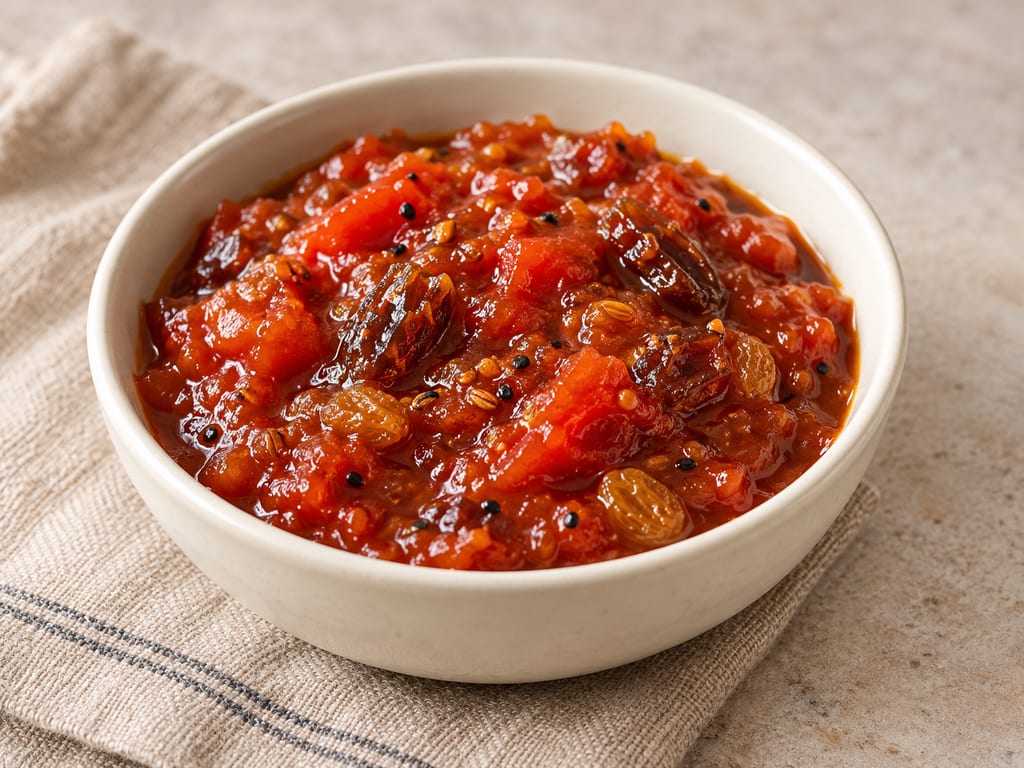
A cooked Bengali meal chutney combining tomatoes, dates, raisins, ginger and panch phoron.

A spicy South African vegetable relish of onion, carrot, pepper, tomato, curry seasoning and beans, cooked briefly and served warm or cold beside pap and grilled meat.
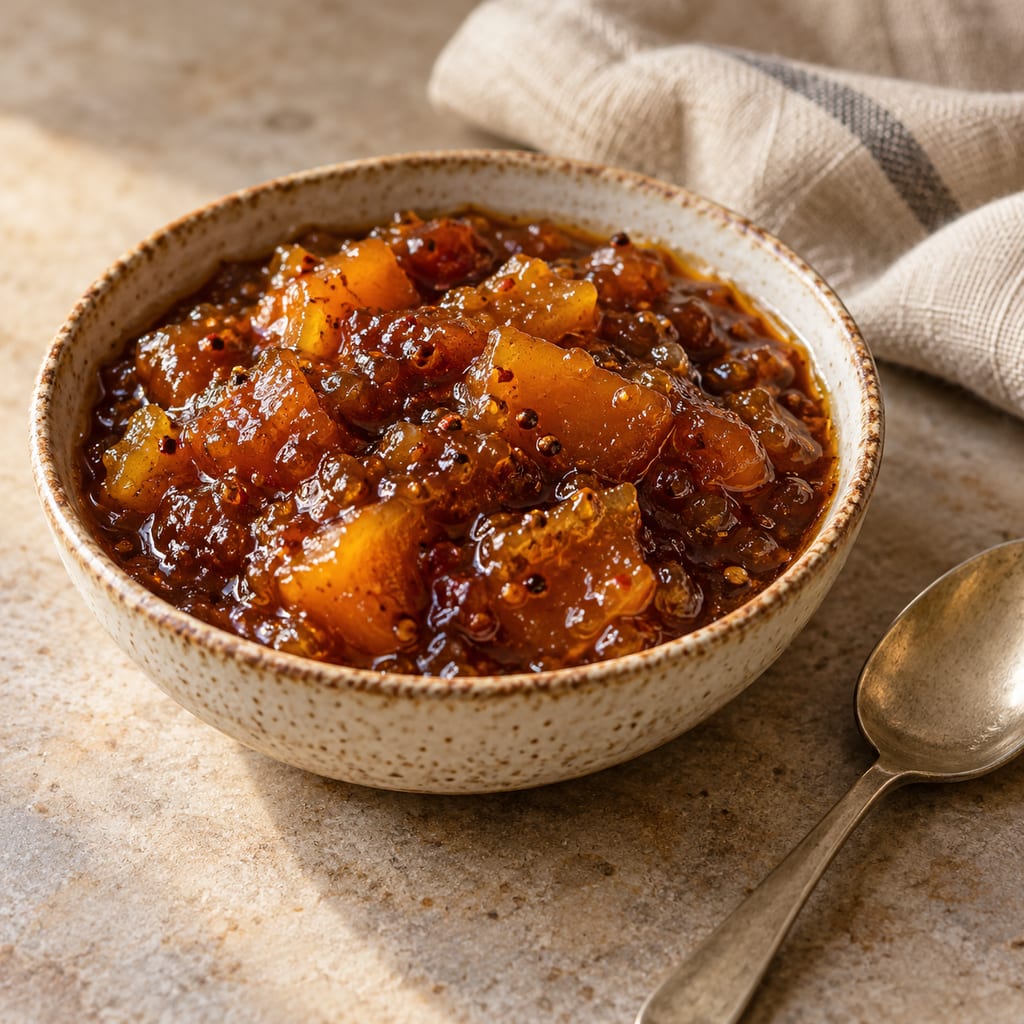
A broad account of cooked chutney traditions: fruit or vegetables combined with sugar, spices and sometimes acid, often boiled into a thick condiment. This record is historical and process context, not a formula or storage recipe.
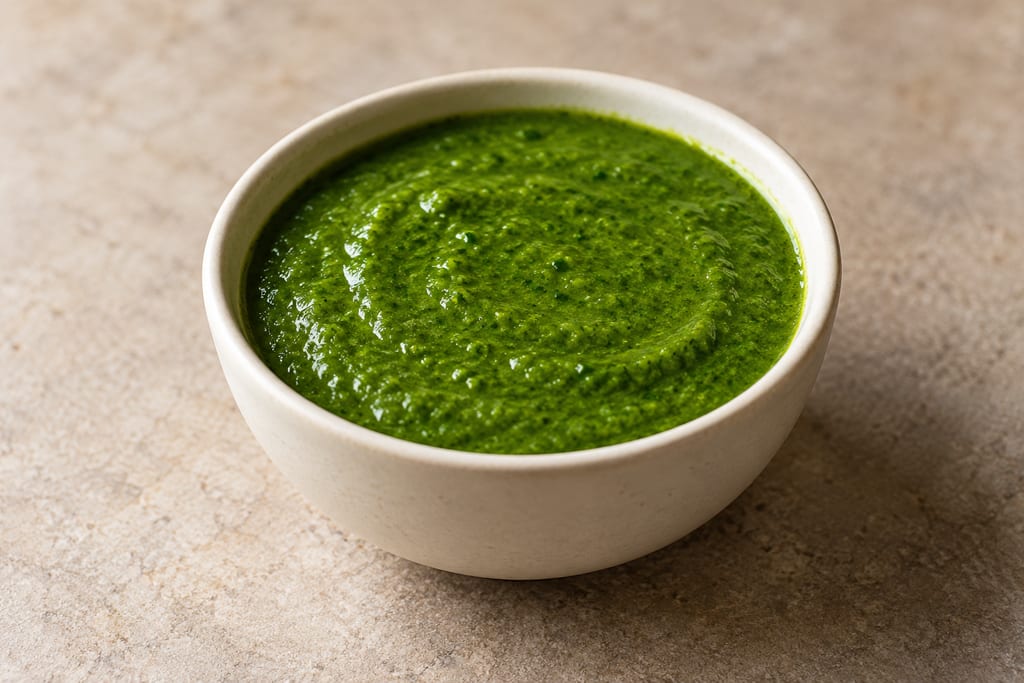
A cold-blended coriander and mint chutney with ginger, green chilli and optional cumin and lemon; the author serves it with snacks, chaat and sandwiches.
No community contributions have been published for this entry yet.
Sign in to contribute. Published comments and photos are free to read.
RecipeTableMethod
Andhra Gongura Pachadi / Sorrel Leaves ChutneyIngredients, quantities and method
Cited in: The cooked and ground recipe
TeluguOneVariant
Gongura Pachadi (Atla Taddi Special)A second recipe with tamarind and turmeric; keeps-well statement
Cited in: A second version for Atla Taddi
Guntur District Administration, Government of Andhra PradeshIdentity · Geography · History
Gongura PickleName, regional names and Guntur association
Household leaf-wilting account
Cited in: Gongura and the dish; Leaf handling and keeping
J.C. Bose Herbarium / Centre for Ecological Sciences, Indian Institute of ScienceIdentity
Flora of Peninsular India: Hibiscus sabdariffaTelugu gonguru and yerragogu among vernacular names of Hibiscus sabdariffa
Cited in: Gongura and the dish
CSJMU GyansanchayIdentity · Use
Andhra Pradesh Cuisine (Telugu Cuisine)Gongura varieties, Guntur gongura, related dishes
Cited in: Varieties and related dishes
HomeCookingShow (YouTube)Variant
Andhra Special Gongura Pachadi | Gongura Recipes | Sorrel Leaves ChutneyWritten description of a third method
Cited in: A second version for Atla Taddi
U.S. Food and Drug AdministrationSafety
Selecting and Serving Produce SafelyWashing, drying and cooking fresh produce
Cited in: Leaf handling and keeping
