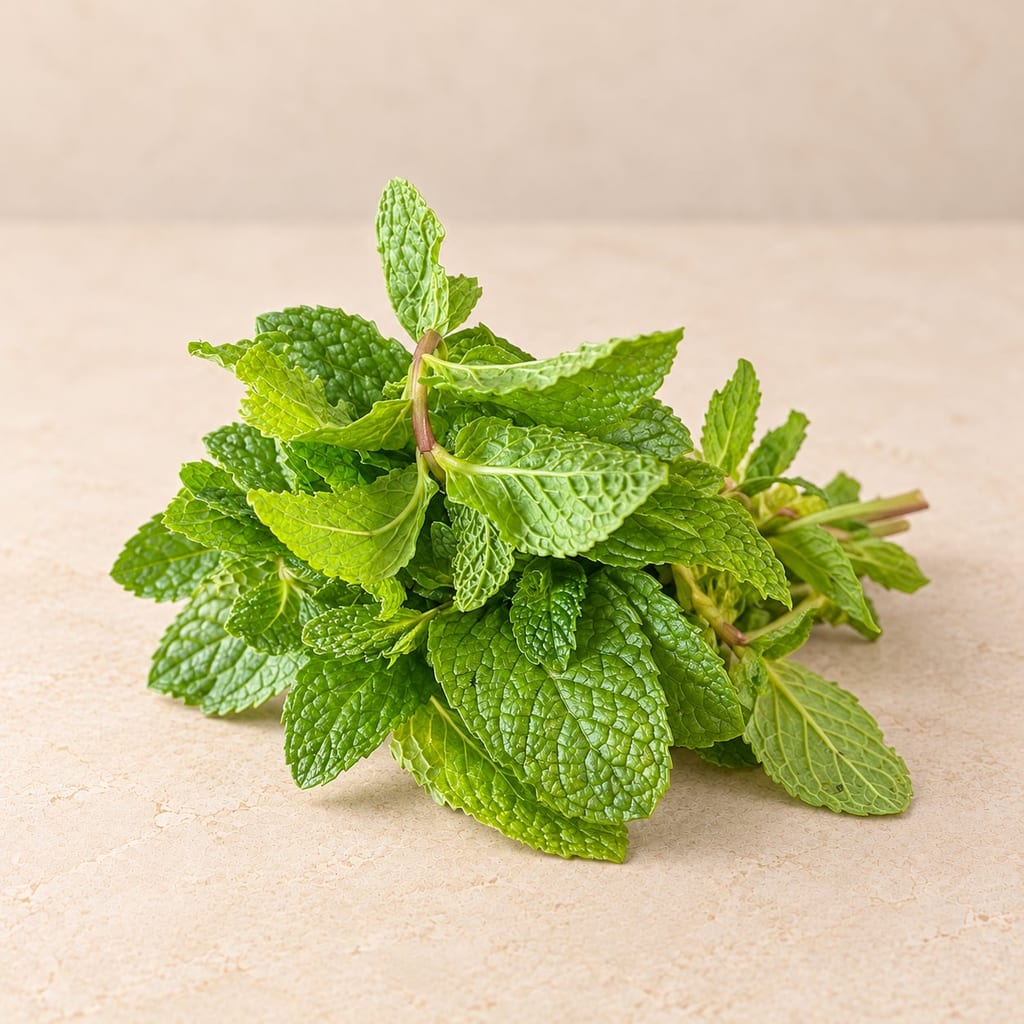
Mint
Mint is the fresh leaf of aromatic Mentha plants, chiefly spearmint and peppermint. It gives chutneys, yoghurt sauces and fermented drinks a cool, sweet, green note.
 FermenteaWhere food goes to change
Modern method
Cilantro Mint Chutney (6 Ingredients) · Mint coriander chutney
A cold-blended coriander and mint chutney with ginger, green chilli and optional cumin and lemon; the author serves it with snacks, chaat and sandwiches.
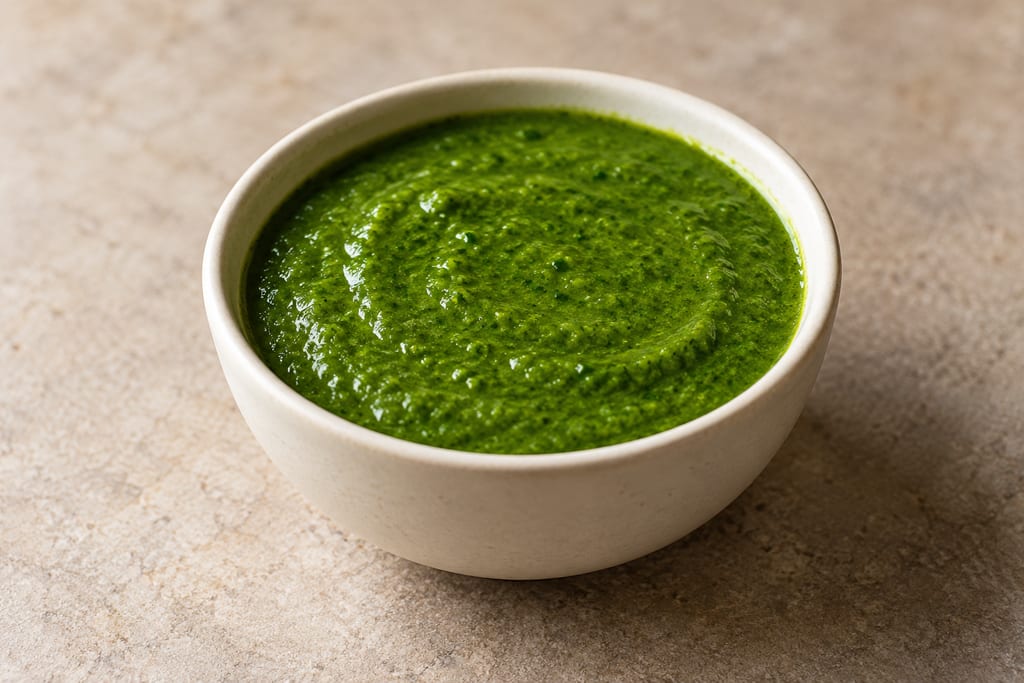
Coriander-mint chutney is a fresh Indian green condiment made from coriander leaves, mint, green chilli, ginger and salt, with optional cumin and lemon.
It has a lively herbal aroma, a bright green colour and a mildly to strongly spicy flavour depending on the chilli used.
The texture can range from a thick sandwich spread to a looser dipping sauce.
The recipe is closely associated with Indian snacks and chaat preparations, where a sharp, fresh chutney contrasts with fried, starchy or sweet ingredients.
In Hindi, coriander is called dhaniya (धनिया) and mint is pudina (पुदीना). A coriander-mint chutney may therefore be described as dhaniya-pudina chutney, although the original published recipe uses the English title.
This preparation is made by washing and grinding fresh ingredients. It is not fermented.
The version preserved here comes from Dassana Amit's family recipe, documented on her Indian cooking website and updated in December 2024.
Indian chutneys form a broad and diverse category of condiments.
Some are fresh, some cooked and some preserved.
Their ingredients vary according to region, household and available produce.
Coriander and mint chutneys are particularly associated with snacks, street foods, sandwiches and festive platters.
The present recipe is explicitly a contemporary family preparation.
The author describes her mother making the chutney for after-school and evening snacks.
This is a meaningful account of household use, but it does not establish a precise year or place of invention.
It would be inappropriate to claim that the current ratio of coriander to mint is an ancient standard across all India.
Different regions and families prepare green chutneys with different balances of herbs, souring agents and spices.
Ingredient — Quantity
Chopped fresh coriander leaves and tender stems — 1 cup
Chopped fresh mint leaves — 1 cup
Chopped green chilli — 1 teaspoon, approximately 1–2 chillies
Fresh ginger — ½ inch
Ground cumin — 1 teaspoon, optional
Lemon juice — 1 teaspoon, optional
Salt or black salt — To taste
Water — 3–4 tablespoons initially, or as required
Yield: Four servings.
Preparation: Approximately 10 minutes.
The original recipe provides no fixed final weight or volume.
Fresh coriander leaves come from Coriandrum sativum.
They contain distinctive volatile compounds, including aldehydes, that contribute to their fresh aroma.
Mint is represented by several cultivated species and hybrids within the genus Mentha.
The original recipe does not specify the mint cultivar.
Common culinary mint contains aromatic compounds such as menthol or carvone in varying proportions.
These differences influence the flavour.
The combination of coriander and mint gives a broader herbal character than either ingredient alone.
Freshness is particularly important because delicate aromatic compounds can diminish or change during prolonged storage.
The original method uses mint leaves without their tougher stems.
Some mint stems can contribute a coarse texture or bitter notes.
Tender coriander stems, by contrast, are specifically retained.
This reflects differences in the culinary properties of the plants.
The recipe is not merely measuring two cups of undifferentiated green material.
Its preparation affects the final flavour and texture.
Pick the coriander leaves and tender stems.
Discard damaged material and coarse unwanted portions.
Measure 1 cup chopped coriander.
Remove the mint leaves from their stems.
Measure 1 cup chopped leaves.
Avoid including large woody stems.
Place the herbs in a colander.
Rinse thoroughly with clean water.
Drain.
Fresh herbs can carry soil and environmental microorganisms, so washing is important even though the chutney is eaten raw.
Chop 1–2 green chillies to obtain approximately 1 teaspoon.
Peel and roughly chop ½ inch ginger.
Prepare optional cumin and lemon juice.
Add the coriander, mint, chilli, ginger, optional 1 teaspoon cumin, optional 1 teaspoon lemon juice, and salt.
Add 3–4 tablespoons water.
Process until smooth.
Scrape down the sides if necessary.
Add additional water only if needed to achieve the intended consistency.
For sandwiches, keep the chutney comparatively thick.
For dipping, use a medium-thick consistency.
The recipe does not provide a numeric final viscosity.
Transfer to a small serving bowl or clean container.
Serve with Indian snacks, chaat or sandwiches.
Coriander and mint owe much of their aroma to volatile compounds.
Cutting and blending rupture plant tissues, allowing these compounds to become more readily available.
The same mechanical disruption exposes pigments and other constituents to oxygen and enzymes.
This explains why a freshly blended herb sauce may lose some brightness during storage.
The original recipe permits adding lemon juice partly to help preserve its green appearance.
Acidity can influence pigment behaviour, but lemon juice does not make the chutney shelf-stable.
The mixture still contains water and fresh plant material.
There is no intentional culture, salt-brine maturation or microbial acidification stage.
The green colour and sourness arise from fresh ingredients and optional lemon.
If the chutney begins producing gas or develops unusual sourness during storage, that should not automatically be celebrated as desirable fermentation.
It may instead indicate spoilage.
The correct Fermentea process classification is fresh grinding or blending, with no deliberate fermentation.
The chutney accompanies samosas, pakora, aloo tikki, sabudana vada, kachori and dhokla.
It is also useful with chaat, a broad family of Indian snack preparations combining contrasting textures and flavours.
A little green chutney can provide herbal heat and acidity alongside sweet tamarind sauce and crunchy ingredients.
In sandwiches, the thicker version acts as a spread.
Its moisture can soften bread, so it is best added near serving.
The recipe's main variations concern cumin, lemon, chilli and water quantity.
Black salt introduces a different mineral and sulphurous flavour from ordinary salt.
Cumin gives an earthy roasted-spice note.
Additional lemon makes the mixture sharper.
More green chilli increases heat, though the actual effect depends on cultivar.
These are variants within one recipe.
A yoghurt-based mint chutney or a coconut-containing green chutney has a more substantial ingredient change and should be distinguished separately.
Green chutney names cover many combinations rather than one fixed formula. The Bhabha Atomic Research Centre describes mint-coriander spice dip, also called green chutney or hari chutney, as a traditional Indian condiment made from fresh mint and spices. Neither that page nor the recipe above establishes a single origin, a standard ratio or a country-wide formula.
SBS Food prints a separately credited version, from Angela Nahas and Feast magazine, issue 11 (2015), headed hari chatni. It makes about half a cup from two bunches of coriander, one bunch of mint, two long green chillies, tamarind water, cumin, ginger and lemon juice. The coriander and seasonings are processed first and the mint is added gradually. Its printed tablespoon is 20 mL and its cup 250 mL, so its measures should not be silently converted into the figures of the recipe above. It is a different formula, not a correction.
Mrs Balbir Singh's 1961 Indian Cookery is recorded with a mint and coriander chutney, Podina Dhania Ki Chutney, whose method excerpt begins by soaking tamarind. The complete method is unverified, and no earliest-recipe claim rests on it.
The Bhabha Atomic Research Centre also describes a distinct institutional product: a ready-to-eat mint-coriander dip treated with gamma irradiation and packaged so that it keeps for six months at ambient temperature. The page states outcomes but not a household process, a dose or a validation dossier. It does not show that the fresh chutney above is shelf-stable, and adding salt or lemon to a home batch does not make a tested preserve.
Chutney is bitter: Coarse mint stems, herb condition or excessive blending may contribute.
Colour darkens: Oxidation and pigment changes can occur.
It is too watery: Excess water was added.
It is too thick: Add a little water when blending.
Heat is excessive: Chilli variety and quantity may be responsible.
The flavour is dull: Herbs may be old or poorly stored.
Visible mould, unintended gas formation or rotten odour after storage are reasons to discard the condiment.
Fresh herb chutney is perishable.
The original article contains inconsistent refrigeration guidance: one section mentions 2–3 days, while another gives 3–4 days.
Neither is a validated shelf-life specification for this exact batch.
Use clean equipment, refrigerate promptly and avoid prolonged warm holding.
The standard recipe is vegan and gluten-free when its ingredients are appropriate and uncontaminated, but actual commercial ingredients should always be checked where relevant.
The author says this recipe came from her mother and describes using it with Indian snacks and chaat. This contemporary family account does not date the preparation or establish an origin.
Yield 4 servings · Scaling: source batch only
The article introduction says 2–3 days refrigerated, while its recipe method/card says 3–4 days; neither duration is independently validated. The source does not establish a tested holding limit.
The author places this preparation in Indian cuisine and describes its snack, chaat and sandwich uses; this is a source-associated use context, not an origin claim.
Mint is the fresh leaf of aromatic Mentha plants, chiefly spearmint and peppermint. It gives chutneys, yoghurt sauces and fermented drinks a cool, sweet, green note.
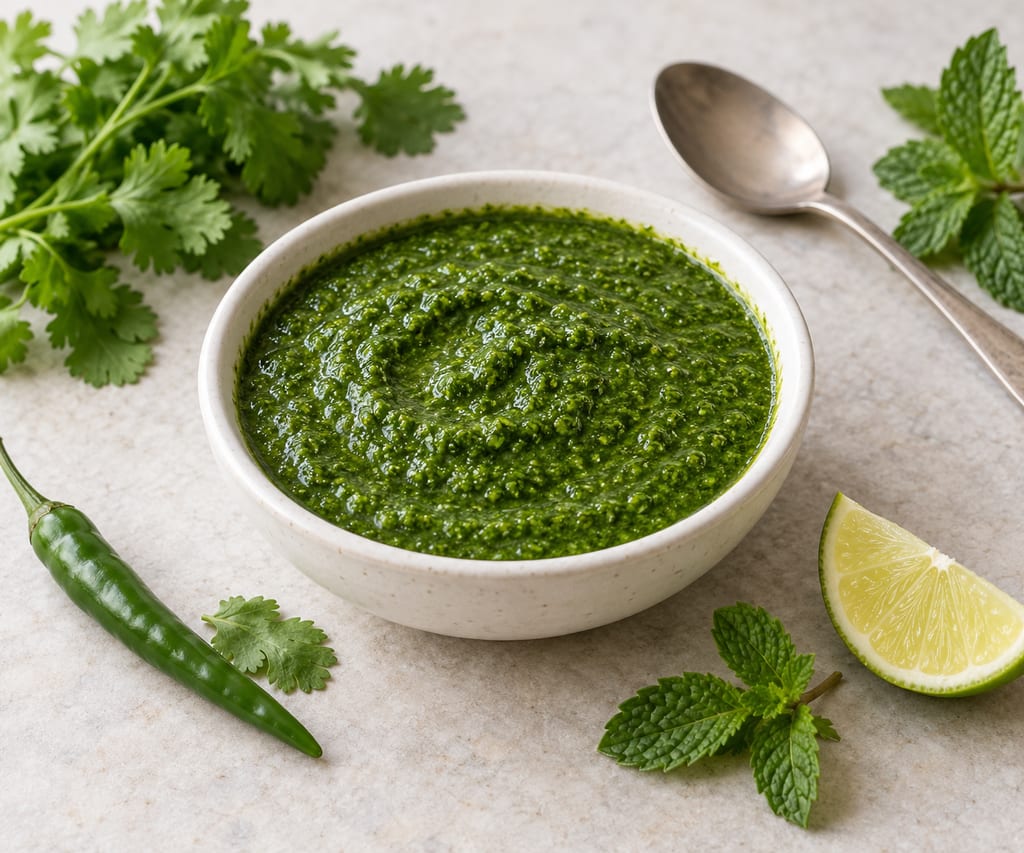
A fresh, uncooked green chutney blended from coriander, mint, chilli and citrus. This measured development batch is untested and intended for prompt serving.
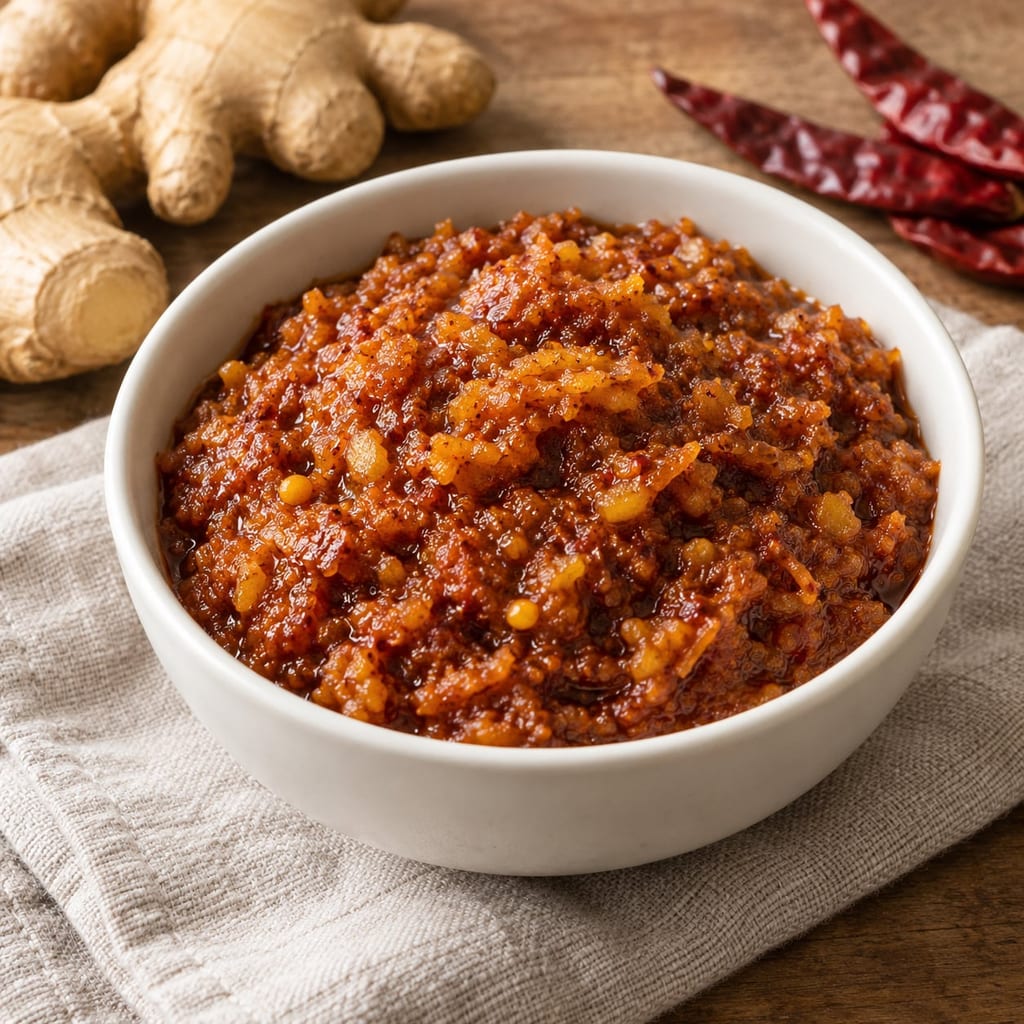
An Andhra ginger-and-urad chutney in which browned dal and briefly fried ginger and chillies are cooled, then ground with jaggery to a coarse paste.
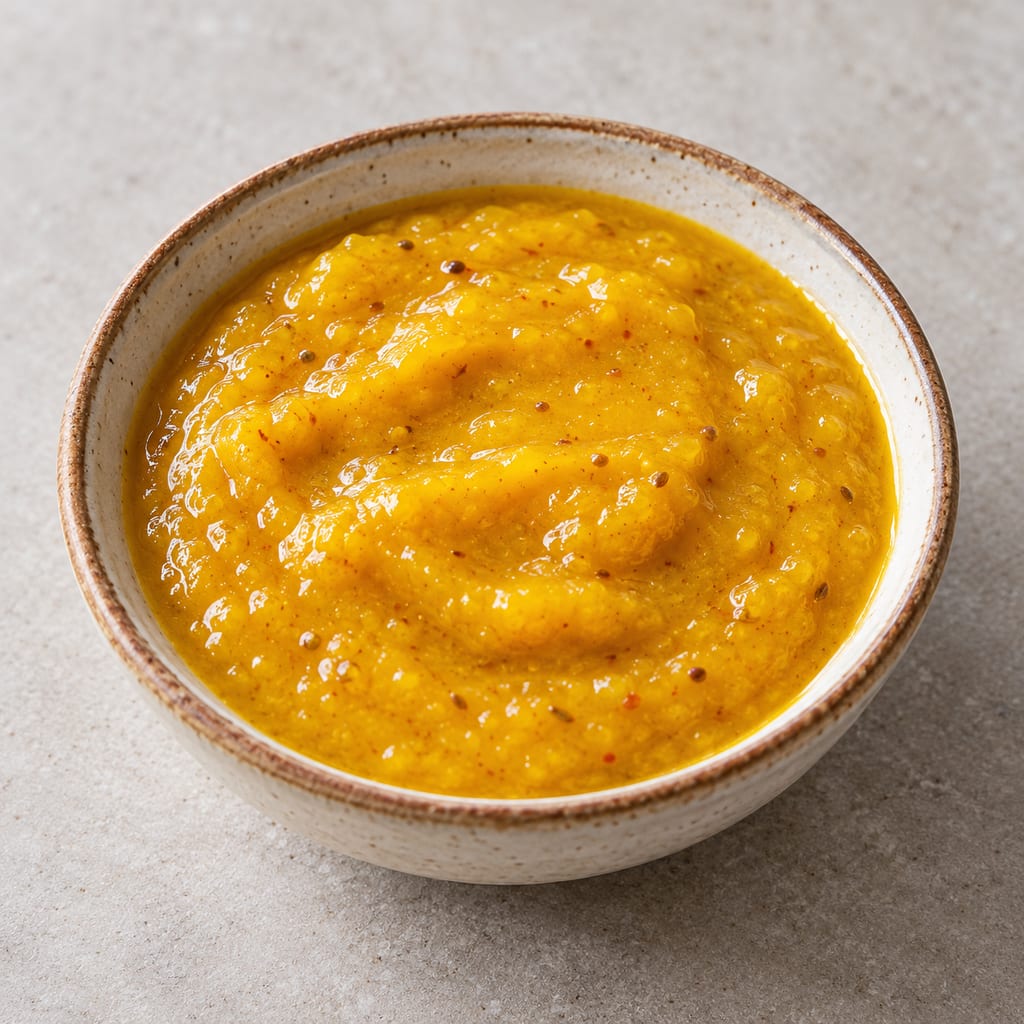
This cooked amba follows a Jewish Food Society recipe that simmers ripe mango with onion, garlic, mustard seed and warm spices into a tangy Middle Eastern condiment.
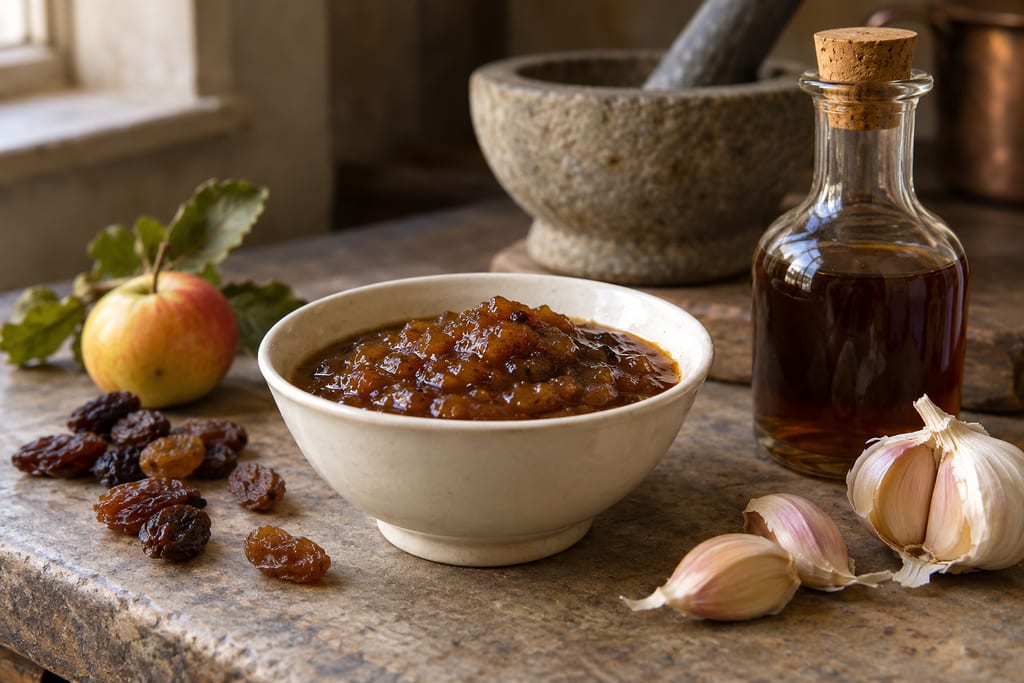
Eliza Acton's Bengal receipt for chetney sauce: stoned raisins and a hard acid fruit pounded with brown sugar, ginger, salt, cayenne and garlic, then thinned with vinegar to the consistence of thick cream.
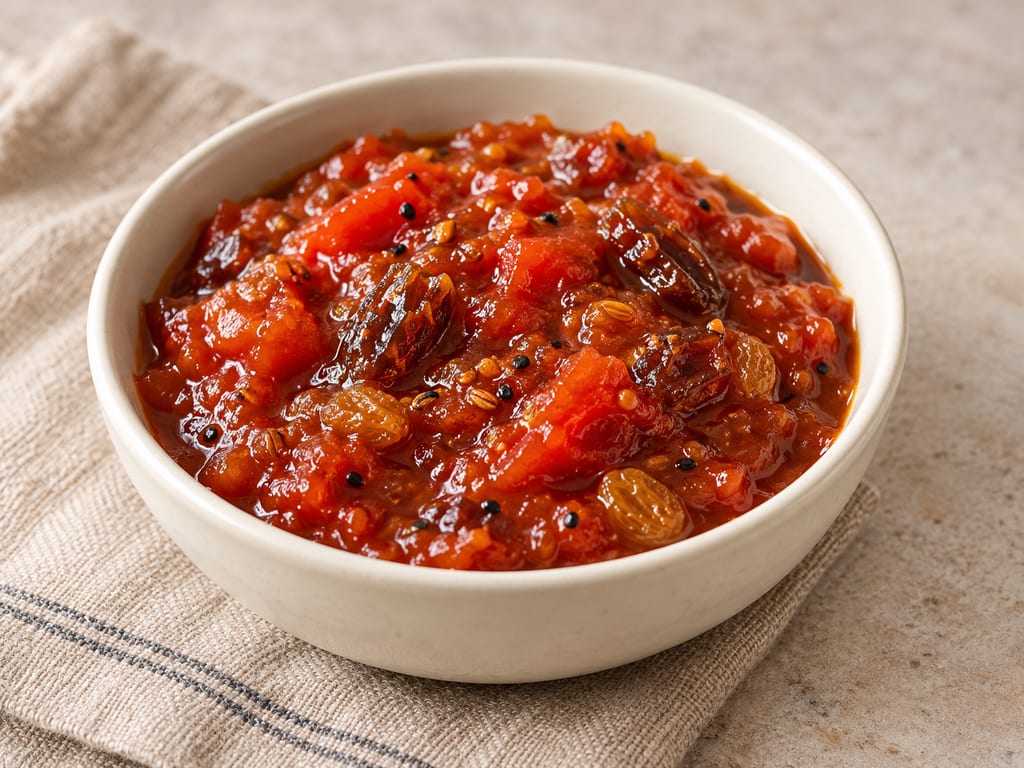
A cooked Bengali meal chutney combining tomatoes, dates, raisins, ginger and panch phoron.
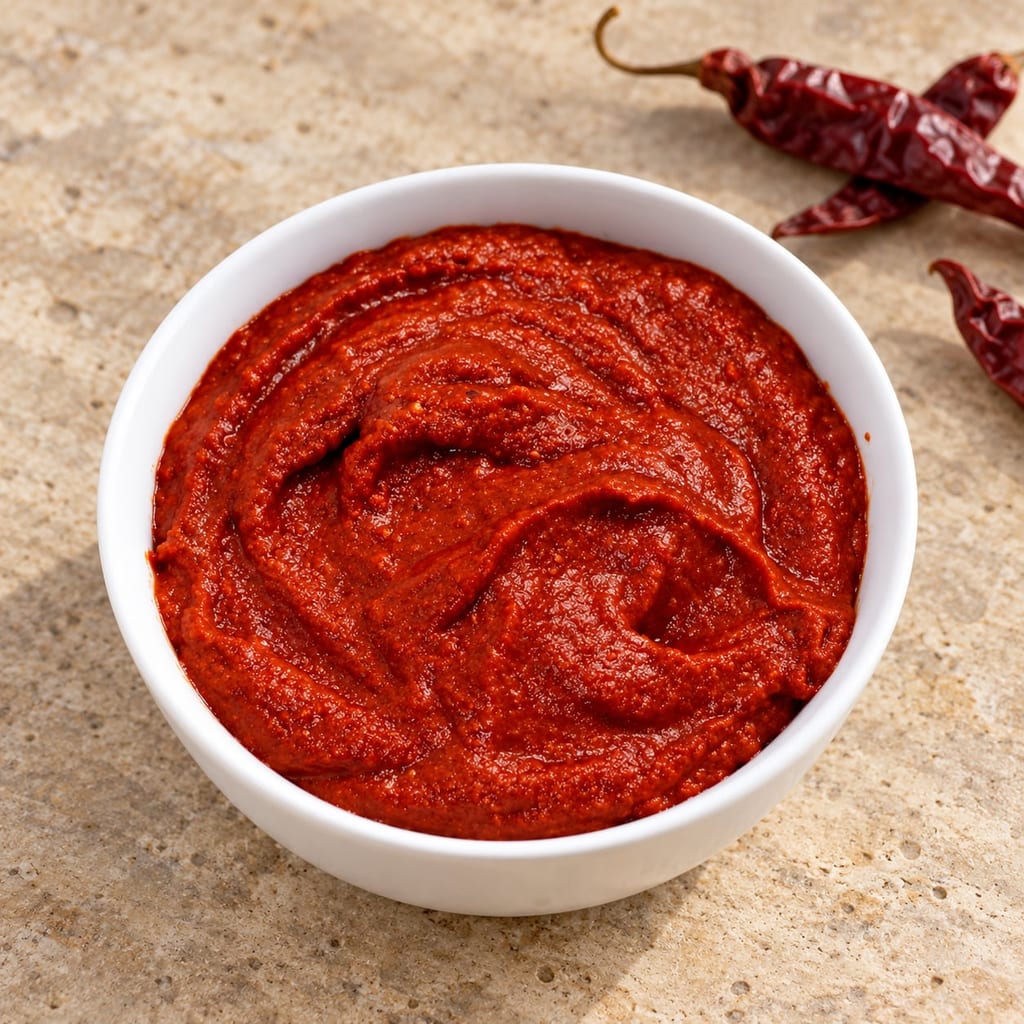
Recheado is a red Goan spice paste of Kashmiri chillies, garlic and spices ground in vinegar, best known as the stuffing for fried fish such as mackerel.
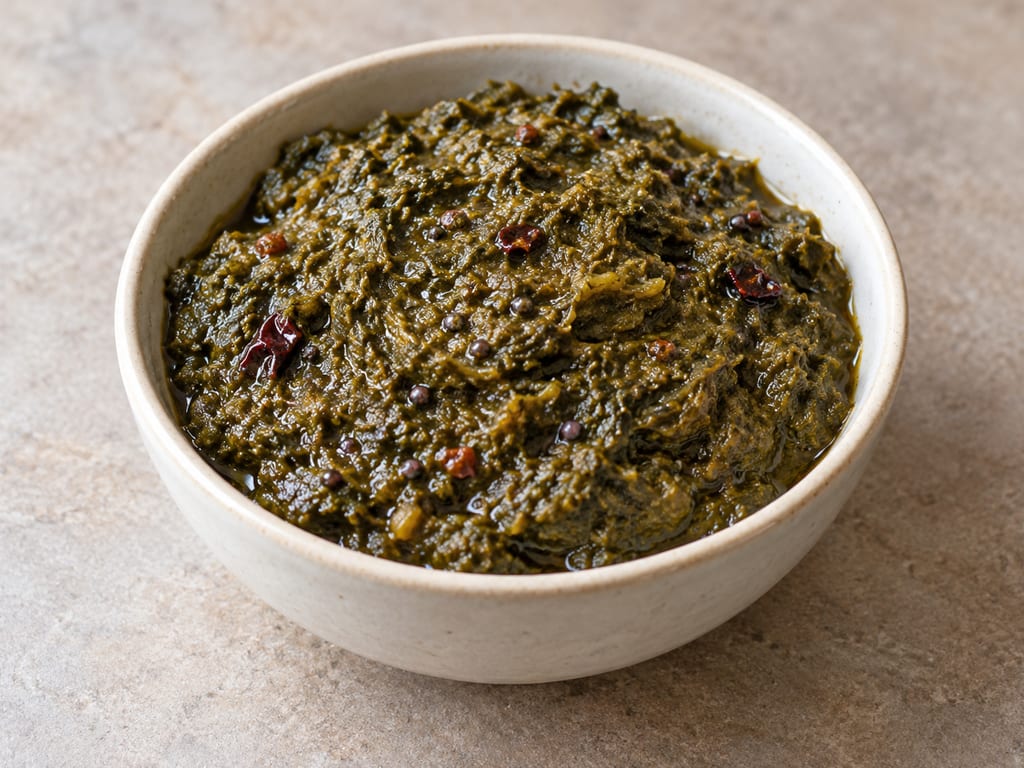
A hot, sour Andhra chutney of gongura (sorrel) leaves cooked soft and ground with fried dried chillies, garlic and onion, then finished with a hot tempering of dals, mustard and curry leaves.
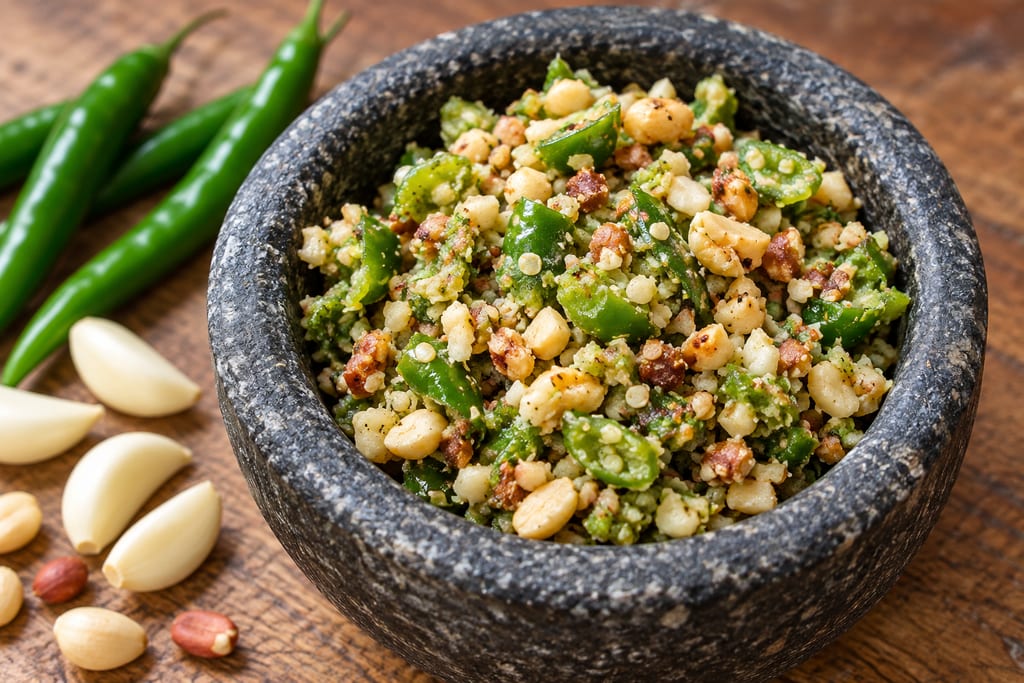
A fresh Maharashtrian thecha of green chillies, peanuts and garlic, roasted separately in the same oil and crushed with salt. Optional coriander joins the pan before grinding; serve with bhakari.
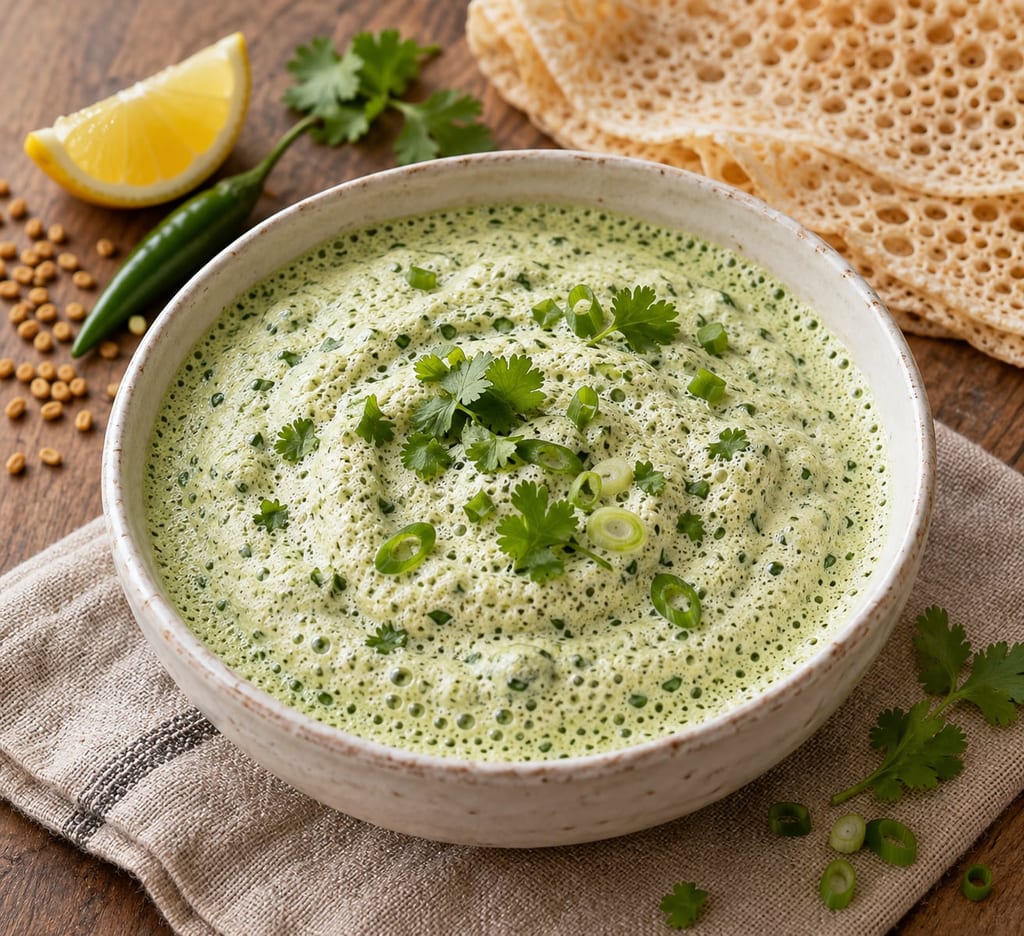
A whipped condiment of soaked ground fenugreek seed, aerated until foamy and finished with herbs, chilli and lemon. It comes from Yemen.
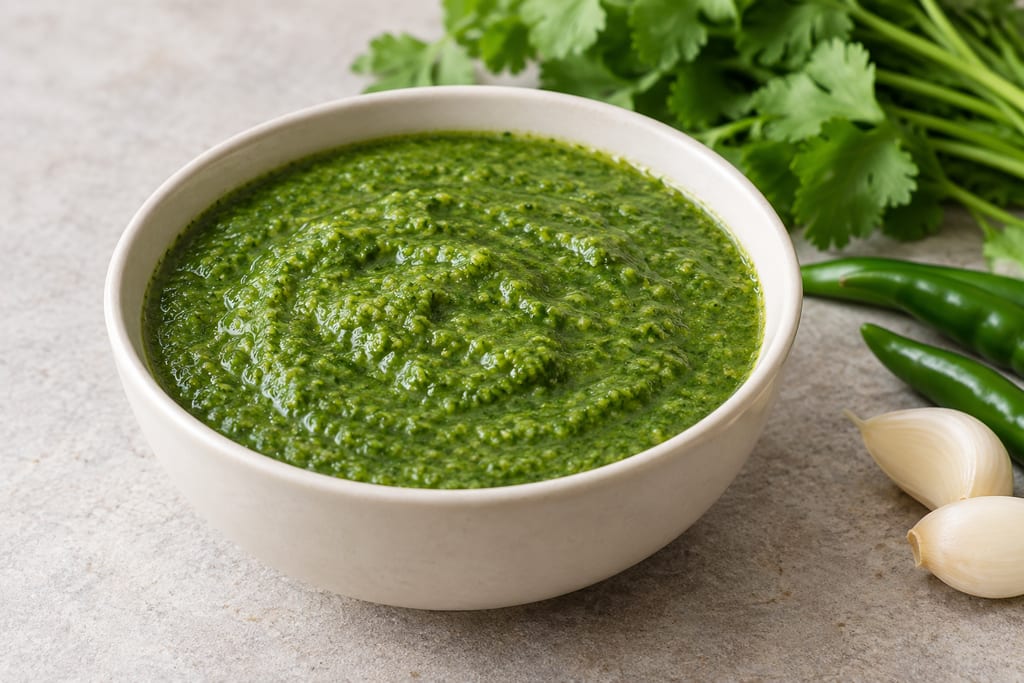
Afghan coriander chatni is a sharp, hot herb sauce with garlic and vinegar. A 2008 Afghanistan manual records green or red pepper and optional walnut; heat and household versions vary.
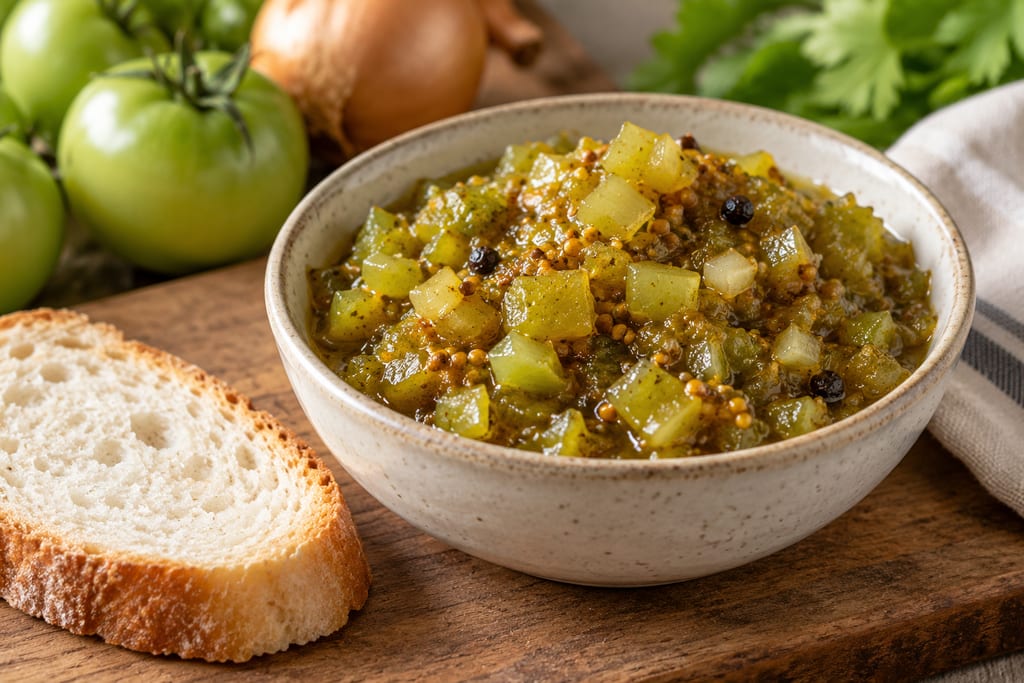
Australian green tomato pickles and relishes vary. This partial version follows ABC Western Victoria’s 2018 pickle recipe, not Beerenberg’s commercial formula. Sources document examples from 1944 onward, not a single origin.

A spicy South African vegetable relish of onion, carrot, pepper, tomato, curry seasoning and beans, cooked briefly and served warm or cold beside pap and grilled meat.
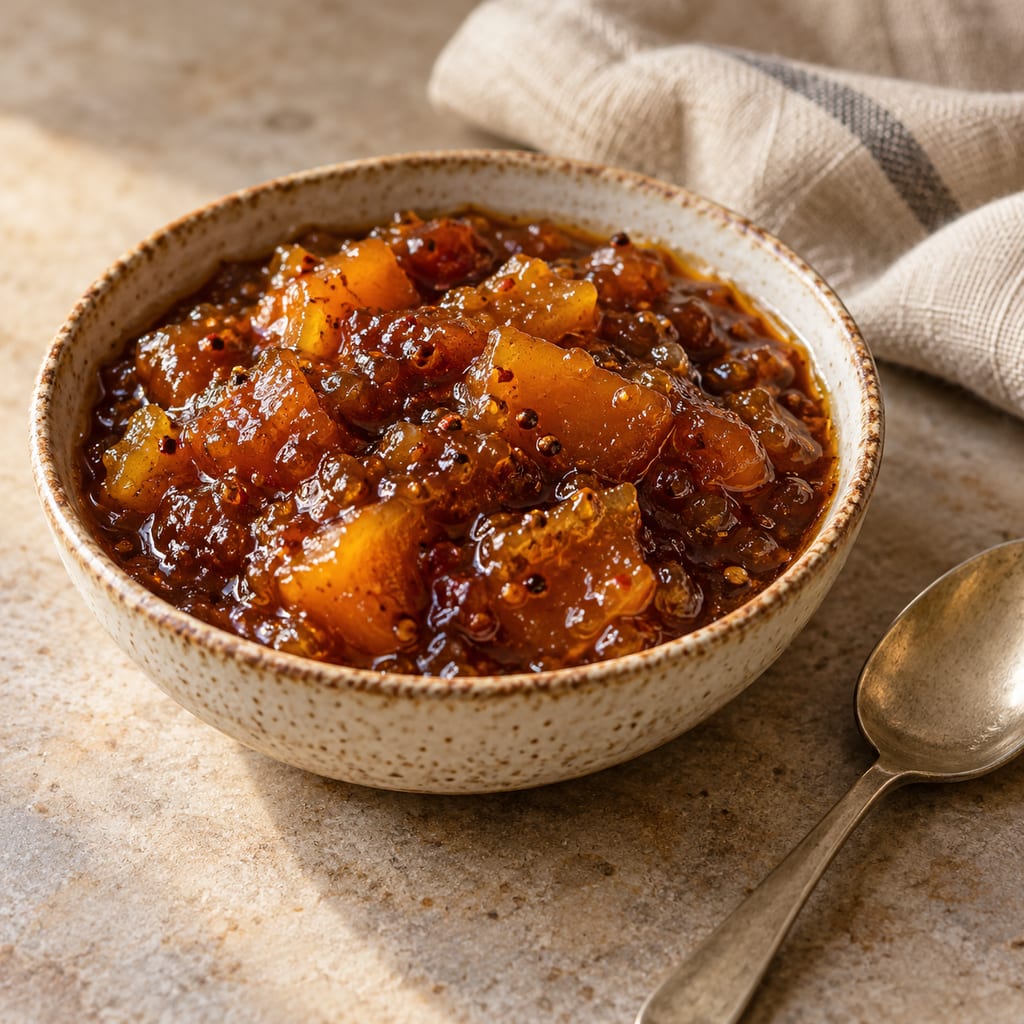
A broad account of cooked chutney traditions: fruit or vegetables combined with sugar, spices and sometimes acid, often boiled into a thick condiment. This record is historical and process context, not a formula or storage recipe.
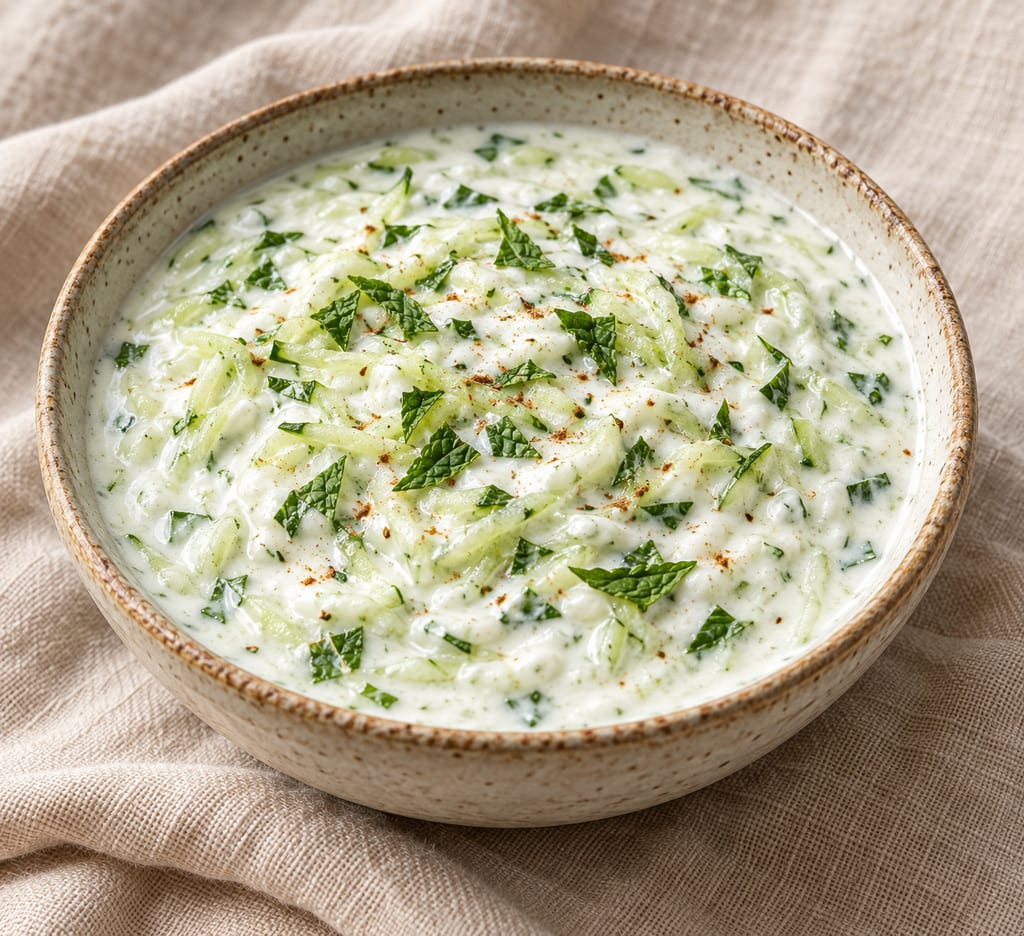
Cucumber and chopped herbs are folded into plain yoghurt with salt and roasted cumin for a cool South Asian accompaniment to spiced food.
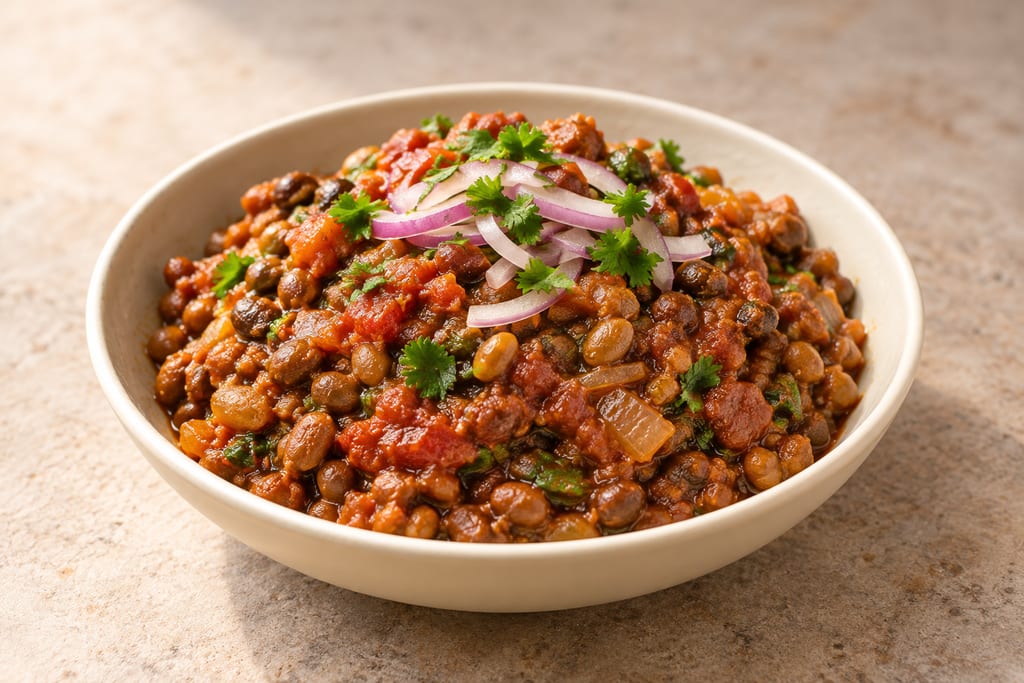
Kinema ra golbheda ko achar combines already-fermented soybean kinema with tomatoes, onion, garlic and spices, finished with sesame powder and fresh garnish, and is eaten with rice or toast.
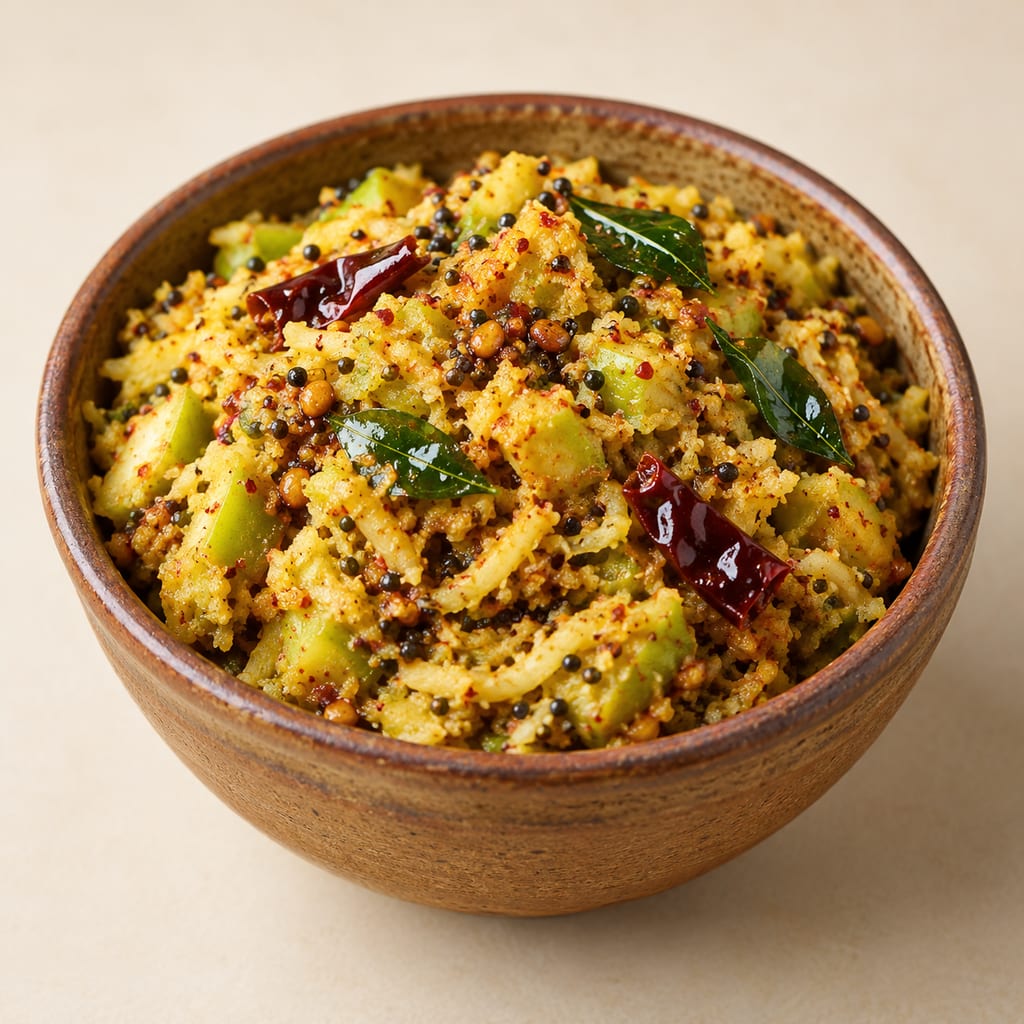
A Telugu coconut and raw mango pachhadi with a separately fried spice mixture.
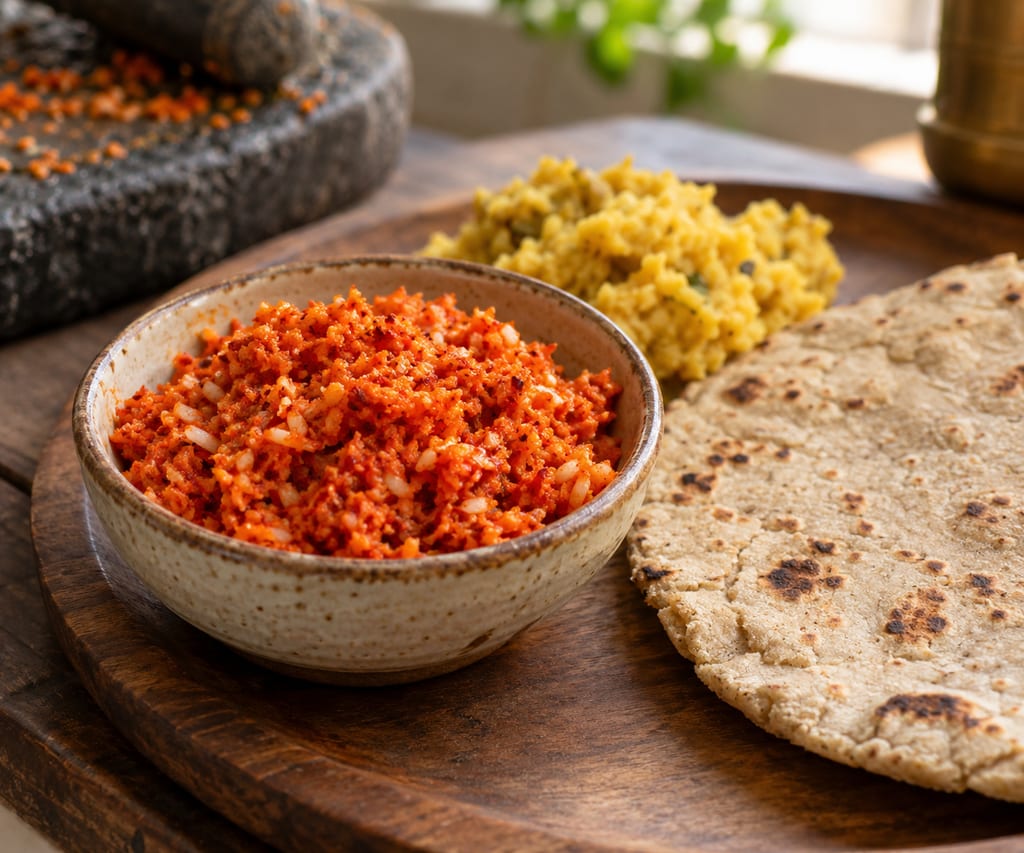
A fresh Maharashtrian chutney of wet coconut and garlic, ground with chilli and salt and finished with lemon; Royal Chef Sujata serves it with jhunka-bhakri.
No community contributions have been published for this entry yet.
Sign in to contribute. Published comments and photos are free to read.
Dassana’s Veg RecipesRecipe · Current use
Cilantro Mint Chutney (6 Ingredients)Title, byline and update date, author’s account that the recipe came from her mother, Indian snack and chaat uses, and introduction storage statement of 2–3 days refrigerated.
Herb preparation, card ingredients, servings, blending steps, source storage instruction of 3–4 days, and card time metadata (prep 10, cook 5, total 15) despite no cooking stage in method.
In a 2017 comment, author estimates about 1/2–3/4 cup; the recipe card itself states four servings.
Cited in: What is coriander-mint chutney?; Historical context; Ingredients; Coriander and mint; Why mint stems are removed; 1. Prepare coriander; 2. Prepare mint; 3. Wash; 4. Prepare aromatics; 5. Load the blender; 6. Blend; 7. Adjust texture; 8. Serve; The chemistry of fresh herb flavour; Why the chutney is not fermented; How it is served; Variations; Quality and troubleshooting; Safety and storage
SBS Food; recipe credited to Angela Nahas and Feast magazine, issue 11, p. 85Variant
Coriander and mint chutney (hari chatni)A second contemporary version with tamarind water and lemon, a half-cup yield, and herbs added in stages; printed tablespoon and cup definitions
Cited in: Other documented versions and a preserved dip
Mrs Balbir Singh, Mrs. Balbir Singh’s Indian Cookery; CKBK digitised recipe pageHistory
Mint and Coriander Chutney (Podina Dhania Ki Chutney)An indexed 1961 cookbook recipe with a method excerpt beginning with tamarind soaking
Cited in: Other documented versions and a preserved dip
Bhabha Atomic Research CentreIdentity · Safety
Preservative-free Shelf Stable Ready-to-Eat Blended Mint Coriander Spice (MCS) DipMint-coriander spice dip, also called green chutney or hari chutney, as a traditional Indian condiment; an irradiated industrial product with a six-month ambient shelf life
Cited in: Other documented versions and a preserved dip