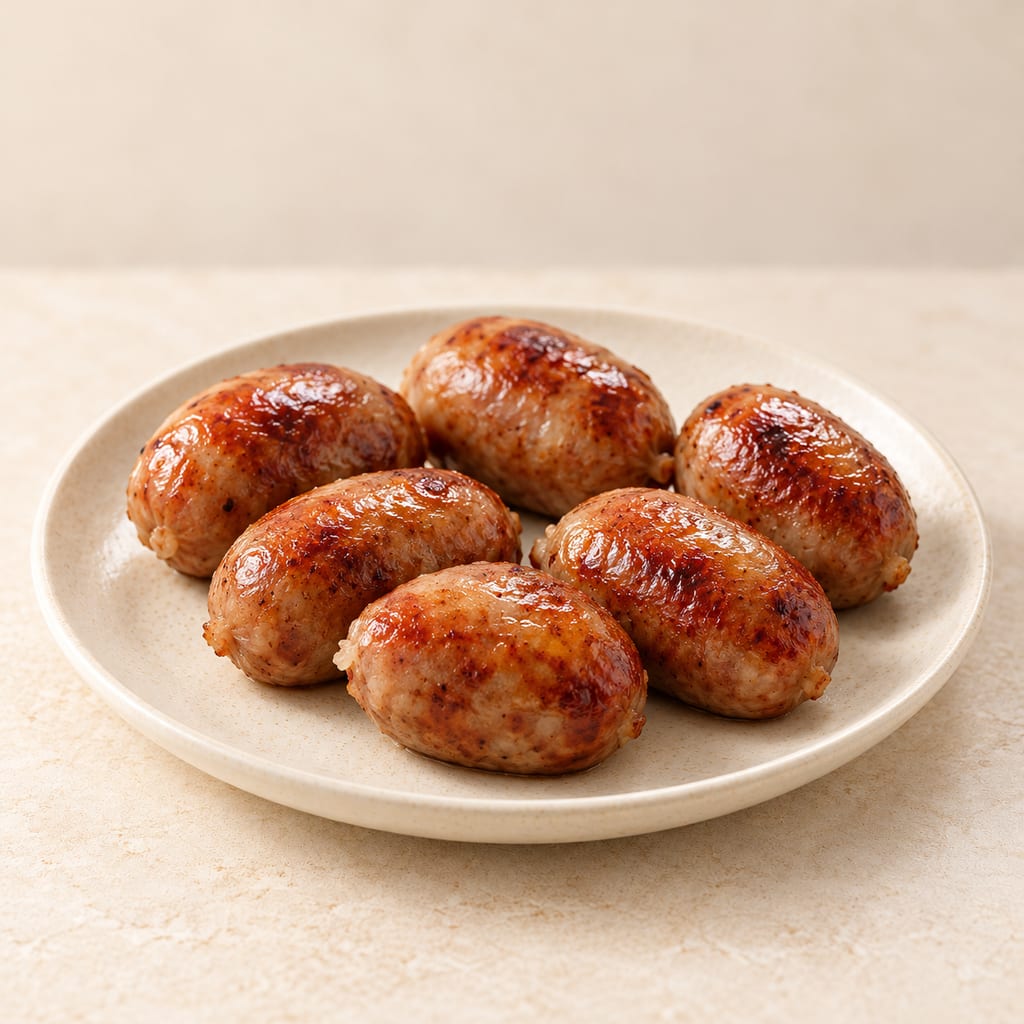
Sai krok Isan, starter-cultured
Sai krok Isan is a sour pork-and-rice sausage from northeastern Thailand. This garlic-rich version uses LHP-Dry starter and is cooked after fermentation.
 FermenteaWhere food goes to change
Spices and aromatics
Cilantro is the fresh leafy herb of Coriandrum sativum, the same annual plant that produces coriander spice. Its green, aromatic leaves and fine stems bring a vivid herbal note to foods such as sai krok Isan.
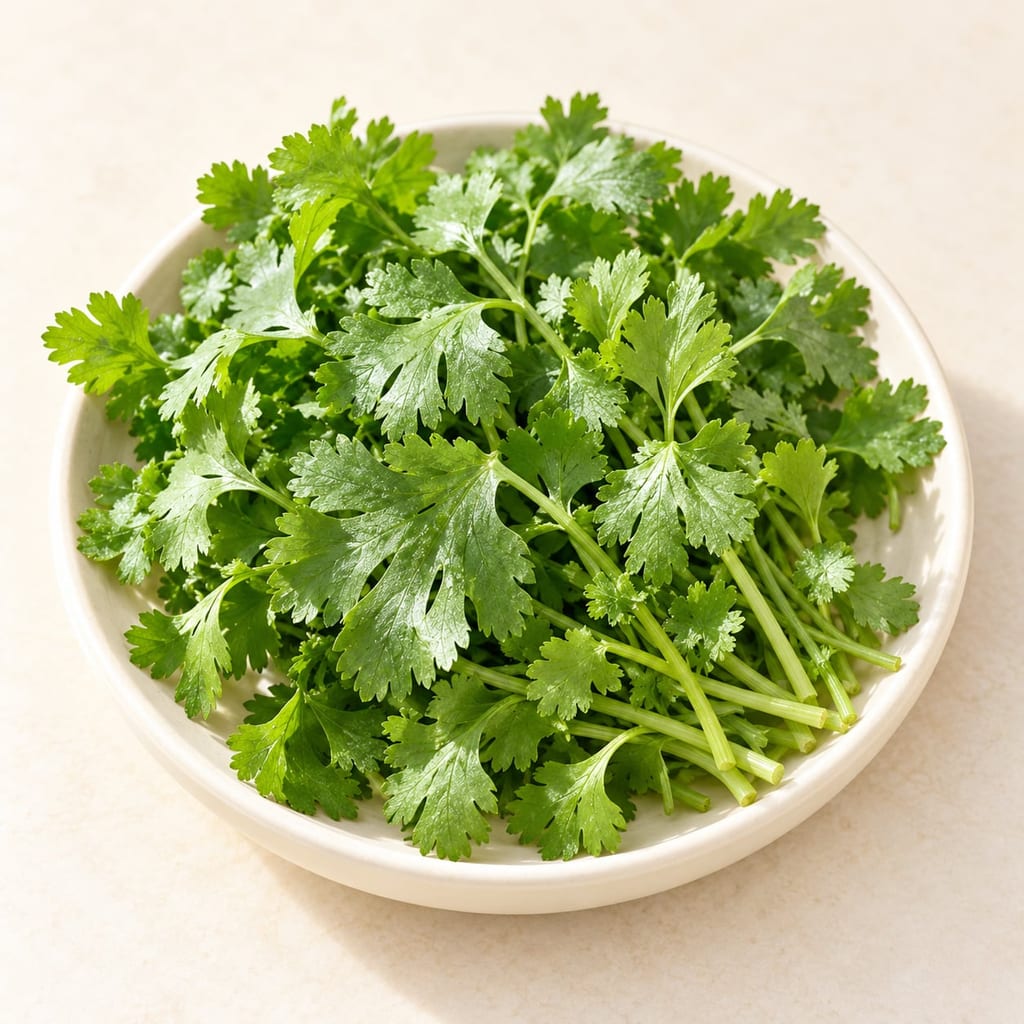
Cilantro is the fresh leafy herb of Coriandrum sativum L., an annual in the Apiaceae, the family that also includes parsley, celery, carrot, cumin and fennel. In American English, cilantro usually means the leaves and soft stems; coriander commonly names the dried fruits used as a spice. The terms travel differently: in much of Britain and other English-speaking markets, coriander can mean both the fresh plant and its dried fruit, while a package that says coriander seed is unambiguous. Both ingredients come from the same species, but they are not the same form and they do not carry the same aroma.
The plant makes a changing set of leaves as it grows. The early leaves are broader and divided into rounded lobes; leaves higher on a flowering stem become finer and almost feathery. Fresh bunches are usually sold before that flowering stage, with green leaves attached to slender stems and sometimes the root. A bunch may look like flat-leaf parsley at a glance, but parsley is Petroselinum crispum, another Apiaceae species, and its smell and taste are different. A second common confusion in Thai markets is sawtooth coriander or culantro, Eryngium foetidum: it is a separate species with long, firm, serrated leaves, not another name for cilantro.
The Thai name phak chi (ผักชี) is recorded for Coriandrum sativum in agricultural and botanical sources. In northern food writing, names include hom pom and phak pom; a northeastern name recorded by Chiang Mai University is phak hom noi. These names may refer to local forms and culinary practice, not new species. In this page, cilantro means the fresh leaf herb of C. sativum. Roots, dried fruits, and the distinct culantro are mentioned only to make clear where the boundaries lie.
The history of coriander is much older than the modern English distinction between cilantro and coriander. Archaeobotanists working at Bukhara summarize seed finds from sixth- and fifth-millennium BCE sites in Israel and from fourth- to second-millennium BCE sites in Syria, Türkiye and Greece. They discuss a proposal that cultivation may have been underway by the second millennium BCE, when coriander fruits were found in Egypt beyond the projected wild range. That is a plausible interpretation of the plant’s movement into cultivation, not a secure date for domestication or a single birthplace. Kew describes the native range broadly from the eastern Mediterranean to western Pakistan; an exact center of origin remains difficult to pin down.
The evidence also needs a botanical translation. What cooks call coriander seeds are the dried fruits of this plant, which split into two one-seeded halves called mericarps. Archaeological finds of those durable dried fruits tell us that people encountered and used the species, but cannot by themselves show whether fresh leaves were eaten, how they were prepared, or whether the plant was cultivated nearby. The archaeological record is uneven: hard, dry fruits survive in conditions that delicate leaves rarely do. For that reason, a seed find should not be rewritten as a dated cilantro recipe.
Coriander reached a wide culinary geography, but the plant’s different parts traveled into kitchens differently. A modern archaeological review notes that in southern Central Asia the green leaves are especially valued today, while the dried and ground fruits season meat dishes. In Thailand, food references distinguish leaves and stems eaten fresh from roots pounded with garlic and pepper and fruits used in curry pastes. These are not interchangeable expressions of one generic ‘coriander flavor’; they are separate harvests from a plant whose organs have different aromas and culinary jobs. The historical record for fresh cilantro in the specific Isan sausage formula is modern: the page’s maker dates that recipe to 2020.
Cilantro’s fragrance comes from volatile molecules that escape from its tissues into the air. These compounds are present in very small amounts, yet the nose detects them readily. Analyses of coriander leaf oil repeatedly find a mixture rich in aliphatic aldehydes and alcohols. One study of plants grown in Uttarakhand found (E)-2-decenal and decanal among the principal leaf-oil constituents; seed oil from the same species had a sharply different profile dominated by monoterpenoids, especially linalool. Those percentages describe an extracted oil from a particular growing region and analytical method, not the composition of every bunch sold at market. Variety, maturity, plant part, growing conditions and extraction method all change the measured profile.
That chemical difference explains why ground coriander seed cannot stand in for fresh cilantro. Seed brings a rounder, warm, sweetly aromatic spice note; the leaf smells greener, brighter and more pungent. A 2010 laboratory study found that cutting leaves and suspending them in boiling water for two minutes reduced the measured C10–C14 aldehydes while increasing corresponding alcohols compared with solvent extraction. It also detected aldehyde-reducing enzyme activity. This was an analytical extraction experiment, not a cooking rule, but it helps show that the leafy aroma is chemically changeable: cutting and heat alter the compounds measured, and the resulting scent will not be identical to freshly chopped herb.
Some people perceive cilantro as citrusy or green; others describe a soapy, pungent or insect-like quality. A genome-wide association study found a variant near a cluster of olfactory receptor genes associated with reporting soapiness in a large, predominantly European-ancestry sample. The authors proposed OR6A2 as one plausible receptor because it responds to aldehydes found in cilantro’s aroma. They did not establish one gene as the sole cause, and they caution that odor, taste, exposure and preference are not identical measurements. The useful culinary point is modest: the same herb can read differently to different diners, so it is best offered as an explicit, recognizable flavor rather than hidden under a promise that everyone will find it fresh or citrus-like.
Coriandrum sativum is a fast-growing annual with a slender taproot, branching stems and compound leaves. In warm conditions it can send up a flowering stalk before a grower has taken many leafy harvests. This is called bolting: the plant shifts from producing a low rosette of broad leaves toward flowering and fruiting, with the upper foliage becoming finely divided. Heat and long days make leaf production harder to extend; no single garden calendar works everywhere because local seasons differ.
Extension guides recommend sowing directly where the plant will grow, since a long taproot makes transplanting awkward. For a steady supply of greens in temperate home gardens, the University of Wisconsin suggests sowing successive small batches every two to three weeks. It gives about 45–80 days for leaves and at least 100 days for a seed crop under its regional conditions. The University of Maryland recommends picking leaves sparingly from young plants, then continuing before flower stems dominate. These are gardening guides, not universal commercial harvest dates; temperature, cultivar and desired size change the schedule.
Cultivars have been selected for different harvest goals. ‘Santo’ and ‘Slo Bolt’ are described as slow-bolting leaf types; ‘Confetti’ produces especially finely divided leaves suited to small-greens or garnish use. Wisconsin Extension emphasizes that even slow-bolting cultivars do not hold well through high temperatures and long days. A grower who wants coriander fruit instead lets the umbels flower and mature, then collects the dried fruits. The same patch can supply leaves first and spice later, but delaying leaf harvest until the fruits ripen changes the plant’s form and the kitchen ingredient.
Thai sources make clear that ‘coriander’ is not one undifferentiated garnish. In a review of plants used in Thai food, phak chi refers to Coriandrum sativum: leaves and stems are eaten fresh, the root is commonly mixed with garlic and pepper, and the fruit appears in curry pastes. The Northern Thai Information Center records the plant throughout the year and describes all its parts as aromatic. It also records seed in the chili paste for lap. When a cook buys a bunch with root attached, the root may have a separate use; it should not silently be treated as part of a recipe that only names cilantro leaves.
In the linked Isan sausage, the leafy herb is folded into seasoned pork and rice before stuffing. Elsewhere in Thai food, fresh coriander leaf is used with salads, soups and as a finishing herb, while roots and stems may be crushed for pastes or other cooked preparations. In Northern Thai usage, the names and forms vary: Chiang Mai University’s food resource lists hom pom or phak pom in the North and phak hom noi in the Northeast, with a larger-leaved, milder-aroma form also noted. It is a useful reminder that a bunch is not a fixed flavor unit: leaf size, stem proportion and maturity affect how much aroma a given weight contributes.
Cilantro should also be kept distinct from culantro, Eryngium foetidum, sometimes called sawtooth coriander or phak chi farang in Thai. The two plants share familiar names because their aromas can play related roles, but their botanical identities and leaf shapes are different. A recipe naming cilantro does not authorize substituting culantro or coriander fruit. If a source explicitly names an alternative, describe that as its own variation; otherwise, keep the ingredient precise.
The linked sai krok Isan recipe gives cilantro a measured savory role: 24 g in a batch containing 1 kg pork and back fat. The maker combines it with cooked rice, garlic and lime leaves before mixing that fragrant blend into the meat. The herb is distributed through the sausage, rather than saved as a fresh garnish after cooking. The source does not say whether the 24 g means leaves only or includes tender stems, so the ingredient name cannot settle the cut or proportion of stems.
Cilantro brings a green herbal note beside pork fat, rice and garlic, while the sausage develops its tang through lactic fermentation. It seasons the meat; the named commercial starter and the recipe's separate process govern fermentation. The same herb used raw on the plate would be experienced differently: here it spends time in the meat mixture and is later cooked.
Cut leaves release aroma quickly, and heat changes volatile compounds, so the stage of addition matters to the flavor of a batch. This maker adds cilantro before stuffing. A raw finishing leaf would give a more immediate, bright aroma, but it would be a distinct preparation rather than a reading of the linked formula. The measured amount here is evidence about this particular version of sai krok Isan, not a universal rule for the dish.
Choose a bunch with bright, unyellowed leaves, crisp stalks and a fresh smell. Avoid leaves that are slimy, black-spotted, severely wilted or decaying. The Thai Department of Agricultural Extension lists coriander as available year-round and describes a storage condition of five days at 7°C and 95–100% relative humidity; Health Canada offers household guidance to store fresh herbs unwashed in a refrigerator in a bag, in the vegetable drawer, for up to five days. These are source-specific conditions and practical guidance, not a guarantee that every bunch will remain aromatic for that period. Leaf quality and aroma can decline before a bunch looks unusable.
Keep the herb cold and unwashed until you are ready to use it. Trim damaged material, then rinse gently under cool running water and dry it with clean hands or a clean towel. Health Canada advises against soaking fresh herbs in a sink full of water, where the basin itself can spread contamination. Clean the cutting board, knife and work surface, especially if they have touched raw meat or its juices. Freezing washed, dried herbs is a documented option, though frozen leaves soften and are better suited to mixed preparations than to a crisp raw garnish.
Commercial produce scientists note that cilantro aroma can fall well before its visual shelf life ends; in their controlled postharvest context, aroma notably declined after ten days even though some cilantro remained marketable longer. That finding explains why an upright-looking bunch can taste flat, but it is not a home storage deadline. Buy only what can be used soon, protect it from drying, and judge freshness through both its appearance and its characteristic scent.
Thai agricultural and food sources document coriander as a year-round crop and describe fresh leaf-and-stem use; this is present-day food geography, not botanical origin.
A contemporary sai krok Isan formula includes 24 g cilantro in a 1 kg pork-and-fat batch; the source does not specify leaf-only or stem inclusion.
Chiang Mai University’s Lanna food resource records regional names and culinary use for the same species; it does not establish an origin for the herb.
Sai krok Isan is a sour pork-and-rice sausage from northeastern Thailand. This garlic-rich version uses LHP-Dry starter and is cooked after fermentation.
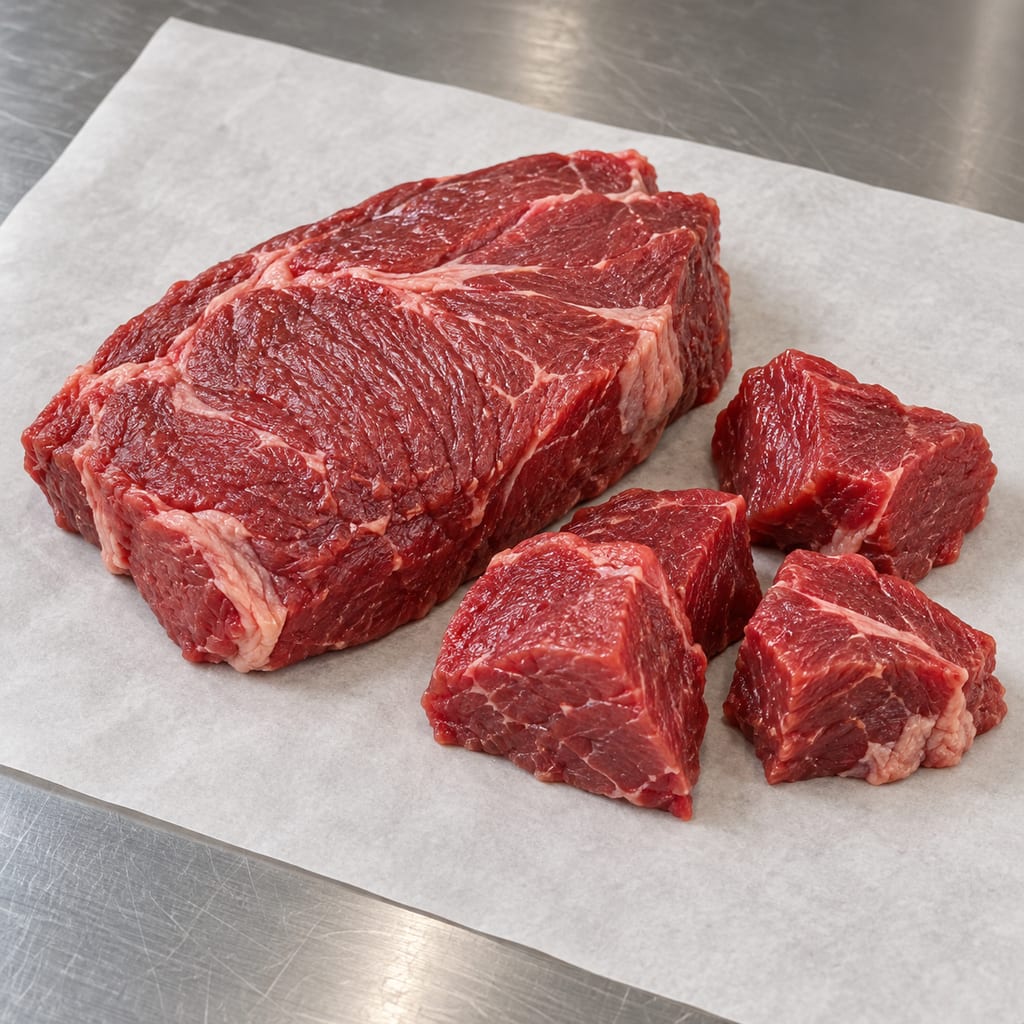
Water-buffalo meat, often called carabeef, is the flesh of Bubalus bubalis; its colour, texture and fat vary with animal, cut and production system. “Buffalo” can also mean bison or African buffalo in other contexts.
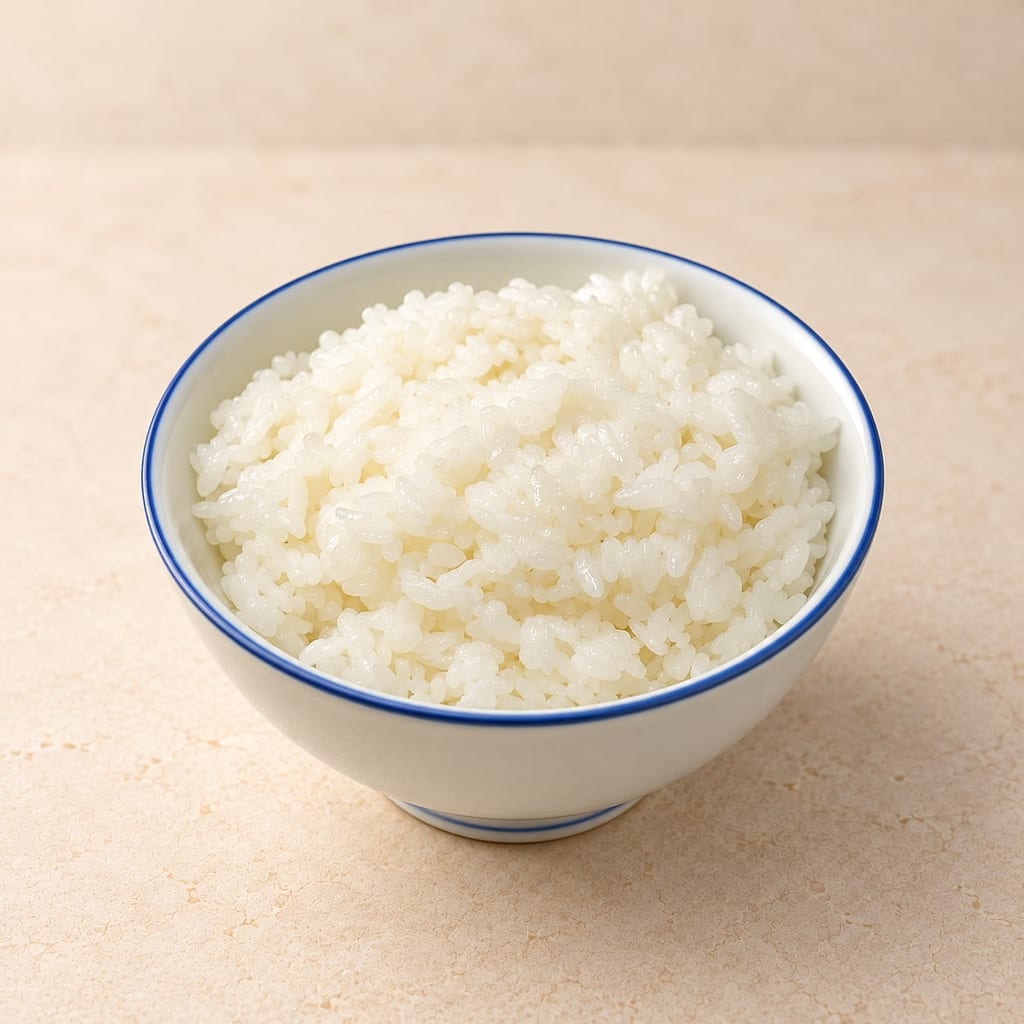
Cooked rice is rice grain heated in water until its starch gelatinizes; in Thai sour sausage it feeds the bacteria that acidify the meat.
No community contributions have been published for this entry yet.
Sign in to contribute. Published comments and photos are free to read.
Royal Botanic Gardens, Kew, Plants of the World OnlineIdentity · Taxonomy · Distribution
Coriandrum sativum L.Accepted species Coriandrum sativum L.; Apiaceae; annual plant; Kew’s regional native range and broad introduced distribution.
Cited in: One plant, two kitchen words
Japan International Research Center for Agricultural Sciences (JIRCAS), Thai Vegetables DatabaseIdentity · Botany · Local name
Coriandrum sativum L. (Apiaceae)Thai local name Phakchi; English and Japanese names; annual growth, leaf structure, white or pale-pink flowers and two-mericarps fruit description.
Cited in: One plant, two kitchen words; A quick crop whose harvest changes as it flowers; How Thai kitchens use leaf, stem, root and fruit
Archaeological and Anthropological Sciences / Springer NatureHistory · Archaeobotany · Regional use
Food globalization in southern Central Asia: archaeobotany at Bukhara between antiquity and the Middle AgesDirect full-text reading via Europe PMC XML: reports earliest coriander seed finds in sixth- and fifth-millennium BCE Israeli sites, later finds elsewhere, a second-millennium BCE cultivation proposal, and modern Central Asian leaf and seed uses. Archaeological seed evidence does not date fresh-leaf cuisine.
Cited in: A plant with a long record, and a leaf with a shorter one
Flavour / Springer NatureSensory science · Aroma perception · Food history
A genetic variant near olfactory receptor genes influences cilantro preferenceOpen full text directly read: a GWAS of 14,604 mostly European-ancestry participants and a distinct replication group; association near olfactory receptor genes including OR6A2; authors present OR6A2 as a candidate, not a proven sole cause. Introductory history identifies leaf and fruit uses, but is treated as a secondary account.
Cited in: Why the leaf smells unlike the seed
Journal of Agricultural and Food Chemistry / American Chemical Society; abstract indexed by U.S. National Library of MedicineFood science · Aroma chemistry
Influence of the isolation procedure on coriander leaf volatiles with some correlation to the enzymatic activityPubMed abstract directly read: cut leaves suspended in boiling water for two minutes showed decreased C10–C14 aldehydes and increased corresponding alcohols relative to solvent extraction; study assayed aliphatic aldehyde reductase. This is an analytical extraction result, not a cooking-time recommendation.
Cited in: Why the leaf smells unlike the seed; Its place in sai krok Isan
Journal of Essential Oil Bearing Plants / Taylor & FrancisFood science · Leaf seed distinction
Volatile Constituents of Leaf and Seed Essential Oil of Coriandrum sativum L.Publisher abstract read in search result; comparison of leaf and seed oils from plants grown in Uttarakhand reported very different profiles: seed oil dominated by monoterpenoids including linalool; leaf oil by C8–C16 aldehydes and alcohols, with (E)-2-decenal among the major measured constituents. Publisher page itself returned 403 on direct open; report remains abstract-level evidence.
Cited in: Why the leaf smells unlike the seed
University of Maryland ExtensionCultivation · Harvest · Forms
Cilantro/CorianderDirectly read: annual crop; mature seeds are coriander while harvested leaves are cilantro; hot humid conditions encourage bolting; leaf and seed harvesting distinction.
Cited in: A quick crop whose harvest changes as it flowers
University of Wisconsin–Madison Division of Extension, Wisconsin HorticultureCultivation · Varieties · History · Uses
Cilantro / Coriander, Coriandrum sativumDirectly read: cool-season habit, bolting in heat, leaf/seed crop timing, sowing and spacing advice, named leaf cultivars, and common flavor descriptions. Historical claims are kept separate from archaeological evidence and not used as dates.
Cited in: A quick crop whose harvest changes as it flowers; Choosing, storing and washing a bunch
PeerJThai food use · Names · Ingredient identity
Plant ingredients in Thai food: a well-rounded diet for natural bioactive associated with medicinal propertiesDirectly read Table 1: Thai name Phak chi (ผักชี); leaves and stems eaten fresh; roots typically combined with garlic and pepper; seed used in curry paste. These plant-part uses are distinguished rather than collapsed into the leaf ingredient.
Cited in: One plant, two kitchen words; A plant with a long record, and a leaf with a shorter one; How Thai kitchens use leaf, stem, root and fruit; Its place in sai krok Isan
Northern Thai Information Center, Chiang Mai University Library, Lanna FoodRegional names · Regional use · Cultivars
CorianderDirectly read: Northern names hom pom/phak pom and northeastern phak hom noi; food use of fragrant parts and coriander seed in chili paste for lap; describes a larger-leaved, milder-aroma form. The page cites a 1999 Lanna cultural encyclopedia and Thai Agriculture Extension Department 2007 material.
Cited in: One plant, two kitchen words; A plant with a long record, and a leaf with a shorter one; How Thai kitchens use leaf, stem, root and fruit
2 Guys & A CoolerSpecific recipe use · Modern preparation
Thailand’s – Sai Krok IssanDirectly read recipe: a 1 kg pork-and-fat base with 24 g cilantro; the herb is mixed with cooked rice, garlic and lime leaves before being folded into the meat and starter. The author does not specify leaves alone versus tender stems.
Cited in: A plant with a long record, and a leaf with a shorter one; How Thai kitchens use leaf, stem, root and fruit; Its place in sai krok Isan
Department of Agricultural Extension, Ministry of Agriculture and Cooperatives, ThailandThai agriculture · Names · Storage
CorianderDirectly read: Thai name Pak Che, species, year-round season, fresh/cooked/powder/extract uses and cited storage conditions of five days at 7°C and 95–100% relative humidity. These are the agency’s stated product conditions, not a universal home-storage guarantee.
Cited in: Choosing, storing and washing a bunch
Health CanadaFood safety · Handling · Storage
Food safety tips for fresh herbsDirectly read: contamination routes, fresh herb recalls/illness context, visual selection, storage unwashed in refrigerator up to five days, rinsing under cool running water, avoiding sink soaking, and cleaning surfaces/hands.
Cited in: Choosing, storing and washing a bunch