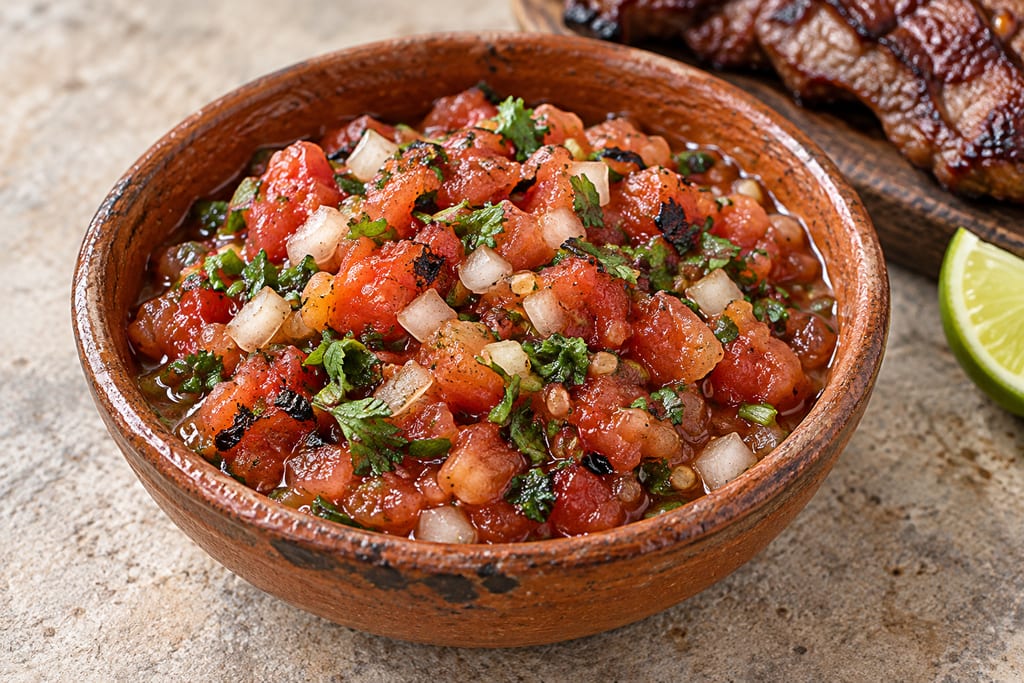
Chirmol (Guatemalan charred tomato salsa)
Chirmol is a Guatemalan salsa of charred tomatoes with onion, cilantro and lime, served with grilled meat and toasted chiles.
 FermenteaWhere food goes to change
Traditional method
Recado para pepián · Recado de pepián
The roasted chile, seed and vegetable sauce that thickens and colours Guatemalan pepián stew.
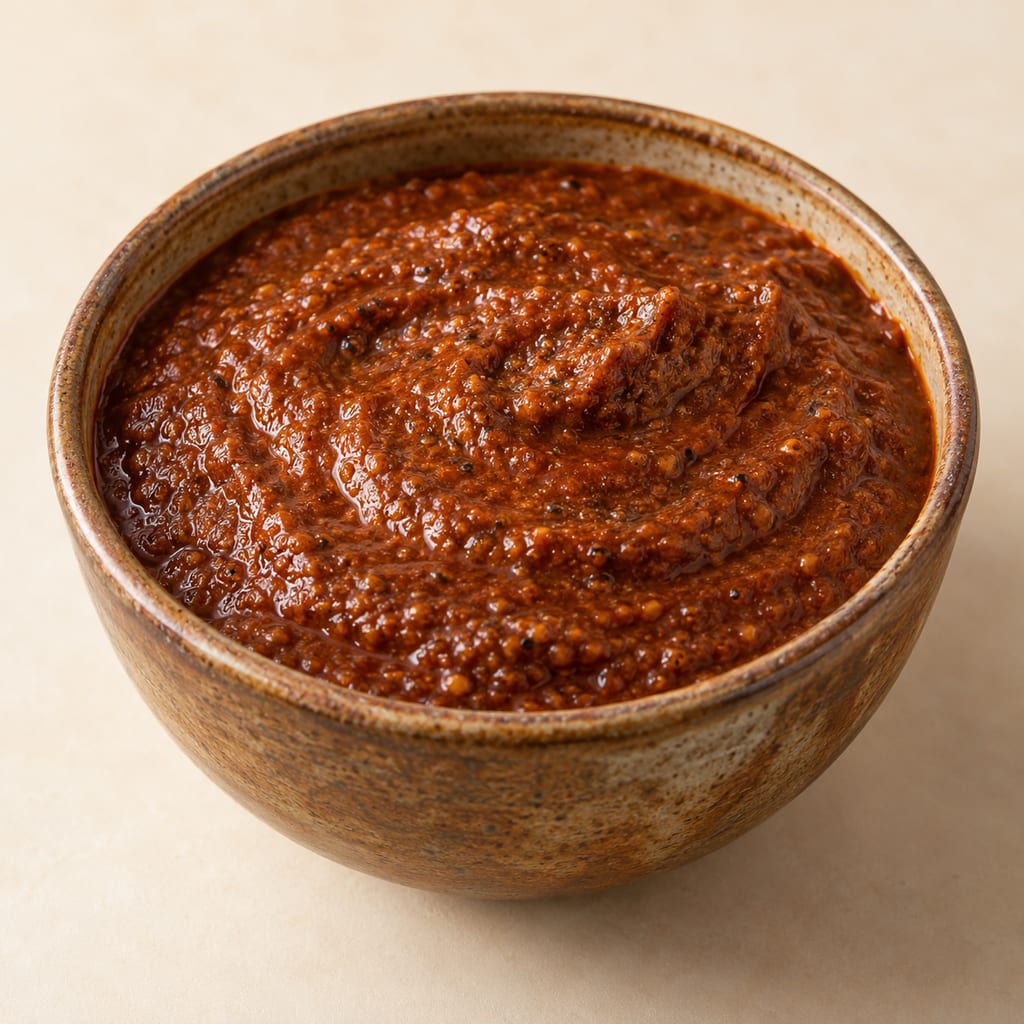
Recado is the thick sauce that gives pepián its colour, body and nutty flavour. In the Antigua-style recipe it is made separately and then stirred into a broth with chicken, rather than being a dish of its own.
The sauce is built from dried chiles, charred tomatoes, tomatillos, onion and garlic, with pumpkin and sesame seeds ground in for body. Each element is roasted so that its sugars and fats darken before blending, which gives the sauce its roasted, not raw, taste.
The chiles are roasted briefly so they soften without burning; the tomatoes, tomatillos, onion and garlic are blistered until they char. Cooking them in water after roasting softens the solids before they are blended.
The seeds are toasted separately and last. Pumpkin seeds turn smoky and sesame seeds turn pale gold, and both thicken the sauce when ground. Sesame moves from toasted to burnt quickly, so it needs close attention.
After blending, the recado is strained to remove small fragments. It is then stirred into chicken and broth and simmered uncovered for ten to fifteen minutes to reduce.
The source offers a chef's alternative: roast a cup of breadcrumbs, blend them with water and add the mixture while the stew simmers. Flour or cornstarch is also named as an option.
The source does not describe pepitoria, the heat of the guajillo and ancho chiles, or regional differences in the recado. Those points remain open and should not be assumed from this recipe.
The Guatemalan Ministry of Culture and Sports' Recado glossary describes pepián generally as a recado of pre-Hispanic origin. The Vida Antigua recipe source describes indigenous and colonial roots for its dish but does not date this Antigua-style formula. The precise chronology of this formula remains undated; no earliest attestation is established here.
Scaling: source batch only
Sesame and pumpkin seeds scorch quickly; the source warns that sesame goes from toasted to burnt rapidly.
A country-level association documented in a recipe source; it does not establish a single place of origin.
Chirmol is a Guatemalan salsa of charred tomatoes with onion, cilantro and lime, served with grilled meat and toasted chiles.
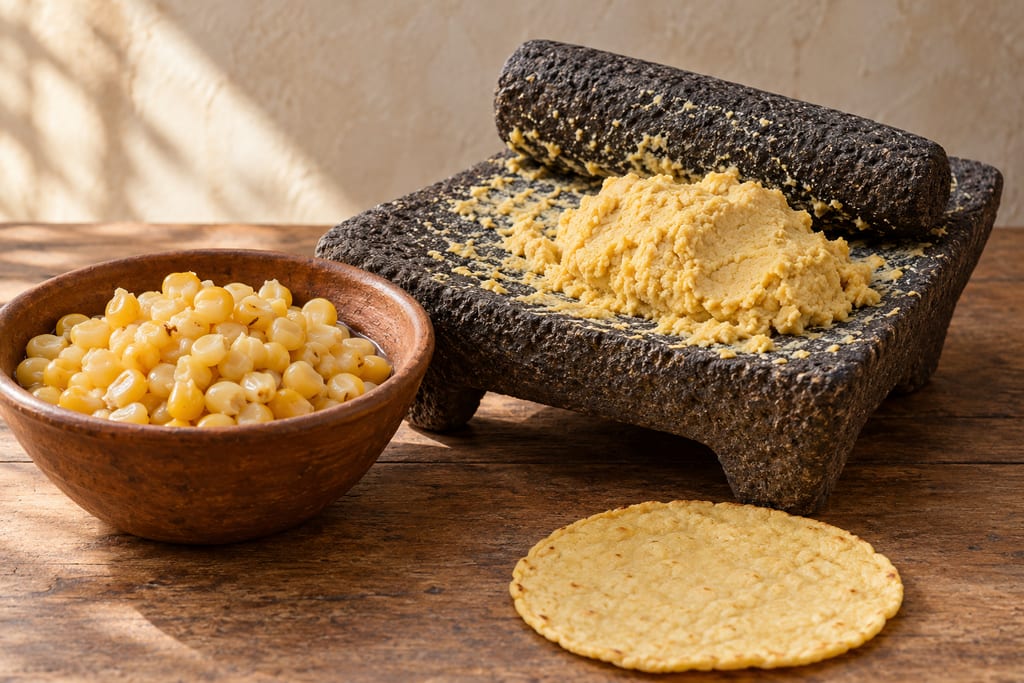
Whole maize cooked and steeped overnight in lime water, washed of its skins and excess lime, then ground into the moist dough used for tortillas.
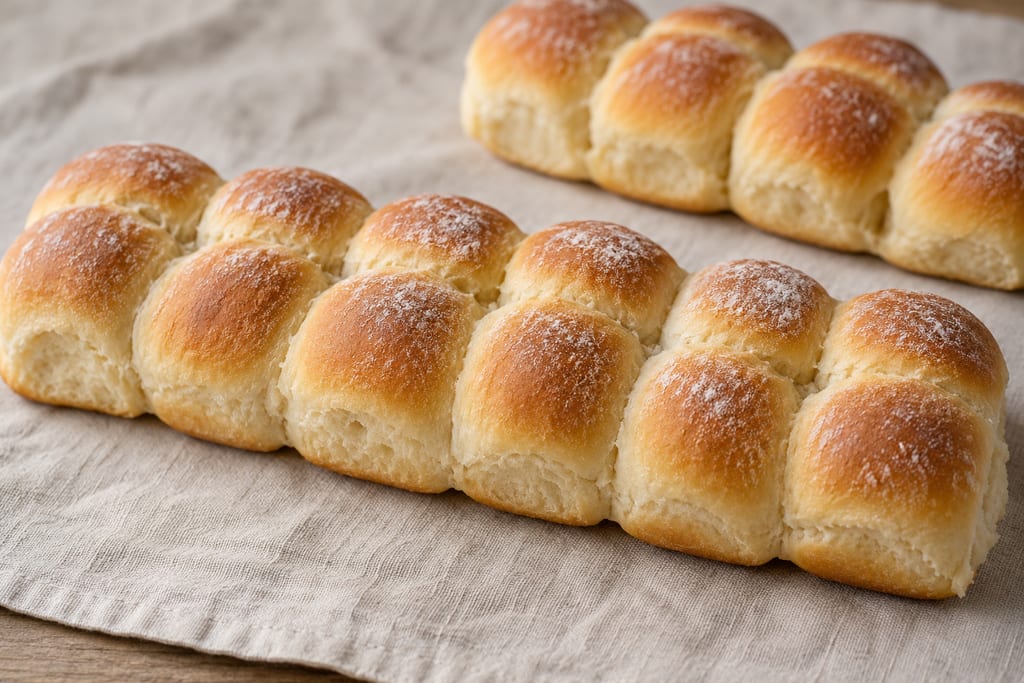
Pan francés guatemalteco is a soft yeast bread shaped as a long strip of joined double rolls and commonly served with dishes such as tamales colorados.

Pozol is lime-cooked maize ground to dough, shaped into balls, wrapped in banana leaves and fermented for days, then stirred into water as a sour drink in southeastern Mexico.
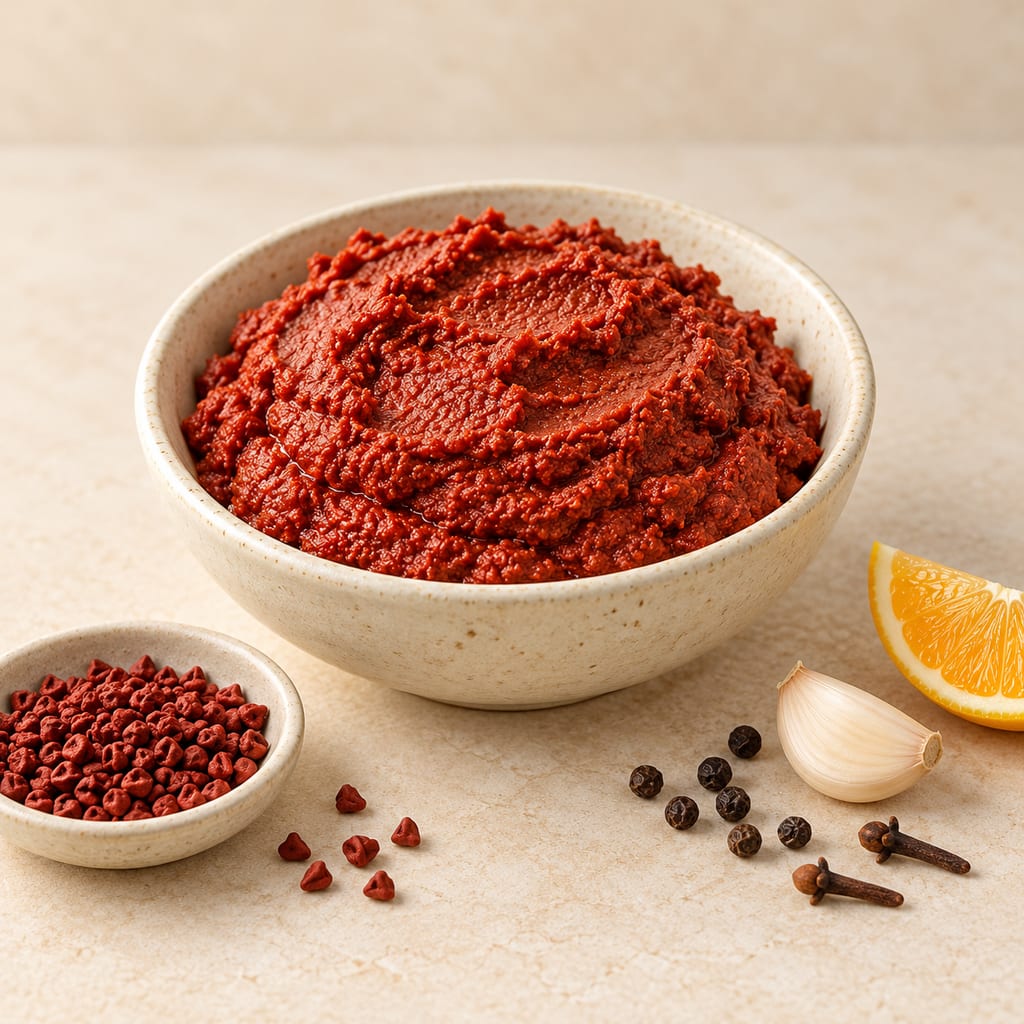
A Yucatecan recado rojo is a brick-red seasoning paste built on annatto seed, garlic and sour orange. This measured home version shows one route into a much wider family of market and household recados.
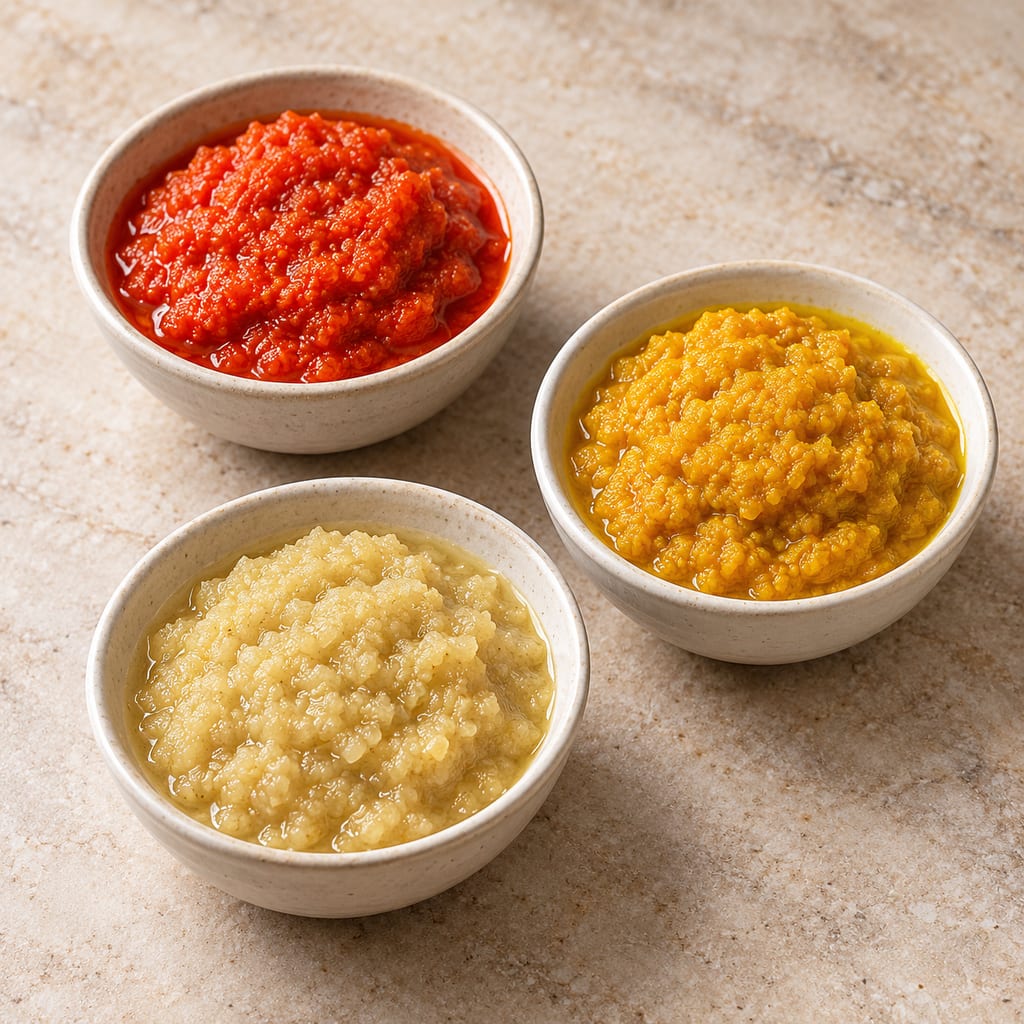
Bumbu dasar are the ground spice bases of Indonesian cooking: a white paste of shallot, garlic and salt, with chile added for red and turmeric for yellow, cooked into dishes.
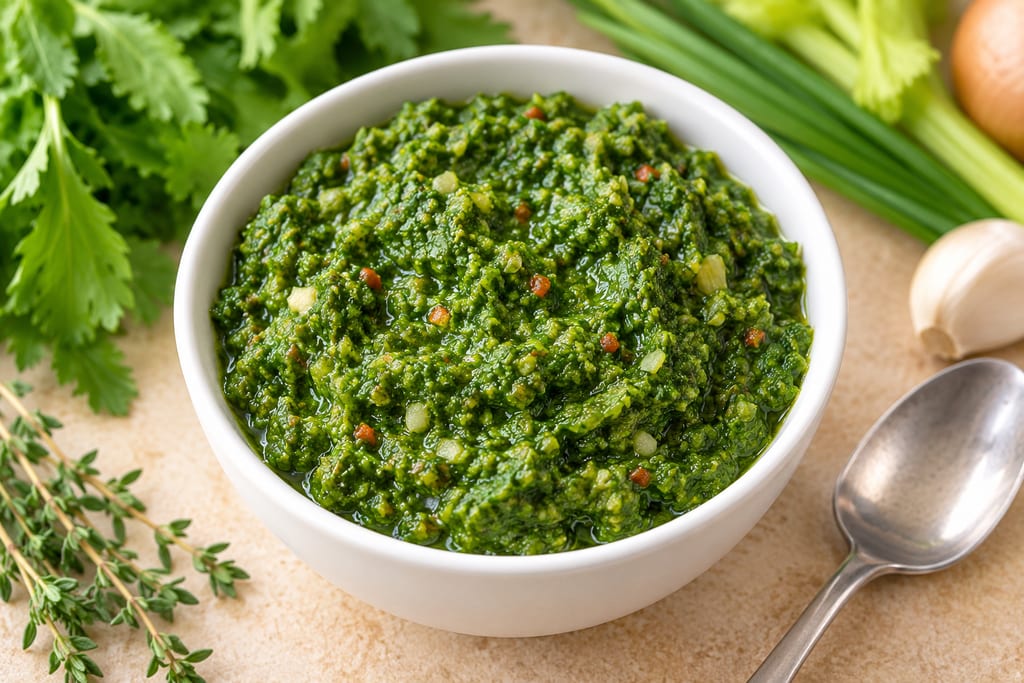
A fresh herb and aromatic paste of chadon beni (culantro), thyme, chives, celery, onion, garlic and peppers, blended with vinegar and water and used as the base for Trinidadian cooking.
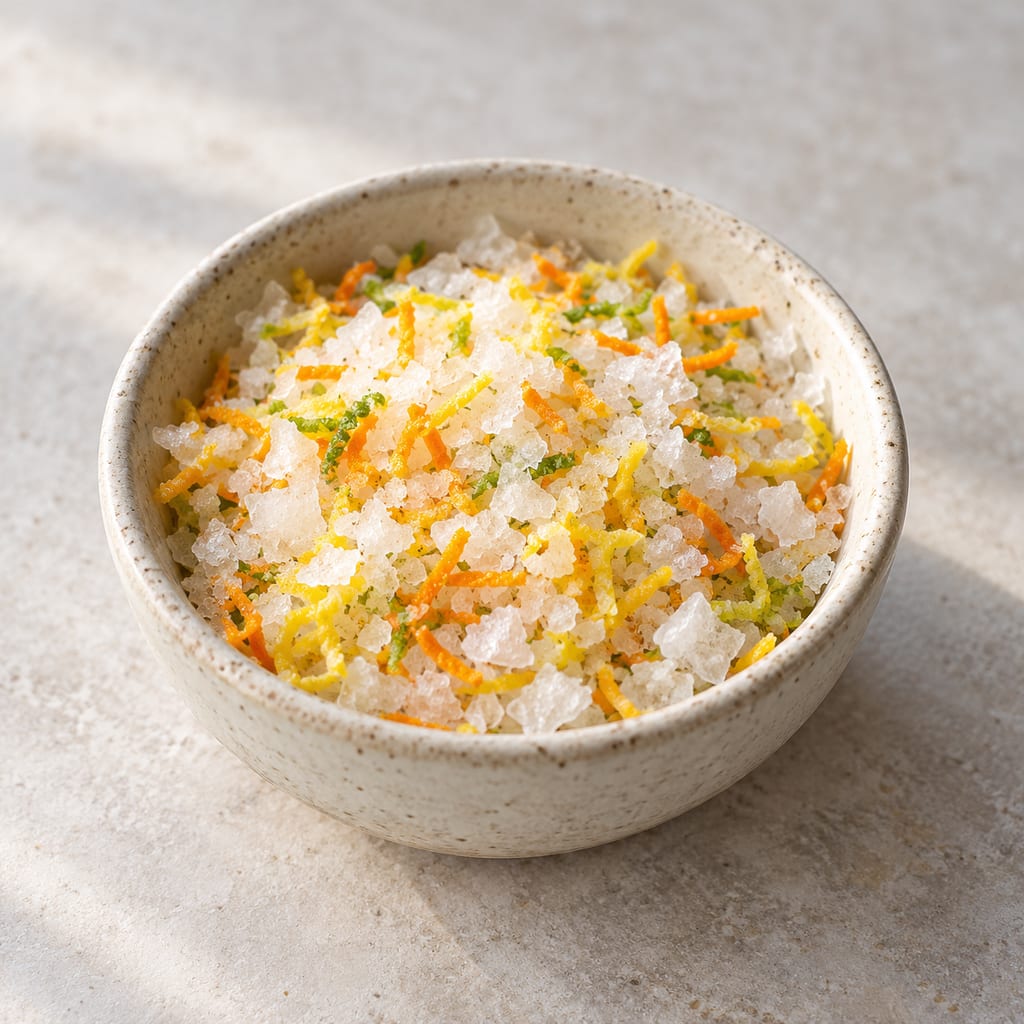
Citrus zest is rubbed into coarse or flake salt and dried on a tray. This peel-based seasoning preserves the chosen citrus aroma without adding juice.
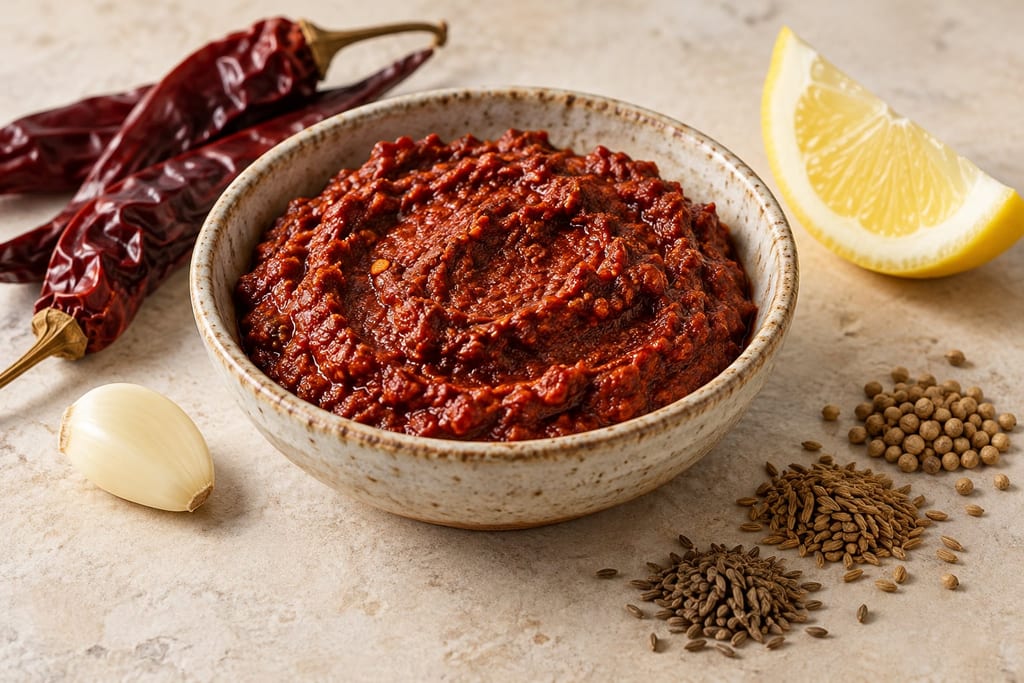
A fresh chilli paste made from rehydrated dried red peppers, garlic, olive oil, lemon and warm spices; this small-batch formula adapts the harissa family rather than reproducing a tested Tunisian method.
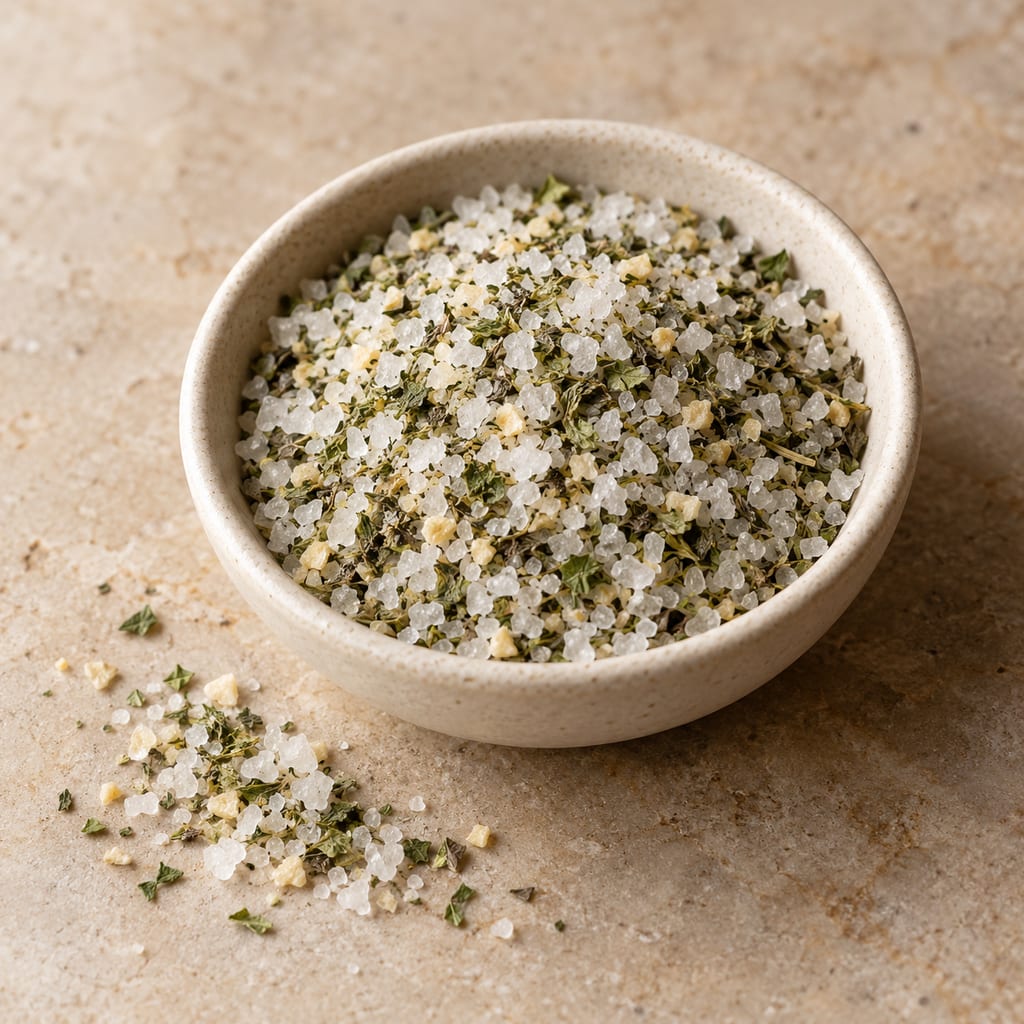
Fresh garlic and pungent herbs are chopped with kosher salt, then dried in the warmth of a switched-off oven. The blend keeps the selected herbs together in one seasoning.
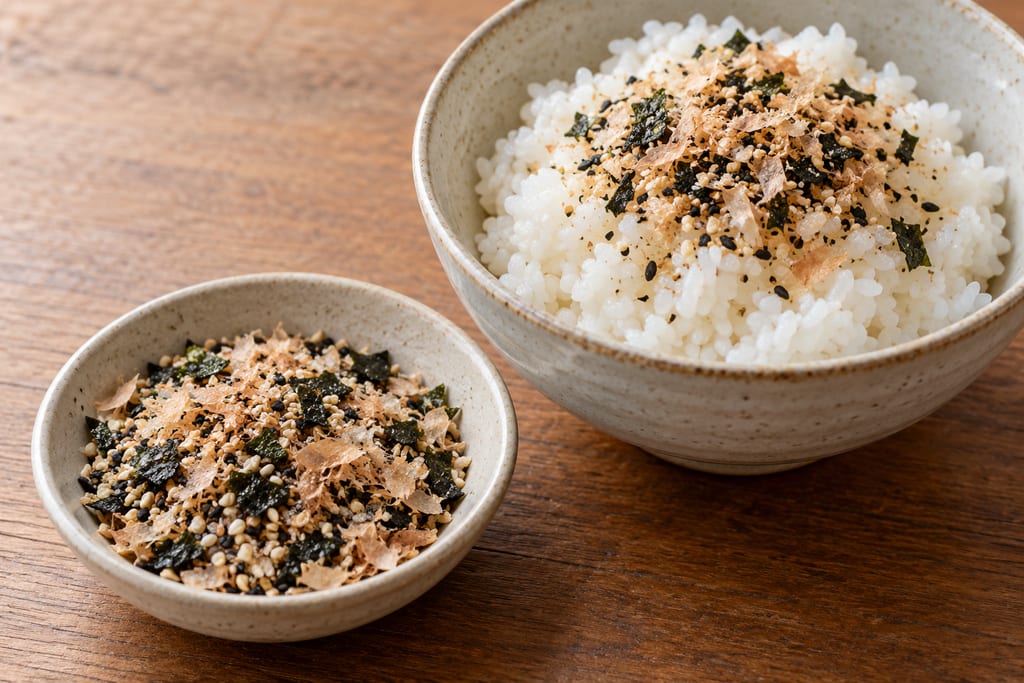
A dry Japanese rice seasoning of sesame, bonito, nori, sugar and salt. This documented home blend is one specific formula within a varied category with several early product histories.
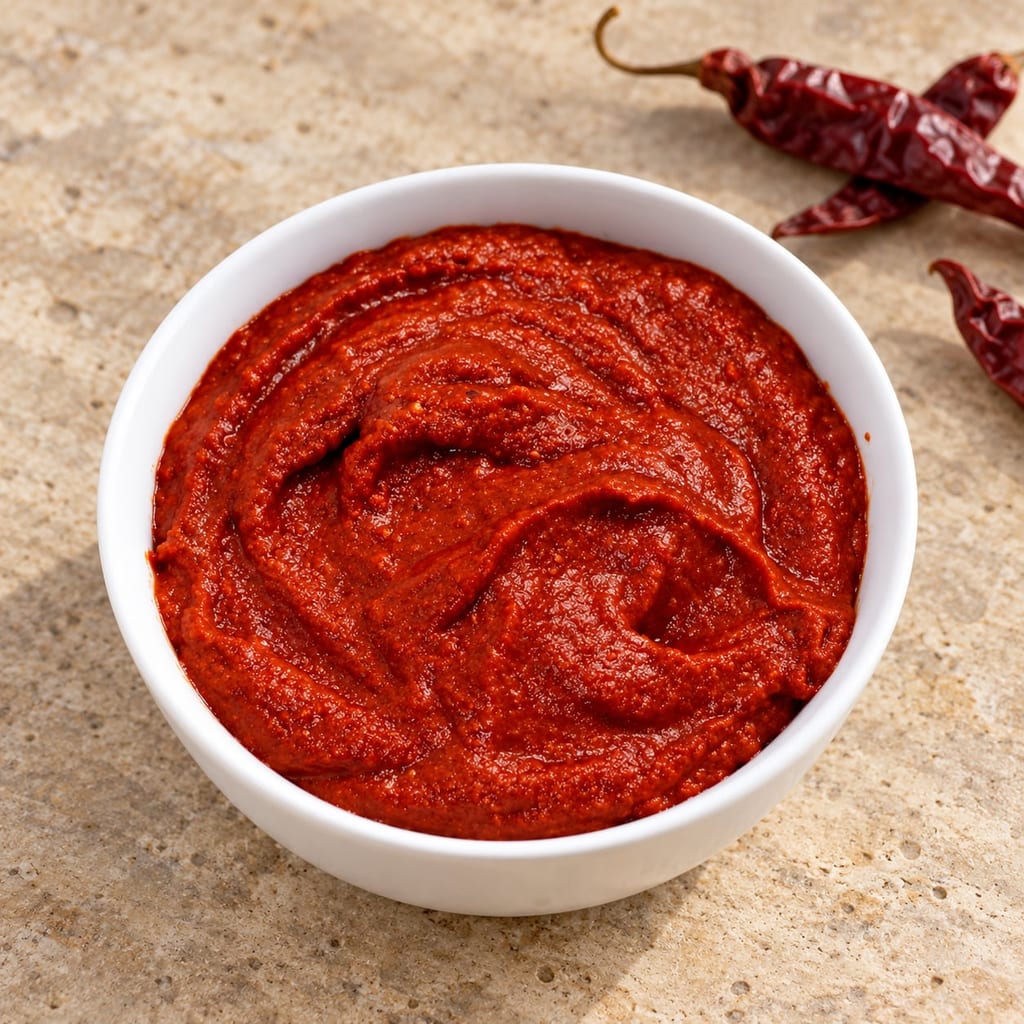
Recheado is a red Goan spice paste of Kashmiri chillies, garlic and spices ground in vinegar, best known as the stuffing for fried fish such as mackerel.
No community contributions have been published for this entry yet.
Sign in to contribute. Published comments and photos are free to read.
Vida AntiguaMethod · History
Pepián con Pollo de GuatemalaRecado ingredients and steps
Pepián as a colonial and indigenous-rooted dish
Simmer 10 to 15 minutes
Cited in: What the recado is; Method and role of each ingredient; Thickening and variation
Guatemala Ministry of Culture and Sports (MCD), UNESCO Nominations portalHistory · Regional variation · Ingredients
Recado’s glossary — PepiánThe Ministry's Recado glossary describes pepián as a recado of pre-Hispanic origin.
It lists tomato, pepitoria, guaque pepper, pasa pepper and other spices; proteins may include hen, chicken, pork, beef or turkey.
It says tortillas or masa thicken the recado.