
Caribbean browning (burnt-sugar seasoning)
Caribbean browning is a dark liquid of deeply caramelised sugar, used in small amounts for colour and a smoky, bitter-sweet flavour in stews and black cake.
 FermenteaWhere food goes to change
Trinidad green seasoning · Green seasoning
A fresh herb and aromatic paste of chadon beni (culantro), thyme, chives, celery, onion, garlic and peppers, blended with vinegar and water and used as the base for Trinidadian cooking.
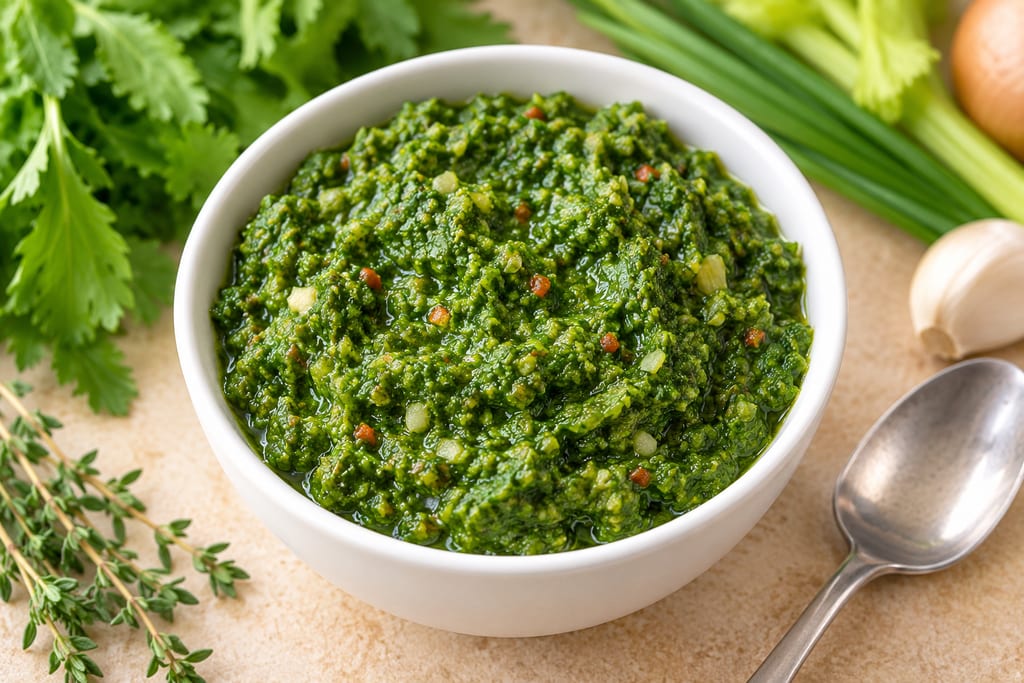
Green seasoning is a fresh paste of herbs, aromatics and peppers that Trinidadian cooks use as the first flavour in a dish. It is a wet, blended base rather than a dry spice mix. Chadon beni, the Trinidadian name for culantro, gives it a sharp green pungency that is stronger than cilantro, and thyme, chives, celery, onion, garlic and pimento pepper supply the rest of the flavour.
The paste is not fermented. It is blended, strained and kept in the refrigerator, and the record treats it as a seasoning that is made, not a culture.
No single origin or date is documented for green seasoning. The author of the recipe page says the ingredients are found throughout the Caribbean and that the seasoning is a favourite there, and calls it the secret behind Trinidadian cooking. In a reply on the page, the author says the seasoning is most likely of Spanish influence and very similar to Puerto Rican recaito, and that the seasoning took on a life of its own once shared with other groups on the island. That is a personal view and is not established history.
Households differ in the proportions and the additions they make, and the page says each family has its own way of making it. The seasoning therefore has a family of formulations rather than one fixed recipe.
The herbs are chopped and combined, then blended in batches with a little water and vinegar. Each batch is strained, and the strained liquid is reused to blend the next batch. The strained solids and the liquid are combined at the end, and salt is added to taste.
The page asks the cook to hold the blender lid firmly closed while blending in handfuls. The blend is taken to smooth before straining; the page gives no other texture target.
The seasoning is kept in containers in the refrigerator. The page says that it lasts a long time when refrigerated, and that liquid separating on top is normal and is corrected by stirring or by shaking the closed container. No storage limit in days is given.
The page prefers homemade seasoning to shop-bought versions, which it describes as containing MSG and other preservatives. It calls green seasoning the real secret behind Trinidadian cooking; the page does not list further uses.
The page says no one can trace green seasoning to one island or point in history. A comment from the author suggests a Spanish influence, close to Puerto Rican recaito; that is a personal view.
Yield 1.5 litres · Scaling: the page gives one batch of about 1.5 litres; the ratio of herbs to aromatics is set by the cook, and the page notes that ratios differ between households.
The blended herbs, onion, garlic and peppers are not cooked, and no recipe-specific acidification or storage validation is available. Refrigeration and short storage limit risk but do not establish shelf stability.
Hazard sourceRefrigerate promptly within 2 hours at 40 °F (4 °C) or below in a clean, covered shallow container; use within 3–4 days or freeze for longer storage. This is conservative general USDA leftovers guidance, not a tested storage study of this seasoning.
Control sourceThe source's statement that the seasoning lasts a long time in the refrigerator is not a tested duration. This page gives conservative general handling guidance, not a recipe-specific validated shelf life.
Vinegar is optional, and the recipe gives no measured acidification or pH endpoint; do not treat it as shelf-stable.
The page describes green seasoning as a Trinidadian household staple and says it is found wider across the Caribbean; no locality is given.
Caribbean browning is a dark liquid of deeply caramelised sugar, used in small amounts for colour and a smoky, bitter-sweet flavour in stews and black cake.
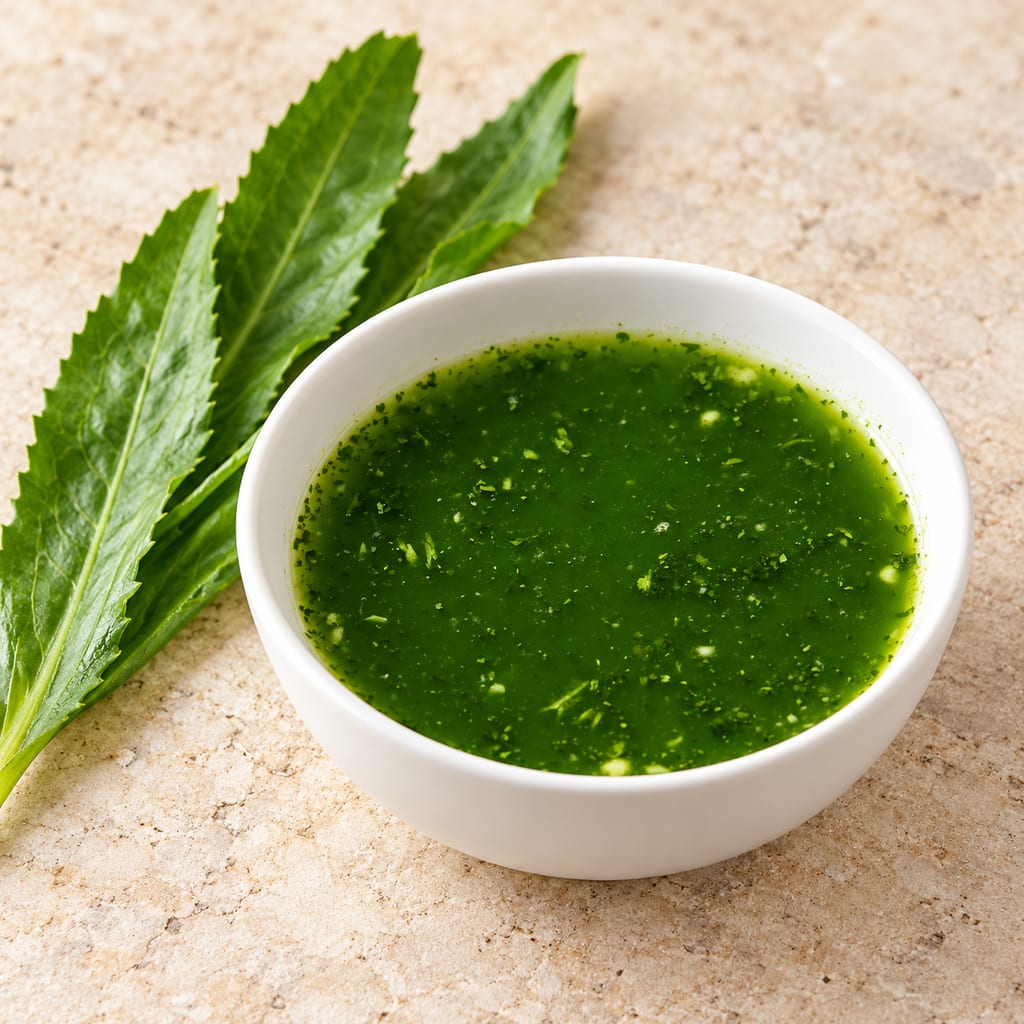
A bright green Trinidadian hot sauce of chadon beni (shado beni, culantro) with garlic, hot pepper, lime and water, blended to a pourable sauce for grilled meat, wings and eggs.
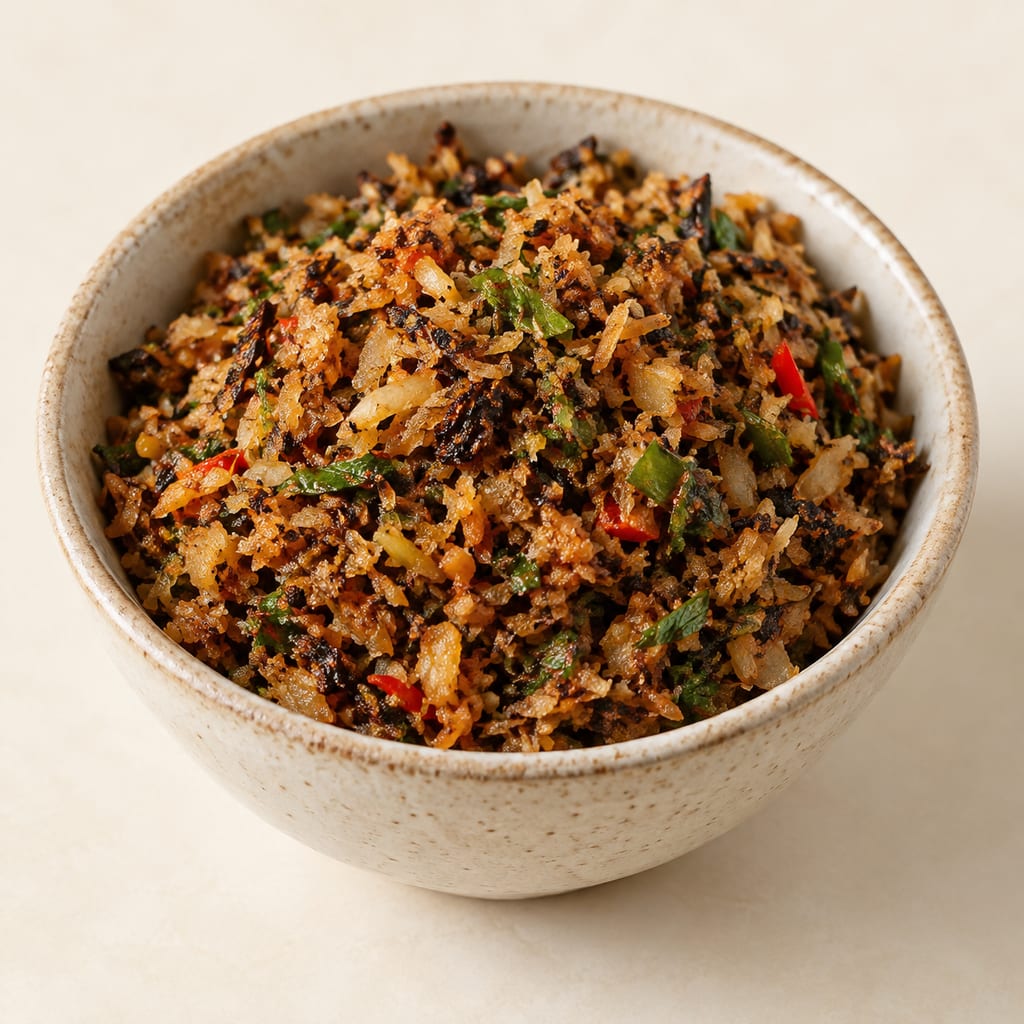
Trinidad coconut chutney is dried coconut roasted until charred, then ground on a stone with garlic, hot pepper, pimento and chadon beni to a coarse paste.
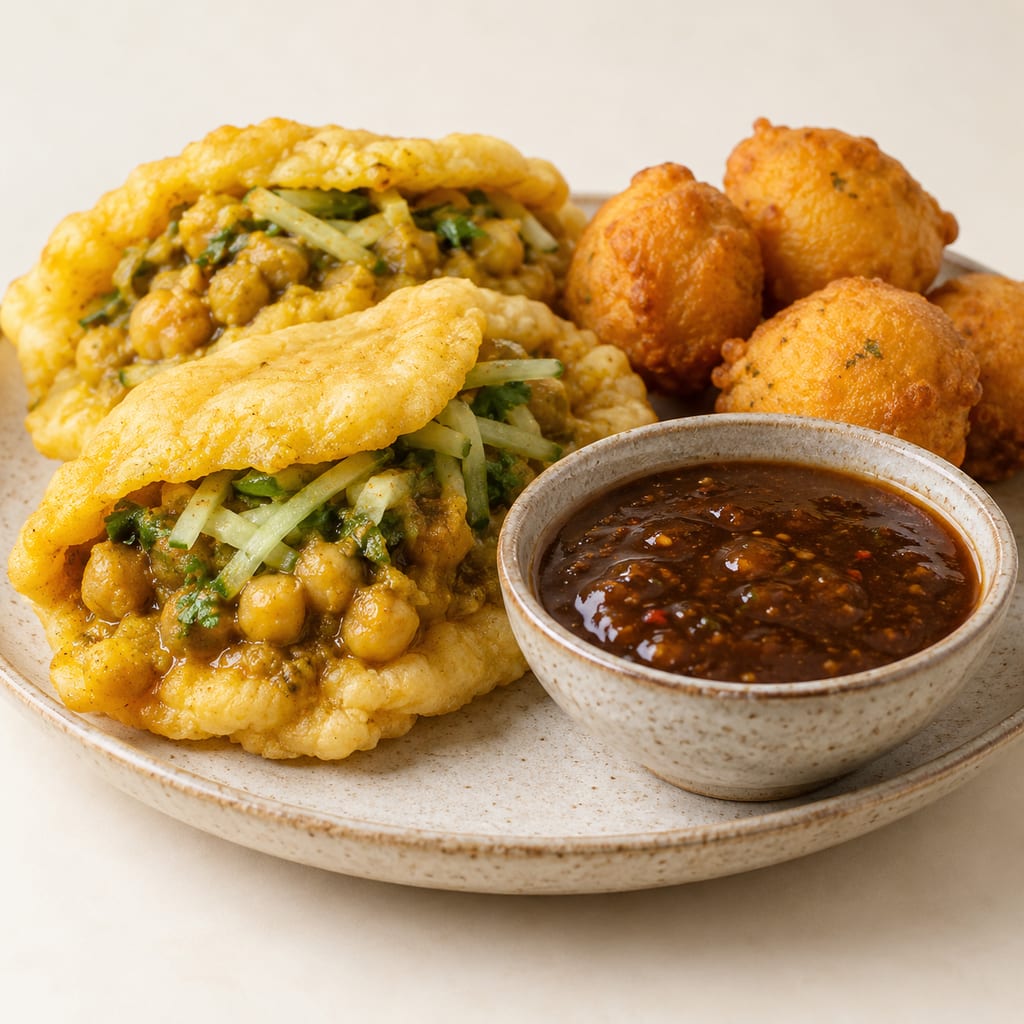
A sweet, sour and spiced tamarind sauce from Trinidad, made from tamarind pulp with garlic, Scotch bonnet, culantro, cumin, anchar masala and brown sugar, served with doubles and pholourie.
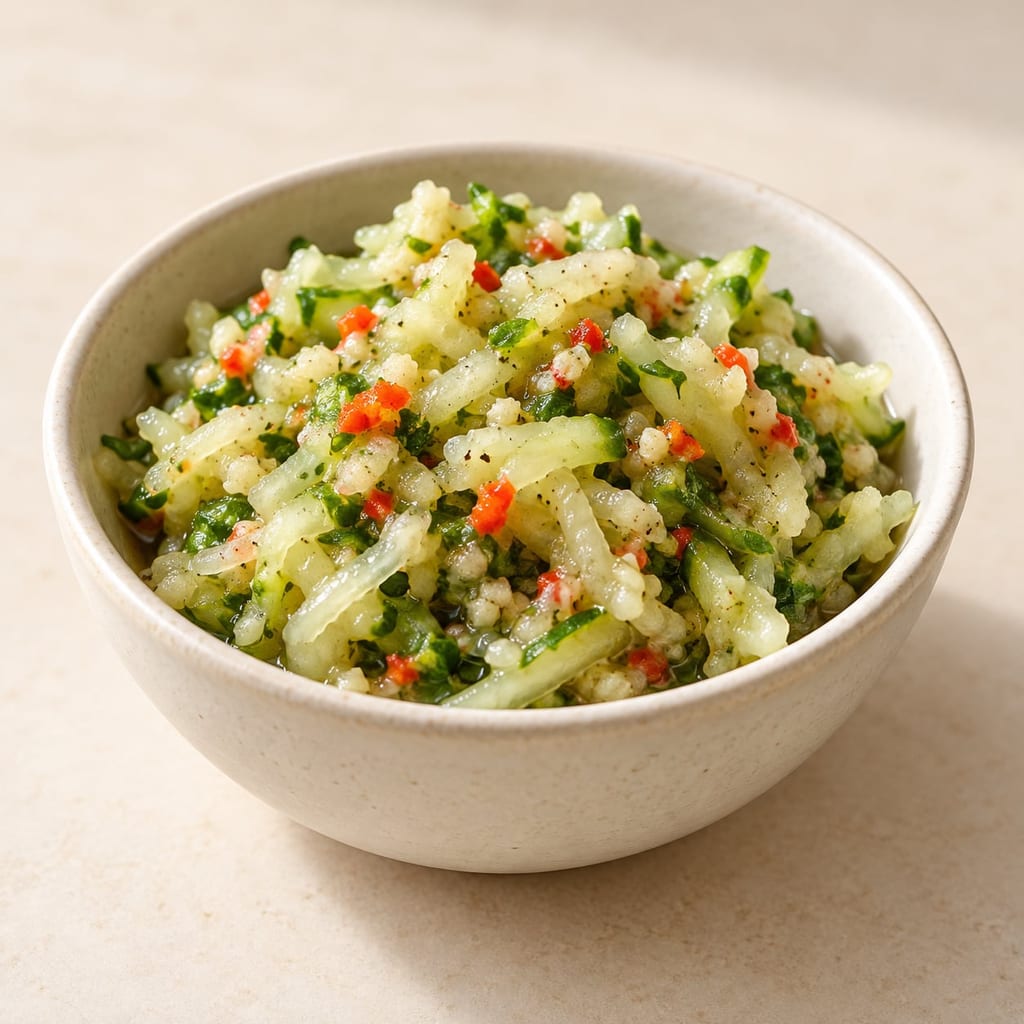
A fresh Trinidadian cucumber chutney of grated firm cucumber, garlic, Scotch bonnet, shado beni, lemon and seasoning, described by its author as a doubles condiment.
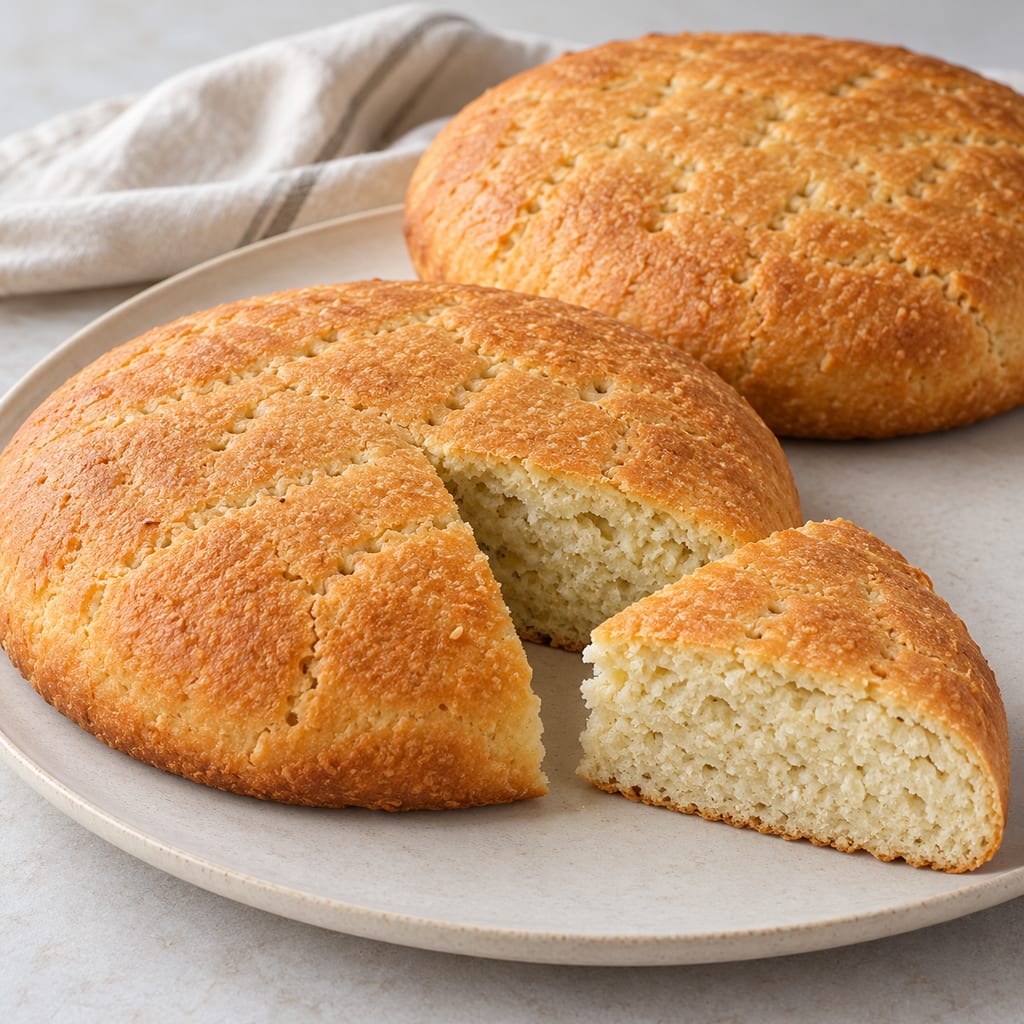
A yeast-raised Trinidadian wheat bread with blended fresh coconut, baked as two thick rounds.
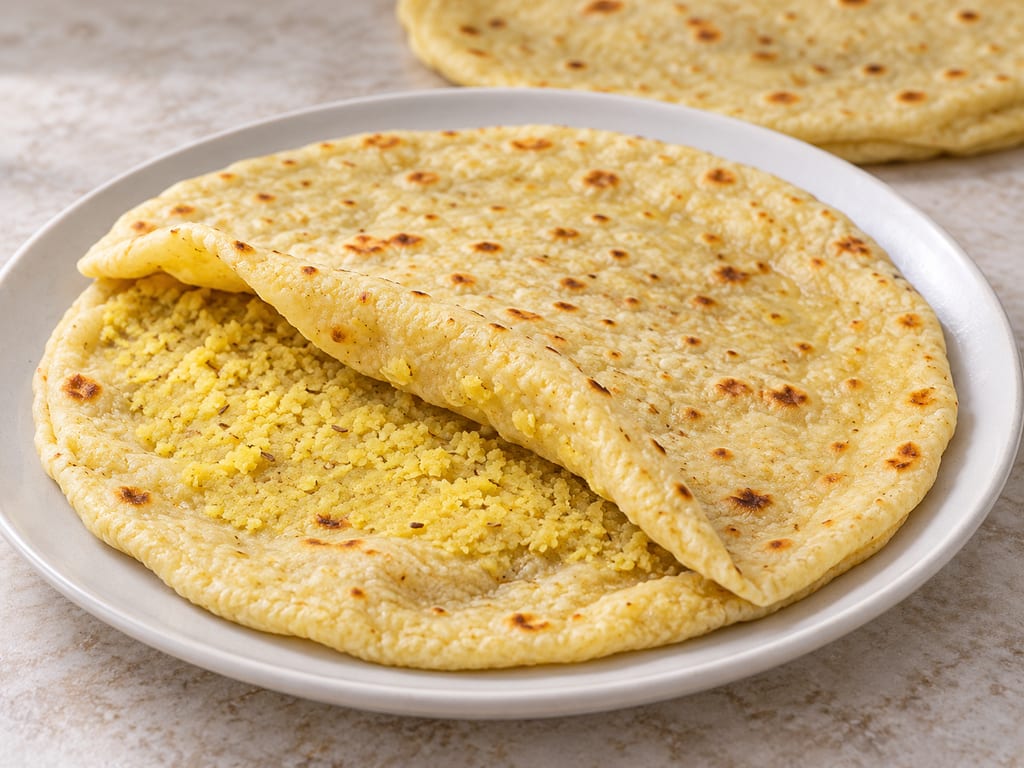
Trinidadian stuffed roti with a fine split-pea filling sealed inside soft wheat dough, rolled thin and cooked on a hot tawa.
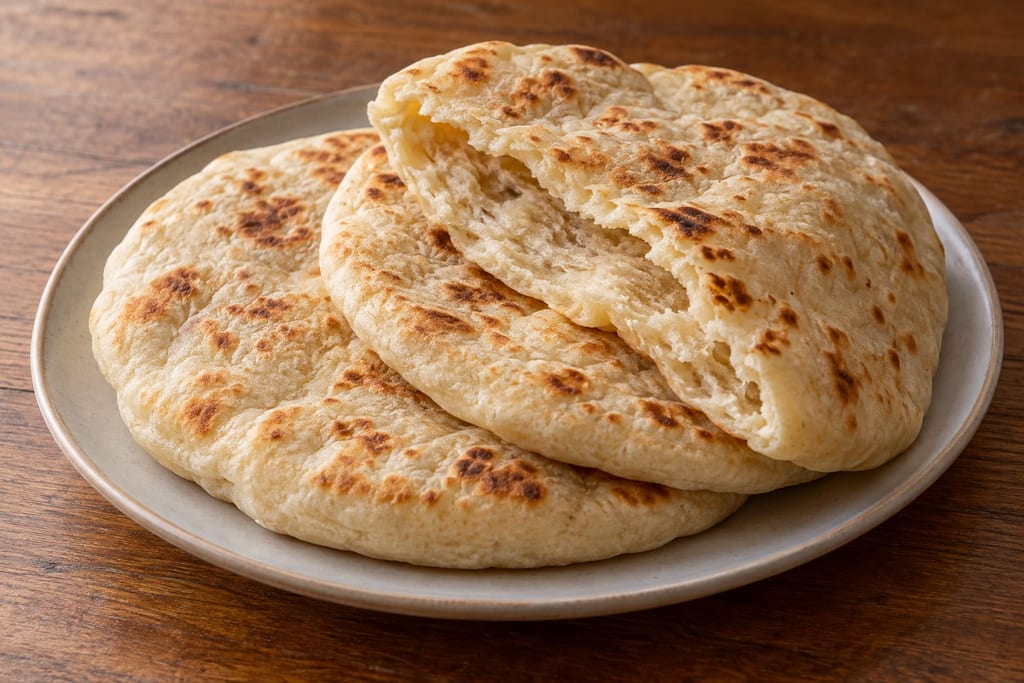
A Trinidad and Tobago baking-powder flatbread cooked on a hot stone, then briefly exposed to direct heat to puff.
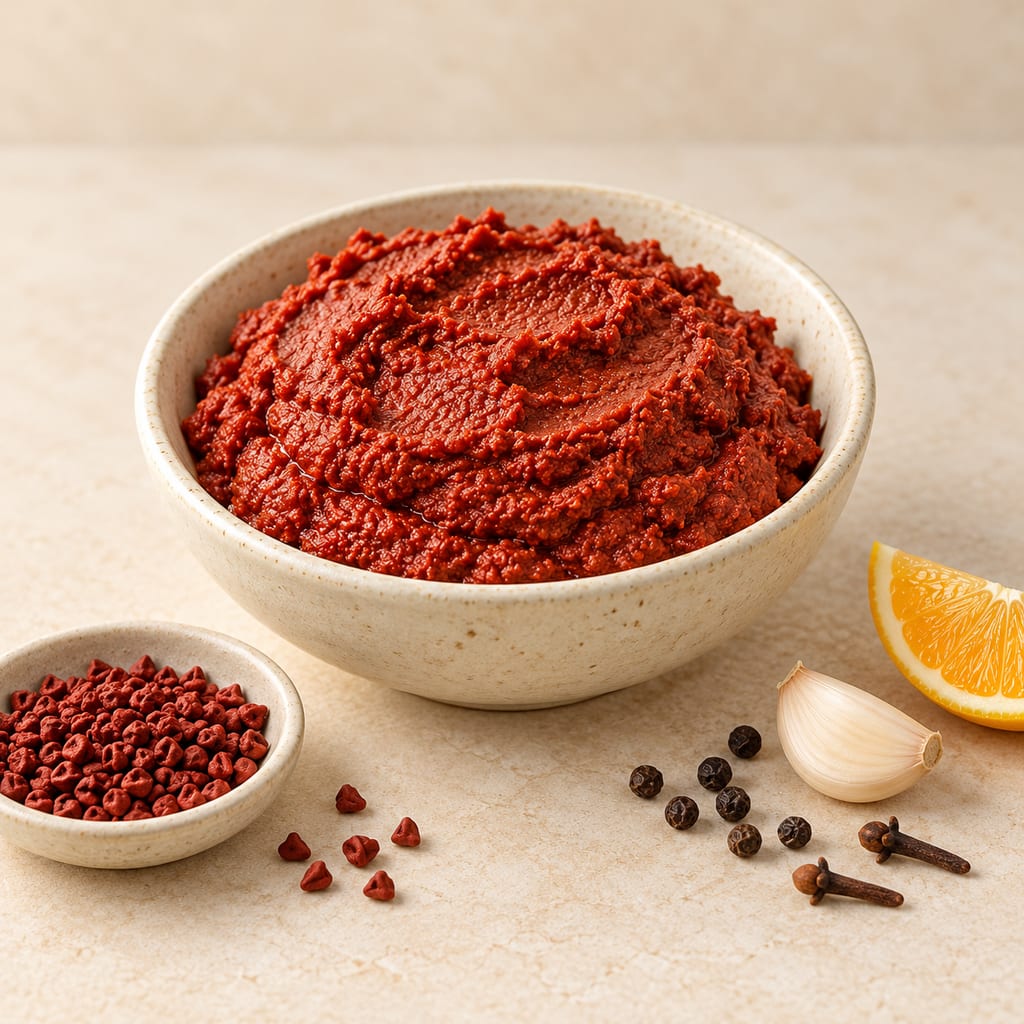
A Yucatecan recado rojo is a brick-red seasoning paste built on annatto seed, garlic and sour orange. This measured home version shows one route into a much wider family of market and household recados.
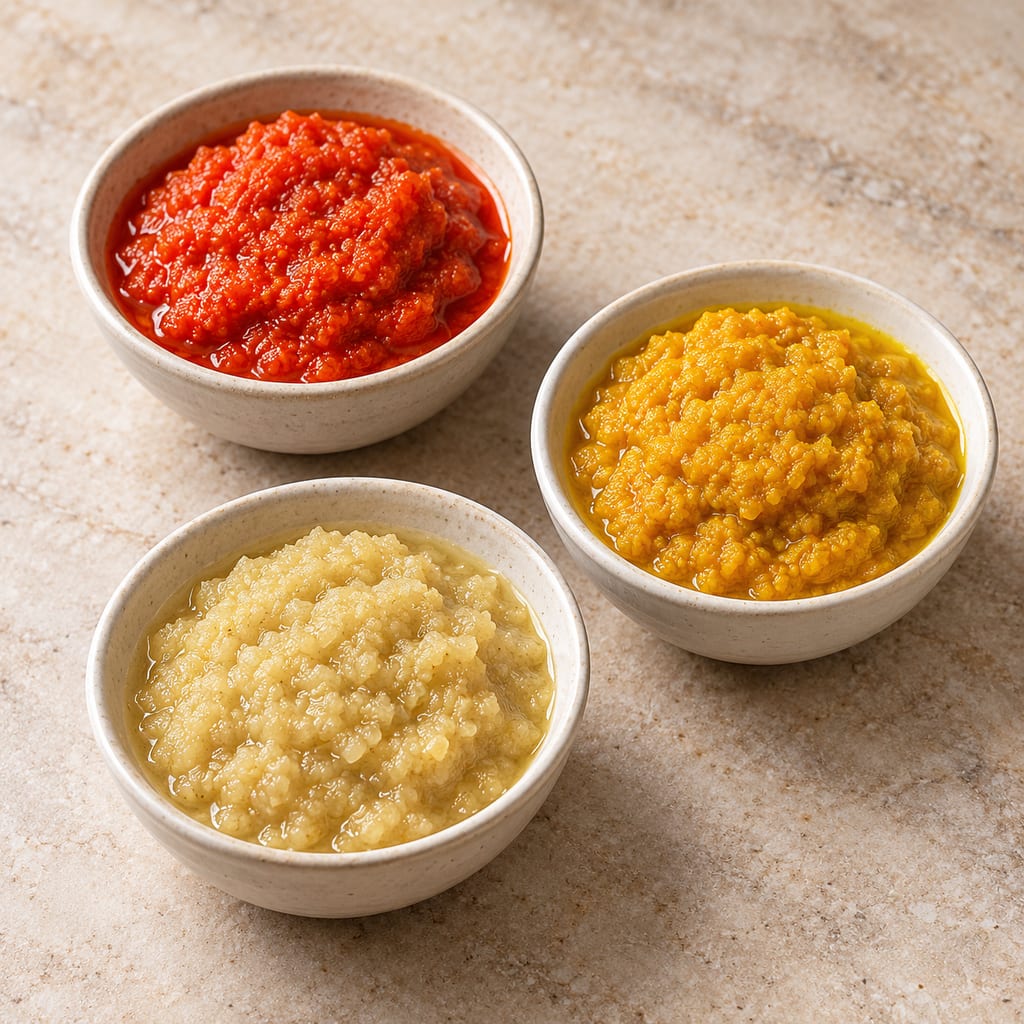
Bumbu dasar are the ground spice bases of Indonesian cooking: a white paste of shallot, garlic and salt, with chile added for red and turmeric for yellow, cooked into dishes.
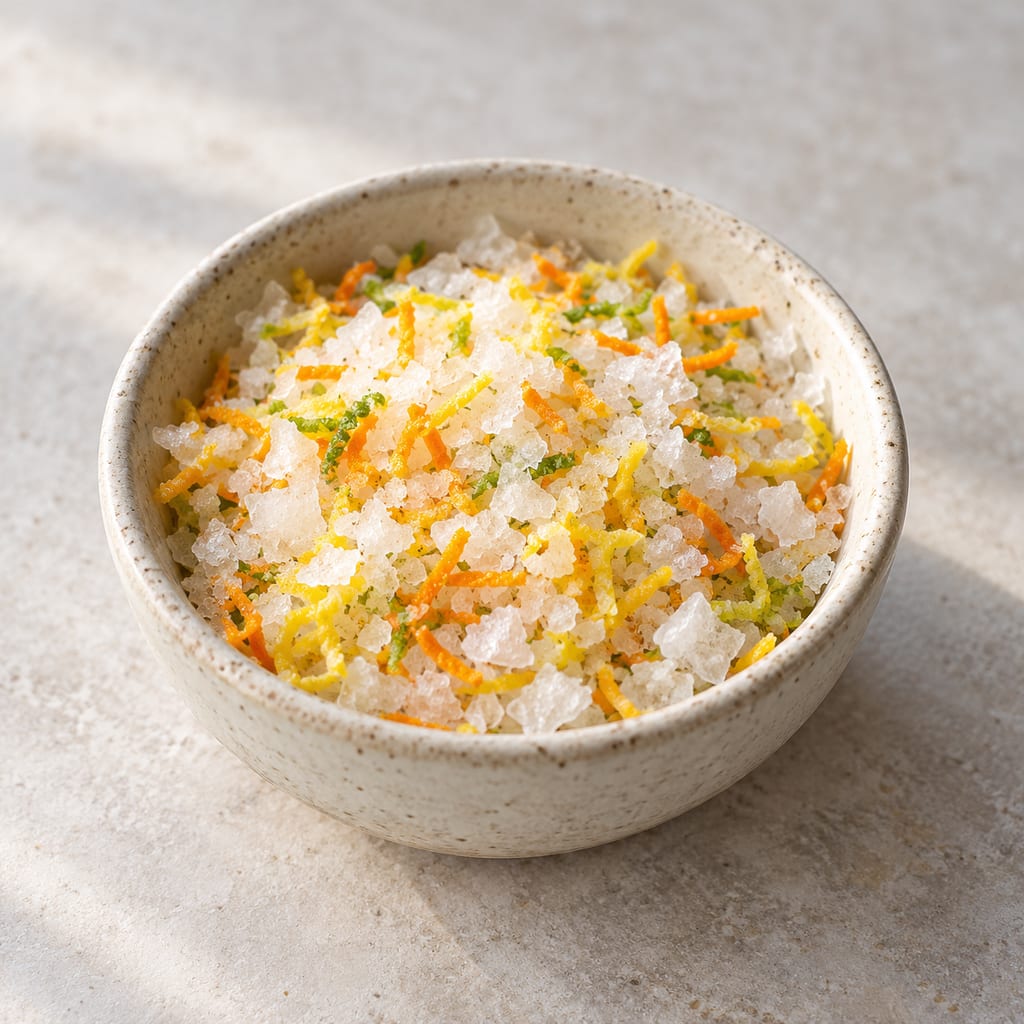
Citrus zest is rubbed into coarse or flake salt and dried on a tray. This peel-based seasoning preserves the chosen citrus aroma without adding juice.
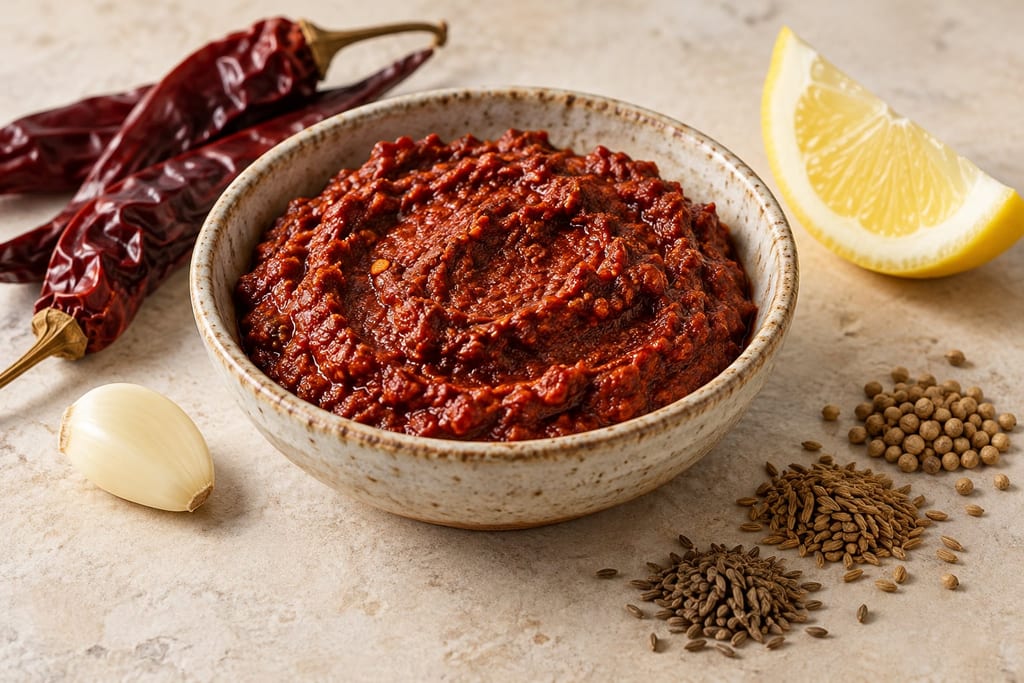
A fresh chilli paste made from rehydrated dried red peppers, garlic, olive oil, lemon and warm spices; this small-batch formula adapts the harissa family rather than reproducing a tested Tunisian method.
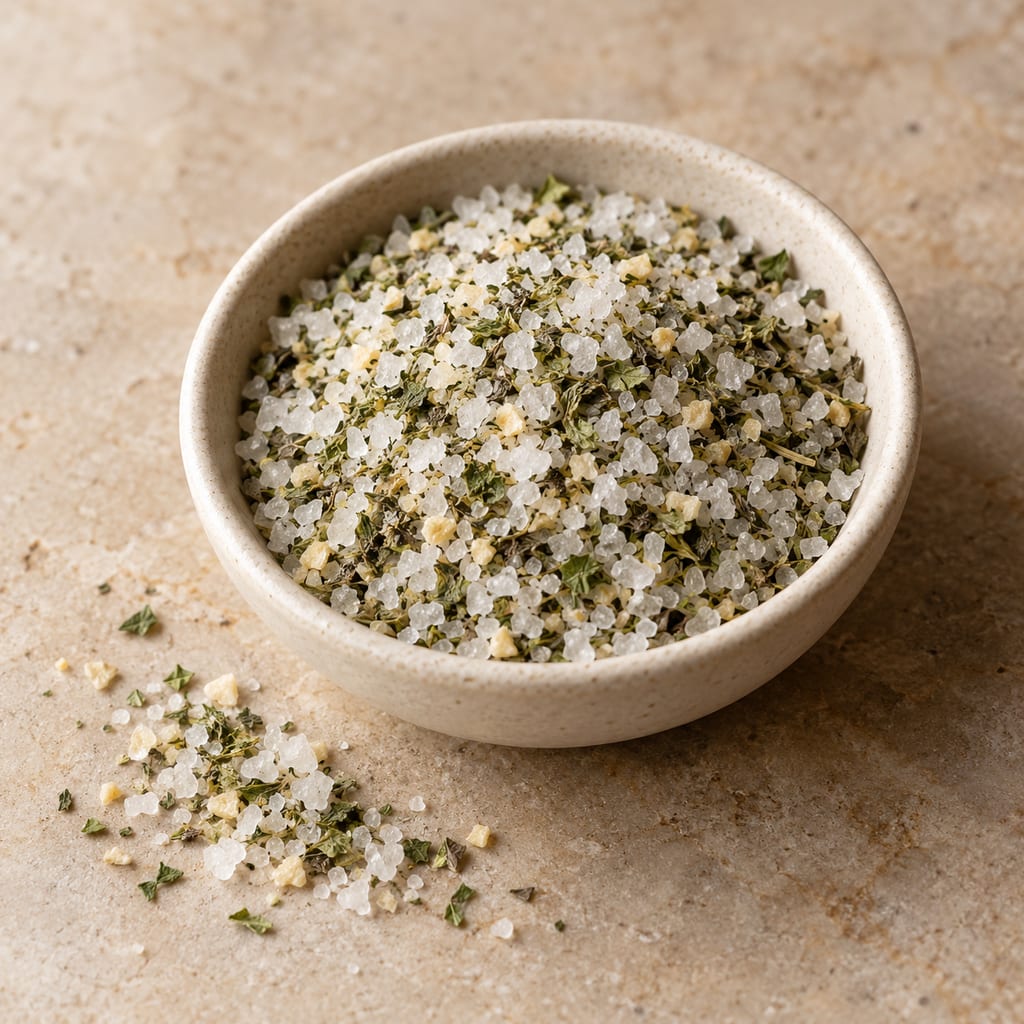
Fresh garlic and pungent herbs are chopped with kosher salt, then dried in the warmth of a switched-off oven. The blend keeps the selected herbs together in one seasoning.
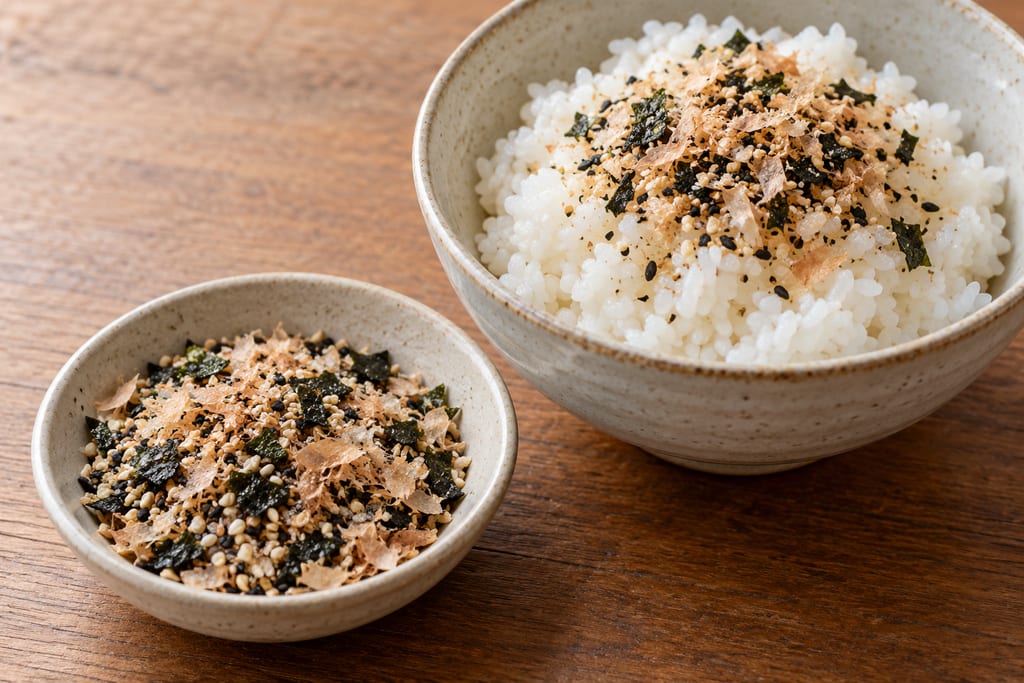
A dry Japanese rice seasoning of sesame, bonito, nori, sugar and salt. This documented home blend is one specific formula within a varied category with several early product histories.
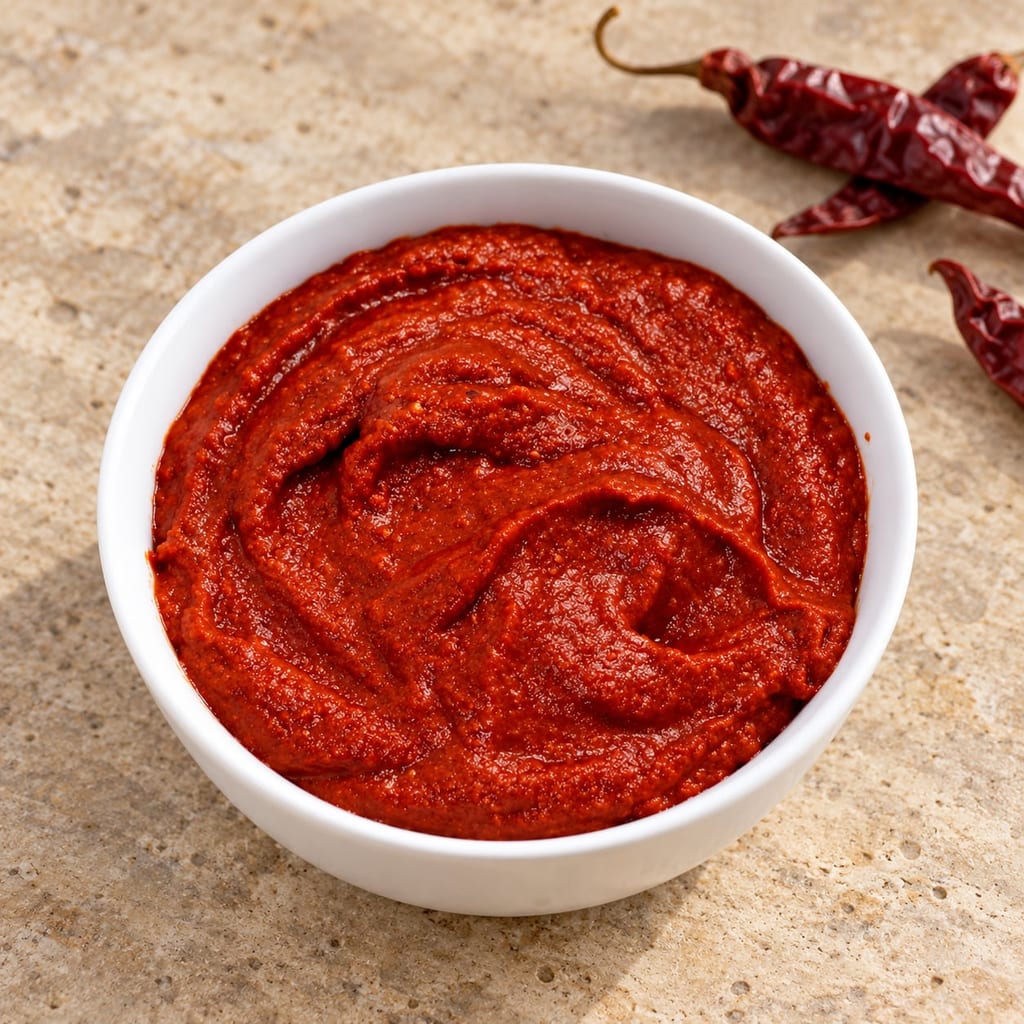
Recheado is a red Goan spice paste of Kashmiri chillies, garlic and spices ground in vinegar, best known as the stuffing for fried fish such as mackerel.
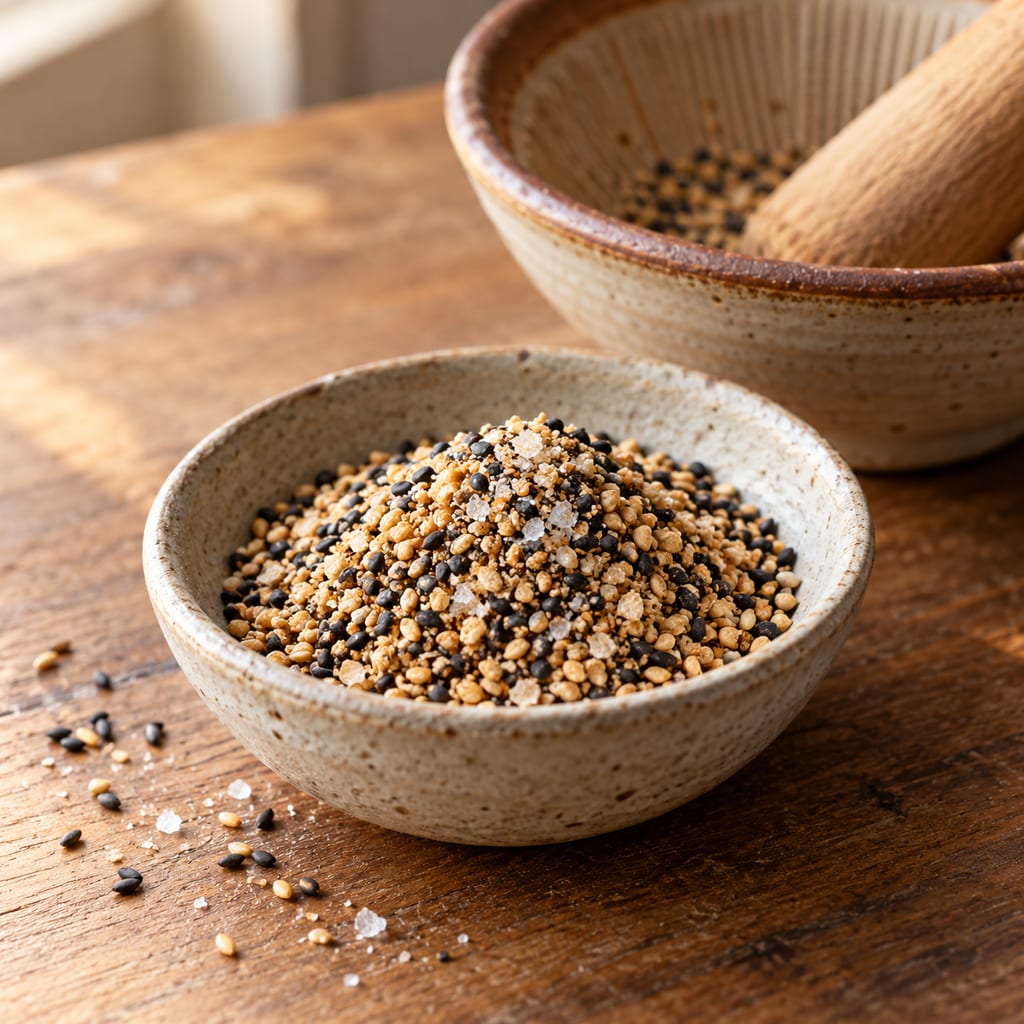
Toasted sesame seeds and sea salt are ground together into a coarse seasoning for rice. This small pan-roasted batch keeps most of the seed texture.
No community contributions have been published for this entry yet.
Sign in to contribute. Published comments and photos are free to read.
Simply Trini CookingMethod · History · Uses
Green Seasoning: A Special Caribbean IngredientIngredients: 1 bundle celery, 2 heads garlic, 3 onions, 6 leaves big leaf thyme, 5 sprigs Spanish thyme, 8 sprigs fine leaf thyme, 36 leaves chadon beni, 12 pimento peppers, 4 bundles chives, 1/4 cup vinegar (optional), 1/2 cup water, salt to taste, 1 hot pepper (optional); yield about 1.5 L.
Method: blend in batches with water and vinegar, strain, keep the liquid for the next batches, combine everything and salt to taste.
Storage: refrigerate; the seasoning lasts a long time when refrigerated; stir or shake if liquid separates.
The author notes that the ingredients are found throughout the Caribbean, that households have their own ratios, and that the seasoning is much like sofrito, with local additions.
Cited in: Overview; Background; Method; Storage and use
USDA Food Safety and Inspection ServiceSafety · Storage
How do I handle leftovers safely?General guidance says refrigerate leftovers at or below 40 °F (4 °C) within two hours, use shallow containers, and use refrigerated leftovers within 3–4 days or freeze for longer storage. This is applied here as cautious general home handling, not as a validated seasoning-specific study.
U.S. Food and Drug AdministrationSafety
Selecting and Serving Produce SafelyFDA advises keeping perishable herbs and produce in a clean refrigerator at or below 40 °F (4 °C); it does not validate this seasoning's acidity or shelf life.