
Caribbean browning (burnt-sugar seasoning)
Caribbean browning is a dark liquid of deeply caramelised sugar, used in small amounts for colour and a smoky, bitter-sweet flavour in stews and black cake.
 FermenteaWhere food goes to change
Trinidad cucumber chutney · Cucumber chutney for doubles
A fresh Trinidadian cucumber chutney of grated firm cucumber, garlic, Scotch bonnet, shado beni, lemon and seasoning, described by its author as a doubles condiment.
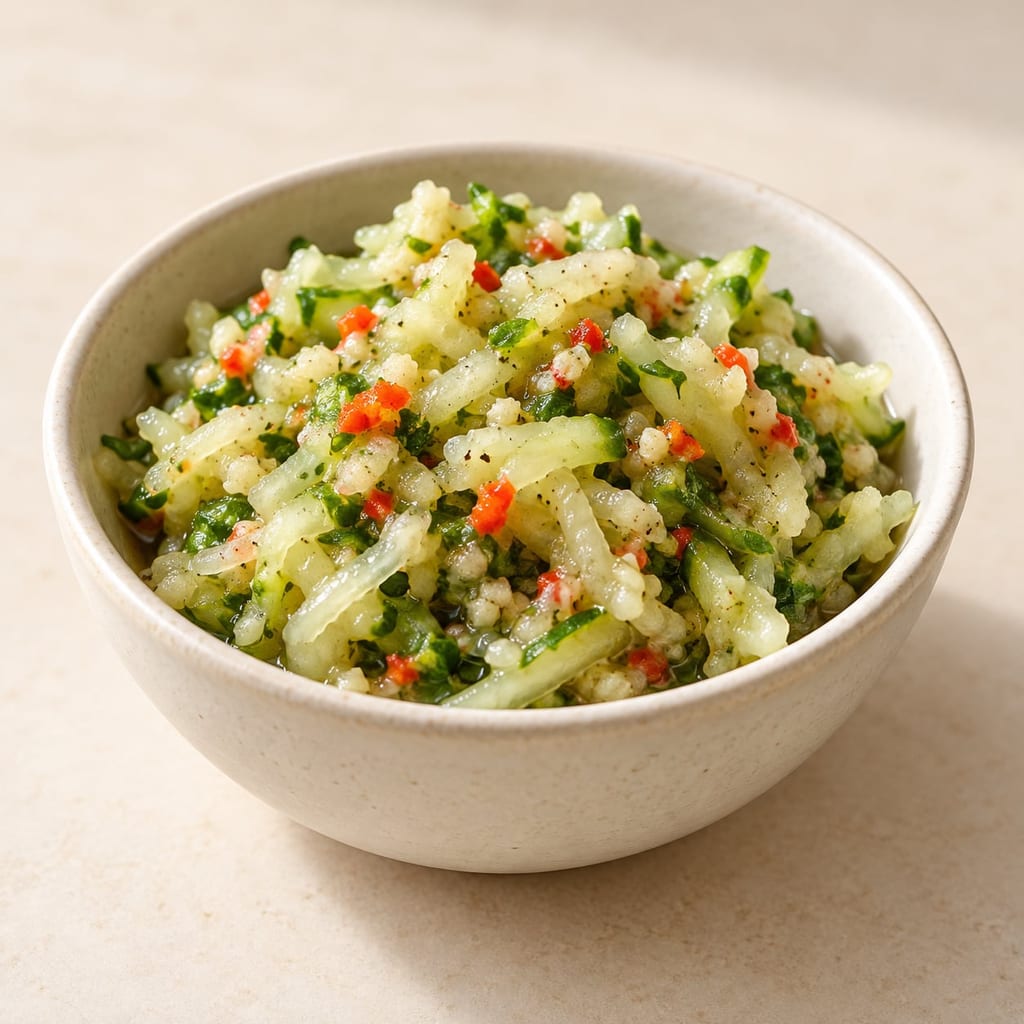
Chris De La Rosa's 2012 recipe makes a fresh, uncooked condiment by combining grated firm cucumber with a lemon, garlic, shado beni and Scotch bonnet purée. The author describes it as a doubles topping and notes that green mango chutney may be used instead depending on the season. These are two separate chutneys with different main ingredients and flavour profiles; this record covers cucumber only.
The formula gives one large cucumber, two garlic cloves, one Scotch bonnet, ½ teaspoon salt, ¼ teaspoon black pepper, the juice of one lemon and two tablespoons shado beni. The author suggests a dash of geera as optional, and offers habanero or another hot pepper, or cilantro in place of shado beni, as alternatives. The substitutions are not extra required ingredients.
The source grates a firm cucumber, squeezes out the liquid, blends the garlic, shado beni, Scotch bonnet, lemon juice, salt and pepper into a fine purée, then mixes that purée through the cucumber. It recommends chilling the mixture for a couple of hours before serving so the flavours combine. The resulting source-described profile is cool and crisp cucumber against tart lemon, aromatic herbs and bright chile heat.
The page says to use a seedless English cucumber or remove the seeds and soft areas from seeded cucumbers. The author leaves the skin on for texture. Pepper seeds are included in the author's batch but may be omitted for less heat.
The author situates this chutney in Trinidad and Tobago's doubles culture and says it may be native there, while framing that as a possibility rather than a proved origin. Trinidad and Tobago Newsday gives broader context for chutney in the country's Indo-Caribbean food culture, but neither source establishes when cucumber chutney first appeared or a precise birthplace.
This is a raw fresh condiment, not a fermented or preserved cucumber product. Lemon and salt in this formula are not validated preservation controls. The recipe author gives a refrigerated keeping claim of at least one week, but no study or measured process supports that period, so it is not adopted here as a safe shelf life.
FoodSafety.gov advises rinsing produce under running water, scrubbing firm cucumbers with a clean produce brush, refrigerating perishable foods within two hours (within one hour above 32°C) and keeping the refrigerator at or below 4°C. This is general handling guidance; it does not establish this chutney's shelf life.
Chris De La Rosa's recipe page, first published in 2012, places cucumber chutney with Trinidadian doubles and says it may be native to Trinidad and Tobago. The author qualifies that origin claim; the consulted sources do not establish a first attestation or precise birthplace.
Scaling: source batch only
This uncooked chutney is made from fresh cucumber, herbs, garlic and pepper; the cited food-safety guidance treats fresh produce and clean equipment as relevant to preventing foodborne illness.
Hazard sourceRinse produce under running water; scrub firm cucumbers with a clean produce brush and use clean utensils and work surfaces.
Control sourceRefrigerate perishable food within 2 hours (within 1 hour above 32°C) and keep the refrigerator at or below 4°C. This general guidance does not establish a recipe-specific shelf life.
Control sourceFresh, uncooked condiment; lemon and salt are flavouring amounts, not a validated preservation process.
The author states that the chutney lasts at least a week refrigerated; no validation evidence was inspected, so this is not adopted as a safe storage limit.
No measured pH, water activity or recipe-specific shelf-life study is available.
Chris De La Rosa documents this cucumber chutney in a Trinidadian doubles context and says it may be native to Trinidad and Tobago; that tentative statement does not establish an origin.
Caribbean browning is a dark liquid of deeply caramelised sugar, used in small amounts for colour and a smoky, bitter-sweet flavour in stews and black cake.
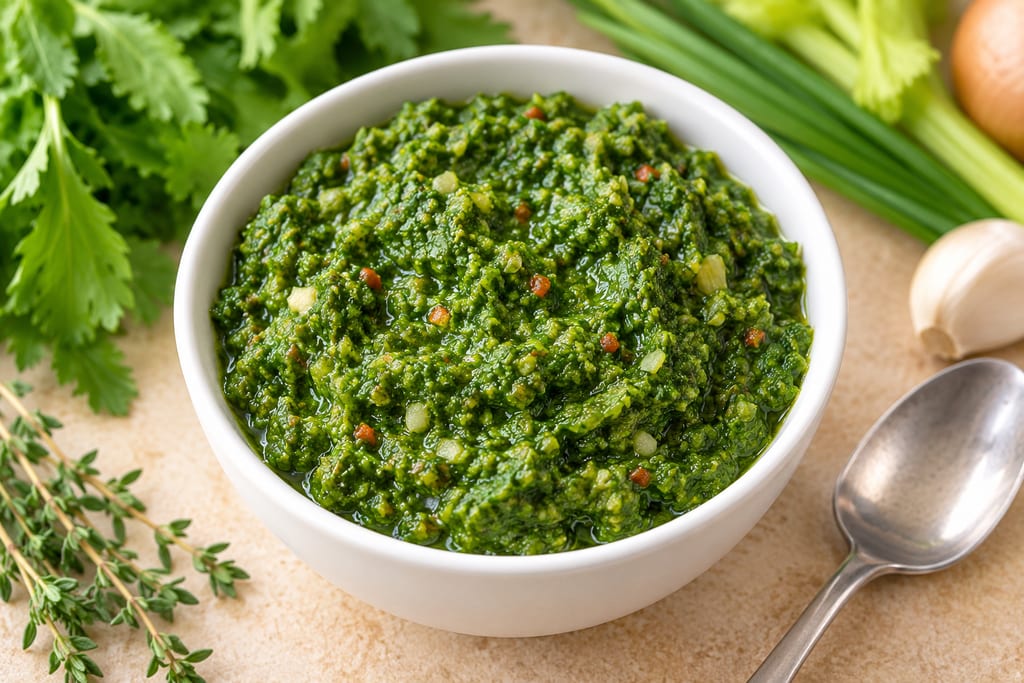
A fresh herb and aromatic paste of chadon beni (culantro), thyme, chives, celery, onion, garlic and peppers, blended with vinegar and water and used as the base for Trinidadian cooking.
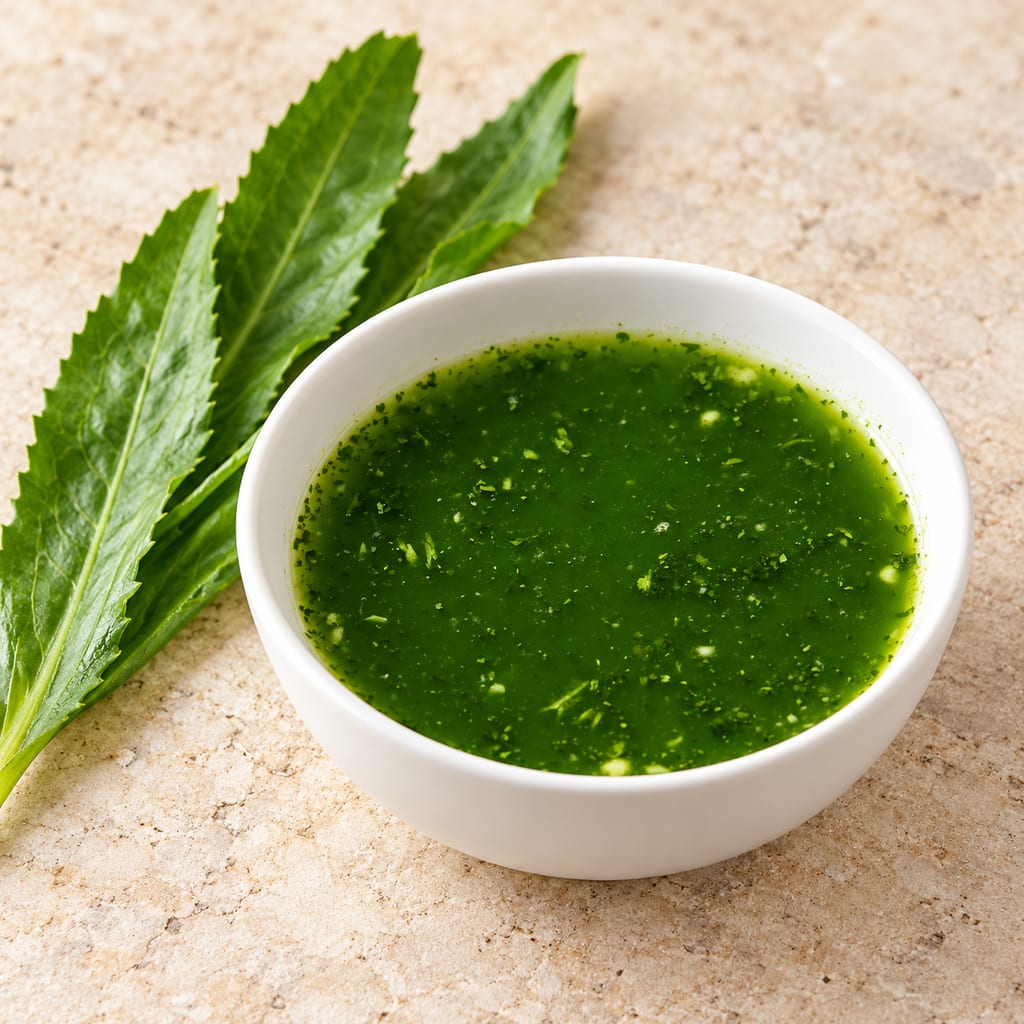
A bright green Trinidadian hot sauce of chadon beni (shado beni, culantro) with garlic, hot pepper, lime and water, blended to a pourable sauce for grilled meat, wings and eggs.
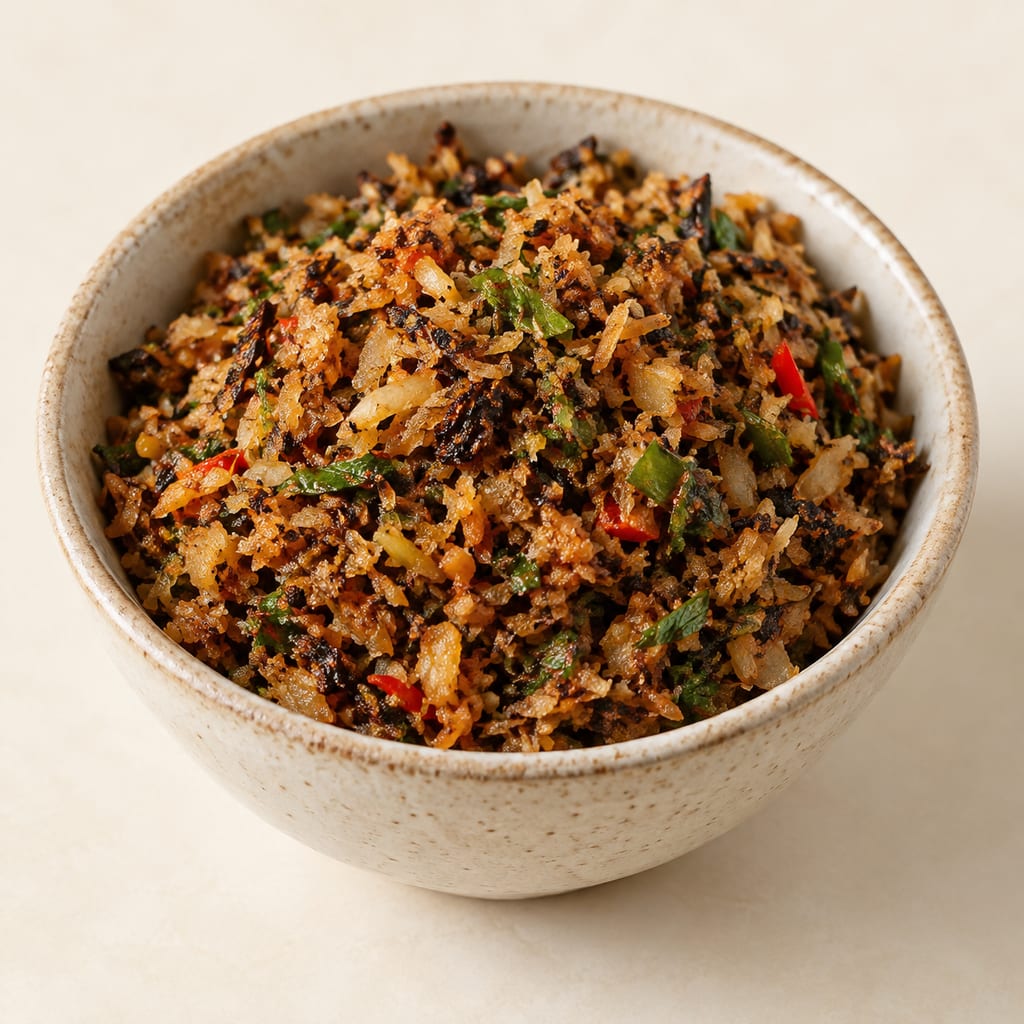
Trinidad coconut chutney is dried coconut roasted until charred, then ground on a stone with garlic, hot pepper, pimento and chadon beni to a coarse paste.
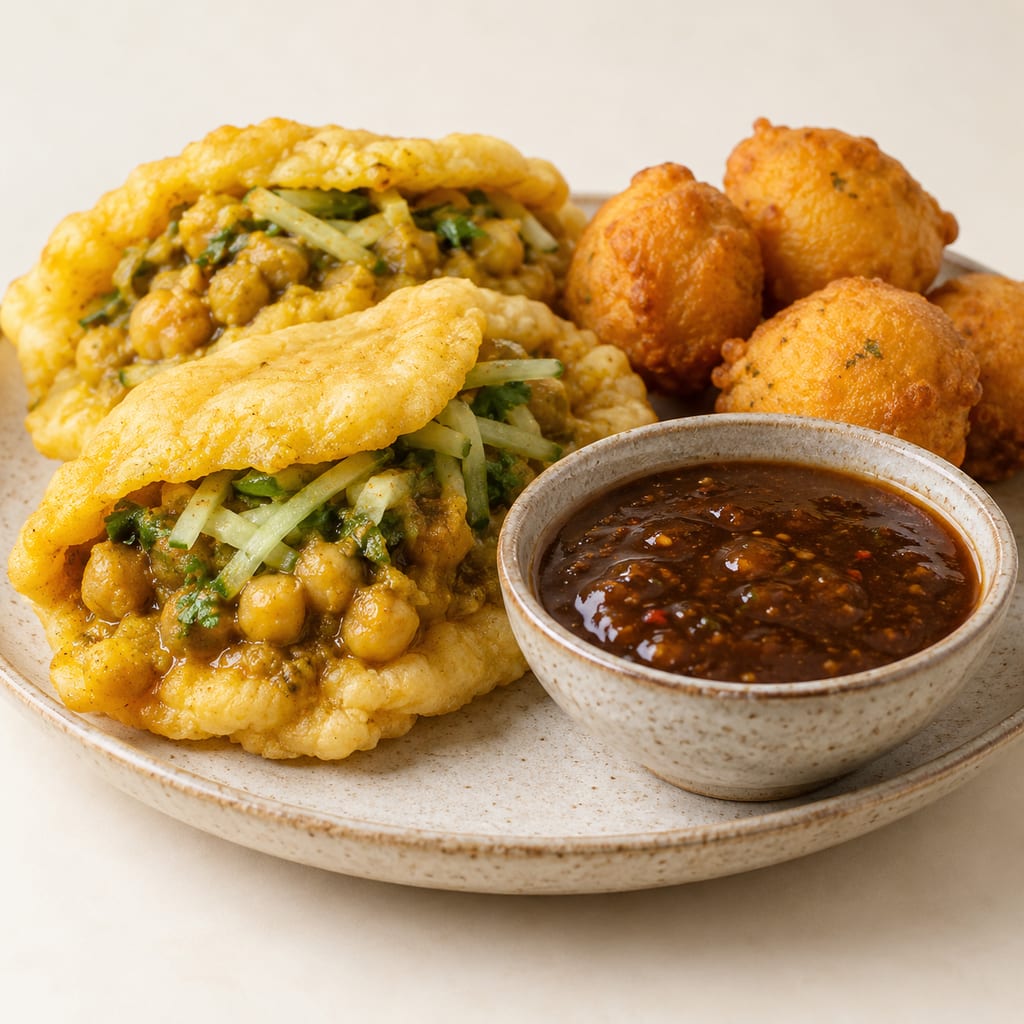
A sweet, sour and spiced tamarind sauce from Trinidad, made from tamarind pulp with garlic, Scotch bonnet, culantro, cumin, anchar masala and brown sugar, served with doubles and pholourie.
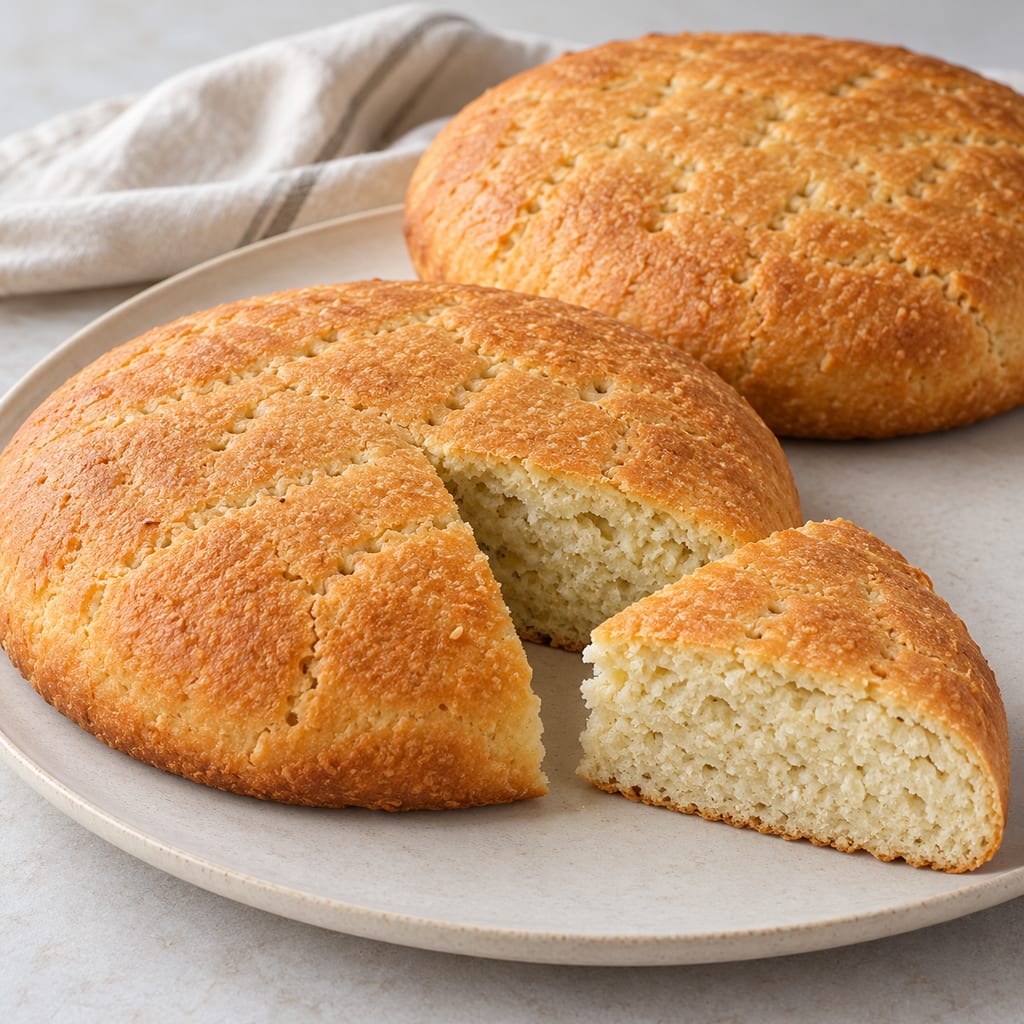
A yeast-raised Trinidadian wheat bread with blended fresh coconut, baked as two thick rounds.
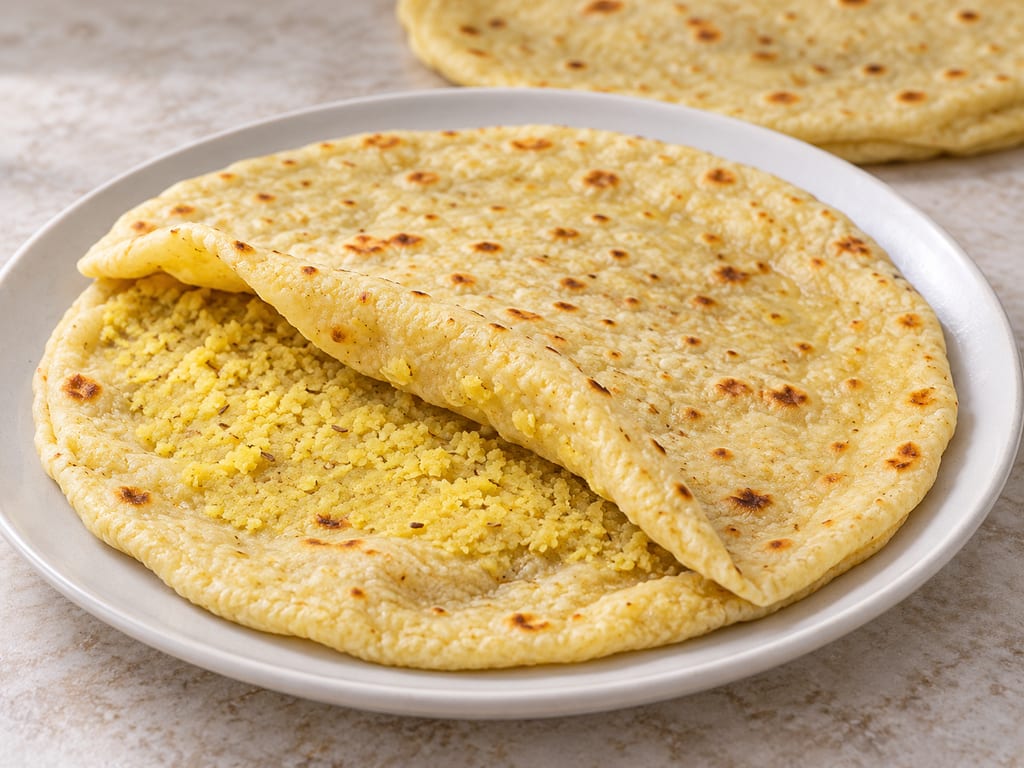
Trinidadian stuffed roti with a fine split-pea filling sealed inside soft wheat dough, rolled thin and cooked on a hot tawa.
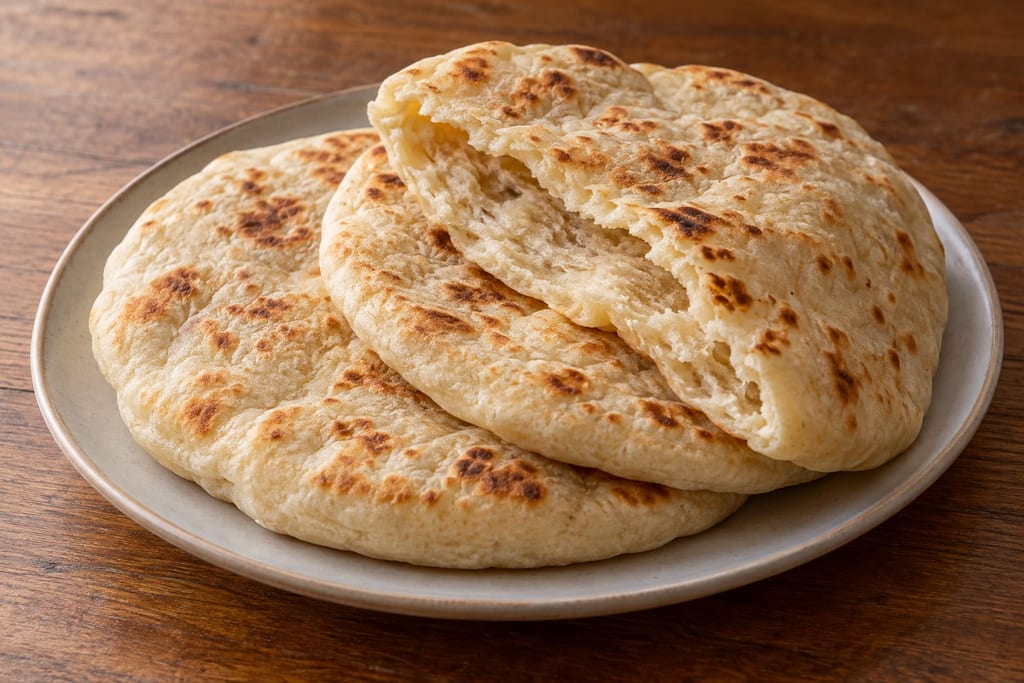
A Trinidad and Tobago baking-powder flatbread cooked on a hot stone, then briefly exposed to direct heat to puff.
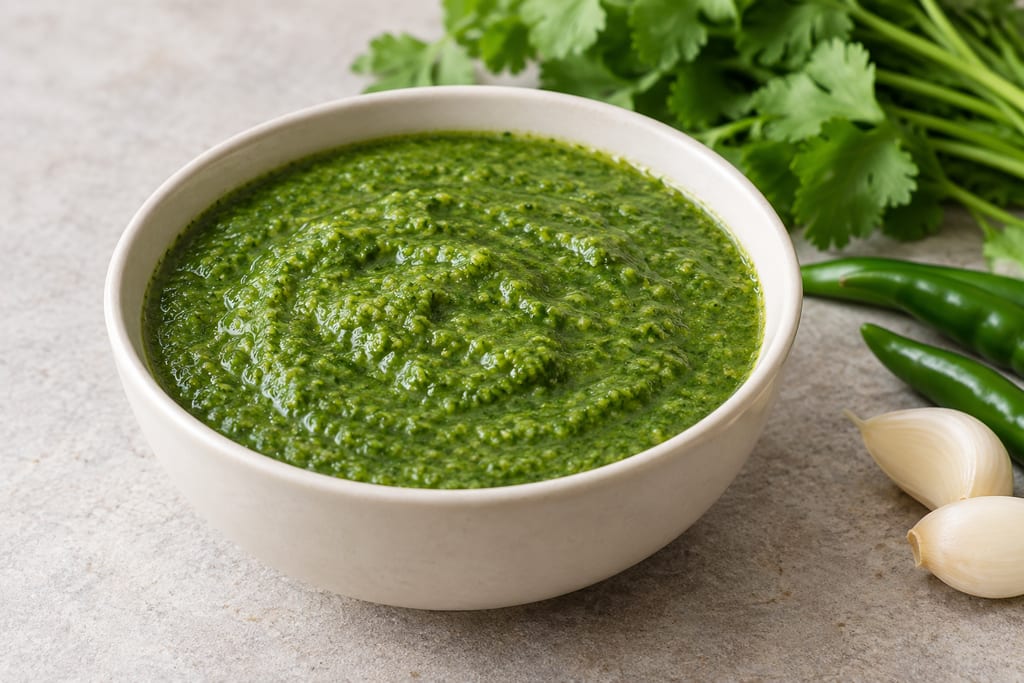
Afghan coriander chatni is a sharp, hot herb sauce with garlic and vinegar. A 2008 Afghanistan manual records green or red pepper and optional walnut; heat and household versions vary.
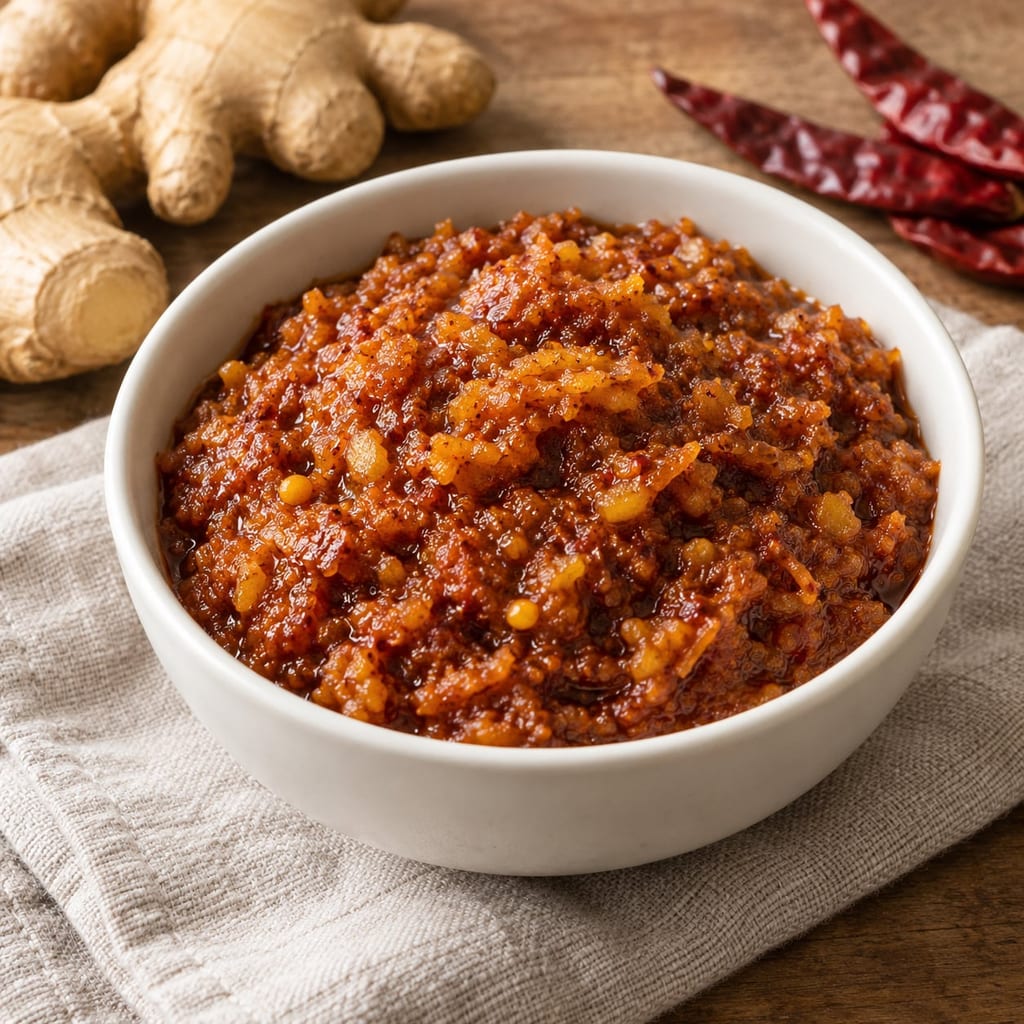
An Andhra ginger-and-urad chutney in which browned dal and briefly fried ginger and chillies are cooled, then ground with jaggery to a coarse paste.
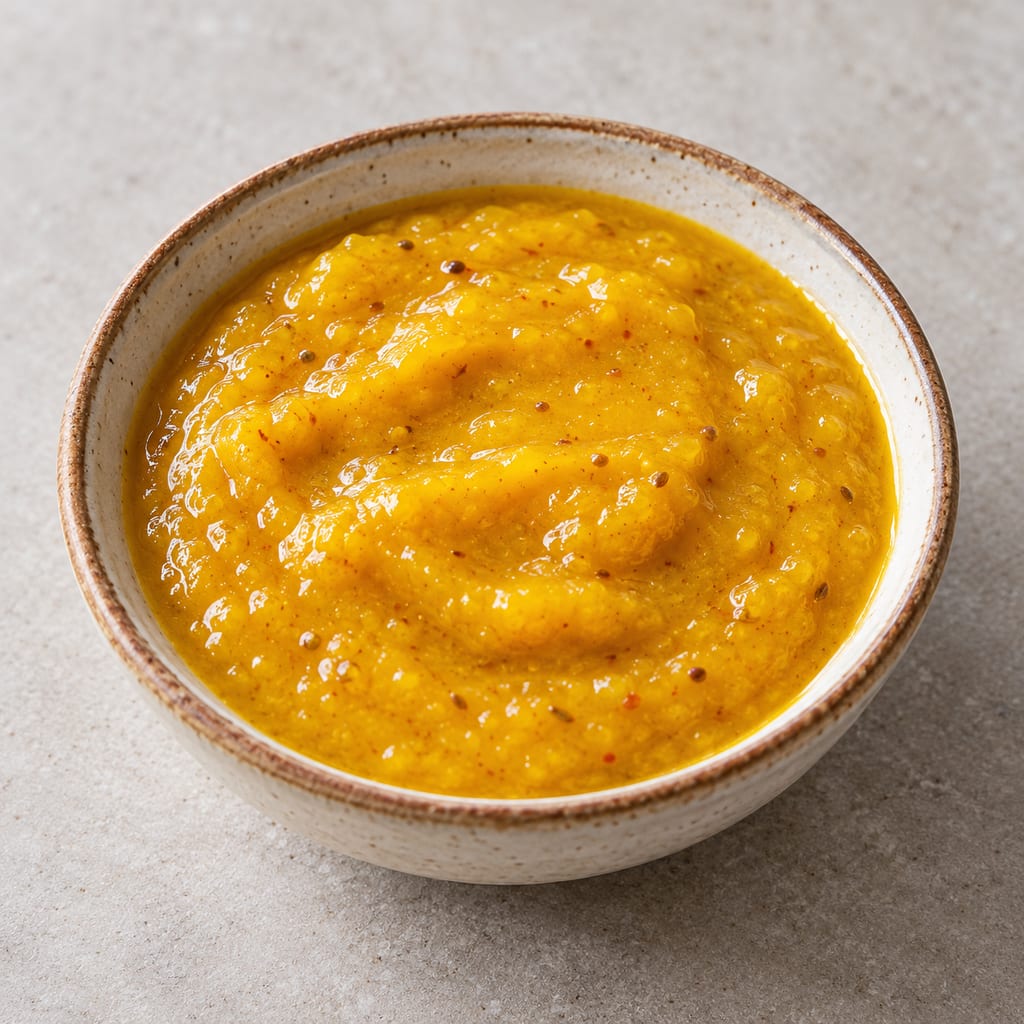
This cooked amba follows a Jewish Food Society recipe that simmers ripe mango with onion, garlic, mustard seed and warm spices into a tangy Middle Eastern condiment.
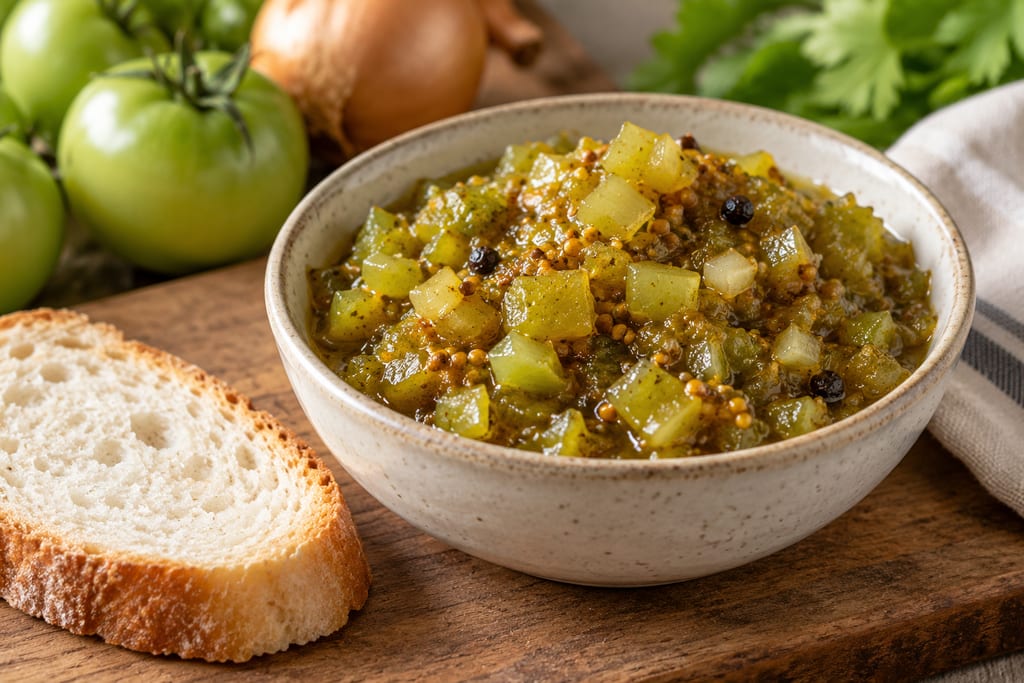
Australian green tomato pickles and relishes vary. This partial version follows ABC Western Victoria’s 2018 pickle recipe, not Beerenberg’s commercial formula. Sources document examples from 1944 onward, not a single origin.
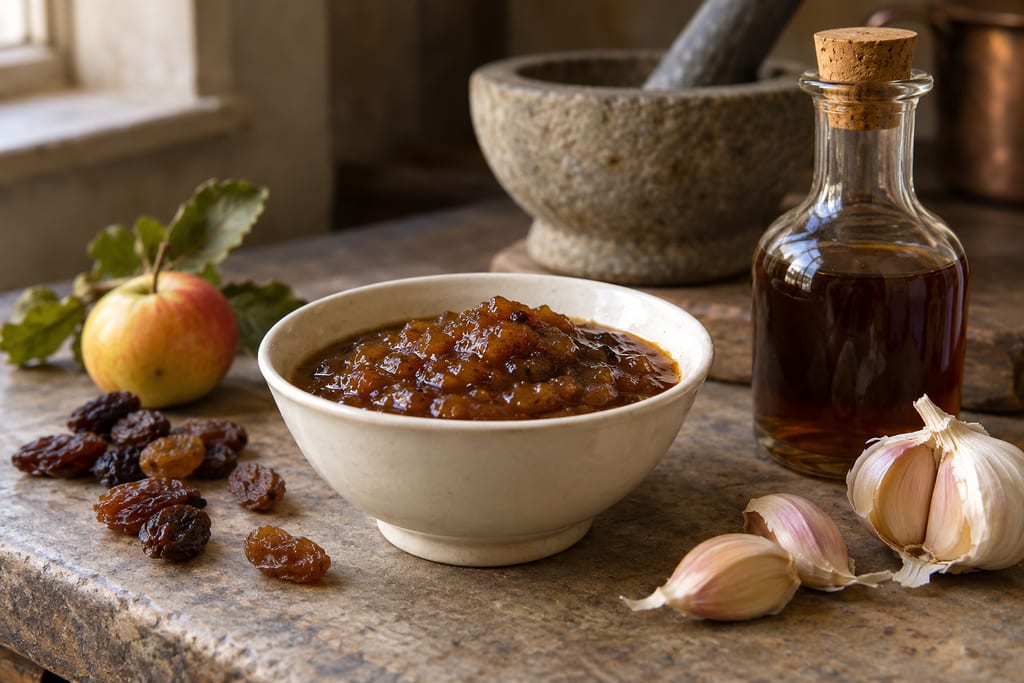
Eliza Acton's Bengal receipt for chetney sauce: stoned raisins and a hard acid fruit pounded with brown sugar, ginger, salt, cayenne and garlic, then thinned with vinegar to the consistence of thick cream.
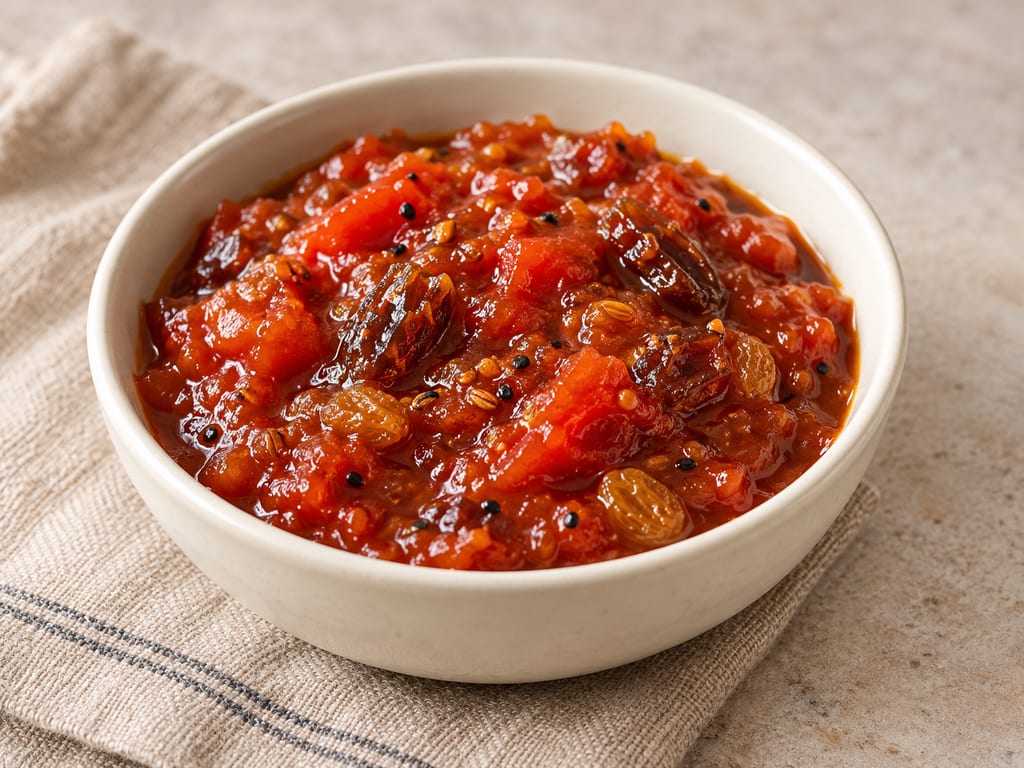
A cooked Bengali meal chutney combining tomatoes, dates, raisins, ginger and panch phoron.

A spicy South African vegetable relish of onion, carrot, pepper, tomato, curry seasoning and beans, cooked briefly and served warm or cold beside pap and grilled meat.
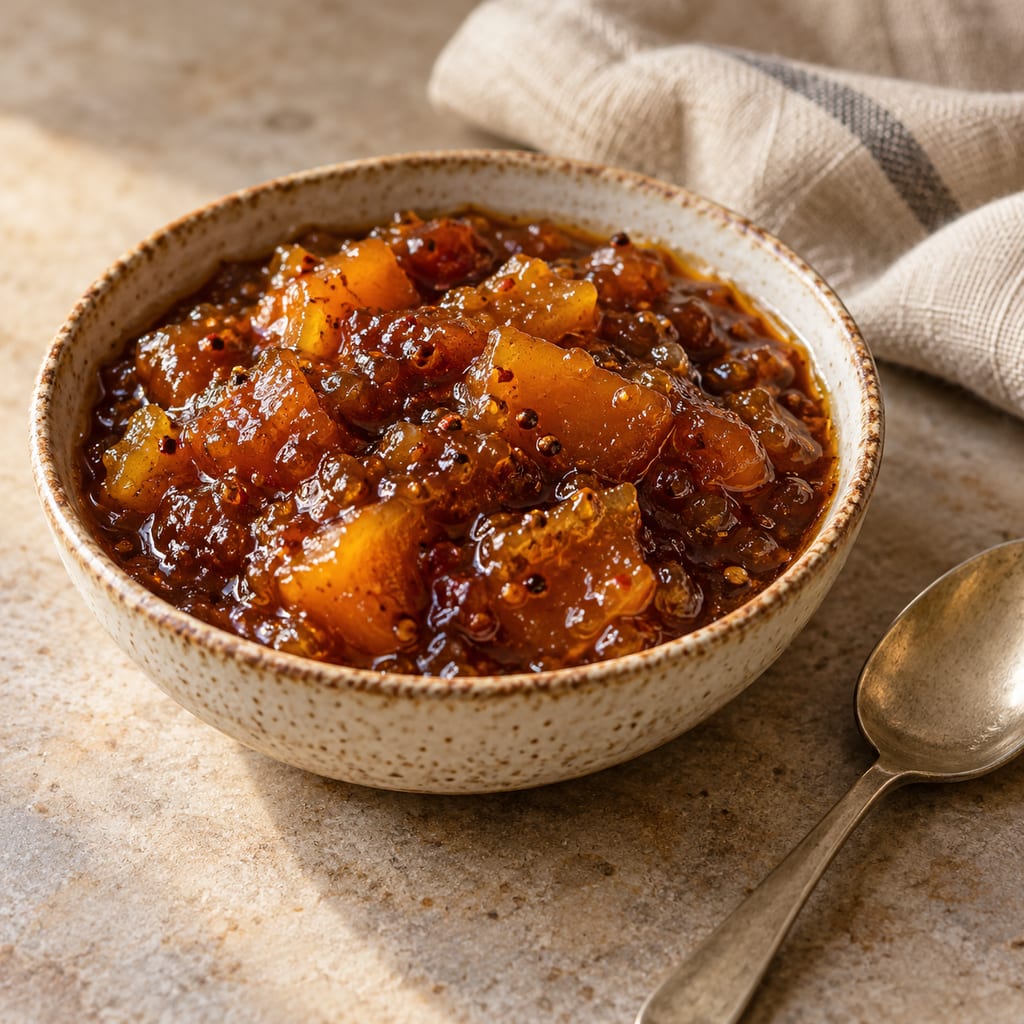
A broad account of cooked chutney traditions: fruit or vegetables combined with sugar, spices and sometimes acid, often boiled into a thick condiment. This record is historical and process context, not a formula or storage recipe.
No community contributions have been published for this entry yet.
Sign in to contribute. Published comments and photos are free to read.
CaribbeanPot.comRecipe · Geography · Current use
Spicy Cucumber ChutneyIngredient amounts, firm cucumber and seed guidance, grating, squeezing, seasoning purée, assembly and optional geera/substitutions.
Author places cucumber or seasonal green-mango chutney with doubles and says cucumber chutney may be native to Trinidad and Tobago; the claim is tentative.
Page states a one-week refrigerated duration; no validation evidence is supplied or adopted as a safety limit.
Cited in: Cucumber chutney for doubles; Method and flavour; Geography and history boundary; Fresh-food safety
Trinidad and Tobago NewsdayHistorical context · Geography
Spice it up with chutneyDiscusses chutney as part of Trinidad and Tobago food culture and reports a broad history tied to Indian indentured labourers; this does not date the cucumber preparation specifically.
Cited in: Geography and history boundary
FoodSafety.govSafety
4 Steps to Food SafetyWash fresh produce under running water, scrub firm cucumbers with a clean produce brush, keep equipment clean and refrigerate perishables within two hours (one hour above 32°C) at or below 4°C.
Cited in: Fresh-food safety