
Caribbean browning (burnt-sugar seasoning)
Caribbean browning is a dark liquid of deeply caramelised sugar, used in small amounts for colour and a smoky, bitter-sweet flavour in stews and black cake.
 FermenteaWhere food goes to change
Coconut chutney, Trinidad style · Trini coconut chutney · Chadon beni coconut chutney
Trinidad coconut chutney is dried coconut roasted until charred, then ground on a stone with garlic, hot pepper, pimento and chadon beni to a coarse paste.
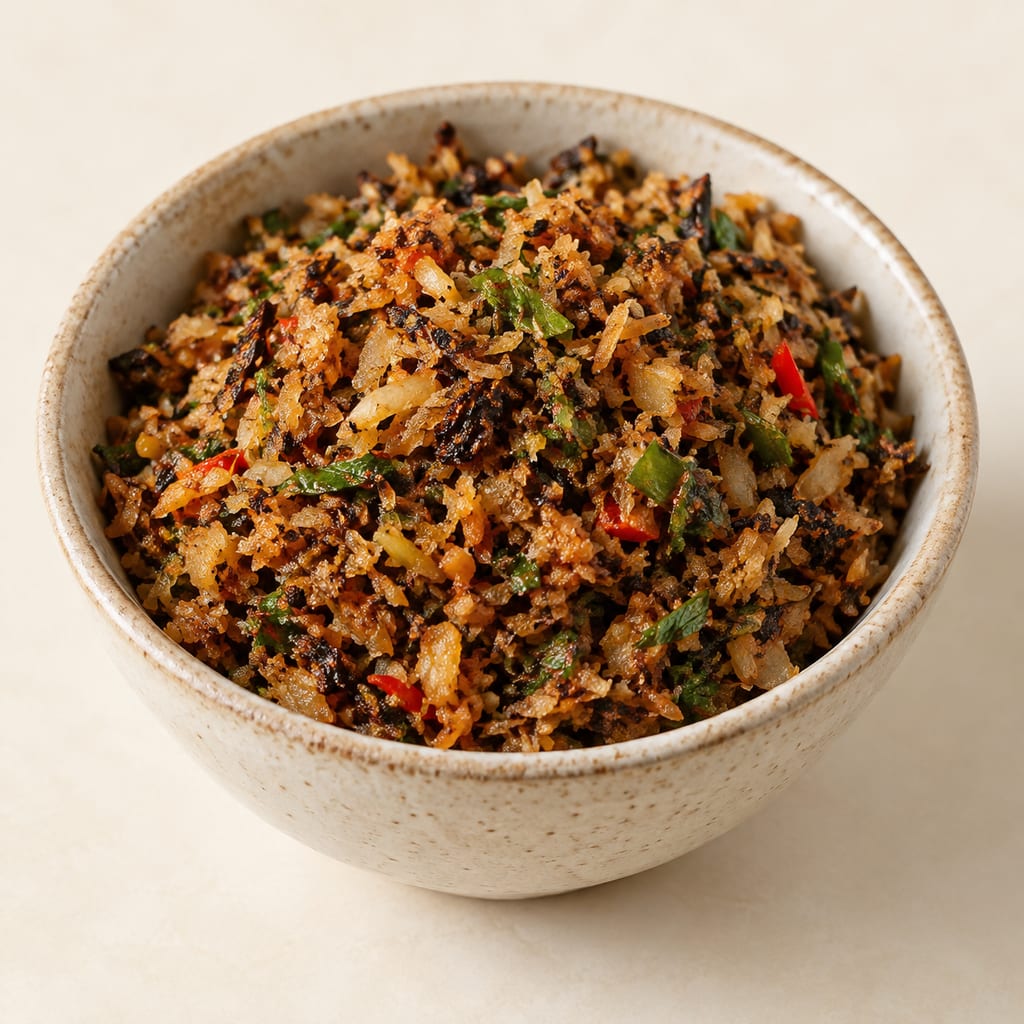
Trinidad coconut chutney is a ground condiment made from dried coconut that has been roasted until it is charred in patches. The roasted coconut is ground with garlic, hot pepper, pimento and chadon beni to a coarse, dark paste. It is a relish for the table, served beside rice, dhal and curry, and it is quite different from the sweet coconut sauces and the coconut milk curries of other cuisines.
The roasting is the flavour. The burnt-brown patches on the coconut give a toasted, smoky note that raw coconut does not have, and the coarse texture comes from grinding rather than blending to a smooth purée.
The dried coconut is cracked, the white flesh freed from the brown shell and washed. It is roasted over a medium flame for about five minutes a side until dark brown patches appear. The aim is colour without a crisp, burnt result. The pieces are then cooled, the black soot is scraped off, and the coconut is washed again and cut into pieces about an inch across.
The garlic, pimento and hot pepper are roasted over the same open flame, with the garlic left in its skin. Roasting softens the vegetables and smokes them, and the source turns them as they cook.
The traditional grinding tools are the sil, a flat grindstone, and the lorha, a hand-held stone. The Trinidad Guardian notes that long before blenders and food processors, these stones ground seasonings such as garlic, peppers and pimento, and were typically used for chutney, coconut chutney especially. A food processor can replace them, and the paste is coarser and less aromatic when it is blended.
The grinding is done in stages: the coconut, garlic, pepper and pimento go first, and the chadon beni is worked in once the paste forms, so the herb keeps its green colour.
A Trinidad newspaper ties chutneys on the island to the Indian labourers who came in the 1800s, and notes that mango and tamarind trees and hot peppers were already there, making the chutneys easy to recreate. The coconut version belongs to that tradition, but the sources do not date the roasting method or say when it entered the repertoire.
Serving is with rice and dhal, with curry duck, and with doubles. The chutney is a table condiment, eaten in small amounts with the main dish.
A Trinidad and Tobago newspaper ties chutney in Trinidad to Indian migration and says the recipes came with indentured labourers in the 1800s. Mango and tamarind trees and hot peppers were already present, which made the recipes easy to recreate. None of the sources read date when or where the roasted-coconut version began.
Scaling: source batch only
A home preparation in Trinidad with Indo-Caribbean chutney traditions. The roasted-coconut method is not dated.
Caribbean browning is a dark liquid of deeply caramelised sugar, used in small amounts for colour and a smoky, bitter-sweet flavour in stews and black cake.
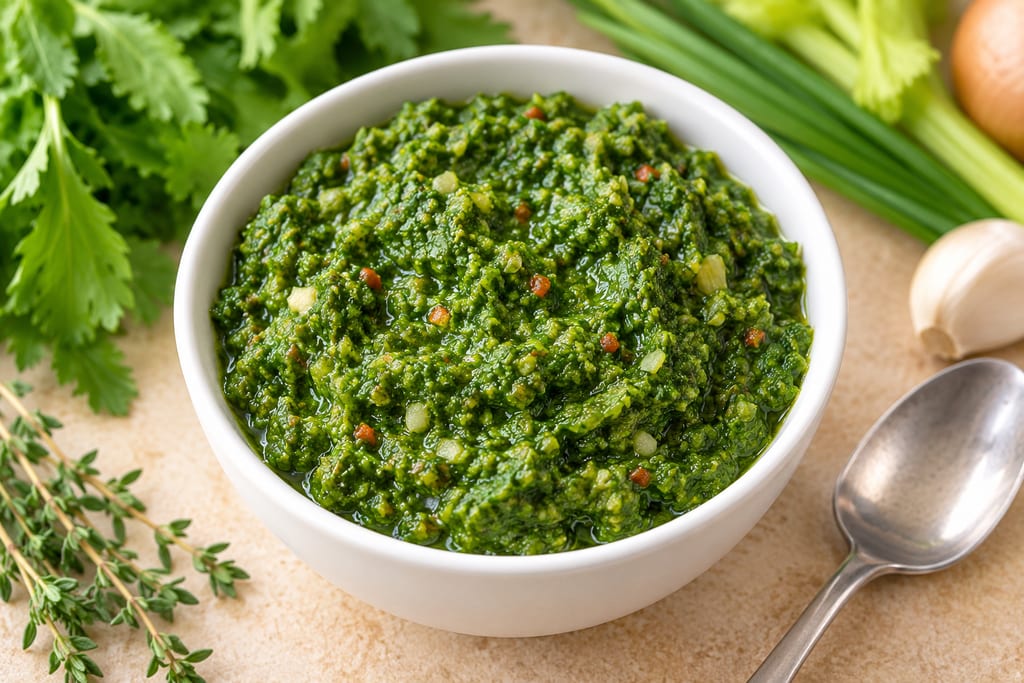
A fresh herb and aromatic paste of chadon beni (culantro), thyme, chives, celery, onion, garlic and peppers, blended with vinegar and water and used as the base for Trinidadian cooking.
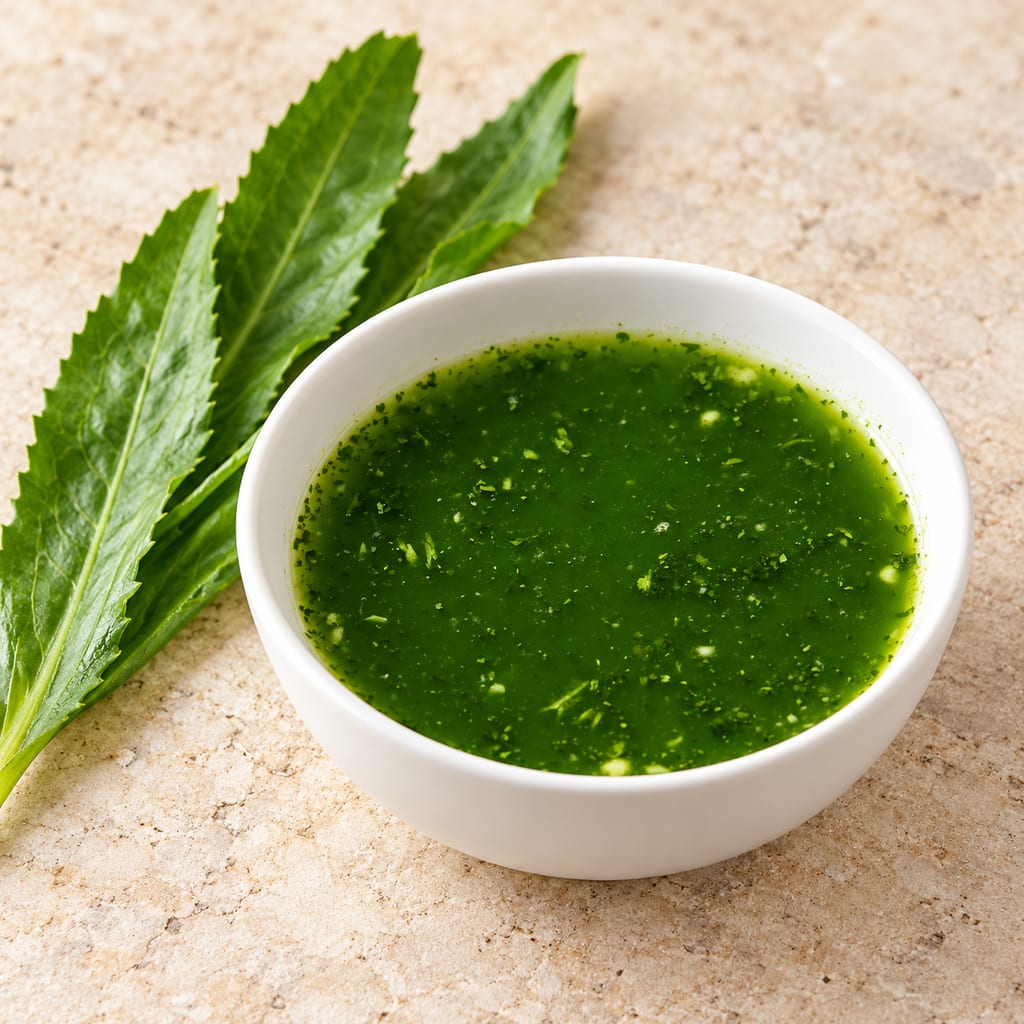
A bright green Trinidadian hot sauce of chadon beni (shado beni, culantro) with garlic, hot pepper, lime and water, blended to a pourable sauce for grilled meat, wings and eggs.
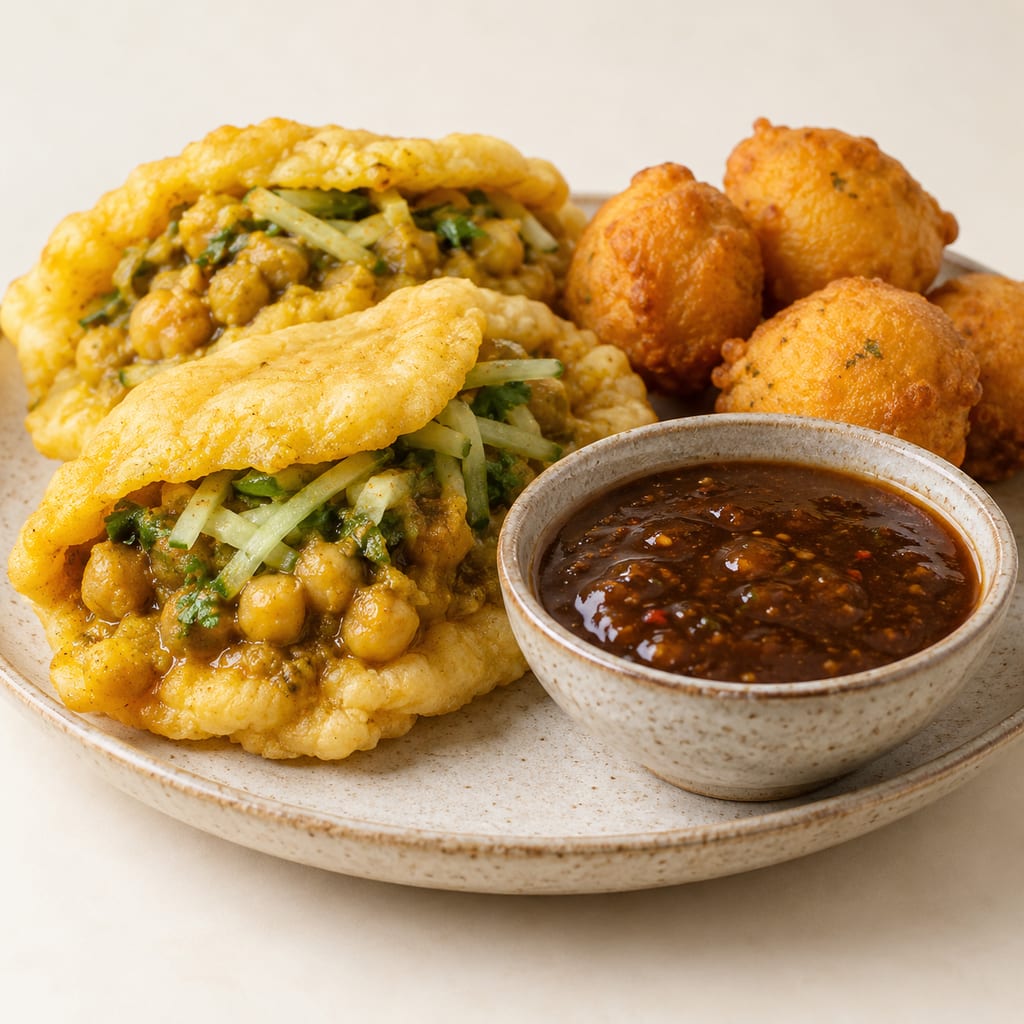
A sweet, sour and spiced tamarind sauce from Trinidad, made from tamarind pulp with garlic, Scotch bonnet, culantro, cumin, anchar masala and brown sugar, served with doubles and pholourie.
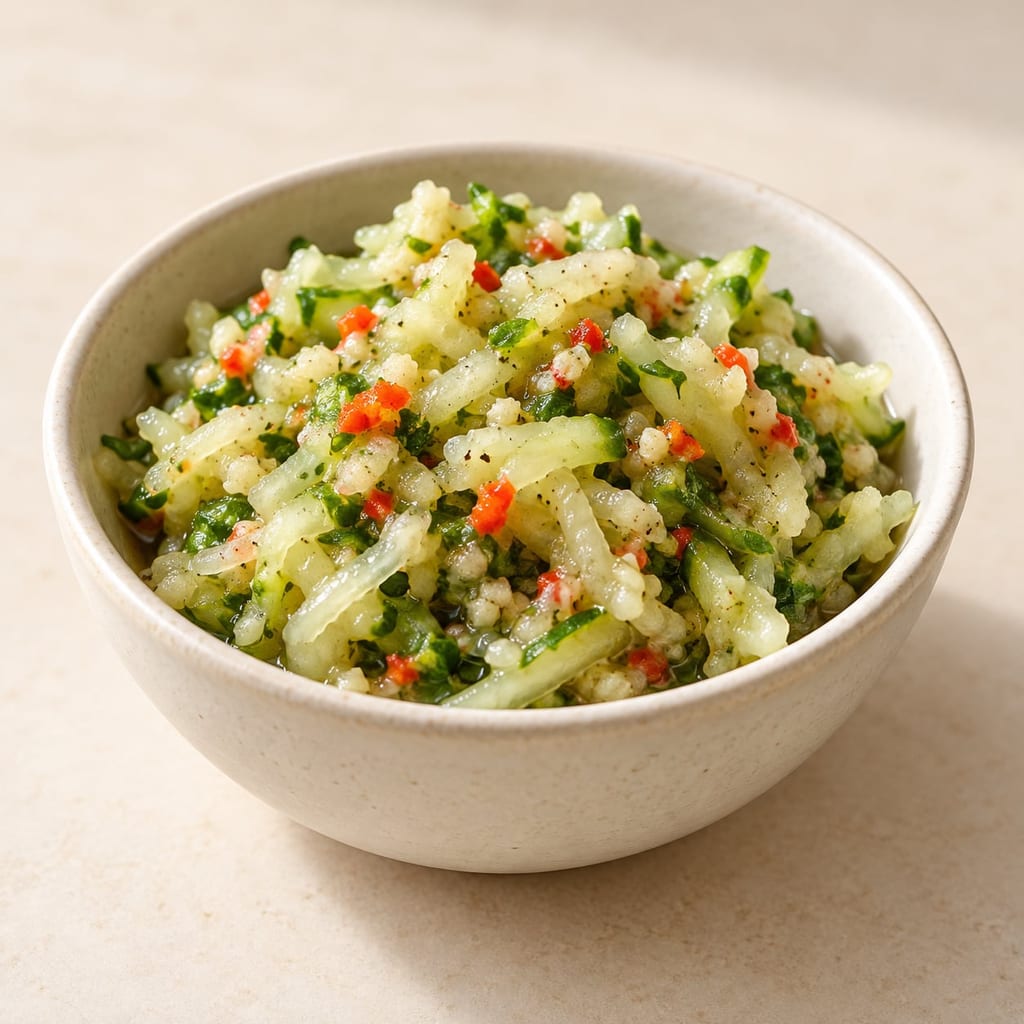
A fresh Trinidadian cucumber chutney of grated firm cucumber, garlic, Scotch bonnet, shado beni, lemon and seasoning, described by its author as a doubles condiment.
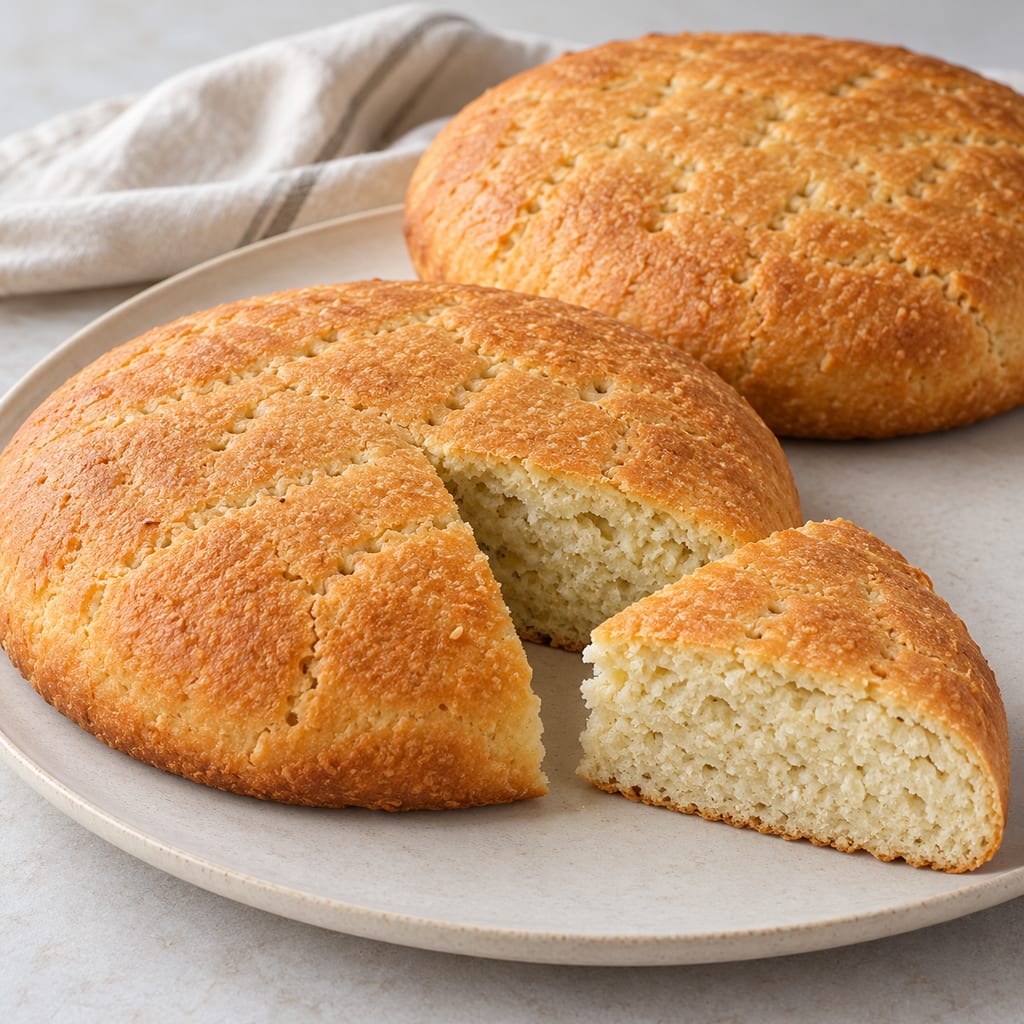
A yeast-raised Trinidadian wheat bread with blended fresh coconut, baked as two thick rounds.
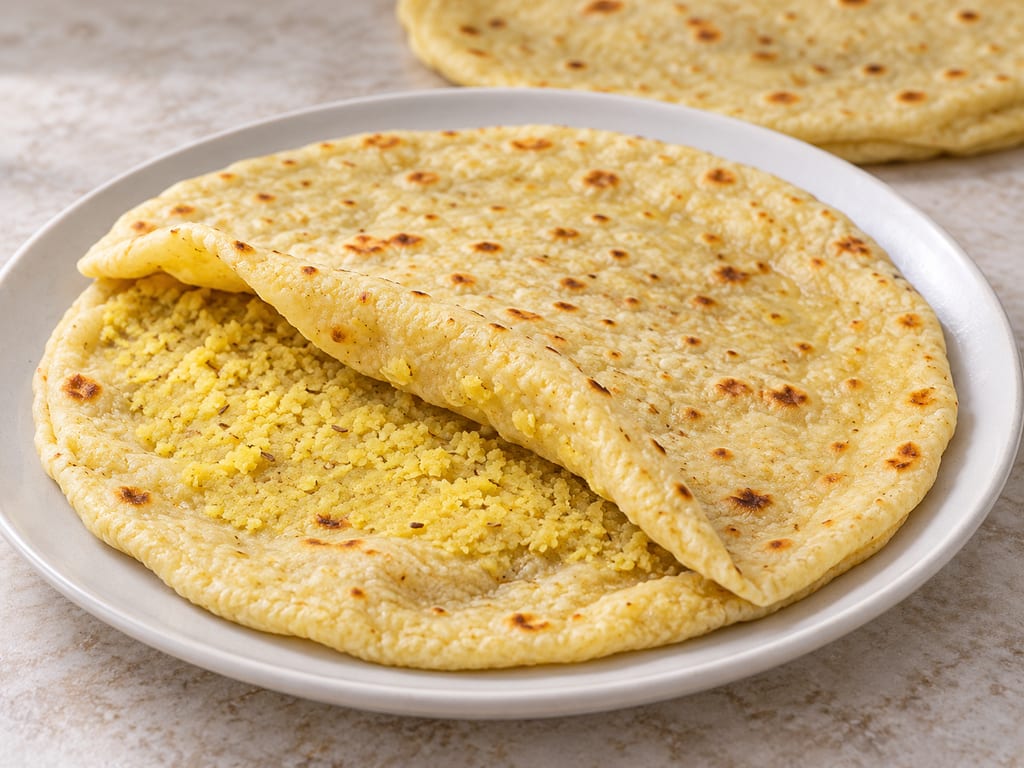
Trinidadian stuffed roti with a fine split-pea filling sealed inside soft wheat dough, rolled thin and cooked on a hot tawa.
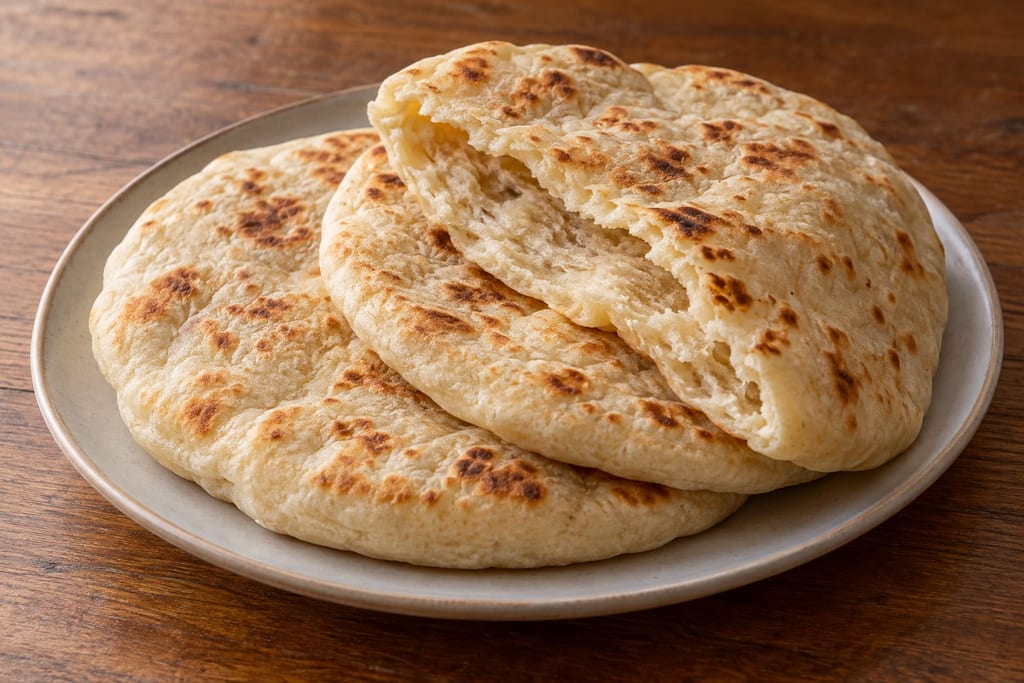
A Trinidad and Tobago baking-powder flatbread cooked on a hot stone, then briefly exposed to direct heat to puff.
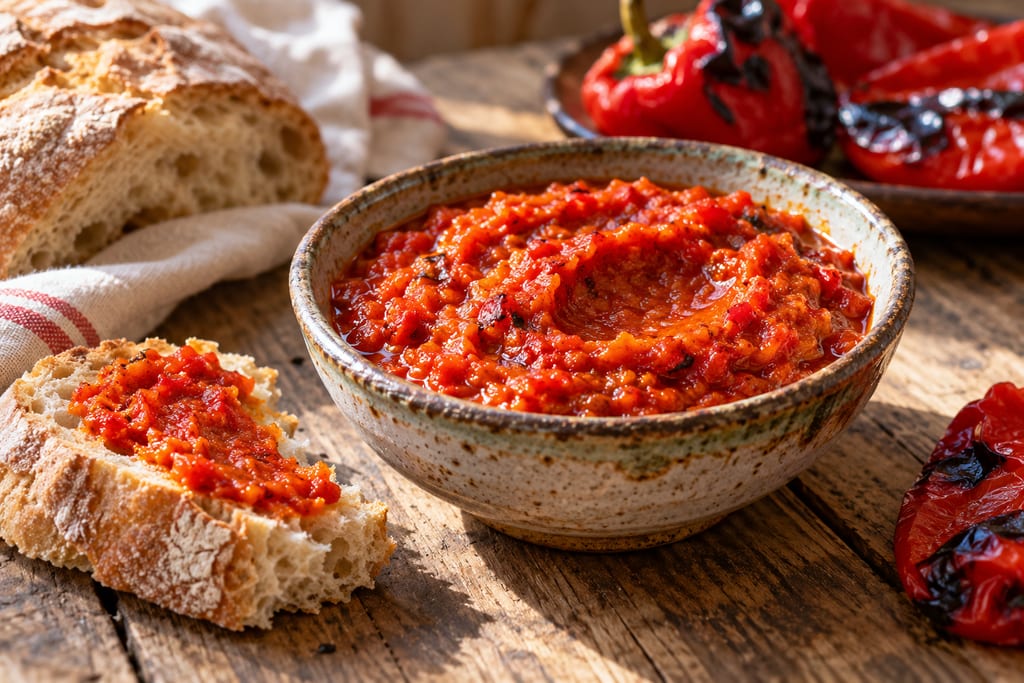
Ajvar is a cooked Balkan pepper preserve built around roasted red peppers, peeled, drained, ground and slowly fried with oil and seasoning. Leskovac’s protected version is a pepper specialty; regional versions vary.
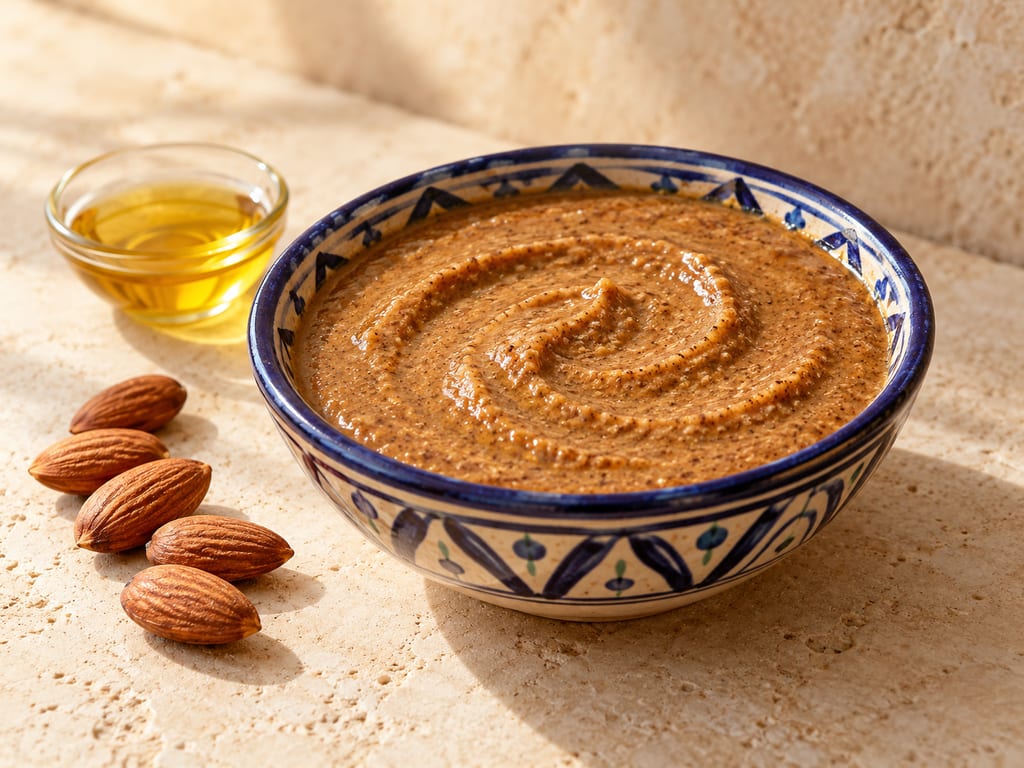
Amlou is a nutty, lightly sweet Moroccan spread of roasted almonds, culinary argan oil and honey. The almonds are ground first, then loosened with oil and sweetened; the balance can range from a thick spread to a dip.
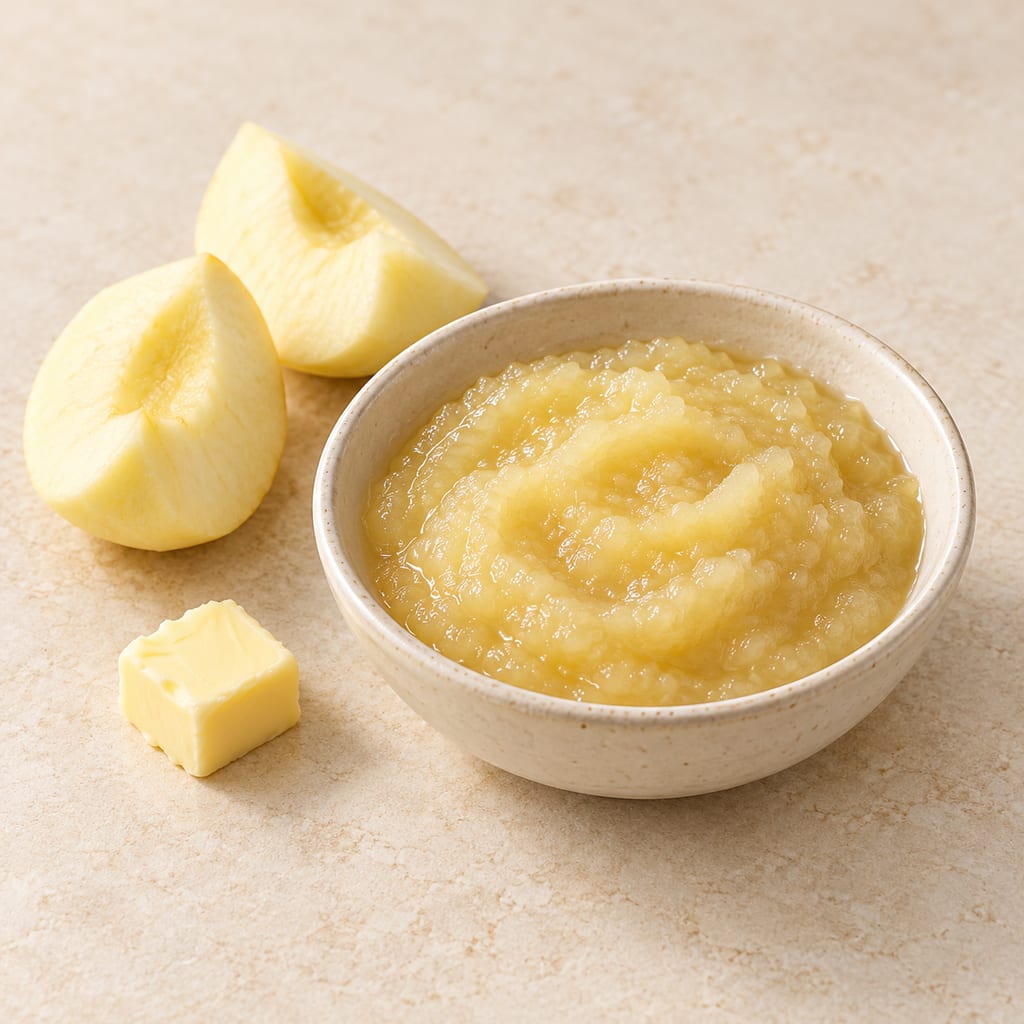
Apple sauce for goose and pork is a plain English accompaniment: cooked apples pulped with water, then sweetened with sugar and finished with a little butter.

A warm dip of garlic, anchovy and olive oil, often enriched with butter, that Piedmont serves over a flame with raw and cooked vegetables and bread.
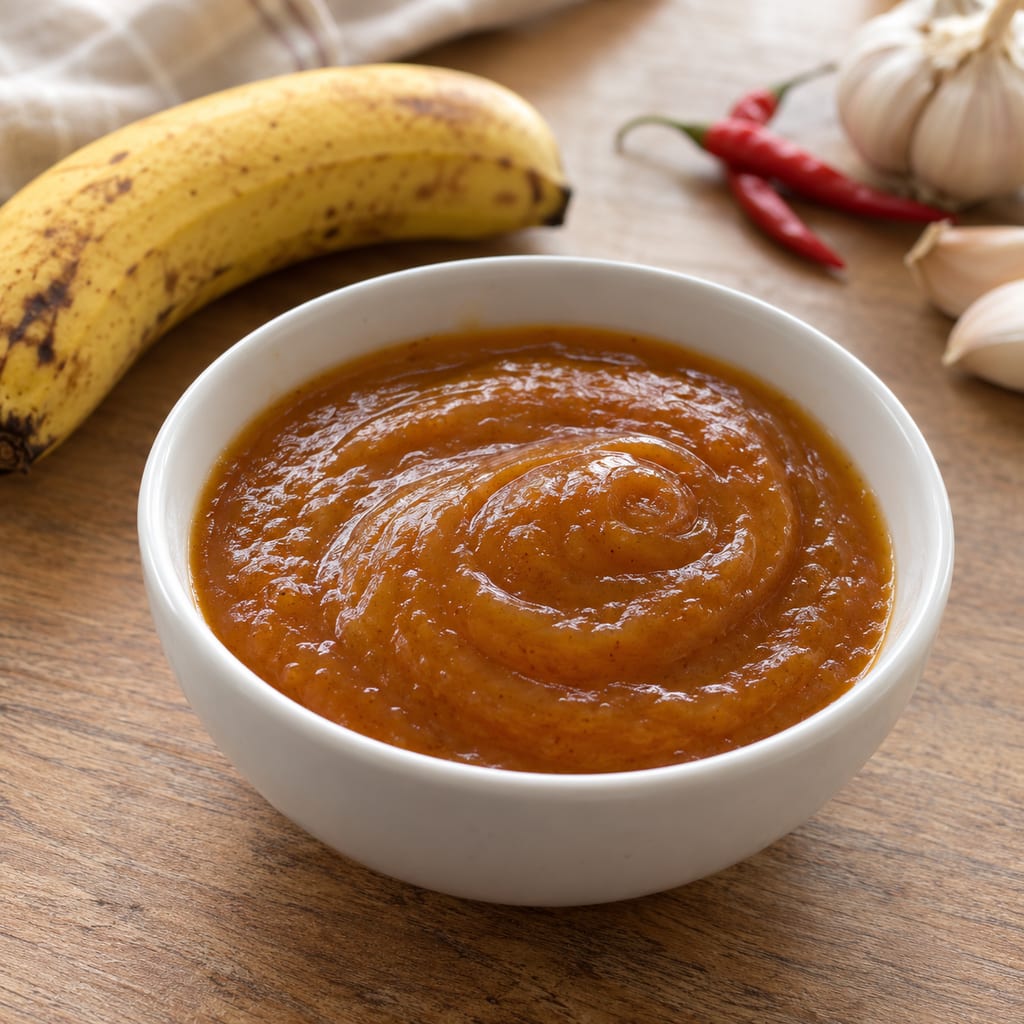
A sweet-hot table sauce of ripe banana simmered with vinegar, sugar, onion, garlic and fresh chilli, in the manner of Philippine banana ketchup. An untested development batch of about 500 g.
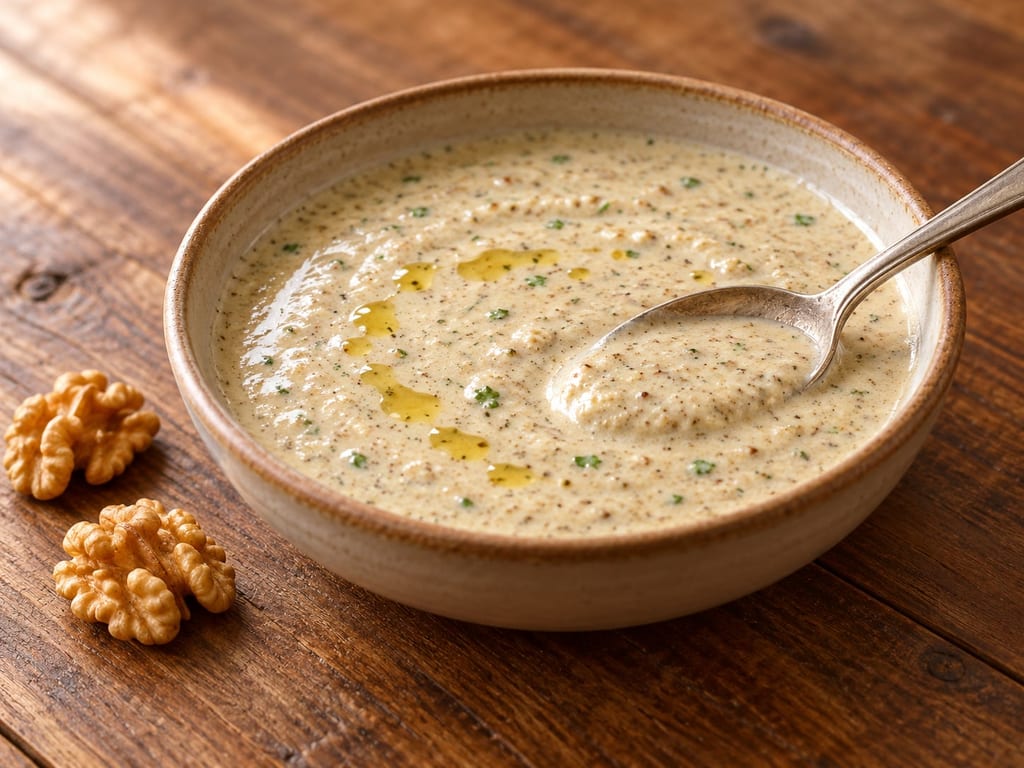
A Georgian walnut sauce of ground walnuts, garlic, vinegar and spices, thinned with water or broth. It is served with poultry, vegetables and bread, and is the sauce of the dish satsivi.
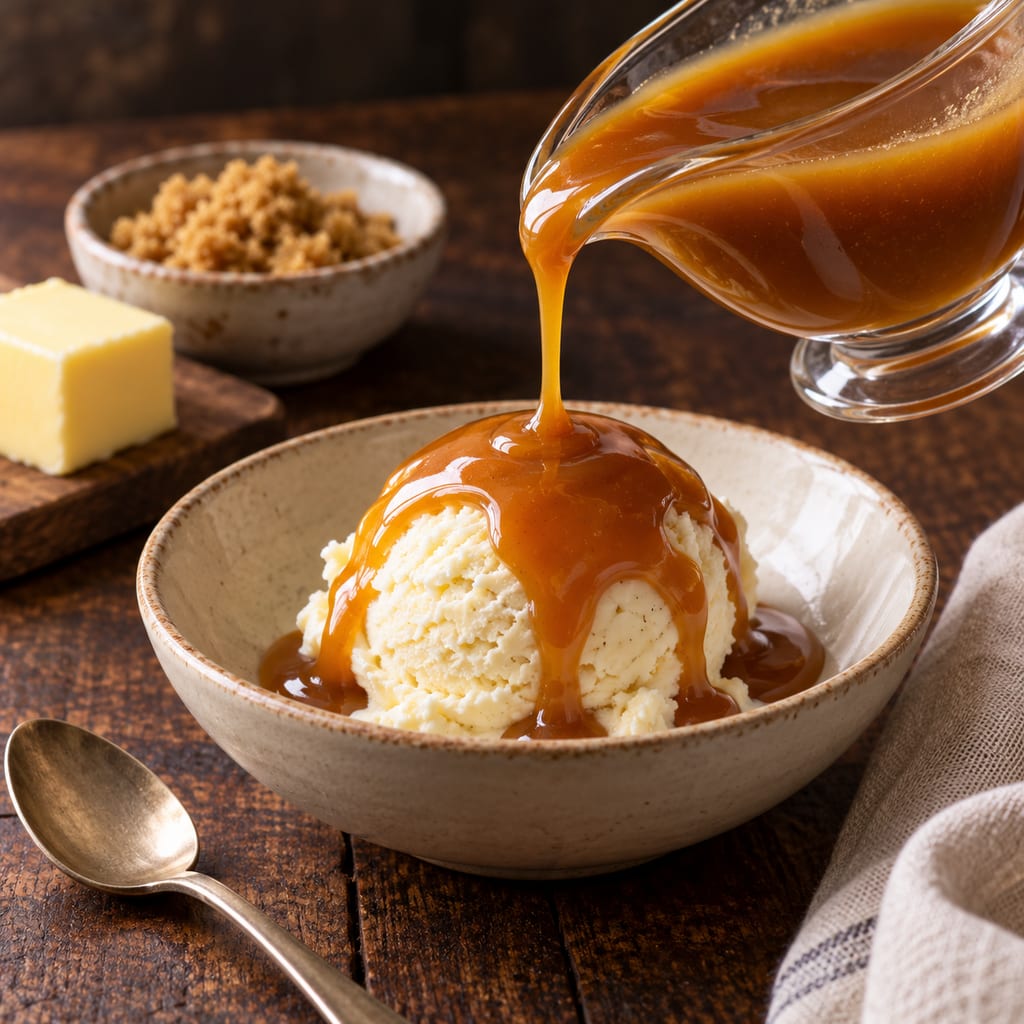
A pourable dessert sauce of brown sugar, butter and cream, with a little corn syrup and salt. It is the sauce form of the butterscotch confection and is made without water, unlike caramel.
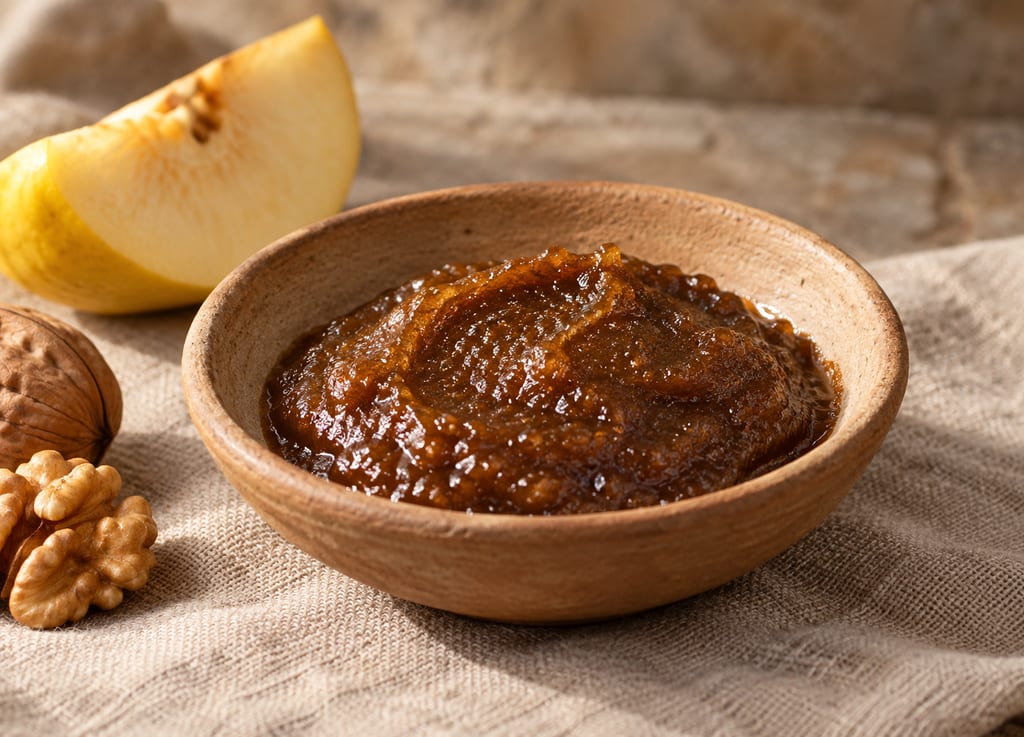
Byzantine murrī is a cooked imitation of murrī from the medieval Arabic repertoire, made from scorched honey, toasted bread, walnuts, quince, carob and spices rather than from a long grain fermentation.
No community contributions have been published for this entry yet.
Sign in to contribute. Published comments and photos are free to read.
Trinidad GuardianMethod · History · Culinary use
Classic Coconut ChutneyDried coconut, 8 chadon beni leaves, 4 large garlic cloves, 1 hot pepper, 2 medium pimentos, 1 teaspoon salt; roast coconut about 5 min a side; sil and lorha; serve with rice and dhal, curry duck, doubles
Cited in: A coarse relish of roasted coconut; Roasting the coconut; Sil and lorha; Chutney in Trinidad
Trinidad and Tobago NewsdayHistory
Spice it up with chutneyChutney in Trinidad linked to Indian labourers in the 1800s; mango and tamarind trees and hot peppers already present
Cited in: Chutney in Trinidad