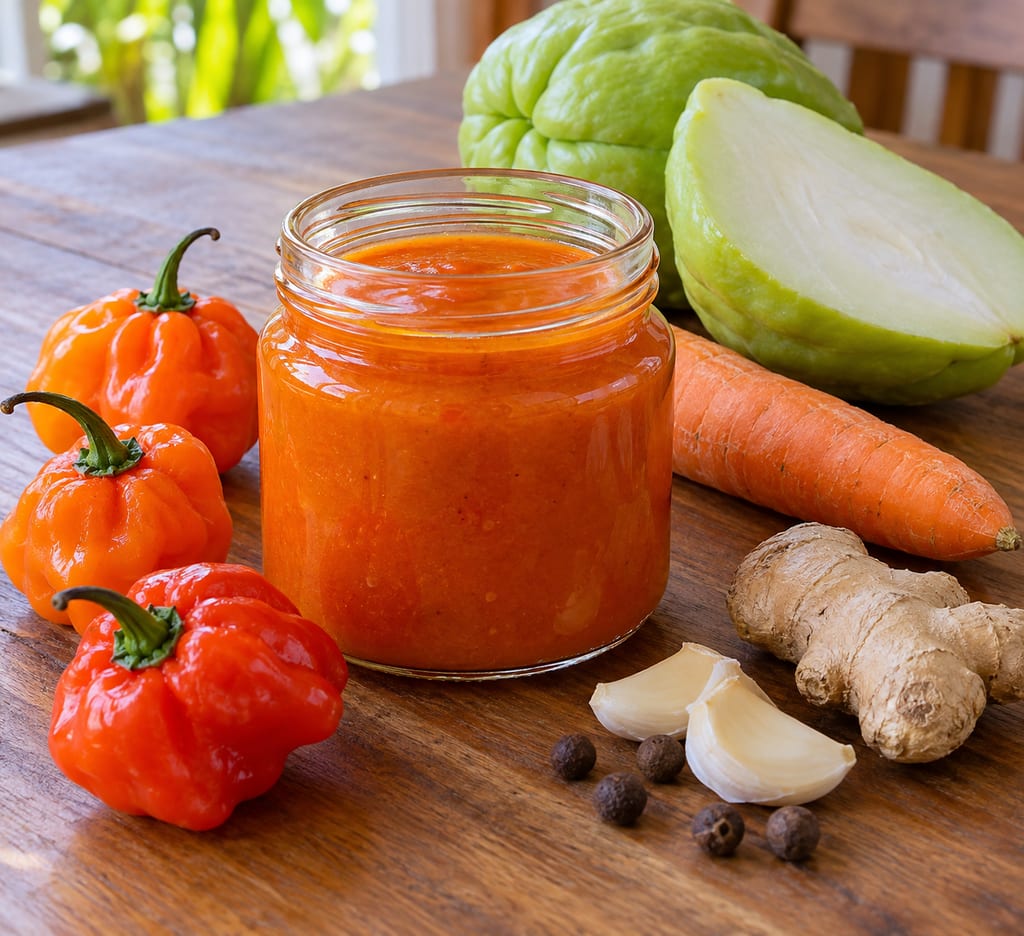
Jamaican Scotch Bonnet Pepper Sauce
This Jamaican recipe cooks Scotch bonnet peppers with carrot, cho cho, onion, garlic, ginger, allspice and vinegar, then blends and strains the mixture.
 FermenteaWhere food goes to change
Browning sauce · Browning · Burnt sugar browning · Jamaican browning sauce
Caribbean browning is a dark liquid of deeply caramelised sugar, used in small amounts for colour and a smoky, bitter-sweet flavour in stews and black cake.
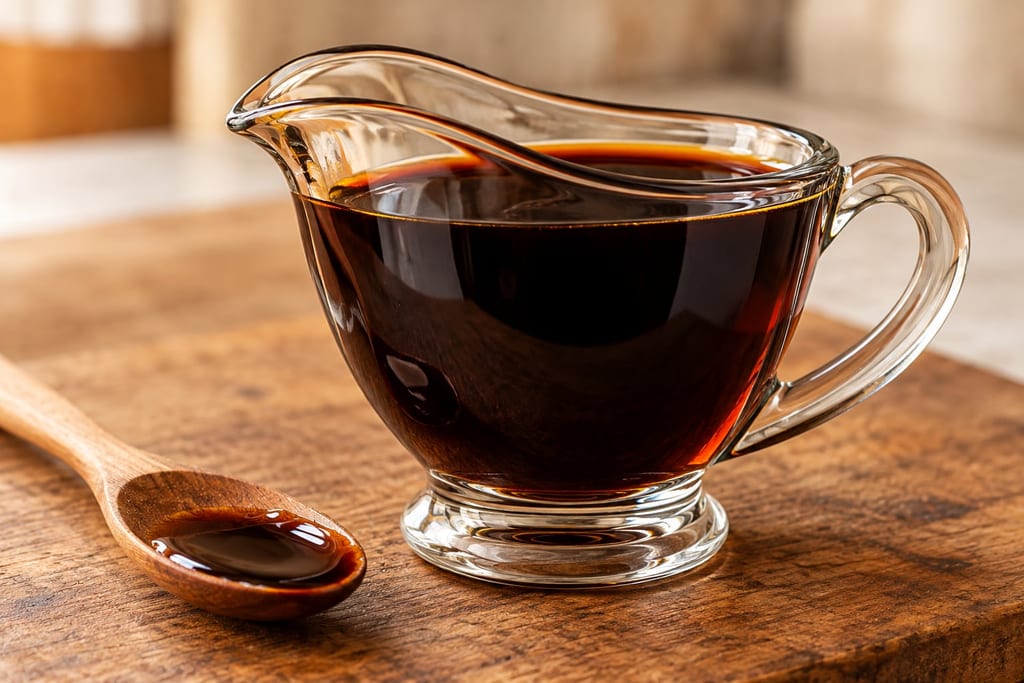
Caribbean browning is a dark liquid made from sugar cooked past golden caramel until it is nearly black. It is not a sweet sauce for pouring over food. A few spoonfuls go into a pot of stew, where it gives the gravy its deep brown colour and a smoky, slightly bitter, molasses-like note.
It is also used in black cake and in savoury dishes such as oxtail, stew chicken, stew beef and peas and rice. In those dishes the flavour is secondary; the cook is buying a colour and a faint bitterness that a plain sugar syrup does not give.
Browning is a controlled caramelisation, and the control is the whole task. Sugar melts, turns golden, then amber, then brown, and each stage has a different colour and taste. The home recipe advises low and slow heat and warns that going past dark brown turns the liquid bitter. The stop point is the choice of the cook: medium amber for a light colour, darker for more colour.
Water is added once the caramel has cooled slightly, because hot caramel can splatter when water meets it. The mixture is then thinned to a pourable liquid. A small amount of lemon juice or vinegar is sometimes added to stop the sugar from crystallising.
Commercial browning in the Caribbean is sometimes a caramel colour in water, as one Trinidadian brand is described, and the home version is a different product made from sugar. The two are used for the same job, and home cooks treat the homemade bottle as a fresher and more controllable choice.
A home bottle is kept cold. The recipe gives three months refrigerated and asks the cook to shake it if it separates. That figure comes from a recipe blog, not from testing, and the sauce should be made in small batches.
The sources do not establish a dated origin in Jamaica or Trinidad, do not give a tested shelf life, and differ on the heat used. The browning in black cake and stew is a regional habit, and its exact history is undocumented here.
A Jamaican recipe blog says Caribbean cooks have used caramelised sugar since the colonial era, and that burnt sugar added colour and flavour. That claim cites no source. A Caribbean food writer describes the sauce as a family kitchen practice learned from a father, not as a documented history. Commercial brands in Trinidad and Jamaica are named as ready-made options.
Scaling: source batch only
Adding water to hot caramel can cause it to splatter.
Hazard sourceSugar that goes past dark brown burns and tastes bitter; the recipe says to start a fresh batch.
Hazard sourceAdd water slowly to the hot caramel
Control sourceRefrigerate the bottled browning; the home recipe gives three months
Control sourceWatch the sugar closely. Burnt sugar is bitter and cannot be fixed by adding more sugar or water.
A Jamaican home and commercial browning. The sources give a Jamaican origin as a claim, not a dated record.
A commercial browning there is named as a caramel colour and water product.
This Jamaican recipe cooks Scotch bonnet peppers with carrot, cho cho, onion, garlic, ginger, allspice and vinegar, then blends and strains the mixture.
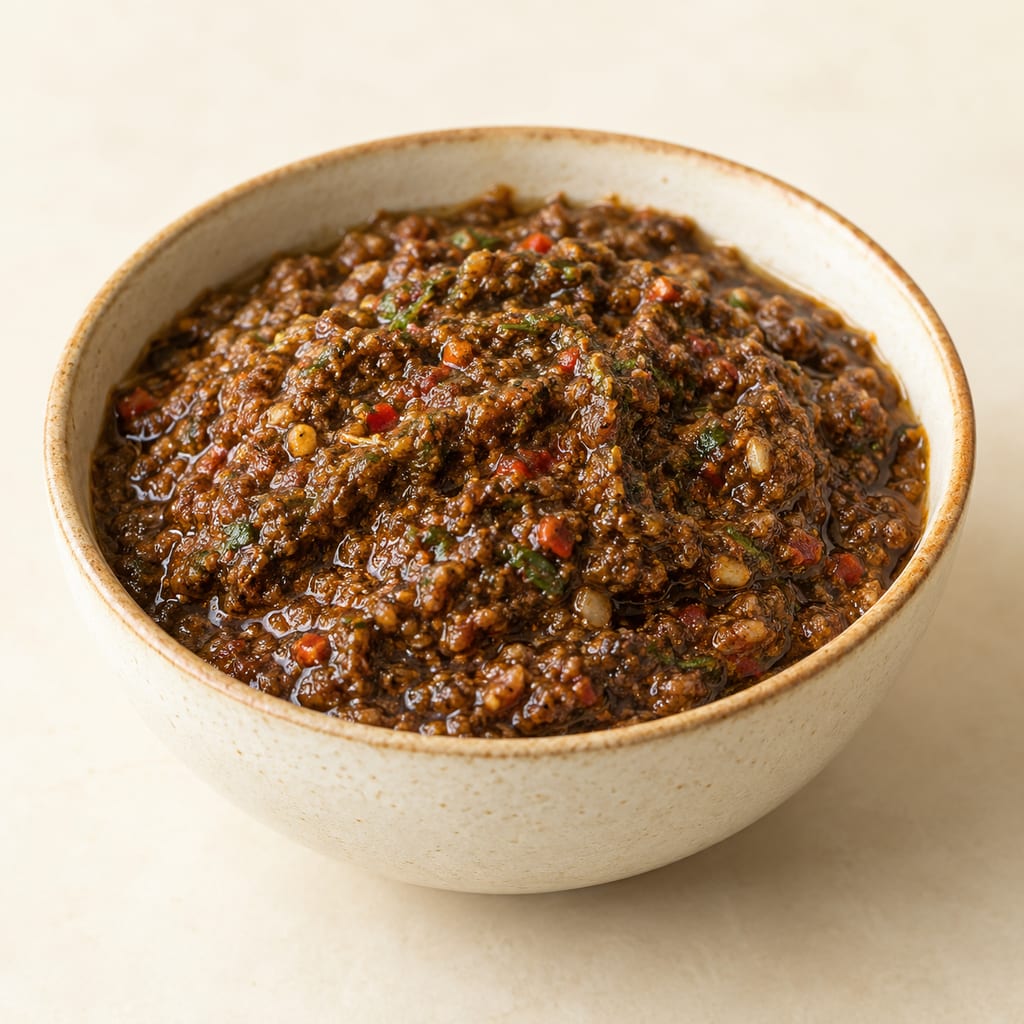
A Jamaican wet jerk paste of ground allspice, Scotch bonnet pepper, thyme, scallion, garlic, ginger and nutmeg, loosened with soy sauce, oil, vinegar and lime, used to marinate meat, fish or tofu before cooking.
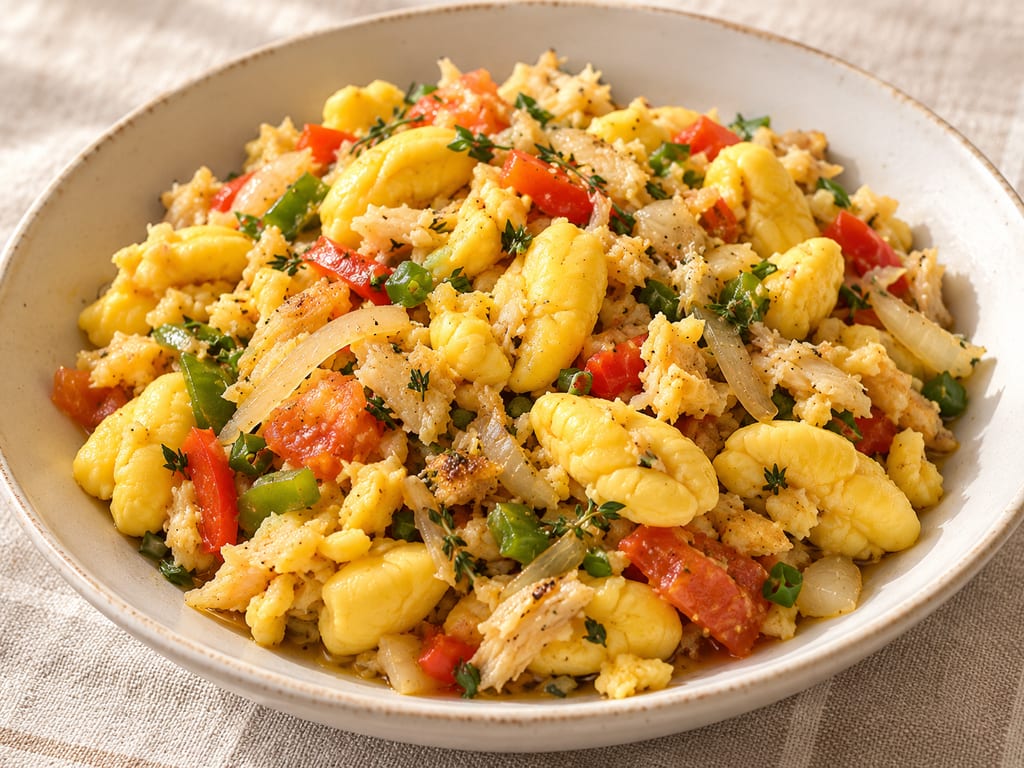
Jamaica's best-known dish: salt-cured cod desalted and flaked, then folded through ackee arils with onion, tomato, sweet pepper, thyme and Scotch bonnet.
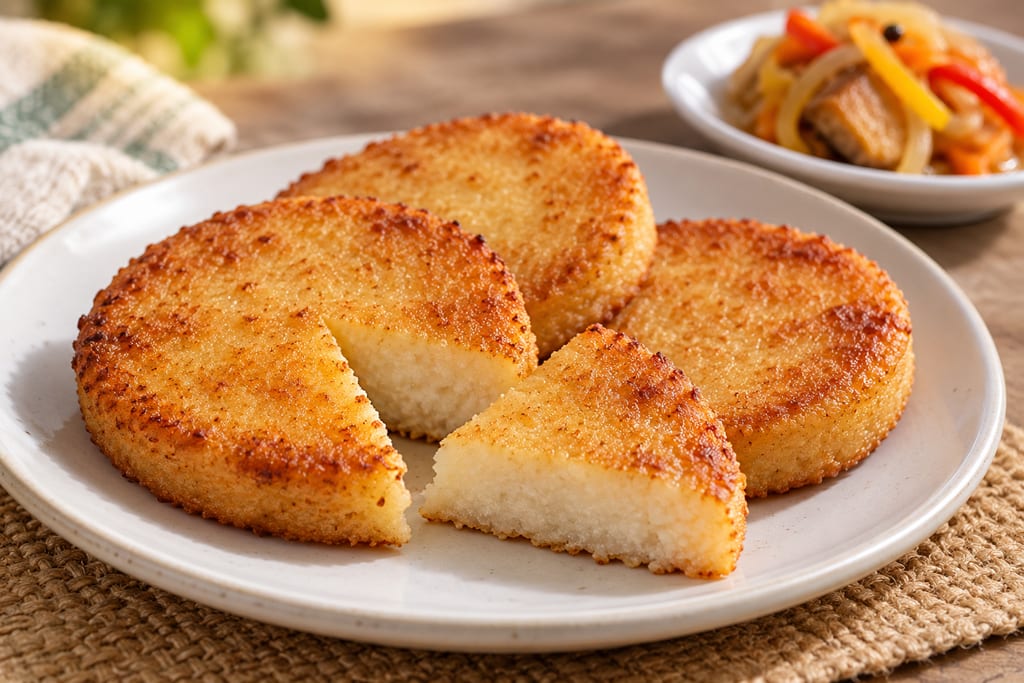
A serving method for approved, prepared bammy rounds: soak them in coconut milk and refry until golden. It does not process raw cassava.
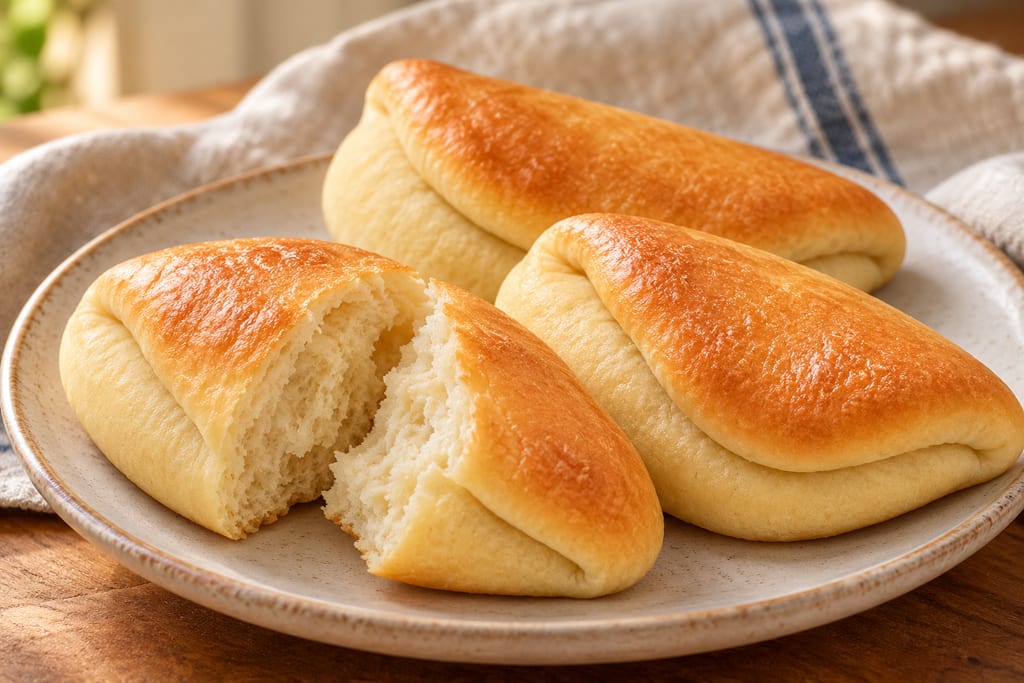
Jamaican-style folded rolls made from sweet coconut-milk yeast dough and brushed with butter.
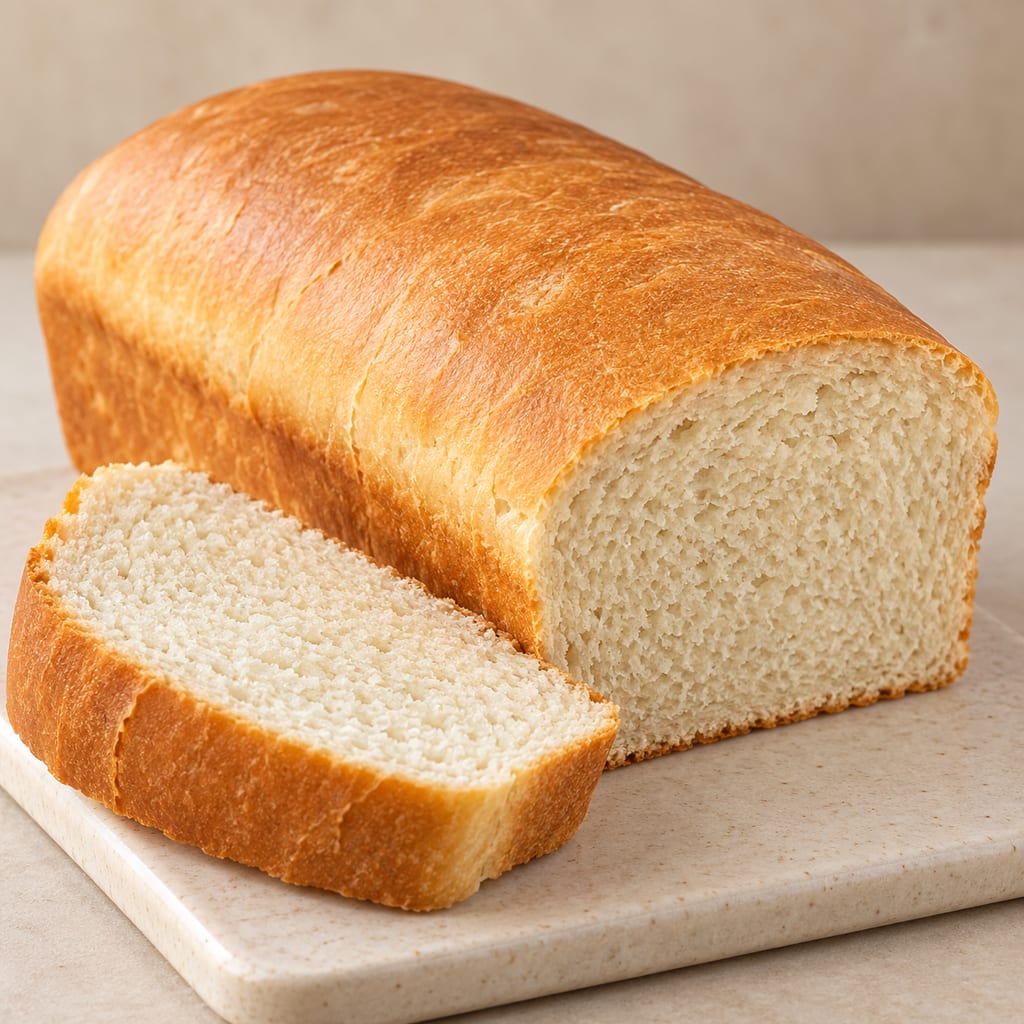
Jamaican hard dough bread is a firm, close-crumbed yeasted wheat loaf with a thicker crust and a soft, chewy interior. Roll the dough tightly and bake it in a loaf tin.
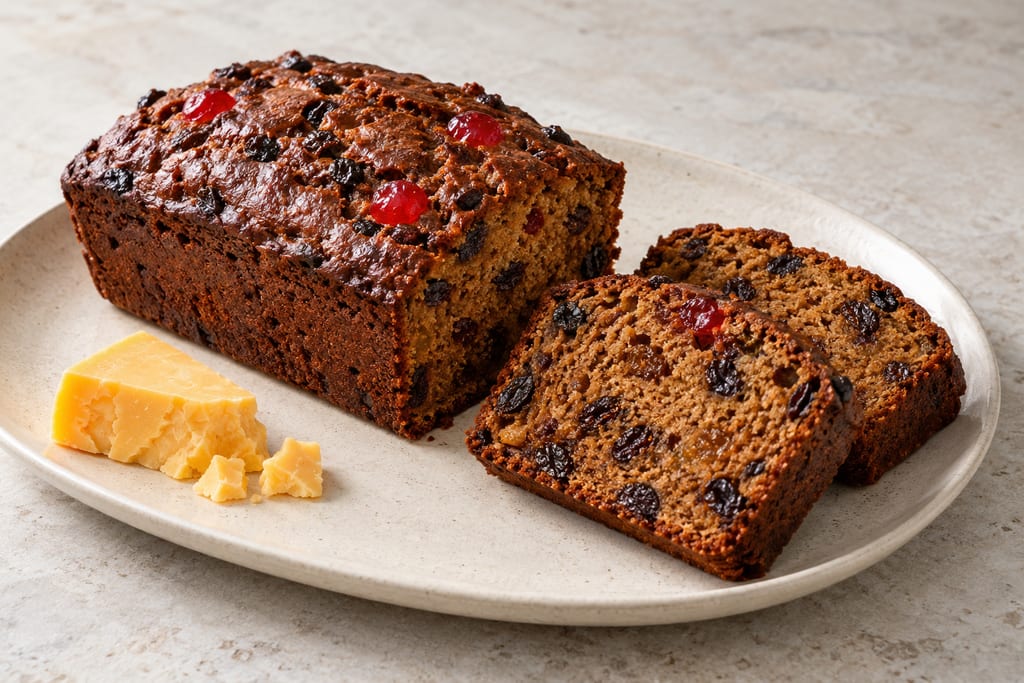
A Jamaican Easter loaf made from a dark, sweet batter of stout, dried fruit and warm spices. This version uses baking powder and a loaf pan; yeast-raised variations are separate preparations.
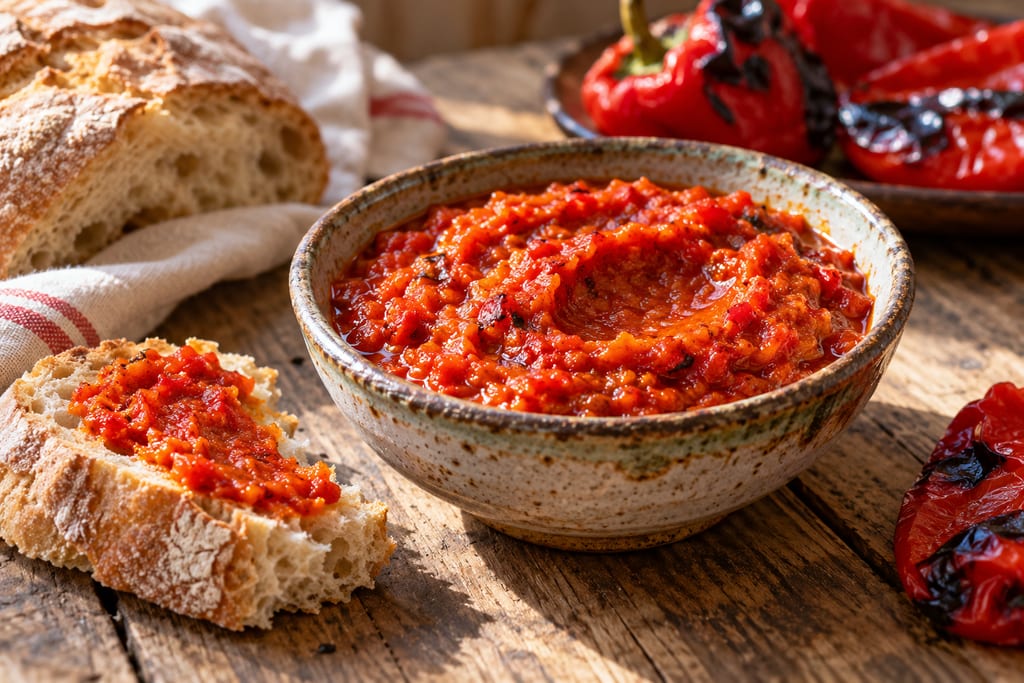
Ajvar is a cooked Balkan pepper preserve built around roasted red peppers, peeled, drained, ground and slowly fried with oil and seasoning. Leskovac’s protected version is a pepper specialty; regional versions vary.
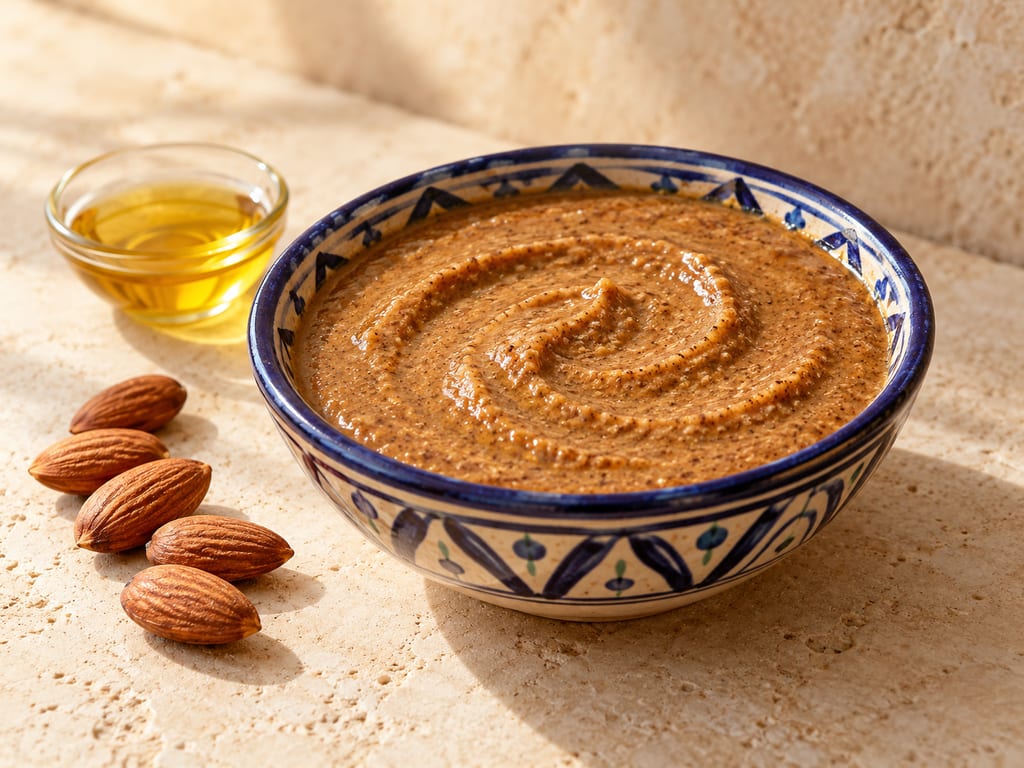
Amlou is a nutty, lightly sweet Moroccan spread of roasted almonds, culinary argan oil and honey. The almonds are ground first, then loosened with oil and sweetened; the balance can range from a thick spread to a dip.
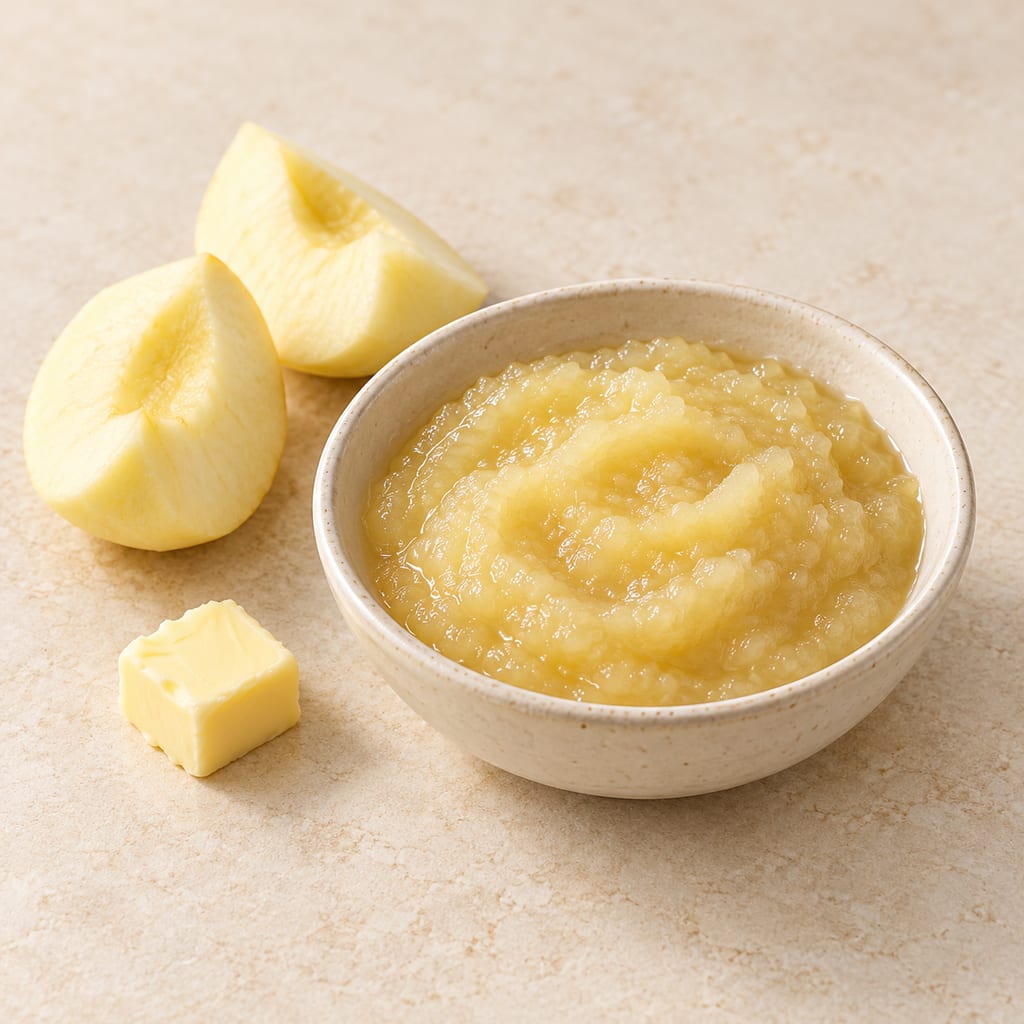
Apple sauce for goose and pork is a plain English accompaniment: cooked apples pulped with water, then sweetened with sugar and finished with a little butter.

A warm dip of garlic, anchovy and olive oil, often enriched with butter, that Piedmont serves over a flame with raw and cooked vegetables and bread.
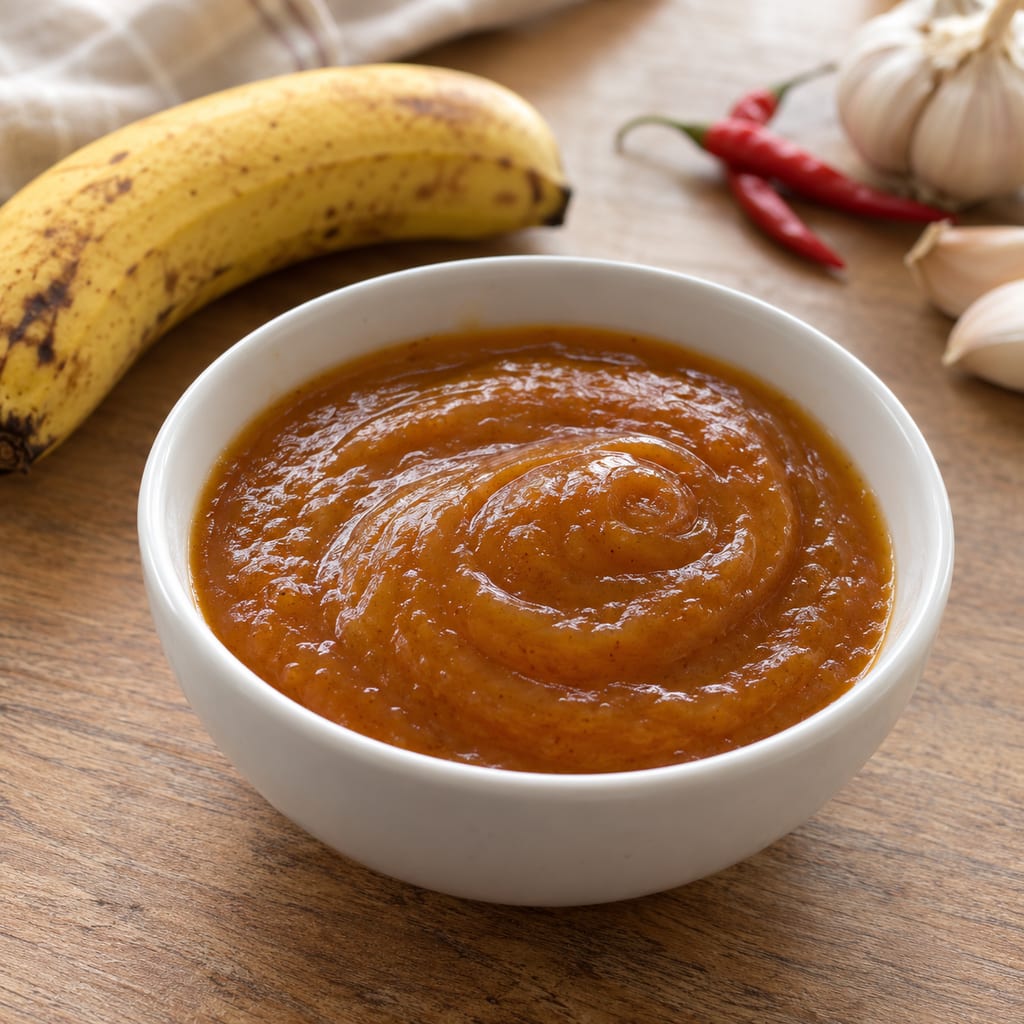
A sweet-hot table sauce of ripe banana simmered with vinegar, sugar, onion, garlic and fresh chilli, in the manner of Philippine banana ketchup. An untested development batch of about 500 g.
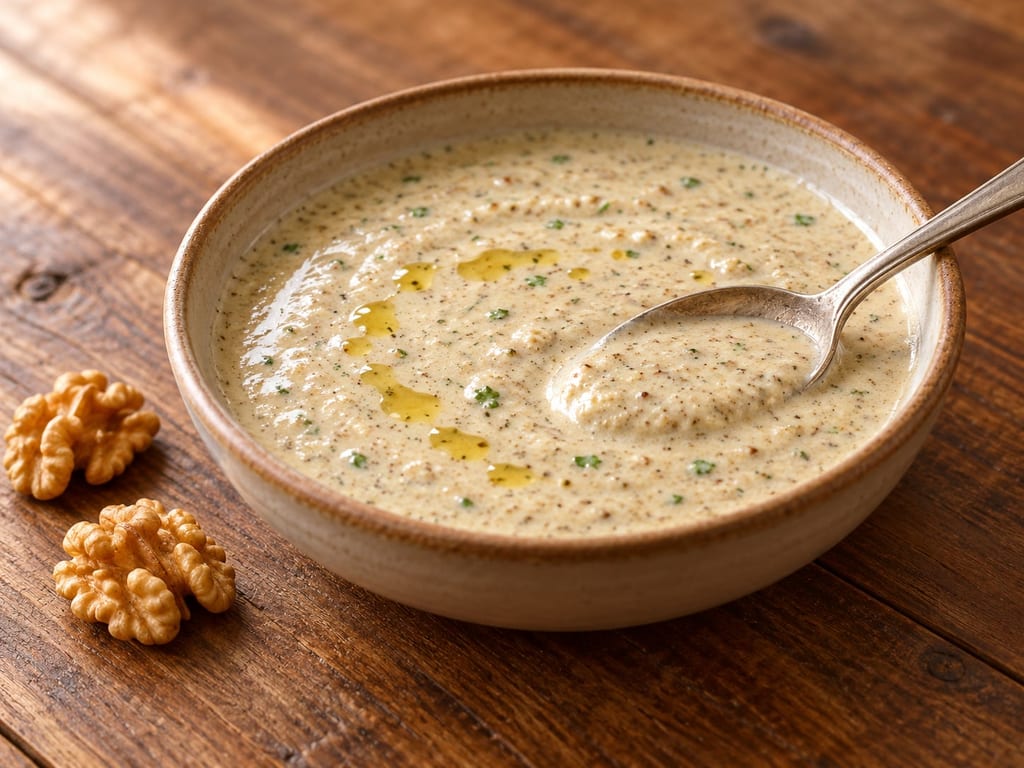
A Georgian walnut sauce of ground walnuts, garlic, vinegar and spices, thinned with water or broth. It is served with poultry, vegetables and bread, and is the sauce of the dish satsivi.
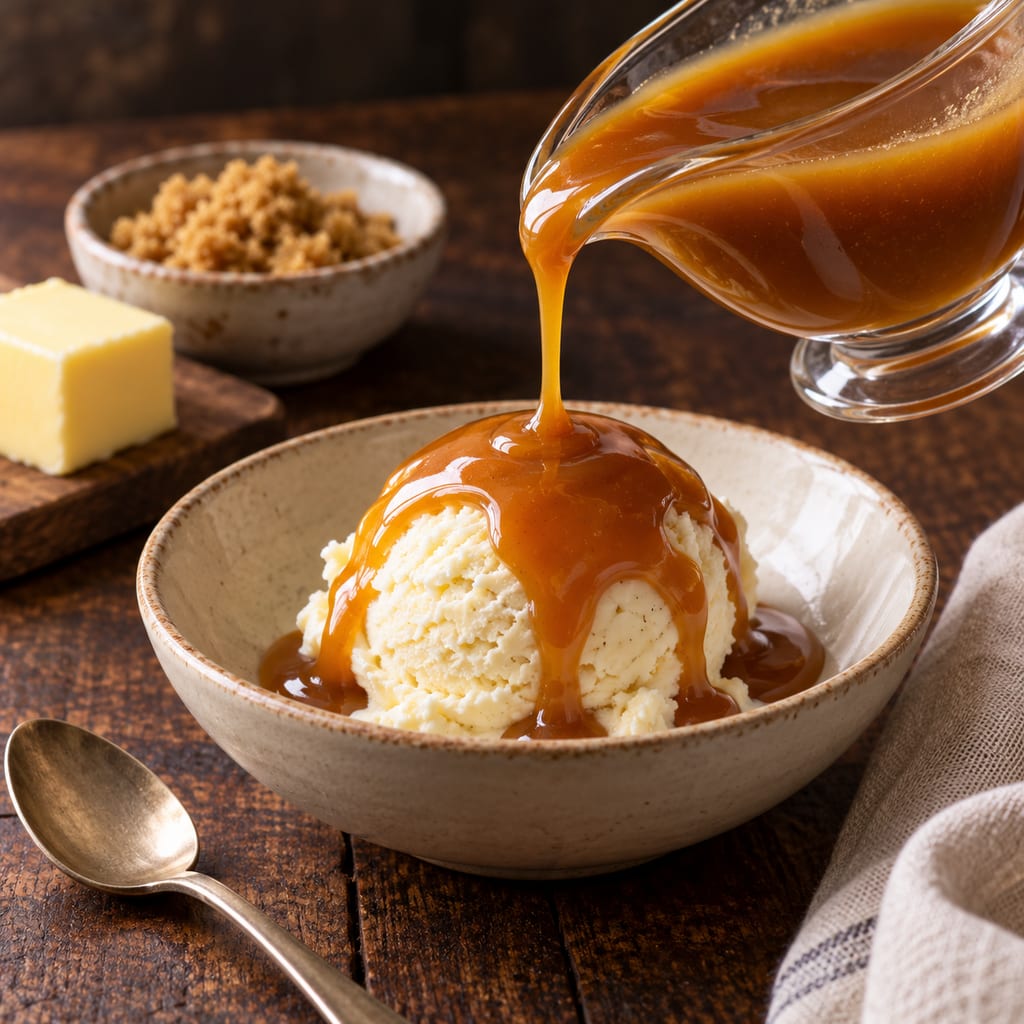
A pourable dessert sauce of brown sugar, butter and cream, with a little corn syrup and salt. It is the sauce form of the butterscotch confection and is made without water, unlike caramel.
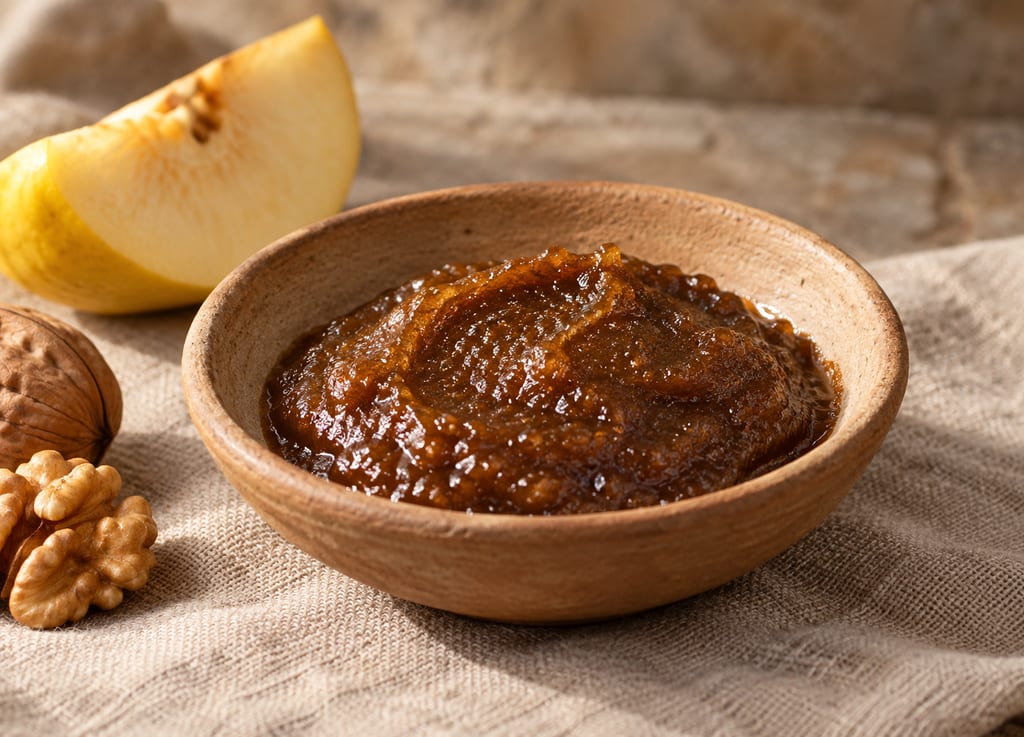
Byzantine murrī is a cooked imitation of murrī from the medieval Arabic repertoire, made from scorched honey, toasted bread, walnuts, quince, carob and spices rather than from a long grain fermentation.
No community contributions have been published for this entry yet.
Sign in to contribute. Published comments and photos are free to read.
Jerk TavernMethod · Safety · History
Homemade Browning Sauce Recipe (2 Ingredients)1 cup cane sugar, 1/2 cup water, 1/2 tsp vinegar or lemon juice; medium heat; add water to hot caramel slowly; refrigerate up to 3 months; bitter if past dark brown; colonial-era claim (uncited)
Cited in: Colour before flavour; Burnt sugar as a technique; Home and commercial browning; Open questions
Uncommon CaribbeanHistory · Culinary use · Variants
Browning Sauce Makes Everything Better, EasilyBrowning used in oxtail stew, peas and rice, stew chicken, stew beef and black cake; a Trinidad and Tobago commercial browning described as caramel colour and water; author's family account
Cited in: Colour before flavour; Home and commercial browning; Open questions