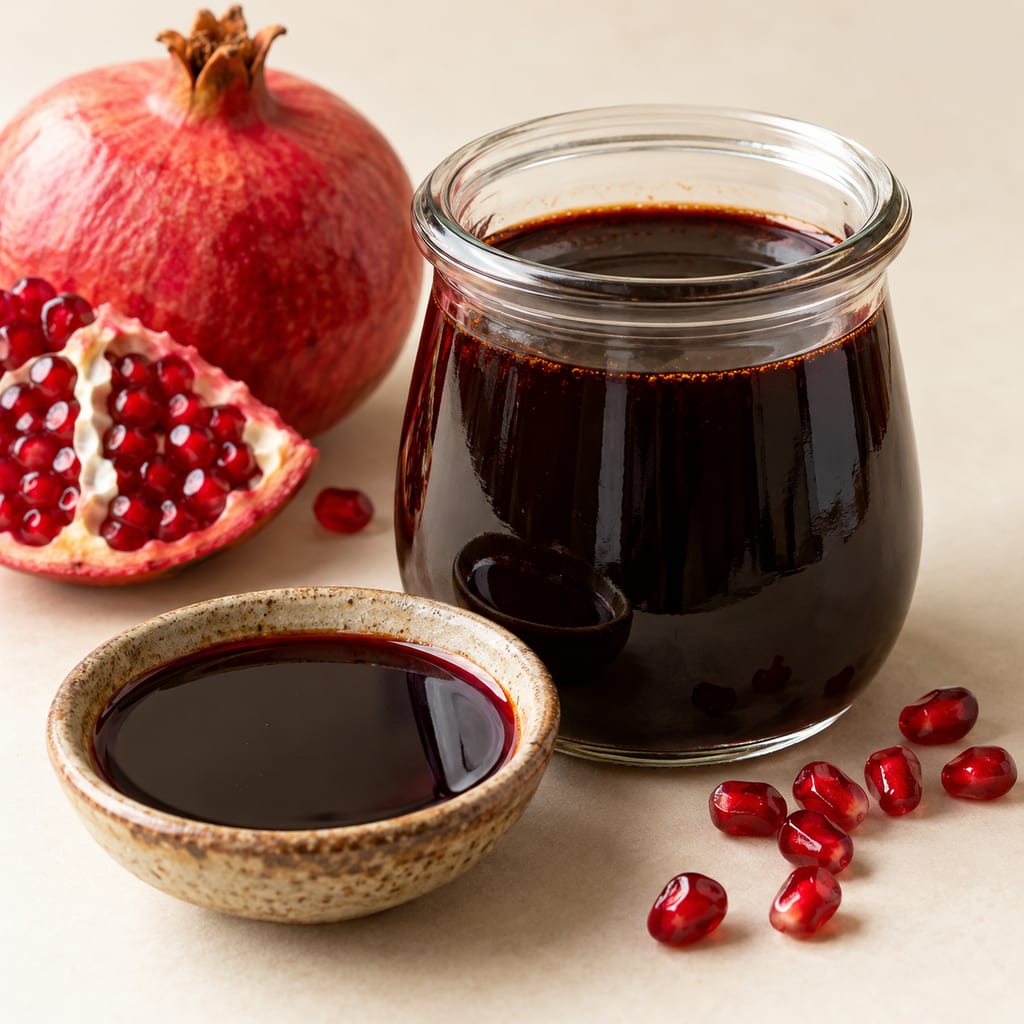
Pomegranate molasses
A thick, sour condiment made by reducing pomegranate juice over heat until it is concentrated, used across the Middle East, the South Caucasus and the Balkans in dressings, stews and grilled dishes.
 FermenteaWhere food goes to change
Bazhe · Georgian walnut sauce · Walnut sauce base
A Georgian walnut sauce of ground walnuts, garlic, vinegar and spices, thinned with water or broth. It is served with poultry, vegetables and bread, and is the sauce of the dish satsivi.
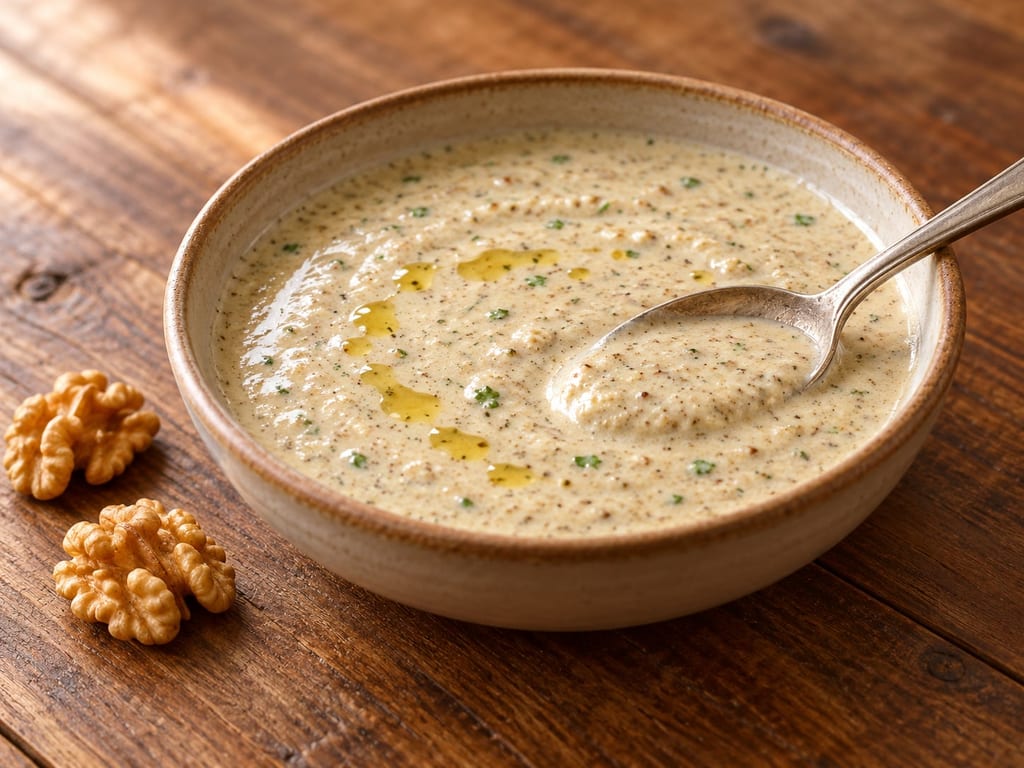
Bazhe is a traditional Georgian sauce made mainly from walnuts. It is creamy and is usually served alongside other dishes rather than poured over them. It is most closely associated with poultry.
The base is ground walnuts. Garlic gives the sharp note and wine vinegar the tang, as the article describes it. Water or broth thins the sauce to the wanted consistency. The spices named are coriander, blue fenugreek and marigold, which the article also calls Georgian saffron. Salt and pepper season the sauce, and pomegranate juice or molasses is an optional addition for mild sweetness and depth.
The article gives no quantities for any of these ingredients, so amounts are left unknown here.
The walnuts are ground into the base. Garlic and spices are worked in, the vinegar is added if used, and water or broth is added to adjust the thickness. The sauce is seasoned with salt and pepper. The article does not describe the grinding technique, the order of mixing, or any cooking or resting step, and the sauce is not cooked.
Bazhe is most often served with poultry, and especially with satsivi, a chicken or turkey dish served cold with the sauce. It is also served with eggplant or potatoes, as a dip for bread, and as a sauce for grilled meats. The article does not mention fish.
Bazhe is often confused with satsivi. The sauce is one component; satsivi is the dish.
The article describes no regional variations. Its ingredient list is a general one, so local versions of the spices and vinegar are not established from the sources read.
The source read gives no storage time or temperature. The sauce is uncooked and ground, so its keeping depends on handling that the source does not describe.
Open questions: quantities, regional variants and the grinding method need a source that gives them.
The Wikipedia article describes bazhe as a traditional Georgian sauce and gives no date for its origin. It is associated with poultry, especially in the dish satsivi, which the article describes as popular at festive occasions and holidays. No dated source is read for the sauce.
Scaling: not stated
Walnuts are a tree-nut allergen.
Wikipedia places the sauce in Georgian cuisine. It gives no regional origin, so the row stays at country level.
A thick, sour condiment made by reducing pomegranate juice over heat until it is concentrated, used across the Middle East, the South Caucasus and the Balkans in dressings, stews and grilled dishes.
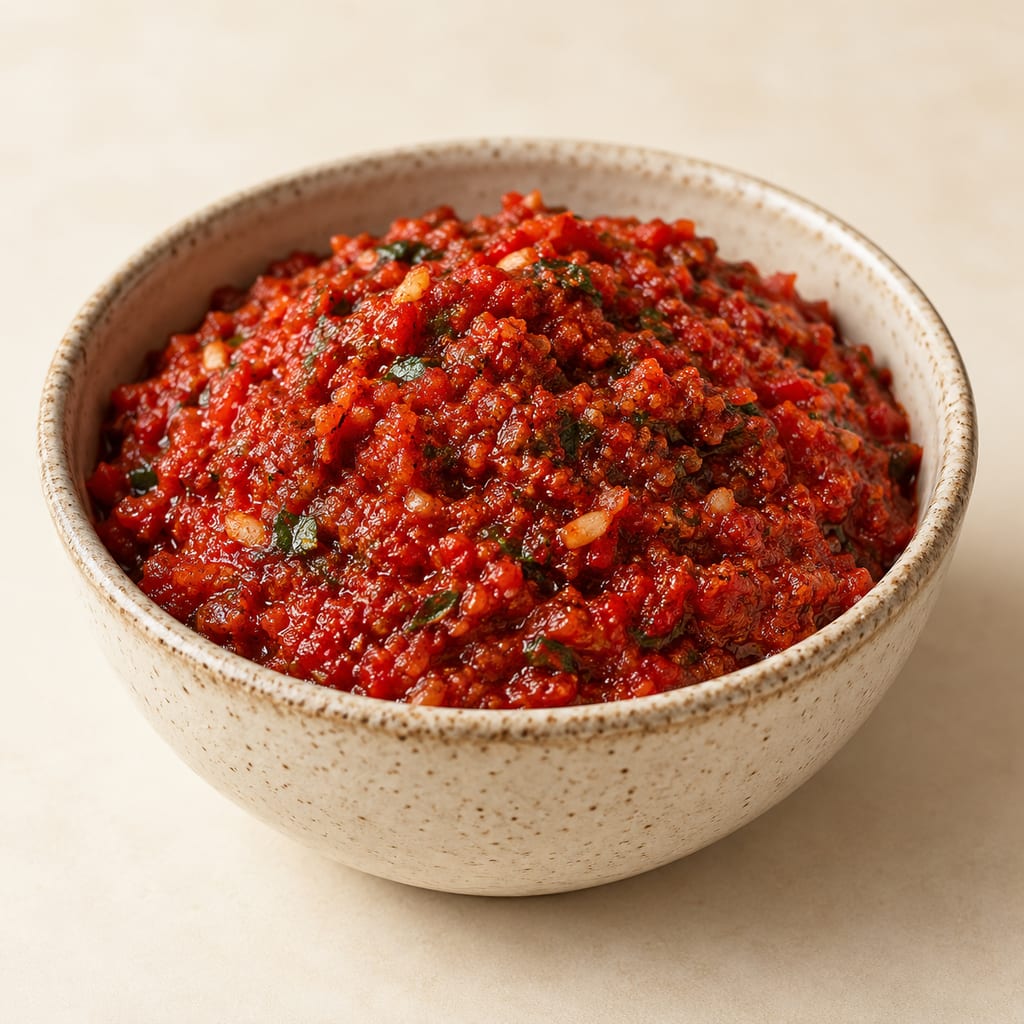
A documented Megrelian red pepper, garlic and herb paste with salt and ground spices. This preparation is mixed, not fermented; its source gives no validated preservation method or shelf life.
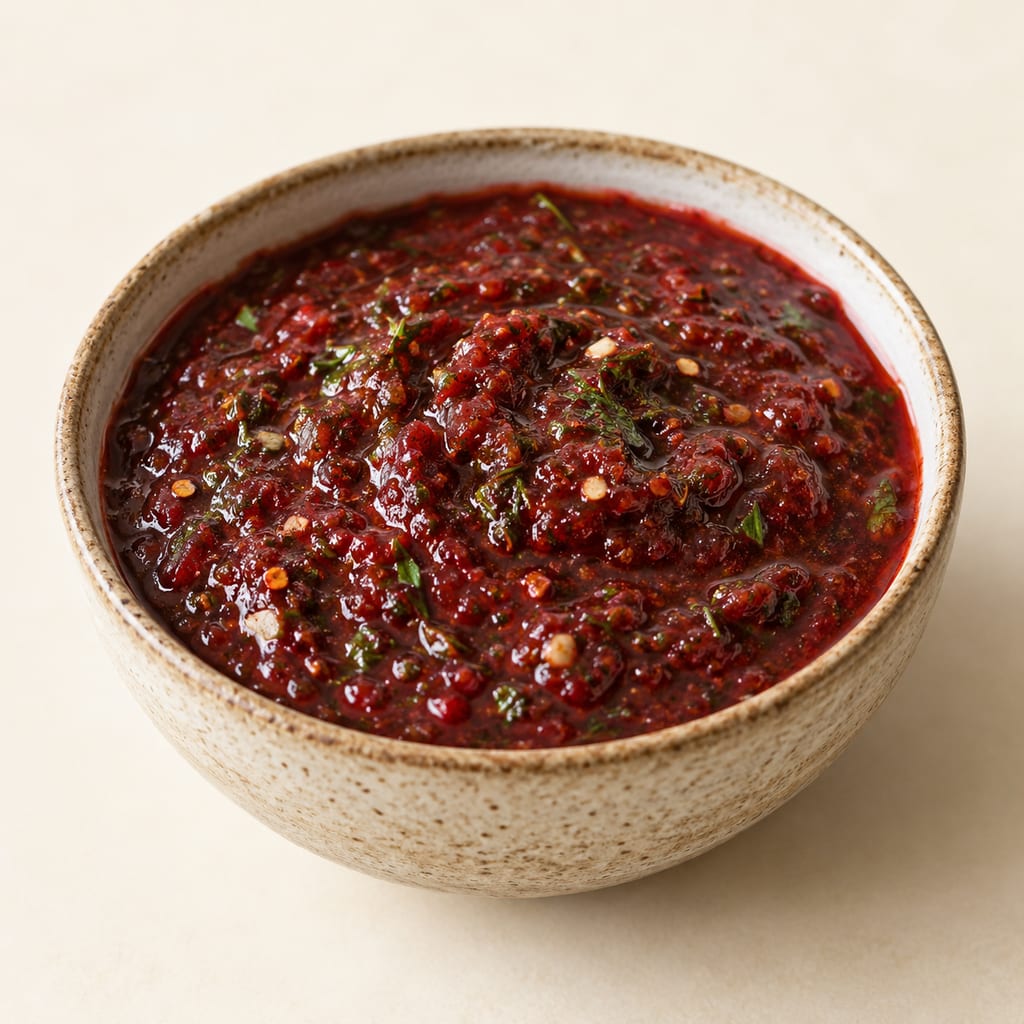
A Georgian sour plum sauce of cherry plums cooked with garlic, coriander, dill-family herbs and chilli. Its sourness comes from the fruit, and it is served as a condiment with grilled meat, poultry and potatoes.
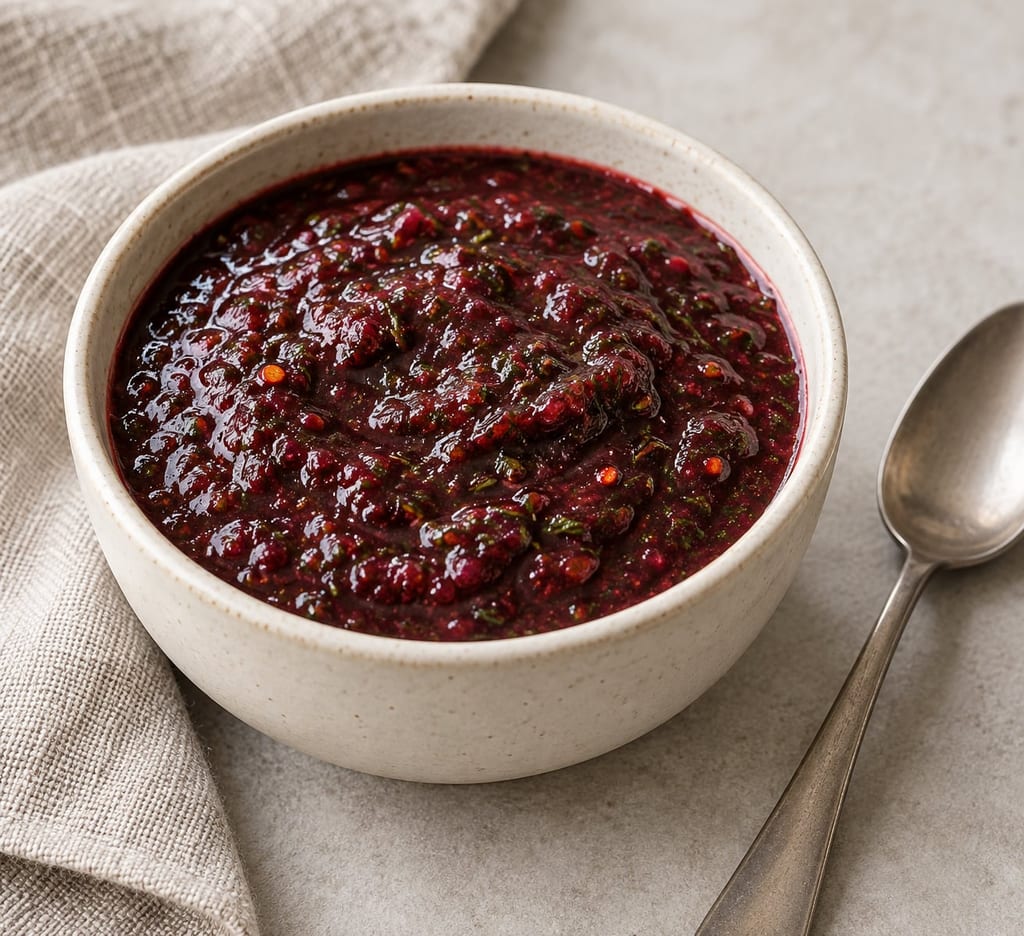
An untested refrigerator sauce inspired by Georgian tkemali. This version uses ordinary mint in place of pennyroyal (ombalo), changing its aroma; it is not a tested preserve.
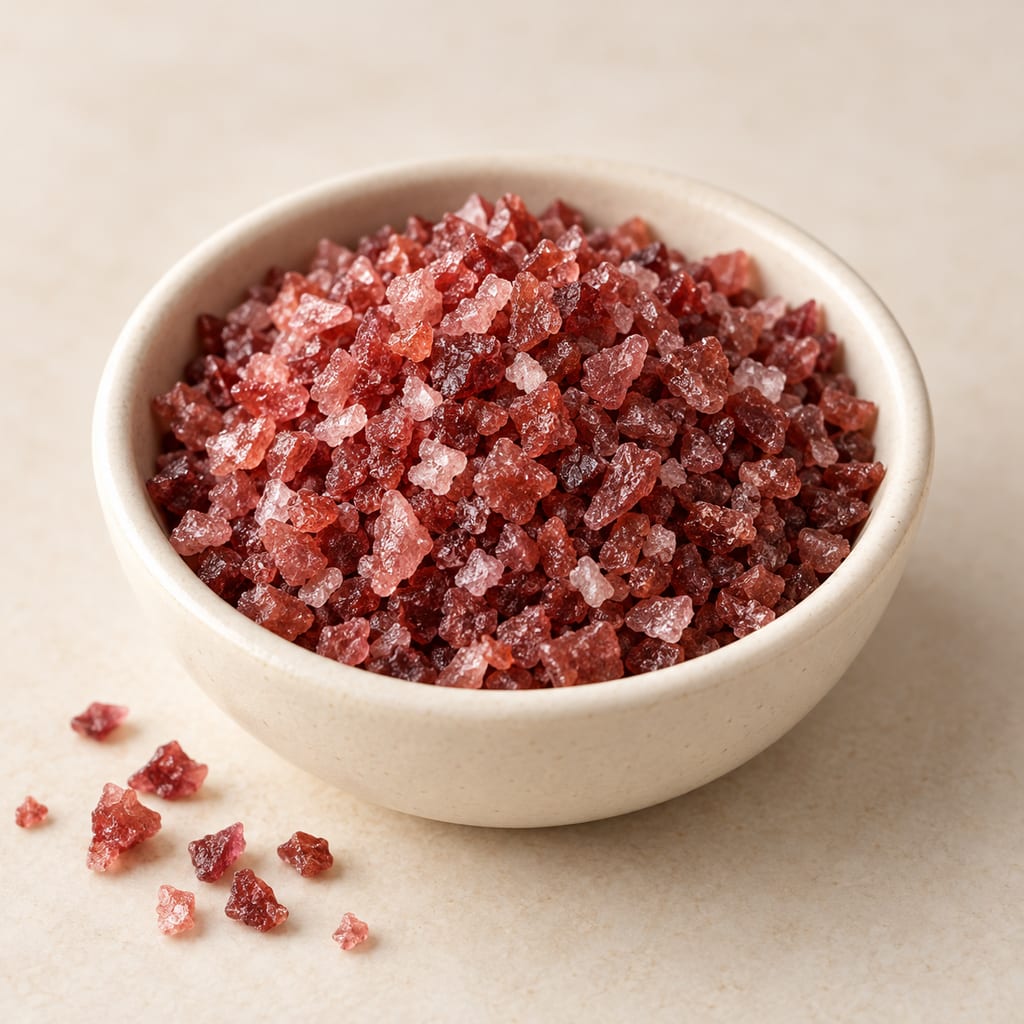
Wine-infused salt is coarse food salt carrying wine colour and aroma after a wine-and-salt mixture is reduced and dried. This version follows a Missouri Wines method at a one-to-three salt-to-wine ratio.
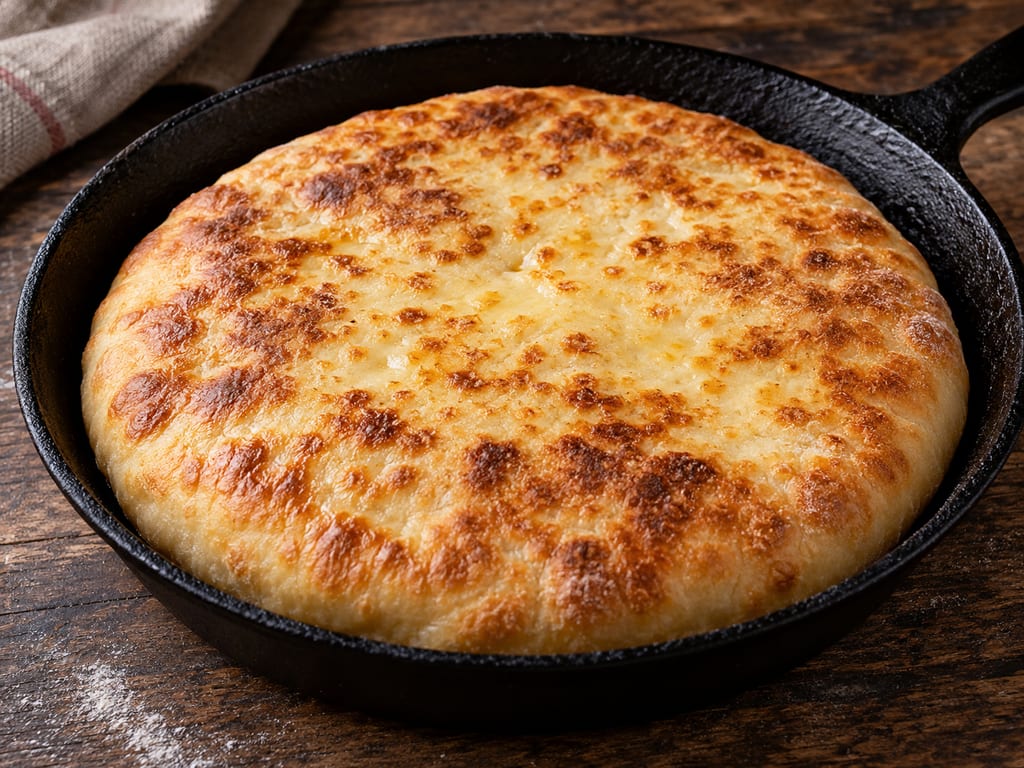
Closed round cheese breads made with sour-cream dough and cooked in a frying pan. This named Gunda version has no added yeast or proofing stage.
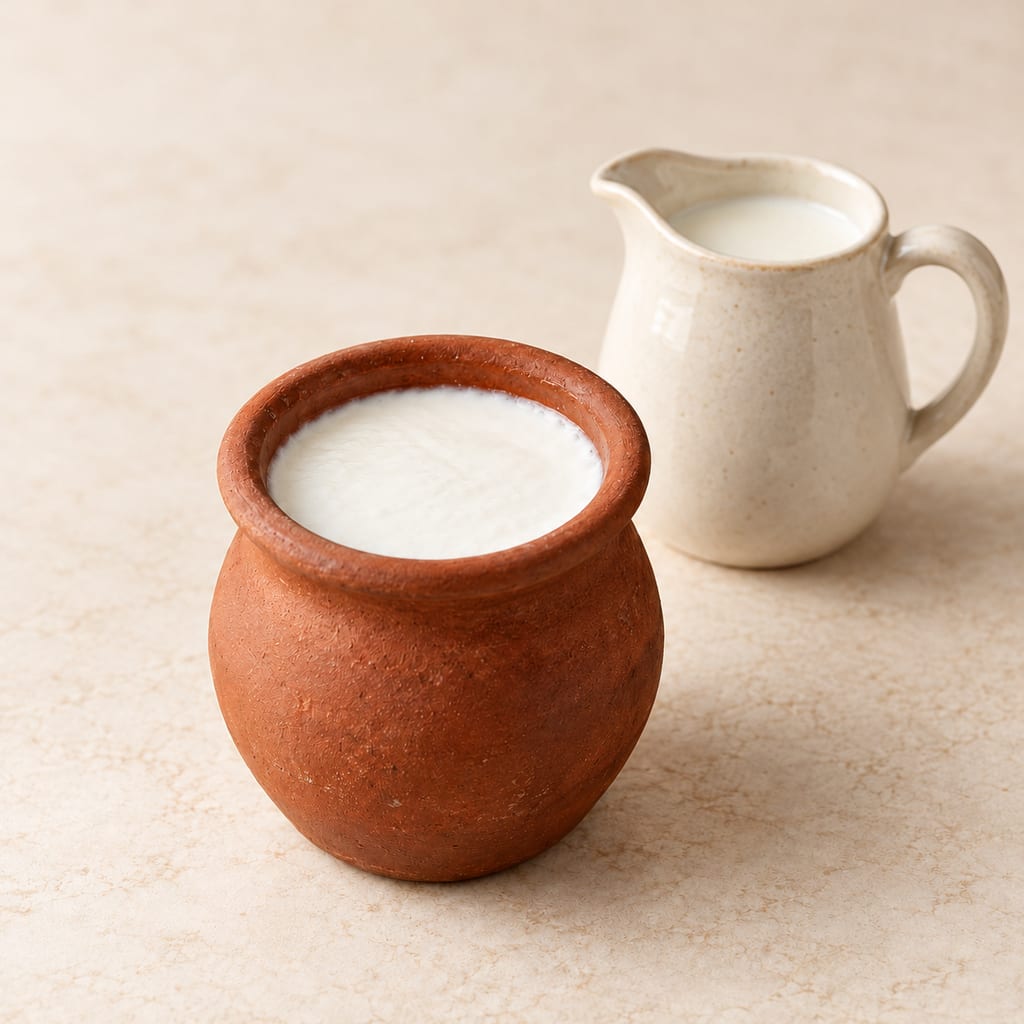
A commercial countertop-culture version of matsoni, a Georgian cultured milk. Its room-temperature method differs from the warmer Georgian production process.
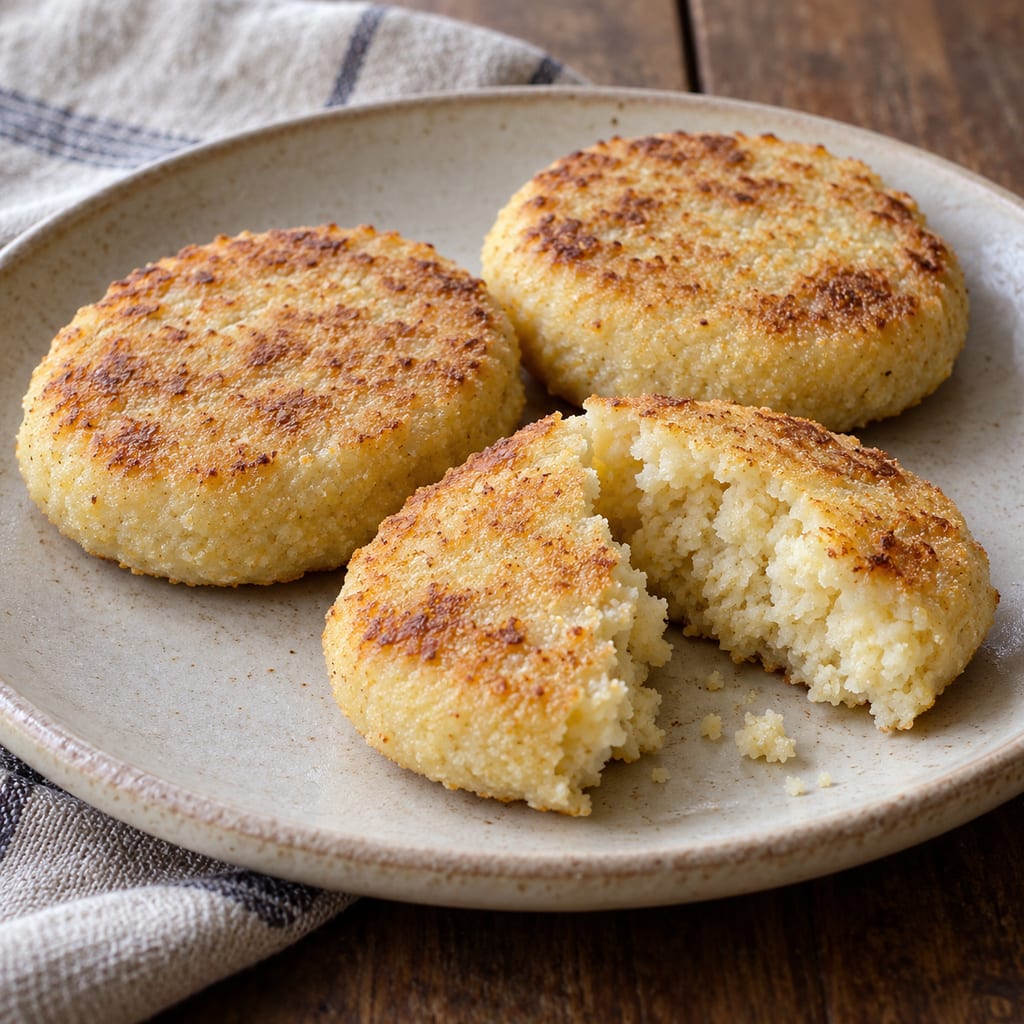
Unleavened cornmeal cakes mixed with cold water and cooked on both sides in a covered-then-uncovered pan. Cheese is served alongside rather than mixed into this dough.
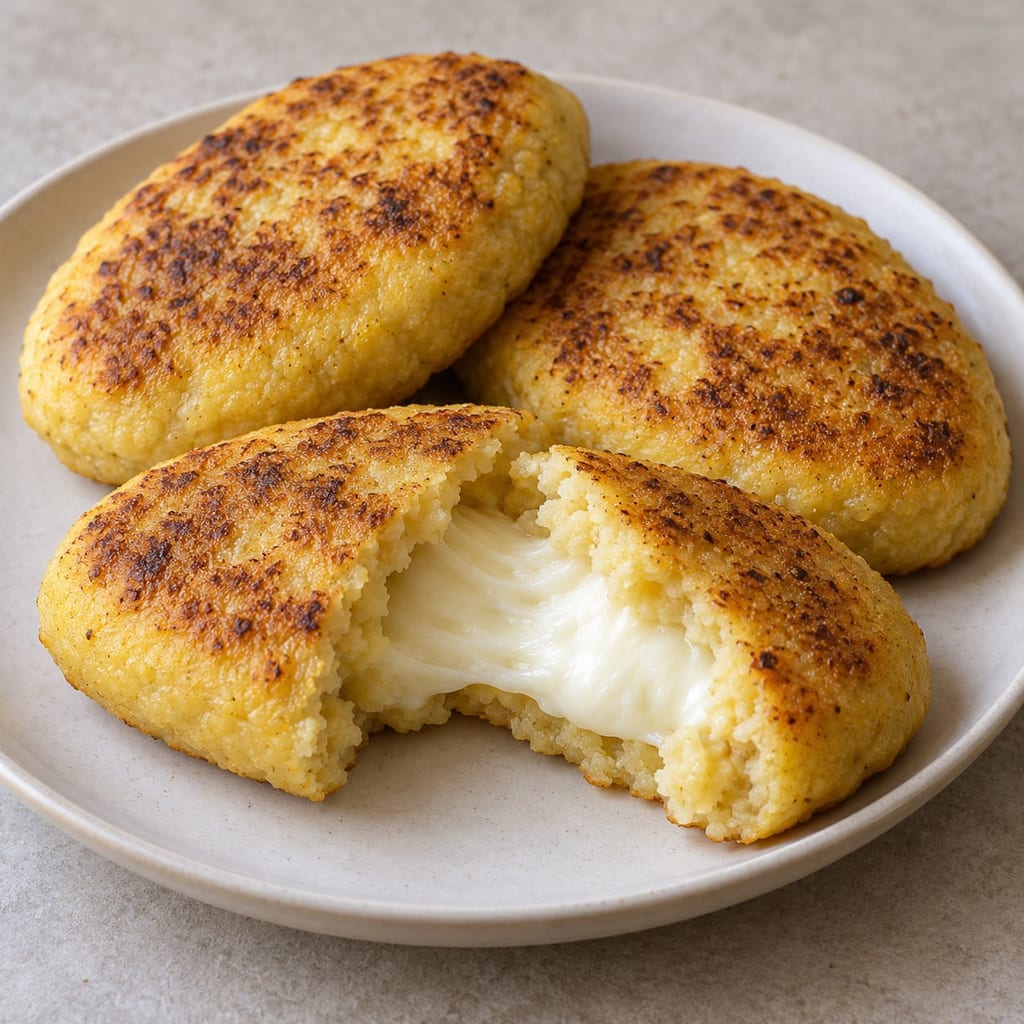
Megrelian chvishtari uses a maize dough with sulguni wrapped around a cheese piece, then cooks covered over low heat in a skillet.
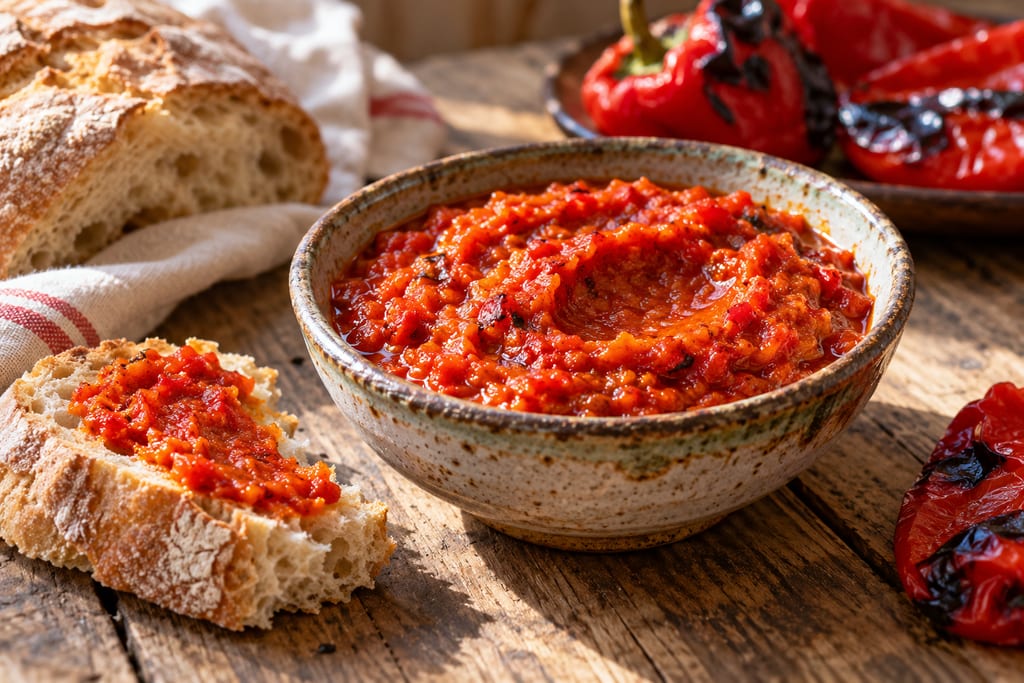
Ajvar is a cooked Balkan pepper preserve built around roasted red peppers, peeled, drained, ground and slowly fried with oil and seasoning. Leskovac’s protected version is a pepper specialty; regional versions vary.
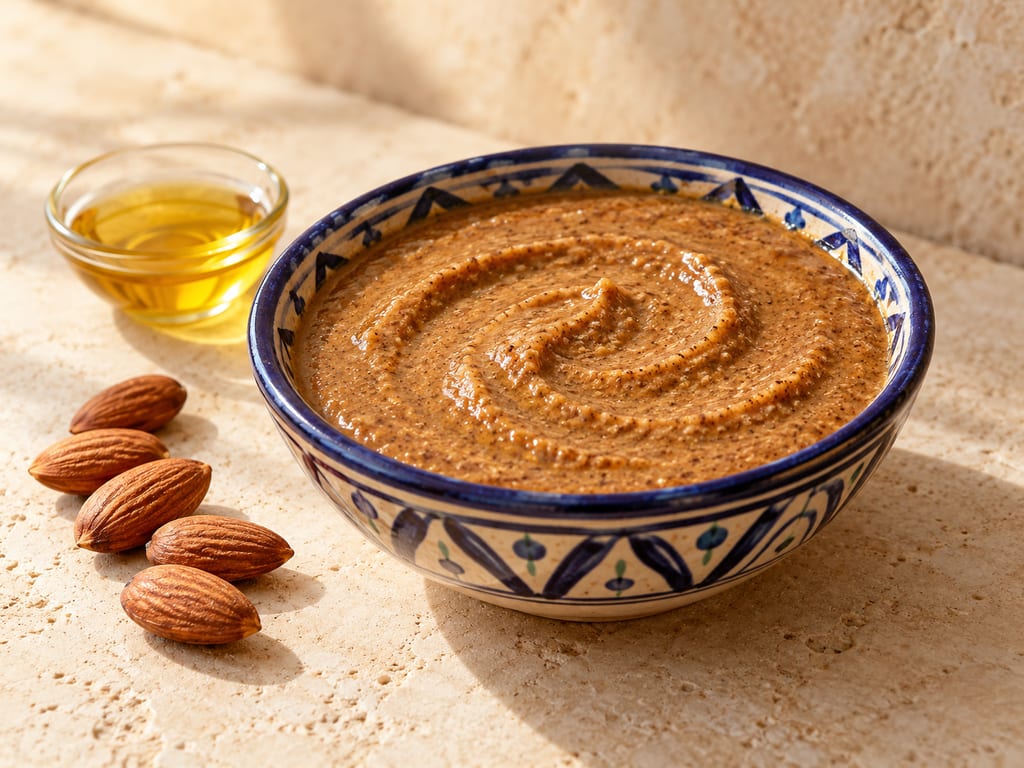
Amlou is a nutty, lightly sweet Moroccan spread of roasted almonds, culinary argan oil and honey. The almonds are ground first, then loosened with oil and sweetened; the balance can range from a thick spread to a dip.
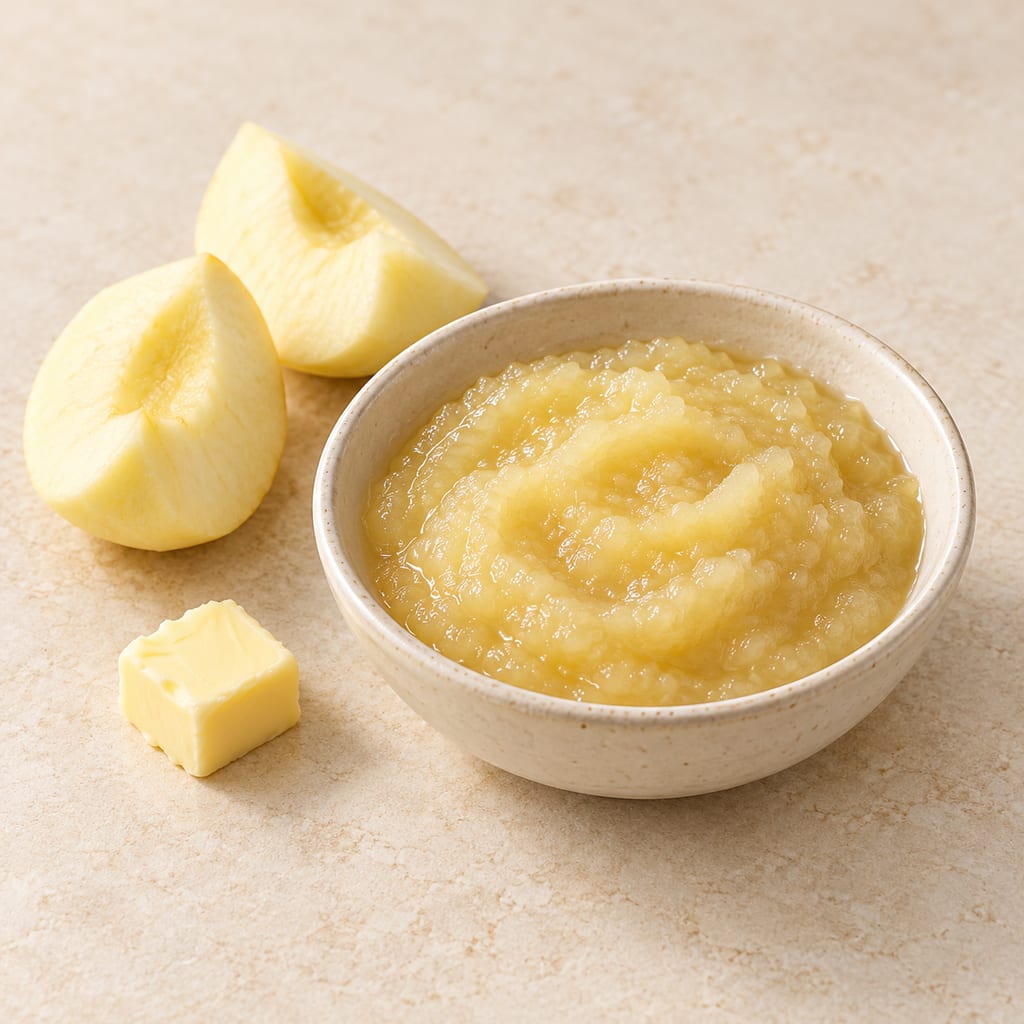
Apple sauce for goose and pork is a plain English accompaniment: cooked apples pulped with water, then sweetened with sugar and finished with a little butter.

A warm dip of garlic, anchovy and olive oil, often enriched with butter, that Piedmont serves over a flame with raw and cooked vegetables and bread.
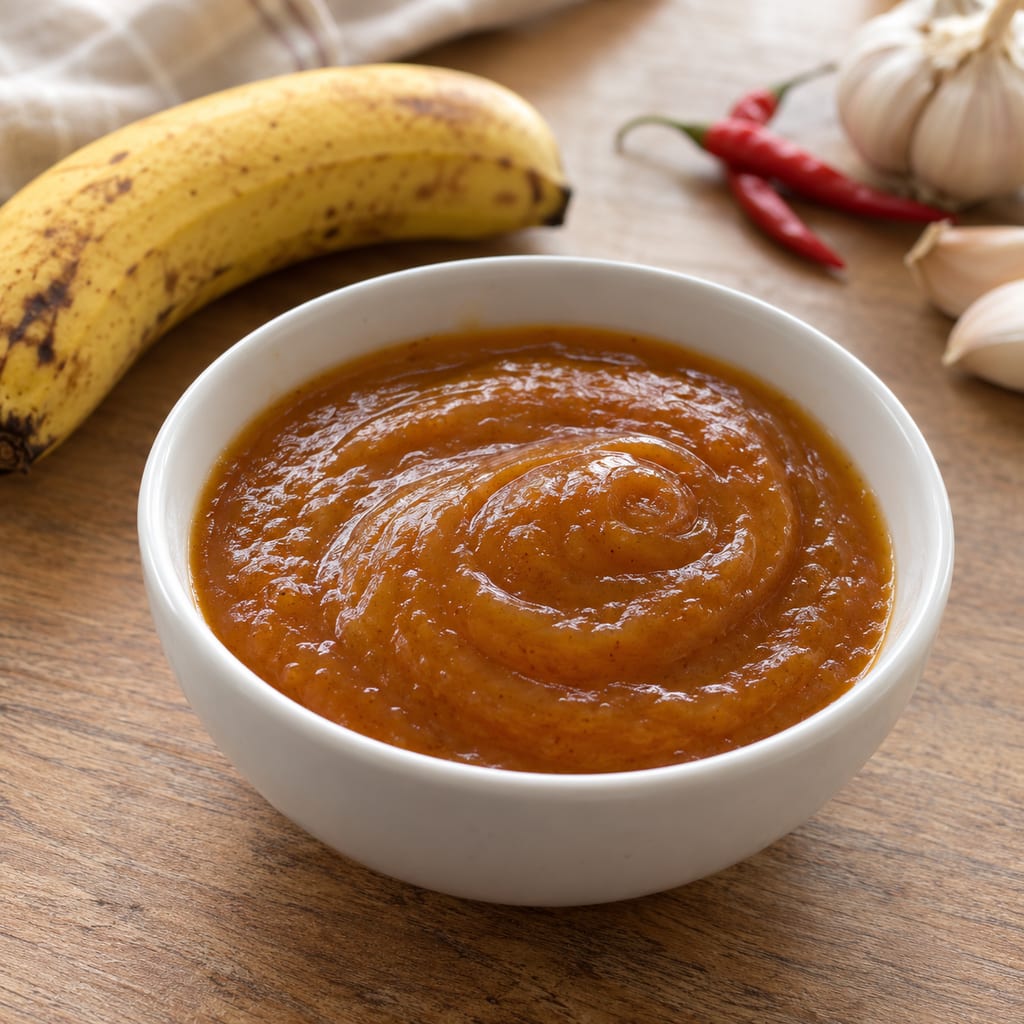
A sweet-hot table sauce of ripe banana simmered with vinegar, sugar, onion, garlic and fresh chilli, in the manner of Philippine banana ketchup. An untested development batch of about 500 g.

A pourable dessert sauce of brown sugar, butter and cream, with a little corn syrup and salt. It is the sauce form of the butterscotch confection and is made without water, unlike caramel.
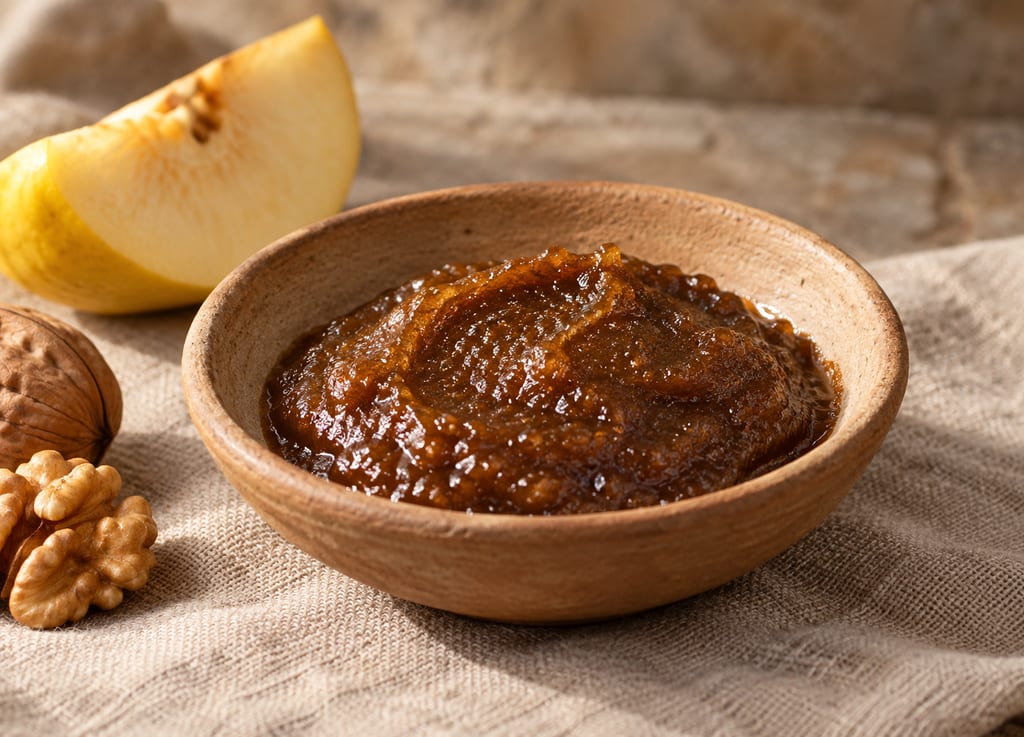
Byzantine murrī is a cooked imitation of murrī from the medieval Arabic repertoire, made from scorched honey, toasted bread, walnuts, quince, carob and spices rather than from a long grain fermentation.

Caribbean browning is a dark liquid of deeply caramelised sugar, used in small amounts for colour and a smoky, bitter-sweet flavour in stews and black cake.
No community contributions have been published for this entry yet.
Sign in to contribute. Published comments and photos are free to read.
WikipediaIngredients · Method · Uses · History
BazheTraditional Georgian walnut sauce; ground walnuts, garlic, vinegar (typically wine vinegar), water or broth, coriander, fenugreek, marigold called Georgian saffron, salt and pepper; optional pomegranate juice or molasses
Method: walnuts ground into the base, water or broth added, seasoned with salt and pepper; no step-by-step given
Uses: with poultry (satsivi), eggplant or potatoes, bread dip, grilled meats; fish not mentioned
Satsivi is a poultry dish served with bazhe, popular at festive occasions
Cited in: A walnut sauce for Georgian tables; Ingredients; Method; Uses; Regions and variation; Storage and open questions