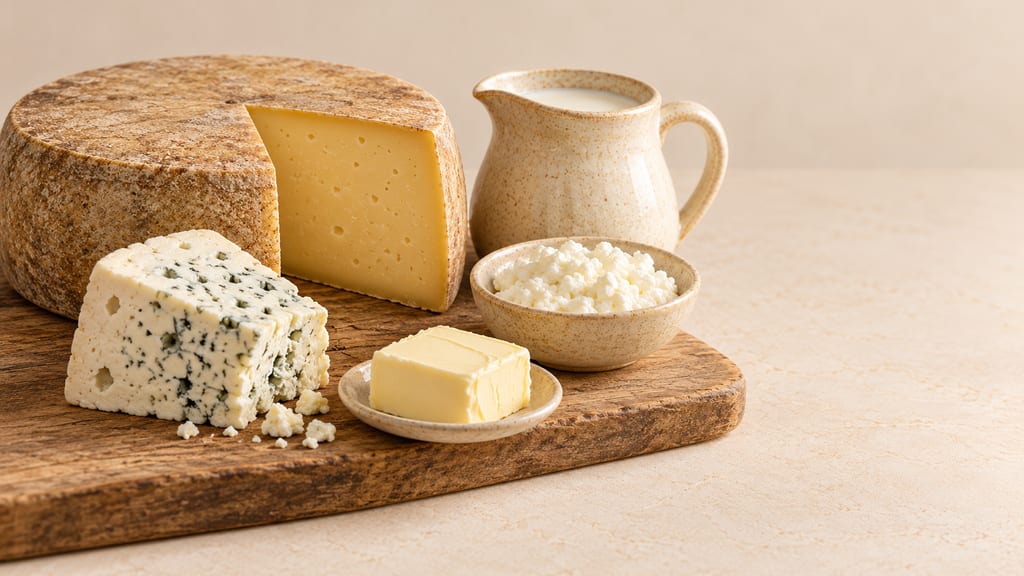
Milk, curd and the world's dairy stores
Follow milk into cheese, cultured drinks, butter, dried curds and sweets: a journey through the animals, seasons and household decisions behind the world's dairy foods.
 FermenteaWhere food goes to change
Substrates
Blue fenugreek (Trigonella caerulea) is an aromatic annual used as an herb in Alpine cheese and bread and as a seed spice in Georgian cooking; its identity differs from common fenugreek.
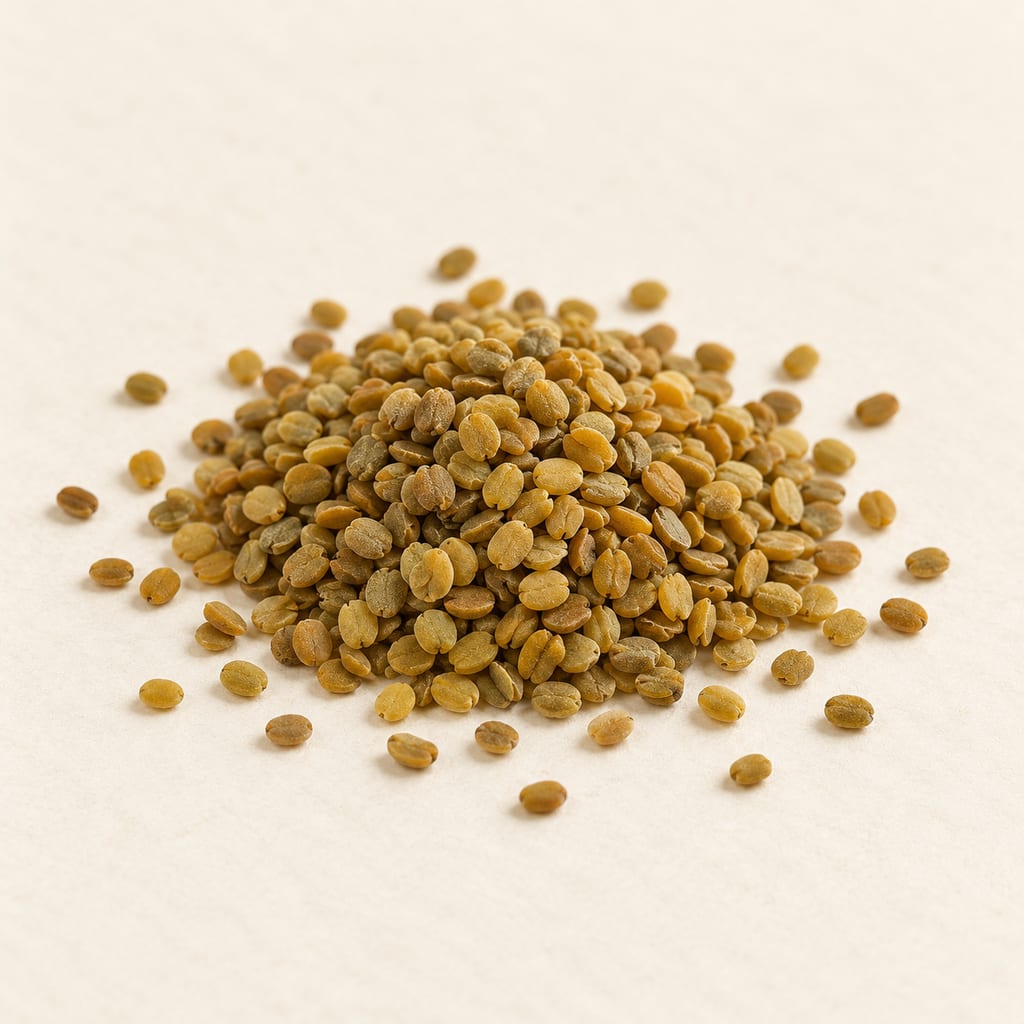
Blue fenugreek is Trigonella caerulea (L.) Ser., an annual legume in Fabaceae. It is not common fenugreek, T. foenum-graecum: the species differ in identity and culinary use. Kew describes T. caerulea as a cultigen of uncertain origin from the eastern Mediterranean, while EPPO calls it a cultivated plant of uncertain origin. Neither source pins down a domestication place or date.
Names vary by language and plant part. Schabzigerklee and Zigerklee mark its Alpine association with Glarner Schabziger. Georgian sources record utskho suneli for T. caerulea. Taxonomic sources also list T. melilotus-caerulea as a synonym. Because common names overlap, the scientific name is the clearest way to distinguish it from common fenugreek. Food writing discusses aerial herb, seedlings, and seeds separately; they are not interchangeable forms.
A recipe that says only “fenugreek” does not establish which species or plant part it means. For a named blue-fenugreek use, choose botanically identified food-grade material.
The accepted name is useful in catalogues because historical plant records and food names may use variants. EPPO lists T. melilotus-caerulea among the taxonomic names associated with the crop, while the cheese literature may use Schabzigerklee as a vernacular. These naming differences do not create separate ingredients when the underlying source identifies the same species.
Blue fenugreek’s annual life cycle and temperate-biome classification describe the plant, not a growing instruction. The sources consulted do not establish a seed rate, sowing date, irrigation schedule, harvest yield, or a home-scale method that guarantees the same aroma as commercial herb.
EPPO records cultivation for fodder in European countries and farther east, including Siberia, China, and Mongolia. These are cultivated associations, not proof of a continuous wild range or place of origin. In food, the green aerial herb and the seed appear in different traditions.
Ayvazyan and colleagues’ 2023 analysis measured aroma-related compounds in commercial blue-fenugreek herb. They found a chemical profile that distinguishes T. caerulea from common fenugreek, while also reporting variation among commercial samples. Those measurements describe the samples tested, not every cultivar, harvest, or dried product. Their paper links the herb’s aroma to its culinary use; smell alone cannot authenticate species or establish safety.
The same study reports young seedlings eaten with oil and salt. That is a fresh-greens use, distinct from the dried herb powder used in cheese or the seed used in Georgian spice mixtures. Keep plant part explicit when adapting a recipe.
Plant part affects both handling and how much of the ingredient enters a dish. Fresh greens add moisture and visible leaf material; dried aerial herb is concentrated and disperses through a dough or cheese; seeds are a separate spice form. The reported 2 grams in South Tyrolean bread and the 2.0–2.5 percent herb level described for Schabziger belong to their respective source contexts and should not be carried over as a general dosage.
Because the aroma compounds vary between products, a cook can expect differences in intensity from one supply to another. That variation is not evidence of adulteration by itself. It does mean that a specific commercial sample should not be treated as a chemical standard for all blue fenugreek.
Blue fenugreek is central to Glarner Schabziger, the sharp, green cheese associated with the Swiss canton of Glarus. Swiss Culinary Heritage lists Zigerklee, naming T. caerulea and a synonym, among its ingredients. Agroscope describes a particular sequence in which skim-milk cheese is acid-coagulated, fermented and matured, salted, then mixed with dried blue-fenugreek herb powder. The seasoning adds aroma and green color. This is a specific cheese method, not a general instruction for adding herb to any cheese.
Schabziger’s dated market and supply history belongs to the cheese and its trade. Swiss Culinary Heritage records fifteenth-century references; these do not date the first cultivation or eating of blue fenugreek. The plant’s earliest use remains unknown in the sources reviewed.
The 2023 study reports blue-fenugreek herb in South Tyrolean bread at 2 grams per 500 grams of flour. This is one documented regional example, not a universal dose. Blue fenugreek seasons the dough; it is not a leaven or fermentation starter. Cultures and leavening agents are separate process components.
Cheese-making references call the powder Schabzigerklee or Zigerklee. The local name links the plant to the product, but does not mean every cheese sold as a blue or green herb cheese contains this species. The ingredient list matters, especially where a product uses only a broad common name.
The cited Agroscope account is valuable because it places the herb late in a particular process, after the milk has formed curd and the cheese has been fermented, matured, and salted. It does not support substituting blue fenugreek for a starter culture, acidifying agent, or coagulant. A separate source must establish those process steps and their controls.
Schabziger has a distinctive sensory profile and an established regional identity, but the green color should not be used as a stand-alone test for the herb. The heritage and technical accounts identify ingredients and process history; they do not say that a particular shade confirms authenticity. Manufacturers may work with a specific powder and cheese base, and their labels provide better evidence than appearance alone.
The cheese source also keeps the dairy product and its seasoning in view together. Skim milk is transformed into a curd product and matured before blue fenugreek is incorporated. Readers using the herb in other dairy preparations should rely on a recipe developed for that product, including its culture and handling instructions. The cited cheese sequence is descriptive evidence, not a ready-to-use safety schedule.
In Georgia, blue-fenugreek seed is used as a spice and is associated with utskho suneli. The Ilia State University biodiversity database records that Georgian name for T. caerulea and cites a vascular-plant checklist. A Georgian Academy of Agricultural Sciences catalogue pairs the Georgian name with the scientific name. Together these sources support a Georgian use association, not a claim of origin.
Ayvazyan and colleagues describe seed use in Georgian cuisine and seedlings eaten with oil and salt. That is distinct from the herb used in Swiss cheese and South Tyrolean bread. The sources do not provide a complete household formula for utskho suneli, so this entry does not prescribe a blend or quantity.
Utskho suneli appears in Georgian culinary vocabulary for blue fenugreek, while some translations call it blue fenugreek seed. The ingredient may be one part of a larger seasoning practice; the references gathered here do not demonstrate that every mixture sold under that name has a single composition. A product's label and the cook's chosen recipe remain necessary for identifying its contents.
The geographic evidence has different precision. The Georgian database supports country-level occurrence and naming; the Swiss sources support the cheese association with Glarus; the South Tyrol report supports a regional bread use. None justifies placing a wild origin at a particular town, farm, or mountain.
The sources place the Georgian seed association alongside, rather than inside, the Swiss cheese tradition. They do not trace a single historical route by which the seed or herb moved between the Caucasus and Alpine Europe. A regional food map should therefore show separate documented associations rather than draw an unsupported migration line.
Although the Georgian agricultural catalogue lists names in Georgian, Russian, and English, those translations do not specify the exact proportions or the full composition of a spice blend. It is safer to treat the source as a naming and identification record, and Ayvazyan et al. as evidence for the reported culinary use, than to turn either into a complete recipe.
In the 2025 Horticulturae experiment, researchers examined how drying and storage influenced aromatic constituents in blue fenugreek. They report flowering plants harvested at a South Tyrol research site, airflow drying at 30°C for seven days, and paper-bag storage away from light at 14°C, alongside a freeze-drying comparison. Those are experimental conditions, not validated household storage directions or a guaranteed shelf life.
That experiment shows that postharvest handling can change aroma. It does not establish a safe drying endpoint, home-growing protocol, or dependable yield. Use supplier storage directions; keep dried herbs dry and protected from contamination. Color and aroma cannot prove correct identity or safe storage.
The 2025 paper is a postharvest aroma study, not a food microbiology challenge study. Its drying temperature and storage conditions cannot be read as a pathogen-reduction step, sterilization treatment, or validated humidity limit. No such safety inference is made here.
Keep an unfamiliar plant separate from self-collected botanicals unless identification is secure. The sources consulted concern identified T. caerulea and do not function as a wild-plant identification guide. A photograph or vernacular label alone is not enough to establish that a foraged plant is edible.
Some descriptions of farm practice mention keeping dried herb for months so its aroma develops. That observation is about flavor development and traditional storage in a particular setting. It is not a substitute for present-day packaging guidance, moisture control, or a shelf-life study. The experimental paper examines selected conditions and aromatic chemistry, not every storage container or climate.
Light, airflow, and temperature are among the variables addressed in the 2025 experiment. Its specific protocol allows comparison within the study, but readers should not assume that reproducing one setting will reproduce the same flavor in a home kitchen. Harvest stage, plant material, drying equipment, and local environment can also affect the result.
Kew and EPPO leave origin uncertain. The evidence reviewed here documents Georgian spice use and Alpine cheese and bread traditions, but does not date the plant’s first food use. The period is therefore unknown; cheese trade dates should not be used as plant-history dates.
The sources reviewed describe culinary herb and spice uses but do not establish species-specific safety limits, a validated home-preservation process, or medicinal doses. This record makes no health claim. Blue fenugreek is a legume, but the sources do not quantify allergy risk for this species; people with known legume or fenugreek allergies should check labels and seek qualified advice if unsure. No sensory check verifies botanical identity or food safety.
Blue fenugreek is described here as a seasoning, not as a medicine. No therapeutic effect, clinical dose, or treatment advice is implied by its traditional culinary uses. Commercial extracts and supplements may differ from food herbs and are outside the evidence reviewed.
Allergy information is limited. The botanical family is a classification, not proof that every member triggers the same reaction. Anyone with a diagnosed allergy should use their clinician’s advice and check the full product label, including spice blends that may contain several plants.
This entry does not offer a home fermentation method. Blue fenugreek is added to some fermented or matured foods, but the safety of those foods depends on the dairy or dough process around it. Herb addition neither makes a weak process safe nor guarantees a stable product.
Where a product is sold as a regional cheese or spice, a documented ingredient list and producer information can establish more than a loose translation or a broad phrase such as 'blue spice.' Names are evidence to follow up, not substitutes for a species-level identification.
Sources associate T. caerulea seed spice use and utskho suneli with Georgia; not an origin claim.
The herb flavors Glarner Schabziger; this records cheese manufacture and use, not plant origin.
Sources record herb use in regional bread and a field study; neither establishes origin.
The source records Schabziger and its herb ingredient; Glarus is the more precise cheese association.
Follow milk into cheese, cultured drinks, butter, dried curds and sweets: a journey through the animals, seasons and household decisions behind the world's dairy foods.
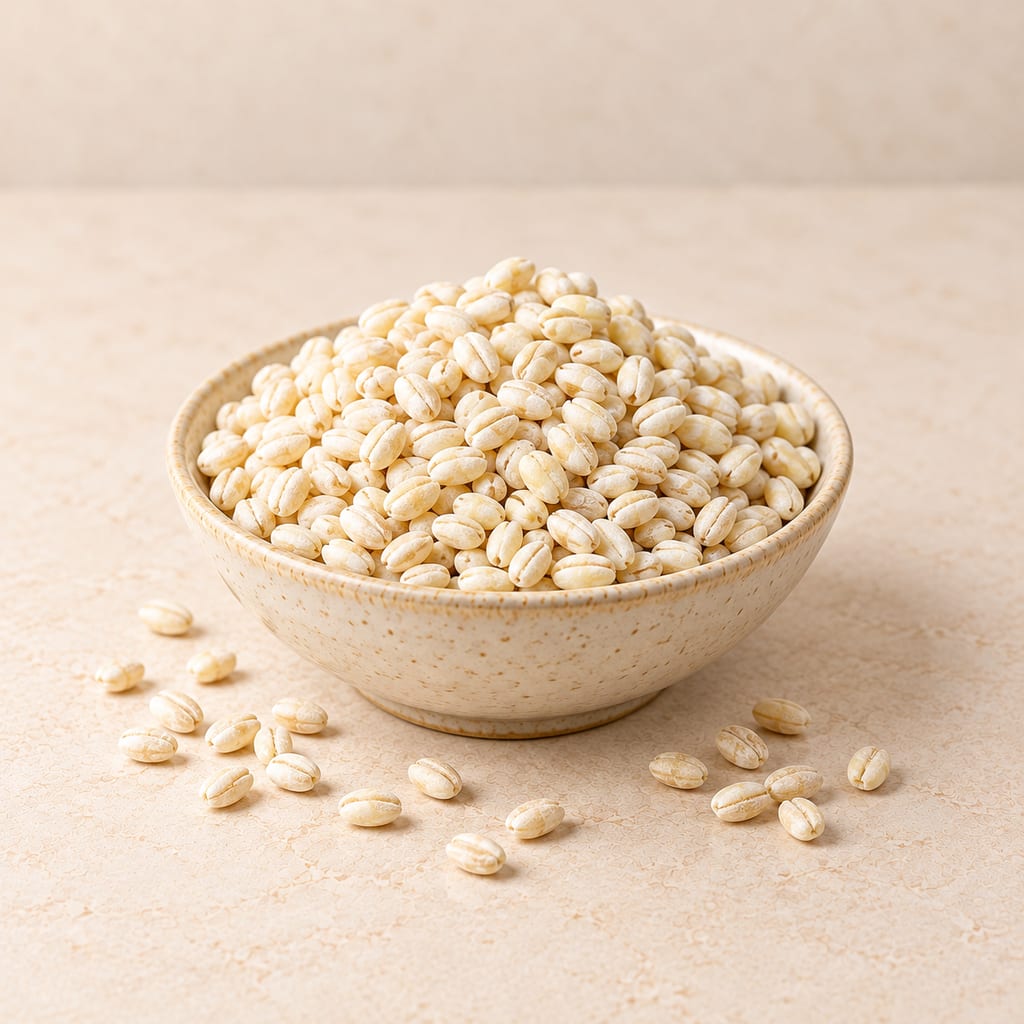
Barley is a hardy cereal, domesticated in the Middle East over 10,000 years ago, eaten whole, pearled or milled, malted for brewing, and grown with koji mold for barley miso.
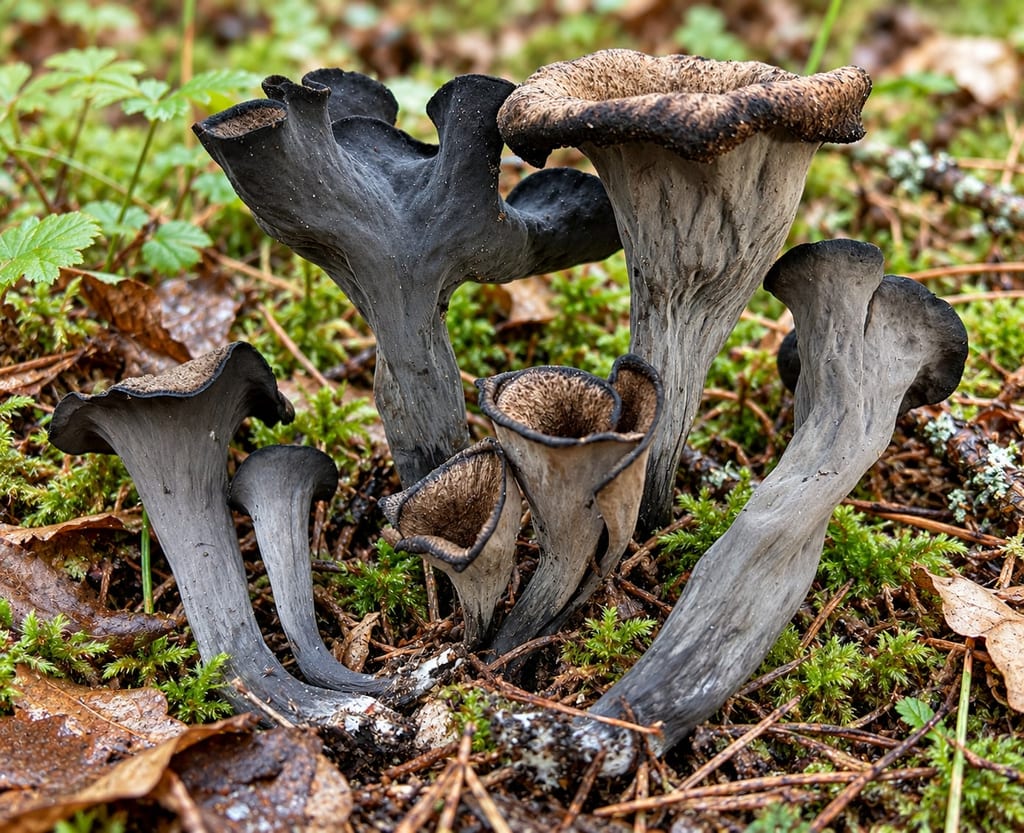
Black trumpet, or horn of plenty, is Craterellus cornucopioides, a dark hollow woodland mushroom used in cooked dishes and dried seasonings, with regional identity and range limits.
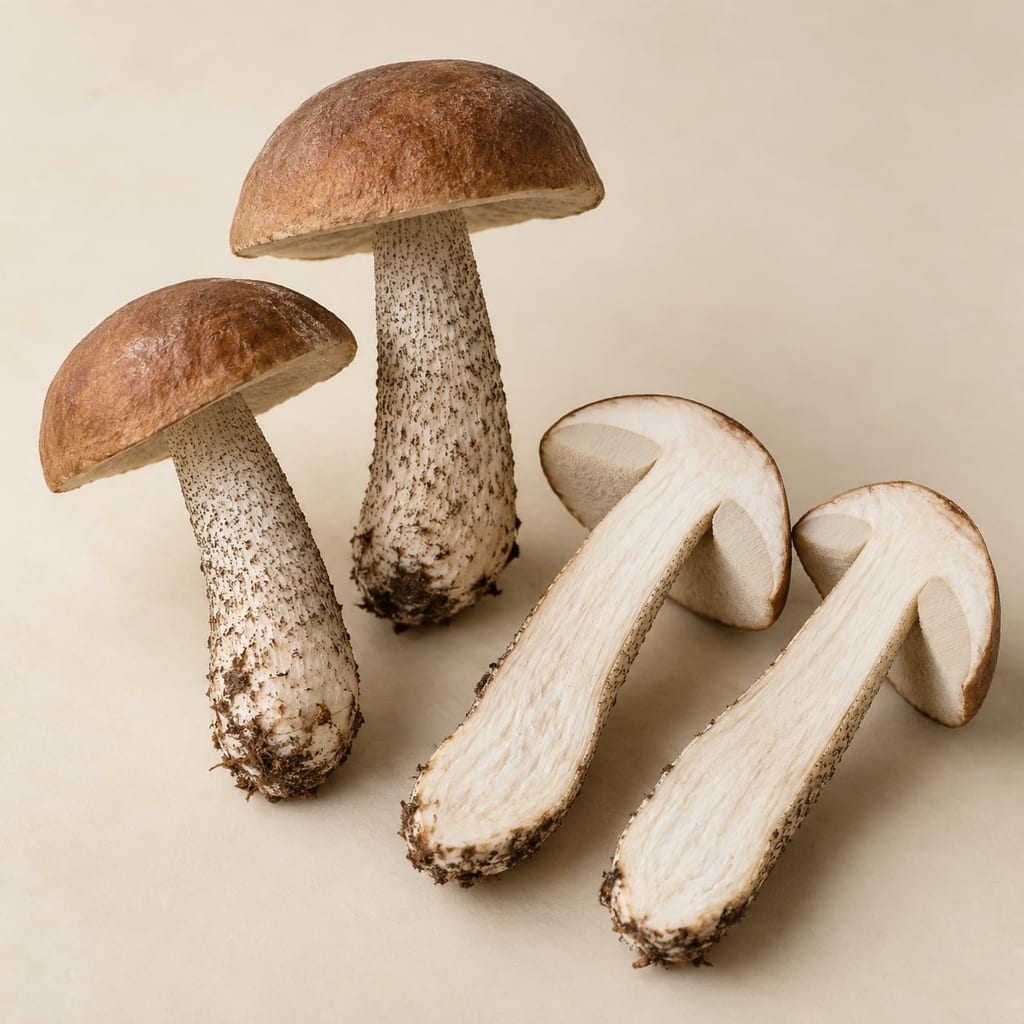
A wild birch-associated bolete eaten in parts of Europe. Its older name, Boletus scaber, remains common in historical sources; regional food records and cooking cautions require source-specific reading.
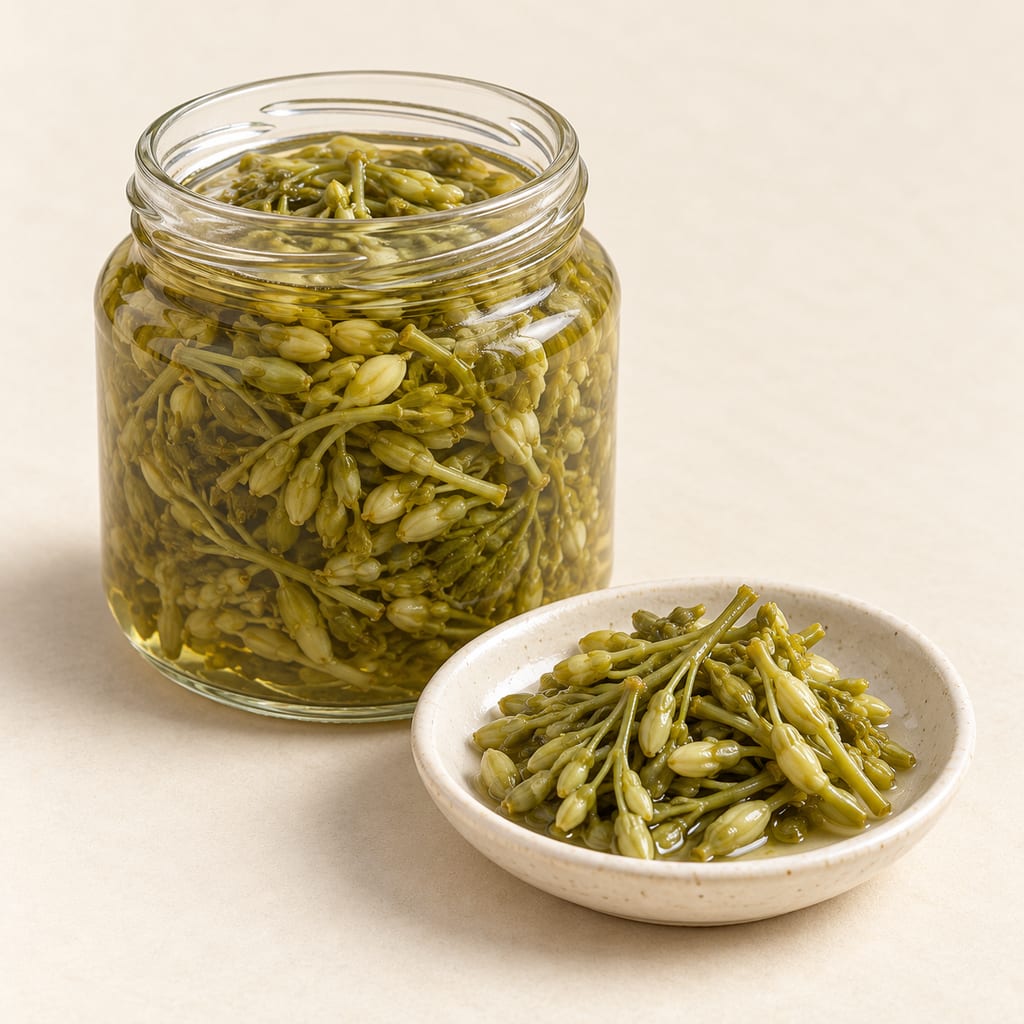
Georgian sources describe jonjoli as a flower-bud food associated with more than one Staphylea species. A 2021 figure caption names S. pinnata for the pictured preparation, while the study’s food table and the FAO profile preserve paired or shared-species evidence.
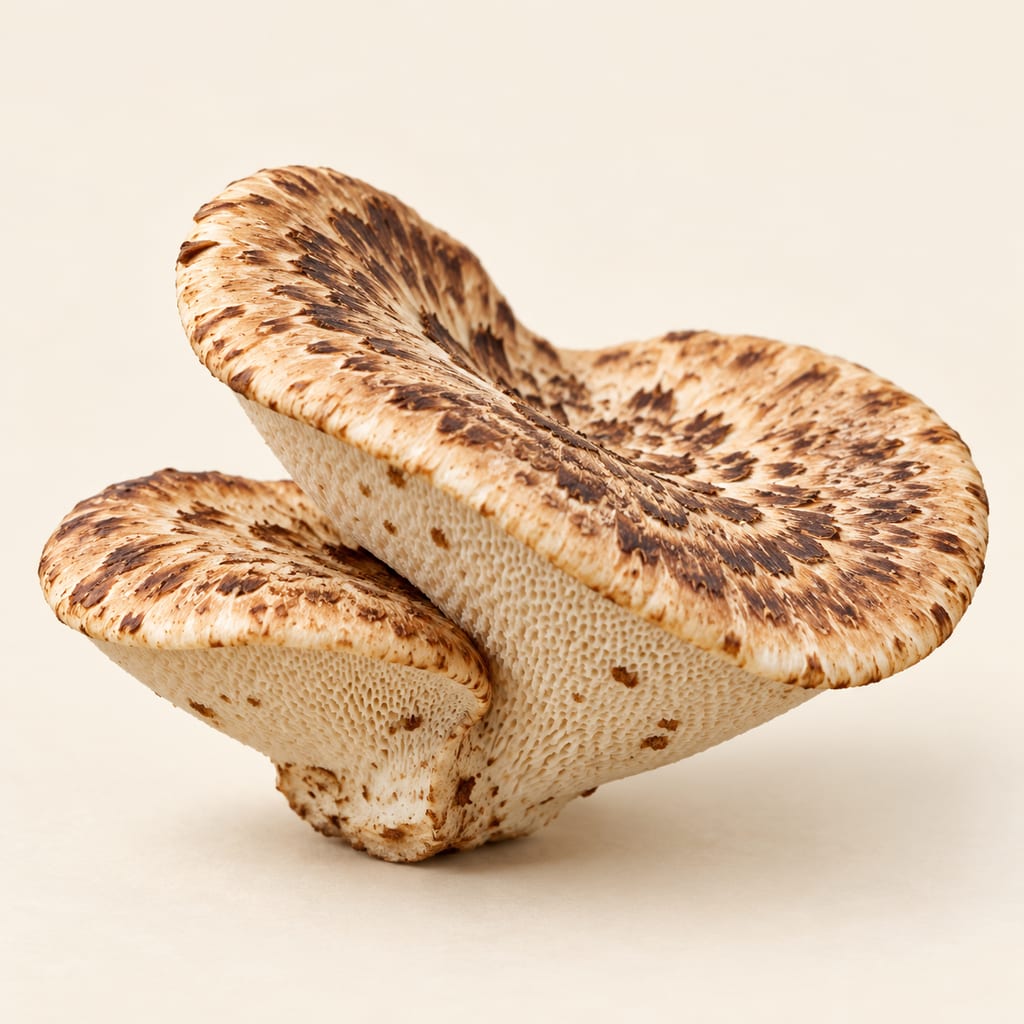
Dryad’s saddle is a wild hardwood polypore whose young tender margins are cooked in some regional food traditions; mature brackets quickly become tough.
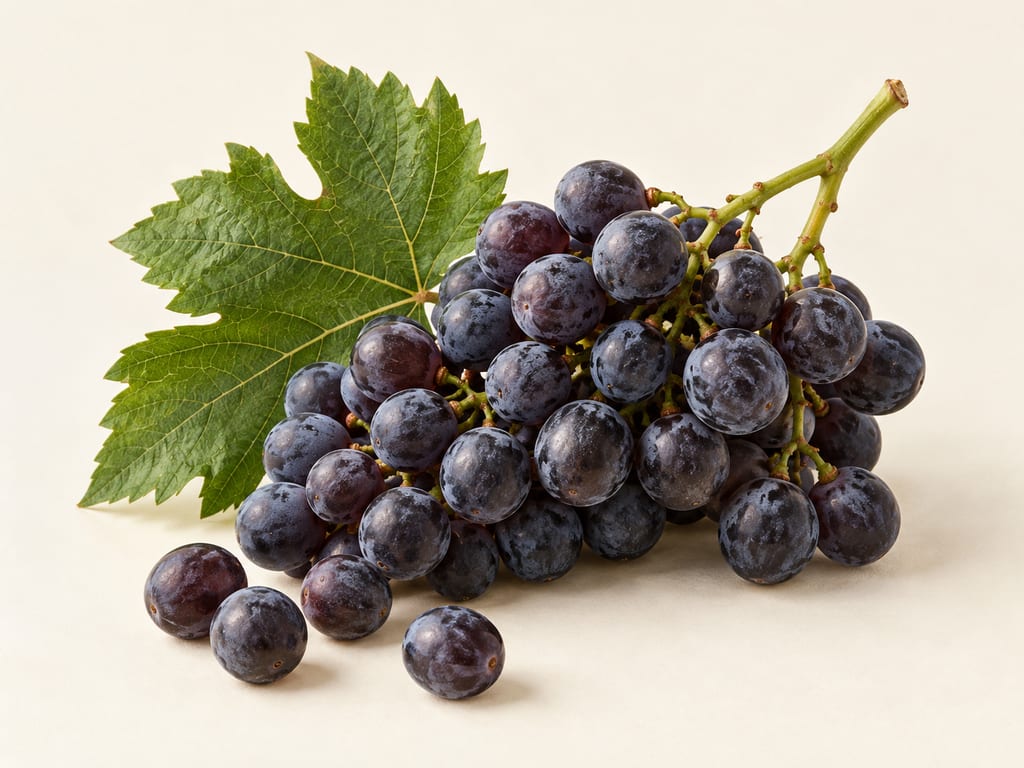
Wine grapes are fresh berries selected for vinification; their sugars fuel alcoholic fermentation, while cultivar, ripeness and handling shape the fruit and the wine it can become.
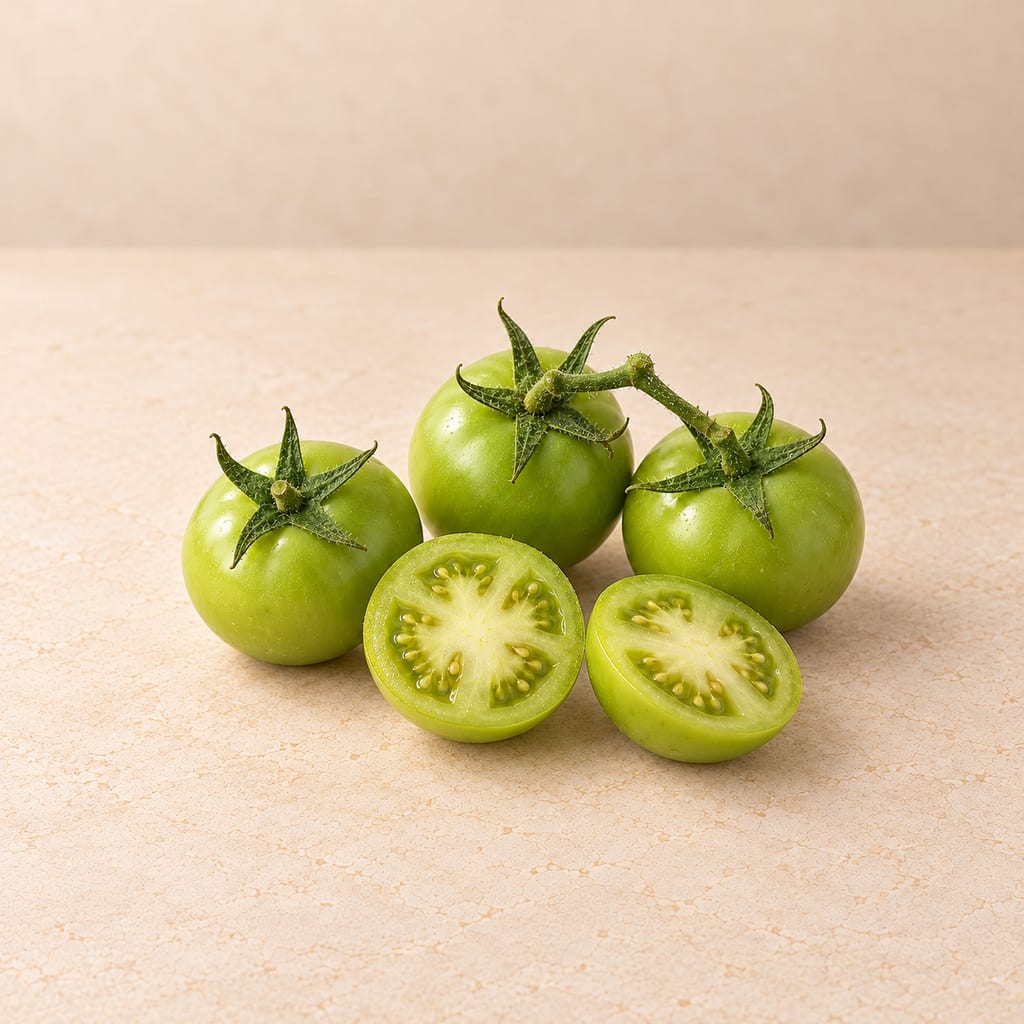
A green tomato is an unripe tomato, firm and sour, used for frying, pickling, relish and ferments. It carries tomatine, which falls as the fruit ripens.
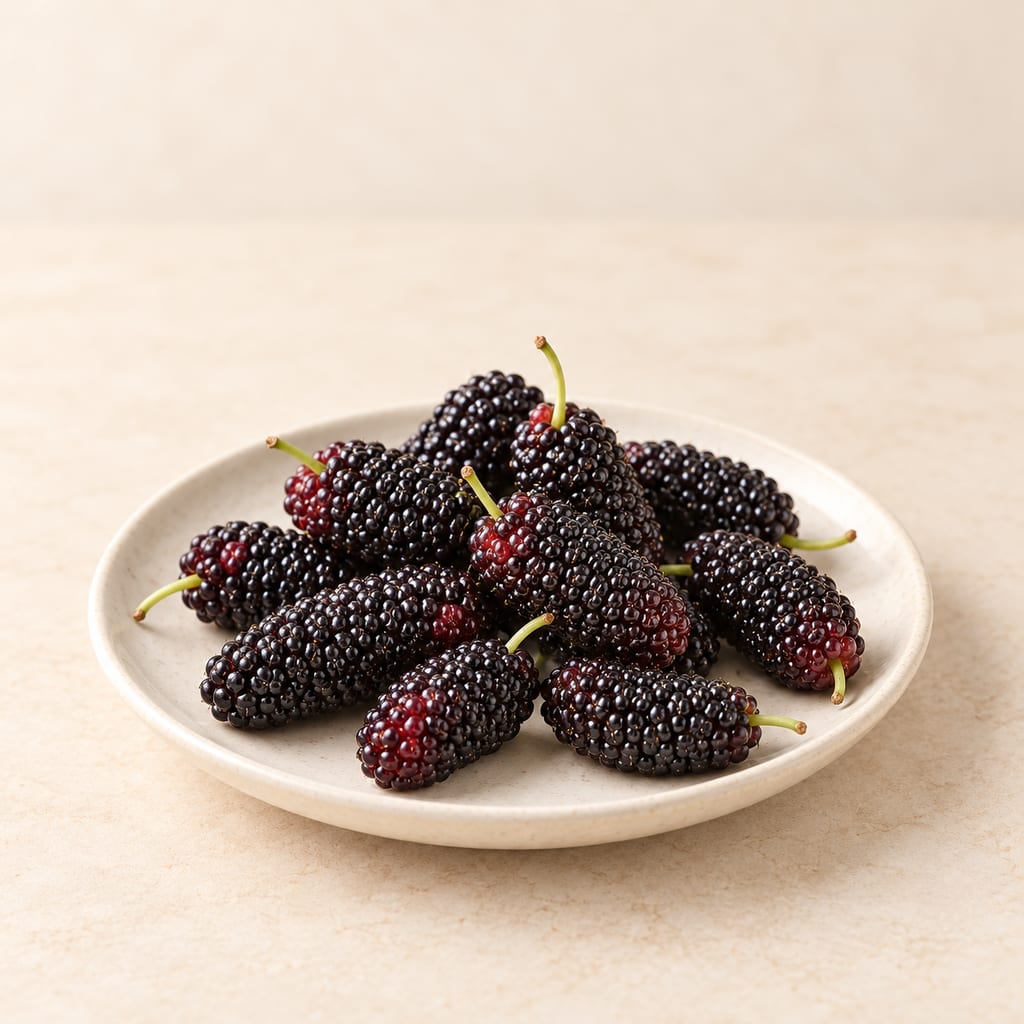
Mulberries are the soft fruits of Morus trees, used fresh and dried and as the fruit base for documented Georgian tklapi. The cited tklapi accounts do not identify a species.
No community contributions have been published for this entry yet.
Sign in to contribute. Published comments and photos are free to read.
Plants of the World Online, Royal Botanic Gardens, KewIdentity · Distribution
Trigonella caerulea (L.) Ser.Accepted name; annual plant; cultivated eastern Mediterranean wording.
Cited in: A distinct fenugreek; History and safety limits
EPPO Global DatabaseIdentity · Distribution
Trigonella caerulea (TRKMC)Synonymy, uncertain cultivated origin, fodder cultivation in Europe and farther east.
Cited in: A distinct fenugreek; Herb, seed, and aroma; Cultivation and drying
Georgian Biodiversity Database, Ilia State UniversityIdentity · Geography
Trigonella caeruleaRecords Georgian name utskho suneli for the species and cites a vascular plant checklist.
Cited in: A distinct fenugreek; Georgian spice
Georgian Academy of Agricultural SciencesIdentity · Geography
Catalogue of Agricultural CropsLists Trigonella caerulea with Georgian, Russian, and English names.
Cited in: Georgian spice
Plants (MDPI)Uses · Geography · Processing
Phytochemical Profile of Trigonella caerulea (Blue Fenugreek) Herb and Quantification of Aroma-Determining ConstituentsDistinguishes blue from common fenugreek; reports Alpine herb, Georgian seed and seedling uses, cheese and bread examples, and variation among commercial samples.
Cited in: Herb, seed, and aroma; Schabziger and Alpine bread; Georgian spice; History and safety limits
Culinary Heritage of SwitzerlandHistory · Geography · Uses
SchabzigerLists Zigerklee among Schabziger ingredients and documents historical dates for the cheese, not the plant's first use.
Cited in: Schabziger and Alpine bread; History and safety limits
AgroscopeProduction · Uses
Beitrag zur Kenntnis der Zusammensetzung von Glarner Kräuterkäse (Glarner Schabziger)Describes a specific Schabziger production sequence and herb powder's flavor and color role.
Cited in: Schabziger and Alpine bread
Horticulturae (MDPI)Production · Processing
Drying and Storage Influence the Formation of Key Aromatic Constituents in Blue Fenugreek (Trigonella caerulea)Reports study-specific harvest, drying, and storage conditions and their effects on aroma compounds.
Cited in: Cultivation and drying