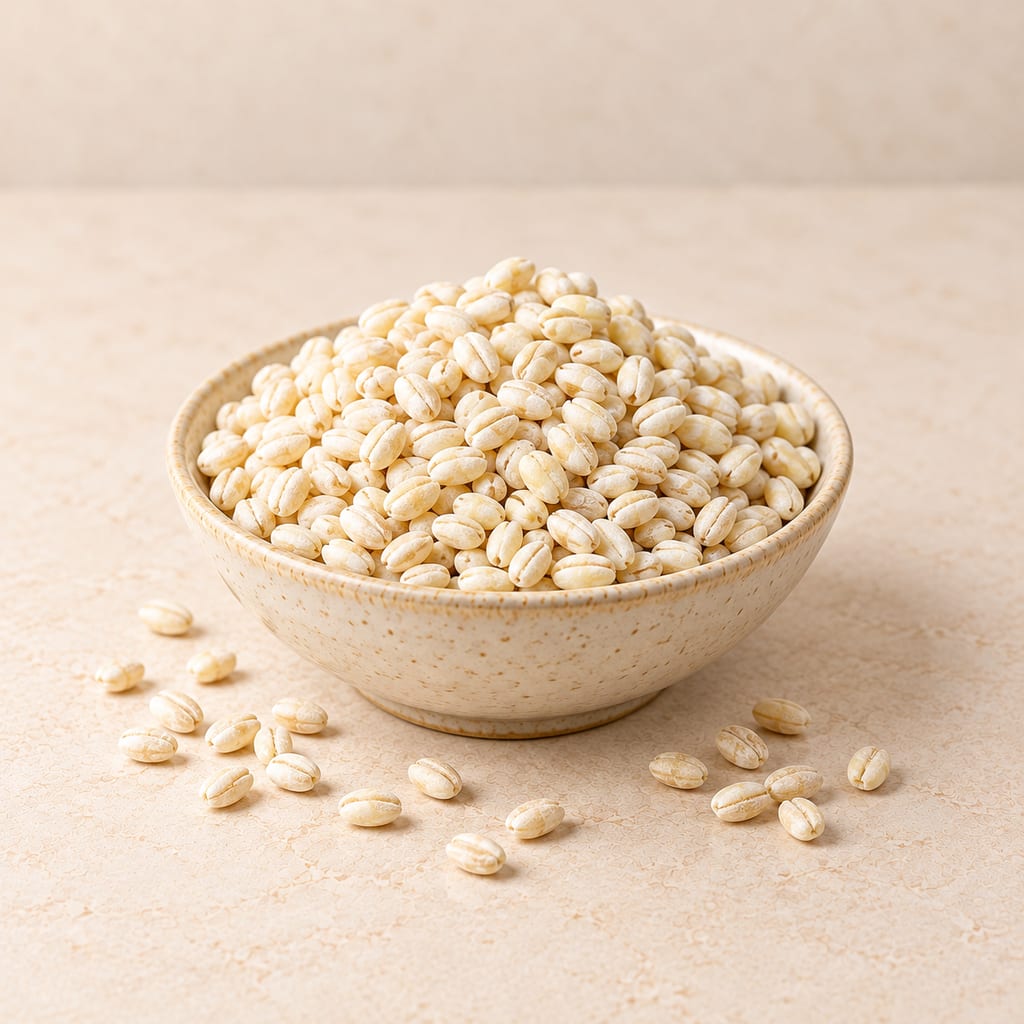
Barley
Barley is a hardy cereal, domesticated in the Middle East over 10,000 years ago, eaten whole, pearled or milled, malted for brewing, and grown with koji mold for barley miso.
 FermenteaWhere food goes to change
Mushrooms
Black trumpet, or horn of plenty, is Craterellus cornucopioides, a dark hollow woodland mushroom used in cooked dishes and dried seasonings, with regional identity and range limits.
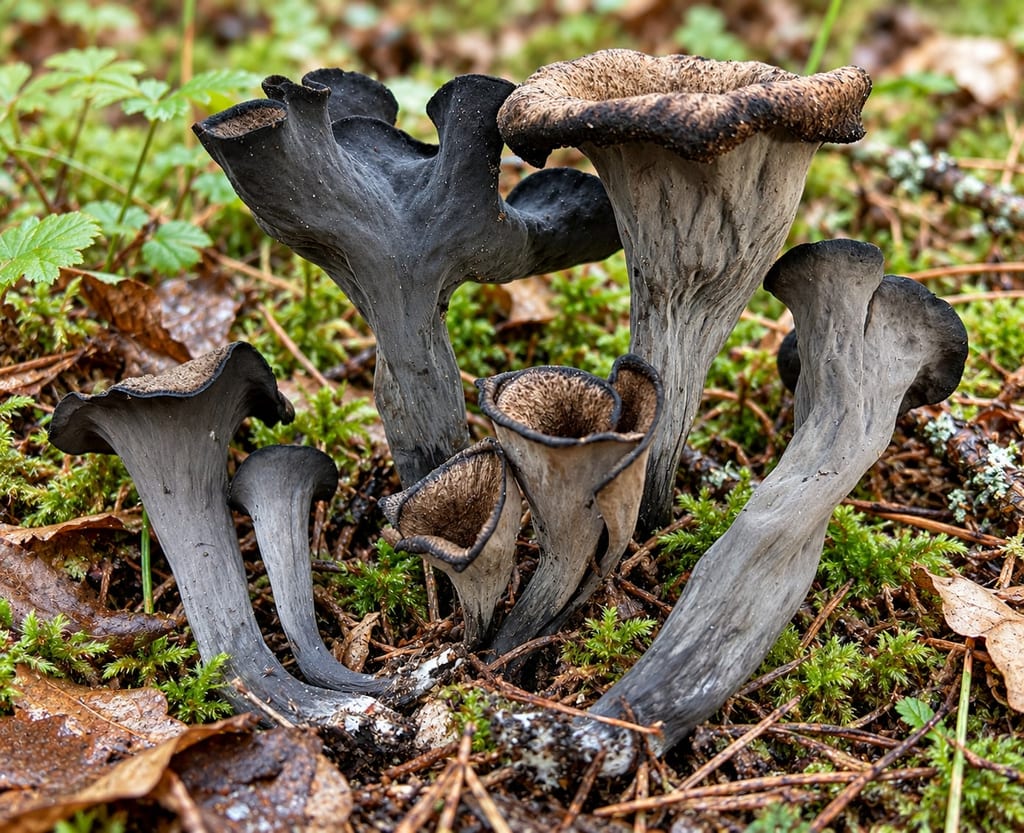
The black trumpet is Craterellus cornucopioides, a wild fungus in the order Cantharellales. It is also called horn of plenty; “black trumpet” describes the dark mature fruit body, while the French and Italian common names include “trumpet of the dead.” The accepted name used here is Craterellus cornucopioides (L.) Pers. IUCN places it in Hydnaceae, though some older and alternative taxonomic sources use Cantharellaceae for Craterellus. Those family treatments differ; they do not change the species name.
The fruit body is a thin-fleshed hollow funnel, usually dark brown to charcoal or black, with a flared irregular rim. The outer fertile surface is grey and smooth or only faintly ridged, rather than carrying the blade-like gills familiar from many mushrooms. Several may emerge together among leaf litter, where their dark colour makes them hard to see. Their trumpet-like shape and hollowness are useful descriptive features, not a complete identification key. Other dark funnel fungi occur, and the names applied to black trumpets can shift with geography and taxonomic concept. A photograph, app label or common name cannot verify an individual wild mushroom.
That distinction matters outside Europe. The IUCN global assessment treats the range as mostly European and says some records outside that range may be misidentifications, other species or introductions. North American and East Asian material may be treated differently under other taxonomic concepts. The broad country list in historical and checklist sources therefore should not be converted into a single verified species range without checking regional specimens and nomenclature.
Like other ectomycorrhizal fungi, C. cornucopioides lives in a partnership with tree roots: fungal threads extend into the soil and exchange nutrients with the host. Its visible mushrooms are seasonal fruiting bodies of a larger organism that is mostly out of sight. European accounts place it in deciduous and mixed woods, often with beech or oak; some descriptions also report conifer associates. A habitat description is not an exact tree requirement, and the sources do not establish one universal soil type or host.
The mushroom has not entered routine cultivation. The food literature describes wild fruit bodies and some market sales rather than a stable farmed supply. This forest dependence is part of its identity as an ingredient: the raw material varies with woodland, weather and season, and the evidence gathered here does not support a cultivation protocol or a quantitative sustainable-harvest rule.
Season is regional. A British and European field guide places fruiting from July to November, from summer into late autumn, and notes groups appearing after autumn rain. A French university mushroom database extends its picking period from July to December, often with late-summer and autumn flushes. The Georgia ethnobiology project records summer and autumn. These accounts overlap around autumn but are not a universal calendar; they should not be used to predict fruiting in China, North America or another climate.
The seasonal mushroom is easy to miss in fallen leaves. The field guide notes that fruit bodies may recur in groups and can become conspicuous once the first is spotted. It does not give a reliable rainfall threshold, temperature trigger or number of days from rain to fruiting, so none is supplied here.
European food accounts value the cooked mushroom for an aromatic, delicate, sweet-earthy flavor. A field guide suggests soups, stews and casseroles and notes that the dark colour remains after cooking. The 2024 review describes fresh fruit bodies being sold in Denmark and dried mushrooms being used as ingredients. Drying concentrates the mushroom into a form suited to storage and later cooking; dried fruit bodies can also be ground into a seasoning flour used in soups and sauces.
The hollow trumpets can trap grit. The field guide advises washing them well before cooking, and cutting larger fruit bodies open before drying so they can be cleaned. These are practical notes from a European culinary field account, not a validated commercial process or shelf-life specification. The Georgian ethnobiology project preserves a more specific regional qualification: its cited account calls the mushroom edible when young and fresh. That statement belongs to the Georgian source tradition; it is not a substitute for expert identification or a universal freshness rule.
The documented culinary uses are cooking, drying and seasoning. No traditional fermentation, brining or curing method for this species was identified in the evidence reviewed. It should not be assigned a fermentation role simply because Fermentea catalogues foods used in fermentation. Laboratory findings about chemical composition or bioactivity do not establish a health treatment, and this ingredient page makes no medical claims.
Europe has the clearest combination of ecological, culinary and seasonal descriptions in the sources reviewed. The record is broad and regional, not an atlas of verified populations. Georgia contributes a university ethnobiology page that reports herbarium records across all regions, broad-leaved woodland habitat and summer/autumn fruiting, while citing literature for a young-and-fresh edible note. The page gives no individual collection locality.
The China-scoped 2026 edible-and-medicinal fungi catalogue includes C. cornucopioides. That is a scientific checklist classification within a dataset whose stated geographic scope is China; it does not give a specimen locality, season or a particular Chinese recipe. The IUCN caveat about taxonomy beyond Europe remains relevant when interpreting country lists, and the checklist entry should not be overstated as an independently checked population map.
Spain's 2009 marketing regulation offers a different kind of evidence: its preamble says C. cornucopioides was not among the species listed at that time and mentions it as a species research suggested could be included under safeguards. This is neither a harvest record nor a blanket legal permission. A species' appearance in an edible checklist, field guide or historic table does not override current local food law.
Use this page as a researched account of a named ingredient, not as a guide to identifying wild mushrooms. Eat only mushrooms identified with confidence by a qualified local expert and prepared as a cooked food in line with local guidance. The dark colour and hollow funnel are not enough to distinguish all regional taxa, and a species-labelled photograph does not validate the name. In regions where “black trumpet” is used for more than one species, local taxonomy and public-health advice take priority.
IUCN assessed C. cornucopioides as Least Concern globally in 2024 but reports that the population trend is unknown and notes its dependence on forest habitat. That global category does not establish the condition of every local population or justify unrestricted collection. The sources reviewed provide no measured harvest threshold. Spanish rules also show why commercial acceptance and culinary tradition are distinct questions: the 2009 preamble treated the species as a possible future addition to the list, not as an already listed mushroom under that framework.
Broad regional culinary evidence, not a specimen-level range map.
Herbarium records across Georgia; source-cited edible-when-young-and-fresh note; no specific harvest locality.
Checklist classification only; no specimen locality, preparation tradition or season established by the entry.
Barley is a hardy cereal, domesticated in the Middle East over 10,000 years ago, eaten whole, pearled or milled, malted for brewing, and grown with koji mold for barley miso.
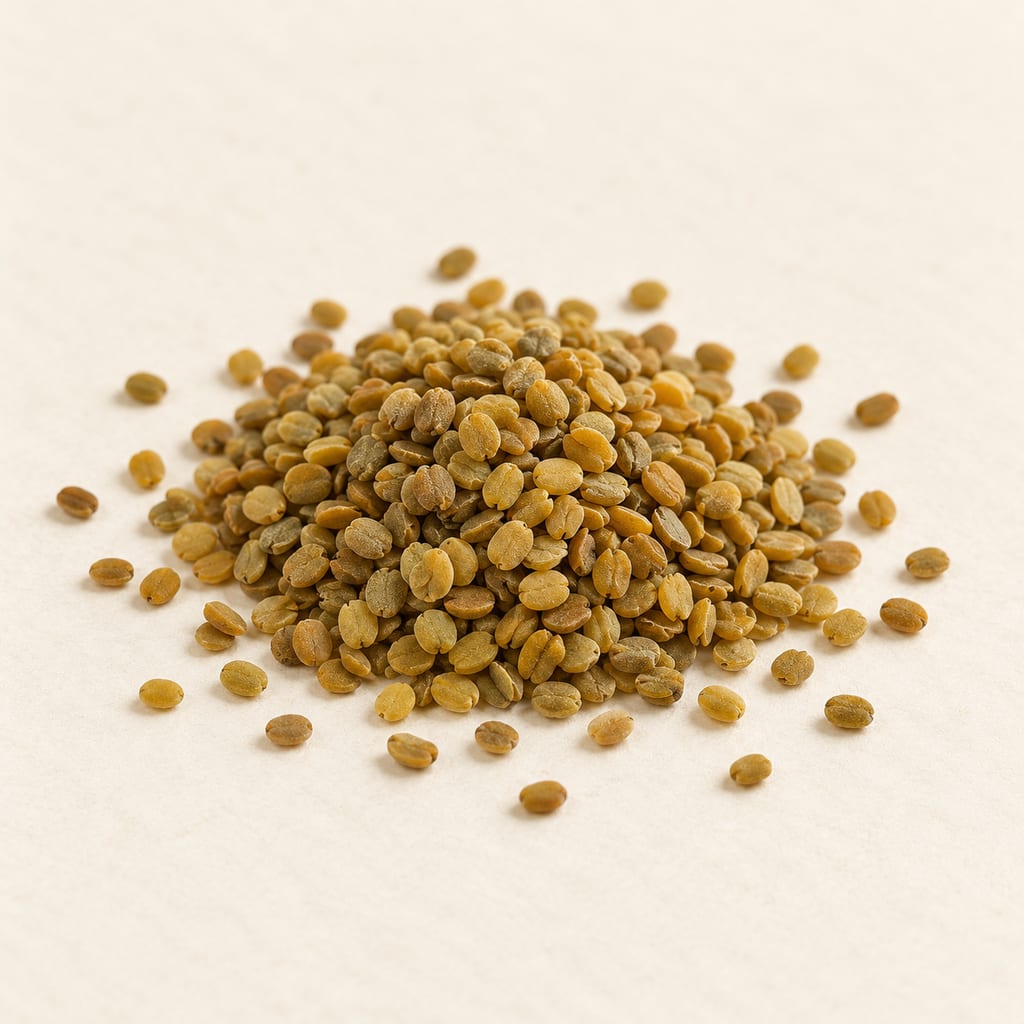
Blue fenugreek (Trigonella caerulea) is an aromatic annual used as an herb in Alpine cheese and bread and as a seed spice in Georgian cooking; its identity differs from common fenugreek.
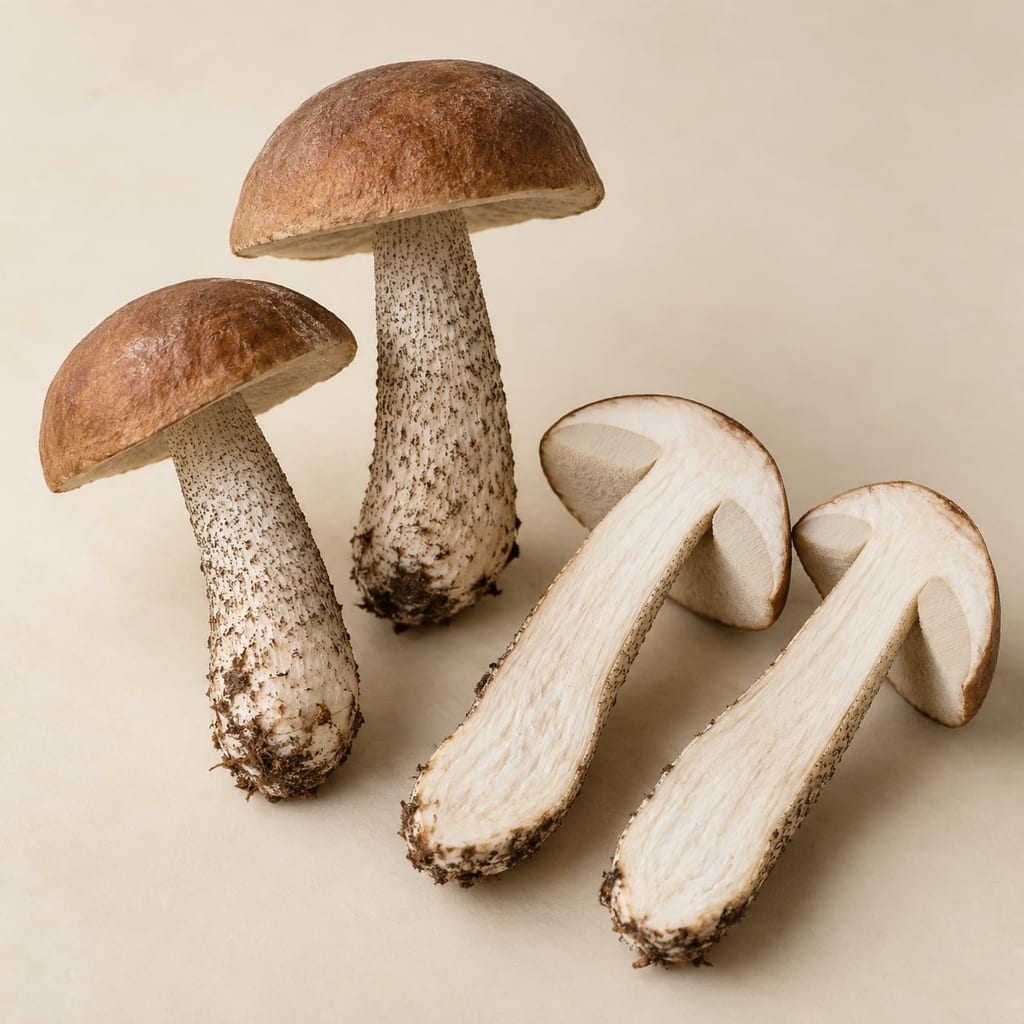
A wild birch-associated bolete eaten in parts of Europe. Its older name, Boletus scaber, remains common in historical sources; regional food records and cooking cautions require source-specific reading.
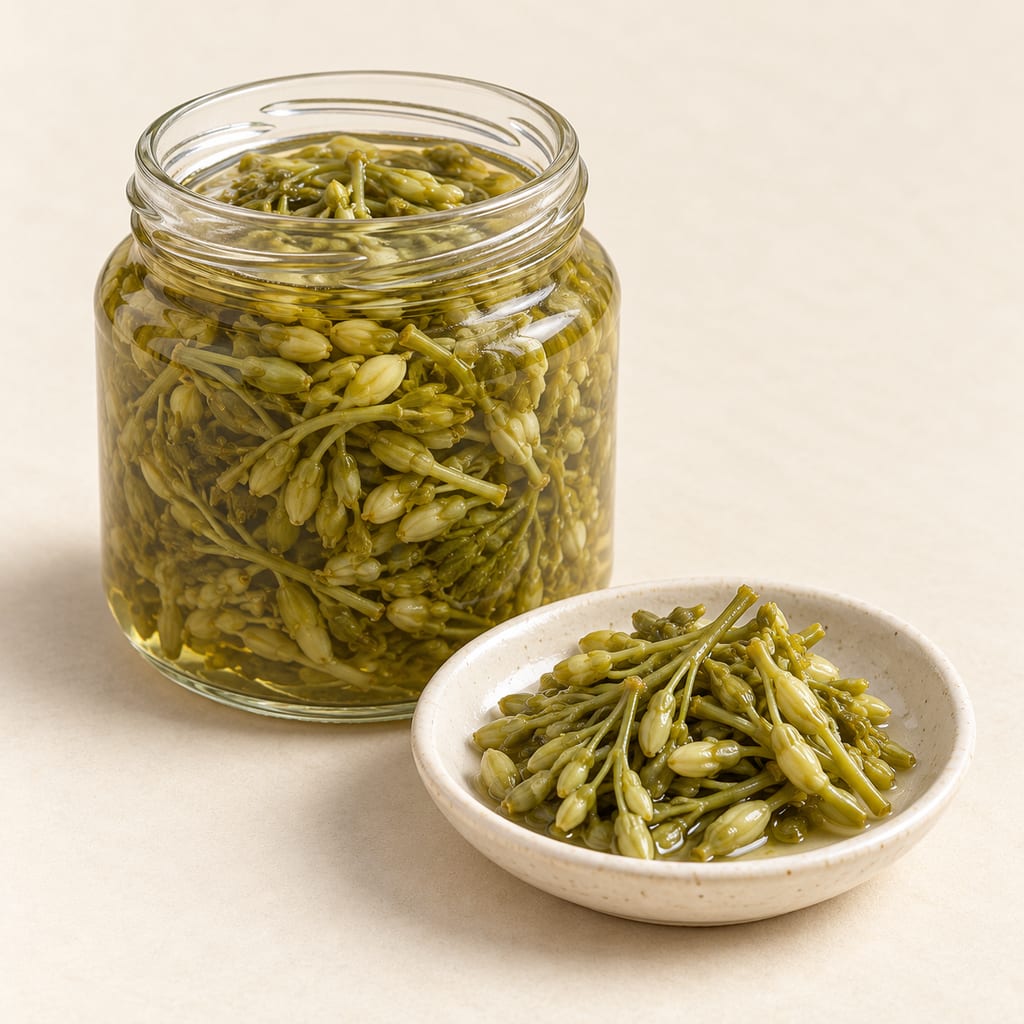
Georgian sources describe jonjoli as a flower-bud food associated with more than one Staphylea species. A 2021 figure caption names S. pinnata for the pictured preparation, while the study’s food table and the FAO profile preserve paired or shared-species evidence.
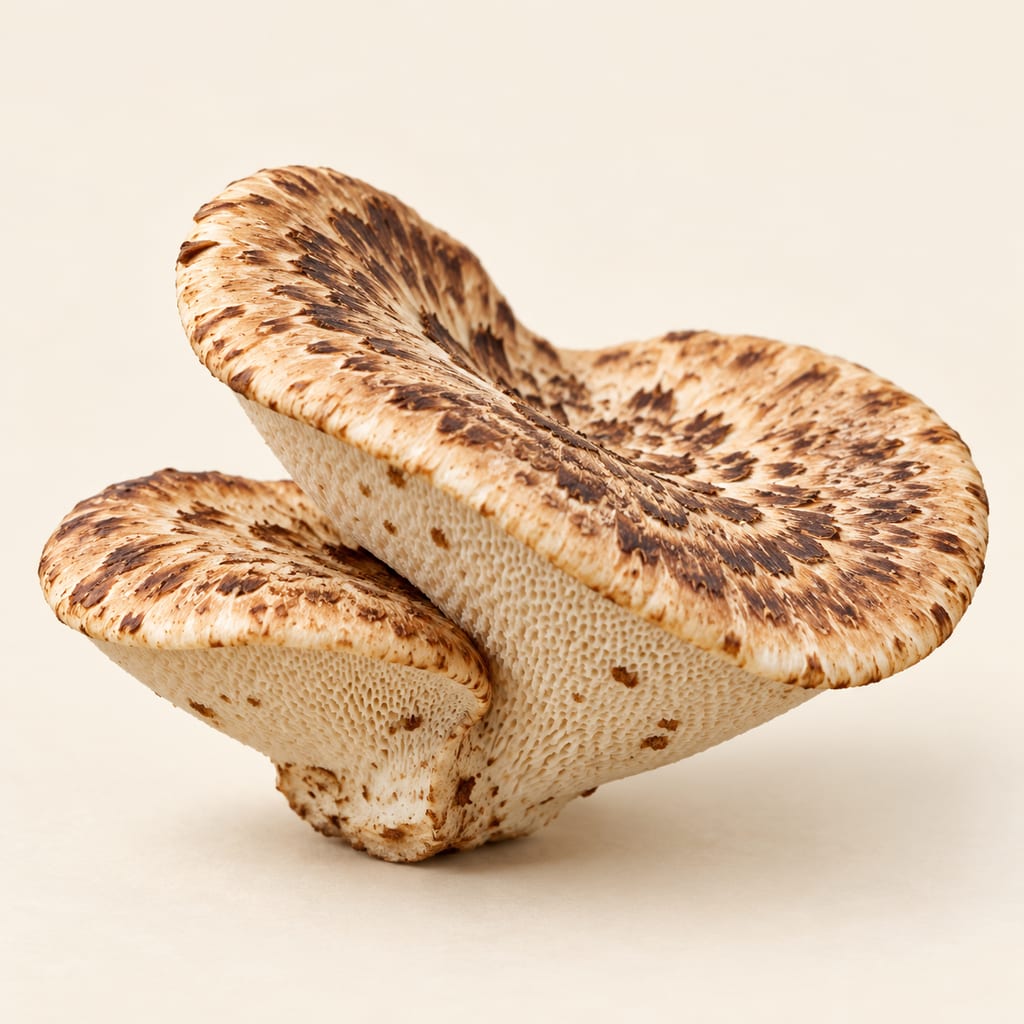
Dryad’s saddle is a wild hardwood polypore whose young tender margins are cooked in some regional food traditions; mature brackets quickly become tough.
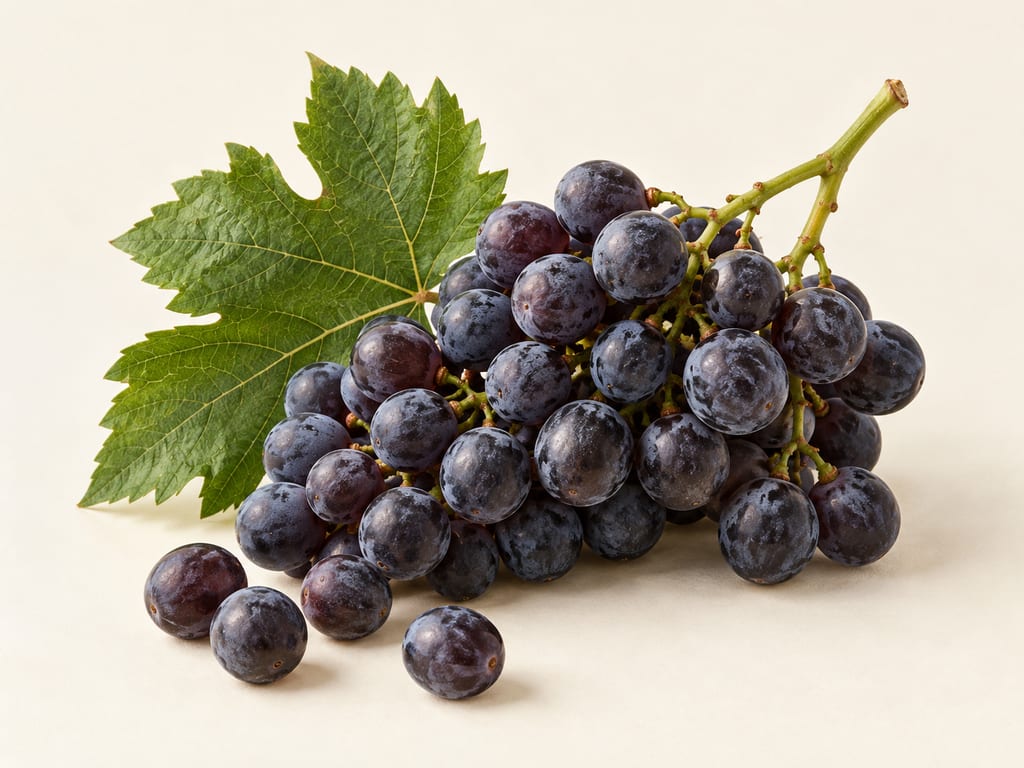
Wine grapes are fresh berries selected for vinification; their sugars fuel alcoholic fermentation, while cultivar, ripeness and handling shape the fruit and the wine it can become.
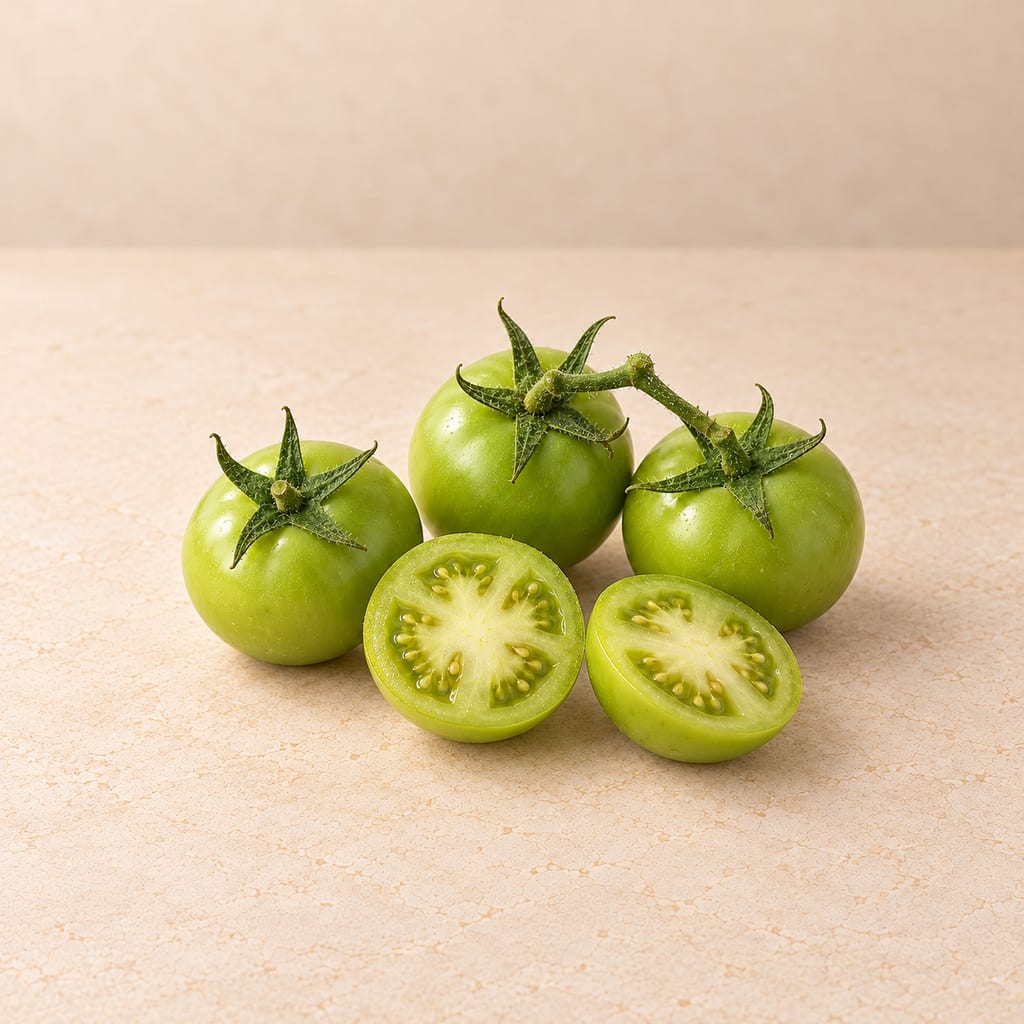
A green tomato is an unripe tomato, firm and sour, used for frying, pickling, relish and ferments. It carries tomatine, which falls as the fruit ripens.
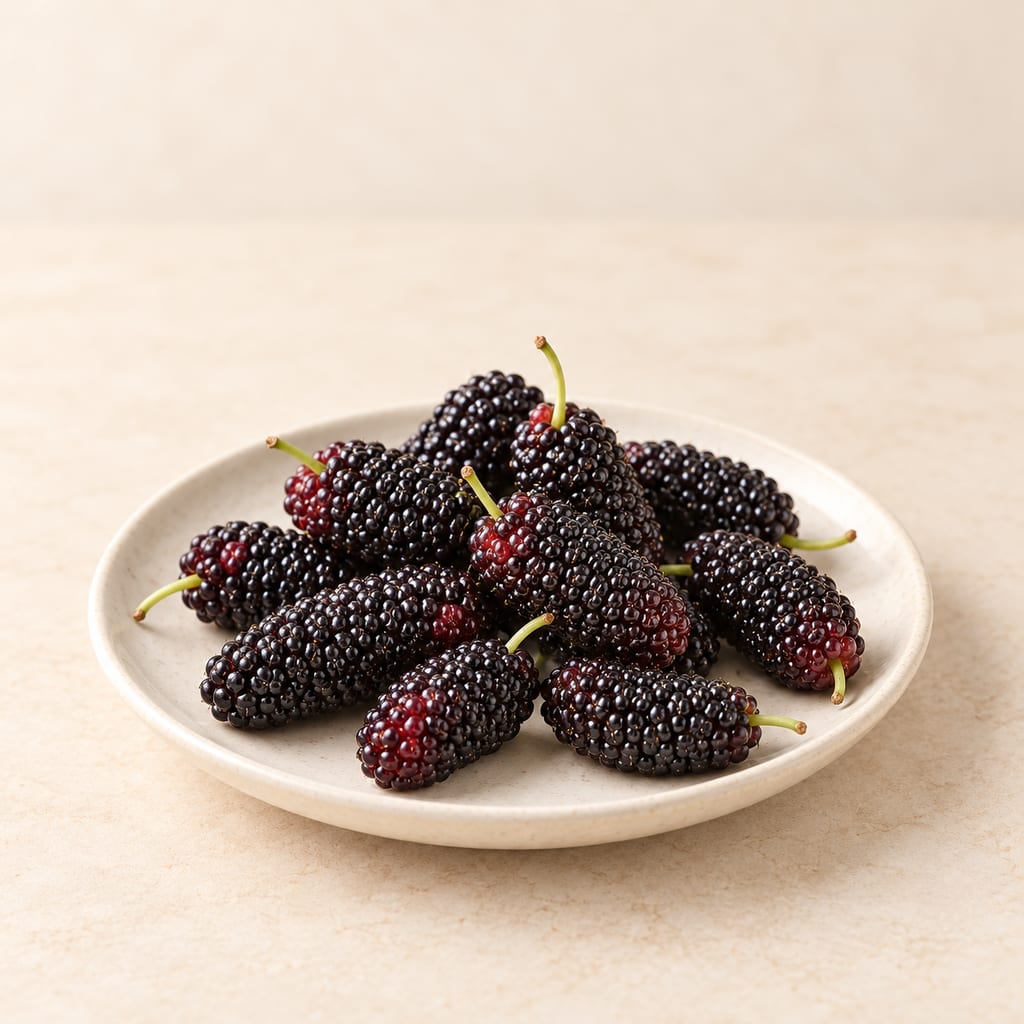
Mulberries are the soft fruits of Morus trees, used fresh and dried and as the fruit base for documented Georgian tklapi. The cited tklapi accounts do not identify a species.
No community contributions have been published for this entry yet.
Sign in to contribute. Published comments and photos are free to read.
IUCN Red List of Threatened SpeciesTaxonomy · Geography · Ecology · Conservation
Craterellus cornucopioides (Horn of Plenty)Accepted name and classification in Hydnaceae, Cantharellales.
Global assessment as Least Concern in 2024; population trend unknown.
Range mostly European; some extra-European records excluded from assessment scope because they may be misidentifications, other species or introductions.
Cited in: A woodland funnel, not a safe picture test; A partnership beneath the forest floor; Geography is not one evidence class; Safety and limits
Species FungorumTaxonomy
Craterellus cornucopioides — Species Fungorum synonymyTaxonomic name and nomenclatural context for Craterellus cornucopioides.
Cited in: A woodland funnel, not a safe picture test
Nutrients, MDPIEcology · Use · Handling · Safety
Black Trumpet (Craterellus cornucopioides (L.) Pers.)—Bioactive Properties and Prospects for Application in Medicine and Production of Health-Promoting FoodWild ectomycorrhizal fungus associated with broadleaved and mixed woodland trees.
Fresh and dried food use, cooking, drying and powdered mushroom flour for soups and sauces.
No robust evidence of wide processed-food use; laboratory bioactivity is not clinical benefit.
Cited in: A woodland funnel, not a safe picture test; A partnership beneath the forest floor; Cooking and preserving
Field guide, 2015 editionSeason · Habitat · Use · Handling
Field Guide to Edible Mushrooms of Britain and EuropeEuropean field account gives July–November and woodland glade habitat.
Cooked flavor use in soups, stews and casseroles.
Wash to remove grit; drying after cleaning is a storage approach. Direct PDF retrieval was unavailable during this check; details were surfaced in its indexed text.
Cited in: When it appears; Cooking and preserving
Institute of Botany, Ilia State UniversityTaxonomy · Geography · Season · Use
Craterellus cornucopioides (L.) Pers. — Ethnobiology of Fungi and Lichens of GeorgiaLocal Georgian and Megrelian names dzabra sok’o and dzabrasok’o.
All-region Georgia distribution based on herbarium records, broad-leaved woodland habitat, summer/autumn season.
Source-cited note says edible when young and fresh.
Cited in: When it appears; Cooking and preserving; Geography is not one evidence class; Safety and limits
Mycosystema / Science PressTaxonomy · Geography · Use
Species cataloging of edible and medicinal fungi in ChinaDataset geographic scope is within China and its data generation period is 2019–2025.
Lists Craterellus cornucopioides as food and medicinal; checklist classification does not establish a locality, season or preparation method.
Cited in: Geography is not one evidence class
Boletín Oficial del Estado, SpainSafety · Regulatory context
Real Decreto 30/2009 on sanitary conditions for marketing mushrooms for food usePreamble says C. cornucopioides was not then on the listed edible species and discusses studies suggesting possible inclusion under appropriate safeguards.
This is regulatory context, not a current blanket foraging or marketing authorization.
Cited in: Geography is not one evidence class; Safety and limits