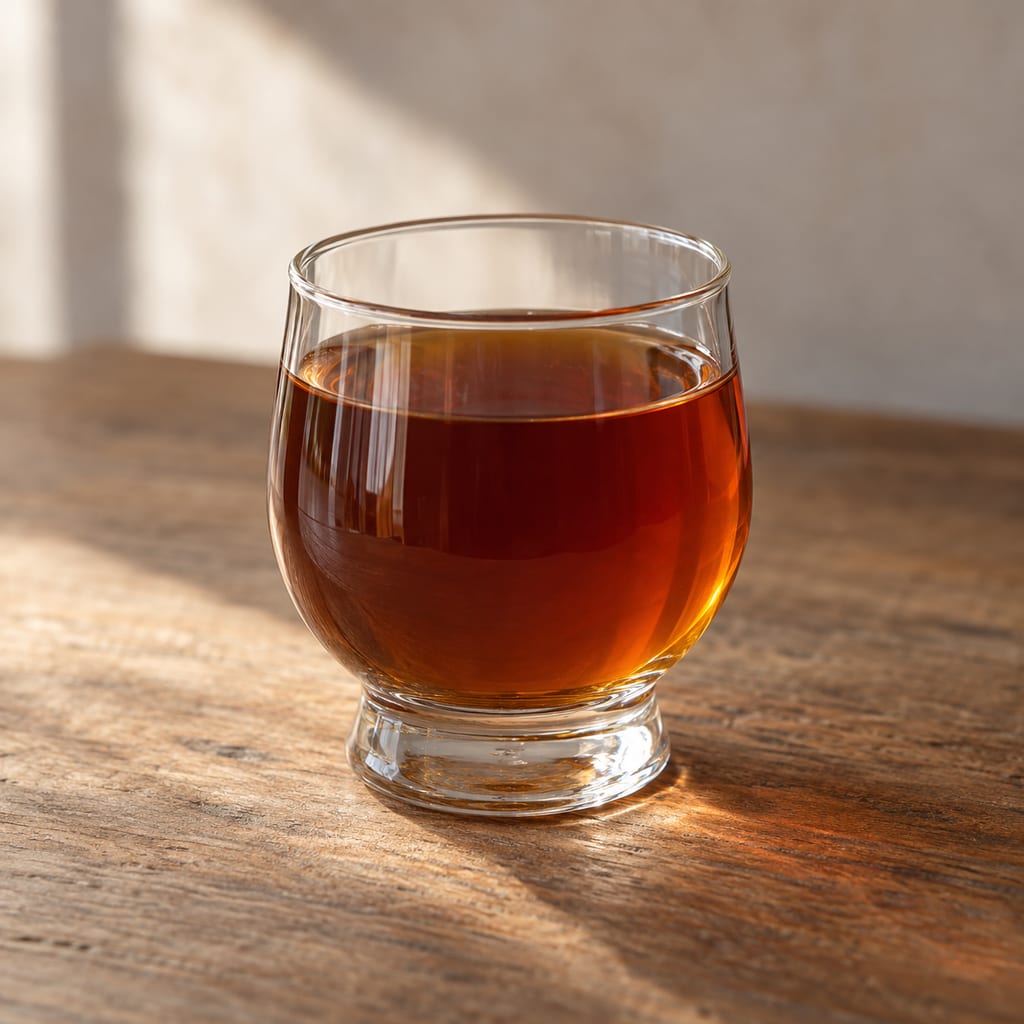
Musalais
Musalais is a fermented grape drink documented among Uyghur producers in A’wati, southern Xinjiang. A studied process combines grape juice and heated pomace extract before spontaneous fermentation.
 FermenteaWhere food goes to change
Substrates
Wine grapes are fresh berries selected for vinification; their sugars fuel alcoholic fermentation, while cultivar, ripeness and handling shape the fruit and the wine it can become.
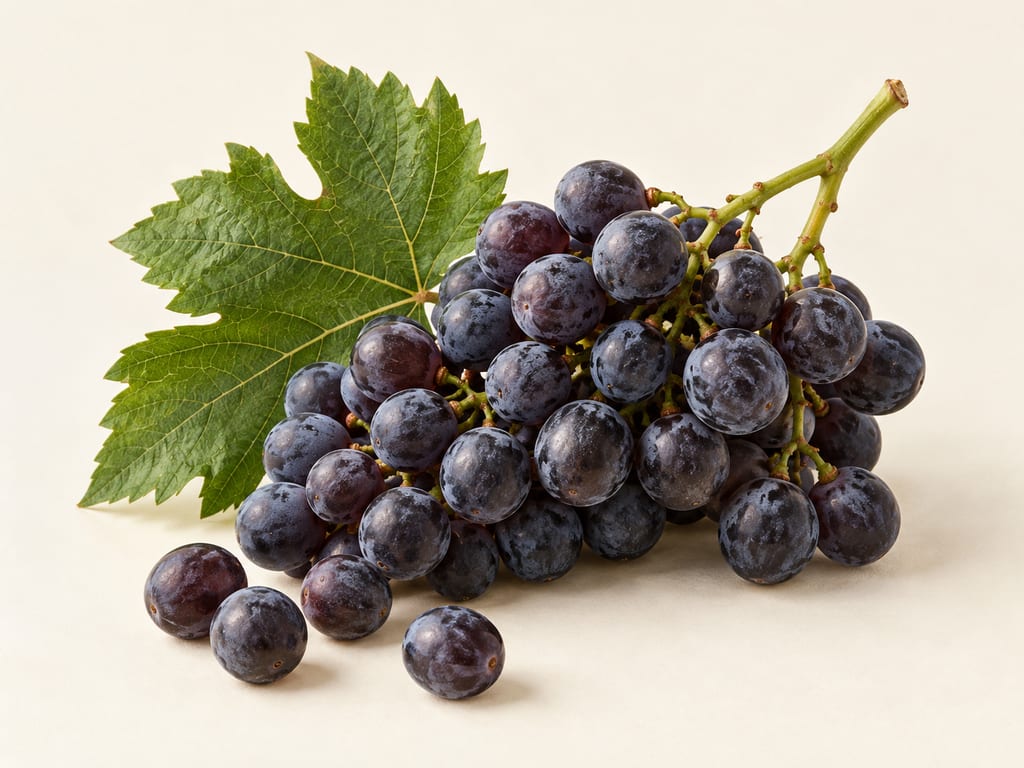
A wine grape is a fresh grape chosen for vinification. The name describes a destination and a working quality, not a separate botanical species. The OIV's definition turns on whether the fruit can be crushed or pressed by ordinary winery practice and can undergo spontaneous alcoholic fermentation. Table grapes are grown or selected for eating fresh; their sensory and commercial qualities lead that choice. The two categories overlap in real life: some wine grapes are eaten fresh, and some table or juice varieties can be fermented. A label describes the intended use, while cultivar and growing conditions shape the berry.
The word also covers more than the familiar bunches of European wine varieties. Most named European cultivars belong to Vitis vinifera, but winegrowing draws on other Vitis species and crosses as well. Cold-hardy grapes grown for northern climates show how practical wine-grape identity can include cultivars selected for local growing conditions. A dark berry, a pale berry, a seeded bunch and a seedless bunch do not by themselves tell you the wine a fruit will make. A single cultivar can produce different fruit from different sites and seasons, and wine style depends on decisions made after harvest as well.
The archaeological record joins grapes to wine-making in several places over thousands of years. A 2017 study combined chemical residue evidence and grape-related botanical evidence at Neolithic sites in Kvemo Kartli, in present-day Georgia. Its interpretation places grape wine at Gadachrili Gora and Shulaveris Gora around 6000 BCE. The article also compares the earlier evidence at Hajji Firuz Tepe in north-western Iran, dated around 5400–5000 BCE, and grape-wine evidence at Areni in Armenia around 4000 BCE. These are dated archaeological contexts. They describe wine production, not a documented first use of the grape as food and not the beginning of every later local wine tradition.
Plant genetics adds a second line of inquiry. Magris and colleagues studied 204 Vitis vinifera accessions and proposed a single domestication in Western Asia, followed by the movement of cultivated vines and crossing with local wild grapes in Europe. A 2023 study led by Dong proposed two concurrent domestications, in Western Asia and the Caucasus. The latter account here is based on its published abstract; the full study was not available for direct inspection. The studies use different genetic reconstructions and both address the deep ancestry of vines, not the identity of every archaeological wine residue. The archaeological article explicitly declines to assign a regional priority for the discovery of wine or domesticated grape. A single birthplace remains unsettled.
Later grape cultivation spread through farming, trade, migration, grafting and the movement of vine cuttings and cultivars. The evidence for one route cannot stand for the whole crop. European wine grapes carry genetic contributions from wild European vines; current varieties reflect deliberate selection as well as longer histories of movement. The broad name “wine grape” therefore gathers many locally adapted plants under one culinary purpose. It does not imply that each cultivar has the same pedigree, or that a modern bottle can be traced to one Neolithic site.
Grapes grow on woody perennial vines. A vineyard's climate, training system and cultivar affect when fruit ripens and which berries a grower can bring to harvest. University of Minnesota Extension's guide is specific to home growing in Minnesota: it recommends full sun, describes annual pruning, and lists wine cultivars such as Frontenac, Frontenac Blanc, Frontenac Gris, La Crescent and Marquette. The guide gives local planting and harvest advice for a cold northern climate. Those dates should not be carried over to a different hemisphere, climate or production system.
The same extension explains why growers choose a wine cultivar with care. Its Minnesota comparison describes wine grapes as generally higher in acid and sugar, with more skin relative to pulp and more seeds than table and juice grapes. These are useful regional comparisons, not a rule for every cultivar. Some Minnesota varieties can also be eaten fresh. Small berries, intense colour, acidity or seeds may matter in vinification, but none independently establishes a grape's suitability or final flavour. Producers work with cultivar, season, site and intended wine together.
Place names in the archaeological record belong to the specific evidence: Kvemo Kartli in Georgia; Hajji Firuz Tepe in the north-western Zagros of Iran; and Areni in Armenia. They are recorded as historical grape-wine attestations. Minnesota is a modern documented growing and winemaking association in the extension source. These place rows describe different relationships. They do not turn the sites into settled points of origin, and they do not imply that all grapes used in a recipe came from the place associated with that wine.
A grape berry has a skin, a much larger pulp and seeds. The pulp holds most of the juice. Glucose and fructose are its main simple sugars, and yeast consumes them during alcoholic fermentation, producing ethanol and carbon dioxide. Tartaric and malic acids are among the principal organic acids; their proportions vary with species, variety, ripening, climate and growing practice. As fruit ripens, sugar increases and acidity tends to decline, though the pace and balance depend on the berry and conditions. A grape is therefore a variable substrate rather than a fixed sugar-and-acid formula.
The skin contributes pigments, aroma precursors, tannins and surface-associated microorganisms. Dark-skinned grapes often have pale pulp, so colour in a red wine comes largely from pigments released from skins during contact with juice. The depth and persistence of colour depend on variety, chemistry and extraction, not simply on the colour of a whole bunch. Tannins occur in skins and seeds, and also in stems in some grapes. They interact with proteins and other phenolics, contributing to astringency and the later evolution of colour and texture. Their extractability changes with berry part and Vitis species.
Seeds are not interchangeable with pulp: their phenolics differ from those in skin, and their amount varies among cultivars. The cluster also contains a branching stem system; whether stems accompany the berries is a separate winemaking choice, not an inherent property of the ingredient. Crushing changes the berry from intact fruit to must, a mixture of juice and varying solids. The OIV permits wine grapes to be crushed or pressed. The berry's anatomy explains why those choices affect the juice's contact with skins, seeds and solids, without prescribing a single method.
Crushing makes the berry's nutrients available to microbes on its surface. Yeasts and bacteria can move from the skin into the juice and solids, and grape processing changes which populations grow. A spontaneous fermentation draws on the microorganisms carried with fruit and those present in the winery. The winery environment and equipment matter too, so a grape's own surface is not a complete description of the inoculum. The organisms on one delivery of grapes cannot be used to predict the exact flora of another.
Yeast uses the fermentable sugars to make ethanol and carbon dioxide, while the yeast population changes as conditions shift during fermentation. Some wine processes include additional microbial stages, but the raw grape alone does not specify whether those stages occur. The fruit gives the ferment its substrate and brings a variable starting community; the cellar and process guide the result. Inoculated and spontaneous methods are distinct choices. Neither follows automatically from calling the ingredient a wine grape.
Processing also controls extraction. Pressing separates liquid from solids; skin contact lets more skin-derived pigments and phenolics enter juice. Removing most solids changes both the material available to microbes and the compounds extracted. UC Davis notes that winemaking choices are often made for flavour extraction but also influence microbial populations. A source's preferred crush, press, maceration or solids-contact practice belongs to its named wine method. It should not be condensed into a universal home fermentation sequence, and no one method is implied by this ingredient page.
Harvest decisions belong to a variety and place. Minnesota Extension advises growers there to judge ripeness by tasting a few berries because colour can change before ripeness. That sensory instruction concerns fruit maturity only; taste does not establish microbial safety or prove that a ferment is safe. The page also recommends cutting full clusters carefully, removing discoloured or injured berries and cooling fruit after picking. These are home-garden handling notes from one regional guide, not a rule for commercial harvest or an entire winery.
For its home-grown grapes, the Minnesota guide recommends steady refrigerator storage and says most clusters keep for about one or two weeks under that guidance. That duration is local extension advice for harvested eating or garden grapes, not an assurance for wine fruit, damaged berries, a fermenting must or a processed product. Harvest timing, condition, cultivar and intended use determine what information is useful. If a recipe names a specific variety or maturity cue, those details belong to that recipe and its source.
The same locality matters for cultivation. Grapevines need a growing system that fits their site, and extension guidance discusses sun, pruning, trellising, winter hardiness and pest pressure. A healthy cluster is shaped long before the cellar: an unsuitable cultivar, poor canopy air movement, weather injury or disease can alter the fruit a grower sees. Minnesota's named cold-hardy varieties are one response to its climate. Other regions have different cultivars and calendars; this ingredient article does not provide a general vineyard plan.
Table grapes are selected for eating as fruit, with sensory and market qualities that suit fresh consumption. Wine grapes are selected for vinification, where sugar, acidity, skins, seeds and response to processing matter alongside taste. The categories do not form a strict wall. Minnesota Extension explicitly notes that wine grapes can be eaten fresh, and varieties used for juice or jelly may also be made into wine. Intended use is a helpful first distinction; it does not settle every cultivar's capabilities.
Dried grapes, usually called raisins or sultanas in English-language markets, are a different prepared form. In its oenological definitions, the OIV describes dried grapes as dehydrated fruit that cannot be crushed by normal winery procedures or undergo spontaneous fermentation, and assigns it to food use rather than wine or grape-juice production. That technical definition keeps raisins separate from the fresh fruit category discussed here. Some wines may use dried grapes under a source-specific method, but that makes the dried fruit a separate ingredient or process and requires its own evidence.
Pressed grape juice and must also need careful naming. Juice is the extracted liquid; must is juice with the solids that remain at a given point in processing. The word must does not identify a grape cultivar, fermentation status or final wine style. A juice may be fermented, concentrated, heated or used in a non-alcoholic drink depending on its process. Those products are not interchangeable with a fresh grape cluster.
Fresh grape flavour ranges widely. Variety, ripeness and growing conditions affect sweetness, acidity and the compounds that shape aroma. A Minnesota extension table records named varieties with descriptions such as floral, fruity, apricot or honey notes; those notes are local cultivar descriptions, not promises about every harvest or a wine's aroma. A cluster's skin colour does not reliably predict sweetness, acidity or eventual wine colour. Wine receives further character from extraction, microbial activity, fermentation conditions and maturation.
Different Vitis types also differ chemically. The 2020 review compares cultivated wine grapes and other Vitis species, describing species-level differences in sugar ratios, organic acids, anthocyanins and tannins. It notes that wine grapes can carry different skin pigment forms, including differences between V. vinifera and interspecific hybrids. This helps explain why an unfamiliar grape may behave differently from a familiar European variety. The review does not imply that one species is universally better, or that a single chemical test can predict a preferred style.
Fresh grapes can be eaten, pressed for juice or sent to fermentation. Wine-making uses the same fruit but treats it through a source-specific process: a grower or producer chooses a cultivar and maturity for its place, and the maker decides how to crush, press and handle the fruit. The OIV definition separates the raw grape from wine as the beverage that results from alcoholic fermentation. That distinction keeps the fruit's identity clear when a reader moves from an ingredient page to a particular regional preparation.
Archaeological studies document grape-wine evidence in Georgia, Iran and Armenia at different dates. Later vessels and current regional processes raise their own questions. Evidence from Neolithic jars does not show that a modern qvevri method continued unchanged from that era, and a grape's presence in a historical wine does not identify every cultivar in use. The history of grape-growing and the histories of named wines overlap without becoming one chronology.
Fermentea's linked preparations give each use its own place and method. A shared ingredient does not make two regional wines the same recipe, nor does it establish that a fruit form recorded for one is suitable in every other. The linked page for each preparation carries its own source, ingredients and handling choices. This article explains what grapes contribute as a raw substrate while leaving those method-specific details with the drink that uses them.
The earliest archaeological wine evidence is not the earliest possible consumption of grapes, nor does it identify the first cultivated vine. Residues and seeds support bounded claims about specific sites. Genetic studies offer models for domestication and later crossing, and these models continue to differ. The sources reviewed here do not locate one first grape-growing community, one ancestor for all wine varieties or an uninterrupted chain from Neolithic jars to present-day wines.
Fruit chemistry and microbial populations also vary. A species-wide review cannot supply a batch analysis, and an extension cultivar description cannot substitute for a winery's source data. UC Davis documents how equipment and processing can influence microbial populations as well as flavour extraction. That work explains why grapes matter within a particular fermentation; it does not certify a spontaneous ferment or establish a home safety endpoint. No temperature, time, acidity, sugar target or storage assurance is supplied for making wine in general.
This page treats grapes as a substrate and a crop with many uses. It gives no universal cultivar recommendation or wine recipe. Use a preparation's own evidence for its fruit form, quantities and handling, keep regional claims tied to their sources, and treat sensory impressions as quality observations rather than safety tests.
The archaeological study reports grape-wine evidence at Gadachrili Gora and Shulaveris Gora; this does not establish a unique origin or uninterrupted later practice.
The cited study compares wine evidence in this archaeological context; the association is a historical attestation, not a domestication priority claim.
Grape and wine-related evidence from the Areni cave context is described in the study; it does not establish the origin of all wine grapes.
The University of Minnesota Extension documents cold-hardy wine cultivars and local cultivation and harvest guidance; this is modern regional use, not the origin of those grapes.
Musalais is a fermented grape drink documented among Uyghur producers in A’wati, southern Xinjiang. A studied process combines grape juice and heated pomace extract before spontaneous fermentation.
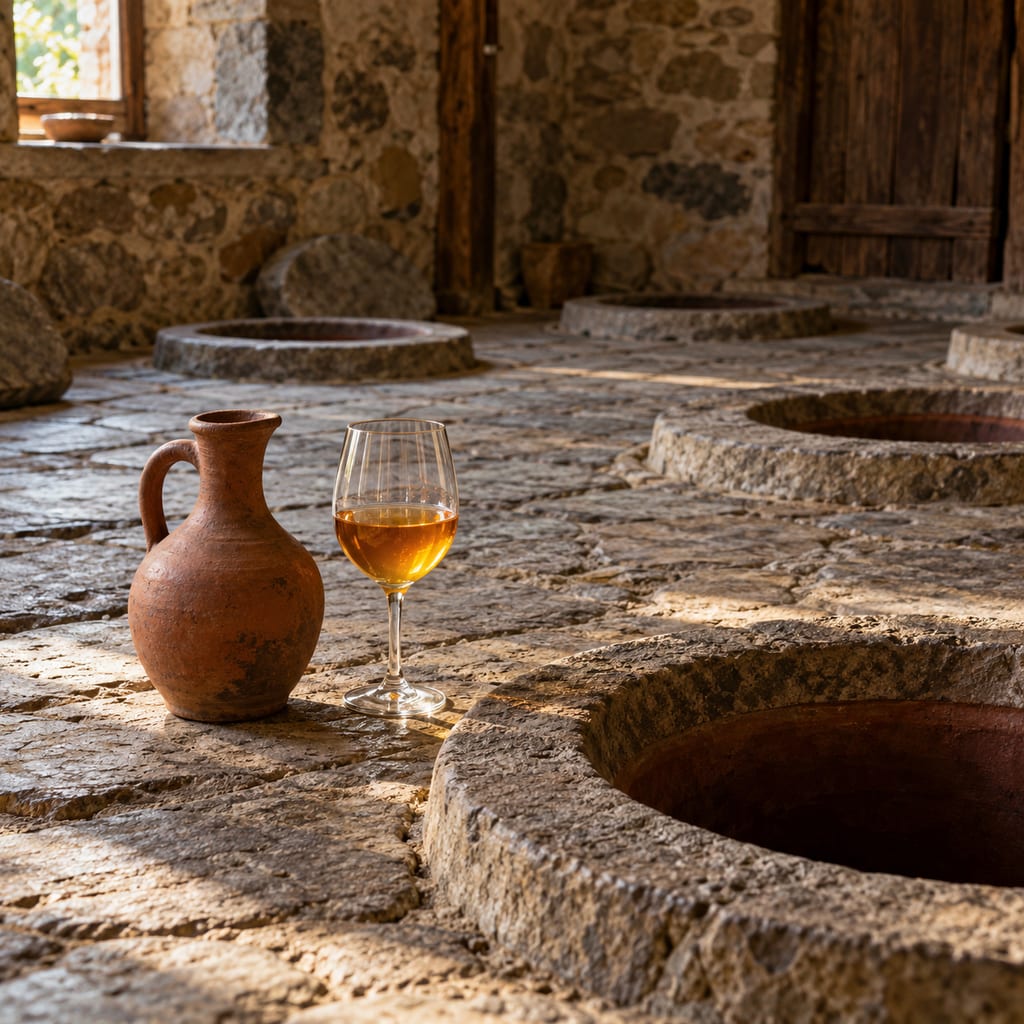
Georgian wine fermented and matured in buried clay vessels called qvevri, usually with grape skins, pips and sometimes stems, in styles from amber to red that differ by region.
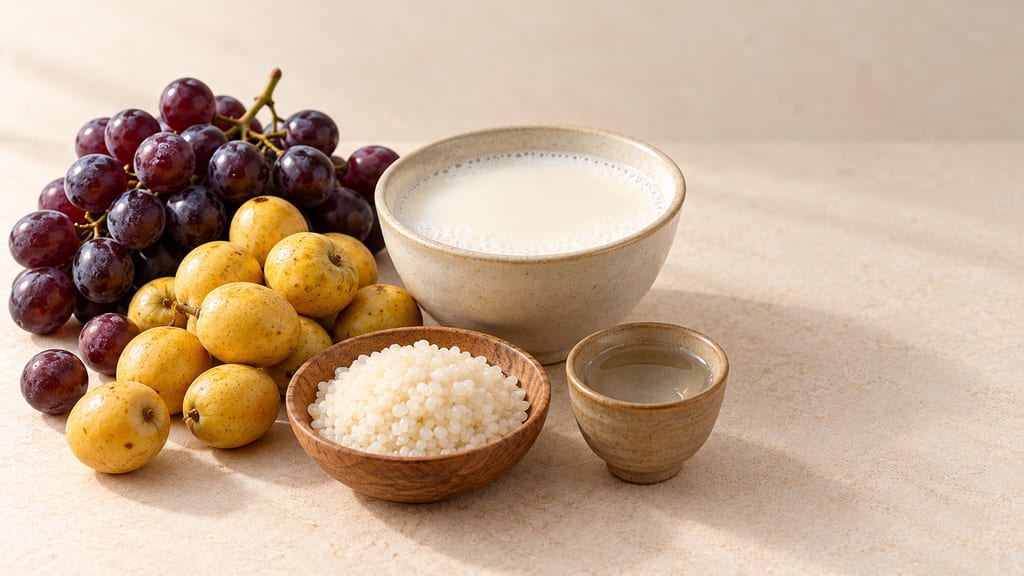
A marula harvest, a rice mash and a bowl of fermented mare’s milk reveal different ways to make alcohol, and different kinds of knowledge behind the drink.
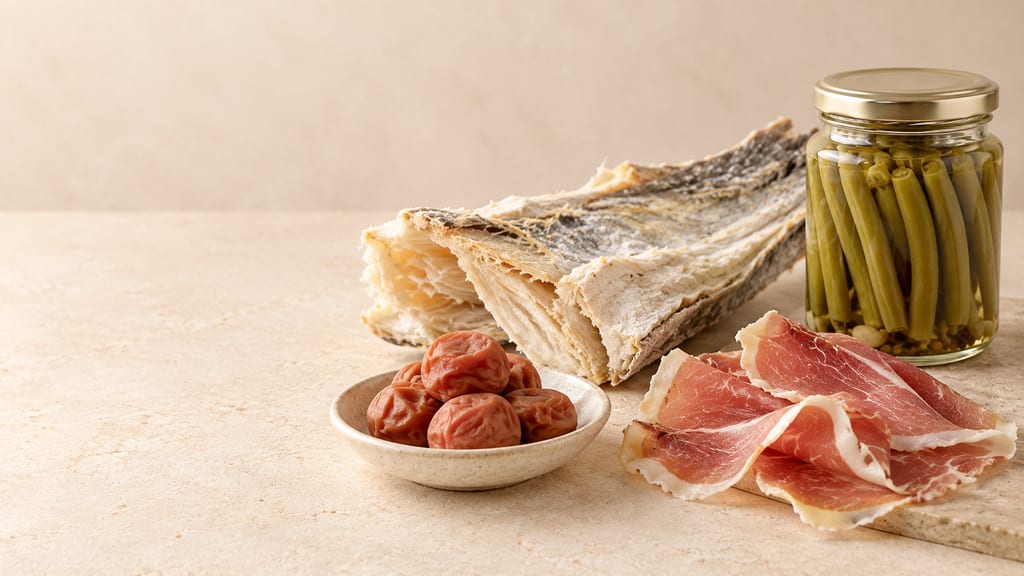
Every preserved food is a stack of barriers against microbes, enzymes, air and time. This is how they work, what a recipe's numbers measure, and how cooks worldwide build them.
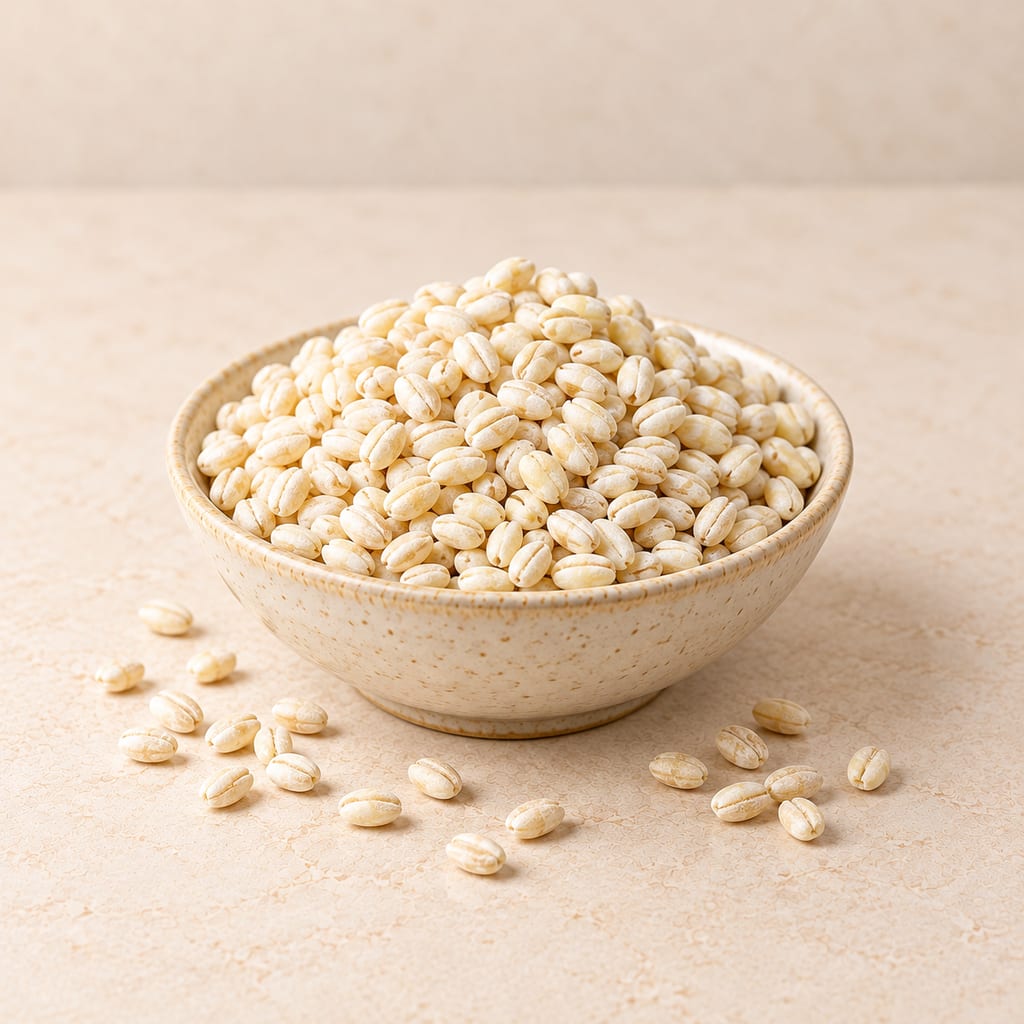
Barley is a hardy cereal, domesticated in the Middle East over 10,000 years ago, eaten whole, pearled or milled, malted for brewing, and grown with koji mold for barley miso.
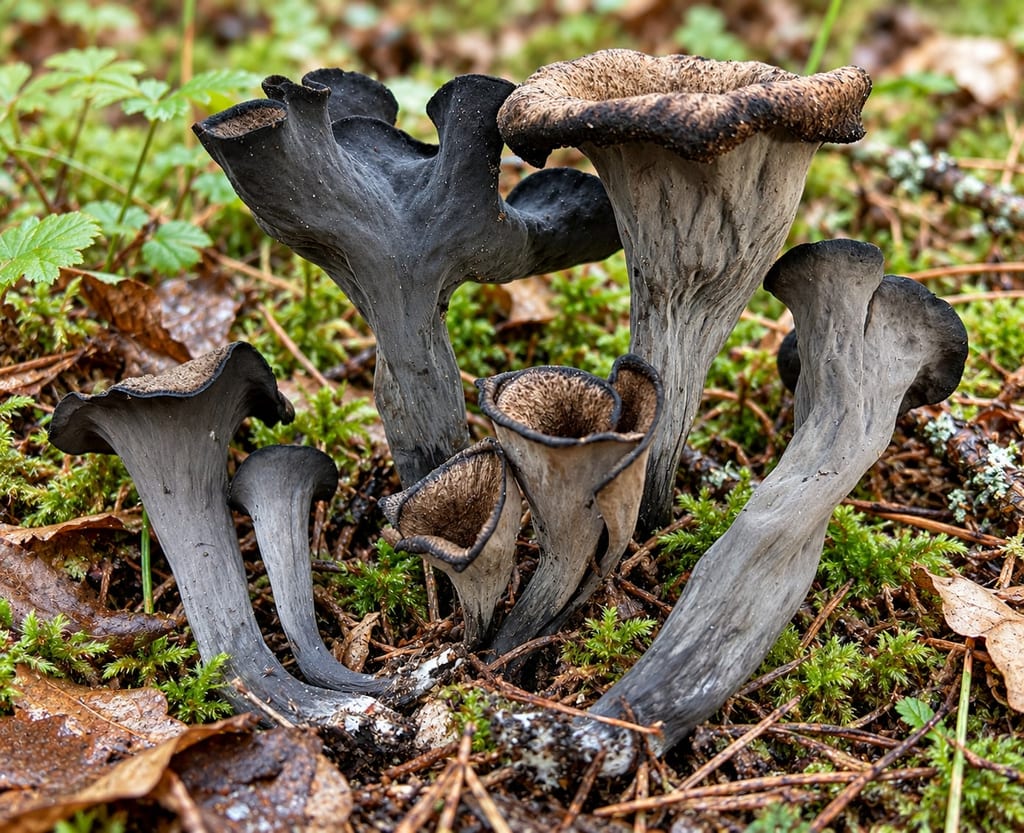
Black trumpet, or horn of plenty, is Craterellus cornucopioides, a dark hollow woodland mushroom used in cooked dishes and dried seasonings, with regional identity and range limits.
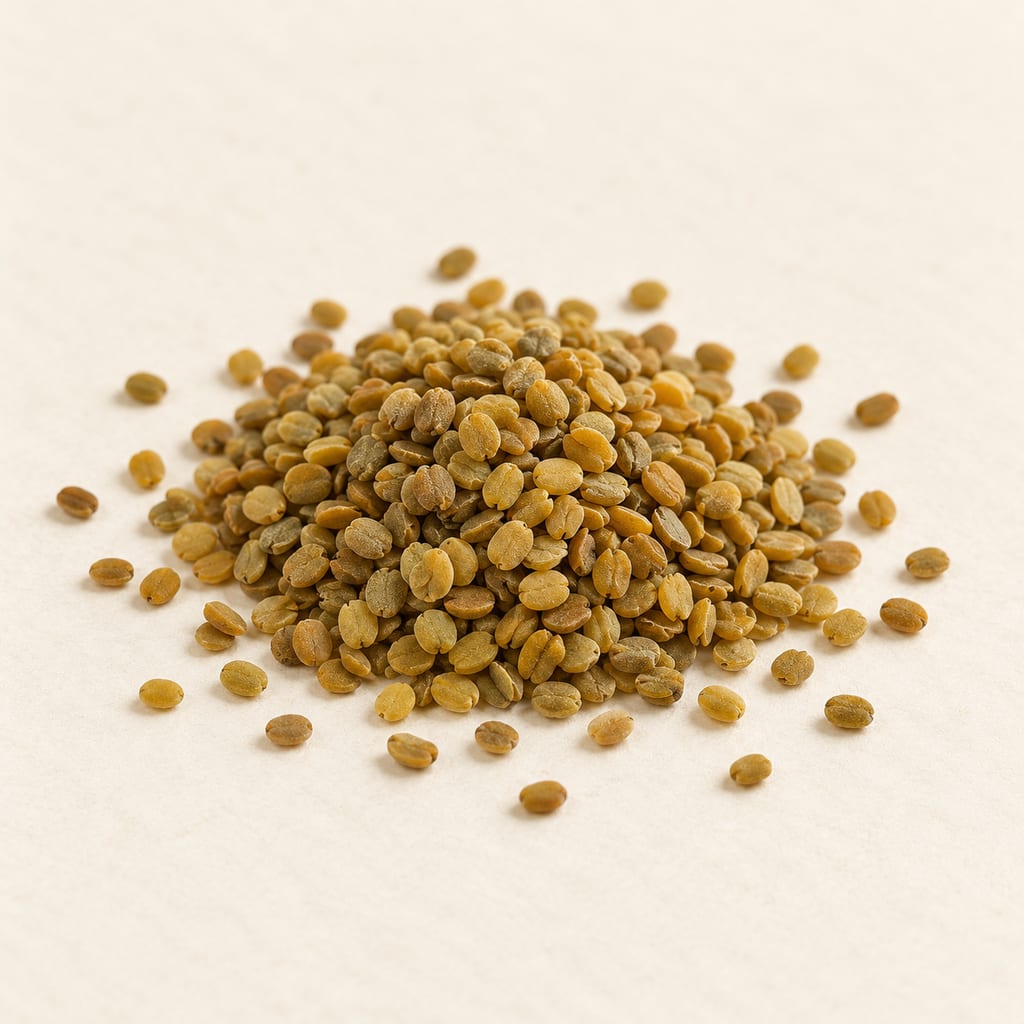
Blue fenugreek (Trigonella caerulea) is an aromatic annual used as an herb in Alpine cheese and bread and as a seed spice in Georgian cooking; its identity differs from common fenugreek.
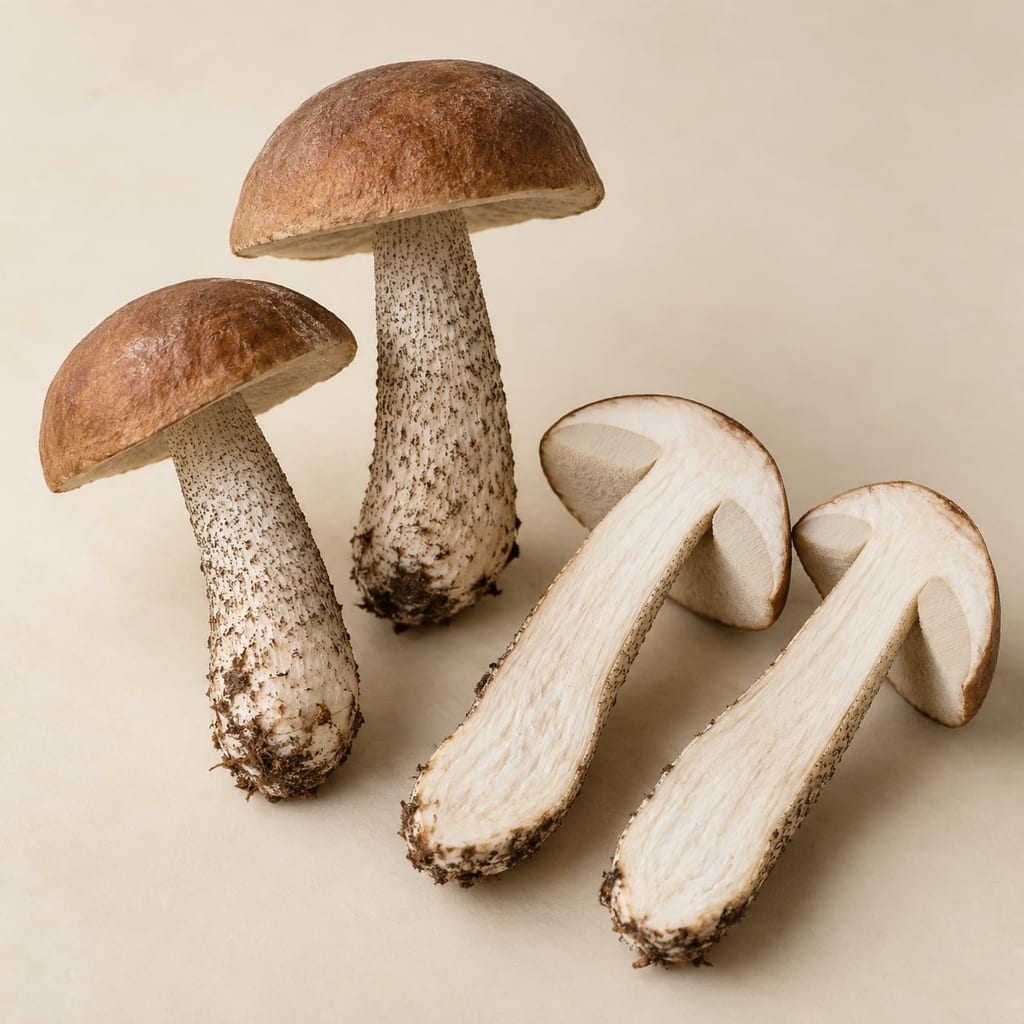
A wild birch-associated bolete eaten in parts of Europe. Its older name, Boletus scaber, remains common in historical sources; regional food records and cooking cautions require source-specific reading.
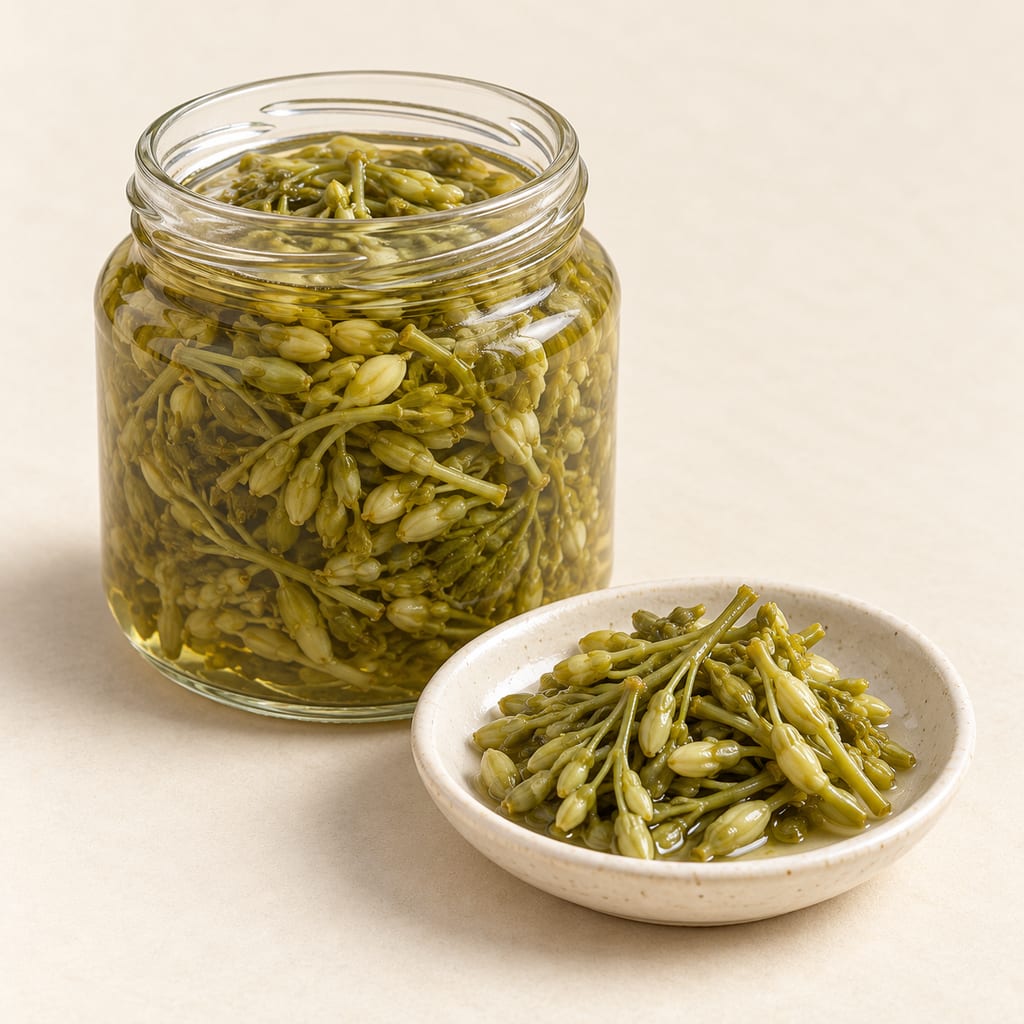
Georgian sources describe jonjoli as a flower-bud food associated with more than one Staphylea species. A 2021 figure caption names S. pinnata for the pictured preparation, while the study’s food table and the FAO profile preserve paired or shared-species evidence.
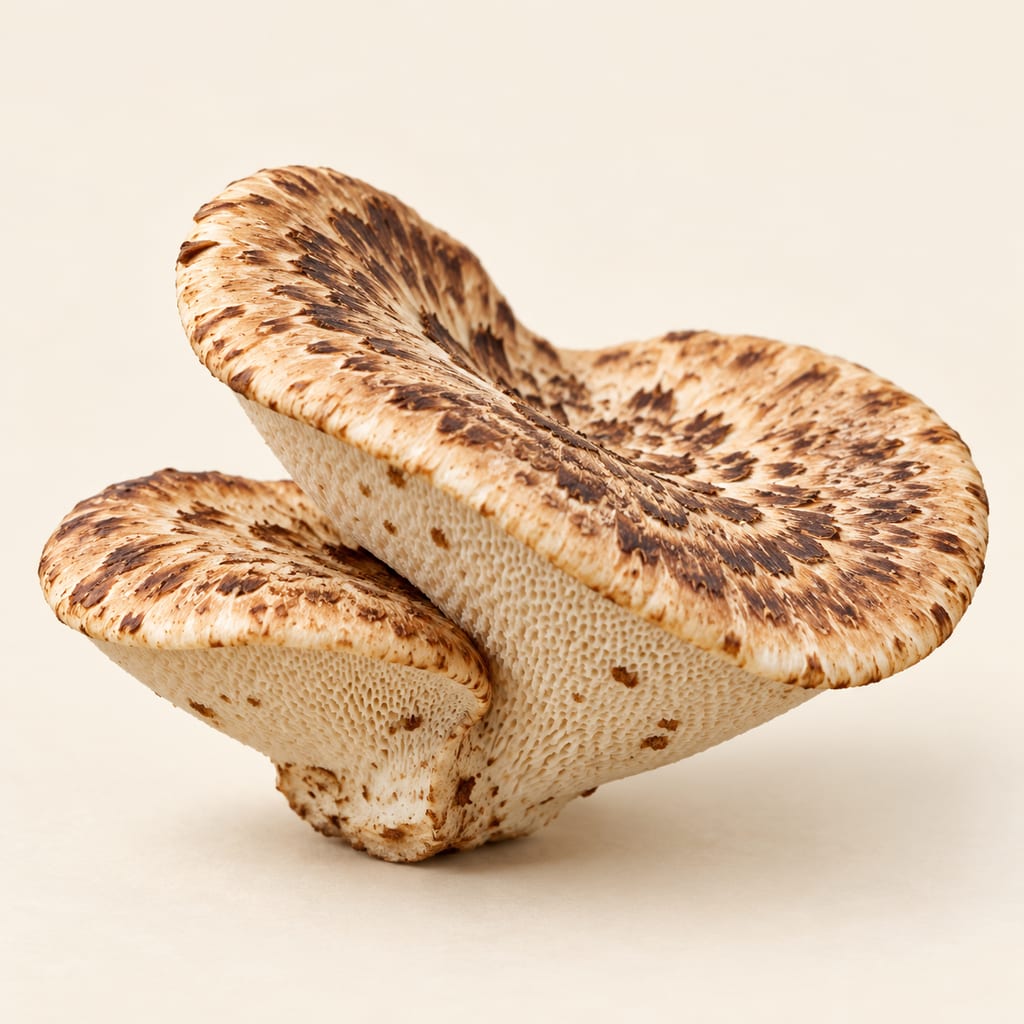
Dryad’s saddle is a wild hardwood polypore whose young tender margins are cooked in some regional food traditions; mature brackets quickly become tough.
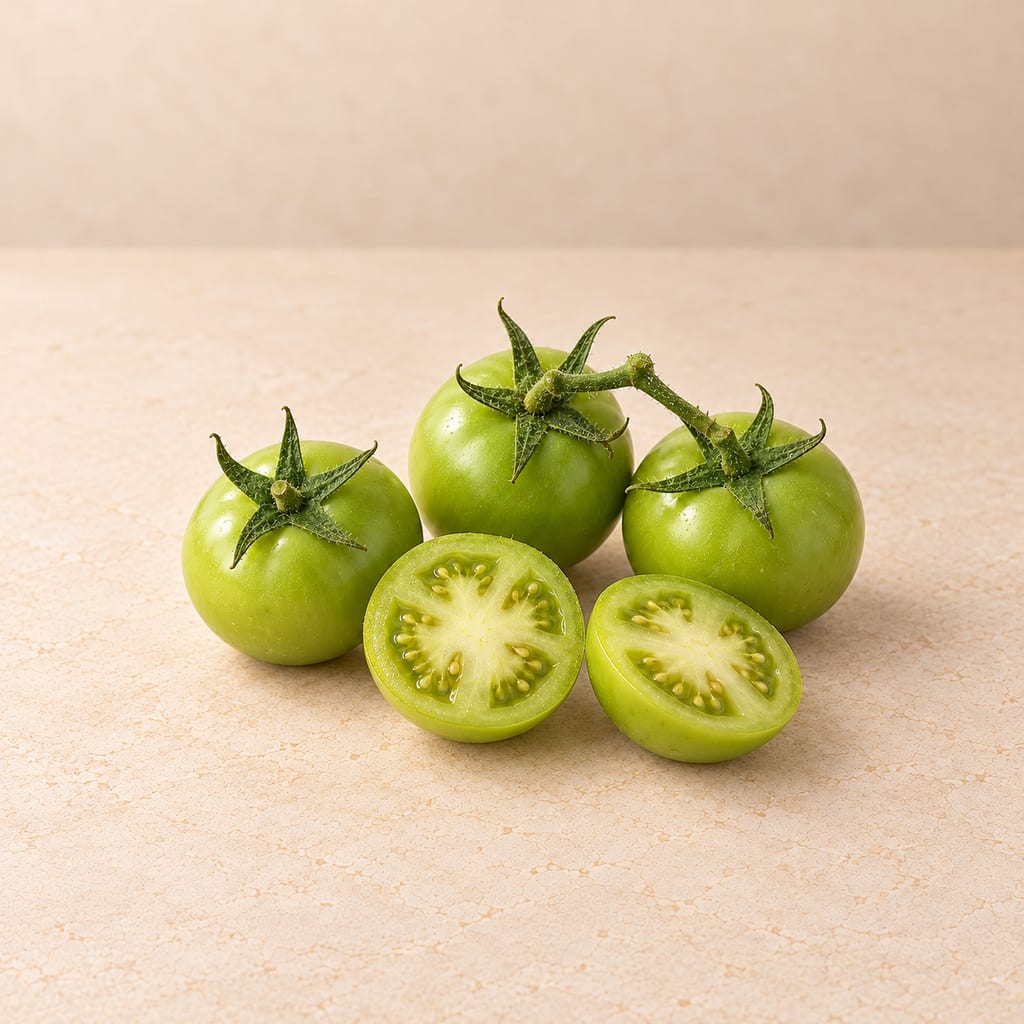
A green tomato is an unripe tomato, firm and sour, used for frying, pickling, relish and ferments. It carries tomatine, which falls as the fruit ripens.
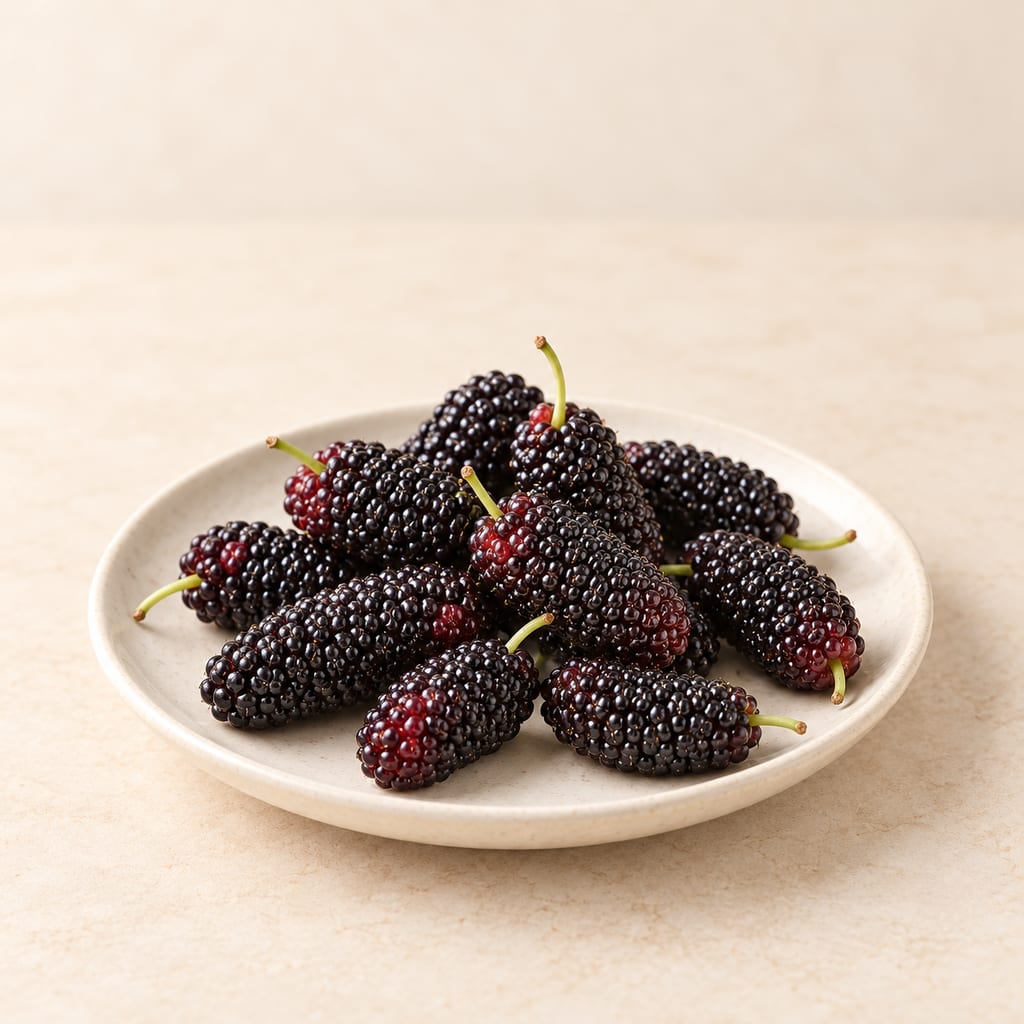
Mulberries are the soft fruits of Morus trees, used fresh and dried and as the fruit base for documented Georgian tklapi. The cited tklapi accounts do not identify a species.
No community contributions have been published for this entry yet.
Sign in to contribute. Published comments and photos are free to read.
International Organisation of Vine and Wine (OIV)Definition · Classification
Grapes, International Code of Oenological Practices, Part I: DefinitionsThe OIV distinguishes wine grapes by destination and capacity for normal winery crushing or pressing and spontaneous alcoholic fermentation.
The code separately defines table grapes for fresh consumption and dried grapes as a food form outside normal winery crushing and spontaneous fermentation.
Cited in: A grape headed for the press; The berry and what it brings to fermentation; From fruit surface to fermenting must; Wine grapes beside table grapes and raisins; Wine across places and periods
Proceedings of the National Academy of SciencesArchaeology · History
Early Neolithic wine of Georgia in the South CaucasusThe full article reports chemical and archaeobotanical evidence at Gadachrili Gora and Shulaveris Gora in Kvemo Kartli, Georgia, dated to around 6000 BCE.
It discusses earlier Iranian and later Armenian archaeological evidence, then says research cannot assign regional priority for wine or grape domestication.
The article distinguishes Neolithic wine evidence from later Iron Age qvevri winemaking.
Cited in: A long record with an unsettled beginning; Wine across places and periods; What this evidence leaves open
Nature CommunicationsGenetics · Domestication
The genomes of 204 Vitis vinifera accessions reveal the origin of European wine grapesThe full study's genomic model proposes one Western Asian grapevine domestication associated with European wine grapes, followed by movement and introgression with local wild grapes.
Cited in: A long record with an unsettled beginning; Vines, cultivars and growing places; What this evidence leaves open
Science (PubMed record)Genetics · Domestication
Dual domestications and origin of traits in grapevine evolutionThe PubMed abstract for the 2023 study describes a dual-domestication model in Western Asia and the Caucasus; only the abstract, not the full article, was accessed for this account.
Cited in: A long record with an unsettled beginning; What this evidence leaves open
MoleculesFruit chemistry · Fermentation
Chemistry and Reactivity of Tannins in Vitis spp.: A ReviewThe full review describes skin, pulp and seed anatomy; glucose and fructose as the principal berry sugars; tartaric, malic and citric acids; and the variation of anthocyanins and tannins among berry parts and Vitis taxa.
It explains yeast consumption of glucose and fructose and the role of phenolic extraction and reaction in wine colour and astringency.
Cited in: The berry and what it brings to fermentation; A broad flavour, shaped by the cultivar
University of California, Davis, Department of Viticulture and EnologyMicrobiology · Processing
Grape, Juice and Must Processing Impacts on FloraThe university explains that crushing brings berry-surface microbes into contact with fruit nutrients, that skins contribute microbes to juice and must, that winery equipment also contributes flora, and that processing choices shape both microbial populations and flavour extraction.
Cited in: From fruit surface to fermenting must; What this evidence leaves open
University of California, Davis, Department of Viticulture and EnologyMicrobiology
Diversity of Wine YeastsThe page describes indigenous vineyard and winery yeasts and cautions that source populations vary; the passage supports spontaneous-fermentation context without establishing a universal grape-surface starter.
Cited in: From fruit surface to fermenting must
University of Minnesota ExtensionCultivation · Handling
Growing grapes in the home gardenThe Minnesota-specific extension guide describes grapevines as woody perennials, full-sun growing, annual pruning, wine-grape cultivar choices, and local harvest and storage guidance.
It compares the Minnesota wine-grape group with table and juice grapes and lists cold-hardy named wine cultivars; its season dates and storage guidance are not universal winery limits.
Cited in: A grape headed for the press; Vines, cultivars and growing places; Harvest, selection and storage; Wine grapes beside table grapes and raisins; A broad flavour, shaped by the cultivar