
Preservation intake
Preserving food today: how cold, heat, drying, salt and acid keep a harvest, and how the world's traditions use them
Every preserved food is a stack of barriers against microbes, enzymes, air and time. This is how they work, what a recipe's numbers measure, and how cooks worldwide build them.
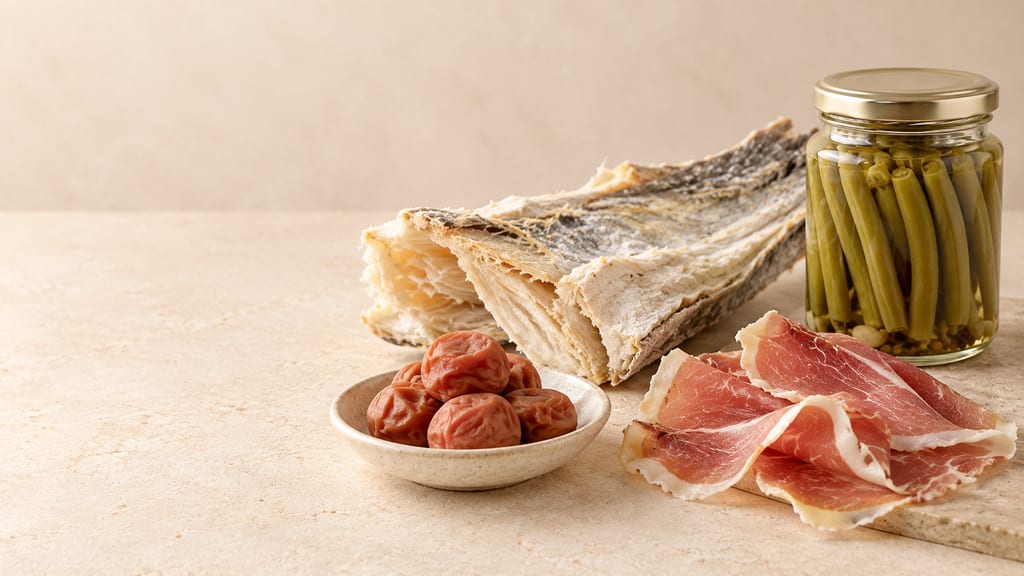
Stockfish, umeboshi plums, a cured ham and a sealed jar: four ways of keeping food that are still in use.
What spoils a harvest
A basket of fish, a crate of tomatoes and a pail of milk all begin to change the moment they are gathered. Bacteria, yeasts and moulds on and in the food multiply, or simply survive and wait for better conditions. The food's own enzymes keep working: they soften tissue, brown cut surfaces and shift flavours. Fats meet oxygen and light and slowly turn rancid. Water moves, so a dry food pulls moisture from damp air while a fresh one loses it and shrivels. Insects and rodents take their share of grain and dried fish. A cabbage or a sack of potatoes is still alive, still breathing, and given time it will sprout, wilt or rot from the inside.
Preservation is the craft of slowing or stopping these routes, and a technique aimed at one of them can leave the others untouched. Garlic covered in oil is the classic example. A dark bottle shields the oil from light and the oil keeps air off the cloves, but garlic is a low-acid vegetable, and the airless space under oil suits Clostridium botulinum, the soil bacterium whose toxin causes botulism. One problem is solved and a far more dangerous one is created.
That is why the foods that keep best rely on several barriers at once. A dry fermented sausage depends on salt and curing agents, on bacteria that acidify the meat, on drying that lowers the water available to microbes, and on the package that protects it afterwards. Meat processors call such products multi-hurdle foods: no single step makes them shelf-stable, only the combination does, and the combination has to be shown to kill the pathogens of concern as well as stop them growing later. A jar of pickles may combine added vinegar with a heat process. A bag of frozen peas depends on an unbroken cold chain and, before that, on a short blanching that stops the enzymes which would otherwise dull its colour, flavour and texture in the freezer. The packages can look alike. The systems inside them are completely different.
This account sorts preserved foods into five practical groups. An ambient candidate can sit on a shelf at room temperature, but only when its whole tested process, package and storage specification are met; an improvised copy does not inherit that status. A chilled food still needs refrigeration, however much it has been salted, smoked, fermented or vacuum-packed. A frozen food needs the freezer. An intermediate product has been through a step that prepares it for later preservation, and it is not safe to store on that step alone. A specialist food needs commercial or professionally validated processing; it is described here so a reader can understand it, not so it can be reproduced in a home kitchen.
Stopping growth is not the same as killing
Most preservation works by making food a poor place to grow rather than by killing what is already there. Water activity explains why. Microbes need water they can use, and water activity measures it as the vapour pressure of the food compared with that of pure water under the same conditions. Pure water scores 1.0; a food at 0.80 holds its water so tightly that its vapour pressure is 80 per cent of pure water's. Lower the available moisture far enough and growth stops. The organisms already present do not have to die. Many simply wait.
Freezing works the same way with cold, and freeze-drying combines the two. Bacteria survive freeze-drying and become active again when water is added back, which is why rehydrated freeze-dried food needs a kill step, such as cooking, before it is eaten. Fish shows the pattern with a chemical hazard. In some fish, bacteria produce an enzyme that turns the amino acid histidine into histamine; the enzyme stays stable in frozen fish and can become active again very quickly after thawing, and once histamine has formed, neither cooking, retorting nor freezing removes it.
Protection therefore belongs to conditions, and conditions change. A dry bean is a dry-store food; soaked and cooked, it is a moist and perishable one. A shelf-stable mushroom powder stirred into a cream sauce becomes part of a sauce. Salt cod soaked for a stew has lost much of the salt that kept it. The storage rules for a preserved ingredient do not travel into the dish made from it, so a careful cook keeps two records: one for the stored ingredient and one for the finished food. For foods where the hazard may already be inside, such as raw egg, raw flour, spices, freeze-dried raw meat and cured yolks, two separate questions need answers: what reduced the hazard in the first place, and what stops survivors from growing afterwards? A good answer to one is not an answer to the other.
The numbers that matter, and what each one leaves out
Recipes and labels are full of numbers, and each measures something narrower than it seems. Temperature and time describe exposure during heating, cooling, fermenting, drying and storage, but a thermostat reports the air, not the centre of a dense jar of purée or a whole ham. A correctly set cold room can still hold a pot of stew that takes hours to cool in the middle.
pH measures acidity on a scale where lower numbers mean more acid. In home canning, pH 4.6 is the dividing line. Acid foods at 4.6 or below, including most fruit, pickles, sauerkraut, jams and fruit butters, can be processed in boiling water. Low-acid foods above 4.6, which include red meat, seafood, poultry, milk and fresh vegetables other than most tomatoes, need the higher temperatures of a pressure canner, because Clostridium botulinum spores can grow and form toxin in moist, low-acid food sealed away from air. Yet pH is not the percentage acidity printed on a vinegar bottle, a reading from the brine may not describe the centre of a thick piece of vegetable, and timing matters. A vegetable ferment should acidify promptly, which is why careful fermenters record pH and time together throughout instead of checking once at the end. A late fall in pH cannot undo a toxin that formed while the food was still only mildly acid.
Water activity has its own landmark. In United States rules for canned foods, 0.85 decides whether a low-acid canned or acidified food falls under the canning regulations: a product held at 0.85 or below is outside them. The botulism organism itself stops growing at a somewhat higher water activity, so the line carries a margin. Japanese miso illustrates the point from the fermentation side, since a mature miso is expected to sit at 0.85 or lower and owes much of its stability to that. But 0.85 is a regulatory boundary, not a certificate of safety. A food below a growth threshold can still contain living pathogens, and it can still go rancid.
The other common numbers have similar limits. "Two per cent salt" means little until it says two per cent of what: the meat, the whole mixture or the brine water. A refractometer reading in degrees Brix measures the sugar concentration of a syrup or jam, which is useful for consistency, but it is not a water-activity or microbiological test. The relative humidity of a drying room describes the air around a sausage, not the water inside it. A vacuum seal proves the bag closed, not that the food inside received a safe process. The habit worth forming is to keep formulation, process, measured endpoint and storage together. Remove any one of them from a recipe and the system changes.
Cold, from the freezer to the clay pot
Refrigeration slows microbes and enzymes; it does not stop them. Its effect depends on the real temperature of the food, which depends in turn on loading, airflow, door openings and power that never fails. Some important organisms grow in the cold. Listeria is the reason pregnant women and people with weakened immunity are advised to avoid ready-to-eat cold-smoked salmon and gravlax unless the fish is cooked. Refrigerated does not mean preserved indefinitely.
How fast food gets cold matters as much as how cold it ends up. A deep pot of soup or a tub of meat under fat cools slowly even in a walk-in cold room, so restaurants portion into shallow containers, stand pans in ice and use blast chillers. In yogurt making, cooling the finished batch is a control point in its own right, with set times to pass from incubation temperature through the warm middle range. A cooked dish chilled quickly is still a chilled food.
Freezing holds much of a food's water as ice and restricts growth. Faster freezing forms smaller crystals and keeps texture better; individual quick freezing keeps peas, berries, prawns and diced foods separate, and cryogenic freezers use very cold refrigerants such as liquid nitrogen or carbon dioxide in specialised equipment. Freezing is not a dependable way to kill bacteria, and organisms that survive it can grow again after thawing, although specific, defined freezing treatments are used to kill parasites in fish that will be eaten raw. Most vegetables are blanched first, because blanching stops the enzymes that cause loss of flavour, colour and texture, and good packaging limits freezer burn, oxidation and moisture transfer. For a remote household the deciding questions are practical: how reliable is the power, and how much food is at risk in one freezer if it fails?
Living crops need a different kind of cold. A root cellar, an earth clamp or a cool store keeps crops alive rather than stopping them, through coolness, humidity, darkness and ventilation, and carrots, beetroot, potatoes, apples, cabbages, onions and winter squash cannot all share one condition: some need high humidity to avoid shrivelling, cured onions and garlic need drier air, and fruit that gives off ethylene should be kept away from sensitive vegetables. Cellaring is most useful where the climate and the building give a dependable cool season. In hot, dry places without reliable electricity, evaporative coolers do part of this job. A clay pot cooler or a larger evaporative chamber uses water evaporating from a porous wall to lower the temperature inside and raise the humidity. They work best where days are hot and the air is dry, with water to add one to three times a day and a shady, ventilated site, and they keep tomatoes, leafy greens and many other vegetables fresher for longer. They are not suitable for meat, dairy or medicine, which need sustained low temperatures, and they are the wrong place for onions, garlic and grains, which keep best in dry air.
Curing a crop means something else again. For onions, garlic, potatoes or sweet potatoes it prepares the tissue for storage, drying the necks and skins or healing wounds, rather than adding salt. Temperature, humidity and duration are specific to the crop: a warm, humid treatment that suits one tuber is not a treatment for every vegetable. It is the bridge between horticulture and food preservation.
Commercial fruit stores go further with controlled atmospheres, regulating oxygen and carbon dioxide alongside temperature and humidity to slow respiration and ageing in selected fruit. Ethylene management and, for suitable commodities, treatment with 1-methylcyclopropene add control over ripening. These are commodity-specific systems, and too little oxygen can damage produce or set off unwanted fermentation.
Heat and the sealed container
Canning works because heat and the seal do different jobs. Processing the filled jar destroys enzymes and the organisms that would spoil the food, drives out oxygen and leaves a vacuum as the jar cools; the sealed lid then keeps air and microbes out. Two home methods carry most of the tested recipes. A boiling-water canner is used for acid foods. A pressure canner reaches temperatures above the boiling point of water at ordinary pressure, and low-acid foods must be processed in one to be free of botulism risk.
Tested research supports a third route for acid foods only: the atmospheric steam canner, which surrounds the jars with steam instead of water. It works under strict conditions. Air has to be vented before timing starts, the steam has to stay at the temperature of boiling water from start to finish, jars must be preheated, and the canner cannot be opened to add water. Because the shallow base holds only so much water, the process, including any adjustment for altitude, must last 45 minutes or less. Other shortcuts remain unsafe. Open-kettle canning, in which hot food goes into hot jars with no processing, and "processing" jars in an oven, a microwave or a dishwasher do not prevent all risk of spoilage, and so-called canning powders are useless as preservatives. Electric multicookers are not recommended either: the tested low-acid processes were developed for stovetop canners holding four or more quart jars, and they cannot be assumed to transfer. A pressure cooker and a pressure canner are different tools.
A jar's seal is one part of a tested process; the recipe, preparation, jar size, headspace, time and altitude adjustment are the others. Home-canned smoked salmon shows how the parts fit. Fish meant for canning is smoked for a shorter time than fish meant for eating straight away, and then goes into a pressure canner, because only that heat destroys the spores of Clostridium botulinum. Smoking alone is not a true preservation technique. The safety of the jar comes from the canning, not the smoke.
Industrial processes extend the same logic. A commercial retort heats sealed cans, jars or pouches, and regulators treat each scheduled process as a set of critical factors, among them fill weight, headspace, the starting temperature of the food and the time the retort takes to come up to temperature, any of which can undermine sterility if it drifts. A flexible pouch heats differently from a can, so changing the package means a new process. Aseptic processing goes further: the food, the hold tube and every piece of equipment downstream of it, the packaging machinery and the packaging material must all be made commercially sterile and documented as staying so. Pouring hot liquid into an ordinary bottle at home reproduces none of that. Pasteurisation is a milder heat that removes the organisms of concern while keeping more fresh character, and many pasteurised foods, milk among them, remain chilled foods.
Vacuum packing and sous-vide cooking look like preservation and are mostly not. Cooking in a sealed bag gives precise doneness, but extended storage needs its own assessment of the heat treatment, the speed of chilling and the storage temperature, because the low-oxygen bag suppresses some spoilage organisms while leaving others untouched. Even vacuum-packed smoked fish has to stay refrigerated or frozen. The UK Food Standards Agency requires specific controls for chilled vacuum-packed and modified-atmosphere foods, and its 10-day framework is not permission to keep any home vacuum-packed food for ten days.
Taking the water out
Drying is the oldest and most varied of the methods. Sun and shade drying use the weather. Hot-air dehydrators move warm air over sliced fruit, vegetables, herbs and mushrooms. In a solar dryer a collector warms the air while the food sits protected from dust, insects and rain. Controlled cabinets regulate temperature, humidity and airflow, which is why charcuterie makers use them. Freeze-drying freezes the food and draws the ice off as vapour, leaving a light, porous product that rehydrates quickly. Industry spray-dries milk and whey into powders and dries thin films on heated drums. Osmotic dehydration uses concentrated sugar or salt to draw water out while some of the solute moves in, which is how candied fruit and many cured ingredients begin. Boiling or vacuum evaporation concentrates liquids into syrups, pastes and condensed milk.
Every method concentrates flavour and changes texture, and every method aims at a condition of the food rather than a number of hours. Thick pieces, fatty ingredients, crowded trays and humid weather all slow drying. Drying too fast can harden the outside while leaving a wetter core, and a dry-looking surface is not a measurement. Once dry, the food needs packaging that keeps moisture out, since a product that takes water back from the air loses its protection.
Meat raises a second problem: drying removes water, but it is not in itself a kill step. In the United States, commercial makers of dried and salt-cured meats have to show a defined reduction of Salmonella and other pathogens, not merely a dry product. A study of biltong, the salted, vinegar-marinated dried beef of southern Africa, shows what that means in practice. Its marinade and drying regime reached the target reduction of Salmonella only after days of controlled drying, and the result belongs to that tested combination, not to any arrangement of vinegar and a fan. A survey of kitoza, the salted strips of beef or pork made in Madagascar, found the smoked versions noticeably moister than the sun-dried ones, with most smoked pieces too moist for the room-temperature storage they actually received.
Freeze-drying deserves the same caution. It suits lightweight ingredients, expedition meals, emergency stores and restaurant powders with bright aroma. But fatty foods can still turn rancid, the porous structure takes up moisture quickly once a pack is opened, and there is no real data yet on how long home freeze-dried foods keep, because home machines have only been sold since 2013. A completed machine cycle does not support a generic claim of decades on the shelf, and vacuum packing helps only once the food has been dried to a low residual moisture.
A dehydrator's air temperature is not the temperature of the food in it. Meat and poultry jerky need an established lethality step as well as drying, and US federal home guidance separates heating the meat from the drying that follows. Modern jerky is made from beef, venison and other meats with regional differences in seasoning, thickness and texture, and pathogens can survive an inadequate drying process. The useful version is a validated sequence with measured temperatures and adequate drying, then suitable packaging; a dehydrator setting or a leathery feel is not enough, and game handling belongs to the process, not only the seasoning.
Salt, brine and smoke
Salt works from the outside in. Applied dry or as a brine, it draws water out of tissue while salt moves into it, lowering the water available to microbes and changing texture and flavour. Packing a food in excess salt and weighing out a measured cure for a given weight of meat are different approaches; the second controls how much salt the food receives, but it still needs time, at a safe temperature, for the salt to reach the centre. A brine's starting strength is not the final salt content of the thickest piece, because the food releases water and takes up salt at its own pace.
That slow journey is a safety question. In Norwegian rakfisk, salted and matured freshwater fish, the critical phase is the time before the salt has spread through the fish, when low temperature matters most; only good hygiene and control of salt and temperature stop botulinum toxin forming. Testing samples cannot show that a batch is safe, because the toxin may sit in a single fish in a single tub.
Fish also shows how much a single word can hide. Stockfish is dried but not salted. Saltfish is salted but not dried. Klippfisk is first salted and then dried; stockfish is usually dried outdoors, while klippfisk is now mostly dried indoors. Stockfish from Lofoten is cod caught around Lofoten and Vesterålen between January and April and hung on flat racks to dry naturally. The Norwegian name klippfisk means rock fish, after the seaside rocks it was once laid on, and the salting-and-drying method probably came from Iberian fishermen off Newfoundland in the early sixteenth century; the Dutch merchant Jappe Ippes is credited with bringing it to Norway in 1690. In southern Spain, mojama de Barbate is tuna loin cut into strips, piled in sea salt, washed and dried either naturally or in drying tunnels. In Brazil, charque is beef brined, stacked between layers of coarse sea salt, washed and dried, while carne-de-sol is salted in a similar way but only briefly dried in sheltered, ventilated places and has a limited life. They share a family resemblance and keep in completely different ways. Soaking any of them to desalt it turns a dry-store food into a perishable one.
Smoke adds another set of effects. It deposits flavour and compounds that contribute to preservation; hot smoking also cooks and dries the food, and cold smoking does neither to any useful extent. Today's lightly salted smoked fish is not a preserved product: the salt and smoke are not enough to prevent bacterial spoilage, so the fish must be refrigerated or frozen. A smoked food can be chilled, frozen or genuinely dry and stable, and only its whole process decides which.
Smoke also brings contaminants. Polycyclic aromatic hydrocarbons, among them benzo(a)pyrene, form when fuel burns and settle on the food. In the Madagascar survey, 11 of 30 smoked kitoza samples exceeded the European limit for benzo(a)pyrene. In Ghana, fish smoked on traditional kilns carried levels up to 33 times the European limits, while fish smoked on the improved FTT-Thiaroye kiln stayed below them, and charcoal produced less contamination than wood on both kinds of kiln. More smoke does not mean more preservation, and kiln design is part of food safety. A few drops of liquid smoke or a brief smoking at the table give flavour only.
Sugar and syrup
Sugar preserves by holding water, as salt does, and it also shapes texture. Jam is made from crushed or chopped fruit and sugar. Jelly is fruit juice and sugar, clear and firm enough to hold its shape. Marmalade is a soft jelly with small pieces of fruit or citrus peel suspended in it, and preserves are small whole fruits or evenly sized pieces in a clear, thick, slightly jellied syrup. In all of them sugar acts as a preserving agent, adds flavour and helps the set. Too little sugar prevents gelling and can let yeasts and moulds grow, so the sugar in a traditional recipe should not be cut; reduced-sugar spreads are made instead with modified pectins, gelatin or gums, each with its own tested recipe. Opened jars of home-canned jam belong in the refrigerator.
Not every sweet preserve depends on sugar for its safety. Fruit can be canned in plain water, because the heat of a proper canning process does the preserving, whereas the traditional Southern preserves of the United States, whole figs, peaches or pears in very thick syrup, need their heavy sugar. Firm fruit pastes such as Spanish membrillo, Mexican ate and Brazilian goiabada go further, cooking pulp and sugar down until the paste can be sliced.
Moisture decides how far each product can travel. Pruneaux d'Agen, the protected prunes of south-western France, show the principle in their official specification. Ente plums are dried; the softer semi-dried prunes, and dried prunes that are later rehydrated, lose their ability to keep and must be stabilised, so they are packed and pasteurised in their final sealed packaging.
Maple syrup makes the same point with a liquid. Sap is highly perishable, and boiling concentrates it into syrup, which is filtered and packed hot. Syrup taken off before it reaches finished concentration can ferment or grow mould over time. Even finished syrup should be refrigerated once opened, and syrup that has grown mould should be thrown away rather than skimmed and reboiled, because mould toxins can survive the boiling.
Honey is often treated as a universal preservative, and it is not. Its water activity depends on its composition and water content, which governs how easily it ferments, and adding moist ingredients creates a new product whose stability cannot be inferred from the honey. Garlic fermented in honey is the clearest case: there are no data to support the safety of the process, honey commonly carries Clostridium botulinum spores, and the boundary between a clove and the honey around it can be a good place for the organism to grow. A sweet taste is not a measurement of stability.
Candied peel shows why sugar composition and final moisture matter: research on candied orange peel links them to water activity and physical stability, and a crystalline outside does not by itself make the peel microbially stable. Sugar maceration, which draws liquid from fruit to make aromatic syrups, can either encourage or limit fermentation. In a year-long study of Korean maesil syrup, osmotolerant yeasts persisted and increased during ageing despite the high sugar, so a sweet taste or a familiar sugar-to-fruit ratio does not show that fermentation has stopped.
Acid and the microbes that make it
Acid can be added or grown. Vinegar pickles add it directly, and they come as three different products: quick refrigerator pickles, pickles heat-processed for the shelf, and fermented pickles. Fresh-pack or quick pickles are not fermented at all; they may be brined for a few hours or overnight, then drained and covered with vinegar and seasonings. Tested recipes specify the strength of the vinegar, and cooks are warned not to change the proportions of vinegar, food and water or to use a vinegar of unknown acidity, which rules out most homemade vinegar for canning.
Lactic fermentation grows the acid inside the food. Fermented vegetables start as low-acid vegetables, and acid-producing microbes bring the pH down to 4.6 or below. Lactic acid bacteria do most of the work, though yeasts and other organisms can join in depending on the salt. The salt concentration steers which groups of bacteria lead the fermentation, which makes it a critical control point; temperature matters too, since too warm a ferment can spoil. For a producer, the main control is recording pH against time until the ferment reaches 4.6 or below. Bubbles, a sour smell and vegetables held under brine are useful observations, but they are not a substitute for a tested procedure.
Cultured dairy follows a related path. In yogurt, starter bacteria ferment lactose into lactic acid and lower the pH, and the finished yogurt is cooled promptly and kept chilled; small producers are advised to buy commercially pasteurised milk and commercial starter cultures rather than carry each batch on from the last. Draining, salting and drying turn cultured milk into entirely different foods, from soft cheese to the hard dried dairy reserves of Central and West Asia, and each needs its own storage record. A wet fermented batter is not a long-keeping food either: the rice and black-gram batter for dosa and idli has a short life because of its high moisture, and left unused it keeps fermenting until its taste and texture suffer.
Koji works differently again. Koji is grain or beans grown with a food mould, usually Aspergillus oryzae, whose enzymes break down proteins and carbohydrates into the sweet and savoury compounds behind miso, soy sauce and amazake. This is not an acidic fermentation: koji products stay above pH 4.6. Miso keeps because of its salt and its low water activity, not because it is sour, so fresh koji, sweet amazake and a salty aged miso are different foods with different barriers. Enzymes do not preserve anything by themselves.
Some fermentations go the other way and become alkaline, as proteins break down and release ammonia. Soumbala, the pungent condiment of Burkina Faso made from fermented African locust-bean seeds, is one; its fermentation is dominated by Bacillus bacteria. Such foods have no acid barrier at all. Most known food pathogens can grow at the alkaline pH these ferments reach, and no alkaline pH makes room-temperature holding safe.
Fish ferments come in two systems that share one name. In one, fish is salted lightly and given a carbohydrate source such as cooked rice, so that lactic acid bacteria grow and lower the pH. In the other, heavier salt holds back most microbes while enzymes break down the flesh, and the product stays far less acid. Two studies from mainland Southeast Asia show why neither system has a simple salt rule. In padaek, the salt-fermented freshwater fish paste of Laos, histamine built up in experimental batches started at lower salinity, while none was detected in the batch started at the highest salinity; in household samples, the less salty the paste, the more histamine it held. In plaa-som, a Thai fermented fish made with rice, higher salt delayed fermentation by holding back the lactic acid bacteria, so the protective drop in pH came slowly or not at all. More salt protects one product and hinders the other. Fermented fish has also been linked to botulism outbreaks, and parasites, especially flukes, are common in the raw fish used.
Fat, oil and the closed package
Fat protects food by keeping air and moisture away, and its limits matter as much as its strengths. Rendering separates fat from animal tissue; clarifying butter into ghee removes water and milk solids, and ghee's storage concerns are rancidity, moisture getting back in and handling; lard, tallow and ghee belong with the fats, studied apart from moist foods kept under fat. A pure, dry fat behaves very differently from moist meat or vegetables sitting under a layer of fat. Confit, rillettes and potted meats cook slowly in fat, and the fat cap limits contact with air and stops the surface drying. It does not acidify or sterilise the food beneath. Kavurma, the traditional Turkish meat fried in fat to preserve it, shows this directly: in an experiment, a spore-forming Clostridium survived both the traditional cooking and months of refrigerated storage. Modern homemade confits belong in the chilled or frozen group unless a validated commercial process says otherwise.
Vegetables and herbs in oil are the most hazardous member of the family. Low-acid foods under oil sit in an oxygen-free environment that suits the botulism organism, so fresh garlic or herbs in oil must be refrigerated and used within days, or frozen. Research-based acidification methods exist for a few common herbs and vegetables, and they must be followed exactly; they do not transfer to other herbs, mushrooms or vegetables. In Italy, where preserving at home is a strong tradition, vegetables preserved in oil are the largest single group among the foods behind botulism cases.
Packaging completes many of these systems and replaces none of them. Vacuum packing reduces oxygen and is usually an adjunct to chilling, freezing or drying. Modified-atmosphere packs change the gas around a food. Oxygen absorbers and desiccants work only for foods that are already properly dry. Light- and oxygen-proof packs protect fats, nuts, spices and pigments. Temperature loggers record what happened, which is valuable, but they preserve nothing.
Hermetic storage of grain is one of the most useful packaging technologies for a household that grows its own staples. In a field trial in hot, dry parts of Zimbabwe, sorghum stored in triple-layer hermetic bags, another hermetic grain bag or metal silos suffered far less damage than grain protected with pesticides; weight losses in the hermetic stores stayed below 3 per cent, against 3.7 to 14.2 per cent with the pesticide treatments. The mechanism is simple: insects, mites, microbes and the grain itself use up the oxygen inside the sealed store and suffocate the pests. It is not perfect, since small populations of red flour beetle still developed in some bags and silos, and it depends on grain going in dry. Sealing a moist food in a bag is a different and far less predictable situation.
The industrial frontier, and its honest limits
Newer technologies widen the choices, but each has a boundary, and none can be reproduced at home by imitation. High-pressure processing subjects packaged moist food to very high pressure for a few minutes. It inactivates vegetative bacteria, yeasts and moulds while keeping much of the fresh character of juices, dips, meats and ready meals, and the food's water activity and pH influence how well it works. It does not inactivate bacterial spores, so many high-pressure products still rely on refrigeration or on their own acidity.
Electric and electromagnetic heating come next. Pulsed electric fields use short pulses to damage microbial cell membranes in flowing liquids such as juice. Ohmic heating passes a current through a conductive food so that it heats from within, and microwave-assisted and radio-frequency systems heat suitable packaged or bulk foods. These can reduce some of the quality damage of conventional heating, but they remain heat treatments, and the coldest part of the food still has to be proven to reach its target.
Irradiation exposes food to gamma rays, electron beams or X-rays. It is used to eliminate organisms that cause foodborne illness, to destroy spoilage organisms, to kill insects in imported tropical fruit, and to stop potatoes sprouting and delay ripening. It does not make food radioactive, and treated foods carry the radura symbol with a statement that they were treated with radiation.
Light treats only what it reaches. Ultraviolet systems for apple juice and cider run the liquid as a thin film past the lamps; one approved unit achieved at least a 5-log reduction of E. coli, a reduction to one hundred-thousandth, and has to compensate for darker or more solid-laden cider, which lets less light through. High-intensity pulsed light can pass through suitable plastic packaging and kill pathogens on the surface of produce. Neither approach can treat the inside of a thick, opaque food.
Biological tools are precise rather than general. Nisin, an antimicrobial from a lactic acid bacterium, is permitted in the United States to stop Clostridium botulinum spores growing out in pasteurised cheese spreads, and natamycin, an antifungal, is listed for permitted foods. In 2025 American regulators raised no questions about a bacteriophage preparation, a virus that attacks only Listeria monocytogenes, for use on raw red meat, produce, fish and milk products. In laboratory tests it killed 89.6 per cent of 96 Listeria strains, which is a reminder that a targeted tool leaves some targets untouched. Cold plasma, a reactive gas created by an electric discharge, significantly reduced pathogens on apples in laboratory work and remains experimental. Hyperbaric storage, isochoric freezing and pressurised carbon dioxide are research branches whose results hold for the foods tested.
Preservatives are not one interchangeable category either. Nitrite within a meat cure, sorbate against susceptible moulds and yeasts, sulphites in specified foods and an antioxidant against rancidity do different jobs. "Preservative-free" does not describe how a food is kept safe, since it may rely on heat, acid, cold or packaging instead, and adding a preservative cannot rescue a food with the wrong pH or an unsuitable process.
Curing salts: what the names on the packet mean
"Curing" can mean salting for flavour, preserving with salt and drying, using nitrite or nitrate, or even preparing onion skins and potato wounds for storage. A useful recipe says which one it means.
Ordinary salt is sodium chloride, whether it is sold as sea, rock, kosher or pickling salt, and grain size makes a spoonful of one weigh differently from a spoonful of another. A nitrite curing salt is a different product. The amounts of nitrite meat needs are too small to weigh at home, so curing salts for small-scale use are premixes diluted with salt, and the common kind, the premix many recipes call Cure No. 1, carries 6.25 per cent sodium nitrite. That figure describes the premix, not an amount to add to food; nitrite and nitrate are toxic at high levels, and only the prescribed amounts should ever be used. Premixes for long dry cures add nitrate as well. A complete proprietary cure is different again: one widely sold American brand lists salt, sugar, 0.5 per cent sodium nitrate, 0.5 per cent sodium nitrite and propylene glycol, so it cannot be swapped gram for gram for plain salt or for another maker's cure, and its maker states that curing salts cannot replace ordinary salt in other recipes.
Nitrite does several jobs in cured meat. It improves colour, texture and flavour and prevents or delays the growth of undesirable microbes and the production of their toxins, as one barrier among several rather than as a sterilant. Nitrate is slower: bacteria gradually convert it to nitrite, the actual curing agent, which is why it suits dry-cured hams and other long cures. Plant sources follow the same chemistry. Cultured celery powder contains nitrite formed by bacteria from the nitrate naturally present in celery, and in the United States meats cured this way are labelled "uncured", with the qualification "no nitrates or nitrites added except those naturally occurring in celery powder". A plant origin does not make the nitrite a different chemical.
The kind of cure decides much more than flavour. Gravlax and other lightly cured fish gain flavour and a silky texture, but they are not cooked, and they remain chilled foods with a Listeria risk. Bacon, ham and many sausages combine curing with cooking or with a later cooking step, so "cured" does not tell a cook whether a product is ready to eat. A dry-cured country ham is rubbed with a dry cure and loses much of its moisture as it ages; uncooked dry-cured hams keep at room temperature because they hold too little water for bacteria to multiply, while fresh hams and those treated only against trichinae must be cooked, and the label says which is which. A fermented sausage spreads raw meat through the whole product, so fermentation, any heating and drying have to deal with its hazards together. Lebanon bologna, the tangy fermented beef sausage of Pennsylvania, was linked to an outbreak of salmonellosis; experiments then showed that fermenting the sausage to a lower pH and following it with a mild, extended heating step reduced both E. coli O157:H7 and Salmonella by more than seven log units. The low pH alone was not the answer. Results from a thin strip of meat cannot validate a whole ham, and cured fish roe has its own species, tissue and moisture questions that pork charcuterie does not answer.
Eggs: one food, many preserves
Eggs make the clearest case for separating foods that look alike. A salt-cured yolk, a salted duck egg, a century egg and a pickled egg are made by different mechanisms, and their storage rules differ just as much.
The dry salt-cured yolk is a restaurant favourite: a separated yolk is buried in ordinary food salt, often with sugar, until it firms into an orange disc that can be grated over pasta or vegetables. The salt is food salt, never a nitrite curing salt. When researchers in Brazil deliberately contaminated yolks with Salmonella and then cured them, the cure on its own gave no significant reduction; some later heat treatments reduced the bacteria substantially, but no tested combination inactivated them completely under the study's conditions and detection limit. Firmness, saltiness and a dry look are not evidence that pathogens are gone. The sensible route is to start from commercially pasteurised egg where possible, avoid recontamination, keep the cure chilled and clean, and decide any heating, drying and storage for the actual product, remembering that a grateable condiment and a soft-centred yolk may need separate formulations; for any dish served raw or lightly cooked, pasteurised eggs or egg products are the much safer choice. A yolk marinated in soy sauce or miso is a short-lived chilled preparation, not a preserve.
Salted duck eggs keep their shells. Salt reaches the egg either by brining whole eggs in saturated salt water or by coating them in a salted soil paste, and it draws water from the yolk and releases its fats, giving the firm, oily yolk prized in Chinese cooking once the egg is cooked. In one comparison the paste coating produced more oil from the yolk than immersion, and the changes grew with salting time. That is a different process from curing an exposed raw yolk, and neither is a validated way to kill Salmonella.
The century egg, pidan, is not a century old and is not primarily a microbial ferment. An alkaline treatment turns the white into a translucent amber or dark gel and transforms the yolk, and the freshness of the raw eggs affects how well that gel forms. Some makers once added lead oxide; in mainland China copper sulphate is a permitted processing aid used in its place, and Hong Kong's surveillance of heavy metals in lime-preserved eggs has found satisfactory results. The appropriate model is controlled food-grade manufacture, not an old chemical recipe.
Pickled eggs look like a pantry food and are not one. There are no home canning directions for pickled eggs; tested recipes are for refrigerator storage only, and home-pickled eggs kept at room temperature have caused botulism. The acidity of the liquid does not justify improvising a shelf-stable version.
Water-glassing, storing raw shell eggs in lime water, is enjoying a revival among homesteaders, and it rests on a mistaken assumption. Salmonella can contaminate an egg while it is still forming inside the hen, so a bath on the outside cannot prove the inside is clean, and lime water can seep through the shell. Water-glassing is not considered a safe way to store eggs. Refrigerated, frozen or commercially processed eggs are the evidence-led options.
A restaurant's logic and a homestead's
A restaurant and a farm household often use the same mechanisms for opposite ends. The restaurant wants a small amount of extraordinary flavour and texture, and it has refrigeration it can rely on. The household wants a season's surplus to survive with the least continuing fuel and power. Both are good uses of preservation knowledge, as long as neither borrows the other's storage expectations.
Contemporary fish cookery shows the restaurant end clearly. At the Fish Butchery in Sydney, every fish is handled dry and aged on the bone in a coolroom at 0 to 1 °C, which keeps the flesh firm and lets the flavour build, and the shop's fridge holds charcuterie made from parts other shops throw away: flathead mortadella, swordfish bacon, tuna 'nduja and salmon rillette. Every one of those is a chilled food. Meat names do not carry meat's storage habits with them, and a home refrigerator is not an ageing room just because both are cold.
Dry-aged beef works the same way. Ageing under defined, controlled conditions can produce the same or lower loads of pathogens and spoilage bacteria as ordinary fresh meat preparation, but only within a narrow, specified window of surface temperature, humidity, airflow and time. A dry crust is not evidence that meat can leave refrigeration. Black garlic is another restaurant staple that is often misnamed. Whole garlic is held warm and humid for weeks until the cloves turn black, soft and sweet, and the change comes from non-microbial chemical and biochemical reactions, among them the browning cascade known as the Maillard reaction, rather than from fermentation. Koji seasonings and garums made from mushrooms, grains or proteins owe their savoury depth to mould enzymes, and enzyme activity is not a safety barrier. In Tórshavn in the Faroe Islands, the restaurant Ræst, in a turf-roofed building in the old town, builds its menu on the islands' fermented mutton and fish, turning a preservation tradition into a flavour system for a modern dining room.
A resilient household preserves the same crop in several forms for different meals and risks. Tomatoes might be frozen for cooked sauces, dried as an ingredient and canned as a tested acidified preparation, spreading dependence across power, packaging and texture. Antarctic stations work on the same principle at the extreme: fresh eggs and vegetables last only for the first few months after each resupply, after which expeditioners mostly eat food that has been frozen, canned or dried. Supply intervals, water, fuel and cold storage decide that pantry as much as any recipe does.
Noma has adapted garum making with koji to plant and animal substrates; its mushroom garum is made from mushrooms, oats and rice koji and is refrigerated after opening, a reminder of the gap between a finished commercial product and a home analogue.
Restaurant and homestead menus in detail
A restaurant and a homestead use the same mechanisms for different ends: the restaurant may value a small quantity of exceptional flavour and texture, the homestead the survival of a seasonal surplus with little continuing fuel. For a restaurant, each technique family has a creative use and a separate preservation decision. Salt-cured yolks become a grated garnish for vegetables, pasta, grains or seafood, with egg treatment and storage decided apart from firmness. Salted and dried roe gives shavings, powders and seasoning, depending on species, moisture, salt distribution and handling. Controlled vegetable ferments give acidity, crunch, juices and dressings, with acidification and later storage to settle. Koji misos made from legumes, grains or chosen by-products need new assessment for each new substrate and salt level. Koji and enzyme garums from mushrooms, cereals and proteins rely on enzyme activity that is not itself a safety barrier. Fermented fruit and vinegars bring seasonal acidity to drinks, sauces and reductions, governed by alcohol, acidity, residual sugar and packaging. Kasu, miso and bran-bed curing transfer flavour and develop texture, while the cured ingredient may stay perishable. Dry-aged meat or fish concentrates flavour and changes tenderness under a cold chain, not at ambient temperature. Fish charcuterie, from fish bacon and pâté to mortadella, sausages and rillettes, needs a distinct process for each preparation and often refrigeration. Black garlic and related thermal ageing make sweet, dark, soft alliums through heat-driven chemistry, which the MAD food-science explanation distinguishes from microbial fermentation. Dehydrated and freeze-dried garnishes, fruit crisps, powders, dried sauces and stock concentrates, depend on dryness and suffer from oxidation and quick moisture pickup. Confit and potted preparations give tenderness, fat texture and portions but need controlled cooling and chilled or frozen storage. Pickled green fruit, buds and shoots bring acidity and seasonal accents, starting from botanical identification and a validated formulation. Sugar-cured fruit and aromatic syrups serve drinks, desserts, glazes and sauces, with syrup concentration and fermentation during storage to watch. These are menu directions, not claims that every restaurant uses them or that they make pantry foods. Dry-ageing needs its own category: it can leave a moist, raw interior protected only by the controlled store, and EFSA's assessment treats time, temperature and process conditions as essential, so a dry exterior is no evidence that meat can leave refrigeration.
For a homestead the right combination depends on climate, crops, water, fuel, power reliability, access to tested procedures and the storage period wanted. A large harvest of dry beans or grain points to adequate drying, hermetic bags or silos and pest-resistant storage, with moisture measurement and seal integrity as the trade-off. Seasonal soft fruit suits tested canning, jam, drying, freezing and leathers, balancing sugar and fuel against freezer dependence. Root crops call for crop curing, a root cellar or cool store, and freezing or canning suitable produce, within crop-specific humidity, temperature and climate. Reliable surplus electricity favours freezing, controlled dehydrators and selected freeze-drying, at the cost of equipment and outage planning; unreliable electricity favours validated canned foods, dry foods and managed crop stores, which demand up-front fuel, a drying climate and process skill. A hot, dry climate suits protected solar drying and evaporative cooling of produce, limited by water, dust, insects and weather; a humid climate needs mechanical drying, heat processing and reliable refrigeration, because removing moisture safely costs more energy there. A large catch of meat or fish needs rapid chilling or freezing, researched canning and validated smoking or drying, within cold capacity and species-specific hazards. Surplus milk goes into controlled cultured products, cheese, or bought and contract-dried products, and most moist dairy remains perishable. Lightweight travel food comes from dehydrated or freeze-dried meals with the right prior treatment, packaging and safe rehydration. Abundant herbs can be dried, frozen, infused in vinegar or made into researched acidified oil preparations, trading aroma against safety and moisture.
Starting from the ingredient
Starting from a surplus points to families of processes, offered as alternatives to investigate rather than interchangeable recipes. Leafy greens can be lactic-fermented, blanched and frozen, dried under protection, or fermented and then dried, as in gundruk, dried cowpea and pumpkin leaves or preserved mustard greens, and fresh and dried fermented greens have different moisture barriers. Cabbages, radishes and cucumbers go into salt ferments, vinegar pickles, bran and lees cures or drying-then-pickling, from kimchi, dongchimi and sauerkraut to nukazuke, takuan and iburigakko, and a short refrigerated pickle differs from a fermented or heat-processed pantry product. Tomatoes and peppers suit tested acidified canning, drying, freezing, pepper-mash fermentation and sauces such as chipotle, hot sauces and pepper pastes; a thick purée changes heat transfer, and mash and bottled sauce are different products. Roots and tubers can be cured, cellared, dried, frozen, canned by researched methods or fermented by specialists, as chuño, tunta, sinki and dried kūmara show, and natural toxins and preparation vary by crop, since not every tuber is a potato. Cassava needs crop-appropriate peeling, size reduction, fermentation, pressing, cooking or roasting and drying, as in gari, lafun, fufu, chikwangue, casabe, farinha and tucupi, with detoxification and storage as separate goals. Breadfruit, sago and other tropical starches are dried, milled, fermented and stored in established systems or processed industrially, and historical storage descriptions of mahr, furo, bwiru, nambo and Pacific sago are records, not modern shelf lives.
Soft fruit and berries are frozen, dried, made into leathers, tested jams and jellies, canned or turned to vinegar, as in berry cakes, and sweetness and firmness do not measure water activity. Firm fruit is dried, candied, concentrated, pickled or kept in cool or controlled atmospheres, from hoshigaki and prunes to ate, bocadillo and goiabada, and soft dried fruit may need extra packaging, heat or refrigeration. Citrus and sour fruit is salted, dried, made into marmalade, pickled in vinegar or concentrated, as umeboshi, dried limes, preserved lemons and tamarind show, and one acidic fruit cannot validate every substitution. Mushrooms are dried, frozen after suitable preparation, pickled by specified acid methods or, for eligible cultivated types, canned by tested methods, with species identification first; the home canning method from the US National Center for Home Food Preservation excludes wild mushrooms. Herbs, flowers and spices are dried, frozen, infused in vinegar or made into researched acidified oils, and an oil infusion of fresh plant material needs its own control system. Grain, dry pulses and seeds are dried, stored hermetically, milled when needed and packed against pests, as with PICS bags, dried maize and beans and manoomin, and insects, moisture, mould and rancidity each need separate controls. Cooked legumes and tofu can be pressure-canned where tested, frozen, fermented or dried, as miso, douchi, sufu, tempeh, oncom, dried tofu and yuba show, and many fresh protein ferments are perishable, since mould growth alone is not preservation. Nuts and oily seeds keep dry, cool or frozen and protected from oxygen and light, or become formulated pastes, and low water activity limits growth without preventing oxidation or removing existing toxins.
Whole-muscle meat is chilled, frozen, canned by tested methods or salted, cured, dried and smoked to specification, as prosciutto, jamón, biltong, charqui, pastırma and borts show, with salt distribution and geometry unlike thin slices or mince. Minced meat and sausages are chilled, frozen, cooked or fermented and dried in defined systems, as salami, sucuk, Lebanon bologna and salame de Tandil show, with fermentation, lethality and drying coordinated for the actual product. Offal and blood preparations such as pâtés, liver sausages and regional blood products need rapid chilling, cooking, freezing or validated specialist processes, because they are highly perishable. Lean fish can be chilled, frozen, canned, dried unsalted, salted and dried, smoked or fermented by specialists, from stockfish and salt cod to heshiko, rakfisk and katsuobushi, where light smoking, deep drying and pressure canning are separate processes. Oily fish needs rapid chilling or freezing, retorting, controlled salting or smoking, or sauces, from sardine and anchovy sauces to smoked salmon and cured mackerel, with oxidation, histamine and residual moisture watched separately. Roe is salted, pressed, dried or brined chilled under a defined process, as bottarga, wuyuzi and karasumi-style products show, and dry grated roe and moist brined roe do not share a storage category. Shellfish and marine invertebrates need rapid cold storage, cooking and freezing, retorting or specialist drying and smoking, like dried scallops and shrimp, cholgas and trepang, and harvest-source hazards can survive some treatments. Seaweeds are dried, frozen, salted or cooked into condiments, like karengo, cochayuyo, kombu and seaweed tsukudani, with species, contaminants and intended use recorded.
Milk, cream and fresh dairy depend on pasteurisation with chilling, UHT and aseptic processing, cultured products, concentration or industrial drying, from yoghurt and kefir to mabisi, mursik and condensed milk, and fermenting milk does not make it a long-life ambient food. Cheese and dried dairy rely on draining, salting, brining, drying, controlled ripening and suitable packaging, from qurut, aaruul, jameed, kishk and chhurpi to hard cheeses, with wet, oil-packed and fully dried forms recorded separately. Eggs are refrigerated, frozen, commercially pasteurised or dried, or salted or pickled to specification, and salted duck eggs, pidan and dry-cured yolks cannot be reduced to one category. Fats and oils are rendered or clarified and stored clean, dry and protected from oxygen and light, refrigerated when needed, with ghee, tallow and lard distinct from composite foods such as confit and khlii. Sap, juices and sweet liquids are concentrated, fermented, pasteurised, processed aseptically or frozen, as maple and palm-sap syrups, panela and vinegar show, and diluting a stable concentrate reverses part of its preservation. Bread, noodles and cereal preparations are dried thoroughly where appropriate, frozen or packed with control, from crisp flatbreads and dried noodles to tarhana and trahanas, and fermentation can develop flavour without making a wet batter shelf-stable. Meals, stocks and sauces are chilled or frozen fast, retorted or canned by validated processes, or dehydrated or freeze-dried when suitable, as soup bases, expedition meals and commercial retort curries show, and home soup-canning guidance excludes pasta, rice, flour, cream, milk and thickeners. Insects and other regional proteins need defined heating, drying, smoking and packaging, species by species, with harvest, allergens and microbial controls treated individually.
The next use of a preserve belongs in the plan. Reworking it makes a new food: dried mushroom powder in a dry spice mix differs from the same powder in a cream sauce; a dry bean becomes moist and perishable once soaked and cooked; a fruit leather eaten as it is differs from one rehydrated into a drink; and salted fish changes again when soaked for a stew. Recording both the stored ingredient and the dish made from it prevents the common error of giving every later preparation the ingredient's storage conditions.
Asia: pickling beds, drying sequences and the sea
Japanese food vocabulary is unusually helpful because it often names the medium or the sequence of a preserve. Japanese pickles fall into three groups: those in which microorganisms act directly, those made with fermented materials such as koji, miso, soy sauce, sake lees or rice bran, and non-fermented pickles, a group that includes umeboshi, the salted and sun-dried ume fruit. Nukazuke are foods pickled in rice bran. Takuan is daikon dried first and then pickled in rice-bran paste, two technologies in sequence rather than alternatives. Where winter weather is too poor for drying outdoors, the daikon for iburigakko is dried by hanging it over the irori, the indoor hearth, before it is pickled. Nara-zuke begins with vegetables such as shirouri melon covered in salt; they are then pickled in sake lees, which are replaced several times until the vegetable turns dark amber. Wooden tablets excavated at Heijō-kyō, the old capital at Nara, record the name kasuzuke, so such pickles were being made more than 1,300 years ago. That is the earliest record, not proof of who first made them.
Fish and soy show the layering at its most refined. Narezushi is fish stuffed with rice and kept under a stone weight for a long time so that lactic fermentation takes place; the rice drives the process rather than accompanying the fish. Katsuobushi starts as bonito that is boiled, smoked, and repeatedly roasted and dried into the hard block called arabushi. Adding mould produces karebushi, and the finest grade, honkarebushi, goes through several rounds of moulding and long maturing, each stage adding a layer of flavour to the shavings that become dashi. In Yamanashi, peeled persimmons hung under the eaves to dry in the sun become korogaki, dense with a texture like sweet bean jelly, or the moister, jelly-soft anpogaki if they are dried less. In Fukushima, shimi-dofu is tofu frozen and then dried in cold wind, which leaves a sponge that soaks up broth.
Korea treats kimchi as a family and a calendar. In the Republic of Korea, households buy shrimp, anchovy and other seafood in spring to salt and ferment, sea salt for brine in summer, and dry and grind red chillies in late summer; in late autumn, communities make and share large quantities of kimchi for the winter. In the Democratic People's Republic of Korea, the tradition counts hundreds of variants, with vegetables and wild greens seasoned and left to undergo lactic fermentation. Jang, the family of fermented soybean paste, soy sauce and red chilli paste, is a craft of making, keeping and ageing: some families store aged soy sauce for decades, and jang can also be used to preserve other food. In China, sufu, fermented bean curd, is made by growing selected moulds on soybean curd and maturing it, which frees amino acids, among them the savoury ones behind the condiment's cheese-like depth.
Southeast Asia's fisheries preserve far more than the famous jars of ferment. A regional survey sorts fish products into boiled, canned, minced, cured, dried, fermented, fish meal, frozen, powdered and smoked categories, and the fermented group alone holds fish sauces, fish and shrimp pastes and sour rice-and-fish ferments whose salt behaves in opposite ways, as padaek and plaa-som show. In Java, oncom is made by growing a mould on the soy pulp left over from making soymilk. The dominant fungus is Neurospora intermedia, which breaks down pectin and cellulose; it also grew on fruit and vegetable pomace and plant-milk waste, and its genome carries no mycotoxin genes. That makes oncom a far stronger model for experimental restaurant cooking than any unidentified mould.
In the Himalaya, preservation often comes in sequence. Gundruk, an important food in Nepal, is made by shredding the leaves of mustard, radish and cauliflower, packing them into an earthenware pot to ferment, and then drying them in the sun, so a seasonal glut of greens becomes a compact sour ingredient for later cooking. In Mongolia, filtered curds become soft or dried curd, aarts and aaruul, and fermented raw or cooked milk becomes soft and dried cheeses, byaslag and eezgii. The question for each is which stage of the milk is being stored: liquid fermented milk, wet curd or dried curd keep in completely different ways.
China's vegetable and bean ferments show the same need for precision. Sichuan paocai ferments vegetables in a salted brine whose salt level changes the microbial succession and flavour; the brine stays biologically active, so it is not the same as a fresh vinegar solution, and pre-drying vegetables before fermentation changes the process again. Doubanjiang joins a broad-bean fermentation to fermented chillies and a maturing stage; bean proteolysis, chilli flavour and salt balance each need attention, and a 2026 experiment found more biogenic amines in its reduced-salt version, a reminder that less salt is a redesign, not a tweak. Jinhua dry-cured ham concentrates pork through salting, drying and maturation, and the research on its microbes and aromas concerns controlled production, not a household recipe.
Southeast Asia adds leaves, fruit and beans. Myanmar's laphet ferments tea leaves with little air before they are eaten, and market and production-area samples carry different bacteria and yeasts; the fermented base and the dressed salad are separate perishable products. Malaysian tempoyak turns durian pulp into an acid-fermented condiment rich in lactic acid bacteria, with changed sugars and organic acids; its acidification has to be confirmed batch by batch, and a freshly mixed condiment with new additions stores differently. Indonesian tempeh binds cooked beans into a cake through a Rhizopus fermentation and stays perishable; shelf-life work on one mixed-culture product examined refrigeration and packaging, and its sensory limits are not general safety limits. Rendang, of the Minangkabau of Indonesia, cooks meat in coconut milk for a long time until the dish becomes drier and concentrated, and Indonesia's tourism authority describes it as a meat-preservation tradition. The degree of reduction is the point, and heritage claims about long keeping are not a safe shelf life for a moist home curry, which should be refrigerated or frozen unless independently validated.
South and Central Asia combine fermentation with drying. Sinki, from Nepal and parts of India and Bhutan, is radish root fermented and then usually dried; research on natural and controlled fermentations documents its acidification and microbial succession, but those conditions are not a complete home schedule, and root and leaf products stay separate. Maldive fish, important in the Maldives and in Sri Lankan cooking, is tuna boiled, smoked and dried into a dense product used in small pieces or powder for savoury depth, comparable with katsuobushi while its manufacturing tradition stays distinct. Kyrgyz kurut, or qurut, is strained fermented dairy that is salted, shaped and dried, and Kyrgyz documentation distinguishes boiled and unboiled versions; the name says nothing about one pasteurisation history or water activity.
Russia spans many climates and food cultures, and its Indigenous examples should not be collapsed into one method. Among the Yukagir of northeastern Siberia, an Indigenous-authored account in an Arctic Council project describes yukola: fish dried and then smoked, with the dried fillet sometimes powdered into a portable base for broth. The same account describes chumuododje, flat pieces of reindeer meat dried and then smoked for travel or soup. It documents practice, not a measured drying endpoint or a modern shelf life, and neither a hard surface nor a smoky smell proves meat handling, lethality, even drying or safe storage. In the Yamalo-Nenets region of Western Siberia, field research has examined lednik, snezhnik and merzlotnik, built cold stores that use ice, snow, cold air and permafrost with their own insulation and ventilation, and a separate study monitored working cryostores holding frozen fish through summer. The mechanism is a maintained cold environment whose temperatures and seasonal reliability have to be measured. Stroganina, thin shavings of frozen fish eaten as a dish, is a way of serving rather than a preservation step: freezing and continued frozen storage do the preserving, and natural cold stores are not by themselves a parasite-control or pathogen-kill treatment for raw fish.
How preserved foods differ from place to place
Around the world, the same handful of barriers is combined in endlessly local ways, and a food's name says little about which barriers it uses. Modern preservation includes old processes that remain commercially or domestically important, along with their adaptation through controlled drying, selected starters, refrigeration, packaging and industrial heat processing: a Japanese pickle shop, a Himalayan household drying fermented greens and a factory making retort-pouch curry all belong to it. Five kinds of preserved food recur. A dry product depends on adequate, uniform drying and on protection against moisture uptake, and a dry-looking surface is not a measurement of water activity. An acid and salt system depends on salt concentration, acidification, temperature and storage working together, and the name of a dish does not establish its final pH. A refrigerated transformation uses curing or fermentation for flavour and texture, and its result is perishable unless a specific validated process says otherwise. Specialist processes for meat, fish, alkaline eggs and unfamiliar mould fermentations depend on product-specific validation, and a historical description shows food culture, not that a casually reconstructed batch is safe. An industrial adaptation may owe its commercial shelf life to pasteurisation, retorting, aseptic filling or another treatment that a household copy does not reproduce.
FAO's seafood-safety guidance draws a distinction that runs through all of Asia's fish preserves. An acidic fish ferment supplied with carbohydrate is a different system from a high-salt fish hydrolysate: both can be called fermented fish, but they rely on different barriers, and the guidance records disease hazards in fermented fish. A fish sauce, a sour rice-and-fish ferment and salted fish pieces therefore need separate records.
Japan: preservation media and drying sequences
Japanese terms are useful because they often name the preserving medium or the order of processing. Japan's agriculture ministry distinguishes foods that ferment themselves from foods immersed in fermented materials, and both from unfermented pickles, so a short marinade in miso is not interchangeable with a long-established salted vegetable pickle.
The pickle beds come first. Nukazuke buries vegetables in a maintained, salted rice-bran bed, a reusable fermentation medium that produces acidity and complex bran aromas and shows how a living bed differs from a single batch of brine; bed management and a validated recipe both matter. Takuan dries daikon before bran pickling, joining concentration and texture change to fermentation for a firmer, deeper-tasting radish; drying and pickling are separate stages, not alternatives. Iburigakko smoke-dries daikon and then pickles it in rice bran and salt, a restaurant-ready example of smoke and sourness applied to a vegetable, in which the smoked stage alone is not the finished preserve. Narazuke and kasuzuke mature pre-salted vegetables such as melon and cucumber in sake lees, sometimes replacing the lees during maturation, for a rich, alcoholic, sweet-savoury character; a brief marinade in lees is a different product. Suzuke acidifies vegetables with vinegar for clean sourness and crispness, direct acidification rather than fermentation, still dependent on formulation and storage.
Miso and soy media behave differently again. Tofu misozuke, the yamauni tofu of Kumamoto, matures firm, drained tofu in a miso-based medium until it tastes almost like cheese; modern versions can be softer and less salty than older ones and need their own storage specifications. Saikyo-style curing in sweet white miso is chosen for delicacy and sweetness rather than the intensity of a long salty preserve; it is a refrigerated culinary transformation, and the ministry distinguishes these sweeter, lower-salt miso styles, so not every miso supplies the same barrier. Umeboshi salts ume fruit under a weight and then sun-dries it, concentrating sourness, salt and fruit aroma for dressings, rice and condiments, and traditional and reduced-salt versions need separate research.
Fish preserves form a specialist group. Heshiko, or konkazuke, salts fish and then matures it in rice bran into a dense, intensely savoury food used in small amounts in rice, pasta or dressings, and the ministry documents local standards and producer organisation for it. Narezushi, of which funazushi is the best known, preserves fish through a salted fermentation with rice, giving strong acidity and developed fish flavour; the rice drives the biological process rather than serving as an accompaniment, and the product is far from freshly assembled sushi. Katsuobushi is bonito cooked, repeatedly smoke-dried and, for some grades, matured under a controlled mould: arabushi, karebushi and honkarebushi are different stages, not every block receives the mould, and the shaved block makes broth through layers of smoke, dehydration and enzymatic change. Mirin-boshi seasons fish and then dries it into a sweet-savoury piece for later cooking, and the degree of drying and the packaging decide whether it still needs chilling.
Fruit and soy foods show drying and freezing at work. Hoshigaki, korogaki and anpogaki are peeled persimmons dried, in some regions with sulphur treatment and careful kneading, which turns an astringent fruit into a dense sweet; firmer korogaki and softer anpogaki are not the same moisture product and follow different storage. Imajo persimmons are smoked over oak or elm after drying, a reminder that smoking belongs in a fruit chapter too, where smoke exposure and final water activity decide the result. Shimi-dofu, also called kori-dofu or koya-dofu, is tofu frozen and then dried, traditionally in cold winter wind, into a porous block that soaks up broth; that freeze-and-air-dry method is not modern vacuum freeze-drying, even when English calls both freeze-dried tofu. Dried yuba collects the film from heated soy milk and dries it into a light protein that rehydrates, while fresh yuba needs a different storage record. Shiokara natto, also called hama natto or tera natto, is soybeans fermented with salt and mould and then dried into a salty condiment, quite unlike sticky, unsalted itohiki natto, which is not an ambient-stable dried food.
Simmered preserves finish the Japanese pantry. Tsukudani simmers seafood or seaweed in concentrated soy sauce, sugar and salt into a glossy, compact accompaniment, where heat, dissolved solids and water removal work together and soft or reduced-salt versions need their own instructions. Kanroni, shigureni and ameni are related simmered preserves that differ in sweetness, ginger and seasoning and should be recorded as distinct formulations, not as universally shelf-stable sauces. One lesson runs through the list: a radish can be dried, smoke-dried, acid-fermented, laid in an alcoholic lees bed or pickled in vinegar, and a catalogue organised only by the ingredient would hide most of what matters.
Korea: kimchi, jang and preserved seafood
Kimchi is a family, not a cabbage recipe. UNESCO's records for both the Republic of Korea and the Democratic People's Republic of Korea describe a broad repertoire of vegetables, regional ingredients and seasonal preparation; the northern record names lactic fermentation explicitly, and the southern record links winter kimjang to the earlier salting of seafood and drying of chillies. For baechu-kimchi and other seasoned vegetable kimchi, the vegetable, salting, cut size, seasoning, starter strategy and fermentation temperature all matter, and sourness, crunch and aroma keep changing; a kimchi refrigerator manages that change and is no proof that all kimchi keeps the same time. Dongchimi ferments radish in a clear brine with aromatics, and its liquid is an ingredient in its own right, including for cold noodles, a preserve you can drink as well as eat.
Jang is a system. Doenjang is the dense fermented soybean paste for soups, sauces and seasoning, and the mature paste and a diluted sauce made from it are separate records. Ganjang is fermented soy sauce, including long-aged household stocks; age changes its flavour but does not carry its storage behaviour over to vegetables or meat newly immersed in it. Gochujang is the red-chilli paste of the same family, suited to glazes and sauces, and adding water or fresh ingredients creates a different preservation system. Jang-making remains a domestic and community practice, and UNESCO's record names making, keeping, ageing and storage as its parts, and records jang being used to preserve other foods without establishing a process for new ingredients.
Jeotgal and aekjeot are salted seafood preparations across many species and forms, strong seasonings in themselves and ingredients for other ferments, and the raw material, salinity and whether solids remain are the essential facts to record. Korea's pantry also holds jangajji, vegetables kept in soy sauce or paste; gotgam, dried persimmons; dried greens gathered under the name namul; dried pollock products; and sikhae, a fish-and-grain ferment. Each is its own process, and none carries a standard storage life.
China, Taiwan, Hong Kong and Macao
China's vegetable and bean ferments are many technologies, not one. Pre-dried paocai, dehydrated by hot air or salt-pressing before fermentation, changed fermentation behaviour and concentrated flavour in recent research, a documented attempt to cut brine production while keeping quality, but a research approach rather than a household validation. Douchi, the fermented soybean condiment, varies with regional organisms and processing sequences; whole-bean texture, proteolysis and aroma set it apart from a smooth paste, and studies of selected starters exist because spontaneous manufacture varies with conditions. Sufu, or furu, is fermented bean curd made through controlled mould stages and later maturation, soft and intense enough for cheese-like sauces; it is not fresh tofu left to grow an unidentified mould. Many more Chinese foods await process-level sources: northern suancai, zhacai mustard stems, meigan cai dried greens, Tianjin preserved vegetables, salted black beans, the colours and styles of fermented tofu, pickled mustard greens, dried shiitake and other identified edible fungi, dried tofu skins, dried noodles, candied ginger, dried citrus peel, fruit leathers and fruit preserves, which vary by province and community rather than following a national recipe.
Meat, eggs and seafood need specialist records. Salted duck eggs take up salt through the shell or a coating, which changes water distribution and yolk structure, and cooking gives the familiar firm, oily yolk; research confirms that process and time shape texture and oil exudation but does not establish a universal pathogen kill, and the egg is a different thing from a separated raw yolk cured in salt. Pidan, or century eggs, are transformed by an alkaline treatment that turns egg proteins into a gel and changes colour and flavour, distinct from ordinary salting and from acid fermentation; controlled food-grade manufacture is the model, not historical chemical recipes or additives of unknown identity. Taiwanese wuyuzi, cured mullet roe, is salted, pressed and dried, and one producer describes bringing those traditional steps into a documented food-safety system; it compares with Mediterranean bottarga, but storage follows the specific product. Hong Kong trades dried shrimp, scallops, squid, octopus and fish maw, whose drying stores concentrated flavour and creates textures after soaking; species, drying method, rehydration and cold-chain handling each need recording. Macao's balichão is a shrimp-paste ingredient of Macanese cooking, a living ingredient of Macanese kitchens whose manufacture and keeping vary by maker. Hong Kong's food-safety authority advises pasteurised eggs or egg products for foods served raw or lightly cooked, a safeguard that applies whenever a fashionable cure is meant to serve a yolk without a validated kill step; the word preserved in a name is no substitute for the treatment and handling specification.
Southeast Asia: fish systems, tea, fruit and plant proteins
A multicountry fisheries survey by SEAFDEC is a foundational catalogue here, separating boiled, canned, cured, dried, fermented, frozen, powdered and smoked products across national fisheries. It is a comparison of names and forms rather than a current safety manual, and a reminder that canned, frozen, dried, smoked and powdered fish belong in a global account as much as the more striking jar ferments.
Liquid sauces, pastes and sour fish are separate technologies. Vietnamese nước mắm turns salted fish into a liquid seasoning, and species, vessel, maturation, extraction and any final heat treatment all matter; Phu Quoc has a documented regional production tradition recognised by the Vietnamese government, and its high-salt hydrolysate stays separate from sour fish. Thai nam pla is a related family whose raw materials and processing should not be assumed identical to Vietnam's, and research on nam pla, pla ra and kung chom shows the value of studying microbial functions product by product. Philippine patis raises whole-catch questions about extracting the liquid and using the remaining solids. Malaysian budu, from Terengganu and Kelantan, has been compared state by state, and species, solids, seasoning and measured composition deserve separate records. Cambodian prahok converts seasonal catch into a potent fish paste within a living fisheries tradition. Lao padaek, or padek, salt-ferments freshwater fish with rice bran, and changing salinity changed histamine accumulation, so a low-salt copy is not a simple taste adjustment. Thai plaa-som ferments fish with a carbohydrate such as rice or syrup, and higher salt could inhibit the acidification it depends on. Together the two show that each process needs its intended microbial pathway, acidification and other hazards evaluated at once; neither supports a universal regional safe salt percentage. Myanmar's ngapi covers fish and shrimp preparations that differ by species, texture and salt. Belacan, the concentrated shrimp paste of Brunei and Malaysia used as a seasoning, gained a dedicated Brunei product standard introduced to producers in 2024, a bridge from craft to specification. Terasi, kapi, cincalok, pekasam, burong isda and balao-balao, across Indonesia, Thailand, Malaysia, Brunei and the Philippines, cover shrimp pastes, fermented shrimp and fish-with-carbohydrate systems, each with its own local process.
Fermentation goes well beyond fish. Northern Thai thua nao is a Bacillus soybean ferment with a strong savoury flavour, made wet or flattened and dried, and the two forms need separate entries; strain variation and both forms have been studied. Nham is fermented pork, a specialist raw-meat fermentation rather than a vegetable pickle. Nam phak is a Lanna fermented vegetable dish, and miang is fermented tea leaf eaten as food, distinct from tea dried for infusion. In Java, oncom merah and oncom hitam turn food-production by-products into solid foods through fungal processing; research distinguishes the red and black traditions and examined Neurospora intermedia in producers' samples while exploring new foods from by-products. That is a firmer basis for restaurant experiment than an unidentified environmental mould, though it applies only to the organisms and substrates studied. The region's pantry also includes Vietnamese nem chua, dưa cải and dưa món; Indonesian tauco, kecap, tape or tapai, dadih, asinan and manisan; Malaysian and Indonesian dendeng and serunding; Filipino tapa, tocino, tinapa, daing, tuyo, burong mangga and fruit preserves; Cambodian mam; Lao som pak; and Bruneian ikan liking and tahai. Some are acid ferments, some dried or cooked products, and some short-lived foods grouped under preservation too loosely.
Pickles, drying and intensive cooking complete the region. A 2026 training programme in Ifugao in the Philippines covered atchara, pickled mango, pineapple jam, candied tomato and pineapple vinegar, good starting points provided the actual tested process is obtained. Singapore's bak kwa is sweet seasoned, grilled meat sold fresh and packaged, minced or sliced, and its producer calls it perishable: grilling and drying do not make a universal long-life jerky. On Atauro in Timor-Leste, a seaweed producer harvests, dries and sells seaweed, a small-island sea-vegetable example whose species and food use must be established before any process is developed.
South Asia and the Himalaya
Himalayan and northeastern households often combine two preservation stages. Gundruk, from Nepal and neighbouring food cultures, ferments leafy vegetables and then dries them into a compact sour ingredient for later cooking, especially relevant to a remote homestead. Khalpi is fermented cucumber needing its own cut-size, salinity and storage research. Goyang, inziangsang and related greens of Northeast India show fermented-vegetable diversity well beyond kimchi and sauerkraut. Bamboo-shoot traditions such as mesu, soibum, soidon, soijim, ekung, eup, hirring and lung-siej differ in material, vessel, liquid management and finishing; lactic acid bacteria have been found in several, and bamboo identification and detoxification belong alongside the fermentation research, because acidity alone does not resolve every raw-material hazard. Manipur's hawaijar is a soybean ferment in its own right, not a place for a tempeh or miso protocol, and its ngari and hentak are distinct fish fermentations whose species and plant ingredients need recording. In Bhutan, dried beef and pork, shakam and sikam, remain current ingredients now used in packaged meals; the dried ingredient, the prepared meal and the packaged meal are three preservation states, and vacuum packing alone does not establish ambient safety. The Himalayan pantry also includes kinema, soft and hard chhurpi, sukuti, dried yak meat, dried mushrooms, chillies, fruit leathers and fermented dairy, where the line between soft and thoroughly dried dairy matters most.
South Asian fruit, cereal and fish preserves work through salt, acid, sugar and drying. Lime and lemon achar, in India, Pakistan and beyond, use salt to draw juice into a preserving medium, with fruit acidity and later seasoning, as FAO documents along with wide regional variation; the method does not protect a low-acid vegetable substituted for citrus. Jackfruit pickle brines the young fruit and then acidifies and seasons it, so maturity and the later acid step are the key variables. Sri Lankan achcharu seasons carrot, onion, beans and chilli with vinegar and spices, a ready-to-eat vinegar pickle rather than a living ferment, described by the export authority as food, not as a canning schedule. Mango gives amchur, an acidic powder of unripe fruit, and ripe-pulp sheets or bars, which differ in moisture and packaging. Anardana, dried pomegranate, is a stored souring ingredient whose cultivar and form, arils, seed-containing material or powder, should be identified. Murabba, fruit candy, jam and chutney are several processes, not one category, and low-sugar versions need their own assessment. Papad, thin sheets of cereal or pulse dough dried for later cooking, has been shown by CFTRI to change drying, brittleness and spoilage with humidity, so packaging against returning moisture is part of the process. Onion, garlic, leafy greens, ginger and bitter gourd are dried into powders or pieces, each needing its cut, pretreatment, endpoint and use recorded. In Bangladesh, shutki and other dried fish are a major route for marine and freshwater catch, and FAO's current work promotes improved drying and safer handling, where protected drying addresses contamination and consistency rather than appearance. In Afghanistan, shade-dried and sun-dried raisins differ in colour and quality, as a World Bank value-chain account distinguishes. South Asia also keeps vathal or vadagam, dried lentil dumplings called bari or wadi, karawala and other dried fish, fish and meat pickles, ghee, khoa and khoa sweets, bottled fruit pulps, tamarind blocks, jaggery, palm sugar and dried coconut, none to be assigned to every country.
Central Asia and Mongolia
Mongolia's dairy repertoire shows how seasonal milk becomes a compact food. Aaruul is dried curd, sour and dense, and fresh and dried curd need separate records; eezgii and other concentrated milk products combine boiling, separation, fermentation and drying, so prolonged heating and acid fermentation should be compared rather than every traditional dairy food assumed to be made the same way. Fermented milk drinks such as airag and kumys belong in the landscape but not in the storage class of hard dried dairy: the question is which stage is being stored, liquid fermented milk, strained curd, boiled curd, dried curd or separated fat, and Mongolia's cultural inventory names several distinct operations. Borts, air-dried meat strips, is a living foodway in UNESCO's recent fieldwork, and climate, insect protection, initial safety treatment and final dryness have to be assessed afresh in any new place.
In Kyrgyzstan, a 2026 UNDP producer account describes kurut flavoured with fruit and honey and better packed, a traditional product preserved while its formulation changes, which means every addition needs reassessment. Kazakh qazy, qarta, jal, jaia and sürleu form a broad cured-meat repertoire of different cuts, salting and sometimes smoking or drying, and the cultural source describes cooking some of them, so no sausage or smoked cut should be assumed ready to eat. Tajikistan dries apricots, mulberries, cherries and other orchard surplus, and current UNDP work documents upgraded equipment, processing and packaging where household knowledge and small enterprise meet. Uzbekistan's dried melon has a dedicated international quality-standard history, and Turkmen dried melon has been compared by variety, which makes cultivar a preservation variable because drying behaviour and flavour differ.
Asia country by country, and what it teaches
Every Asian country keeps more preserved foods than its best-known examples, and none owns a food that crosses borders. Afghanistan dries dairy, meat and mulberries and stores fruit in vessels alongside its shade- and sun-dried raisins. Bangladesh has shutki in many forms, shidal, achar, fruit leathers and milk products besides its improved dried fish. Bhutan has hard and soft chhurpi, dried chillies and mushrooms with sinki and its dried meats. India's achar, bamboo and vegetable ferments, fish ferments, papad and dried produce vary state by state and community by community. The Maldives make rihaakuru and other tuna concentrates as well as boiled, smoked and dried tuna. Nepal has kinema, sukuti, chhurpi, khalpi and preserved fruit with gundruk and sinki; Pakistan has many achar variations, northern dried fruit, ghee and concentrated dairy beside its salted citrus pickles; Sri Lanka has karawala, goraka, dried jackfruit and palm products with achcharu, jackfruit pickle and Maldive fish.
China varies too much by province for one national list. Japan's regional catalogue holds many more named local products than its bran, miso and lees cures and its dried fish, fruit and tofu. Mongolia's aaruul, concentrated dairy and borts are cold-climate methods that behave differently in warmer places. Russia's Yukagir fish and reindeer and Yamal cold stores stand with stroganina, a dish of frozen fish rather than a storage method. Both Koreas share kimchi, and the Republic of Korea also has dried seafood and greens. Taiwan has pickled mustard, dried radish and fermented tofu variants as well as cured mullet roe. Brunei has ikan liking, tahai and fruit acar with belacan; Cambodia mam, dried fish, fruit preserves and palm-sugar concentrate with prahok; Indonesia, across its islands and peoples, far more than tempeh, oncom and rendang; Laos som pak and meat and fish ferments with padaek; Malaysia belacan, budu, pekasam, acar, serunding and dried fruit with tempoyak; Myanmar many ngapi, fermented soybeans and preserved vegetables with laphet; the Philippines regional fish and meat preserves; Singapore Peranakan achar, preserved seafood and modern packaged foods with bak kwa; Thailand wet and dried, acid and high-salt versions of its ferments; Timor-Leste smoked and dried fish and stored crops with dried seaweed; Vietnam nem chua, dưa cải, dưa món, the mắm family and dried foods with fish sauce. In Central Asia, Kazakhstan's cured meats follow product-specific technical standards; Kyrgyzstan roasts grain, clarifies butter and stores seasonal meat as well as making kurut; Tajikistan makes qurut and other dairy as well as dried fruit; Turkmenistan has kakmach, gurt and fat-preserved foods beside dried melon; Uzbekistan has qurut, dried apricots, raisins and grape and melon stores. Hong Kong has lap cheong, dried oysters, fermented bean curd and preserved citrus, and Macao has balichão.
The most productive comparison is between processes that solve the same problem differently. Gundruk and sinki combine fermentation with drying; kimchi and paocai keep a wet product; ume-style preserves start from a strongly acidic fruit; sufu transforms a protein curd; thua nao may add drying after an alkaline-type soybean fermentation; fish sauce can rely on a high-salt enzymatic system; and pidan uses an alkaline chemical change. They should never be grouped into one universal fermentation recipe. For a homestead the most useful next investigations are protected drying, measuring final dryness, moisture-resistant storage, tested vegetable and citrus pickles, fruit leathers and the interaction of seasonal climate with a drying cabinet. For a restaurant, fermented curing media, dried seafood seasonings, miso or lees marinades, bran-fermented vegetables, dried fermented greens and carefully developed by-product ferments offer a large flavour repertoire. These are judgements of priority drawn from the range documented, not a claim that every named process is ready for home use.
Europe, West Asia and Africa: drying shores, dairy reserves and better kilns
The North Atlantic and Nordic world built much of its preservation around fish, and beside stockfish and klippfisk sit foods that cross the line from drying into fermenting. Surströmming, the Swedish fermented herring, is cleaned and soaked in strong brine, fermented in barrels in a weaker brine and usually packed into tins at the beginning of July; the tin holds a fermented fish, not one sterilised by heat in the way ordinary canned fish is. In Iceland, harðfiskur is cod, haddock or wolffish air-dried to a jerky-like texture, while hákarl is shark meat, toxic when fresh, that is fermented and then hung to dry for months. On the Faroe Islands, fermenting and wind-drying lamb and fish has a long history as the way to store scarce food for the off season.
Mediterranean and continental Europe add salted roe, cured hams and brined cheeses. Feta is a brined cheese ripened first in temperature-controlled chambers and then in refrigerated conditions, so "in brine" does not mean shelf-stable. Prosciutto and other whole-leg hams depend on the geometry of the leg, the slow distribution of salt and controlled loss of moisture, which is why a thin slice is a serving form and not evidence of how the whole ham was made safe.
Africa shows clearly how modest equipment can modernise a food without changing what it is. The FTT-Thiaroye kiln cuts smoke contaminants, hermetic bags and metal silos protect stored grain, and clay pot coolers lengthen the life of vegetables where power is scarce. None needs laboratory machinery, and each keeps a familiar food more reliably.
The continent's fermented foods also teach the difference between a ferment and a reserve. Gari, a staple in Nigeria, Ghana, Benin and Togo, is grated cassava left to ferment in bags or baskets, pressed to remove liquid, sieved and then toasted dry in a combined frying and drying step. Pressing removes some of the soluble cyanide with the liquor, and the whole sequence exists partly to bring cassava's cyanogenic glucosides down to a safe level as well as to make a granular food that keeps. In Ethiopia, kocho is made by fermenting the starchy pulp of enset, the false banana, traditionally in pits; one study found that the fermentation also works in bamboo baskets and sauerkraut jars, with undesirable Enterobacteriaceae disappearing faster in pits and jars than in baskets. In Algeria, klila is curd from cow's or ewe's milk that is heated, cut and dried in the sun into hard pellets, a reserve that a small set of samples found of very good hygienic quality in its dried form. In Zambia, mabisi is raw milk left to ferment spontaneously in a calabash, clay pot, plastic or metal container, and a survey across nine provinces found seven distinct ways of making it. Fermented milk like mabisi is a moist food to be eaten soon; dried klila is a reserve. Fermentation alone does not make the difference.
West Asia's dairy reserves follow the same principle. Jameed in Jordan is dried fermented dairy, heavily salted by producers to control the rising acidity while it dries, and later rebuilt into the sauce of mansaf. A survey of 80 market samples from across the kingdom found large differences in composition, reflecting different methods, and antibiotic residues in about half of them, traced to mastitis treatment without milk withdrawal. Georgia's churchkhela is a reserve of another kind: roasted nuts are threaded on strings, dipped in grape juice thickened with wheat flour, and air-dried for several days into a chewy fruit-and-nut rope.
Southern Europe adds liquids and fruit. Colatura di alici di Cetara, from Campania, is the clear amber liquid that anchovies give as they mature under salt: a seasoning rather than a sliceable fish, with its own product specification, and a European counterpart to Asian fish sauces and restaurant garums. Table olives come in distinct families: Spanish or Sevillian green olives are debittered with alkali, washed and brine-fermented; Greek-style naturally black olives are brined and matured by microbes, their colour coming from ripeness rather than industrial oxidation; and dry-salted black olives are wrinkled, concentrated and salty. Debittering and preservation are separate functions, and salt, acidity and final treatment decide storage.
North and West Africa add meat and fish. Kilishi, from Nigeria and the wider Sahel, is meat sliced into very thin sheets, dried and often coated with a seasoned groundnut mixture before further drying; the coating brings allergen control, fat oxidation and even drying into play, and FAO describes moving its production onto drying trays. Moroccan kaddid, or gueddid, is salted, dried meat for later cooking; samples had low water activity yet substantial microbial populations, which shows that drying is not sterilisation. On Lake Victoria, dagaa or omena, small fish dried whole, are easily contaminated on sand or bare ground, and raised racks and solar tents are real improvements: a Tanzanian comparison of drying methods supports that direction, not a single schedule for every food. A useful drying record notes product thickness, loading, air temperature, relative humidity, airflow and endpoint rather than a number of days. The FTT-Thiaroye kiln separates and manages the functions of fish smoking more deliberately than an open fire. Modernity, in all these cases, is often a change in control: raised racks, solar tents, safer smokehouses, moisture-resistant packs, batch records and cold-chain access can modernise a local food without changing its character.
West Asia keeps a remarkable range of dry dairy and cereal reserves. Iranian kashk is a family of concentrated fermented dairy preparations, from dried pieces to wetter commercial forms, and a study across 11 Iranian regions documented compositional differences, so dry kashk and ready-to-use liquid kashk deserve separate entries. Kashk zard, yellow kashk, combines cereal with fermented dairy and should not be confused with white dairy kashk. Lebanese kishk mixes bulgur with fermented dairy, ferments and dries it and grinds it to a powder for an acidic soup; controlled trials compared cereals and ways of acidifying the dairy. Its moist, green stage may be eaten or packed in oil, and a 2025 survey reported contamination problems, especially in the wet version; ambarees, a fermented dairy made in a traditional vessel, appears in the same survey, and its acidity and tradition alone do not validate hygiene or shelf life. Maraş tarhanası from Türkiye is a yoghurt-and-wheat preparation dried into thin sheets, distinct from tarhana powders elsewhere and defined by an official specification. Mature halloumi, or hellim, from Cyprus is a cooked-curd cheese matured in salted whey, firmer and saltier than the fresh form. Saudi Arabia records al-aqt, or al-mudeer, a dried fermented dairy whose preparation schedule varies by household. Qurut, chortan, keş, labneh and labneh makbouseh, shanklish, jibneh Nabulsi, Akkawi, Lighvan, tulum, otlu peynir, çökelek, sürk, guda, smoked sulguni, chechil, motal, şor and qara qurut, a whey concentrate, are each distinct foods, because the same name can cross borders and cover different textures and processes.
Oil-packed dairy needs its own category. Labneh balls, wet kishk and some cheeses look alike, small white pieces under oil, but acidification, residual moisture, salt, the dairy used, any heat treatment, hygiene and storage temperature distinguish them. Oil changes oxidation, aroma and surface exposure without removing the water inside a cheese ball, so development starts from a tested refrigerated process or a validated commercial specification, not from the look of a traditional jar. A Palestinian project of 2021 made Nabulsi cheese in Tulkarem from pasteurised cow's milk, with rennet, cutting, draining, pressing and refrigerated brine storage, comparing sodium and potassium salt blends; a chilled experimental cheese cannot inherit ambient-storage claims from other heavily salted or boiled Nabulsi cheeses.
Fruit, bread, fish and meat complete the West Asian pantry. Armenian lavash can be kept dry and softened for use, a preservation technology in its own right, and Azerbaijan keeps dry lavash and dried persimmon in the same way. Georgian janjukha is a relative of churchkhela, often made with hazelnuts and maize flour. Armenia dries fruit as chir, especially apricots, makes thin fruit leathers called ttu lavash, preserves fruit in syrup as muraba, and coats nuts in reduced grape or mulberry juice for sweet sujukh, a name that resembles a sausage but means something else. Loomi, the dried lime of the Gulf and Iran, is a brittle, sour and sometimes smoky ingredient, and black loumi is sun-dried lime used for flavour. Saudi food-authority advice distinguishes freezing, refrigerating and drying dates, because preservation changes with ripeness and moisture. Coastal communities in the United Arab Emirates salt and dry fish in the al-jaseef tradition; Oman's dried anchovies and larger fish are established market products, and a university study found contamination in market samples and recommended solar dryers; Doha's Omani Souq trades them. Turkish pastırma, dry-cured beef, was tested in air, vacuum and modified-atmosphere packs that retained quality differently, showing packaging added to a cured tradition without replacing the cure; sucuk, a seasoned dry-fermented sausage, has been characterised for its microbes and organic acids. Iraqi turshi was studied with different starter additions. Syrian makdous, small aubergines cooked, drained, stuffed with nuts, peppers and garlic and packed in oil, belongs to the seasonal mouneh along with dried mulukhiyeh, okra and hollowed vegetable shells; household practice does not validate ambient storage. Israeli producers make separate lines of brine-fermented olives, vinegar cucumbers and mixed pickles; an Azerbaijani pomegranate processor stores juice aseptically and makes narsharab, a concentrated sauce. In a Bahraini household account, the chef Noor Murad describes mehyawa, ground sardines fermented with spices and seeds and served in falazeen bread, a practice whose salt, temperature and storage controls remain to be measured. In Kuwait the large round palm-leaf sofra mat is used to dry shrimp, locusts and some herbs. In Yemen, 2025 research documents grapes sun-dried into raisins and the madfan, a covered underground grain chamber cut into rock or firm earth to keep out weather and pests. UNESCO records shared date-palm knowledge across many of these countries. Meat and fat traditions, from basturma and qawarma to samn, and condiments from amba and tkemali to pekmez, dibs and pomegranate molasses, differ product by product: a thick sauce, a dark colour or a covering of oil is not proof of preservation.
Across West Asia, every country has more to its pantry than its best-documented foods, and no country owns a food that crosses borders. Armenia adds chortan, basturma, chechil and walnut preserves to its lavash, chir, ttu lavash, muraba and sweet sujukh. Azerbaijan adds qurut, motal, şor, lavaşana, narsharab and pickled cornelian cherries and plums to dry lavash, dried persimmon and pomegranate processing. Bahrain has dried limes and fish alongside mehyawa; Cyprus has trahanas, tsamarella, lountza, hiromeri, loukanika and soutzoukos beside fresh and mature halloumi; Georgia has tklapi, tkemali, pickled jonjoli, smoked sulguni, guda and air-dried meats beside churchkhela and janjukha. Iran keeps torshi, lavashak, qara qurut, mahyawa, limoo amani and dried herbs and fruit as well as kashk and kashk zard. Iraq has dibs, amba, dried dairy and sun-dried vegetables in distinct Iraqi-Arab, Kurdish, Turkmen and Jewish traditions besides turshi. Israel's commercial olives and pickles sit beside amba, preserved citrus, date syrup, cured fish and dried fruit of Israeli and diaspora cooking. Jordan adds raisins, dried figs, olives, mukhallal and shelf-stable mansaf components to jameed. Kuwait has dried fish, loumi, date syrup and al-aqt besides its shrimp-drying mats. Lebanon's full mouneh pantry holds labneh, makdous, awarma, pickles, tomato paste, molasses, jams and dried herbs with kishk and ambarees. Oman adds malih, qash'a, dried limes, dates and date syrup to its dried fish; Palestine has other Nabulsi processes, labneh, olives, dried figs, grape dibs and vegetable pickles; Qatar has fish drying, dates and dairy reserves of its own as well as traded Omani fish and black loumi. Saudi Arabia keeps dried meat, clarified butter, regional date pastes and highland dried foods with its dates and al-aqt. Syria has shanklish, kishk, qawarma, qamar al-din, dried peppers and olive and fruit preserves within its mouneh. Türkiye adds turşu, salça, pestil, pekmez, dried vegetables and regional cheeses to Maraş tarhanası, pastırma, sucuk and kavurma. The United Arab Emirates has malih, chami, clarified butter, date packing and mahyawa with its salted fish, and Yemen has coffee husks, dried fish, clarified butter and Socotri dates beside its raisins and madfan grain stores.
Europe: preserved meats and fats
In Europe, as everywhere, one food name can describe a moist product sold from a refrigerator, a heavily dried product and a commercially sterilised version, so storage follows the exact process and specification, not the name. Regulatory product specifications establish what a named commercial product is, cultural institutions establish regional identity, and original studies establish measured effects in their samples; none of them alone authorises an improvised household recipe.
Whole-muscle cures show how a large piece of meat can be kept. Prosciutto di Parma salts a whole pork leg and matures it through a defined sequence into dense, supple slices of concentrated flavour, a model for preserving a big muscle without assuming every cured meat needs the same additives; salt distribution, starting hygiene, temperature and drying all matter. Croatia's Dalmatinski pršut adds pressing and smoking to salting, drying and maturing, so smoke is one element of a combined process, and a climate-controlled chamber can reproduce some of its environment without replacing its specification. Bresaola, Bündnerfleisch, cecina and related dried beef muscles from Italy, Switzerland and Spain differ in trimming, spice, pressing and drying, a family for comparing beef with pork ham; thin slices are a way of serving, not evidence that the thick muscle received a sufficient safety process. New Zealand's food regulator has assessed hazards across dried, uncooked, ready-to-eat meats, a technical comparison rather than a recipe.
Sausages depend on their shape. Poland's kabanosy are slender, smoked and dried, and their narrow diameter dries differently from a large salami, so a thick sausage cannot inherit their schedule. Bulgaria's Troyanska lukanka is a raw-dried sausage with its own specification and a flattened form, useful for studying pressing and the link between casing, diameter, maturation and drying; Balkan sausages are not interchangeable.
Fat-based meats are separate again. The duck and goose confit of southwest France salts portions and cooks them slowly in their fat, and modern products may be chilled, frozen or commercially canned; the fat cover limits oxygen but is not a stand-alone shelf-stability process, and the package and heat treatment decide storage. Magret is also made as a dried, or dried and smoked, duck breast, a different route from confit with the same bird and a manageable restaurant project. Rillettes de Tours cook, shred and bind pork with fat into a spread whose specification notes a comparatively dry texture; chilled rillettes and sterilised jars are different storage products. Europe's other cured meats include jamón serrano and ibérico, lomo and chorizo, presunto and chouriço, jambon de Bayonne and saucisson sec, coppa, pancetta, guanciale and salami, Austrian and South Tyrolean speck, jambon d'Ardenne, kraški pršut, Serbian pršuta, Hungarian kolbász and téliszalámi, Romanian ghiudem, Lithuanian skilandis, Finnish kuivaliha, Norwegian fenalår, and British and Irish bacon and ham, each with its own process. Each depends on its raw material, formulation, temperature history, humidity and airflow, the evidence that it kills pathogens, its drying endpoint and its final storage.
Europe: fish, roe and marine condiments
Europe's fish preserves range from bone-dry to soft and pungent. Bacalhau, klippfisk or salt cod is salted and then dried, firm and savoury after desalting, and the rehydrated fish has different storage needs from the dry product. Sardinian bottarga di muggine salts and air-dries intact mullet roe sacs into a firm, salty ingredient for shaving or grating; research compares two mullet species through processing, and roe sacs need their own controls rather than a fillet schedule. Salt-matured anchovies and anchovy fillets in oil from Spain and the Mediterranean are soft and salty, and a tin or jar is not automatically a sterilised can: one producer directs cool or refrigerated storage and refrigeration after opening.
Scotland's Arbroath Smokies are haddock hot-smoked under a protected specification, cooked and smoky and quite unlike cold-smoked salmon, so they are a cooking-and-preserving combination in their own right. Swedish surströmming brines herring, ferments it in barrels and packs it into cans, but its can is a fermentation package rather than the commercial sterility of ordinary canned fish, and the producer's storage instructions apply. In the Faroe Islands, ræstur fiskur and skerpíkjøt age and dry fish or mutton in ventilated wooden sheds called hjallur, where the environment shapes pungent, savoury flavours and transplanting the time schedule to another climate is not a validated method. Iceland's hákarl is a specialised cured and fermented Greenland shark with a continuing producer and museum tradition, a subject for ethnography and food science rather than a casual home experiment, and harðfiskur, dried fish, is a different food often wrongly lumped with it. Lutefisk, in Norway, its neighbours and their diaspora, rehydrates dried stockfish, treats it with alkali and soaks it again before cooking, a transformation of an already preserved food into a moist dish rather than another dry-storage endpoint; the cultural source documents the sequence, not a household lye protocol. Iceland's súrir hrútspungar and other meats kept in sour whey show a dairy acid used on animal foods, documented as food rather than as an ambient-storage recipe.
Roe and oily fish need their own records because roe, oily fish, lean fish and vinegar-marinated fish differ in oxidation, parasites, salt penetration and moisture: bottarga di tonno, Greek avgotaracho Messolongiou, French poutargue, Spanish huevas, salted caviar, vobla, taranka and balyk, Dutch maatjes, German and British rollmops, Finnish and Baltic salted herring, Portuguese muxama, Spanish escabeche, and British kippers and bloaters. The Faroese restaurant Ræst describes combining local preservation traditions with contemporary cooking, a direct link between an environmental preservation method and a modern dining room, though an attractive dish description is not a production validation.
Europe: plants, dairy and fruit
Croatia's Ogulinski kiseli kupus ferments whole cabbage heads so the leaves can be stuffed later, a different geometry from shredded cabbage, while sauerkraut and other regional sour cabbages need raw refrigerated versions recorded separately from pasteurised jars and cans, since a cultural name does not say whether live microbes remain. Poland's ogórki kiszone, naturally fermented cucumbers, were characterised in 2024 for the microbes and aroma compounds of both cucumber and brine, which supports treating vegetable and liquid as one coupled system. Pantelleria's capers are hand-picked buds dry-salted with sea salt, and desalting them for use removes part of the barrier, so a washed serving is not the stored product. Italian sott'olio vegetables and mushrooms are packed in oil, sometimes after acidification and heating, and Italy's national health institute names improperly prepared oil-packed vegetables and mushrooms among important vehicles of botulism: oil is a medium, not a kill step.
Cheese concentrates milk into a durable, evolving ingredient. Parmigiano Reggiano and other hard ripened cheeses are made by coagulation, whey removal, brining and maturation, and an intact wheel, a cut wedge and grated cheese need different packaging and storage. Roquefort follows a defined process of salting, piercing and mould-assisted ripening in controlled caves, where air channels, humidity and temperature build the blue network; ageing is not sterilisation, and wild mould is no substitute for a selected culture. Feta is drained, salted and ripened in brine with a refrigerated phase, and in brine does not mean shelf-stable. Pruneaux d'Agen are dried Ente plums, some sold semi-dried or rehydrated, and the specification describes pasteurisation after packaging for those moister forms, a clear modern example of moisture changing the storage route.
The plant and pantry index continues with Czech kvašáky and utopenci, Polish zakwas buraczany, Romanian murături and borș, Balkan turšija, ajvar and pinđur, Hungarian kovászos uborka, German vinegar gherkins and soleier, salted mushrooms of Finland and Russia, dried porcini and chanterelles, Mediterranean sun-dried tomatoes and peppers, British chutneys, pickled walnuts, piccalilli, jams and marmalades, French pâte de fruits, confiture and candied chestnuts, Spanish membrillo, Portuguese marmelada, Italian mostarda and cotognata, Balkan plum butters, and Nordic berry preserves and crispbreads, each its own process.
Africa: meat, fish, insects and drying
Biltong, of southern Africa, salts and usually acid-marinates meat and dries it without the high-temperature step of many jerky processes, from chewy to quite dry by specification; a challenge study reached a specified Salmonella reduction with particular combinations of treatment and drying, which does not validate an arbitrary vinegar-and-fan recipe. Khlii, or khlea, of the Maghreb, cooks seasoned meat in fat, and field work in southwest Algeria records camel-meat versions, sometimes made from previously dried meat, a meat-and-fat system related to confit whose household custom does not establish an ambient shelf life. Lanhouin, from Benin and Togo, is salted, fermented fish used as a seasoning, and controlled-fermentation research offers a route to reproducibility that stays tied to the fish and conditions studied. Mopane worms, edible caterpillars of southern Africa, are cleaned, boiled and dried, a protein preservation family most atlases omit; research has tested how boiling and drying conditions change their microbial and nutritional quality.
A smokehouse faces a second design problem, because smoke flavour and drying can conflict with control of chemical contaminants, and the Ghana kiln comparisons show that design affects exposure to polycyclic aromatic hydrocarbons, so more smoke is not more preservation. Africa's other preserved animal foods include South African droëwors and bokkoms, Somali muqmad or oodkac and Kenyan and Somali nyirinyiri, Ethiopian and Eritrean qwanta, Nigerian kundi, Senegalese guedj and yét, Ghanaian momoni, Ivorian adjuevan, Egyptian feseekh and renga, Sudanese fasseikh, mukene, ndagala and kapenta of the Great Lakes, boucané of Réunion, Comorian salted and dried fish, and dried termites, locusts and other caterpillars. Each has its own species, recipe, storage and process, and fermented fish with a long history still needs control of pathogens and biogenic amines.
Africa: fermented seeds, roots, cereals and dairy
West Africa's seed condiments are alkaline ferments, not acid ones. Soumbala, from Burkina Faso and its neighbours, ferments cooked seeds of the African locust bean, Parkia biglobosa, into a pungent condiment whose pH need not fall into a protective range, and strain research separates useful Bacillus from organisms to exclude. Dawadawa, iru and daddawa are names in the same family that vary by community and can be moist or dried, two forms needing different storage records. Bikalga ferments roselle seeds, Hibiscus sabdariffa, and maari ferments baobab seeds, Adansonia digitata, each a distinct substrate and flavour, and the starter research drawn from them does not establish a household process.
Cassava becomes durable only through several steps. Gari, across Nigeria, Ghana, Benin, Togo, Cameroon and beyond, ferments grated cassava, presses it and roasts it into dry granules far more durable than moist dough, and processing must deal with cassava's cyanogenic compounds. Lafun and other dried fermented cassava pieces and flours make a storable milling ingredient, while the porridge cooked from them is a different, perishable food. Chikwangue, bobolo and myondo, of the Congo basin and Cameroon, shape fermented cassava pulp, wrap it in leaves and cook it into a compact starch that should not inherit the storage of dry gari. Attiéké, from Côte d'Ivoire, steams fermented cassava granules into a couscous-like food that is ordinarily moist; drying, chilling, freezing or validated packaging are additional commercial routes. Ethiopian kocho processes and ferments the pseudostem and corm of enset, Ensete ventricosum, a starch reserve unlike cassava, and its fermentation dynamics differed between pits, bamboo baskets and sauerkraut jars.
Dairy shows the same split between dry and moist. Algerian klila heats and drains curd from fermented milk and dries it into very dry, acidic pieces for cooking, still made in rural and urban homes. Kenyan mursik is a fermented milk shaped by vessel-treatment traditions, short-lived and moist rather than a long-term reserve. Zambian mabisi is a spontaneously fermented milk made in several container and handling styles, and modern versions can use better hygiene, selected cultures and cold storage. Egypt's mish is a long-ripened salted cheese family whose strong flavour and brine ageing do not establish sterility; a survey of mish, Domiati and Ras found food-safety concerns in some artisanal samples. Domiati belongs with the white brined cheeses, feta and Nabulsi, with its own milk, moisture and salt, and Ras, or Rumy, is a firmer ripened cheese that keeps African dairy from being reduced to drinking yoghurt.
Fermentation alone does not make a preserved food. FAO's cassava descriptions separate dry reserves from moist prepared foods, and the klila and mabisi studies separate dried dairy from fermented milk, so fermentation should be recorded apart from any later drying, heating or chilling. The cereal ferments ogi or akamu, mahewu, togwa, munkoyo, obushera and injera batter, and the milk ferments nono, amasi or maas, lait caillé, gariss, lben and rob, each have their own storage requirements. The wider African plant pantry includes ogiri in several seed versions, ugba or ukpaka from the African oil bean, okpehe, Sudanese kawal leaf fermentation, soybean dawadawa, dried okra, dried cowpea, amaranth, pumpkin and spider-plant leaves, mfushwa and dried morogo, baobab pulp, dried hibiscus calyces sold as bissap or karkadé, dried mango and banana, tamarind pulp, date paste, the storage of groundnut, sesame and melon seed, shea butter, olives, preserved lemons, harissa, smen, Ethiopian niter kibbeh, dried mushrooms and the curing of vanilla in Madagascar.
Africa: low-energy storage
Low-energy storage is preservation too. In Zimbabwe, researchers worked with farmers to solar-dry indigenous vegetables including cowpea, pumpkin and Cleome, a reminder that a household's seasonal greens are a major target; dryer design, preparation and packaging decide whether the result stays appealing and dry, and a screened, raised surface is a different system from dusty ground. MIT D-Lab and partners studied clay-pot coolers and larger evaporative chambers for vegetables in Mali and Kenya: evaporating water makes a cooler, more humid store that can slow water loss and respiration of suitable produce where power is scarce, a short-term life extension for fresh produce, never a substitute for refrigerating meat, fish or dairy, and dependent on humidity, ventilation, water and the commodity. In a Zimbabwe field trial, hermetic bags and metal silos reduced insect damage and losses of threshed sorghum, preserving the staple itself without turning it into a ferment or a cooked meal, provided the grain is properly dried first; sealing a wet food in a bag is a different microbiological situation.
The Americas, the Pacific and the poles
In the Pacific Northwest, life revolves around salmon and the other fish of the great rivers, and heat smoking and drying have been the main ways of keeping them. The distinction that matters now is between thoroughly dried fish and the moist, glossy smoked fillets sold today, which belong in the refrigerator. On the northern Plains, Métis families pounded dried meat to a powder and worked melted fat through it to make pemmican, sometimes adding saskatoons, chokecherries or cranberries, and women used chokecherries and Juneberries in their pemmican. Made commercially in the United States today, pemmican counts among the dried meats that must show a pathogen kill step, so its preservation cannot be credited to the fat alone. In the Mandan, Hidatsa and Arikara villages of the upper Missouri, corn was dried on screens in the sun and stored with beans, squash and sunflower seeds in cache pits, a reminder that a pantry depends on staples kept dry and safe from pests far more than on condiments.
Louisiana's pepper sauce shows the value of preserving an intermediate. At its best-known maker, pepper mash is aged for years in reused white-oak barrels before it is blended with distilled vinegar, strained and bottled. The mash and the finished sauce are different products, and the stability of one does not transfer to the other.
Mexico and the Caribbean bring maize and cassava to the centre. Nixtamalization cooks and steeps dried maize kernels in an alkaline solution, usually water and food-grade lime, which raises the calcium content and, by removing the outer skin, can lower aflatoxin contamination; it transforms the grain, but fresh wet masa is not a storage food because of it. Cassava bread, made in Cuba, the Dominican Republic, Haiti, Honduras and Venezuela and inscribed on UNESCO's intangible heritage list in 2024, begins by peeling, washing and grating the root; the pulp is dried, the flour sifted, and the bread cooked on ceramic or iron plates, usually from bitter cassava so that it keeps longer.
Cassava raises two separate questions that run through the whole region: has the plant's cyanide-forming toxin been reduced enough, and is the finished food microbiologically stable? In Brazil, farinha de mandioca is made by grating the roots, pressing the mash, crumbling it, toasting it and sieving it, and the toasting decides most of the meal's quality. Tucupi, the yellow sauce of the Amazon, is made from the liquid pressed out of cassava, and in tests its fermentation and a short boil together brought cyanide down sharply. Australia and New Zealand permit only the sweet, lower-cyanide type of cassava for sale. A long tradition or an appealing fermented aroma answers neither question on its own.
The Andes made climate into a tool. Chuño and tunta, the freeze-dried potatoes of the high Andes of Bolivia and Peru, are made by freezing potatoes and then drying them, and their texture and use come from the whole traditional sequence rather than from any modern freeze-dryer. Along the coast, ceviche is central to many American cuisines, but citrus is not a preservation step: ceviche, Hawaiian lomi lomi and Tahitian poisson cru are among the raw marinated dishes that have caused parasite infections, and brining and pickling reduce the parasite hazard in fish without eliminating it.
The Pacific's preserves were built around seasonal staples. Breadfruit gives far more than can be eaten fresh, and the most widespread answer was to ferment it in a leaf-lined pit into a tart, doughy paste. Called mahr, furo or bwiru, it is still made every season throughout Micronesia, while the practice has mostly disappeared elsewhere in the Pacific; older records give its names as masi in Samoa, ma in the Marquesas, mahi in Tahiti, maratan in Pohnpei and namandi in Vanuatu. Other islands dried rather than fermented. On Kapingamarangi, cooked breadfruit was mashed and dried into sheets called tipak; in the Reef Islands of the Solomons it became biscuits, nambo, stored on racks over the kitchen fire; in the Marshall Islands cooked pandanus pulp became a dried paste, mokan. Kiribati's 2020 census shows what a living pantry looks like. On census night 47 per cent of households held some food stock: 35 per cent had te tari ni ika, dried salt fish; 19 per cent te tuae, dried pandanus purée; 15 per cent te kamwaimwai, toddy syrup; 5 per cent te kabwibwi n mai, dried breadfruit; 3 per cent te kabwibwi n ika, dried boiled fish; and 2 per cent te kabubu, pandanus powder. In Papua New Guinea, lactic acid bacteria were found in all twelve samples of stored sago starch studied from villages, fermentation appeared to make the starch keep better and more safely, and the way it was stored, wrapped in sago leaves, in pots or smoked, changed how bacteria grew and survived.
The polar regions demand the most care. Botulism in Alaska has been linked to certain traditionally prepared foods, including fermented fish heads and fish eggs, fermented beaver tail, seal and walrus flipper, fermented whale, seal oil and dried unsalted fish. Public-health advice is to avoid plastic or glass containers for fermenting them, because these stop air circulating: modern containers changed an old process in a dangerous way. Changing the container or the storage conditions can alter the risk. That is evidence that a food process depends on its whole setting, not that Indigenous foods are unsafe, and these foods belong in community-specific, current public-health guidance rather than among adventurous generic home ferments.
Manoomin, the wild rice of Anishinaabe territories around the Great Lakes, is harvested and then dried, parched, hulled and cleaned,. Parching adds both keeping quality and a roasted flavour, and the sequence is embedded in seasonal relationships and community practice; the English name wild rice should not erase the difference between particular manoomin traditions and cultivated products sold under that name. In Mexico, chipotle is jalapeño transformed by smoke and drying into a seasoning distinct from a fresh or simply dried chilli; dry chipotle and wet chipotle in adobo need different stability assessments and packaging.
In the Andes, tunta, moraya or white chuño, adds a water-soaking or leaching stage to the freezing and drying of potatoes, which shapes its colour and properties; water quality, handling and drying matter throughout the process, and the regional names should not be flattened into dried potato. In Huánuco, Peru, a 2024 field study records potato tocosh made in wells, its continued eating, and a maize version made in a similar way. Tocosh is a fermented food with a strong character, and its existence does not establish a general method for burying tubers; claims that it acts as an antibiotic need different evidence.
Aotearoa New Zealand and Australia add fat, drying, architecture and living stores. Te Papa documents tītī, muttonbirds, packed in their own fat in pōhā, bags of bull kelp, as continuing Ngāi Tahu practice: a whole cultural technology of bird, harvest, cooking, container and storage that should not be generalised into a claim that any meat under fat keeps at room temperature. Te Ara records Māori drying of shellfish such as pipi, of tuna, eel, and of kūmara, with hanging, airflow and local heat; submerged fermentation of certain seafoods and, after its introduction, maize, as cultural documentation rather than a validated method; storage pits and raised storehouses, rua kūmara and pātaka, with drainage, careful placement and checking; and the collection and drying of karengo seaweed, which still requires the right species and harvest conditions. The National Museum of Australia describes the Budj Bim cultural landscape of Gunditjmara Country, where eels were managed and smoked: preservation there includes keeping a harvest alive and processing it when needed, knowledge that belongs to Gunditjmara Country and is no generic survival trick or proof that any backyard pond and smoke achieve the same.
Antarctica has no Indigenous cuisine; its preservation system is logistical. The Australian Antarctic Program supplies stations through seasonal resupply with frozen, canned and other stored foods and limited fresh produce, and field parties carry compact dry and freeze-dried rations chosen for transport and cooking away from a kitchen. For a remote homestead the comparison is useful: supply intervals, water, fuel, cold storage and variety shape the pantry as much as any recipe, and polar cold is not an automatic refrigerator for every place and container.
North America: fish, game, field crops and the sugar season
The Americas and Oceania show three different achievements that a process may or may not deliver: keeping a harvest for later, producing a distinctive flavour or texture, and making a food safe to eat. Cocoa fermentation develops flavour before drying, and specialist fish ageing remains a refrigerated operation. Indigenous knowledge here belongs to particular peoples and places, and a country label records a documented association, not an exclusive origin or uniform practice. Government extension and food-safety publications support handling distinctions, original experiments support the products studied, and community, museum and heritage records establish cultural practice; no storage duration quoted in an older account becomes a modern shelf life.
Smoked and dried salmon belongs to the food systems of many distinct Indigenous nations of the Pacific Northwest and Alaska, differing in species, cutting, smokehouse, drying and intended use, and Smithsonian documentation records contemporary practitioners and the tie between seasonal harvest, smoking and drying. A sufficiently dried fish and a moist, lightly smoked one are different foods: a glossy, soft fillet still needs cold storage, and its smoke is only part of the process alongside remaining water, salt uptake, heat and storage. For cooks the spectrum runs from a moist smoked centrepiece to dry flakes for soups and seasoning. Pressure-canned smoked fish from Alaska joins smoke flavour to a validated canning process; University of Alaska Fairbanks guidance specifies that fish meant for canning is smoked by a particular preliminary treatment, not first made into a finished smoked product, because smoking and drying change heat penetration. Followed exactly, with the right species, preparation, jar and processing, it is a practical homestead route, and the sealed jar owes its stability to the whole thermal process, not to the smoke.
Pemmican, of Métis and Plains Indigenous food traditions, combines dried, pounded lean meat with rendered fat, with berries in some versions only, a compact food of protein and energy rather than a kind of jerky, as Métis documentation and the US National Park Service describe. Its keeping cannot be credited to fat alone, since moist meat under fat is a different microbiological situation, and modern versions need properly prepared ingredients and an established process rather than historical expedition claims. Dried berry cakes, pressed or pounded chokecherries and Juneberries among them, conserve a short harvest compactly for soups, sauces and meat mixtures as well as snacks; species identity and the handling of pits and seeds are separate matters, and a cultural account of whole-fruit preparation is not an instruction to grind fruit stones. The Indigenous pantry also held dried maize, beans, squash, sunflower products and roots, as National Park Service accounts of village life record: staple calories stored in the form in which they will be cooked, kept from rewetting and pests, with modern moisture and packaging specifications taken from crop guidance.
Newfoundland's historical fishery split, salted and dried cod on structures called flakes, turning a large seasonal catch into a transportable ingredient that travelled into many cuisines as salt cod or bacalao; the record documents the historical process rather than present household practice, and soaked, desalted fish is far more perishable than the dry product. Dry-cured country ham of the US South differs from a moist brined ham, and US handling guidance separates hams that must be cooked from those ready to eat and ties storage to the actual product and label, so a recipe has to name the cut, cure, moisture, cooking and storage, not merely say cured. Pennsylvania's Lebanon bologna combines acid fermentation with smoking for its tang, and studies of its fermentation and heating show that pathogen survival depends on the whole process, so fermented meat needs more than a vegetable-fermentation recipe applied to minced protein. In Louisiana, Tabasco ages pepper mash in reused oak barrels before the later sauce-making stages, preserving the crop as an intermediate ingredient whose mash, strained sauce and heat-treated bottled sauce are different products with different stability. Maple syrup concentrates highly perishable sap into a dense syrup, and Maine extension guidance covers finishing, filtration and packaging, with the measured concentration as important as sweetness; a newer note recommends refrigerating opened syrup and discarding mouldy syrup rather than skimming and reheating it, a model for every local sap or juice concentrate.
Mexico, Central America and the Caribbean
Northern Mexico's carne seca and machaca are living commercial foods, as a 2024 Sonora government account of a Tohono O'odham cooperative shows; the dried meat and a moist dish cooked from shredded meat with vegetables, eggs or liquid are different storage categories, and the dried form adds savoury intensity and a fibrous texture to fillings, broths and garnishes. Cecina de Yecapixtla, from Morelos, is a salted, thinly cut beef with official geographical-indication documentation, lightly dried to condition the surface and concentrate flavour while staying perishable and meant for cooking, so it should not be collapsed into jerky.
Chipotle, smoked and dried jalapeño, belongs with the other dry flavour ingredients. Ate concentrates fruit pulp, often guava or quince, with sugar into a firm, sliceable paste, described in Mexican vocational material among preserved fruit products, and sugar, acidity, solids, heating and packaging work together, so a lower-sugar version that still holds its shape is a different product. Cajeta is a concentrated sweet milk associated with goat milk, its colour and flavour developing as it heats and reduces; its identity is documented, not a home-canning method for dairy, and an opened jar follows its label. Cotija, in Mexican agricultural documentation, connects seasonal milk abundance with ageing, a cheese preserved through coagulation, draining, salting and maturation rather than salt alone, and the name does not fix a storage life for every cheese sold under it.
Nixtamalization, the alkaline cooking and steeping of maize that CIMMYT explains, transforms processing and nutrition but is not itself storage: sound dry maize, properly dried flour or frozen products keep, while fresh wet masa does not become a pantry food. Mexico's seed and crop authority treats cacao harvest, fermentation, drying and storage as distinct stages; fermentation develops flavour precursors and drying makes beans fit to store and ship, so fermentation alone does not preserve chocolate's raw material. Salvadoran curtido is a cabbage accompaniment that may be truly fermented or acidified with vinegar, and a published chef's fermented version documents practice without laboratory validation; fermenting cabbage, a refrigerated quick pickle and a commercially acidified product need different controls. Haitian pikliz combines vegetables and chilli in an acidic condiment, sometimes called fermented when it relies mainly on vinegar or citrus, an ambiguity worth keeping visible: a sour jar is not proof of fermentation or ambient stability.
Cassava runs through the Caribbean. UNESCO's 2024 multinational inscription covers casabe practices in Cuba, the Dominican Republic, Haiti, Honduras and Venezuela, where peeling, grating, pressing and griddle cooking turn cassava into bread of varying thickness, the dry, crisp form being the one that stores. Guyana's standards body has a regional standard for cassava bread, and government reports describe community processing of bread and farine, a granular, dried or toasted cassava staple. Cassareep, from processed cassava juice, is an intensely coloured, flavoured ingredient placed by FAO's older account within a complex cassava-processing family; Suriname's kasiripo and Brazil's tucupi are not identical in concentration, chemistry or storage, and accounts of keeping pepperpot through repeated boiling are cultural, not a validated way to hold a meat pot at room temperature. Throughout, cassava's variable cyanogenic compounds set two separate questions: Food Standards Australia New Zealand explains that processing must suit the cassava and that ordinary cooking is not a dependable answer for high-cyanogen roots, so toxin reduction and microbial stability must each be answered, and neither tradition nor a good fermented aroma settles both.
South America: cassava, altitude, sun, sugar and the coast
Brazil's farinha de mandioca and farinha d'água dewater and roast cassava into a granular staple, some regional forms after soaking or fermentation, and Embrapa treats production as a chain from root to meal in which consistent drying and protection from humidity matter as much as the fermentation. Tucupi, a processed cassava liquid made with fermentation and cooking, carries the two control problems of cyanogenic compounds and microbial stability, is not interchangeable with reduced cassareep, and is no candidate for an improvised raw-juice ferment. Polvilho azedo, sour cassava starch, combines fermentation with drying and is prized for how it expands in baking, a case where preservation changes what an ingredient can do; Brazilian research and extension link processing to those properties, the stored product is the dry starch, and a generic sour liquid is no substitute. Charque salts and dries beef heavily, and FAO distinguishes it from the less-dried carne-de-sol, which keeps more moisture and has limited keeping quality, a cold-chain product unless a producer has established otherwise; the dry ingredient, the soaked meat and the finished meal are three handling situations.
The Andes add altitude. A Puno export catalogue lists alpaca charqui in pieces and shreds, and ethnographic research in central Peru records charqui from other livestock, so the name covers a family whose salting and specifications vary. Chuño negro uses high-altitude cold and dryness to transform potatoes through repeated freezing, thawing, water removal and drying, a traditional freeze-drying that should not be equated with a modern vacuum freeze-dryer and that a warmer or more humid place could reproduce only by a different, validated process. Colombia's bocadillo veleño is a guava confection from the Vélez area, made with guavas of different colours and wrapped in leaves for identity and presentation rather than preservation. Brazil's goiabada concentrates guava pulp with sugar to a chosen consistency, documented by Embrapa, a sibling of ate and bocadillo that shows how one mechanism yields different regional foods and why a lower-sugar version needs its own assessment. Panela concentrates sugarcane juice into a solid or granular sweetener, and AGROSAVIA's work on product and equipment shows rural manufacture improving in heat use, quality and consistency without losing identity; a drink made by dissolving it does not keep like the block.
The southern cone and its coasts add cheese, meat, fruit and the sea. Artisanal Minas cheese, in UNESCO's 2024 record, is a family craft using raw milk, the local pingo culture and maturation, and 2024 research on ripening, moisture and microbiological quality shows why tradition alone cannot establish safety; herd, milk, environment and finished cheese all need control. Argentina registers Salame de Tandil as a geographical indication, a dry sausage in which salt, acidification, drying, temperature and time interact, and defines bondiola in its food code as a salted, matured pork muscle, structurally and microbiologically different from minced sausage. A Chilean producer describes making huesillos, dried peaches later rehydrated into a drink or dessert, a clean lesson in tracking when water is reintroduced. Chilean heritage documentation records coastal families gathering and trading cochayuyo, a dried seaweed, and a 2025 heritage record recognises the gathering, drying and smoking of cholgas, mussels, in Puerto Edén as a living craft with named practitioners, and its safety rests on clean harvesting waters, careful processing and controlled storage. An agricultural innovation project is improving the drying stage of merkén production, keeping the makers' identity central while improving consistency and working conditions. Ceviche, finally, marks a boundary: FDA seafood guidance addresses parasites in fish served raw or marinated, citrus does not replace those controls, and the same applies to poisson cru.
Oceania and the Pacific: tropical staple reserves
Breadfruit is the Pacific's great preserved staple. The National Tropical Botanical Garden's Breadfruit Institute documents leaf-lined pit fermentation, mahr, furo and bwiru, that turns a seasonal surplus into a tart, dough-like food still made seasonally in Micronesia, including Pohnpei and Kosrae, while the once widespread practice has largely disappeared elsewhere; preservation here creates a desirable sour food, and a different container needs its own verification. Fijian davuke, a pit-fermented staple, was measured in a 1988 study that does not establish its current prevalence, so revival or commercial adaptation needs community consultation and process verification. FAO's older catalogue records related breadfruit pastes as masi in Samoa, ma in the Marquesas, mahi in Tahiti, maratan in Pohnpei and namandi in Vanuatu, names whose present use varies. It also records tipak from Kapingamarangi, cooked breadfruit mashed, spread and dried into rollable sheets; nambo from the Reef Islands of the Solomons, cooked breadfruit pieces heat-dried into a biscuit-like reserve; and mokan from the Marshall Islands, pandanus pulp cooked and dried into cakes, whose leaf wrapping does not by itself make it stable. Current household use of all three needs recent local documentation.
Kiribati supplies unusually direct evidence. Its agriculture and fisheries report based on the 2020 census counted food stocks on census night across all households: 35 per cent held te tari ni ika, dried salt fish; 19 per cent te tuae, dried pandanus purée; 15 per cent te kamwaimwai, toddy syrup, a concentrate distinct from fresh palm sap or a fermented drink; 5 per cent te kabwibwi n mai, dried breadfruit; 3 per cent te kabwibwi n ika, dried boiled fish; and 2 per cent te kabubu, pandanus powder. The figures record stocks, not processes or shelf lives, and show an atoll pantry combining several mechanisms. Hawaiian poi is cooked taro mashed and sometimes acid-fermented; a 2025 study of its microbes describes a living food whose flavour changes as it sours, without validating ambient storage or probiotic claims, so poi follows a defined preparation and refrigeration regime. In Western and East Sepik provinces of Papua New Guinea, sago starch is extracted and stored in different ways; fermentation can help, but some organisms survive for long periods and contamination depends on processing and storage, and hazard analysis covered water, extraction, storage and cooking together, which rules out any universal instruction to keep starch underwater.
Aotearoa New Zealand and Australia
In Australia, the South Australian Native Foods Association identifies kutjera, desert raisin, as Solanum centrale used as a dried ingredient with a concentrated, distinctive flavour; its use is no endorsement of related wild nightshades or green fruit, and a correctly identified food-grade product is the transferable application. The Pacific Community's guidance processes bêche-de-mer, or trepang, through preparation, cooking and drying that differ by product, species and size, a marine tradition spanning Oceania and Asian trade in which an incomplete drying stage can spoil the whole batch. Fiji's agricultural guidance covers copra, dried coconut kernel used mainly for oil, which should not be confused with ready-to-eat desiccated coconut. In Sydney, Fish Butchery, associated with Josh Niland, ages fish on the bone in a coolroom and makes flathead mortadella, swordfish bacon, tuna 'nduja and salmon rillette: the restaurant end of the spectrum, where anatomy, texture, moisture and flavour widen the uses of a fish, and charcuterie names say nothing about ambient stability. The transferable idea is to define the sensory and waste-reduction goal first and then choose a controlled process; a home refrigerator is not an ageing facility simply because both are cold.
What the regions teach
Charque, salt cod, huesillos, farine, dried seaweed and breadfruit sheets make one design point: preservation is often completed at the ingredient stage, and soaking, desalting, adding vegetables, turning a powder into a sauce or dissolving a sugar concentrate makes a new food, so a recipe needs one storage instruction for the preserved component and another for the finished dish. A remote pantry reserve and a restaurant's aged fish solve different problems, and how long, at what temperature, in what packaging and before or after opening are better questions than whether something is traditional. The Andes, a North Atlantic drying shore and a tropical atoll offer different temperature, wind, humidity and seasonal abundance; equipment can reproduce some variables, but replacing a pit, changing a container or moving a process indoors changes the system, as the Arctic and Papua New Guinea cases show. A chef can explore the flavour logic of sour starch, pepper mash, seaweed drying, fruit pastes or cheese maturation without claiming a shelf life; a commercial product needs a defined formulation, measured process and validation, and a homestead does best within established guidance for its food and storage category. Indigenous preservation is too broad to be a recipe category: manoomin, Gunditjmara kooyang management, southern Māori tītī practice and Micronesian breadfruit fermentation have different owners, environments and histories, and keeping those relationships, languages, species and uses is what preserves the knowledge.
Six threads run through the region. Cassava is a complete processing system, from raw root through toxin reduction, fermentation, dewatering, heating, drying and packaging. Andean tubers are climate-adapted storage, with chuño, tunta and tocosh each made differently. Breadfruit, pandanus, cane juice and palm sap become tropical fruit and sap reserves. Marine foods are preserved at very different moisture levels, from dried through refrigerated smoked to canned. Surplus milk becomes concentrated sweets and matured cheeses. And restaurants use ageing, drying and charcuterie formats with an explicit cold chain.
Building a practice
Start with the objective, not the jar or the machine. A fresh ingredient held a little longer may need only refrigeration, crop-appropriate storage and good packaging. A pantry reserve needs food dried thoroughly or a tested sealed-container process. A restaurant flavour ingredient may be fermented, lightly cured or aged while staying in the refrigerator. A lightweight meal can be dried or freeze-dried, provided the treatment before drying and the handling after rehydration are both thought through. A staple reserve depends on drying, protected storage and pest control more than on any condiment. These are not ranked; a farm with surplus fruit, an island fishing household and a restaurant fermentation room can make sound and very different choices.
Seven questions for any regional preserve
Seven questions decide whether a regional preserve can be understood, made and kept elsewhere. What is the actual preservation endpoint: a dry powder, a moist cold-stored food, a commercially sterile can, or something that must be cooked after storage? Where does the protective barrier come from, given that added acid and microbial acidification differ, drying and salting differ, and smoke, oil and packaging cannot be assumed to replace either? What is measured in the food itself, since air humidity is not water activity, starting brine strength is not the final salt in the thickest piece, and one pH reading may not represent the least acid part of a mixed food? What does the ingredient bring, whether oxidation risk from fatty fish or groundnuts, cassava's need for processing beyond microbial control, or the different hazards of raw milk and raw fish? What makes the local product desirable, in texture, aroma, colour, rehydration and serving? Can a modern control, such as screened racks, solar-assisted dryers, temperature and humidity logging, selected cultures, cleaner equipment, smaller packs or a cold chain, keep its identity? And what evidence is still missing, given that a market survey, a cultural description, a laboratory comparison and a validated challenge study answer different questions?
Choosing the objective and the tools
Each tool answers one question and has one limit. A calibrated food thermometer and temperature logger show what temperature a food or store actually reached, though air can differ from the centre of the product. A suitable pH meter with buffers and a sampling method shows how acidic a specified sample is and how it is changing, though surface liquid may not describe the centre of a solid piece. Water-activity testing, in-house or by a laboratory, shows whether water availability matches the intended storage, and weight loss, dryness to the touch and moisture percentage are different measurements. Scales suited to the batch record what was actually made, and a percentage means nothing without its calculation basis. A refractometer shows whether a syrup or preserve reaches its soluble-solids target, though degrees Brix are no substitute for pH or water activity. Reliable refrigeration and freezing with planned capacity show whether a real batch can be chilled and held, since an overloaded appliance may cool a large batch too slowly. A controlled dryer or protected solar dryer makes water removal uniform and repeatable, but a cycle timer does not measure the safety of the product. A canner and containers matched to a tested process reproduce the thermal process, and a pressure cooker or jar sealer may serve a different purpose. Food-grade vessels, cultures and contact materials make the starting materials suitable without validating an unsuitable formulation. Packaging with the right moisture and oxygen barrier lets an established product survive storage and distribution but cannot repair an inadequate process. And a competent food laboratory or process specialist tells whether the barriers and shelf-life claim are supported, because one satisfactory sample does not validate every future batch. This is a practical synthesis, not a shopping list: a tested household recipe already incorporates research that an improvised shelf-stable commercial product would have to establish for itself.
A process record and the hazards that need their own questions
A reusable record for each food holds its identity, with name, local spelling, community or region and source; its purpose, as ingredient, condiment, meal, emergency reserve or menu component; its intended storage, chilled, frozen or ambient, unopened and after opening; the raw materials, with species or variety, maturity, supplier, condition and pretreatment; the exact formulation, with weights, the basis of each concentration and the identity of any cure or culture; the process sequence in order, from preparation through salting or acidification, fermentation, heating, cooling, drying and packing; the evidence basis, whether a tested recipe, product standard, challenge study or specialist validation; the measured controls of time, temperature, pH, water activity, solids or other criteria; batch observations of weight, appearance and sensory change, recorded as observations rather than release criteria; the package, with material, size, closure, barrier and integrity checks; actual storage and distribution conditions and interruptions; the intended preparation, ready to eat or to be cooked, soaked, diluted or rehydrated; any changes from the supporting process and their assessment; and the result in yield, texture, flavour, practicality, waste and whether the intended use was achieved. Along the way it notes whether the food is raw or cooked, the course of its acidification, the drying endpoint and water activity where relevant. "Ferment for a week" or "dry until firm" loses exactly the information needed to make a food again responsibly.
Some hazards need distinct questions. Surviving microbes and later growth are different: a treatment may inhibit growth while leaving organisms alive, and a challenge study of whether a defined process reduces a hazard answers a different question from a spoilage study. Fish parasites are not controlled by cold smoking, light salting, marinating or fermentation; the parasite-treatment guidance for fish eaten raw or lightly cooked sets qualifying conditions and exceptions, product by product, not a rule that any domestic freezer or salt cure suffices. Histamine depends on time and temperature control before and during processing of susceptible fish, as FDA seafood guidance treats it, and once formed it is not reliably removed by heating or freezing, so no later preservation step rescues badly handled fish. Natural toxins and plant identity, in cassava, some seeds and plant materials and wild mushrooms, need ingredient-specific decisions before preservation begins, and successful drying or fermentation is no evidence that an unknown species is edible. Smokehouse design can reduce combustion contaminants, so fire, fuel, airflow and drip management deserve their own fields. And chemical curing agents belong with the concentration printed on the actual product, the formulation basis and the validated process, never confused with table salt.
Reading the evidence and comparing foods
Each kind of source has a strong use and an open question, and the oldest record of a food is the earliest evidence found so far, not the moment it was invented. A tested household recipe from an appropriate public authority reproduces the specified home process, provided the planned version stays within its permitted ingredients, equipment and adjustments. A current official standard or guidance defines requirements and recognised controls, for a particular jurisdiction, product category and scale. An original challenge study shows reductions demonstrated under tested conditions, if the food, dimensions, organisms and process are comparable. A composition or microbiome survey shows variability and plausible mechanisms without showing that a process eliminates hazards. A producer or restaurant account shows what that producer makes and how it describes its practice, while any published shelf life may depend on unreported commercial controls. Community, museum and heritage records identify foods, names, context and historical practice, leaving open whether current use and a modern safety process exist. A paper on an emerging machine or process shows technical possibility, but not necessarily scale-up, packaging, repeatability or the proposed product. Commercial availability is evidence of use, not proof that every home imitation is safe, and an older technique is not obsolete just because it is old: modern controls can keep its identity while making production more consistent.
Ten comparisons show how the methods differ. Dry-cured and soft cured yolks, salted shell eggs, pidan, pickled eggs and frozen or dried egg look alike in places but differ chemically. Brine ferments, vinegar pickles, bran beds, lees beds and ferment-and-dry methods draw a wide range of flavour from cheap seasonal vegetables. Stockfish, salt cod, moist smoked fish, heshiko, acidic fish ferments, fish sauce and pressure-canned fish show how salt, moisture, enzymes, acid and heat change a fish. Fresh cultured milk, drained and brined cheese, dried qurut and jameed, and cereal-dairy kishk and tarhana separate perishable dairy from dry reserves. Cooked cures, dry whole muscle, fermented sausage, jerky and biltong, and meat in fat show which variables carry over between meats and which do not. Dried fruit, leathers, firm pastes, jam, candied fruit and sap concentrates link texture to water removal, sugar and acid. Miso, douchi, sufu, tempeh, oncom and the alkaline seed condiments differ in organisms, salt, texture, by-products and later cooking and storage. Crop curing, root cellars, hermetic grain, protected solar drying and evaporative cooling give a household resilience beyond small jars. Koji garums, cured roe and yolk, controlled ageing, black garlic and fermented juices give a restaurant great flavour while keeping their cold storage explicit. And retort, aseptic, high-pressure, pulsed-electric-field, ohmic, microwave-assisted and membrane processing show which sensory goals justify specialised production.
Translation, shifting terminology, household variation and commercial reformulation all limit what a single national description of a food can say. Older FAO and heritage material documents process and culture; current control decisions belong to current applicable guidance.
Related
Read more

The whey cellar
Iceland kept cooked food in soured skyr whey when salt was scarce. Archaeology puts the cask in the pantry floor; modern Matís writing still describes the acid bath.
Discussed in this article

Atmospheric steam canner
A shallow rack base and tall vented cover process jars in atmospheric steam. NCHFP limits the method to tested high-acid or acidified recipes requiring no more than 45 minutes, including altitude adjustment; this is not pressure canning.
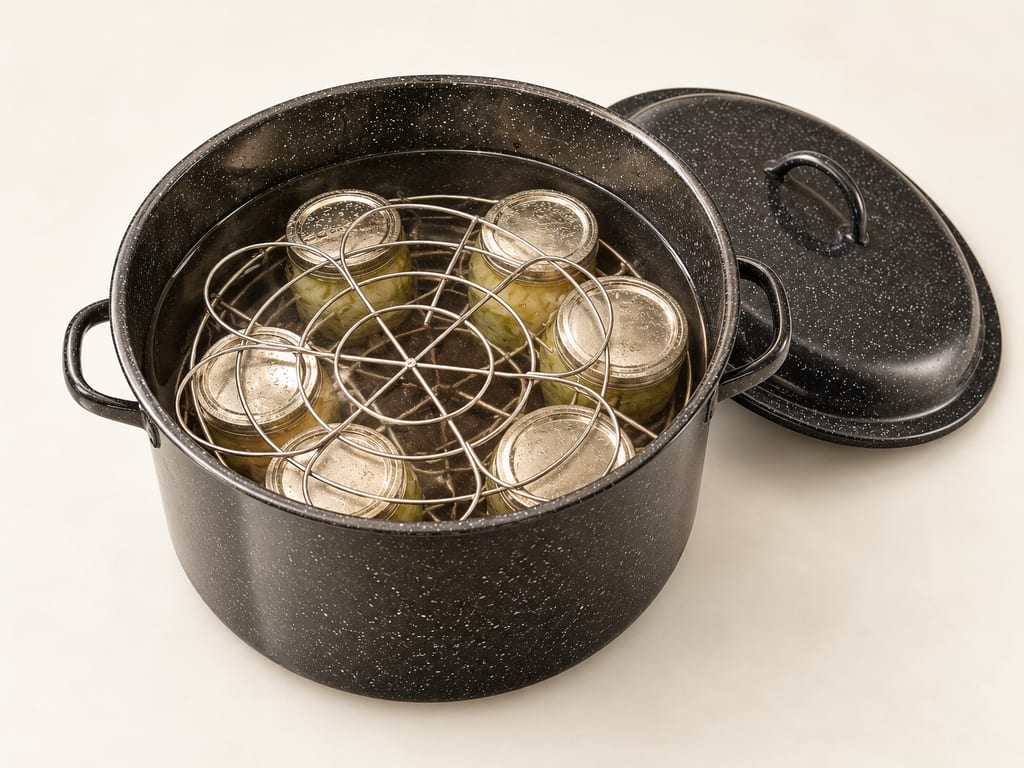
Boiling-water canner
A deep, lidded pot with a removable rack processes jars beneath boiling water. It is intended for foods with tested boiling-water processes; low-acid foods require pressure canning.
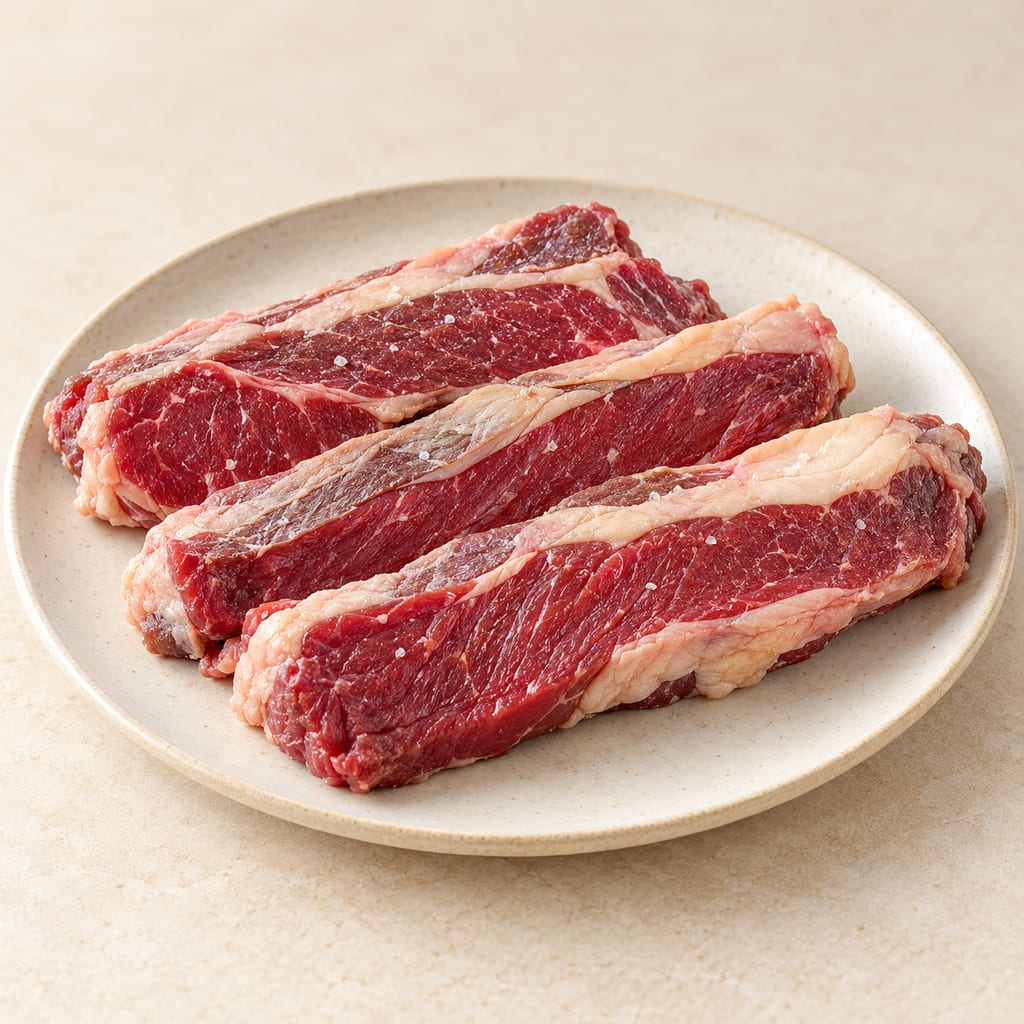
Carne-de-sol
Beef given limited salt and partial surface drying, a short-keeping Brazilian meat that is much less durable than fully dried charque and is treated as a cold-chain product.
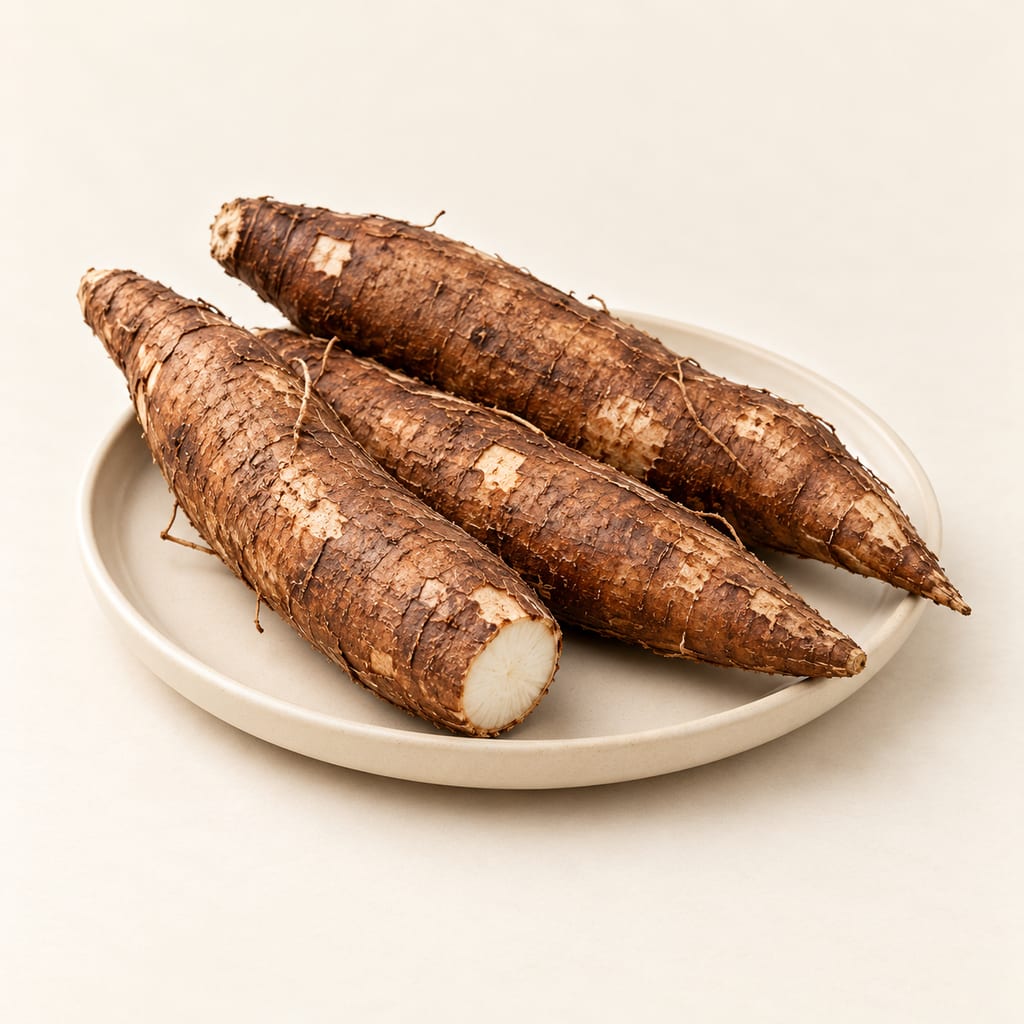
Cassava
Cassava is the starchy root of Manihot esculenta, transformed across Africa into fermented doughs, granules and flours through distinct processes whose safety depends on thorough cyanogen removal.
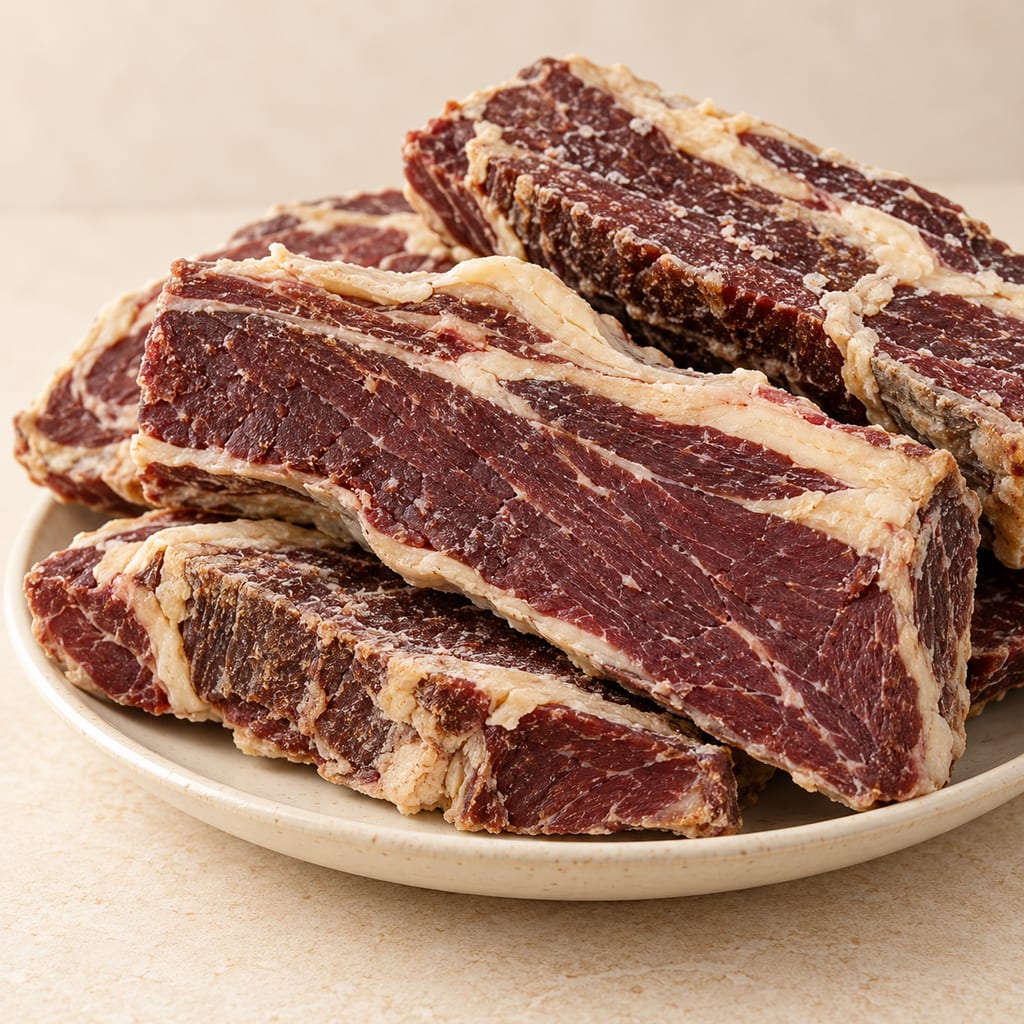
Charque
Beef salted heavily and dried into a strongly preserved ingredient that is desalted before it is cooked in stews; a Brazilian form of salt-dried meat that keeps far longer than the lightly salted carne-de-sol.

Chuño negro
Chuño negro is a source-documented Andean potato-preservation practice. This entry records producer tradition; it is not a validated household process for making potentially toxic bitter potatoes safe.
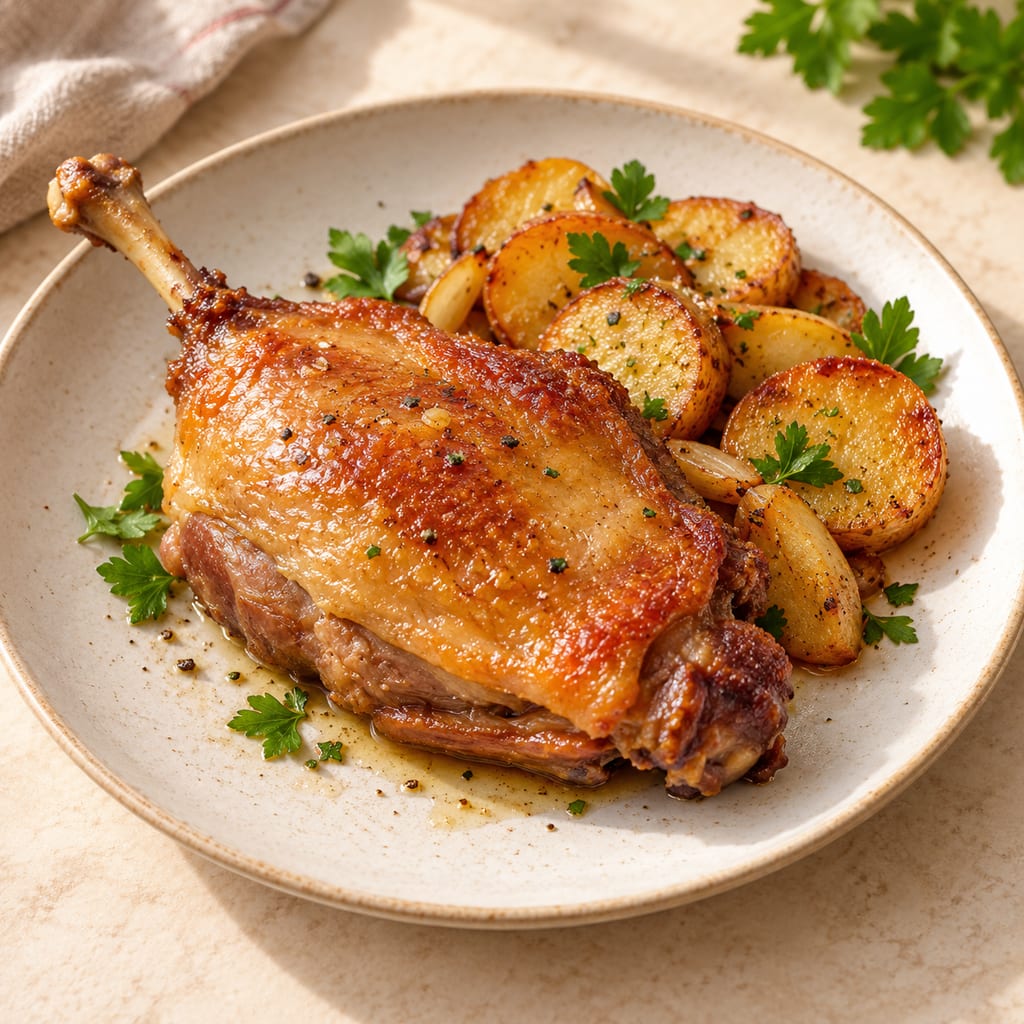
Confit
Meat salted, slowly cooked in its own fat and kept under a covering of that fat. The fat cap limits air but does not acidify or sterilise, so home confit needs refrigeration or freezing.
Enset (Ensete ventricosum)
Enset is an Ethiopian staple crop grown for its starchy corm and pseudostem. Fermented kocho, extracted bulla and boiled amicho are distinct foods from the plant.
Community
No community contributions have been published for this entry yet.
Share what you made
Sign in to contribute. Published comments and photos are free to read.
Sources
National Center for Home Food Preservation, University of Georgia
How Canning Preserves FoodsCited in: What spoils a harvest; Heat and the sealed container
National Center for Home Food Preservation, University of Georgia
Ensuring Safe Canned FoodsCited in: The numbers that matter, and what each one leaves out
US Food and Drug Administration, Inspection Technical Guide 39
Water Activity (aw) in FoodsCited in: Stopping growth is not the same as killing; The numbers that matter, and what each one leaves out; Building a practice; Seven questions for any regional preserve; Choosing the objective and the tools; A process record and the hazards that need their own questions; Reading the evidence and comparing foods
USDA Food Safety and Inspection Service
FSIS Ready-to-Eat Fermented, Salt-Cured, and Dried Products Guideline (2023)Cited in: What spoils a harvest; Taking the water out; Curing salts: what the names on the packet mean; Europe, West Asia and Africa: drying shores, dairy reserves and better kilns; Europe: preserved meats and fats; Europe: fish, roe and marine condiments; Europe: plants, dairy and fruit; Africa: meat, fish, insects and drying; Africa: fermented seeds, roots, cereals and dairy; Africa: low-energy storage; The Americas, the Pacific and the poles; North America: fish, game, field crops and the sugar season; Mexico, Central America and the Caribbean; South America: cassava, altitude, sun, sugar and the coast; Oceania and the Pacific: tropical staple reserves; Aotearoa New Zealand and Australia; What the regions teach; Building a practice; Seven questions for any regional preserve; Choosing the objective and the tools; A process record and the hazards that need their own questions; Reading the evidence and comparing foods
Oregon State University Extension Service
Herbs and vegetables in oil (SP 50-701)Cited in: What spoils a harvest; Fat, oil and the closed package
Oregon State University Extension Service
Preserving garlic (SP 50-645)Cited in: Fat, oil and the closed package
National Center for Home Food Preservation, University of Georgia
Blanching VegetablesCited in: What spoils a harvest; Cold, from the freezer to the clay pot
Utah State University Extension
Can I Freeze-Dry That? A practical guide to safe and effective freeze-dryingCited in: Stopping growth is not the same as killing; Taking the water out
US Food and Drug Administration
Fish and Fishery Products Hazards and Controls Guidance, June 2022 edition, chapters 5 and 7Cited in: Stopping growth is not the same as killing; Cold, from the freezer to the clay pot; The Americas, the Pacific and the poles; North America: fish, game, field crops and the sugar season; Mexico, Central America and the Caribbean; South America: cassava, altitude, sun, sugar and the coast; Oceania and the Pacific: tropical staple reserves; Aotearoa New Zealand and Australia; What the regions teach; Building a practice; Seven questions for any regional preserve; Choosing the objective and the tools; A process record and the hazards that need their own questions; Reading the evidence and comparing foods
Fermented Foods Working Group; hosted by Manitoba Agriculture
Fermented Food Guidance, Section 3.1: Vegetables (August 2024)Cited in: The numbers that matter, and what each one leaves out; Acid and the microbes that make it; Building a practice; Seven questions for any regional preserve; Choosing the objective and the tools; A process record and the hazards that need their own questions; Reading the evidence and comparing foods
BC Centre for Disease Control
Fermented Food Guidance, Section 3.10: Koji and MisoCited in: The numbers that matter, and what each one leaves out; Acid and the microbes that make it; A restaurant's logic and a homestead's; Restaurant and homestead menus in detail; Starting from the ingredient
BC Centre for Disease Control
Fermented Food Guidance, Section 3.6: YogurtCited in: Cold, from the freezer to the clay pot; Acid and the microbes that make it
Food Standards Scotland
FSS and FSA remind higher-risk consumers on the risks of listeria associated with eating cold-smoked and cured fishCited in: Cold, from the freezer to the clay pot; Curing salts: what the names on the packet mean
Food Standards Scotland
Freezing fish and fishery productsCited in: Cold, from the freezer to the clay pot; Building a practice; Seven questions for any regional preserve; Choosing the objective and the tools; A process record and the hazards that need their own questions; Reading the evidence and comparing foods
MIT D-Lab, World Vegetable Center and Movement e.V.
Evaporative Cooling Best Practices GuideCited in: Cold, from the freezer to the clay pot; A restaurant's logic and a homestead's; Restaurant and homestead menus in detail; Starting from the ingredient; Europe, West Asia and Africa: drying shores, dairy reserves and better kilns; Europe: preserved meats and fats; Europe: fish, roe and marine condiments; Europe: plants, dairy and fruit; Africa: meat, fish, insects and drying; Africa: fermented seeds, roots, cereals and dairy; Africa: low-energy storage
National Center for Home Food Preservation, University of Georgia
How to Use Boiling Water and Pressure CannersCited in: Heat and the sealed container; Building a practice; Seven questions for any regional preserve; Choosing the objective and the tools; A process record and the hazards that need their own questions; Reading the evidence and comparing foods
National Center for Home Food Preservation, University of Georgia
National Center Burning Issue: Using Atmospheric Steam CannersCited in: Heat and the sealed container
National Center for Home Food Preservation, University of Georgia
Equipment and Methods Not RecommendedCited in: Heat and the sealed container
National Center for Home Food Preservation, University of Georgia
Can I Can in a Multi-Cooker?Cited in: Heat and the sealed container
University of Alaska Fairbanks Cooperative Extension Service
Home Canning Smoked Fish and Home Smoking Fish for CanningCited in: Heat and the sealed container
US Food and Drug Administration
Guide to Inspections of Low Acid Canned Food Manufacturers: critical factorsCited in: Heat and the sealed container
US Food and Drug Administration
Aseptic Processing and Packaging for the Food IndustryCited in: Heat and the sealed container
University of Alaska Fairbanks Cooperative Extension Service
Smoking Fish at Home (FNH-00325)Cited in: Heat and the sealed container; Salt, brine and smoke
Karolenko and Muriana; Foods 2020
Quantification of Process Lethality (5-Log Reduction) of Salmonella and Salt Concentration during Sodium Replacement in Biltong MarinadeCited in: Taking the water out
Ratsimba and colleagues; Food Science & Nutrition 2019
Physicochemical and microbiological characteristics of kitoza, a traditional salted/dried/smoked meat product of MadagascarCited in: Taking the water out; Salt, brine and smoke
Utah State University Extension (reprinted by University of California Agriculture and Natural Resources)
Buying a Home Freeze-Dryer: What to Know Before You GoCited in: Taking the water out
Mattilsynet, Norwegian Food Safety Authority
Lokalmat – innlandsfisk (rakfisk)Cited in: Salt, brine and smoke
ScienceNorway; Tone Mari Rode and Bjørn Tore Rotabakk, Nofima
Would you like salt fish or klippfisk for dinner today?Cited in: Salt, brine and smoke
Norwegian Seafood Council
Clipfish: a gastronomic treasure from NorwayCited in: Salt, brine and smoke
Tørrfisk fra Lofoten protected-name specification, copy published by the UK government
Product Specification for Tørrfisk fra LofotenCited in: Salt, brine and smoke
Ministerio de Agricultura, Pesca y Alimentación, Spain
Pliego de condiciones de la IGP Mojama de BarbateCited in: Salt, brine and smoke
Food and Agriculture Organization of the United Nations
Dried salted meats: charque and carne-de-sol, chapter 5 Processing proceduresCited in: Salt, brine and smoke
Bomfeh and colleagues; Journal of the Science of Food and Agriculture 99(12), 2019
Reducing polycyclic aromatic hydrocarbon contamination in smoked fish in the Global South: a case study of an improved kiln in GhanaCited in: Salt, brine and smoke; Europe, West Asia and Africa: drying shores, dairy reserves and better kilns; Europe: preserved meats and fats; Europe: fish, roe and marine condiments; Europe: plants, dairy and fruit; Africa: meat, fish, insects and drying; Africa: fermented seeds, roots, cereals and dairy; Africa: low-energy storage
National Center for Home Food Preservation, University of Georgia
General Information on Canning Jams, Jellies, and MarmaladesCited in: Sugar and syrup
National Center for Home Food Preservation, University of Georgia
Storing Home-Canned Jams and JelliesCited in: Sugar and syrup
National Center for Home Food Preservation, University of Georgia
General Food Preservation FAQsCited in: Sugar and syrup
Ministère de l'Agriculture et de la Souveraineté alimentaire, Bulletin officiel
Cahier des charges de l'indication géographique protégée Pruneaux d'AgenCited in: Sugar and syrup
University of Maine Cooperative Extension
How to Tap Maple Trees and Make Maple Syrup (Bulletin 7036)Cited in: Sugar and syrup
Ask Extension; answer by Joy Waite-Cusic
Fermented honey (garlic fermented in honey)Cited in: Sugar and syrup
National Center for Home Food Preservation, University of Georgia
General Information on PicklingCited in: Acid and the microbes that make it
BC Centre for Disease Control
Fermented Food Guidance, Section 3.4: Dosa and IdliCited in: Acid and the microbes that make it
BC Centre for Disease Control
Fermented Food Guidance, Section 1Cited in: Acid and the microbes that make it
Dabiré and colleagues; BMC Microbiology 2022
Assessment of probiotic and technological properties of Bacillus spp. isolated from Burkinabe SoumbalaCited in: Acid and the microbes that make it
Food and Agriculture Organization of the United Nations, Fisheries Technical Paper 444
Assessment and Management of Seafood Safety and Quality, section 9.6 Fermented fishCited in: Acid and the microbes that make it
Japan International Research Center for Agricultural Sciences; research highlight of Marui and colleagues, Journal of Food Protection 84(3), 2021
Initial salinity adjustment effectively prevents histamine accumulation in padaekCited in: Acid and the microbes that make it; Asia: pickling beds, drying sequences and the sea; How preserved foods differ from place to place; Japan: preservation media and drying sequences; Korea: kimchi, jang and preserved seafood; China, Taiwan, Hong Kong and Macao; Southeast Asia: fish systems, tea, fruit and plant proteins; South Asia and the Himalaya; Central Asia and Mongolia; Asia country by country, and what it teaches
Paludan-Müller and colleagues; International Journal of Food Microbiology 2002; DTU Orbit record
Fermentation and microflora of plaa-som, a Thai fermented fish product prepared with different salt concentrationsCited in: Acid and the microbes that make it; Asia: pickling beds, drying sequences and the sea; How preserved foods differ from place to place; Japan: preservation media and drying sequences; Korea: kimchi, jang and preserved seafood; China, Taiwan, Hong Kong and Macao; Southeast Asia: fish systems, tea, fruit and plant proteins; South Asia and the Himalaya; Central Asia and Mongolia; Asia country by country, and what it teaches
Yetim and colleagues; Meat Science 72(2), 2006; Erciyes University record
The effects of nitrite on the survival of Clostridium sporogenes and the autoxidation properties of the KavurmaCited in: Fat, oil and the closed package
Istituto Superiore di Sanità, EpiCentro
Botulismo: epidemiologia in ItaliaCited in: Fat, oil and the closed package
Mubayiwa and colleagues; Scientific Reports 2021
Field evaluation of hermetic and synthetic pesticide-based technologies in smallholder sorghum grain storage in hot and arid climatesCited in: Fat, oil and the closed package; A restaurant's logic and a homestead's; Restaurant and homestead menus in detail; Starting from the ingredient; Europe, West Asia and Africa: drying shores, dairy reserves and better kilns; Europe: preserved meats and fats; Europe: fish, roe and marine condiments; Europe: plants, dairy and fruit; Africa: meat, fish, insects and drying; Africa: fermented seeds, roots, cereals and dairy; Africa: low-energy storage
EFSA Panel on Biological Hazards; EFSA Journal 2022
The efficacy and safety of high-pressure processing of foodCited in: The industrial frontier, and its honest limits
US Food and Drug Administration
Food Irradiation: What You Need to KnowCited in: The industrial frontier, and its honest limits
Health Canada
Novel food information: Ultraviolet light treatment of apple juice/cider using the CiderSure 3500Cited in: The industrial frontier, and its honest limits
USDA Agricultural Research Service
Taking a Holistic Approach to Food SafetyCited in: The industrial frontier, and its honest limits
US Food and Drug Administration
Microorganisms and Microbial-Derived Ingredients Used in Food (Partial List)Cited in: The industrial frontier, and its honest limits
US Food and Drug Administration
GRAS Notice GRN 001215 response: Listeria phage preparationCited in: The industrial frontier, and its honest limits
USDA Agricultural Research Service
Food Safety Developments Are in the AirCited in: The industrial frontier, and its honest limits
University of Georgia Cooperative Extension
Basics of Sausage Making: Formulation, Processing, and Safety (Bulletin 1437)Cited in: Curing salts: what the names on the packet mean
Canadian Food Inspection Agency
Preventive control recommendations on the use of nitrites in the curing of meat productsCited in: Curing salts: what the names on the packet mean
USDA Food Safety and Inspection Service; reproduced by Utah State University Extension
Ham and Food Safety (USDA FSIS fact sheet, Utah State University Extension reproduction)Cited in: Curing salts: what the names on the packet mean
Ellajosyula and colleagues; Journal of Food Protection 61(2), 1998; Penn State record
Destruction of Escherichia coli O157:H7 and Salmonella typhimurium in Lebanon bologna by interaction of fermentation pH, heating temperature, and timeCited in: Curing salts: what the names on the packet mean
Stefani Machado Lopes, doctoral thesis, Universidade Federal do Rio Grande do Sul, 2023
Microbiologia na gastronomia: sobrevivência de patógenos em preparações gastronômicas de origem animalCited in: Eggs: one food, many preserves
Centre for Food Safety, Hong Kong
Preparation of Eggs and Egg Products – Safety First (Food Safety Focus 171)Cited in: Eggs: one food, many preserves
Centre for Food Safety, Hong Kong
Heavy Metals in Lime-preserved Eggs (Food Safety Focus 84)Cited in: Eggs: one food, many preserves
Kaewmanee, Benjakul and Visessanguan; Journal of the Science of Food and Agriculture 89(4), 2009; FAO AGRIS record
Effect of salting processes on chemical composition, textural properties and microstructure of duck eggCited in: Eggs: one food, many preserves
Sun and colleagues; Foods 12, 4028, 2023
Predict the Gelling Properties of Alkali-Induced Egg White Gel Based on the Freshness of Duck EggsCited in: Eggs: one food, many preserves
National Center for Home Food Preservation, University of Georgia
Pickled EggsCited in: Eggs: one food, many preserves
Fish Butchery, Sydney
Fish ButcheryCited in: A restaurant's logic and a homestead's; Restaurant and homestead menus in detail; Starting from the ingredient
EFSA Panel on Biological Hazards; EFSA Journal 21(1), 2023
Microbiological safety of aged meatCited in: A restaurant's logic and a homestead's; Restaurant and homestead menus in detail; Starting from the ingredient
MAD; Arielle Johnson
Ask the Doctor #1: Black GarlicCited in: A restaurant's logic and a homestead's; Restaurant and homestead menus in detail; Starting from the ingredient
Visit Faroe Islands
RÆSTCited in: A restaurant's logic and a homestead's; Restaurant and homestead menus in detail; Starting from the ingredient
Australian Antarctic Program
Food (station amenities and operations)Cited in: A restaurant's logic and a homestead's; Restaurant and homestead menus in detail; Starting from the ingredient
Ministry of Agriculture, Forestry and Fisheries of Japan
Pickled: Traditional Foods in JapanCited in: Asia: pickling beds, drying sequences and the sea; How preserved foods differ from place to place; Japan: preservation media and drying sequences; Korea: kimchi, jang and preserved seafood; China, Taiwan, Hong Kong and Macao; Southeast Asia: fish systems, tea, fruit and plant proteins; South Asia and the Himalaya; Central Asia and Mongolia; Asia country by country, and what it teaches
Ministry of Agriculture, Forestry and Fisheries of Japan
Nara-zuke: Traditional Foods in JapanCited in: Asia: pickling beds, drying sequences and the sea; How preserved foods differ from place to place; Japan: preservation media and drying sequences; Korea: kimchi, jang and preserved seafood; China, Taiwan, Hong Kong and Macao; Southeast Asia: fish systems, tea, fruit and plant proteins; South Asia and the Himalaya; Central Asia and Mongolia; Asia country by country, and what it teaches
Ministry of Agriculture, Forestry and Fisheries of Japan
Fishery fermented food: Traditional Foods in JapanCited in: Asia: pickling beds, drying sequences and the sea; How preserved foods differ from place to place; Japan: preservation media and drying sequences; Korea: kimchi, jang and preserved seafood; China, Taiwan, Hong Kong and Macao; Southeast Asia: fish systems, tea, fruit and plant proteins; South Asia and the Himalaya; Central Asia and Mongolia; Asia country by country, and what it teaches
Ministry of Agriculture, Forestry and Fisheries of Japan
Dried Bonito: Traditional Foods in JapanCited in: Asia: pickling beds, drying sequences and the sea; How preserved foods differ from place to place; Japan: preservation media and drying sequences; Korea: kimchi, jang and preserved seafood; China, Taiwan, Hong Kong and Macao; Southeast Asia: fish systems, tea, fruit and plant proteins; South Asia and the Himalaya; Central Asia and Mongolia; Asia country by country, and what it teaches
Ministry of Agriculture, Forestry and Fisheries of Japan
Korogaki: Traditional Foods in JapanCited in: Asia: pickling beds, drying sequences and the sea; How preserved foods differ from place to place; Japan: preservation media and drying sequences; Korea: kimchi, jang and preserved seafood; China, Taiwan, Hong Kong and Macao; Southeast Asia: fish systems, tea, fruit and plant proteins; South Asia and the Himalaya; Central Asia and Mongolia; Asia country by country, and what it teaches
Ministry of Agriculture, Forestry and Fisheries of Japan
Shimi-dofu no Tamago-toji (Our Regional Cuisines)Cited in: Asia: pickling beds, drying sequences and the sea; How preserved foods differ from place to place; Japan: preservation media and drying sequences; Korea: kimchi, jang and preserved seafood; China, Taiwan, Hong Kong and Macao; Southeast Asia: fish systems, tea, fruit and plant proteins; South Asia and the Himalaya; Central Asia and Mongolia; Asia country by country, and what it teaches
UNESCO Intangible Cultural Heritage, inscribed 2013
Kimjang, making and sharing kimchi in the Republic of KoreaCited in: Asia: pickling beds, drying sequences and the sea; How preserved foods differ from place to place; Japan: preservation media and drying sequences; Korea: kimchi, jang and preserved seafood; China, Taiwan, Hong Kong and Macao; Southeast Asia: fish systems, tea, fruit and plant proteins; South Asia and the Himalaya; Central Asia and Mongolia; Asia country by country, and what it teaches
UNESCO Intangible Cultural Heritage, inscribed 2015
Tradition of kimchi-making in the Democratic People's Republic of KoreaCited in: Asia: pickling beds, drying sequences and the sea; How preserved foods differ from place to place; Japan: preservation media and drying sequences; Korea: kimchi, jang and preserved seafood; China, Taiwan, Hong Kong and Macao; Southeast Asia: fish systems, tea, fruit and plant proteins; South Asia and the Himalaya; Central Asia and Mongolia; Asia country by country, and what it teaches
UNESCO Intangible Cultural Heritage, inscribed 2024
Knowledge, beliefs and practices related to jang-making in the Republic of KoreaCited in: Asia: pickling beds, drying sequences and the sea; How preserved foods differ from place to place; Japan: preservation media and drying sequences; Korea: kimchi, jang and preserved seafood; China, Taiwan, Hong Kong and Macao; Southeast Asia: fish systems, tea, fruit and plant proteins; South Asia and the Himalaya; Central Asia and Mongolia; Asia country by country, and what it teaches
Yao and colleagues; Frontiers in Microbiology 2021
Microbial community succession and metabolite changes during fermentation of BS sufu, the fermented black soybean curd by Rhizopus microsporus, Rhizopus oryzae, and Actinomucor elegansCited in: Asia: pickling beds, drying sequences and the sea; How preserved foods differ from place to place; Japan: preservation media and drying sequences; Korea: kimchi, jang and preserved seafood; China, Taiwan, Hong Kong and Macao; Southeast Asia: fish systems, tea, fruit and plant proteins; South Asia and the Himalaya; Central Asia and Mongolia; Asia country by country, and what it teaches
Southeast Asian Fisheries Development Center, 2002
Southeast Asian Fish Products, 4th editionCited in: Asia: pickling beds, drying sequences and the sea; How preserved foods differ from place to place; Japan: preservation media and drying sequences; Korea: kimchi, jang and preserved seafood; China, Taiwan, Hong Kong and Macao; Southeast Asia: fish systems, tea, fruit and plant proteins; South Asia and the Himalaya; Central Asia and Mongolia; Asia country by country, and what it teaches
Maini Rekdal and colleagues; Nature Microbiology 9, 2024; DTU Orbit record
Neurospora intermedia from a traditional fermented food enables waste-to-food conversionCited in: Asia: pickling beds, drying sequences and the sea; How preserved foods differ from place to place; Japan: preservation media and drying sequences; Korea: kimchi, jang and preserved seafood; China, Taiwan, Hong Kong and Macao; Southeast Asia: fish systems, tea, fruit and plant proteins; South Asia and the Himalaya; Central Asia and Mongolia; Asia country by country, and what it teaches
Food and Agriculture Organization of the United Nations, Agricultural Services Bulletin 134, 1998
Fermented Fruits and Vegetables: A Global Perspective, chapter 1Cited in: Asia: pickling beds, drying sequences and the sea; How preserved foods differ from place to place; Japan: preservation media and drying sequences; Korea: kimchi, jang and preserved seafood; China, Taiwan, Hong Kong and Macao; Southeast Asia: fish systems, tea, fruit and plant proteins; South Asia and the Himalaya; Central Asia and Mongolia; Asia country by country, and what it teaches
National Center for Cultural Heritage, Mongolia; IRCI research database
The traditional technique of preparing the dairy milk productsCited in: Asia: pickling beds, drying sequences and the sea; How preserved foods differ from place to place; Japan: preservation media and drying sequences; Korea: kimchi, jang and preserved seafood; China, Taiwan, Hong Kong and Macao; Southeast Asia: fish systems, tea, fruit and plant proteins; South Asia and the Himalaya; Central Asia and Mongolia; Asia country by country, and what it teaches
Nordiska museet
SurströmmingCited in: Europe, West Asia and Africa: drying shores, dairy reserves and better kilns; Europe: preserved meats and fats; Europe: fish, roe and marine condiments; Europe: plants, dairy and fruit; Africa: meat, fish, insects and drying; Africa: fermented seeds, roots, cereals and dairy; Africa: low-energy storage
Visit Reykjavík
Traditional Icelandic dishes to try in ReykjavíkCited in: Europe, West Asia and Africa: drying shores, dairy reserves and better kilns; Europe: preserved meats and fats; Europe: fish, roe and marine condiments; Europe: plants, dairy and fruit; Africa: meat, fish, insects and drying; Africa: fermented seeds, roots, cereals and dairy; Africa: low-energy storage
Visit Faroe Islands
From KOKS to RÓKS: fine dining in the Faroe IslandsCited in: Europe, West Asia and Africa: drying shores, dairy reserves and better kilns; Europe: preserved meats and fats; Europe: fish, roe and marine condiments; Europe: plants, dairy and fruit; Africa: meat, fish, insects and drying; Africa: fermented seeds, roots, cereals and dairy; Africa: low-energy storage
European Commission, Directorate-General for Agriculture and Rural Development
Feta PDOCited in: Europe, West Asia and Africa: drying shores, dairy reserves and better kilns; Europe: preserved meats and fats; Europe: fish, roe and marine condiments; Europe: plants, dairy and fruit; Africa: meat, fish, insects and drying; Africa: fermented seeds, roots, cereals and dairy; Africa: low-energy storage
Food and Agriculture Organization of the United Nations
Chapter 5: Processing of roots and tubersCited in: Europe, West Asia and Africa: drying shores, dairy reserves and better kilns; Europe: preserved meats and fats; Europe: fish, roe and marine condiments; Europe: plants, dairy and fruit; Africa: meat, fish, insects and drying; Africa: fermented seeds, roots, cereals and dairy; Africa: low-energy storage
Journal of Applied Microbiology 126(3), 2019; FAO AGRIS record
Effect of fermentation system on the physicochemical and microbial community dynamics during enset (Ensete ventricosum) fermentationCited in: Europe, West Asia and Africa: drying shores, dairy reserves and better kilns; Europe: preserved meats and fats; Europe: fish, roe and marine condiments; Europe: plants, dairy and fruit; Africa: meat, fish, insects and drying; Africa: fermented seeds, roots, cereals and dairy; Africa: low-energy storage
Leksir and Chemmam; Livestock Research for Rural Development 27(5), 2015
Contribution on the characterization of Klila a traditional cheese in east of AlgeriaCited in: Europe, West Asia and Africa: drying shores, dairy reserves and better kilns; Europe: preserved meats and fats; Europe: fish, roe and marine condiments; Europe: plants, dairy and fruit; Africa: meat, fish, insects and drying; Africa: fermented seeds, roots, cereals and dairy; Africa: low-energy storage
Moonga and colleagues; PLOS ONE 2019
The art of mabisi production: a traditional fermented milkCited in: Europe, West Asia and Africa: drying shores, dairy reserves and better kilns; Europe: preserved meats and fats; Europe: fish, roe and marine condiments; Europe: plants, dairy and fruit; Africa: meat, fish, insects and drying; Africa: fermented seeds, roots, cereals and dairy; Africa: low-energy storage
Hilali and colleagues; Applied Sciences 14(2), 2024; ICARDA record
Nutritional and Food Safety Characteristics of Jameed: A Traditional Dairy Product of DrylandsCited in: Europe, West Asia and Africa: drying shores, dairy reserves and better kilns; Europe: preserved meats and fats; Europe: fish, roe and marine condiments; Europe: plants, dairy and fruit; Africa: meat, fish, insects and drying; Africa: fermented seeds, roots, cereals and dairy; Africa: low-energy storage
Slow Food UK; Emma Taylor
Churchkhela: Georgia's millenia-old love affair with real foodCited in: Europe, West Asia and Africa: drying shores, dairy reserves and better kilns; Europe: preserved meats and fats; Europe: fish, roe and marine condiments; Europe: plants, dairy and fruit; Africa: meat, fish, insects and drying; Africa: fermented seeds, roots, cereals and dairy; Africa: low-energy storage
Smithsonian Center for Folklife and Cultural Heritage
Native Foodways: Roast Salmon on SticksCited in: The Americas, the Pacific and the poles; North America: fish, game, field crops and the sugar season; Mexico, Central America and the Caribbean; South America: cassava, altitude, sun, sugar and the coast; Oceania and the Pacific: tropical staple reserves; Aotearoa New Zealand and Australia; What the regions teach
Virtual Museum of Métis History and Culture, Gabriel Dumont Institute
Traditional Metis Foods and Food PreparationCited in: The Americas, the Pacific and the poles; North America: fish, game, field crops and the sugar season; Mexico, Central America and the Caribbean; South America: cassava, altitude, sun, sugar and the coast; Oceania and the Pacific: tropical staple reserves; Aotearoa New Zealand and Australia; What the regions teach
US National Park Service
Subsistence: Tribal Nutrition and Health (Knife River Indian Villages lesson)Cited in: The Americas, the Pacific and the poles; North America: fish, game, field crops and the sugar season; Mexico, Central America and the Caribbean; South America: cassava, altitude, sun, sugar and the coast; Oceania and the Pacific: tropical staple reserves; Aotearoa New Zealand and Australia; What the regions teach
McIlhenny Company
About Our BarrelsCited in: The Americas, the Pacific and the poles; North America: fish, game, field crops and the sugar season; Mexico, Central America and the Caribbean; South America: cassava, altitude, sun, sugar and the coast; Oceania and the Pacific: tropical staple reserves; Aotearoa New Zealand and Australia; What the regions teach
CIMMYT
What is nixtamalization?Cited in: The Americas, the Pacific and the poles; North America: fish, game, field crops and the sugar season; Mexico, Central America and the Caribbean; South America: cassava, altitude, sun, sugar and the coast; Oceania and the Pacific: tropical staple reserves; Aotearoa New Zealand and Australia; What the regions teach
UNESCO Intangible Cultural Heritage, inscribed 2024
Traditional knowledge and practices for the making and consumption of cassava breadCited in: The Americas, the Pacific and the poles; North America: fish, game, field crops and the sugar season; Mexico, Central America and the Caribbean; South America: cassava, altitude, sun, sugar and the coast; Oceania and the Pacific: tropical staple reserves; Aotearoa New Zealand and Australia; What the regions teach
Embrapa Acre
Prensagem mecânica para obtenção de farinha de mandioca (Instruções Técnicas 39)Cited in: The Americas, the Pacific and the poles; North America: fish, game, field crops and the sugar season; Mexico, Central America and the Caribbean; South America: cassava, altitude, sun, sugar and the coast; Oceania and the Pacific: tropical staple reserves; Aotearoa New Zealand and Australia; What the regions teach
Embrapa Amazônia Oriental, Boletim de Pesquisa e Desenvolvimento 107, 2016
Efeito da fermentação e cocção nas características físico-químicas e teor de cianeto durante o processamento de tucupiCited in: The Americas, the Pacific and the poles; North America: fish, game, field crops and the sugar season; Mexico, Central America and the Caribbean; South America: cassava, altitude, sun, sugar and the coast; Oceania and the Pacific: tropical staple reserves; Aotearoa New Zealand and Australia; What the regions teach
Food Standards Australia New Zealand
Report on survey of cyanogenic glycosides in plant-based foodsCited in: The Americas, the Pacific and the poles; North America: fish, game, field crops and the sugar season; Mexico, Central America and the Caribbean; South America: cassava, altitude, sun, sugar and the coast; Oceania and the Pacific: tropical staple reserves; Aotearoa New Zealand and Australia; What the regions teach; Building a practice; Seven questions for any regional preserve; Choosing the objective and the tools; A process record and the hazards that need their own questions; Reading the evidence and comparing foods
Yábar-Villanueva and colleagues, 2023; FAO AGRIS record
Biocomponentes y capacidad antioxidante de papas nativas como chuño y tunta bajo diferentes condiciones de temperatura de congelaciónCited in: The Americas, the Pacific and the poles; North America: fish, game, field crops and the sugar season; Mexico, Central America and the Caribbean; South America: cassava, altitude, sun, sugar and the coast; Oceania and the Pacific: tropical staple reserves; Aotearoa New Zealand and Australia; What the regions teach
National Tropical Botanical Garden, Breadfruit Institute
Breadfruit ethnobotanyCited in: The Americas, the Pacific and the poles; North America: fish, game, field crops and the sugar season; Mexico, Central America and the Caribbean; South America: cassava, altitude, sun, sugar and the coast; Oceania and the Pacific: tropical staple reserves; Aotearoa New Zealand and Australia; What the regions teach
Food and Agriculture Organization of the United Nations
Traditional post-harvest technology of perishable tropical staples, chapter 5Cited in: The Americas, the Pacific and the poles; North America: fish, game, field crops and the sugar season; Mexico, Central America and the Caribbean; South America: cassava, altitude, sun, sugar and the coast; Oceania and the Pacific: tropical staple reserves; Aotearoa New Zealand and Australia; What the regions teach
Kiribati National Statistics Office with the Pacific Community
Kiribati Agriculture and Fisheries Report based on the 2020 Population and Housing CensusCited in: The Americas, the Pacific and the poles; North America: fish, game, field crops and the sugar season; Mexico, Central America and the Caribbean; South America: cassava, altitude, sun, sugar and the coast; Oceania and the Pacific: tropical staple reserves; Aotearoa New Zealand and Australia; What the regions teach
Greenhill and colleagues; Food Microbiology 26(2), 2009; James Cook University record
Spontaneous fermentation of traditional sago starch in Papua New GuineaCited in: The Americas, the Pacific and the poles; North America: fish, game, field crops and the sugar season; Mexico, Central America and the Caribbean; South America: cassava, altitude, sun, sugar and the coast; Oceania and the Pacific: tropical staple reserves; Aotearoa New Zealand and Australia; What the regions teach
Greenhill and colleagues, 2008; James Cook University record
Traditional sago starch processing and storage and their influence on food safety in Papua New GuineaCited in: The Americas, the Pacific and the poles; North America: fish, game, field crops and the sugar season; Mexico, Central America and the Caribbean; South America: cassava, altitude, sun, sugar and the coast; Oceania and the Pacific: tropical staple reserves; Aotearoa New Zealand and Australia; What the regions teach
US Centers for Disease Control and Prevention
Alaska Native Foods and botulismCited in: The Americas, the Pacific and the poles; North America: fish, game, field crops and the sugar season; Mexico, Central America and the Caribbean; South America: cassava, altitude, sun, sugar and the coast; Oceania and the Pacific: tropical staple reserves; Aotearoa New Zealand and Australia; What the regions teach
Gaps
- No shelf-life data exist for home freeze-dried foods; the home machines have only been sold since 2013.
- The preparation schedule of Saudi al-aqt, or al-mudeer, dried fermented dairy is undocumented.
- Salt, temperature and storage controls for Bahraini mehyawa are not established.
- Temperatures and seasonal reliability of the Yamal ice, snow and permafrost cryostores are not established.
- Rihaakuru and other Maldivian tuna concentrates, shidal and Nepali kinema lack published process descriptions.
- Contemporary breadfruit fermentation in Fiji, Samoa, Tonga, Tuvalu and Vanuatu is undocumented.
Updated 2026-10-27