A canner that uses steam without pressure
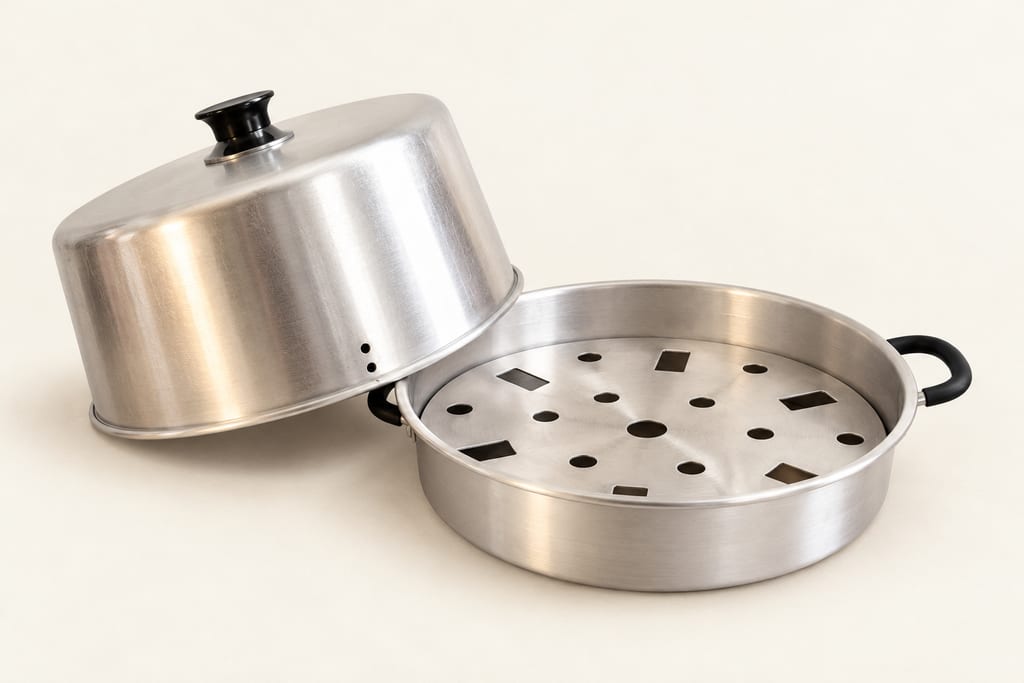
An atmospheric steam canner is a separate cooking vessel for heat-processing jars. In the documented dome-style form, a shallow base holds a rack above a small amount of water; a tall cover encloses the jars, and vent holes let air and then steam leave the canner. Some models have a temperature gauge in the lid. Penn State Extension describes this base–rack–cover construction, while the University of Minnesota Extension describes lightweight aluminum as a typical material. Those are common features, not a specification for every model.
The heat medium matters. Water boils in the base and produces steam that surrounds the jars. NCHFP distinguishes this atmospheric device from pressure canners: it is not a pressurized vessel and must not be substituted for pressure canning low-acid foods. An ordinary lidded pot is not equivalent to the vented equipment described in the research.
Sources for this section
What the research supports
NCHFP says atmospheric steam canners may be used for naturally acidic or properly acidified foods with an equilibrium pH of 4.6 or below, provided that users follow research-tested recipes and the required controls. This includes appropriate tested processes for foods such as fruit, jams, jellies, pickles and salsa. The device does not make an untested recipe safe, and its convenience does not broaden the foods that may be processed in it.
Processing time is capped at 45 minutes after any altitude adjustment. The limit comes from the finite water held in the base. If a tested recipe requires a longer total process, the steam canner does not meet that condition. The recipe, jar size, preparation and processing time belong together; a seal on a cooled jar does not replace the required tested process.
Sources for this section
Venting, temperature and cooling
Before timing begins, air must be driven out so the jars are exposed to pure steam. NCHFP's current statement adds a direct temperature check at the side vent: wait for a steady column of steam and confirm that it is 210–212°F, with the exact reading dependent on elevation. Maintain the proper steam conditions throughout the timed process and follow the instructions supplied for the exact model.
The canner stays closed during processing. The water reservoir cannot be topped up by opening the cover mid-process; the limited reservoir is part of the method's time constraint. After the processing interval, NCHFP's updated guidance says to turn off the heat and leave the lid in place for five minutes. Remove the jars carefully and let them cool in still room air; forcing faster cooling changes the validated procedure.
Sources for this section
A research-tested modern tool
The National Center for Home Food Preservation reports that the University of Wisconsin, working with NCHFP, studied steam temperature distribution, jar-heating patterns and standardized cooling. The results were published in a peer-reviewed paper in 2015. This is a date for the modern evidence base, not an origin date for steam canners. The sources reviewed here do not identify one inventor, a single manufacturing origin or a universal design.
The linked Penn State Extension photograph, credited to Martha Zepp, shows one real example with a shallow rack base and a tall cover. It is a reference for visible equipment form, not a claim that every photographed jar or model is suitable for every recipe. The generated illustration separates the parts for clarity and leaves out food; it is editorial art, not a product specification or a safety test.
Sources for this section
History
National Center for Home Food Preservation summary of Wisconsin/NCHFP research and 2015 peer-reviewed publication.
Equipment details
CapacityCapacity varies by model; no single capacity is established for this equipment type.
SizeNo standard dimensions are established for the equipment type.
PowerNot established The canner is heated on an external range; sources do not establish a single burner or energy source for all models.
How you get oneBought, manufactured The sources document manufactured home-canning devices, but this page describes the equipment type rather than a particular model or seller.
CareUse the current instructions for the specific manufactured model. The cited guidance does not establish one care or cleaning routine for all canners.
Made of
- Metal, commonly aluminum — Base and cover
Extension describes lightweight aluminum as typical; models vary, and this item is a general equipment type rather than one manufacturer's model. - Metal rack — Jar support
The rack holds filled jars above the water so steam can circulate around them.
Limits
Use only an up-to-date research-tested recipe for naturally acid or properly acidified foods at pH 4.6 or below; low-acid foods require a pressure canner.
Source →Total processing time, including altitude adjustment, must be 45 minutes or less; follow the tested recipe and the specific canner manufacturer's instructions.
Source →The canner must be vented and maintain pure steam at the temperature of boiling water; do not open it during processing. Cool jars in still ambient air.
Source →NCHFP's updated guidance calls for checking vent steam at 210–212°F, depending on elevation, before timing, and leaving the closed canner undisturbed for five minutes after processing.
Source →Places
United States
Documented use · Country evidenceThe location records documented research and home-preservation guidance in the United States; it does not claim an exclusive place of invention or use.