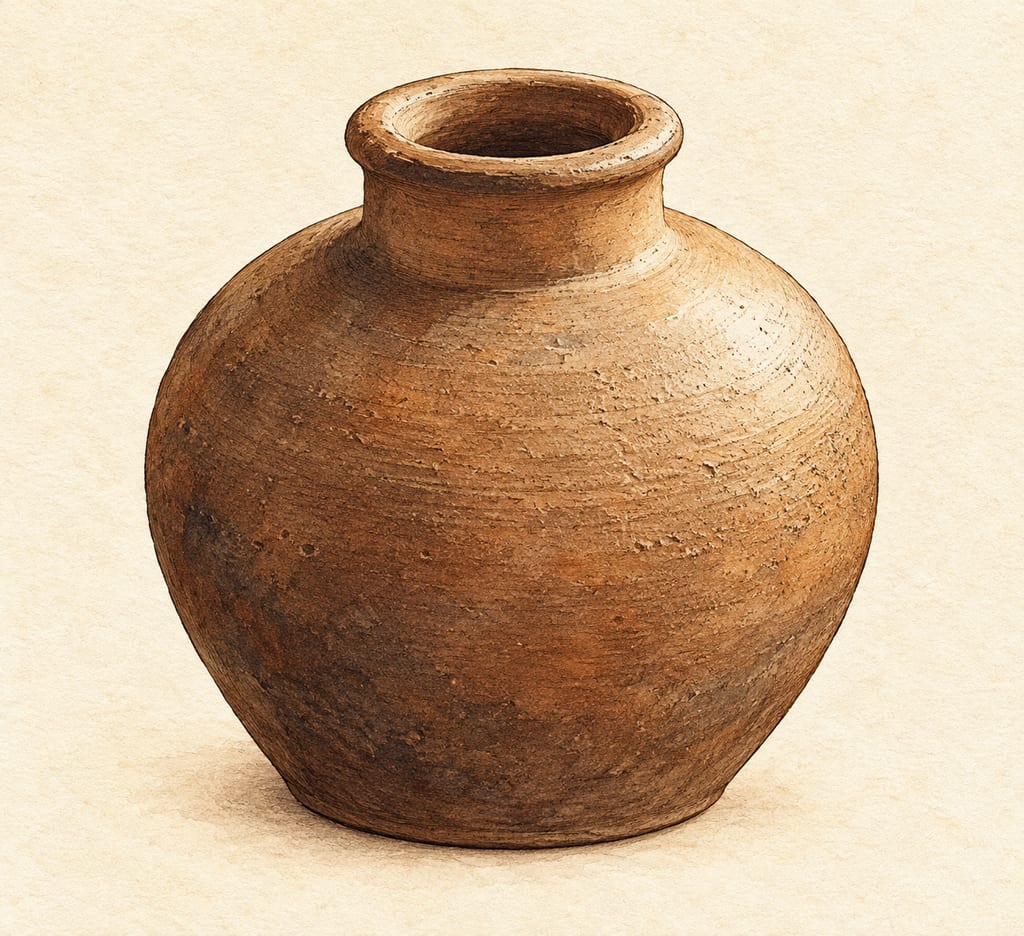
Burnay
A burnay is a wide-bodied, narrow-mouthed stoneware jar made in Vigan, Ilocos Sur. Ilokano households and producers have used these sturdy vessels for water, food, basi, vinegar and other fermented condiments.
 FermenteaWhere food goes to change
Equipment · Strainers, moulds and hoops
jelly straining bag · fruit-jelly draining bag · cheesecloth bag for jelly
A cloth bag that strains cooked fruit pulp by gravity; jelly-making guidance says not to press it when clear juice is wanted. The sources do not define a standard bag material or size.
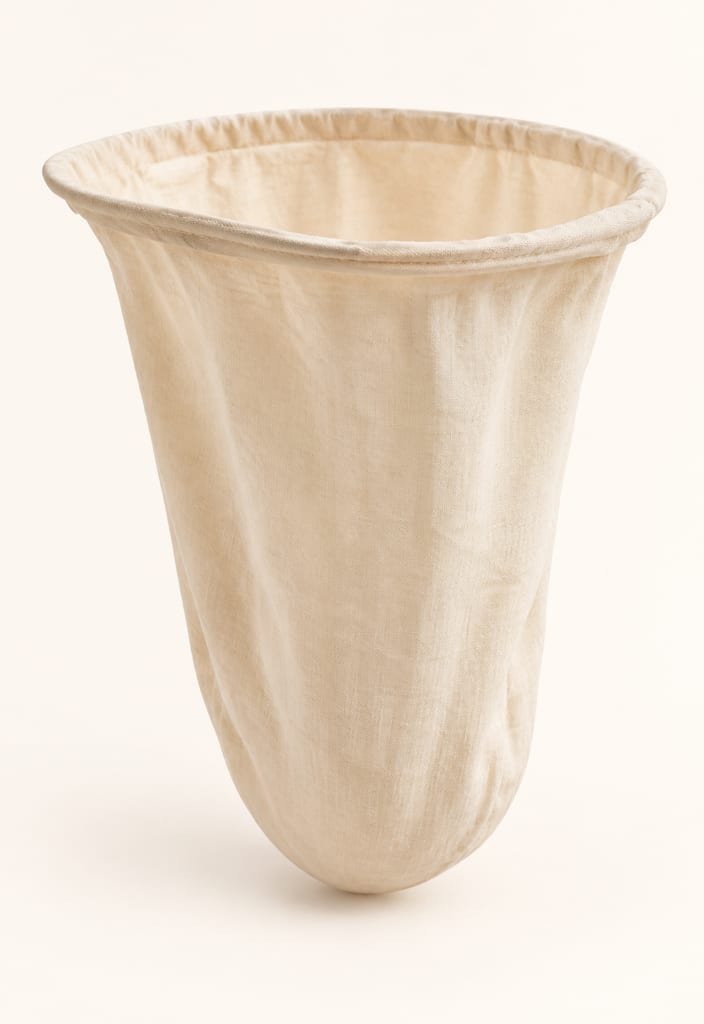
A clean jelly bag is a cloth straining bag used to separate fruit juice from cooked pulp. The bag holds the solids while liquid passes through and collects below. Unlike a flat cloth cover or a rigid sieve, the bag is the filter and holder in one flexible piece. The consulted sources do not give it a standard fiber, weave, size or capacity.
The National Center for Home Food Preservation recommends pouring the cooked fruit into a damp jelly bag and suspending it to drain. Its guidance says the clearest jelly comes from juice that drips through without pressing or squeezing the bag. Pressure pushes more pulp into the liquid and can cloud the extract. If a fruit press is used, the guidance still calls for restraining the resulting juice through a jelly bag.
A Philippine Department of Science and Technology brochure includes cheesecloth among the supplies for guava processing. Its guava-jelly procedure strains the cooked fruit through a cheesecloth bag, then crushes and boils the pulp again with water before straining and combining the extracts. Those repeated steps belong to that particular method; they are not a general requirement for every fruit or jelly.
The National Center for Home Food Preservation describes a different, general juice-extraction approach: dampen the jelly bag, suspend it and let the juice drip without squeezing when clarity is the goal. Taken together, the sources document the bag’s role in more than one fruit-jelly process while showing that recipe details vary. The bag is useful because it retains pulp during extraction, not because one exact cloth design works for every fruit.
A bag may be used with a separate support above a pot or bowl. A Commons photograph titled “Jelly bag” shows a cloth bag in a stand over a pot, while the National Center for Home Food Preservation simply says to suspend the bag. The support in the photograph is not part of the bag itself, and the sources do not require a particular frame, hook or vessel.
The DOST guava guidance names cheesecloth for its method; the home-preservation source uses the broader term jelly bag. Neither defines whether bags are cotton or another fiber, how closely woven they must be, how large they should be, or whether they are reusable. A pictured bag’s color, texture or support should not be treated as a universal specification.
This straining bag is distinct from a cloth used with a steamer, such as the separate food-contact cloth listed in a rice-koji method. It is also distinct from a rigid strainer lined with cloth: in a jelly bag, the flexible bag itself contains the cooked pulp as the juice drips out.
The references do not establish where or when jelly bags originated, a universal cleaning or replacement schedule, or a safe preservation process for the extracted juice. Use the bag only as one tool in the recipe being followed; the recipe’s own directions control how the juice is cooked, finished and stored.
Current jelly-making guidance and a Commons photograph dated 21 October 2012 document cloth bags used to drain fruit juice. The sources do not establish the equipment’s origin or first use.
Use a clean, damp jelly bag for the juice-draining step described by the selected method.
Control sourceThe bag only strains juice; it does not establish a tested preservation or storage process for the finished jelly.
A jelly bag is a straining textile, not a heated processing vessel or canning method. The sources do not define its fiber, weave, dimensions, capacity, or care instructions.
Source →The DOST guava procedure uses a cheesecloth bag, but its instructions and repeat-extraction steps are specific to that guava method.
Source →Records use of a cheesecloth bag in a Philippine guava-jelly method; it does not claim the bag originated or was manufactured in the Philippines.
Records a U.S. home-preservation method that suspends a damp jelly bag to drain juice; it does not claim the equipment originated in the United States.
A burnay is a wide-bodied, narrow-mouthed stoneware jar made in Vigan, Ilocos Sur. Ilokano households and producers have used these sturdy vessels for water, food, basi, vinegar and other fermented condiments.
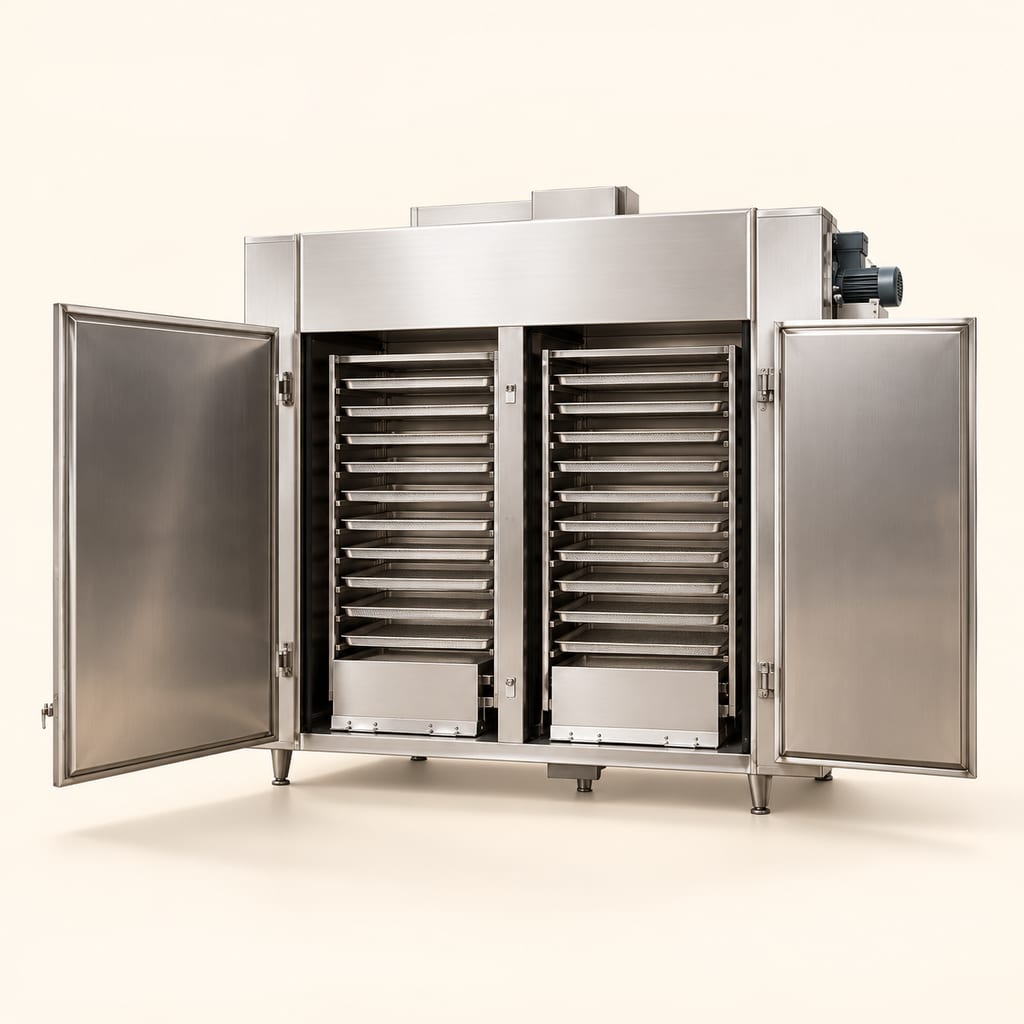
A heated-air cabinet with trays for drying fruit and other crops; PHilMech documents cabinet/convection dryers in Cebu's dried-mango trade and several Philippine equipment variants.
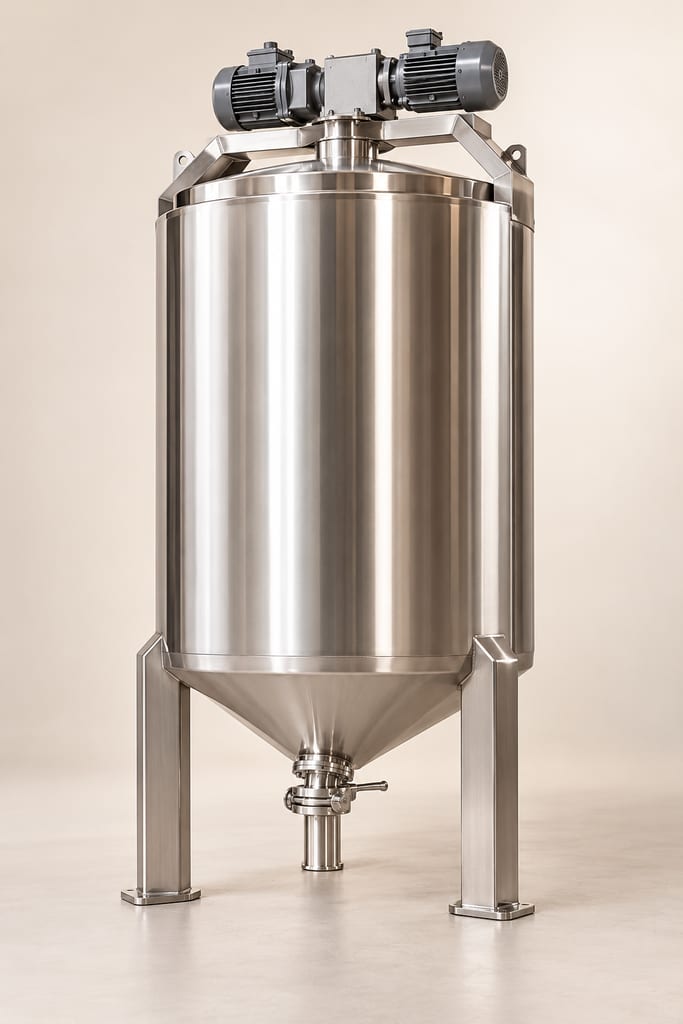
Contemporary vessels used to ferment coffee cherries or pulped coffee with restricted air exchange. Drums, rigid tanks and hermetic bags differ in material and monitoring; “anaerobic” alone does not describe a batch's conditions.
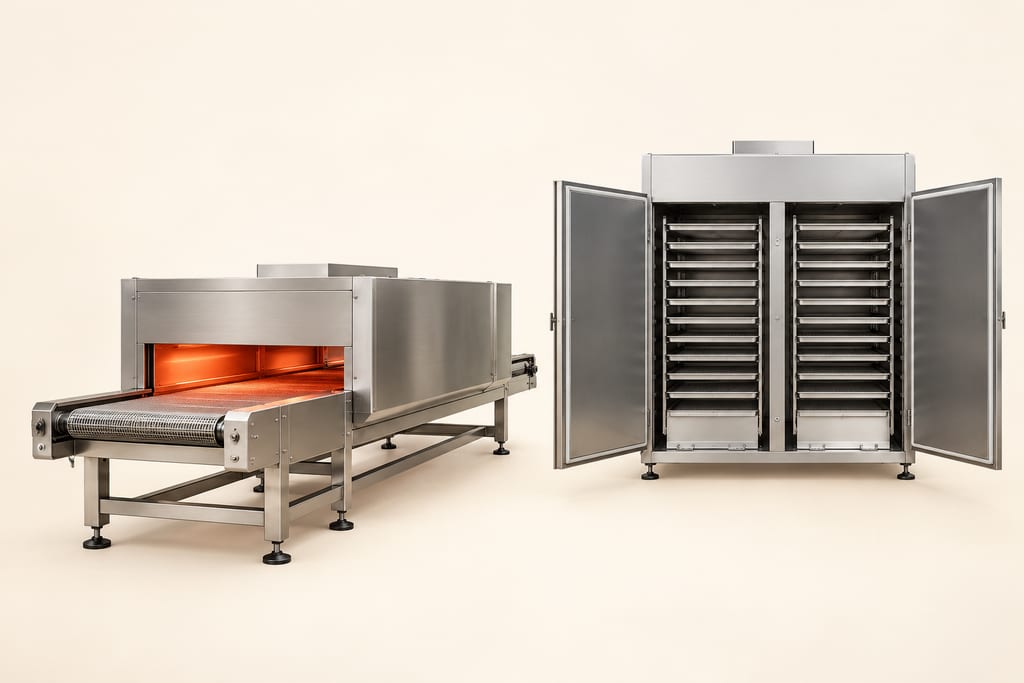
PHilMech's two-stage mango-drying system used intermittent far-infrared conveyor heating before a convection cabinet finish. Its pilot measurements describe one research setup, not a standard specification for every hybrid dryer.
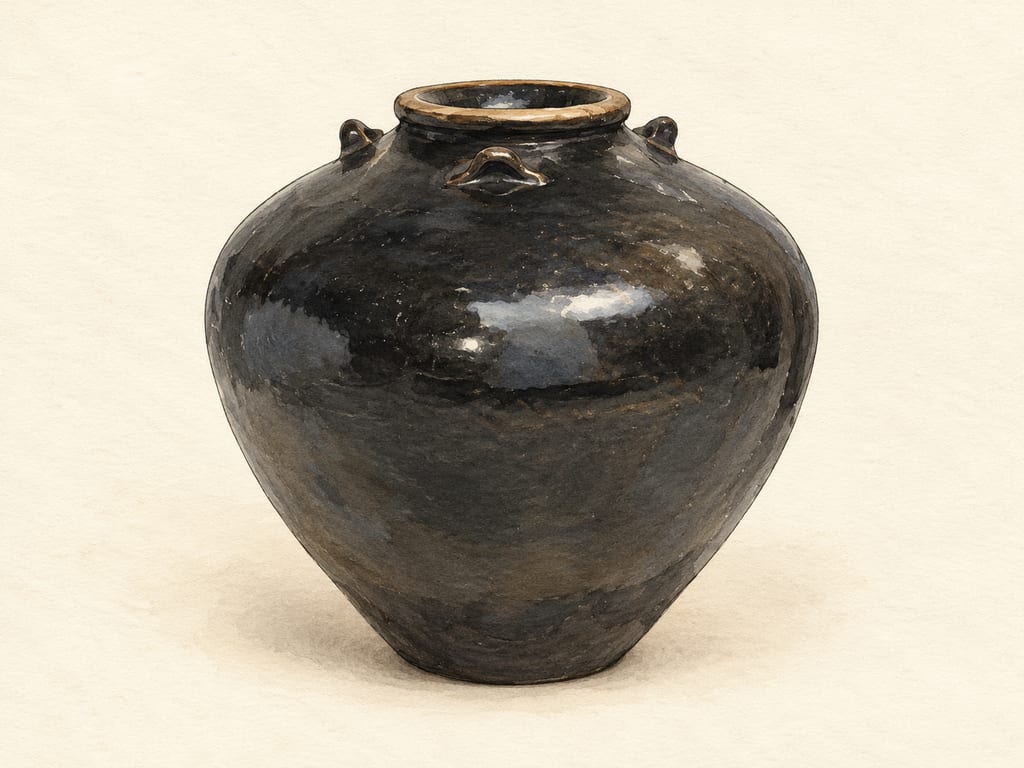
A durable Southeast Asian storage and trade jar, with particular Martaban examples documented in Philippine fish fermentation; the name covers varied objects, not one standard form.
No community contributions have been published for this entry yet.
Sign in to contribute. Published comments and photos are free to read.
National Center for Home Food Preservation, University of GeorgiaFunction · Form · Process context · Limits
Extracting Juice for JellyThe guidance directs the maker to pour cooked fruit into a damp jelly bag and suspend it to drain juice.
It says the clearest jelly comes from juice dripping through the bag without pressing or squeezing.
If a fruit press is used, the juice should be restrained through a jelly bag.
Cited in: A bag that drains by gravity; Two documented jelly methods; Bag, support and material; Scope and limits
Industrial Technology Development Institute, Department of Science and Technology, PhilippinesForm · Function · Documented use · Geography
Guava ProductsThe brochure lists strainer and cheesecloth among the supplies for guava processing.
Its guava-jelly method strains cooked guava through a cheesecloth bag, crushes the pulp and boils it again with water, then strains and combines the extracts.
The document is a Philippine government technical livelihood brochure; it does not specify the bag’s fiber beyond cheesecloth or standard size.
Cited in: Two documented jelly methods; Bag, support and material; Scope and limits
Wikimedia Commons; original photograph by Leslie SeatonImage reference · Form · Documented use
Jelly bag (8167924963).jpgThe page is titled “Jelly bag” and describes a cloth bag used to let cooked apple pulp drip out its juice; the photo is dated 21 October 2012 and credits Leslie Seaton.
The photograph shows a cloth bag supported above a pot; it documents one arrangement, not a required stand or universal bag form.
The Commons page credits Leslie Seaton and records a CC BY 2.0 license.
Cited in: Bag, support and material