Cabinet drying in Cebu
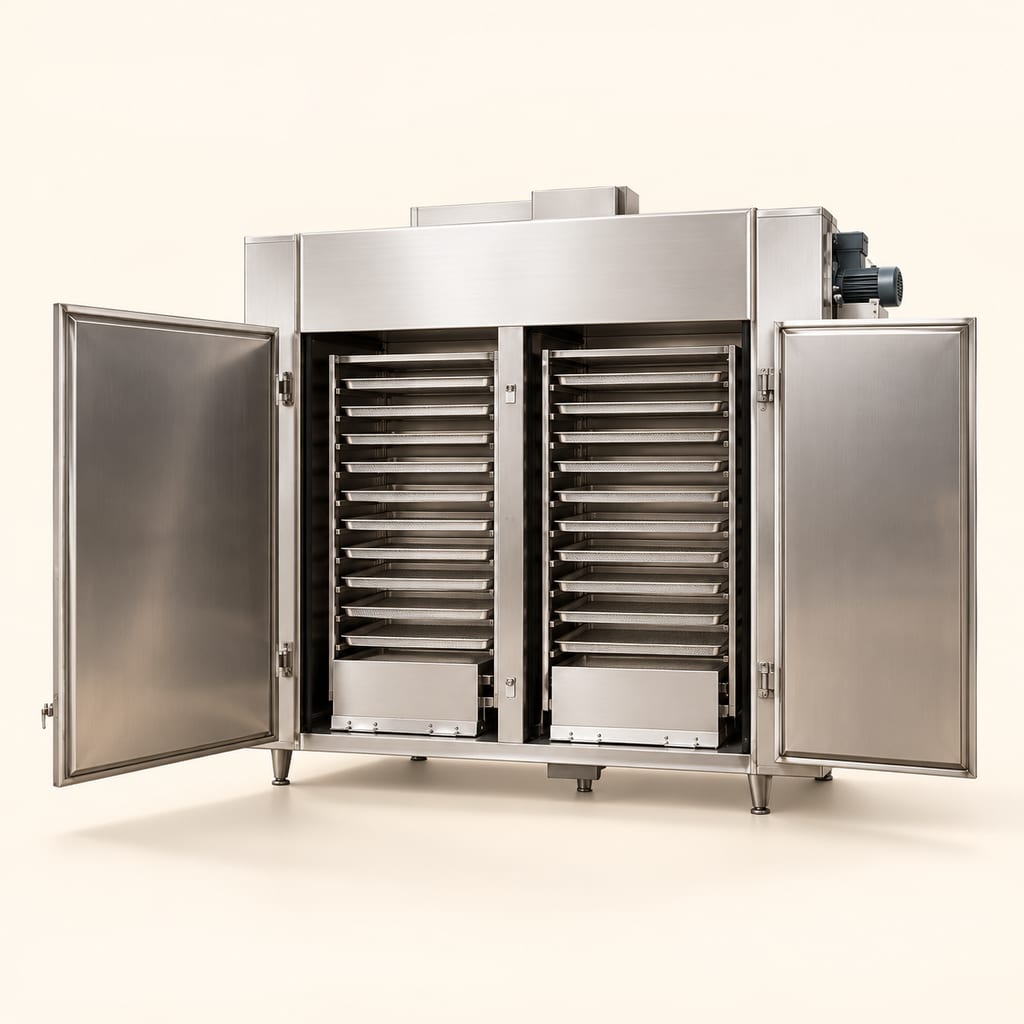
A cabinet or tray dryer moves heated air through crop arranged on trays inside an enclosed chamber. It gives processors a controlled alternative to relying only on direct sun and weather. PHilMech described cabinet dryers heated by liquefied petroleum gas or steam boilers as common in Cebu's dried-mango processing industry in 2013, when local processors were working against peak-harvest volume and limited drying capacity.
Mango slices are sensitive to prolonged high heat. The PHilMech account notes that circulating warm air can dry the slices while limiting damage, but slow drying can still lead to case hardening: a firm outer surface enclosing a softer interior. Added syrup complicates drying further. The cabinet is one part of a processing line; it does not itself define slice thickness, syrup treatment, final moisture, packaging or the finished product's shelf life.
Sources for this section
A family of machines, not one specification
A cabinet dryer can be a compact batch machine with removable trays or a larger commercial cabinet, and its heat source and airflow system depend on the model. PHilMech traces one local development path: a mango cabinet dryer with a biomass-fed furnace was pilot-tested in 2006, following an adaptation of a multi-commodity solar-tunnel dryer. The agency said both those dryer types became commercially available. Its 2013 account also describes Cebu cabinet dryers using LPG or steam boilers, while a current commercial product listing illustrates an electric batch cabinet with racks.
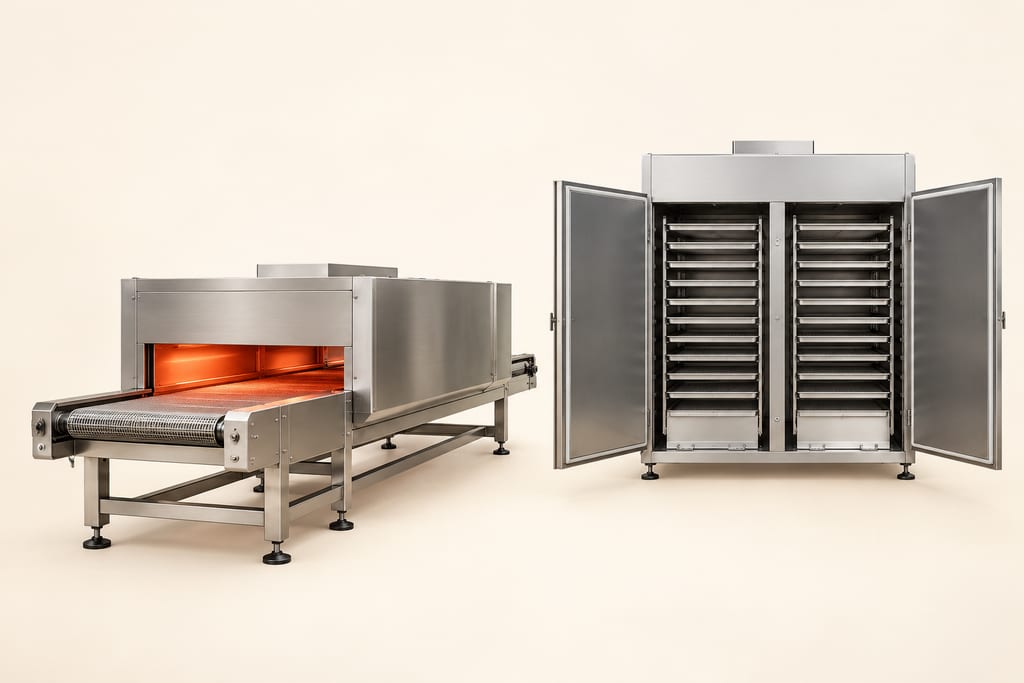
A tray cabinet should not be confused with the far-infrared/convection hybrid described in the same PHilMech report. The hybrid applied intermittent infrared exposure first, then sent partially dried slices to a convection cabinet for the second stage. Its reported eight-hour total compared with twelve hours for the conventional process belongs to that research arrangement; it is not a guaranteed cycle time for every cabinet dryer.
Sources for this section
A second mango application
Cabinet dryers also appear in a different PHilMech application: a pilot-scale system for making pectin from mango peels. In the 2022 journal report, the process dries pressed, washed peel in a cabinet tray-type oven before pulverization and pectin extraction. The report gives 70°C as the selected drying temperature for that particular application. It does not establish a standard capacity or specification for cabinet dryers as a class. This case concerns a by-product process, not the commercial Cebu slice-drying equipment.
This distinction matters when comparing dryers. A source may describe mango slices for a snack, peel for a later extraction, a solar tunnel, a biomass-fed cabinet or a hybrid infrared/convection line. The shared cabinet form organizes product on trays within an enclosure, but loading, airflow, heat delivery and purpose differ. This record names the equipment class and keeps individual studies attached to their own product and setup.
Sources for this section
What the record does not standardize
There is no single capacity, tray count, cabinet dimension, temperature or fuel that applies to every machine in this class. The Cebu description covers common industrial practice at the time of the 2013 report; the PHilMech pectin trial is a separate measured case; and a supplier image is only one present-day manufactured example. Equipment specifications should therefore be read from the actual model and process documentation rather than inferred from the words “cabinet dryer.”
Sources for this section
History
PHilMech describes the development of Philippine mango-drying equipment, including a mango cabinet dryer with a biomass-fed furnace pilot-tested in 2006. By 2013, cabinet dryers heated by LPG or steam boilers were described as common among Cebu's dried-mango processors. The report also documents later research combining far-infrared treatment with convection drying. These reports trace particular Philippine adaptations, not the invention of cabinet drying worldwide.
Equipment details
PowerNot established The equipment class varies: PHilMech describes Cebu cabinet dryers heated by LPG or steam boilers, while the linked product example is electric. No single power source describes the whole class.
How you get oneBought, manufactured PHilMech reports commercially available cabinet-dryer models; the record describes manufactured equipment, not one particular current supplier.
Made of
- Metal — Cabinet and tray structure
The illustrated commercial example has a metal outer cabinet and tray racks; the photo does not establish the alloy or a universal material specification.
Limits
A cabinet dryer is not a single standard design: power source, tray count, capacity, temperature and airflow vary by model and application.
Source →The 2013 PHilMech performance figures are for a specific two-stage far-infrared-plus-convection process and should not be read as a universal cabinet-dryer result.
Source →Places
Cebu
Documented use · Region evidencePHilMech described cabinet/convection dryers as common in Cebu's dried-mango industry in 2013; this is evidence of use, not the dryer type's origin.
Wuxi
Manufacture · Locality evidenceThe linked image shows a Wuxi Wiscon electric batch cabinet-tray dryer; this is one contemporary example, not the source or form of all cabinet dryers.