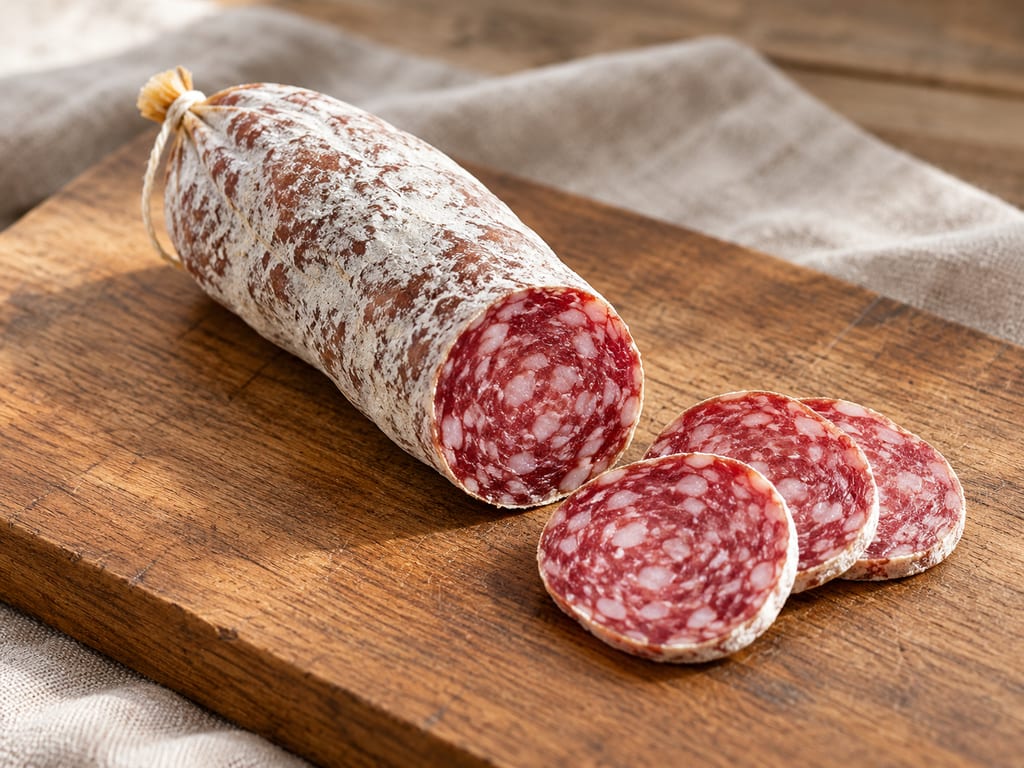
Cacciatore salami
Small Italian hunter-style salami of lean pork, firm fat, salt, pepper and garlic, mildly acidified and dry-matured; protected as Salamini Italiani alla Cacciatora DOP.
 FermenteaWhere food goes to change
Traditional method
'Nduja · Nduja · Nduja di Spilinga · 'Nduja calabrese · 'Nduja in orba · 'Nduja in crespone · 'Nduja in muletta
Soft, spreadable Calabrian pork sausage made with a great deal of red chilli and fatty pork, stuffed into natural casings, sometimes smoked and matured while staying soft.

'Nduja is a soft, brick-red pork sausage from Calabria in the far south of Italy, tied above all to Spilinga, a village on the Monte Poro plateau in the province of Vibo Valentia. Most dry salamis are meant to firm up until they can be sliced. 'Nduja is meant to stay soft enough to spread, on bread, into a pasta sauce or over a pizza. What defines it is a high proportion of pork fat, an unusually large amount of red chilli, and a period of maturing that is often joined by smoking.
The traditional list is short: pork, red chilli and salt. The pork is fatty cuts such as guanciale, pancetta, throat fat and lardello, sometimes with lean trimmings from the shoulder or leg. The chilli is usually a mixture of sweet and hot Calabrian peppers, and the amount is very high for a cured sausage, which is why it gives the colour, much of the flavour and the unusual physical behaviour.
Published formulations differ. One documented traditional-style version is about 50 percent pork fat, 25 percent lean pork and 25 percent chopped or ground red chilli, with salt added separately. A manufacturer's finished product lists 42 percent pork fat, 30 percent pork meat, 25 percent chilli and 3 percent salt. They are two recipes and not a standard.
The paste is ground fine, worked smooth and stuffed into natural pork casings. The large traditional casings include the orba, made from the pig's caecum, and the formats called crespone and muletta. Modern 'nduja also comes in smaller casings, jars, tubs and squeeze pouches. These are presentations of the same type, sometimes processed or packed differently.
It is often called a fermented sausage, but the microbiology is less settled than the label. Studies have found lactic acid bacteria, plenty of yeast and chemical change during maturing. A 2018 study of commercial samples concluded that fermentation was generally incomplete and that the product behaves more like a meat preserve, while a 2026 experiment showed strong lactic bacterial growth and acidification under its own conditions. It is filed as mixed fermentation, which records microbial activity alongside enzymatic ripening and does not claim that every 'nduja is started with a culture. It is matured as a raw cured meat and usually eaten without further cooking.
Spilinga producers have sought legal protection. A municipal De.Co. designation and regional traditional-product recognition have been reported, but neither is an EU Protected Designation of Origin or Geographical Indication. As of 2026 an EU registration was still an aim.
The story of 'nduja is bound up with rural pig keeping and household meat preservation around Spilinga and Monte Poro. Slow Food collected accounts of an older version that used the less prized parts of the pig, including skin and offal. Today's versions favour fatty cuts and lean trimmings over offal, which helps explain the smooth texture, but no one has dated the change.
The name is often linked to French andouille, a sausage of pork intestines and other internal tissues. One hypothesis ties the product or its name to French influence in the Napoleonic period, under Joachim Murat in the Kingdom of Naples. Slow Food also records a rival theory of Spanish influence on southern Italian sausage in the sixteenth century. No securely dated primary record supports either theory.
Chilli supplies a boundary. Capsicum peppers came from the Americas and entered European food after transatlantic contact, so a sausage built on red chilli cannot be older than that, even if Calabrian households made salted or smoked pork before it. That gives a broad limit and not an invention date, and a likeness to andouille or Spanish sobrassada is not proof of descent.
Local accounts connect the preparation with the winter pig slaughter. Slow Food describes families growing peppers, stringing them and drying them before the annual slaughter and sausage-making season, with the household economy using cuts that were less valuable for other cured meats. These are remembered practices without dates.
A firmer date comes from the Sagra della 'Nduja at Spilinga, which the producer 'Nduja San Donato records as beginning in 1975, traditionally on 8 August. That is retrospective, and no contemporary 1975 record has been examined. Producer histories mention La Spilingese's production from the 1990s and the founding of the Gabriella Bellantone business in 1999, and a 2018 article in La Cucina Italiana describes producers seeking to protect the Spilinga name, with newer retail formats and growing export demand.
Science supplies further dates. A 2011 study examined the microbiological quality of artisanal and industrial 'nduja, a 2014 study identified yeasts from Spilinga products, a 2018 paper examined thirteen samples, and in June 2026 the University of Messina published a pathogen-survival experiment. Together they give a modern evidence base and no proof of an ancient or medieval origin.
'Nduja is preserved by several things together: salt, the properties of a concentrated chilli mixture, falling water activity, microbial activity and sometimes smoke. A great deal of fat and a small share of lean muscle set it apart from conventional dry sausage. Fat holds little water and much of the mixture is chilli and not raw muscle, so the finished product can have a low water activity and still be soft. Softness therefore does not mean water is freely available, though neither texture nor appearance is a safety measurement.
Salt dissolves into the watery phase and lowers water activity, and drying lowers it further. Chilli contributes moisture and acidity too. It contains capsaicinoids, such as capsaicin and dihydrocapsaicin, which give the heat, and carotenoid pigments, which give the red. Some pepper compounds show antimicrobial and antioxidant activity in the laboratory, but in a fatty sausage the effect is complicated, because capsaicin moves into the fat and is thinner in the water phase where many microbes grow.
The 2018 study by Chiavari and colleagues analysed thirteen samples and found large differences in composition. Chilli added sugars and fibre. The authors counted low populations of lactic acid bacteria and coagulase-negative cocci, with residual sugars that fit an incomplete fermentation, and argued that the product behaves as a preserved meat. That matters because chilli acidity and drying can lower pH and water activity without bacterial acid.
A controlled University of Messina experiment in June 2026 found strong lactic activity. Indigenous lactic acid bacteria reached about 7.24 log CFU per gram by day seven and stayed abundant. In the control product mean pH fell from 4.80 at the start to 4.13 at twenty-eight days, and mean water activity from 0.914 to 0.855. Those numbers belong to that experiment and are not properties or safe endpoints of every 'nduja.
Yeasts are a documented part of the microbiota. Giarratana and colleagues isolated 127 yeast strains from Spilinga 'nduja. Debaryomyces hansenii was most frequent, with its asexual form Candida famata also reported, and the others included Candida glabrata, Pichia guilliermondii and Candida zeylanoides. Some D. hansenii isolates and one C. zeylanoides isolate showed lipolytic activity in the laboratory, which suggests a part in fat breakdown and flavour. It does not show that every isolate is desirable or suitable as a starter.
Proteolysis and lipolysis run alongside. Meat proteases release peptides and amino acids, lipases release fatty acids, and oxidation makes aldehydes and aroma compounds, which can turn unpleasant if it goes too far. Microbes can also decarboxylate amino acids to biogenic amines such as tyramine, histamine and cadaverine. One 2018 survey measured total biogenic amines below 200 milligrams per kilogram in its samples, a result and not a limit.
Where smoke is used, wood phenols affect flavour and may act on the surface, but smoking is not cooking and not a validated kill step. The studies show that safety comes from the combined process and not from chilli, acid, salt or smoke alone.
Production starts with fatty pork, usually guanciale, pancetta, throat fat and lardello, plus lean trimmings. The fat is what keeps 'nduja spreadable as it matures. It carries the chilli compounds and stops the mixture from hardening, while the lean meat gives protein and pork flavour. Makers differ in the cuts they choose.
A 2014 scientific description records a formulation of about 50 percent pork fat, 25 percent lean pork and 25 percent dried red chilli, with sodium chloride then added at 3 percent of the mixture. It describes grinding, mixing, refrigerating for twelve hours and stuffing into natural pork casings. These proportions are production evidence, not a specification for every producer and not a safe home recipe.
The chilli does more than season. Traditional descriptions favour dried or part-dried Calabrian red peppers, sweet and hot together to set the heat. Salumificio F.lli Pugliese declares 22 percent sweet and 8 percent hot chilli in one product. Chilli brings colour, flavour, soluble compounds, fibre and some of the sugars microbes use, and its moisture matters, so a wet chilli paste cannot be swapped for dried chilli by weight without changing water, salt and acid.
Salt flavours and lowers water activity, and its concentration has to be judged across the whole mixture. Traditional Spilinga makers commonly advertise recipes without nitrite or nitrate, but that does not mean all formulations leave them out or that leaving them out is automatically safe. A home formula of equal parts meat, fat and chilli paste with Cure #2, garlic, smoked paprika and a starter is a modern adaptation, and those proportions are not the traditional standard or a validated system.
After grinding and mixing the paste rests and is stuffed into natural casings. 'Nduja San Donato describes resting for several hours before filling the pig's own intestine, including the larger orba and crespone. The filled casings are tied and hung, and traditional production may include natural smoking before slow maturing. Smoke temperature, time and intensity differ between producers.
Published maturing times vary a lot: F.lli Pugliese describes thirty to forty days for one product, another producer profile about ninety to one hundred and fifty days, and the 2016 Food Chemistry description smoking for ten to twelve days followed by long ripening. They belong to different methods and are not stages of one recipe. The 2026 experiment matured for twenty-eight days under controlled conditions, and its schedule must not be moved into an unvalidated home process.
A good result is smooth or pasty with a colour dominated by chilli, and appearance, age and taste cannot show it is safe to eat or store. A reproducible ready-to-eat recipe needs a full formulation and validated controls for raw meat, starter activity where used, pH, water activity, smoking, pathogens, packaging and storage.
Spilinga is the main historical and commercial reference, but production is also documented in nearby Monte Poro communities. Slow Food names Spilinga and other plateau villages as the traditional zone, and local producers stress the origin of the chilli, the composition of the pork mixture and traditional casing and smoking. These set them apart from the chilli-flavoured spreadable sausages sold elsewhere.
Older accounts speak of skin, offal and other less marketable parts. La Cucina Italiana describes a Bellantone version that keeps some cooked pork skin and frittole, an earlier whole-animal approach. The familiar modern version uses fatty belly, cheek, throat fat and lean trimmings, without offal as the main ingredient. The chronology of the change is uncertain.
Chilli varieties add variation. Slow Food names tri pizzi and casalese among local peppers, and a 2018 account lists cappejaru, resta, rutundu and spilingotu. These are local names, not botanically verified cultivars. Producers blend sweet and hot to get the result they want, so some 'nduja is much hotter than others at a similar chilli percentage.
Casing size changes the look and the maturing. The orba uses the caecum and gives a broad rounded shape. Crespone and muletta are other formats, F.lli Pugliese describing smaller crespone and larger, much heavier muletta. Sausages of different sizes do not share a maturing time or moisture profile.
Smoking is prominent in many traditional descriptions but is not treated alike by every maker. Jars, tubs and pouches may involve other manufacturing, heat treatment or storage controls and are not equivalent to a traditionally matured sausage in natural casing.
Legal protection needs careful words. The municipal De.Co. recognises the Spilinga tradition and regional P.A.T. status concerns traditional foods, and neither is an EU PDO or PGI. Some papers use PGI wording loosely, but a June 2026 paper still refers to efforts towards European recognition. Outside Calabria, makers and chefs have built versions with pepper paste, garlic, smoked paprika, added cultures or other cuts. These are adaptations, and not historical Spilinga formulations.
The simplest and most typical way to eat 'nduja is spread on bread, often lightly toasted, because warmth softens the fat. The flavour is concentrated, so it is used as a condiment and not eaten in the quantity of a mild cooked sausage. A professionally made ready-to-eat 'nduja can be served uncooked when its maker's instructions allow.
In Calabria it flavours tomato sauces: a small amount is softened in the pan before the tomatoes go in, and the fat carries chilli through the sauce while the pork adds savour. It is paired with pasta, short shapes and substantial traditional sauces, and stirring it in spreads chilli and fat better than leaving it as a topping.
It goes on pizza in small portions that soften and spread in the heat, on focaccia and in filled breads. Modern kitchens pair it with mozzarella, burrata or stracciatella, whose mild dairy flavour moderates the chilli. These are contemporary practices, not proof that each pairing belongs to the rural tradition.
Slow Food documents it with mature cheeses, legumes and vegetable dishes, and a little flavours a bean stew or soup. Producers also recommend it in sauces and on grilled vegetables. A 2018 La Cucina Italiana article includes a chef's dish of 'nduja with squid and pumpkin, and suggestions include aubergine parmigiana and meat sauces.
A traditional sausage is opened and the casing removed before spreading, and some producers advise letting it soften briefly. Jar and pouch products come with their own instructions, and opened products usually need refrigeration. F.lli Pugliese says to refrigerate its retail product after opening, and Salumificio Monteporo gives refrigerated storage instructions for opened casing, jar and pouch formats. Chilli does not preserve the meat by itself. Heating 'nduja in a sauce is a cooking step and not proof of safe manufacture, since cooking does not reliably remove preformed toxin from an improperly made ready-to-eat product. Use a commercially validated product and follow its label.
A finished 'nduja is red to deep red, soft and uniform with a pronounced chilli aroma. Fat should be spread through the paste and not in large separate pieces. The surface and interior may differ a little, especially in big casings. Colour depends on the chilli, and redness, softness and chilli flavour are characteristic and do not show that the product is safe.
The core challenge is keeping the intended consistency while controlling microbial hazards. A product that has gone too firm may have lost more water than intended or have a different balance of fat, lean and chilli. One that is unusually wet may reflect another formulation, poor drying or weak control of ingredients. These observations compare styles and cannot replace measured water activity, pH and process records.
The June 2026 Messina challenge study is directly relevant. Researchers inoculated experimental 'nduja with Salmonella Typhimurium, Escherichia coli O157:H7 and Listeria monocytogenes and followed them through twenty-eight days of ripening. Salmonella fell below the detection limit, an estimated reduction of 7.10 log. E. coli fell 3.61 log but stayed detectable, and Listeria fell only 1.32 log. The pathogens responded very differently to the same cure.
In that experiment mean pH fell to about 4.13 and mean water activity to about 0.855, measurements for that formulation and those conditions and not safe limits for home production. The study did not show that every 'nduja process achieves such reductions or that the product was free of every pathogen or toxin, and Listeria persistence shows that acidity and drying alone cannot be assumed to be fully lethal.
A 2011 investigation of twenty-seven commercial samples, artisanal and industrial, did not detect Salmonella enterica, Listeria monocytogenes or the specified enterotoxigenic organisms, although artisanal products varied more. That describes those products only and does not prove that 'nduja cannot carry such organisms or that an unvalidated home batch will behave the same.
Staphylococcus aureus and Clostridium botulinum also need attention. Temperature abuse early in processing can allow staphylococcal growth and enterotoxin formation. Botulism prevention rests on a combination of controls that may include formulation, acidity, water activity, nitrite where permitted and needed, and temperature. Traditional makers may leave out nitrite under their own validated processes, but an untested home method cannot assume chilli substitutes for it, and Cure #2 products differ by country and formulation, so amounts must never be guessed.
Yeast activity, proteolysis and fat oxidation change flavour in storage and not always for the better: too much oxidation gives rancid notes and some microbial metabolism produces biogenic amines. A 2018 survey found histamine, tyramine and cadaverine in 'nduja with totals below 200 milligrams per kilogram in those samples, which is not a general limit and cannot be judged by taste or smell.
Smoking brings its own hazard when combustion is poorly controlled: polycyclic aromatic hydrocarbons such as benzo[a]pyrene, which are regulated in the EU. A smoky smell does not show enough pathogen reduction, and a product flavoured with smoked paprika or smoke flavouring is a different preparation. For a production record, keep the exact meat and chilli formulation, salt and any curing agent, starter specification, casing size, temperature and humidity history, pH, final water activity, process-specific pathogen validation and storage conditions.
Slow Food records an older 'nduja made from the less valued parts of the pig, including skin and offal, which gave way to fatty cuts and lean trimmings. Origin theories point to French andouille under Murat or to sixteenth-century Spanish sausage, and neither has a dated record. Because the sausage depends on red chilli, it cannot predate the arrival of capsicum from the Americas.
The Sagra della 'Nduja at Spilinga is recorded as beginning in 1975, and the product was studied by microbiologists in 2011, 2014, 2018 and 2026.
Raw pork can carry Salmonella. In the 2026 challenge study Salmonella fell below the detection limit in one process, which cannot be assumed for another.
Hazard sourceE. coli O157:H7 fell by 3.61 log in the challenge study yet stayed detectable.
Hazard sourceListeria fell by only 1.32 log in the challenge study, so acidity and drying cannot be assumed to be fully lethal.
Hazard sourceTemperature abuse early in processing can allow growth and toxin formation, which later processing does not reliably undo.
Hazard sourceBotulism prevention depends on a combination of formulation, acidity, water activity, nitrite where permitted, and temperature, and an untested home method cannot assume chilli replaces them.
Hazard sourceMicrobial amino acid decarboxylation can make tyramine, histamine and cadaverine; a 2018 survey found totals below 200 mg/kg in its samples, which is not a limit.
Hazard sourcePoorly controlled smoking can contaminate meat with benzo[a]pyrene and related compounds, which are regulated in the EU.
Hazard sourceAdditions are legally limited and depend on the formulation and jurisdiction; amounts must not be guessed.
Hazard sourceControl early processing temperature and time to prevent staphylococcal growth.
Control sourceMeasure pH and water activity through ripening and confirm they meet a validated specification.
Control sourceUse a process validated against Salmonella, E. coli O157:H7 and Listeria for the exact formulation.
Control sourceKeep smoke production controlled to limit PAH contamination.
Control sourceWhere nitrite or nitrate is used, verify the permitted additive, amount and current legal limits.
Control sourceFollow the label for refrigeration after opening.
Control sourceRaw pork sausage that is smoked and ripened can carry Salmonella, E. coli O157:H7, Listeria and staphylococcal toxin. In the 2026 study Listeria fell only 1.32 log under a validated 28-day process, so smoke, chilli, acidity and time do not make an untested batch safe. Eat only commercially validated product.
Do not apply the 2026 study's pH, water activity or temperature values to a different process.
Wet chilli paste, Cure #2, starter culture, garlic and smoked paprika form a home adaptation that has not been validated and is not the Spilinga standard.
Do not guess nitrite or nitrate amounts; use is regulated and formulation-specific.
Do not treat redness, softness, smell or elapsed time as proof of safety, and do not rescue a batch with mould, slime or off odours; discard it.
Refrigerate opened product, as makers instruct. Cooking a sauce adds a control but does not remove preformed toxin.
The village most associated with the product; no earliest date is established.
The plateau zone of Spilinga and neighbouring villages.
Small Italian hunter-style salami of lean pork, firm fat, salt, pepper and garlic, mildly acidified and dry-matured; protected as Salamini Italiani alla Cacciatora DOP.
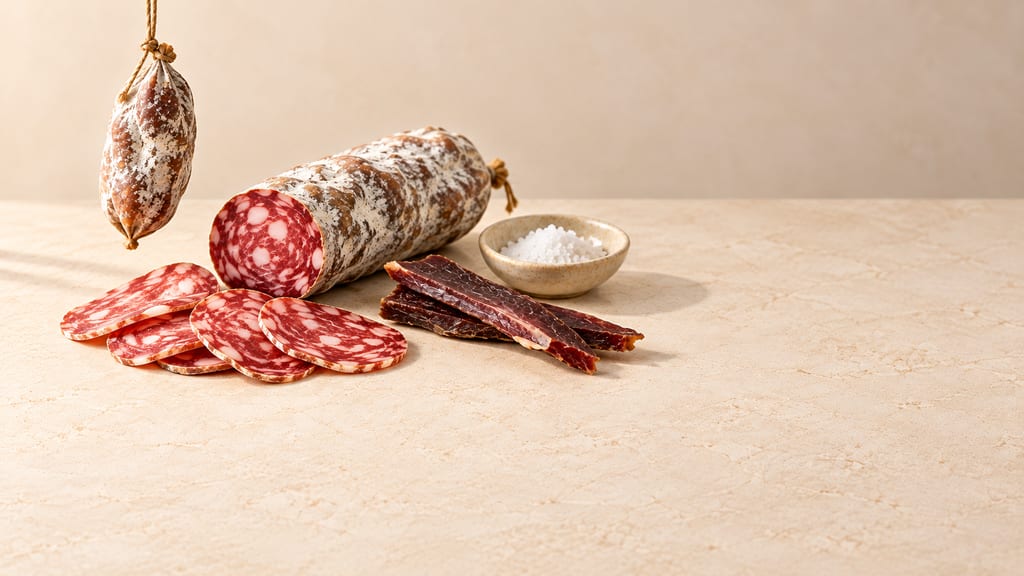
Dry salami, sour pork with rice, matured sheep and aged blubber follow different paths from animal to food. Their stories connect microbes with climate, slaughter, migration and the meals people share.
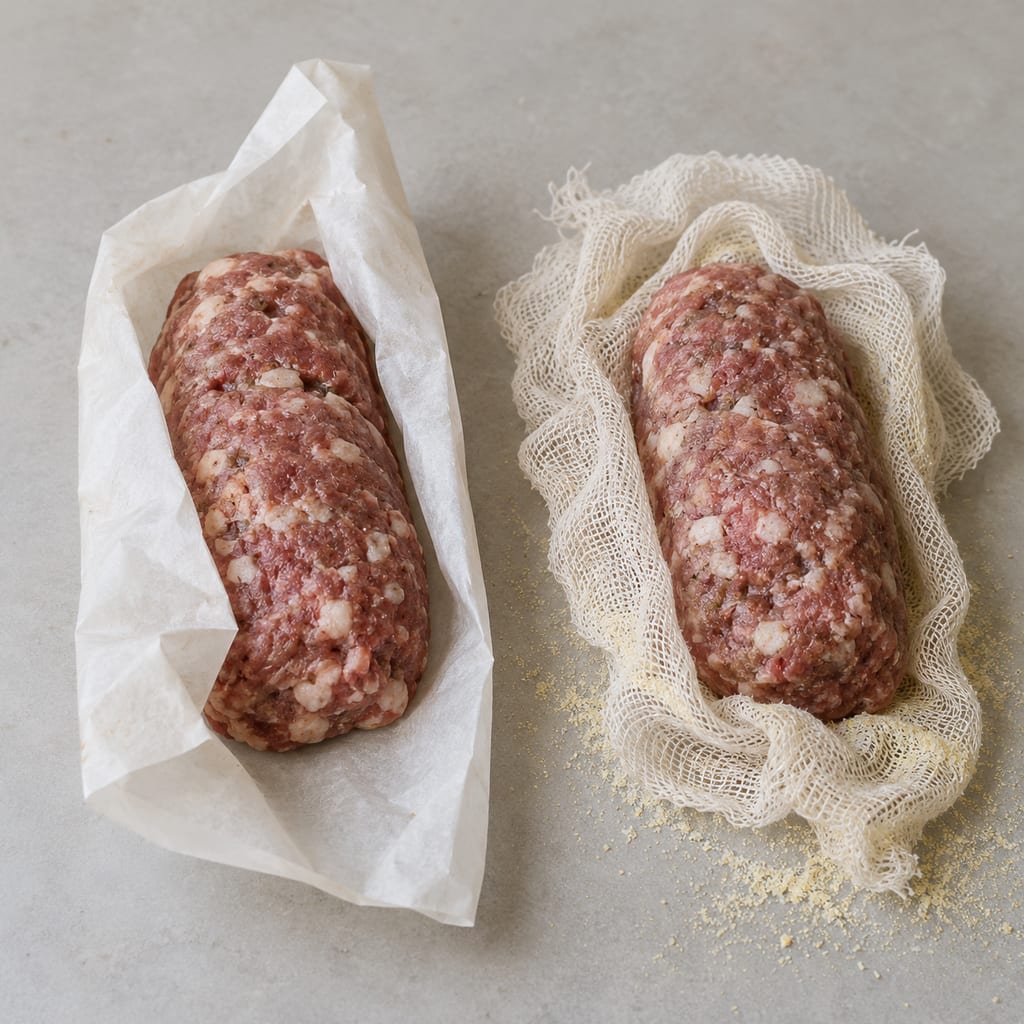
A documentary account of two modern Italian-language home-video experiments in salame without casings. Neither video establishes a safe preparation method or a ready-to-eat product.
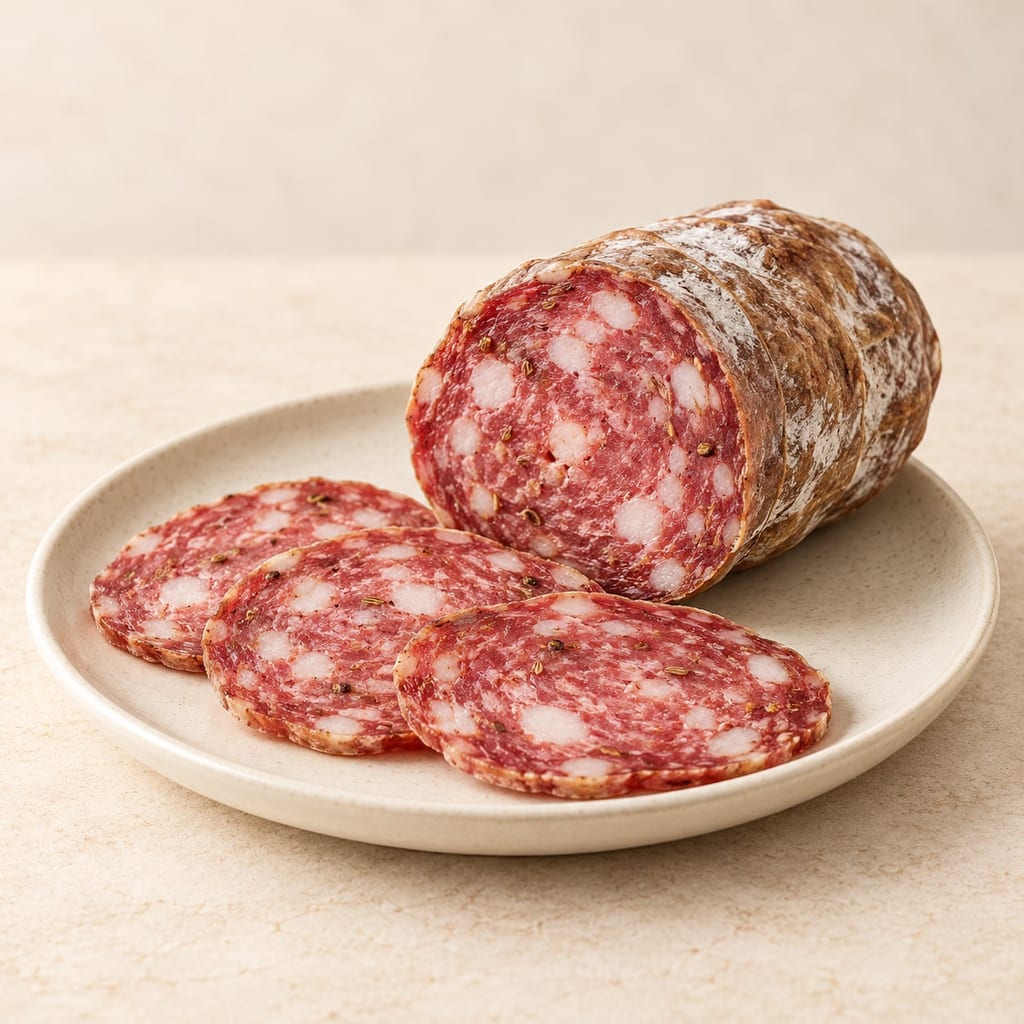
A Tuscan-style fennel salami made with pork and back fat. Toasted fennel, fennel pollen and Sambuca flavor this starter-cultured preparation.
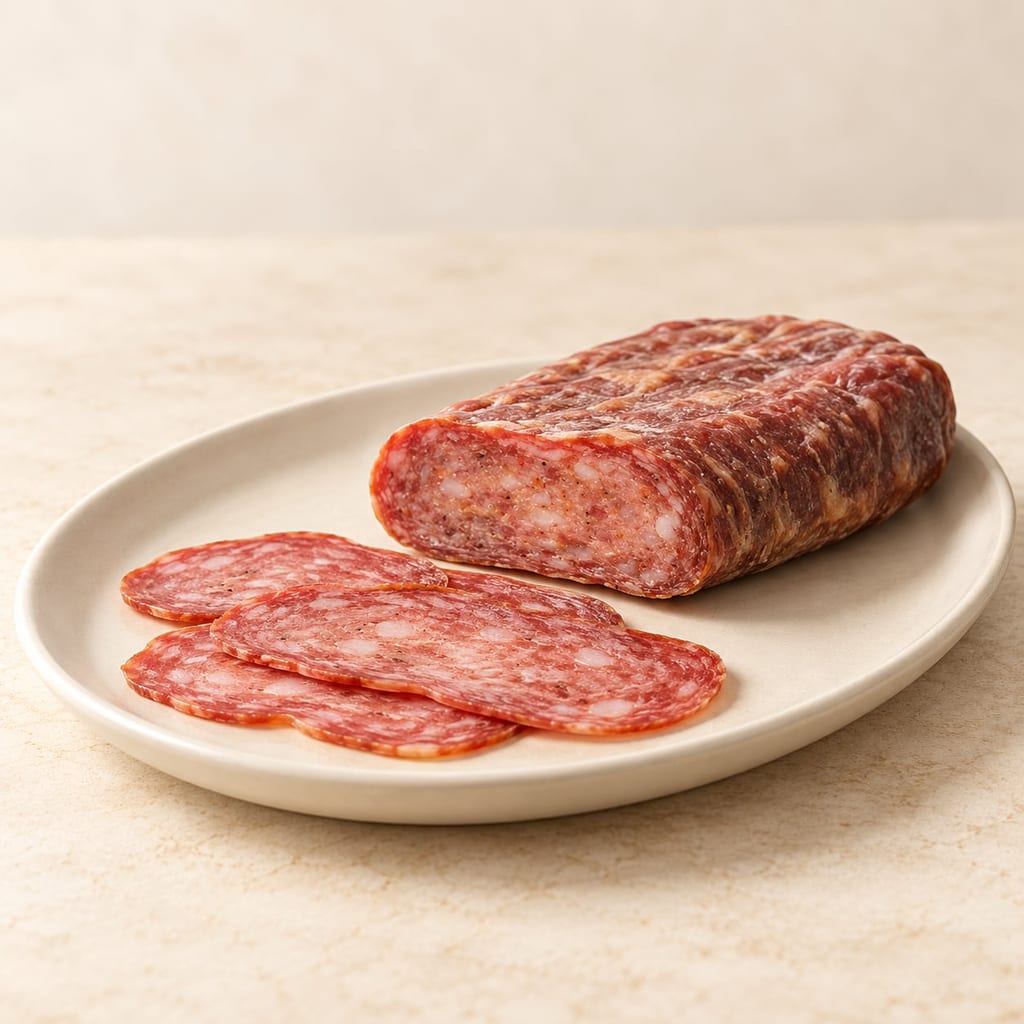
Calabrian soppressata is a flattened pork salami seasoned with pepper and wine. This entry documents a modern starter-cultured adaptation, not household instructions; the process lacks matched pathogen-reduction validation.
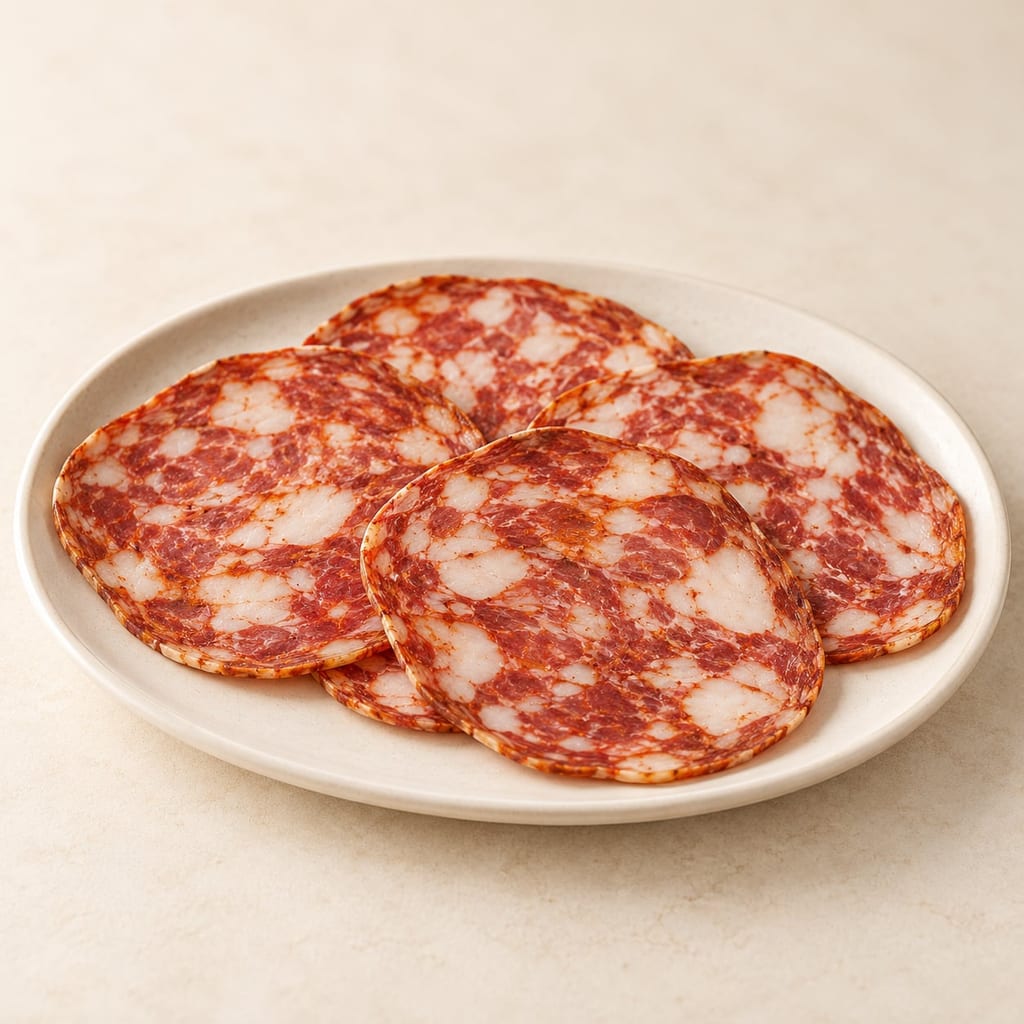
A documentary account of a modern ventricina-style salami source and its Abruzzese context. This page provides no preparation directions or validated home process.

A dark, balanced vinegar from Emilia-Romagna made by combining cooked or concentrated grape must with wine vinegar, then acetifying and refining it in wood under a protected specification.

Protected Italian vinegar made only from cooked grape must, fermented and aged in a battery of wooden barrels for at least 12 years: sweet, sharp and syrupy.
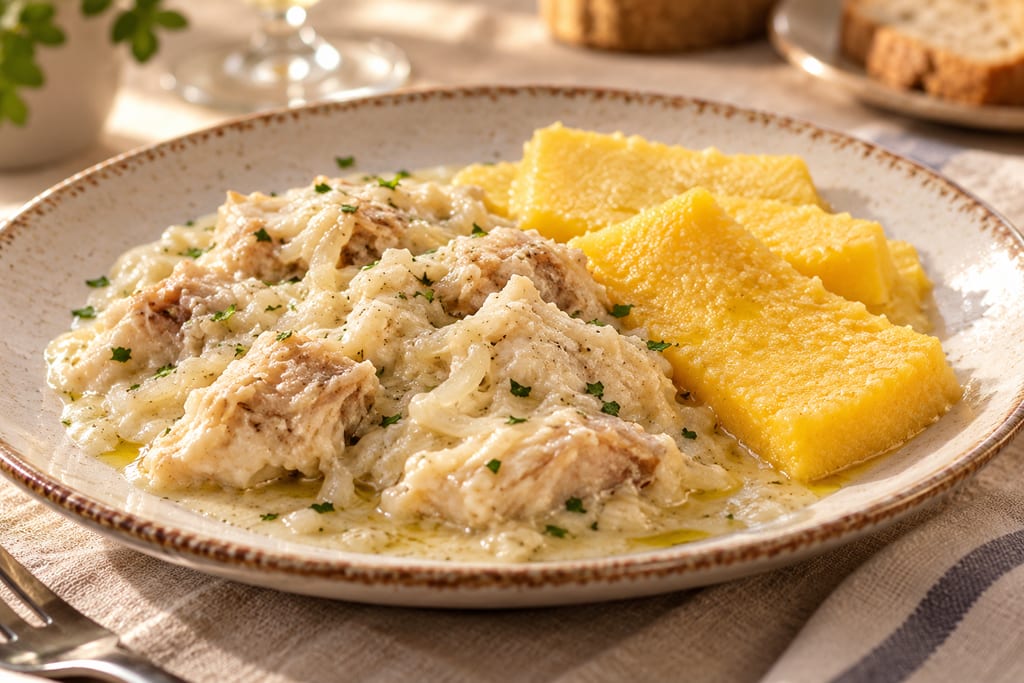
Stockfish from Vicenza, left barely bubbling for hours with onion, preserved anchovy, olive oil, milk and a little cheese until it is tender under a dense pale sauce, and eaten with polenta.
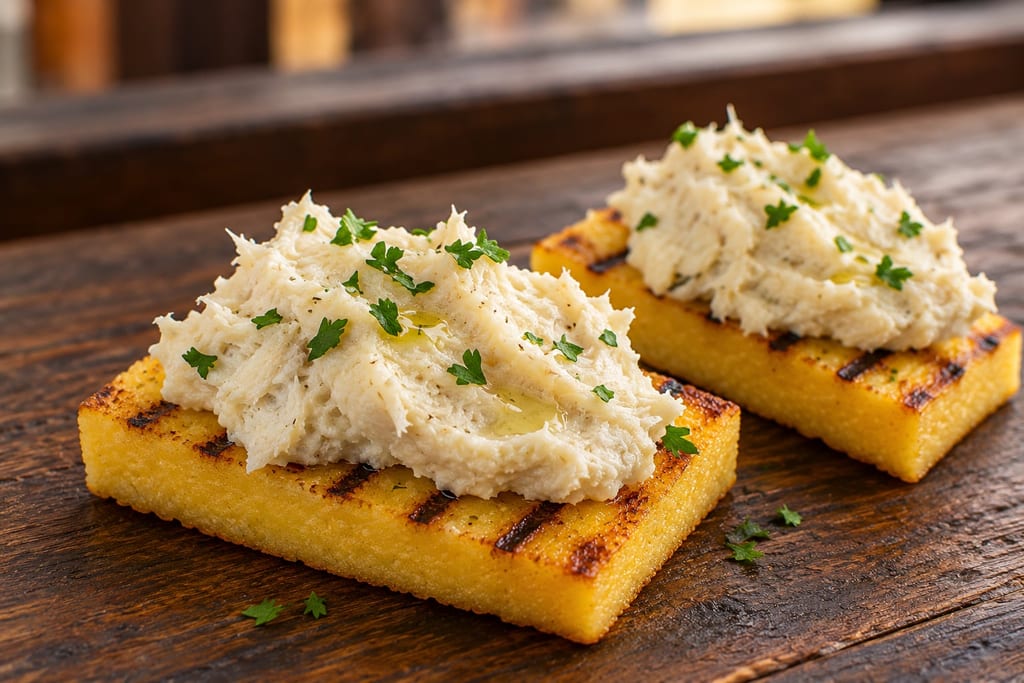
A Venetian cicchetto of cooked unsalted stockfish beaten with oil until it turns into a pale, aerated cream, spooned onto grilled polenta in the city's wine bars.
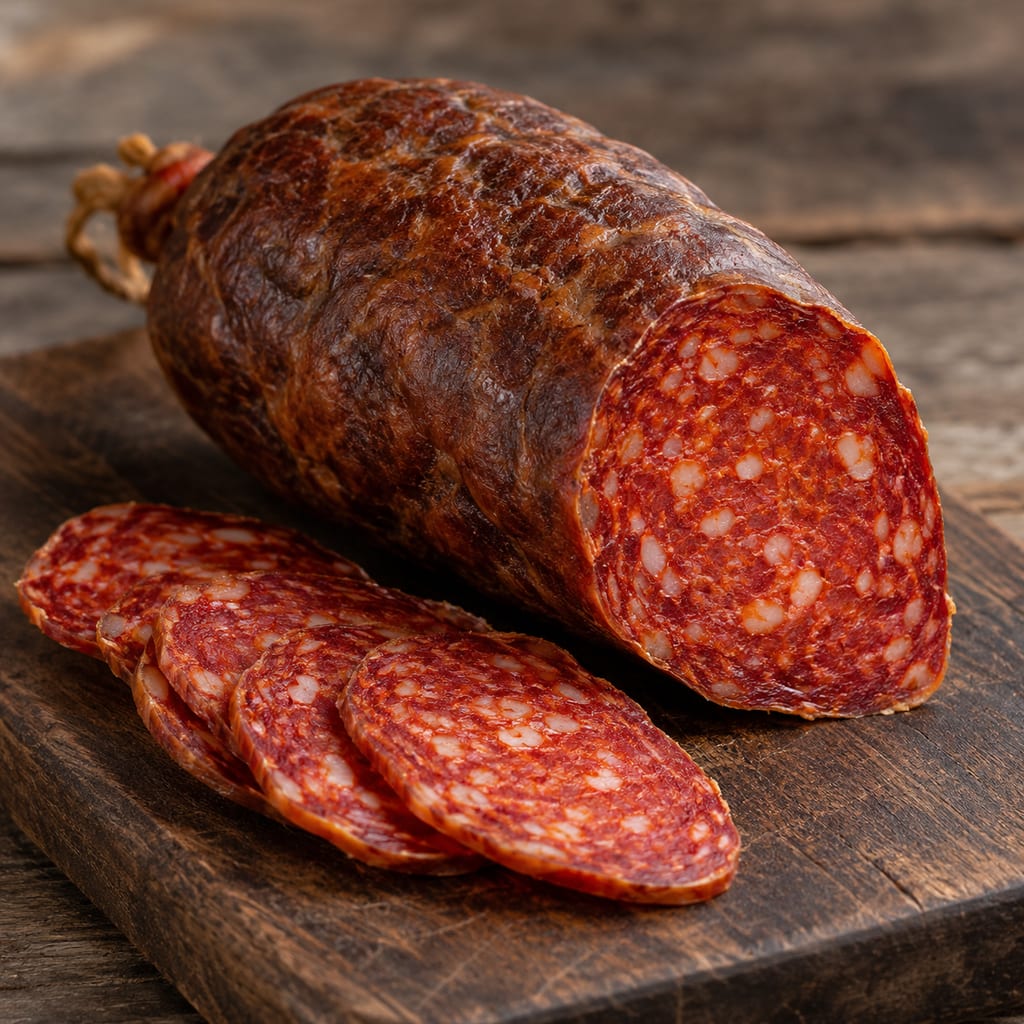
Baranjski kulen is a Croatian protected fermented pork sausage seasoned with sweet and hot paprika, garlic and white pepper, stuffed into a pig’s caecum called katica, cold-smoked and matured.
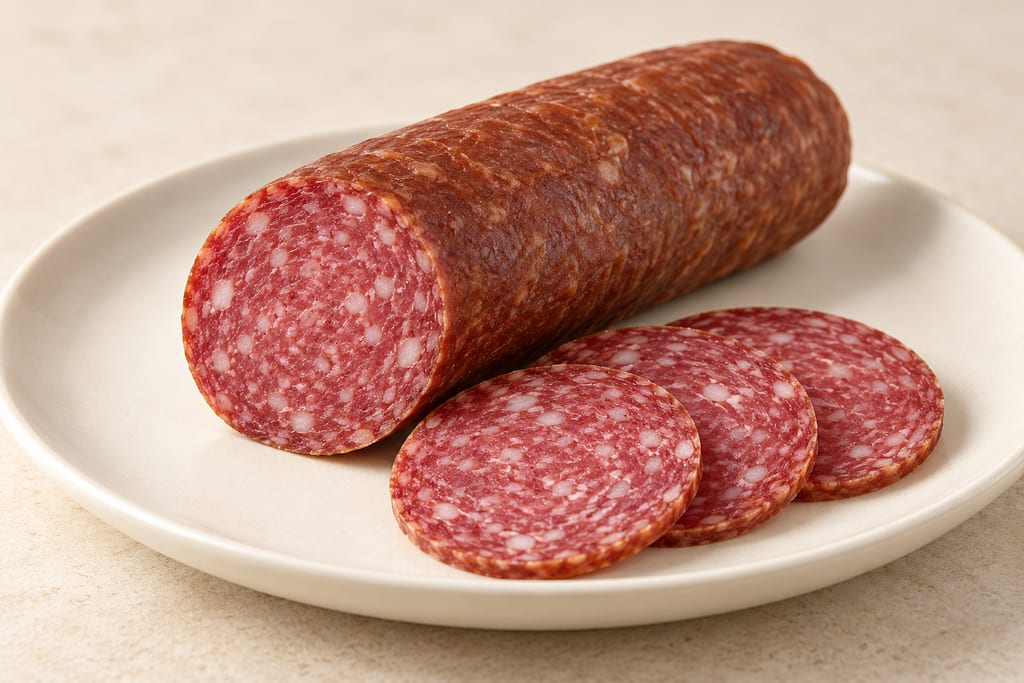
A family of salted minced-meat sausages fermented in casings, then dried and sometimes smoked. This description is not a validated household method; critical safety limits are not established.
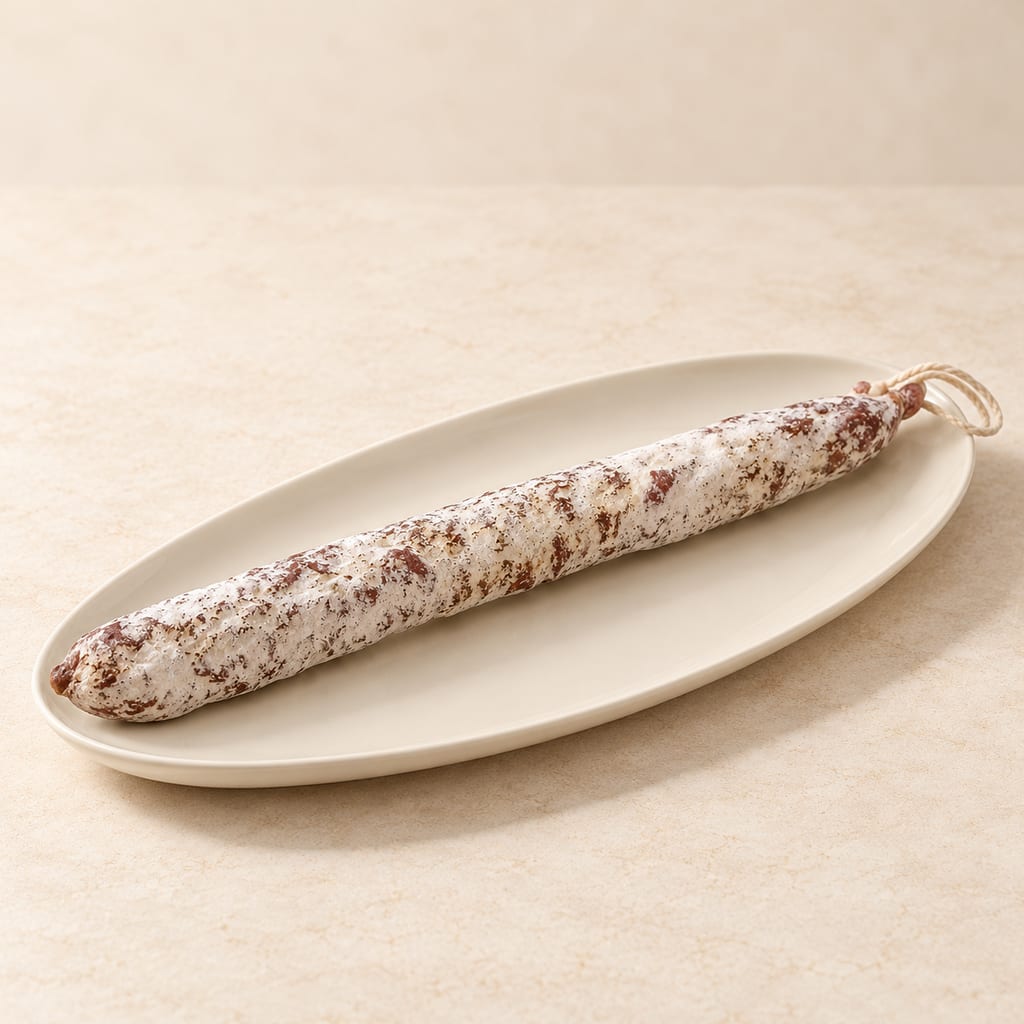
A documentary account of a modern starter-cultured Fuet formula and its place in Catalan sausage culture. The cited raw-pork process lacks matched safety validation, so this page does not present it as a household recipe.
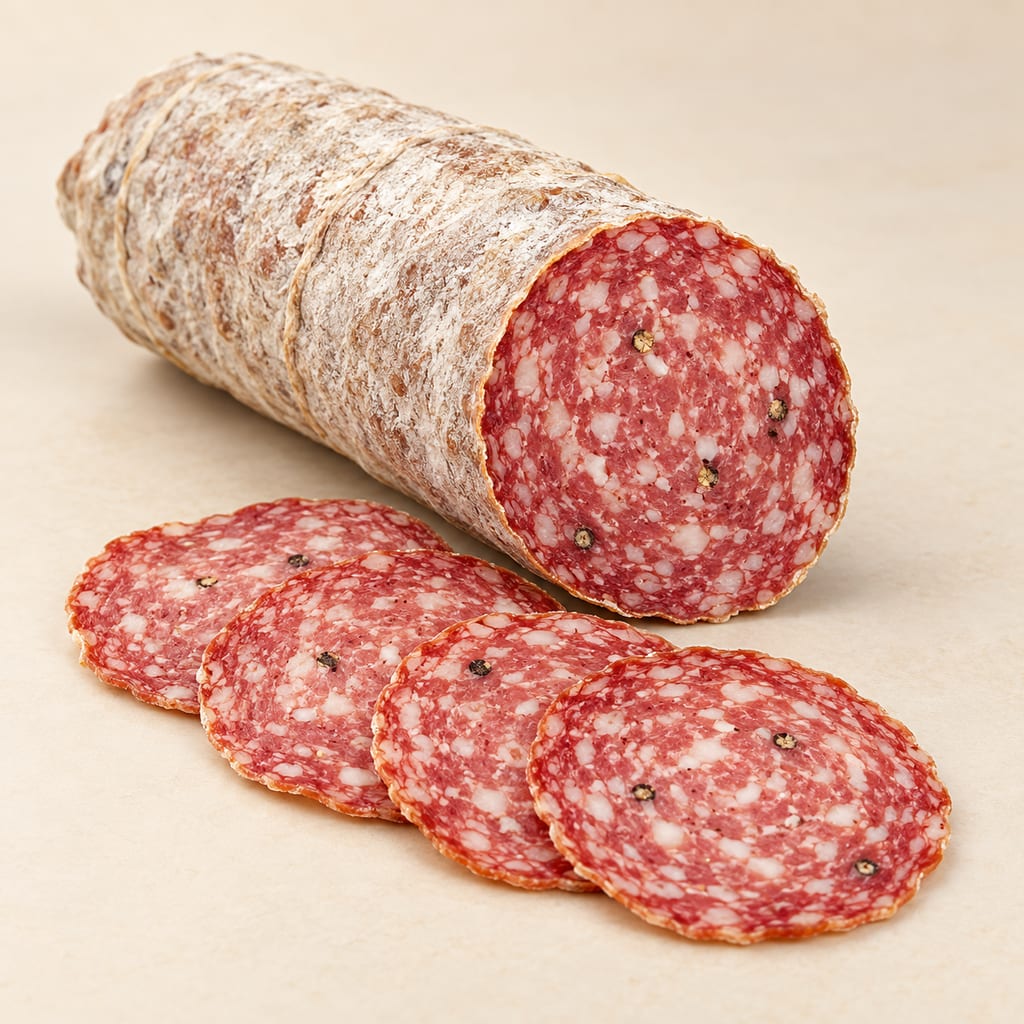
Pork, beef and back fat ferment with a named starter, cure and red wine before the sausages dry in casings. This contemporary formula uses no wood-smoke stage.
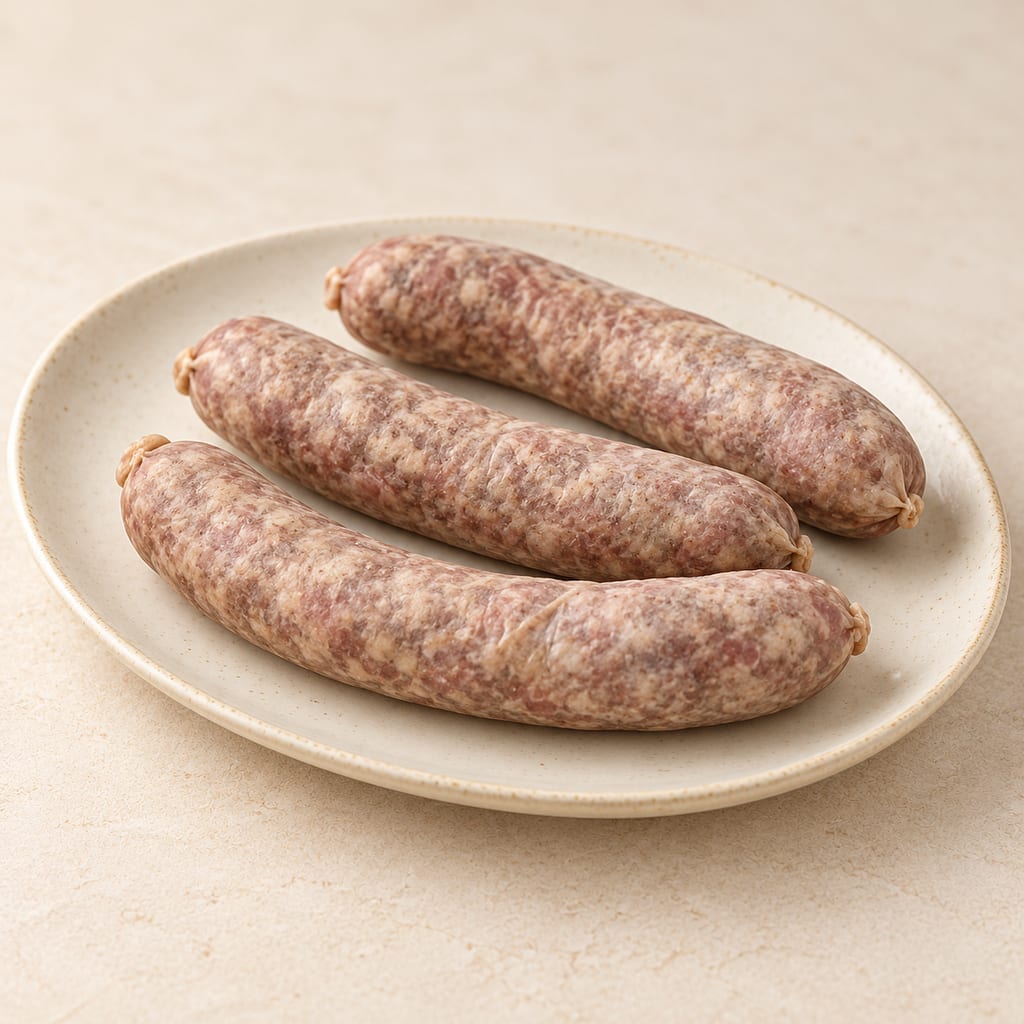
A documentary account of Maltese zalzett and a contemporary starter-cultured adaptation. The cited raw-pork method lacks documented validation for pathogen reduction and is not offered as a preparation recipe.
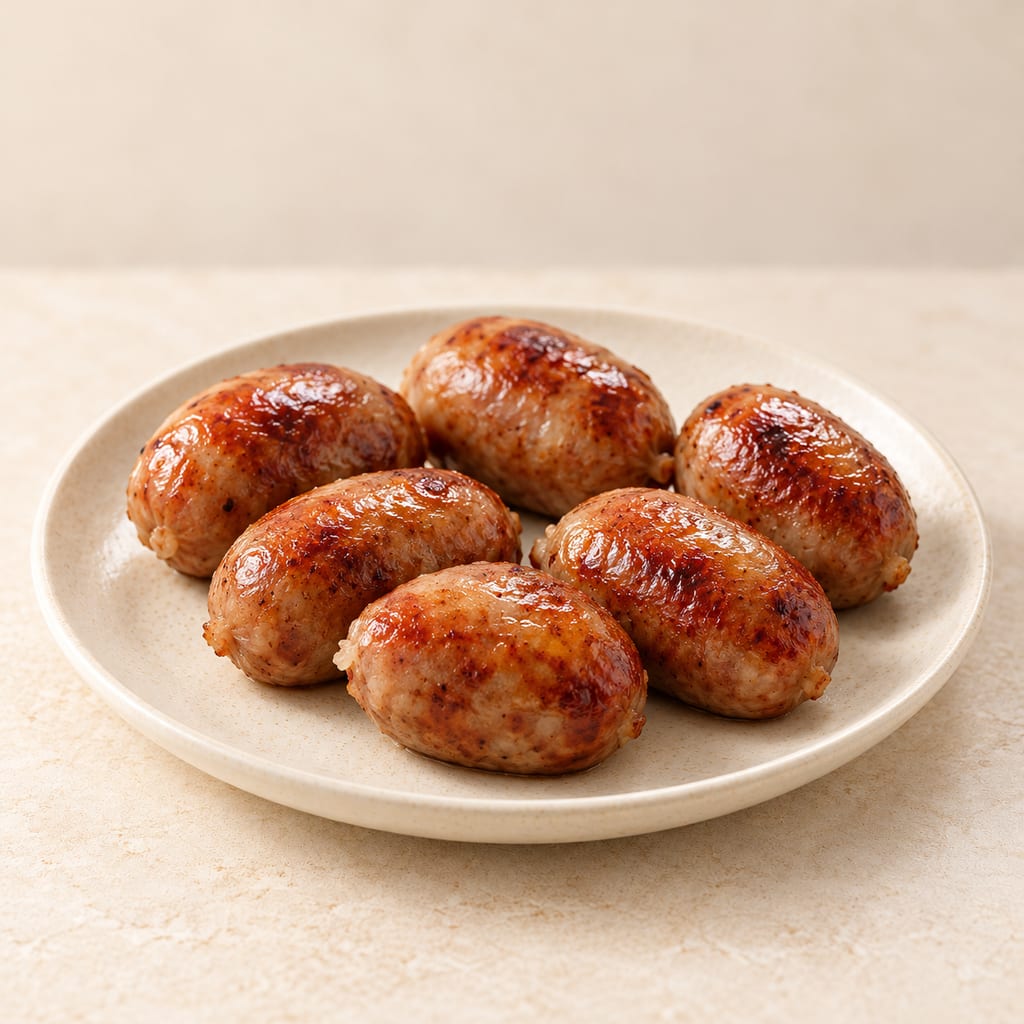
Sai krok Isan is a sour pork-and-rice sausage from northeastern Thailand. This garlic-rich version uses LHP-Dry starter and is cooked after fermentation.
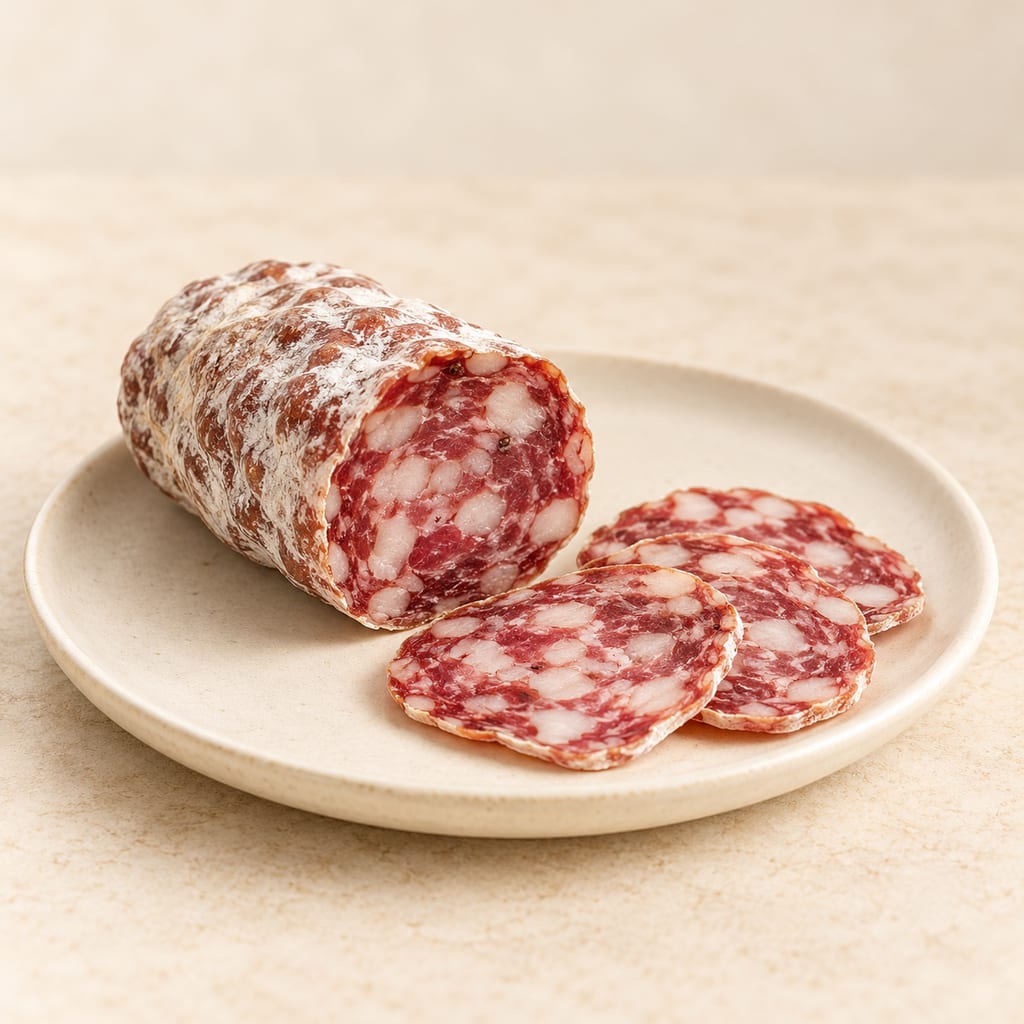
Saucisson sec is a French dry sausage of seasoned pork and fat. This version uses Flavor of Italy starter, white wine and an optional Mold 600 surface culture.

A way to add independent temperature logging to an existing food dehydrator without changing its built-in controls or protections. It is a monitoring method, not a rewiring plan.

Pleurotus cystidiosus is the abalone mushroom, a cultivated oyster-type fungus with dark brown caps that grows more slowly and is more demanding than other Pleurotus species.

A living dairy inoculum that starts controlled cream fermentation, developing acidity and aroma before sour cream or cultured butter is finished.

A small electric incubator holds jars at a selected temperature for yogurt and other documented warm food preparations. Controls, capacity and vessel arrangement vary by model.

Adygean salt is a seasoned table salt associated with Adygea and the wider North Caucasian culinary tradition. Salt is blended with garlic and a variable selection of herbs and spices; the exact mix depends on the named style and maker.

The African Caesar-group mushroom, Amanita masasiensis, is a wild ectomycorrhizal species of central and southern African woodlands, eaten locally. The genus contains deadly poisonous species, so identification needs care.

Ghanaian sour cassava dough fermented with traditional inoculum and drained during fermentation. It is used as a base for cooked foods such as banku and akple; process variants and safety outcomes differ.
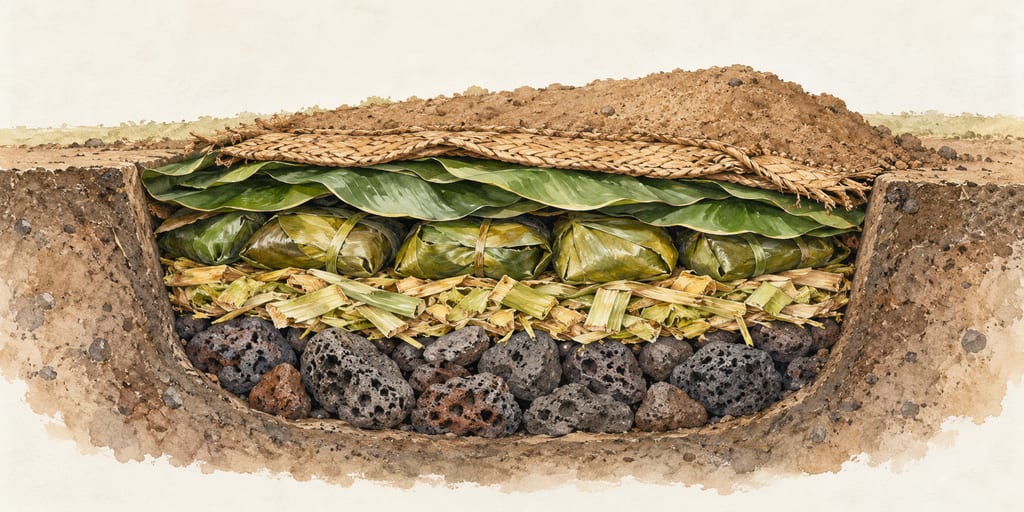
The Tahitian ahimā‘a is a ground oven built in a pit, where hot volcanic stones and layered leaves and earth cook food slowly.
No community contributions have been published for this entry yet.
Sign in to contribute. Published comments and photos are free to read.
Fondazione Slow Food per la BiodiversitàHistory · Method
'Nduja di Spilinga, Arca del GustoOlder offal-based version, andouille and Spanish theories, chilli drying and the winter slaughter
Local chilli names
Cited in: What it is; History; How it is made, and why each ingredient and step matters; Regional and historical variations; How it is eaten and used
Salumificio F.lli PuglieseMethod · Use
'Nduja di Spilinga MulettaDeclared 22 percent sweet and 8 percent hot chilli
Maturation of thirty to forty days
Refrigerate after opening
Cited in: What it is; How it is made, and why each ingredient and step matters; Regional and historical variations; How it is eaten and used
Nduja San DonatoMethod · History
'Nduja di Spilinga PoroResting before stuffing, orba and crespone casings
Producer description
Cited in: What it is; How it is made, and why each ingredient and step matters; Regional and historical variations; How it is eaten and used
Nduja San DonatoHistory
Sagra della NdujaFestival begun in 1975, traditionally on 8 August
Cited in: History
Salumificio MonteporoUse
'Nduja di SpilingaRefrigerated storage instructions by format
Cited in: What it is; Regional and historical variations; How it is eaten and used
La Cucina ItalianaHistory · Use
'Nduja di Spilinga2018 article on protection, Bellantone version, chef dishes
Cited in: History; Regional and historical variations; How it is eaten and used
Italian Journal of Food Safety, 2014Microbiology · Method
Characterisation of yeasts isolated from 'nduja of Spilinga127 yeast strains and Debaryomyces hansenii
Formulation of 50 percent fat, 25 percent lean pork and 25 percent chilli with 3 percent salt
Cited in: What it is; History; How it works: salt, chilli, yeasts and acid; How it is made, and why each ingredient and step matters; Reading results and problems
Food Chemistry, 2016Method · Chemistry
Influence of packaging conditions on biogenic amines and fatty acids evolution during 15 months storage of a typical spreadable salami ('Nduja)Smoking for ten to twelve days and long ripening
Biogenic amines
Cited in: How it works: salt, chilli, yeasts and acid; How it is made, and why each ingredient and step matters; Reading results and problems
Pathogens, 2026, University of MessinaSafety · Microbiology
Pathogen behaviour and survival dynamics of Salmonella Typhimurium, Escherichia coli O157:H7 and Listeria monocytogenes during the ripening of 'nduja28-day challenge study
Log reductions, pH and water activity
Cited in: What it is; History; How it works: salt, chilli, yeasts and acid; How it is made, and why each ingredient and step matters; Regional and historical variations; Reading results and problems
Journal of Food Safety, 2018Microbiology
Physicochemical, microbiological, and sensory characterization of 'Nduja, a typical sausage from CalabriaThirteen samples and incomplete fermentation
Biogenic amines below 200 mg/kg
Cited in: What it is; History; How it works: salt, chilli, yeasts and acid; Reading results and problems
Italian Journal of Food Safety, 2011Safety
Changes of microflora during storage of 'nduja, a very typical sausage of CalabriaTwenty-seven commercial samples
Cited in: History; How it works: salt, chilli, yeasts and acid; Reading results and problems
USDA Food Safety and Inspection ServiceSafety
FSIS ready-to-eat fermented, salt-cured, and dried products guidelinePathogens and process validation in cured and dried products
Cited in: How it works: salt, chilli, yeasts and acid; How it is made, and why each ingredient and step matters; Reading results and problems
Official Journal of the European UnionSafety
Commission Regulation (EU) 2023/915 on maximum levels for certain contaminants in foodBenzo[a]pyrene and PAH limits in smoked meats
Cited in: Reading results and problems
Official Journal of the European UnionSafety
Commission Regulation (EU) 2023/2108 amending provisions concerning nitrites and nitratesNitrite and nitrate limits
Cited in: Reading results and problems