
'Nduja di Spilinga
Soft, spreadable Calabrian pork sausage made with a great deal of red chilli and fatty pork, stuffed into natural casings, sometimes smoked and matured while staying soft.
 FermenteaWhere food goes to change
salami
A family of salted minced-meat sausages fermented in casings, then dried and sometimes smoked. This description is not a validated household method; critical safety limits are not established.
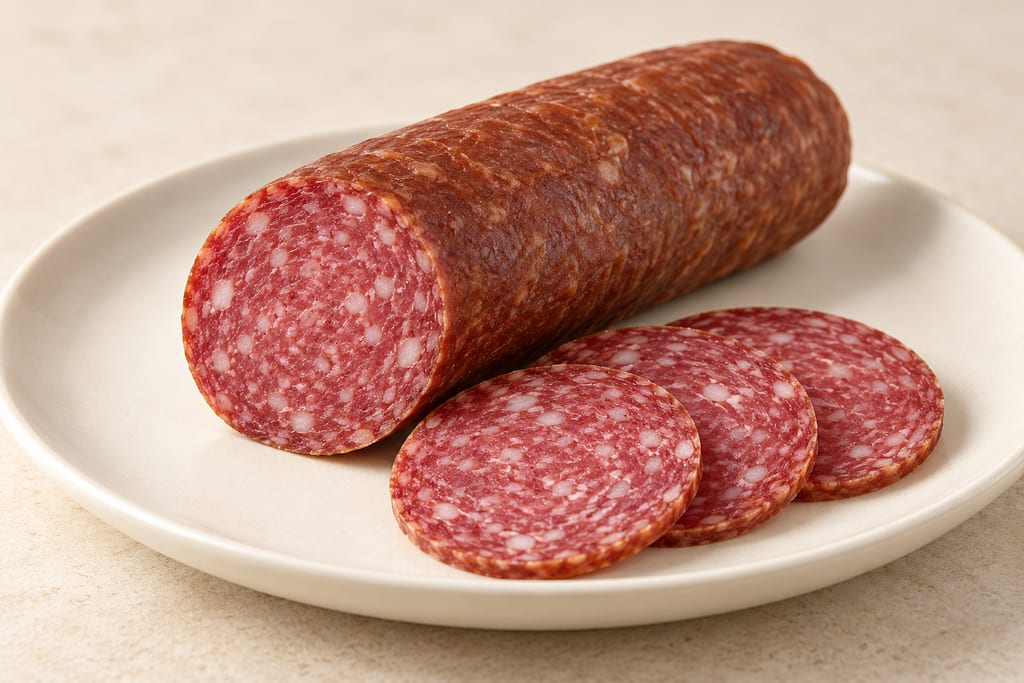
Fermented dry sausage names a broad family rather than a single standardized preparation. Technical descriptions cover salted minced meat in natural or manufactured casings, with differences in meat, fat, casing, fermentation, drying and whether smoking is used. The available material does not establish one universal household method.
Acidification and reduced available moisture work together in preservation. A casing shapes moisture movement: its diameter and permeability affect how the interior dries. A dry-looking surface cannot show that the centre has reached a preserved state.
Fermentation is associated with acidity development, followed by drying; some products are smoked. These are descriptions of industrial and diverse product practices, not directions for making a batch at home. Formulation and conditions vary, and no complete, validated household procedure is established here.
This record therefore does not specify quantities, a fermentation schedule, temperature or humidity conditions, acidity targets, or final moisture limits. Those omissions matter for minced meat: pathogen growth can occur before acidification, and casing or a dry surface alone does not establish preservation. A particular product requires a validated process with controls appropriate to its formulation and equipment; no critical limits are supplied here.
Products in the family differ in meat, fat, casing and whether they are smoked. The catalogue groups them together because the preservation principle is substantially similar, while named regional sausages and distinct formulations have their own pages. No single appearance, flavour or production sequence should be assumed to represent every fermented dry sausage.
Fermented and dried sausages appear in historical Europe and later in international practice. The FAO account places salami-type products among meats that combine acidification with reduced moisture.
Scaling: not established by the sources.
Minced meat held before acid and dryness develop can support pathogen growth, so the stages must be controlled.
Hazard sourceA casing alone does not provide preservation, and a dry surface does not show that the interior has reached a safe state.
Hazard sourceCombine acidification with reduced available moisture; do not rely on the casing alone
Control sourceMeat fermentation needs validated process control; no critical limits are recorded here.
This page describes a product family and is not a household recipe; use a validated process from an authoritative food-safety source.
Unknown: the FAO technical account covers historical Europe and later international practice without one place of origin.
Soft, spreadable Calabrian pork sausage made with a great deal of red chilli and fatty pork, stuffed into natural casings, sometimes smoked and matured while staying soft.
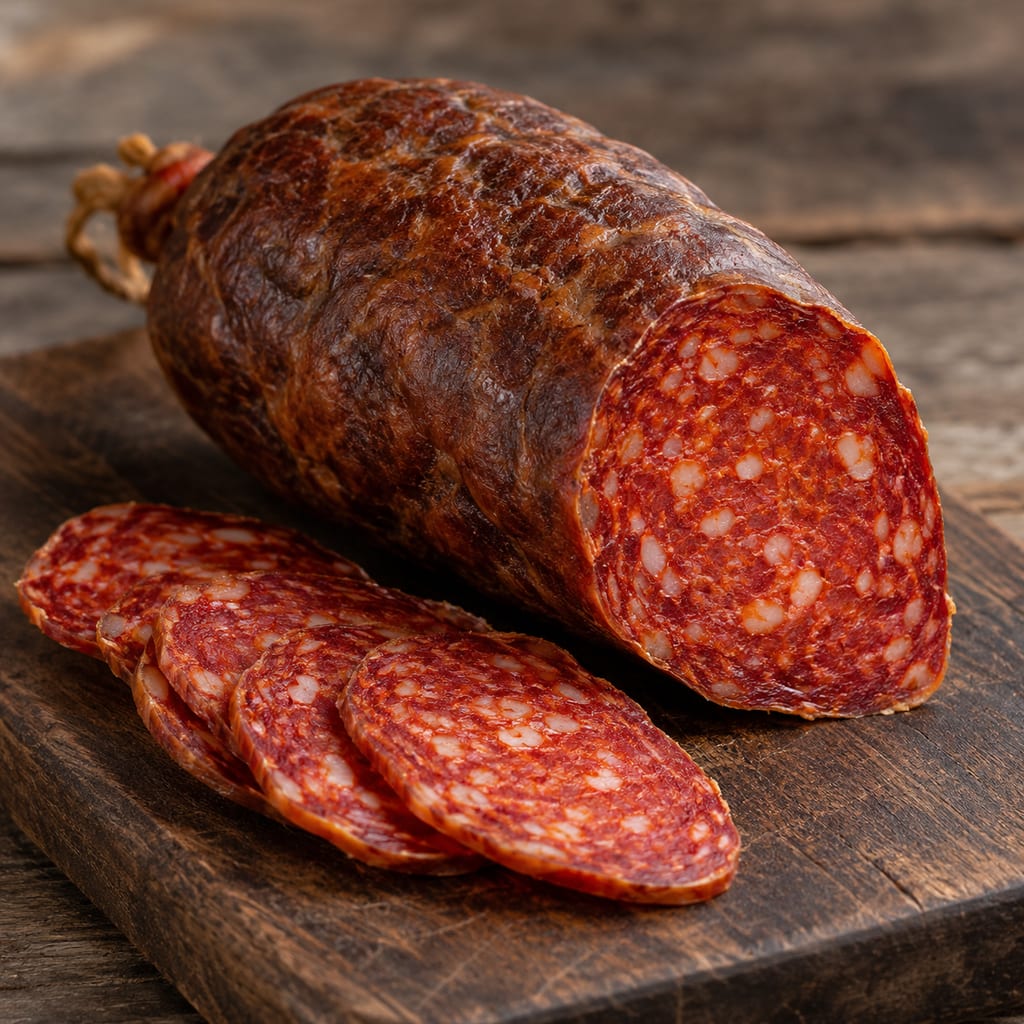
Baranjski kulen is a Croatian protected fermented pork sausage seasoned with sweet and hot paprika, garlic and white pepper, stuffed into a pig’s caecum called katica, cold-smoked and matured.
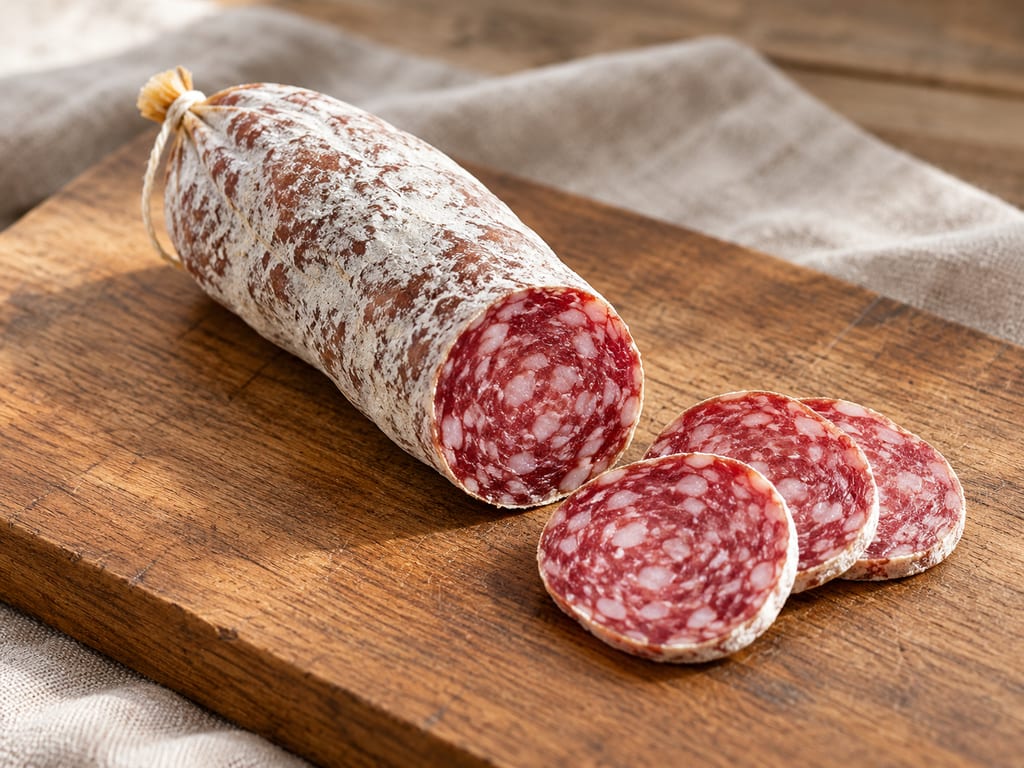
Small Italian hunter-style salami of lean pork, firm fat, salt, pepper and garlic, mildly acidified and dry-matured; protected as Salamini Italiani alla Cacciatora DOP.
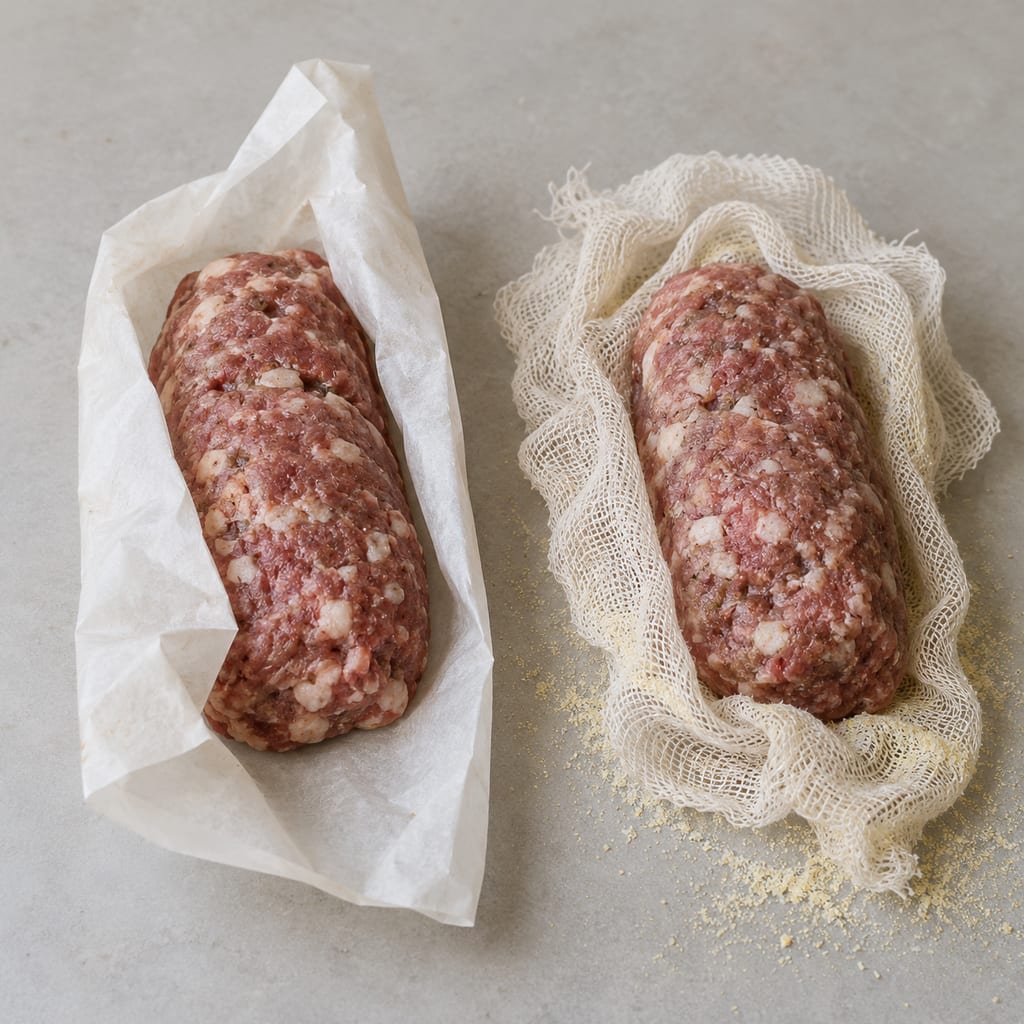
A documentary account of two modern Italian-language home-video experiments in salame without casings. Neither video establishes a safe preparation method or a ready-to-eat product.
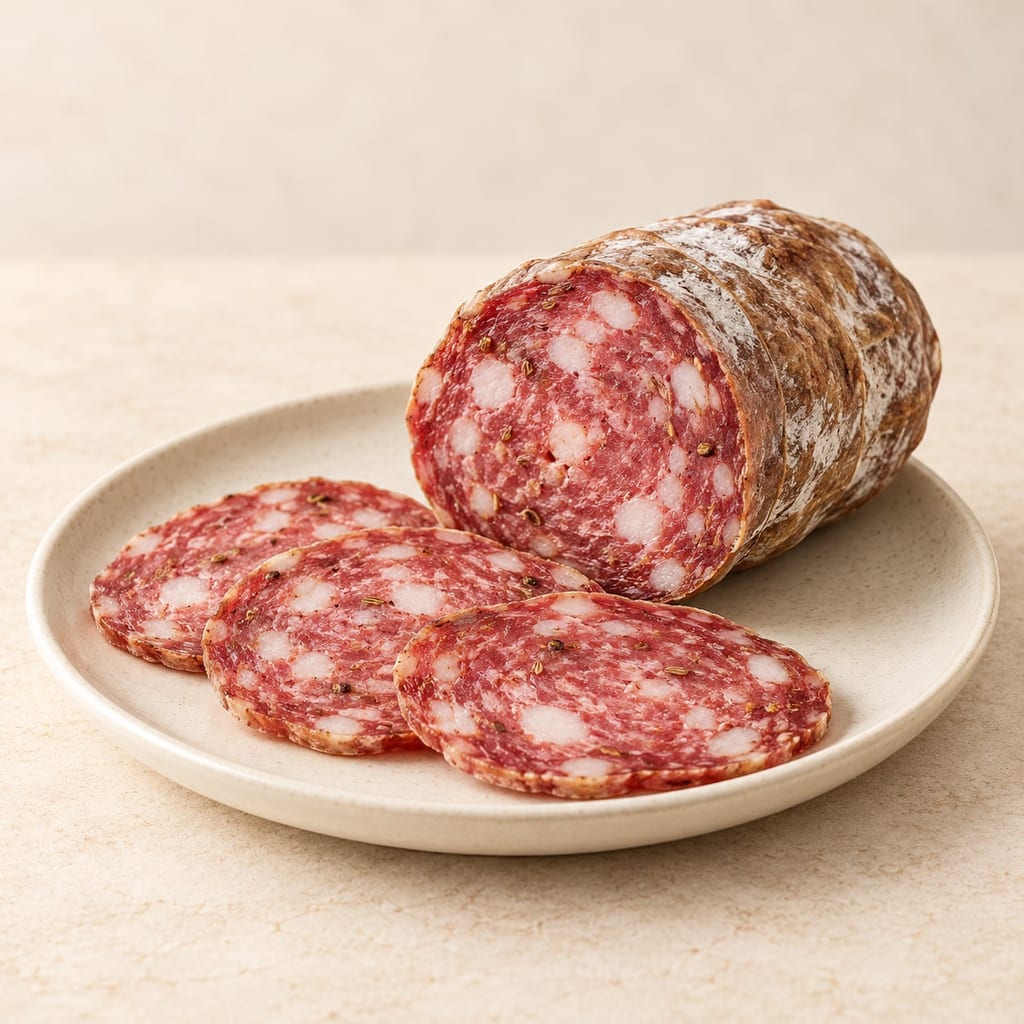
A Tuscan-style fennel salami made with pork and back fat. Toasted fennel, fennel pollen and Sambuca flavor this starter-cultured preparation.
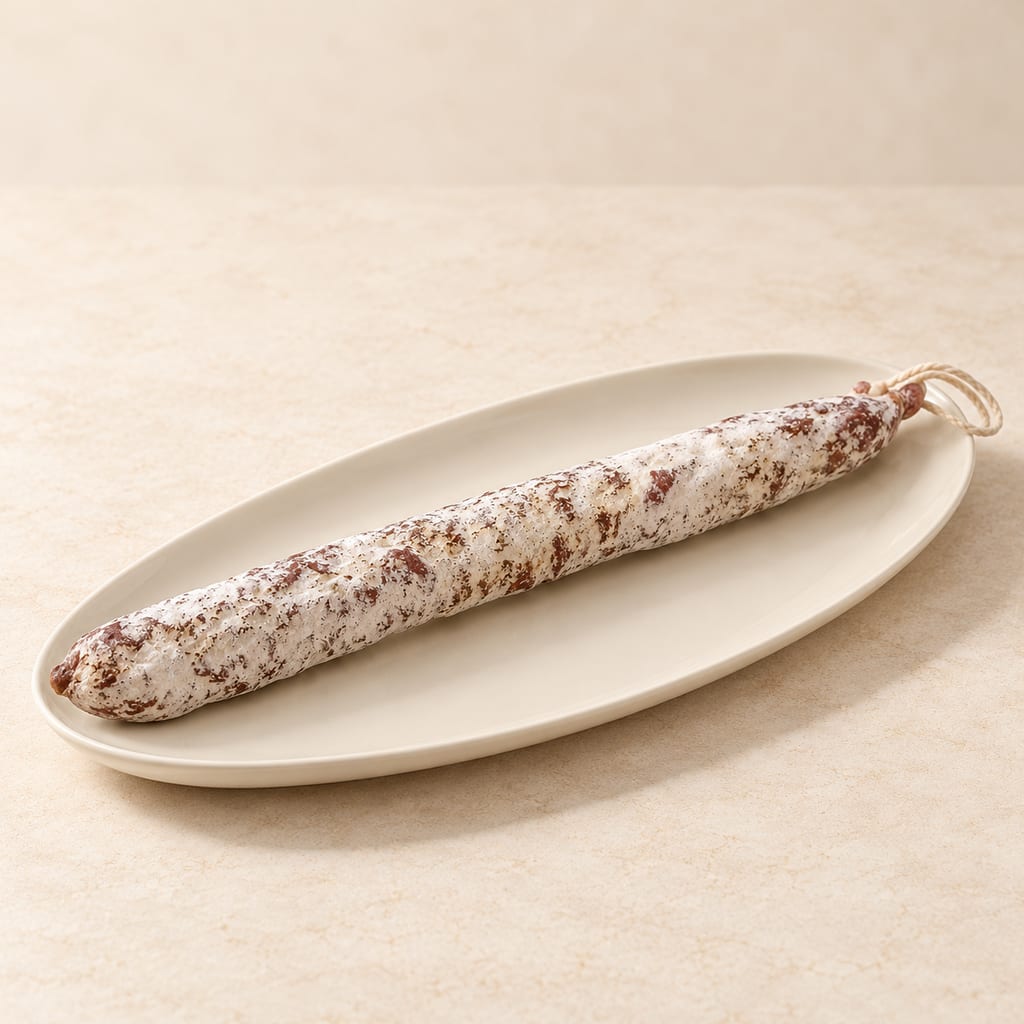
A documentary account of a modern starter-cultured Fuet formula and its place in Catalan sausage culture. The cited raw-pork process lacks matched safety validation, so this page does not present it as a household recipe.
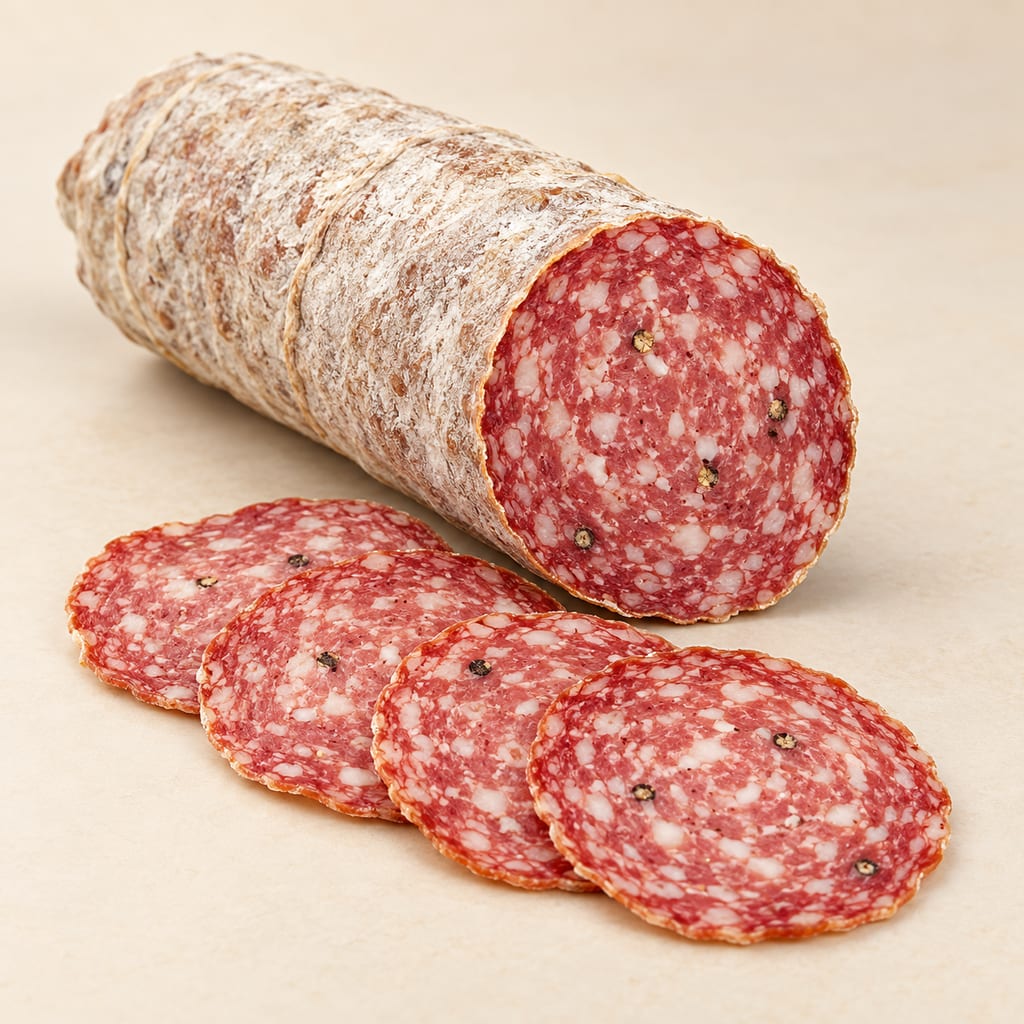
Pork, beef and back fat ferment with a named starter, cure and red wine before the sausages dry in casings. This contemporary formula uses no wood-smoke stage.
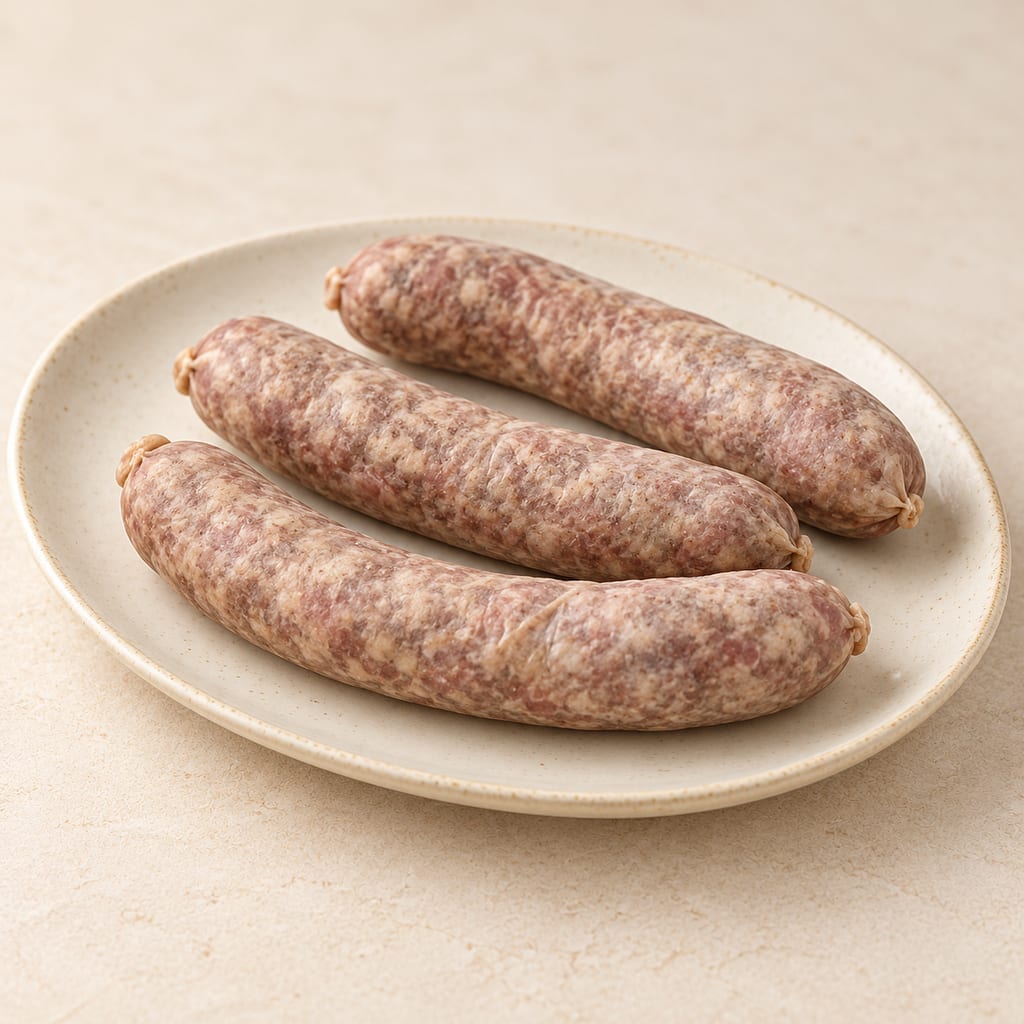
A documentary account of Maltese zalzett and a contemporary starter-cultured adaptation. The cited raw-pork method lacks documented validation for pathogen reduction and is not offered as a preparation recipe.
No community contributions have been published for this entry yet.
Sign in to contribute. Published comments and photos are free to read.
Food and Agriculture Organization of the United NationsMethod · Safety · History
FAO technical account of meat fermentation and dryingSalted minced meat packed into casings and fermented, then dried and sometimes smoked
Acidification with reduced available moisture; the casing alone does not preserve
Cited in: A family of products, not one formula; Process and safety context; Regional and product variation