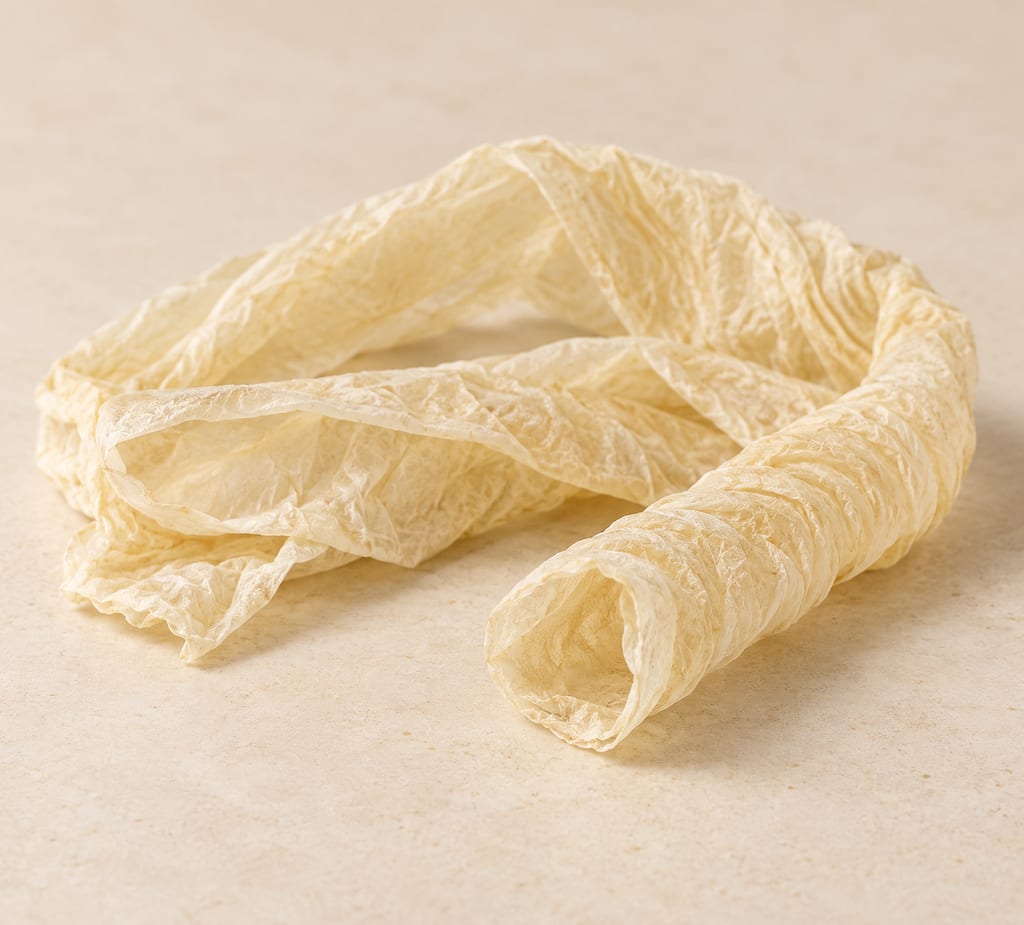
60 mm natural dried casing
A 60 mm natural dried casing gives wide salami its animal-derived envelope and approximate stuffed diameter; its exact animal source and length depend on the chosen product.
 FermenteaWhere food goes to change
Modern method
Genoa Salami · Genoa salami
Pork, beef and back fat ferment with a named starter, cure and red wine before the sausages dry in casings. This contemporary formula uses no wood-smoke stage.
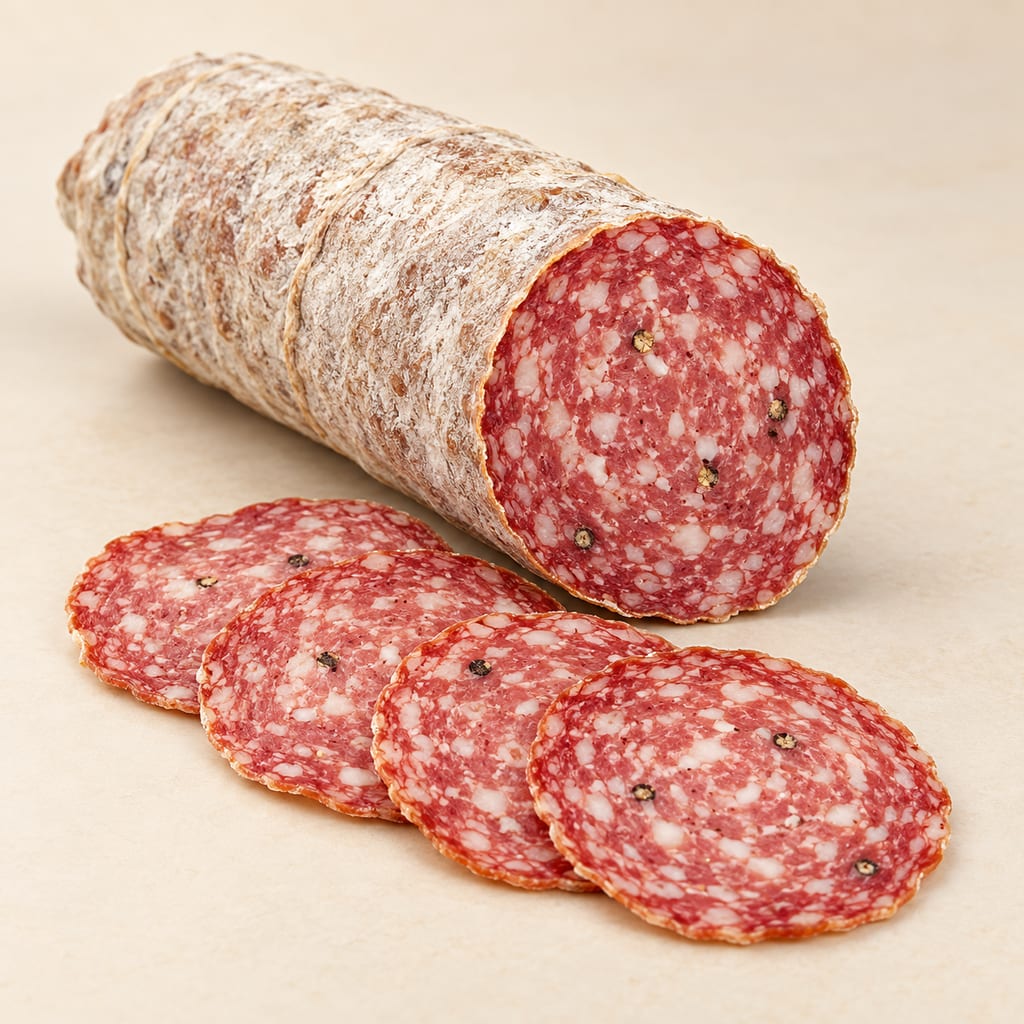
This recipe makes a firm, sliceable fermented sausage from pork, beef, pork back fat, red wine, pepper, garlic, a named mixed starter and a commercial surface culture. It calls the preparation Genoa Salami, but the title is an author’s style association and does not establish an origin in Genoa. The documented formula was published in 2023. The method is unsmoked: fermentation and controlled drying, rather than cooking or a smoke stage, define this particular preparation.
The combination of meat and fat produces a visible mosaic in the cut face. The recipe grinds pork and back fat more coarsely than beef, then seasons and binds the mince before casing. Its whole peppercorns remain visible as dark specks, while garlic, white pepper and wine distinguish its aroma from a plain salted sausage. The source author describes a softer finish at the 35% weight-loss option and a firmer one at 40%. These are this maker’s texture preferences, not standardized grades for all products called Genoa salami.
The word Genoa invites a historical claim that the evidence here cannot support. The recipe author associates the style with Genoa, Italy, but gives no historical documentation for a unique birthplace, continuous local tradition or protected identity for this red-wine formula. The careful account is narrower: this is a modern recipe published under a Genoa name, with a source-attested publication date of 2023. That date belongs to this version, not to salami as a whole.
Ligurian regional material describes salame genovese di Sant’Olcese, a separate product associated with the localities of Orero and Sant’Olcese. That sausage uses pork and beef and is traditionally smoked over oak or chestnut before maturation. Its smoke, geography and regional identity are not attributes that can be transferred to the unsmoked starter-cultured recipe here. The two preparations help explain why a Genoa label can point toward Liguria, but the sources do not show that they are one recipe or that one descends directly from the other.
Salting and drying meat are older than the modern equipment and commercial cultures used in this formula. No documented historical sequence connects an older Genoese sausage to this recipe. The present version reflects contemporary home-charcuterie practice: a measured ingredient formula, a named starter, a surface culture, a pH reading and a controlled drying environment.
SM-194 is a mixed commercial culture, not a single bacterium. Its product information lists Lactobacillus sakei and Pediococcus pentosaceus alongside Staphylococcus carnosus, Staphylococcus xylosus and the yeast Debaryomyces hansenii. The manufacturer describes the culture as intended for traditionally fermented sausages with a short production time; it says the yeast contributes to flavor development and that fermentable sugars can be adjusted to regulate final pH. The recipe lists dextrose as its fermentable sugar. Those general product descriptions explain the culture’s intended role, but they do not validate a specific household batch.
Mold 800 is the named commercial surface culture. It must not be confused with unidentified environmental growth: a photograph or a white appearance cannot identify a mold. The recipe page’s ingredient list calls for 1/2 tsp in 1/2 cup of nonchlorinated water, says the suspension covers 5–10 lb, and asks for at least 5 hours of hydration. Its general method says to prepare mold culture 2–3 hours ahead; the longer ingredient-list minimum satisfies that timing. The page does not say what portion to apply to this recipe card’s 1,000 g meat-and-fat batch or whether any suspension remains unused. The associated video gives a different preparation ratio. This record follows the page’s recipe instructions and preserves the video difference without calculating or recommending a new amount.
Mold 800 is the named commercial surface culture. It must not be confused with unidentified environmental growth: a photograph or a white appearance cannot identify a mold. The page’s stated culture amount is for a 5–10 lb batch and is not scaled to the one-kilogram meat-and-fat formula, and the page and its video disagree on the amount to prepare. That dose is not a cue to improvise.
The formula uses equal listed weights of lean pork and lean beef in its meat-and-fat base, plus pork back fat. Lean meat supplies the main protein structure; the back fat creates distinct pale pieces and a softer mouthfeel. Fat also carries seasoning aromas. The source chooses a coarse grind for pork and fat and a finer grind for beef, so the finished slice shows texture rather than a uniform paste. It does not specify a particular cut, breed, feed, or lean-to-fat analysis beyond these ingredient names, so those details should not be inferred.
The list separates ordinary salt from Insta Cure #2, a curing-salt product containing nitrite and nitrate according to the record. The precise product matters: replacing it with plain salt or another cure changes the formula. The Canadian Food Inspection Agency explains that fermented and dried meat needs a coordinated control approach for hazards; it does not validate this recipe or authorize borrowing one isolated limit from commercial guidance. A formulation error is not corrected by adding more time or relying on appearance.
Dextrose is the listed fermentable sugar. The culture sheet explains its general relationship to final pH, but this does not let a reader calculate a safe acidification schedule from the ingredient amount alone. White pepper, whole peppercorns, garlic powder and red wine give the recipe its spice and wine character. Non-fat dry milk is included as a binder in the source method; the record does not demonstrate that it can be omitted or replaced without changing the mixture. Because it is milk-derived, it also matters for allergy and dietary choices.
The natural dried casing is listed as 60 mm, but the source does not say how many links or how much casing this batch requires. Diameter and link geometry affect the distance moisture must travel during drying. No validated adjustment for that effect is supplied. The ingredient proportions, casing, culture and handling instructions belong together as one source formula; scaling or substitution cannot be assumed to preserve either texture or process performance.
The recipe source suggests removing casings, washing with vinegar or wine, vacuum packing and refrigerating. This is recorded as the author’s post-process suggestion, not as a validated preservation step or a shelf-life claim. The page’s stated Mold 800 suspension is for 5–10 lb and is listed alongside a 1,000 g meat-and-fat recipe card. The method says to brush or dip the casing but does not say what portion of the prepared suspension is applied or whether the remainder is kept. The associated video gives a different preparation ratio; this record follows the page and does not combine or rescale the two directions.
The casing is soaked, filled tightly and pricked to remove trapped air. Each link is weighed so that later change can be compared with its own starting weight. The surface culture is applied before fermentation in this source method. Its stated fermentation range is 70–85°F (21–29.4°C), high humidity and 18–36 hours; it suggests checking around 20 hours and gives a pH target of 5.2–5.0. These are culinary-source instructions for the named starter, not validated limits. The source explicitly cautions that starter cultures differ.
The page next describes drying at 55°F (13°C) and 80% relative humidity, with 35% loss for a softer texture or 40% for a firmer one. The author says 35% is their usual preference. The listed 60 days is an estimate, not a finish date that guarantees a safe or uniform product. Links can dry differently, and weight loss describes mass change rather than pathogen absence. A pH measurement and a dry-looking casing likewise do not independently establish safety.
The recipe source suggests removing casings, washing with vinegar or wine, vacuum packing and refrigerating. This is the author’s post-process suggestion, not a validated preservation step or a shelf-life claim. The product page’s mold-culture directions and its video conflict.
The intended result is a dry, sliceable sausage with pepper and fat visible in cross-section, a savory meat base, wine and garlic aromas, and acidity from fermentation. The source recommends slicing thinly. Its two weight-loss choices describe a softer or firmer result in this recipe, not broad categories that apply to every salami. The available record does not document a tested serving pairing or a storage duration, so it makes no shelf-life or menu claims.
The most important comparison is the separate Ligurian Sant’Olcese salami. It is identified with a locality and a traditional oak- or chestnut-smoke stage, while this recipe is a modern unsmoked red-wine method with commercial cultures. Adding smoke to the current recipe would make it a different method; omitting smoke from Sant’Olcese would erase a documented distinction. The source page mentions Mold 600 or Mold 800 as possible choices, but this record names Mold 800. These are product-specific cultures, not generic interchangeable molds.
Salami styles vary with meat blend, particle size, fat, seasoning, casing, culture and drying. The evidence available here supports one contemporary formula and a careful regional comparison, not an exhaustive map of Genoa salami variants. Products sold under the same broad name need not share this ingredient list or process. Readers can use the name as a guide to a style, while treating the recipe’s actual formula and source as the more precise description.
The author’s own serving direction is brief: remove a link from the drying stage, slice it thinly and eat it. That suits the firm structure and lets the cut face remain intact. The page does not support a broader claim that every Genoa-style salami is eaten in the same way, or that the product has a particular shelf life once cut. Readers should keep the distinction between serving description and safety instruction in view.
Fermented, dried sausage made from raw meat is a high-risk process. Regulator and public-health sources describe hazards that include pathogenic bacteria, toxin formation during slow acidification and risks from incorrect curing formulation. The Canadian guidance addresses commercial preventive controls, while the culture manufacturer assigns responsibility for finished-product safety to the food maker and recommends studies for specific applications. Neither source validates the formula on this page.
The source’s pH, temperature, elapsed-time and weight-loss targets must remain identified as recipe values, not safety limits. The record contains no product-specific validation, finished water-activity criterion or qualified household-suitability assessment. A pH reading, dry casing, pleasant smell, visible white growth or percentage of weight loss cannot establish that pathogens or toxins are absent. A named starter does not make every process safe, and an identified commercial surface culture is not a reason to use wild growth.
This page transcribes and explains a named culinary source; it is not a validated home process or assurance that the finished sausage is safe to eat. The source’s curing salt and cultures must not be replaced with unidentified organisms or different curing products. A qualified process assessment would need to evaluate the actual formulation, culture, acidification course, temperature history, casing, drying and finished product together. No safe limit or storage duration is supplied where the evidence does not establish one.
Salame genovese di Sant’Olcese, made near Genoa, combines pork and beef and is traditionally smoked over oak or chestnut before maturing. The modern red-wine formula here borrows the Genoa name but has a different, unsmoked method with commercial starter and surface cultures. It makes a sliceable dry sausage with visible pieces of fat.
Scaling: source batch only
Fermentation and drying without a validated process can leave E. coli, Salmonella or Listeria in ready-to-eat sausage.
Hazard sourceWarm fermentation can permit Staphylococcus aureus toxin production if acidification takes too long.
Hazard sourceNitrite/nitrate and salt are part of controlling Clostridium botulinum in fermented meat.
Hazard sourceUse the exact curing-salt product and weigh it against the source formula; do not substitute plain salt or another cure.
Control sourceAssess the full fermentation and drying schedule, cure formulation, acidification rate and final water activity under a process-specific safety plan before treating the sausage as ready to eat.
Control sourceRaw pork and beef can carry pathogens that remain if fermentation and drying are inadequately controlled; the pH and weight-loss targets here alone do not establish safety.
A wrong curing salt or delayed acidification can allow botulism or staphylococcal toxin; use the named cure and a verified process before serving.
SM-194 — Commercial starter culture named by the recipe source; source-specific dose for 1 kg meat/fat.
Mold 800 — Commercial surface mold culture named by the recipe source; species-level or strain-wide safety is not inferred.
Recipe page specifies 80% relative humidity during drying. It says only high humidity during fermentation, without a numeric range.
The recipe page does not give a production locality for this contemporary red-wine method; the Genoa-style name alone does not establish one.
A 60 mm natural dried casing gives wide salami its animal-derived envelope and approximate stuffed diameter; its exact animal source and length depend on the chosen product.
MOLD-800 is a freeze-dried blend of two Penicillium species applied to the outside of dry sausage to establish a pale surface bloom.
SM-194 is a freeze-dried, five-species culture for fermented sausage; its manufacturer and the linked Genoa-style recipe give different addition directions.
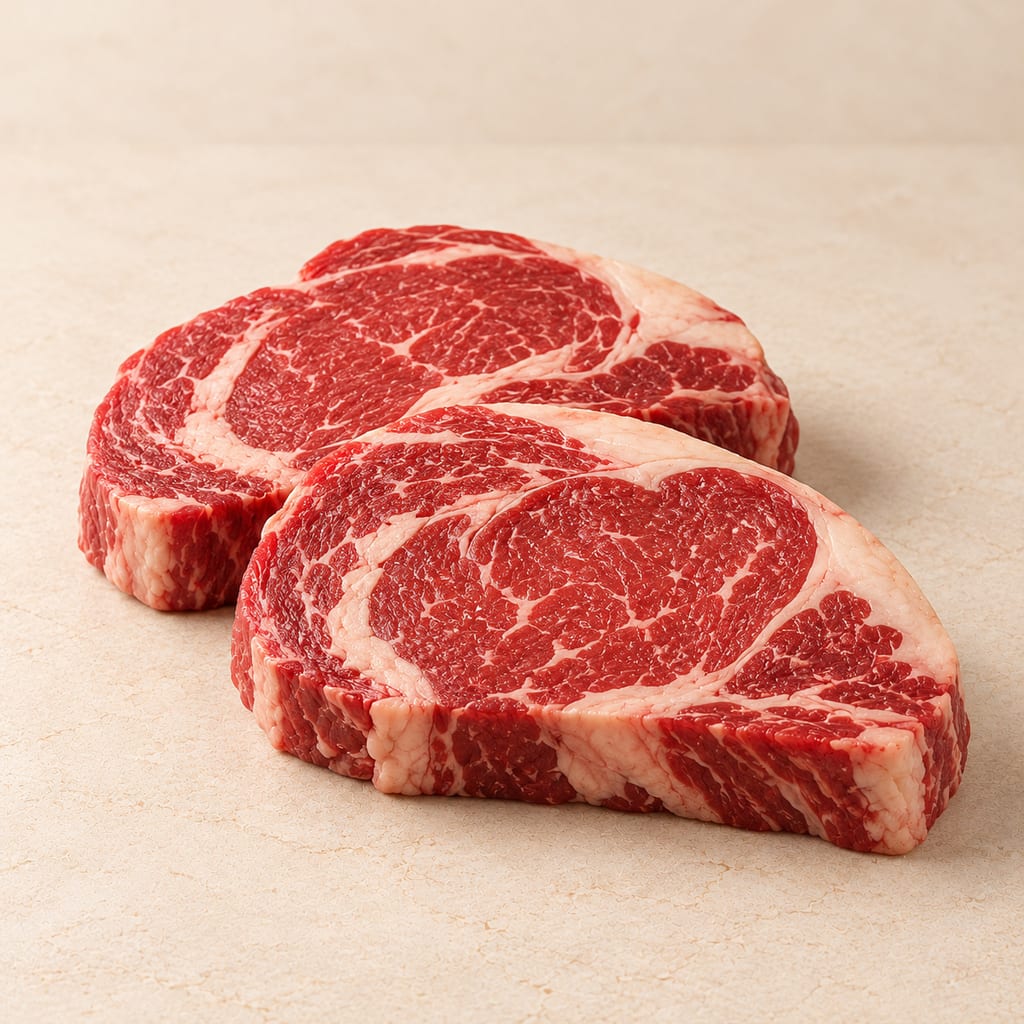
Beef is the meat of domestic cattle, Bos taurus and Bos indicus, sold as steaks, roasts, ground meat and cured products, and used in broths, salami and koji seasonings.
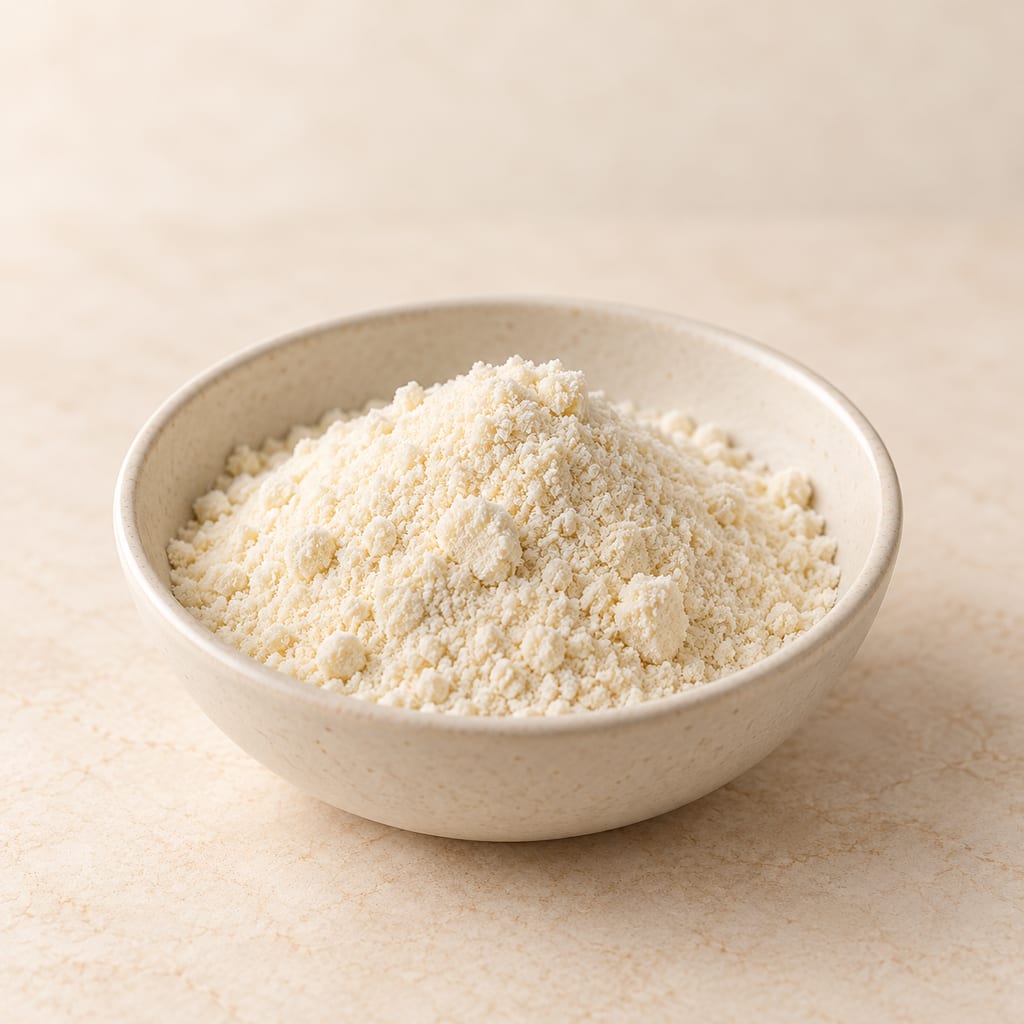
Finely ground dried garlic used to distribute garlic flavour through foods, distinct from coarser dried grades and garlic salt.
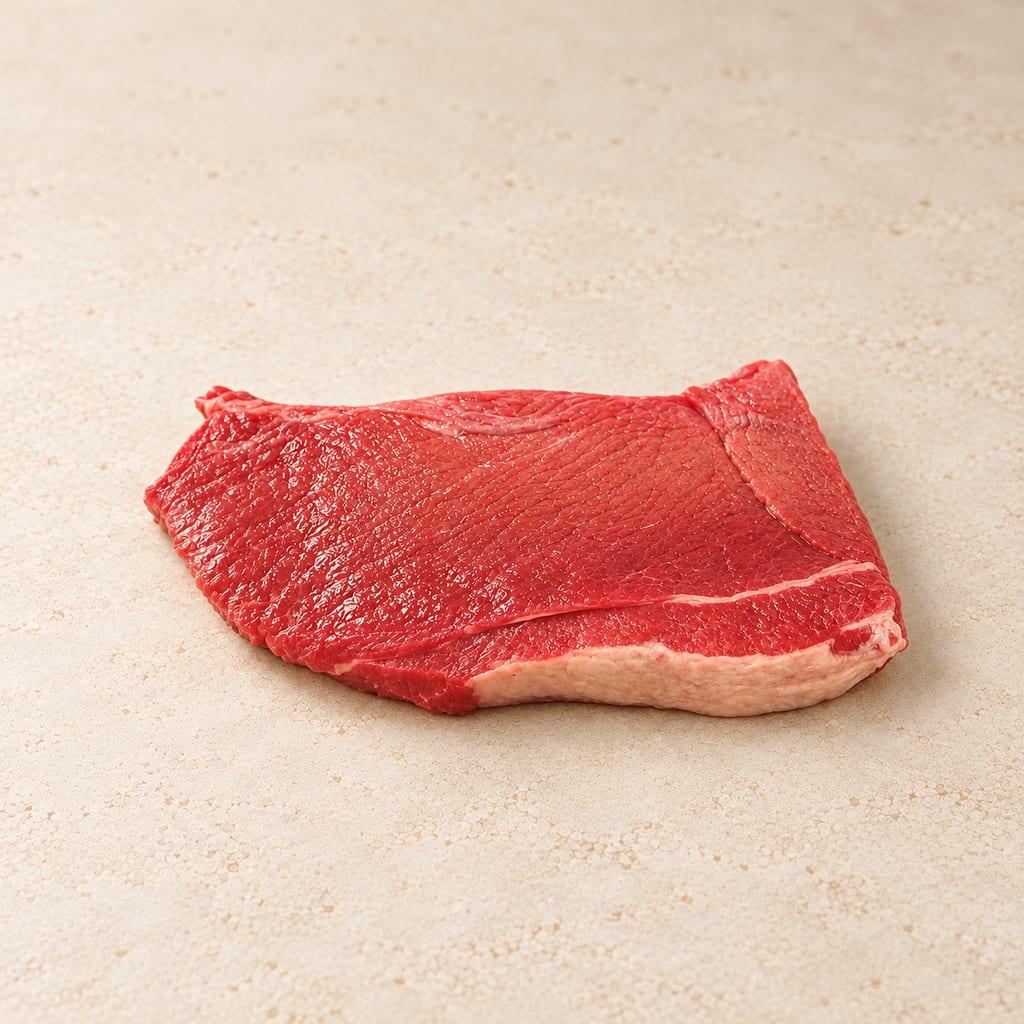
Lean beef is the trimmed muscle of cattle, Bos taurus and Bos indicus. In Genoa-style salami it is the second lean meat beside pork, ground fine, with pork back fat added separately.
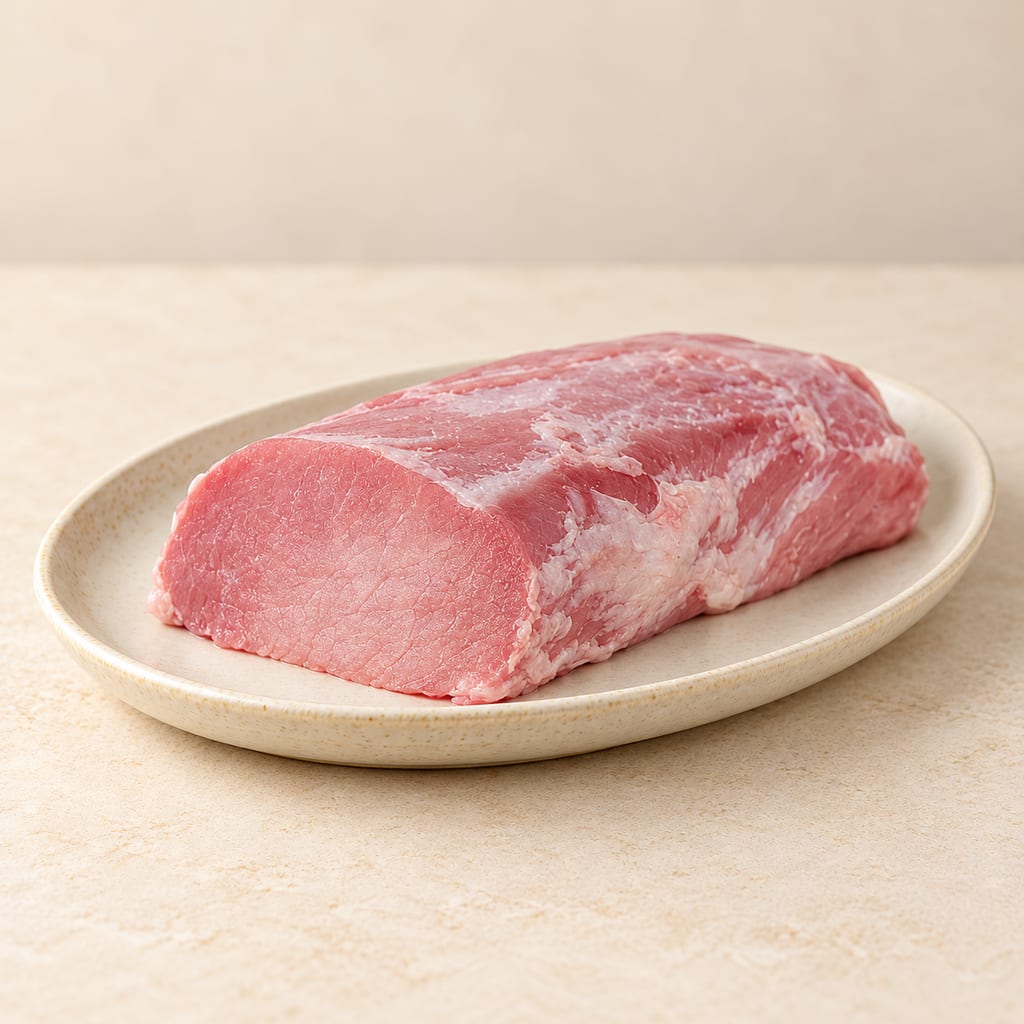
Trimmed domestic-pig muscle supplies the protein framework, water and meat flavor in fermented sausages; cut, condition and handling affect how it binds and ripens.
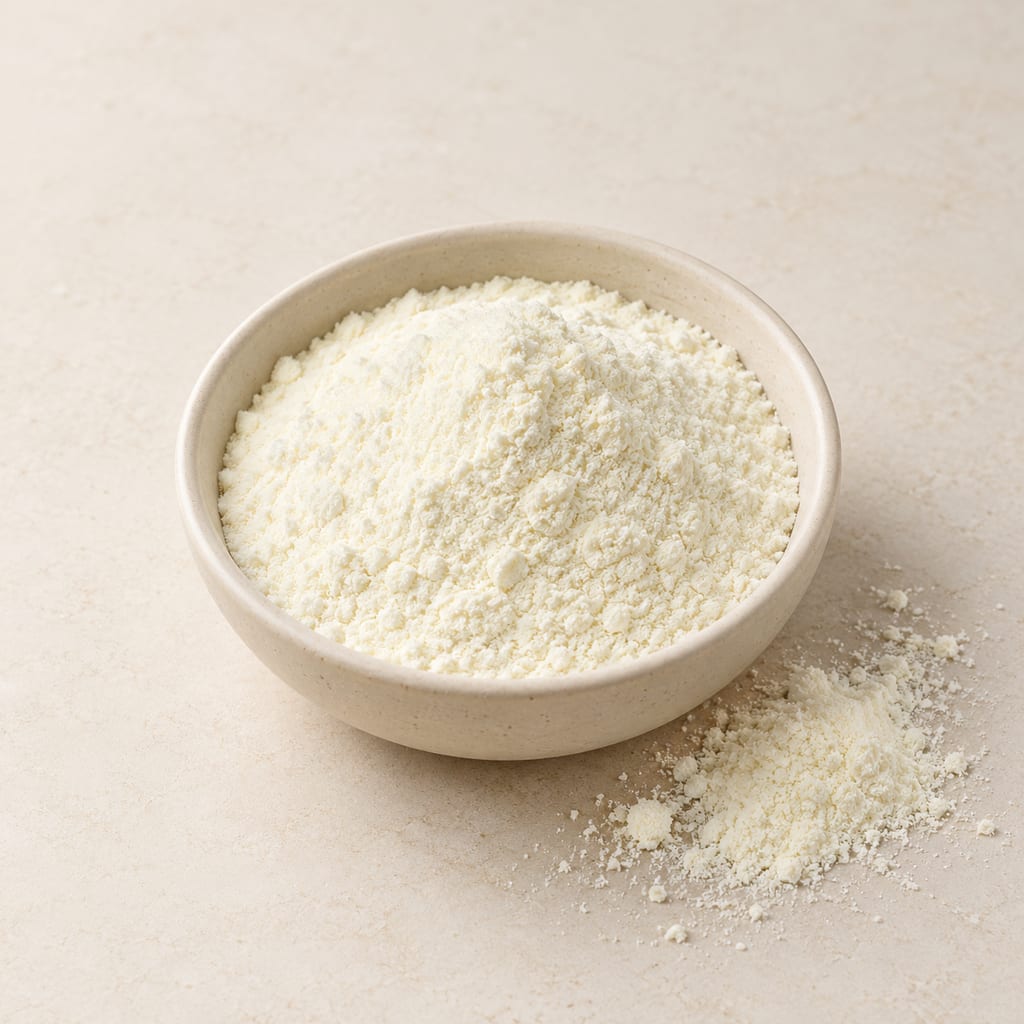
Nonfat dry milk is pasteurized skim milk dried to a pale powder. It supplies milk solids in the linked salami recipe, which names it as a binder but does not establish a measured effect.

Dry salami, sour pork with rice, matured sheep and aged blubber follow different paths from animal to food. Their stories connect microbes with climate, slaughter, migration and the meals people share.

Salt seasons a meal, shapes fermentation and preserves food. Its history follows the people who mine, harvest, trade and transform it, and the choices hidden inside an ordinary packet.

Soft, spreadable Calabrian pork sausage made with a great deal of red chilli and fatty pork, stuffed into natural casings, sometimes smoked and matured while staying soft.
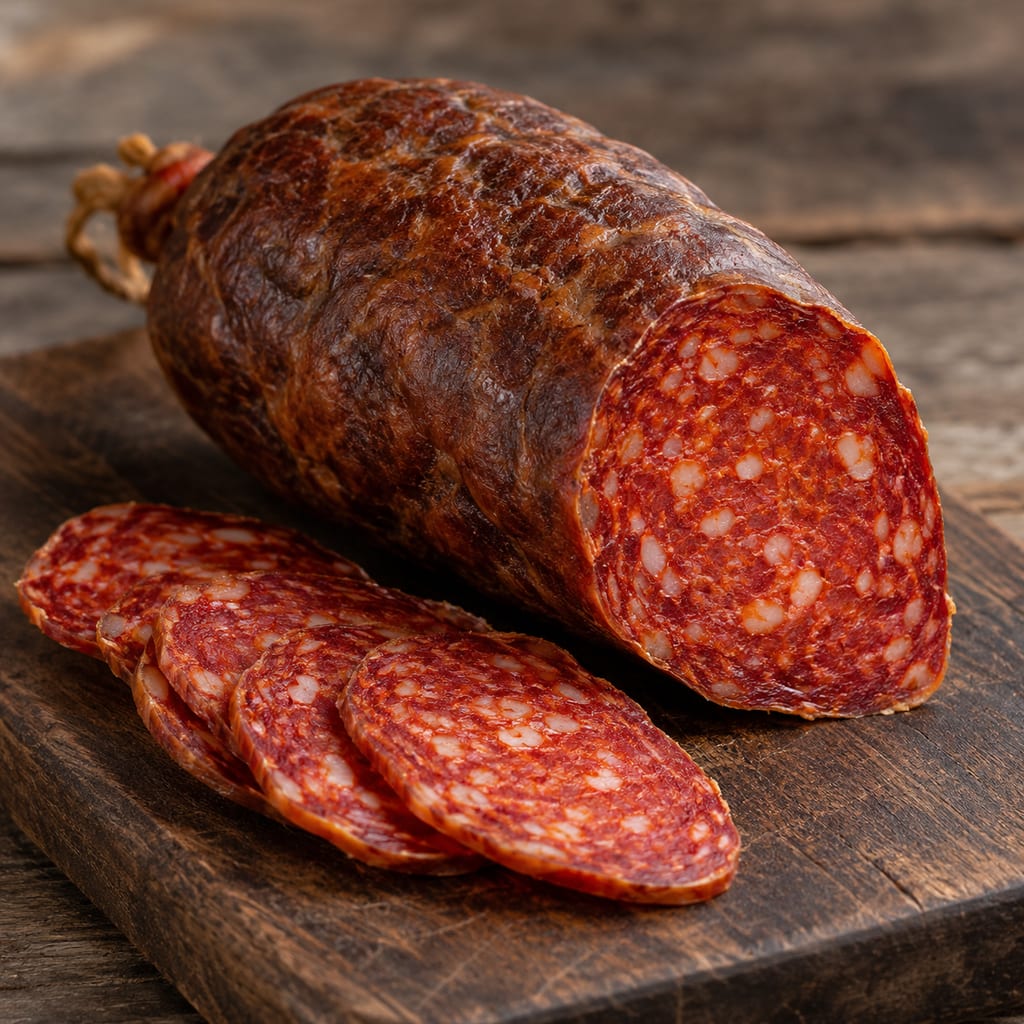
Baranjski kulen is a Croatian protected fermented pork sausage seasoned with sweet and hot paprika, garlic and white pepper, stuffed into a pig’s caecum called katica, cold-smoked and matured.
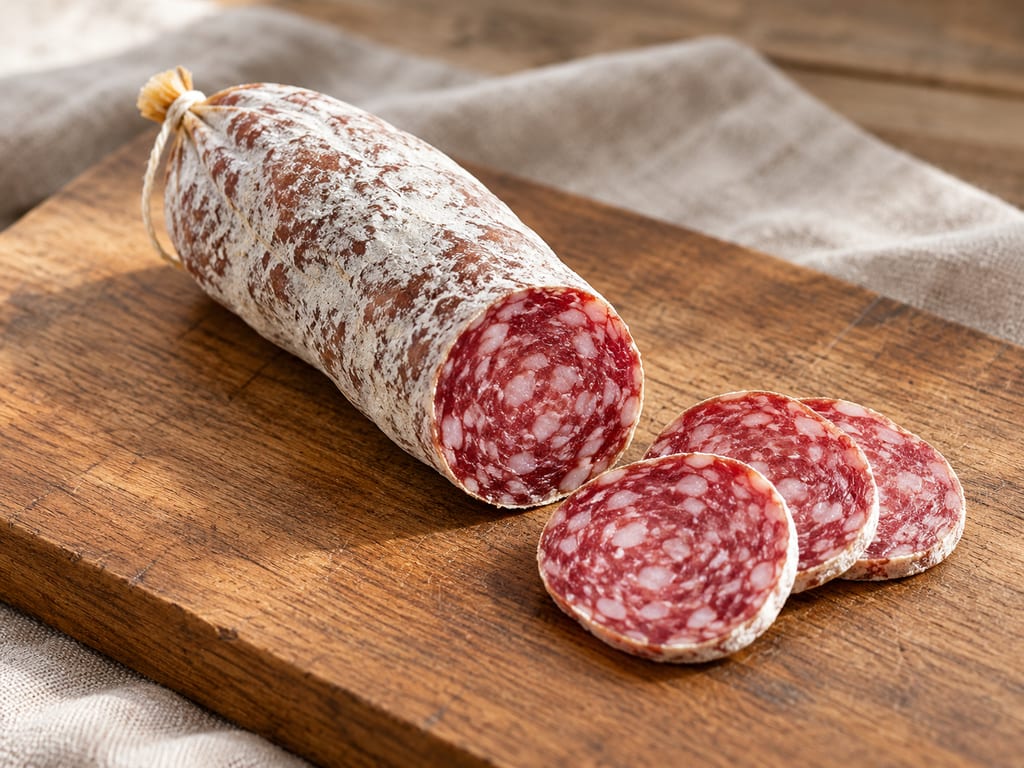
Small Italian hunter-style salami of lean pork, firm fat, salt, pepper and garlic, mildly acidified and dry-matured; protected as Salamini Italiani alla Cacciatora DOP.
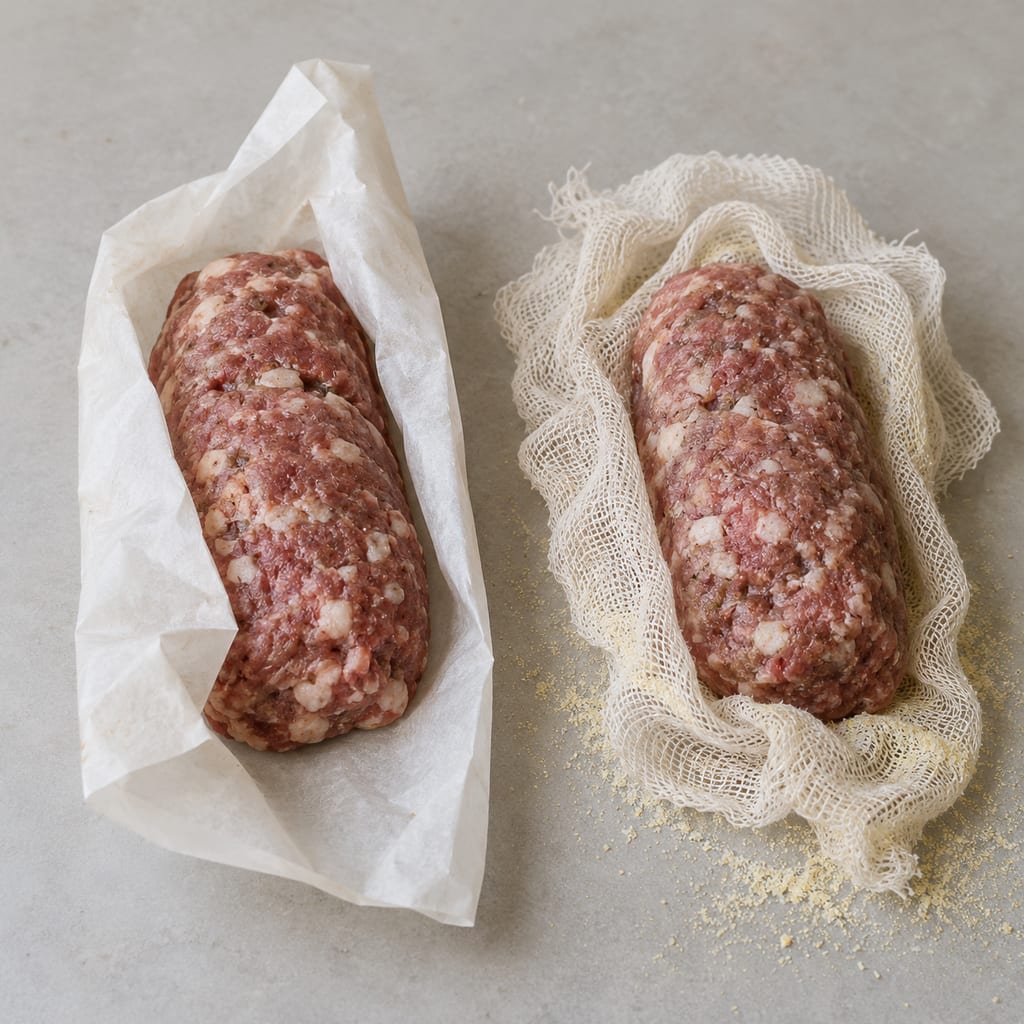
A documentary account of two modern Italian-language home-video experiments in salame without casings. Neither video establishes a safe preparation method or a ready-to-eat product.
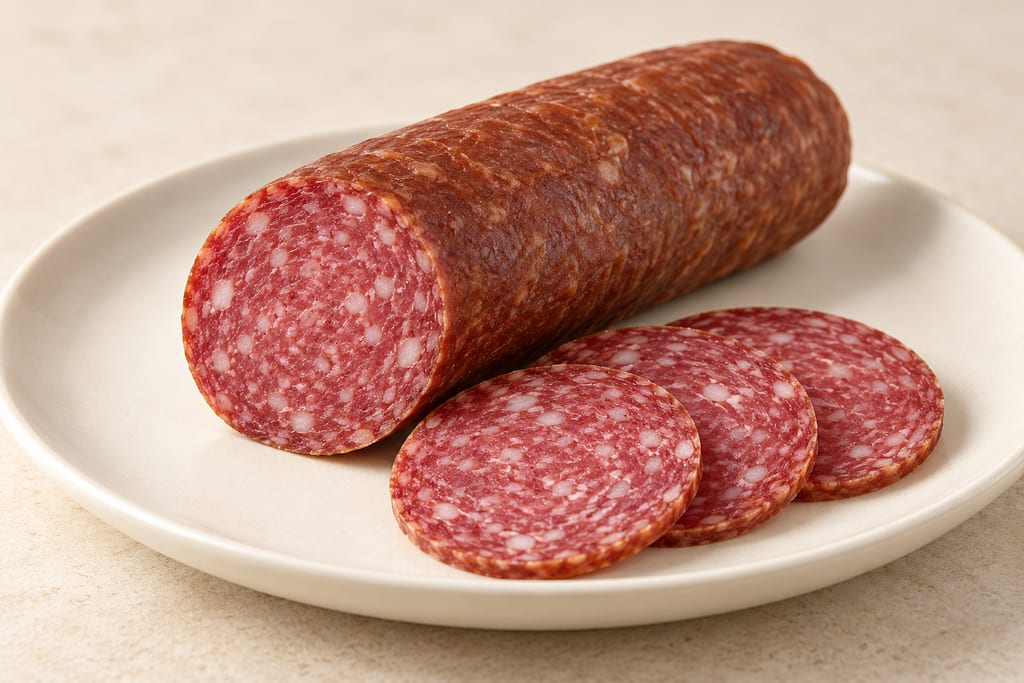
A family of salted minced-meat sausages fermented in casings, then dried and sometimes smoked. This description is not a validated household method; critical safety limits are not established.
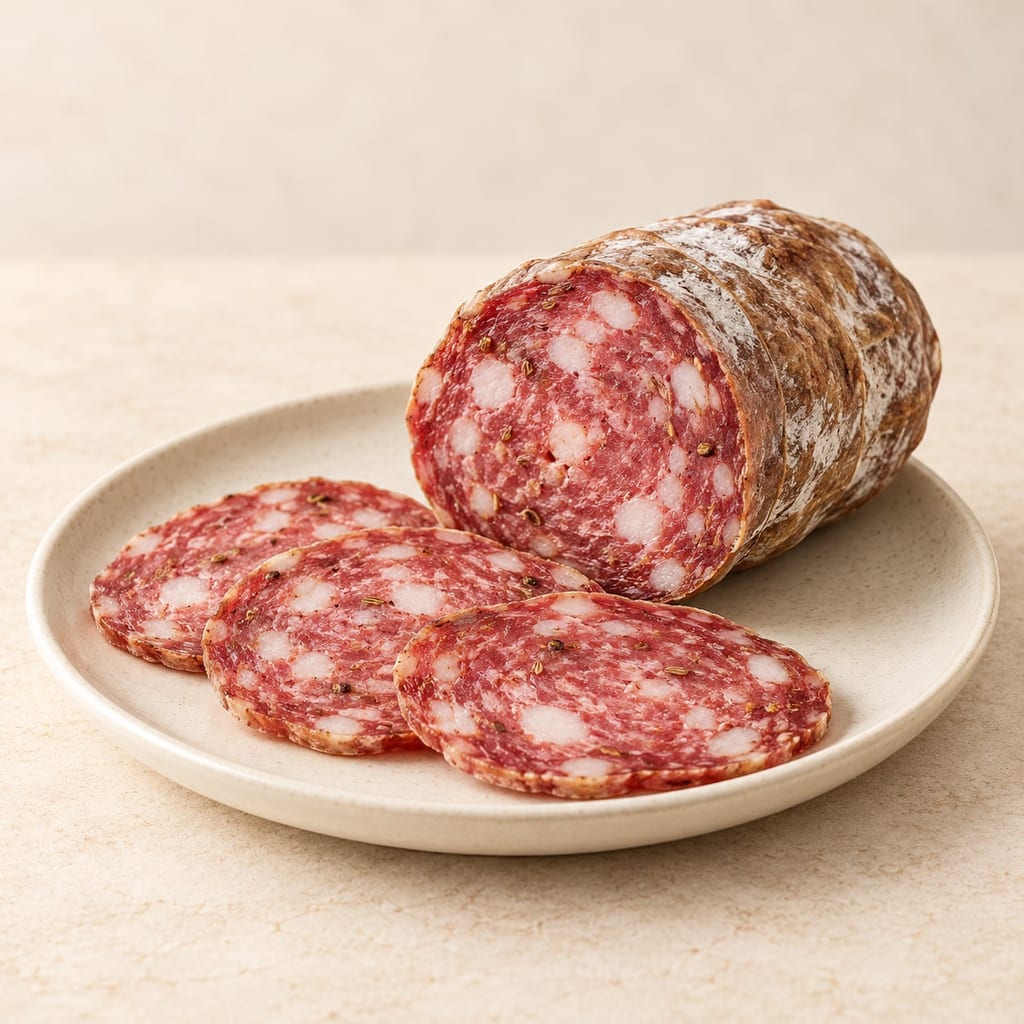
A Tuscan-style fennel salami made with pork and back fat. Toasted fennel, fennel pollen and Sambuca flavor this starter-cultured preparation.
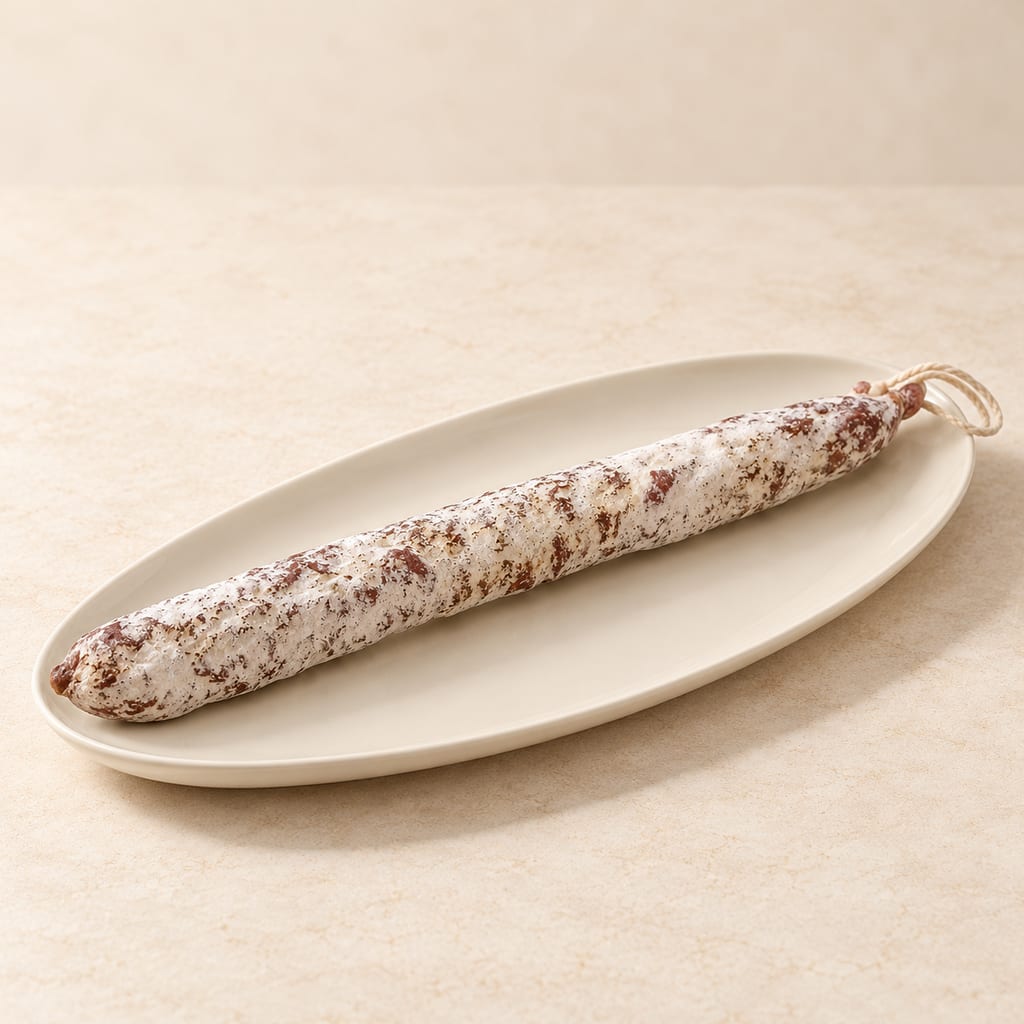
A documentary account of a modern starter-cultured Fuet formula and its place in Catalan sausage culture. The cited raw-pork process lacks matched safety validation, so this page does not present it as a household recipe.
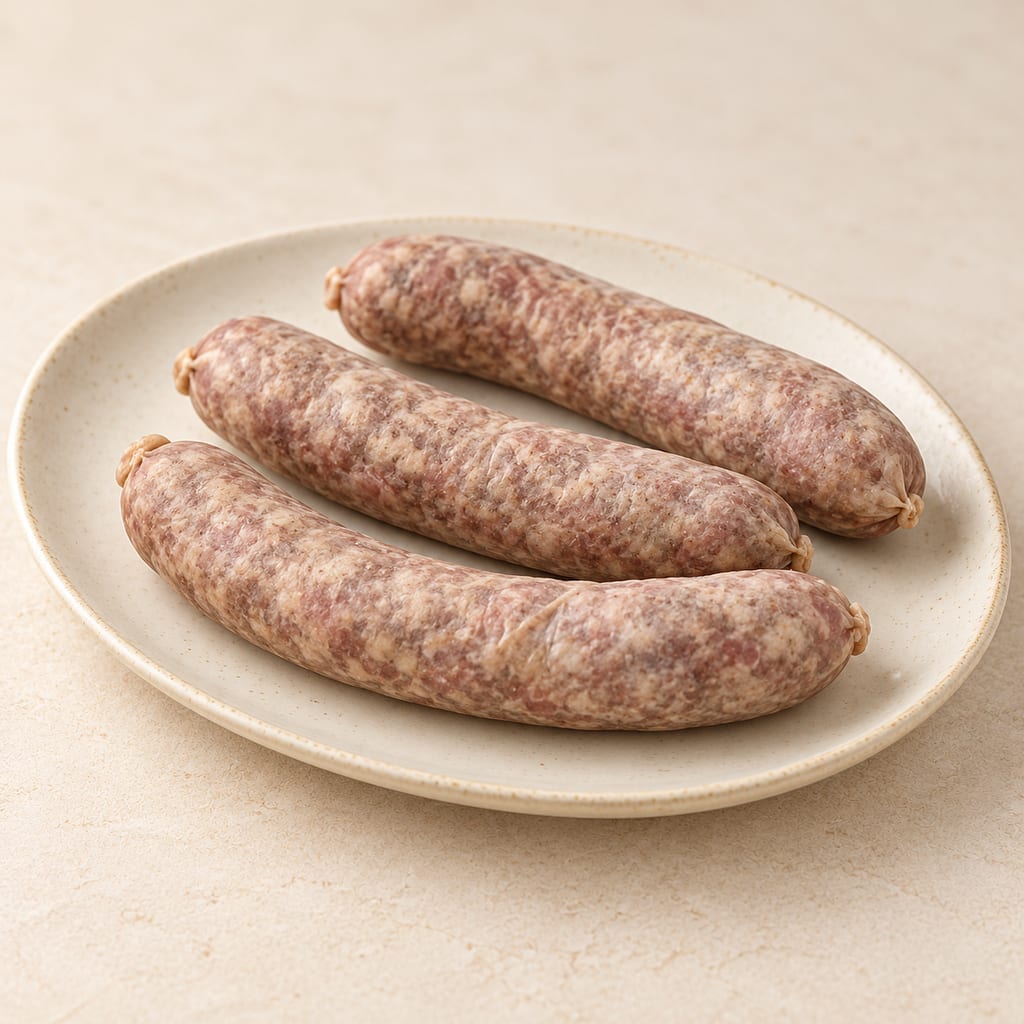
A documentary account of Maltese zalzett and a contemporary starter-cultured adaptation. The cited raw-pork method lacks documented validation for pathogen reduction and is not offered as a preparation recipe.

A way to add independent temperature logging to an existing food dehydrator without changing its built-in controls or protections. It is a monitoring method, not a rewiring plan.

Pleurotus cystidiosus is the abalone mushroom, a cultivated oyster-type fungus with dark brown caps that grows more slowly and is more demanding than other Pleurotus species.

A dark, balanced vinegar from Emilia-Romagna made by combining cooked or concentrated grape must with wine vinegar, then acetifying and refining it in wood under a protected specification.

A living dairy inoculum that starts controlled cream fermentation, developing acidity and aroma before sour cream or cultured butter is finished.

A small electric incubator holds jars at a selected temperature for yogurt and other documented warm food preparations. Controls, capacity and vessel arrangement vary by model.

Adygean salt is a seasoned table salt associated with Adygea and the wider North Caucasian culinary tradition. Salt is blended with garlic and a variable selection of herbs and spices; the exact mix depends on the named style and maker.

The African Caesar-group mushroom, Amanita masasiensis, is a wild ectomycorrhizal species of central and southern African woodlands, eaten locally. The genus contains deadly poisonous species, so identification needs care.
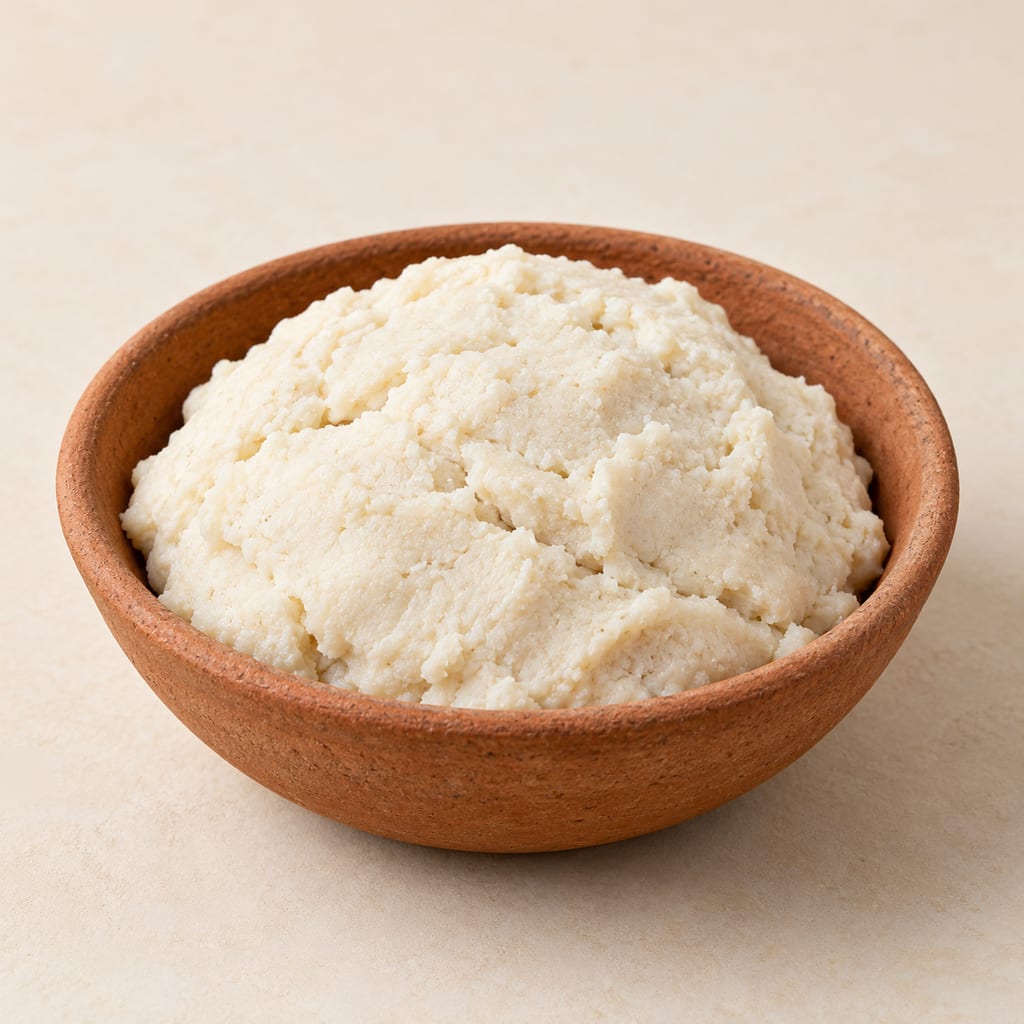
Ghanaian sour cassava dough fermented with traditional inoculum and drained during fermentation. It is used as a base for cooked foods such as banku and akple; process variants and safety outcomes differ.
No community contributions have been published for this entry yet.
Sign in to contribute. Published comments and photos are free to read.
2 Guys & A CoolerInspiration · Process
Genoa SalamiExact 1000 g formula, named SM-194 starter and Mold 800, casing soak, grinding plates, cold-meat instruction, source fermentation and drying conditions, source pH/weight-loss targets, estimated duration.
Cited in: A modern, unsmoked formula; The name and its Ligurian context; What the cultures do; Meat, fat and seasoning; Why the stages are ordered; Texture, serving and related styles
2 Guys & A CoolerVideo transcript · Process
Genoa Salami | Celebrate Sausage S04E06Transcript inspected at 03:39–06:33, 07:36–09:47, 13:15–18:00; confirms named starter and surface mold discussion and records a Mold 800 hydration quantity that conflicts with the linked recipe page.
Cited in: What the cultures do; Why the stages are ordered
USDA Food Safety and Inspection ServiceSafety
Ready-to-Eat Fermented, Salt-Cured, and Dried Products GuidelineAuthoritative process-validation guidance relevant to ready-to-eat fermented, salt-cured and dried meat; does not validate this home recipe.
British Columbia Centre for Disease ControlSafety
Fermented Foods Safety GuidancePublic-health food-safety context for fermented foods, including fermented meat; not validation of this formula.
Cited in: Safety and the limits of this recipe record
Regione Liguria text via Mangiare in LiguriaHistory · Identity
Salame genovese di Sant’OlceseThe Ligurian Sant’Olcese salami is a separate pork-and-beef preparation from Orero/Sant’Olcese, traditionally wood-smoked before curing.
Cited in: The name and its Ligurian context; Texture, serving and related styles
Canadian Food Inspection AgencySafety
Preventive control recommendations for manufacturing fermented and dried meat productsFermented sausage needs pathogen controls for botulism, staphylococcal toxin, E. coli and Salmonella; fermentation and drying conditions must be assessed as a full process, not by pH or weight loss alone.
Cited in: Meat, fat and seasoning; Why the stages are ordered; Safety and the limits of this recipe record
Chr. HansenIngredient identity · Safety
Bactoferm SM-194 Product InformationThe named starter includes Debaryomyces hansenii yeast alongside lactic bacteria and other bacteria, making the culture mixed; final-product safety requires process-specific studies.
Cited in: What the cultures do; Meat, fat and seasoning; Safety and the limits of this recipe record