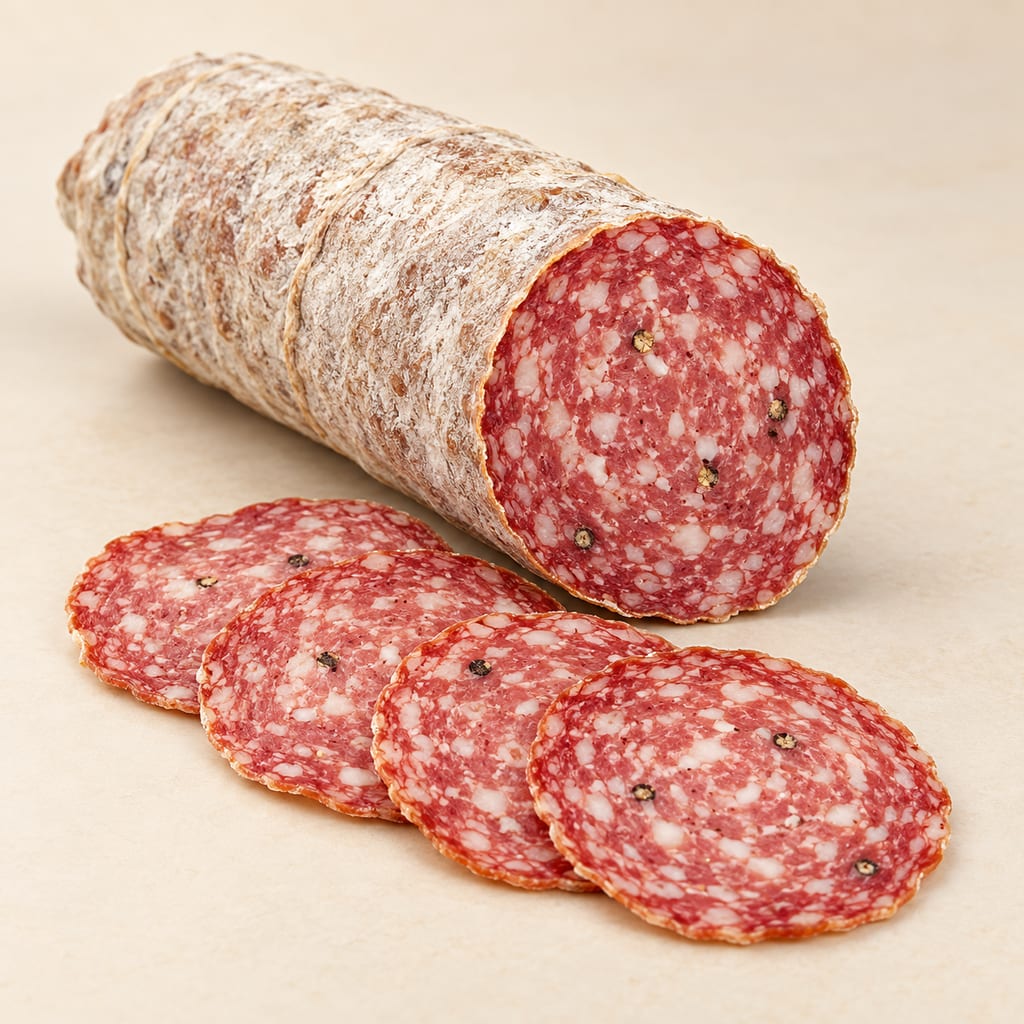
Genoa-style salami, red-wine method
Pork, beef and back fat ferment with a named starter, cure and red wine before the sausages dry in casings. This contemporary formula uses no wood-smoke stage.
 FermenteaWhere food goes to change
Spices and aromatics
Whole peppercorns are the dried, uncracked berries of Piper nigrum, sold with their pungent seed intact. They season cured sausages such as Genoa-style salami and soppressata di Calabria beside a ground pepper.
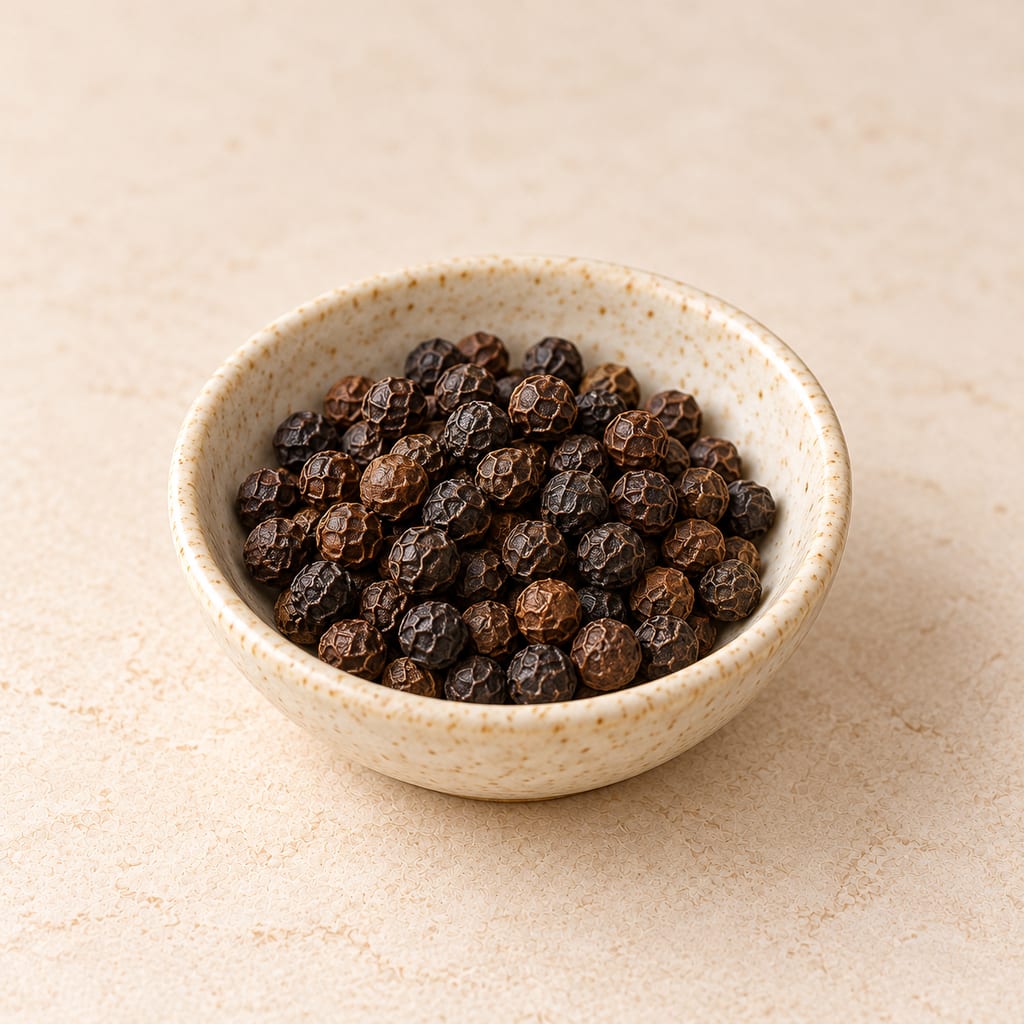
A whole peppercorn is the dried fruit of the pepper vine, Piper nigrum, left intact. The fresh fruit is a globose drupe 4 to 6 mm across, with a pulpy outer layer that turns red when it ripens and a single seed 3 to 4 mm wide inside. Dried, it becomes the hard little sphere that fills a pepper mill. The name whole is a statement about form, not colour. Codex recognises three styles of black, white and green pepper: whole, cracked or crushed (broken into two or more pieces), and ground to powder. A recipe that lists whole peppercorns is asking for the first, and the shopper has to decide the colour.
Colour is the work of processing. Black pepper is made from dried berries with the outer layer intact, which shrinks and wrinkles; white pepper is made from berries whose outer layer has been removed; green pepper is made from green berries dried under controlled conditions. Codex sets different sizes for them: black peppercorns about 2.5 to 7.0 mm across, white and green about 2.0 to 6.0 mm. The two linked sausage formulas pair the whole corns with a ground pepper, white in the Genoa-style salami and black in the soppressata, and neither says which colour the whole peppercorns are.
Pepper is a word that covers many unrelated plants. A review of the spices sold under the name lists black pepper, cubeb, long pepper, pink pepper, allspice and Japanese pepper as different species with different chemistry. Whole peppercorns in the sense of this page come from Piper nigrum only. Pink peppercorns from Schinus, Japanese pepper and allspice berries are other spices with similar shapes.
Whole peppercorns were already a commodity in the first century AD. The Periplus of the Erythraean Sea, a Greek merchant's guide to the Indian Ocean, says that large ships sailed to the markets of Muziris and Nelcynda on the Malabar coast because of the great quantity and bulk of pepper and malabathrum. Pepper, it adds, was produced in quantity in only one region near those markets, a district called Cottonara. Ships brought coin, wine, copper, tin, lead, coral and glass in exchange, and carried home pepper, pearls, ivory, silk cloth and gemstones.
Pliny the Elder, writing in the same century, prices pepper by the pound in book 12 of his Natural History. Long pepper cost 15 denarii, white pepper 7 and black pepper 4. He found black pepper the more pleasant and white milder than either. PROSEA confirms that dried pepper was already used as a flavouring in classical Rome. By its account the vine had reached South-East Asia by 100 BC, and Europe was a major importer by the twelfth century.
The modern map of pepper is much wider. The vine is native to the Western Ghats of Kerala, according to PROSEA, but it spread to Sarawak early in the nineteenth century and was planted in the Brazilian state of Para by Japanese immigrants about 1930. In the 1990s Sri Lanka and China overtook Malaysia in output, and Thailand and Vietnam also became large producers. PROSEA notes that trade statistics do not separate black from white pepper, and none of these histories separates whole peppercorns from ground pepper.
The pepper vine is a woody perennial climber that reaches 10 m or more in the wild. On plantations it is trained on supports into columns about 3 to 4 m tall. Its glossy leaves are 8 to 20 cm long, and its fruit spikes are 3 to 15 cm long and carry 50 to 150 flowers. It wants a humid tropical climate with 2,000 to 4,000 mm of rain a year, mean temperatures of 25 to 30 degrees Celsius and 65 to 95% relative humidity. A dry spell of two or three months is not usually harmful. It thrives below 500 m at the equator, though it can grow to 1,500 m, and it needs deep, well-drained soil with good water-holding capacity; acid soils below pH 5 with excess aluminium cause trouble.
Growers propagate pepper from cuttings and not seed. PROSEA describes pre-topped pieces of terminal shoots, 5 to 7 cm long, taken from plants 12 to 30 months old, which root in about two months in a shaded nursery. Seed germinates in two or three weeks, but commercial propagation does not use it. A crop from runners fruits late, about three years after planting. The stage at which a spike is cut decides the product: green berries for black pepper, and spikes with a few fruits turned red or yellow for white.
The spikes for black pepper are cut while the berries are still green. PROSEA describes piling the freshly picked spikes overnight for a brief fermentation, then spreading them on bamboo mats or concrete to dry in the sun, raking them regularly. After four or five days the peppercorns are black and dry, at 10 to 14% moisture. Blanching the spikes first and using a flat-bed dryer cuts drying to about seven hours. The weight of dried black pepper is about a third of the fresh fruit, 33% in PROSEA's figure.
The dark colour and wrinkle belong to a berry dried with its outer layer in place. Codex sets the moisture ceiling for whole black and white pepper at 12% for the two better classes and 13% for the lowest.
White pepper takes a different path: riper spikes are soaked for a week or so and the outer layer is rubbed away before drying, which leaves a smooth, pale berry. That route has its own page. This page concerns the whole berry whatever its colour, and the processing it needs afterwards is cracking or grinding in the kitchen.
Pepper's bite and its fragrance come from different compounds. The pungent principle is piperine, which PROSEA puts at 4.9 to 7.7% in black pepper. The aroma comes from the essential oil, 1.0 to 1.8% of black pepper, about 90% of which is monoterpene and sesquiterpene hydrocarbons. A 2024 study of one black pepper sample found piperine at 20.2 micrograms per milligram and 52 volatile compounds, with the sesquiterpene beta-caryophyllene making up 82% of the volatiles. Autoclaving the pepper raised the share of oxygenated aroma compounds, so heat changes the aroma as well as the texture.
Whole berries hold their oils inside a hard shell. The Codex standard asks for at least 2.0% volatile oil in class I whole black pepper and 3.5% piperine, both on a dry basis, but only 1.0% volatile oil and 3.5% piperine in the ground form, and it notes that volatile oil in ground pepper must be measured immediately after grinding. The ground form has a lower volatile-oil minimum, 1.0%. A study of white pepper powder stored for up to seven months found the typical aroma faded while a fecal note became stronger, and its authors suggest that very volatile compounds such as alpha-pinene were lost. That experiment tested powder, not whole corns, so it supports caution about ground pepper rather than a number for the whole berry.
The forms differ in how they sit in food. Ground pepper disperses evenly through a meat paste, while whole or cracked peppercorns stay as separate particles that the eater meets one at a time. A sausage that carries both, like the two formulas on this site, has the powder spread through the mix and the pieces among it.
Whole peppercorns appear in two linked salami formulas, in very small amounts. The Genoa-style salami uses 10 g whole peppercorns with 2 g white pepper in a 1,000 g batch of pork and fat, together with 22.5 g salt, 2.5 g Insta Cure #2, 30 ml red wine and SM-194 starter culture. The soppressata di Calabria uses 4.54 g whole peppercorns with 2.27 g black pepper in a 2,270 g batch, which is roughly 0.2% and 0.1%, beside 56.75 g kosher salt, 5.67 g Insta Cure #2 and T-SPX starter. Neither page says whether the whole peppercorns should be cracked first.
The methods are those of a controlled fermentation. The Genoa formula ferments for 18 to 36 hours at 70 to 85 degrees Fahrenheit to a pH between 5.0 and 5.2, then dries at 55 degrees and 80% humidity to a weight-loss target of about 35%. The soppressata ferments at 65 degrees and 85 to 90% humidity for 48 to 72 hours, again to pH 5.0 to 5.2, and dries to 38 to 40% weight loss. Both rely on salt, Insta Cure #2, the starter's acid and the long dry for preservation, with pepper as a seasoning.
Pepper does reach the starter, though. In a meat-simulation medium with the pH profile of a Belgian-type sausage, pepper slowed the maximum growth rate of Lactobacillus curvatus LTH 1174, a sausage isolate. At the same time, 0.80% white pepper raised the maximum cell density the culture reached, and pepper stimulated its lactic acid production, which the manganese in the pepper did not account for. That was one strain in a laboratory medium, not a measurement in a salami, but it shows why the spice belongs in the formula in the stated weight.
Choose whole peppercorns that are hard, dry and evenly sized, with a strong smell when scratched or cracked. Codex grades whole black pepper by physical defects. Class I allows at most 2.0% light berries, which are immature berries without a kernel lighter than 300 g per litre, and at most 1.0% pinheads, the small soft berries under 2 mm that carry less odour and flavour; class II allows 5.0% and 2.0%, and class III 10.0% and 4.0%. Minimum bulk density is 550 g per litre for class I black pepper and 600 for white. Foreign matter is capped at 0.1% in class I, and mouldy berries at 1.0%.
PROSEA notes that whole and ground pepper are commonly adulterated with lower-quality pepper and various foreign matter, which is one reason to buy whole berries and grind them at home. Keep them dry and closed, away from heat and light, and crack or grind only what a recipe needs. No source cited here gives a shelf life for whole peppercorns, so none is stated. Codex requires labelling as Black Pepper, White Pepper or Green Pepper, which may add style and grade, and asks that the spice be prepared and handled under the hygiene code for low-moisture foods. Smell and appearance guide quality but do not show that a lot is microbiologically sound.
Pepper reaches food in forms other than the dry berry. PROSEA describes pepper oil, made by steam distillation of ground pepper, and oleoresin, extracted from the spice with a solvent at a spice equivalent of 1 part to 20 or 25. Both are used mainly in convenience foods, and the maximum permitted level of pepper oils in food is about 0.04%. Preserved immature green pepper and fresh green pepper fruits are a secondary product. The dried whole berry remains the main form, in the kitchen as in trade, and the two salami formulas on this site use it.
The two linked recipes do not give the colour of their whole peppercorns or say whether they are cracked, so the page describes the form and leaves both open. The Codex limits quoted are those for whole pepper sold for direct consumption, and they do not set a cooking or sausage dose.
The vine is native to the Western Ghats of Kerala; this does not locate the berries in any recipe.
The Periplus names this district as the one region near the markets of Muziris and Nelcynda that produced pepper in quantity.
Pork, beef and back fat ferment with a named starter, cure and red wine before the sausages dry in casings. This contemporary formula uses no wood-smoke stage.
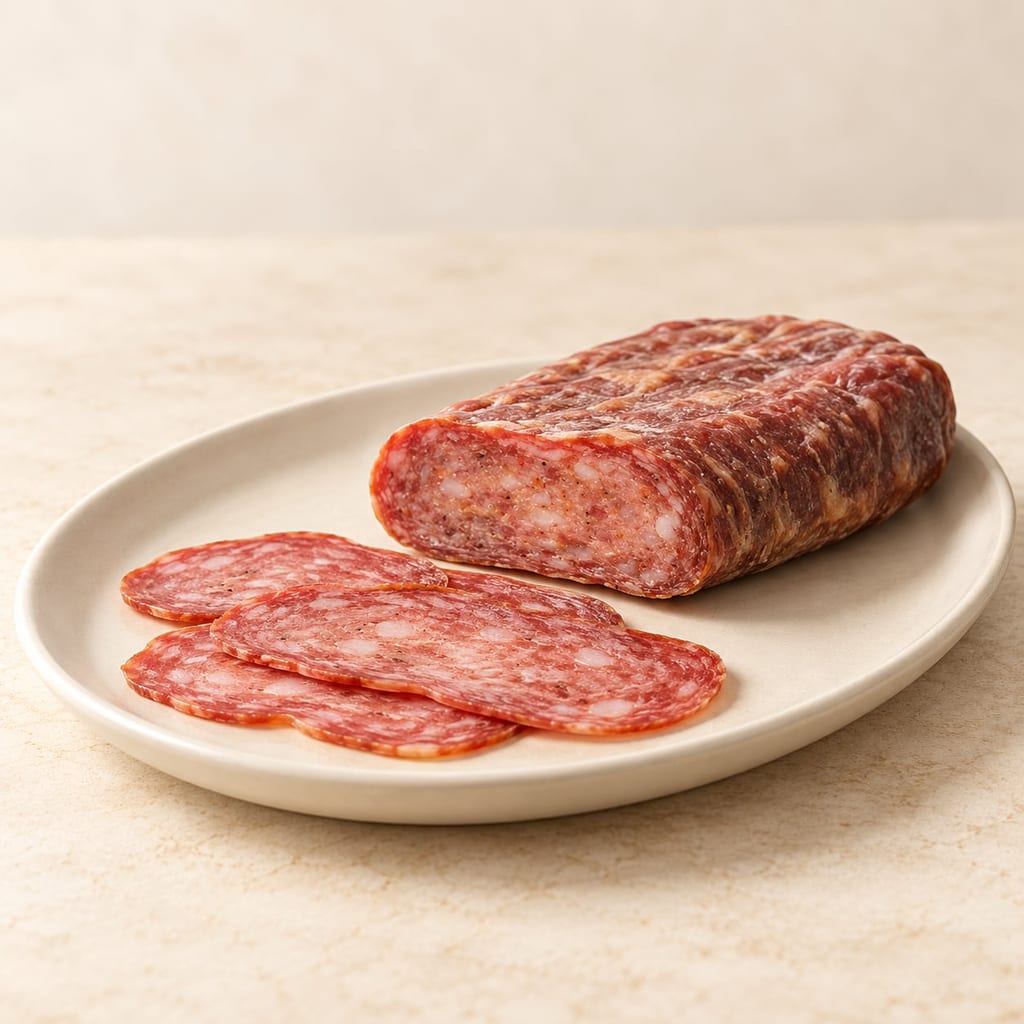
Calabrian soppressata is a flattened pork salami seasoned with pepper and wine. This entry documents a modern starter-cultured adaptation, not household instructions; the process lacks matched pathogen-reduction validation.
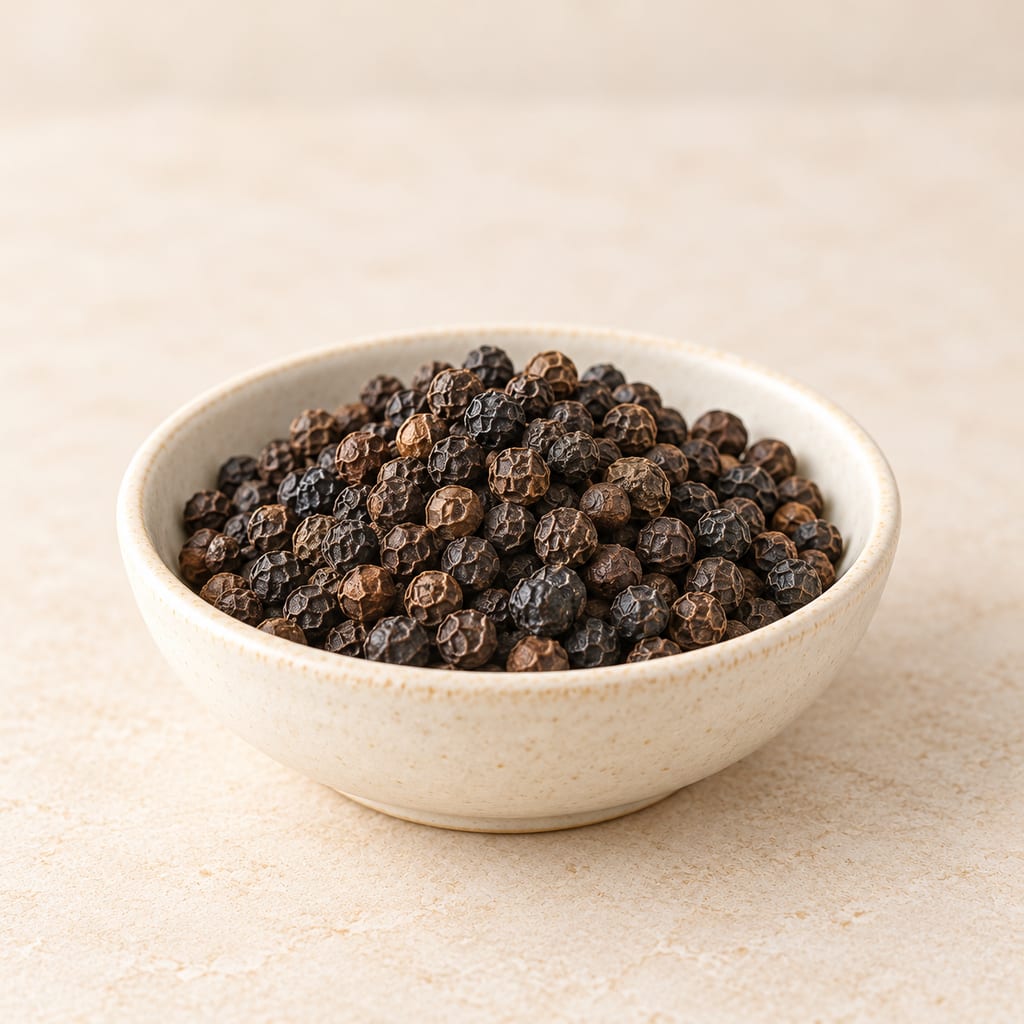
Black pepper is the dried fruit of Piper nigrum, a tropical climbing vine, used whole, cracked or ground for its pungency and aromatic oils.
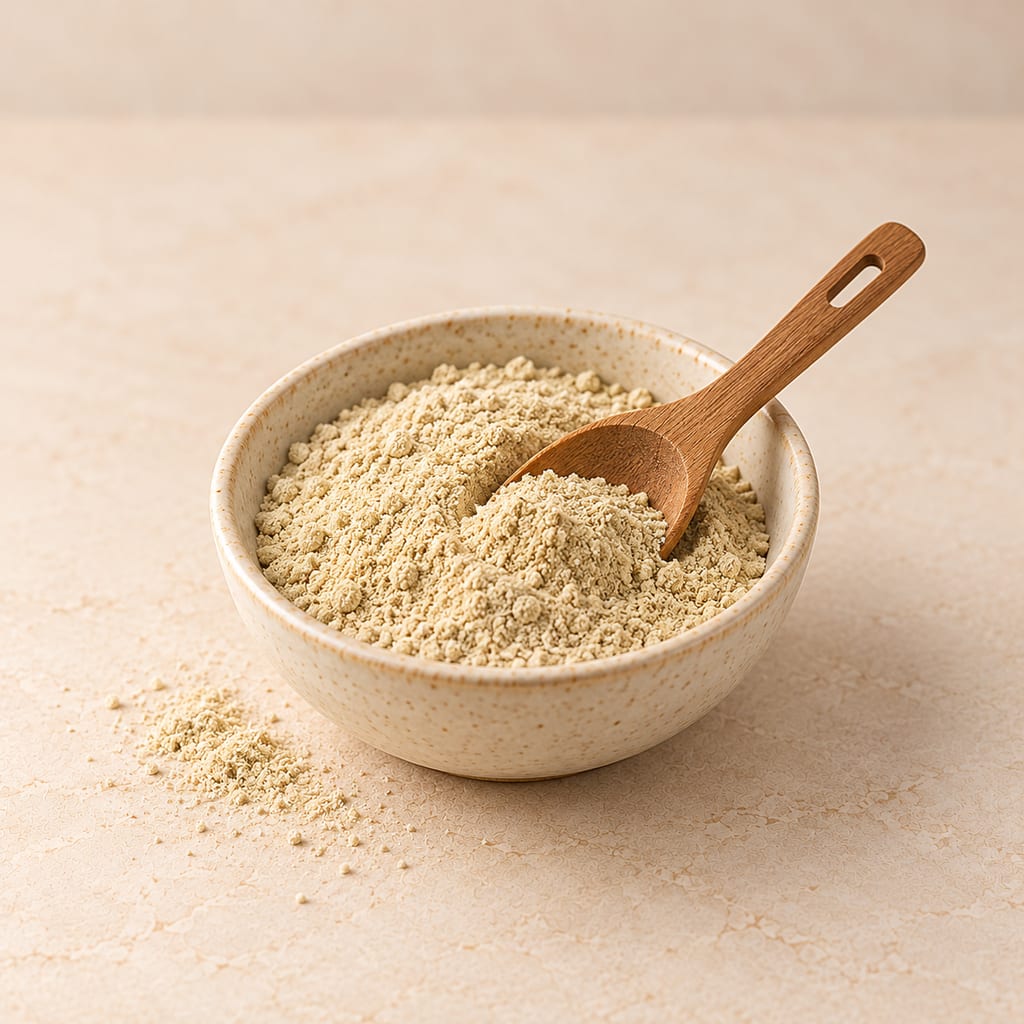
White pepper is the ripe fruit of Piper nigrum with its outer fruit wall retted or stripped away, leaving a pale, smooth peppercorn. It seasons pale sauces and soups and three linked cured sausages.
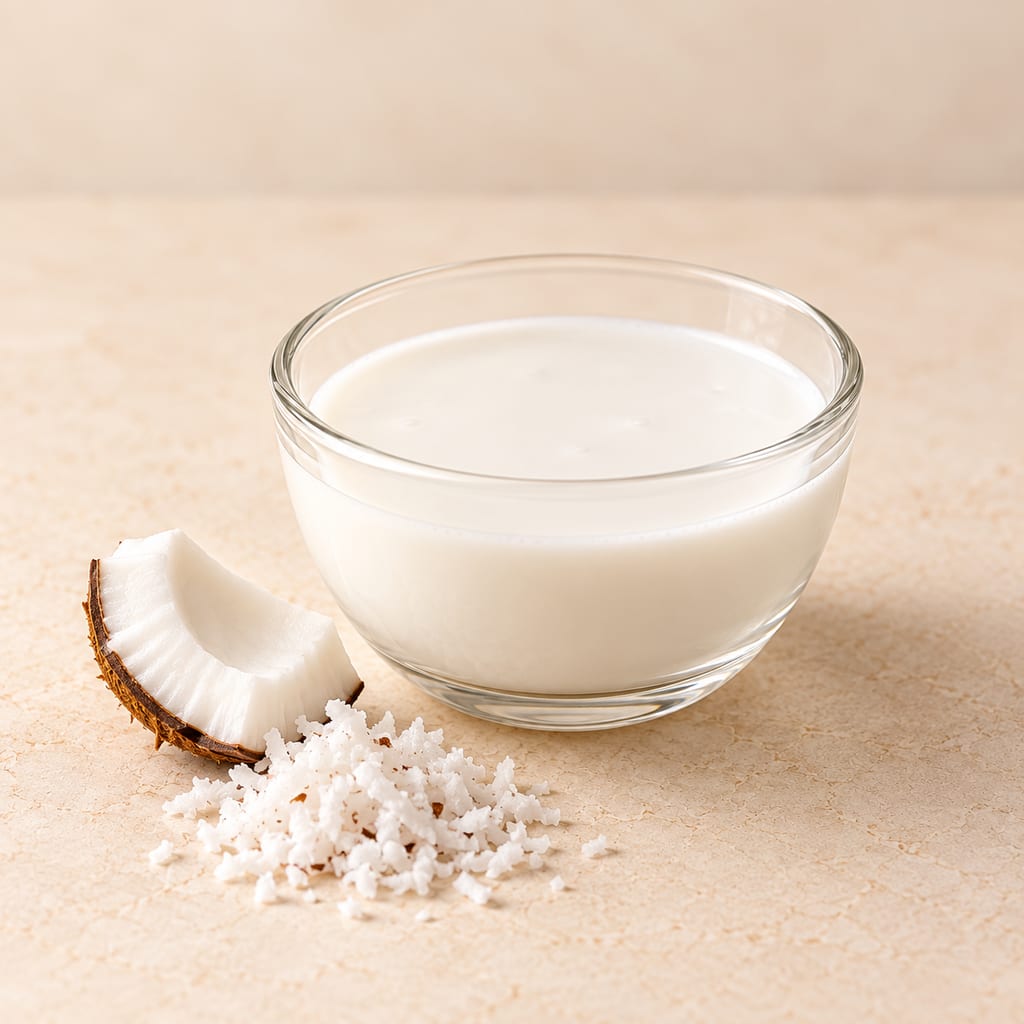
Coconut milk is an aqueous emulsion extracted from mature coconut kernel, sold fresh, packaged or reconstituted. It is distinct from the liquid naturally inside a coconut.
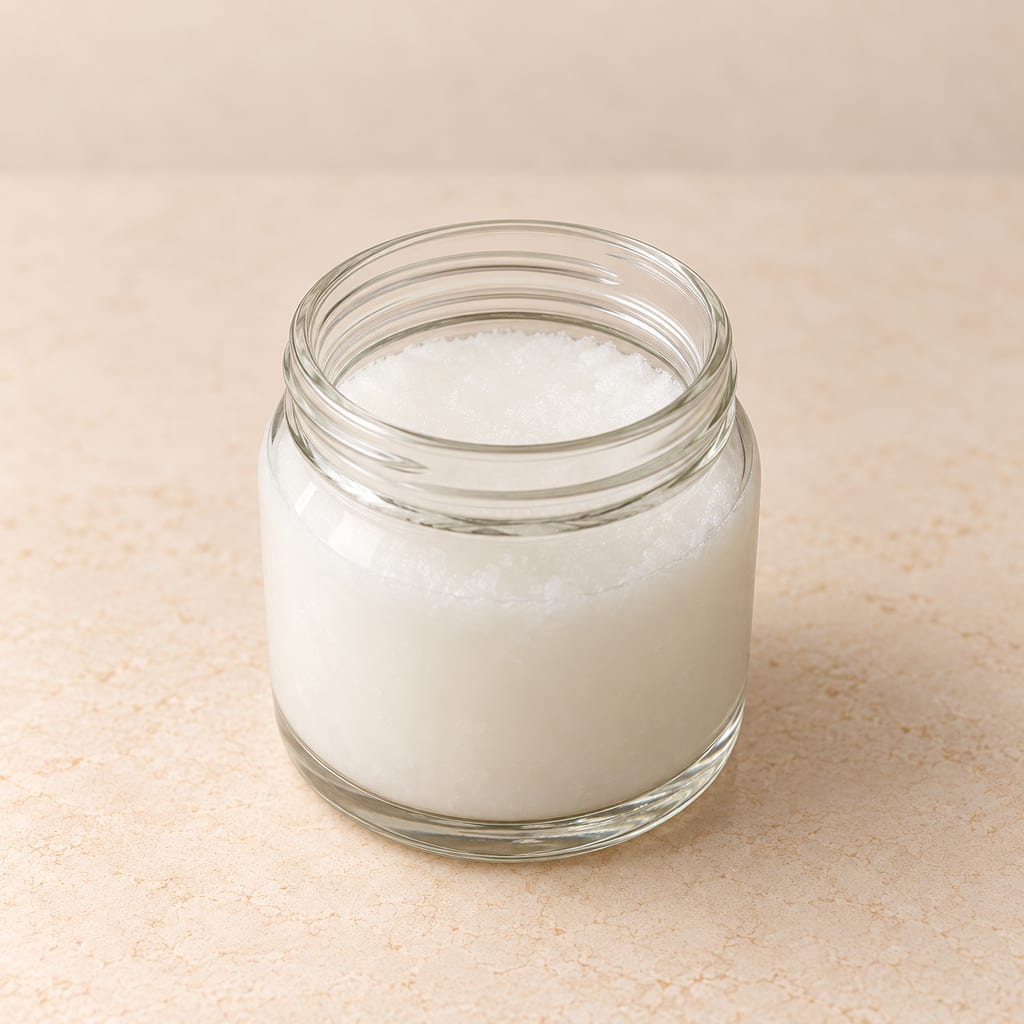
Fat pressed or separated from the kernel of a mature coconut: solid below about 25 °C, mostly saturated and half lauric acid, sold virgin, refined or hydrogenated.
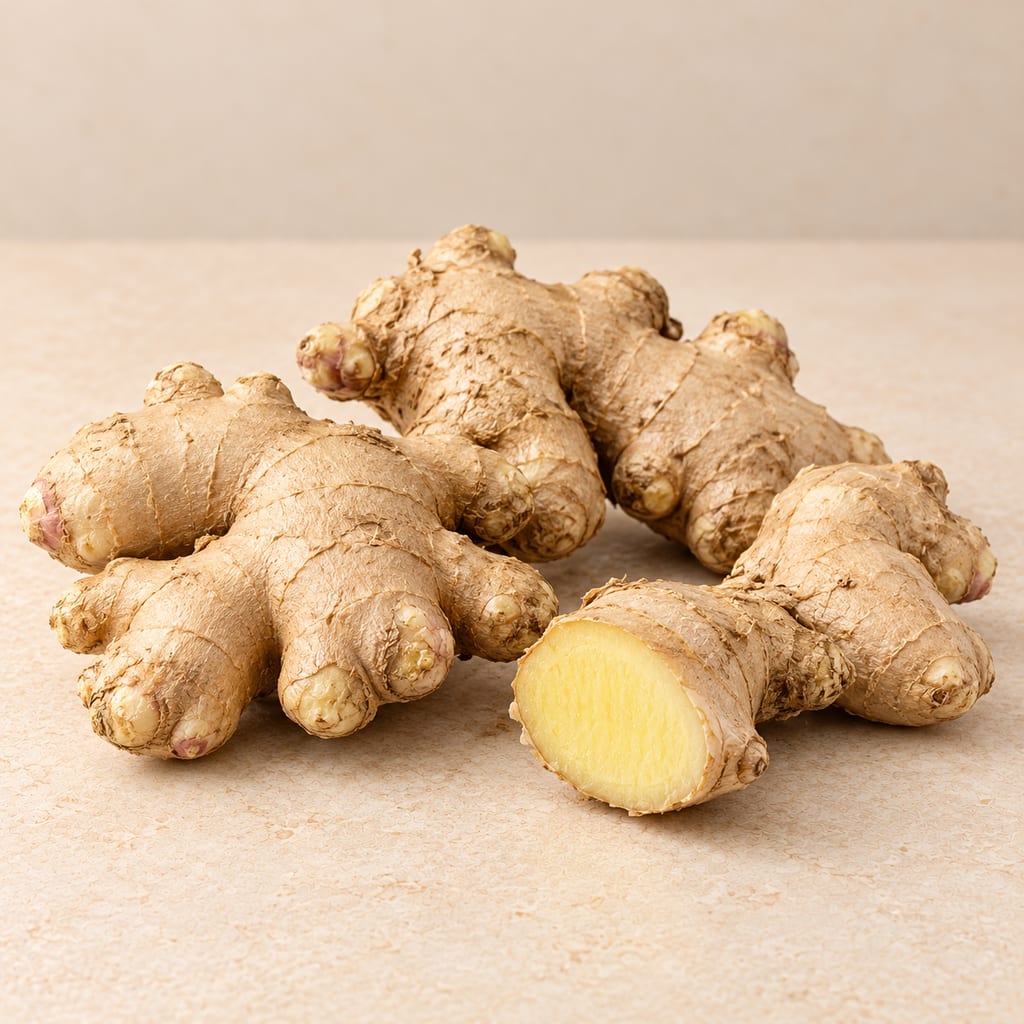
Ginger is the aromatic rhizome of Zingiber officinale, used fresh, dried and preserved. Historical ginger wines sliced or bruised it to flavour a sugar-based ferment.
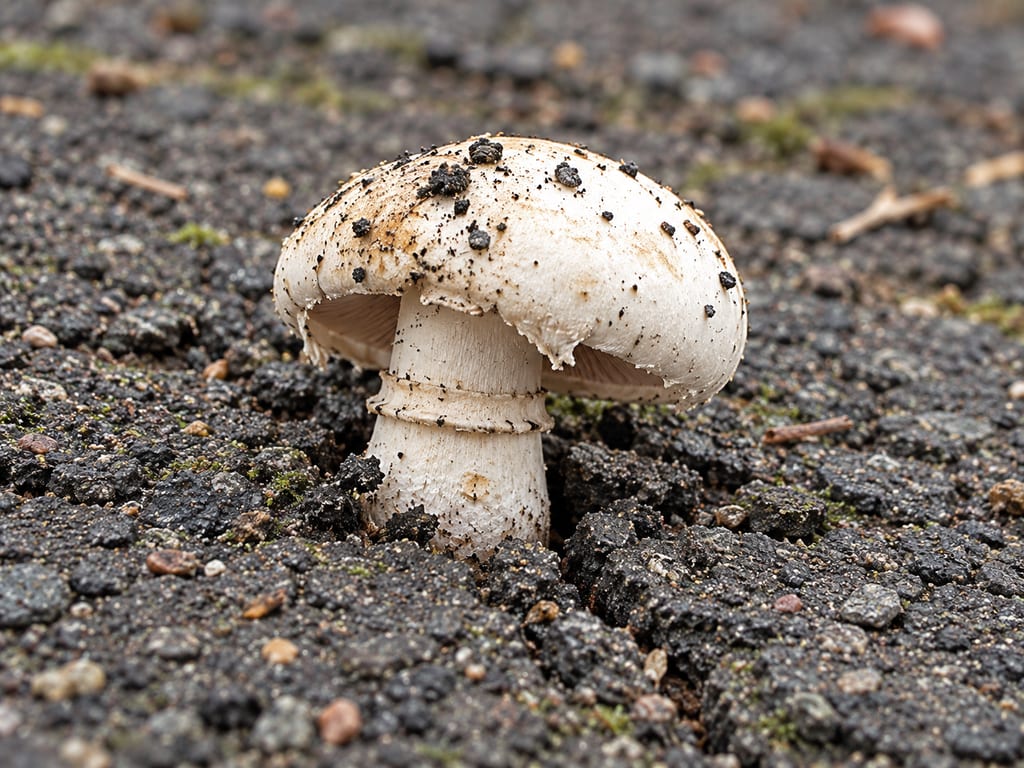
Agaricus bitorquis is a firm edible mushroom known for fruiting in hard, disturbed ground and for its persistent double ring. It is also cultivated in warmer conditions than the common button mushroom.
Rice flour is ground, non-waxy rice used in breads, batters and noodles. Its particle size, milling and rice variety shape how it absorbs water and sets when cooked.
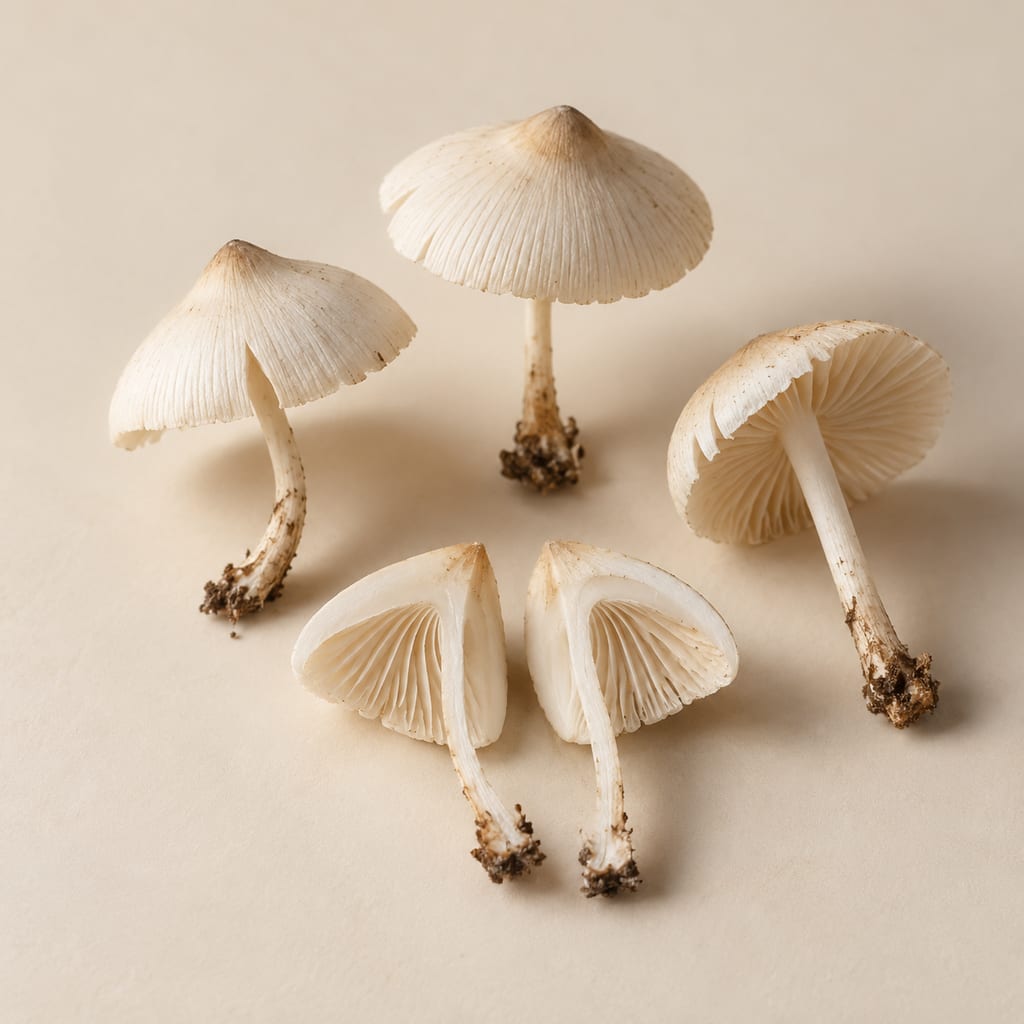
A small wild termite-associated mushroom recorded as food in parts of India and elsewhere. Its name has a taxonomic history, and some African records are treated cautiously because they may represent a different lineage.

At North Abydos in Egypt, a fixed early Dynastic brewery comprised parallel semi-subterranean installations with rows of ceramic mash vats; excavation reports revise their number, scale and estimated batch capacity.

Ají amarillo is the orange-yellow Peruvian chilli cultivar group of Capsicum baccatum, used to colour and season huancaína sauce and ají de gallina. Published heat estimates do not establish one range for the named cultivar.

Toasted almonds are whole sweet almond kernels dry-roasted until golden to brown. Heat replaces their marzipan note with a roasted, nutty one; they thicken and flavour romesco.

Kodiak salmon, halibut and cod cut as seg'aq and hung on an initaq rack to become tamuuq, with kac'amaasaq and kupcuunaq named as different results.

Aniseed is the dried ripe fruit of Pimpinella anisum, an aromatic Apiaceae spice commonly called a seed. It adds a sweet, warm aroma to breads such as Moroccan krachel and South African mosbolletjies, and is distinct from star anise.

A fixed Late Chalcolithic installation in Areni-1 cave combined a shallow clay pressing basin with a large jar set into the cave floor and storage vessels nearby.

Ripe avocado flesh is the soft, buttery, fat-rich pulp of Persea americana, eaten raw. It is low in acid, so it is a fresh ingredient that needs care in chilled dishes.

A portable dome and pan used over a hearth, with embers on the lid and heat from below. Regional peka and saç forms share this principle while differing in materials, pan shape and how the food is cooked.
No community contributions have been published for this entry yet.
Sign in to contribute. Published comments and photos are free to read.
PROSEA FoundationBotany · History · Processing
Piper nigrum L., Plant Resources of South-East AsiaClimbing perennial; globose drupe 4-6 mm with a 3-4 mm seed; wild in the Western Ghats of Kerala; reached South-East Asia by 100 BC; Europe a major importer by the 12th century; black pepper made by piling spikes overnight, then sun-drying 4-5 days to 10-14% moisture, yield about 33% of fresh weight; piperine 4.9-7.7%, essential oil 1.0-1.8% in black pepper; climate and propagation; adulteration with lower-quality pepper and foreign matter
Cited in: The whole berry; Pepper in the ancient trade; Growing the vine; From spike to dry peppercorn; Bite, aroma and what whole berries keep; Choosing and keeping them; Beyond the pepper mill
Codex Alimentarius CommissionIdentity · Quality
Standard for Black, White and Green Peppers CXS 326-2017Definitions of black, white and green pepper; whole, cracked and ground styles; size ranges; grade tables for bulk density, light berries, pinheads, moisture, volatile oil and piperine; hygiene and labelling provisions
Cited in: The whole berry; From spike to dry peppercorn; Bite, aroma and what whole berries keep; Choosing and keeping them; Notes and open questions
Pliny the ElderHistory
Natural History, Book XII, sections 26-29 (Latin text)Prices per pound for long, white and black pepper; white pepper milder than black
Cited in: Pepper in the ancient trade
Wikisource (Schoff translation)History
The Periplus of the Erythraean SeaSection 56: large ships sail to the Malabar markets for the bulk of pepper and malabathrum; pepper produced in quantity in one district called Cottonara; list of imports and exports
Cited in: Pepper in the ancient trade
Applied and Environmental Microbiology (Verluyten, Leroy and De Vuyst, 2004)Science
Effects of different spices used in production of fermented sausages on growth of and curvacin A production by Lactobacillus curvatus LTH 1174In a meat-simulation medium, pepper lowered the maximum growth rate of one sausage Lactobacillus strain; 0.80% white pepper raised its maximum biomass; pepper stimulated lactic acid production, not explained by manganese
Cited in: In a cured and fermented sausage
RSC Advances (Baky, Kamal, Wessjohann and Farag, 2024)Science
Assessment of metabolome diversity in black and white pepper in response to autoclavingPiperine 20.2 micrograms per milligram in the black sample; 52 volatiles with beta-caryophyllene 82% of volatiles in black pepper; autoclaving raised oxygenated aroma compounds
Cited in: Bite, aroma and what whole berries keep
Journal of Agricultural and Food Chemistry (2005)Science · Handling
Characterization of Odorants Causing an Atypical Aroma in White Pepper PowderFreshly ground white pepper powder stored up to 7 months lost its typical odour; the authors suggest very volatile compounds such as alpha-pinene were lost
Cited in: Bite, aroma and what whole berries keep; Choosing and keeping them
Foods (Diaz-Guerrero and colleagues, 2025)Identity
"Pepper": Different Spices, One Name-Analysis of Sensory and Biological AspectsIn gastronomy pepper covers black pepper, cubeb, long pepper, pink pepper, allspice and Japanese pepper, which are different plants
Cited in: The whole berry
2 Guys & A CoolerUse
Soppressata di Calabria step by step video tutorial2,270 g batch with 4.54 g whole peppercorns and 2.27 g black pepper; Insta Cure #2; T-SPX starter; ferment at 65 F, 85-90% humidity, 48-72 hours; pH 5.0-5.2; dry at 55 F and 80% humidity to 38-40% weight loss; the page does not say whether the peppercorns are cracked
Cited in: In a cured and fermented sausage; Notes and open questions
2 Guys & A CoolerUse
Genoa Salami1,000 g batch with 2 g white pepper and 10 g whole peppercorns; SM-194 starter; ferment 18-36 hours at 70-85 F to pH 5.0-5.2; dry at 55 F, 80% humidity to a weight-loss target; the page does not say whether the peppercorns are cracked
Cited in: In a cured and fermented sausage; Notes and open questions