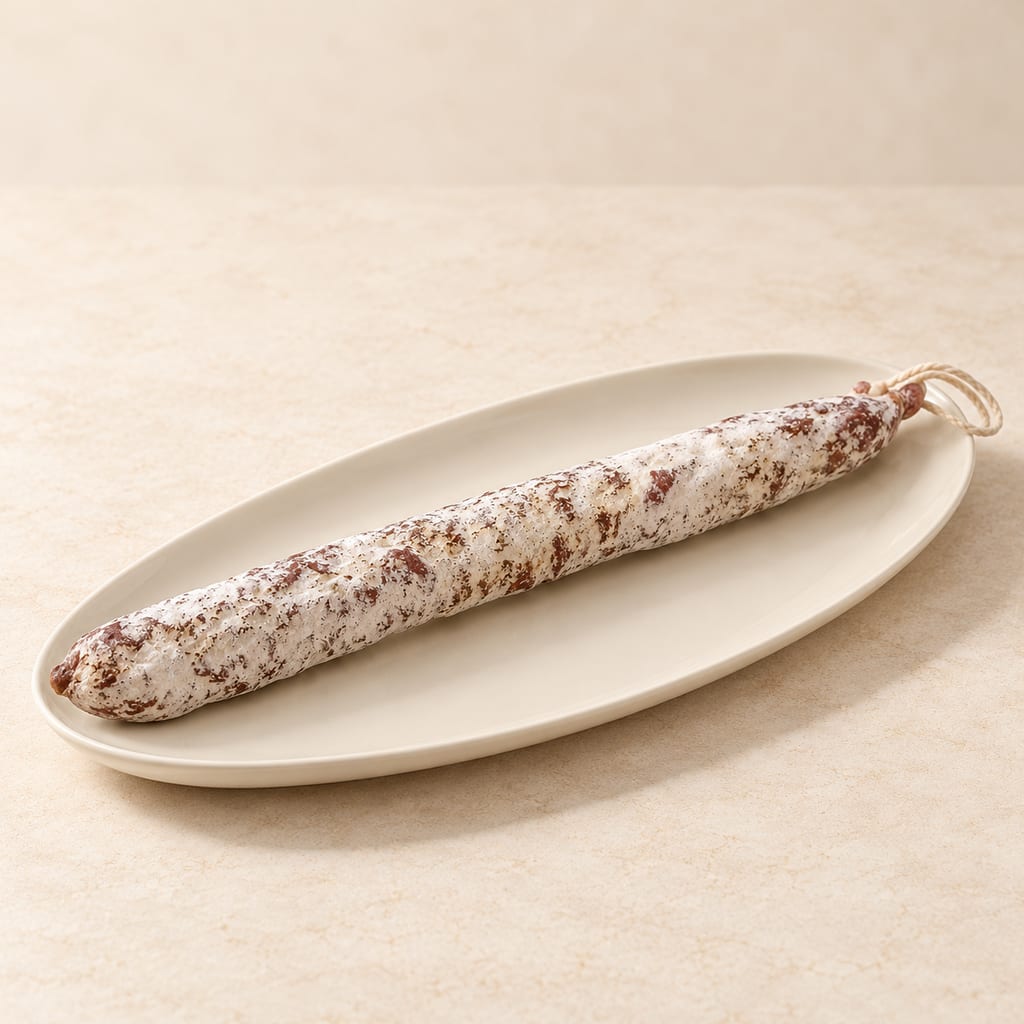
Fuet, starter-cultured
A documentary account of a modern starter-cultured Fuet formula and its place in Catalan sausage culture. The cited raw-pork process lacks matched safety validation, so this page does not present it as a household recipe.
 FermenteaWhere food goes to change
Spices and aromatics
White pepper is the ripe fruit of Piper nigrum with its outer fruit wall retted or stripped away, leaving a pale, smooth peppercorn. It seasons pale sauces and soups and three linked cured sausages.
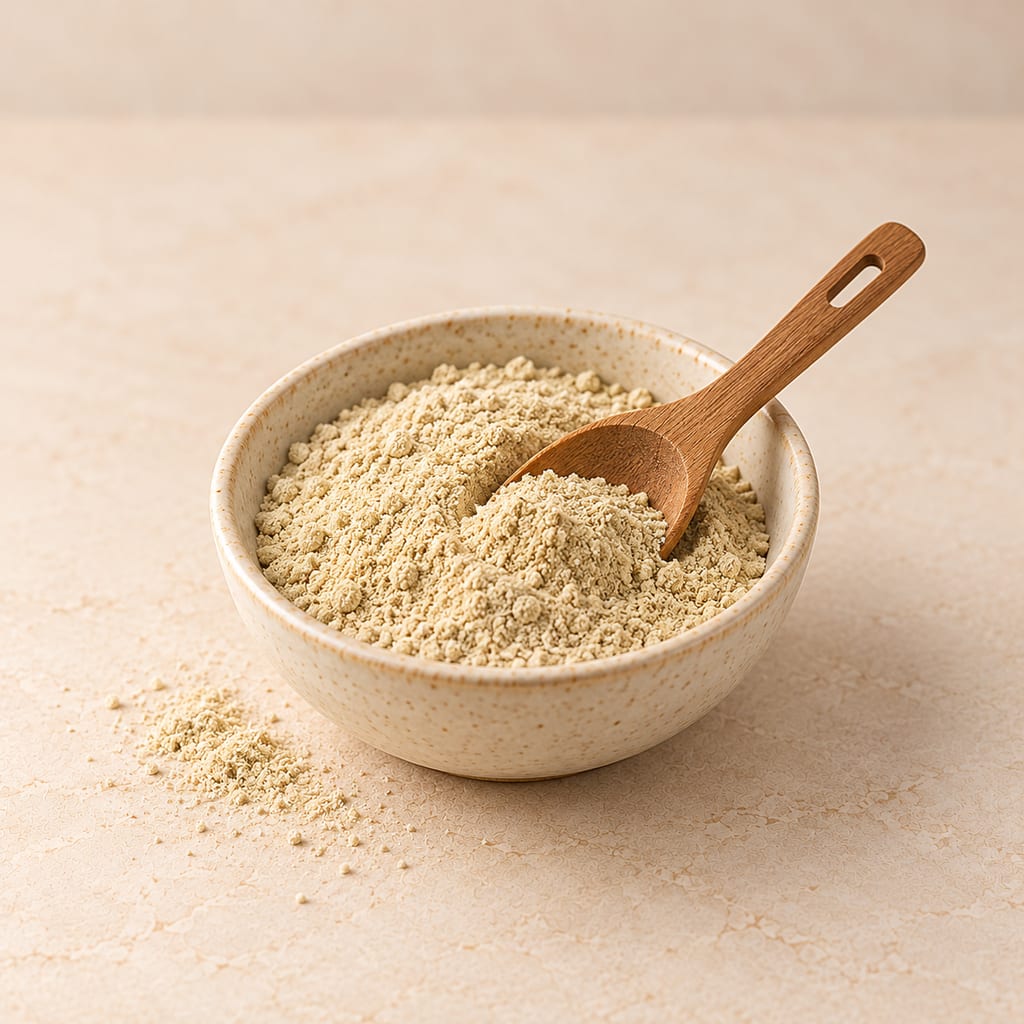
White pepper is the pale, dried fruit of the tropical pepper vine, Piper nigrum L. (Piperaceae), processed so its outer fleshy fruit wall (pericarp) is gone. It is not a separate species, and it is not just the bare seed: the peppercorn that remains keeps the seed with its inner layers. It is sold whole, cracked or ground. Codex describes whole white pepper as a smooth globe, 2.0 to 6.0 mm across, slightly flattened at one pole with a small protuberance at the other, and allows a colour range from matt grey through brown to pale ivory rather than a single paper white. It calls the flavour slightly sharp and very aromatic, and the package name is simply White Pepper.
One species gives several distinct products. Green pepper is taken from green berries and dried or preserved while still green. Black pepper is dried with its pericarp intact, which is why it is wrinkled and darker. White pepper has that outer layer removed. Codex treats all three as the berries of the same plant and accepts any commercially grown cultivar suited to processing. Pink pepper is usually the fruit of Schinus trees, in Anacardiaceae, and Sichuan pepper comes from Zanthoxylum, in Rutaceae; neither is white pepper or a variety of P. nigrum. Long pepper is another Piper species, Piper longum. These distinctions matter because older texts use the word pepper for more than one plant.
The vine climbs. Kew describes it as reaching 10 m or more, bearing spikes of small one-seeded berries that begin green and turn red as they ripen. Its cultivation belongs to the humid tropics, with its wild home in India's Western Ghats and later planting across other warm, wet regions. The colour on a spice shelf records what happened after the berry grew: green pepper is preserved while green, black pepper is dried with its fruit wall, and white pepper is taken to ripeness and then stripped. Kew's list of common names includes lada puteh, glossed as white pepper, and the white pepper of Indonesia's Bangka Belitung Islands is registered as Lada Putih Muntok.
Mediterranean writers knew a white pepper long before anyone described the modern process. In Book 12 of the Natural History, Pliny the Elder says that the pods open as they ripen to reveal a white pepper, and he judges white milder than black. He gives prices per pound: long pepper at fifteen denarii, white at seven and black at four. White pepper was therefore a dearer, gentler product than black in Roman markets. His pod-opening account does not match the decortication of ripe Piper nigrum berries, so the Roman white pepper cannot be assumed to be today's spice. What the passage does show is a trade category with its own price and its own reputation for mildness.
The crop's later history is told at the level of the plant, not of the pale grade. According to PROSEA the wild vine grows in the Western Ghats of Kerala, and dried pepper was already a flavouring in classical Rome. Pepper reached South-East Asia as early as 100 BC, carried by Hindu colonists, and Europe was a major importer by the twelfth century. Kew adds that medieval European pepper was valuable enough that peppercorns could stand in for money or be given as dowry; the phrase peppercorn rent preserves that reversal from a high price to a token one.
Pepper then spread to other islands and continents. PROSEA records its arrival in Sarawak early in the nineteenth century, where about 95% of Malaysia's crop is now grown, and the planting of the vine in the state of Para, Brazil, by Japanese immigrants about 1930. In the 1990s Sri Lanka and China overtook Malaysia in production, with Thailand and Vietnam also becoming large producers.
Within that history white pepper is a processing choice made at harvest. PROSEA notes that trade statistics usually join black and white pepper, and that the Indonesian island of Bangka has traditionally produced only white pepper while Lampung produces only black. White pepper from the Bangka Belitung Islands is registered as a geographical indication under the name Lada Putih Muntok, and the registration obliges the government and the community to protect the reputation of the product by looking after the environment it comes from. A 1985 World Bank agro-industry profile gives another reason for the pale grade: cooks use it in pale sauces partly to avoid black specks. Codex, for its part, describes white pepper's own flavour as slightly sharp and very aromatic, so the grade is valued for taste as well as colour.
White pepper begins with berries picked later than those for black pepper. PROSEA describes cutting spikes when a few fruits have turned red or yellow, while black pepper is cut while the fruit is still green. In the traditional method the spikes are lightly crushed, packed in sacks and soaked for seven to ten days, preferably in slow-running water. The fruit wall softens and breaks down, the berries are trampled loose from the spike, and washing and sieving remove the debris. The cleaned peppercorns dry in the sun for three to four days, during which the cream colour develops, and finish at about 10 to 14% moisture. Stagnant water is the known fault: it gives grey peppercorns with a musty smell. White pepper weighs about 26% of the fresh fruit, against about 33% for black.
The soak is retting, and it is a biological process as well as a physical one. Pectin and related compounds bind the pericarp to the kernel, and water, microbes and their enzymes loosen those bonds until the skin lets go. Codex lists soaking, washing, decorticating, drying and grading among the operations that may be used and does not fix their order, because different routes reach the same state. An Indian research institute describes a modern bioprocess in which a microbial culture grown on degraded pepper skin makes enzymes in the tank; circulated through the pepper, they cleave the pectin between skin and kernel in two days with green pepper and four with black.
The retting water is also where white pepper's best-known fault begins. Researchers working on site at a Thai plant in 2005 sampled pepper straight from a retting batch and measured 3-methylindole (skatole), 4-methylphenol and butanoic acid, compounds linked to the fecal and cheese-like notes that some white pepper powders carry. These compounds formed during retting. In model trials a short fermentation in water changed frequently, starting from fully ripe berries, gave pepper without substantial amounts of them and with a better-rated aroma than the traditional procedure. A companion study of an off-flavoured powder found 22 odour-active compounds, with skatole and 4-methylphenol the strongest, and 50 commercial powders varied in how strongly the note was present. A smell of this kind is a quality trait of the lot; it says nothing in either direction about microbial safety.
Controlled microbial decortication is the other route. Of 45 bacterial isolates from black pepper in an Indian study, seven stripped the pericarp, among them Bacillus subtilis and Bacillus licheniformis, and the isolates produced cellulase, pectinase, amylase, protease and xylanase. They decorticated 98 to 100% of fresh berries within five days of immersion in a bacterial suspension. The white pepper they made had no skatole, and piperine, oleoresin and essential oil stayed within acceptable ranges. These are laboratory and pilot systems; a pale peppercorn on a shelf may come from either them or the open soak.
What the stripping changes is the make-up of the spice. In PROSEA's analysed samples white pepper has 3.5 to 4.5 g fibre per 100 g against 9.7 to 17.2 g for black, and a larger starch fraction, 53.9 to 60.4 g against 25.8 to 44.8 g; its volatile oil is lower, 0.5 to 0.9% against 1.0 to 1.8%, and ash drops too. Piperine, the compound behind much of the bite, stays about the same, 5.5 to 5.9% against 4.9 to 7.7%. A 2024 study of one black and one white sample found piperine at 20.2 and 23.9 micrograms per milligram, and the sesquiterpene beta-caryophyllene as the largest volatile in both, at 82% of volatiles in black and 59% in white. So the pale grade is hot in the same way as black pepper but carries less of the aromatic oil of the fruit wall. Codex sets its own floors: class I whole white pepper needs at least 4.0% piperine, a bulk density of 600 g/l, and no more than 12% moisture and 3.5% total ash on a dry basis.
White pepper seasons three linked cured sausages on the site, and each treats it differently. The Genoa-style salami uses 2 g ground white pepper with 10 g whole peppercorns in a one-kilogram mixture of meat and fat. The fuet formula uses 5 g white pepper with garlic and white wine, again for one kilogram of pork and back fat. In the Thai sai krok Isan adaptation, 10 g white pepper goes in with 8.4 g black pepper, cooked rice, garlic, cilantro and lime leaves. In all three the pepper supplies pungency and aroma; the lactic starter does the souring, rice or dextrose is the sugar it feeds on, and salt and curing ingredients carry the preservation.
Pepper is not inert toward the starter. In a meat-simulation medium with the pH profile of Belgian-type fermented sausage, pepper slowed the maximum growth rate of Lactobacillus curvatus LTH 1174, a sausage isolate, yet 0.80% white pepper raised the maximum cell density the culture reached, and pepper stimulated its lactic acid production, an effect that the manganese in pepper did not explain. This is a laboratory model of one strain rather than a measurement in a sausage, and the authors conclude that spices change how well bacteriocin-producing starter cultures work. The quantities in the three formulas are therefore part of the recipe, not a matter of taste alone.
Outside the sausage, white pepper is a seasoning for pale sauces, soups and dishes where black specks would show. It also changes what a diner tastes. In a 2023 sensory study, the aroma detection threshold of white pepper was first found with 60 panellists, and pepper at that threshold was then put in a low-sodium soup tasted by 76. Saltiness ratings rose on one intensity scale, but descriptive tests showed peppery, bitter and sour notes and a strong aftertaste, and overall liking fell. White pepper acted as a distinct seasoning, not as a quiet replacement for salt, and the choice between white and black pepper is a choice of flavour as well as colour.
Buy white pepper in the form the dish needs. Whole corns keep their aroma until they are cracked or ground, and the grade tells you about cleanliness: class I whole white pepper allows at most 1.0% light berries and 5.0% black berries, class II 2.0% and 7.5%, class III 2.0% and 10.0%. Ground white pepper has its own Codex limits, including at most 13% moisture, 3.5% total ash and 0.3% acid-insoluble ash, and at least 4.0% piperine on a dry basis. A package should name the product as White Pepper, may give the style, grade, variety and country of origin, and carries storage instructions.
Aroma fades once the pepper is ground. Fresh white pepper powder stored for up to seven months lost its typical odour while the fecal note became more noticeable, because the key off-odour compounds stayed in place as more volatile aromatic compounds such as alpha-pinene were lost. The study did not compare whole peppercorns with powder. Keep the spice dry and closed, away from heat, light and moisture, and grind small quantities when the aroma matters. Smell, heat and appearance are quality cues; they do not show whether a lot is microbiologically sound, and damp storage can allow mould. Codex asks that low-moisture spices be handled under the hygiene code for low-moisture foods and meet its contaminant and pesticide limits. Cross-contact information, where a producer gives any, is on the packet label.
The wild range of Piper nigrum is not settled by the botanical sources. PROSEA and the species profile at Kew place the wild vine in the Western Ghats of India, while Kew's top-level native-range field lists Sri Lanka. The first production of modern decorticated white pepper is undated in these sources, and the Roman white pepper's identity with it is unproven. The Thai retting data and the bacterial decortication study describe specific plants and cultures, so they illustrate the mechanism rather than the practice of every producer.
PROSEA and Kew’s species profile associate the crop with this region; Kew’s top-level native-range field disagrees.
Research processing location, not origin of every white pepper lot.
PROSEA describes Bangka as traditionally producing only white pepper; the registered name is Lada Putih Muntok.
A documentary account of a modern starter-cultured Fuet formula and its place in Catalan sausage culture. The cited raw-pork process lacks matched safety validation, so this page does not present it as a household recipe.
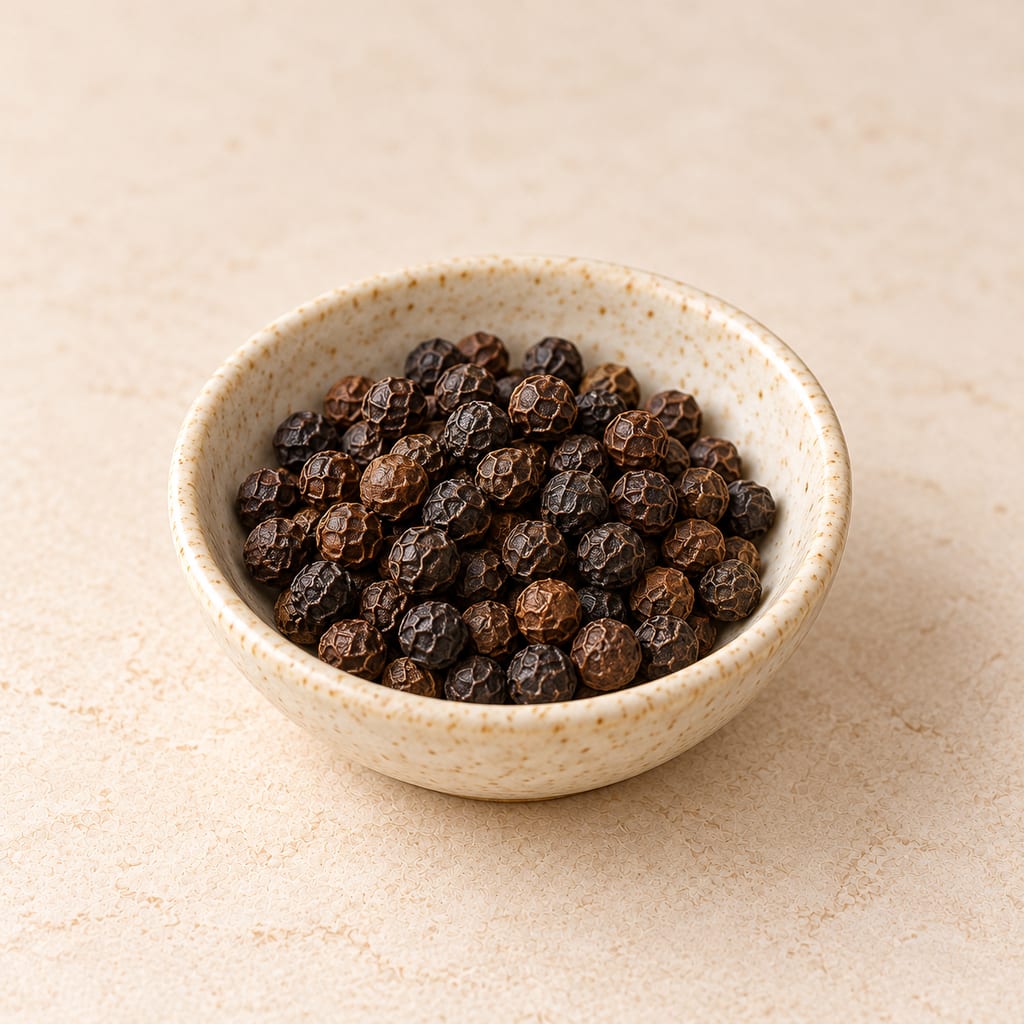
Whole peppercorns are the dried, uncracked berries of Piper nigrum, sold with their pungent seed intact. They season cured sausages such as Genoa-style salami and soppressata di Calabria beside a ground pepper.
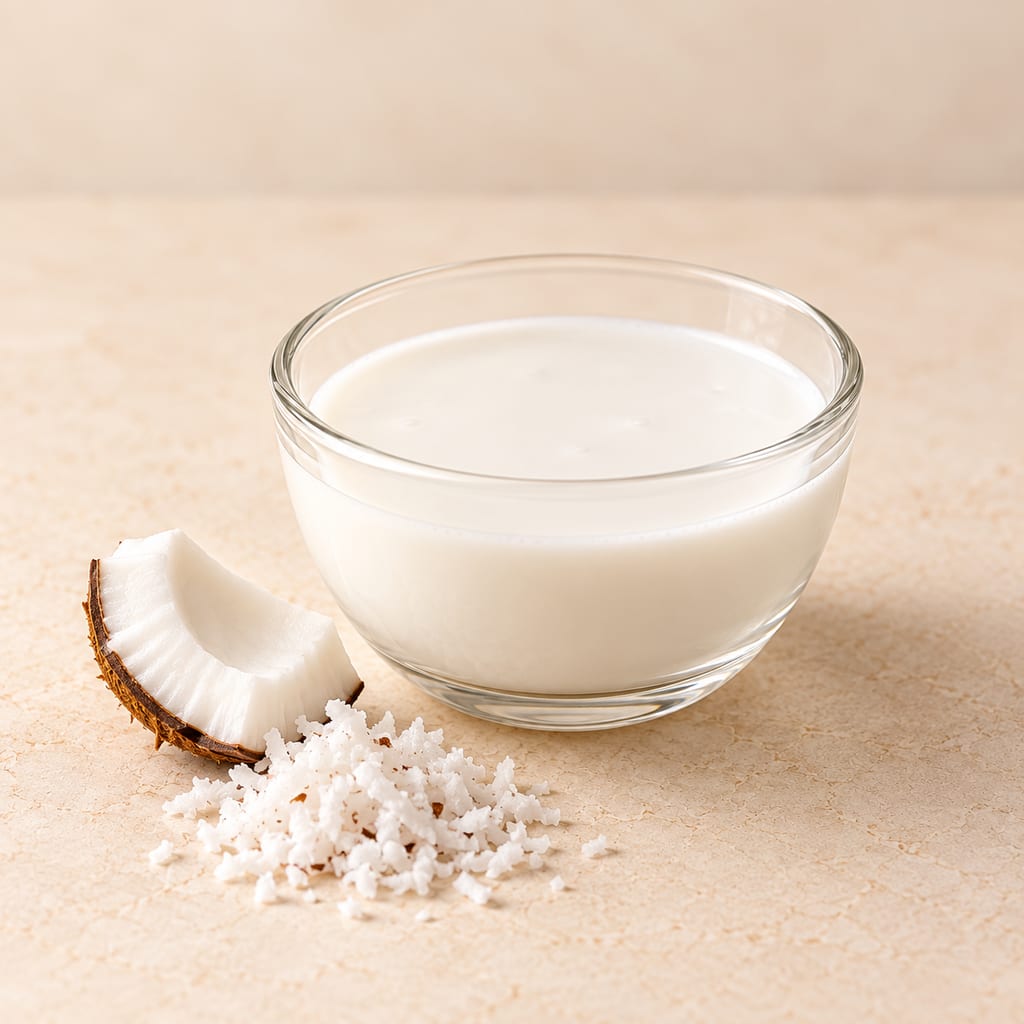
Coconut milk is an aqueous emulsion extracted from mature coconut kernel, sold fresh, packaged or reconstituted. It is distinct from the liquid naturally inside a coconut.
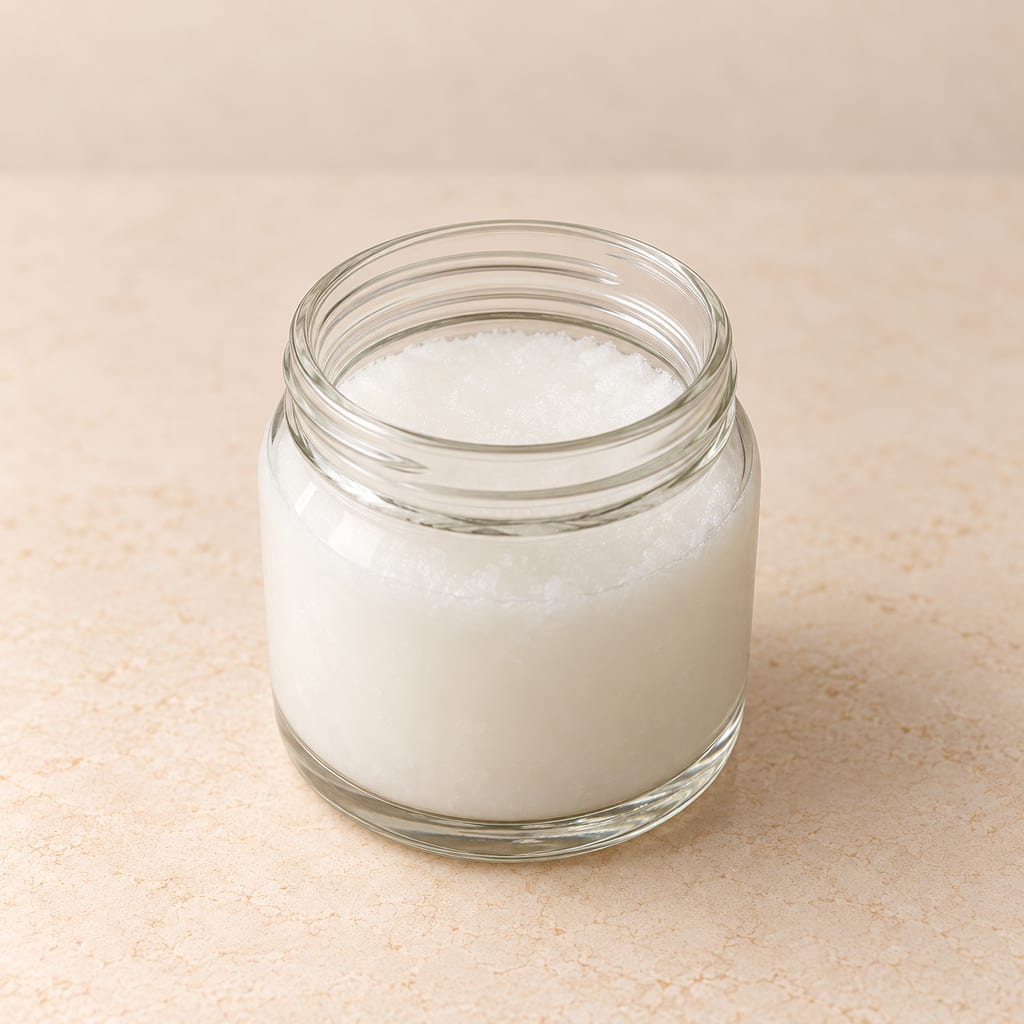
Fat pressed or separated from the kernel of a mature coconut: solid below about 25 °C, mostly saturated and half lauric acid, sold virgin, refined or hydrogenated.
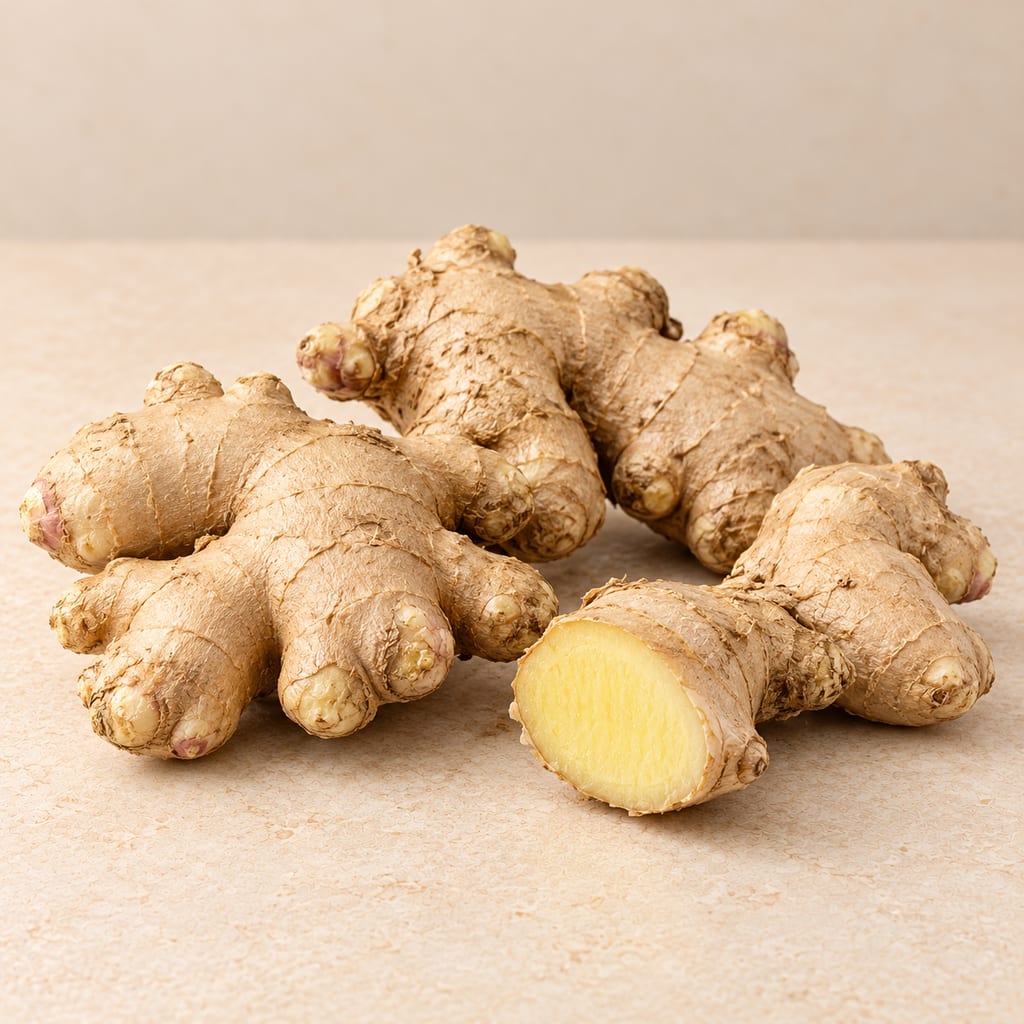
Ginger is the aromatic rhizome of Zingiber officinale, used fresh, dried and preserved. Historical ginger wines sliced or bruised it to flavour a sugar-based ferment.
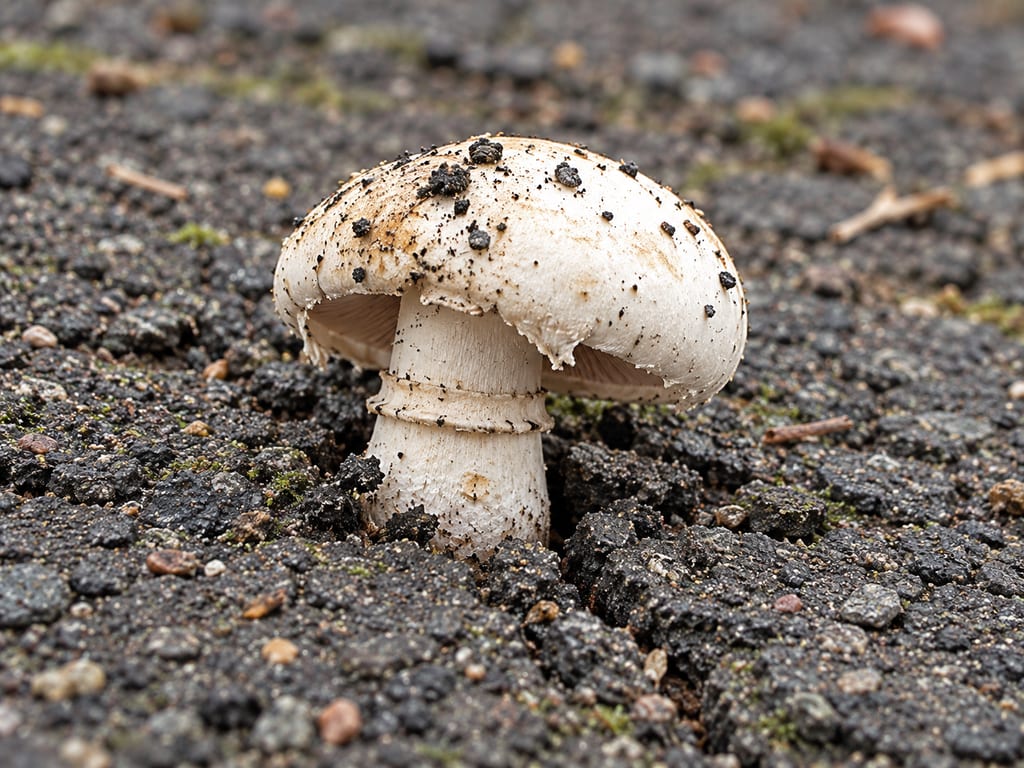
Agaricus bitorquis is a firm edible mushroom known for fruiting in hard, disturbed ground and for its persistent double ring. It is also cultivated in warmer conditions than the common button mushroom.
Rice flour is ground, non-waxy rice used in breads, batters and noodles. Its particle size, milling and rice variety shape how it absorbs water and sets when cooked.
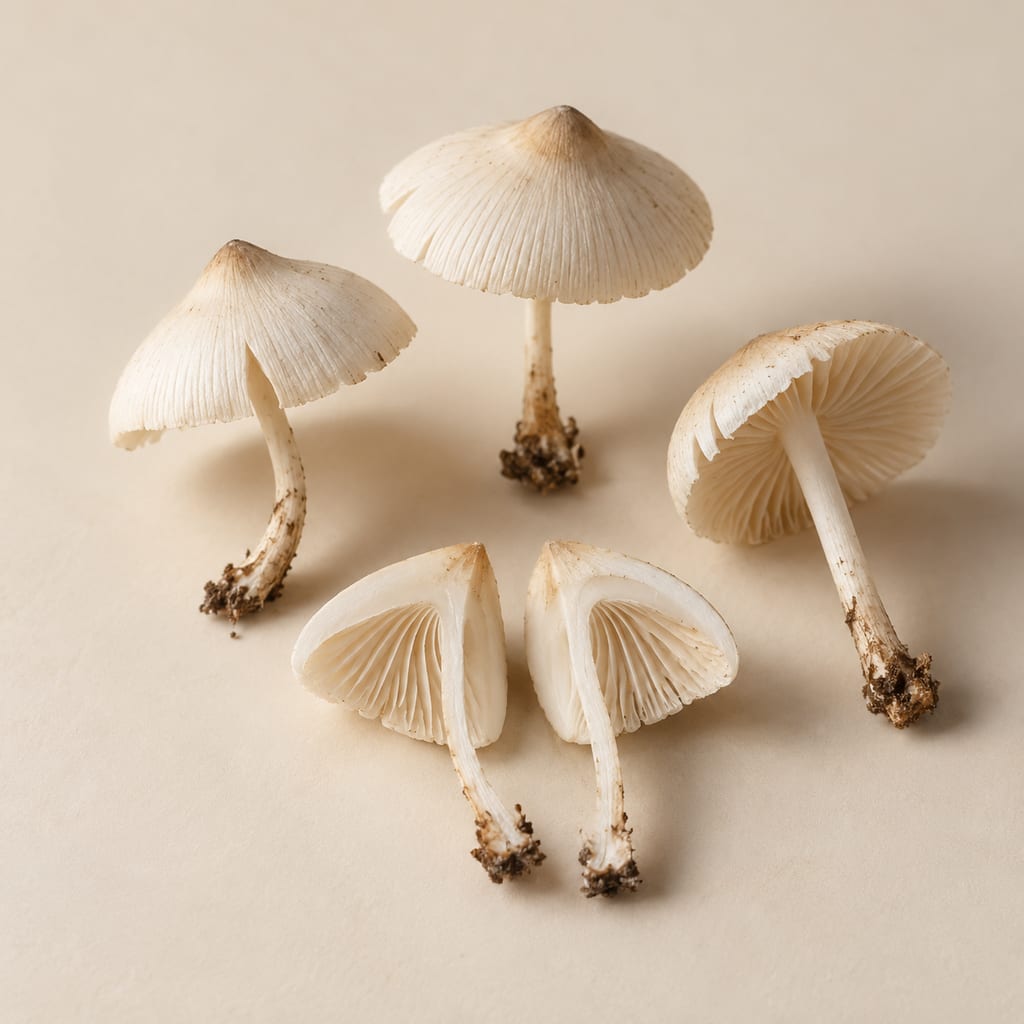
A small wild termite-associated mushroom recorded as food in parts of India and elsewhere. Its name has a taxonomic history, and some African records are treated cautiously because they may represent a different lineage.
No community contributions have been published for this entry yet.
Sign in to contribute. Published comments and photos are free to read.
Codex Alimentarius CommissionIdentity · Quality
Standard for Black, White and Green Peppers CXS 326-2017Definition of white pepper as berries with pericarp removed; styles; colour, odour and flavour; size and shape; grade limits for bulk density, moisture, ash and piperine; labelling name.
Cited in: The fruit behind three pepper colours; A Roman category and a traded crop; From ripe berry to pale peppercorn; Choosing and keeping the spice
Kew ScienceBotany · History
Piper nigrum L.Accepted taxon, climbing vine and species profile; internal native-range discrepancy recorded.
Cited in: The fruit behind three pepper colours; A Roman category and a traded crop; Choosing and keeping the spice; Notes and open questions
PROSEA FoundationHistory · Geography
Piper nigrum L., Plant Resources of South-East AsiaWild pepper in the Western Ghats of Kerala; arrival in South-East Asia by 100 BC; Europe a major importer by the 12th century; Sarawak early in the 19th century; Brazil about 1930; 1990s production shifts; black versus white composition; traditional white pepper retting and drying, yields; Bangka white-only production.
Cited in: The fruit behind three pepper colours; A Roman category and a traded crop; From ripe berry to pale peppercorn; Choosing and keeping the spice; Notes and open questions
Pliny the ElderHistory
Natural History, Book XII, sections 26-29 (Latin text)Roman-era trade category called white pepper (candidum piper), appearing as pods open on ripening, milder than black; prices per pound for long, white and black pepper.
Cited in: A Roman category and a traded crop; Notes and open questions
World BankHistory · Processing
Spices and Essential Oils, FAU-191985 pepper processing and market profile, historically bounded.
Cited in: A Roman category and a traded crop; In the sausage and in the soup
CSIR-NIISTProcessing
Process for preparation of White PepperInstitutional enzyme-mediated industrial decortication profile.
Cited in: From ripe berry to pale peppercorn
Journal of Agricultural and Food ChemistryScience · Processing
Role of the Fermentation Process in Off-odorant Formation in White PepperSteinhaus and Schieberle 2005, on-site trial at a Thai plant: 3-methylindole, 4-methylphenol and butanoic acid formed during retting; short fermentation with frequent water changes from fully ripe berries gave better aroma than the traditional method.
Cited in: From ripe berry to pale peppercorn
Journal of Agricultural and Food ChemistryScience · Handling
Characterization of Odorants Causing an Atypical Aroma in White Pepper Powder22 odour-active compounds in an off-flavoured white pepper powder; 3-methylindole and 4-methylphenol highest; 50 commercial powders compared; powder stored up to 7 months lost typical aroma and gained a fecal note.
Cited in: From ripe berry to pale peppercorn; Choosing and keeping the spice
Applied and Environmental Microbiology (Verluyten, Leroy and De Vuyst, 2004)Science
Effects of different spices used in production of fermented sausages on growth of and curvacin A production by Lactobacillus curvatus LTH 1174In vitro meat-simulation medium with a Belgian-type pH profile: pepper lowered the maximum growth rate of one L. curvatus strain; 0.80% (wt/vol) white pepper raised maximum biomass; pepper stimulated lactic acid production, not explained by manganese.
Cited in: In the sausage and in the soup
Journal of Applied MicrobiologyProcessing
Isolation, characterization and identification of pericarp-degrading bacteria45 pepper-associated bacterial isolates, 7 decorticated; fresh berries 98-100% decorticated within 5 days; no skatole; piperine, oleoresin and essential oil unchanged.
Cited in: From ripe berry to pale peppercorn
RSC AdvancesScience
Assessment of metabolome diversity in black and white pepper2024 NMR and GC-MS comparison of one black and one white pepper sample: piperine 20.2 versus 23.9 micrograms per milligram; 52 volatiles, beta-caryophyllene 82% versus 59%.
Cited in: From ripe berry to pale peppercorn
Journal of Sensory StudiesScience · Use
Effect of white pepper addition on the sensory perception of sodium-reduced soup2023 sensory study: aroma detection threshold of white pepper (60 panellists), then pepper at threshold in low-sodium soup (76 panellists); saltiness rating rose on one scale, overall liking fell.
Cited in: In the sausage and in the soup
2 Guys & A CoolerUse
Genoa SalamiWhite pepper and whole peppercorns in one-kilogram Genoa-style salami formula.
Cited in: In the sausage and in the soup
2 Guys & A CoolerUse
Fuet SalamiWhite pepper, garlic and wine in one-kilogram fuet formula.
Cited in: In the sausage and in the soup
2 Guys & A CoolerUse
Thailand’s Sai Krok IssanWhite and black pepper in one-kilogram rice-and-pork sausage formula.
Cited in: In the sausage and in the soup
IOP Conference Series: Earth and Environmental ScienceGeography · History
Geographical indication protection for pepper: its environmental implications for Bangka Belitung IslandsWhite pepper from the Bangka Belitung Islands is registered as a geographical indication under the name Lada Putih Muntok.
Cited in: The fruit behind three pepper colours; A Roman category and a traded crop