
Arabushi (smoke-dried bonito)
Japanese skipjack tuna cooked, then repeatedly smoked and dried over a wood fire by the hand-fired tebiyama method into a hard block for shaving into dashi: the first stage of katsuobushi.
 FermenteaWhere food goes to change
Modern method
Highland Scramble
Softly scrambled eggs enriched with cream and butter, served with cold-smoked salmon, chives, lemon and sourdough toast as a British breakfast dish.
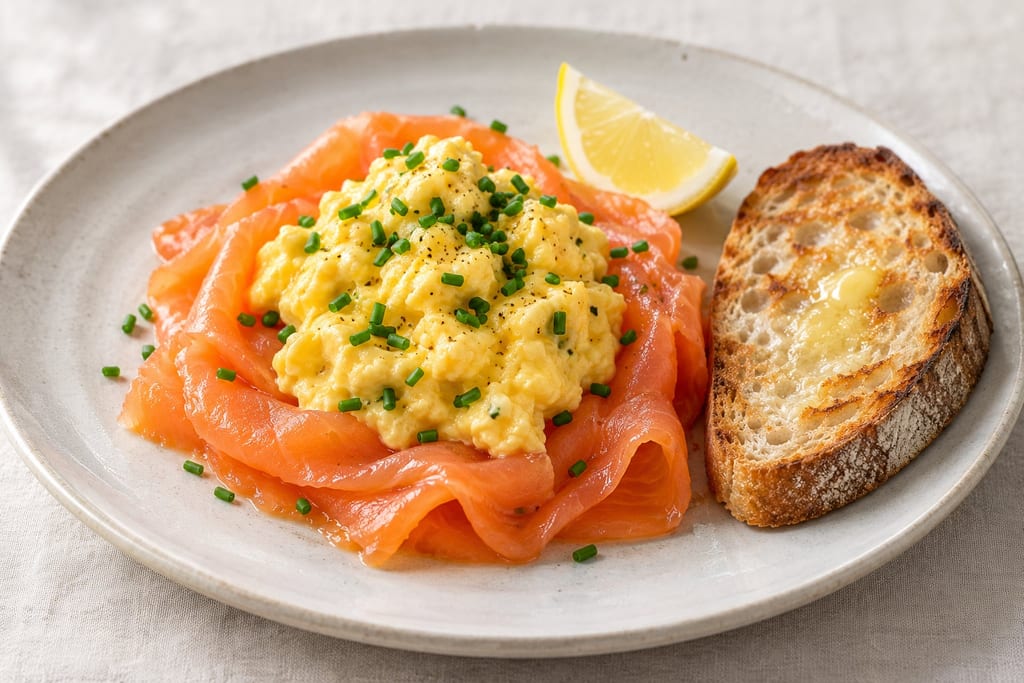
Highland scramble is a rich breakfast or brunch dish that combines softly scrambled eggs with smoked salmon, butter, double cream, sourdough toast, chives and lemon.
The presentation is distinctive. Thin slices of smoked salmon are arranged into a loose nest on each plate, and the warm scrambled eggs are placed in the centre. Chopped chives finish the dish, while buttered toast and a lemon wedge are served alongside.
The recipe is published by Fortnum & Mason and associated with The Fortnum's Cook Book by Tom Parker Bowles.
It is a contemporary culinary preparation, not a documented ancient Highland recipe.
Its name evokes the longstanding connection between Scotland and smoked salmon, while the cooking method draws on the wider British tradition of scrambled eggs served for breakfast.
Unlike a dish in which salmon is cooked directly into the eggs, the published Highland scramble keeps the two components largely separate until serving.
That distinction has consequences for texture, presentation and food safety.
Highland scramble — Name of the published Fortnum & Mason dish
Scrambled eggs — Eggs gently stirred during cooking to create soft curds
Scottish smoked salmon — Smoked salmon associated with Scottish production
Cold-smoked salmon — Cured and smoked salmon that has not necessarily been fully cooked
Hot-smoked salmon — Salmon cooked during a hot-smoking process
The salmon is ordinarily Atlantic salmon, Salmo salar.
Smoked salmon may also be produced from other salmon species, depending on the origin and producer.
The source specifies smoked salmon without giving a particular species, fishery, smoking temperature or curing process.
Those details must therefore be established from the purchased product rather than assumed from the dish's name.
Scotland has a long history of salmon fishing.
Atlantic salmon migrate between the ocean and freshwater rivers, and the fish became economically and culturally significant in several Scottish regions.
Preservation methods including salting and smoking allowed fish to be stored and distributed beyond the immediate fishing area.
Modern Scottish smoked salmon is also a specialised commercial food, with products differing in sourcing, curing, wood selection, smoke treatment and slicing.
The popularity of thinly sliced cold-smoked salmon developed alongside commercial processing and the growth of delicatessen and hospitality markets.
The modern dish combines this preserved fish with scrambled eggs, a breakfast preparation used well beyond Scotland.
The name Highland scramble should not be interpreted as evidence that people in the Scottish Highlands historically served eight eggs and 250 g of smoked salmon in the exact proportions printed by Fortnum & Mason.
Those figures belong to the published contemporary recipe.
The dish is valuable as an example of how a regional preserved ingredient can be presented within a modern breakfast tradition.
The temperature of smoking matters.
Cold smoking exposes cured salmon to smoke without necessarily cooking the flesh thoroughly.
Cold-smoked salmon often retains a relatively soft, translucent texture and is sliced thinly.
Hot smoking uses sufficient heat to cook the fish during the smoking process.
Hot-smoked salmon generally has a more opaque and flaky texture.
The two products can also differ in moisture content, surface appearance and flavour intensity.
For the original Highland scramble, thinly sliced smoked salmon is most consistent with the published presentation.
The source arranges it in a nest around the eggs rather than flaking cooked fish through the mixture.
However, a cook must check the product label to identify whether the fish is ready to eat and whether it has been cold- or hot-smoked.
The word smoked does not by itself establish that the fish has undergone a safe cooking treatment.
Salmon flesh contains proteins, water and fat.
Salt curing alters the distribution of water and dissolved substances within the fish.
Salt can change muscle-protein properties and contribute to a firmer texture.
Dry curing and brining do not necessarily produce identical results.
The eventual degree of salting depends on the producer's process.
Smoking then introduces aroma compounds from wood smoke.
Phenolic compounds are important contributors to smoky flavour.
Other compounds influence surface colour and aroma.
Cold smoking may also remove some moisture, depending on the operation.
These changes create the distinctive cured texture of the salmon.
Nevertheless, curing and cold smoking do not reliably eliminate every pathogenic organism.
The finished product should be handled according to its safety classification and producer instructions.
Eggs contain proteins that coagulate when heated.
Raw egg whites and yolks have fluid structures maintained by water and dissolved or dispersed components.
Heat causes proteins to unfold.
As heating continues, interactions between the proteins create a network that changes the liquid into a soft or firm mass.
Scrambling interrupts this process through stirring.
Instead of a single continuous set mass, the cook produces many soft curds.
The curds become firmer as cooking continues.
Excessive heating can produce a dry, rubbery result.
The recipe therefore uses gentle final heat and removes the pan before the eggs appear completely finished.
Residual heat continues cooking them after the pan leaves the stove.
The source combines 80 ml double cream and 40 g butter before adding the eggs.
These ingredients create a particularly rich cooking environment.
Fat influences the mouthfeel of the final dish.
Cream also contributes water, milk proteins and other constituents.
The cream-and-butter mixture changes how the eggs move and coat the pan as they heat.
It helps create a soft, smooth impression when cooking is controlled.
However, it does not prevent eggs from overcooking.
If the pan is excessively hot or the eggs remain over the heat too long, they can still become firm and dry.
Nor does adding cream make lightly cooked eggs microbiologically safe for every diner.
The culinary texture and safety endpoint must be considered separately.
Original published quantities, arranged for four servings.
The source prefers Burford Brown eggs, but that preference is not essential to the identity of the dish.
The extra butter used for toast is not quantified.
No milk, grated cheese or additional herbs are specified.
The eggs provide the principal hot component of the dish.
Their protein-rich structure creates soft curds during controlled cooking.
Cream makes the eggs especially rich and influences their texture.
Butter contributes flavour and fat to the cooking mixture. Additional butter is used on toast.
Salmon supplies salt, smoke aroma, fat and the contrasting cool or room-temperature smoked-fish texture.
Chives, Allium schoenoprasum, contribute a mild onion-like aroma and fresh green colour.
Toasted sourdough supplies structure and a firm surface for eating the eggs and salmon.
The original source specifies sourdough, but it does not specify a starter culture, flour type or fermentation duration for the bread.
Lemon contributes citric acid and citrus aroma.
The acidity balances the richness of the eggs, cream, butter and salmon.
Use a heavy-based saucepan or frying pan, bowl for beating eggs, heatproof spatula, whisk or fork, toaster and four serving plates.
A heavy-based pan helps distribute heat relatively evenly.
A flexible spatula can move the eggs gently across the pan without breaking the curds more than necessary.
Keep the smoked salmon refrigerated until needed.
Prepare the serving plates before the eggs are finished, because the scrambled eggs are best served immediately.
Measure 80 ml double cream and 40 g butter.
Beat the 8 eggs lightly.
Chop the chives to obtain 1 tablespoon.
Divide the 250 g smoked salmon into four serving portions.
Prepare the 4 lemon wedges.
Toast 4 slices sourdough.
Apply extra butter as desired.
The source gives no weight for the toast butter.
Keep the toast ready for serving.
Place the smoked salmon on four clean serving plates.
Arrange the slices in loose nests, leaving space in the middle for the eggs.
The published recipe describes this as a separate assembly stage after the eggs are cooked, but the plates can be readied during preparation to avoid delay.
Keep the salmon safely chilled until close to serving.
Pour 80 ml double cream into the heavy-based pan.
Bring it to the boil.
The source does not specify a heating duration or a numerical pan temperature.
Add the 40 g butter.
Heat until the mixture becomes foamy.
The butter should disperse into the hot cream.
Add salt and freshly ground white pepper.
Neither quantity is specified.
Smoked salmon can already be salty, so the seasoning should be considered in the context of the whole dish.
Turn the heat to low before adding the beaten eggs.
This gives greater control over coagulation.
Pour the lightly beaten eggs into the cream-and-butter mixture.
Begin stirring with a heatproof spatula.
Continue moving the eggs across the base of the pan.
Soft curds should form as the mixture heats.
The goal is a tender, creamy result rather than a firm omelette-like mass.
The source recommends removing the pan from the heat approximately one minute before the eggs appear fully done.
Residual heat continues changing the structure of the eggs.
This is a culinary instruction, not a measured food-safety standard.
Spoon the soft scrambled eggs into the centres of the salmon nests.
Divide the eggs evenly between the four plates.
Scatter the 1 tablespoon chopped chives over the portions.
Serve immediately with the buttered sourdough toast and a lemon wedge on each plate.
The source does not specify a holding time.
Separating the salmon and eggs preserves two distinct textures.
The fish remains recognisable as thin slices.
The eggs retain their soft curds.
This creates a visual contrast between orange-pink salmon and golden scrambled eggs.
The chives provide a third colour.
Combining the smoked salmon directly into hot eggs would produce a different dish.
The fish could heat and become firmer.
It might also release salt and moisture into the eggs.
That can still be delicious, but it is a variation rather than the published Fortnum & Mason presentation.
The separation also creates an important food-safety distinction: the salmon in the original plating method is not reliably cooked by contact with the scrambled eggs.
For higher-risk diners, use an appropriately cooked fish preparation rather than assuming that warm eggs make cold-smoked salmon safe.
A heavy pan stores thermal energy.
Even after it is removed from the stove, heat continues transferring from the metal into the eggs.
The protein network therefore continues changing.
If the eggs are already fully firm when the pan is removed, they may become excessively cooked before plating.
This is why the recipe emphasises stopping slightly early for the intended creamy texture.
The effect varies with pan material, egg quantity and the temperature reached.
The source does not define a precise second-by-second procedure.
Cooks need to distinguish between judging culinary consistency and verifying a suitable food-safety endpoint.
A conventional scrambled-egg breakfast may use milk, butter or no dairy at all.
Some methods begin with eggs in a cold pan.
Others use very gentle heating over a water bath.
The Fortnum & Mason recipe begins by boiling cream, melting butter and then adding beaten eggs over reduced heat.
This produces a particular cooking sequence.
The smoked salmon is served as a structured accompaniment rather than mixed through the eggs.
Chives, toast and lemon complete the combination.
These features distinguish the named dish from a general plate of scrambled eggs with smoked salmon.
A commercially cured and smoked Scottish salmon is the ingredient most closely associated with the name Highland scramble.
Different producers may use different salting, smoke and slicing methods.
Fully cooked hot-smoked salmon can be flaked and served with scrambled eggs.
Its texture is different, and the plating may need to change.
This is particularly relevant when preparing the dish for diners who must avoid cold-smoked fish that has not been thoroughly cooked.
Smoked trout offers a related but distinct fish preparation.
Its flavour and fat content differ from salmon.
The eggs can be cooked more thoroughly for diners who require that approach.
The texture will be less creamy than the original version.
Rye or another substantial bread may be substituted for sourdough.
However, the published recipe specifies four toasted sourdough slices.
These variations are culinary adaptations rather than historical regional recipes.
The dish is best served immediately.
The fish and eggs can be eaten together to balance the smoke flavour with the creamy richness of the scramble.
A little lemon juice can be squeezed over the salmon.
Butter on the toast adds another layer of richness.
The toast also provides a firm contrast to the soft eggs.
As a breakfast or brunch dish, it can stand on its own.
It does not require a separate sauce.
Because the combination is already rich and savoury, the original recipe avoids adding strong competing seasonings.
Successful scrambled eggs should be soft and cohesive rather than separated into dry granules.
Cream and butter should be incorporated into the mixture.
The salmon should retain its intended texture and aroma.
Chives should remain green and fresh.
The toast should be crisp enough to support the food.
The dish should be assembled promptly.
A large puddle of watery liquid beneath the eggs may indicate excessive heating, separation or problems with the mixture.
The salmon should never display an unexpected spoiled odour.
Eggs become rubbery. Heat may have been excessive or the eggs cooked too long.
Eggs remain excessively liquid. They may need further cooking, particularly when serving diners who require fully cooked eggs.
The scramble becomes greasy. Butter may not have incorporated evenly, or the mixture may have separated.
The salmon tastes overwhelmingly salty. Products differ in curing intensity. Avoid excessive seasoning of the eggs.
The toast becomes soggy. It may have been assembled too early or exposed to excess moisture.
The eggs cool before serving. Prepare the plates and accompaniments before finishing the scramble.
The salmon has a strong abnormal odour. Reject the product rather than concealing it with lemon.
Cold-smoked salmon may carry Listeria monocytogenes.
This is particularly important for pregnant people, older adults and people with weakened immune systems.
Food Standards Scotland advises higher-risk individuals to avoid ready-to-eat cold-smoked or cured fish unless it has been thoroughly cooked.
Placing cold-smoked salmon under a portion of hot scrambled eggs is not a validated cooking treatment.
For these diners, use thoroughly cooked fish and handle it safely.
Egg safety also requires attention.
People in higher-risk groups should follow current official advice on lightly cooked eggs and appropriate British Lion or Laid in Britain assurances.
The dish contains fish, egg, milk and gluten-containing bread unless suitable substitutions are used.
Keep ingredients refrigerated until preparation and serve promptly.
Neither the smoked salmon nor the assembled meal should be treated as shelf-stable.
The published Highland scramble is a modern recipe associated with Tom Parker Bowles and Fortnum & Mason.
Scottish smoked-salmon traditions have a longer history, but the dish's exact proportions are not documented as an old Highland household preparation.
The source gives precise ingredients and assembly instructions but no numerical egg cooking time or finished temperature.
Those gaps should remain as published.
The recipe is best understood as a contemporary celebration of a preserved fish within the British breakfast tradition.
Fortnum & Mason presents this as a contemporary recipe from The Fortnum’s Cook Book by Tom Parker Bowles. The source does not establish a first attestation or a London Cure connection.
Yield 4 servings · Scaling: source batch only
The recipe places smoked salmon uncooked on the serving plates, but does not identify its smoke style or whether it is a ready-to-eat cold-smoked/cured product. FSS’s Listeria guidance applies only if it is in that category; the softly set eggs do not establish that the salmon was cooked.
Hazard sourceCheck the product label and manufacturer storage instructions. If the salmon is ready-to-eat cold-smoked or cured fish, follow current FSS advice: pregnant people and people with weakened immune systems should avoid it; older adults should follow use-by dates, keep it refrigerated below 5°C and consider safer alternatives. FSS says fish in this category used in scrambled eggs should be cooked first, since warming it during meal preparation may not be enough. The recipe does not supply a fish-cooking step.
Control sourceThe recipe places smoked salmon uncooked on the serving plates, but does not identify its smoke style or whether it is a ready-to-eat cold-smoked/cured product. FSS’s Listeria guidance applies only if it is in that category; the softly set eggs do not establish that the salmon was cooked.
No household process or product-specific safety validation is provided.
The Fortnum & Mason recipe does not identify where this dish was prepared or where its generic smoked salmon was produced.
Japanese skipjack tuna cooked, then repeatedly smoked and dried over a wood fire by the hand-fired tebiyama method into a hard block for shaving into dashi: the first stage of katsuobushi.
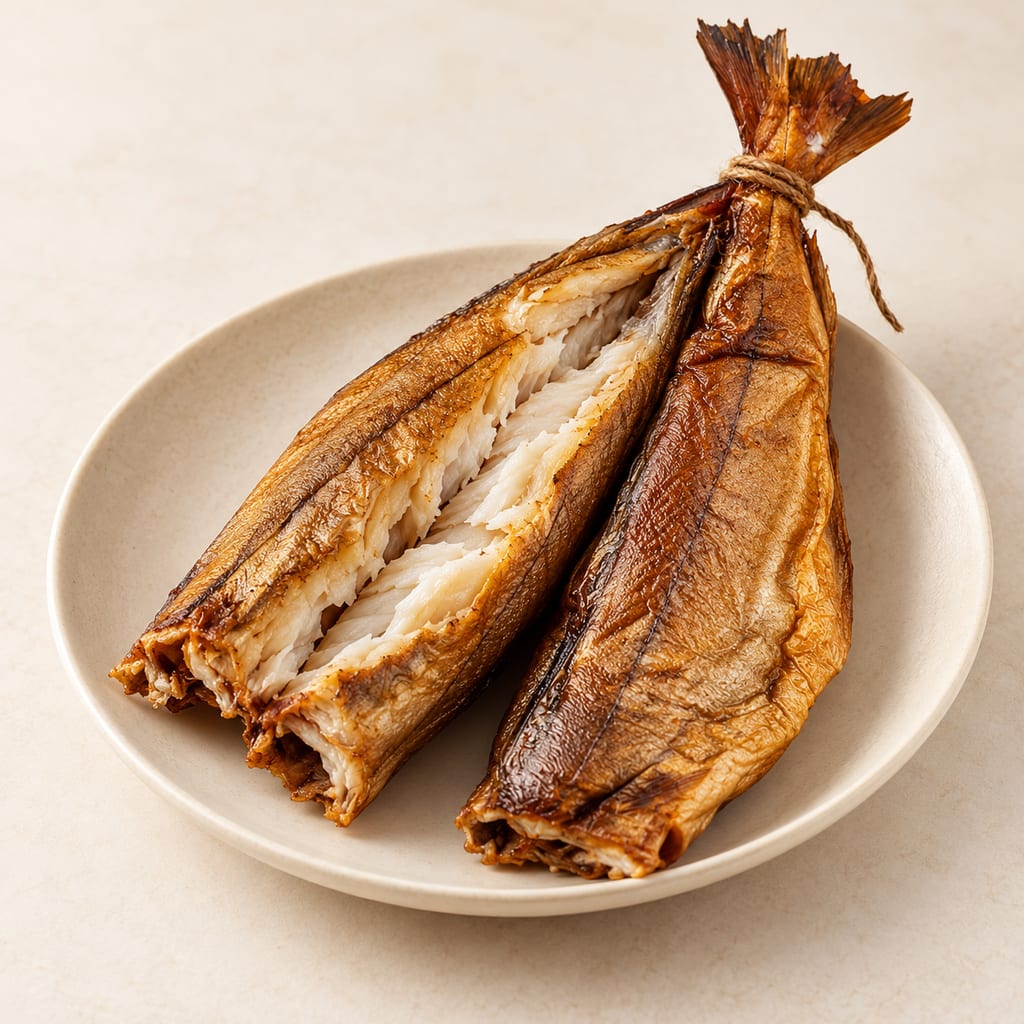
Arbroath smokies are whole haddock dry-salted, paired by the tail and hot-smoked in a protected coastal area. Their recorded history links Auchmithie and Arbroath, though the exact origin is unsettled.
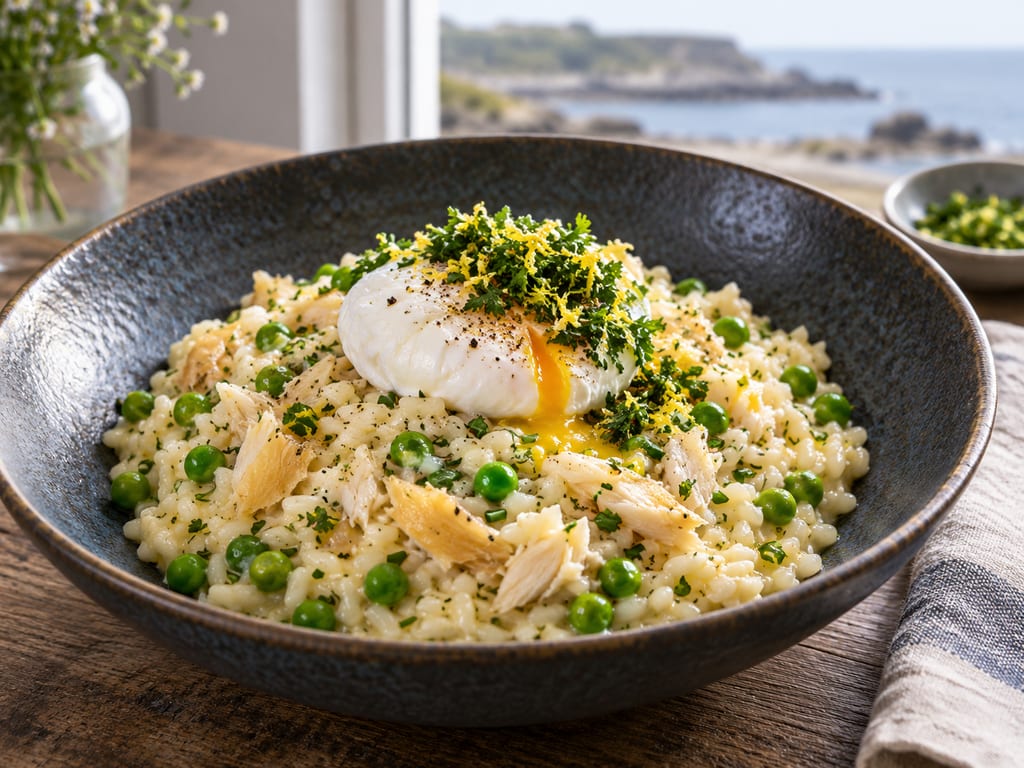
A four-serving risotto published in the 2014 Arbroath Smokie Trail booklet and credited to Hayley Wilkes. It cooks with finished Arbroath smokies; it does not describe smoking fish.
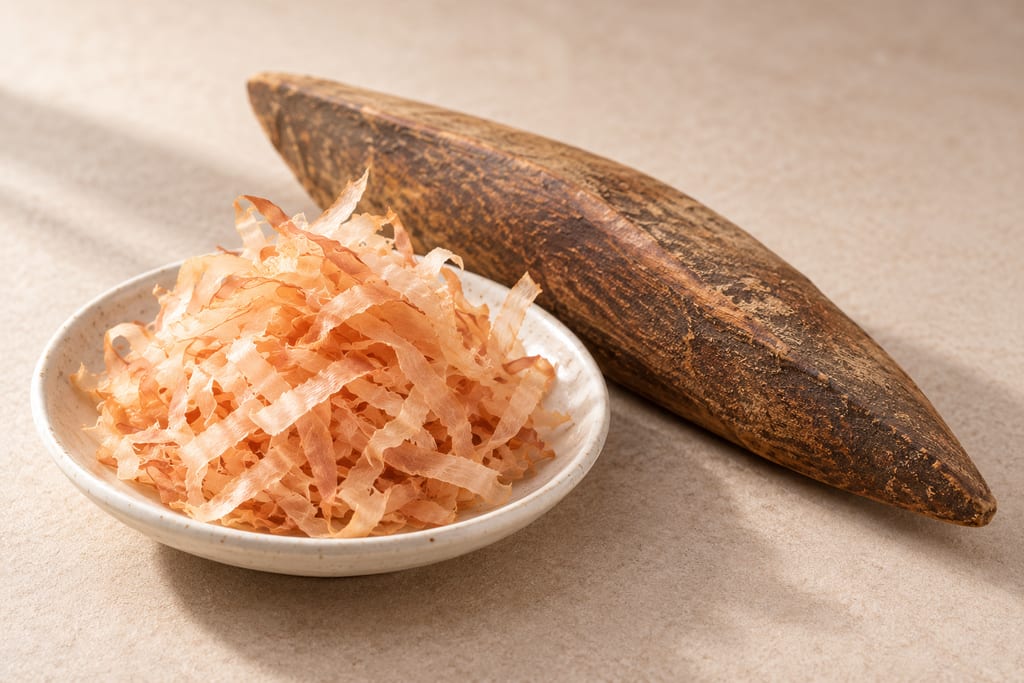
Katsuobushi is skipjack tuna cooked, smoked and dried into a hard block that is shaved into flakes for dashi and toppings. Some styles stop at the smoke-dried stage; others receive carefully managed mold maturation.
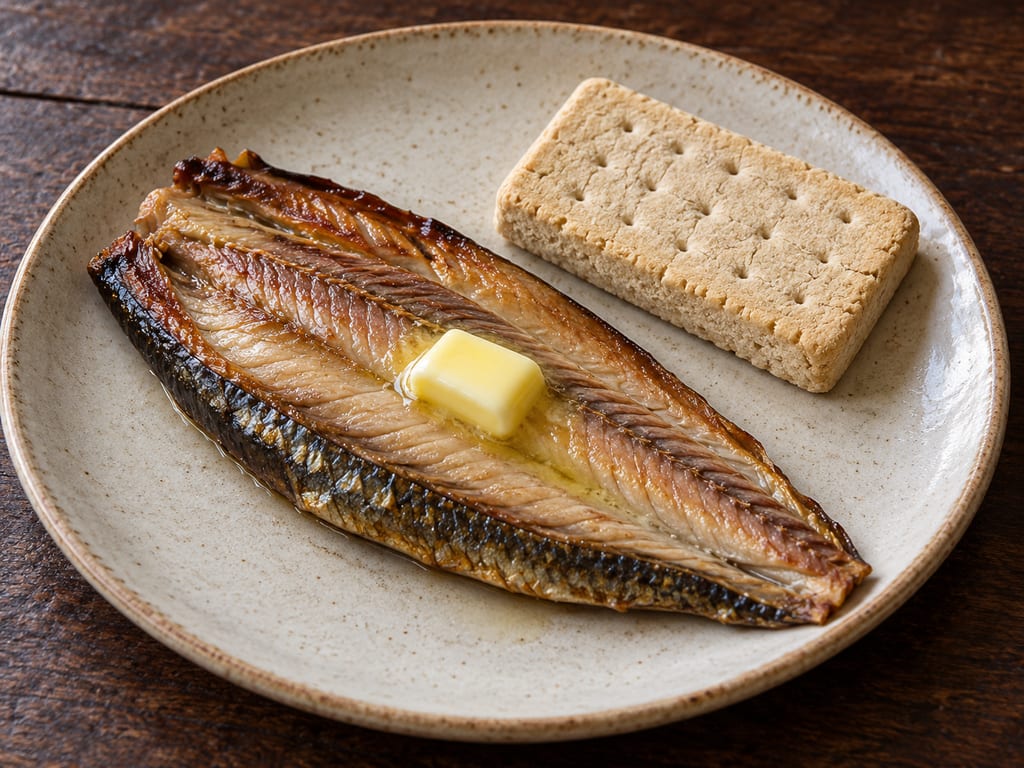
A Victorian way with Great Yarmouth bloaters: the lightly salted, cold-smoked whole herring is broiled and served with fresh butter and a warmed captain's biscuit.
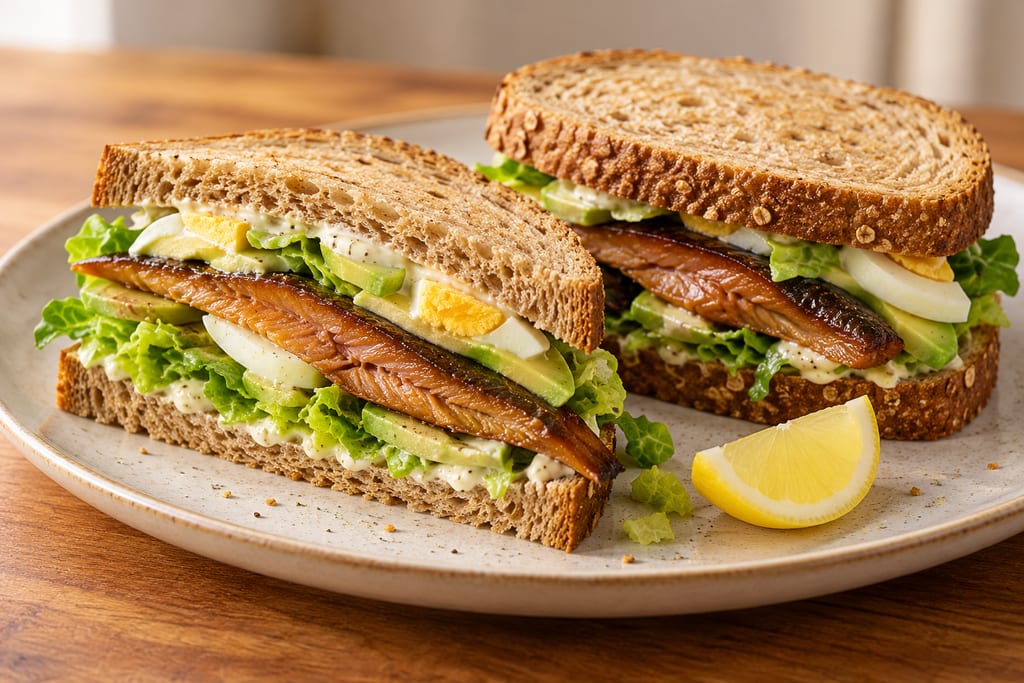
A warm club sandwich of oak-smoked Craster kipper fillets layered with soft-boiled egg, romaine, avocado and lemon mayonnaise on brown bread.
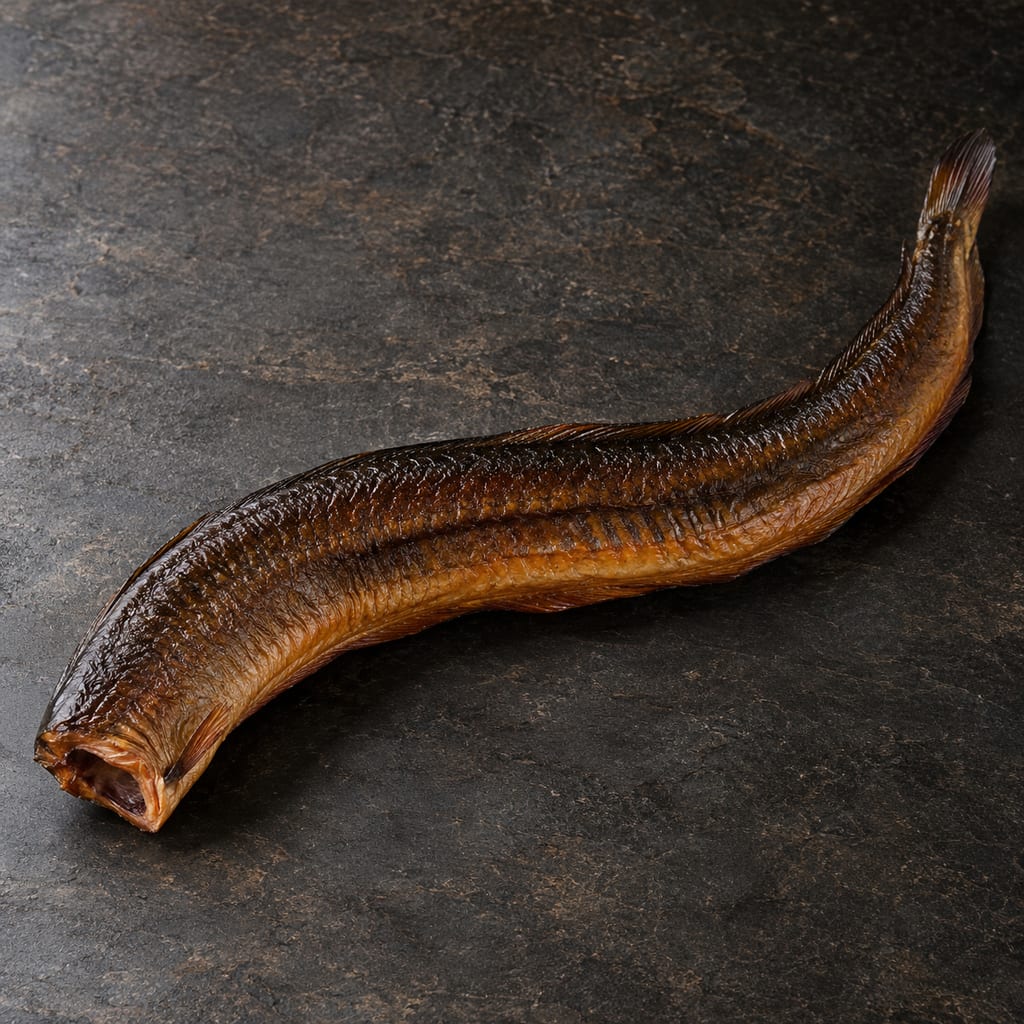
Short-finned eels, kooyang, smoked for a sustained period in the hollows of large trees at Budj Bim in south-western Victoria, a combined heat, smoke and drying method of the Gunditjmara people.
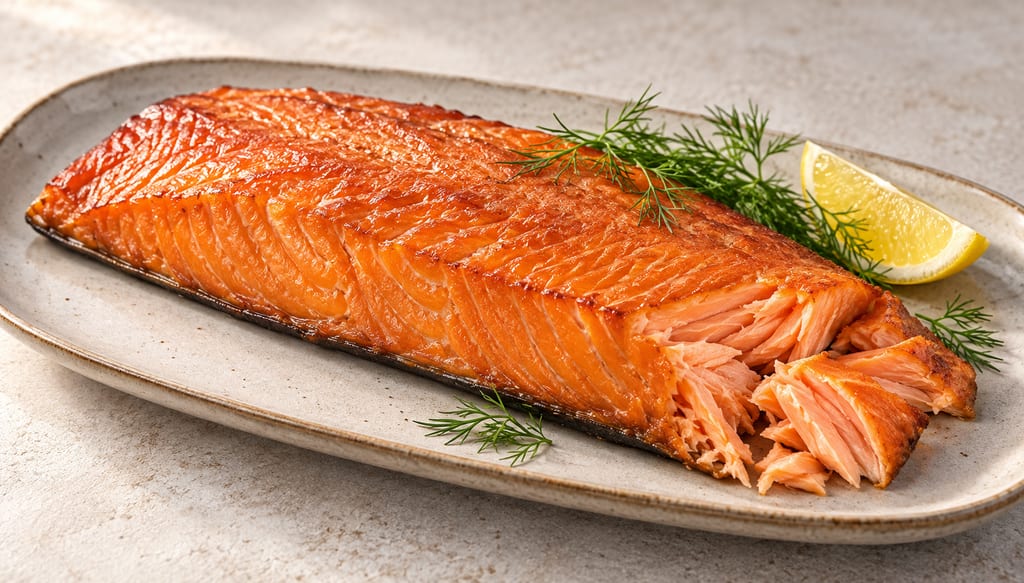
Salmon fillets salted or dry-brined, rested, then cooked and flavoured in a smoker. The method is a cooking process, and the endpoint decides its safety.
No community contributions have been published for this entry yet.
Sign in to contribute. Published comments and photos are free to read.
Fortnum & Mason; from The Fortnum’s Cook Book by Tom Parker BowlesInspiration · Recipe
Highland Scramble RecipeLines 48–96; exact four-serving ingredient list and four steps. Source prints “80ml double cream”; recorded as 80 mL without conversion. It calls for generic smoked salmon and does not identify its smoke style or connect it to London Cure.
Cited in: What is Highland scramble?; Names and identification; Smoked salmon in Scottish food culture; The difference between cold- and hot-smoked salmon; How curing changes salmon; Why eggs behave differently from fish; Why cream and butter are included; Ingredients; Eggs; Double cream; Butter; Smoked salmon; Chives; Sourdough bread; Lemon; Equipment; Stage 1 — Prepare the ingredients; Stage 2 — Prepare the bread; Stage 3 — Arrange the salmon; Stage 4 — Heat the cream; Stage 5 — Add butter; Stage 6 — Season; Stage 7 — Reduce the heat; Stage 8 — Add eggs; Stage 9 — Scramble gently; Stage 10 — Remove before the final desired texture; Stage 11 — Assemble; Stage 12 — Garnish; Stage 13 — Serve; Why the salmon is not scrambled into the eggs; The chemistry of residual heat; Highland scramble and ordinary scrambled eggs; Scottish smoked salmon; Hot-smoked salmon variation; Smoked trout variation; Firmly cooked eggs; Different breads; How Highland scramble is eaten; Quality indicators; Troubleshooting; Food safety; Historical limits
Food Standards ScotlandSafety context
People who are at higher risk of food poisoningLines 96–108: current guidance identifies cold-smoked fish, including smoked salmon, as a listeria concern for specified higher-risk consumers; it does not establish the style of Fortnum’s ingredient or validate this recipe.
Cited in: Food safety
Food Standards ScotlandSafety context
Listeria monocytogenesLines 25–44: FSS advises pregnant people and people with weakened immune systems to avoid ready-to-eat cold-smoked or cured fish; older adults should observe use-by dates, keep products refrigerated below 5°C and consider safer alternatives. Lines 34–40 describe cooked smoked fish and warn that simply warming cold-smoked/cured fish in pasta or scrambled eggs may not heat it enough. Lines 61–70 give general chilled ready-to-eat food handling advice. This guidance applies only if the product is in the stated cold-smoked/cured category; it does not validate a recipe or identify an unspecified product.
Cited in: Food safety
Fortnum & MasonInspiration
Fortnum & Mason — The Fortnum's Cook Bookcookbook and contemporary culinary context
Food Standards AgencySafety
Food Standards Agency — Listeria and ready-to-eat cold-smoked fishofficial safety information
Cited in: Food safety
Fortnum & MasonInspiration
Fortnum & Mason — The Parlour menuindependently documents Highland scramble as a contemporary served dish