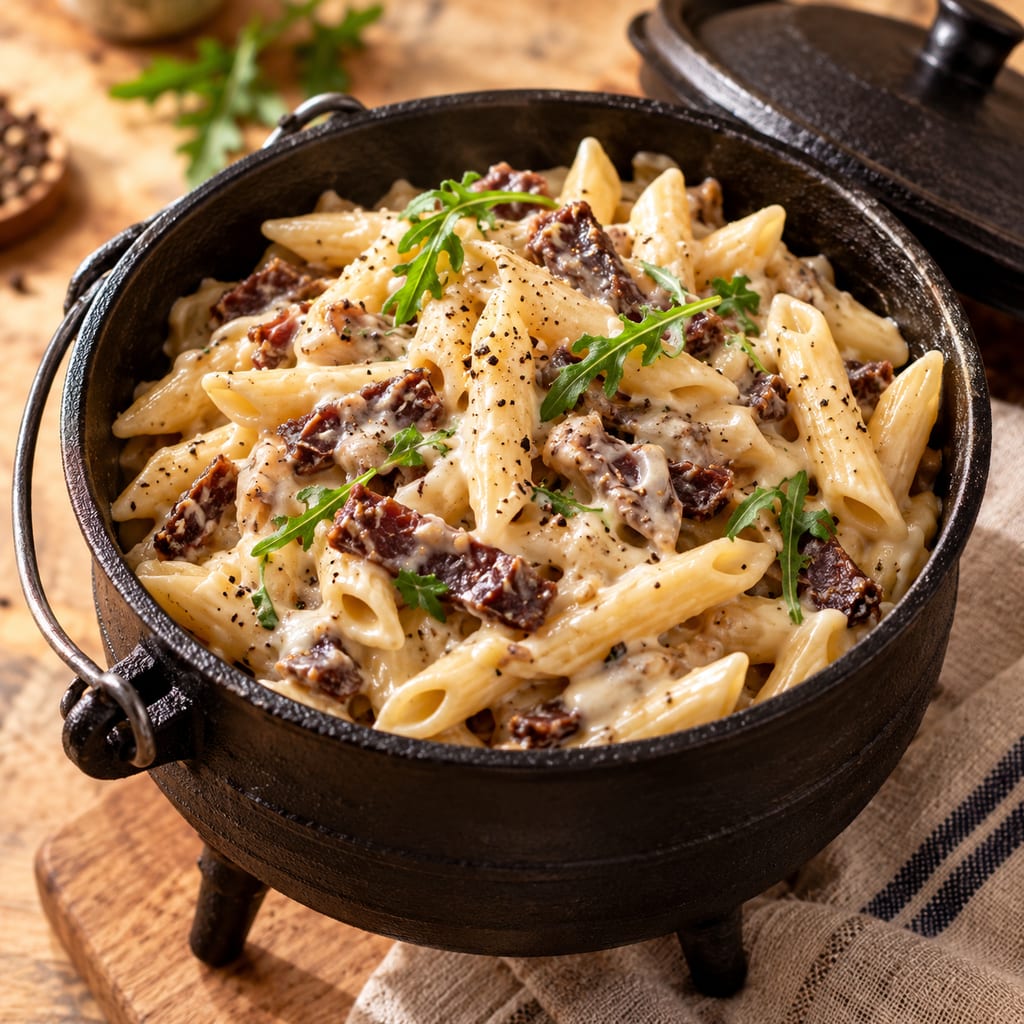
Biltong potjie with creamy pasta
Biltong, bacon and vegetables simmer in tomato-herb stock, then join cooked pasta, milk, cream and Cheddar in this outdoor potjie.
 FermenteaWhere food goes to change
Substrates
The fat-rich fraction of milk, used as a pouring ingredient, a whipped foam, a cultured dairy substrate or the starting material for butter.
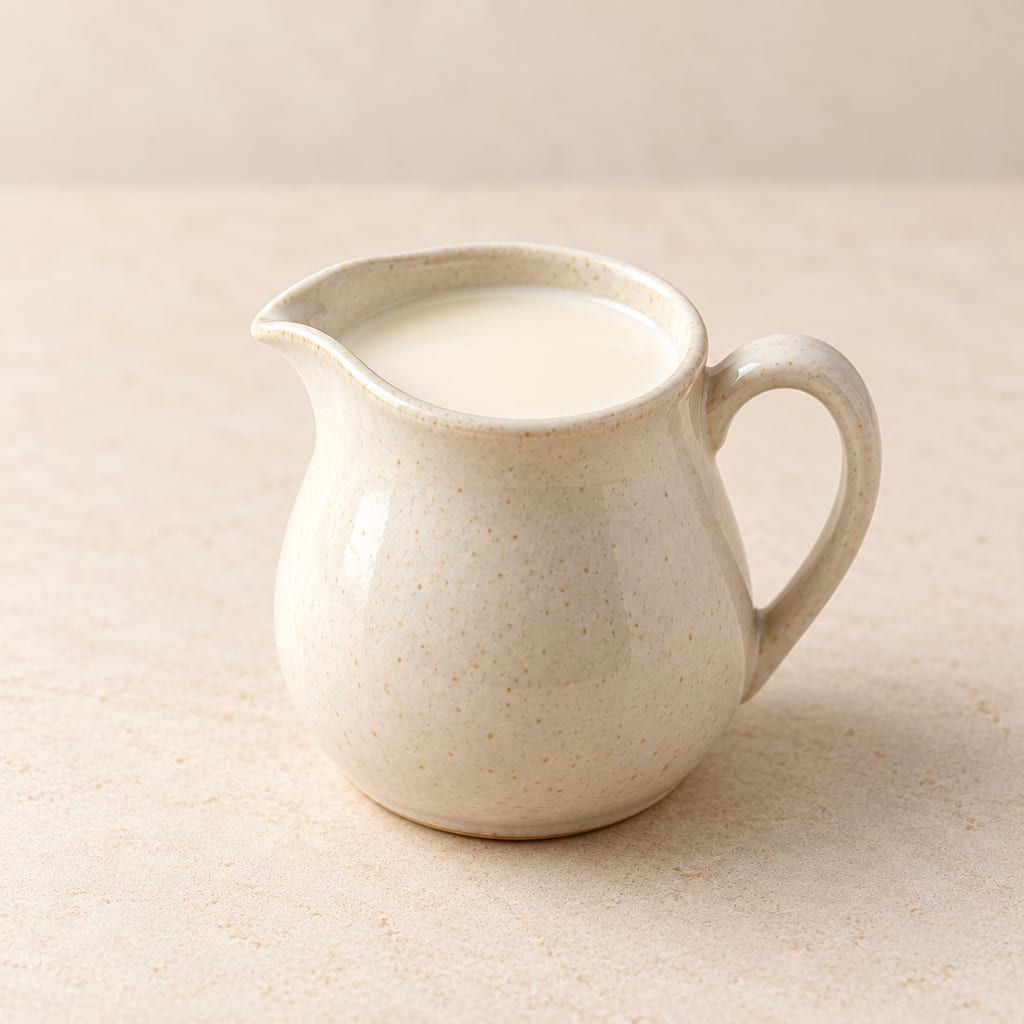
Cream is the fat-rich fraction of milk, carrying globules of milkfat in a water-based liquid. It can be thin enough to pour easily or thick enough to fall slowly from a spoon. Its flavour is dairy-rich, while its texture changes with fat content, temperature and processing. It is still an emulsion with water surrounding dispersed fat, rather than a vessel of pure milkfat. That difference explains much of its range in the kitchen: cream can flow, thicken, foam, ferment or become butter.
Before mechanical separation, obtaining it meant waiting for the fat-rich layer to rise on milk and skimming that layer from the surface. The milk left underneath retained value too. A household could collect cream for butter while using skimmed milk elsewhere in its dairy work or feeding it to animals. The two materials came from one milk supply, and decisions about one affected the other. Cream was both a food for the table and a concentrated portion of the herd's butterfat.
The work required more than a skimming spoon. Shallow pans exposed a broad surface while milk stood; deeper containers changed the arrangement and made cooling another part of the task. In Canadian farm teaching of 1907, George H. Barr compared these methods with the hand-powered separator. He connected cream quality with the recovery of fat, its exposure to odours and the condition of the skimmed milk. The comparison shows a dairy economy in which the usefulness of each milk fraction and the labour of obtaining it mattered together.
Centrifugal separation changed the pace. A rapidly rotating vessel separates the lighter fat-rich stream from denser skim milk, supplying two outlets rather than requiring repeated skimming from pans. In Sweden, Gustaf de Laval and Oskar Lamm patented their separator in 1878 and established AB Separator in 1883. The equipment spread widely on Swedish farms around the turn of the century. Faster and more uniform separation made cream easier to supply as a consistent ingredient in larger dairy operations.
Creameries brought another change in organization. Farmers could supply material for processing with shared equipment and specialist skill, while a larger finished quantity could be marketed together. Household butter making and centralized production did not disappear at the same moment everywhere. The development instead joined farms and factories through a material that concentrated much of the milk's fat into a smaller stream. A bottle of cream belongs to that history of recovering, handling and finding uses for milk's separate components.
Modern separation is followed by choices about composition. A manufacturer can standardize cream by mixing streams of different fat content. The desired level depends on the product and its purpose, from a pouring cream for beverages to a richer whipping cream or a cream intended for further dairy manufacture. This is not the same operation as homogenization. Standardization changes the proportion of fat; homogenization changes the size and surface of the droplets in which much of that fat is dispersed.
The names on a package consequently need context. In the United States, heavy cream contains at least 36% milkfat under its federal standard of identity; it is pasteurized or ultra-pasteurized and may be homogenized. That is a particular legal definition, rather than a translation rule for every country's cream. A name such as table cream or whipping cream can also express a local product convention. The fat declaration, treatment description and ingredient list reveal more than the familiar name alone.
Pasteurization and homogenization answer different questions. The first is a controlled heat treatment used to reduce disease-causing microorganisms. The second breaks fat into smaller droplets and alters their surrounding interface, helping keep the emulsion uniform. Cream may be pasteurized without being homogenized, or receive both treatments. UHT treatment, culturing and the addition of stabilizers are further choices. Reading these as separate attributes makes it easier to select the material a recipe actually requires.
For a plain pouring or finishing use, the cook wants the intended flavour and body. For whipping, the product must be capable of building a stable foam. For butter, the cream must suit a later gathering and separation of its fat. A carton chosen for one of these jobs is not defined solely by its white colour. Its fat level, physical treatment and any additional ingredients can all affect the next operation, even when several products are sold simply as cream.
Milkfat globules have a fat-rich interior and an interface containing membrane lipids and proteins. The surrounding milk serum contains water and other milk constituents. Concentrating those globules gives cream its richness while leaving it pourable. The structure also gives the ingredient several possible futures. Keeping globules dispersed is useful for a uniform liquid; allowing them to gather at air bubbles makes a foam; breaking their arrangement down further can lead towards butter.
Whipping begins by incorporating air. Small bubbles form, and fat globules collect around their surfaces. Mechanical action damages some globule membranes, allowing some liquid fat to help the globules stick together. The resulting structure holds air throughout the cream, increasing its volume and changing its feel from a liquid to a froth. The bubbles are made by beating, rather than by fermentation or a chemical raising agent. Whipped cream's lightness comes from air supported within the dairy material.
The fat needs a suitable balance of liquid and crystalline portions for that structure to hold. Cold conditioning encourages crystallization, while warm cream behaves differently under the whisk. Composition matters as well: a cream designed for whipping usually has enough fat, or an appropriately formulated combination of ingredients, to stabilize the foam. This makes temperature and product choice part of the task before the whisk starts moving. A long whipping time cannot necessarily compensate for a cream whose composition does not suit the job.
Continued mechanical treatment can go beyond the desired foam. Fat clusters grow, the texture becomes less smooth and the process moves towards separation. Butter making takes that transformation further, gathering fat-rich grains and draining off buttermilk. Cream's original oil-in-water arrangement gives way to a butter structure with water dispersed through a continuous fat-rich phase. Whipped cream and butter thus belong to different points in a sequence of physical change, rather than one being merely a thicker version of the other.
Culturing introduces a biological route. A starter's lactic acid bacteria use milk sugar and produce acid, changing flavour and the interactions between milk proteins. In sour cream, thickening and tang develop together, although the fat content, homogenization and any added milk solids or stabilizers also influence the final body. An acidic taste does not explain the whole texture. The protein network and the behaviour of the fat droplets help determine whether the finished cream is loose, smooth, firm or prone to releasing whey.
Cultured cream is also different from cream acidified directly with an acid ingredient. Both can be sour, but only the first involves the added organisms growing and fermenting within the cream. Sour cream and crème fraîche represent named cultured products with their own composition and culinary conventions. Their names should not erase the difference between the cream used as a substrate, the starter added to it and the finished cultured ingredient. Each occupies a different place in the preparation.
In cultured butter, the cream is fermented before churning. The starter changes acidity and contributes aroma; the churn subsequently reorganizes the fat. Sweet-cream butter begins without that deliberate souring stage. The difference is a choice about the cream's biological treatment before its fat is separated. Salt added to the finished butter is another choice again. Starting with cream gives the maker several independent ways to shape the food, and none of those operations needs to be confused with the others.
Cream can also enter a fermented food after its main transformation is complete. In the linked quark preparation, it is an optional finish stirred into drained curd for a richer consistency. The milk has already been cultured, set and drained. Cream now enriches the fresh cheese rather than initiating its coagulation. This is a useful contrast with sour cream manufacture: the same broad ingredient can serve as the material being fermented or as an addition that changes a food's finished body.
Cream remains a milk product and contains milk proteins. Milk allergy is an immune response to those proteins, while lactose intolerance concerns digestion of milk sugar. They are separate considerations. A higher fat content does not itself establish that cream is lactose-free, and neither pasteurization nor homogenization makes it a milk-free ingredient. The actual label gives the product's ingredients and any specific dietary claim, including information that a generic name such as cream cannot supply.
Keep cream according to its package directions and protect it from contamination after opening. Pasteurization is part of its manufacturing history, while handling continues during transport, refrigeration, pouring and storage. A use-by date or a storage instruction belongs to that product in its stated conditions. The different treatment and packaging of retail creams make a single universal opened-container shelf life unhelpful. The cream used to finish a fresh cheese also becomes part of that food's own handling requirements.
Freezing can change its physical function. The emulsion may destabilize, leaving fat separated after thawing. Cream in that condition may no longer whip as expected, while a cooking use such as a cream soup can still use its flavour. The change concerns texture and emulsion stability, not the creation of a new kind of cream. Choosing how to store it therefore includes thinking about its next use: preserving a container does not always preserve its original ability to make a fine foam.
Cream's uses reach from drinks to desserts and cooked foods. A little in coffee, tea or hot chocolate changes colour, richness and texture. Table cream and whipping cream can accompany fruit, cereals and desserts without first being fermented. A whipped portion supplies a light topping; an unwhipped portion gives a more flowing accompaniment. The food around it and the way it has been handled determine whether the cream remains a distinct layer or mixes through the dish.
Coffee brings an additional test of stability. Heat, acidity and the minerals in brewing water can affect the tendency of cream to form visible flocs. Manufacturers of coffee cream consider the cream's treatment and the conditions in the cup together. This is different from the deliberate formation of a smooth acid gel in cultured cream. A small clot in a hot drink and a spoonable sour cream may both involve protein behaviour, but they are different culinary outcomes produced under different conditions.
In cooking, cream can contribute to soups and sauces, while cultured cream adds acidity as well as richness. Sour cream can finish a soup or sauce gently, and its response to heat differs from simply pouring sweet cream over fruit. In baking it can bring moisture and tenderness to the finished food. These uses explain why the distinctions on a dairy shelf matter in practice: composition, acidity and previous processing influence what the ingredient does when it meets heat, water, flour or another food.
The preparations linked to this page show cream's role within a dairy chain particularly clearly. It can enrich quark or a finished cottage cheese without being the original milk that formed the curd. Other cream specifications belong to butter making, where the physical arrangement of fat is especially important. The ingredient is familiar, but its purpose is specific each time: a finishing addition, a foam, a cultured gel or the starting emulsion from which butter is made.
milk
Separator development and farm adoption, not a unique origin for cream.
Publication place of the primary farm-dairy account; its household and creamery history is Canadian.
Biltong, bacon and vegetables simmer in tomato-herb stock, then join cooked pasta, milk, cream and Cheddar in this outdoor potjie.
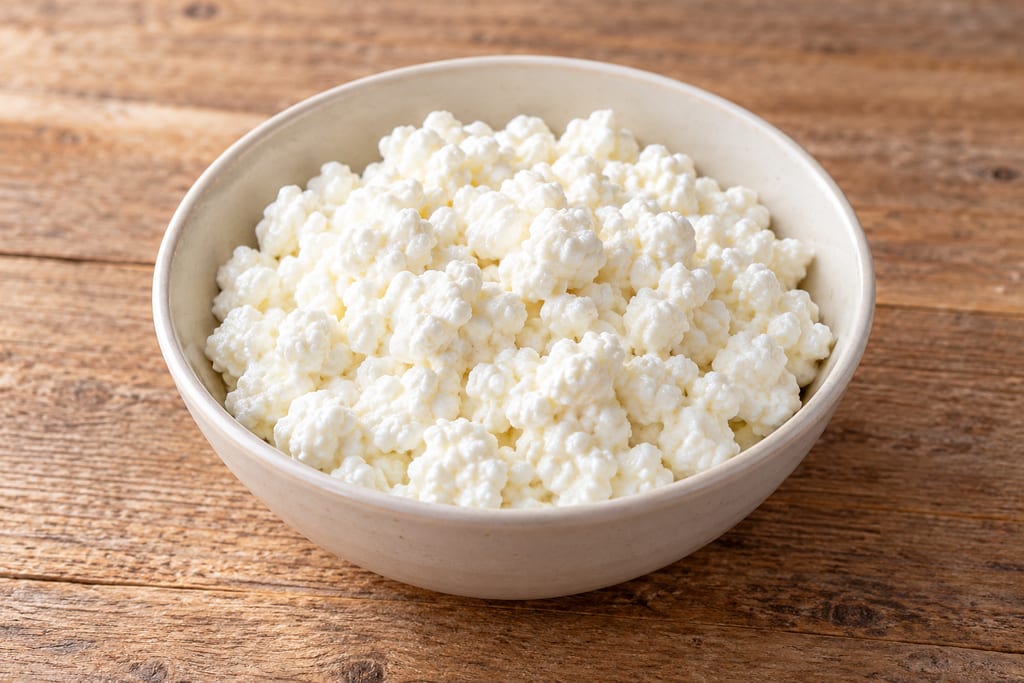
Skim milk is cultured slowly, cut into curds, warmed and drained to make fresh cottage cheese. Cold-water washing softens its flavour before cream and salt are added.
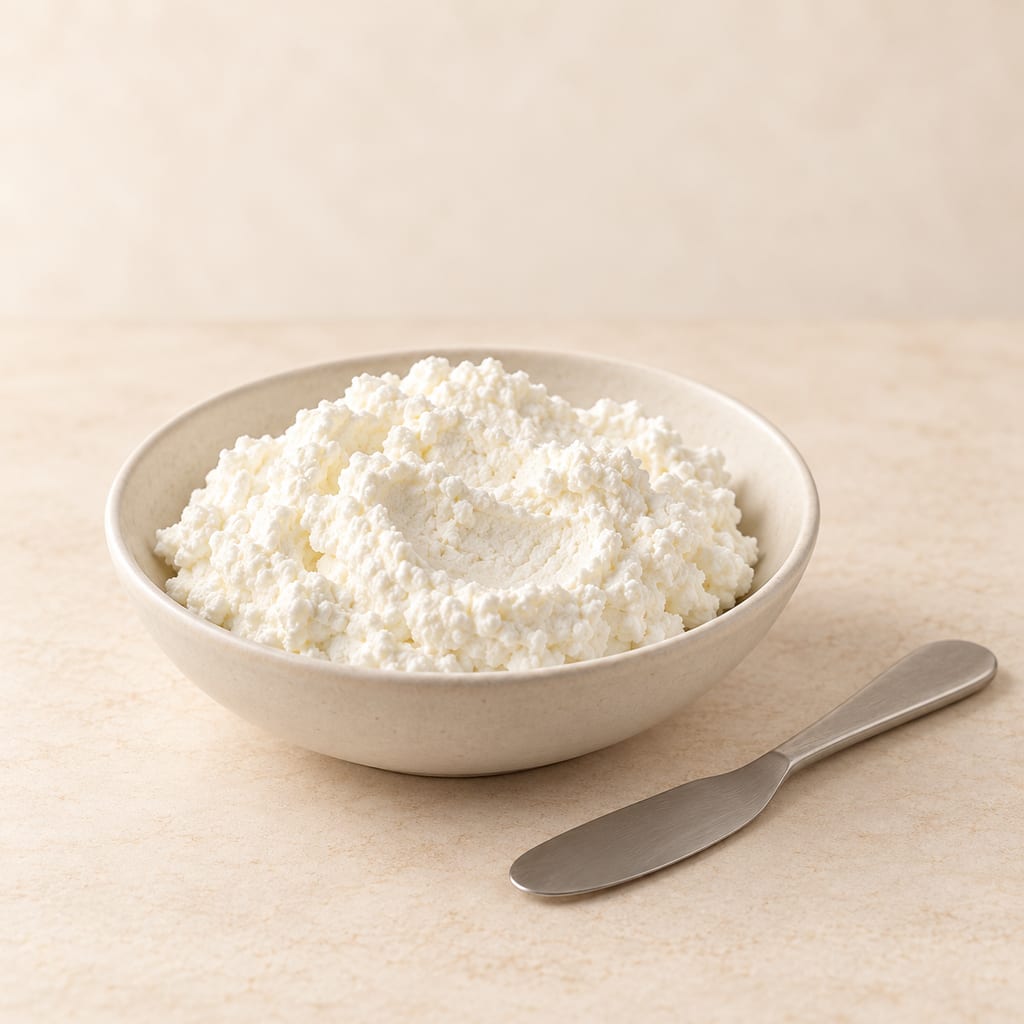
Quark is a soft, fresh curd cheese used in spreads and desserts. This small home batch sets milk with mesophilic culture and rennet before refrigerated drainage.
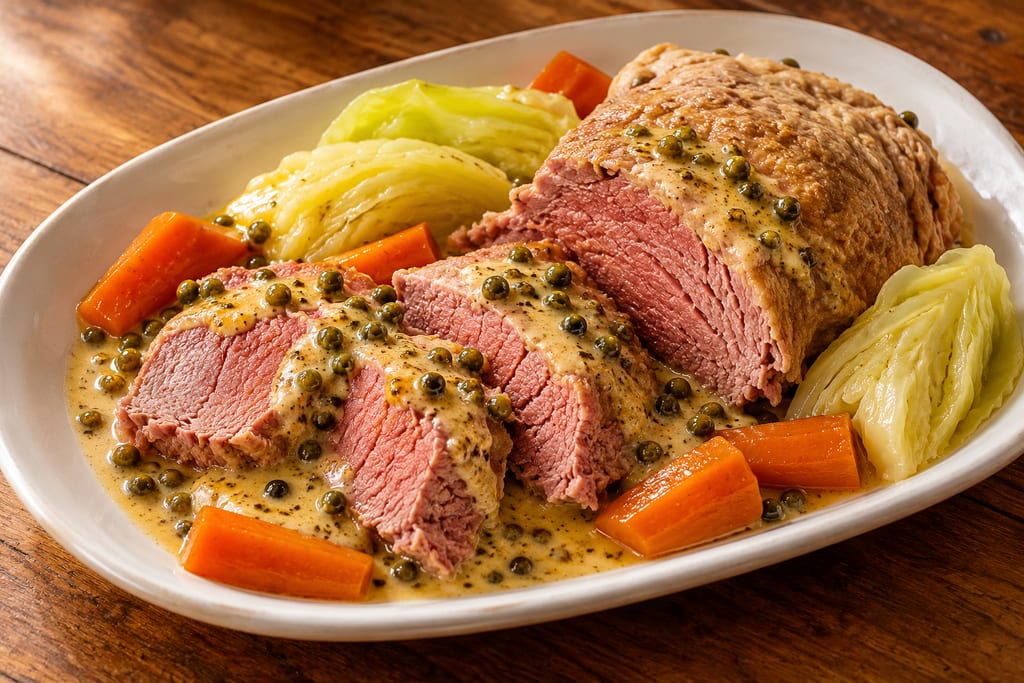
A Karoo-style festive dish of already cured salt beef simmered with vegetables and aromatics, served with a cream sauce of brined green peppercorns and wholegrain mustard.
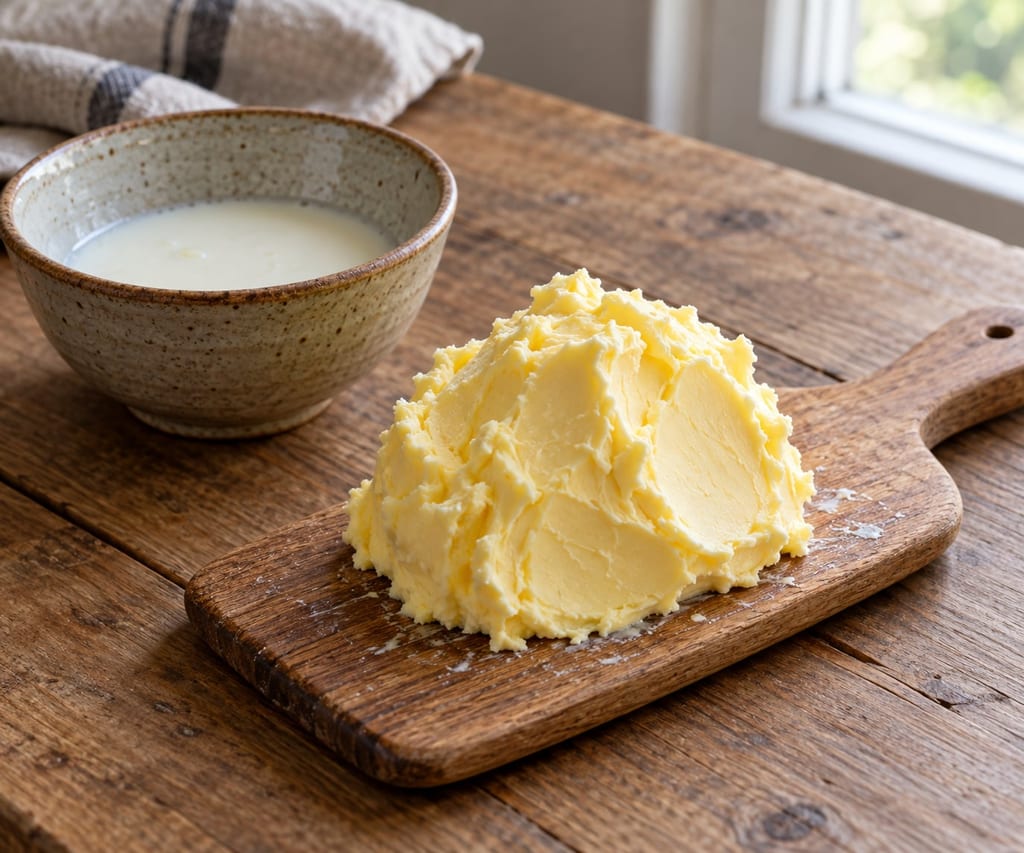
Cream agitated until its fat globules join into a solid mass and release buttermilk, the dairy fat a northern household could concentrate, salt and keep when milk itself would not last.

A living dairy inoculum that starts controlled cream fermentation, developing acidity and aroma before sour cream or cultured butter is finished.
Heat-treated dairy cream whose fat globules have not been mechanically homogenized, retaining a form used for churning cultured and sweet-cream butter.
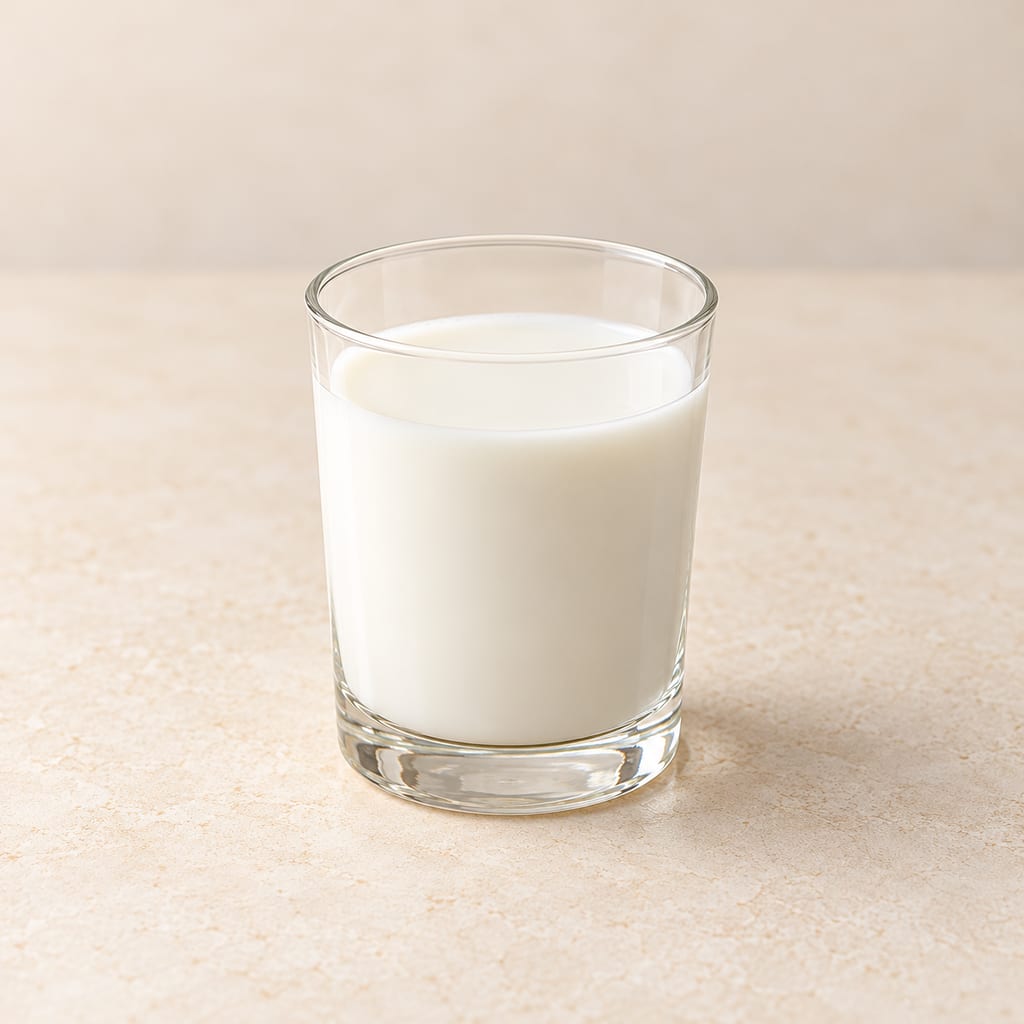
Milk with most of its fat separated into cream, retaining lactose and proteins used in cultured curds, starter media and other dairy foods.
No community contributions have been published for this entry yet.
Sign in to contribute. Published comments and photos are free to read.
Agriculture CanadaMethod · History · Ingredient context
Home-made dairy products, Publication 1669Household dairy handling and source-specific cream uses, including an optional cream finish for cottage cheese.
Cited in: When whipping moves towards butter; Culturing cream and enriching curds; Cream in coffee, sauces and desserts
Dairy Science & TechnologyScience · Production
Organization of lipids in milks, infant milk formulas and various dairy products: role of technological processes and potential impactsCream is an oil-in-water emulsion with a biological fat-globule interface. Homogenization reduces droplet size and changes interfaces; churning reorganizes the emulsion into butter.
Cited in: Fat grades and processing choices; Globules, air and the whipped foam; When whipping moves towards butter
AgroscopeIdentity · Ingredient context
Cream and cream productsCream is a fat-rich milk fraction that retains an oil-in-water arrangement. Grades vary by intended use; the legal comparison table dates from 2016.
Cited in: From the milk pan to the creamery; Fat grades and processing choices
Canada Department of AgricultureHistory
Buttermaking on the Farm, Bulletin17A 1907 account describes household and creamery organization, shallow pans, deep setting and hand separators, including fat recovery, uniform cream and skim milk for livestock.
Cited in: From the milk pan to the creamery
Tekniska museetHistory · Production
Gustaf de Laval – The milk-cream separatorGravity and centrifugal separation differ. Swedish separator history includes de Laval and Oskar Lamm’s 1878 patent, AB Separator in 1883 and adoption on Swedish farms.
Cited in: From the milk pan to the creamery
Canadian Dairy CommissionProduction · Ingredient context · Uses
CreamSeparation and standardization change the cream fraction; homogenization changes the emulsion. Freezing and thawing can cause separation and affect whipping performance.
Cited in: From the milk pan to the creamery; Fat grades and processing choices; Milk allergens, refrigeration and freezing; Cream in coffee, sauces and desserts
BC Centre for Disease ControlSafety
Dairy SafetyPasteurization uses controlled heat to reduce disease-causing microorganisms. Treated dairy can become contaminated after heating.
Cited in: Fat grades and processing choices; Milk allergens, refrigeration and freezing
U.S. Food and Drug AdministrationAllergens
Food Allergies: What You Need to KnowMilk is a major allergen in U.S. food labelling. Milk proteins and product ingredient declarations matter when choosing dairy foods.
Cited in: Milk allergens, refrigeration and freezing
National Institute of Diabetes and Digestive and Kidney DiseasesDietary context
Definition & Facts for Lactose IntoleranceLactose is milk sugar. Lactose intolerance concerns digestion and differs from immune-mediated milk allergy; processing terms alone do not establish lactose-free status.
Cited in: Milk allergens, refrigeration and freezing
Tetra PakProduction · Science · Uses
Pasteurized and ESL dairy productsFat standardization and homogenization are separate operations. Whipping involves foam formation and fat crystallization; excessive whipping promotes coalescence. Heat, acidity and water minerals affect coffee-cream flocculation.
Cited in: Globules, air and the whipped foam; When whipping moves towards butter; Cream in coffee, sauces and desserts
U.S. Code of Federal Regulations via Cornell Legal Information InstituteIdentity
21 CFR131.150: Heavy creamThe United States heavy-cream standard specifies at least 36%milkfat, pasteurization or ultra-pasteurization, optional homogenization and permitted optional ingredients.
Cited in: Fat grades and processing choices
Omnom CheeseUses · Method
QuarkCream can be added after the curd is cultured and drained for a richer consistency. The source specifies neither a cream amount nor a fat grade.
Cited in: Culturing cream and enriching curds; Cream in coffee, sauces and desserts
California Dairy Press Room and ResourcesScience · Uses
Sour CreamCultured and directly acidified creams differ in how acidity develops. Acid changes proteins and texture; gentle finishing can limit heat curdling. Sour cream contributes moisture and tenderness to baked foods and is served as a condiment.
Cited in: Culturing cream and enriching curds; Cream in coffee, sauces and desserts
Utah State University ExtensionIngredient context
Tips to Safely Ferment at HomeCultured cream and crème fraîche combine a cream substrate with a starter culture.
Cited in: Culturing cream and enriching curds
Office of the Federal Register / U.S. Government Publishing OfficeIdentity · Legal context
21 CFR 131.150 — Heavy creamUnited States heavy cream contains at least 36%milkfat, is pasteurized or ultra-pasteurized and may be homogenized; emulsifiers and stabilizers are permitted optional ingredients. This is a U.S. heavy-cream definition, not a universal definition of cream. The eCFR text is current through 22 October 2026; its pending-amendment notice does not establish that the future change is in force.
Cited in: Fat grades and processing choices