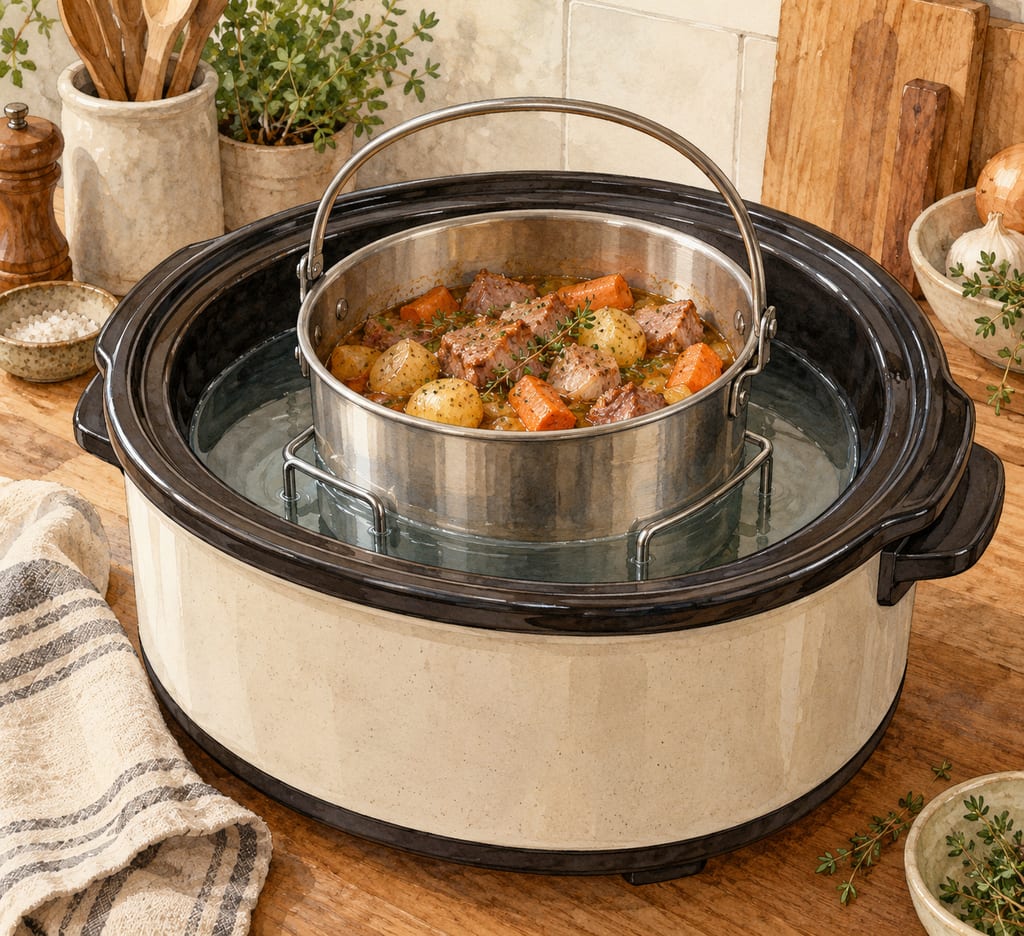
Slow cooker as a water jacket
Water in the crock with a smaller stainless pot or heat-safe jar supported inside it, so the food never touches the hot ceramic and can be lifted out to stop heating.
 FermenteaWhere food goes to change
High-fat cream scalded below boiling for at least an hour until a thick crust forms, then cooled hard so the crust sets and the cream beneath thickens.
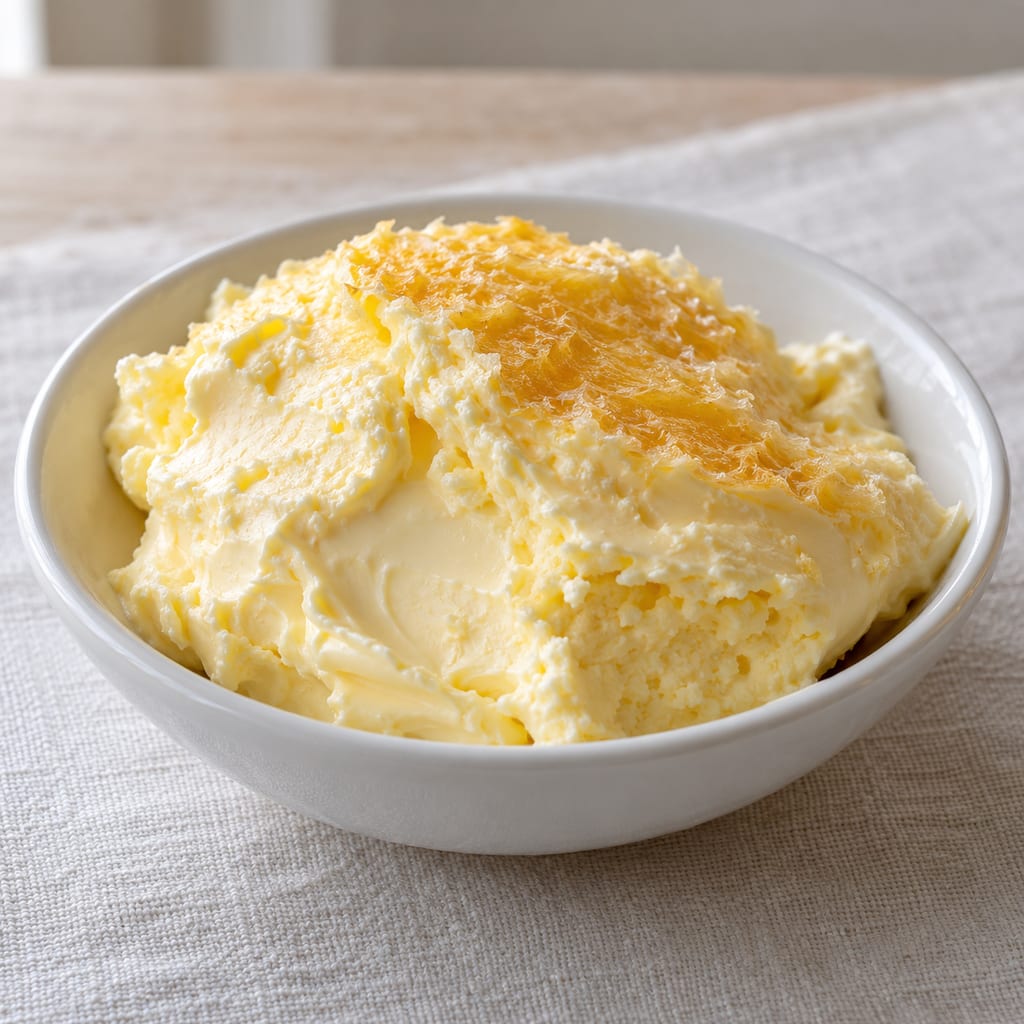
Clotted cream is high-fat cream heated below boiling until a thick crust forms on the surface, then cooled so that the crust sets and the cream beneath it thickens. The Cornish Clotted Cream product specification sets the process, and this page follows it: cream of at least 55% butterfat, scalded at 70–80 °C (158–176 °F) without boiling for at least one hour, then cooled to 5 °C (41 °F) or below.
The specification is a product standard, not a home recipe. It gives no batch size and no shelf life for the cream made at home.
The crust is the product of the long, low scald. The draft's evidence note says that a sealed bag removes the surface the crust needs, which is why a bagged route is not treated here as an equivalent. The specification does not explain the chemistry of the crust, so this page does not add a mechanism for it.
Cornish clotted cream is a protected designation. The name belongs to cream made in Cornwall to the specification, and a home result is Cornish-style rather than the protected product. The specification says clotted cream has been made in Cornwall for many generations and is noted in seventeenth-century literature, and that the milk-preserving use is the reason for the process. The Phoenician story it repeats is not adopted here.
Untested adaptation: a shallow open dish in a low oven, or an open dish warmed over a water-jacketed bath such as a slow cooker or a circulator. No home appliance method was found in the sources. The 70–80 °C range is a cream temperature measured in the dish, not an oven setting. A bath heats from below while the surface loses heat, which may form a different crust from the one the specification describes.
The specification gives the cooling limit of 5 °C (41 °F) as the control after scalding and gives no storage time. No home shelf life is documented, and this page does not infer one.
Oven or bath setting: no home appliance method found.
Behaviour of cream below 55% fat: the specification does not say.
Storage: not stated.
The specification says clotted cream has been made in Cornwall for many generations, is noted in seventeenth-century literature, and served to extend the life of fat-rich milk. It repeats a story about Phoenician traders as the view of some historians and does not stand behind it.
Scaling: source batch only
Cool to 5 °C or below after scalding
Control sourceNo home shelf life is documented; do not infer one.
Protected designation: Cornish clotted cream is the name of cream made in Cornwall to the specification (EU registration 1 October 1998, UK registration 31 December 2020).
Water in the crock with a smaller stainless pot or heat-safe jar supported inside it, so the food never touches the hot ceramic and can be lifted out to stop heating.
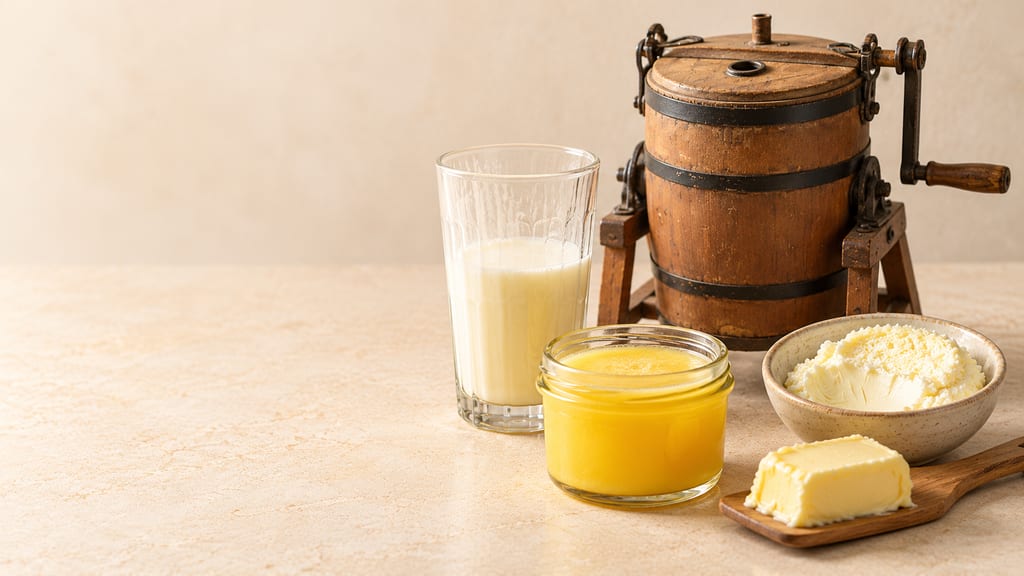
Cream can be scalded into clotted cream, soured by bacteria, churned into butter and buttermilk, or boiled down to ghee. Each is a different change, and each asks something different of the equipment.
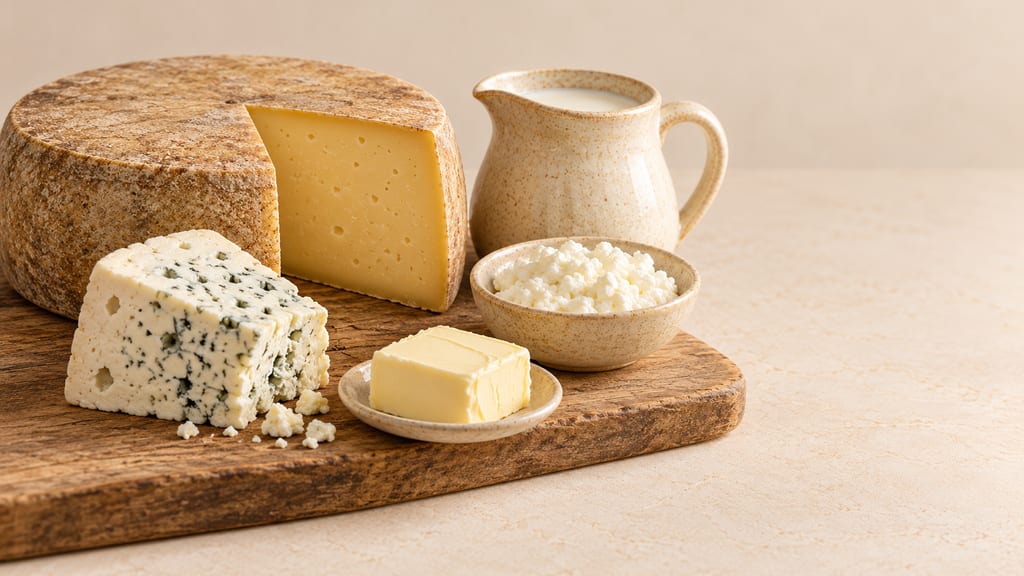
Follow milk into cheese, cultured drinks, butter, dried curds and sweets: a journey through the animals, seasons and household decisions behind the world's dairy foods.
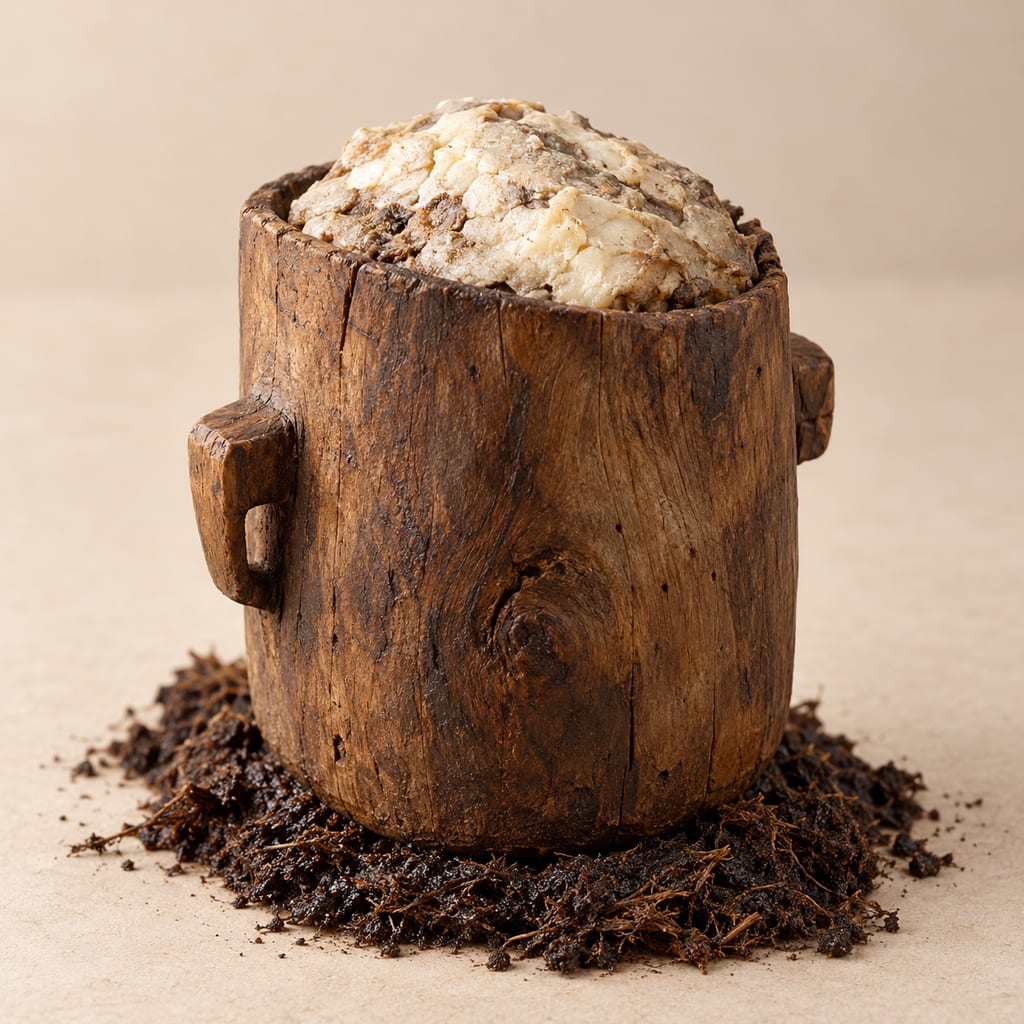
Butter packed into wooden containers and buried in cool, wet peat in Ireland and Scotland, a practice known from finds that may reflect storage, concealment or ritual.
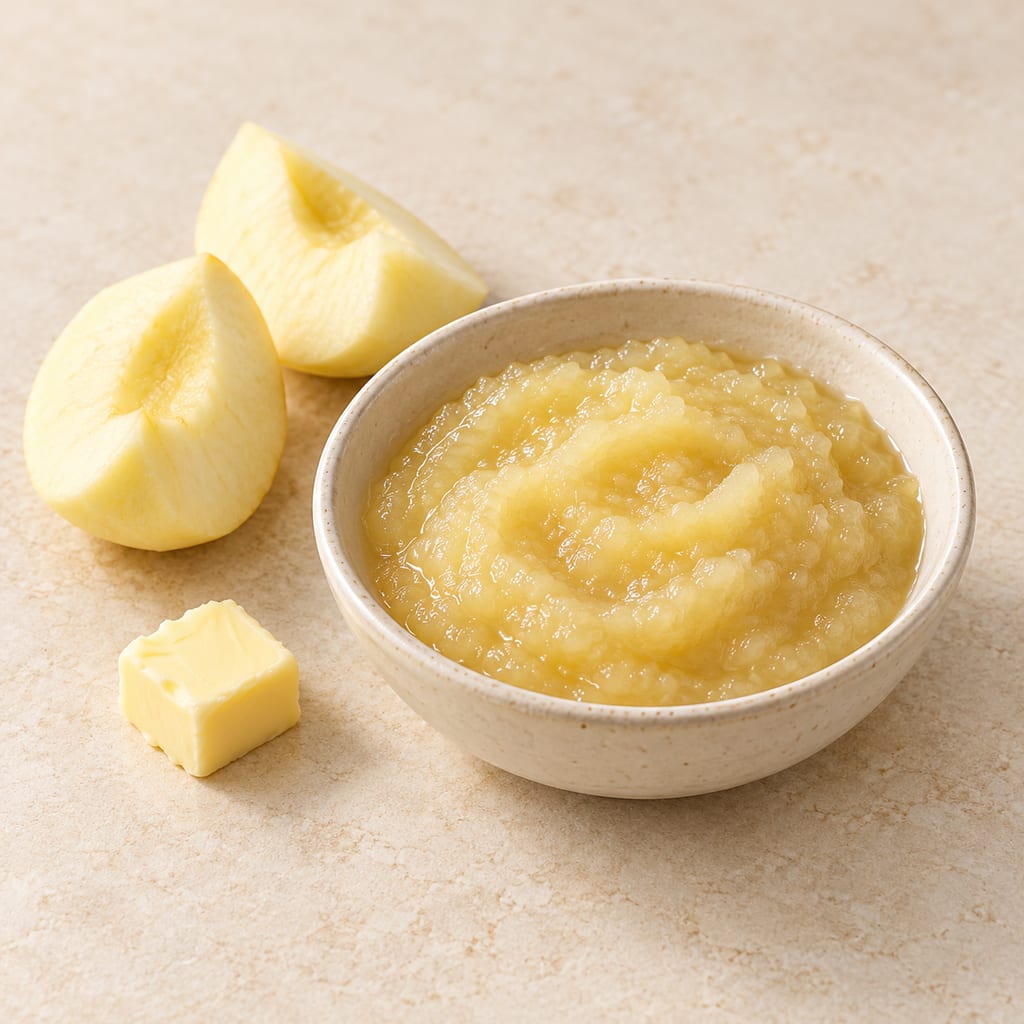
Apple sauce for goose and pork is a plain English accompaniment: cooked apples pulped with water, then sweetened with sugar and finished with a little butter.
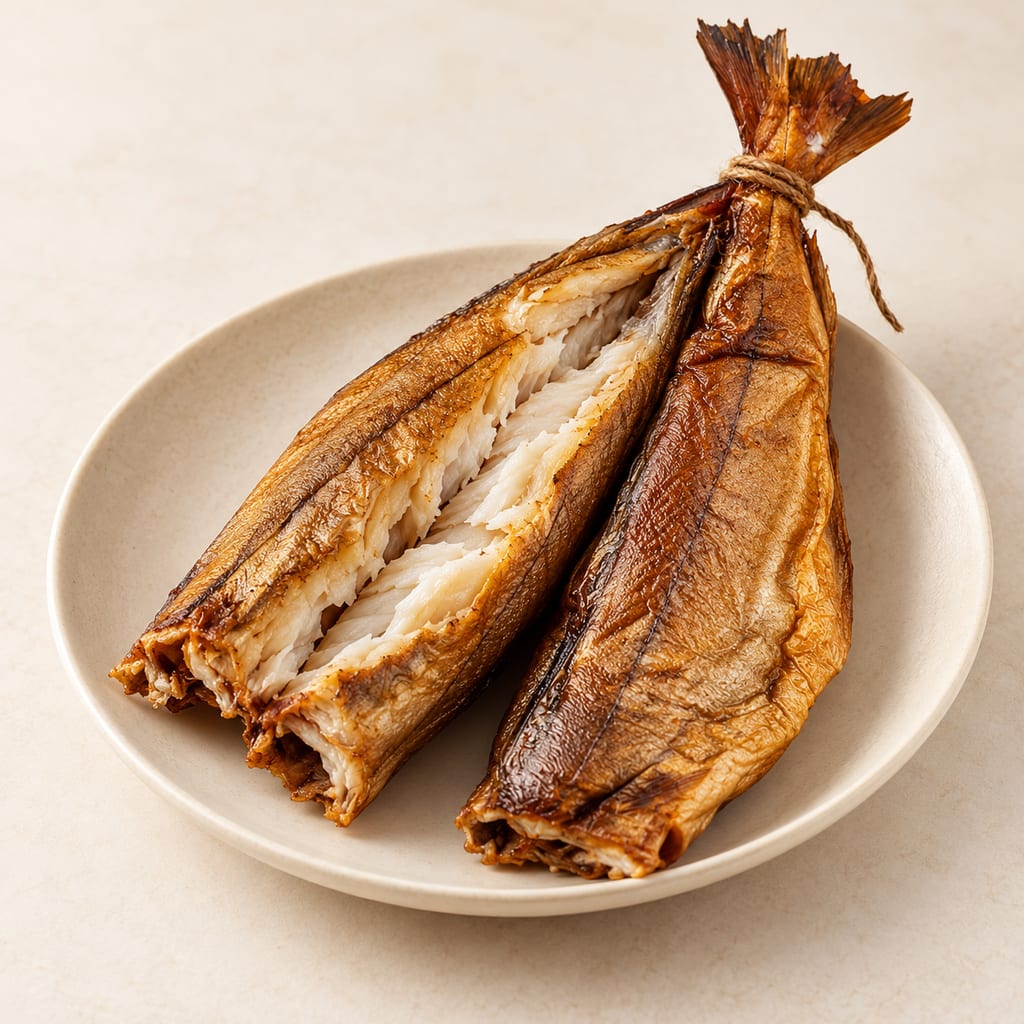
Arbroath smokies are whole haddock dry-salted, paired by the tail and hot-smoked in a protected coastal area. Their recorded history links Auchmithie and Arbroath, though the exact origin is unsettled.
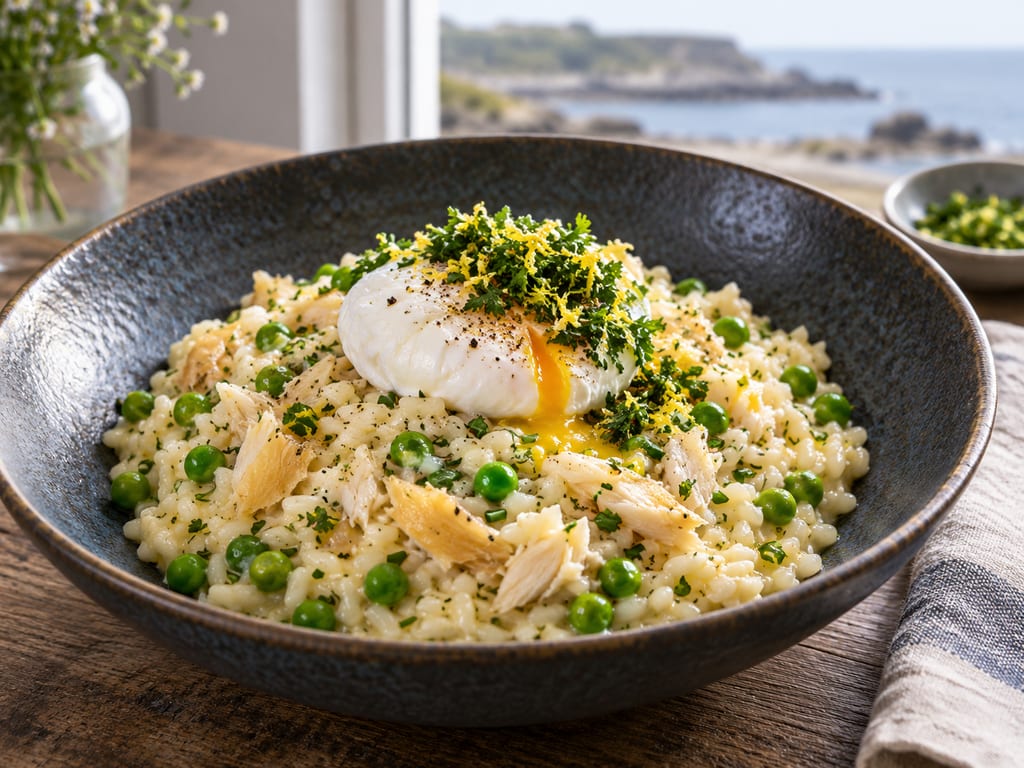
A four-serving risotto published in the 2014 Arbroath Smokie Trail booklet and credited to Hayley Wilkes. It cooks with finished Arbroath smokies; it does not describe smoking fish.
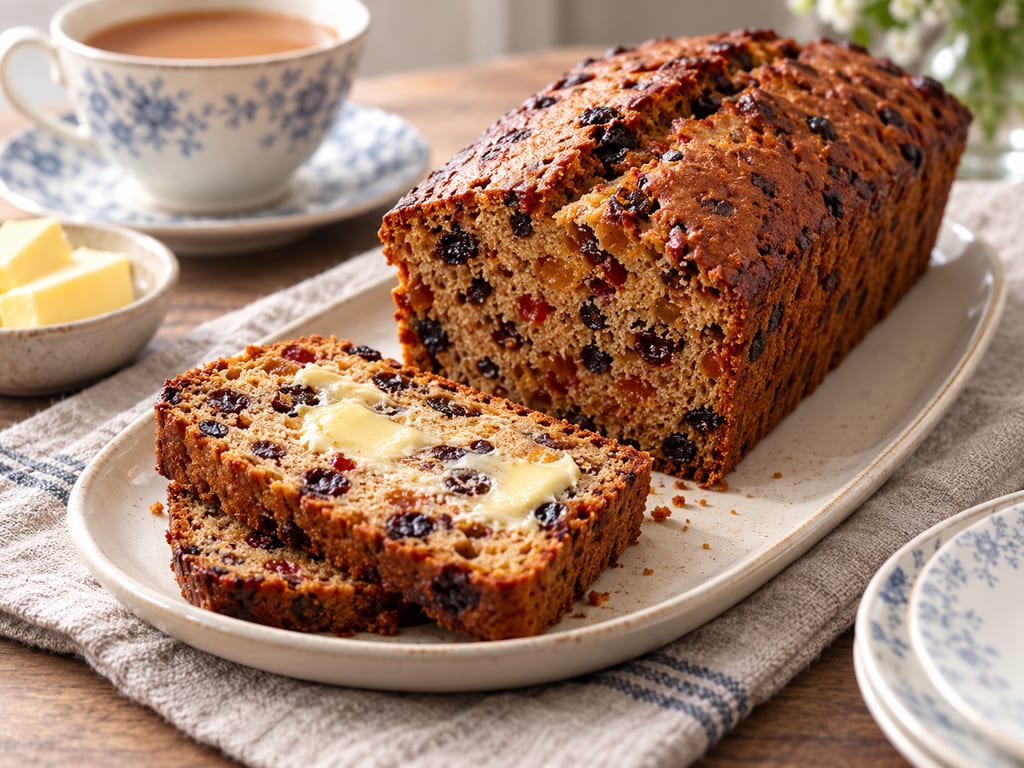
Bara brith is Wales’s speckled fruit loaf, made in both yeasted bread forms and the widely served modern tea-loaf style. This version soaks dried fruit in strong tea before mixing it with self-raising flour, spice, sugar and egg.
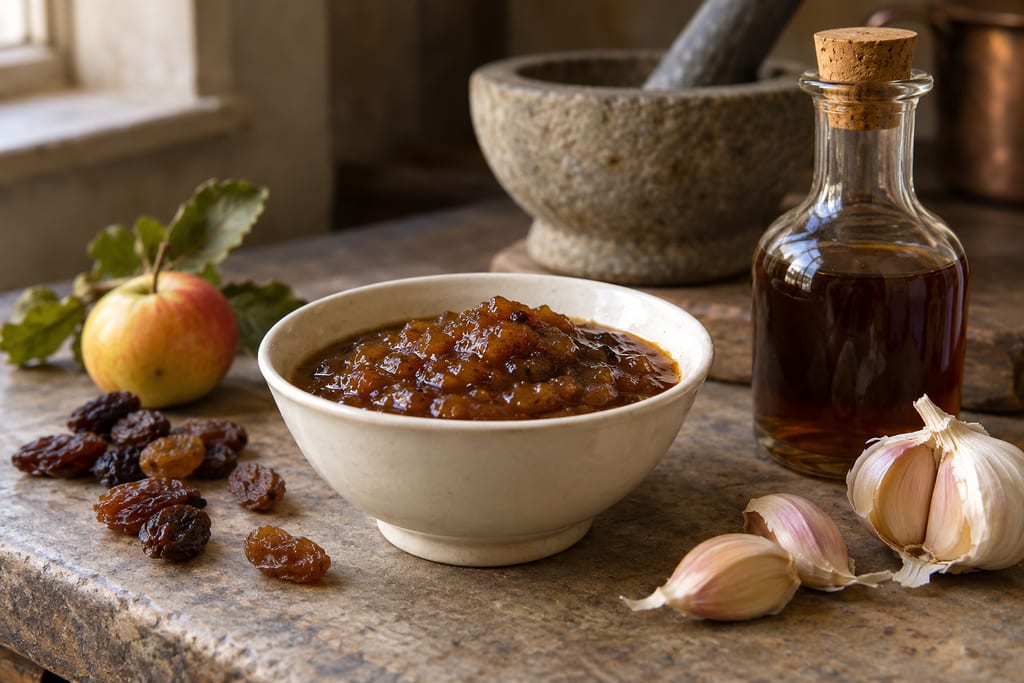
Eliza Acton's Bengal receipt for chetney sauce: stoned raisins and a hard acid fruit pounded with brown sugar, ginger, salt, cayenne and garlic, then thinned with vinegar to the consistence of thick cream.
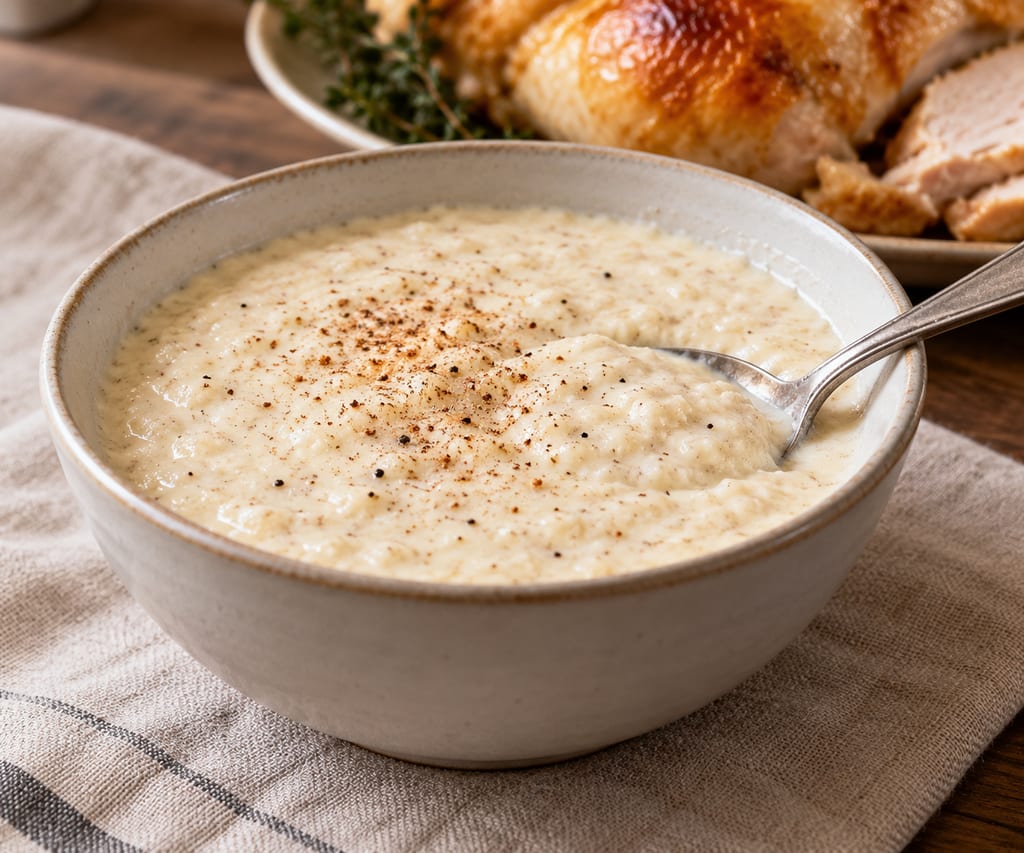
Bread sauce is a British sauce of milk infused with onion, clove and bay, thickened with stale breadcrumbs and finished with butter, served with roast chicken or turkey.
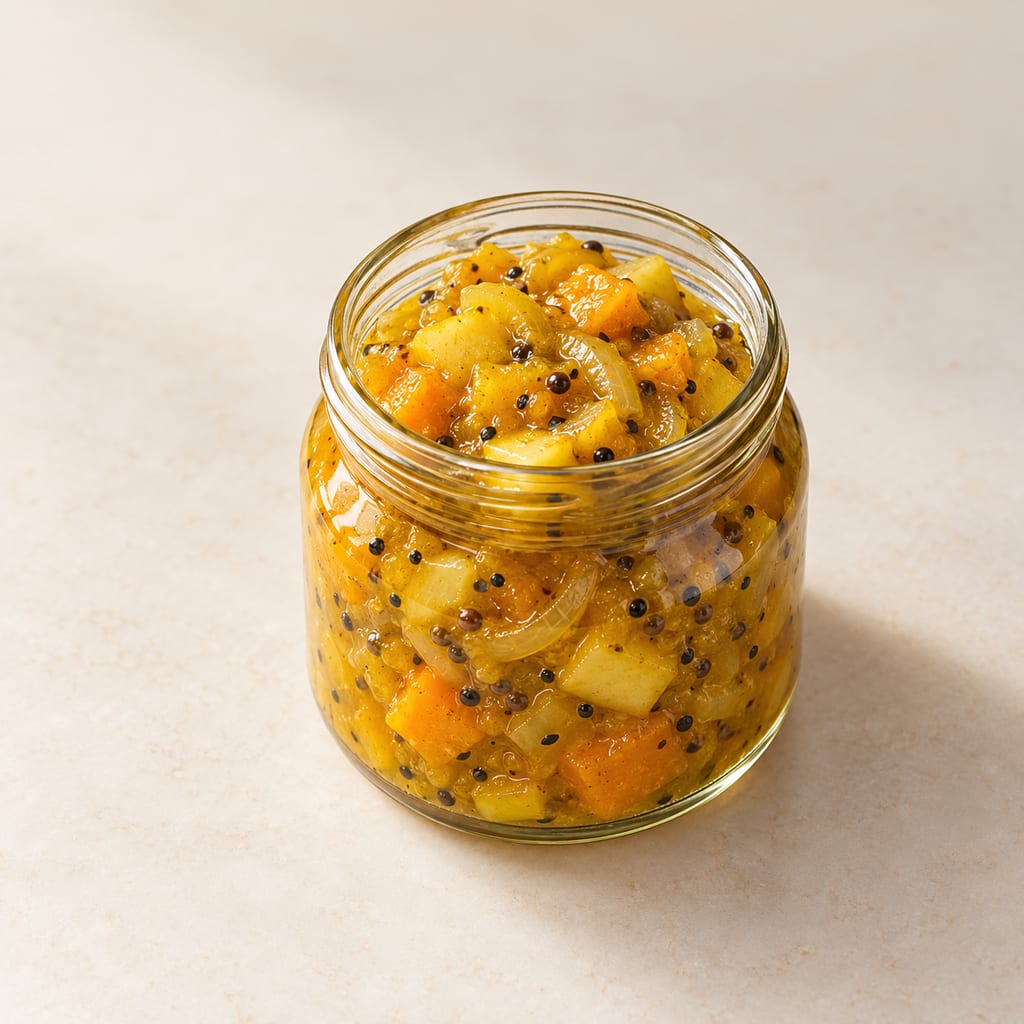
British pumpkin, apple and mustard pickle: Freeze for winter; small fresh portion refrigerated up to 48 hours.
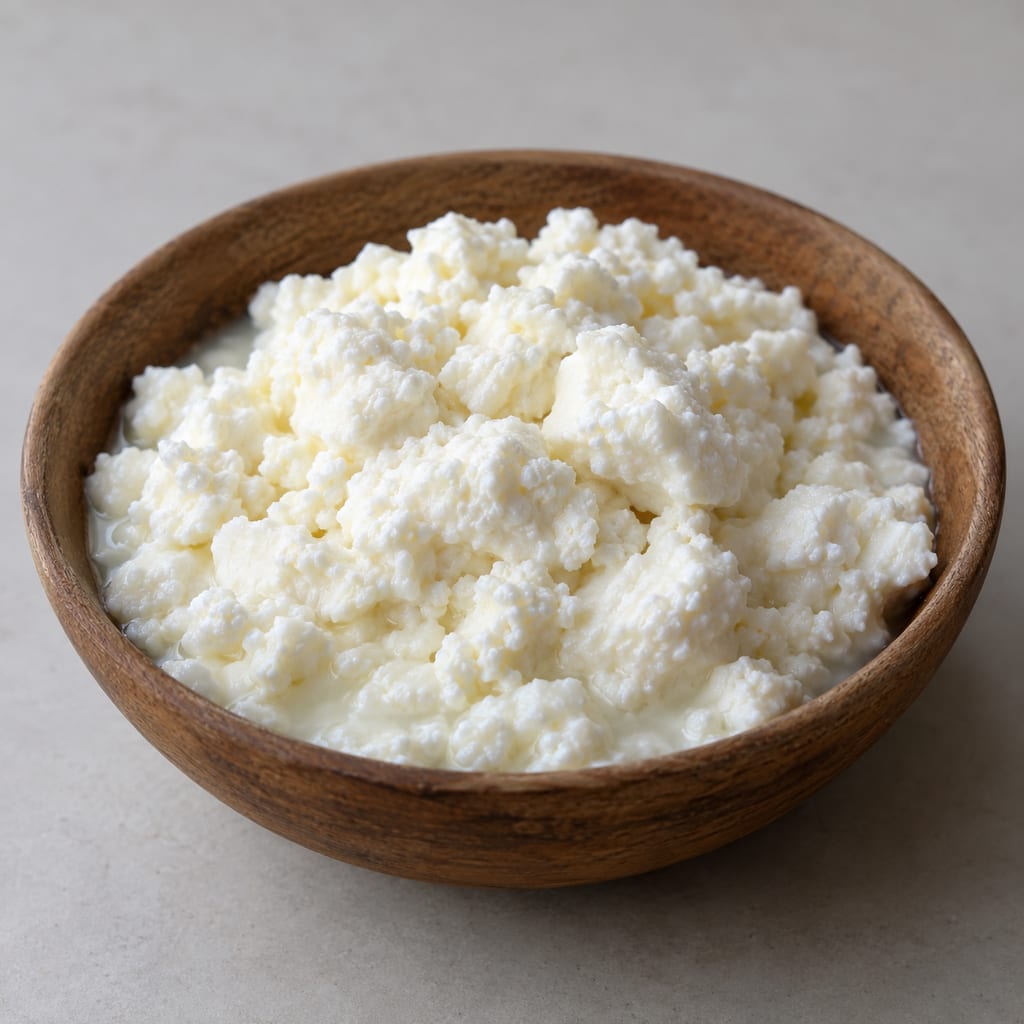
Aarts is a soft Mongolian curd made by draining boiled fermented yogurt; it remains wet, unlike aaruul, which is dried.
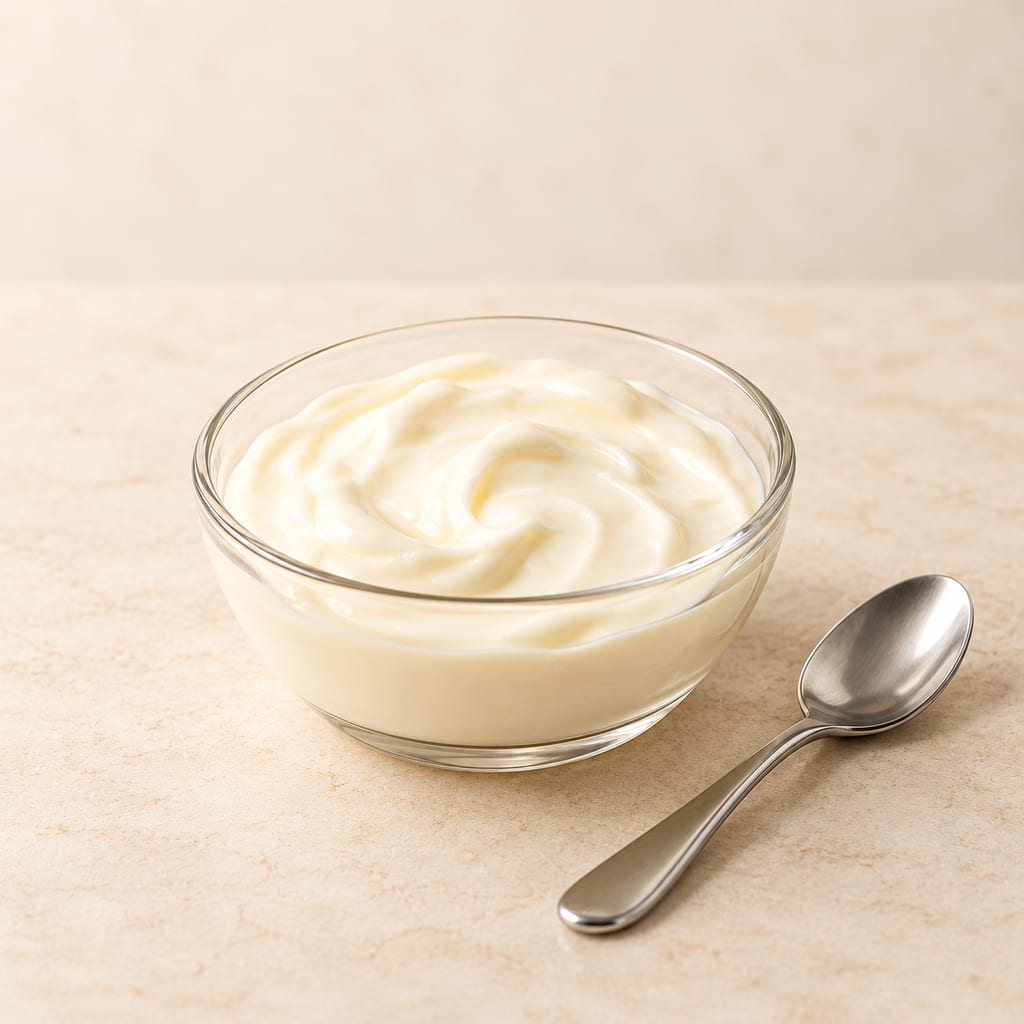
Crème fraîche is cream soured by lactic cultures into a thick, mild topping. It suits fruit and desserts as well as soups, sauces and other savoury dishes.
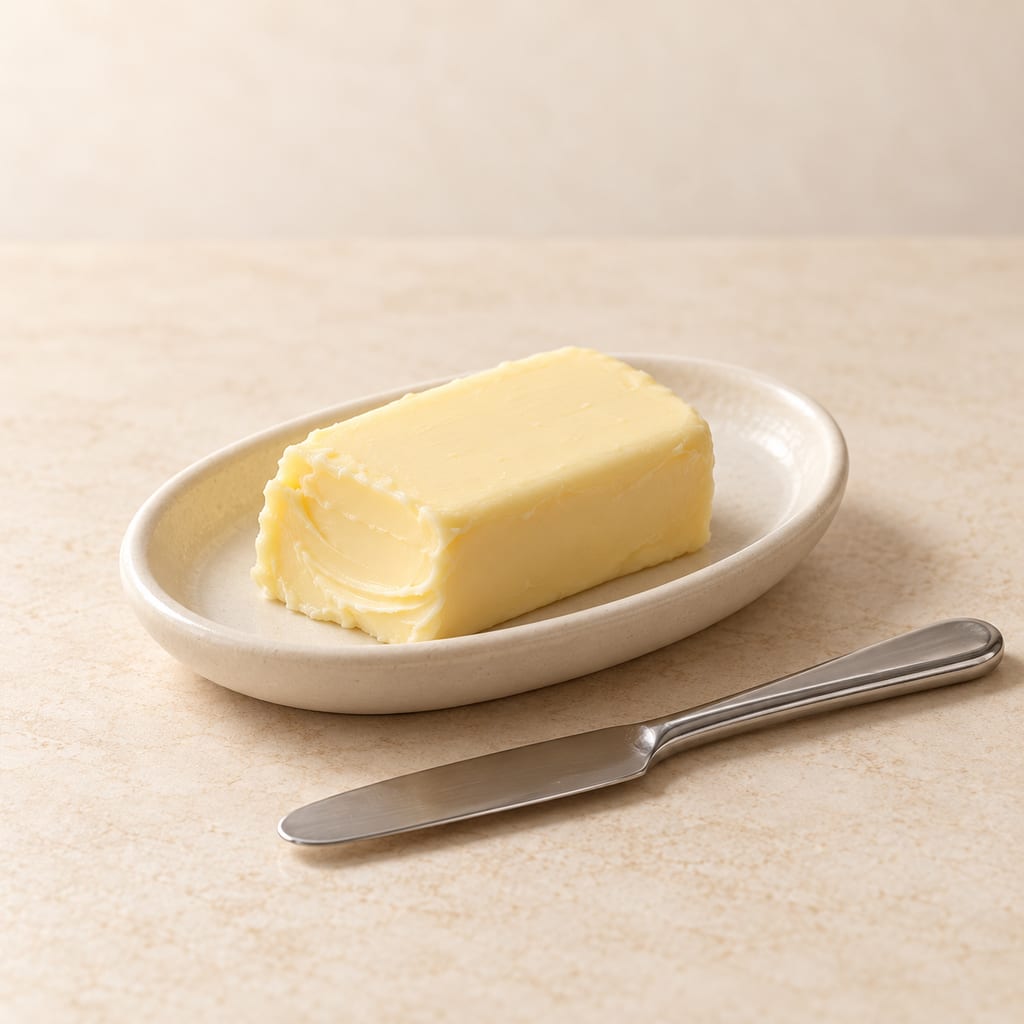
Cultured butter is churned from cream soured with lactic cultures. Its lightly tart flavour comes from the cultured cream, which separates into butter grains and buttermilk.
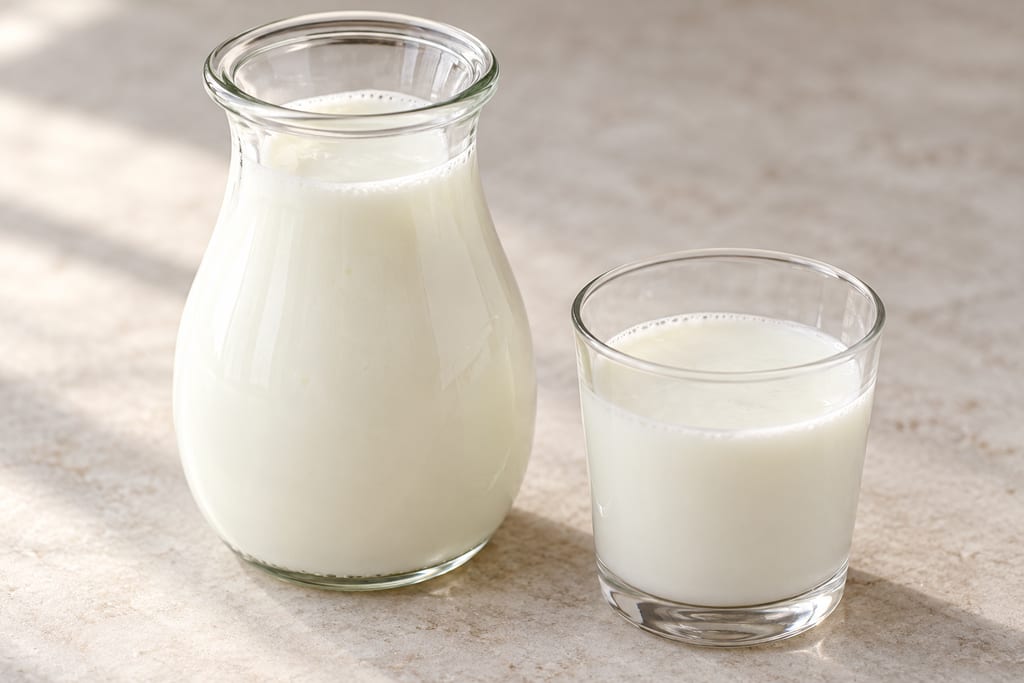
Cultured buttermilk is skim milk soured with a lactic starter into a tangy drink. This Canadian home method sets the milk without churning cream.
Milk thickened with a packet of buttermilk culture makes a tangy drink and a baking ingredient. This warm-incubated version uses whole milk.
Filmjölk is a Swedish cultured milk with mild acidity and a spoonable body. This recurring batch uses filmjölk from the previous batch to culture fresh milk.
Butter heated until most water leaves and the milk solids separate, giving a fat that keeps far longer than butter. Rendering applies the same heat to animal tissue to make lard and tallow.
Greek-style strained yogurt is cultured whole milk drained through cloth to remove whey. This modern Utah home method makes a thick yogurt from a gallon batch.
No community contributions have been published for this entry yet.
Sign in to contribute. Published comments and photos are free to read.
Defra / GOV.UKMethod · History · Identity
Cornish Clotted Cream product specification55% butterfat
70–80 °C at least one hour, no boiling
cool to 5 °C maximum
description
history claims
registration dates
Cited in: Cream that forms a crust; Why the surface and the long low scald matter; Cornish and the protected name; Oven and water-bath routes (untested adaptation); Cooling and keeping; What the sources leave open