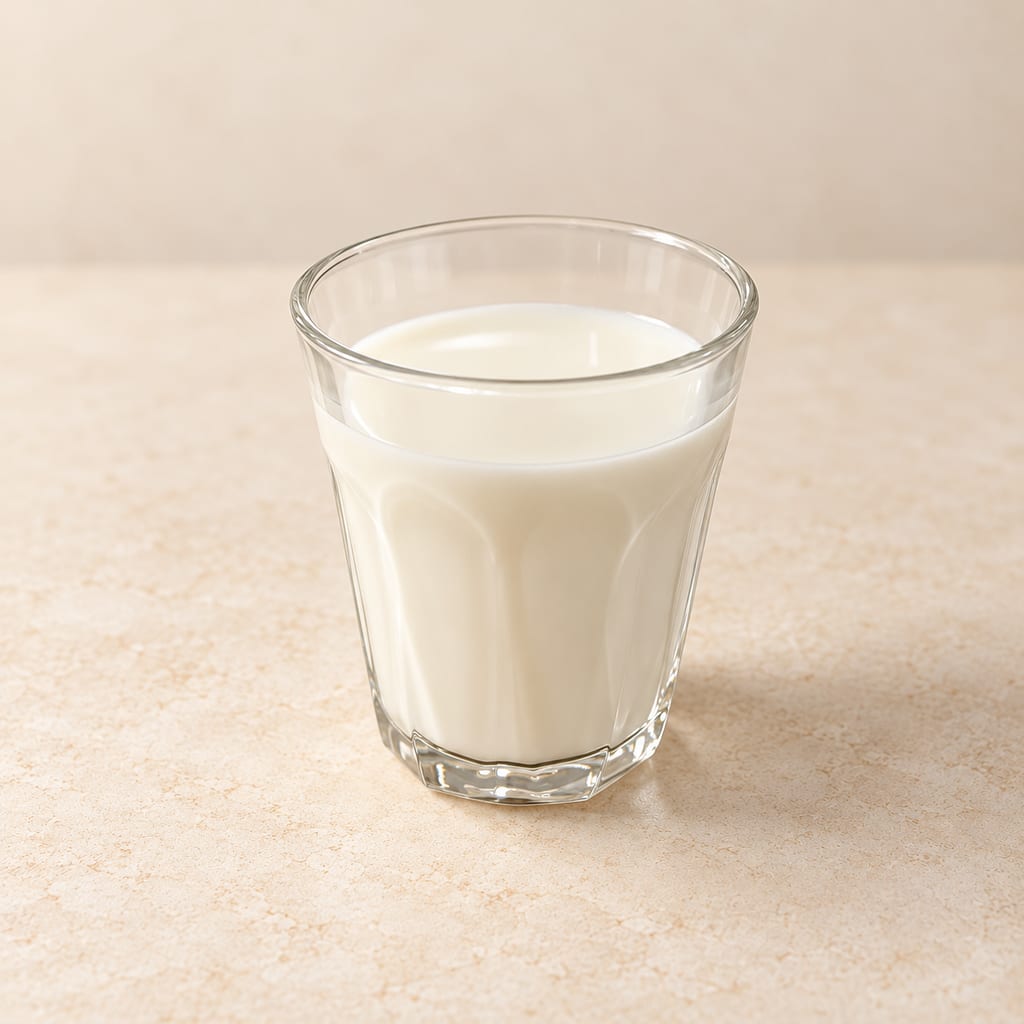
Milk species and the cheesemaking substrate
Milk supplies protein, fat and lactose for cultured drinks and cheese. Animal species, composition and processing each affect how it behaves.
 FermenteaWhere food goes to change
Modern method
Greek-style strained yogurt is cultured whole milk drained through cloth to remove whey. This modern Utah home method makes a thick yogurt from a gallon batch.
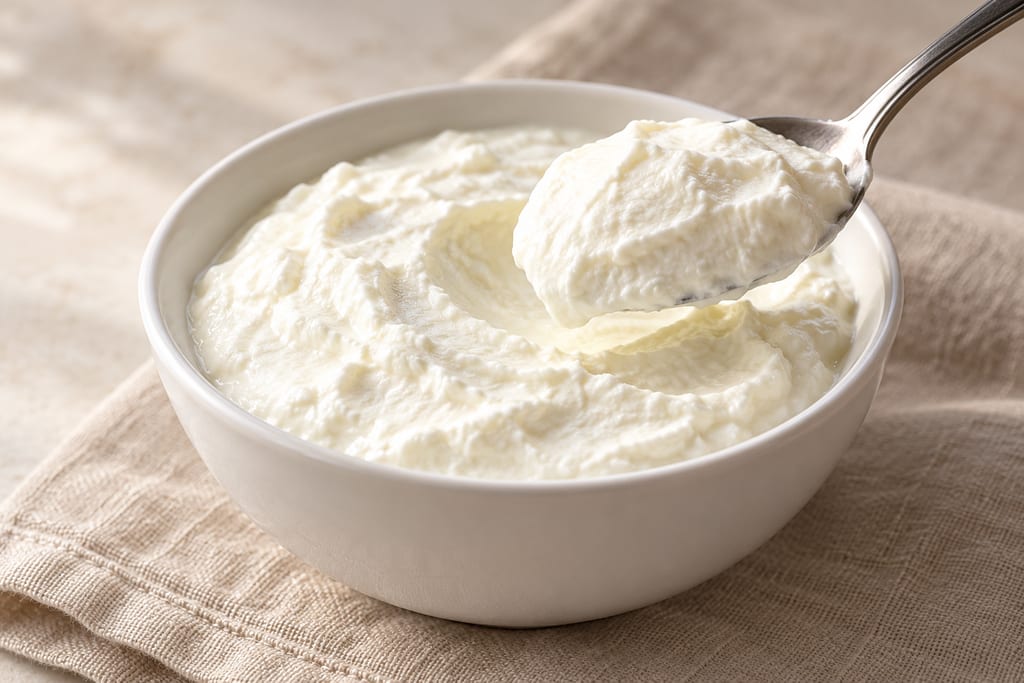
Greek-style strained yogurt is fermented milk made thicker by removing part of its whey. A spoon leaves a more lasting ridge, and the yogurt has less free liquid than the unstrained food from which it began. The defining operation is drainage after a yogurt gel has formed. Culturing makes the yogurt; straining changes its concentration and texture.
Whole milk, live yogurt starter and an optional milk-powder addition begin this modern Utah home preparation. After culturing, whey drains through cloth. The retained yogurt becomes more concentrated, while its acid character remains. It can hold a ridge in a spoon or serve as the base of a further dish.
Concentration changes the proportion of solids in the food. A well-formed but unstrained yogurt can still be much softer than a drained product, because its gel retains a larger liquid phase. The change made by the cloth therefore belongs alongside the earlier choices of milk, culture and heat treatment when explaining the final body.
Greek yogurt is not a single texture. Ethnographic writing describes skin-on sheep's-milk yogurt alongside strained cow's-milk products. Evangelos Karamanes records cloth-bag straining in both mainland and island settings and identifies yliston as a Pontic Greek strained yogurt. His account connects strained yogurt with tzatziki and describes industrial centrifugation as another way of removing whey. These details give the food a history wider than a supermarket brand.
International dairy terminology makes room for several such foods. Strained yogurt and labneh belong to the broader family of concentrated fermented milks. That is a product-family definition, not a household recipe or a certificate for a homemade jar. It recognizes that fermentation and concentration can be combined in different ways and under different names.
In Awassi sheep dairying, some labneh preparations include salting, bag drainage and further drying. Those additional operations lead to foods with different handling and storage histories. Their relation to strained yogurt is useful for understanding a family resemblance, but it does not turn this unsalted refrigerated yogurt into a dried or oil-packed preserve.
The first transformation is biological. Lactic-acid bacteria use lactose and make acid. The changing acidity alters the behaviour of casein, the principal curd-forming milk protein. Casein particles associate into a connected network that holds liquid. Before any cloth is involved, the milk has already become a yogurt gel.
The familiar yogurt culture partnership includes Streptococcus thermophilus and Lactobacillus delbrueckii subsp. bulgaricus. The organisms can cooperate through the release and exchange of nutrients and metabolites. This helps explain why the starter is a living ingredient rather than a thickener. The inoculum can be activated yogurt or commercial plain yogurt with live cultures; its exact species proportions and strain identities are unmeasured.
A weak or inactive starter is therefore not corrected simply by planning to drain the result for longer. Straining is a physical separation step, not a replacement fermentation. A cloth can retain some solid material, but it cannot demonstrate that the intended acidification occurred correctly. The base yogurt needs to follow its complete documented method before concentration begins.
Heating prepares that base. Whey proteins can unfold and interact with casein, influencing gel formation and liquid retention. Cooling then brings the milk into conditions suitable for the starter. The two operations have different purposes: heat changes the milk, while inoculation introduces organisms whose later activity depends on not being damaged by that preceding heat.
Whole milk supplies fat as well as protein, lactose, minerals and water. Fat contributes richness, while the proteins are central to the gel that will later be drained. The Utah source specifically recommends whole milk when a thicker Greek-like result is wanted. That is a documented ingredient choice, rather than a reason to treat any thick milk product as interchangeable with it.
Nonfat dry milk is an optional addition in the recipe. It increases milk solids before fermentation. Straining, by contrast, removes a liquid fraction after fermentation. Both can change the final body, but they do so by different routes. Keeping the powder optional matters: a reader should be able to distinguish the base yogurt from its supported adjustment for greater thickness.
The heat hold is another influence on the starting gel. Longer heating within this method can produce a thicker result. Protein research provides a general explanation through interactions between heated whey proteins and casein. It does not establish the exact firmness, retained whey or yield of a particular home batch made with a particular milk powder.
These choices interact. A gel that holds liquid strongly may drain differently from one that releases it readily. A richer milk can feel fuller even before drainage, while added solids change the material that remains in the curd. There is consequently no single amount of whey that every batch must release to qualify as a successful strained yogurt.
Whey is the liquid phase released from the yogurt gel. It is not pure water. Research on strained-yogurt production measures lactose, lactic acid, minerals and protein in the drained liquid. Removing it therefore changes the balance of components in both portions: the retained yogurt becomes more concentrated, while the collected whey carries dissolved material away.
That movement explains why the process cannot be described simply as drying yogurt without loss. The separation is selective, and its extent depends on the starting milk and gel. Nor does drainage mean that all lactose has gone. The research finds lactose in whey and in strained yogurt; without an analysis of this batch, no particular remaining quantity or dietary claim follows.
A cotton bag, muslin or closely woven cloth supports the curd while allowing liquid to pass, as the Utah method describes. The weave matters to the physical operation: the intention is to drain whey while retaining the yogurt mass. Cloth is part of the food-contact equipment, so its condition and cleanliness matter just as the pan, jars and spoon do.
Longer drainage makes the retained yogurt thicker. Liquid leaving the gel reduces the amount surrounding the retained solids, so the yogurt becomes more concentrated as drainage proceeds. This is a gradual physical change rather than a second setting reaction. A more concentrated curd and a firmer initial gel describe different aspects of the finished texture.
A Greek strained-yogurt experiment examined how milk heating and the timing of separation changed the retained yogurt and expelled acid whey. The researchers used standardized cow's milk and laboratory centrifugation. They found differences in yield and composition under the studied conditions. This supports the broader point that whey removal depends on what happened to the milk and gel beforehand.
The research separates two important influences: how the milk was heated, and when the gel was separated. Heating changes the proteins that help retain liquid; separation then acts on the resulting structure. In the laboratory, centrifugation supplies the force that drives the liquid out. An apparently final operation such as draining still depends on decisions made before fermentation began.
The expelled liquid also shows why milk heating affects composition, not just firmness. Some whey proteins remain dissolved and can leave with the liquid, while heat-induced interactions can retain more protein within the gel. In the strained-yogurt study, the heating treatments changed the residual whey proteins in the acid whey as well as components measured in the retained yogurt. The starting milk's thermal history thus follows both streams through the separation.
Water-holding capacity describes the gel's ability to retain liquid under a test's conditions. Yield describes how much yogurt is retained from the starting material. The quantities are connected, but they answer different questions. A process that retains more liquid can give a greater retained mass; the resulting composition must still be considered alongside that mass. More product is not automatically the same product made more efficiently.
The study also gives a reason to think about the collected whey as a real dairy stream. At manufacturing scale it is a significant by-product with its own composition and disposal challenges. The household bowl is much smaller, but the same separation produces two materials rather than causing the liquid to disappear. Planning a draining setup includes providing a suitable receptacle for that liquid.
The sequence begins by heating the milk and optional powder, then cooling before inoculation. A portion of the cooled milk is mixed with the starter before returning it to the rest. This disperses the inoculum through the batch rather than leaving a concentrated lump of starter in one place. The inoculated milk is then placed in the prepared containers for incubation.
The home method gives an acidity endpoint as well as an incubation window. Acidity connects the culture's activity to the milk's setting behaviour, so the measurement answers a different question from the clock. Time describes how long the milk has been held; pH describes the acid condition reached. Both belong to the preparation as written, rather than allowing one to stand in for the other.
During the draining stage, the curd and whey come into contact with additional equipment. The cloth and collecting vessel become part of the same handling chain as the pan and jars. A drainage setup needs to support the yogurt mass and collect the liquid without allowing that liquid to rise back around the curd. Drainage duration and temperature are not specified.
Strained yogurt's body gives it a different role from a thin cultured drink. It can stay distinct as a spoonful, hold a topping or become the base of another mixture. At the same time it retains yogurt's acid character. Richness and acidity are separate qualities: a dense yogurt is not necessarily mild, and a sharp one is not necessarily thin.
Tzatziki gives a clear Greek example of a further preparation made with strained yogurt. Cucumber, garlic, herbs and oil bring their own textures and flavours. The dairy base is deliberately mixed, so preserving an intact fermentation gel is no longer the aim. The value of draining first is the character of the base being brought to that separate dish, rather than proof that all yogurt mixtures require the same thickness.
In a modern Utah serving suggestion, yogurt is spread on avocado toast with honey. That combination illustrates a contemporary use rather than a Greek historical custom. Keeping those contexts clear lets the reader appreciate the food's range without turning every serving idea into a traditional national dish. The base fermentation can travel into different kitchens while the new preparations retain their own identities.
Some surface whey in the base yogurt may be syneresis, the release of serum from the gel. Straining intentionally takes that separation further. The same physical event can therefore be an unwanted quality change in an intact pot and a planned step in a concentrated yogurt. Purpose and handling explain the difference; the liquid's appearance alone does not.
A poorly set base still requires investigation. Starter activity, milk composition, heating and incubation conditions can affect the result. Keep notes on what was actually used and measured rather than assuming more powder or longer draining will correct any fault. Neither a thick retained mass nor a pleasant sour smell can establish that the preceding fermentation and handling were sound.
A thick strained yogurt is the result of two connected processes: fermentation establishes a liquid-holding gel, and drainage removes part of that liquid. Milk solids, protein interactions and the extent of separation all contribute to its body. The finished spoonful can therefore tell a story about concentration as well as culturing, with neither process reducible to the other.
No straining time or temperature, measured finished yield or validated shelf life is given for this strained batch. Do not infer permission for a prolonged warm drain. The starter's strains are unmeasured, and pH alone does not establish safety. Refrigerate promptly at 4°C or lower.
Bag-strained yogurt is documented in Greek island and mainland traditions, alongside unstrained sheep-milk yogurt with a surface skin. Removing whey makes a thicker product used in foods such as tzatziki. This modern Utah preparation applies cloth straining to home-cultured whole milk; it does not represent every Greek yogurt tradition.
Scaling: source batch only
Raw dairy can carry Listeria and other harmful germs.
Hazard sourceUnsanitized vessels, utensils or contaminated starter can introduce unwanted organisms into cultured dairy.
Hazard sourcePoor starter activity can allow competing organisms, including pathogens, to grow during warm incubation.
Hazard sourceStart with pasteurized dairy and wash and sanitize the container and utensils before inoculation.
Control sourceUse active starter, monitor the specified incubation conditions and investigate a failed set rather than continuing an uncontrolled warm hold.
Control sourceRefrigerate promptly after culturing, with the refrigerator set to 4°C (40°F) or lower.
Control sourceStraining exposes the cultured yogurt to cloth and equipment after heating. Sanitize the strainer, cloth and receiving container, and keep the yogurt refrigerated during drainage.
Plain yogurt with live cultures — Standard yogurt uses Streptococcus thermophilus and Lactobacillus delbrueckii subsp. bulgaricus; the commercial starter’s strains are unspecified.
The extension recipe documents this modern home preparation.
Bag-strained yogurt traditions are documented across islands and the mainland; this is not an origin claim for the Utah formula.
Milk supplies protein, fat and lactose for cultured drinks and cheese. Animal species, composition and processing each affect how it behaves.
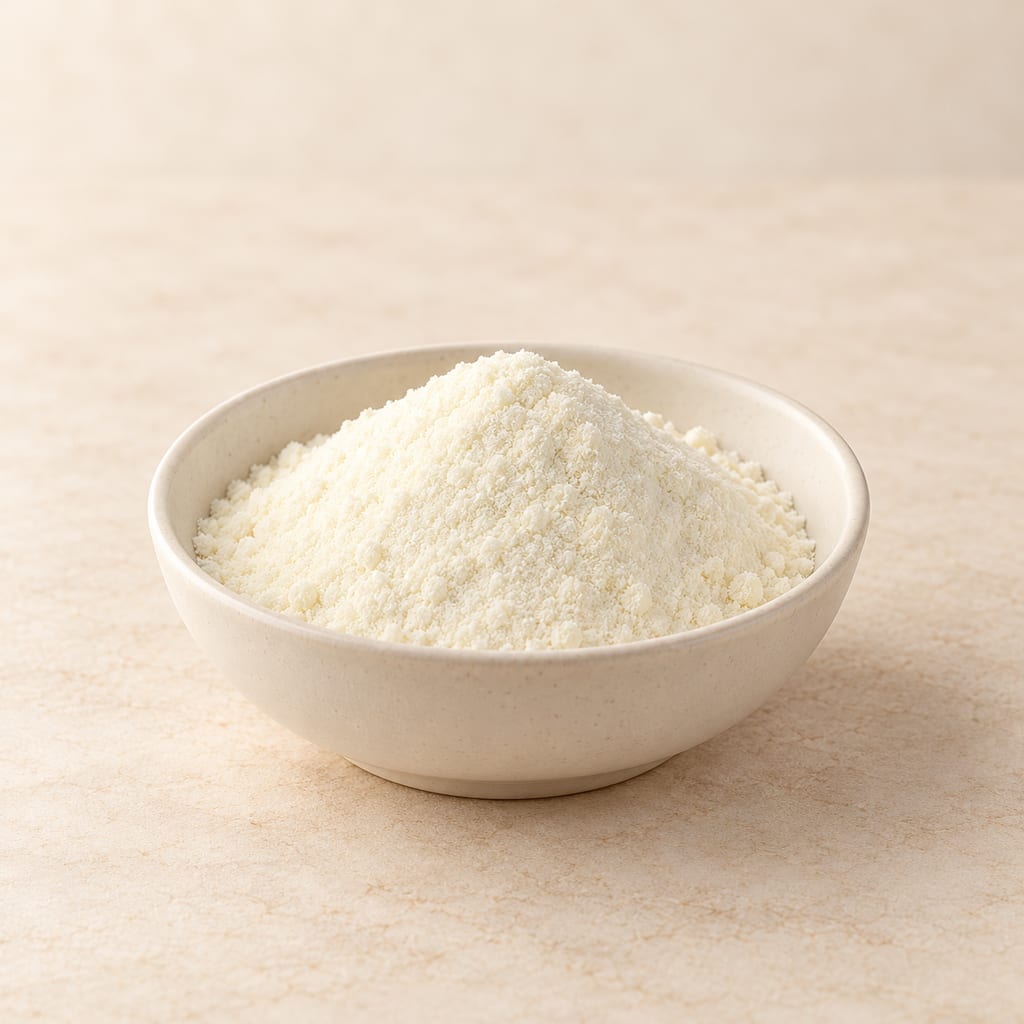
Nonfat dry milk powder is dried skim milk that adds protein, lactose and minerals without much fat. It supplies milk solids for cultured dairy, baking and frozen desserts.
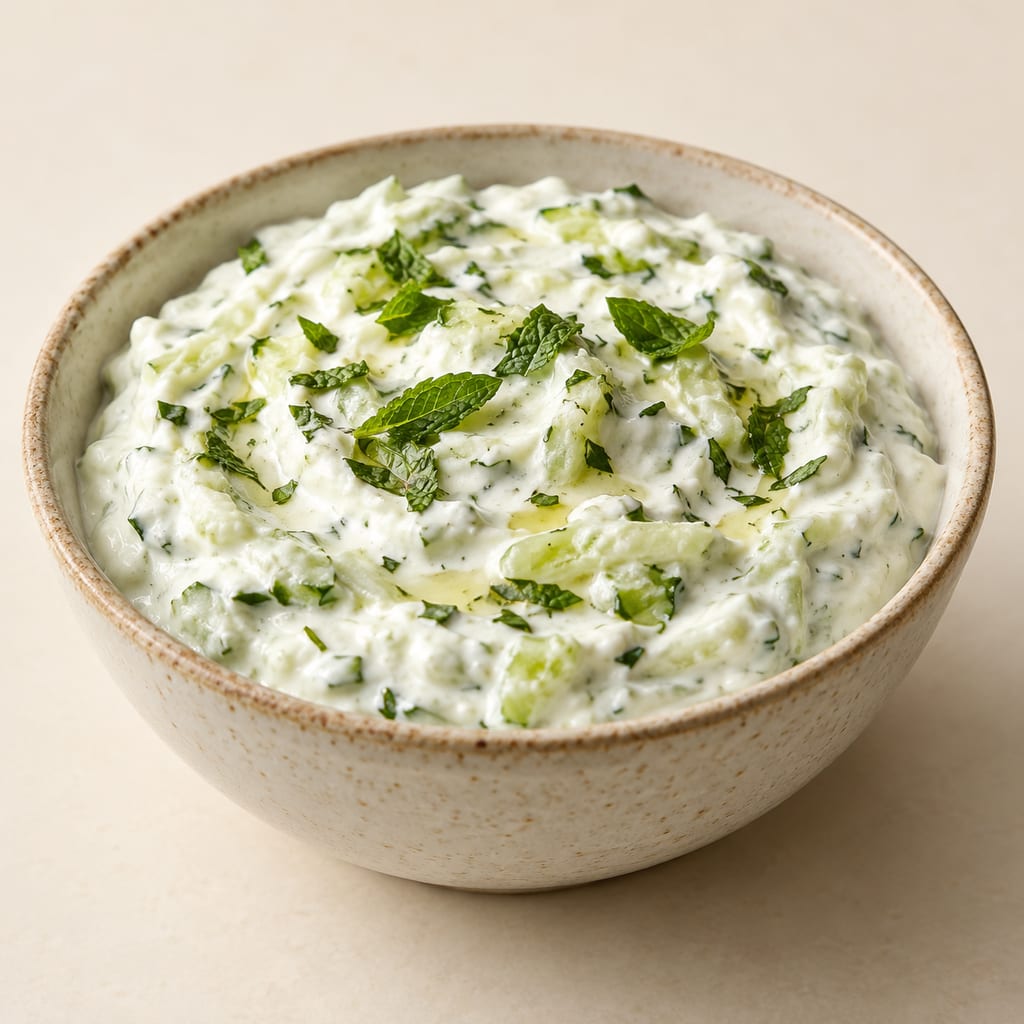
The Cypriot form of tzatziki: strained yogurt and grated cucumber with garlic, finished with mint and lemon juice where the Greek version uses dill and vinegar.

A Greek spread of feta cheese and hot chilli, sometimes with roasted peppers, yogurt or oregano, eaten with warm pita as part of a meze.

A cold dip, soup or sauce of strained yogurt, cucumber and garlic, eaten across Greece, Turkey and the wider Balkans and Levant under names that include cacık and tarator.

Set yogurt keeps the milk’s cultured gel intact in its final container. This Canadian home method follows the same heating and inoculation as stirred yogurt, without the final stirring.
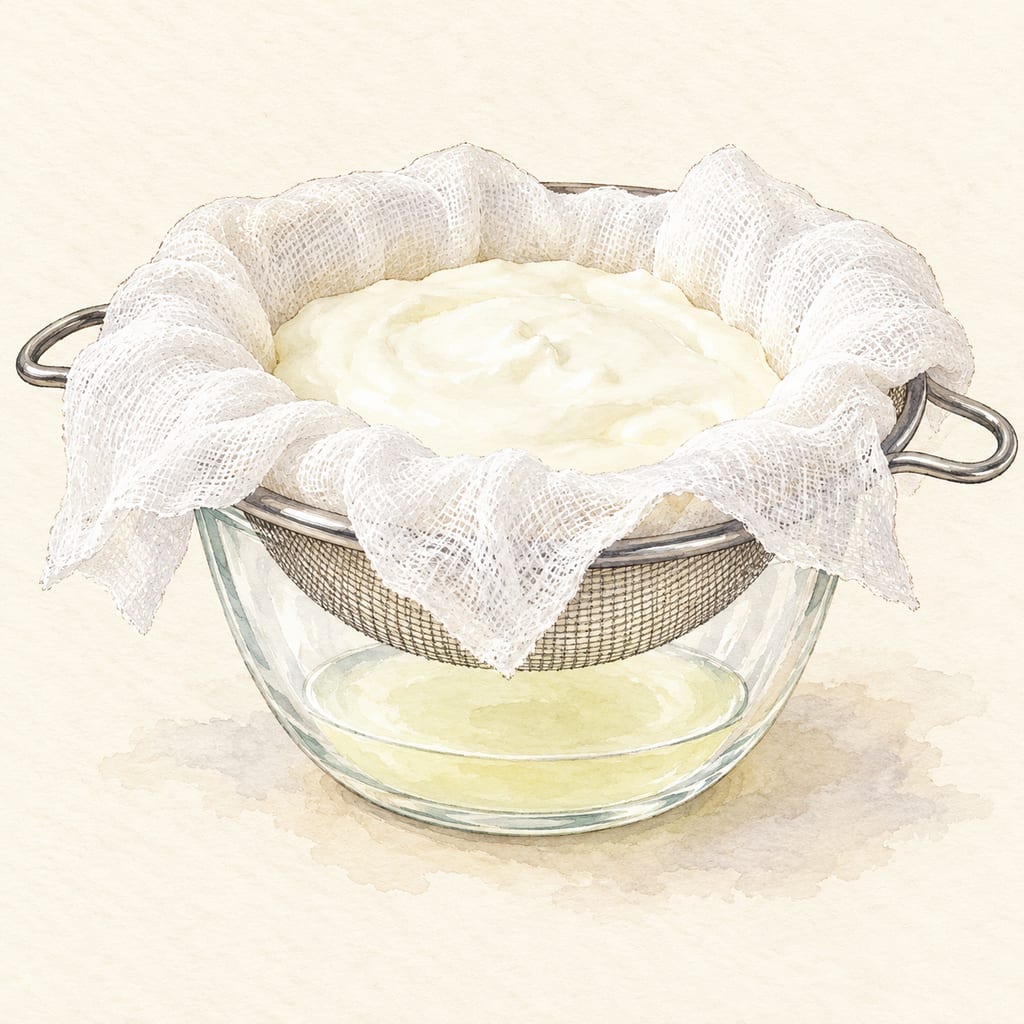
A kitchen strainer lined with cloth holds soft curd while whey passes through into a bowl. It is a modern, general-purpose setup; Sakha sources record strained suorat but do not specify this tool or its materials.

Crème fraîche is cream soured by lactic cultures into a thick, mild topping. It suits fruit and desserts as well as soups, sauces and other savoury dishes.
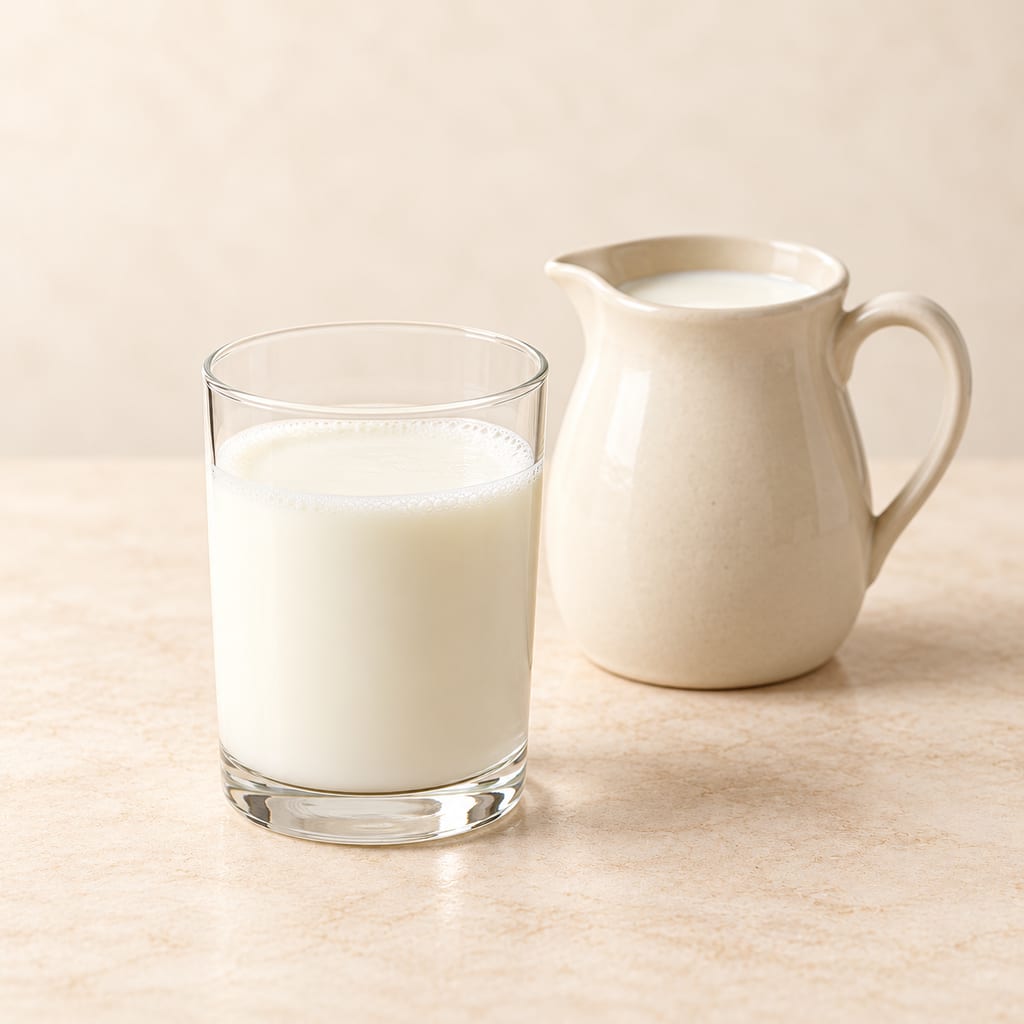
Milk thickened with a packet of buttermilk culture makes a tangy drink and a baking ingredient. This warm-incubated version uses whole milk.
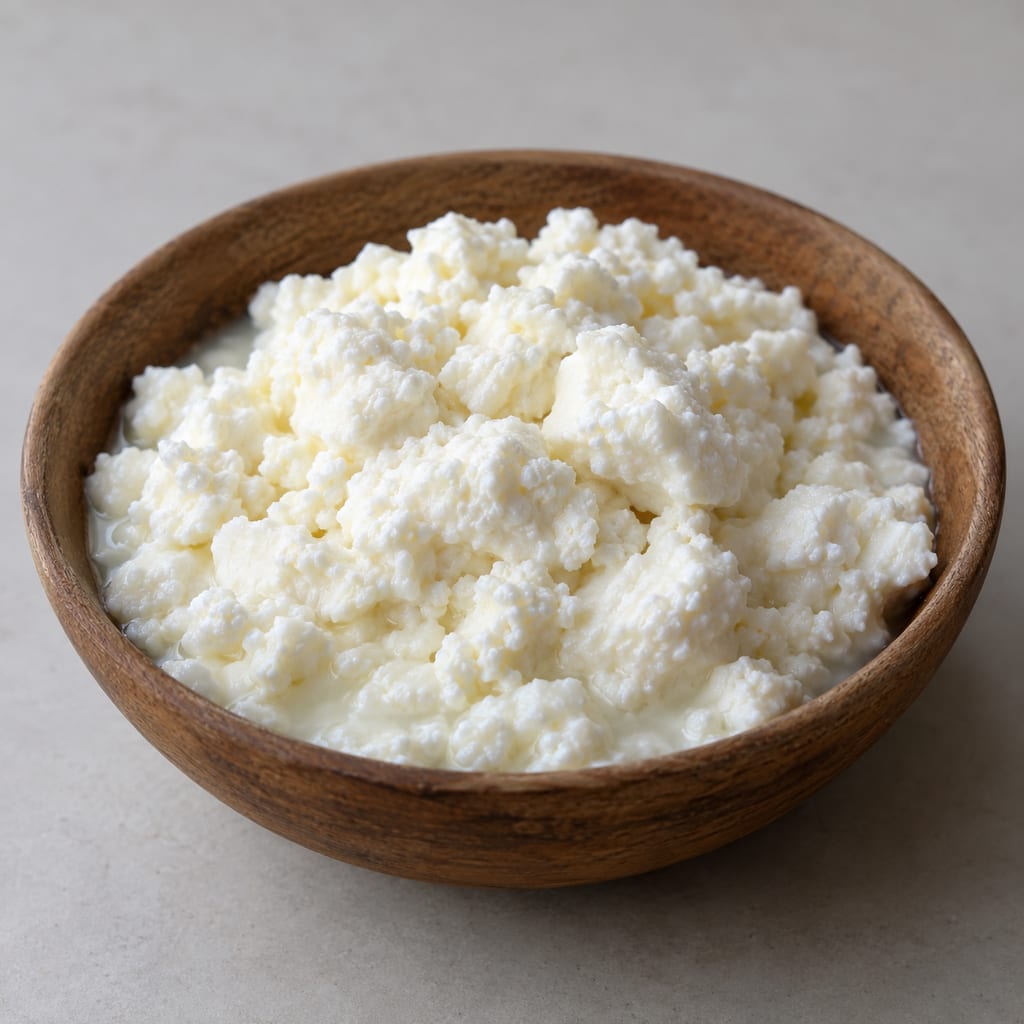
Aarts is a soft Mongolian curd made by draining boiled fermented yogurt; it remains wet, unlike aaruul, which is dried.
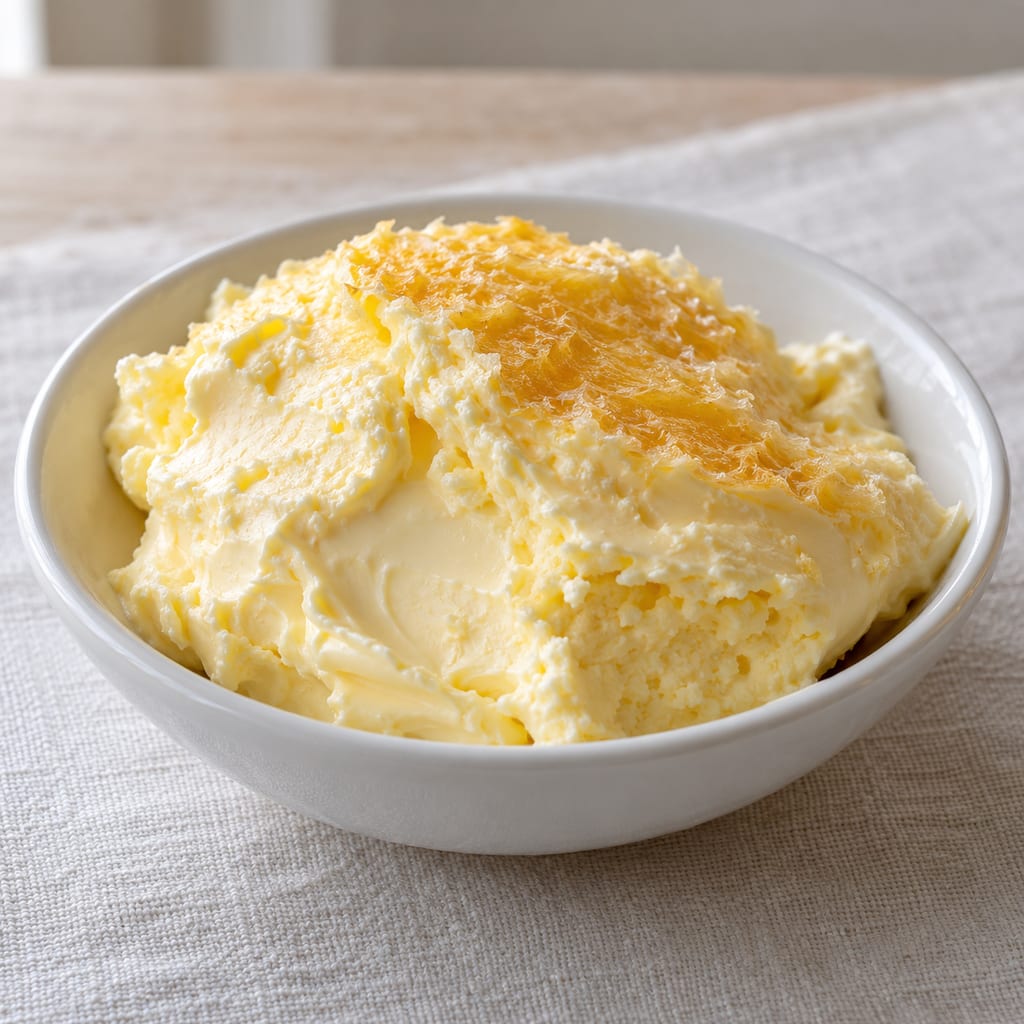
High-fat cream scalded below boiling for at least an hour until a thick crust forms, then cooled hard so the crust sets and the cream beneath thickens.
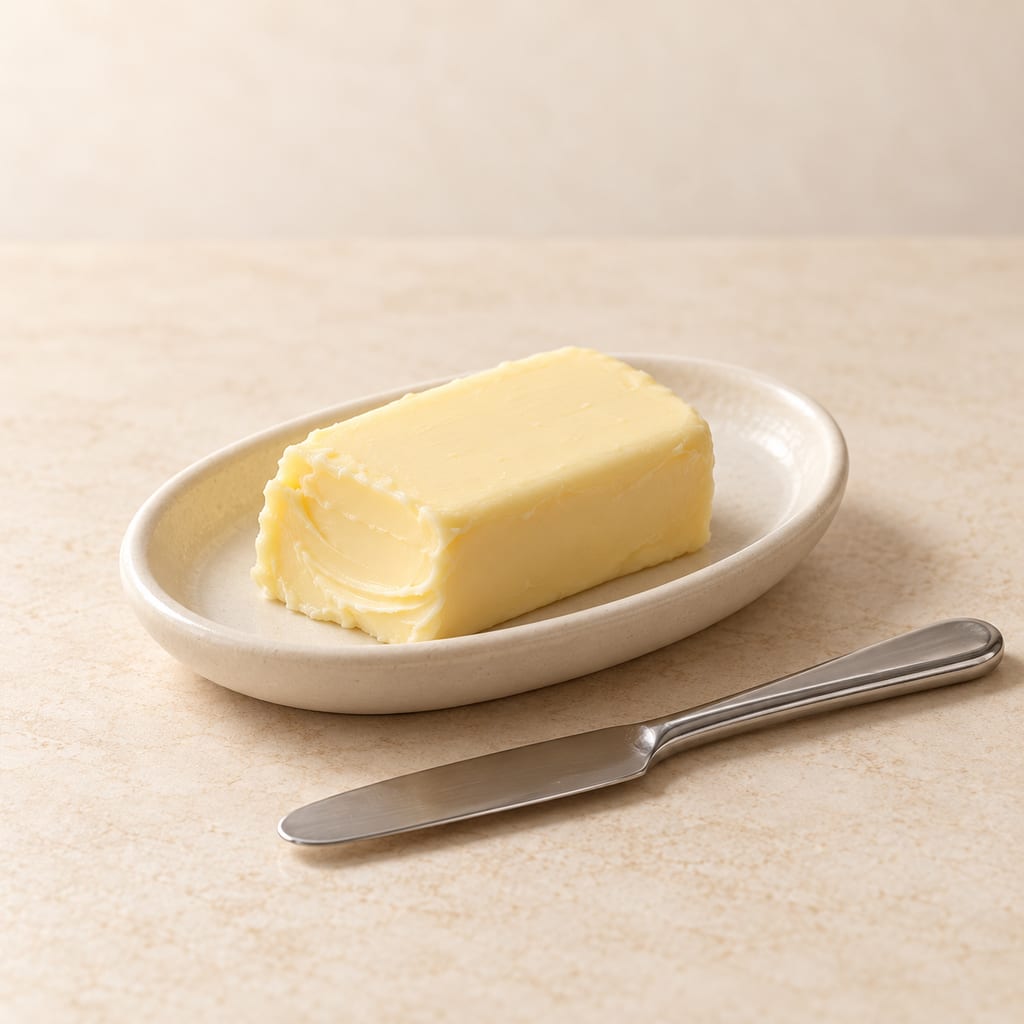
Cultured butter is churned from cream soured with lactic cultures. Its lightly tart flavour comes from the cultured cream, which separates into butter grains and buttermilk.
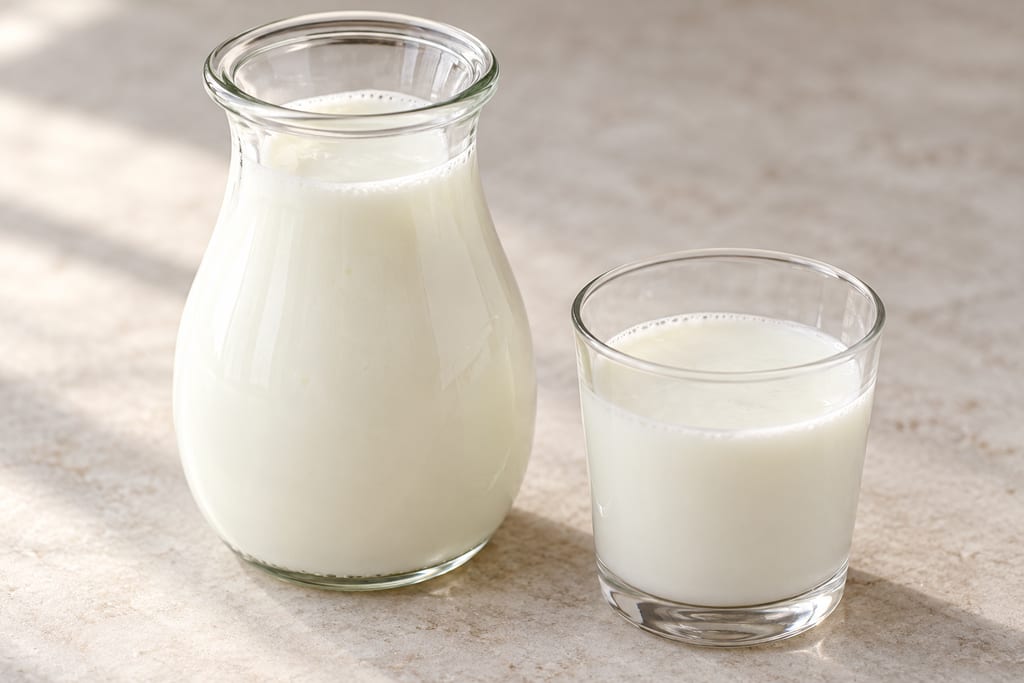
Cultured buttermilk is skim milk soured with a lactic starter into a tangy drink. This Canadian home method sets the milk without churning cream.
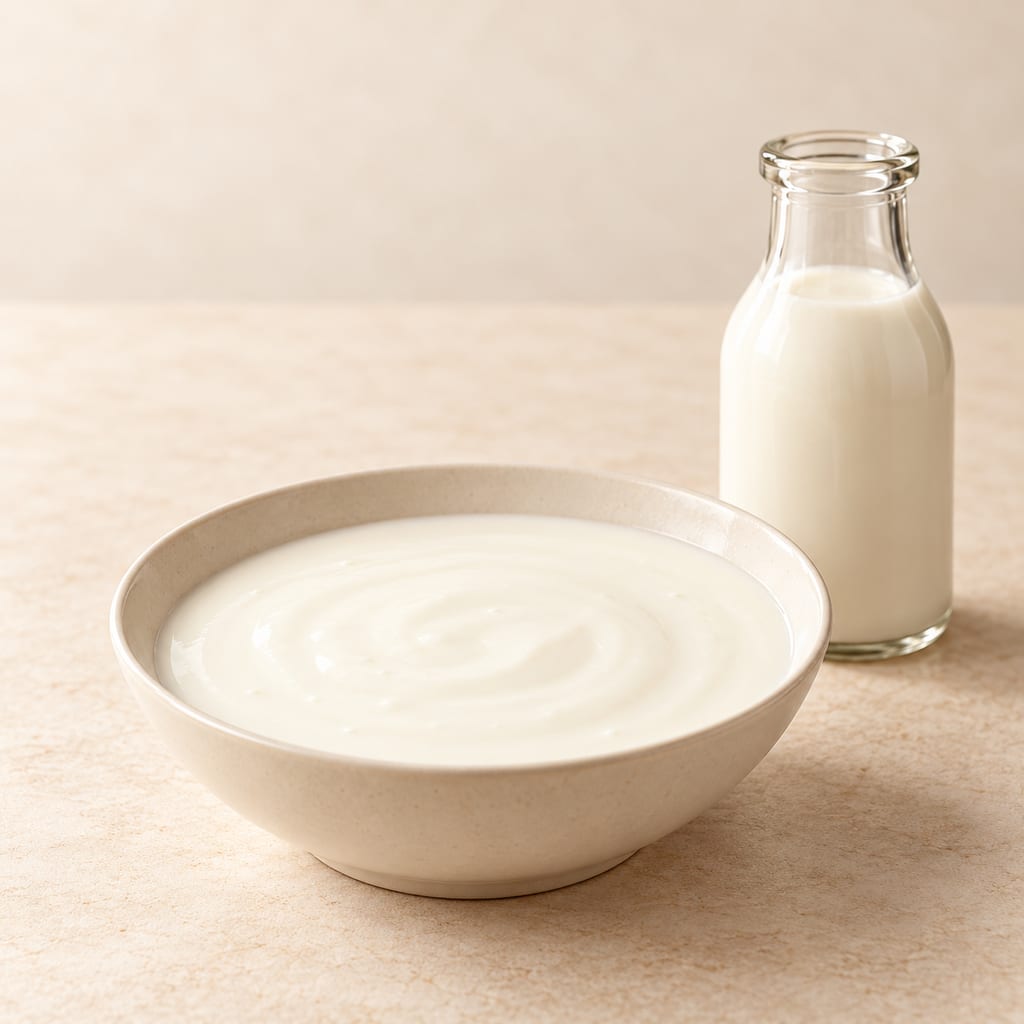
Filmjölk is a Swedish cultured milk with mild acidity and a spoonable body. This recurring batch uses filmjölk from the previous batch to culture fresh milk.
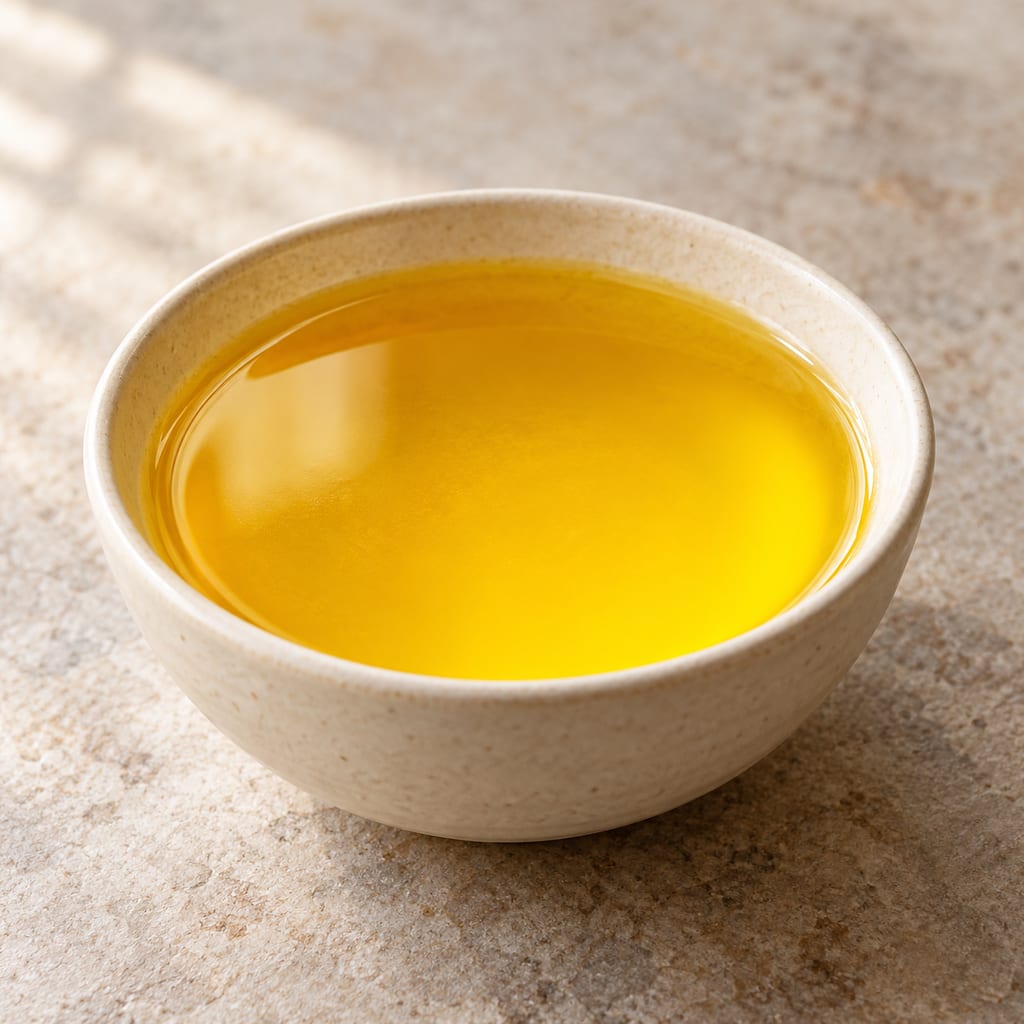
Butter heated until most water leaves and the milk solids separate, giving a fat that keeps far longer than butter. Rendering applies the same heat to animal tissue to make lard and tallow.
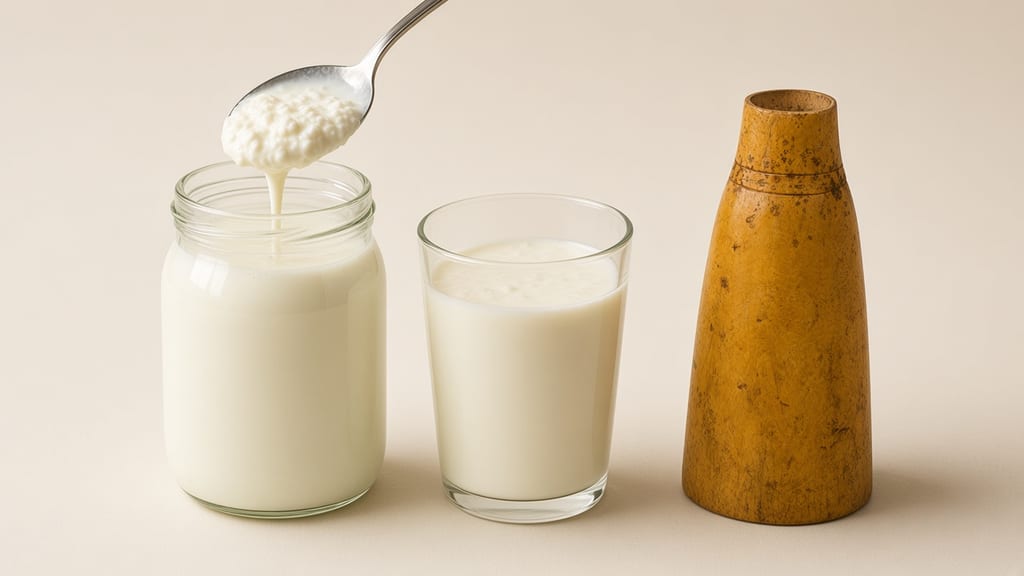
Ikivuguto is Rwanda's thick soured milk. This home version sets pasteurised whole milk with cultured buttermilk overnight at about 21 °C, then chills it for a mild, spoonable drink.
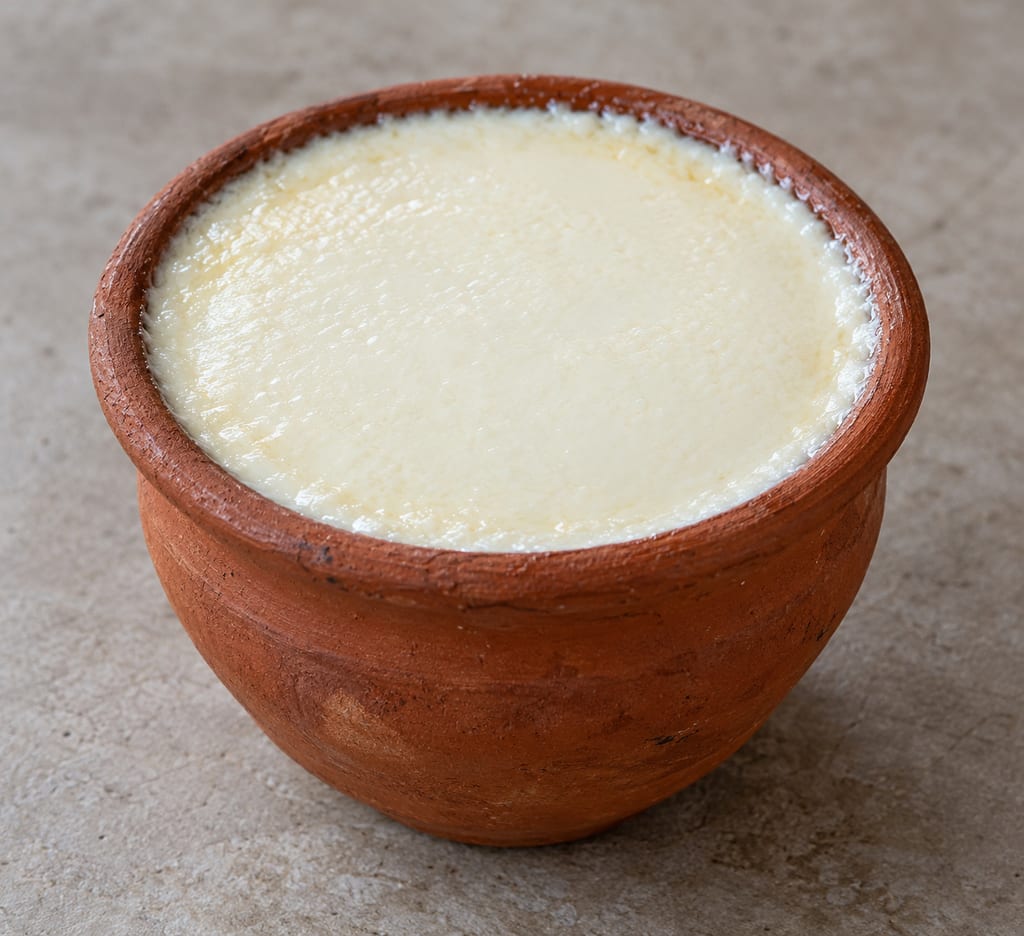
Juju dhau is a rich Newar cultured milk associated with Bhaktapur, Nepal. A local account describes buffalo milk concentrated by boiling, inoculated with previous-day curd and set in earthen pots.
No community contributions have been published for this entry yet.
Sign in to contribute. Published comments and photos are free to read.
Utah State University ExtensionInspiration · Process
Homemade Fermented YogurtRe-culturing: 1 gal whole milk, 1 cup live plain yogurt, optional 1⅓ cups nonfat dry milk; 185–200°F for 10–20 minutes, cool to 112–115°F, 4–8 hours in yogurt maker to pH 4.6 or below, immediate refrigeration. Greek-like texture: strain through cotton, muslin or tightly woven cloth; no drainage duration or yield given.
The 112–115°F range is the milk temperature before adding starter, not an independently specified yogurt-maker setpoint.
Whole-milk source method; optional dry milk; heat/cool/starter/incubation/pH/refrigeration sequence; cloth drainage; longer drainage thicker; avocado toast with yogurt/honey. No straining time/temperature/yield given.
Cited in: The cloth changes the yogurt; First make a yogurt that can hold together; Richness and solids take different routes; What passes through the cloth; From warm milk to the draining cloth; Sweet and savoury uses of a concentrated dairy food; Evidence and handling notes
Agriculture CanadaSafety · Process
Home-made dairy products, Publication 1669Cultured dairy methods, utensils and contamination prevention; copyright 1978, reprinted 1981.
Health CanadaSafety
Safe food handling in the homeRefrigerators at 4°C (40°F) or lower; clean food-contact surfaces and utensils.
Refrigerator at 4°C or lower; hygiene and clean food-contact equipment.
Cited in: Evidence and handling notes
Centers for Disease Control and PreventionSafety
How Listeria Spread: Soft Cheeses and Raw MilkRaw milk and raw-milk yogurt can carry Listeria and other harmful germs; choose pasteurized dairy.
Canadian Food Inspection AgencySafety
Dairy processing: Non-thermal processing systemsFermentation and slow vat: slow acidification can allow competing organisms including pathogens; monitor acidification and address failed starter activity. Commercial guidance, not a household critical limit.
Slow acidification can permit competing organisms, including pathogens; commercial control context, not a validated household endpoint.
Cited in: Evidence and handling notes
Applied and Environmental MicrobiologyIngredient context · Process
Unraveling Microbial Interactions in Food Fermentations: from Classical to Genomics ApproachesYogurt cultures commonly pair Streptococcus thermophilus with Lactobacillus delbrueckii subsp. bulgaricus, both lactic-acid bacteria; general product organisms, not a strain identification of this starter.
Common S.thermophilus and L.delbrueckii subsp.bulgaricus partnership; proteolysis, peptide/amino-acid support and metabolite/formate exchange. General organisms, not starter assay.
Cited in: First make a yogurt that can hold together
International Association of Agricultural MuseumsHistory · Geography
Yogurt in GreeceGreek yogurt traditions vary by milk and texture; folklorists recorded bag-strained yogurt on islands and the mainland. Strained yogurt is used for tzatziki.
Specific family sheep-milk pot method; skin-on yogurt; mainland/island cloth straining; Pontic yliston; commercial centrifugation; tzatziki.
Cited in: A Greek food with more than one form; Sweet and savoury uses of a concentrated dairy food
Foods11(24):3953Process
Effect of Modified Manufacturing Conditions on the Composition of Greek Strained Yogurt and the Quantity and Composition of Generated Acid WheyAcid whey contains dissolved lactose, acid, minerals and protein; heat/timing influence retained yogurt/whey; heat effects on residual whey proteins; laboratory centrifugation and yield interpretation.
Cited in: The cloth changes the yogurt; Richness and solids take different routes; What passes through the cloth; How the first gel shapes the final yield; From warm milk to the draining cloth; Reading texture and keeping the handling visible
FAO/WHO Codex AlimentariusProcess
Codex Standard for Fermented Milks, CODEX STAN243-2003Yogurt organism pairing; concentrated fermented milk family includes Stragisto and Labneh. No home product certification or numerical composition claim.
Cited in: A Greek food with more than one form
Food and Agriculture Organization of the United NationsHistory
The Awassi sheep with special reference to the improved dairy type, Chapter4: Milk and milkingRegional labneh account includes salt, bag drainage and further drying; a distinct process from this unsalted refrigerated yogurt. No historical storage/sun-drying/oil-packing practice endorsed as home safety advice.
Cited in: A Greek food with more than one form
International Journal of Food Science, article5569917Process
Heat-Induced Interaction of Milk Proteins: Impact on Yoghurt StructureCasein acid gel, serum retention; whey-protein unfolding and interaction with casein; protein-complex location and effects depend on conditions.
Cited in: First make a yogurt that can hold together; Richness and solids take different routes; From warm milk to the draining cloth
Journal of Food Science and Technology60(6):1656–1665Process
A comprehensive review on yogurt syneresis: effect of processing conditions and added additivesSet/stirred distinction; gel matrix and serum expulsion; internal stresses and external cutting/shaking; milk formulation and process affect texture.
Cited in: Reading texture and keeping the handling visible
University of Alaska Fairbanks Cooperative Extension ServiceProcess
Making Yogurt at Home, FNH-00062Milk solids and set; heating/cooling; culture and temperature faults; over-incubation/agitation and syneresis; sanitation. Its alternate method/keeping period not transferred.
Cited in: Reading texture and keeping the handling visible