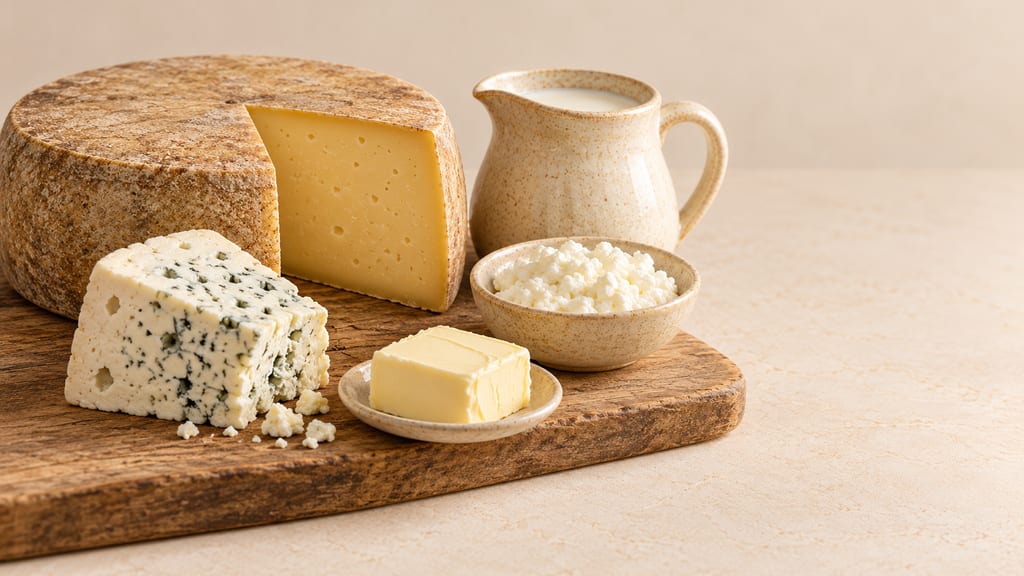
Milk, curd and the world's dairy stores
Follow milk into cheese, cultured drinks, butter, dried curds and sweets: a journey through the animals, seasons and household decisions behind the world's dairy foods.
 FermenteaWhere food goes to change
Modern method
Creme fraiche
Crème fraîche is cream soured by lactic cultures into a thick, mild topping. It suits fruit and desserts as well as soups, sauces and other savoury dishes.
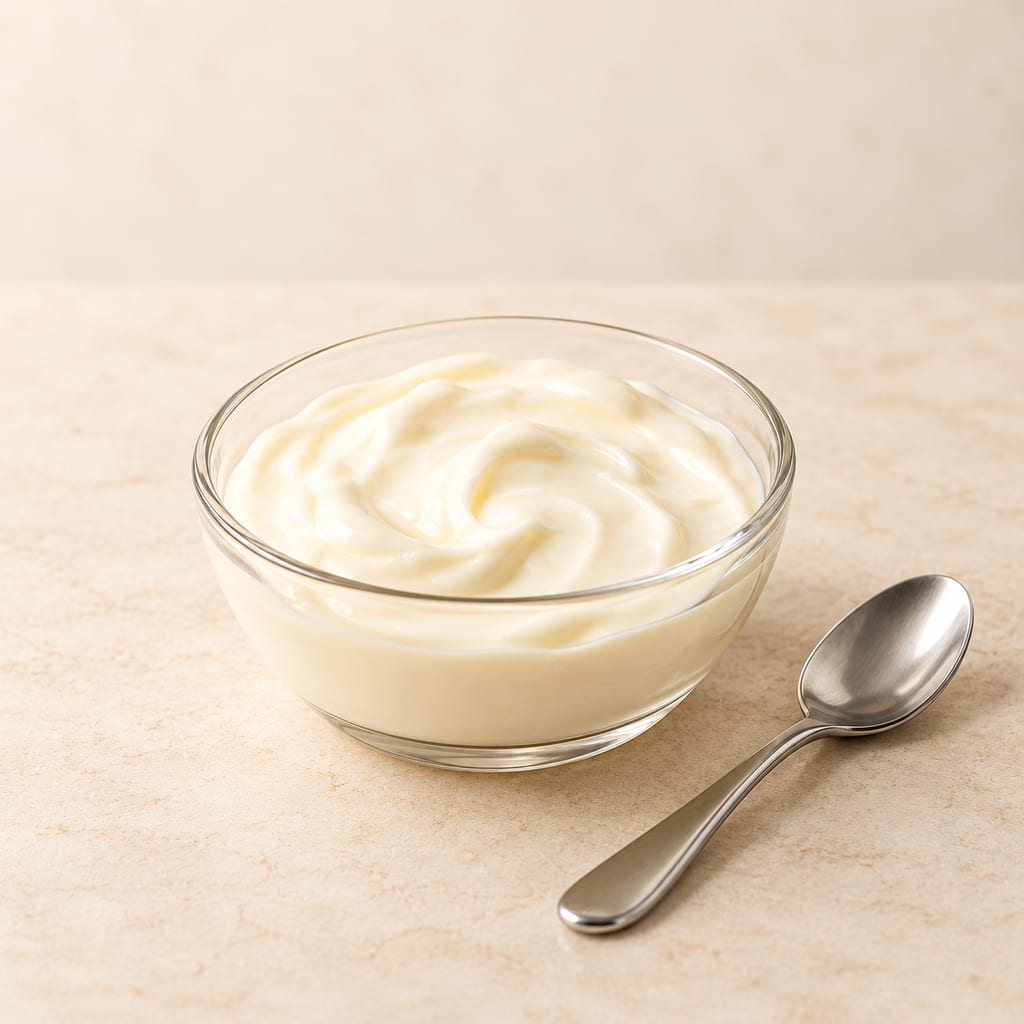
Crème fraîche is cream matured with lactic cultures. Its name covers products that differ in fat content, thickness and process. Lex, the Danish national encyclopedia, describes it as cream soured with lactic acid bacteria and notes the French origin of the name. INAO distinguishes sweet Isigny cream, which is fluid, from matured cream, which is thick and firm. These are related products, but not one standardized recipe.
This home batch follows Utah State University Extension’s cultured-cream method: heat whipping cream, cool it, inoculate it with one selected starter and incubate at the stated temperature to a measured acidity endpoint. It is not a reproduction of every French dairy process or the protected Isigny product. The distinction matters because starter, fat level, heat treatment and fermentation conditions all shape the result.
Lex identifies crème fraîche as a French dairy product. The name’s English-language history does not date the food itself: a Brill reference on French culinary vocabulary records crème fraîche as an English culinary loanword in 1936. That is an attestation of the borrowed term, not evidence for a first batch in France. The available sources do not establish a first maker, earliest French written mention or precise birthplace, so this account does not invent one.
Cream is the fat-rich fraction of milk, separated by gravity in older household practice or by centrifugal equipment in modern dairies. Culturing changes its flavor and body, but the evidence reviewed here does not date when French makers first soured cream. The firmer historical ground is the documentation of named regional variants and modern production. This keeps the story useful without turning uncertainty into folklore.
The clearest place-specific example in the sources is Crème d’Isigny, made in a defined area of Normandy. INAO sets its PDO area across 175 communes in Manche and Calvados around the Col du Cotentin. It describes sweet cream as fluid and lightly sweet, and matured cream as firm, thick and mildly acidic. A regional government guide records French AOC recognition for Isigny cream in 1986; the designation later became the European PDO.
The protected name does not mean all crème fraîche must come from Normandy. Isigny’s producer describes cream separation, starter inoculation and maturation, with 18–22°C and 16–18 hours for that specific PDO process. Those conditions belong to that regional product. Utah State’s home recipe instead specifies incubation at 42.3°C. These distinct methods should not be combined into a made-up universal process.
Lactic acid bacteria use lactose, milk’s principal sugar, and produce lactic acid. As acidity rises, pH falls and casein proteins aggregate into an acid gel, making the liquid more viscous. Fat content and the state of the fat globules also contribute to cultured cream’s structure. A review of cultured-cream technology describes lower-fat products as relying more on a protein acid gel, while high-fat products have structures in which protein-coated fat globules contribute strongly. This helps explain why cultured creams can pour, spoon or hold their shape differently.
Cultures can affect aroma as well as acidity. The home recipe does not identify the organisms in the yogurt or commercial starter, so no specific species or guaranteed aroma is assigned here. Isigny’s formula is not disclosed either. What can be said is that culture and conditions influence the outcome; the properties of one named starter cannot be carried over to another without evidence.
Whipping cream supplies milk fat, water, lactose and milk proteins. The recipe uses four cups of cream and one cup of yogurt. Utah State lists buttermilk, acidophilus milk or a packet of crème fraîche starter as alternatives at the same amount; they are substitutes for the yogurt, not additional ingredients. The source does not identify the yogurt’s species composition or state the finished yield.
Heat the cream slowly to 185–200°F (85–93°C), hold it there for 2–5 minutes while stirring, then cool it to 104–113°F (40–45°C). Add the selected starter after cooling, transfer to clean, sanitized jars and incubate. The sequence keeps the culture away from the preceding high-heat step. Sanitized equipment reduces the chance that unwanted microbes enter the nutrient-rich dairy mixture; it does not by itself guarantee safety.
Utah State specifies incubation at 42.3°C (108°F) until the cultured cream reaches pH 4.6 or less. The acidity measurement is the stopping criterion; the source does not give a duration, and a time borrowed from another starter would be unsupported. The pH target is a process parameter, not a universal safety guarantee. Use appropriate dairy handling and measuring practices. Smell, taste, bubbles or a thick appearance cannot prove that a batch is safe.
A thermometer is needed for the heating, cooling and incubation stages; sanitized jars and a way to measure pH are also needed. The cream is stirred during heating and holding, the starter is incorporated only after cooling, and the jars are prepared before incubation. No finished yield, active time, fermentation duration or storage life is established for this exact yogurt batch. The page leaves those figures open rather than importing them from a commercial label or another recipe.
The name covers practical differences. Lex reports Danish crème fraîche commonly at 18% or 38% fat and notes that products below the EU minimum are sold as fraiche. INAO describes Isigny’s fluid sweet cream and thick matured cream. A label can show fat level, whether cultures were used, and whether a product carries the PDO name. Those details are more informative than assuming every tub has one texture or process.
Fat and protein both shape cultured-cream body, so a lower-fat version may not behave like a high-fat matured cream. The technology review describes structural differences across fat levels but does not establish a universal cooking rule for every brand. Sour cream, yogurt, liquid cream and crème fraîche are not interchangeable in every dish; substitutions can change thickness, richness and acidity. Keep named regional products distinct from the home recipe presented here.
Utah State suggests cultured cream with curry, casseroles, soups, fruit, vinaigrette and desserts. Lex describes it in sauces and stewed dishes and beside cakes, tarts and sweets. Its acidity can balance rich or sweet food, while a thick body works as a spooned topping or cold dip. A thinner cream is easier to stir into a dressing than a firm matured one.
Isigny cream is used cold or warm, including in sauces and with fish or meat. Its producer describes the matured product as holding texture in cooking. That claim belongs to this high-fat regional cream, not every low-fat substitute. Choose the form for the job: spoon a thick cultured cream over soup or fruit, thin it for a dressing, or incorporate it into a cooked dish with the selected product’s fat level and texture in mind.
This formula retains one source’s batch and sequence: four cups whipping cream, one cup of one listed starter, controlled heating, cooling, inoculation, incubation and a measured acidity endpoint. It does not add Isigny’s slower room-temperature maturation or industrial standardization. A domestic method can be carefully described without claiming to duplicate a protected product whose milk source, geographic area and specification are different.
Prepare the jars and measuring equipment before heating. Keep cream and starter separate until the cream reaches the method’s inoculation range. Record actual temperature and pH rather than guessing a duration. The sources give no final chilling schedule, yield or storage limit for this specific yogurt batch, so those values remain unspecified. This restraint keeps the recipe reproducible without presenting unsupported precision as expertise.
Modern cream begins with separation: a centrifuge divides milk fat from skim milk so a dairy can standardize cream for a particular product. The Isigny PDO account describes that separation before its starter and maturation stage. Its exact protected process has a defined milk source and geography; it is not simply a culture added to any cream. The distinction between the raw ingredient and the named product helps readers understand why a tub may carry a regional designation and why a home batch cannot inherit it by copying a temperature.
Cultured cream technology also depends on physical treatment. The scientific review discusses fat standardization and homogenization as factors in the resulting structure. Homogenization changes how fat globules are dispersed; fermentation then acidifies the continuous milk phase. The effects depend on the cream’s composition and process, so this general mechanism explains variation without assigning a specific industrial treatment to the Utah recipe. Utah State’s home instructions give heating and stirring but do not specify homogenization, and none is added to the method.
The spelling crème fraîche is French, while cremefraiche is a joined spelling used in Danish. Lex explains the name from crème, cream, and fraîche, fresh. Its Danish account describes a product with more than 10% fat and notes typical Danish examples at 18% and 38%; it also distinguishes fraiche products below the EU minimum for crème fraîche. Those figures describe naming and products in that context, not the fat content of every French or international product.
The French market also distinguishes thick and fluid cream and uses protected names for regional specialties. INAO’s entry for Crème d’Isigny provides a precise example: a PDO area and a defined product with sweet and matured forms. A recipe author should not flatten these names into interchangeable styles. If a reader is choosing cream, the package’s name, ingredient list, fat level and PDO mark identify the product more reliably than a generic assumption about what the phrase means.
The acidity that develops during culturing contributes to the thickened body, while the proportion of fat changes how dense or rounded the cream feels. The technology review explains why lower-fat cultured cream depends more on protein gel and why higher-fat versions involve a network of protein-covered fat globules. A reader can therefore expect differences among fluid cream, spoonable cultured cream and a firm matured product without treating a single appearance as the measure of quality.
Acidity and fat also shape how a cream reads in a dish. Lex notes that crème fraîche is used where cream adds body in sauces and stews, as a soup topping, and alongside cakes and desserts. The product’s mild sourness can sharpen a rich preparation or offset sweetness, while its fat softens that acidity. Isigny’s producer describes its matured PDO cream as suitable both cold and warm and emphasizes its texture in cooking. These are useful culinary clues, but they apply most directly to the named product rather than every reduced-fat version.
This page describes a single extension recipe and the evidence surrounding it. It does not specify a result time because the published source provides none; fermentation rate depends on the starter and conditions, and the time given for Isigny PDO cream is for a different process. It does not promise a yield or storage life, and it does not turn a pH reading into proof that a home product is free of hazards. These are meaningful limits rather than blanks to fill with conventional guesses.
The same restraint applies to cultures and place. The source lists yogurt, buttermilk, acidophilus milk and commercial starter as alternatives without documenting the organisms in a particular packet. The regional evidence establishes Isigny as a protected Normandy product, while the extension page documents the home method in Utah. Neither fact makes Utah a birthplace of crème fraîche or makes a home batch a PDO product. Keeping those facts separate lets the reader understand both the cultural reference and the practical recipe.
Crème fraîche is a French dairy product made by souring cream. Its mild acidity and rich texture suit both savoury cooking and desserts. Modern production uses pasteurized cream inoculated with lactic cultures. This home version heats whipping cream before adding yogurt; buttermilk, acidophilus milk and a commercial crème fraîche packet are other documented starter options.
Scaling: source batch only
Bacteria from unsanitized containers can contaminate the cultured cream.
Hazard sourceWash and sanitize equipment before use, and keep pasteurized dairy away from unsanitized utensils.
Control sourceIncubate at 42.3°C and measure the cream until pH is 4.6 or less.
Control sourceUse sanitized jars so that bacteria from the containers do not contaminate the cream.
Measure the pH during incubation and continue to the documented endpoint of 4.6 or less.
Yogurt — Lactic starter selected from the documented alternatives; species are not identified for this batch.
Extension recipe source; not a product origin claim.
Follow milk into cheese, cultured drinks, butter, dried curds and sweets: a journey through the animals, seasons and household decisions behind the world's dairy foods.
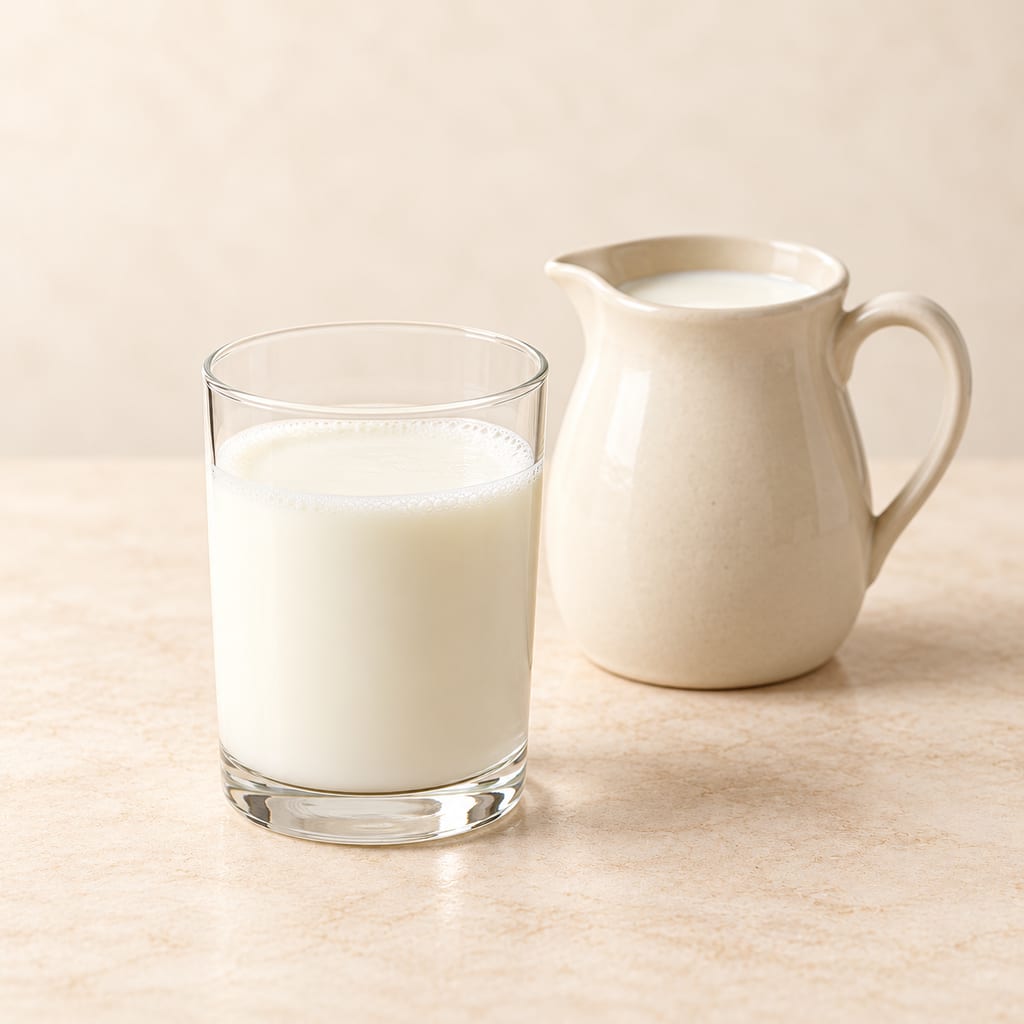
Milk thickened with a packet of buttermilk culture makes a tangy drink and a baking ingredient. This warm-incubated version uses whole milk.
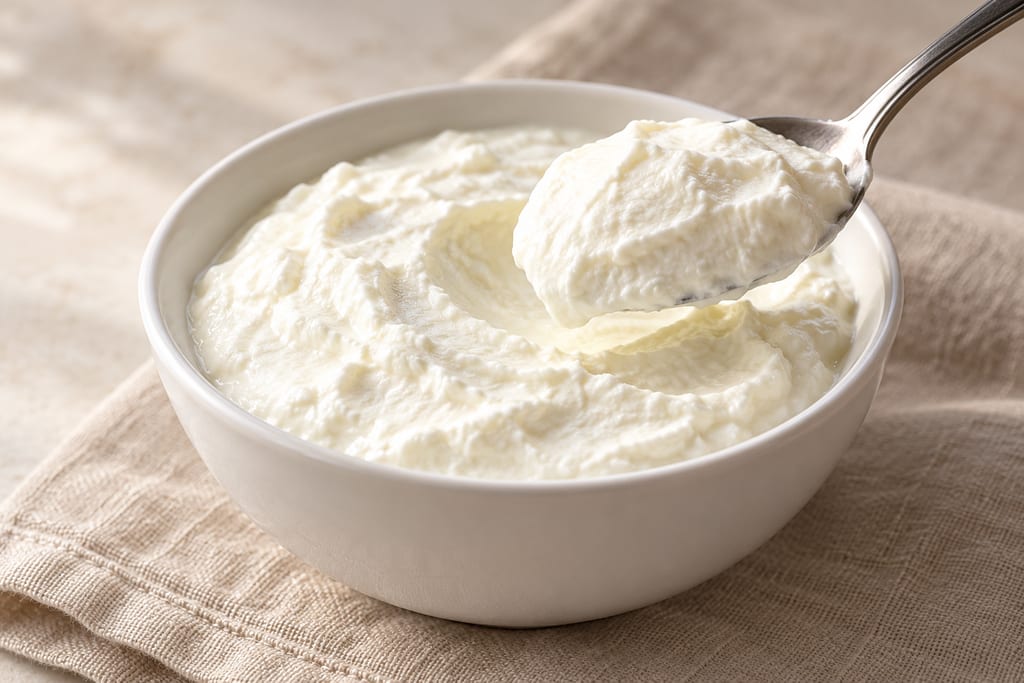
Greek-style strained yogurt is cultured whole milk drained through cloth to remove whey. This modern Utah home method makes a thick yogurt from a gallon batch.
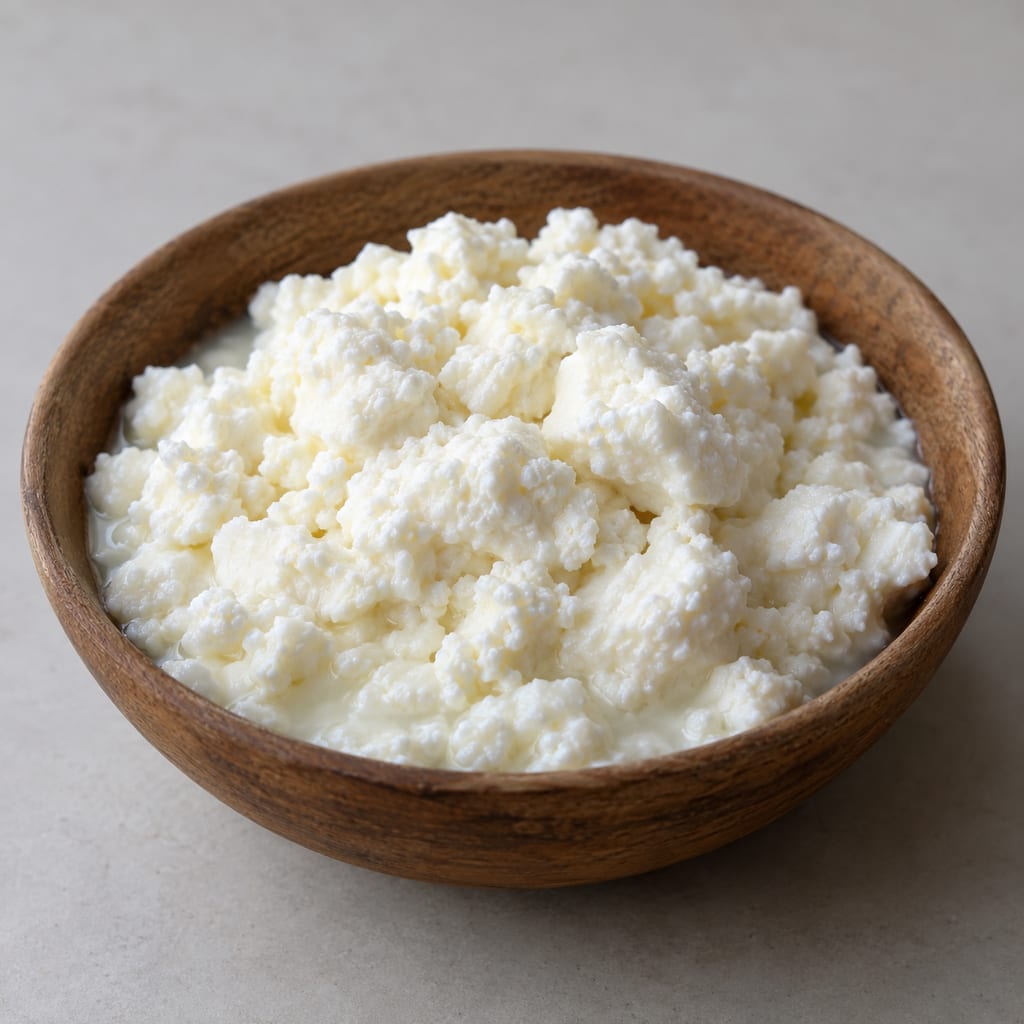
Aarts is a soft Mongolian curd made by draining boiled fermented yogurt; it remains wet, unlike aaruul, which is dried.
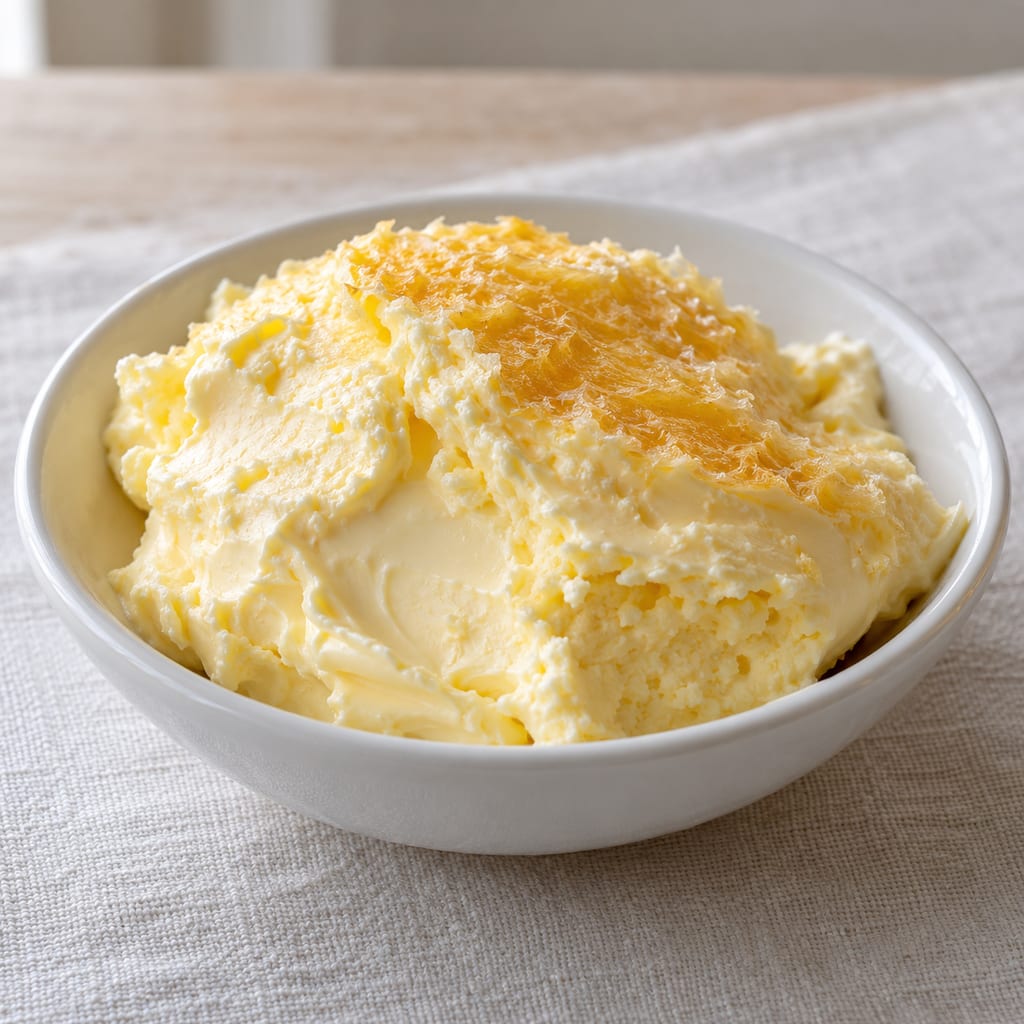
High-fat cream scalded below boiling for at least an hour until a thick crust forms, then cooled hard so the crust sets and the cream beneath thickens.
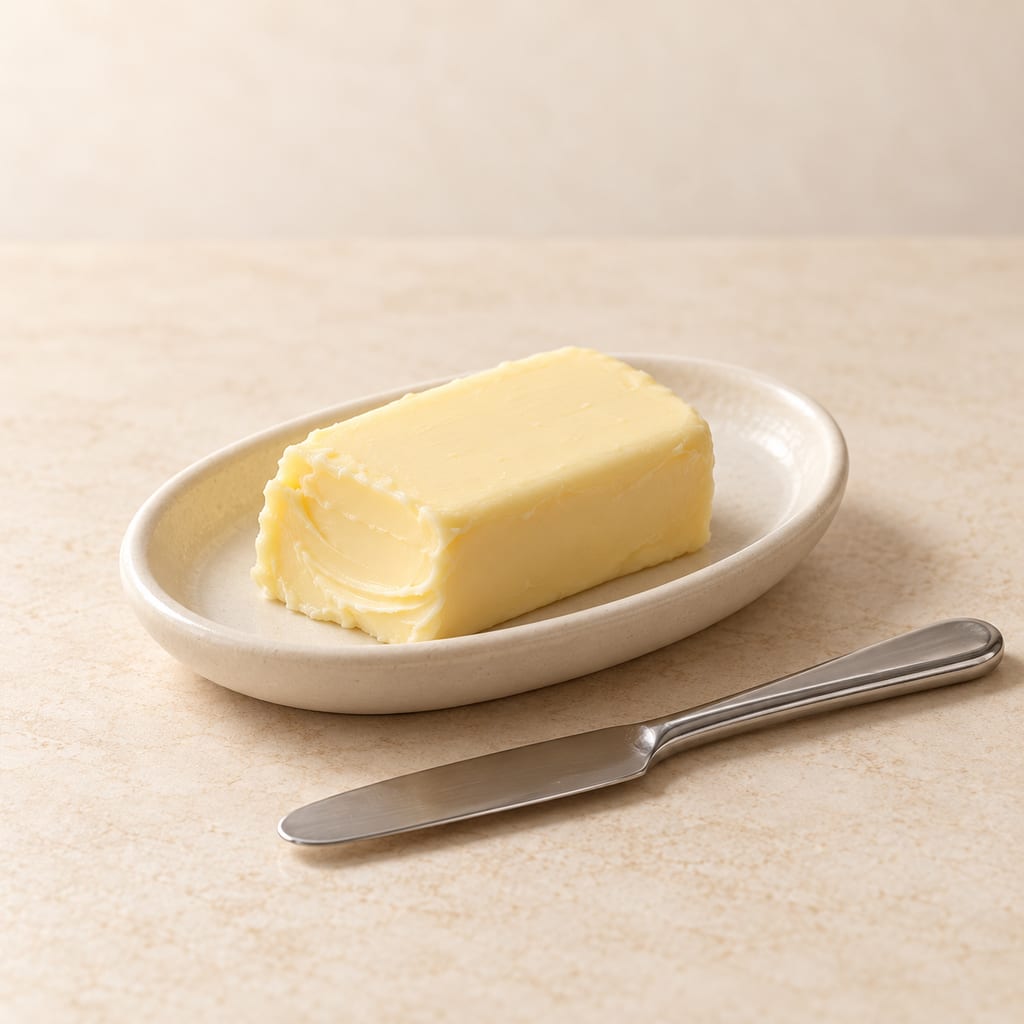
Cultured butter is churned from cream soured with lactic cultures. Its lightly tart flavour comes from the cultured cream, which separates into butter grains and buttermilk.
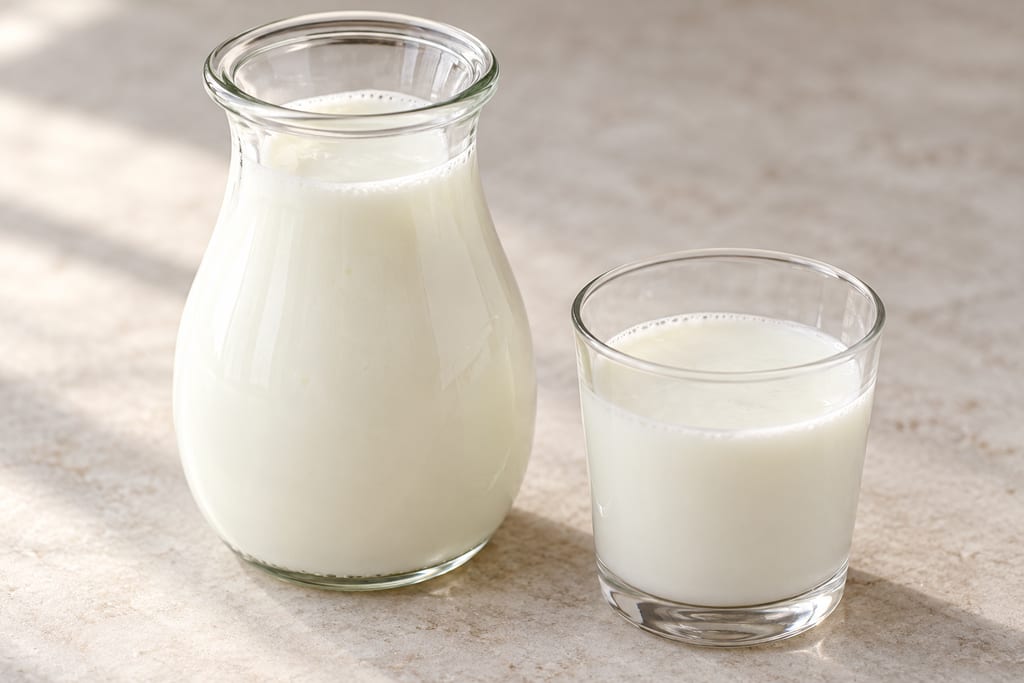
Cultured buttermilk is skim milk soured with a lactic starter into a tangy drink. This Canadian home method sets the milk without churning cream.
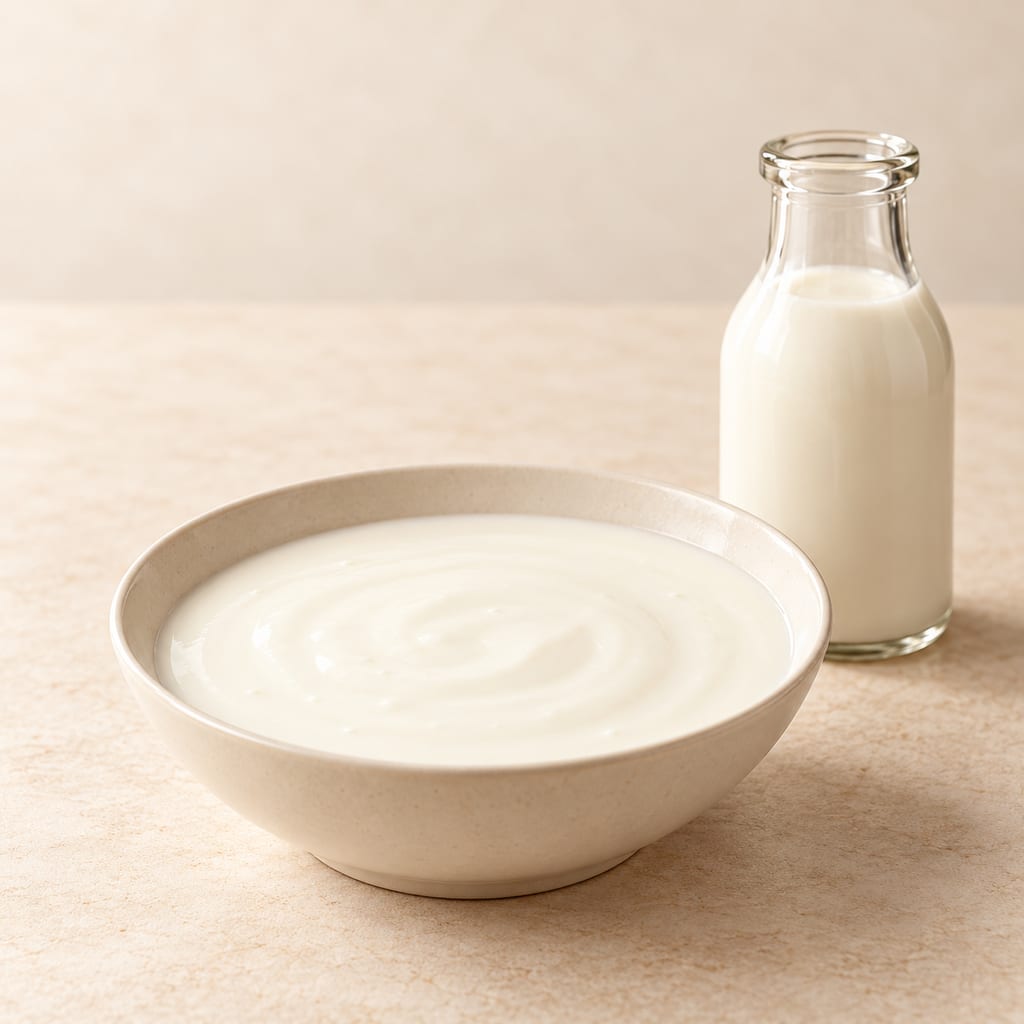
Filmjölk is a Swedish cultured milk with mild acidity and a spoonable body. This recurring batch uses filmjölk from the previous batch to culture fresh milk.
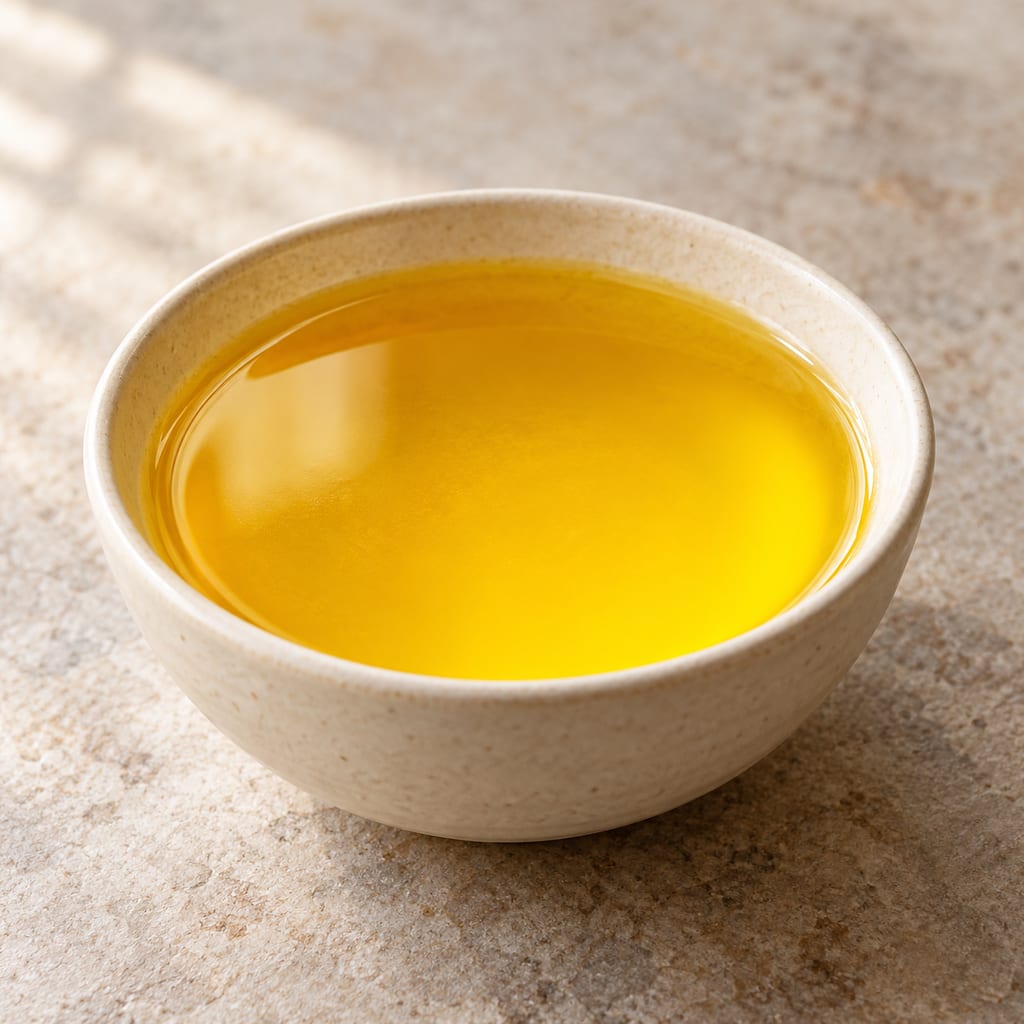
Butter heated until most water leaves and the milk solids separate, giving a fat that keeps far longer than butter. Rendering applies the same heat to animal tissue to make lard and tallow.
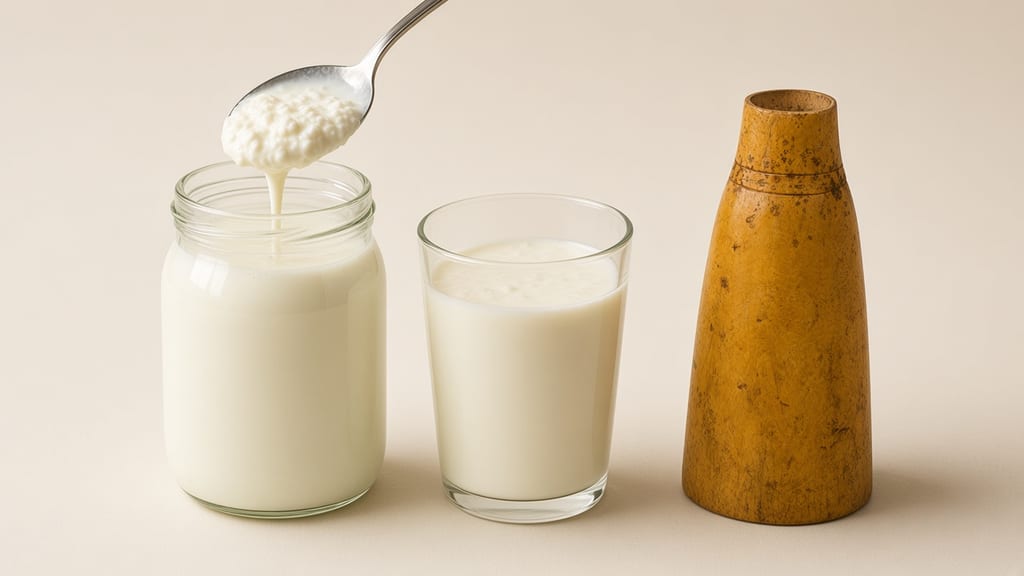
Ikivuguto is Rwanda's thick soured milk. This home version sets pasteurised whole milk with cultured buttermilk overnight at about 21 °C, then chills it for a mild, spoonable drink.
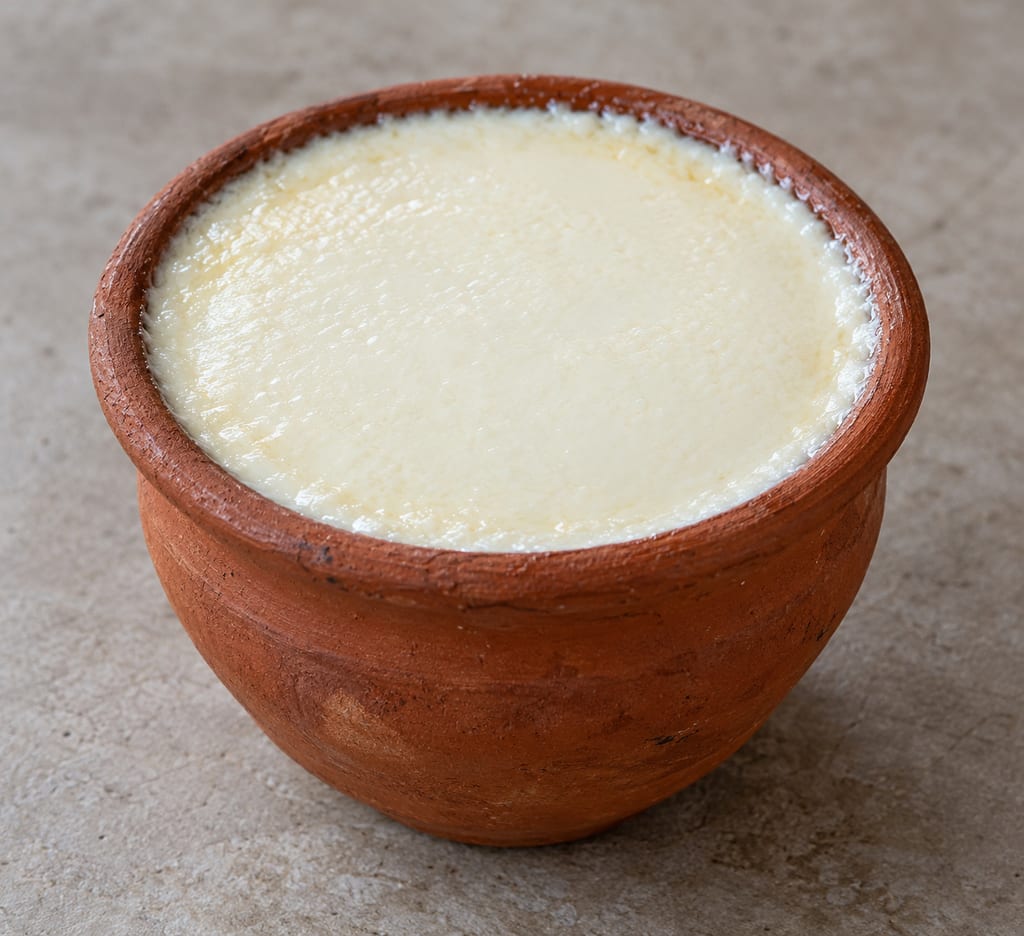
Juju dhau is a rich Newar cultured milk associated with Bhaktapur, Nepal. A local account describes buffalo milk concentrated by boiling, inoculated with previous-day curd and set in earthen pots.
No community contributions have been published for this entry yet.
Sign in to contribute. Published comments and photos are free to read.
Utah State University ExtensionInspiration · Process
Cultured CreamCream batch, starter choices, heat and incubation process.
Cited in: What crème fraîche is; What fermentation does to cream; Why the ingredients and order matter; The measured endpoint; At the table; Keeping the home method distinct; What this recipe does not claim
Agriculture CanadaSafety · Process
Home-made dairy products, Publication 1669Dairy process and handling context.
Cited in: Why the ingredients and order matter; The measured endpoint
LexIdentity · History
cremefraicheFrench dairy identity, lactic-cultured cream production and savoury/sweet uses.
Cited in: What crème fraîche is; A French name and a cautious history; Variations and choosing a product; At the table; How to interpret the French and Danish names; Texture, acidity and cooking
Institut national de l’origine et de la qualité (INAO)Regional identity · Product definition
Crème d’IsignyINAO describes Isigny PDO cream as pasteurized, at least 35% fat, with sweet and matured variants; matured cream is firm and thick with a mild acidic note; PDO zone covers 175 communes in Manche and Calvados.
Cited in: What crème fraîche is; Normandy and Crème d’Isigny; Variations and choosing a product; Keeping the home method distinct; How to interpret the French and Danish names; What this recipe does not claim
Direction régionale de l’alimentation, de l’agriculture et de la forêt de NormandieHistory · Geography
Guide EGAlim normandThe regional guide states Isigny cream received AOC recognition in 1986 and describes skimming, inoculation and slow maturation.
Cited in: Normandy and Crème d’Isigny
International Dairy Journal / ElsevierProcess · Texture
Science and technology of cultured cream products: A reviewReview explains how fat content and homogenisation affect cultured cream structure; lower-fat cultured creams rely more on protein acid gel, while high-fat products have protein-coated fat-globule structures.
Cited in: What fermentation does to cream; Variations and choosing a product; Keeping the home method distinct; From separated cream to a cultured product; Texture, acidity and cooking
Isigny AOPRegional method · Variant
PDO Isigny Crème FraîcheProducer's PDO account describes cream separation, starter culture and maturation; this Isigny specification uses 18–22°C for 16–18 hours and at least 35% milk fat, distinct from the Utah home method.
Cited in: Normandy and Crème d’Isigny; What fermentation does to cream; At the table; From separated cream to a cultured product; Texture, acidity and cooking; What this recipe does not claim
BrillLanguage history
The Dynamic Lexicon of English: semantic fields of French, German, Spanish and YiddishIts table records crème fraîche as an English culinary loanword dated 1936; this supports an English-language attestation only, not the product's origin.
Cited in: A French name and a cautious history