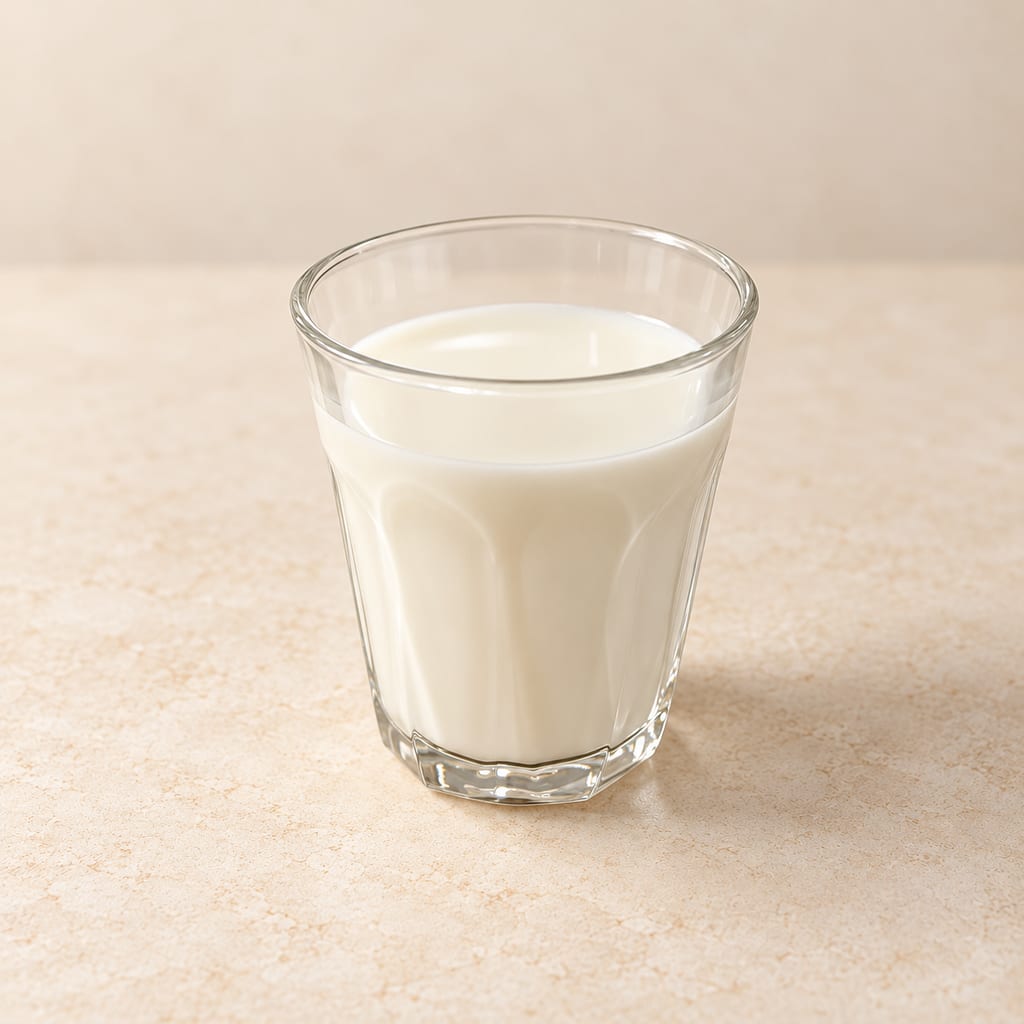
Milk species and the cheesemaking substrate
Milk supplies protein, fat and lactose for cultured drinks and cheese. Animal species, composition and processing each affect how it behaves.
 FermenteaWhere food goes to change
Modern method
Babeurre
Cultured buttermilk is skim milk soured with a lactic starter into a tangy drink. This Canadian home method sets the milk without churning cream.
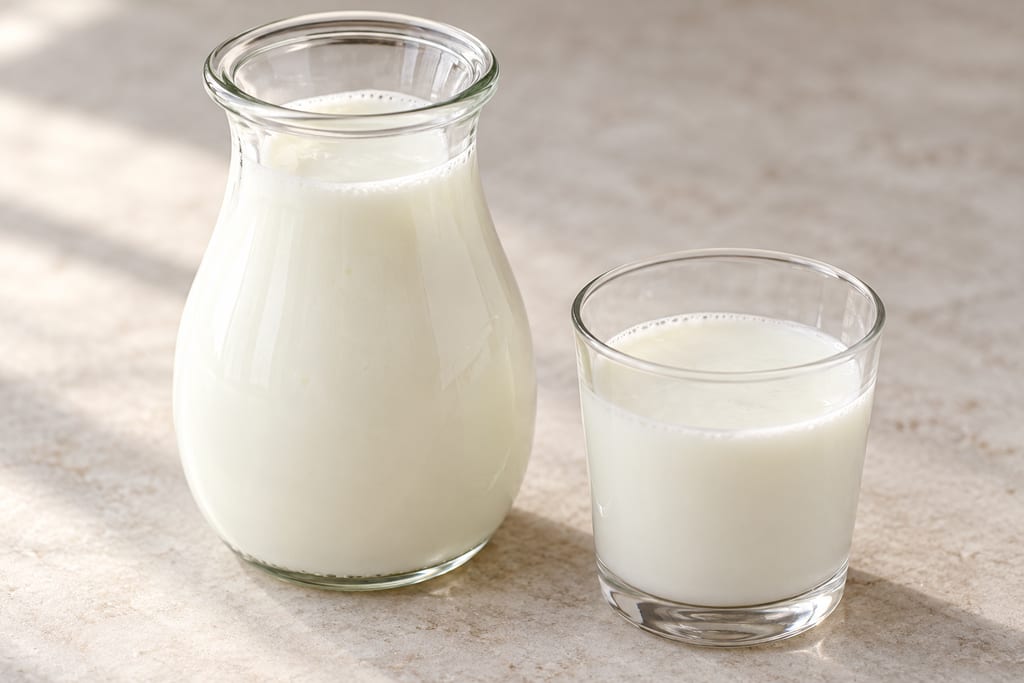
Cultured buttermilk is a softly thickened, pourable sour milk. Its tang comes from lactic fermentation; a buttery aroma can come from the culture even when the starting milk contains little fat. This recipe begins with pasteurized skim milk and a small addition of active cultured buttermilk. There is no butter to separate and no churn. The name carries the memory of another dairy process, while the method makes a drink and cooking ingredient directly from milk.
That distinction matters at the table as well as in the dairy. Liquid left after churning sweet cream need not be sour. Liquid from churning cultured cream has already undergone fermentation. Commercial cultured buttermilk can be made without churning at all. All may be called buttermilk in particular settings, but their acidity, fat residues and composition do not follow from the name alone. Knowing which one a recipe means is more useful than treating one as the authentic original and every other version as an imitation.
The Canadian household method recorded here belongs to the cultured-milk branch of that family. It aims for a gentle set, then breaks that set during cooling to produce a smooth liquid. Its small batch and modest equipment make the transformation easy to follow: milk first thickens through the work of bacteria, then becomes pourable through handling. Those two changes have different causes.
Butter making once gave buttermilk a place within a larger household economy. Cream was collected, ripened where the local practice required it, and worked until butter separated. The liquid had value of its own. In Irish domestic butter making, the hard physical work was often associated with women's dairy labour. Buttermilk was reserved for drinking and baking, and beliefs about protecting the household's butter luck accompanied the work. Those beliefs belong to the social history of dairying, rather than to an explanation of why cream turns into butter.
Buttermilk was a rural Irish staple whose supply later changed as cultured skim milk took the place of household churn liquid. As butter production moved away from individual households, a family no longer had to churn cream to obtain an acidic dairy drink. Milk could be inoculated specifically for that purpose. The household product and the factory product therefore have connected histories without sharing an identical manufacturing process.
Cream itself could enter the churn in different states. Sweet-cream butter making in Ireland and the United Kingdom contrasted with cultured-cream butter making in mainland Europe. The resulting liquids did not begin with the same acidity or flavour. That distinction survives in a useful modern question: did the liquid come from a fermented cream, or was fermentation introduced specifically to make cultured buttermilk? The answer describes the dairy process more accurately than assuming all churn liquid is sour.
The churn's physical transformation is different from acid setting. Cream begins with fat dispersed in a watery phase. Working it brings fat together into butter, leaving an aqueous liquid behind. Membrane fragments and some other milk components remain with that liquid. In cultured skim milk, the fat-separation stage is absent: acid changes the protein structure of the milk already in the vessel. The two routes can produce foods with overlapping uses while moving milk's components in different ways.
That difference also matters to dairy research and ingredient supply. Churn buttermilk and cultured skim milk are not automatically equivalent streams for a manufacturer's next process. Their names may overlap in a shop or kitchen, but their starting materials and operations explain their composition. For the household drink here, the relevant structure is the acid-set milk protein network; there is no need to imitate the churn's fat separation to make the milk become pourable after cooling.
Milk contains lactose, the principal milk sugar, along with proteins, minerals and water. Lactic-acid bacteria use lactose and produce lactic acid. As acid accumulates, the conditions surrounding the milk proteins change. Casein, the protein chiefly responsible for the curd, becomes less stable in suspension and forms a connected structure. The milk thickens because this structure holds liquid within it. The bacteria have not manufactured cream or concentrated the milk by removing water.
Cultured-buttermilk starters commonly involve Lactococcus and Leuconostoc. Their roles are not all identical. Acid production gives the food its sourness, while citrate metabolism by suitable organisms can contribute aroma compounds, including diacetyl, associated with a buttery smell. Sourness and buttery aroma are therefore related products of the culture's activity, rather than two names for the same sensation. A milk can be acidic without having a pronounced buttery aroma.
The aroma depends on the culture and its conditions. A starter selected for acid production alone need not give the same flavour balance as one that also develops buttery notes. Diacetyl's contribution is especially useful in explaining the name's sensory appeal: butter-like aroma and actual butterfat are different properties. A low-fat cultured milk can carry the former without acquiring the latter through fermentation.
The culture also explains why simply adding an acid to fresh milk produces a different preparation. Acid can change protein behaviour without the living starter's growth and metabolism. Such mixtures may have a use in a separate baking recipe, but they do not document the fermentation described here. Replacing the starter with lemon juice would change the process rather than offer another way to perform it.
The milk's protein matters more to the set than the word butter might suggest. Skim milk still contains casein and lactose, so removing most of the cream does not remove the components needed for lactic thickening. Fat contributes richness and changes mouthfeel, but fermentation does not require a rich cream substrate. This is why a cultured skim-milk drink can feel fuller than the same milk before culturing.
Starting with pasteurized milk gives the process a defined dairy ingredient. It does not make every later handling step inconsequential. A spoon, container or starter can introduce other organisms after pasteurization. Clean and sanitized equipment, an active starter and control of the warm holding conditions belong together. Adding a culture is an intentional inoculation; the aim is to favour the chosen fermentation while avoiding additional contamination.
The small starter quantity may look surprising beside the volume of milk. Its purpose is to introduce organisms that can grow, rather than to supply enough preformed sourness to acidify the whole batch immediately. The ingredient is therefore judged by activity as well as quantity. Old or poorly handled cultured milk is not equivalent to a fresh active starter merely because it can be measured into the same spoon.
This household method allows fresh cultured buttermilk or sour cream as its active starter. That permission should not become a claim that any sour dairy product will work. Yogurt uses a different warm-culture method. A suitable starter, the milk and the incubation conditions form a particular process; selecting each from unrelated recipes can change how the culture behaves in the milk.
The warm rest gives the culture time to make acid while the protein structure develops. Leaving the milk relatively undisturbed allows that weak network to form. Stirring at this stage interrupts a structure still being established. The movement wanted later in a smooth drink serves a different purpose from the quiet conditions wanted during its initial set.
Cooling changes the pace of the biological process. Gentle agitation during that cooling has a separate physical purpose: it breaks the set and distributes the liquid more evenly. A finished buttermilk can therefore be smooth and pourable even though it passed through a firmer stage. Pourability does not show that fermentation failed. Conversely, a thick jar is only evidence of a texture change, not a measurement of its microbiology.
A thermometer gives information that a hand against the container cannot. The relevant temperature is the condition experienced by the milk, which can differ from the surrounding room, particularly during warming or cooling. A larger vessel also changes how quickly its centre loses heat. Doubling an ingredient list does not establish that a doubled batch follows the same temperature history; the published household method is not a scaling study.
The transition to refrigeration deserves the same attention as inoculation. Cold storage slows microbial activity but does not undo a poorly controlled warm stage or remove contamination introduced earlier. For present-day storage, Health Canada advises a refrigerator at 4°C or lower. The historical manual's keeping advice is not used here as a validated shelf life for every home batch.
Buttermilk's place in bread is partly a story about acid. Baking soda is sodium bicarbonate, a base. In a suitable recipe, acid and bicarbonate react and release carbon dioxide, which helps raise the mixture. That gas is produced by the baking ingredients reacting; it is not evidence that the buttermilk culture is acting as bread yeast. The distinction is useful whenever a fermented ingredient enters a second cooking process.
Buttermilk, sour cream and yogurt are acidic dairy ingredients used with baking soda. Baking powder carries its own acid component, so its leavening system differs from one that depends on acid supplied by the other ingredients. A change from one dairy ingredient to another can alter liquid, acidity and texture at the same time. There is no universal spoon-for-spoon substitution rule derived from the fact that all three taste sour.
Drinking and baking gave Irish households reasons to retain buttermilk alongside the butter made in the churn. It could be consumed as a food in its own right or become part of the next preparation. In baking, the relationship between dairy and grain gave a dairy liquid another role in the household. That history does not require the modern cultured skim version to have exactly the composition of the liquid from a particular churn.
For a cook, the useful question is what the next recipe requires: an acidic cultured liquid, a particular fat content, a specified consistency, or actual churn buttermilk. Choosing a documented recipe that names its ingredient preserves those distinctions. The word buttermilk alone cannot establish how much acid a batch contains or whether its behaviour will match another product in dough or batter.
A weak set has several possible causes. Starter quality and activity, insufficient starter, contamination and milk quality can all contribute to a weak set. Temperature control also affects the intended culture. These possibilities make a failed batch a reason to examine the process record and replace a suspect starter for the next attempt, rather than to assume every thin result merely needs more time on the counter.
Separation also needs careful interpretation. A cultured milk gel can release serum, the liquid portion of the milk. Breaking or disturbing that gel changes how it holds liquid. A whey layer and a grainy texture may therefore describe a physical quality problem, but they do not identify its cause with certainty. Neither a smooth batch nor a separated one can be pronounced safe from appearance, smell or taste.
The temperature record helps distinguish a milk that never reached its intended conditions from one that was held correctly but did not respond. Starter age and handling then become useful questions. A final smooth appearance cannot reconstruct those earlier events. For a repeat attempt, fresh active culture and a recorded temperature sequence provide more useful starting information than a taste of the failed jar.
This starter's strains and the batch's acidity, microbial count and finished yield were not measured. The method has no validated modern shelf life. Refrigerate promptly at 4°C or lower. Smell, taste, bubbling and appearance cannot establish safety; do not extend an uncontrolled warm hold to rescue a failed set.
Buttermilk originally described the liquid left after butter was churned from soured cream. Cultured skim-milk buttermilk reproduces the sour dairy drink through a starter culture, without the butter-making stage. A Canadian household manual documented this version in 1978.
Scaling: source batch only
Raw dairy can carry Listeria and other harmful germs.
Hazard sourceUnsanitized vessels, utensils or contaminated starter can introduce unwanted organisms into cultured dairy.
Hazard sourcePoor starter activity can allow competing organisms, including pathogens, to grow during warm incubation.
Hazard sourceStart with pasteurized dairy and wash and sanitize the container and utensils before inoculation.
Control sourceUse active starter, monitor the specified incubation conditions and investigate a failed set rather than continuing an uncontrolled warm hold.
Control sourceRefrigerate promptly after culturing, with the refrigerator set to 4°C (40°F) or lower.
Control sourceA weak or contaminated starter can fail during the overnight milk culture. Use fresh active starter, sanitized utensils and pasteurized skim milk; cool promptly after the set develops.
Active lactic starter — Fresh cultured buttermilk supplies the starter; its species and strains are not identified.
A Canadian home-dairy method; the publication does not establish the food’s birthplace.
Milk supplies protein, fat and lactose for cultured drinks and cheese. Animal species, composition and processing each affect how it behaves.
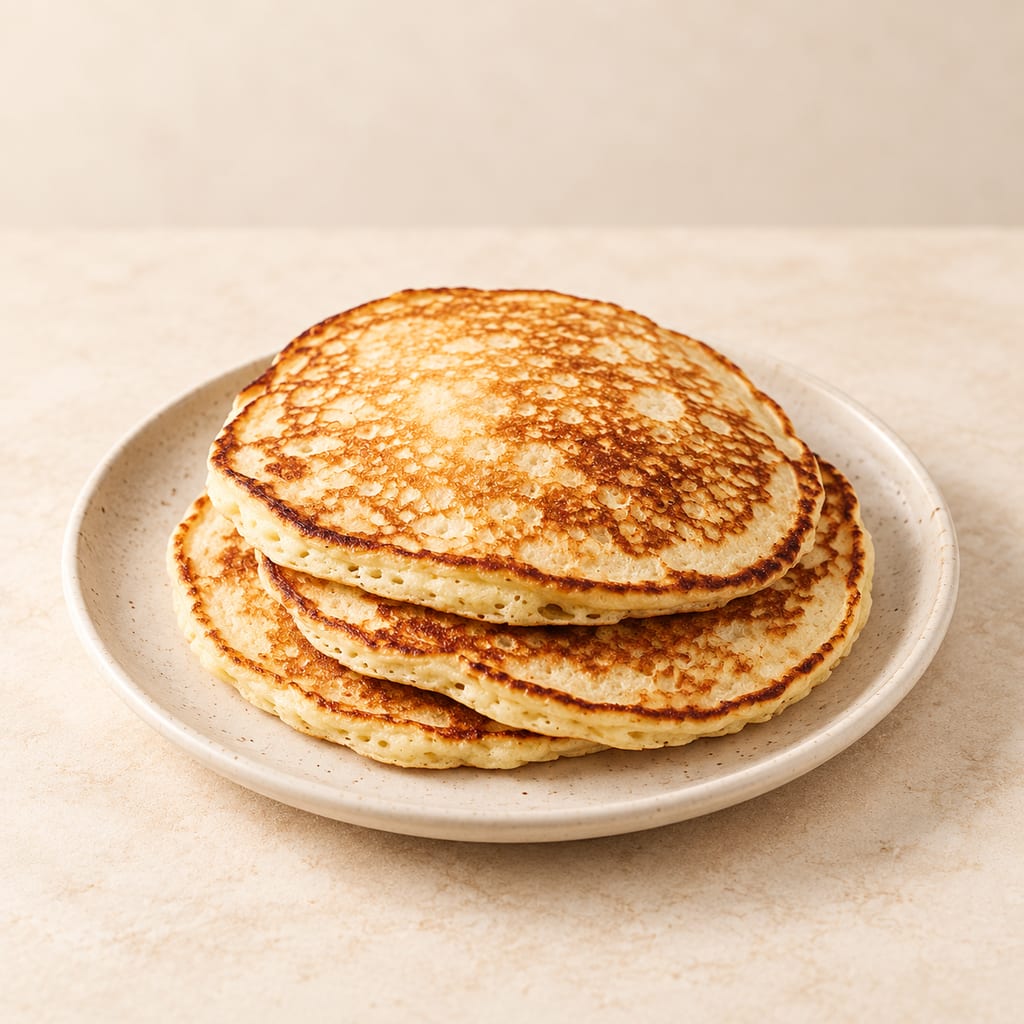
Buttermilk, flour and sourdough discard rest overnight before eggs and baking soda turn the sponge into a griddle batter. The finished pancakes are tender and lightly tangy.
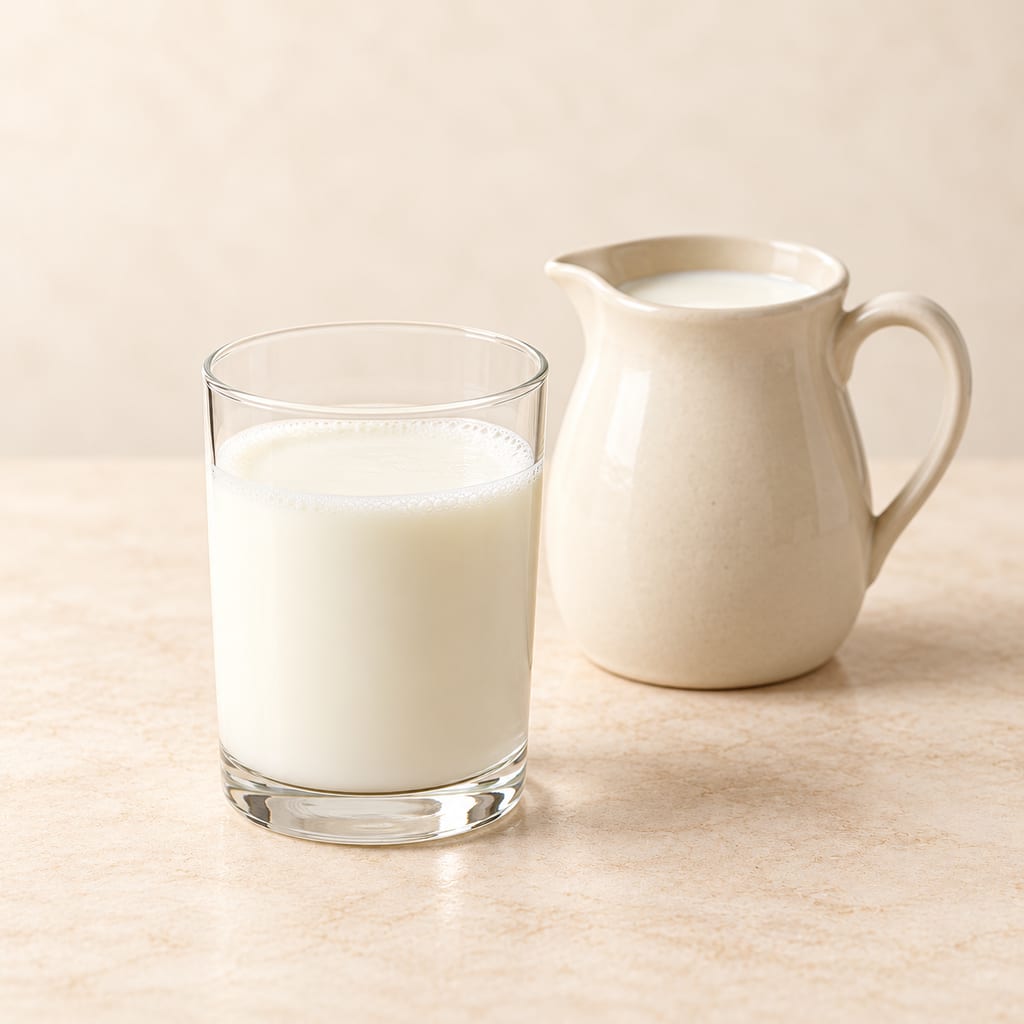
Milk thickened with a packet of buttermilk culture makes a tangy drink and a baking ingredient. This warm-incubated version uses whole milk.
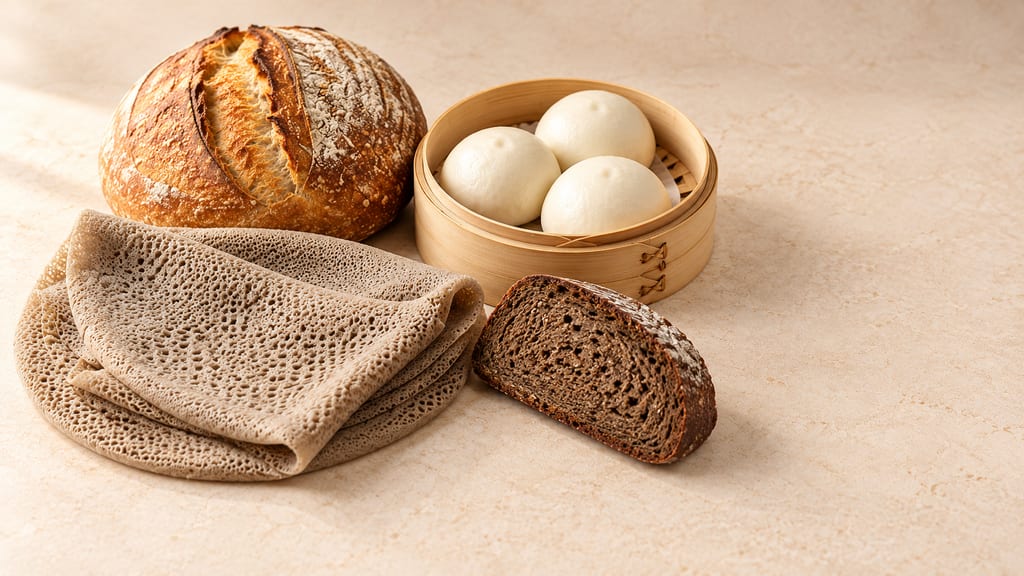
From the baguette and the steamed bun to injera, titiyas, Finnish rye and cassava bread: how grain, microbes and heat answer the question of what bread is for.
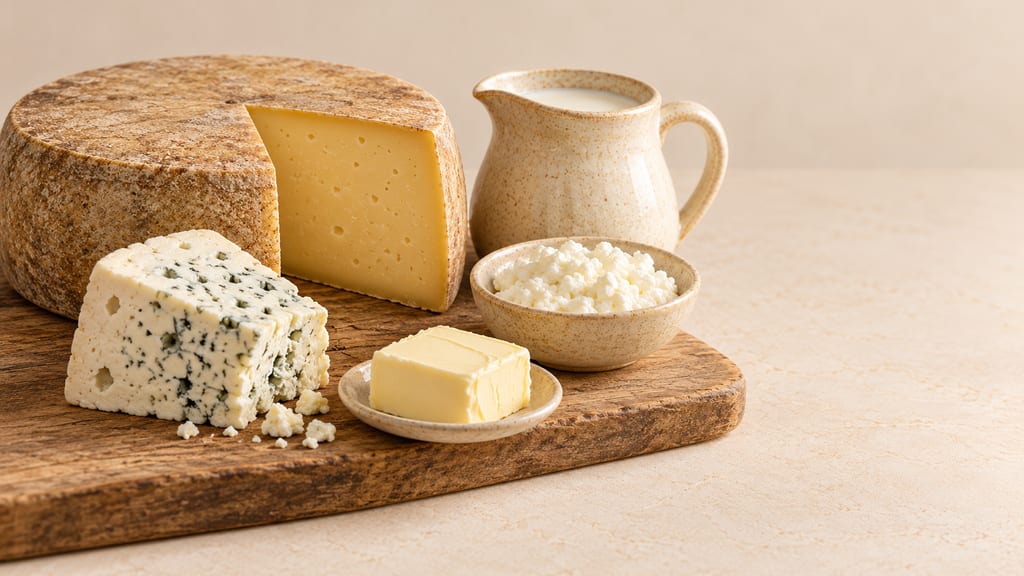
Follow milk into cheese, cultured drinks, butter, dried curds and sweets: a journey through the animals, seasons and household decisions behind the world's dairy foods.
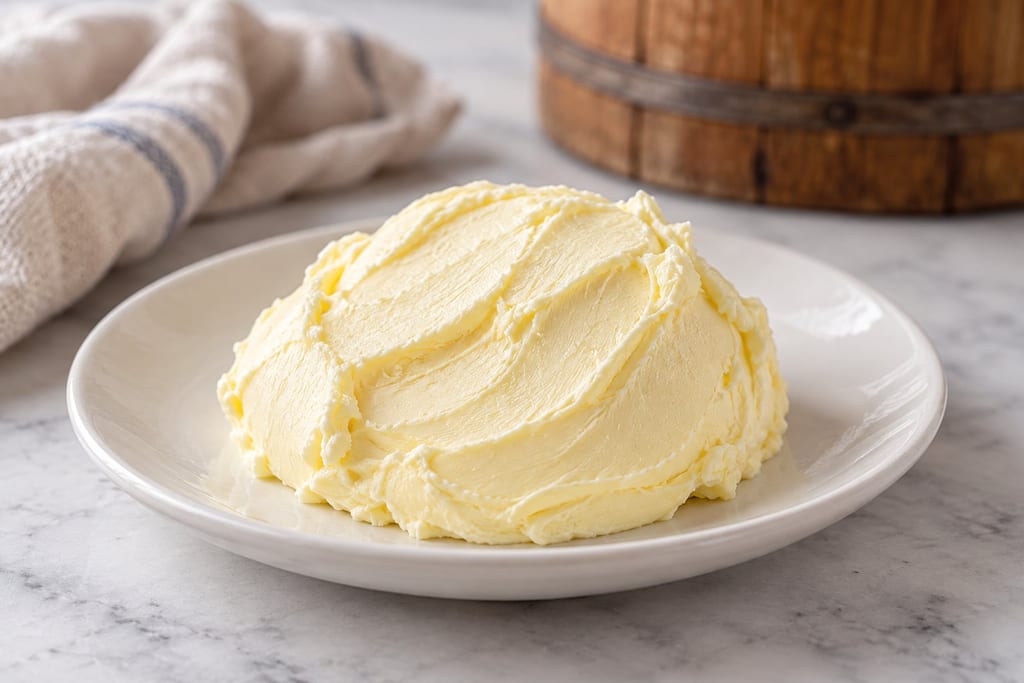
Sweet-cream butter is made by churning unsoured cream until its butterfat globules join, then draining, washing, salting and packing the butter.
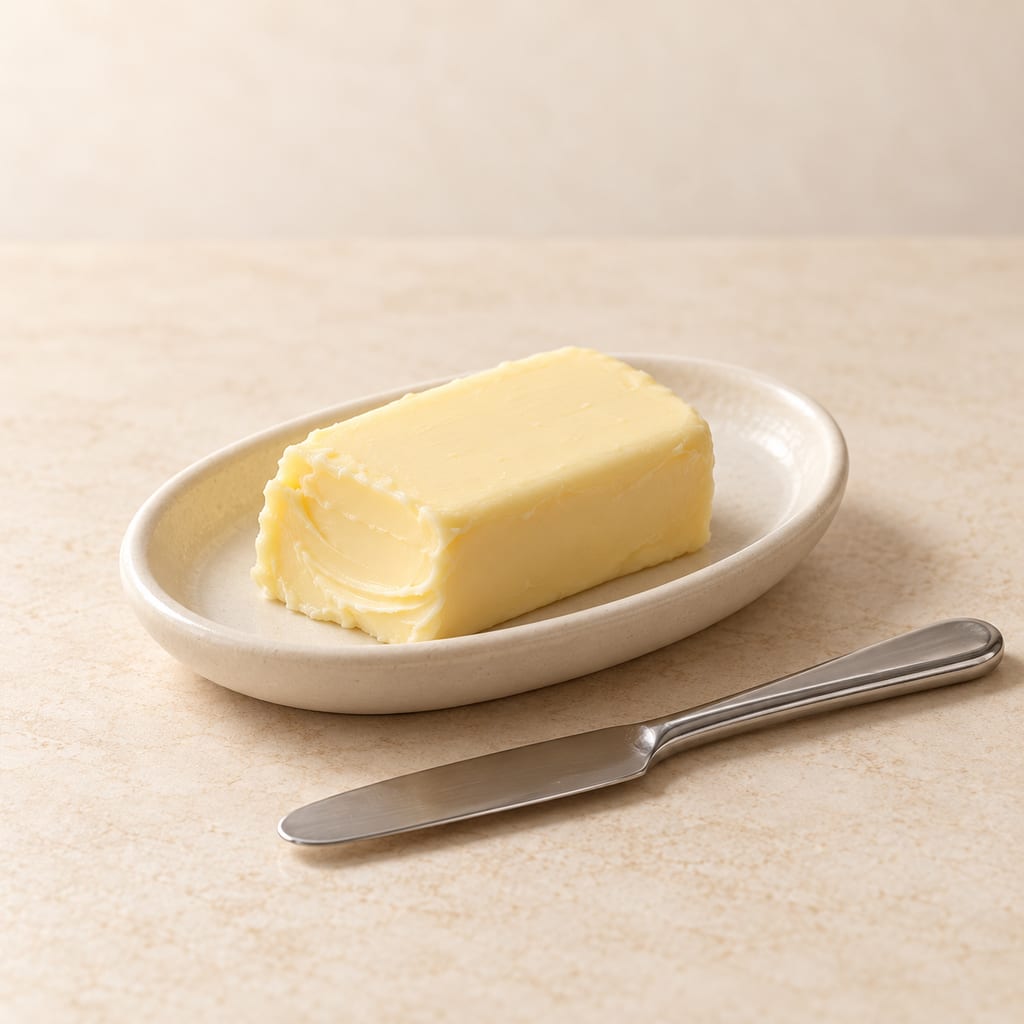
Cultured butter is churned from cream soured with lactic cultures. Its lightly tart flavour comes from the cultured cream, which separates into butter grains and buttermilk.
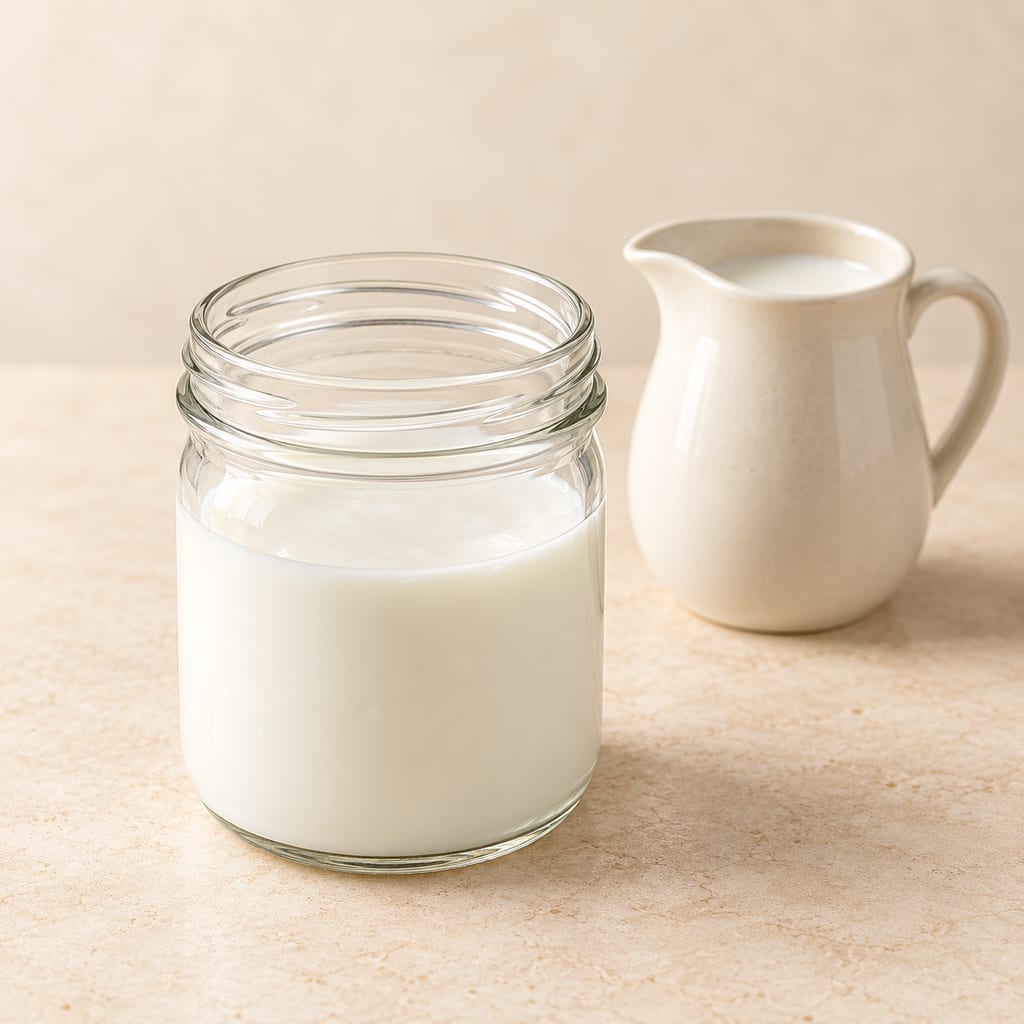
Set yogurt keeps the milk’s cultured gel intact in its final container. This Canadian home method follows the same heating and inoculation as stirred yogurt, without the final stirring.
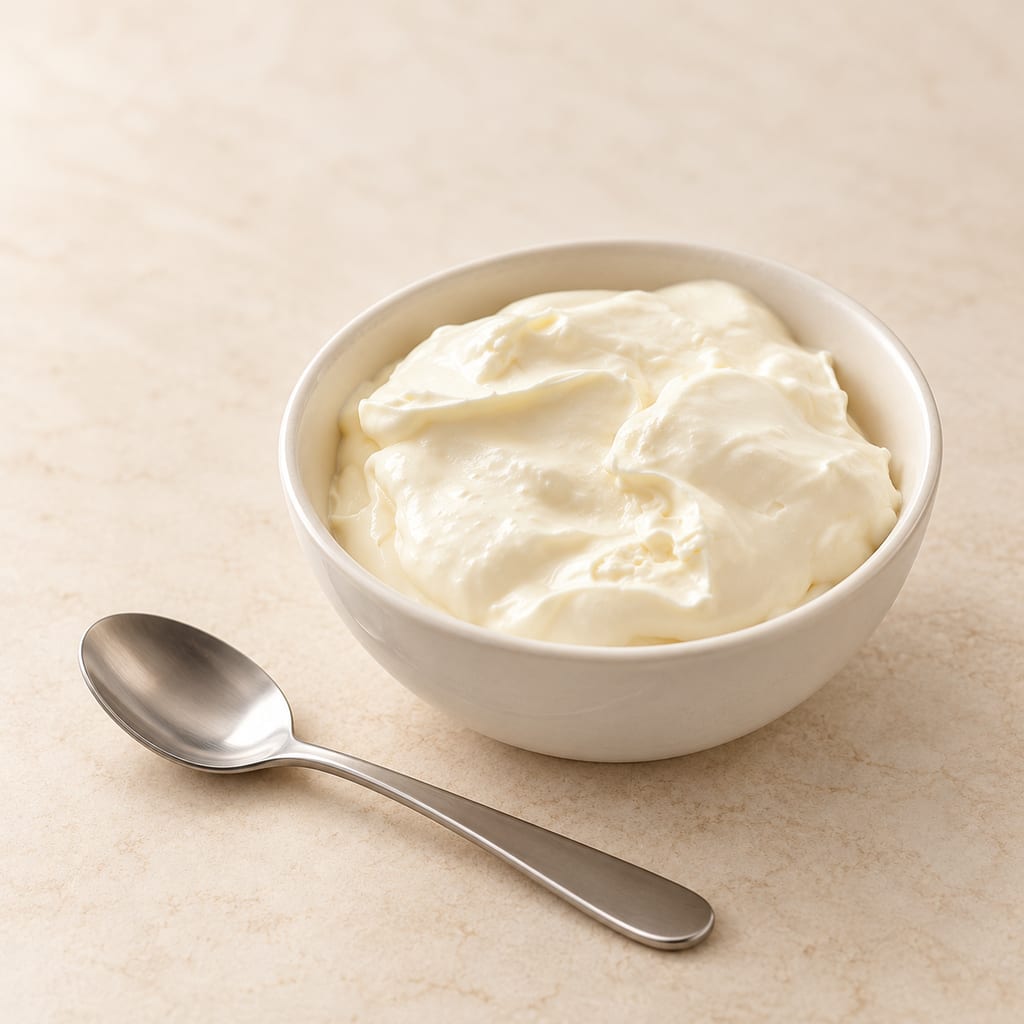
Sour cream is light cream thickened and soured by a lactic starter. This Canadian method uses homogenized cream and lets the gel form in its storage container.
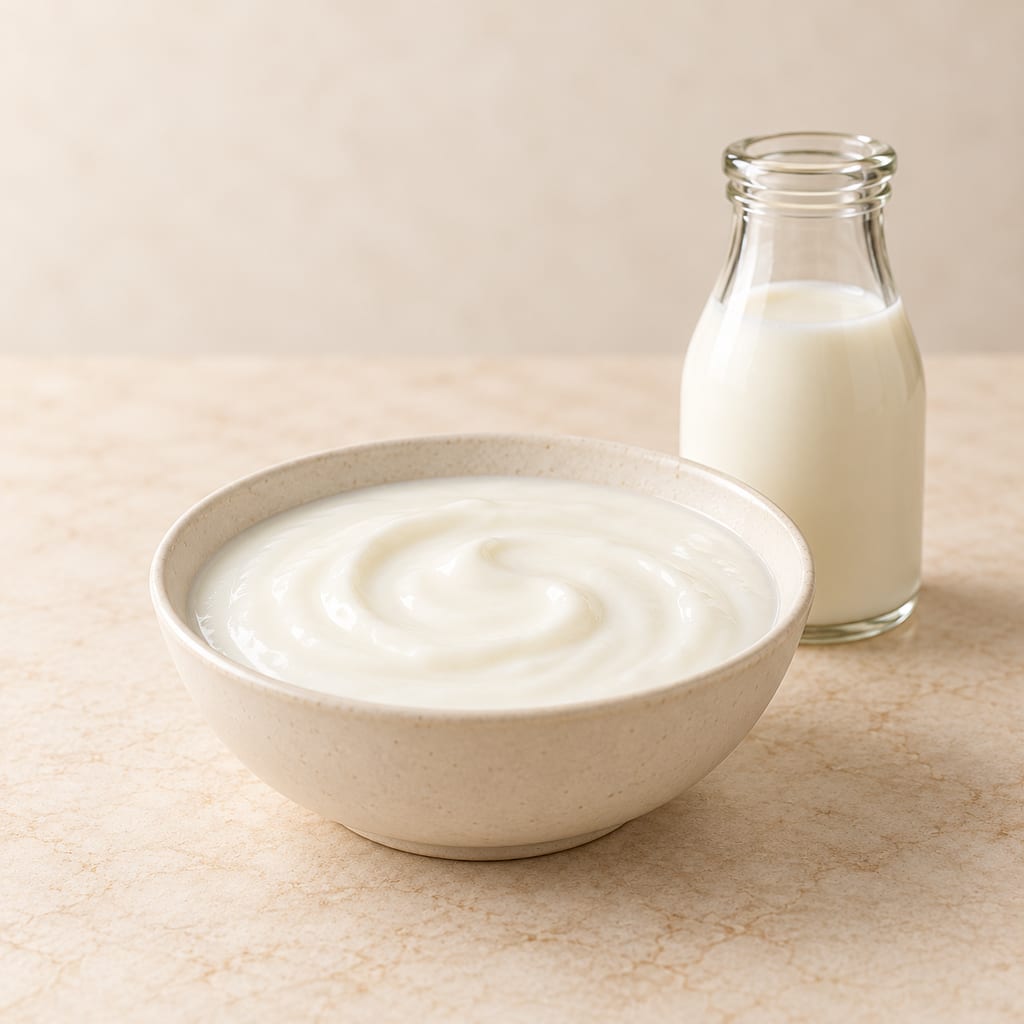
This plain yogurt is heated, cultured warm and stirred smooth after chilling. A Canadian home method uses fresh plain yogurt to start the lactic fermentation.
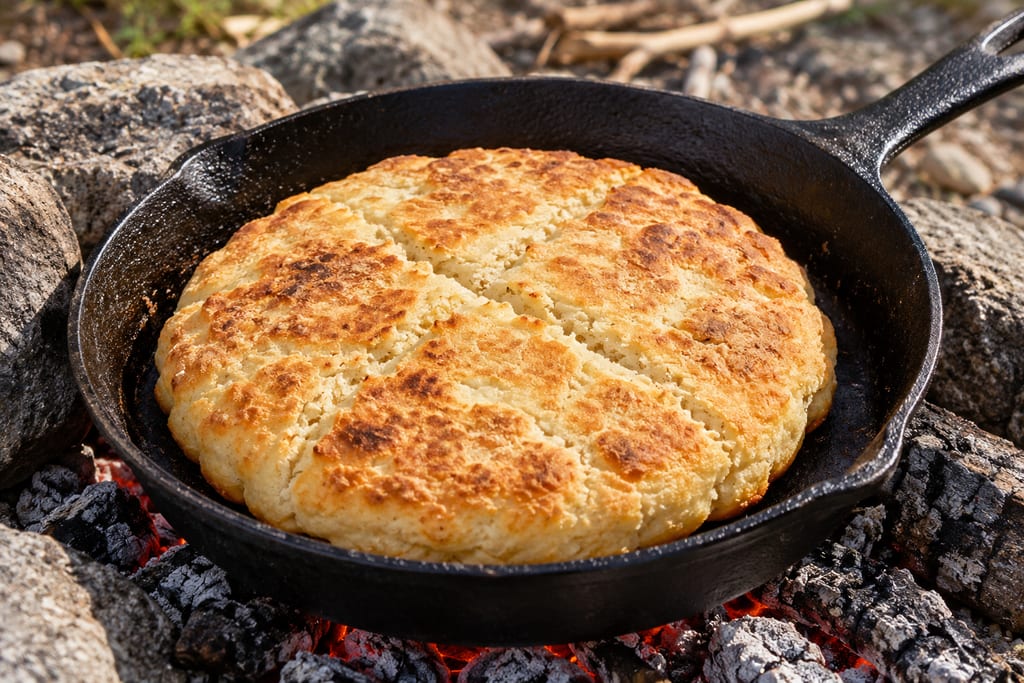
This flour, baking-powder and oil dough is Parks Canada’s contemporary Métis-interpreter version prepared at Rocky Mountain House; its specific recipe origin is unknown.
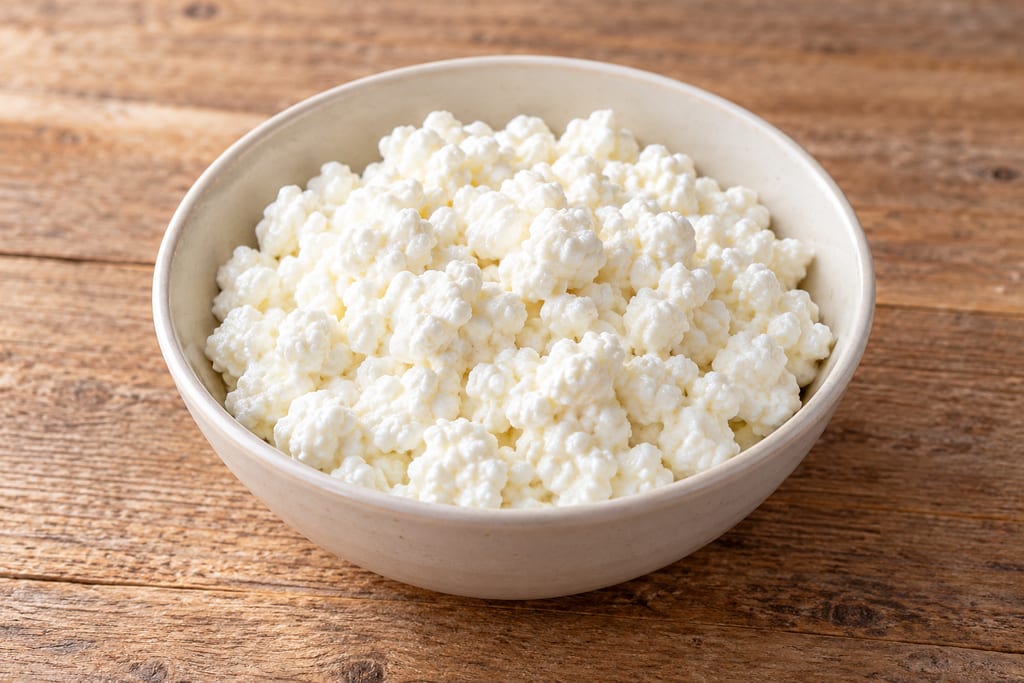
Skim milk is cultured slowly, cut into curds, warmed and drained to make fresh cottage cheese. Cold-water washing softens its flavour before cream and salt are added.
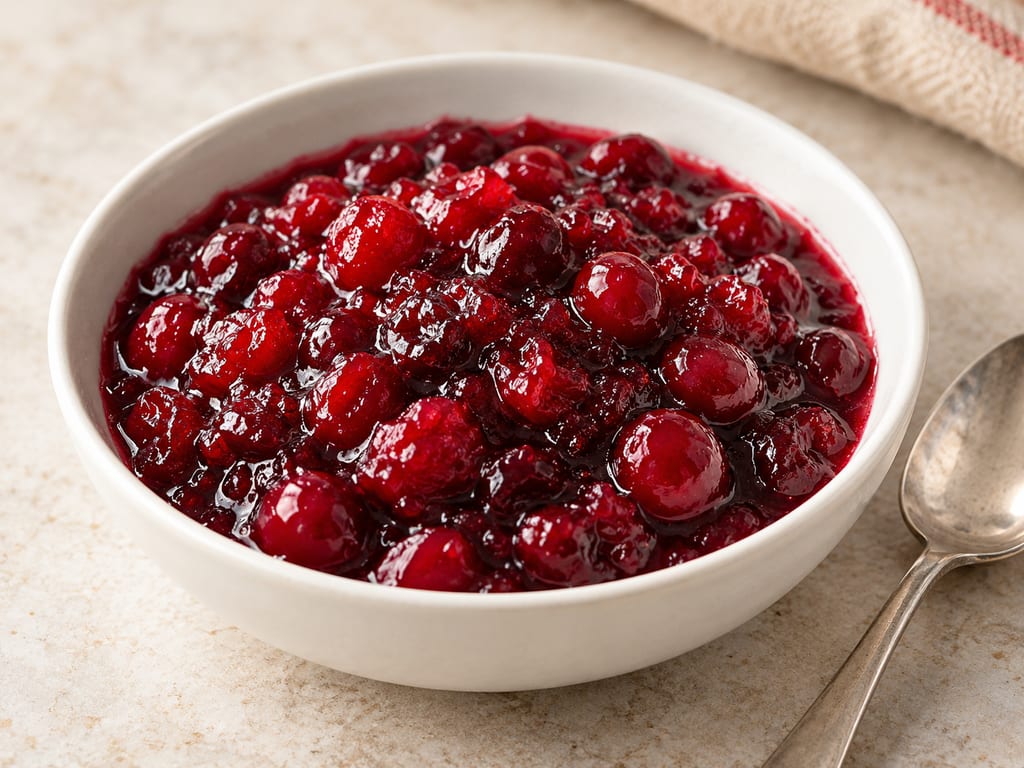
Cranberry sauce is a sauce of cranberries cooked in sugar syrup until the berries burst and thicken, served with roast turkey, pork, chicken and ham.
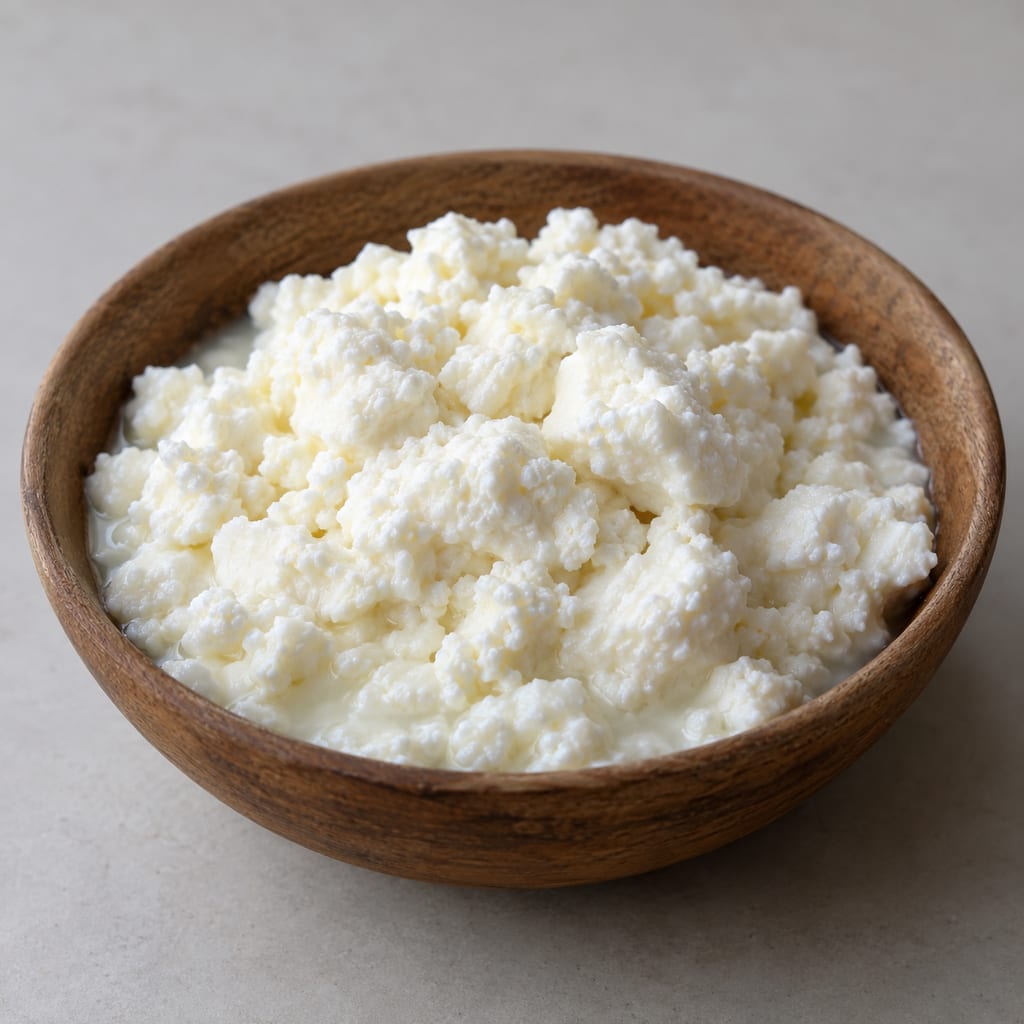
Aarts is a soft Mongolian curd made by draining boiled fermented yogurt; it remains wet, unlike aaruul, which is dried.
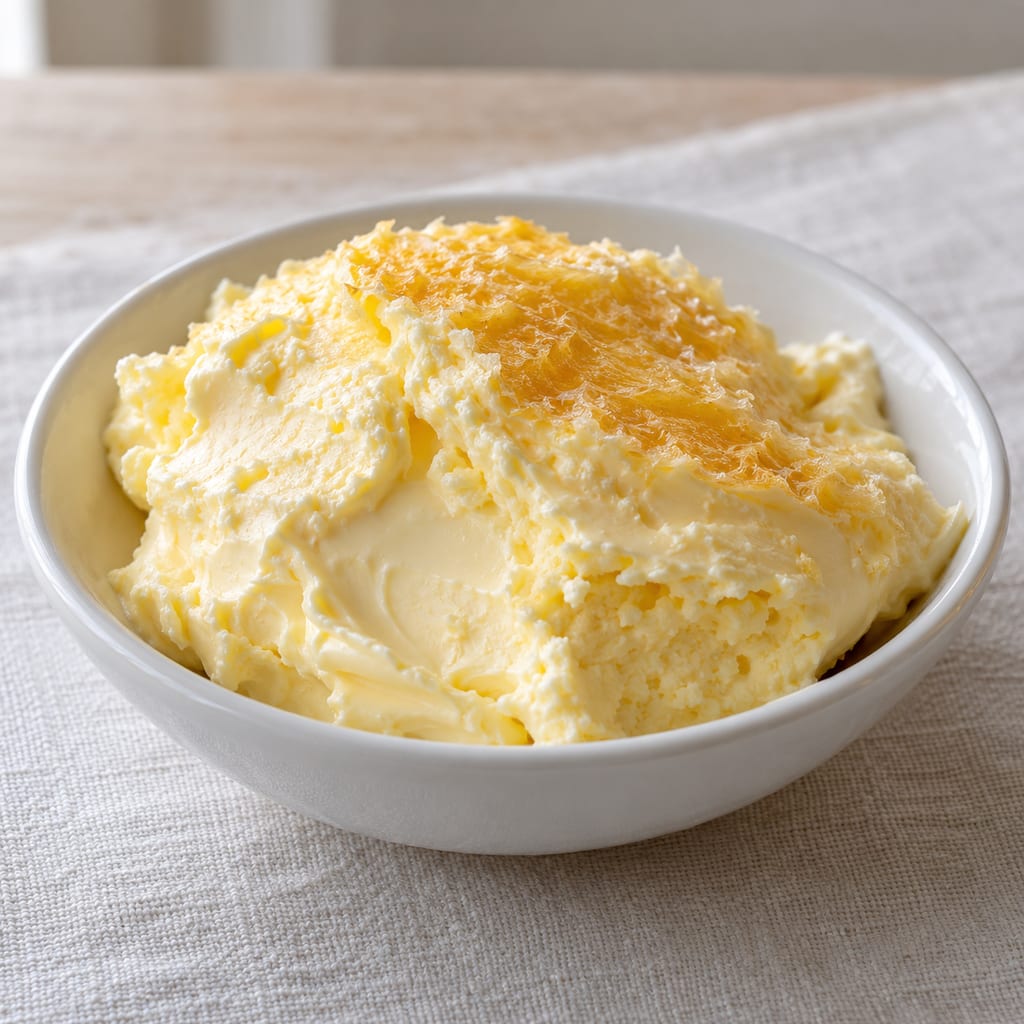
High-fat cream scalded below boiling for at least an hour until a thick crust forms, then cooled hard so the crust sets and the cream beneath thickens.
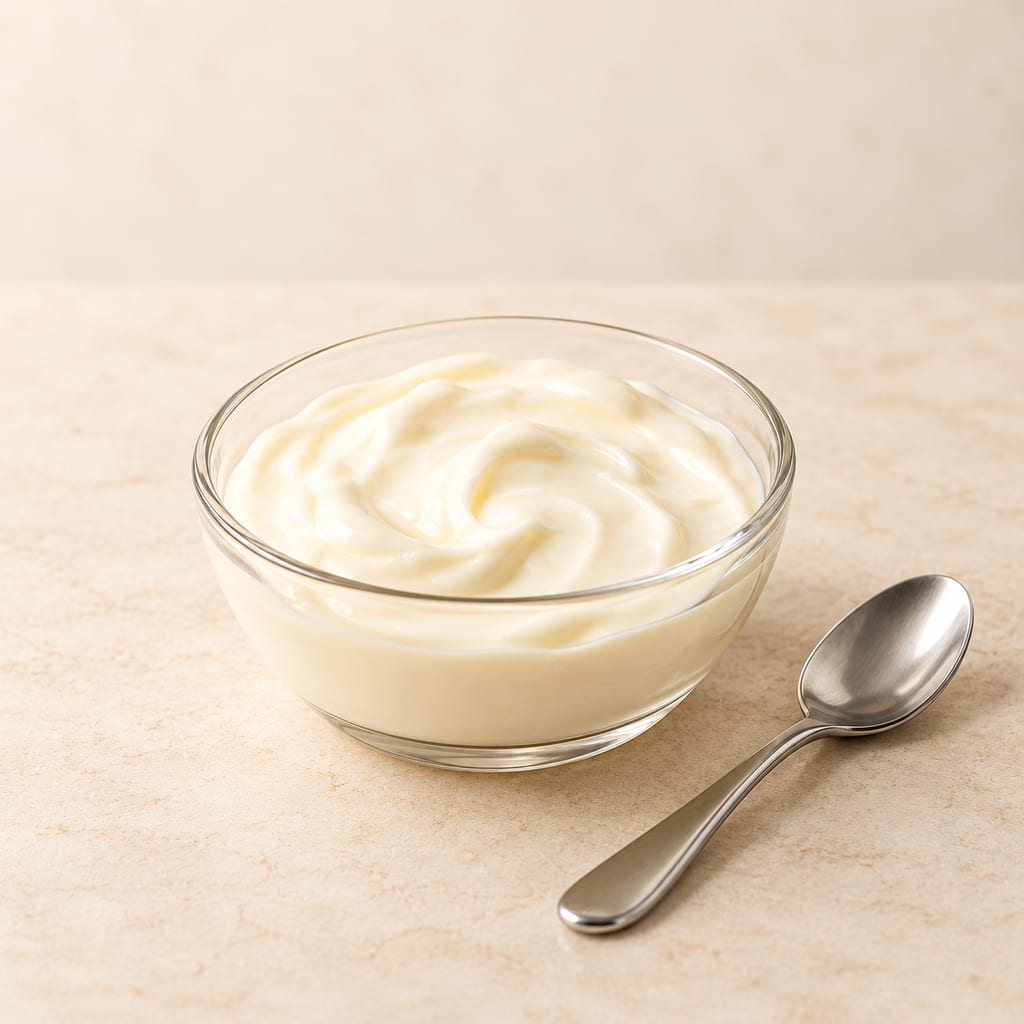
Crème fraîche is cream soured by lactic cultures into a thick, mild topping. It suits fruit and desserts as well as soups, sauces and other savoury dishes.
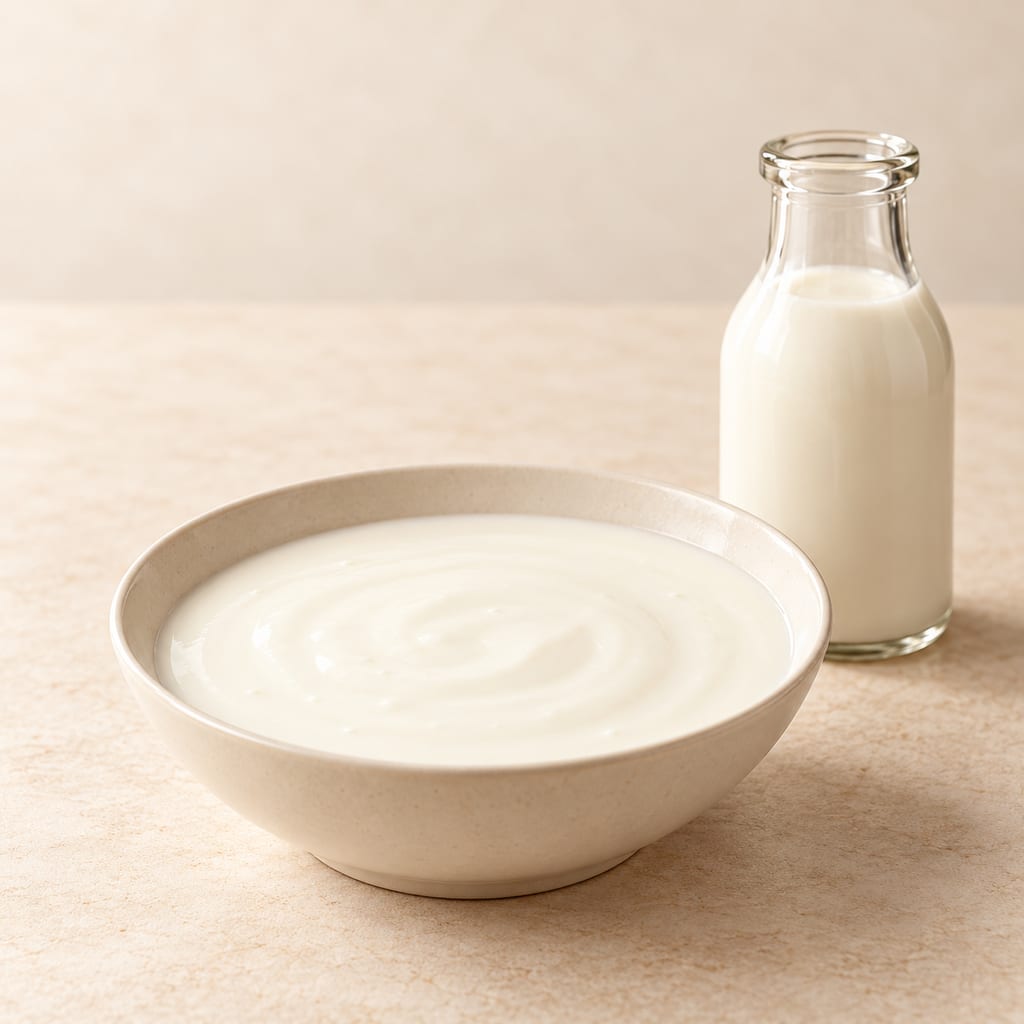
Filmjölk is a Swedish cultured milk with mild acidity and a spoonable body. This recurring batch uses filmjölk from the previous batch to culture fresh milk.
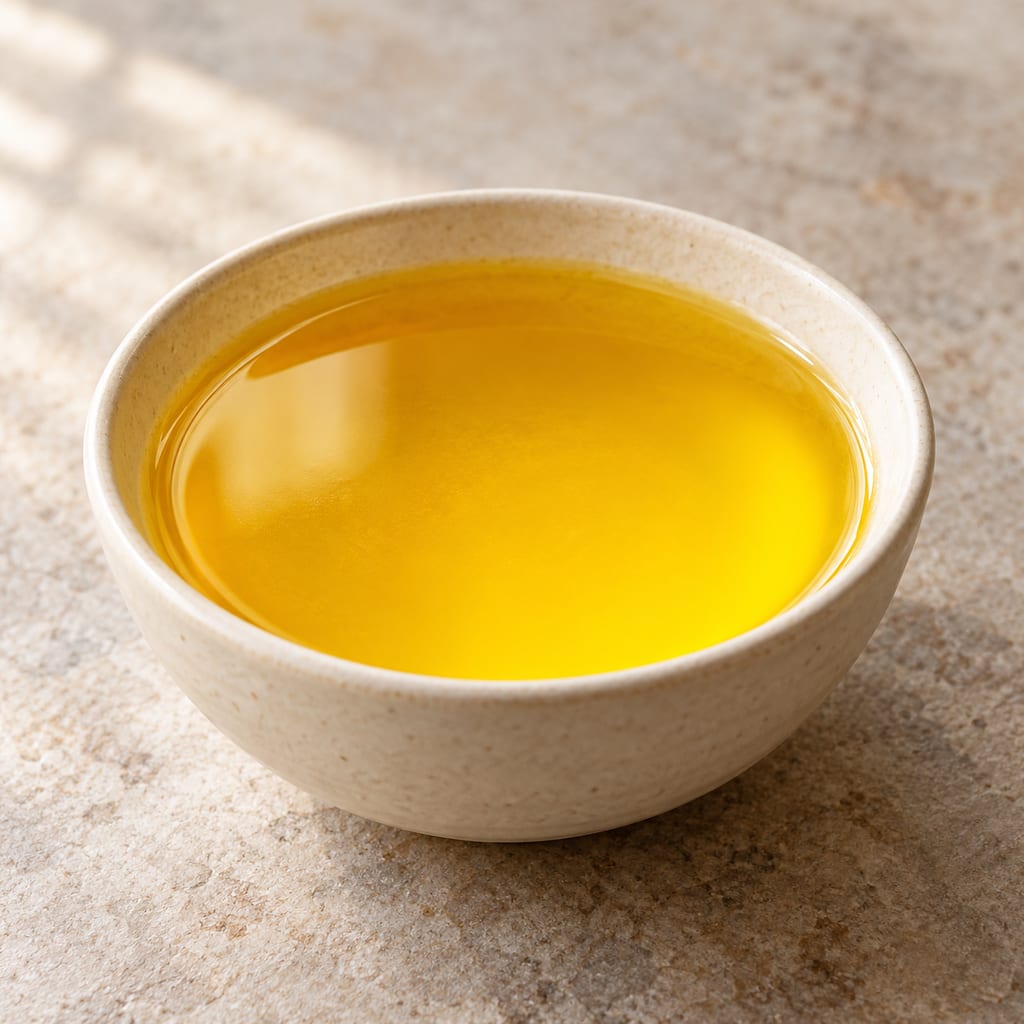
Butter heated until most water leaves and the milk solids separate, giving a fat that keeps far longer than butter. Rendering applies the same heat to animal tissue to make lard and tallow.
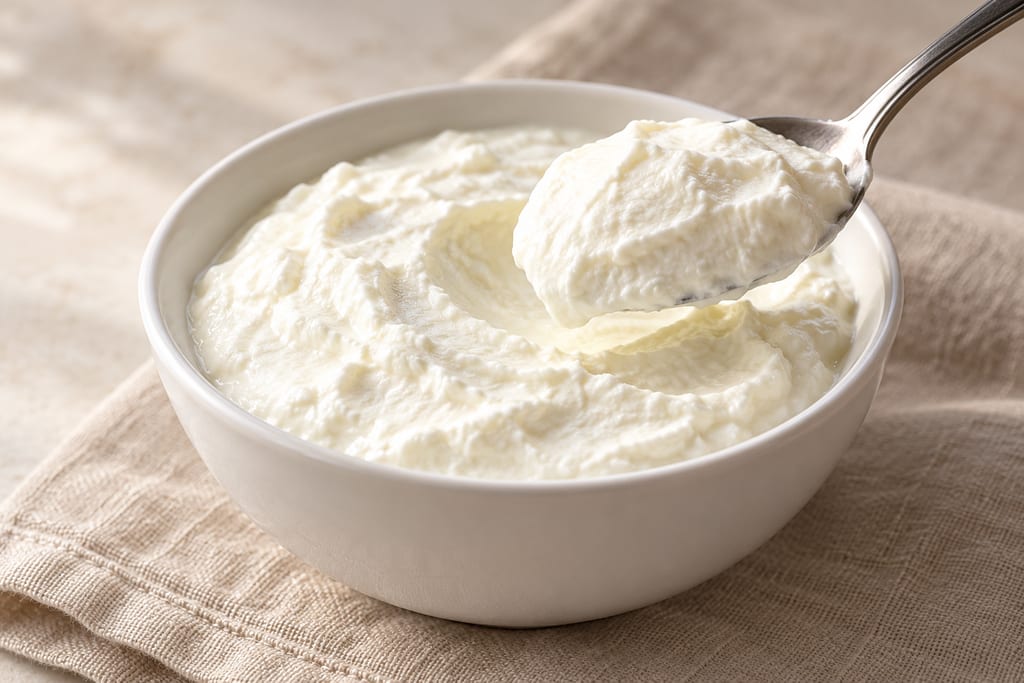
Greek-style strained yogurt is cultured whole milk drained through cloth to remove whey. This modern Utah home method makes a thick yogurt from a gallon batch.
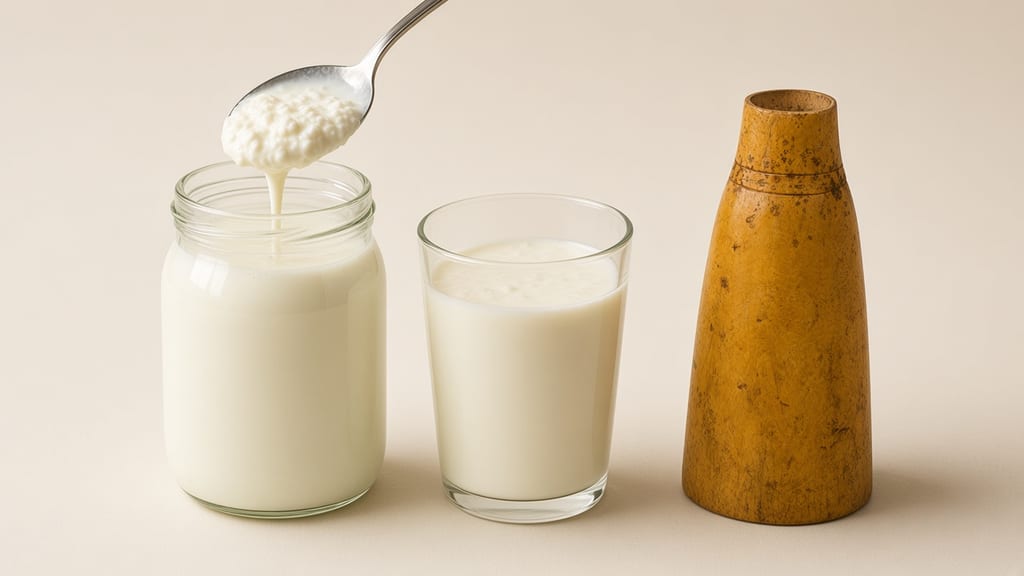
Ikivuguto is Rwanda's thick soured milk. This home version sets pasteurised whole milk with cultured buttermilk overnight at about 21 °C, then chills it for a mild, spoonable drink.
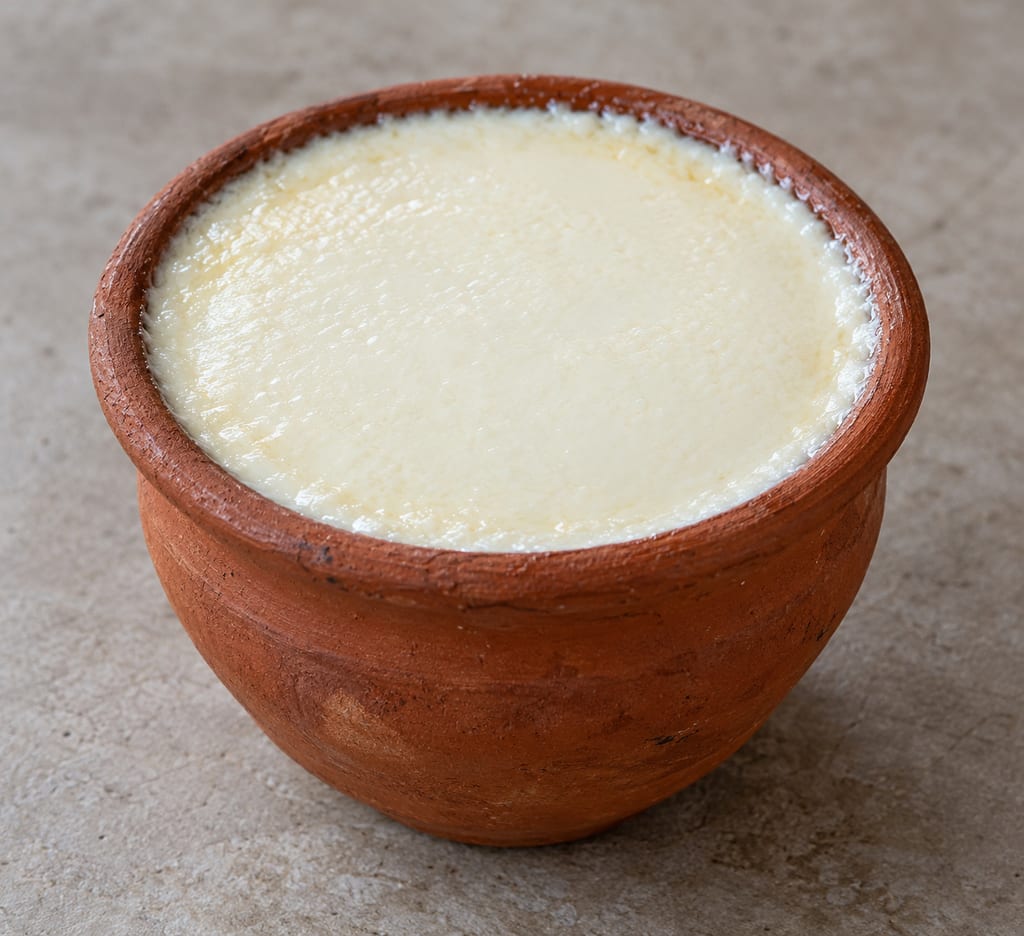
Juju dhau is a rich Newar cultured milk associated with Bhaktapur, Nepal. A local account describes buffalo milk concentrated by boiling, inoculated with previous-day curd and set in earthen pots.
No community contributions have been published for this entry yet.
Sign in to contribute. Published comments and photos are free to read.
Agriculture CanadaInspiration · Process
Home-made dairy products, Publication 1669Cultured dairy methods, utensils and contamination prevention; copyright 1978, reprinted 1981.
Buttermilk, printed pages 10–11: 1 L pasteurized skim milk, 2–10 mL active starter, 22°C, 12–16 hours undisturbed; cool quickly below 10°C with gentle agitation. Starter section allows fresh commercial cultured buttermilk.
Selected household formulas and sequence; pasteurized dairy; active cultured starter; milk options; homogenized cream; temperature control; quiet set; buttermilk cooling/agitation; yogurt cold stirring versus intact set; possible starter/milk faults.
Cited in: The milk that kept the name; Why skim milk can have body; A quiet set, then a moving liquid; Reading a batch without guessing; Evidence and handling notes
Health CanadaSafety
Safe food handling in the homeRefrigerators at 4°C (40°F) or lower; clean food-contact surfaces and utensils.
Refrigerator at 4°C or lower; hygiene and clean food-contact equipment.
Cited in: A quiet set, then a moving liquid; Evidence and handling notes
Centers for Disease Control and PreventionSafety
How Listeria Spread: Soft Cheeses and Raw MilkRaw milk and raw-milk yogurt can carry Listeria and other harmful germs; choose pasteurized dairy.
Canadian Food Inspection AgencySafety
Dairy processing: Non-thermal processing systemsFermentation and slow vat: slow acidification can allow competing organisms including pathogens; monitor acidification and address failed starter activity. Commercial guidance, not a household critical limit.
Slow acidification can permit competing organisms, including pathogens; commercial control context, not a validated household endpoint.
Cited in: Why skim milk can have body; Reading a batch without guessing; Evidence and handling notes
Office québécois de la langue françaiseNames · Ingredient context
babeurreFrench name; distinction between churn buttermilk and lactic-cultured milk.
Food Technology and Biotechnology 57(4):448–460Process
Valorisation of Whey and Buttermilk for Production of Functional Beverages – An Overview of Current PossibilitiesChurning and cultured skim milk are distinct routes; Lactococcus/Leuconostoc in cultured buttermilk; acidification and citrate-derived aroma; composition depends on origin.
Cited in: The milk that kept the name; From the churn to the milk bottle; What the starter changes; Why skim milk can have body
Galway City MuseumHistory
Bealtaine & ButterDomestic Irish dairy labour, churning, drinking/baking uses, butter-luck beliefs identified as folklore.
Cited in: From the churn to the milk bottle; A baking ingredient with a separate reaction
Teagasc, TResearch 4(2)History
Buttermilk – a ‘health blast’ from the past!Irish household/rural use and decline in domestic supply; cultured skim-milk replacement; contrast between sweet-cream and cultured-cream butter streams; membrane release on churning.
Cited in: From the churn to the milk bottle
Animal Frontiers 4(2):44–51History
Buttermilk: Much more than a source of milk phospholipidsChurn buttermilk and cultured-milk distinction; fat-globule membrane release during butter making.
Cited in: From the churn to the milk bottle
International Journal of Food Science, article5569917Process
Heat-Induced Interaction of Milk Proteins: Impact on Yoghurt StructureCasein acid gel, serum retention; whey-protein unfolding and interaction with casein; protein-complex location and effects depend on conditions.
Cited in: What the starter changes; Reading a batch without guessing
King Arthur BakingProcess
What’s the difference between baking soda and baking powder?Acid plus bicarbonate releases CO2; buttermilk/sour cream/yogurt are acidic ingredients in documented baking; no universal substitution ratio.
Cited in: A baking ingredient with a separate reaction