
Breads
Bread around the world
From the baguette and the steamed bun to injera, titiyas, Finnish rye and cassava bread: how grain, microbes and heat answer the question of what bread is for.
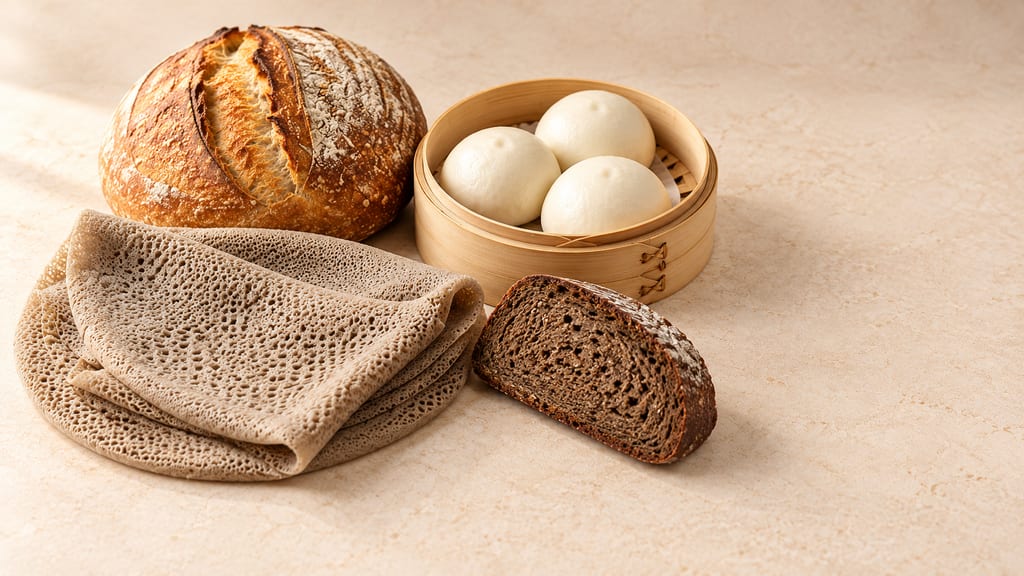
A sourdough loaf, injera and steamed buns: three of the many answers to what bread is for.
One word, many jobs
Some bread is made to be sliced. Some is made to be torn, folded around a mouthful, or laid under a stew so it can drink the sauce. A baguette is bought fresh through the day from a baker who bakes in small batches. A sheet of injera is plate and spoon at once. A mantou leaves its steamer pale on purpose. A Cretan barley rusk is baked twice so that it will last. Call all of these bread and you have named a purpose, not a recipe.
That is the thread this piece follows. It does not rank the world's breads or hunt for the first one. It asks what each is asked to do at the table, and how grain, microbes, water and heat are arranged to do it. The answers turn out to be more varied than the oven loaf most readers carry in their heads, and a good deal more interesting.
The loaf that became heritage
In 2022 the baguette was added to UNESCO's Representative List of the Intangible Cultural Heritage of Humanity. What was recognised was not the long, narrow shape. It was the work and the habits around it: the daily visit to the bakery, the racks built to fit a loaf that long, the way knowledge passes from one baker to the next through apprenticeship that mixes school courses with time in a bakery.
The ingredient list is short: flour, water, salt, and leaven or yeast. The steps are longer. Dough is weighed and mixed, kneaded, left to ferment, divided, rested, shaped by hand, fermented a second time, then cut with shallow slashes that serve as the baker's signature, and baked. Temperature and humidity change the result, so two bakers using the same four ingredients do not make the same loaf. The result the heritage file describes is a crisp crust around a chewy crumb.
A list of ingredients cannot explain any of that. The rhythm of small batches through the day, the shared expectation of what fresh means and the hands that shape each piece are part of the food. Bread is a craft that happens to be edible.
Steam instead of an oven
In northern China, noodles and mantou are the everyday starch where the south leans toward rice. Mantou is a plain steamed bun, eaten at breakfast, lunch and dinner beside stir-fried dishes, and it is the base for many filled and twisted relatives. One home-kitchen recipe gives the rhythm: a yeasted dough rises for about two hours, is cut into equal pieces, rests a further fifteen minutes in the steamer, then steams for twenty minutes over medium-high heat.
Steam changes what bread can be. Moist heat sets the expanding bun without drying and browning its surface, so there is no crust, only a pale, soft skin. That softness is the aim, not a shortfall, and it is why mantou suits a meal of saucy dishes. The dough is still fermented; pale does not mean unraised. Practicalities follow from the method. The buns grow, so they need room, about two inches apart in a cloth-lined metal or bamboo steamer. They are best reheated by steaming for around five minutes, since a microwave dries them out.
Put the same dough in an oven and it becomes a different food. The ingredients can be shared between two breads that have almost nothing else in common.
Two flatbreads that puff
A chapati held to heat can swell like a balloon. The cause is physical, not biological. Water in the dough turns to steam between two surfaces that are setting in the heat, and the steam has nowhere to go but outward. The cook's skill lies in rolling the dough evenly, since a thick or thin patch can stop the puff, and in having a surface hot enough. No yeast is involved. Atta, the whole-wheat flour the recipe calls for, is simply asked to hold a pocket of steam for a moment.
The maize tortilla solves a different problem. Its dough is masa, made from corn that has been treated with an alkali in the process called nixtamalisation, and its modern kitchen counterpart is masa harina. The two are not interchangeable with ordinary cornmeal or cornstarch. A method written for masa harina does not promise that plain cornmeal will bind the same way, and the name on a bag matters less than the processing it describes. The tortilla, too, is cooked briefly on a hot surface, and in the best cases it puffs in the same way as a chapati.
How a tortilla reached Guam
The best documented journey in this story belongs to a flatbread on a small island. Spanish missionary documents from the seventeenth century are the earliest references to maize on Guam, and the record names Fray Juan Pobre planting corn on Rota in 1602. The Chamorro word titiyas comes from the Spanish tortilla and was in use by the 1700s. It travelled by sea. New Spain's food reached the Pacific on the Manila Galleon route, on which Guam was the only stop, and Mexican grinding stones arrived with it, to be renamed mitate and manu in Chamorro.
Titiyas did not stay one thing. Guam's cooks made it from maize, from wheat flour once imported flour became readily available in the eighteenth century, and from other starches, among them breadfruit pulp and the Federico nut. Some versions mix wheat flour with coconut cream, or with young coconut meat and its juice. Corn was softened in water and quicklime made from burned coral. The dough was shaped on banana leaves and cooked on a kommat, a large flat cast-iron pan over open fire, and a rough tool called a guesgues, often a perforated sardine can, scraped off burned patches.
Titiyas was a staple through the nineteenth century and the years before the Second World War. Rice became the everyday starch only afterwards. Today titiyas holds a place near the start of the fiesta table, after the red rice. The lesson is a practical one. A bread's name can travel much further than its recipe, and the same word on Guam covers doughs of several grains. Treat the name as a family, and ask which member is on the table.
Batter breads: injera and dosa
Injera is the staple of Ethiopia and Eritrea, a soft, porous, slightly sour sheet made from teff, a very small grain grown in the Ethiopian highlands for thousands of years. It carries stews such as doro wat and gomen wat, and the torn pieces gather the food. The documented method starts with ersho, a starter of teff flour and water left in a warm place for three or four days until foam sits on top and small bubbles rise when it is tapped. The starter is stirred into more teff flour and water, and the batter ferments for anywhere from one to seven days, depending on how sour the cook wants it. In the home-kitchen account used here, water that gathers on top is changed every three days or so.
Then comes absit, a portion of the batter cooked into a paste and cooled before it is mixed back in. It is part of the texture, not a garnish. The account says it keeps the injera from drying out and turning crackly. The batter rests, is poured in a circular motion onto a hot griddle, and within seconds the characteristic 'eyes' open on the surface. A lid goes on for about a minute more. No other leavening is needed. The holes come from the starter's gas.
South India's dosa makes the same kind of argument with different grains. Rice and urad dal are ground into a batter and left to ferment, and the batter is spread thin on a hot surface to set into a crisp sheet. Grinding and consistency count as much as fermentation, because a batter can be full of bubbles and still spread badly, stick or cook unevenly.
The two foods share a word, fermented, and very little else. A wheat starter guide does not make an injera method, and a dosa timetable does not tell you when a teff batter is ready. Pick one documented version, with its grind, its starter and its cooked addition, and adapt it only afterwards.
A starter that crossed a border
Finnish rye bread has an older story and a more personal one. Rye has been grown in Finland since around 500 BCE, and for centuries farming life turned around growing and harvesting it. Eastern Finland baked weekly and ate soft loaves. Western Finland baked twice a year and ate dried bread. In 2017, for the country's centenary, Finns voted rye their national food.
One Finnish writer tells how the knowledge travelled. In 1944 his grandmother left her home in Karelia with a newborn, after the armistice that put most of the region under Soviet control. Everyone in the family assumed she carried a rye starter with her, and decades later a frozen one turned up in her freezer, quite possibly descended from it. Starters can be dried on a windowsill for travel and revived with flour and water, and they need warmth to thrive. The bread itself takes days: the dough ferments overnight, about ten hours, is shaped in the morning and rises again. The long fermentation produces the sour flavour. Many loaves are thin and flat with a hole in the middle, which once let them hang from a pole to store. A fork pricks the surface before baking, and a hollow sound from the underside says the loaf is done.
Rye asks for a different idea of dough. A high-rye mixture stays sticky and paste-like where wheat becomes stretchy, because starch and water-binding constituents carry much of the structure. Adding flour until the dough feels like wheat takes it away from the formula it was meant to be.
What lives in a starter
Where do the microbes in a sourdough come from? A team led by Elizabeth Landis and Benjamin Wolfe asked 500 home bakers. Through the Sourdough Project, a community-science network recruited online in early 2017, bakers completed a 40-question survey and mailed a frozen sample to Tufts University. Most of the starters came from North America, with 429 from the United States, 29 from Canada, 24 from Europe, 17 from Australia and New Zealand, and one from Thailand.
The microbes were of two main kinds. Lactic acid bacteria and acetic acid bacteria made up over 97 percent of the bacterial reads, and yeasts over 70 percent of the fungal reads. Saccharomyces cerevisiae made up more than half of fungal reads in 77 percent of starters, and Lactobacillus sanfranciscensis was usually the dominant bacterium where it occurred. Acetic acid bacteria, overlooked in earlier work, turned out to be the strongest predictor of flavour and behaviour: more of them meant a stronger vinegar aroma and a slower rise.
The finding people remember is about geography. The team found little evidence that place shapes a starter's community, contrary to ideas like a particular city's sourdough. Sharing starters between bakers and commercial flour may even-out differences. Because most samples came from the United States, the result should not be read as proof for every bread culture in the world, but it does question the idea that a name or a city explains a starter's microbes.
A fermented dough works through exchange. Yeasts supply gas, bacteria supply acid and other compounds, and the dough's own enzymes act as well. The gas needs a structure to hold it until heat sets the loaf. Salt is more than seasoning, because it affects both fermentation and dough, so changing it can change the schedule as well as the taste. A large dose of yeast meant for a quick dough does not belong in an overnight method either. Fermentation time is not spare time that can be stretched without consequences.
Bread from roots and starch
In December 2024 UNESCO inscribed a bread that has nothing to do with wheat. Cassava bread is a joint listing for Cuba, the Dominican Republic, Haiti, Honduras and Venezuela. It is a round bread made from the cassava tuber, usually bitter cassava, which keeps longer than sweet. The tuber is peeled, washed and grated, the pulp is dried, and the resulting flour is sifted through a handmade sieve. The flour is made into dough and cooked, usually over firewood on ceramic or iron plates, depending on the country. Flavour, texture, size and thickness vary across the five countries, and so do the names: casabe in Cuba, kasav in Haiti.
For many households it is a daily staple. The listing says it connects communities to Indigenous and African heritage, and that each community values its own way of making it while recognising the others. That is why a shared listing is not a claim of a single birthplace. It records a practice held in common.
Cassava needs real knowledge. Raw cassava can contain compounds that release cyanide, and an improvised short soak, drying step or fry is not a processing guarantee. A home cook should use a reputable prepared ingredient and follow its instructions, not shortcuts borrowed from a description of traditional work.
Brazil's pao de queijo takes the same plant in another direction. Here the structure comes from tapioca starch rather than gluten. In one bakery owner's recipe, butter, milk, water and salt are boiled and poured over the tapioca starch, which is beaten until smooth and elastic-looking, and grated cheese and garlic go in. The buns are soft and chewy, and the recipe uses no yeast or starter. Tapioca starch, cassava flour and fermented sour cassava starch are different materials, and a recipe may depend on one. If you swap one for another and expansion or chew change, you have made a different bread.
Soft, rich and dry
Milk, eggs, butter, cheese and coconut change what a dough is. They bring solids as well as liquid, so replacing milk with water, or coconut milk with a dry coconut product, alters more than flavour. A rich dough usually needs a different mixing order and schedule from a lean one.
Pani popo from Samoa shows the principle. It is a sweet yeasted bun baked in a sweetened coconut milk sauce, and cooks often compare the taste to glazed doughnuts. The sauce goes over the rolls before baking in the method the recipe calls authentic, though some versions sit the rolls in the sauce instead. The sauce is part of how the bread eats, not a topping on an interchangeable roll.
Tangzhong, a technique from East Asian baking, gets softness another way. A small portion of flour and liquid is cooked first, and the cooked starch holds moisture in the finished bread. It is not a fermented starter, and its quantities and cooking need to stay attached to the bread it belongs to.
At the other end of the texture range are Cretan barley rusks. A rusk is essentially double-baked bread, made with barley flour and sometimes whole wheat. Families that could not bake bread often could make rusks, which lasted a long time and travelled well, and barley, more filling than wheat, mattered in lean times. Round rusks are kouloura, thick slices are dakos, and in dakos the rusk is only lightly soaked and topped with olive oil, grated tomato, fresh cheese, olives and sometimes capers. The author's version uses equal parts barley and wheat flour, baked for about an hour at 180 degrees C and then dried for about two hours at 100 degrees C. Hardness here is a feature. A rusk is meant to wait.
Lift without yeast
It is worth separating the ways bread rises, because they get confused. Yeast and bacteria make gas and acid through fermentation. Steam does it in a chapati, and cooks credit the puff to a hot surface, not to microbes. Chemistry does it in Irish soda bread, where bicarbonate reacts with an acid such as buttermilk. Its mixing and baking sequence differ from a yeast dough's, and waiting for soda bread to ferment, or adding soda to rescue an underproved loaf, mixes up processes that need different conditions. Some breads are not raised at all. A broad bread reference has room for unraised, chemically raised and fermented breads together, as long as each method is called by its name.
Reading a bake
Bakers compare formulas with baker's percentages, treating total flour weight as 100 percent. Water at 65 percent means 65 grams for every 100 grams of flour, not 65 percent of the whole dough. A starter adds flour and water of its own. The arithmetic helps describe a batch, but halving a formula does not halve proofing or baking time.
A dense loaf can come from underfermentation, a weakened overfermented dough or too much added flour, and a photograph cannot tell you which. Keep notes on the flour, mixing, dough temperature, rise, shaping and bake, and change one thing at a time.
Quality and safety are separate questions. Flour is usually raw, so do not taste uncooked dough or batter. A handsome crust, a good smell and plenty of bubbles prove nothing about safety. Discard mouldy bread rather than cutting off the visible spot, since bread is porous and contamination can extend beyond what you can see. Freeze plain bread in portions when you cannot eat it in time, because refrigeration speeds staling. A bread with meat, cream or fresh cheese needs the storage rules for those ingredients, not a rule taken from a plain loaf. No single shelf life covers this whole table.
The pictures
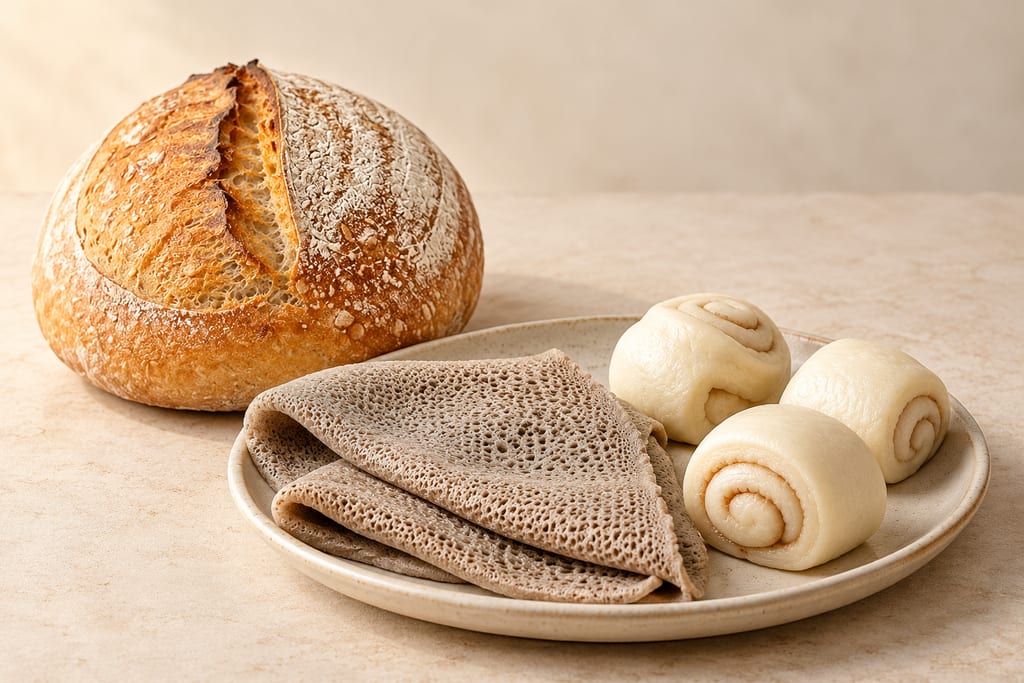
The opening still life is generated editorial art informed by three real photographs: a scored sourdough loaf, folded injera and pale spiral steamed buns. It does not document an actual batch or a customary combined serving.
The photographs show a sourdough loaf cooling on a rack, by Nhall0901; injera on a fasting platter, by Jbinthecity; and small coloured steamed buns, by Fumikas Sagisavas. Each photographer dedicated the image under CC0 1.0. The platter photograph shows how injera is served and does not establish its flour blend. The bun colours do not identify their ingredients.
Related
Discussed in this article
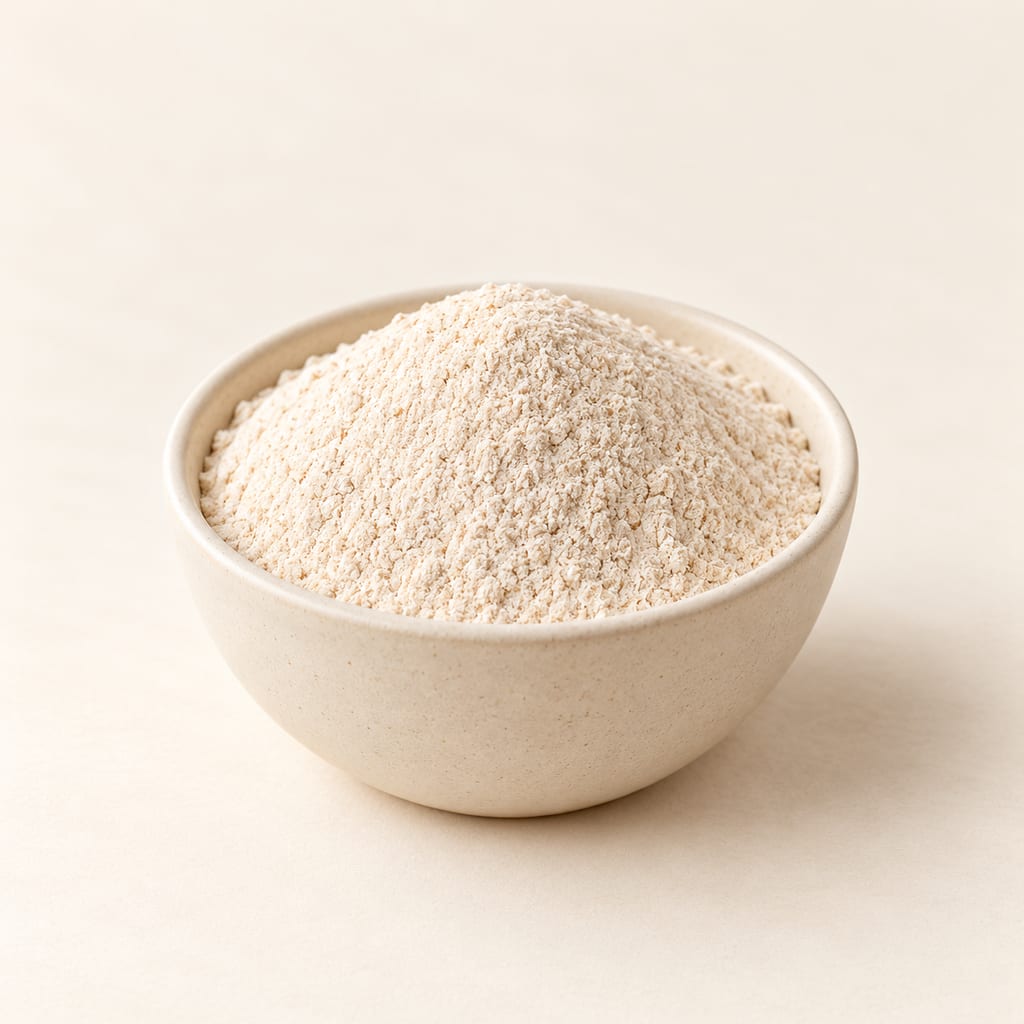
Atta
Atta is wheat flour used across South Asian bread traditions. Indian standards distinguish wheat flour (atta) from resultant atta; milling route and particle size shape its behavior in chapati dough.
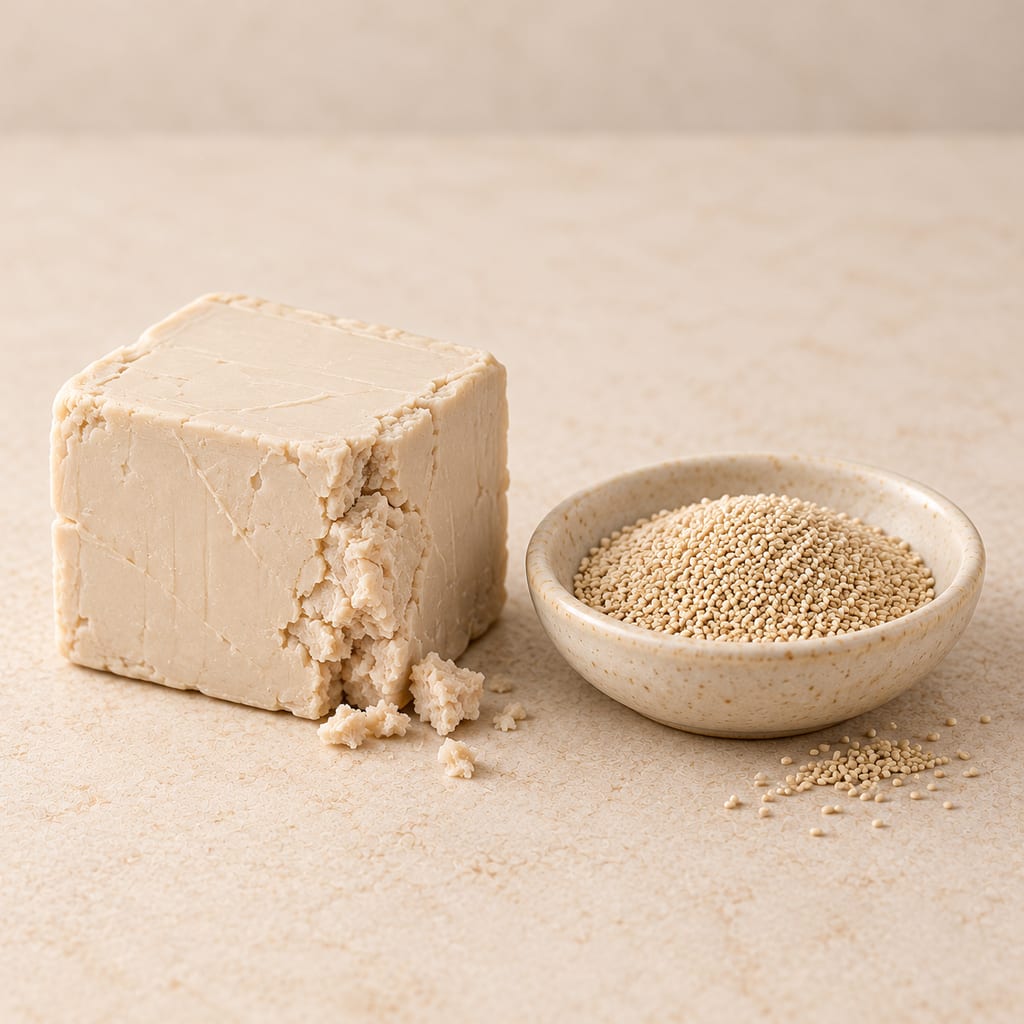
Baker's yeast
Baker's yeast is a cultivated living leavener, commonly sold fresh or dried. In dough, selected Saccharomyces cerevisiae cells make gas that can raise bread.
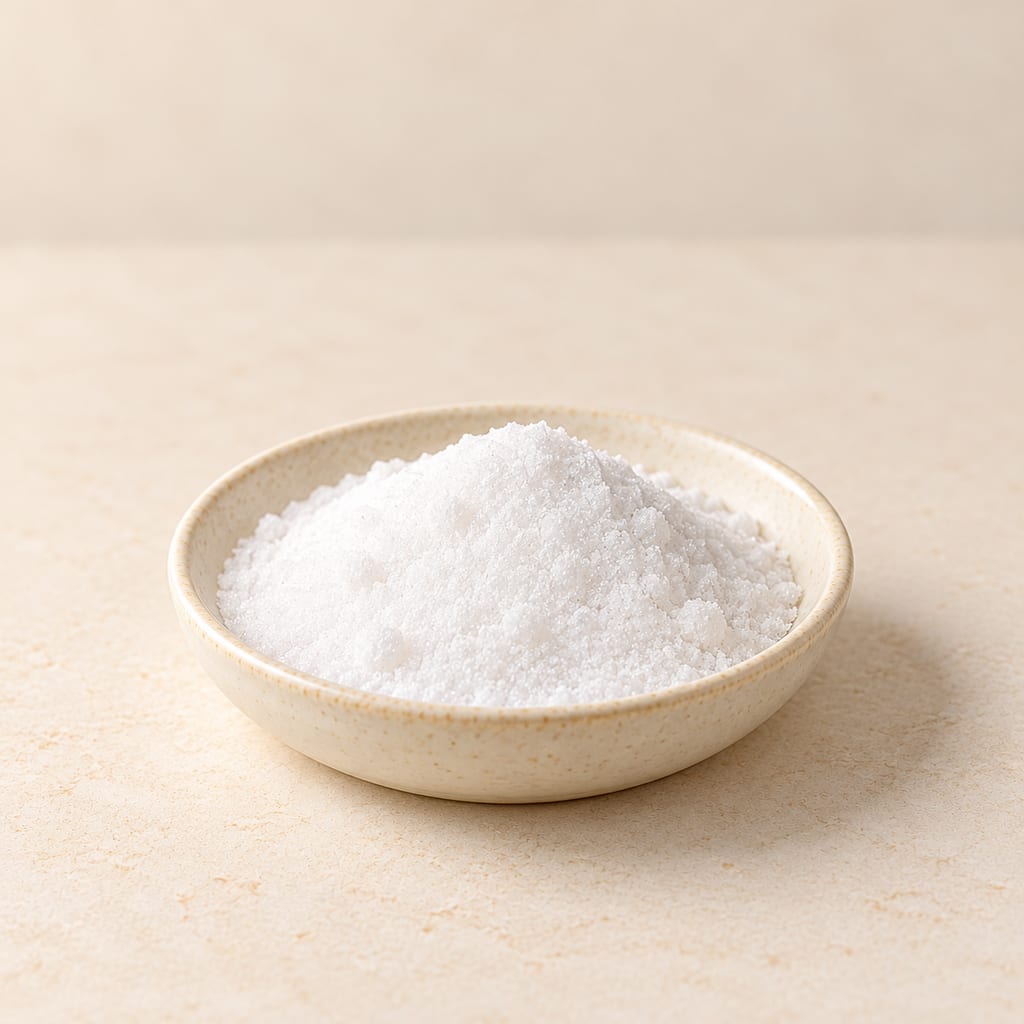
Baking soda
Baking soda is food-grade sodium bicarbonate, a single alkaline powder that releases carbon dioxide when it meets acid in a wet batter. It lifts quick breads without a living culture.
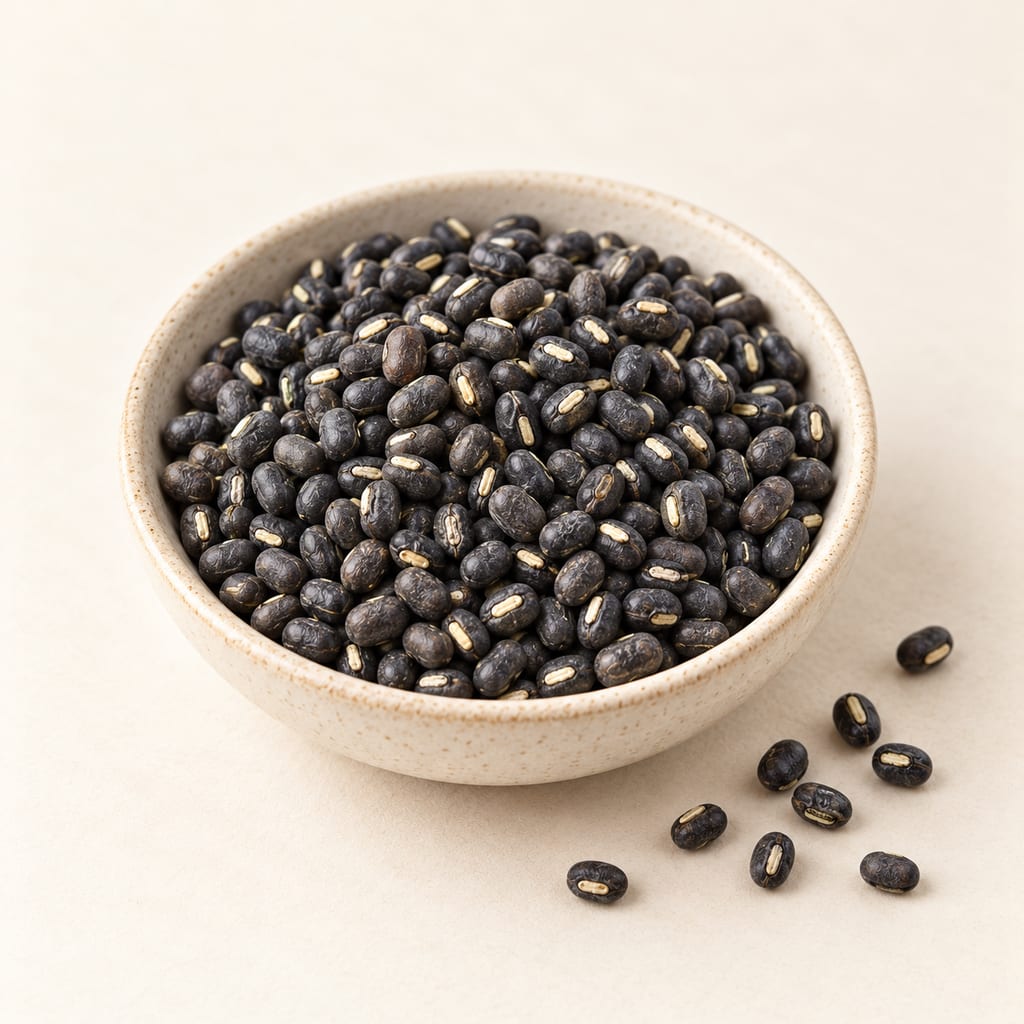
Black gram
Black gram, or urad, is a South Asian pulse whose whole dark seeds and dehulled white dal make distinct cooked and fermented foods.
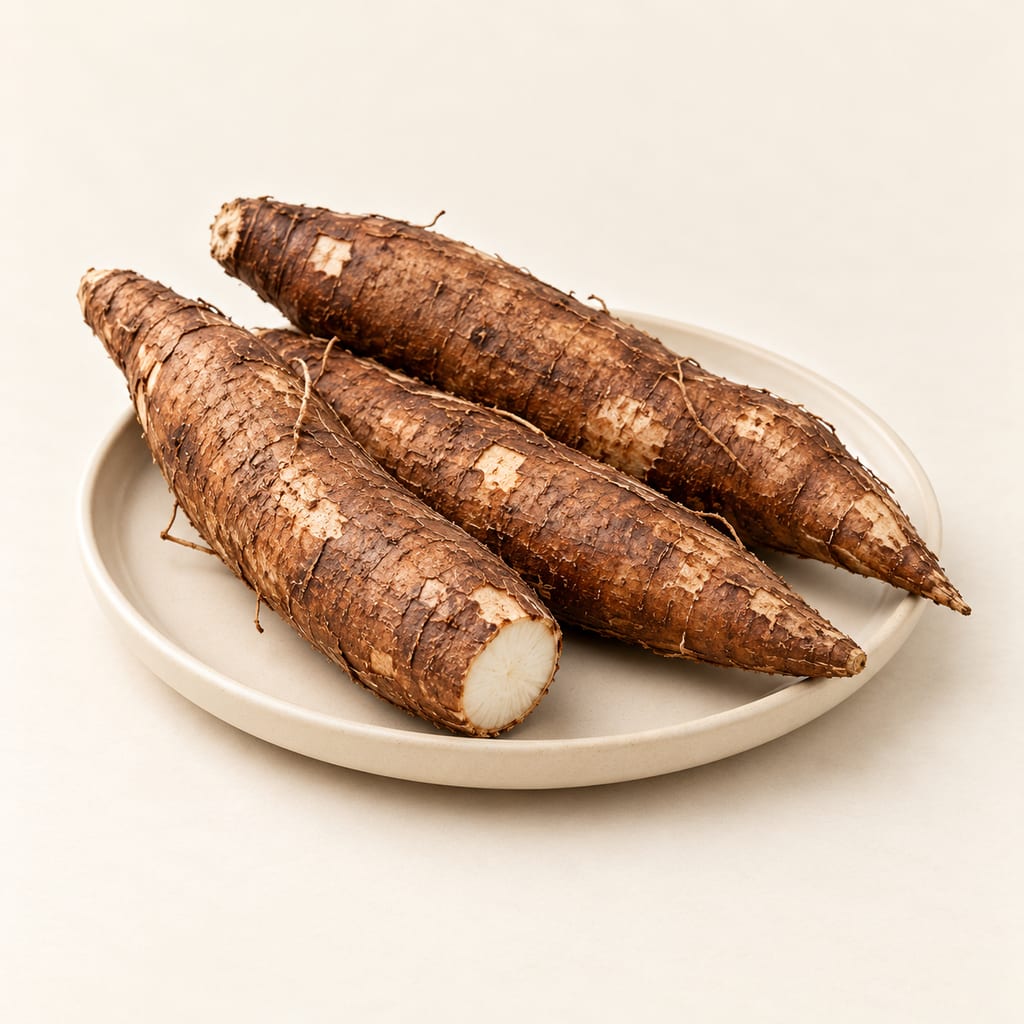
Cassava
Cassava is the starchy root of Manihot esculenta, transformed across Africa into fermented doughs, granules and flours through distinct processes whose safety depends on thorough cyanogen removal.
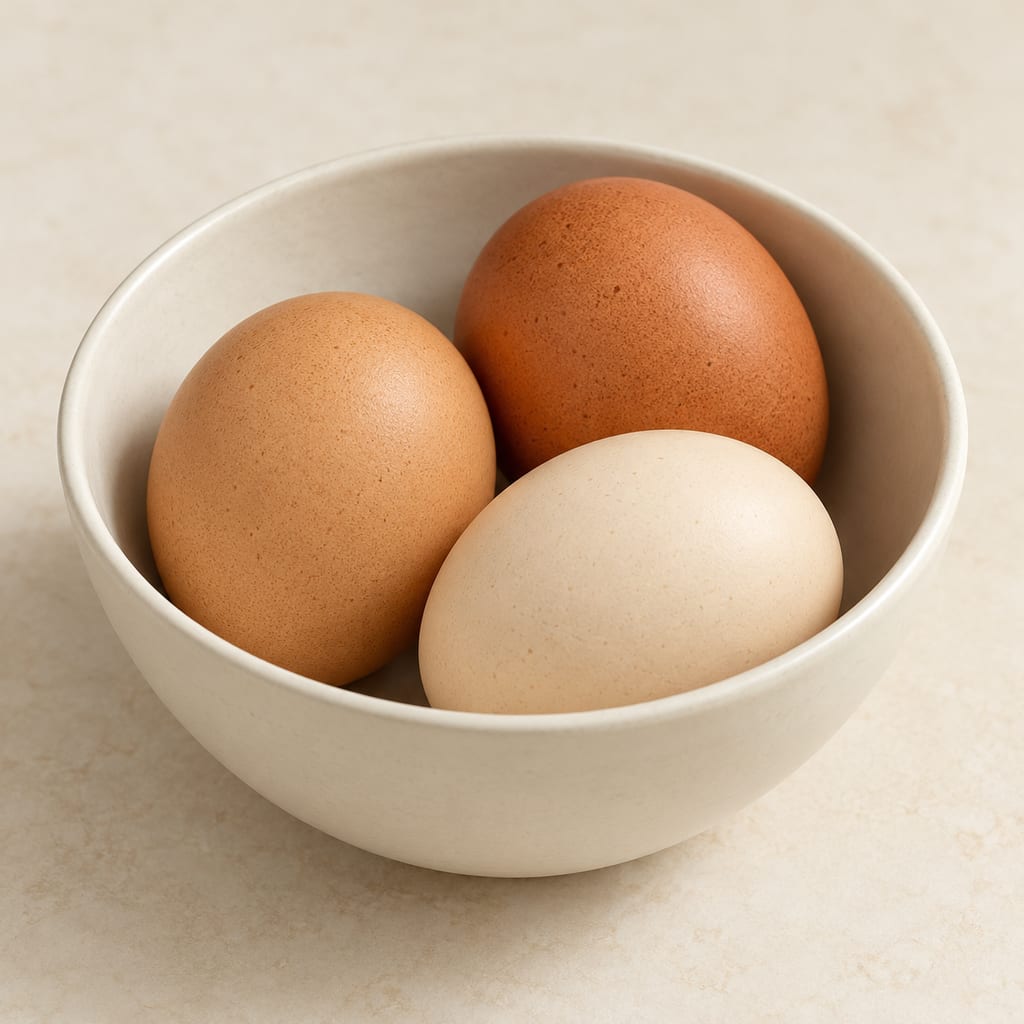
Chicken egg
Chicken eggs supply proteins and yolk fats that set and emulsify. Atlas breads use them in enriched doughs, surface washes and a sourdough pancake batter mixed after fermentation.
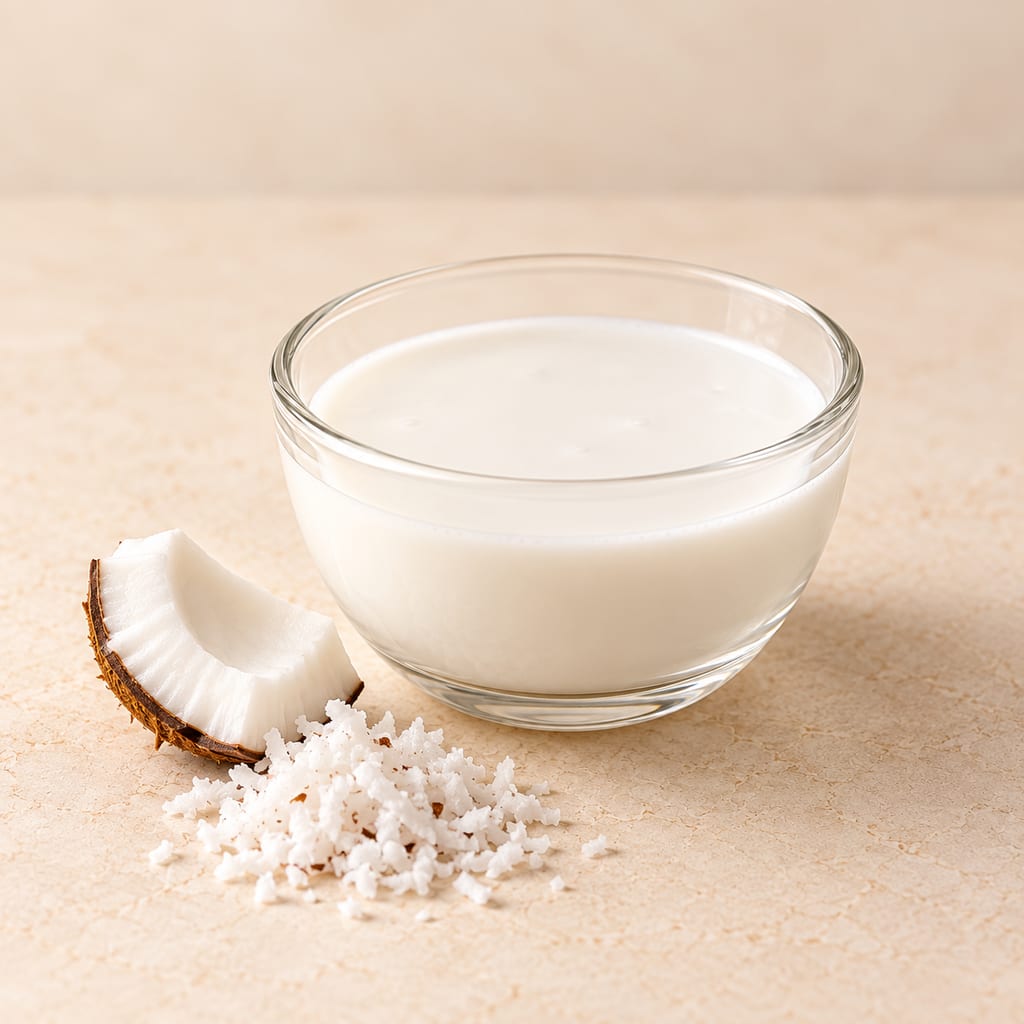
Coconut milk
Coconut milk is an aqueous emulsion extracted from mature coconut kernel, sold fresh, packaged or reconstituted. It is distinct from the liquid naturally inside a coconut.
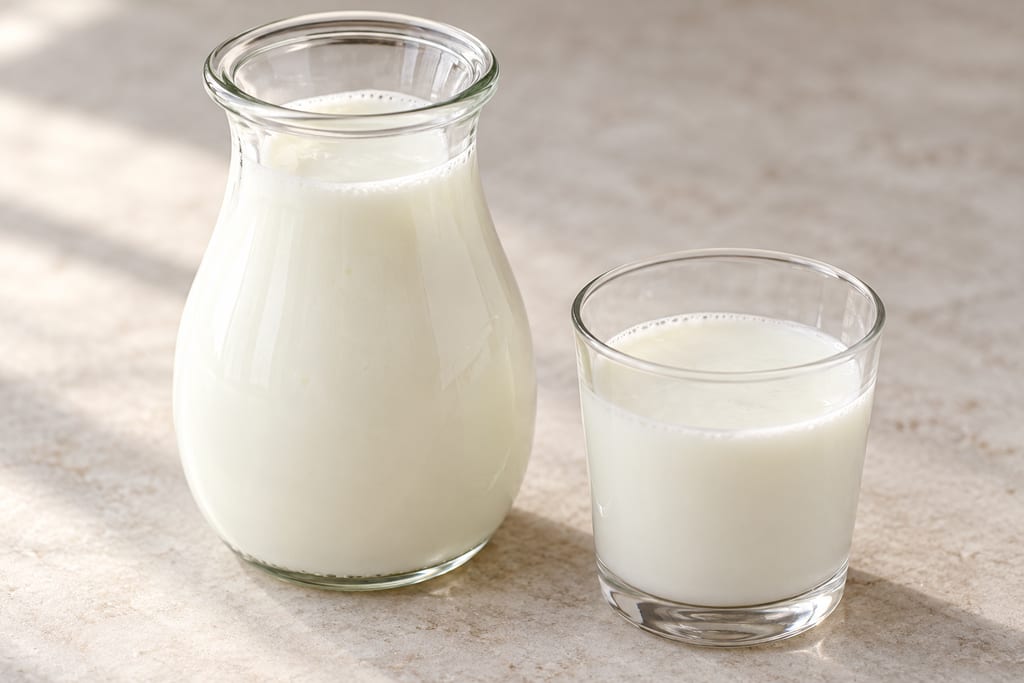
Cultured buttermilk
Cultured buttermilk is skim milk soured with a lactic starter into a tangy drink. This Canadian home method sets the milk without churning cream.
Community
No community contributions have been published for this entry yet.
Share what you made
Sign in to contribute. Published comments and photos are free to read.
Sources
UNESCO Intangible Cultural Heritage
Artisanal know-how and culture of baguette breadCited in: One word, many jobs; The loaf that became heritage
Dassana's Veg Recipes
Roti Recipe | Chapati Recipe | Phulka Recipe (3 Ways)Cited in: Two flatbreads that puff; Lift without yeast
Chef Lola's Kitchen
Injera - 100% Gluten Free Teff Injera RecipeCited in: One word, many jobs; Batter breads: injera and dosa
Dassana's Veg Recipes
Dosa Recipe (With Homemade Dosa Batter)Cited in: Batter breads: injera and dosa
The Woks of Life
All-Purpose Chinese Steamed Bun Dough (Man Tou)Cited in: One word, many jobs; Steam instead of an oven
UNESCO Intangible Cultural Heritage
Traditional knowledge and practices for the making and consumption of cassava breadCited in: Bread from roots and starch
Landis and colleagues / eLife
The diversity and function of sourdough starter microbiomesCited in: What lives in a starter
ThisisFINLAND
We love Finnish rye bread: A baking story that stretches across borders and generationsCited in: A starter that crossed a border
King Arthur Baking / Ricardo Gonzalez
Brazilian Cheese Buns (Pao de Queijo)Cited in: Bread from roots and starch
OliveTomato.com / Elena Paravantes
Authentic Greek Barley Rusks - Paximadi KritikoCited in: One word, many jobs; Soft, rich and dry
US Food and Drug Administration
Handling Flour Safely: What You Need to KnowCited in: Reading a bake
Gaps
- Bread names can cover several regional and household methods. This survey does not establish a single birthplace, inventor or universal formula for them.
- The text explains methods but supplies no complete household recipe or common fermentation endpoint, storage interval or food-safety limit.
Updated 2026-10-29