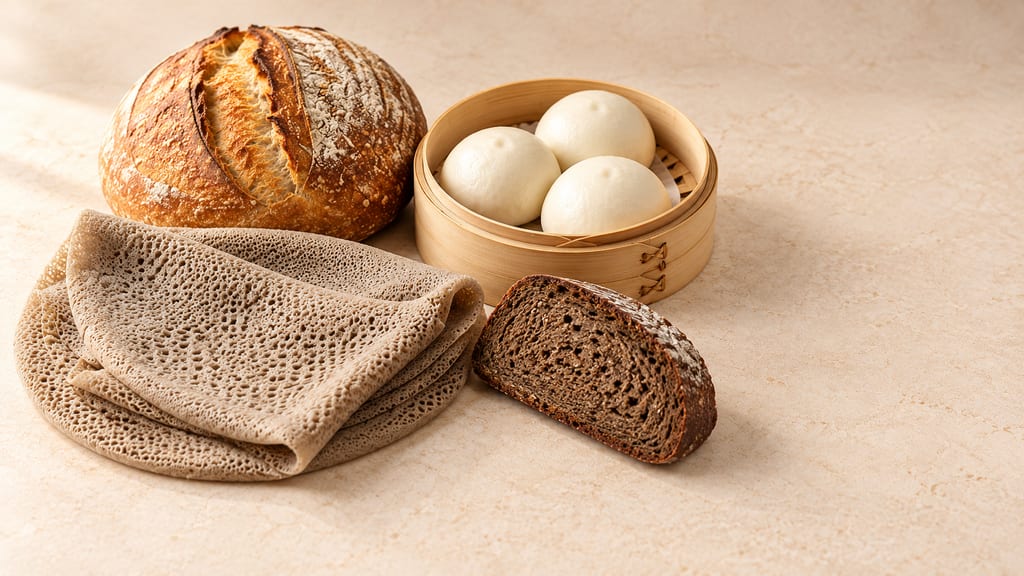
Bread around the world
From the baguette and the steamed bun to injera, titiyas, Finnish rye and cassava bread: how grain, microbes and heat answer the question of what bread is for.
 FermenteaWhere food goes to change
Substrates
Atta is wheat flour used across South Asian bread traditions. Indian standards distinguish wheat flour (atta) from resultant atta; milling route and particle size shape its behavior in chapati dough.
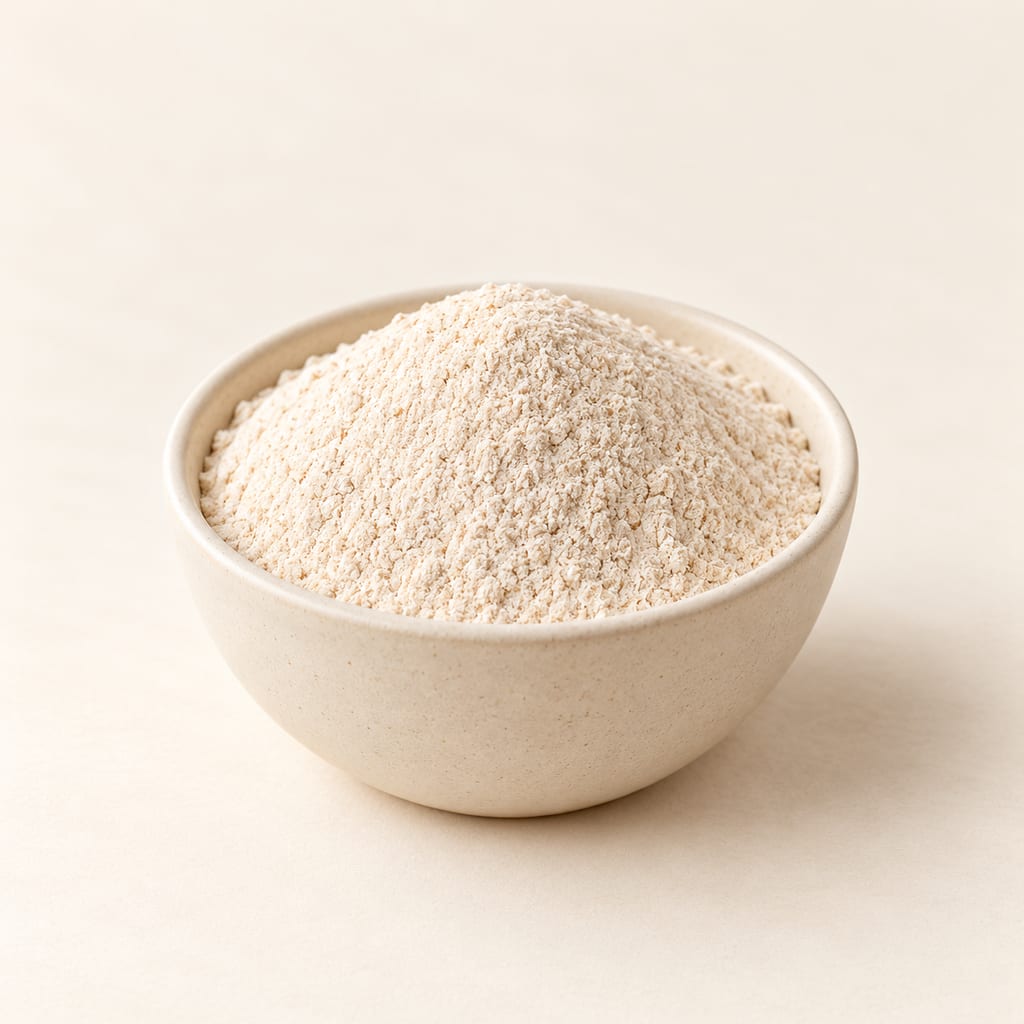
Atta is the wheat flour used in many South Asian breads. The supplied bread atlas names it for chapati, phulka, tandoori roti, paratha and puri, and notes that its milling and particle size affect the dough. In everyday Indian English, atta is commonly called whole-wheat flour. In this entry, the name refers to wheat flour in that South Asian bread context; it does not mean every product whose package says wheat flour is atta.
The broader term whole-wheat flour describes a composition: bran, germ and endosperm remain in the flour in the grain’s original proportions. Atta is a regional food and product name. The terms overlap in many recipes and descriptions, but the name alone may not tell a baker how the mill produced a particular bag. India’s food standards even distinguish “wheat flour (atta)” from “resultant wheat flour (resultant atta)” by processing route.
This page therefore focuses on atta as a named flour and baking material, especially in Indian flatbreads. The separate whole-wheat-flour page covers the general grain-composition category and wheat-flour milling in broader terms. Ordinary wheat flour is a wider category that includes refined flour; maida is a refined wheat flour used in other breads and pastries. Durum semolina, chickpea flour and millet flours are different ingredients, even when a recipe mixes them with atta.
India’s Food Safety and Standards Authority defines wheat flour (atta) as a product obtained by milling or grinding clean wheat. It separately defines resultant atta as a blend of fractions from roller milling after semolina or maida has been separated. The standard specifies the product names and quality requirements; it does not make every atta flour identical in particle size or baking performance.
This distinction helps explain why a traditional chakki flour, a packaged whole-wheat atta and a resultant atta can behave differently. The source standard describes how the product is made, while the package and mill determine the actual flour presented to a baker. A recipe that names atta gives a useful starting point, but the flour’s granulation, wheat, mill and age still affect how its dough works.
English labels can also flatten differences. Some sources use atta as a direct translation for whole-wheat flour, while Indian rules name atta and resultant atta within a specific product standard. This entry keeps both descriptions visible rather than treating “atta,” “whole wheat” and every regional wholemeal grade as universal synonyms. When the recipe identifies a particular flour or mill, preserve that distinction.
The product name does not describe every possible formula. In its current cereal standard, FSSAI treats protein-rich wheat flour (protein prachur atta) as a different product made by mixing wheat flour with permitted ingredients such as solvent-extracted groundnut flour, soy flour or whey protein powder. That product is not plain atta. A label that adds “protein-rich,” “multigrain” or another qualifier should prompt the reader to check the ingredient declaration rather than assume it names the same flour.
Atta also differs from maida, the refined wheat flour often used for breads and bakery goods with a softer or more extensible crumb. The atlas contrasts puri made with atta and Bengali luchi characteristically made with refined flour and fat. The distinction is practical: whole-grain particles, extraction and milling change a dough’s absorption and texture, while a refined flour has more of its outer grain layers removed.
A product called whole-wheat flour in one country may not share the grading terms used for atta in India. Conversely, some Indian labels or recipe writers may translate atta as whole-wheat flour for English readers. There is no single bag-to-bag equivalence across markets. When a recipe depends on a particular dough texture, use the named flour or a product whose package explains its wheat content and milling form.
A chakki is a stone mill used to grind wheat into atta. The 2015 CSIR–Central Food Technological Research Institute study compares chakki milling with hammer, disk, pin and roller mills. Its tested flours differed in damaged starch, water absorption and dough behavior. Stone milling is therefore not only a traditional label: the grinding action can alter the fine material that a baker mixes with water.
Roller milling separates and recombines grain fractions in stages. Under India’s standard, resultant atta describes a blend of roller-mill fractions after semolina or maida has been removed. By contrast, chakki flour is often described as grinding the grain together. These are distinct processing routes; the label and mill specification matter more than an assumption that all products sold as atta were ground in one way.
The study’s water-absorption measurements varied substantially across its experimental mill samples. They do not prescribe a hydration percentage for home chapati dough. Different wheat varieties, flour grades and equipment produce different results, and a commercial formula may use controls not present in a household kitchen. No mill setting, grain conditioning schedule or extraction yield is given here as a universal home-milling method.
Atta supplies wheat starch, proteins and grain particles to a dough. When hydrated and mixed, wheat’s gluten-forming proteins develop a network that makes dough cohesive and extensible enough to roll. The bran and other grain fractions also affect water absorption and texture. A flour’s protein percentage alone does not describe all of its dough behavior, and a mill’s process can change the flour even when its label uses the same name.
Inamdar and colleagues found measurable differences in water absorption and chapati quality among the atta samples they produced with different milling techniques. That controlled comparison supports a practical observation: the amount of water and the ease of rolling are flour-specific. It does not show that every chakki flour is softer, every roller flour is drier, or that a single water ratio will work across brands.
The roti source describes the target dough as soft and pliable, and notes that more or less water may be needed depending on flour quality. Those are recipe instructions for that preparation, not a standardized atta moisture or hydration specification. A cook should follow one tested formula for the flour at hand rather than blend directions from unrelated wholemeal, refined or multigrain recipes.
Chapati and everyday roti are the clearest uses. The atlas records finely milled atta with water and usually salt as an unleavened dough, rolled thin and cooked on a hot tawa. Phulka is a puffed form of roti. The same basic flour appears in regional varieties, but a shared word like roti does not ensure one thickness, shape or cooking method across the subcontinent.
The atlas also names atta in tandoori roti, paratha and puri. Paratha adds fat and folded or layered shaping; puri is rolled and fried. These breads have different textures and preparation demands even when they share wheat flour. Tandoori roti is traditionally baked against a hot oven wall; a skillet or household oven is an approximation rather than the same heat environment.
Atta is not required in every South Asian wheat bread. The atlas distinguishes rumali roti, which may blend atta with refined flour, and luchi, which characteristically uses refined flour and fat. It also separates breads made from sorghum, millet or rice. These contrasts help a reader identify the named ingredient without treating it as a substitute for every regional flour or a requirement for every recipe.
A home route combines atta with water and optional salt and fat, then kneads it, portions it, and rolls each piece into a thin round. Cook the dough on a hot tawa or skillet; a phulka can be puffed. This is one documented method, not a required form for every roti.
A neighborhood mill allows customers to bring grain or choose a locally available wheat and grind a modest amount. Packaged atta makes flour available without a household mill and is produced at higher capacity. These arrangements can yield flour with different freshness, particle size, moisture and milling characteristics. The sources do not establish that a particular process always provides better nutrition, flavor or baking quality.
This product history is different from the much older history of wheat cultivation or bread. The archaeological record for wheat grains, early milling and bread cannot by itself date when the word atta first described a named flour. The sources consulted document modern standards, contemporary practices and regional bread recipes, so the entry leaves the ingredient’s first attestation and place of origin unknown.
Atta itself is dry flour, not a starter, yeast or leavening agent. The atlas uses it in many unleavened doughs, including chapati, phulka, ordinary paratha and puri. It also names wholegrain loaves, where fermentation may be part of the bread method. These are different ways of using one flour: the ingredient does not determine whether a particular dough is fermented.
A recipe may pair atta with yeast or a sourdough culture, but that process belongs to its named bread. The flour’s milling grade, dough hydration, organisms and temperature influence handling and fermentation together. The sources for this entry do not establish a universal fermentation time, acidity target or storage rule for atta dough. A flatbread cook should use the direct tawa method in the recipe rather than borrowing a sourdough schedule.
For chapati or roti, start with a recipe that specifies atta or finely milled whole-wheat flour. One inspected home recipe combines flour with water and optional salt and fat. Add liquid gradually, knead until the dough is smooth and pliable, portion it, and roll the pieces into thin rounds. Cook the dough on a hot tawa or skillet; phulka can be puffed.
A coarser wholemeal flour may absorb water or roll differently from the atta named by a recipe. Changing the flour changes more than the color: bran size and milling alter the dough’s feel and finished bread. If substituting, treat the result as an adaptation and adjust only within the tested recipe’s guidance. Do not assume a generic wholemeal-to-atta conversion or lift a hydration ratio from a separate study.
A home cook can use a local chakki or a packaged flour. The research sources explain the commercial and local milling routes but do not provide a complete, tested household procedure for cleaning, conditioning and grinding wheat. This entry therefore gives no home mill settings or target yield. For purchased flour, use the maker’s storage directions and the flour type called for by the recipe.
Atta is wheat flour and contains gluten. The U.S. Food and Drug Administration lists wheat as a major food allergen; the agency also identifies wheat as a grain that naturally contains gluten. Atta is not suitable for people who need to avoid gluten, including people with celiac disease, and it is not a wheat-free flour for people with a wheat allergy. The fact that dough can be rolled thin does not make it gluten-free.
Flour is a raw agricultural food. FDA guidance notes that field-grown grain can be exposed to harmful bacteria, including Salmonella and pathogenic E. coli. Do not taste atta, raw dough or raw batter. Cook flour-containing foods fully and wash hands, bowls, tools and work surfaces that contacted uncooked flour.
The sources checked do not establish one shelf life for every atta brand, milling route, climate or package. Store it as the manufacturer directs and use the package information rather than assigning a universal number of days or months. A roti recipe’s instructions for keeping cooked breads soft are not storage-safety instructions for the dry flour or leftover dough.
wheat, gluten
These sources document Indian flour standards, milling and chapati use. They do not identify India as the sole place that uses atta or claim a birthplace.
From the baguette and the steamed bun to injera, titiyas, Finnish rye and cassava bread: how grain, microbes and heat answer the question of what bread is for.

A gelling polysaccharide extracted from red seaweeds, sold as kanten strips or powder; it sets firm at a low concentration and stays solid until about 85 °C.
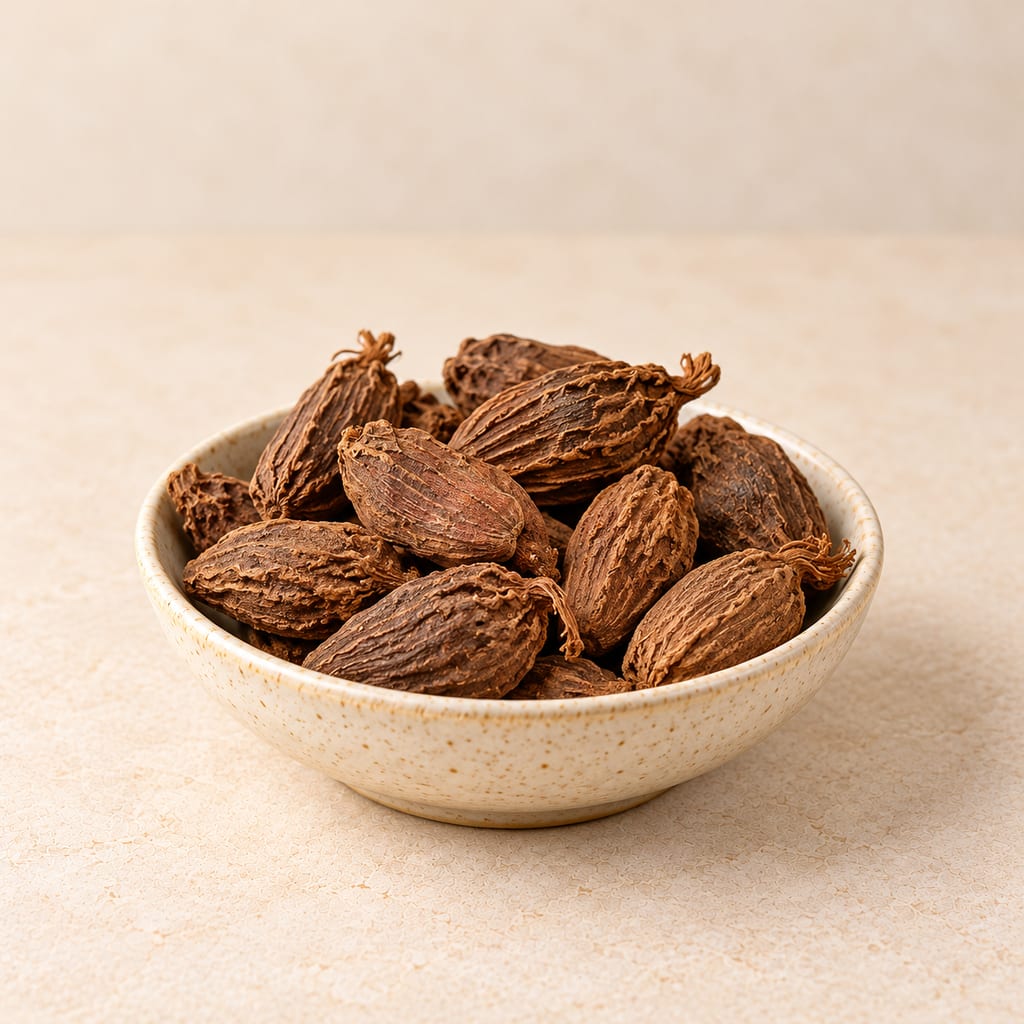
Alainchi is the large or black cardamom of the eastern Himalaya, the dark, smoke-dried pods of Amomum subulatum. Its camphor-cool, smoky seeds season Himalayan and North Indian cooking and a sweet Nepali lapsi achar.
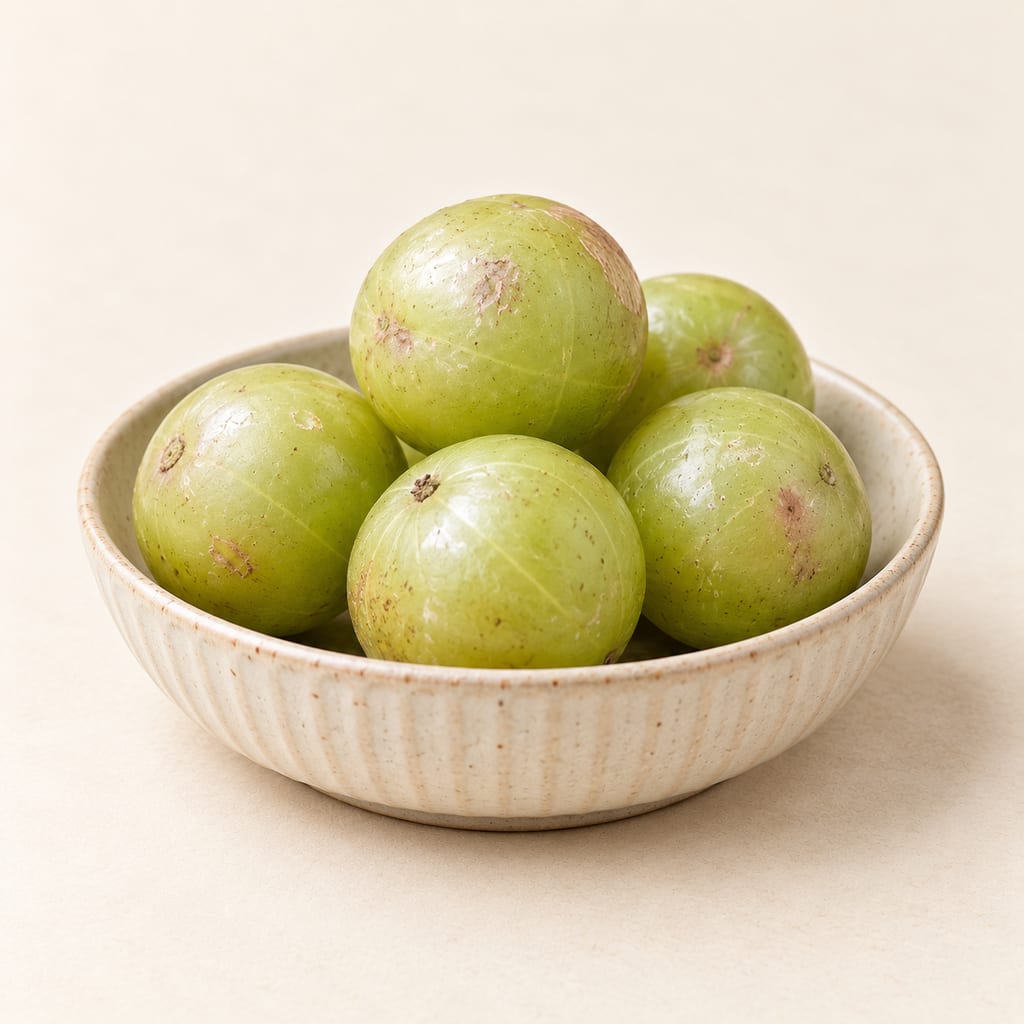
Amla is the firm, sharply sour fruit of Phyllanthus emblica. Cooks transform it into murabba, pickles, chutneys, drinks and dried snacks.
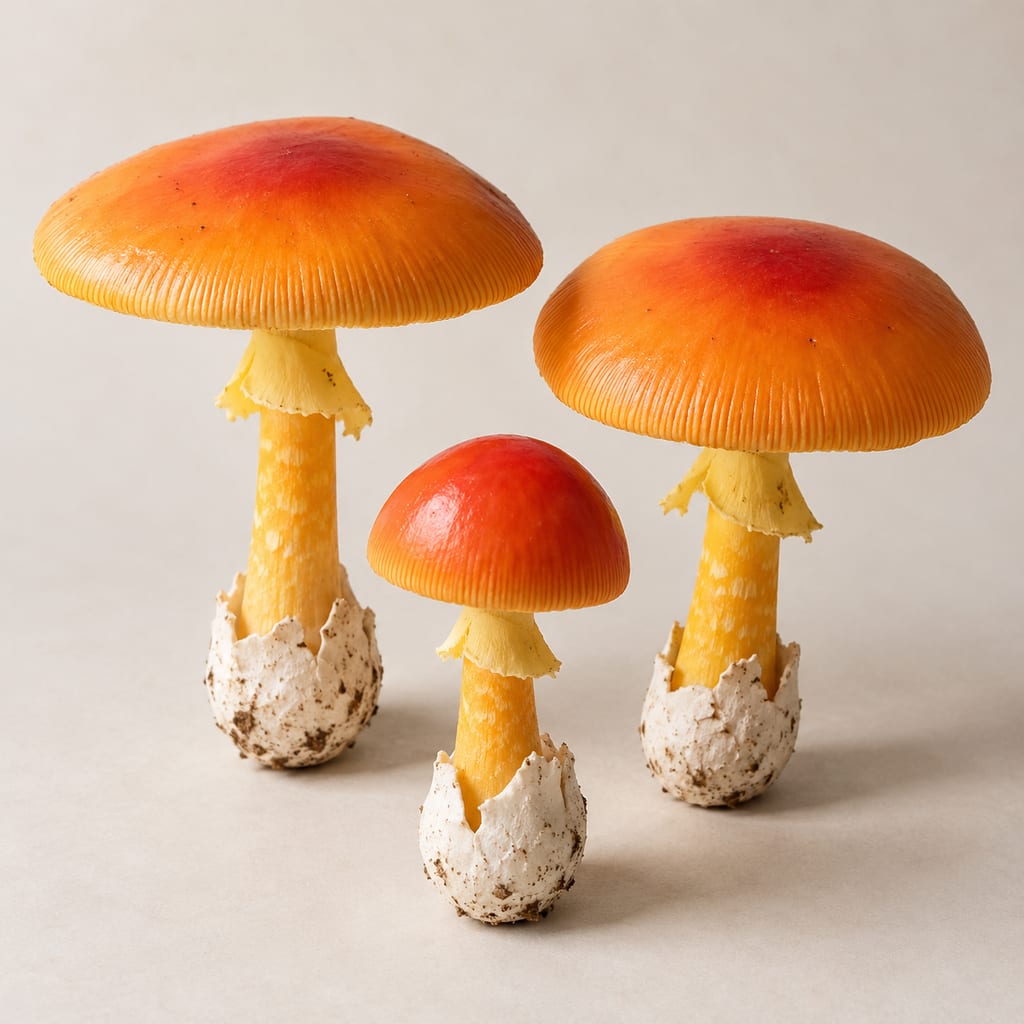
A wild Asian Amanita reported as food in regional literature and listed in China’s edible-fungi catalogue. Lookalikes include lethal species; this record is not a guide to identifying wild mushrooms.

Bamboo shoots are the young culms of many bamboo species, eaten after boiling or leaching in Asia, and fermented into sour and preserved foods in the Himalayas, northeast India and Burma.
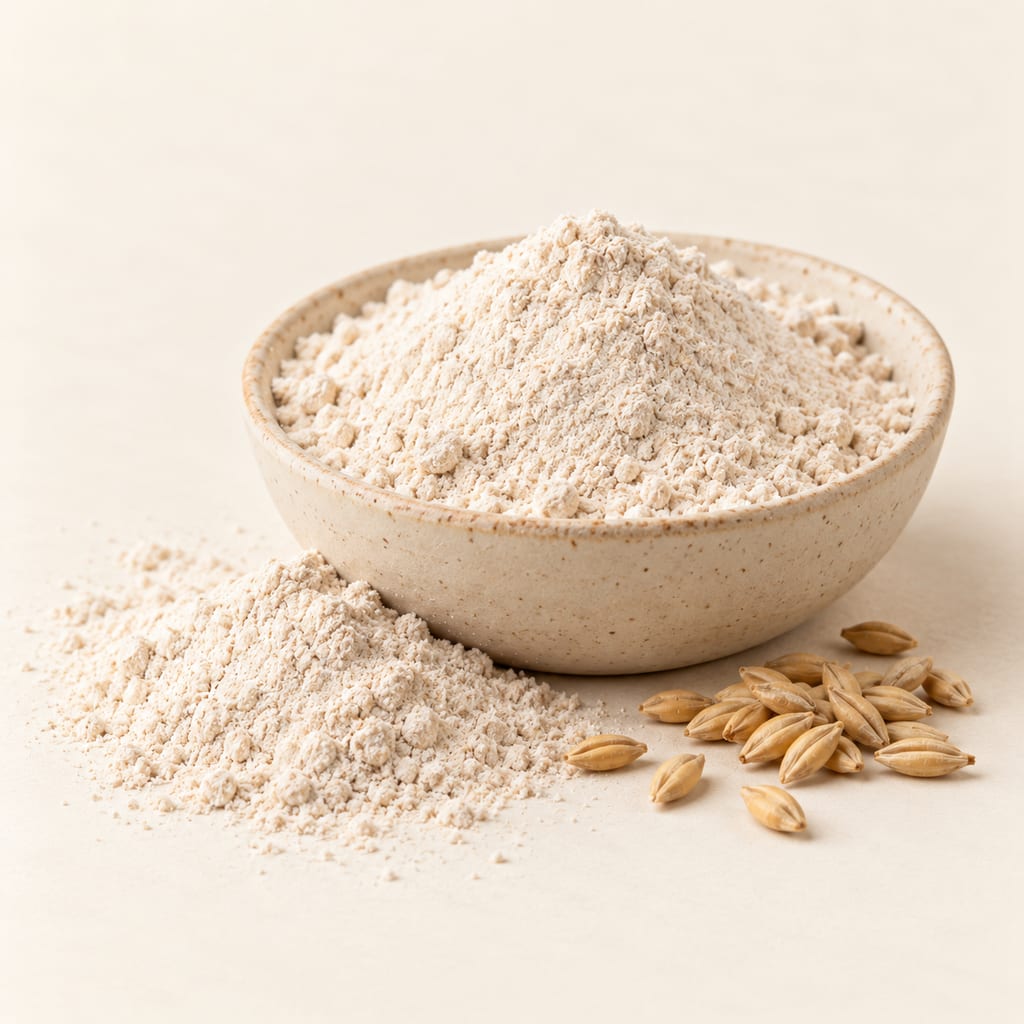
Barley flour is ground barley grain; whether it comes from pearled or hulless kernels, its milling and limited wheat-like gluten-forming ability shape the doughs and foods it can make.

Black carrot is the anthocyanin-pigmented Eastern carrot (Daucus carota var. atrorubens), the purple root that preceded orange types and still colours kanji and şalgam.
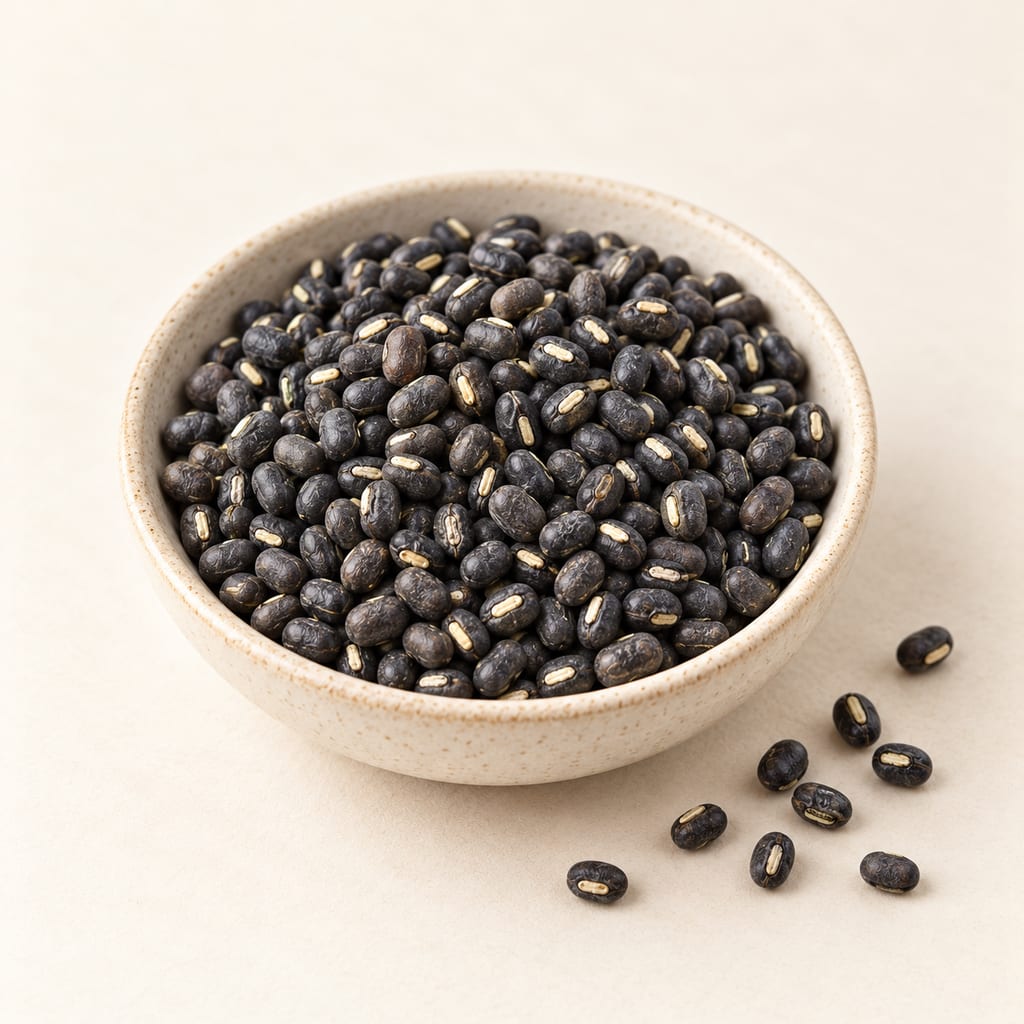
Black gram, or urad, is a South Asian pulse whose whole dark seeds and dehulled white dal make distinct cooked and fermented foods.
No community contributions have been published for this entry yet.
Sign in to contribute. Published comments and photos are free to read.
Food Safety and Standards Authority of IndiaIdentity · Processing · Manufacture · Safety
Food Product Standards: Cereals and Cereal Products, section 2.4.1 AttaThe 7 May 2025 version defines wheat flour (atta) as a product obtained by milling or grinding clean wheat.
It separately defines resultant wheat flour (resultant atta) as blends of roller-mill fractions remaining after semolina or maida has been separated.
The standard includes both product forms in section 2.4.1 and refers to Indian food-safety and labelling regulations.
Cited in: Atta is a regional name for wheat flour; What Indian standards call atta; Atta, whole-wheat flour and related products
Journal of Food Processing and PreservationProcessing · Function · Uses · Geography · History
Chapati Making Quality of Whole Wheat Flour (Atta) Obtained by Various Processing TechniquesThe study compares atta made using chakki, hammer, disk, pin and roller mills and reports that physical and dough properties differed by milling process.
In the tested samples, water absorption and chapati quality varied with milling; its measurements are experimental results, not household hydration targets.
The authors describe Indian household use of small quantities milled fresh at chakkis and a move toward packaged atta in larger cities at the time of their study.
Cited in: Atta is a regional name for wheat flour; Atta, whole-wheat flour and related products; Milling route shapes the flour; How atta behaves in dough; A household flour and a packaged product; Leavening belongs to the bread recipe
Dassana’s Veg RecipesUse · Home preparation · Handling
Roti Recipe | Chapati Recipe | Phulka Recipe (3 Ways)The recipe identifies whole wheat flour or atta, water and optional salt and fat as ingredients for an unleavened roti dough.
The described home route kneads dough, portions and rolls it into rounds, then cooks on a tawa or skillet; a phulka may be puffed.
The author notes that flour brands differ in absorption and that the amount of water required can vary; the timing also depends on thickness, flame and skillet.
Cited in: Atta is a regional name for wheat flour; How atta behaves in dough; Flatbreads made with atta; Leavening belongs to the bread recipe; Using atta at home
U.S. Food and Drug AdministrationSafety · Handling
Handling Flour Safely: What You Need to KnowThe FDA treats flour as a raw food that may carry harmful bacteria from grains grown outdoors.
Flour and dough should not be tasted raw; cook flour-containing foods and clean surfaces that contacted raw flour.
Cited in: Handling and food safety
U.S. Food and Drug AdministrationSafety · Allergen
Gluten and Food LabelingThe FDA identifies wheat as a grain that naturally contains gluten, relevant to people managing celiac disease or a medically necessary gluten-free diet.
Cited in: Handling and food safety
U.S. Food and Drug AdministrationAllergen · Safety
Food Allergies: What You Need to KnowWheat is one of the nine major food allergens recognized for U.S. food labeling.
FDA guidance tells consumers with food allergies to identify and avoid their specific allergens; it distinguishes food allergy labeling from gluten-related celiac disease information.
Cited in: Handling and food safety