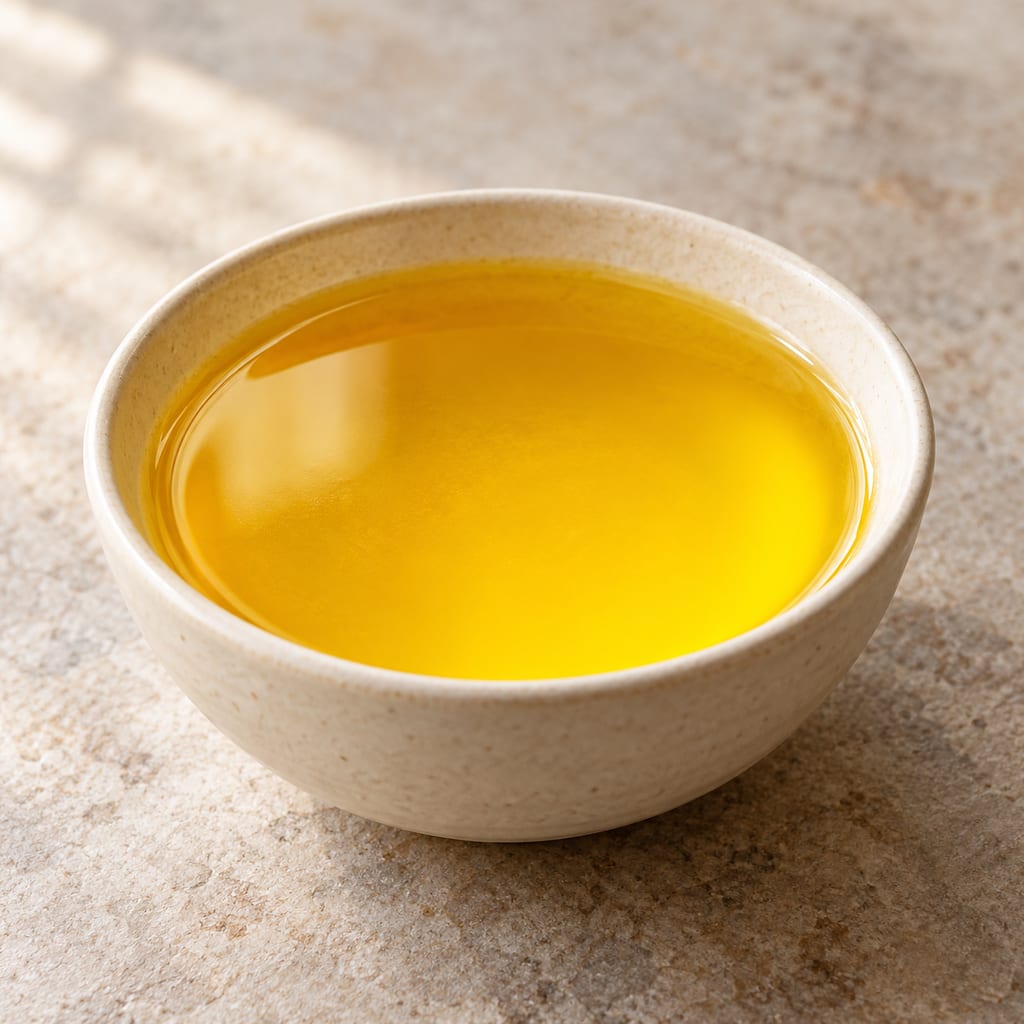
Ghee, clarified butter and rendered fats
Butter heated until most water leaves and the milk solids separate, giving a fat that keeps far longer than butter. Rendering applies the same heat to animal tissue to make lard and tallow.
 FermenteaWhere food goes to change
This measured chapati uses whole-wheat atta and water, with salt and oil or ghee optional. Rest the dough, roll it thin and cook through on a hot tawa; it is distinct from the partly cooked, puffed phulka route.
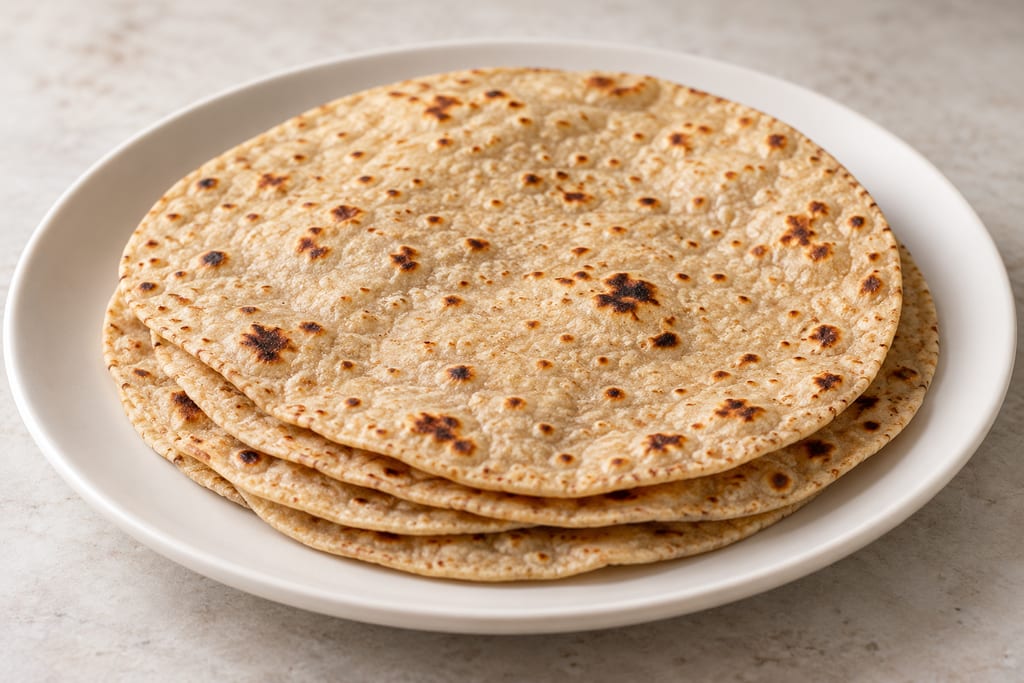
The recipe writer uses roti as a broad family name and distinguishes her chapati from phulka: both start with the same unleavened wheat dough, but chapati is cooked through on the tawa, while phulka is partly cooked there and then puffed with dry heat. This page records the tawa chapati method only.
The recipe yields 15 rounds from 360 g of atta. Atta is finely milled whole-wheat flour; the recipe source describes stone-ground flour from local chakki mills and notes that coarser flour sold elsewhere may need sifting. Water is added gradually because flour absorbs it differently. The source gives 1 to 1.25 cups, with more if needed, rather than one fixed dough hydration.
Kneading joins the flour and water into a pliable dough. The source recommends a covered rest of 20 to 30 minutes; it explains that this relaxes gluten and makes rolling easier. The dough is divided into portions and rolled into thin, even rounds. Light flour dusting helps prevent sticking, while excessive dusting can leave dry flour on the cooked surface.
A hot tawa sets the bread quickly. The method turns the round as air pockets appear, then cooks the second side until blisters and brown spots develop. A final brief return to the first side completes this version without the direct-flame stage used for phulka. Pan heat, thickness and flame change the seconds needed, so the source supplies approximate timings rather than a universal endpoint temperature. These visual cues describe the cooking method, not a safety test.
Chapati appears in diverse food traditions, and the source does not identify one birthplace or inventor. A 2022 article by Meghna Sapui examines the bread in Edward Money’s 1859 novel and reports in its historical discussion that colonial sources described chapatis circulating through North Indian villages around the 1857 uprising. These accounts are an attestation in colonial writing; they do not establish when chapati began or why those chapatis circulated.
That distinction matters because a familiar staple can be older than its surviving written records. The dated evidence in the cited study should not be turned into a claim that chapati began in the nineteenth century. The recipe here is a contemporary household preparation and is not presented as a reconstruction of the chapatis described in the historical reports.
The recipe source serves chapati with lentils, vegetable dishes and paneer curries. It describes phulka as a related bread that puffs when moved from a partly cooked tawa round to direct heat, and distinguishes layered paratha by its folding and rolling. Those are separate preparations rather than steps to combine with this chapati method.
Oil or ghee is optional in the dough and during cooking. Oil keeps the preparation vegan; ghee adds a dairy ingredient. The source also recommends keeping cooked breads covered for softness, but supplies no validated storage life. Leftovers should not be treated as shelf-stable.
Chapati has varied names and preparations across a broad region. A 2022 scholarly discussion examines chapati in an 1859 novel and colonial reports about its circulation in North India around the 1857 uprising; it does not establish a first appearance or origin. The method recorded here is a contemporary measured recipe by Dassana Amit, not a reconstruction of the bread in those historical accounts.
Yield 15 chapatis · Scaling: source batch only
Flour can carry germs before cooking; kneaded dough is still raw.
Hazard sourceThe tawa is heated for quick cooking and can burn hands or skin.
Hazard sourceDo not taste raw dough. Cook the flour dough before eating and wash hands, bowls, utensils and counters after handling it.
Control sourceUse suitable utensils to turn the chapatis and take care around the hot tawa.
Control sourceRaw flour can carry harmful germs; do not eat the uncooked dough.
The heated tawa can burn; use suitable utensils and care while cooking.
The contemporary recipe writer describes this as an everyday Indian flatbread made broadly across India; this is a country-level association, not an origin claim.
A scholarly study analyzes colonial reports of chapatis circulating in North Indian villages around 1857; the evidence does not date chapati's origin.
Butter heated until most water leaves and the milk solids separate, giving a fat that keeps far longer than butter. Rendering applies the same heat to animal tissue to make lard and tallow.
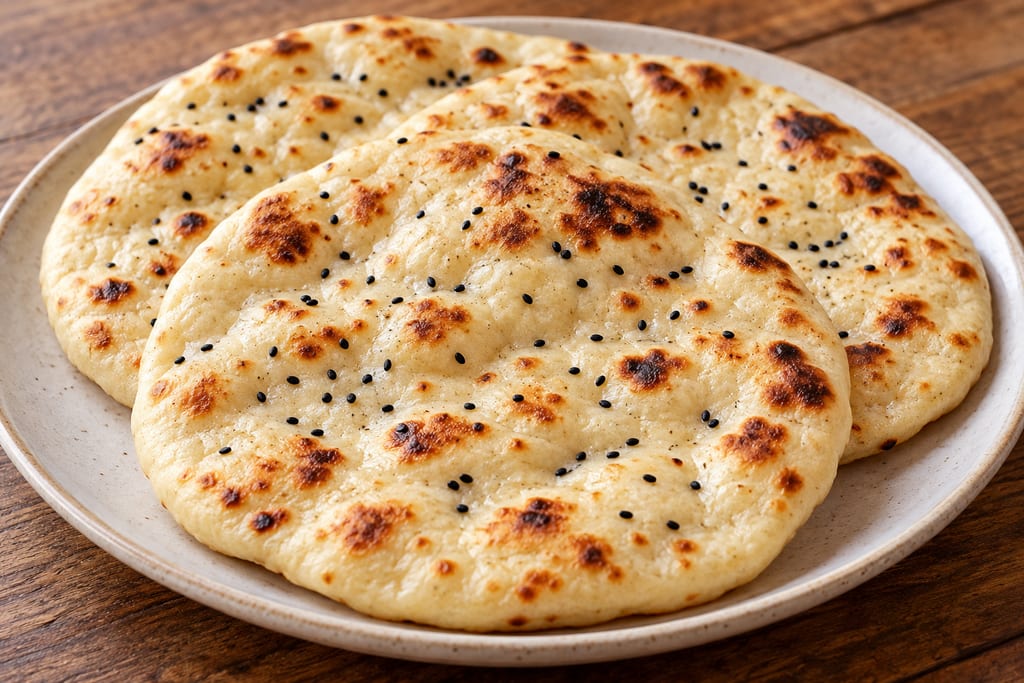
A plain North Indian kulcha uses an all-purpose wheat dough with yogurt, baking powder and soda, then rests and cooks on a hot tawa; optional seeds and roasting fat finish it.
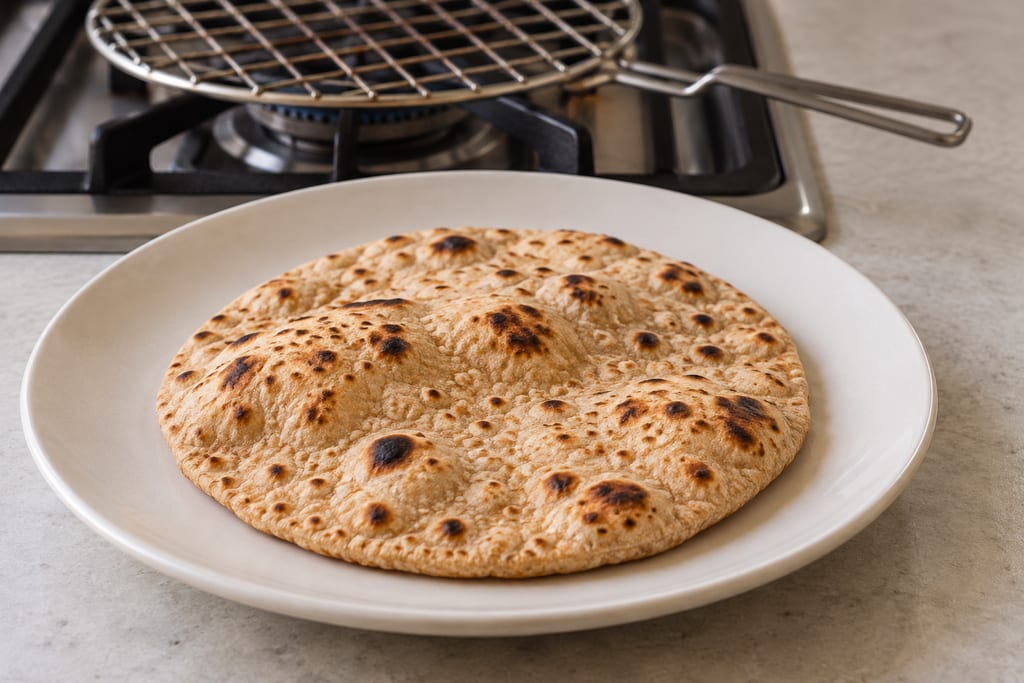
This unleavened North Indian tandoori roti uses atta, salt and water, then cooks on a handled wire rack over a low-to-medium flame. It makes 13 medium breads with tandoor-style browning.
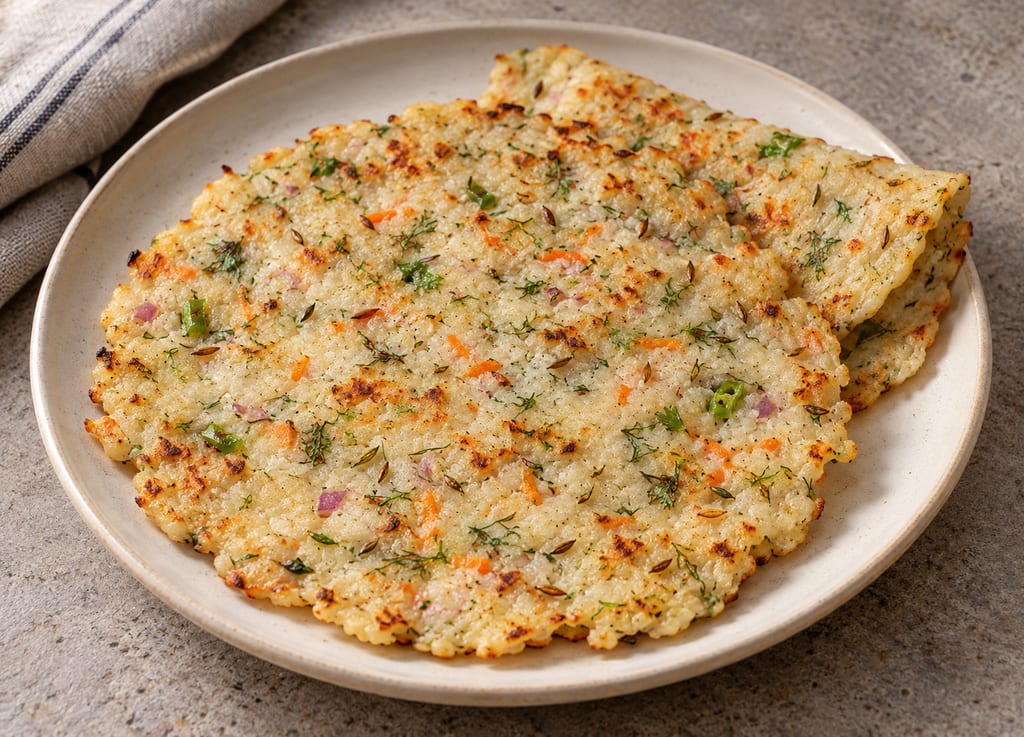
This Karnataka-style akki rotti mixes fine rice flour with vegetables, coconut, herbs and spices, then hand-pats and griddle-cooks the dough.
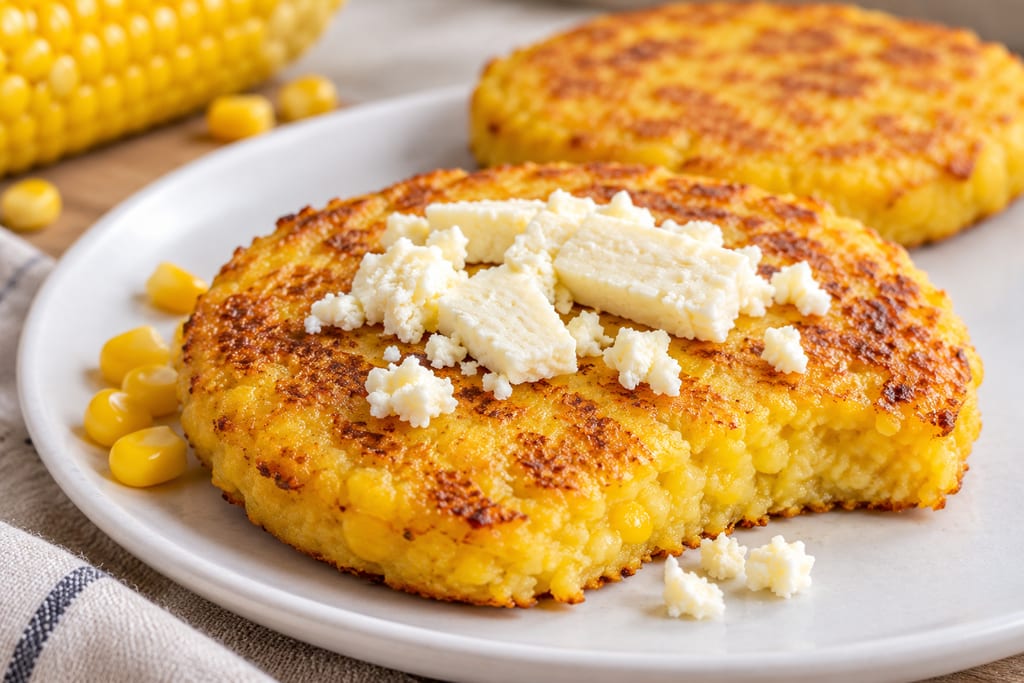
A Colombian Andean griddle cake made from fresh sweet-corn batter, cooked in butter and served with white cheese.
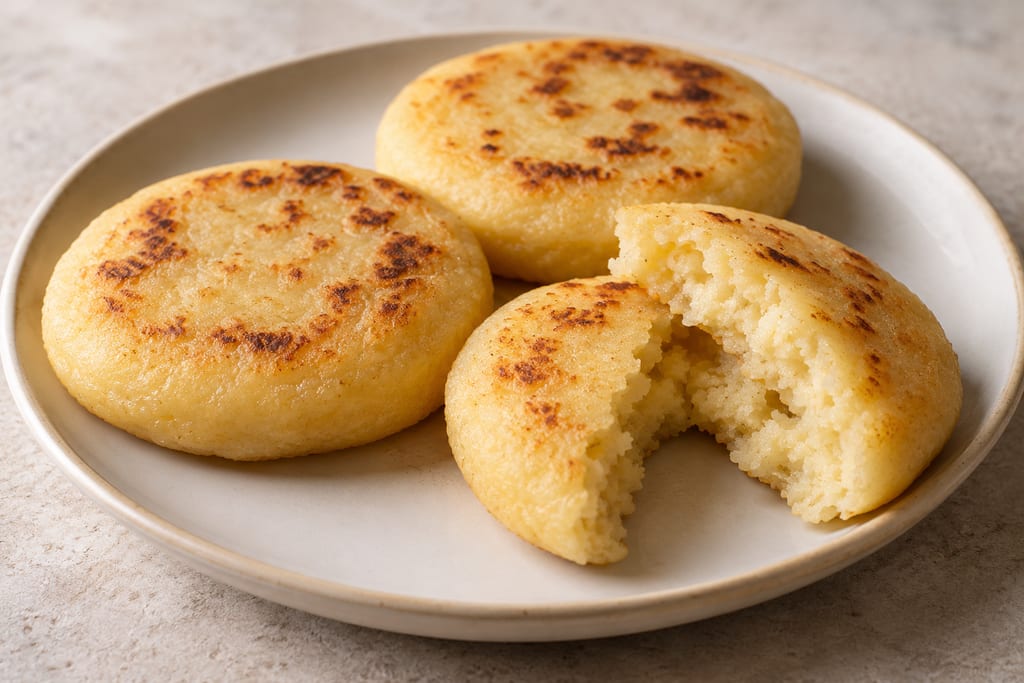
This household version combines precooked corn flour, warm water and salt, then cooks thick rounds on a lightly oiled skillet or griddle. It is one source-specific arepa method, not a universal Colombian or Venezuelan formula.
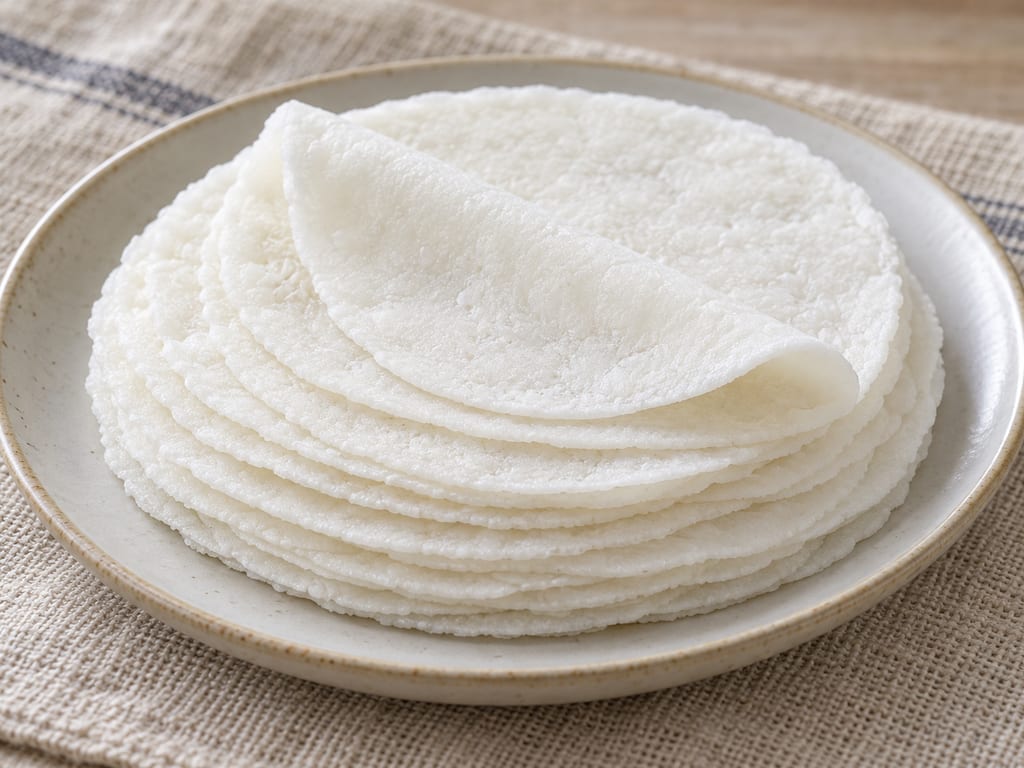
Thin Malabar rice-flour rounds made from roasted rice flour cooked into salted boiling water, kneaded after cooling, and rolled to about 1 mm. They cook on a hot griddle without taking on colour.
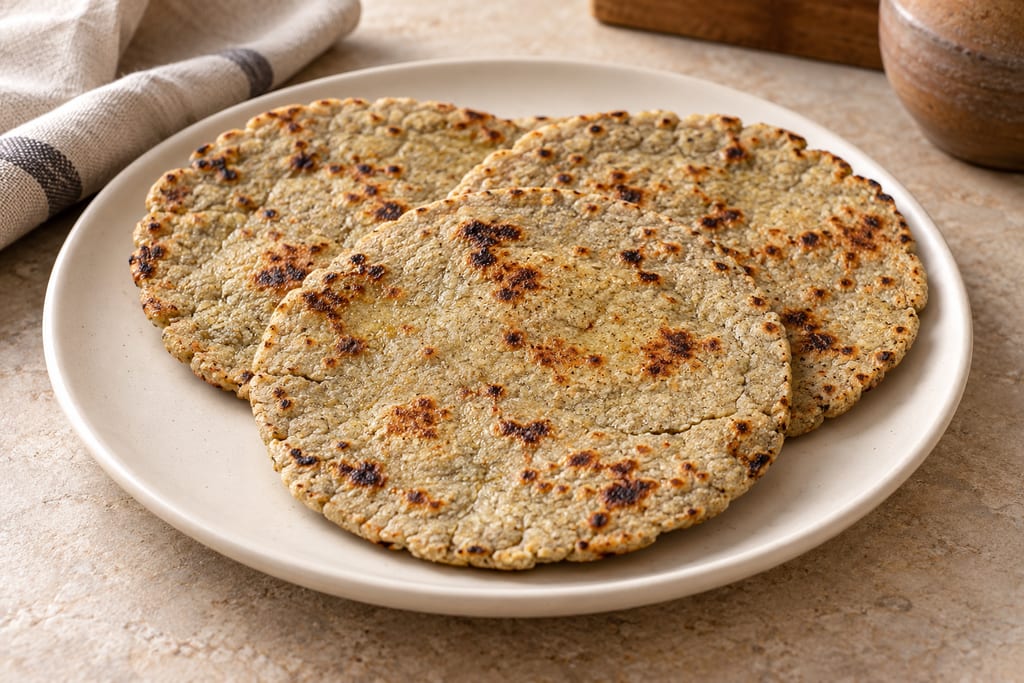
A pearl-millet flatbread shaped between sheets and cooked on a hot tawa. This home batch makes eight.
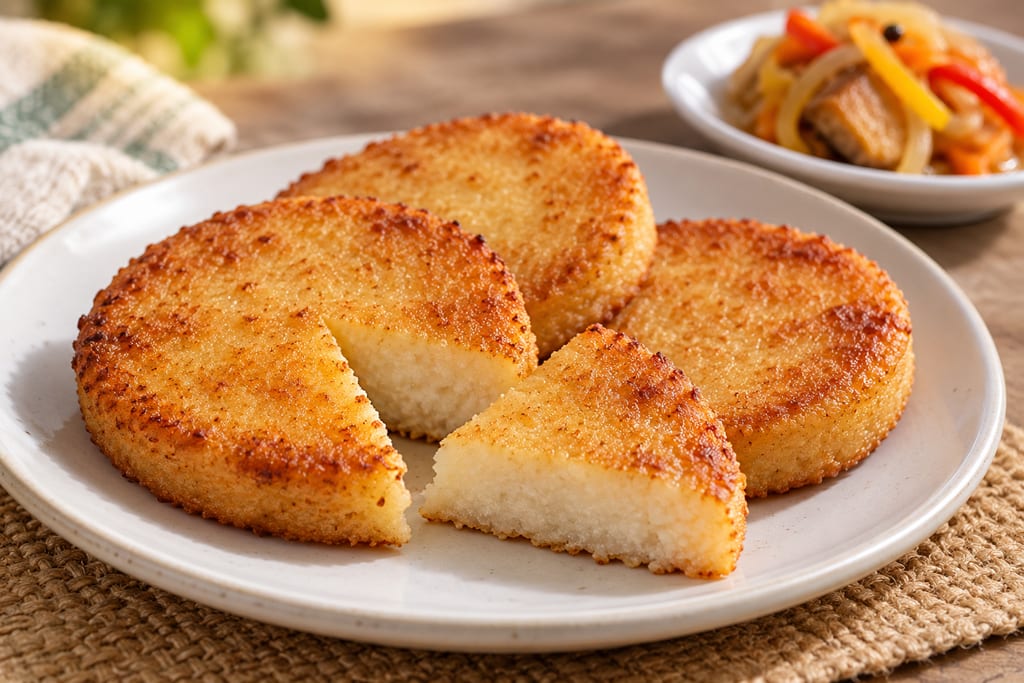
A serving method for approved, prepared bammy rounds: soak them in coconut milk and refry until golden. It does not process raw cassava.
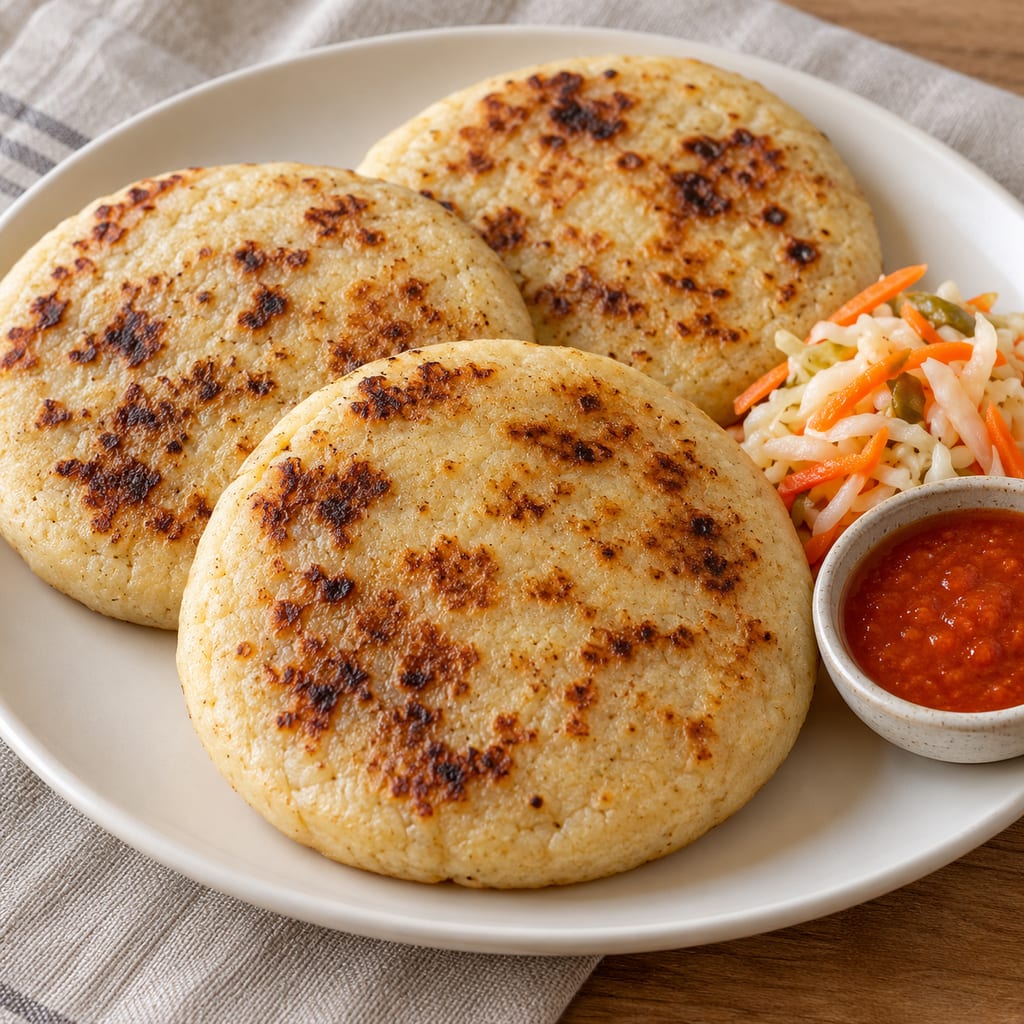
Salvadoran-style masa harina cakes filled with refried beans and cheese, sealed and cooked on an oiled skillet.
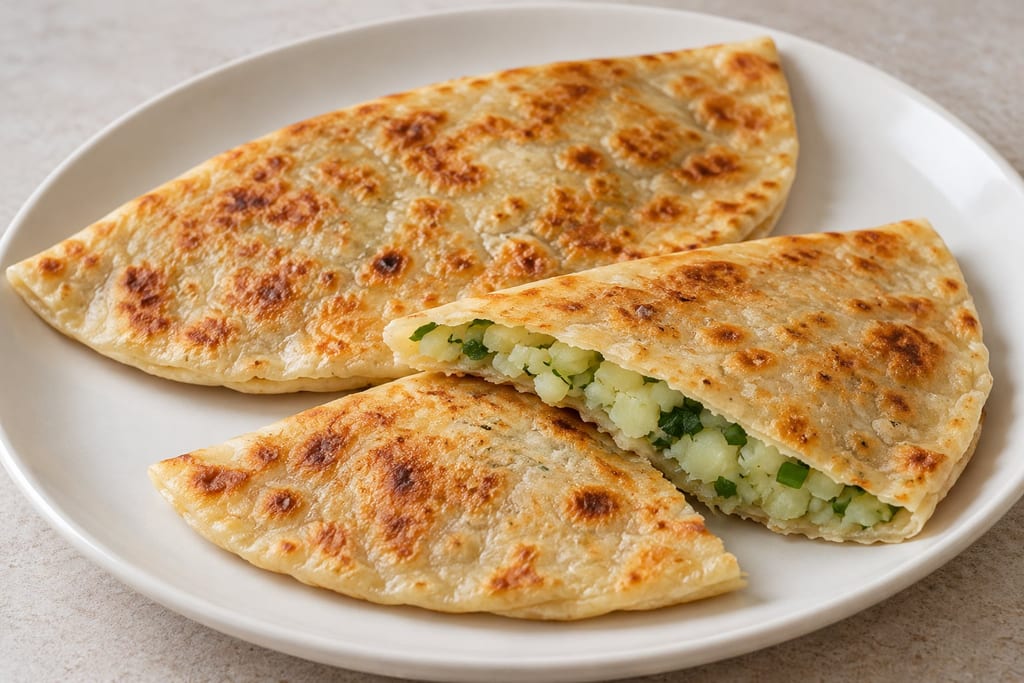
A thin, unleavened Afghan flatbread filled with mashed potato, scallion and cilantro, folded and pan-browned. This version uses a dough made from scratch.
No community contributions have been published for this entry yet.
Sign in to contribute. Published comments and photos are free to read.
Dassana's Veg RecipesIngredients · Method · History
Roti Recipe | Chapati Recipe | Phulka Recipe (3 Ways)The recipe lists 3 cups (360 g) whole-wheat atta, 1 to 1.25 cups water or more as needed, optional salt and optional oil or ghee; it yields 15 rotis.
The source gives a covered 20 to 30 minute dough rest, medium-high to high tawa cooking, and distinct chapati and phulka methods.
The source describes atta, serving suggestions and the distinction between chapati, phulka and layered paratha.
Cited in: A tawa-cooked wheat bread; Dough and heat; Serving and related preparations
Victorian Literature and Culture / Cambridge University PressHistory
From the Table to the Trenches: The Chapati in The Wife and the WardThe 2022 article discusses colonial reports of chapati circulation in North India before 1857; it does not establish an origin date or a single explanation for the circulation.
Cited in: A name with a limited historical record
Centers for Disease Control and PreventionSafety
Raw Flour and DoughRaw flour can contain germs; do not eat uncooked dough and wash hands, bowls, utensils and countertops after handling raw flour or dough.