
Overnight sourdough pancakes
Buttermilk, flour and sourdough discard rest overnight before eggs and baking soda turn the sponge into a griddle batter. The finished pancakes are tender and lightly tangy.
 FermenteaWhere food goes to change
Fat or oil
A broad kitchen label for edible oils pressed or extracted from many plant sources, each with its own flavor, composition and handling needs.
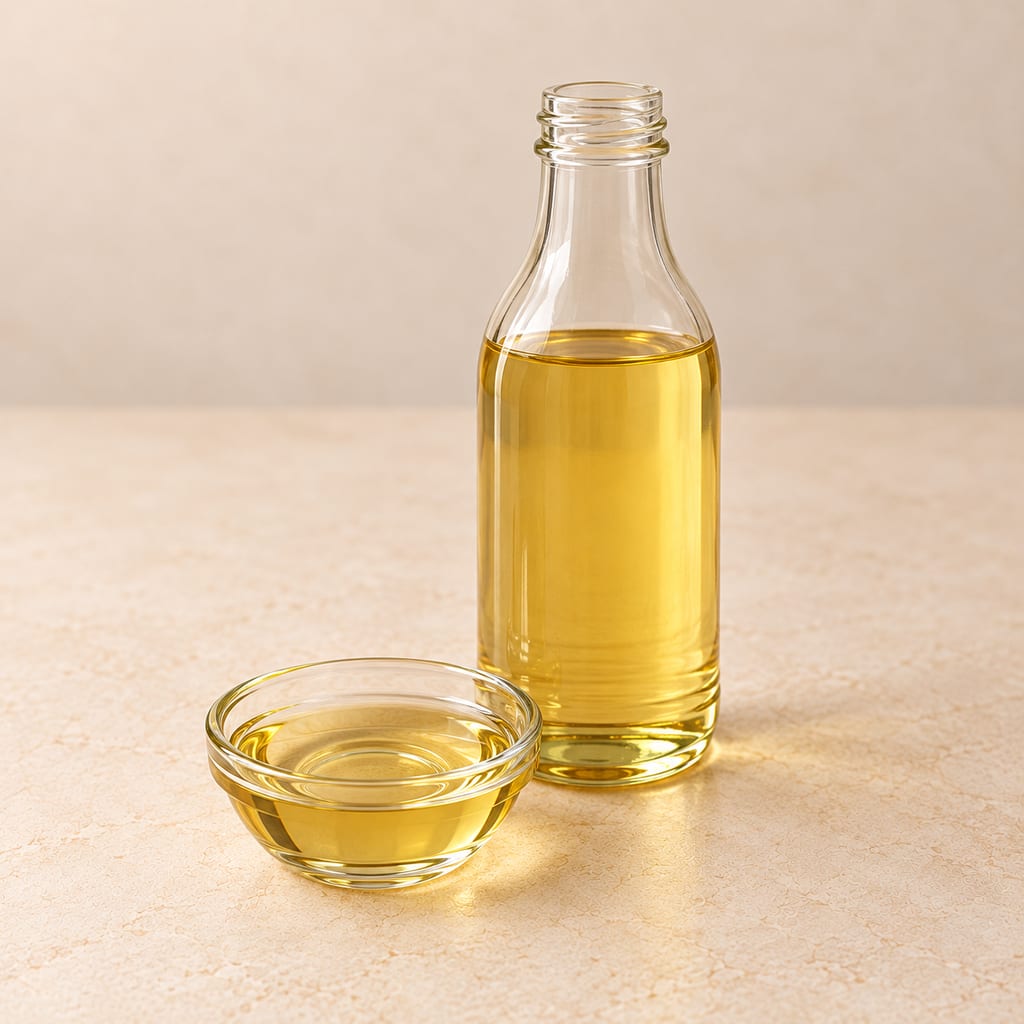
Vegetable oil sounds like the name of one ingredient, but it is a category. The bottle may contain oil from soybean, canola, corn germ, sunflower, safflower, cottonseed, peanut, palm, or a blend. The phrase identifies a plant-derived cooking fat; it does not specify a single crop, fatty-acid profile, aroma, or behavior at heat. Labels and formulations vary by market and manufacturer, so the ingredient list is the place to learn which oils are present. A recipe that says vegetable oil usually expects a pourable, relatively neutral fat, yet the exact product can differ from one kitchen to another.
Pressing, refining, transport and food manufacturing expanded the range of cooking oils available away from the places where their crops grew. A household bottle could serve frying, baking and greasing a pan without carrying the strong aroma of a named regional oil. This made a neutral pourable fat useful in printed recipes, even though it could be drawn from different crops. Cottonseed's move into U.S. food manufacture and later soybean oil's rise are part of that history; neither was the invention of plant-oil cooking itself.
In a pancake formula, the broad label is practical. King Arthur Baking's classic sourdough pancakes call for vegetable oil as one option alongside melted butter. The recipe does not define a botanical species; it asks for a measured liquid fat that can be mixed with the eggs before they join the sponge. The eater may notice more grain and sourdough aroma when the chosen oil is mild, while a strongly flavored oil could become part of the pancake's taste.
Oil is a concentrated food fat, not a water-based liquid. Most edible plant oils consist predominantly of triacylglycerols: molecules built from glycerol attached to three fatty acids. The fatty acids differ in chain length and in whether they contain double bonds. Those structural differences contribute to whether a fat is firm or pourable at room temperature and to its oxidation during heating. A bottle is a mixture of such molecules rather than one pure substance; refining and blending further change its sensory character.
Plant oils have been used for food, light, skin care and craft for millennia, but the modern retail category developed through a different history: mechanized extraction, refining and large-scale trade. The raw material might be a fruit such as olive or oil palm, a seed such as sunflower or sesame, or the germ of a grain. In many cases, the oil was only one of several useful outputs from an agricultural crop. Demand for textile fiber, animal feed, soap, lighting fuel and industrial materials could shape which oils became plentiful and affordable for cooks.
Cottonseed offers one documented shift. The crop was grown for fiber, yet its seed could also supply oil and meal. In an 1891 Texas newspaper, an editorial about a new branded cooking fat describes cottonseed oil entering food under names such as olive oil or lard, then appearing under its own name as an advertised product. Its confident claims about the product's wholesomeness are period sales language, not a modern safety test. The page does show consumers being asked to recognize cottonseed oil as an edible ingredient rather than a hidden substitution. This is one crop's United States trade history, not the beginning of all plant-oil cooking.
Benne, the sesame grown in the American South, offers a different thread. In a letter dated 3 January 1808, Thomas Jefferson thanked William Few for a sample of benne oil and described serving two salads, one dressed with olive oil and the other with benne, to guests who compared them. He wanted to grow and press the seed himself. That first-hand account establishes a specific culinary use and the interest of one planter; it cannot show how widely benne oil was used in every household. Historian David Shields places benne within a broader African American sesame cookery and describes its later competition with refined cottonseed oil. Oil here carries a food tradition, not just anonymous fat.
Cottonseed also shows how refining changes an ingredient’s sensory and commercial identity. The USDA Agricultural Research Service notes that cottonseed oil led U.S. edible oils for a time before soybean oil overtook it in the 1950s. Refining and product development made the oil more uniform in color, aroma and flavor, helping manufacturers use it in cooking fats and processed foods. Its rise followed cotton farming: once the fiber had been separated, the seed became a second valuable harvest. Oil and meal made the crop useful to both food makers and animal-feed markets, giving a familiar kitchen fat a connection to farming and industrial processing.
There is no single process for making vegetable oil. Extraction depends on the plant part, the crop, scale and intended product. Oil-rich seeds may be cleaned, dehulled, cracked, flaked or ground to make the oil easier to release. Mechanical pressing squeezes oil from prepared material. In large facilities, pressing may be followed by solvent extraction to recover more oil from the remaining solids. The U.S. Environmental Protection Agency describes a process used for several oilseeds in which crushed seed contacts an organic solvent, the oil dissolves into that solvent, and the oil-bearing solution is separated and heated so the solvent evaporates and can be condensed for reuse.
That description concerns regulated industrial solvent-extraction facilities and specific oilseed crops; it is not a recipe for home extraction. Pressed oils and solvent-extracted crude oils can both undergo later refining. Common refining steps may include removing gums, free fatty acids, pigments, odors or other unwanted components, though not every oil receives identical treatment. Refining can make flavor and color milder and more consistent and can improve suitability for particular uses. Unrefined or minimally refined oils may retain more of their source's aroma and color, which can be desirable in dishes where that character is part of the point.
The remaining seed material does not simply disappear. EPA notes that oilseed facilities produce meal products along with crude vegetable oil. Depending on the crop and processing system, meal, press cake, hulls or other fractions may be sold for animal feed, used as fertilizer, or directed to other industrial uses. These co-products help explain the economics of oil production: a crop's value can come from several markets at once. The exact outputs depend on the crop and plant, so it is better to describe a particular process than to claim that every oil mill makes the same products.
Fruit oils show why the category cannot be reduced to a seed-crushing story. Olive oil is obtained from the fruit, while palm oils come from palm fruit and its kernel as distinct products. Coconut oil is extracted from the kernel of the coconut. Their processing, composition and culinary traditions differ from seed oils such as soybean, sunflower, rapeseed or cottonseed. Even within one named source, methods and refining levels can produce oils with notably different taste and behavior.
In the published sourdough pancake formula, vegetable oil enters after the overnight sponge has rested. The starter, buttermilk, flour and sugar are mixed and left overnight; then the eggs are beaten with vegetable oil or melted butter and stirred into the sponge. Baking soda and salt are added afterward. The recipe lists 50 g vegetable oil or 57 g melted butter as alternatives for this batch, then cooks the batter on a preheated griddle. This sequence places the oil in the final batter rather than the overnight sponge.
The griddle is lightly greased as a separate step from adding oil to the batter. For this recipe, those are two distinct uses in the same cooking method: a measured fat mixed into the batter, and a thin pan coating before the batter is poured. The source specifies a lightly greased griddle but does not require that the pan coating be the same oil measured into the batter.
As a liquid fat, oil contributes richness to a cooked batter. Fat can coat some flour particles and limit the toughening that comes from prolonged mixing; King Arthur's cake trials describe this tenderizing effect of oil, although their cake results do not predict an exact pancake texture. Oil does not supply the water that hydrates flour. Butter contains water as well as fat and has milk solids that can add flavor and browning; this helps explain why the two ingredients are not interchangeable by weight in every formula. The pancake recipe's 50 g oil and 57 g melted butter are its tested alternatives, not a universal replacement ratio.
Smoke point is often treated as a single ranking for vegetable oil, but it is a property of a specific oil in a specific state. The USDA National Agricultural Library defines smoke point as the temperature at which heated fat begins to emit visible smoke and notes that free fatty acids and other volatile compounds affect it. Refining, degradation and the identity of the oil matter; there is no one defensible smoke-point number for every bottle bearing the broad vegetable-oil name. For pancakes, use the cooking temperature called for by the recipe and avoid letting a pan coating smoke. A smoke point is not a guarantee that an oil is stable through every cooking method or repeated heating.
For these pancakes, a fresh, mild cooking oil keeps the fermented grain flavor in front; a fragrant sesame or olive oil would make a deliberate change to the dish. Read the ingredient label on a blend so the choice is informed by its actual contents. A producer's stated cooking use and storage instructions are more useful than assuming every bottle sold as vegetable oil behaves alike.
Keep oil tightly closed and away from heat, light and air. These conditions accelerate oxidation and can make oil smell or taste stale, cardboard-like, paint-like or otherwise unpleasant. Follow the producer's storage instructions and the package date, and trust sensory evidence if the oil has developed an off odor or flavor. A cool, dark cupboard is suitable for many everyday oils; refrigeration may be appropriate for some delicate oils, though it can cause clouding or thickening that reverses as the oil warms. Different oils have different shelf lives, so a single storage interval cannot be responsibly assigned to the whole category.
Soybean, peanut and sesame are also food-allergen sources, a detail concealed by a generic plant-oil label. Refining removes much of the source protein from some oils, while unrefined or lightly refined oils may retain more. Health Canada treats sufficiently documented highly refined oils differently from unrefined ones for allergen labeling, and still requires peanut to be named when peanut oil is an ingredient. A person managing an allergy should check the identified oil and its processing with the producer and follow individual medical guidance; the word vegetable alone is not an allergen assessment.
Plant oils belong to culinary traditions shaped by local crops, trade and processing. Jefferson's 1808 benne-and-olive salad comparison is a glimpse of how an oil could be judged for its own taste at the table, rather than valued only as a cooking medium. Sesame and olive oil still serve that flavoring role in many dishes; oil is the dressing itself when it coats leaves or carries spice. A neutral oil chosen for pancakes takes a quieter role, letting the sourdough, buttermilk and griddle browning lead the taste.
Modern food production uses oils in frying, sautéing, salad dressings, sauces, baked goods, spreads and packaged foods. Their roles differ: a dressing may showcase flavor, a frying oil transfers heat, and a cake or pancake batter uses fat as one component among flour, liquid, eggs and leavening. An oil's function depends on the formula and process. The King Arthur pancake recipe illustrates a specific use—oil incorporated into batter, with a separate light griddle coating—rather than proof that all pancakes require oil or that every vegetable oil produces the same texture.
Outside food, vegetable oils and their derivatives have markets in soaps, cosmetics, paints, lubricants and fuel. Cottonseed's history shows how edible oil and meal can come from a crop originally grown for another purpose. That web of uses helped put a once less familiar oil into everyday kitchens. In the pancake bowl, however, its immediate task is simply to join the eggs and sponge as a measured fat; the crop and processing behind the bottle determine what additional flavor, if any, it brings.
The cited sourdough pancake formula specifies vegetable oil without naming a crop; this documents a contemporary category use, not an origin.
Buttermilk, flour and sourdough discard rest overnight before eggs and baking soda turn the sponge into a griddle batter. The finished pancakes are tender and lightly tangy.

Unfed sourdough starter flavours a soft pretzel dough raised with instant yeast. After a short rest, the dough is shaped, brushed with a sweet wash, salted and baked without a final proof.

A refined common-wheat flour blended for a broad range of baking; its protein and behavior vary with wheat, milling and market.

Toasted almonds are whole sweet almond kernels dry-roasted until golden to brown. Heat replaces their marzipan note with a roasted, nutty one; they thicken and flavour romesco.
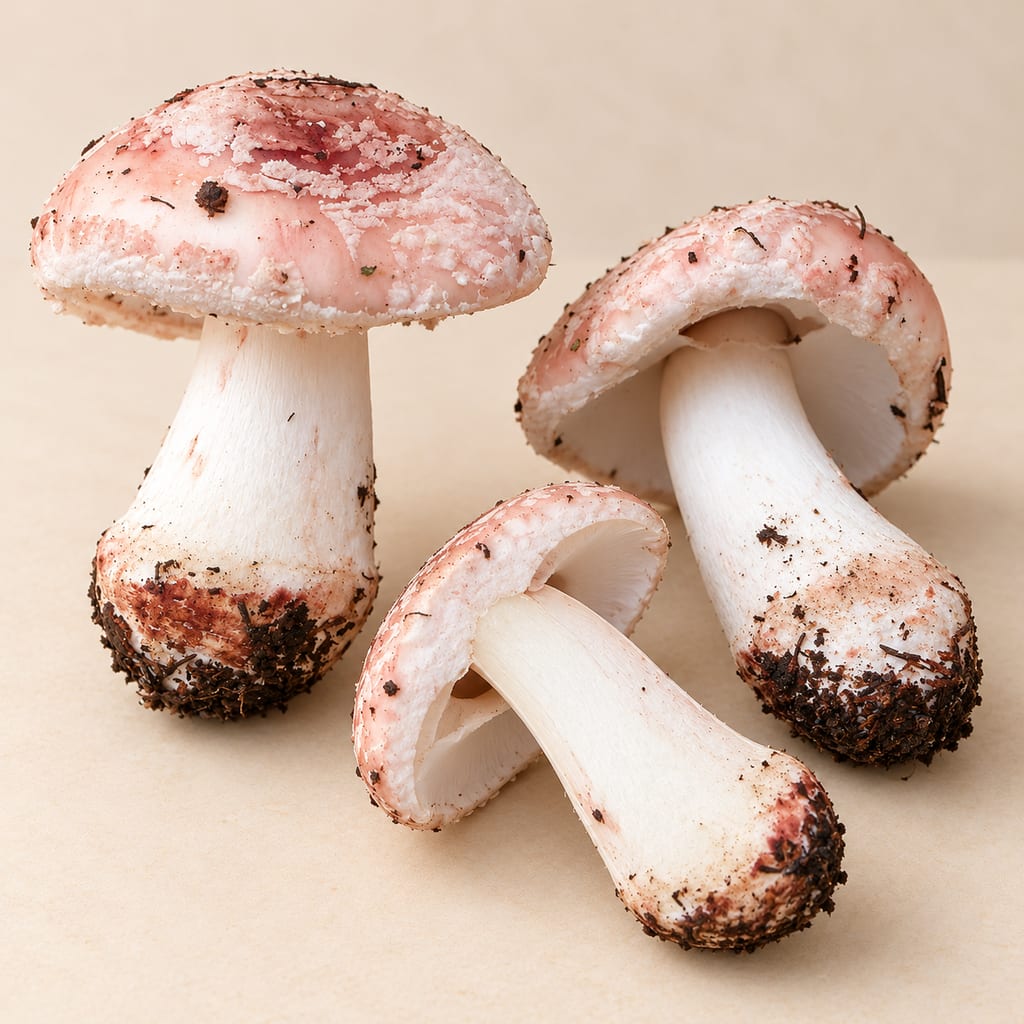
Amanita novinupta is a western North American blusher, a forest mushroom recorded as food in Mexico, and one that must be cooked because its raw flesh is toxic.
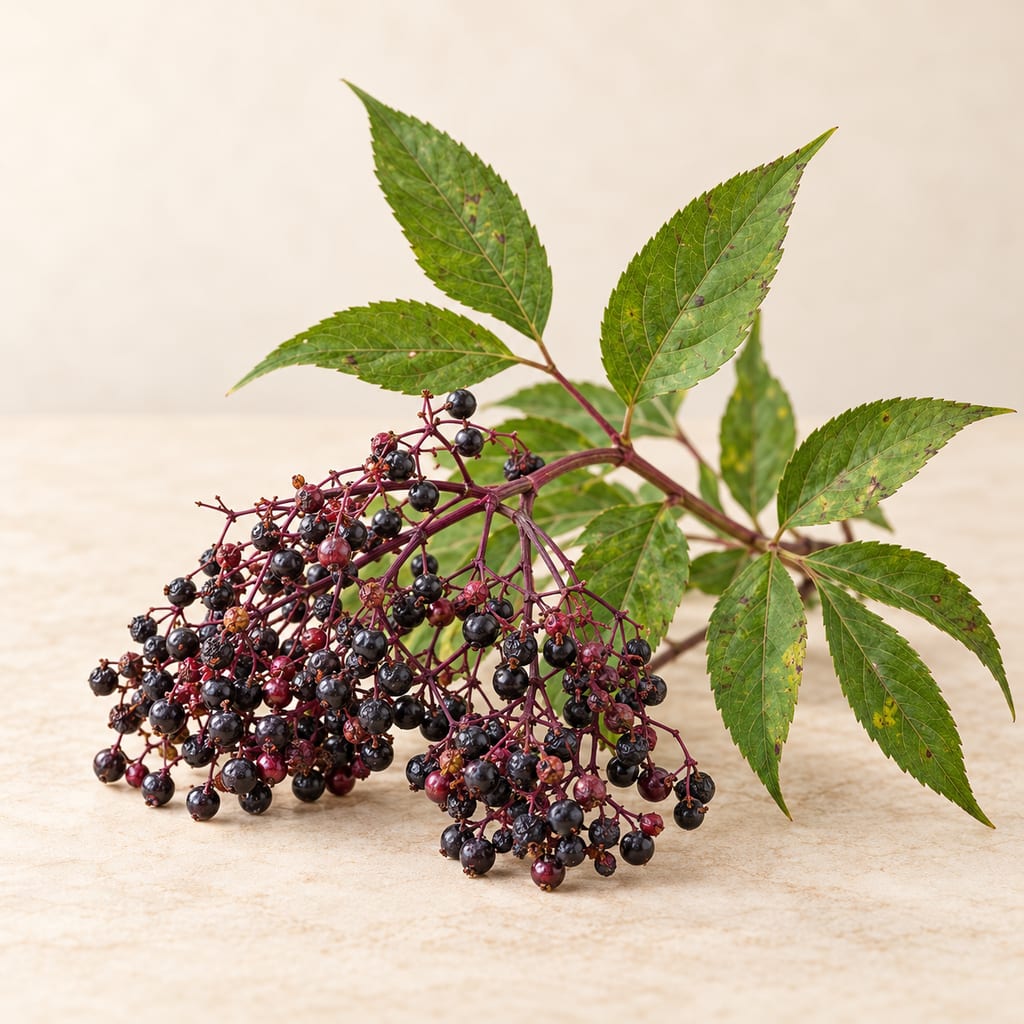
Sambucus canadensis is the accepted name used here for American elderberry. Missouri production guidance and named-cultivar studies give useful regional growing information, while food and analytical sources leave process questions open.
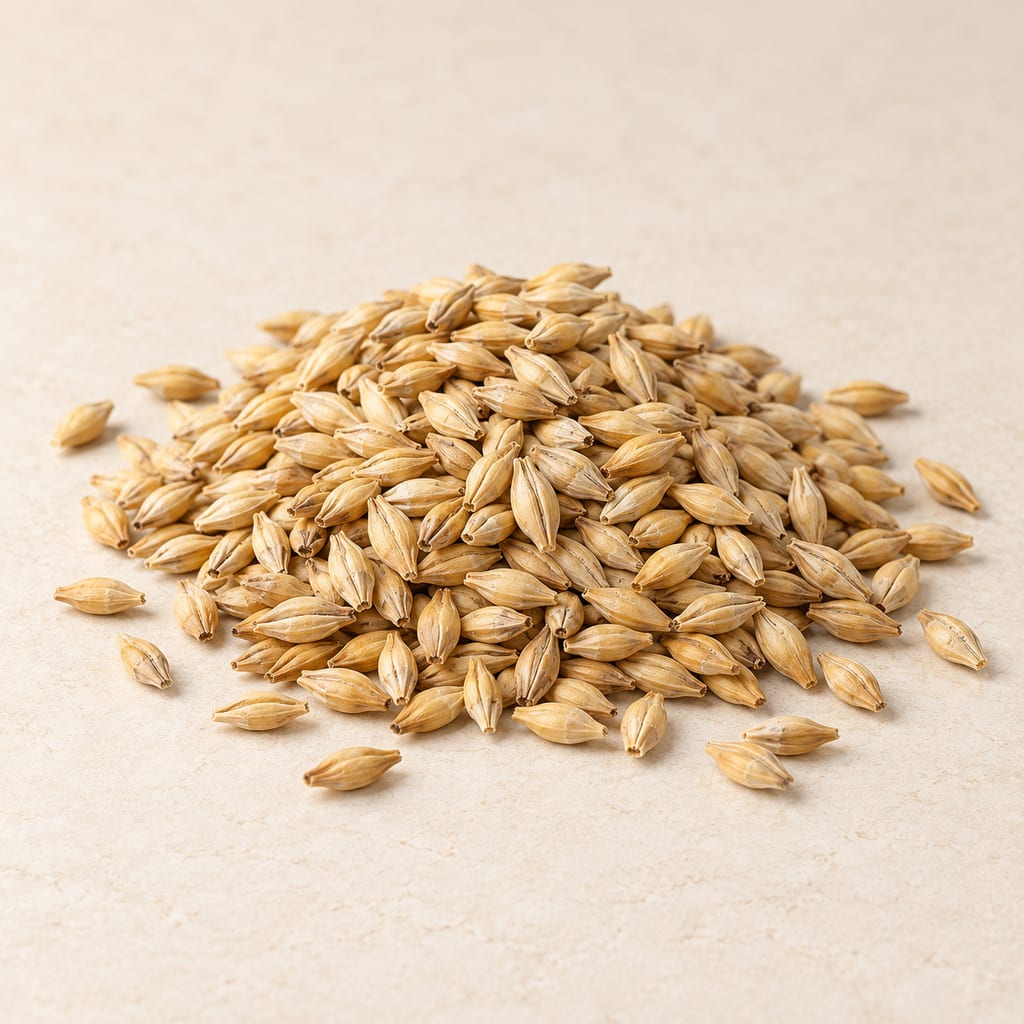
A lightly kilned brewing base made from two-row barley. It supplies starch and enzymes for the mash, with the maltster’s product and lot analysis defining its brewing properties.

Ripe avocado flesh is the soft, buttery, fat-rich pulp of Persea americana, eaten raw. It is low in acid, so it is a fresh ingredient that needs care in chilled dishes.
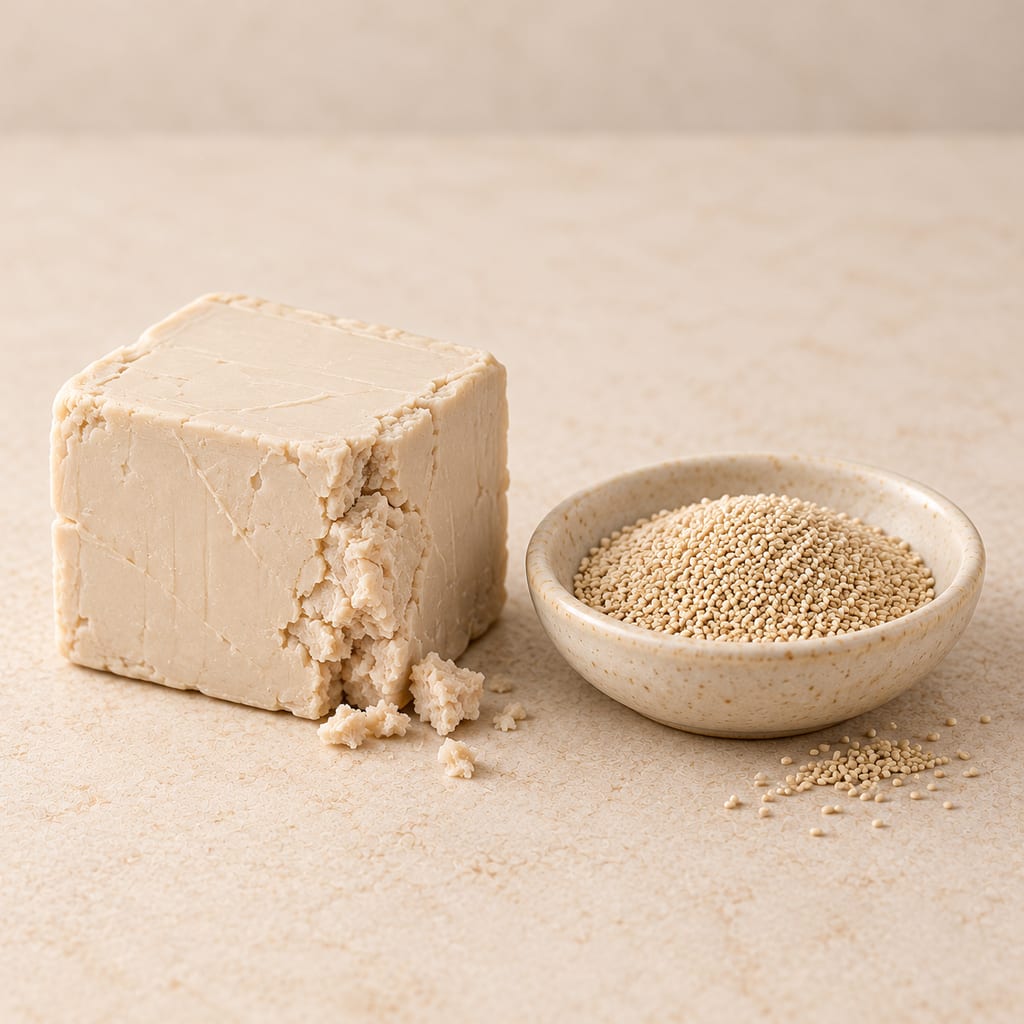
Baker's yeast is a cultivated living leavener, commonly sold fresh or dried. In dough, selected Saccharomyces cerevisiae cells make gas that can raise bread.
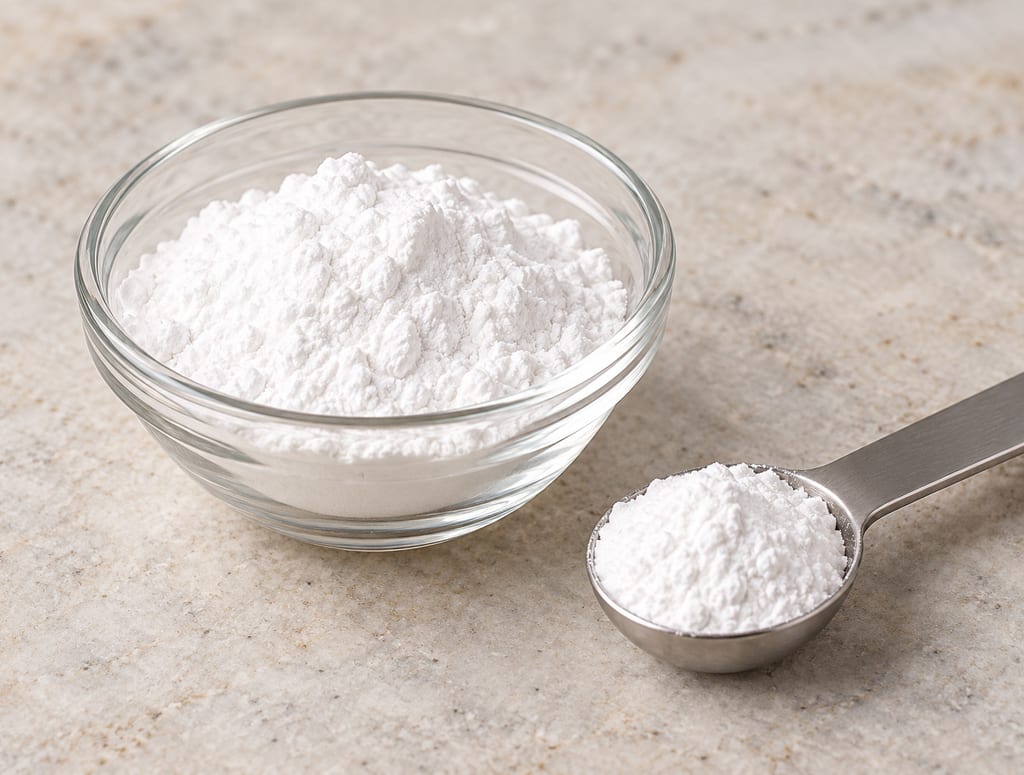
Baking powder is a dry chemical leavener that combines bicarbonate with acid-reacting ingredients and a carrier. Moisture and heat release carbon dioxide for quick breads, batters and griddle cakes.
No community contributions have been published for this entry yet.
Sign in to contribute. Published comments and photos are free to read.
U.S. Environmental Protection Agency
Solvent Extraction for Vegetable Oil Production: National Emission Standards for Hazardous Air Pollutants (NESHAP)Primary regulatory overview: oilseed categories, solvent-contact process, crude oil and meal, solvent evaporation and recovery.
Cited in: A category in the bottle; From seed, kernel or fruit to a cooking oil; Choosing the right bottle
Encyclopaedia Britannica
Vegetable oilGeneral reference for origins, sources, extraction, composition and uses; secondary summary.
Cited in: A category in the bottle; From seed, kernel or fruit to a cooking oil
USDA Economic Research Service
Oil Crops OutlookUSDA context for major oilseed markets and crop-specific oil production; dynamic market source.
Cited in: A category in the bottle
Gastronomica
Prospecting for oilShields describes benne and cottonseed in the food history of the American South, including the shift toward refined cottonseed oil.
Cited in: A modern pantry category with older roots; Cooking, culture and uses beyond the griddle
Nature 162, 832–833 (1948), book review
Cottonseed and Cottonseed Products: Their Chemistry and Chemical Technology (book review)Contemporary review notice summarizing cotton cultivation, early crushing circa 1830, post-Civil War processing and later industry scale.
Cited in: A modern pantry category with older roots; Cooking, culture and uses beyond the griddle
USDA Agricultural Research Service
Cottonseed OilARS record for peer-reviewed review on cottonseed oil processing, history, utilization and by-products; notes U.S. market succession by soybean oil in the 1950s.
Cited in: A modern pantry category with older roots; Cooking, culture and uses beyond the griddle
World Bank Group / International Finance Corporation
Environmental, Health, and Safety Guidelines for Vegetable Oil Production and ProcessingOriginal technical guideline describing seed preparation, extraction and refining methods; applies to industrial processing, not every oil.
Cited in: From seed, kernel or fruit to a cooking oil
Canola Council of Canada
About CanolaCanola is an oilseed crop whose seeds are processed for cooking oil.
Cited in: From seed, kernel or fruit to a cooking oil; Choosing the right bottle
King Arthur Baking
Classic Sourdough PancakesPrimary recipe source: ingredient weights, overnight sponge sequence, batter mixing, vegetable-oil/butter alternatives and griddle instructions.
Cited in: A category in the bottle; What oil contributes to pancake batter; Cooking, culture and uses beyond the griddle
USDA National Agricultural Library Agricultural Thesaurus
Smoke pointDefinition: temperature at which heated oil or fat begins to emit visible smoke; affected by free fatty acids and volatile compounds.
Cited in: What oil contributes to pancake batter; Choosing the right bottle
Penn State Extension
Storing Staple Ingredients in the KitchenExtension practical guidance on cool, dark oil storage, opened/unopened shelf-life ranges and rancidity cues.
Cited in: Choosing the right bottle
The Papers of Thomas Jefferson, University of Virginia Press early-access transcription
From Thomas Jefferson to William Few, 3 January 1808Jefferson describes comparing benne and olive oils in salad and asks Few for the pressing method; the letter is evidence of one documented use, not Southern prevalence.
Cited in: A modern pantry category with older roots; Cooking, culture and uses beyond the griddle
The Galveston Daily News, 6 August 1891, p. 6; Portal to Texas History
Cottonseed oil as a named food product, The Galveston Daily News, 6 August 1891Contemporary newspaper describes cottonseed oil sold under other food names and advertised under its own identity in 1891; contemporary trade rhetoric is not treated as a safety study.
Cited in: A modern pantry category with older roots
American Oil Chemists' SocietyOil structure and physical properties
Triacylglycerol Regioisomers AnalysisTriacylglycerols are major components of vegetable oils; each has a glycerol backbone esterified to three fatty acids whose chains vary, and natural fat mixtures melt over a temperature range.
Cited in: A category in the bottle
American Oil Chemists' SocietyUnsaturation and oxidation
Formation of Epoxy-, Keto- and Hydroxy-Fatty AcidsOil fatty-acid double bonds provide sites for oxidation during heating; oxidized triacylglycerols form in used frying oils.
Cited in: A category in the bottle
King Arthur BakingBaking fat function and butter comparison
The key to making a cake with the moist texture of a boxed mixKing Arthur explains that butter contains water, while oil leaves more fat in a baked formula; the fat can coat flour and contribute tenderness in its cake tests.
Cited in: What oil contributes to pancake batter
Health CanadaAllergen source oils and refining qualification
Health Canada's Position on Highly Refined Oils Derived from Food Allergen SourcesResidual allergenic protein varies with refining; highly refined oils generally have negligible protein, while unrefined sesame and other source oils may retain more. Manufacturers must substantiate highly refined status; Canadian peanut-oil source labeling remains required.
Cited in: Choosing the right bottle
King Arthur BakingButter milk solids and browning
Fats and liquids in biscuitsKing Arthur's biscuit comparison describes milk solids in butter and their browning contribution, distinct from pure fats used in the comparison.
Cited in: What oil contributes to pancake batter