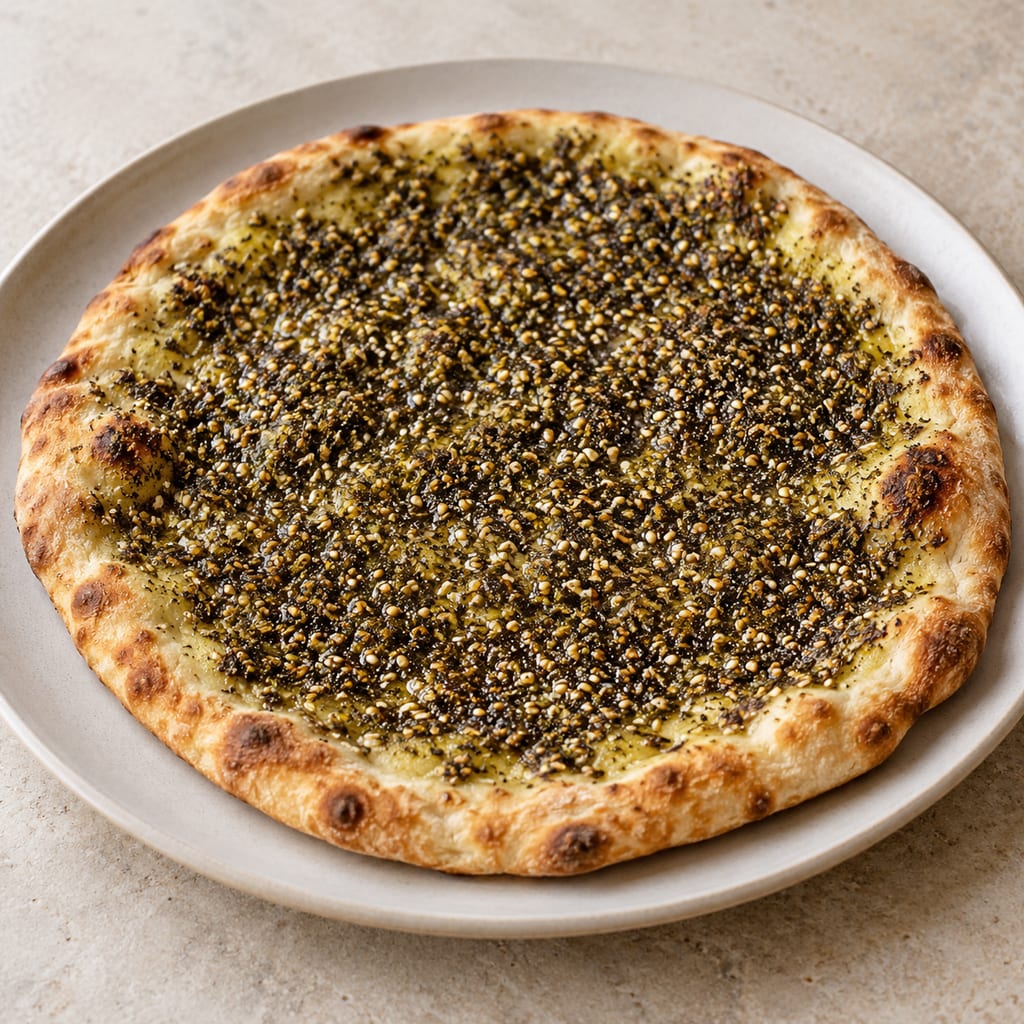
Man’oushe
Lebanese za’atar flatbread made from yeast dough, baked on a heated stone or heavy sheet pan until its rim is golden.
 FermenteaWhere food goes to change
khubz ‘arabi
A yeast-raised wheat pocket bread; this measured oven version bakes eight soft rounds on a preheated stone or steel.
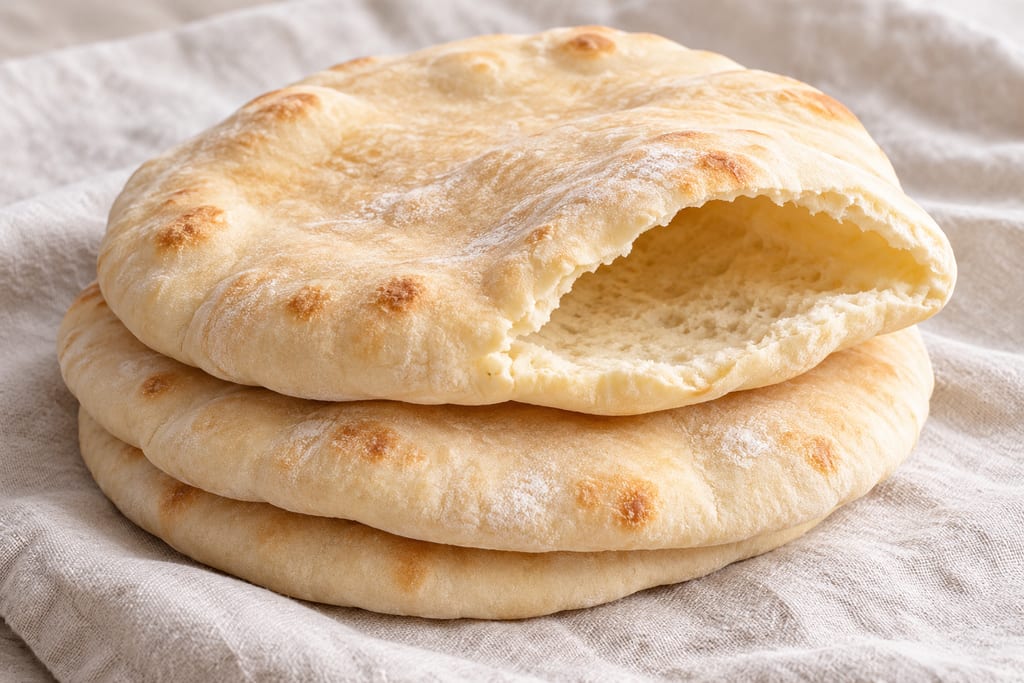
Pita is a name used for a range of flatbreads. This entry records one contemporary, measured wheat dough from King Arthur Baking: eight yeast-raised rounds baked on a preheated stone or steel. The rounds may puff into a pocket, but baking success can vary. A round that stays flat is still usable as bread.
Pita's shape and use vary. Maureen Abood writes about Lebanese bread as an everyday utensil for scooping food and distinguishes thin, soft Lebanese-style bread from a thicker, spongier pocket loaf. Her account cautions against treating one pocket formula as the sole Lebanese pita style. This recipe's method and quantities belong to King Arthur Baking's home formula, not a claim about a universal or original pita.
The source combines all-purpose flour with water, instant yeast, sugar, salt and vegetable oil. It gives 360 g flour and 227 g water, then kneads the dough until smooth. The covered first rise lasts about an hour, ending when the dough looks noticeably puffy. That visual cue matters because a clock alone cannot account for room temperature or yeast activity.
The stone or steel heats with the oven at 500°F (260°C). After the dough is divided into eight portions and rested for 15 minutes, roll each round evenly to 7 inches and about 1/8 inch thick. The intense direct heat helps the two faces separate as steam expands. Keep the oven surface fully heated between batches; the 3–4 minute bake is brief and should be watched.
A peel or inverted baking sheet helps transfer two rounds to the hot surface. Remove the breads carefully when puffed and set, then cover them with a clean towel so they stay pliable. King Arthur Baking's skillet variation uses a dry cast-iron pan heated over medium-high for 7–10 minutes, to about 450°F at the surface; cook each round for 1½–2 minutes per side. The bread may not puff fully in a skillet.
Flour is raw and may carry harmful bacteria. Do not taste raw dough. Keep flour and dough away from ready-to-eat food, and wash hands and clean utensils and work surfaces after handling them. The oven and skillet are hot: use a peel or suitable tool to load and remove the bread. King Arthur gives airtight room-temperature storage up to two days and says to freeze for longer storage; no additional storage period is inferred here.
Abood documents Lebanese use and describes differences between bread styles; she does not date a first pita or claim this measured formula as the Lebanese form. The contemporary King Arthur Baking recipe supplies a complete home method but does not establish an origin or broader historical continuity. The eight-piece batch is retained as written; no scale-up rule, guaranteed pocket, or equivalent domestic-oven result is claimed.
Pita names varied breads rather than one universal formula. Maureen Abood describes Lebanese everyday bread use and distinguishes a thin, soft style from the thicker pocket style. The measured formula here is King Arthur Baking's contemporary home adaptation; these sources do not establish a first attestation or place of origin.
Yield 8 pitas · Scaling: source batch only
Uncooked flour or dough may carry harmful bacteria.
Hazard sourceBake the dough before eating; keep raw flour and dough away from ready-to-eat foods, then wash hands and clean tools and surfaces.
Control sourceDo not taste raw dough. Use care when loading and removing bread from the 500°F oven or handling a hot skillet.
Maureen Abood describes bread as central to Lebanese eating and distinguishes thin soft pita from thicker pocket bread. This use association does not establish the origin of the King Arthur Baking formula.
Lebanese za’atar flatbread made from yeast dough, baked on a heated stone or heavy sheet pan until its rim is golden.
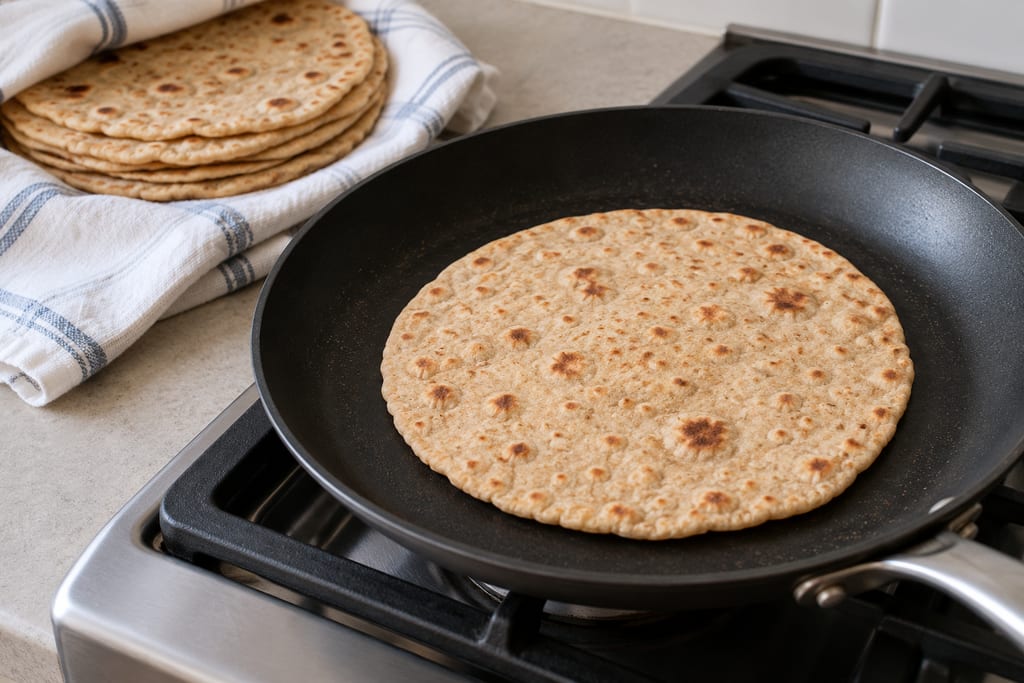
A small home-pan adaptation of Levantine markouk: rested wheat dough rolled into small rounds and cooked quickly on a hot flat pan. It is thicker and smaller than the hand-stretched sheets made on a saj.
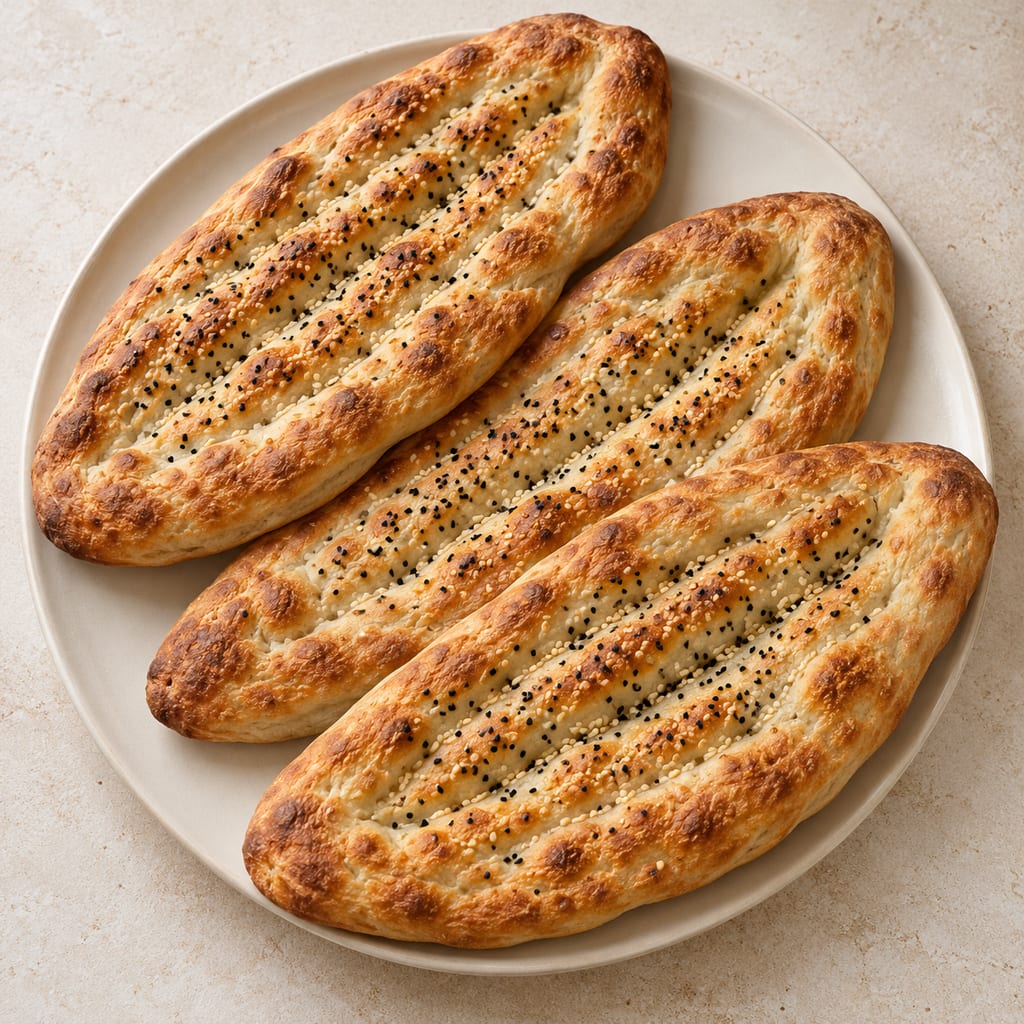
A long oval Afghan wheat bread, leavened with yeast, grooved along its length and baked until crisp outside and chewy within.
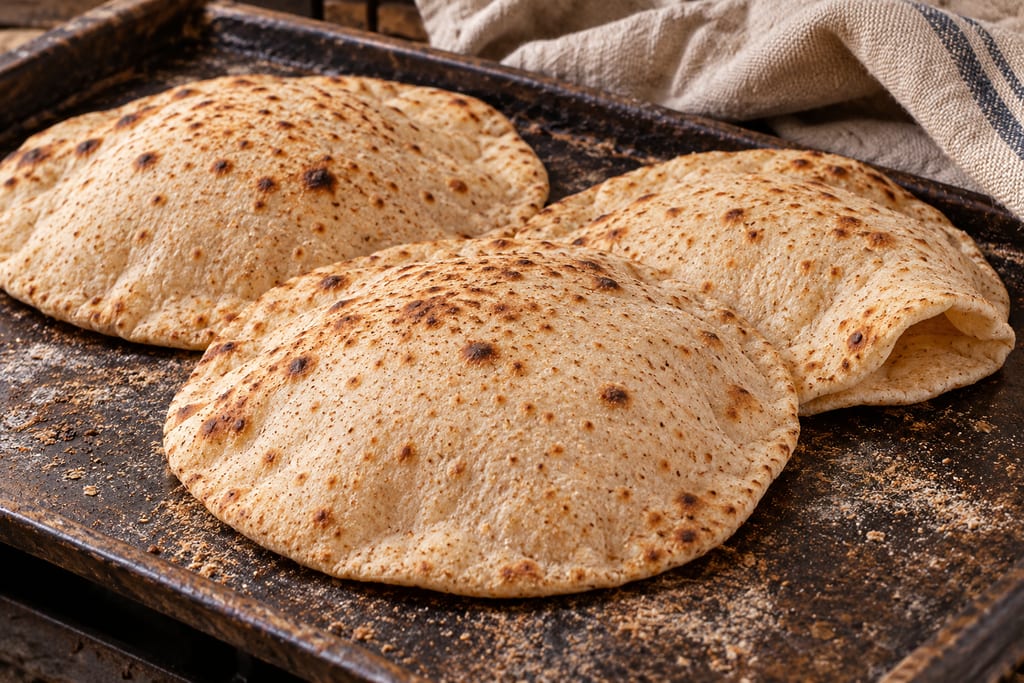
This home adaptation of Egyptian aish baladi uses a refrigerated yeast biga, whole-wheat dough, bran dusting and a very hot baking surface to make 16 pocketed rounds.
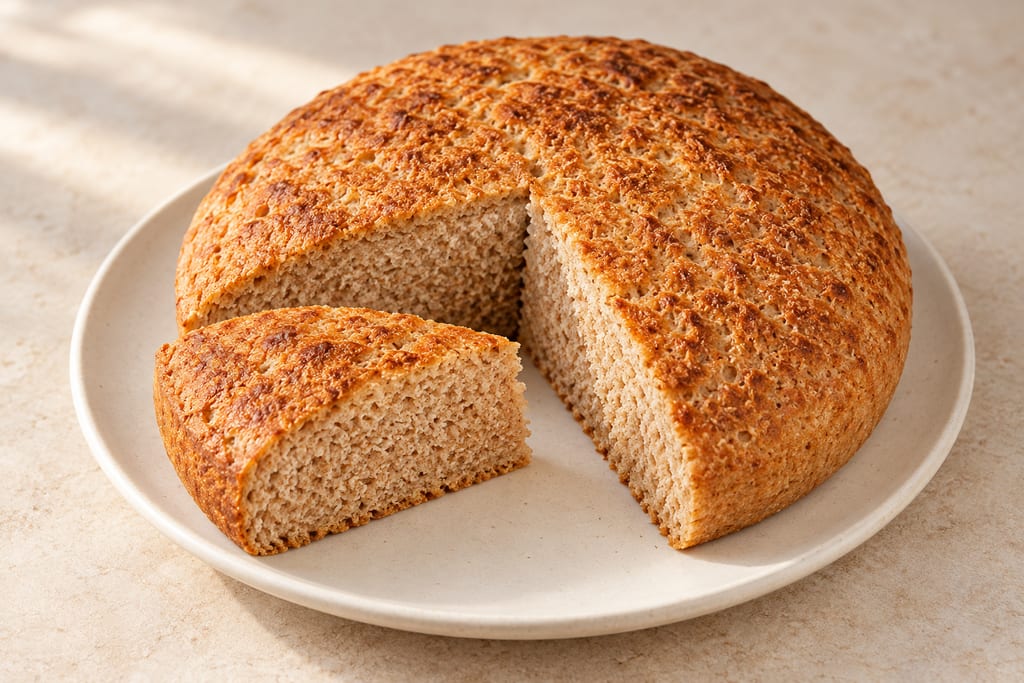
This oven-baked Amdo balep uses yeast, whole-wheat and white flour, a long covered rise and a two-sided bake in a heavy oven-safe pot.
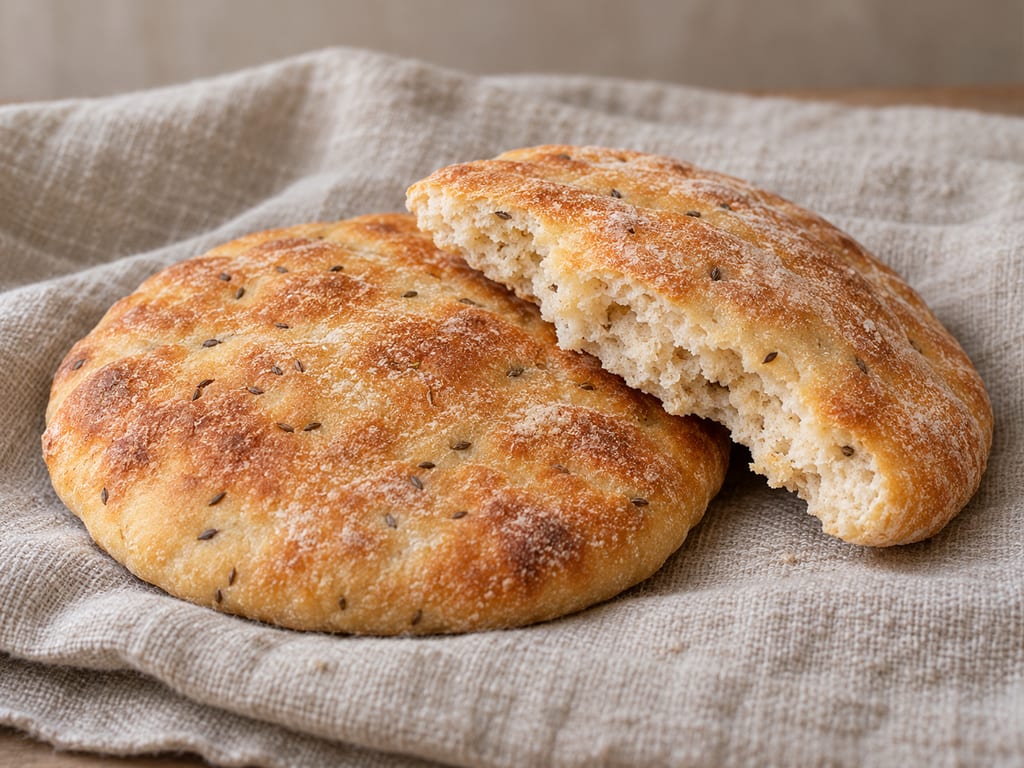
A measured, yeast-raised Ayacucho chapla home method shared by Thermomix Peru presenter Roxanna Salaverry. It makes thin, anise-scented rounds baked at 240°C; the historic qunchu-leavened form is documented separately.
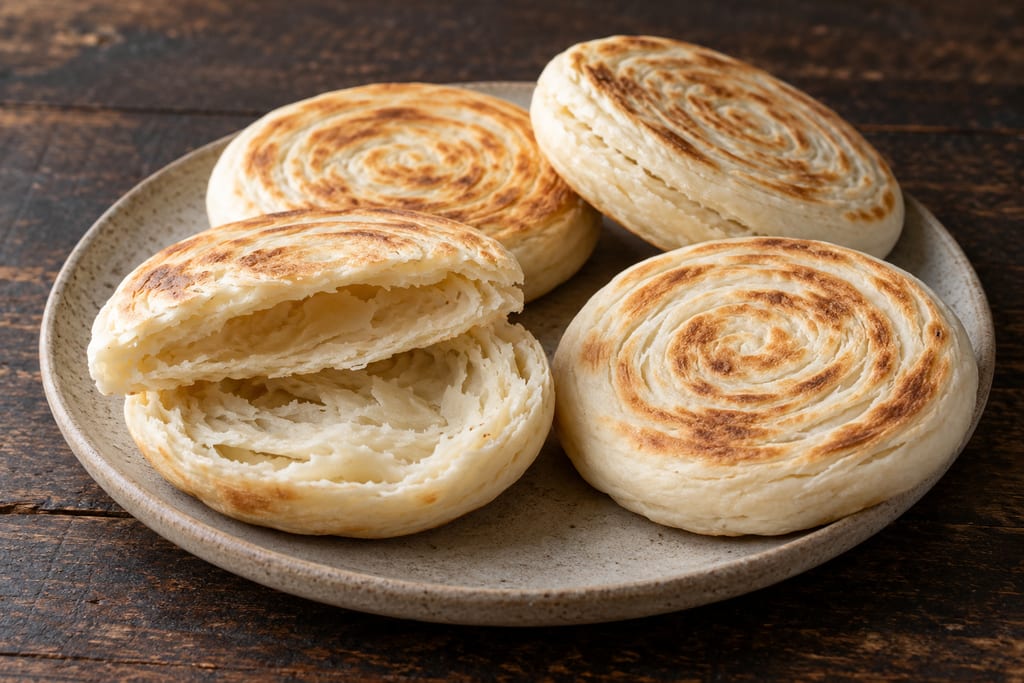
This Shaanxi-associated yeast flatbread uses a simple water dough, coiled shaping and a skillet bake. It is the bread used in roujiamo, not the filled meat dish.
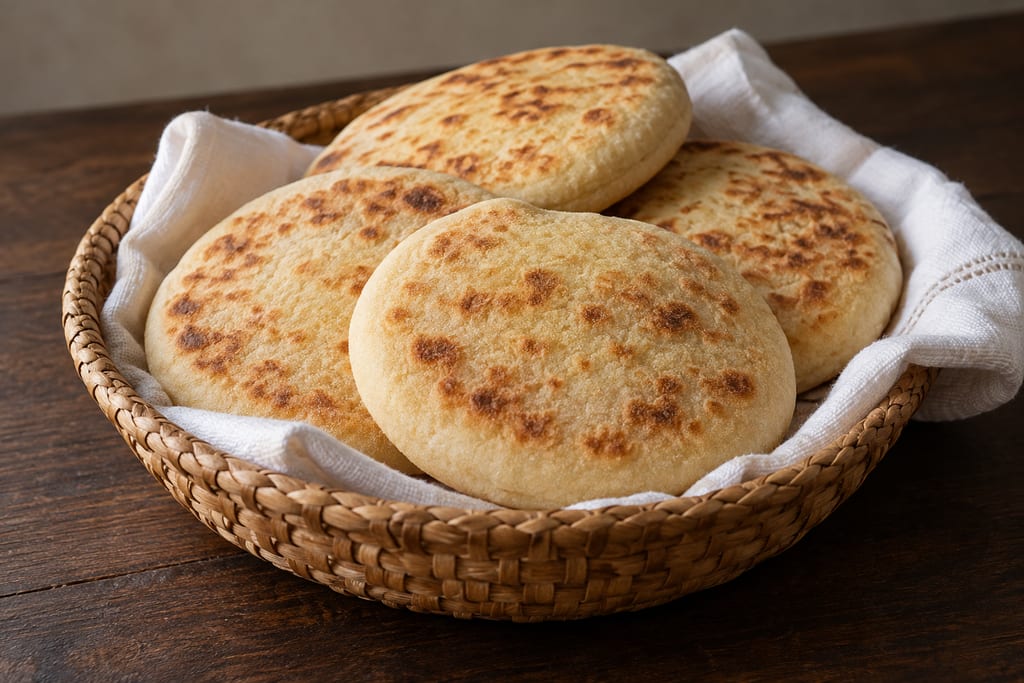
A Moroccan yeast-raised semolina pocket bread cooked on a dry pan or griddle; this measured batch makes about twenty 4-inch rounds.
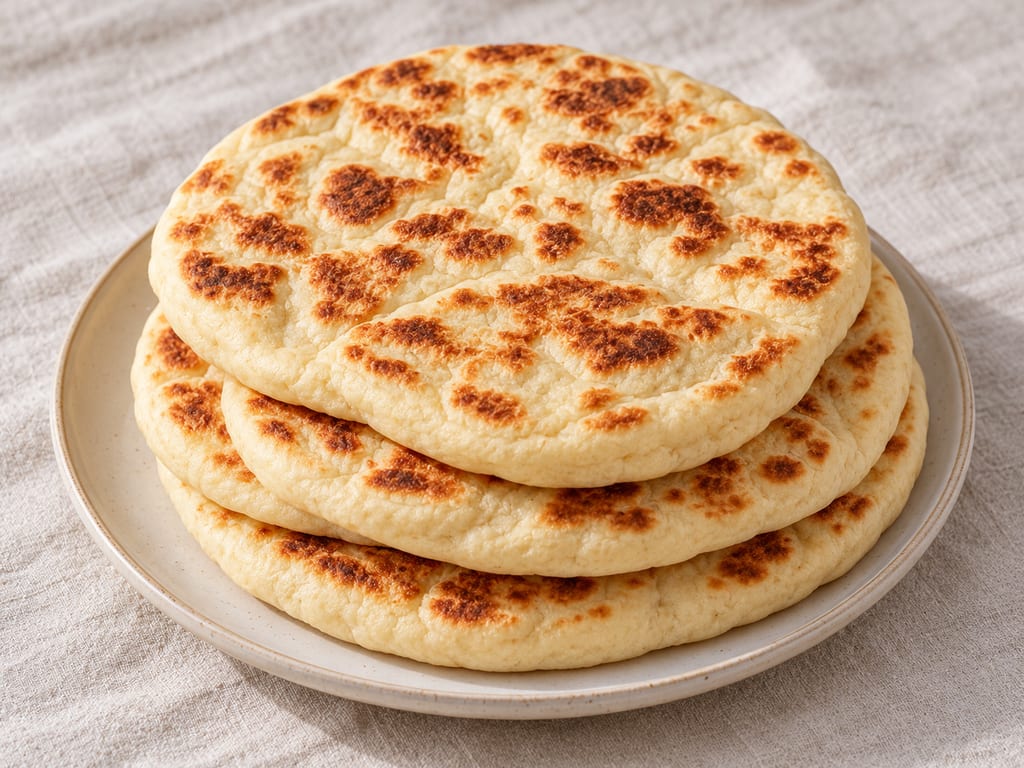
This Turkish bazlama uses yeast, plain yogurt and olive oil for a soft dough cooked in a skillet. Shape it into twelve small or six larger rounds, flip as bubbles appear, and wrap the breads to keep them soft.
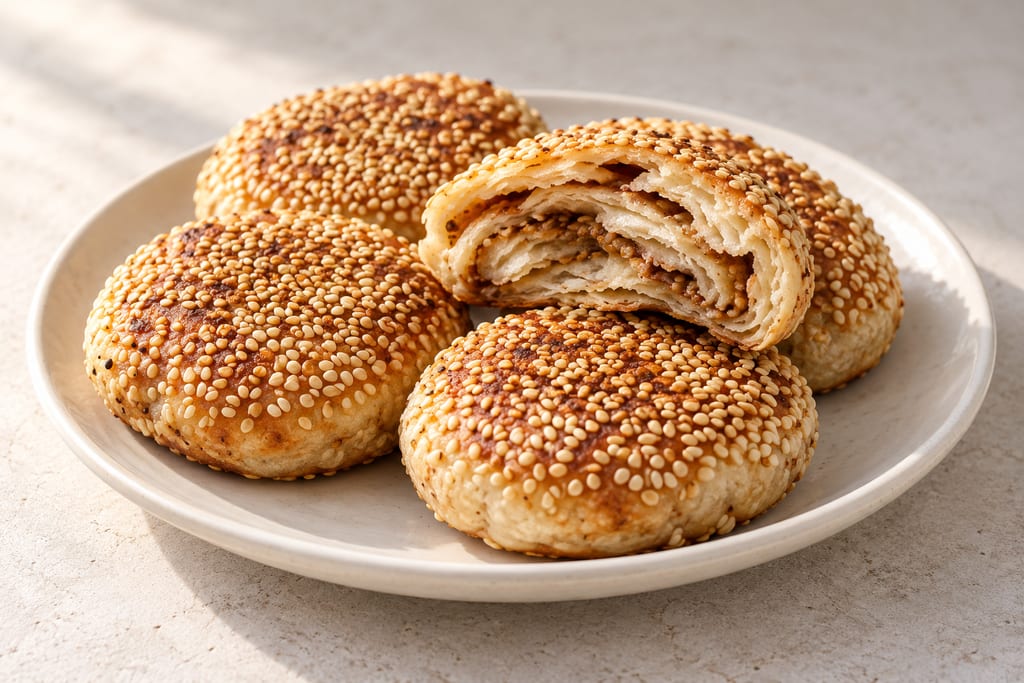
A Beijing-style yeast dough is layered with seasoned sesame paste, sealed into small buns, briefly pan-fried, seeded, and baked.
No community contributions have been published for this entry yet.
Sign in to contribute. Published comments and photos are free to read.
King Arthur BakingInspiration · Method
Golden Pita BreadMeasured six-ingredient formula and eight-piece yield; kneading, rise, oven temperature and preheated stone or steel; shaping, bake timing, towel wrapping, skillet variation, and storage information.
Cited in: One pocket-bread version; Dough and heat; Cooking options and handling; What the sources do not establish
Maureen AboodHistory · Geography
Pita BreadDescribes pita's role in Lebanese eating and distinguishes thin, soft bread from thicker pocket pita; notes the author's view that thin Lebanese pita is difficult to reproduce at home.
Cited in: One pocket-bread version; What the sources do not establish
U.S. Food and Drug AdministrationSafety
Handling Flour Safely: What You Need to KnowFlour is raw and may contain harmful bacteria; do not taste raw flour or dough; cook thoroughly and clean hands, utensils and surfaces after handling.
Cited in: Cooking options and handling