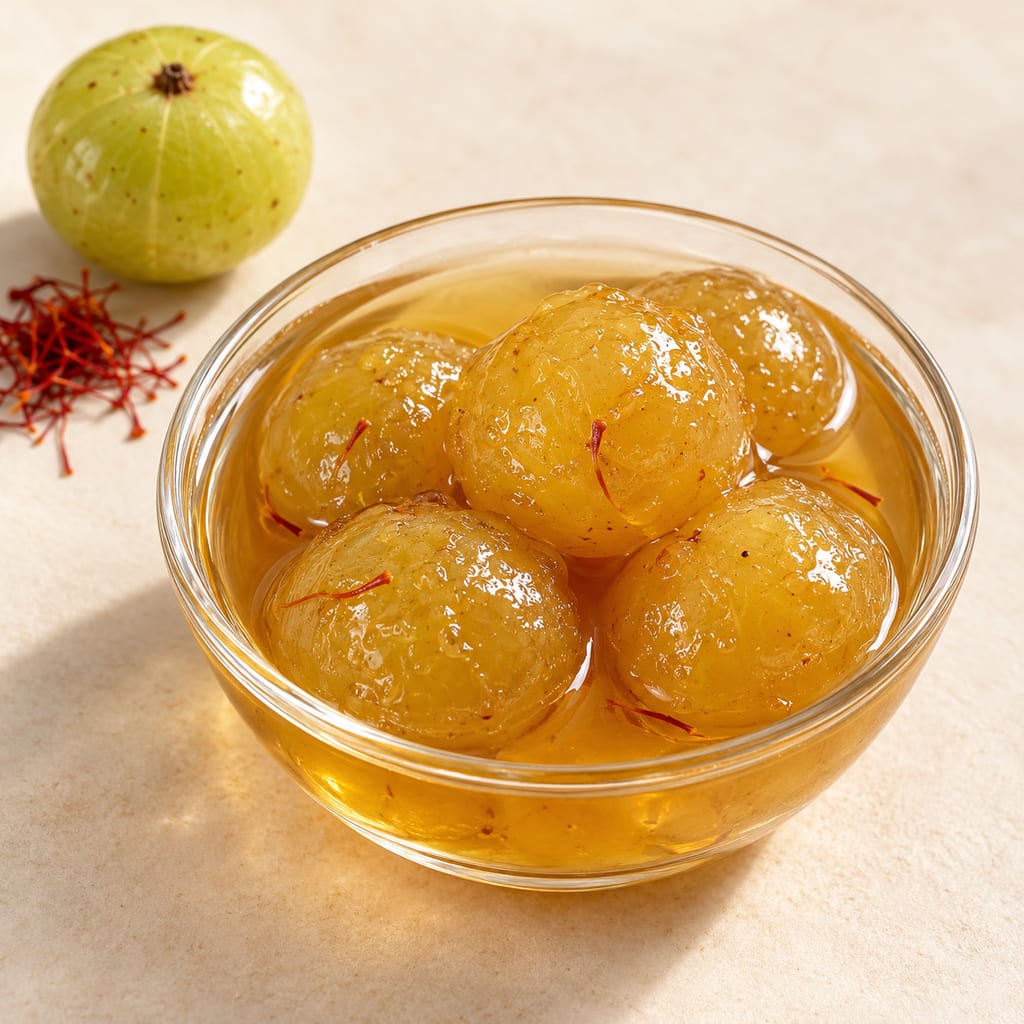
Amla murabba with saffron
Whole amla simmer in sugar syrup with saffron, black cardamom and pepper in this chef's version of the Indian fruit preserve. The fruit is soaked overnight before cooking.
 FermenteaWhere food goes to change
Sugar sources
Granulated sugar is dry crystalline sucrose refined from cane or beet. It sweetens dough, feeds baking yeast, and helps set particular fruit spreads.
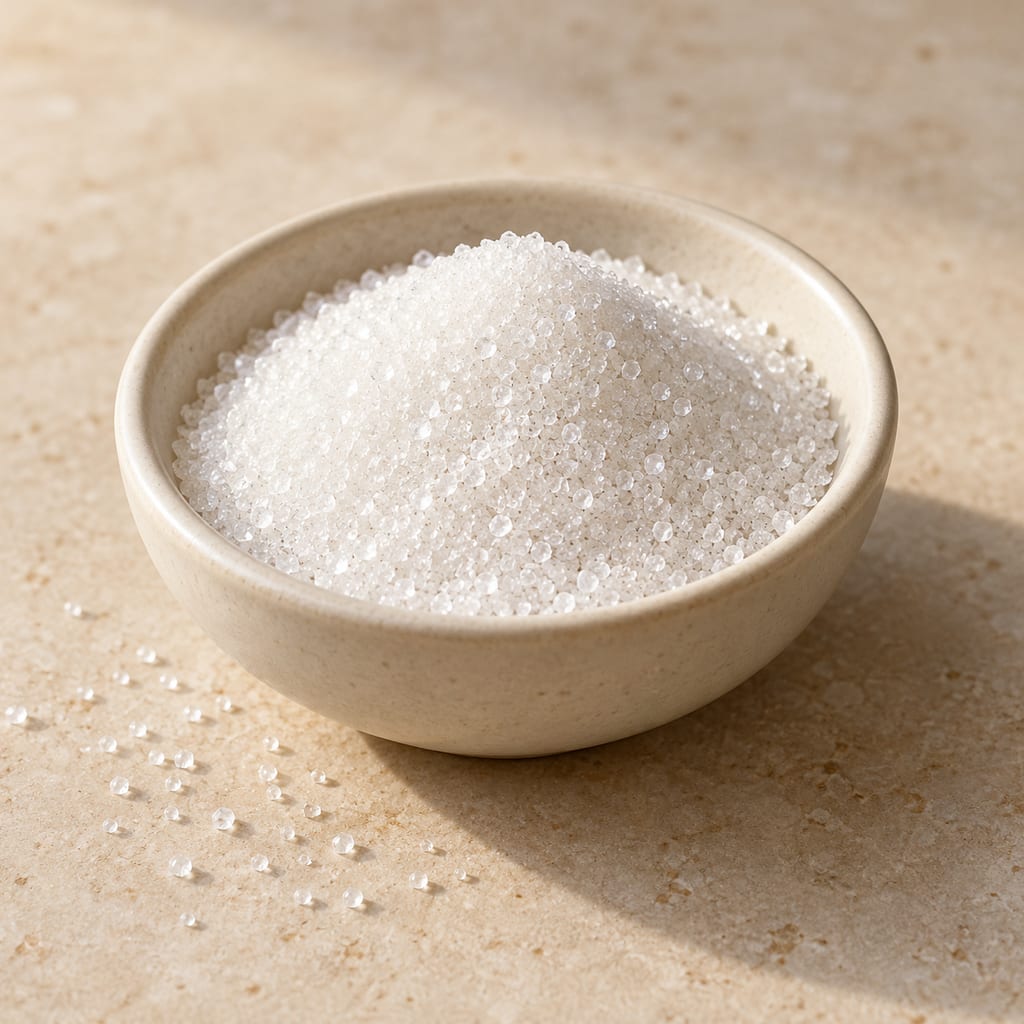
Granulated sugar is the familiar scatter of dry, bright crystals in a kitchen bowl: sweet, clean tasting and easy to pour or weigh. Most white granulated sugar used in cooking is sucrose, a carbohydrate built from one glucose unit joined to one fructose unit. Its pale appearance comes from refining, not from a particular crop. The same crystalline sucrose can come from sugar cane or sugar beet; the grains themselves do not tell a baker which plant supplied them.
That makes granulated sugar more specific than the everyday catch-all word “sugar.” Brown sugar retains or receives molasses, bringing colour, flavour and moisture. Raw or less-refined sugars keep more of the material separated during refining. Caster or superfine sugar has smaller crystals; coarse and sanding sugars have larger ones. Confectioners’ sugar is milled to a powder and may include an anti-caking ingredient. Glucose, fructose, honey and syrups are different sweeteners with different water content and behavior. They may all taste sweet, but sweetness alone does not make them interchangeable in dough or preserves.
The crystals matter in the kitchen. Granulated sugar dissolves into water in dough, drinks and syrups; before dissolving, it can be measured, scattered or mixed with dry ingredients. Different crystal sizes dissolve at different rates and create different textures. A powder disperses quickly and can make a smooth glaze; a coarse crystal stays perceptible longer and can add a crisp surface. That is why a brioche formula can specify granulated sugar for its dough and confectioners’ sugar for an optional glaze. Those ingredients occupy different stages and do different jobs.
In the Atlantic trade, cane moved from plantation field to mill and boiling house before sugar travelled by ship. Different colonial markets received grades that varied in how far they were refined; the darker syrup left from boiling was molasses, also sold and used as a sweetener or for rum. Sugar became more widely available as Caribbean production expanded, but every sack or barrel passed through labour-intensive cutting, extraction and heating. The crystals in a modern kitchen are a later, more uniform form of that traded crop.
European colonizers carried cane cultivation to the Caribbean and the Americas. Plantation output depended on land and the forced labour of enslaved Africans. Sugar and molasses were prominent goods in Atlantic trade, alongside the forced movement of people. These histories sit behind the sweetness that later entered ordinary household recipes: the familiar crystals could come from a system in which cultivation and processing were inseparable from violence.
Beet offered another crop from which to extract the same sucrose, extending production into temperate farming regions. Larger mills, extraction equipment and refining brought more uniform crystals into shops. Both agricultural routes end in a pale ingredient that seems anonymous in a bowl. Its origin still matters: cane and beet have different fields and processing routes, while the white grains alone cannot tell a buyer who grew the crop or where it was refined.
Sugar cane stores sucrose in its tall, jointed stalks; sugar beet stores it in a fleshy root. Cane grows in tropical and subtropical regions, while beet can be grown in temperate agricultural regions. After harvest, plant material is processed to extract juice. The juice is clarified to remove much of the suspended plant matter and other impurities, then concentrated by evaporation. Crystallization encourages sucrose to form solid grains; centrifuging separates crystals from the remaining syrup. The result is dried and prepared for packing. Equipment and sequence vary between factories and between beet and cane production.
In many cane supply chains, the mill makes raw crystals that travel to a refinery. There they are melted, clarified again and crystallized into the white sugar familiar in shops. Those steps produce refined crystalline sugar, not a different kind of sucrose in the finished bread. Sugar products can differ in colour, molasses content, crystal size and trace components, but ordinary refined white cane and beet sugars are principally the same molecule. A shopper cannot identify the crop simply by looking at a white crystal; origin needs labeling or traceability.
Crystallization is the point at which a dissolved plant extract becomes a dry, granular ingredient. Evaporation removes water and brings the juice toward a concentration at which crystals can form. Producers control conditions to encourage sucrose crystals to grow, then separate them from the liquid syrup. The remaining syrup can continue into other products and uses. Commercial sugar therefore carries a story of agriculture, milling, heat, water removal and separation inside a form that looks almost elemental on the table.
Flour is not chemically inert. It contains small quantities of sugars, and flour enzymes can release more fermentable sugars from starch as dough rests. Added sucrose becomes another carbohydrate source. Baking yeast can use sucrose after invertase cleaves it into glucose and fructose; during fermentation yeast produces carbon dioxide and ethanol along with smaller amounts of other compounds. Carbon dioxide expands gas pockets held by the dough’s gluten network. Most alcohol leaves during baking. The loaf’s rise comes from gas, while the dough’s structure determines how much it retains.
This is why “sugar feeds yeast” is true but incomplete. A little added sugar may support fermentation, but dough already has flour-derived sugars available. The effect depends on the formula, yeast, water, temperature and other ingredients. Sugar is hygroscopic: it associates with water. As its concentration rises, water is less freely available to yeast cells. In high-sugar dough this osmotic stress can slow fermentation and change gas production. Experimental dough studies also find changes in water distribution and dough rheology as sucrose levels change. Their percentages describe particular test doughs, not a universal boundary at which every bread will fail.
In fermenting dough, yeast's access to glucose and fructose changes as other sugars become available. Dough experiments find a stronger preference for glucose over fructose than in liquid fermentation. That difference matters alongside fermentation time and dough structure: adding more sucrose cannot be assumed to make every loaf rise faster.
Sugar remains in the dough after fermentation and affects the baked bread. It sweetens the crumb, competes for water and contributes to a softer, more tender eating quality. It can take part in browning, but crust colour has several causes. Sucrose itself is not a reducing sugar and does not directly drive the Maillard reaction in the same way as glucose or fructose. Heat can also transform sugar through caramelization, a set of reactions distinct from yeast fermentation. Other reducing sugars, amino compounds, milk solids, oven heat and baking time all influence browning. Sugar is one contributor, not the sole explanation for a loaf’s colour or texture.
Pain de mie and brioche put the same 35 g of granulated sugar to different work. The pain de mie becomes a fine, soft sandwich loaf; brioche surrounds the sugar with much more butter and egg. The 35 g belongs to each complete dough formula, alongside its own flour, liquid, fat, salt and yeast. Brioche's optional glaze is made after baking with confectioners' sugar, a fine powder that disperses more smoothly than the granulated crystals kneaded into the dough.
If a formula simply says “sugar,” its own context should guide the choice. Replacing granulated sugar with brown sugar, honey, syrup or a non-nutritive sweetener changes more than sweetness: it may change moisture, flavor, dissolved solids and yeast conditions. A substitution needs support from that recipe or a tested source, not an assumption that sweeteners are equivalent.
In jam and jelly, sugar has a different role from its role in bread. It sweetens fruit and reduces water activity—the amount of water available to support microbial growth. Sugar associates with water, while pectin molecules form a gel in the right balance of fruit, acid, pectin and dissolved sugar. This combination gives a fruit spread its set texture and helps inhibit mold during storage. Heat also concentrates the mixture and forms part of the preservation process.
That does not make granulated sugar a universal preservative. The effect belongs to the complete fruit-spread formula and processing method. Fruit acidity, pectin type, sugar concentration, heating and prescribed canning process all matter. Reducing sugar in a traditional recipe can change gel formation and preservation behavior; lower-sugar spreads use formulas and pectins made for that purpose. Some tested fruit-canning procedures allow fruit to be packed without added sugar because sugar is not the safety control in that process. Those cases should not be confused with traditional jam, where sugar is central to texture and water-activity balance. High sugar does not sterilize food, and some yeasts and molds tolerate conditions that inhibit many other microbes.
Fermentation is different again. In yeasted bread, sucrose may become microbial food, but bread dough is not preserved by that addition. In a fruit ferment, sugar amount and kind interact with the organisms and the formulation; findings from bread yeast do not automatically describe lactic-acid bacteria or mixed communities. Sugar can be substrate, texture modifier or preservation aid depending on context. It is not a substitute for a validated method or for understanding the actual process.
In amle ka murabba, an Indian gooseberry preserve, 1 kg of amla is paired with 1.5 kg of granulated sugar. The fruit is cooked in spiced syrup until it thickens, leaving the whole gooseberries glossy and sweet around their tart centres. This candied-fruit proportion belongs to that particular preparation; a softer jam or another fruit would require its own balance of fruit, sugar, acid and cooking.
The murabba's sugar moves from dry crystals to a syrup that coats the fruit. The cook looks for one-string consistency before adding the amla and two-string consistency at the end: these tactile stages track the thickening as water boils away. Lemon juice enters while the syrup is clarified and skimmed. After cooking, the fruit rests immersed, so the syrup is part of both its texture and the way it is served.
For fruit destined for a freezer, dry sugar can be scattered over cut pieces until their juice draws out, or sugar can be dissolved in water first to make a syrup pack. Dissolved sugar lowers the freezing point around the fruit, softening the frozen mass and helping its texture after thawing. Peaches or strawberries packed this way remain frozen fruit for later eating or cooking. A pack without sugar is possible, with a different texture after thawing.
When a recipe gives sugar by weight, a scale avoids differences caused by crystal size and the way a measuring cup is filled. For a syrup or fruit pack, dissolve or distribute the named form as the tested directions specify; for dough, add it at the step the formula gives. The same bag of granulated crystals can move from a dry mixing bowl to a liquid syrup, but the recipe’s water balance and cooking stage decide its job.
Store granulated sugar dry, closed and away from strong odors. Moisture hardens crystals into lumps; refrigeration can add condensation without improving storage. Utah State University's guidance distinguishes two clocks: dry commercial sugar resists microbial growth indefinitely, while its approximate two-year best-if-used-by period addresses quality, especially hardening. A lumpy but otherwise sound package can still be used; wetness, damage or contamination calls for closer inspection.
Refined granulated sucrose is a carbohydrate and contains no protein, so it is not itself a common protein-based allergen. Dietary needs and health guidance still depend on the person and the full food being made. The ingredient’s physical simplicity should not obscure its economic and cultural complexity: a spoonful can be a modest baking measure, a carefully controlled part of a preserve, or the endpoint of a long agricultural and industrial chain.
These bread recipes identify granulated sugar in the formulas; they do not establish where that sugar was grown or manufactured.
Whole amla simmer in sugar syrup with saffron, black cardamom and pepper in this chef's version of the Indian fruit preserve. The fruit is soaked overnight before cooking.
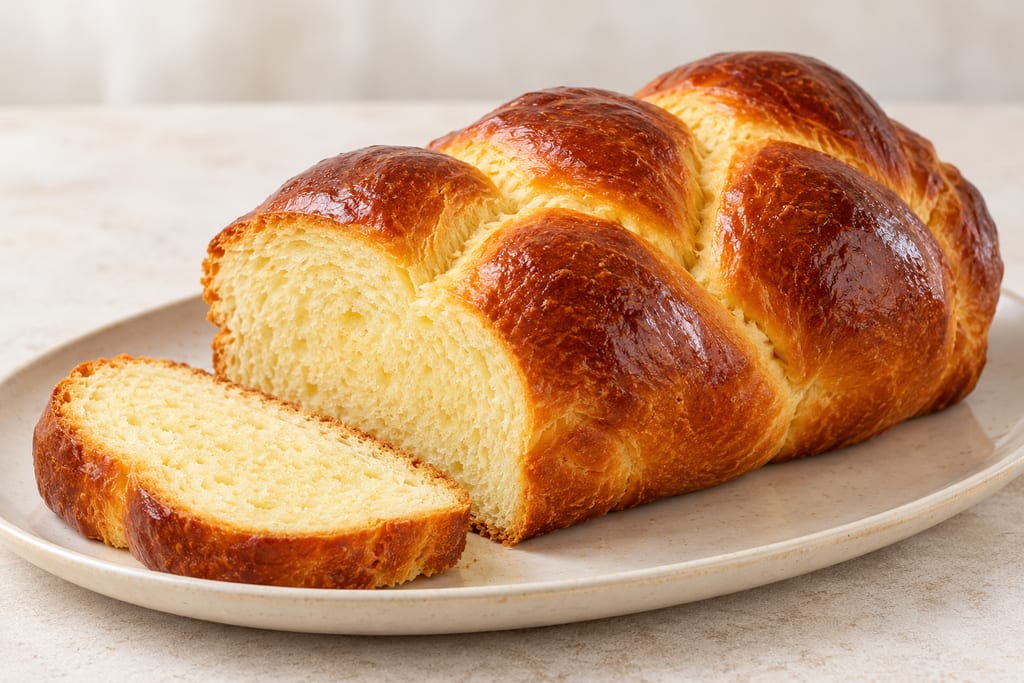
An egg-and-butter-rich yeast dough shaped as one round loaf, two loaves or twelve small brioches, with baking paths that vary by shape.
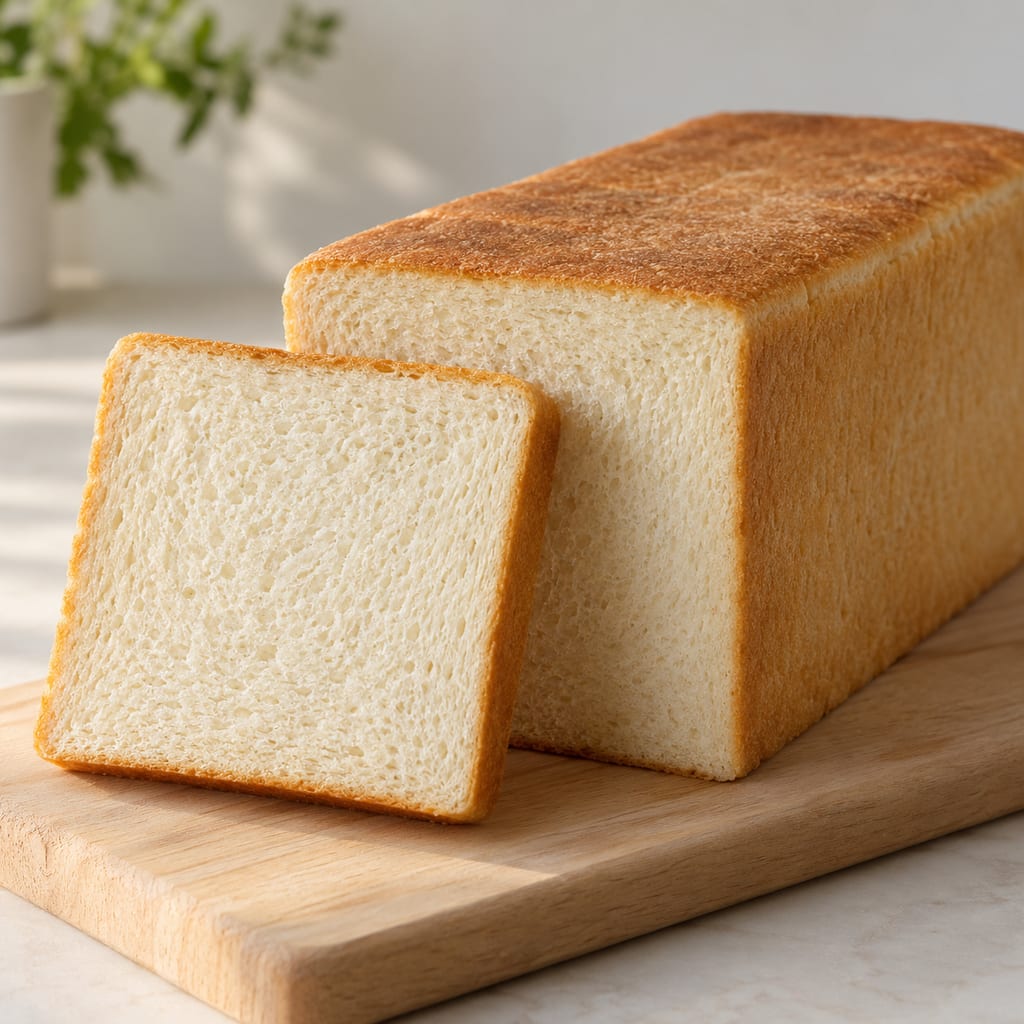
A fine-crumb, enriched wheat loaf baked in a lidded pan for even slices used in sandwiches, toast, French toast and melba toast.
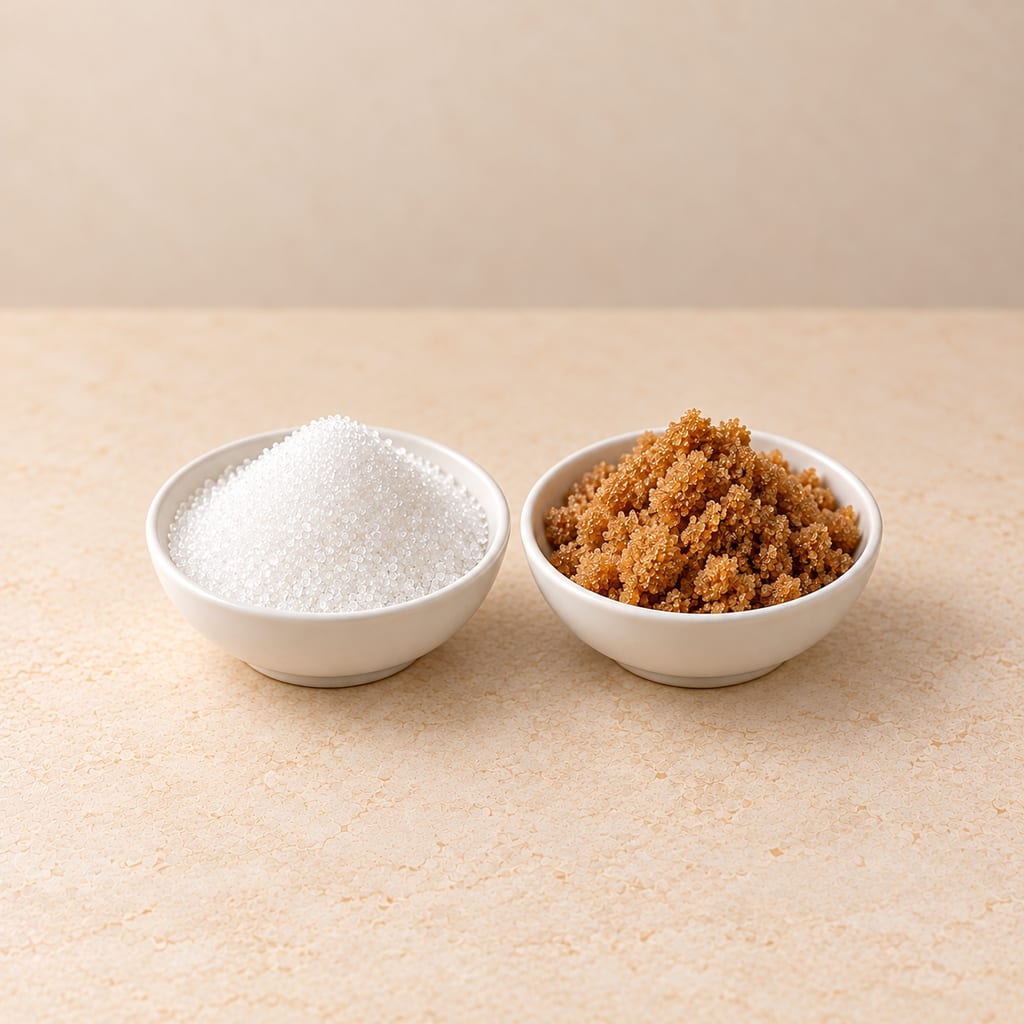
White sugar is refined sucrose, almost pure; brown sugar is sucrose with molasses, left in or added back. Molasses makes brown sugar moister, darker and more strongly flavoured.
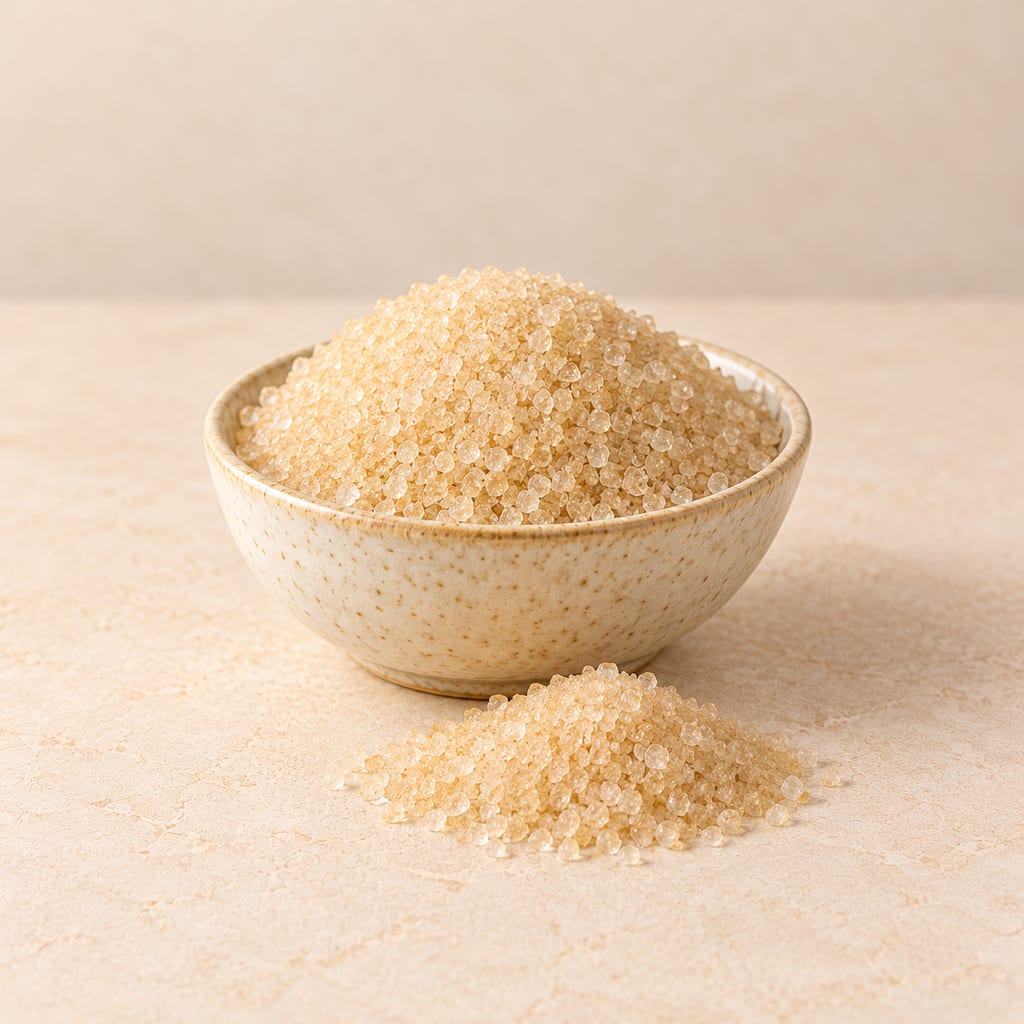
Turbinado is a pale golden cane sugar made by washing and spinning raw crystals, leaving large, dry grains that keep a faint trace of molasses and a mild toffee note.
No community contributions have been published for this entry yet.
Sign in to contribute. Published comments and photos are free to read.
King Arthur BakingIngredient · Recipe use
Pain de Mie35 g granulated sugar in the dough.
Cited in: A measured ingredient in breads; Choosing, measuring and keeping the crystals
King Arthur BakingIngredient · Recipe use
Brioche35 g granulated sugar in dough, with confectioners’ sugar in a separate optional glaze.
Cited in: A crystal with more than one crop behind it; A measured ingredient in breads; Choosing, measuring and keeping the crystals
King Arthur BakingIngredient · Recipe use
YeastSugars consumed during fermentation; sugar concentration affects yeast activity.
Cited in: What sucrose does in bread dough
USDA Agricultural Research ServiceProduction
Solving Challenges in Sugarcane Factories and RefineriesDescribes cane harvesting, juice extraction, clarification, evaporation, crystallization and centrifugation; raw crystals are further refined.
Cited in: An old technology and a difficult history; From stalk and root to white crystals
USDA Agricultural Research ServiceProduction · Processing
Improving Sugarbeet Productivity and Sustainability through Genetic, Genomic, Physiological, and Phytopathological Approaches (2024 Annual Report)Project report states sugarbeet roots are processed by slicing roots, extracting soluble sucrose from slices, concentrating raw juice, and crystallizing sugar.
Cited in: An old technology and a difficult history; From stalk and root to white crystals
USDA Farm Service AgencyClassification
Sugar GlossaryDefines refined crystalline sugar in industry terminology.
Cited in: A crystal with more than one crop behind it; An old technology and a difficult history; From stalk and root to white crystals
Utah State University ExtensionSelection · Storage
Storing SugarsCane and beet yield refined granulated sucrose; moisture hardens crystals, sugar absorbs odors, and microbial resistance differs from the approximate two-year best-quality guidance.
Cited in: A crystal with more than one crop behind it; Choosing, measuring and keeping the crystals
FEMS Yeast Research / Oxford University PressHistory · Science · Fermentation
Sucrose and Saccharomyces cerevisiae: a relationship most sweetSucrose is a glucose-fructose disaccharide; yeast invertase cleaves it before the resulting sugars enter yeast metabolism.
Cited in: What sucrose does in bread dough
Library of CongressHistory · Trade
Slavery—The Peculiar InstitutionOne Atlantic trade route moved manufactured goods to West Africa, enslaved people to Caribbean and southern colonies, and sugar/molasses to ports; discusses resistance.
Cited in: An old technology and a difficult history
Journal of Agricultural and Food Chemistry / ACSScience · Fermentation
Mathematical Model of Sugar Uptake in Fermenting Yeasted DoughThe abstract reports stronger yeast preference for glucose over fructose in dough than in liquid fermentation; full study text was unavailable.
Cited in: What sucrose does in bread dough
International Journal of Food Science & Technology / Oxford University PressScience · Fermentation
Effect of Sucrose Levels on Dynamic Rheology Properties of Dough during Fermentation ProcessChanging sucrose concentration alters water distribution, dough rheology, yeast growth and metabolites in the tested formulations.
Cited in: What sucrose does in bread dough
University of Minnesota ExtensionPreservation · Science
Preserving Food at Home: Fruit SpreadsSugar reduces water activity and helps pectin gel in fruit spreads; recipe formulation, acid and pectin type matter.
Cited in: Sugar in preserves and ferments
Penn State ExtensionPreservation
Sugar and Sucralose in Home Food PreservationDescribes sugar roles in sweetness, texture and jam/jelly structure; sweetener substitutes do not duplicate all sugar functions.
Cited in: Sugar in preserves and ferments
NDTV FoodUses · Preservation
How To Make Amle Ka Murabba At HomeThe recipe pairs 1 kg amla with 1.5 kg granulated sugar, uses 1.5 litres water, cooks from one-string to two-string syrup, adds lemon juice during clarification, and leaves the fruit immersed in syrup.
Cited in: Sugar in preserves and ferments
Foods / MDPIScience · Baking
Maillard Reaction: Mechanism, Influencing Parameters, Advantages, Disadvantages, and Food Industrial ApplicationsSucrose is a non-reducing sugar; direct Maillard browning depends on reducing sugars and amino compounds.
Cited in: What sucrose does in bread dough
U.S. National Park Service, National Parks of BostonHistory · Production · Trade
The Atlantic Empire of Peter FaneuilThe Caribbean and Sugar sections document cane milling and boiling, sugar grades, molasses, enslaved labour, Atlantic trade and expanding supply.
Cited in: An old technology and a difficult history