
Aniseed
Aniseed is the dried ripe fruit of Pimpinella anisum, an aromatic Apiaceae spice commonly called a seed. It adds a sweet, warm aroma to breads such as Moroccan krachel and South African mosbolletjies, and is distinct from star anise.
 FermenteaWhere food goes to change
El gors
Krachel, also called el gors, are Moroccan sweet yeast rolls scented with anise, sesame and orange flower water. This version follows the three-rise method documented by Christine Benlafquih.
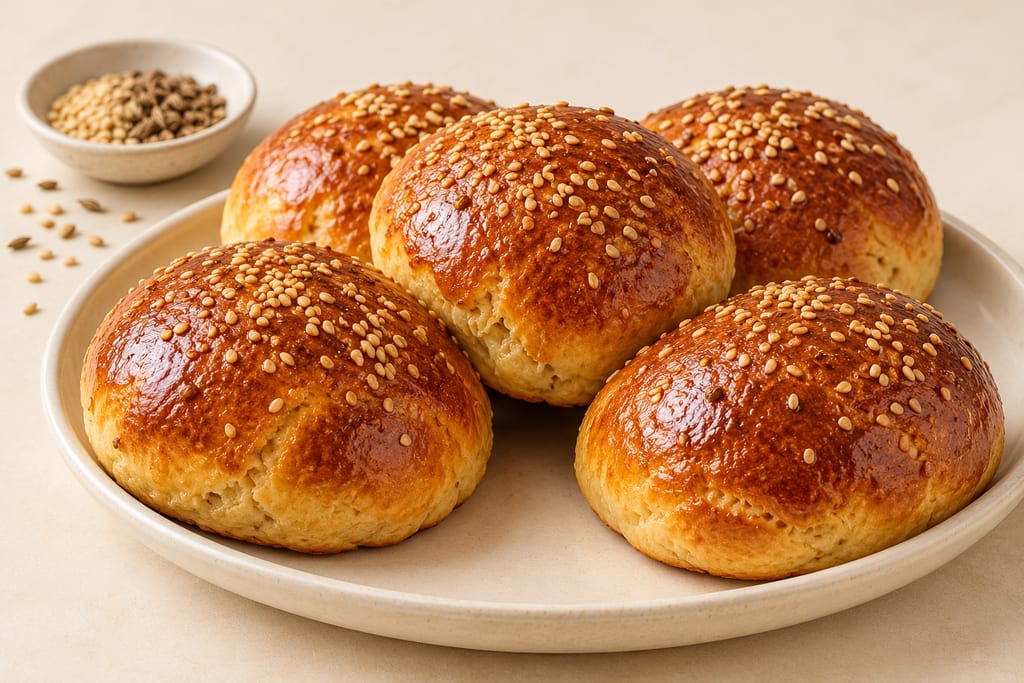
Krachel—also called el gors—are small, soft, sweet rolls whose characteristic aroma comes from anise, sesame and orange flower water. The recipe is recognizably enriched: flour is combined with sugar, eggs, butter and milk, then leavened with baker’s yeast. A glossy egg wash and optional sesame or coarse sugar finish the surface. A “brioche-like” comparison conveys the enrichment and soft crumb, but krachel’s particular scent and its place in Moroccan baking give it an identity of its own.
The available references document krachel as a Moroccan preparation and describe how people make and eat it now. They do not establish when the roll first appeared, which city invented it, or whether the name has one uncontested spelling. A broader study of bread in urbanising Morocco explains why bread carries cultural and economic weight in daily life, but it does not provide a history of krachel. Keeping those statements separate matters: the significance of Moroccan bread is well documented; a specific date for this sweet roll is not.
Taste of Maroc describes krachel as bakery fare and a home-baked food served at breakfast, tea time, as a snack and when breaking the fast during Ramadan. It also calls the rolls el gors. These are useful present-day descriptions rather than evidence that every Moroccan family follows one formula. Dough enrichment, spice proportions and shaping vary between published home recipes, so this page follows one complete three-rise method rather than averaging them into an imaginary standard.
The source recipe uses commercial dry yeast, not a sourdough starter. In bread dough, baker’s yeast consumes fermentable carbohydrates and releases carbon dioxide. Gas accumulates in bubbles within the dough, expanding the mass and helping create a lighter interior. The source does not identify a particular yeast strain or measure fermentation products in krachel; the explanation here describes the general baking role of baker’s yeast, not a laboratory result on this exact batch.
Several ingredients make this a richer dough than a lean flour-and-water loaf. Sugar supplies sweetness and additional fermentable carbohydrate; eggs and butter bring fat and proteins; milk adds liquid and milk solids. Fat and sugar change how a dough behaves, and the source stresses that this dough should stay sticky rather than be corrected by adding flour until it feels dry. The practical instruction is consequential: excess flour makes the finished rolls heavy. The three rises give this enriched mixture repeated time to expand before it is baked.
Kneading brings the flour and liquid into a cohesive, elastic dough. The rested dough is then pressed down and turned before a second rise, followed by dividing, rounding, flattening and a final rise. Those steps redistribute the dough and establish the small, even portions that bake together on one tray. They are not fermentation by themselves; the yeast’s gas production happens during the covered rests, while kneading and shaping are physical operations.
The formula also shows why dough development and fermentation cannot be treated as one thing. Yeast makes gas while the dough rests; kneading organizes hydrated flour proteins, and dividing and shaping redistribute the gas and determine the roll size. The source does not call for an overnight ferment, a sourdough culture, or a tangy result. It is a same-day sweet yeast dough whose aroma comes mainly from the seeds and floral water, while the soft crumb comes from a combination of gas expansion, flour structure, enrichment and baking.
Yeast activity also explains the instruction to judge the dough rather than the timer alone. The source gives broad proofing windows and says a cool kitchen may need more time. A visibly puffy dough is evidence that it has expanded, but it is not a safety test and should never be used to decide whether uncooked flour is safe to taste. The covered rests protect the surface from drying while the dough expands; if uncovered, a dry skin can make shaping and expansion less even.
All-purpose wheat flour supplies starch and gluten-forming proteins. When hydrated and worked, those proteins form an extensible network that can hold some of the gas made by the yeast. The recipe’s wet, soft dough is intentionally different from a stiff dough that would be easier to handle but yield a denser roll. The source gives cups rather than a flour weight and allows additional milk or flour only as needed, so the mixture’s feel is part of the method.
Butter and eggs enrich the dough and contribute to its tender crumb and browned surface. The source allows butter softened or melted, while a separate published version uses melted butter. A substitution with shortening is described by the author as a personal alternative that makes a lighter roll; it is not interchangeable in flavor, and the page’s main formula remains butter-based. Eggs also appear twice in the method: two lightly beaten eggs go into the dough, and a separate egg is mixed with milk for the surface wash.
Anise seeds are a defining aromatic but not compulsory for every household. The author notes that a baker who dislikes the seeds can leave them out or use ground anise to keep the flavor without whole seed. Sesame may be mixed into the dough or reserved for the top. In Morocco, unhulled sesame is described as preferred for the pictured rolls. A little coarse sugar is another documented finish; it changes the surface from a savory-seed look to a more obviously sweet one.
Orange flower water brings a floral note. It is made by distilling bitter-orange blossoms, and the Associated Press documents the spring craft of collecting blossoms and distilling their scent in copper equipment in Morocco. That context explains why this ingredient is more than generic orange flavoring in the roll. The article’s recipe specifically calls for orange flower water; it does not recommend replacing it with orange juice or peel, which contribute different flavors and moisture.
Salt is present in a small measure, but it is not incidental. It seasons the sweet dough and contributes to how the dough handles alongside flour, liquid and yeast. The recipe names salt without giving a particular mineral type, so ordinary cooking salt is the most faithful reading; choosing a specialty salt would add a preference not present in the source. The same restraint applies to flour: the source calls for all-purpose flour and offers only a little whole-wheat or durum flour as a possible partial substitution, with liquid adjustment as needed. That is an optional adaptation, not a second formula with guaranteed identical results.
The source method starts by dissolving the yeast in a few tablespoons of warm water for five to ten minutes. The water quantity is deliberately not stated more precisely in the article, so this recipe does not invent a measured amount. It should be warm rather than hot. While the yeast rests, the dry ingredients are stirred together, making the seeds and salt easier to distribute before the wetter ingredients are added.
Eggs, butter, milk, orange flower water and yeast are stirred into the flour mixture until a very sticky dough forms. The source allows small additions of flour or milk if the dough needs adjustment, but does not prescribe an exact correction. Knead until smooth, then transfer the dough to an oiled bowl and cover it. The first rise lasts one to two hours, until the dough is puffy and about doubled. Time is approximate: a cooler room may slow it, and the source advises allowing more time rather than forcing the dough to match the clock.
Pressing the dough down and turning it over begins the second rise, which takes about 45 minutes to an hour. This repeat rest helps the dough expand again before shaping. Divide it into twelve portions and round each one. The short five-to-ten-minute rest makes the dough easier to pat into discs. Once flattened, the rolls rise for about an hour or longer until visibly puffy and light. The three covered rests are central to the texture; skipping one changes the cited method.
The rolls receive egg wash immediately before baking. This gives the tops a smooth, glossy finish and helps the optional sesame or coarse sugar adhere. The oven is preheated to 230°C (450°F), and the source gives a bake of about fifteen to twenty minutes, with a tray rotation midway for even color. It describes the target as deep golden brown. The rolls then cool on a rack rather than remaining on the hot tray, where residual heat could continue to firm their bottoms.
Published krachel methods are related, not identical. Taste of Maroc’s home formula uses twelve portions and three rises, with the second rise before shaping. Women’s Weekly Food gives a smaller formula and a different sequence: one main rise, portioning, a shorter covered rest, then baking at a lower oven setting. These are two documented household approaches. Their timings and dough quantities should not be mixed without retesting, because flour, portion size and oven behavior all affect the outcome.
A more recent Eid recipe published by Arab News adds chocolate chips to the dough. It retains anise, sesame and orange blossom water but presents a contemporary variation for a particular celebration. It is evidence of an adaptation, not proof that chocolate is a traditional ingredient in every krachel. Likewise, the choice to omit whole anise, change the sesame placement, or use a different surface topping can be described as a home variation without redefining the base roll.
Krachel are eaten plain or with accompaniments such as butter, jam, cheese or chocolate. The soft, sweet dough also suits mint tea and a breakfast table. The source connects them with Ramadan breaking-fast service as well as ordinary breakfasts and tea breaks. In the surrounding Moroccan food culture, bread is not merely a side dish; Katharina Graf’s study describes its place in daily meals and in social and economic life. Krachel’s sweeter, aromatic character gives it a different role from the everyday breads in that study, but it belongs to a culture where breadmaking is an important domestic practice.
A sticky dough is expected here. If it becomes firm because flour has been added too freely, the source warns that the rolls can turn heavy. If it is slow to puff, the recipe’s own advice is to allow more time in a cool kitchen; it gives no fixed proofing temperature. A single elapsed time cannot guarantee readiness, so the described visual cues—puffy, doubled, and light after shaping—guide the stages while retaining the source’s approximate timing.
The final surface should be deep golden after the stated bake, but color alone is not a general food-safety test. Flour is a raw agricultural food and eggs can also carry harmful bacteria. Do not taste the uncooked dough, keep it from ready-to-eat foods, and wash hands, bowls, utensils and work surfaces after handling. Bake the rolls according to the recipe rather than serving raw or underbaked dough.
The author says the rolls keep at room temperature for about a day and recommends freezing extras. That is a quality and storage observation from the recipe writer, not a validated safety shelf life. Cool the baked rolls before packing them. If reheating from frozen, the source suggests gentle microwave reheating or wrapping them in foil for the oven to avoid drying; overheating makes the crumb dry. The source does not give a storage duration for frozen rolls.
The selected ingredient quantities, order, rise sequence and oven setting follow Christine Benlafquih’s published recipe. Other sources are used only for the distinct variations and context named in their sections. The yeast mechanism is general baker’s-yeast science, not a strain assay of this recipe. No reliable dated first attestation or exact origin for krachel was established in the sources consulted, so none is claimed.
Krachel is described in contemporary Moroccan food writing as a sweet, anise- and sesame-scented roll, also called el gors. The archive records the Moroccan association and identifies this documented home method. The sources consulted here do not establish a first attestation, a birthplace, or a historical date for krachel itself; broad histories of Moroccan bread do not date this particular enriched roll.
Yield 12 rolls · Scaling: source batch only
Raw flour can carry pathogenic bacteria, and raw eggs can also carry pathogens; tasting dough before baking is unsafe.
Hazard sourceKeep raw dough separate from ready-to-eat foods, wash hands and utensils after handling it, and do not taste it before baking.
Control sourceBake according to the cited recipe until the rolls are deeply golden; do not serve raw or underbaked dough.
Control sourceAppearance alone does not establish that raw dough is safe; do not taste it before baking.
Active dry baker's yeast — The source recipe specifies dry yeast but does not identify a strain. Baker's yeast generally produces carbon dioxide from dough carbohydrates, expanding the dough during the rests.
A documented Moroccan preparation and cuisine association; the source does not establish a birthplace or a dated origin.
Aniseed is the dried ripe fruit of Pimpinella anisum, an aromatic Apiaceae spice commonly called a seed. It adds a sweet, warm aroma to breads such as Moroccan krachel and South African mosbolletjies, and is distinct from star anise.
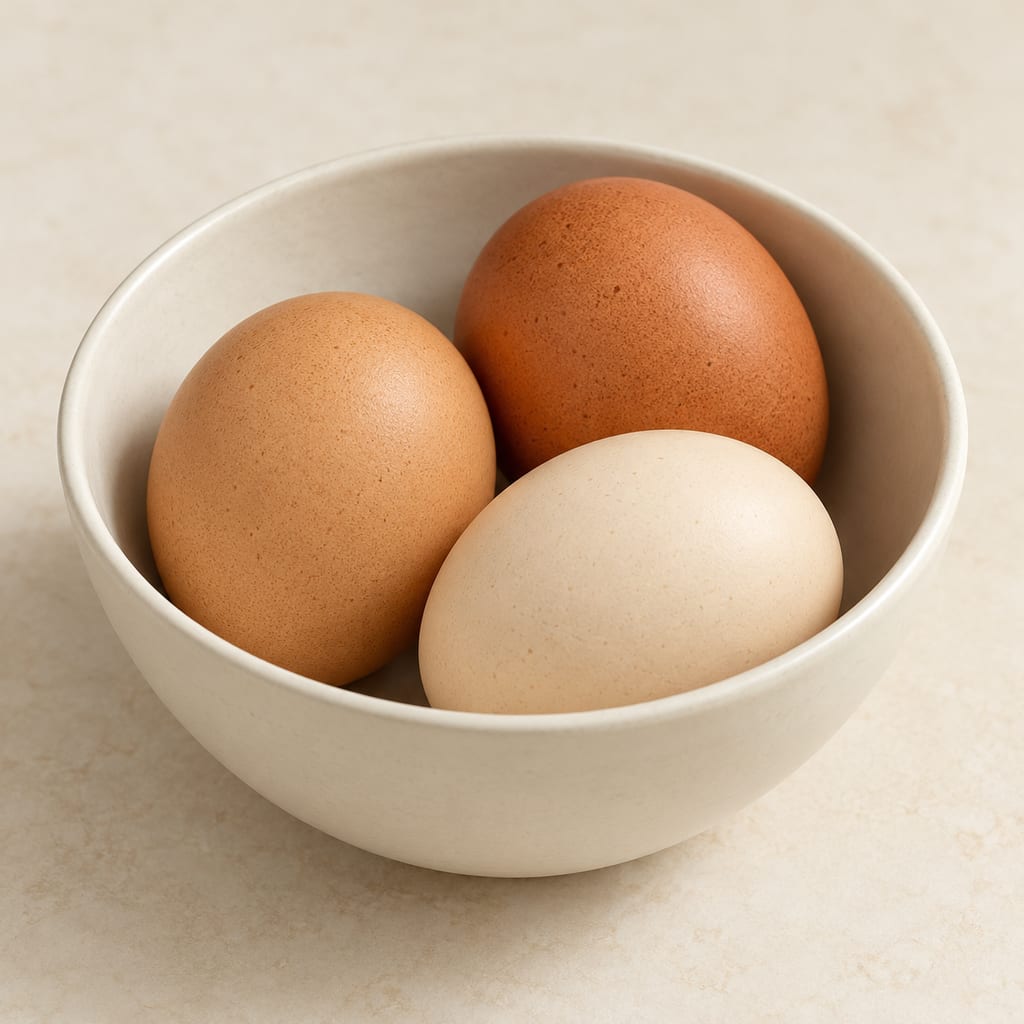
Chicken eggs supply proteins and yolk fats that set and emulsify. Atlas breads use them in enriched doughs, surface washes and a sourdough pancake batter mixed after fermentation.
Milk is the fluid produced by dairy animals. Its species, fat level, heat treatment and handling shape the way it can be drunk, cultured or turned into curd.
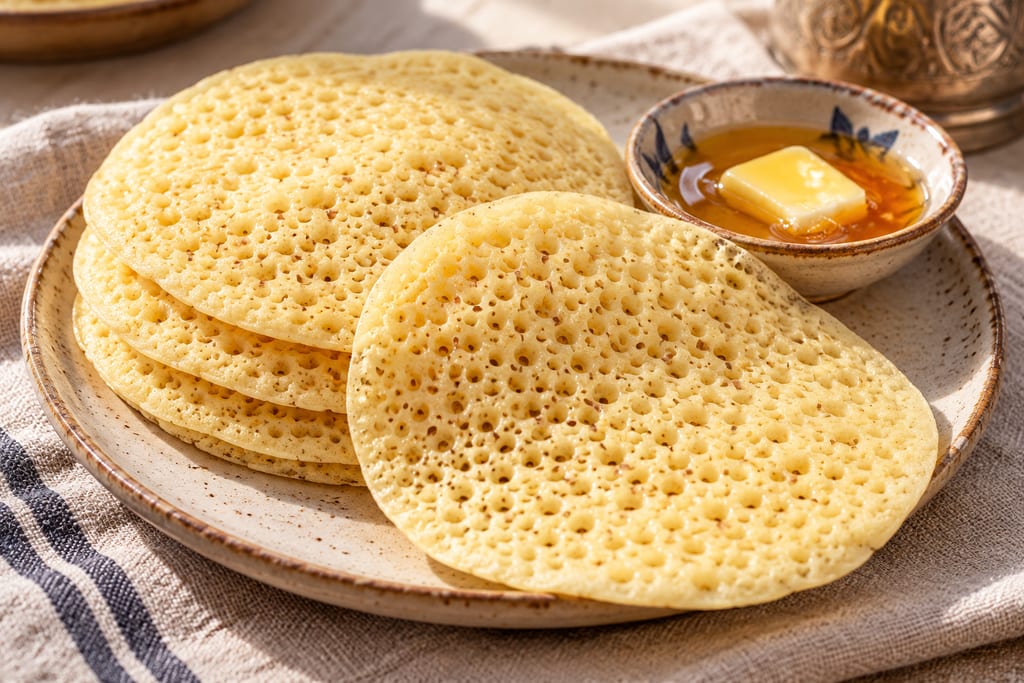
Moroccan semolina pancakes made from a thin yeast batter, rested until foamy and cooked on one side until the surface sets with a honeycomb of holes. This source-specific batch makes sixteen 5-inch pancakes.
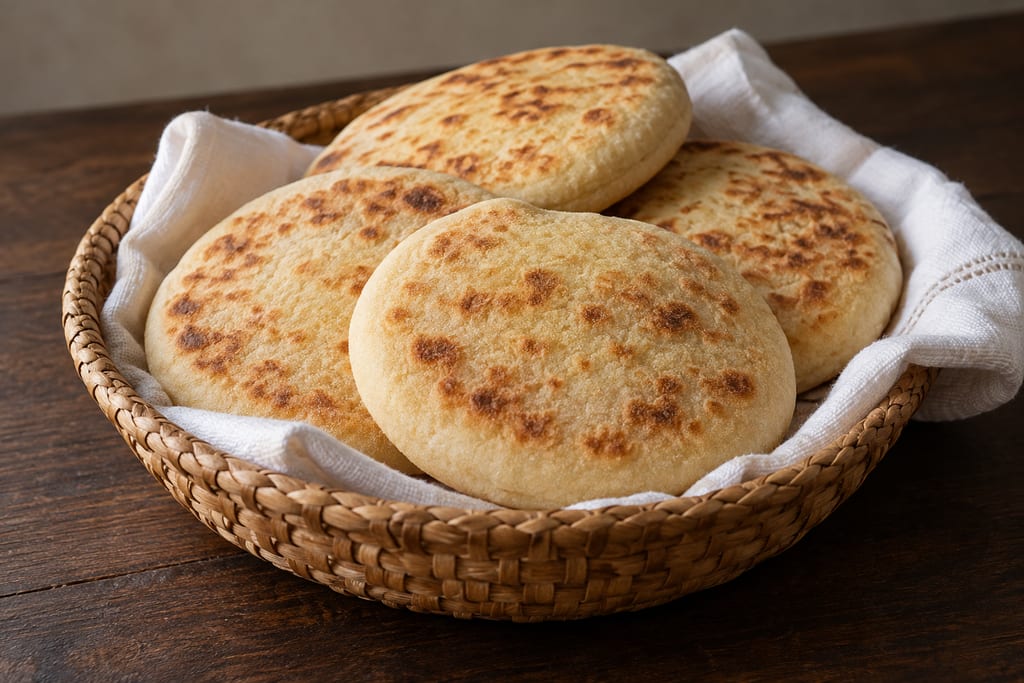
A Moroccan yeast-raised semolina pocket bread cooked on a dry pan or griddle; this measured batch makes about twenty 4-inch rounds.
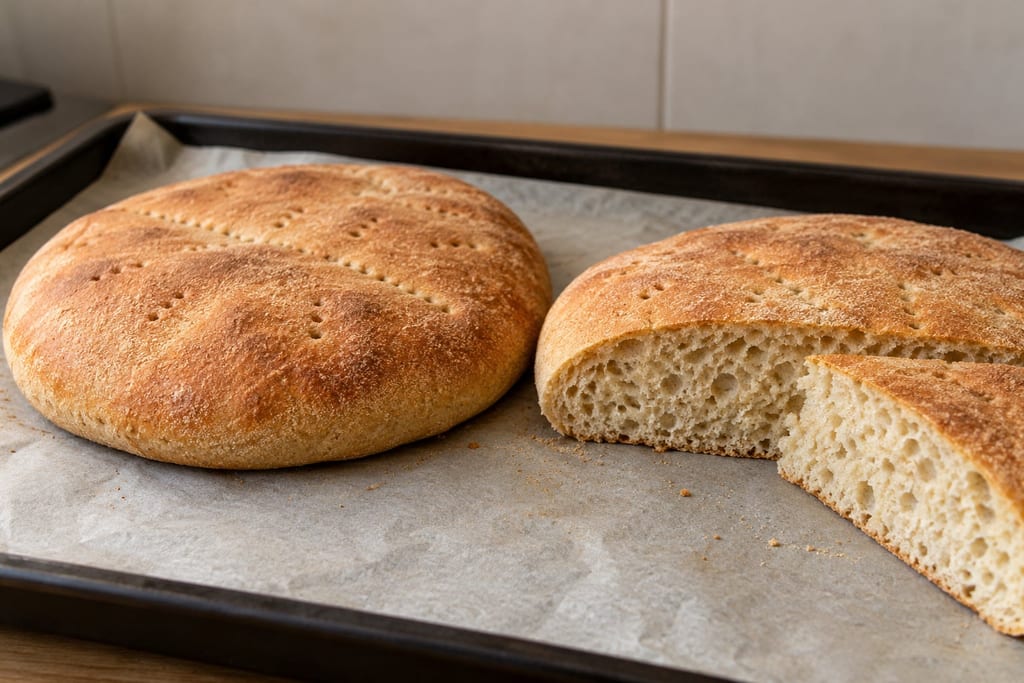
A Moroccan round wheat bread with a firm crust and coarse interior; this home formula makes two 8-inch loaves for serving with meals.
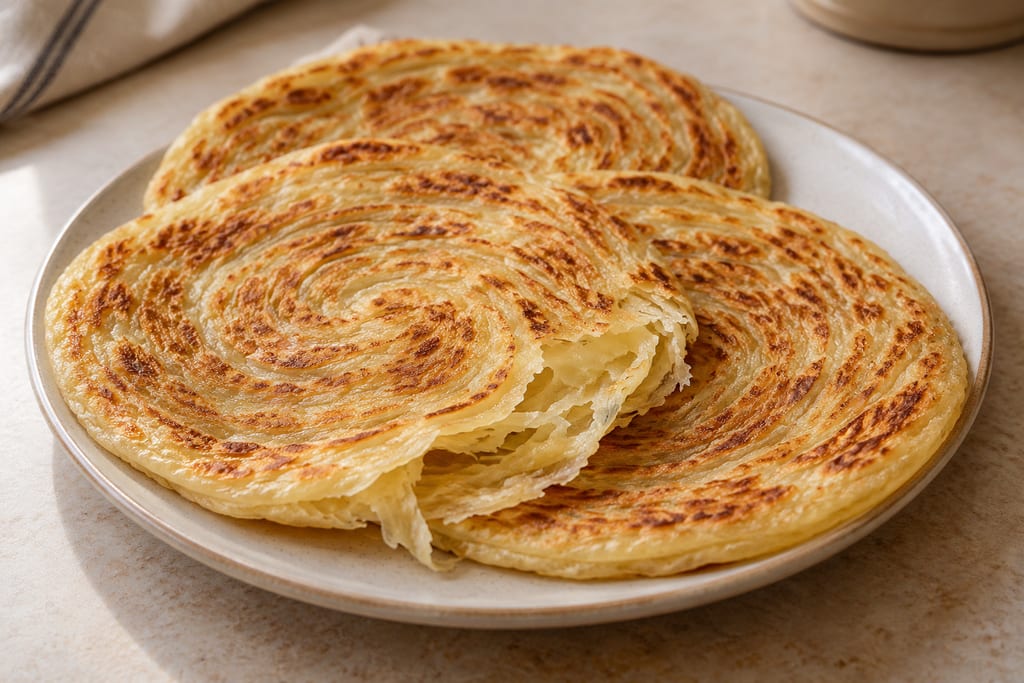
A Moroccan round laminated griddle bread; thin sheets of a lightly yeasted semolina dough are buttered, rolled into layered coils, sliced and flattened.
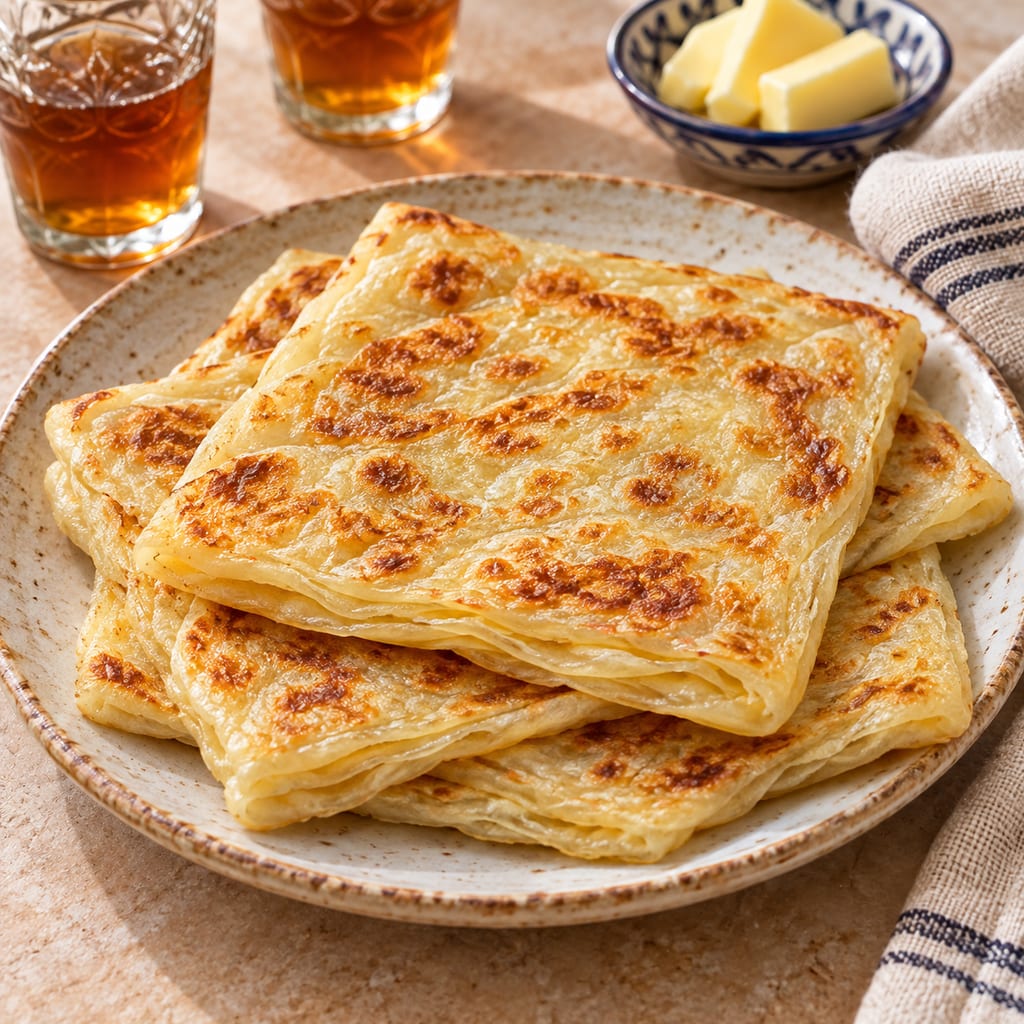
A square Moroccan layered griddle bread made from lightly yeasted wheat dough, stretched thin, folded with semolina and butter, and cooked until crisp and golden.
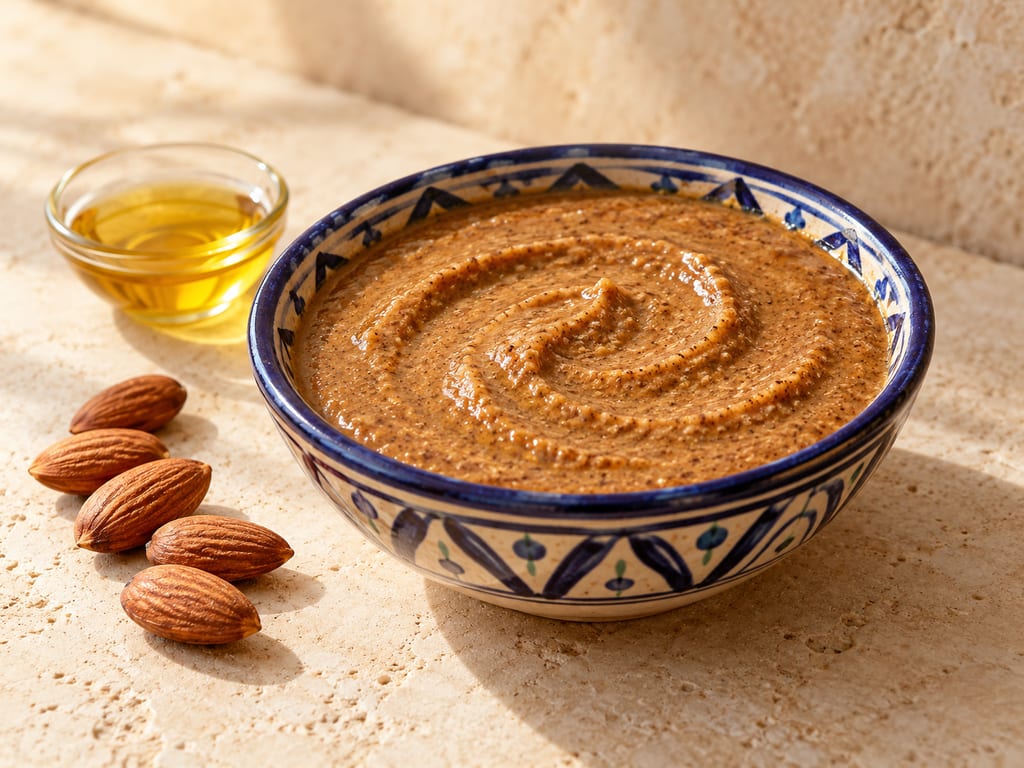
Amlou is a nutty, lightly sweet Moroccan spread of roasted almonds, culinary argan oil and honey. The almonds are ground first, then loosened with oil and sweetened; the balance can range from a thick spread to a dip.
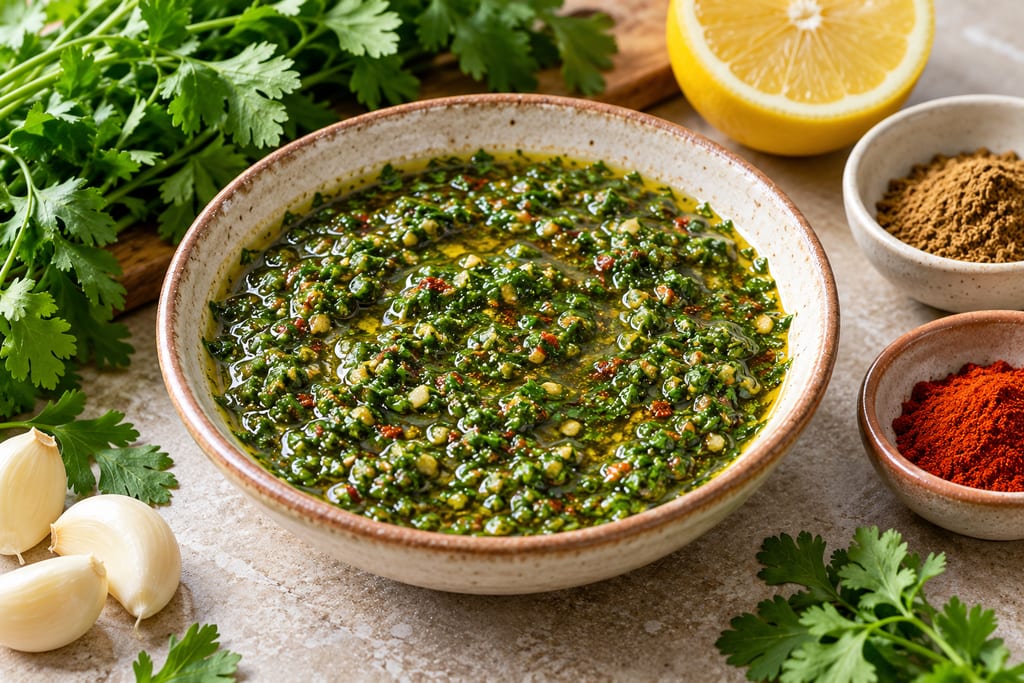
Fresh chermoula is a chopped-herb Moroccan-style sauce of coriander, parsley, garlic, lemon, olive oil and warm spices, made here as an explicitly untested development formula.
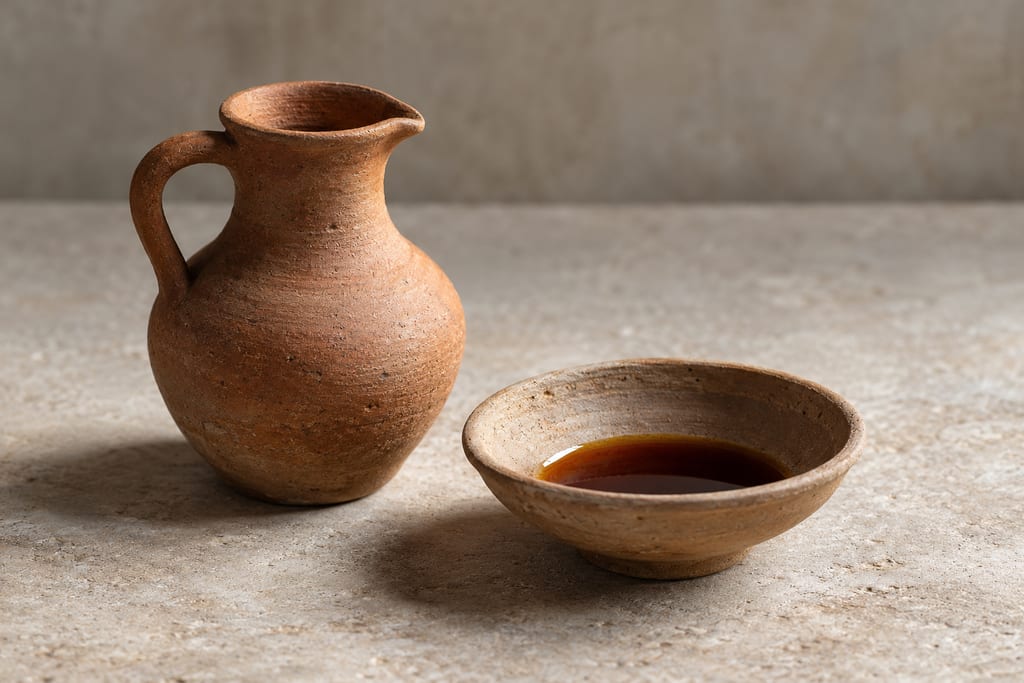
Garum, Greek garos and Latin liquamen, was the fish sauce of the ancient Mediterranean: fish and viscera salted and left in the sun, then drained off as a savoury liquid.
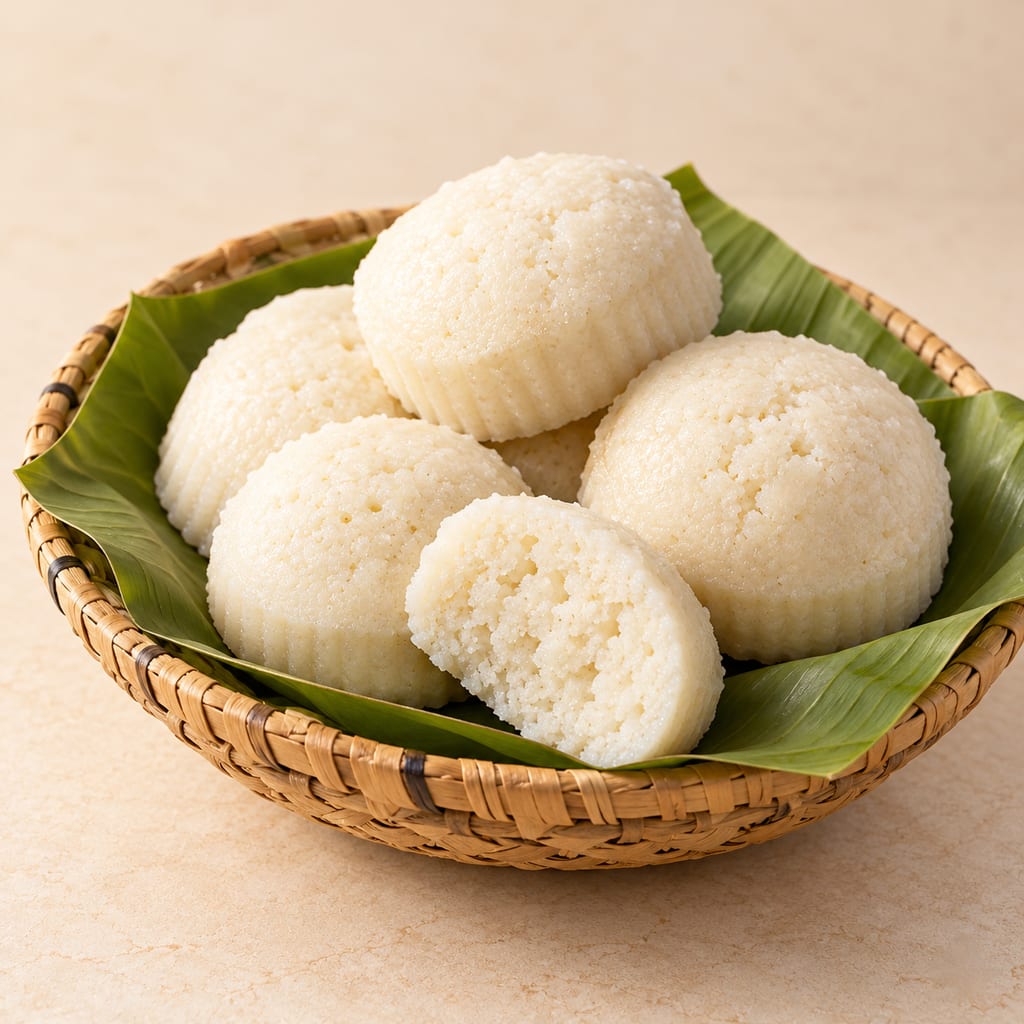
Soft, lightly tangy steamed cereal bread documented across Benin and Togo. This page gives one measured rice-flour research method; maize-based Ablo and mixed-grain versions remain distinct traditions.
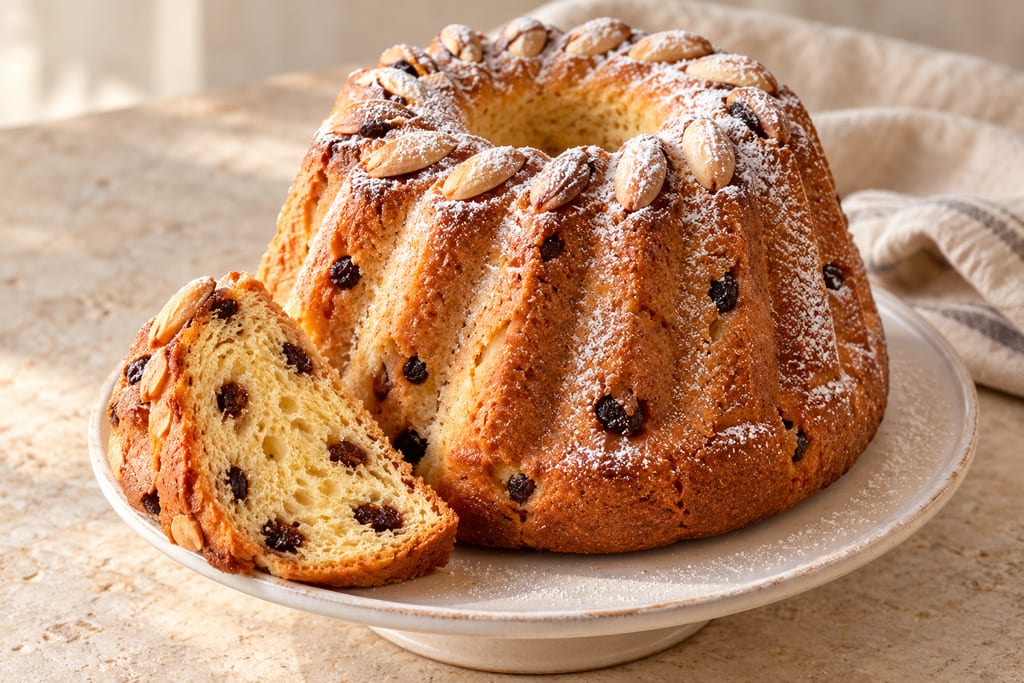
An enriched Alsatian yeast ring with raisins and almonds, kneaded with butter, proofed in a fluted mould and baked until browned.
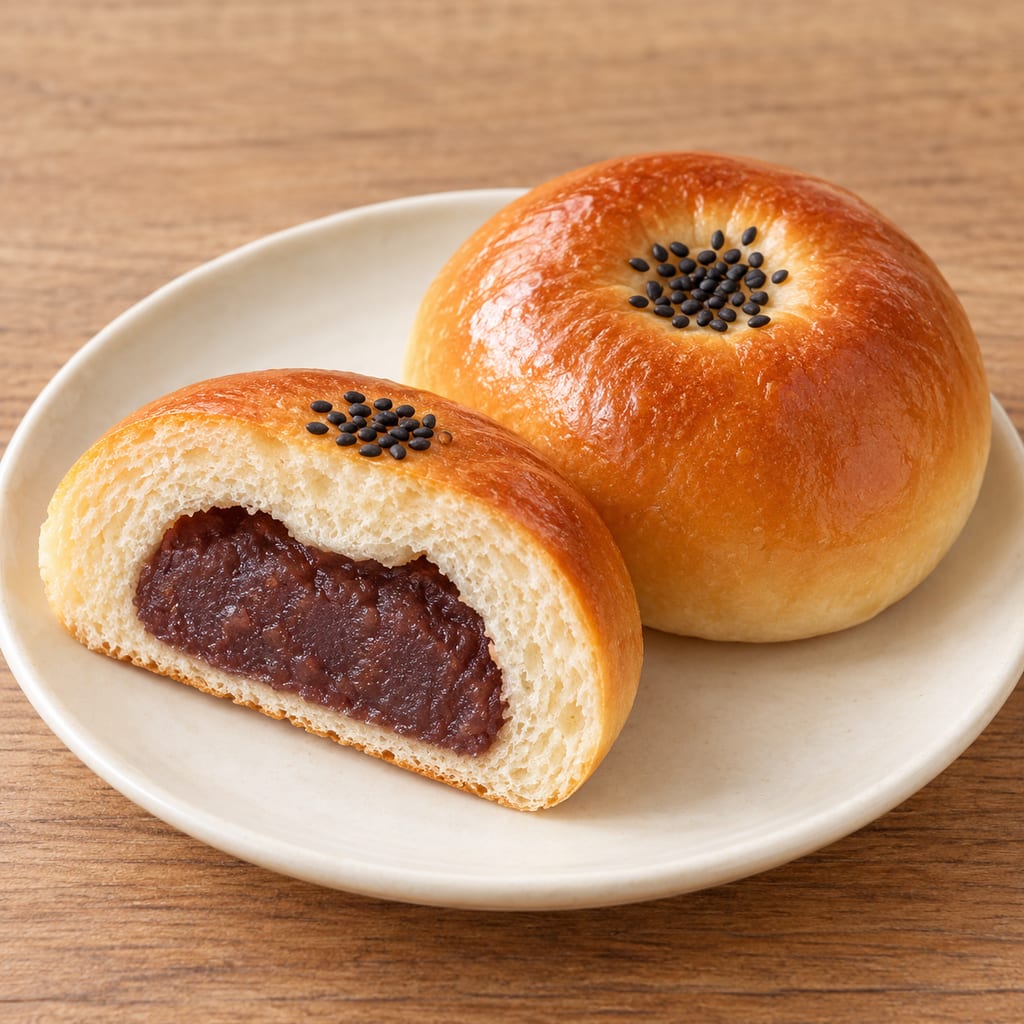
Anpan is a soft wheat bun filled with sweet red-bean paste and finished with egg wash and black sesame. This dough rises with commercial instant yeast.
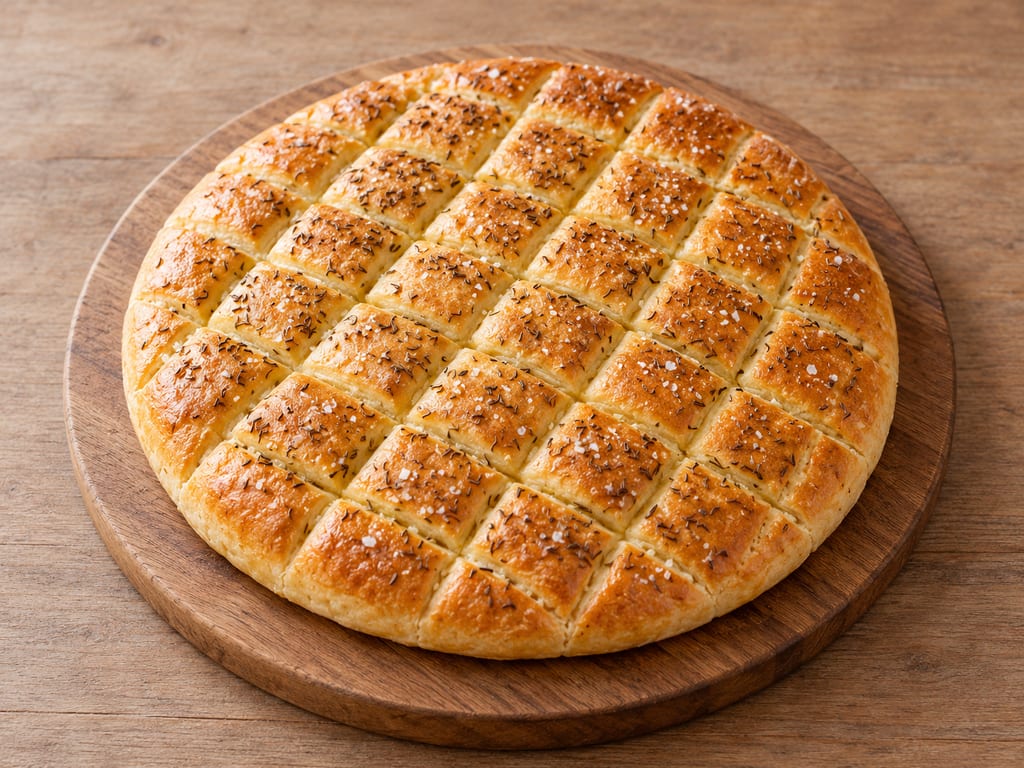
A round Slovenian flatbread scored in a grid and topped with caraway and coarse salt.
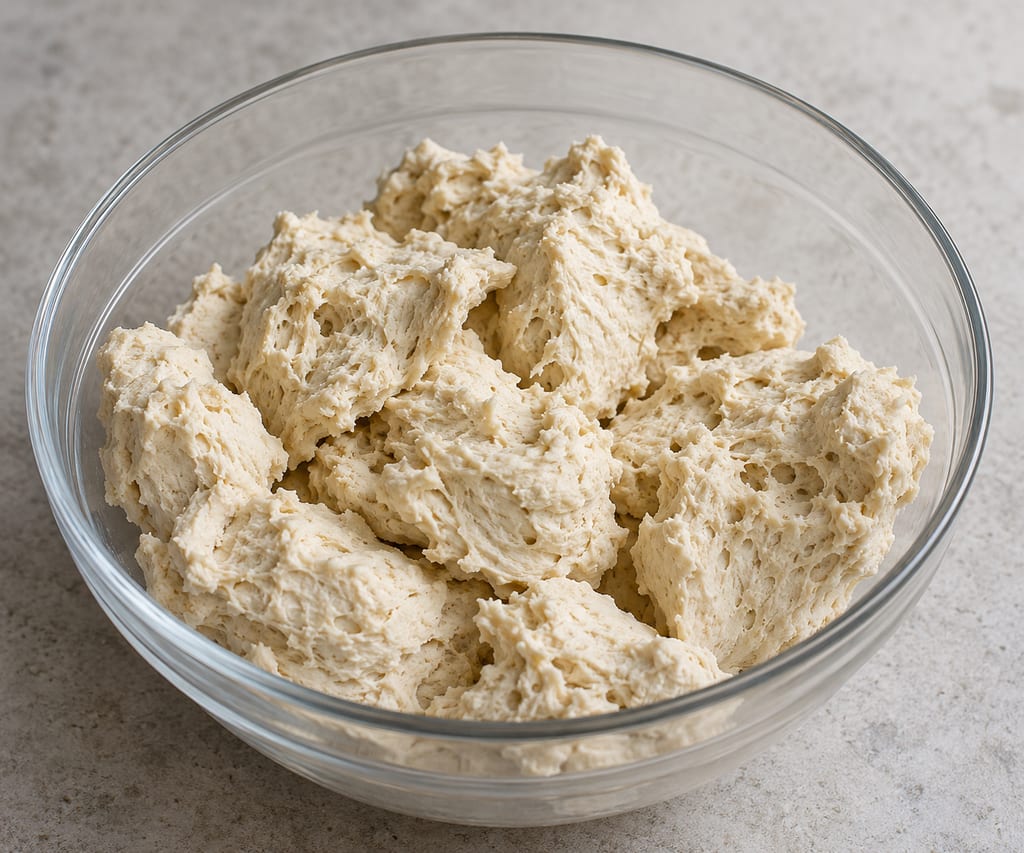
Biga is an Italian bread preferment of flour, water and a little yeast, usually a stiff unsalted mass of about 45 per cent water, fermented ahead and then mixed into the final dough.
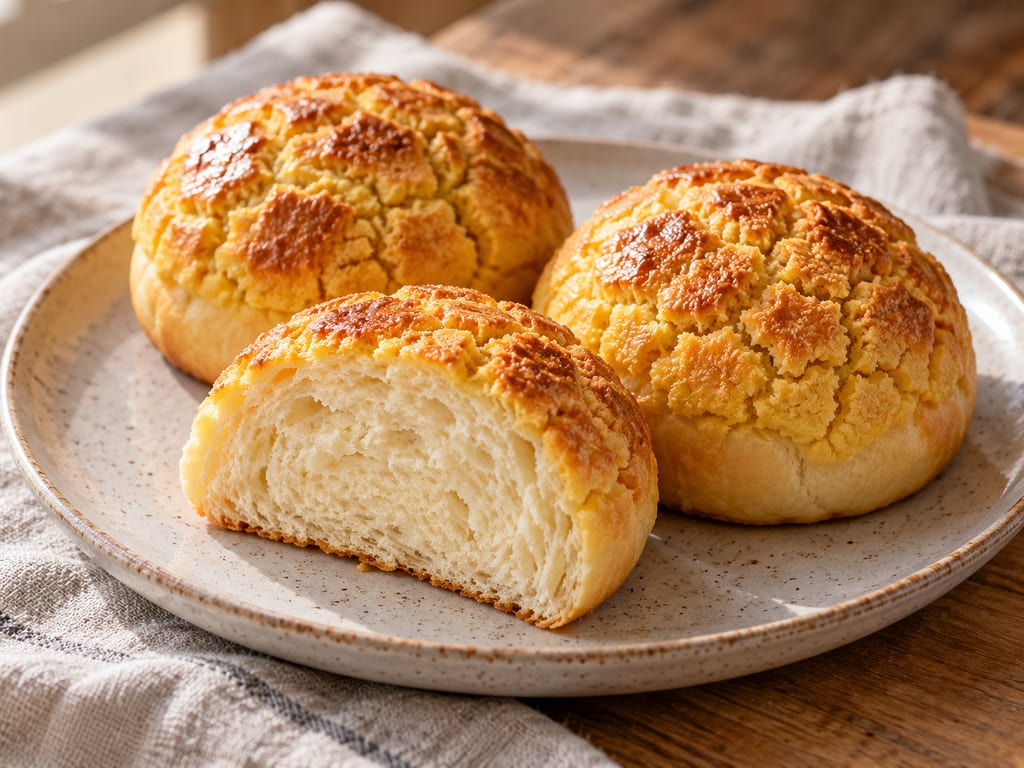
Hong Kong-style pineapple buns have soft yeast dough beneath a crisp, sweet pastry topping.
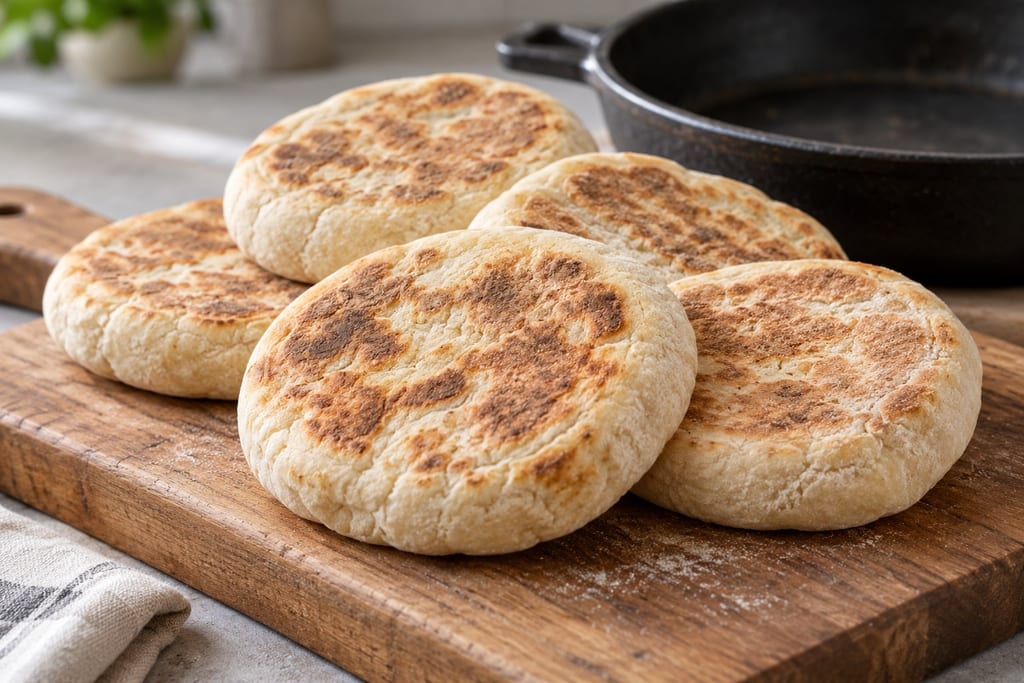
Sweet-potato wheat breads with fresh yeast, browned in a pan and finished in the oven. This is the bread component of Teleculinária's scrambled-egg dish.
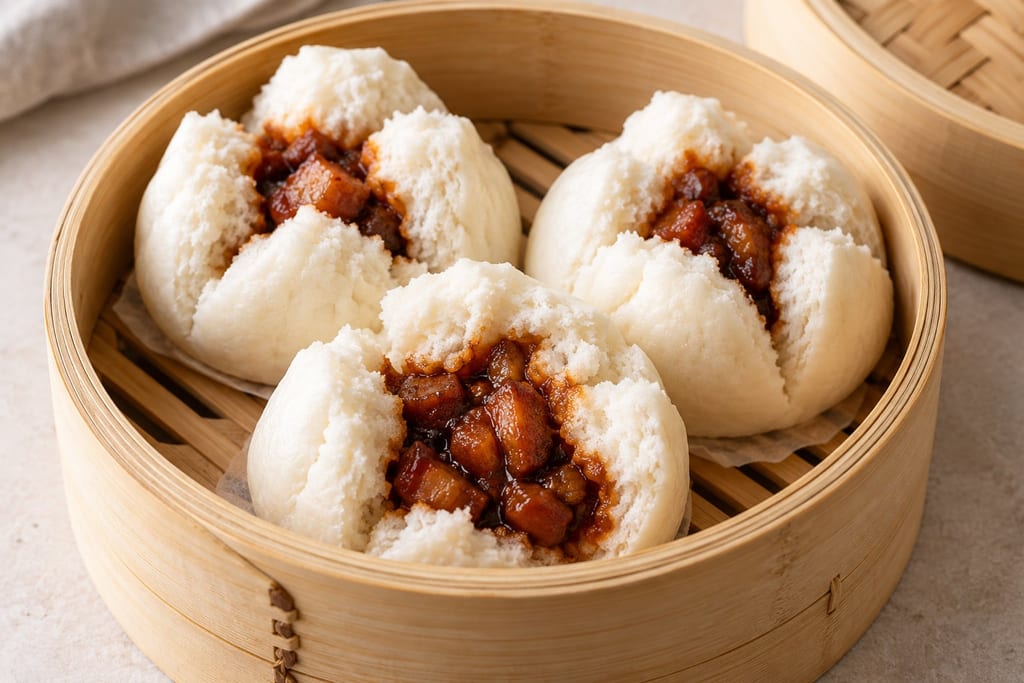
Fourteen fluffy steamed buns filled with cooked char siu and a thickened oyster-soy sauce.
No community contributions have been published for this entry yet.
Sign in to contribute. Published comments and photos are free to read.
Taste of MarocMethod · Ingredients · Cultural use · Variations · Handling
Krachel Recipe – Moroccan Sweet Rolls with Anise, Sesame and Orange Flower WaterKrachel is also called el gors and is a Moroccan sweet roll flavored with anise, sesame and orange flower water.
The source provides the three-rise method, quantities, shaping, egg wash and oven settings used in this recipe.
The author describes breakfast, tea time, snacks and Ramadan service, with optional anise, sesame placement and a documented shortening substitution.
Cited in: A Moroccan roll with a distinct perfume; How yeast makes this dough rise; Why the ingredients matter; The three rises and the oven; Different formulas and ways of serving; Reading the dough and handling the rolls; Sources and limits
Women's Weekly FoodVariation
Krachel (sweet Moroccan rolls)A distinct formula combines milk, butter, egg, anise, sesame and orange blossom water, then uses one main proof and a shorter post-shaping rest; it is treated as a different household method, not merged into the selected method.
Cited in: Different formulas and ways of serving; Sources and limits
Associated PressIngredient context · Geography
The scent of orange blossoms is bringing the world to a spring tradition in MoroccoThe report describes spring orange-blossom distillation in Morocco using copper pots, including a public festival in Marrakech, and notes culinary uses of the fragrance.
Cited in: Why the ingredients matter; Sources and limits
PaideumaCultural context
Cereal citizens: Crafting bread and belonging in urbanising MoroccoThe study describes bread as a staple and its cultural and economic significance in urbanising Morocco; it does not date krachel and is not used to claim an origin for it.
Cited in: A Moroccan roll with a distinct perfume; Sources and limits
Arab NewsVariation · Cultural use
Eid treat: Moroccan chef Nargisse Benkabbou’s chocolate chip krachelA Moroccan chef's Eid variation adds chocolate to krachel while retaining sesame, anise and orange blossom notes.
Cited in: Different formulas and ways of serving; Sources and limits
Annual Review of Food Science and TechnologyFermentation science
Genetic and Phenotypic Characteristics of Baker's Yeast: Relevance to BakingThe review explains that baking Saccharomyces cerevisiae transforms dough carbohydrates into carbon dioxide; this general baker's-yeast mechanism is not a strain identification of the recipe's commercial yeast.
Cited in: How yeast makes this dough rise; Sources and limits
U.S. Food and Drug AdministrationSafety
Handling Flour Safely: What You Need to KnowRaw flour and raw eggs may carry harmful bacteria; do not taste uncooked dough and wash hands, utensils and surfaces after handling them.
Cited in: Reading the dough and handling the rolls; Sources and limits
Taste of MarocImage reference
Krachel Recipe – Moroccan Sweet Rolls with Anise, Sesame and Orange Flower WaterSubject reference image showing finished krachel rolls.
Cited in: A Moroccan roll with a distinct perfume; How yeast makes this dough rise; Why the ingredients matter; The three rises and the oven; Different formulas and ways of serving; Reading the dough and handling the rolls; Sources and limits
SlurrpImage reference
How to make Krachel RecipeSubject reference image showing finished krachel rolls.
Chefkoch.deImage reference
Krachel – süße marokkanische BrötchenSubject reference image showing finished krachel rolls.
My Moorish PlateImage reference
Moroccan Krachel Recipe | Sweet Brioche With Orange Blossom WaterSubject reference image showing finished krachel rolls.
Le Sésame des SaveursImage reference
Krachel ou brioches marocainesSubject reference image showing finished krachel rolls.