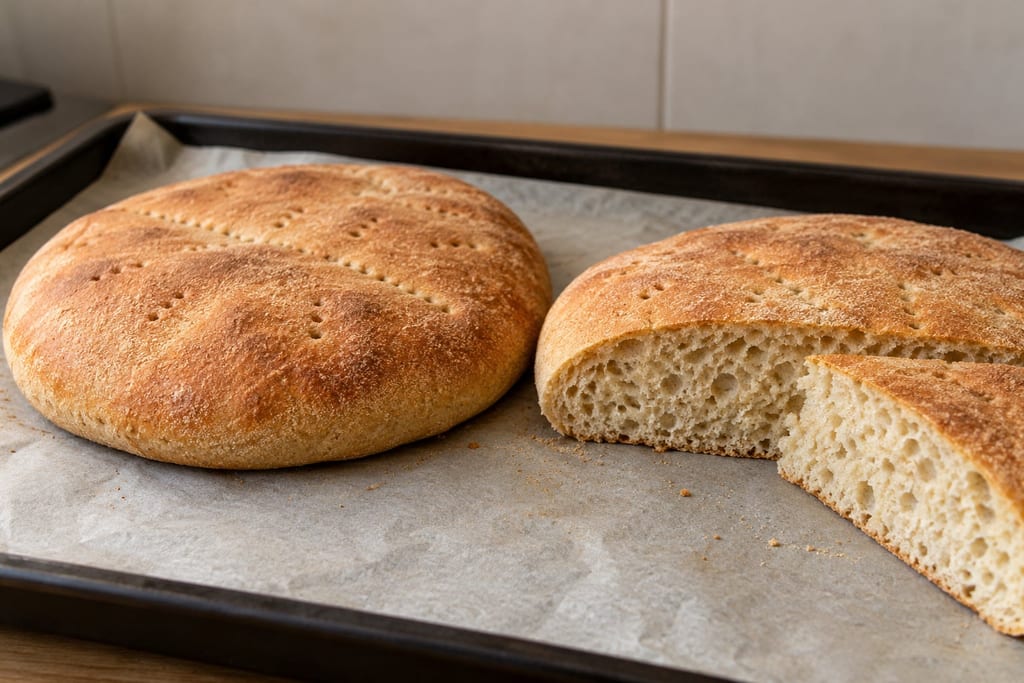
Khobz
A Moroccan round wheat bread with a firm crust and coarse interior; this home formula makes two 8-inch loaves for serving with meals.
 FermenteaWhere food goes to change
mkhamer · toghrift
A Moroccan yeast-raised semolina pocket bread cooked on a dry pan or griddle; this measured batch makes about twenty 4-inch rounds.
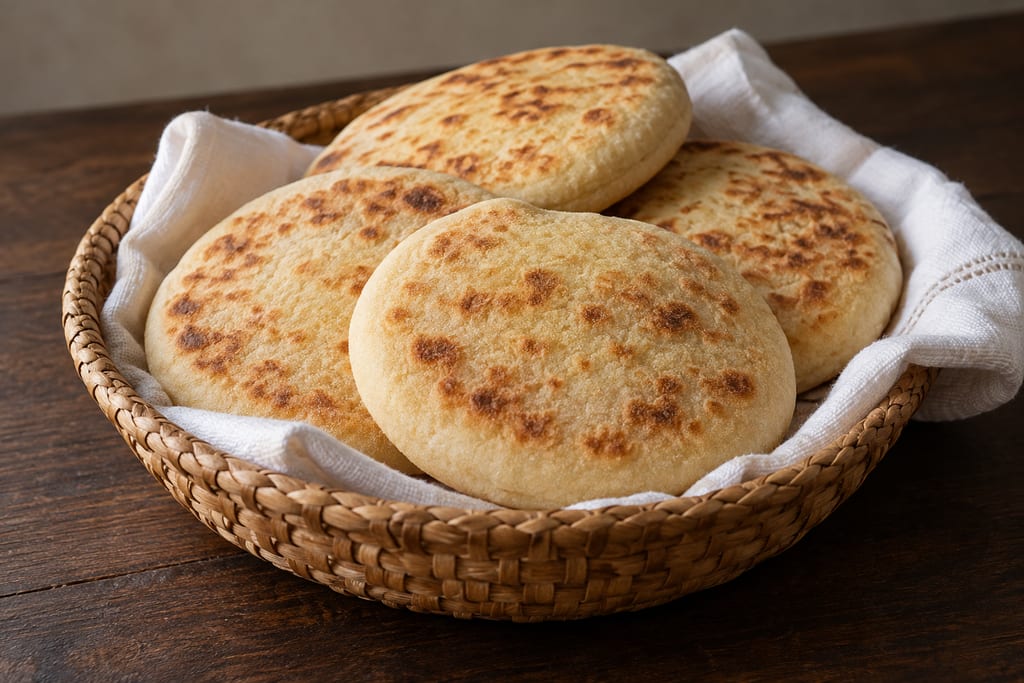
Batbout is a soft, chewy Moroccan bread that cooks on a pan or griddle. Christine Benlafquih describes it as a semolina-rich pocket bread, eaten with fillings or alongside a meal; butter, honey, jam and other spreads are also common accompaniments in the page's examples. The home formula below yields about twenty 4-inch rounds.
The writer notes regional and family variation in the names and method. Some families use `mkhamer` for batbout; others use it for an oiled-pan or laminated bread, or a thicker loaf without a pocket. The page also mentions `matlou‘`, a name that appears on a separate Algerian archive candidate. That overlap alone does not establish that the records describe the same preparation, so they are kept separate here.
The measured formula blends white flour, durum flour or fine semolina, and whole-wheat flour. Yeast is first mixed with a teaspoon of the listed sugar and a little warm water, then left until foamy. The flours, remaining sugar and salt are combined separately before oil, water and yeast mixture are added. Knead to a smooth, supple dough that is not sticky; the recipe allows small flour or water adjustments as needed.
Divide the dough into plum-sized balls and let them rest, covered, for 10–15 minutes. Roll each into a thin round about 1/8 inch thick, then cover the rounds while they rise for about an hour or a little longer, until light and puffy. Keeping the dough covered and moving it gently helps prevent a dry surface and tears that could interfere with puffing.
Preheat a large pan or griddle over medium heat for several minutes, until very hot. Transfer the dough carefully in batches. Turn each round once it has set, about 10–15 seconds, before bubbles appear; then continue turning gently several times until it puffs and browns on both sides. The page gives no numeric surface temperature. It advises lowering the heat if the rounds brown too quickly.
Puffing is not guaranteed. Thin, even rounds and gentle handling support pocket formation, while cracks can let air escape or deflate the dough. If a thicker round does not puff, the author says it may be opened gently for filling. Move cooked breads to a rack or towel-lined basket. Freeze them once completely cool; no room-temperature storage duration is supplied.
Flour is raw and may carry harmful bacteria. Do not taste uncooked dough; keep flour and dough away from ready-to-eat food, then wash hands and clean tools and surfaces that touched it. The pan or griddle is hot, and the recipe specifically cautions that escaping steam can burn when cracks open during turning or transfer.
The inspected recipe gives one complete 20-round home method and identifies it as Moroccan. It does not date batbout's first attestation, define one national formula for every similarly named bread, or establish a numeric griddle temperature. The measured batch is preserved as written rather than scaled.
Christine Benlafquih describes batbout as a Moroccan semolina-rich stovetop pocket bread and notes that names, pan treatment, and thickness vary by region and family. The page mentions matlou‘ as a name used by some families, but does not establish that it is identical to the separately catalogued Algerian Matlou‘ entry. No first attestation or single origin is dated.
Yield 20 4-inch batbout · Scaling: source batch only
Uncooked flour may carry harmful bacteria.
Hazard sourceThe recipe warns that burns can occur when hot steam escapes through cracks as the bread is turned or moved.
Hazard sourceCook the bread before eating; keep raw flour and dough away from ready-to-eat food, then wash hands and clean utensils and work surfaces.
Control sourceTurn and transfer the bread carefully, keeping hands clear of hot steam escaping from cracks.
Control sourceDo not taste raw dough. Use care around the hot pan or griddle and steam escaping from cracked bread.
Christine Benlafquih identifies this semolina-rich stovetop pocket bread as Moroccan batbout. Names and methods vary by region and family; this row does not claim one birthplace for related breads.
A Moroccan round wheat bread with a firm crust and coarse interior; this home formula makes two 8-inch loaves for serving with meals.
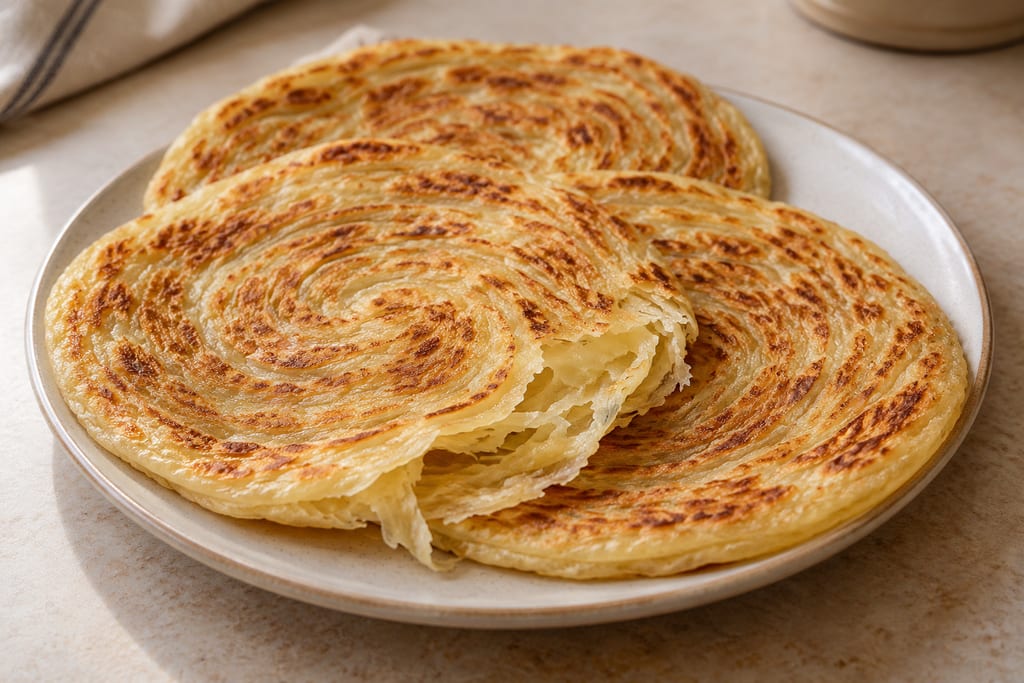
A Moroccan round laminated griddle bread; thin sheets of a lightly yeasted semolina dough are buttered, rolled into layered coils, sliced and flattened.
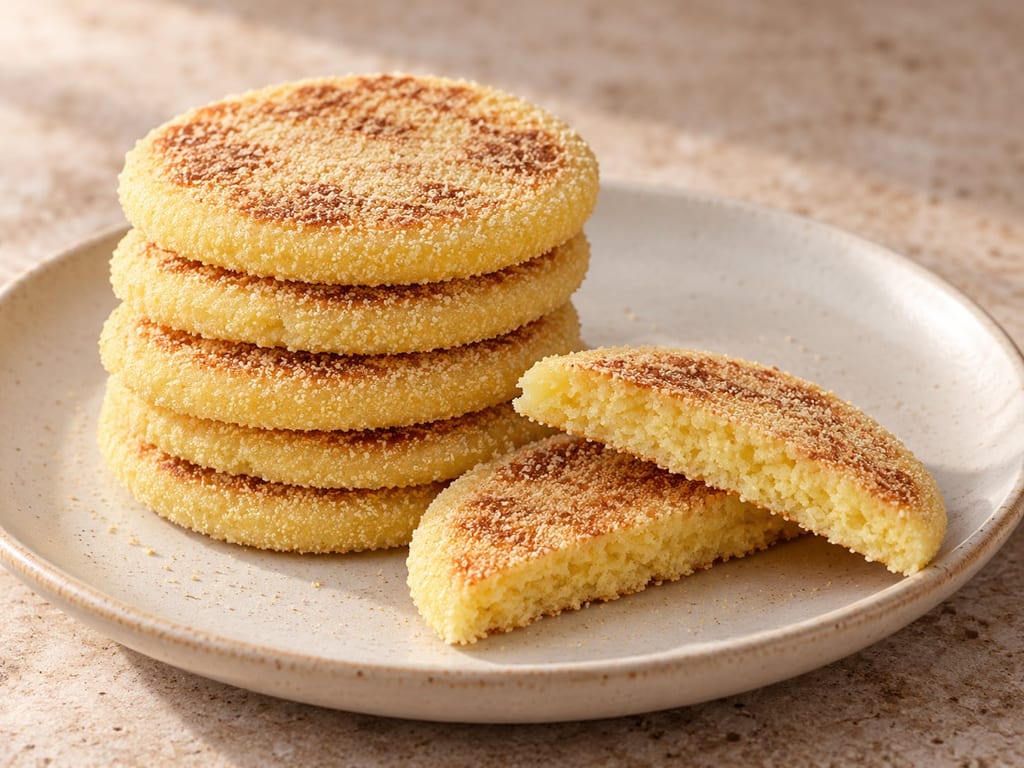
Harcha is a Moroccan semolina griddle bread with olive oil and butter rubbed into the grain, then shaped into thin rounds and cooked until golden. This family formula uses both dry yeast and baking powder.
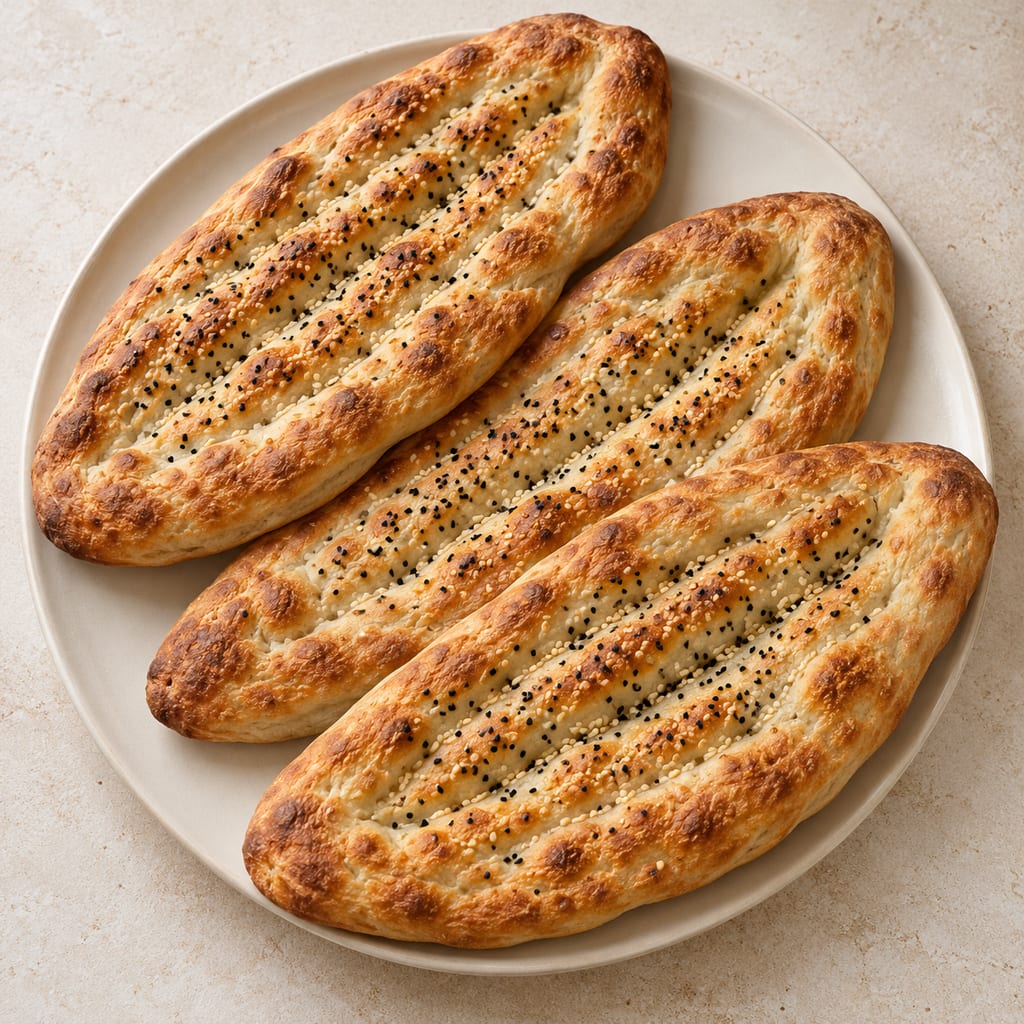
A long oval Afghan wheat bread, leavened with yeast, grooved along its length and baked until crisp outside and chewy within.
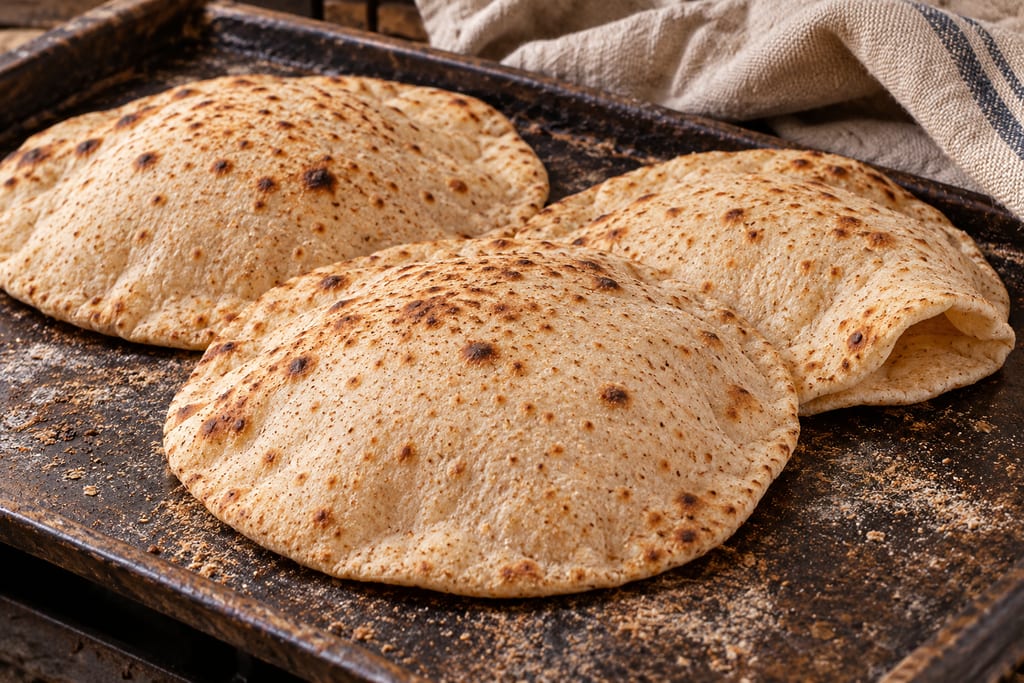
This home adaptation of Egyptian aish baladi uses a refrigerated yeast biga, whole-wheat dough, bran dusting and a very hot baking surface to make 16 pocketed rounds.
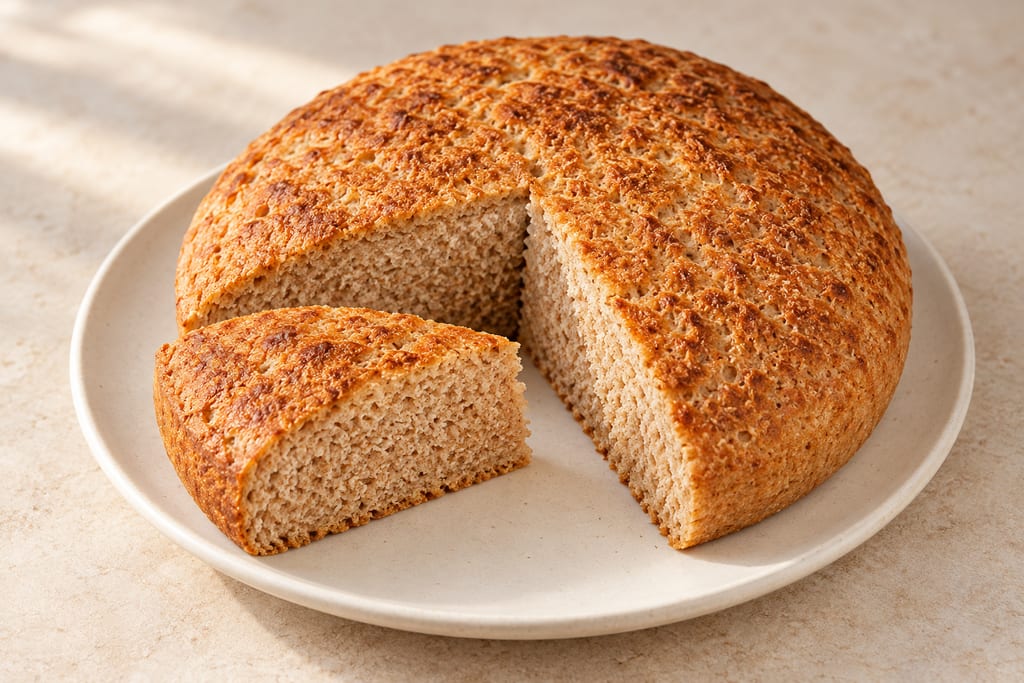
This oven-baked Amdo balep uses yeast, whole-wheat and white flour, a long covered rise and a two-sided bake in a heavy oven-safe pot.
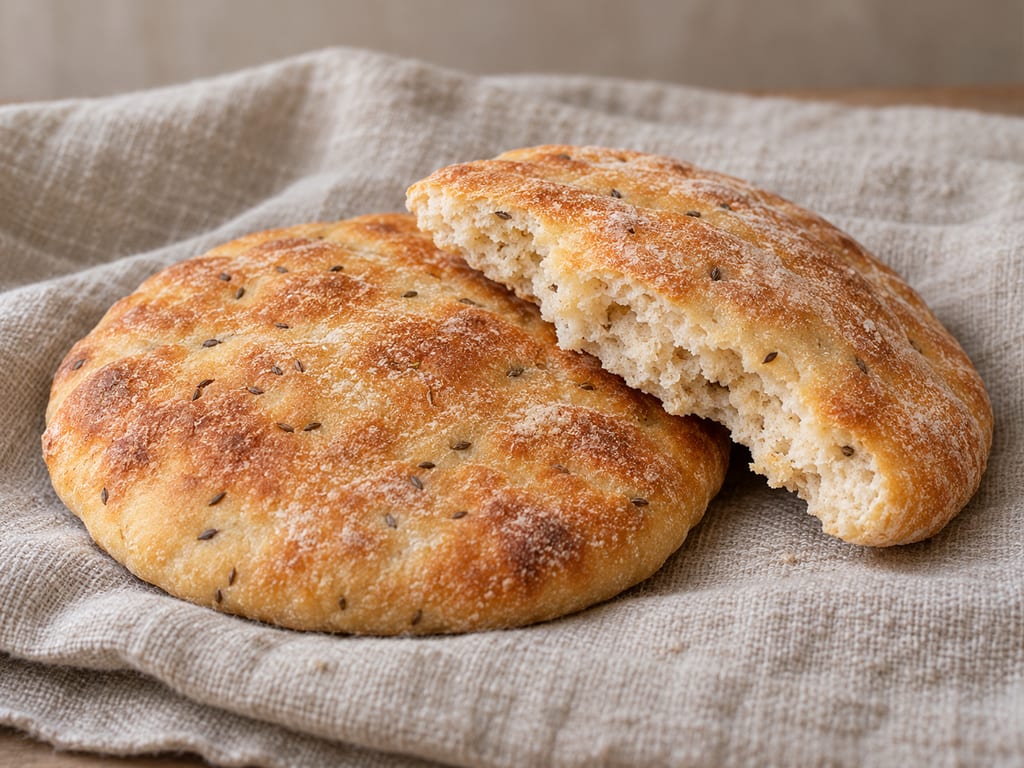
A measured, yeast-raised Ayacucho chapla home method shared by Thermomix Peru presenter Roxanna Salaverry. It makes thin, anise-scented rounds baked at 240°C; the historic qunchu-leavened form is documented separately.
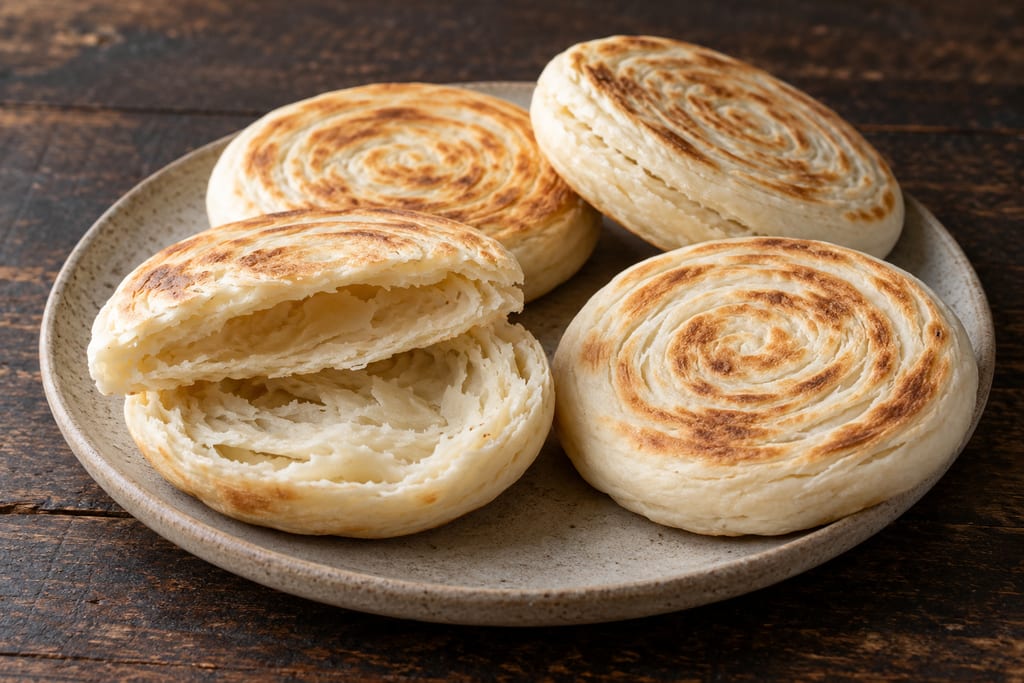
This Shaanxi-associated yeast flatbread uses a simple water dough, coiled shaping and a skillet bake. It is the bread used in roujiamo, not the filled meat dish.
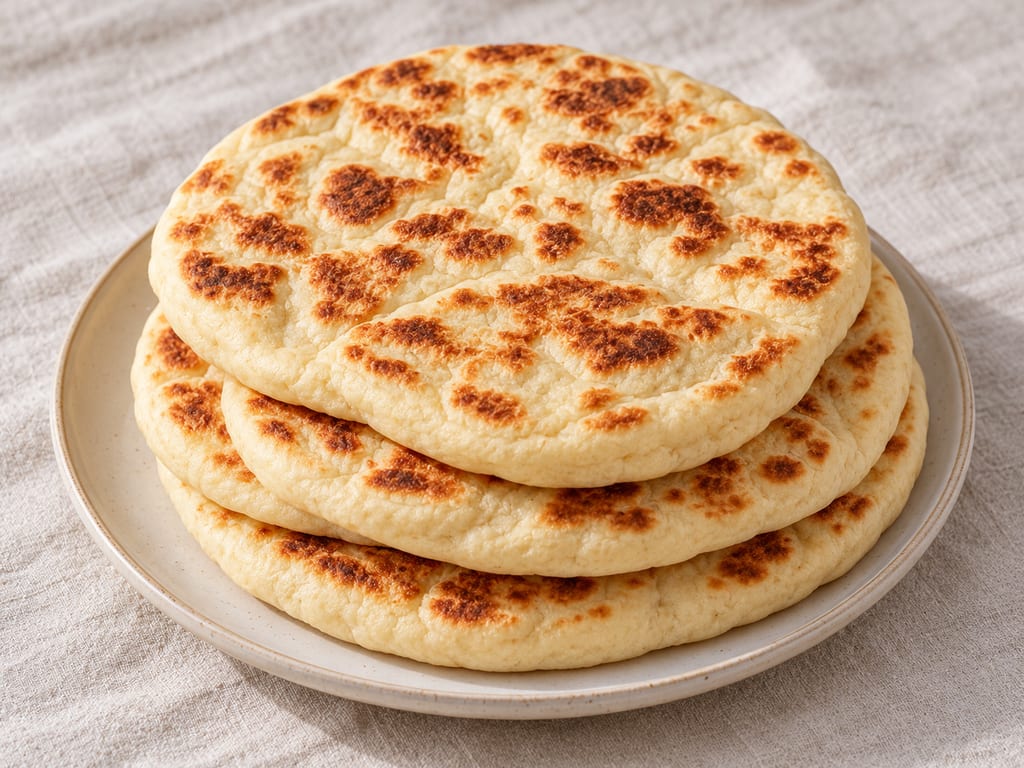
This Turkish bazlama uses yeast, plain yogurt and olive oil for a soft dough cooked in a skillet. Shape it into twelve small or six larger rounds, flip as bubbles appear, and wrap the breads to keep them soft.
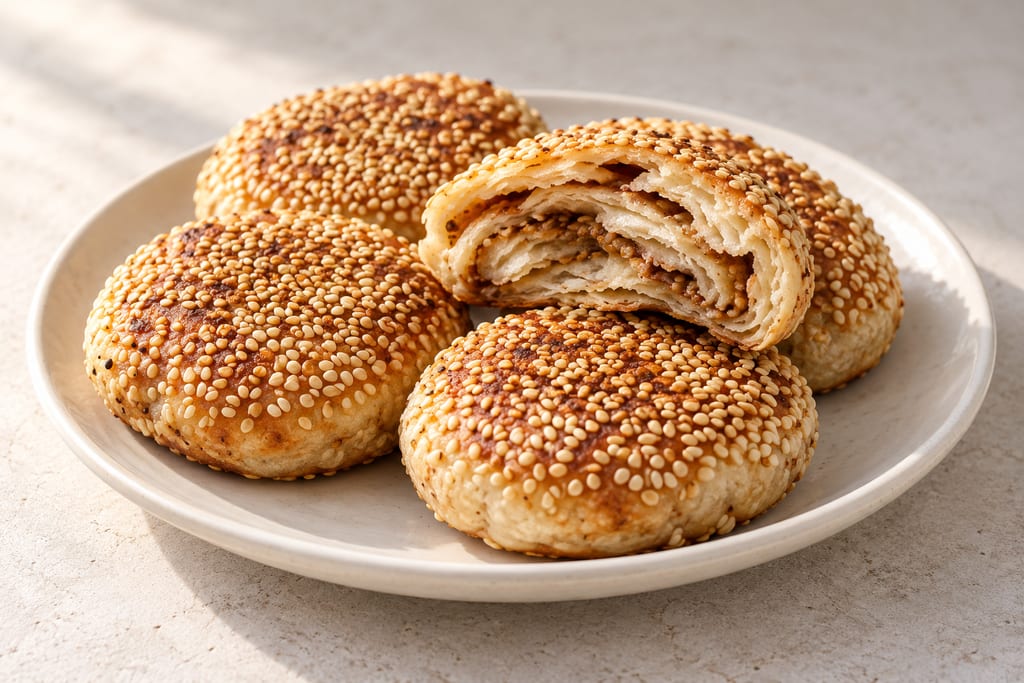
A Beijing-style yeast dough is layered with seasoned sesame paste, sealed into small buns, briefly pan-fried, seeded, and baked.
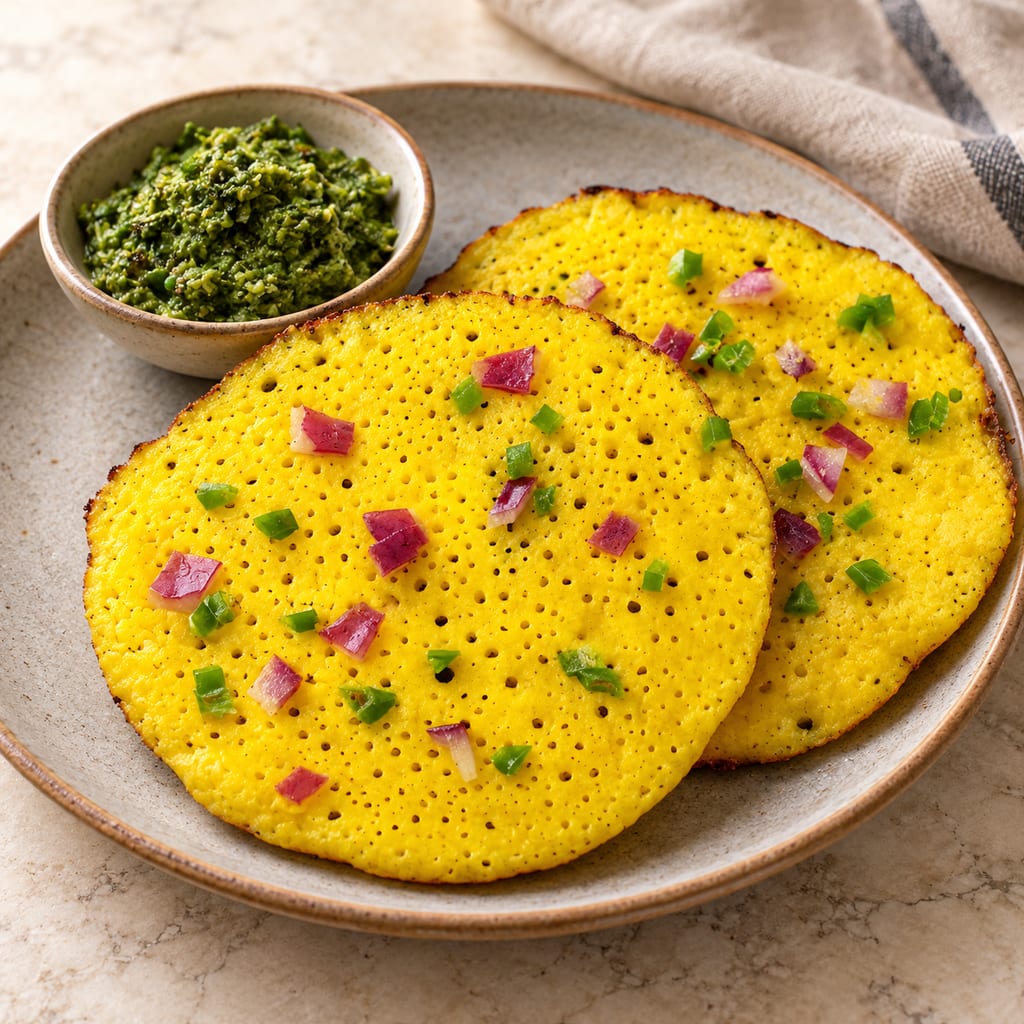
Spongy rice-and-coconut pancakes associated with Goa, cooked on one side from a batter that a multicooker's yogurt programme lets rise overnight.
No community contributions have been published for this entry yet.
Sign in to contribute. Published comments and photos are free to read.
Taste of MarocInspiration · Method · Geography
Batbout - Moroccan Pita Bread RecipeMeasured formula and yield of 20 four-inch rounds; dough mixing, kneading, rest and proof, pan/griddle method and visual cues; naming variation, Moroccan cuisine, use and freezer note; risk from steam escaping through cracks.
Cited in: A Moroccan stovetop pocket bread; Dough and shaping; Fast griddle cooking; Food handling and evidence limits
U.S. Food and Drug AdministrationSafety
Handling Flour Safely: What You Need to KnowFlour is raw and may carry harmful bacteria; do not taste raw flour or dough; cook and clean hands, utensils and surfaces after handling.
Cited in: Food handling and evidence limits