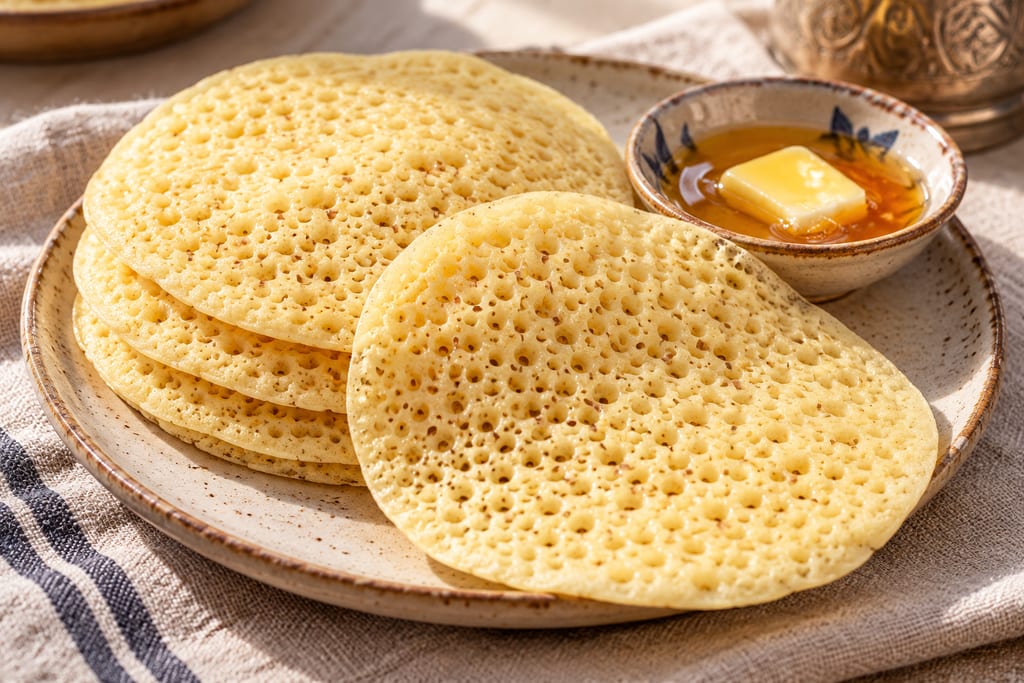
Baghrir
Moroccan semolina pancakes made from a thin yeast batter, rested until foamy and cooked on one side until the surface sets with a honeycomb of holes. This source-specific batch makes sixteen 5-inch pancakes.
 FermenteaWhere food goes to change
Substrates
Semolina is a granular wheat milling product; in many markets it means durum, while some standards also use the name for other wheat. In sourdough English muffins, it is an optional surface coating, not the main flour.
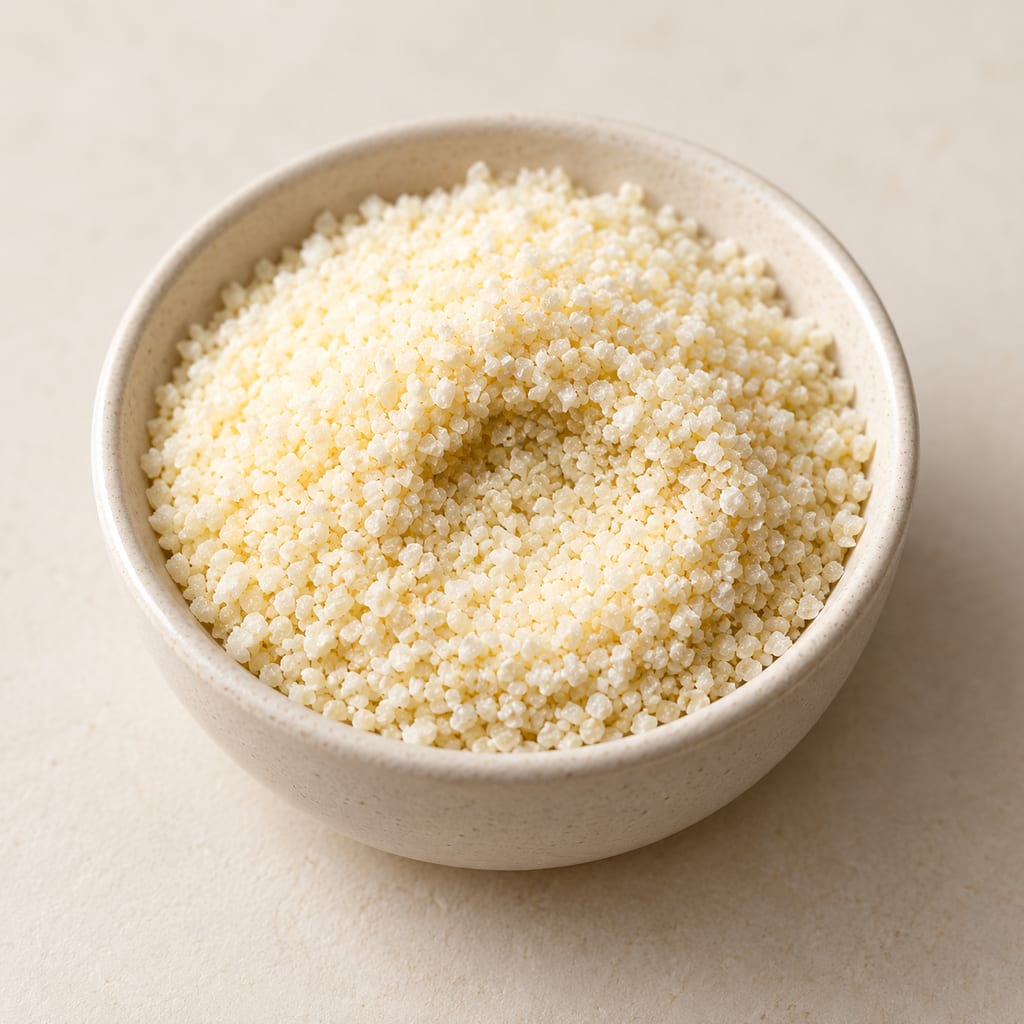
Semolina is wheat reduced to visible, sand-like particles rather than the fine powder most people picture when they hear “flour.” It looks pale cream to yellow, feels pleasantly granular between the fingers, and has a mild wheat aroma. Yet the word does not identify one single grain or one exact particle size everywhere. In pasta and many Mediterranean contexts, “semolina” commonly means a coarse milling product from durum wheat. The Codex standard is explicitly for durum wheat semolina and durum wheat flour, and defines the former as milled durum with bran and germ essentially removed; it separately describes whole durum semolina, where bran and some germ remain. U.S. federal identity rules likewise define semolina as ground and bolted durum wheat, with sieve limits.
Other food systems use the name more broadly. India’s Food Safety and Standards regulations name “Semolina (Suji or Rawa)” as a product of clean wheat and set standards for it, while a separate section defines “Durum Wheat Semolina” from *Triticum durum*. In everyday Indian cooking, suji/sooji and rava/ rawa appear in foods such as upma, halwa and laddoo. The practical lesson is to read the grain and grind on the package: the unqualified word “semolina” can mean different wheat products across markets. A muffin recipe developed with a branded American semolina flour, for example, cannot be assumed to describe every product sold as suji or rava.
The durum wheat behind much pasta semolina is *Triticum turgidum* subsp. *durum* (Desf.) Husn.; older and regulatory references often use *Triticum durum* Desf. Kew’s Plants of the World Online accepts the subspecies name and places it in the grass family, Poaceae. Durum is a tetraploid wheat, carrying A and B genome sets, and is closely related to emmer. Common bread wheat, *T. aestivum*, is a different hexaploid crop with an additional D genome. Semolina is a product of the kernel’s milled endosperm, not a separate cereal species.
Durum’s history begins with the much longer history of wheat. Wild emmer, *Triticum turgidum* subsp. *dicoccoides*, grew in Southwest Asia and was gathered before people selected domesticated forms. A 2019 genome study describes domesticated emmer as deriving from wild emmer in the Fertile Crescent around 10,000 years ago; it identifies emmer as the direct ancestor of durum wheat. The change from wild stands to a dependable crop was gradual, involving traits such as a non-shattering ear that kept ripe grain on the plant rather than scattering it. That is wheat’s domestication story, not a documented date for semolina itself.
Durum is the free-threshing, hard-kernel wheat that became associated with pasta and other foods across the Mediterranean and neighboring regions. Evidence for durum comes several millennia after the early domestication of emmer, and it became a prominent crop later still. Milled grain, meal and doughs have long histories, but the surviving records do not identify a single inventor or first batch of semolina. The grain moved through agriculture, household milling and trade; the product’s familiar modern identity was strengthened by mills that could clean, break, sort and grind hard durum efficiently.
The crop is strongly tied to Mediterranean farming, but its cultivation is not confined to Italy or North Africa. Modern reviews describe durum production across the Mediterranean and elsewhere; Canadian durum is grown chiefly on the western Prairies, especially Alberta and Saskatchewan. Grain quality reflects both the variety and its growing conditions: kernel size, hardness, protein and the proportion of vitreous, glassy endosperm matter to millers. The hard grain is a useful raw material for coarse endosperm products, though it requires milling equipment and settings suited to durum rather than simply treating every wheat kernel the same.
A wheat kernel has a protective outer bran, a small germ, and a large starchy endosperm. Milling separates these parts to different degrees. Standard durum semolina removes essentially all bran and germ, then comminutes the endosperm to the target fineness. Whole durum semolina is different: the mill retains bran and part of the germ. This is more precise than saying that semolina is simply “coarsely ground wheat,” because the amount of outer grain retained changes color, flavor, texture, protein and fiber, and because semolina particle size varies by product and standard.
In a roller mill, cleaned grain is conditioned and passed through a sequence of rolls and sieves. The first breaks open the hard kernel; sifters separate the coarse endosperm pieces from bran and finer particles; later passages reduce or reclassify material. A mill aims for clean, bright semolina with a controlled range of particle sizes and limited bran specks and starch damage. A finer grind is closer to flour and hydrates differently from a coarse meal. The word “semolina” alone does not guarantee the same granularity: the Codex definition allows a suitable fineness, the U.S. legal standard defines sieve passage, and Indian standards set their own sieve-based limits for both generic and durum products. Those are market-specific standards, not a universal culinary scale.
The grain’s golden cast comes from durum’s pigmented endosperm and is especially visible in refined semolina. The food science literature describes durum’s hard, vitreous kernel, high yellow color, starch and storage proteins as properties relevant to milling and pasta quality. But color is not a reliable stand-alone quality test: cultivar, whole-grain inclusion, oxidation, milling and storage can all change appearance. For recipe use, the label, grain type and intended grind matter more than judging by color alone.
Semolina’s main structural materials are starch and wheat proteins. Starch supplies most of the kernel’s reserve carbohydrate; when heated with water, its granules swell and gelatinize. Wheat proteins form gluten when hydrated and worked. In dough, gluten can create an elastic network that holds gas and gives structure, while starch contributes body and later sets as the dough cooks. Durum’s protein composition and very hard endosperm distinguish its milling and dough behavior from common bread wheat; “more protein” does not automatically mean “better bread.” In a comparative in-vitro study, particle size affected measured starch degradation and protein bioaccessibility across wheat endosperm products. The authors’ digestion experiment was not a test of muffin quality, and its result should not be turned into a health claim about eating semolina.
One of semolina’s most revealing uses is couscous. In domestic preparation, dry semolina is moistened and rubbed or rolled until its particles gather into small grains. Sieving sorts the grains; steam cooks and consolidates them. Commercial production can add controlled drying so the grains keep until they are rehydrated or steamed for the table. Water makes the particles cling, heat gelatinizes some starch and firms their protein-and-starch structure, and drying removes moisture. These are physical and thermal changes, not fermentation.
Couscous also has a long North African history, though its beginning is hard to date. In medieval Maghrebi Arabic, *taʿām* could mean food or cereal dishes broadly; an early occurrence cannot therefore establish couscous with certainty. By the Almohad and early Marinid periods, collections from the Maghreb and al-Andalus gave named *kuskusū* recipes, showing cooks treating it as an established dish. Later references trace it across Mediterranean contacts. The medieval record identifies couscous as a recognized cereal food, but does not show that every early version used the modern durum semolina sold today.
In Italy, durum semolina became closely associated with dry pasta. Historical references to macaroni and pasta production show a transition from household craft toward mechanized factories in Naples around 1800, followed in the nineteenth century by hydraulic presses, mechanical kneaders and improved artificial drying. These shifts changed the scale and regularity of production. Semolina’s coarse, dry particles hydrate into a stiff dough; pressure shapes that dough through dies, and controlled drying stabilizes the pasta. Italian pasta history is not the whole history of semolina, but it explains why durum semolina became such a recognizable product in modern shops.
Semolina also appears in porridges, puddings, baked goods, biscuits, breads and regional sweets. In South Asia, suji or rava is used in savory upma and in sweet preparations such as halwa and laddoo; regional names and grind choices vary. For couscous and pasta, semolina may be the central grain. For a pudding, it is cooked into a soft spoonable mass. In a bread, it may be blended into the dough or used as a surface grain. Those are related ways to use milled wheat, but not the same formula or texture.
In the sourdough English muffins, all-purpose wheat flour builds the dough while semolina flour or yellow cornmeal coats the shaped rounds. The work surface is lightly floured as the dough is cut or shaped; afterward the rounds rest on grain-dusted baking sheets and receive another sprinkling on top. The dry coating helps the soft rounds lift from the sheet after proofing and gives their exterior a faintly gritty feel. Some grains brown against the griddle; others remain visible on the upper crust. It is a small use of semolina, but one the fingers and tongue can notice when the muffin is split and toasted.
The choice of coating changes the surface rather than the interior dough. Semolina contributes wheat color and flavor, while cornmeal brings maize's different grain character. Fine semolina may settle close to the crust; coarser granules remain easier to feel. The recipe calls for coating as needed, so the cook dusts the sheet and rounds rather than weighing semolina into the main mix. A bag of semolina selected for couscous or pasta may have a different granularity from the branded semolina flour shown with these muffins. Its texture on the bread will vary accordingly, even while the larger dough recipe stays the same.
A modern Asif recipe titled Baghrir: Moroccan Pancakes gives 220 g of Italian durum semolina flour alongside all-purpose flour, yeast and baking powder. Its authors explain that their cookbook combines family recipes, foods learned during visits and new creations inspired by Moroccan ingredients and techniques. This published formula shows one way to use durum semolina in a fermented batter; it is not a definitive or exclusive traditional formula.
Visit Norway’s Kling recipe locates the sweet lefse in Buskerud and Hallingdal. Its 20-piece formula lists 200 ml (150 g) semolina simmered with milk and butter for five to six minutes before wheat flour is added. The English page does not identify the semolina’s wheat species, whether it is whole or refined, or its grind. It documents a regional recipe’s use of semolina, but does not prove that the ingredient in that batch is durum. Both examples differ from semolina used as the main raw material for couscous or pasta and from the optional exterior coating on English muffins.
Read for the wheat source and form: durum semolina, whole durum semolina, semolina or suji/rava, fine or coarse. For pasta or couscous, a package specifically identifying durum is the clearest choice when that is what the method expects. For the English muffin coating, the recipe’s selected semolina flour can be used as directed; a reader buying elsewhere should check whether the product is fine or granular and whether it is durum. If a gluten-free diet is required, wheat semolina is unsuitable: FSSAI’s standards explicitly identify gluten in wheat semolina. People with wheat allergy or coeliac disease need a safe alternative selected under their own dietary guidance; cross-contact and product-label details matter.
Buy a dry product in intact packaging, with no musty or stale smell, visible pests or damp clumping. Food standards call for semolina to be free from abnormal odours and living insects; these are quality checks, not a home test that proves safety. Keep the package closed in a cool, dry pantry, protected from moisture and insects, and use the supplier’s date and storage guidance. Whole-grain semolina retains more outer material than refined durum semolina, so do not assume the two forms have identical storage behavior or shelf life. No universal shelf-life number applies to every grind, package and storage condition.
Semolina is still raw milled wheat when it leaves the bag. Cook it in the dish for which it is intended; the CDC’s raw-flour guidance applies to this grain product too. The muffins normally finish on the griddle; if their centers remain wet despite browned sides, King Arthur gives an oven finish as a fallback. A sealed bag waiting for pasta night, a spoonful cooked into pudding, and a dusting on an English muffin all begin with milled wheat, yet each calls for a different grind and a different handling of water and heat.
A contemporary English muffin recipe uses semolina as optional coating on trays and shaped dough, not as the principal flour.
Treccani records macaroni in Italy by the fourteenth century and pasta industrialization in Naples around 1800; the source discusses semolina pasta but does not date the first use of durum semolina as a distinct milling product.
A review describes durum wheat semolina as the traditional raw material for couscous in North Africa and the Maghreb; medieval couscous attestations do not establish the first use of the modern milled product.
One Asif Baghrir formula uses Italian durum semolina flour. The authors describe a mix of family and visit-learned recipes and new creations inspired by Moroccan ingredients and methods; the row does not claim an exclusive origin or universal tradition.
Visit Norway lists semolina in its regional Kling lefse recipe; the English ingredient list does not identify the wheat species or grind, so durum semolina specifically is unconfirmed.
Indian standards distinguish generic wheat semolina (suji/rava) from durum wheat semolina. This row records the broader market use of the name and does not imply that every Indian suji or rava is made from durum.
Moroccan semolina pancakes made from a thin yeast batter, rested until foamy and cooked on one side until the surface sets with a honeycomb of holes. This source-specific batch makes sixteen 5-inch pancakes.
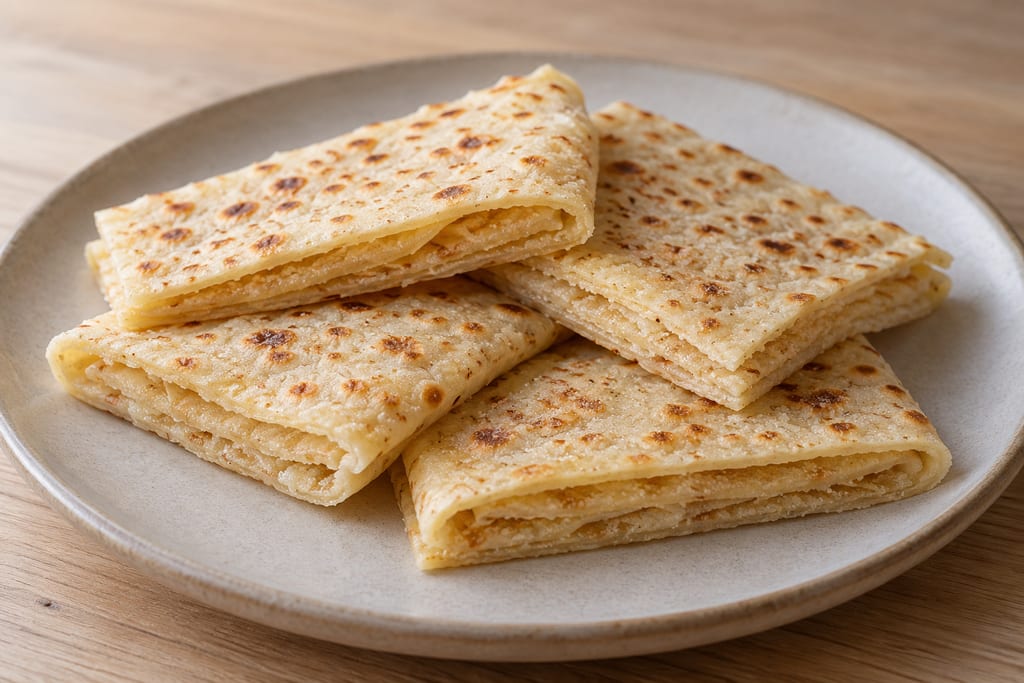
Soft Norwegian wheat and semolina flatbreads, cooked thin on a griddle and finished with butter and sugar.
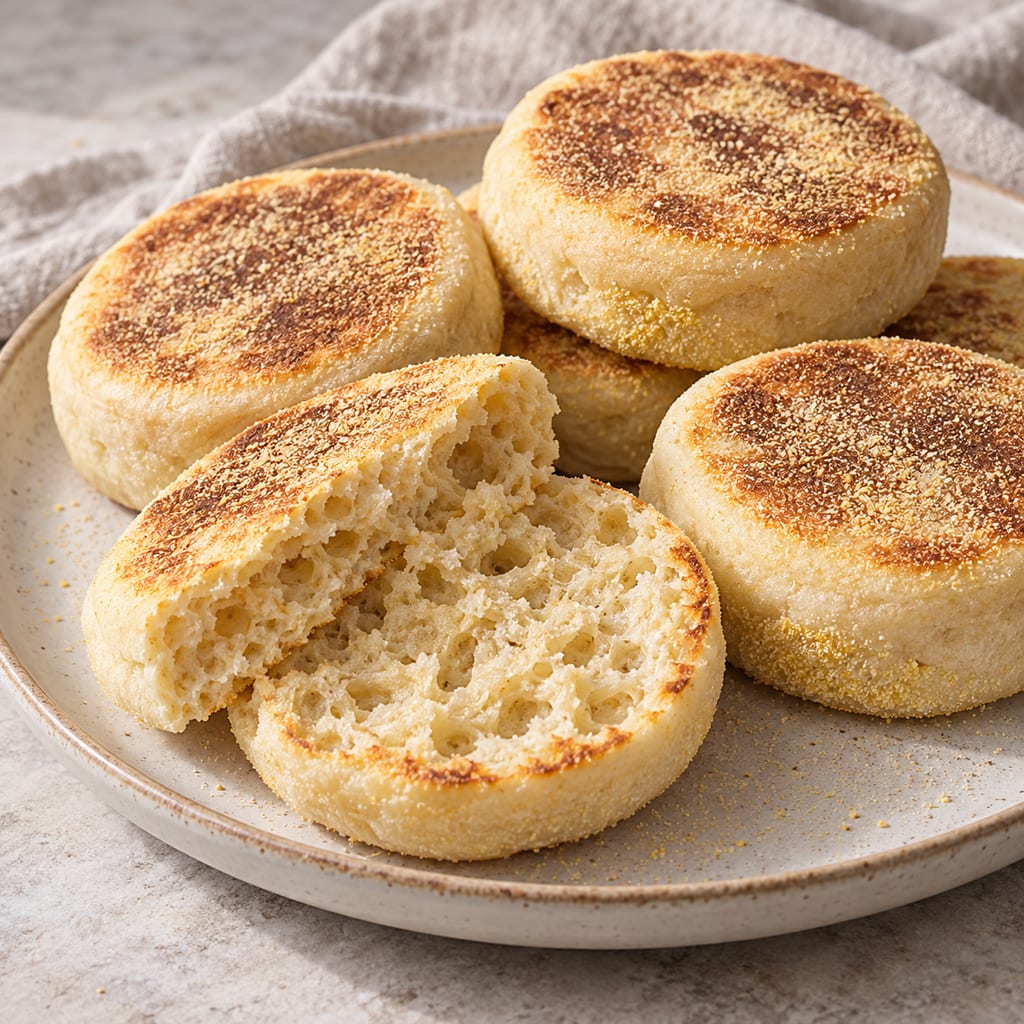
A soft English muffin dough combines sourdough starter with baker’s yeast, then rises, is cut into rounds and cooks on a griddle. The starter adds tang; the added yeast helps it rise.

A refined common-wheat flour blended for a broad range of baking; its protein and behavior vary with wheat, milling and market.

Toasted almonds are whole sweet almond kernels dry-roasted until golden to brown. Heat replaces their marzipan note with a roasted, nutty one; they thicken and flavour romesco.
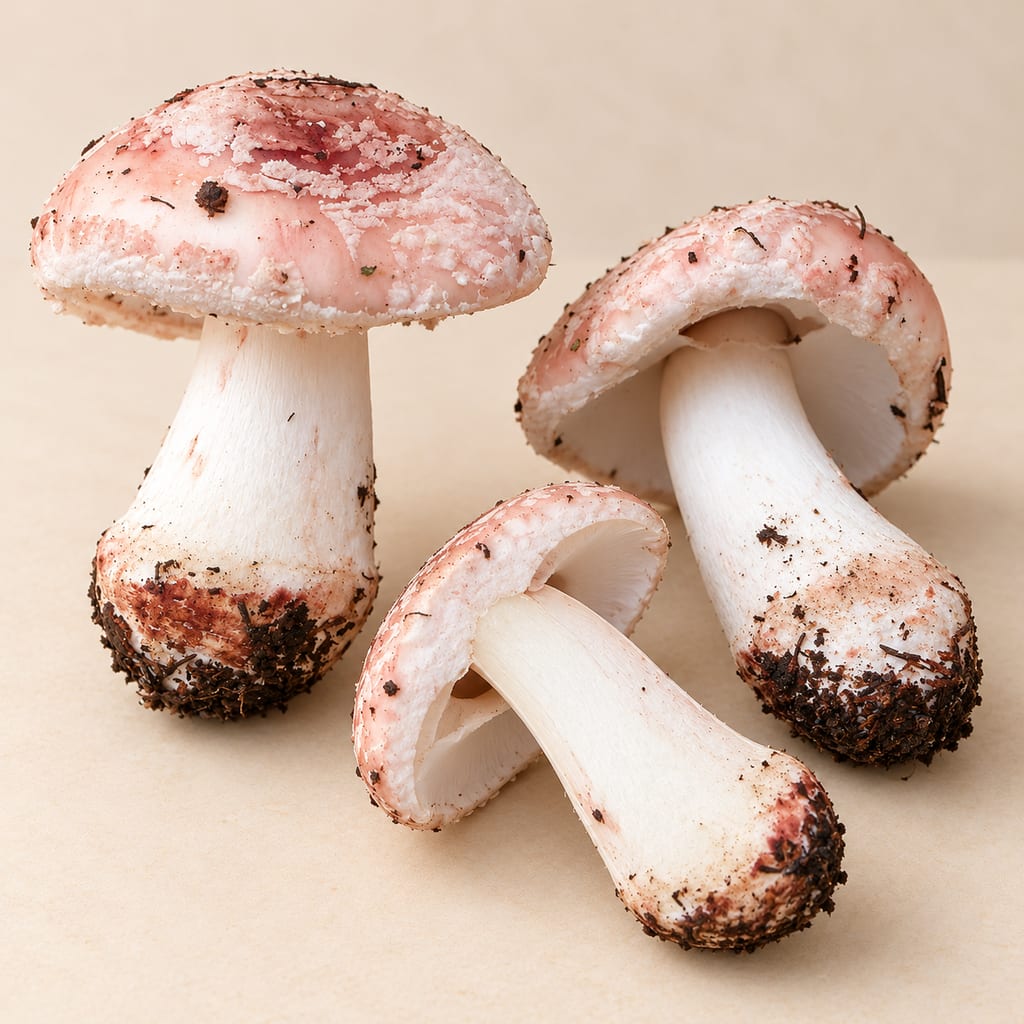
Amanita novinupta is a western North American blusher, a forest mushroom recorded as food in Mexico, and one that must be cooked because its raw flesh is toxic.
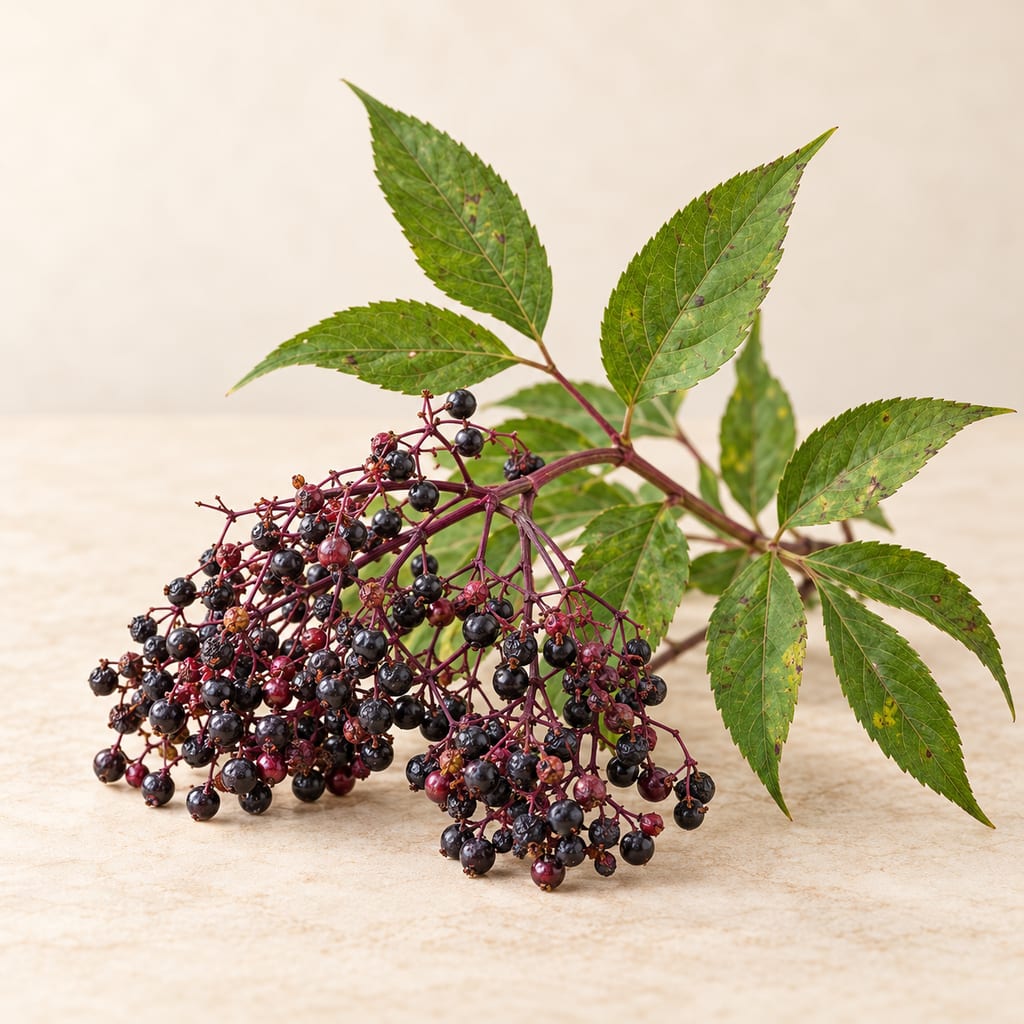
Sambucus canadensis is the accepted name used here for American elderberry. Missouri production guidance and named-cultivar studies give useful regional growing information, while food and analytical sources leave process questions open.
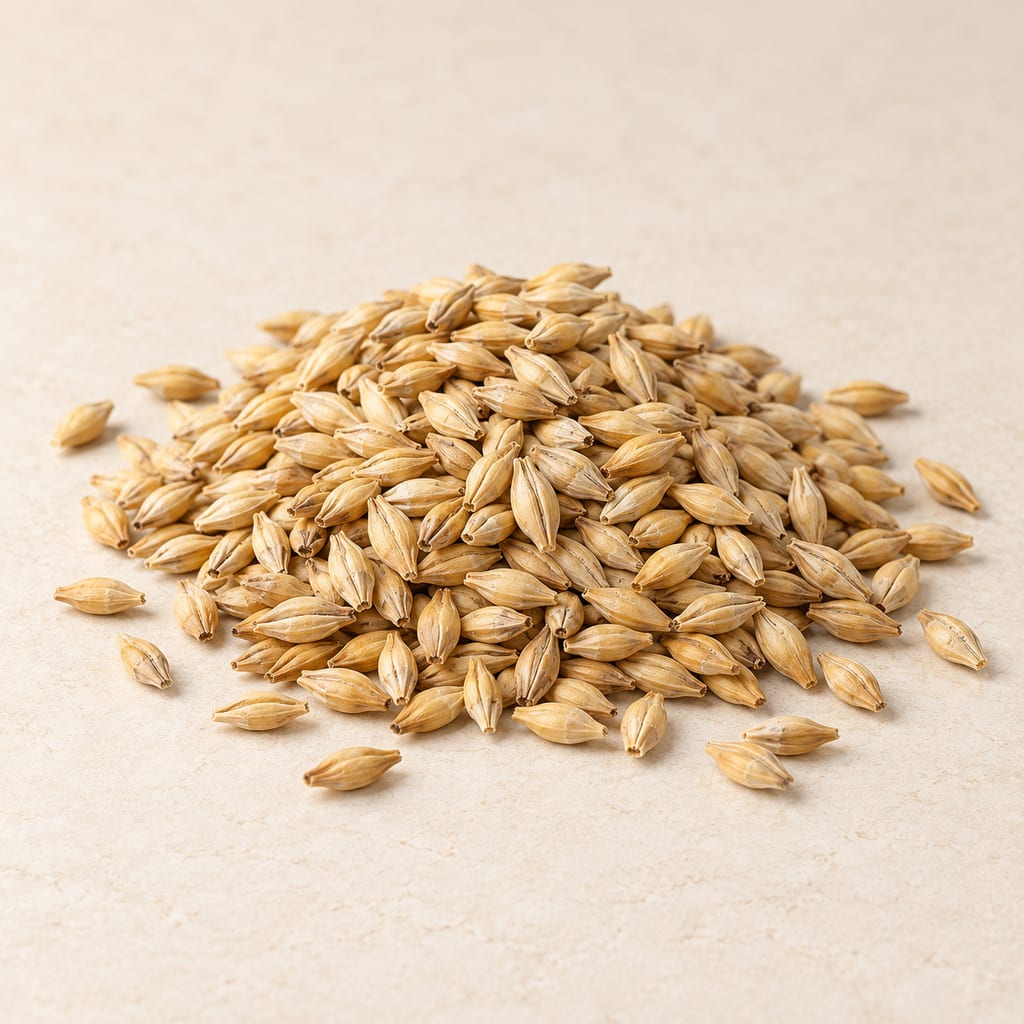
A lightly kilned brewing base made from two-row barley. It supplies starch and enzymes for the mash, with the maltster’s product and lot analysis defining its brewing properties.

Ripe avocado flesh is the soft, buttery, fat-rich pulp of Persea americana, eaten raw. It is low in acid, so it is a fresh ingredient that needs care in chilled dishes.
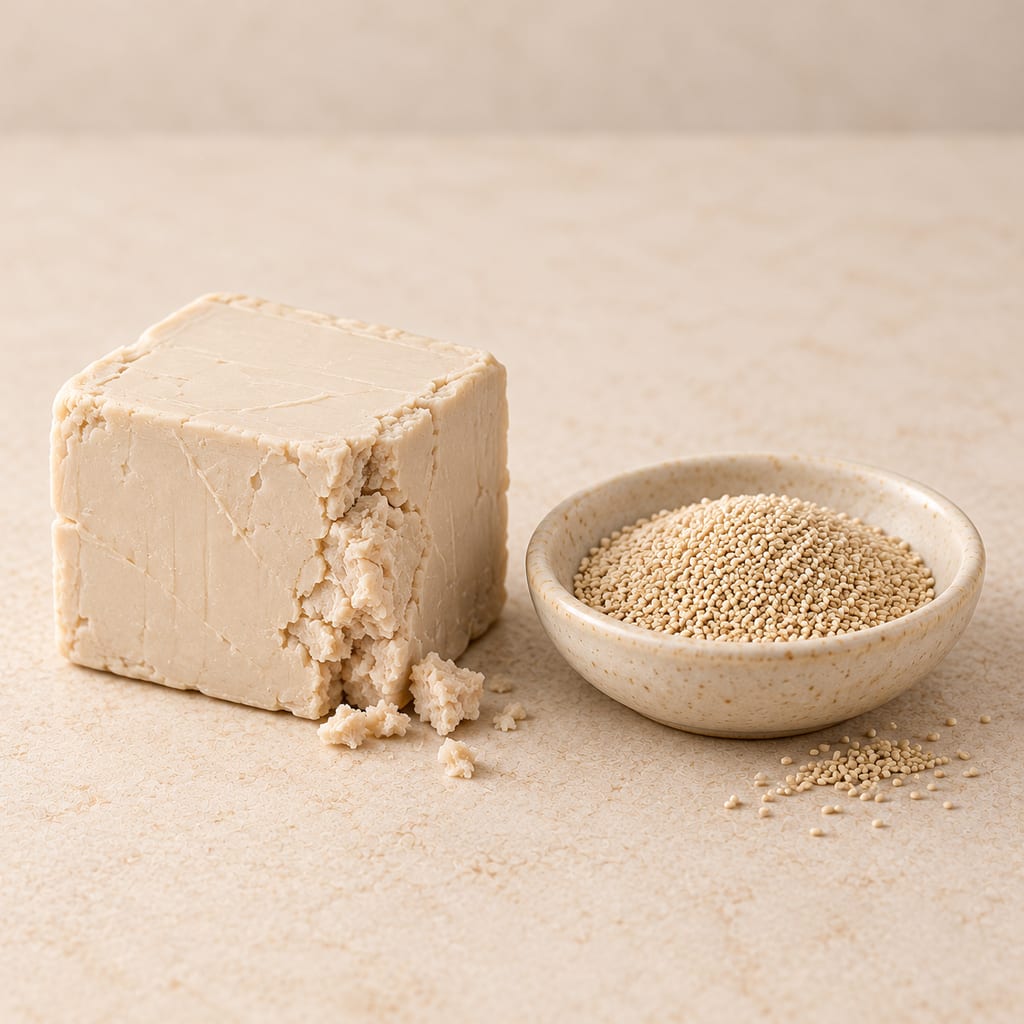
Baker's yeast is a cultivated living leavener, commonly sold fresh or dried. In dough, selected Saccharomyces cerevisiae cells make gas that can raise bread.
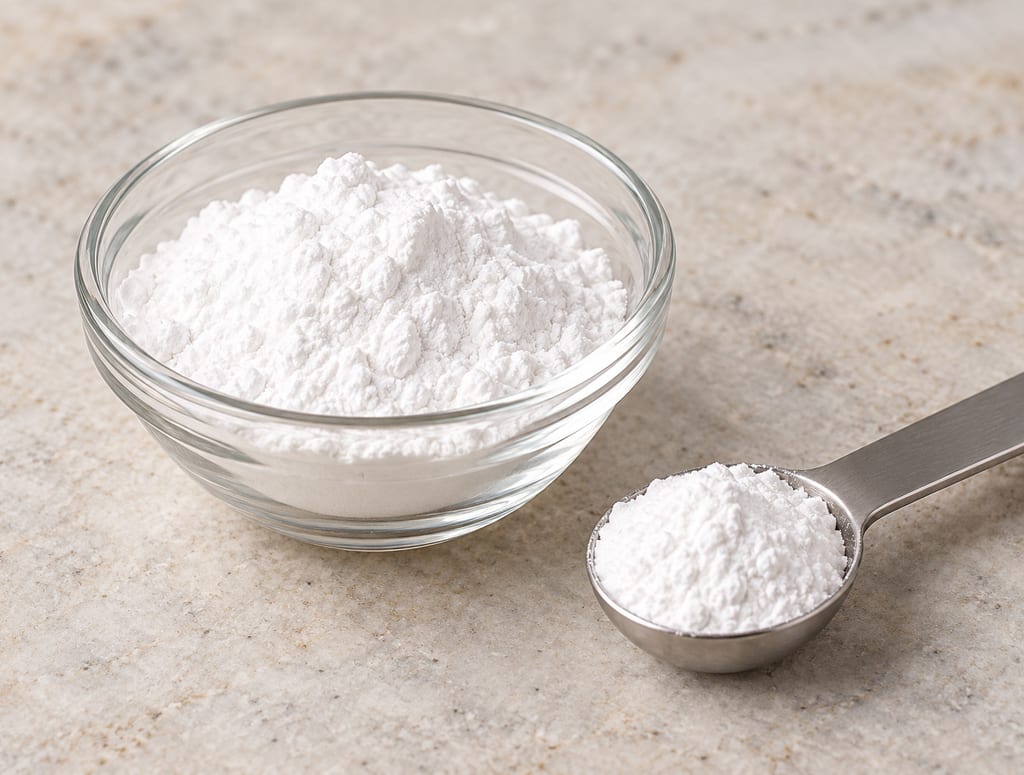
Baking powder is a dry chemical leavener that combines bicarbonate with acid-reacting ingredients and a carrier. Moisture and heat release carbon dioxide for quick breads, batters and griddle cakes.
No community contributions have been published for this entry yet.
Sign in to contribute. Published comments and photos are free to read.
Codex Alimentarius Commission / FAO and WHOEditorial
Standard for Durum Wheat Semolina and Durum Wheat FlourDurum-specific scope; definition of durum and whole durum semolina; excludes common and club wheat.
Cited in: The grain between flour and whole wheat; What milling leaves behind; Buying, storing and handling
U.S. Food and Drug Administration / U.S. Government Publishing OfficeEditorial
21 CFR §137.320: SemolinaU.S. definition of semolina as ground and bolted cleaned durum wheat; sieve, ash and moisture specification.
Cited in: The grain between flour and whole wheat; What milling leaves behind
Food Safety and Standards Authority of IndiaEditorial
Food Safety and Standards (Food Products Standards and Food Additives) Regulations, 2011, Version XVSeparates generic semolina (suji or rawa) prepared from clean wheat from durum wheat semolina prepared from Triticum durum; particle-size and gluten standards.
Cited in: The grain between flour and whole wheat; Couscous, pasta and the everyday bowl; Buying, storing and handling
CSIR–Central Food Technological Research Institute, via India Science, Technology & Innovation PortalEditorial
Production of Refined Wheat Flour (Maida), Semolina (Sooji or Rava), and Resultant Atta by Roller MillingDocuments suji/rava names and uses in Indian savory and sweet preparations.
Cited in: The grain between flour and whole wheat; Buying, storing and handling
Royal Botanic Gardens, Kew, Plants of the World OnlineEditorial
Triticum turgidum subsp. durum (Desf.) Husn.Accepted taxonomic combination and classification in Poaceae.
Cited in: The grain between flour and whole wheat
Maccaferri et al., Nature GeneticsEditorial
Durum wheat genome highlights past domestication signatures and future improvement targetsDurum genome; relationship to domesticated emmer and wild emmer; domestication history and timeline.
Cited in: The grain between flour and whole wheat; From wild emmer to a miller’s grain
Mike Sissons, Foods 11(22):3660Editorial
Durum Wheat Products—Recent AdvancesDurum crop/product forms, grain quality and processing; pasta, couscous, bulgur, bread and other uses.
Cited in: From wild emmer to a miller’s grain; What milling leaves behind; Couscous, pasta and the everyday bowl
Cereals CanadaEditorial
Assessing the Sustainability of Canadian Durum WheatCanadian durum production regions and growing conditions.
Cited in: From wild emmer to a miller’s grain
Domenico Lafiandra et al., Foods 11(11):1532Editorial
Increasing the Versatility of Durum Wheat through Modifications of Protein and Starch Composition and Grain HardnessDurum hardness, protein/starch traits, color and uses; bread-quality qualifications.
Cited in: What milling leaves behind
Giuseppina Mandalari et al., European Journal of Nutrition 57(1):319–325Editorial
Durum wheat particle size affects starch and protein digestion in vitroIn-vitro particle-size comparison and starch/protein digestion measurements; not a human health or muffin-quality trial.
Cited in: What milling leaves behind
Hammami et al., Foods 11(7):902Editorial
Durum Wheat Couscous Grains: An Ethnic Mediterranean Food at the Interface of Traditional Domestic Preparation and Industrial ManufacturingCouscous history, domestic/industrial methods, semolina agglomeration, steaming, starch gelatinization, drying and rehydration.
Cited in: Couscous, pasta and the everyday bowl
Mohamed Oubahli, Horizons Maghrébins 55, pp. 48–72Editorial
Une histoire de pâte en méditerranée occidentale. Des pâtes arabo-berbères et de leur diffusion en Europe latine au Moyen-ÂgeMedieval Maghreb and al-Andalus textual history; uncertainty around early taʿām references and couscous identification.
Cited in: Couscous, pasta and the everyday bowl
Treccani, Enciclopedia onlineEditorial
PastaItalian pasta’s medieval attestation and nineteenth-century industrialization timeline.
Cited in: Couscous, pasta and the everyday bowl
King Arthur BakingEditorial
Sourdough English MuffinsAll-purpose wheat flour is the main dough flour; semolina flour or yellow cornmeal is optional coating for the rounds and trays.
Cited in: Semolina in breads and doughs; Buying, storing and handling
U.S. Centers for Disease Control and PreventionEditorial
Raw Flour and DoughRaw-flour hazard and cooking/cleaning guidance.
Cited in: Buying, storing and handling
AsifModern recipe example and Moroccan cultural context
Baghrir: Moroccan PancakesThe published formula names 220 g Italian durum semolina flour plus all-purpose flour, yeast and baking powder; batter is blended, rested 30 minutes and cooked on one side in a hot pan until bubbles cover the surface and the top sets. The page explains the cookbook mixes family recipes, dishes learned during visits and new creations inspired by Moroccan ingredients and methods; this formula is not presented as the sole or definitive traditional recipe.
Cited in: Semolina in breads and doughs
Visit Norway (recipe credited to Matprat.no)Contemporary regional recipe and home preparation example
Kling lefserThe Visit Norway recipe locates Kling in Buskerud and Hallingdal and lists 200 ml (150 g) semolina in a batch yielding 20 lefser; it simmers the semolina with milk and butter for 5–6 minutes before adding wheat flour. The English ingredient list does not specify whether the semolina is durum, whole, refined or a particular particle size, so the source is not evidence that this example uses durum semolina specifically.
Cited in: Semolina in breads and doughs