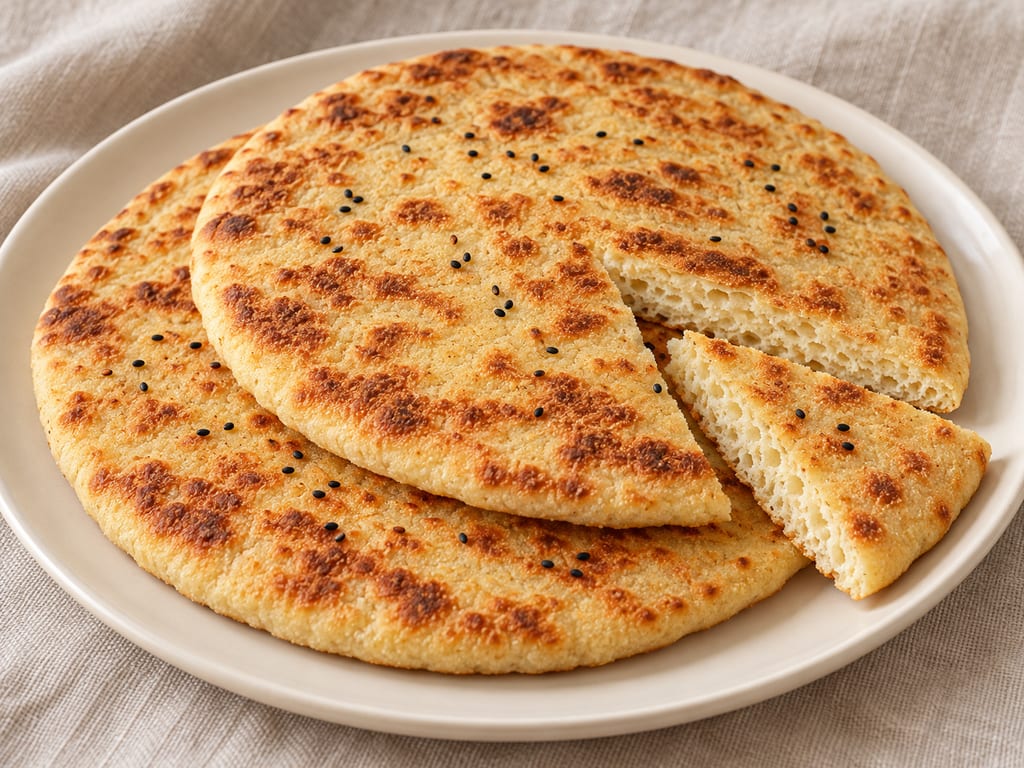
Kesra
This Algerian semolina and wheat flatbread rises with yeast, browns in an oiled skillet and finishes crisp in the oven. It is the author's leavened adaptation, not the unleavened semolina baseline.
 FermenteaWhere food goes to change
Matlouk · Matlou · Matlouh · Kesra matlou
A dairy-free Algerian semolina bread made with yeast, shaped as one round loaf, brushed with egg yolk and baked in a 400°F oven.
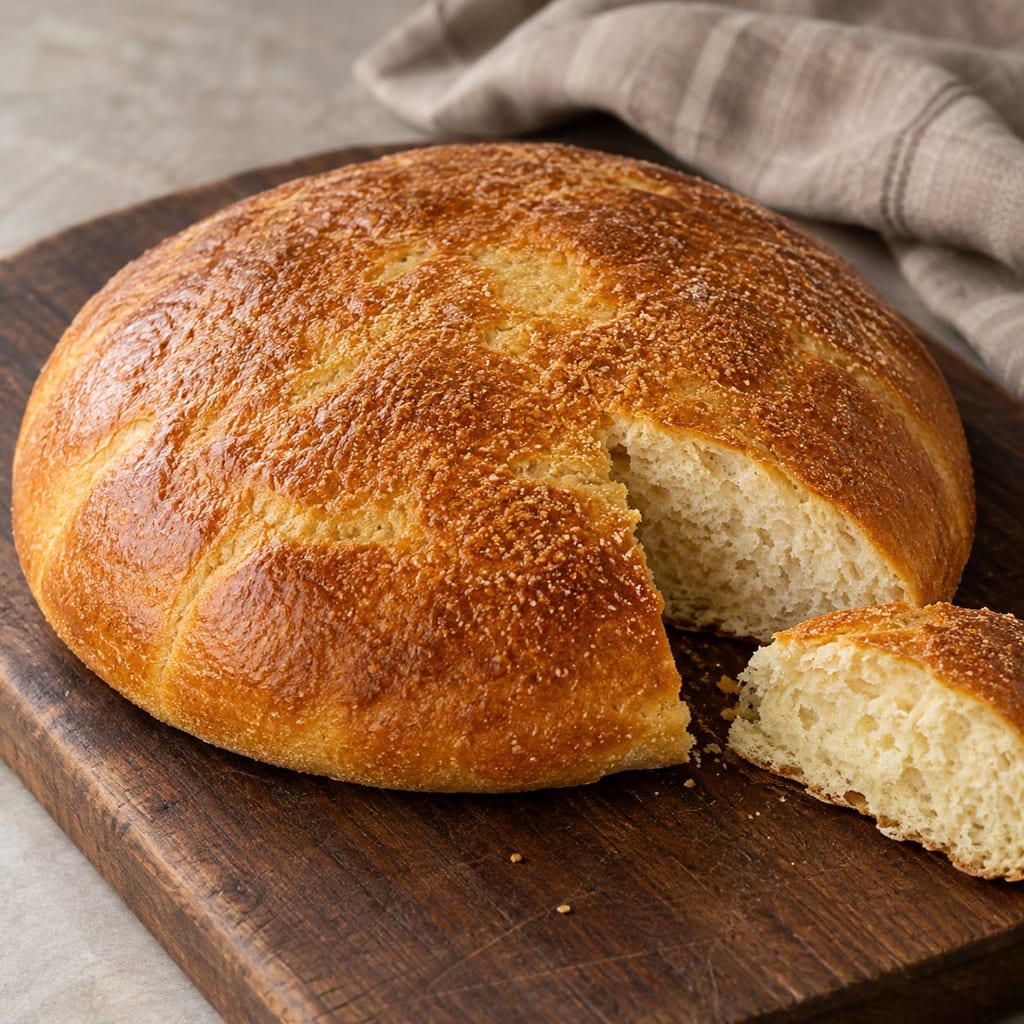
Claudia Roden's recipe, reprinted by Epicurious with permission from Knopf, gives one dairy-free semolina loaf associated with Algeria. Roden notes that griddle or skillet baking is sometimes used in Algeria, but did not work well for her; this is her oven-baked version. It is one source-specific formula, not a universal Matlou recipe.
A 2014 food-science review independently describes Mathlouaa as a common Algerian leavened semolina bread and discusses cooking on a clay tajine. That review supplies context, not the measurements or oven method used here.
The measured batch uses 3 cups fine semolina, 1 tablespoon active dry yeast, 1 cup lukewarm water, a pinch of sugar, ½ teaspoon salt and one egg yolk. A drop of oil coats the dough; extra oil and semolina or cornmeal prepare the baking sheet. Water is added gradually until the dough gathers into a ball.
After 10 minutes of vigorous kneading, shape one 9-inch round, cover it and leave it in a warm place for 1½ hours, until doubled. Brush on egg yolk mixed with 1 tablespoon water just before baking. Bake at 400°F for 30 minutes, or until brown and hollow-sounding underneath. The source does not set a numeric proof temperature.
Semolina is raw flour: do not taste the dough, keep it away from ready-to-eat foods, and wash hands, tools and surfaces after handling it. Wash hands and equipment before and after contact with raw egg; apply the egg wash immediately before the source's bake. Use care with the hot oven and baking sheet. The source gives no storage duration or measured internal endpoint.
The French national bakers' confederation's Matlouh entry on Google Arts & Culture describes the bread alongside soups and dishes served in sauce. It records both tagine and oven cooking. This supports a meal-accompaniment role without making either heat source the only regional practice.
That entry describes sourdough matlouh. Roden's measured loaf uses active dry yeast, so the account supplies context rather than a starter conversion. It also does not turn the older milk-and-griddle recipe into an equivalent of this dairy-free oven batch.
A 2014 review describes Mathlouaa as one of the leavened semolina breads commonly prepared in Algeria. Claudia Roden's measured Matlouk recipe is a dairy-free oven-baked home version; her note says griddle or skillet baking did not work well for her. This does not establish an exclusive origin, canonical formula or first attestation.
Yield 1 9-inch round loaf · Scaling: source batch only
Raw flour can carry harmful bacteria; do not taste the uncooked dough.
Hazard sourceThe egg-yolk wash is raw until it is baked onto the loaf.
Hazard sourceThe loaf bakes on an oiled hot baking sheet.
Hazard sourceDo not taste raw dough; keep semolina and dough away from ready-to-eat foods, then wash hands, utensils and surfaces after handling.
Control sourceWash hands, utensils, equipment and work areas before and after handling raw egg. Apply the egg-yolk wash immediately before baking the loaf.
Control sourceUse care when placing and removing the baking sheet from the hot oven.
Control sourceContains wheat (gluten) and egg. The source gives brown colour and a hollow-sounding underside as bake cues but no internal-temperature endpoint.
Claudia Roden's source presents this home method as Matlouk associated with Algeria; no narrower birthplace or universal formula is claimed.
This Algerian semolina and wheat flatbread rises with yeast, browns in an oiled skillet and finishes crisp in the oven. It is the author's leavened adaptation, not the unleavened semolina baseline.
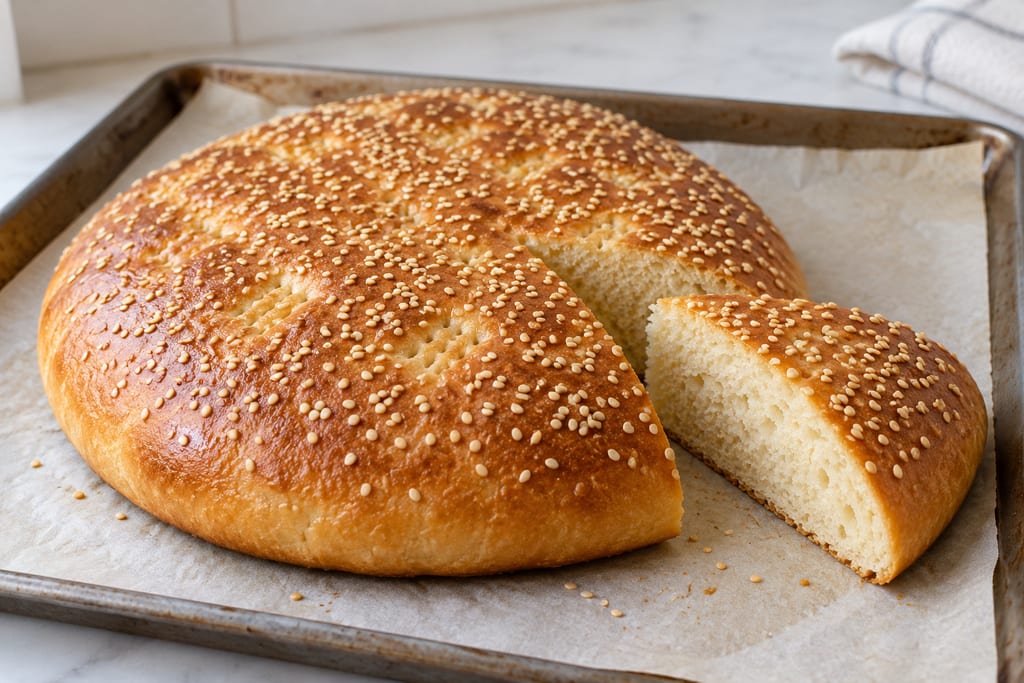
An Algerian round loaf made with semolina, wheat flour, milk, egg and sesame; this source version uses an overnight-free yeast method with three rests and an egg glaze.
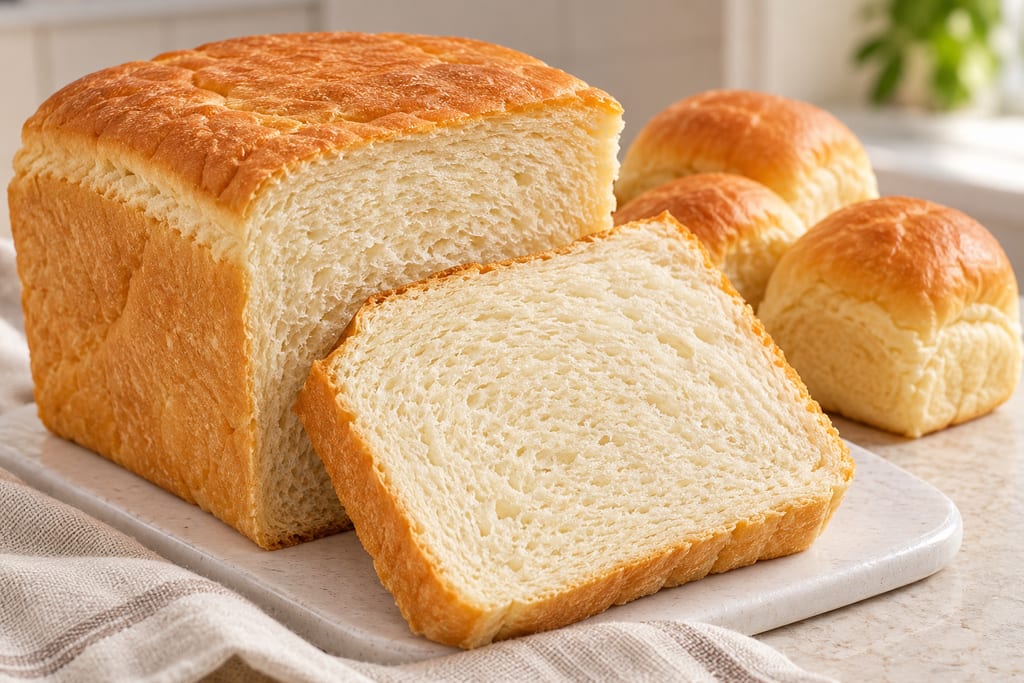
This softer home-style Agege bread uses a scalded flour paste, an enriched yeast dough and a 9×5-inch loaf pan, with rolls from the extra dough.
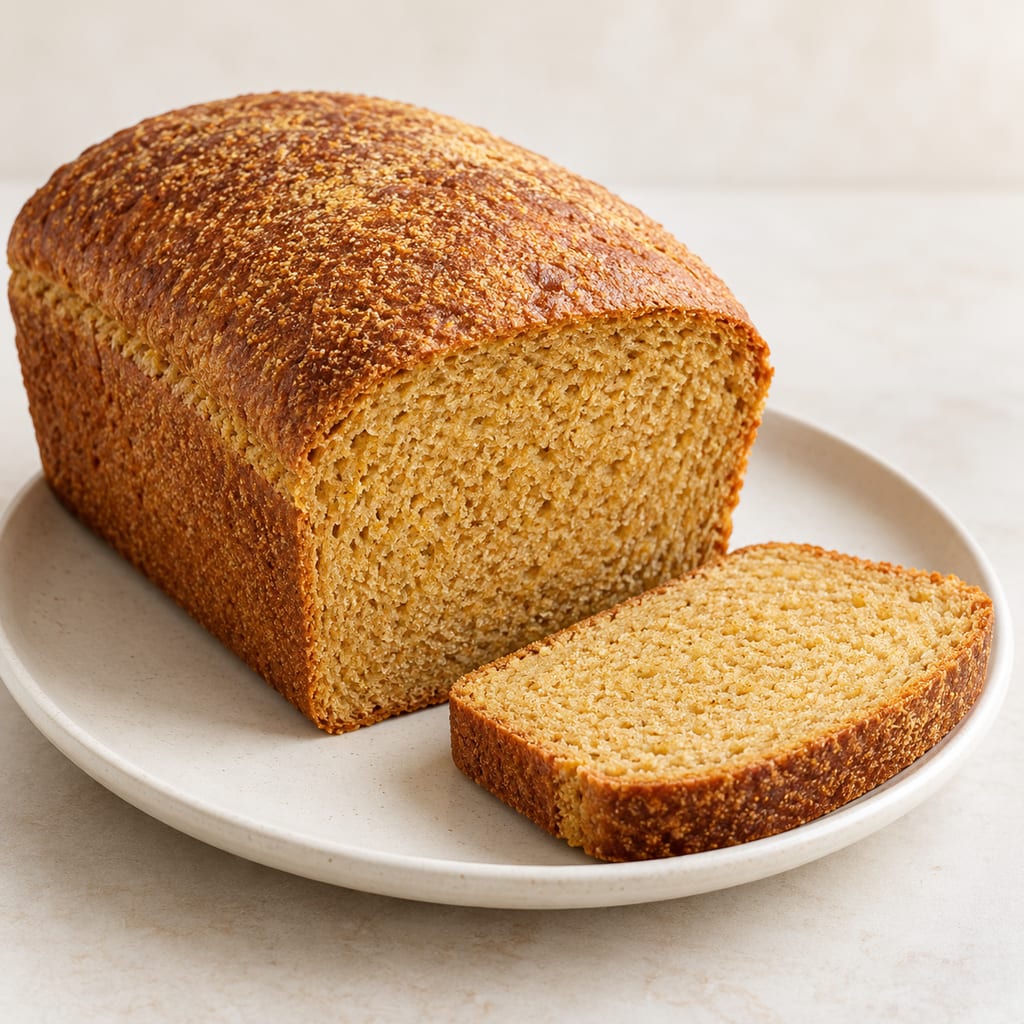
Anadama is a New England yeast loaf made with wheat flour, cornmeal and molasses. Scalded cornmeal enriches the dough, while molasses lends sweetness and a dark crust; it is especially good toasted or beside soup and baked beans.

A yeast-raised wheat ring shaped from a firm dough, briefly boiled and baked. This source-batch formula gives a gently malted crust and a chewy crumb.

Three long, crusty wheat loaves made with an overnight yeast poolish, shaped by hand and baked with steam for a crisp crust.
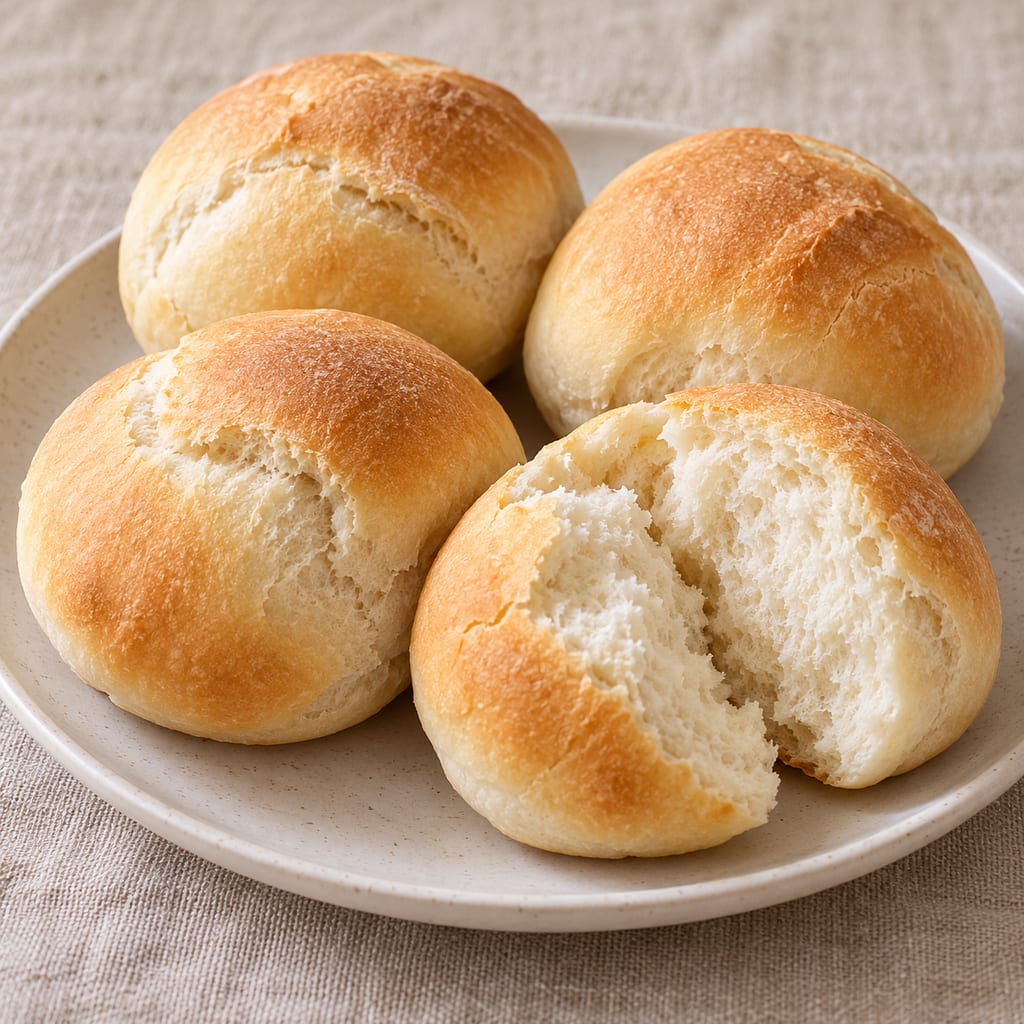
A lightly salted, yeast-raised Barbadian roll, baked in a dozen-roll home batch and often split for cutters.
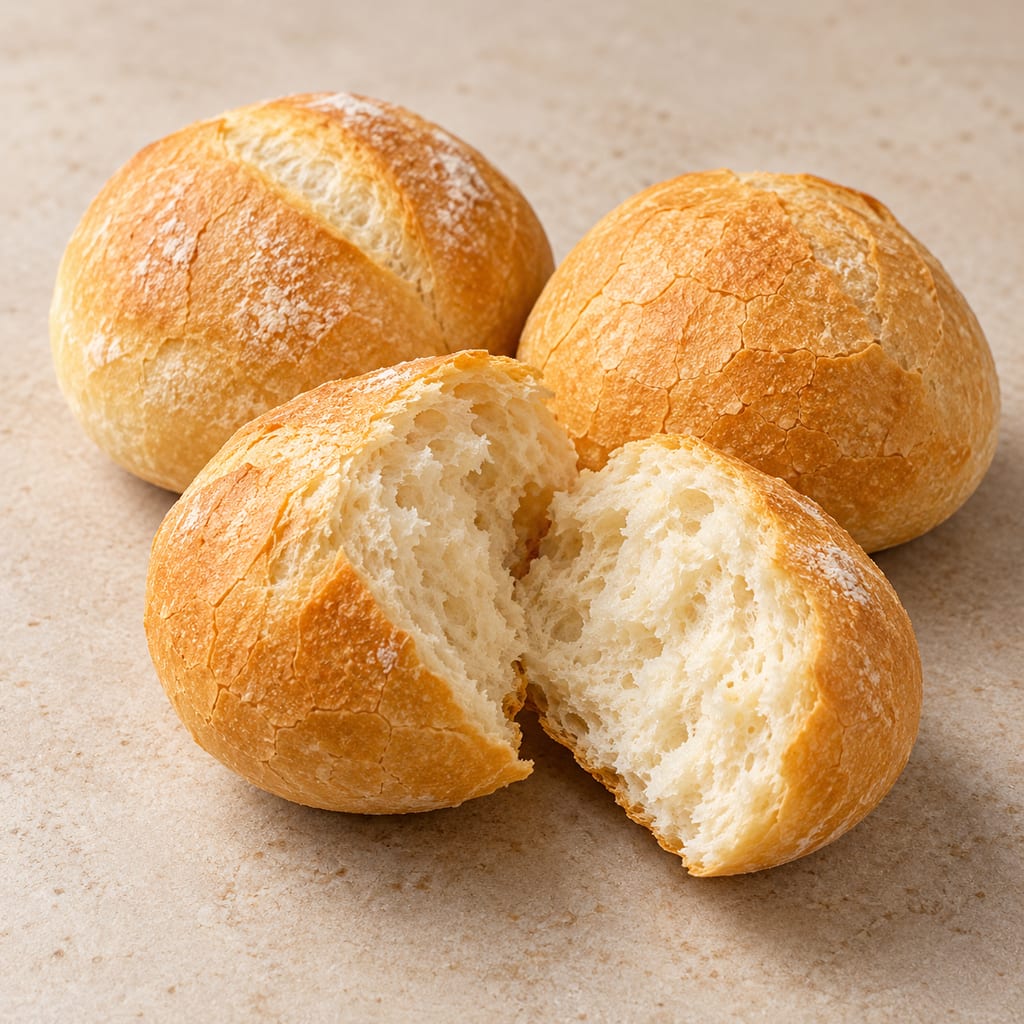
A crisp Belgian roll made from a supplier’s Croc-flour dough, mixed by hand or machine, proofed in rounds and baked with steam.
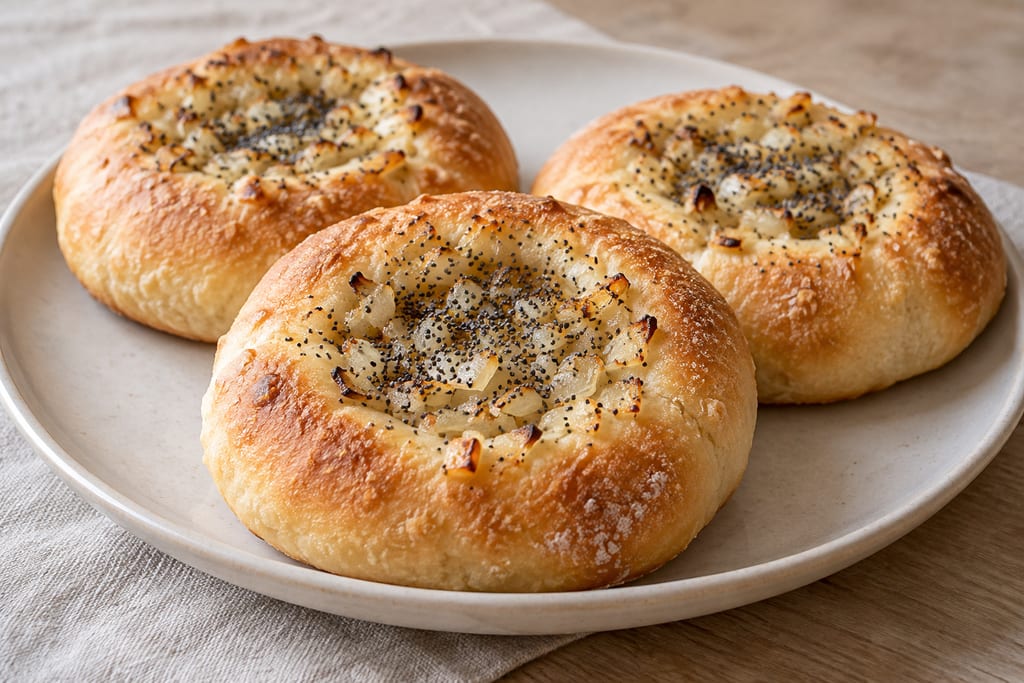
Bialys are soft, yeasted wheat rolls baked without boiling, each shaped with an onion-filled central depression instead of a hole.
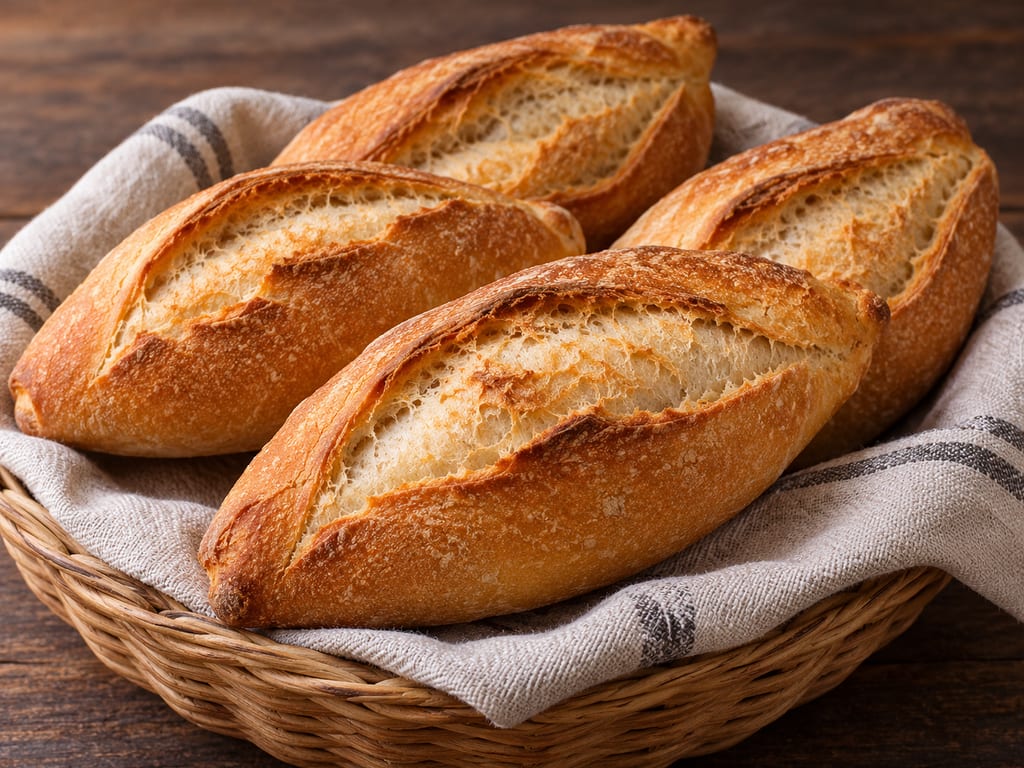
A measured, commercial-yeast home method for Guadalajara-style birote salado, with a six-hour preferment, shaped rolls and a two-temperature steam bake. This formula contains no egg.
No community contributions have been published for this entry yet.
Sign in to contribute. Published comments and photos are free to read.
Epicurious / KnopfMethod · Ingredients · Geography
MatloukMeasured dairy-free recipe for one 9-inch loaf: 1 tbsp active dry yeast, 1 cup lukewarm water, pinch sugar, 1/2 tsp salt, 3 cups fine semolina and one egg yolk; a drop of oil coats the dough.
Activate yeast for 10 minutes, add water gradually until dough forms a ball, knead vigorously for 10 minutes, shape a 9-inch round, cover and rise in a warm place for 1 1/2 hours until doubled.
Brush with egg yolk mixed with 1 tbsp water and bake in a preheated 400°F oven for 30 minutes or until brown and hollow-sounding underneath. The author says griddle/skillet baking did not work well for her.
Cited in: A dairy-free oven-baked Matlouk; Dough, proof and bake; Food handling; Serving context and different leavening
African Journal of Food ScienceHistory · Geography
Some traditional Algerian products from durum wheatDescribes Mathlouaa as a common Algerian leavened semolina bread and discusses its traditional clay-tajine cooking; it does not supply the home formula used here.
Cited in: A dairy-free oven-baked Matlouk
Centers for Disease Control and PreventionSafety
Raw Flour and DoughRaw flour can carry germs; do not eat raw dough; cook dough before eating and wash hands and surfaces after handling flour.
Cited in: Food handling
USDA Food Safety and Inspection ServiceSafety
How do you handle and store eggs safely?Wash hands and equipment before and after contact with raw eggs; cook foods containing raw eggs immediately or refrigerate and cook within 24 hours. The source applies the egg wash immediately before baking.
Cited in: Food handling
Confédération Nationale de la Boulangerie et Boulangerie-Pâtisserie Française, via Google Arts & CultureCultural context · Variant context
Matlouh (Algeria)Institutional entry describes fine-semolina matlouh as an accompaniment to soups and sauce-based dishes and records tagine and oven cooking.
The entry describes a sourdough form; Roden's measured recipe uses active dry yeast. This supports serving context and variation, not a starter substitution, universal fermentation method or historical origin.
No individual PD/CC0 image dedication appears on the inspected entry; its photograph is not accepted as a qualifying original.
Cited in: Serving context and different leavening