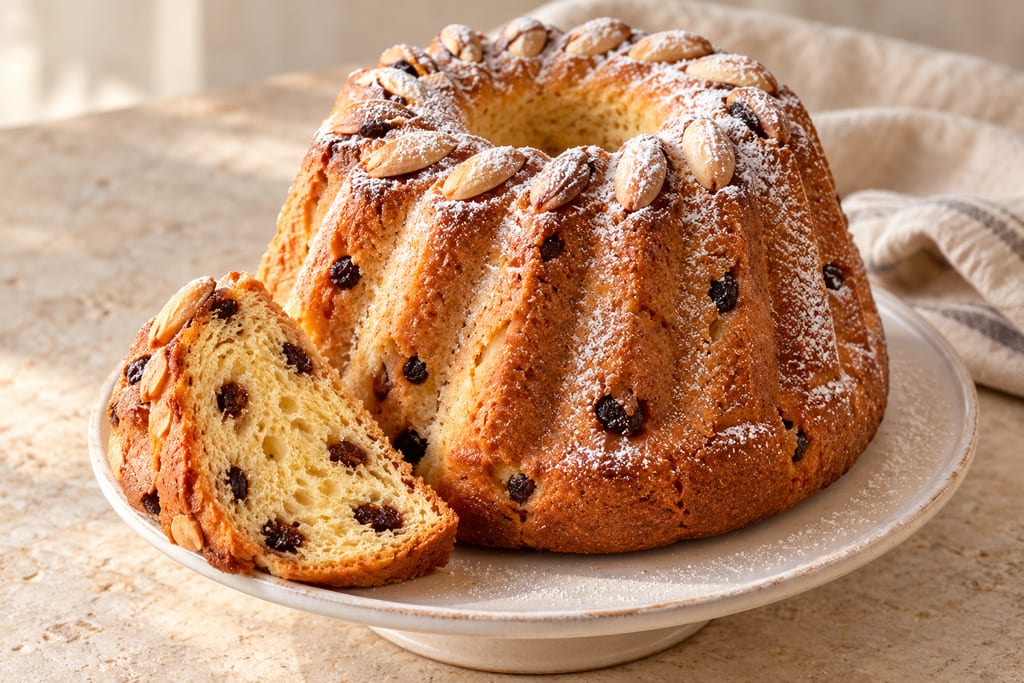
Alsatian kouglof
An enriched Alsatian yeast ring with raisins and almonds, kneaded with butter, proofed in a fluted mould and baked until browned.
 FermenteaWhere food goes to change
Baguette · French baguette
Three long, crusty wheat loaves made with an overnight yeast poolish, shaped by hand and baked with steam for a crisp crust.
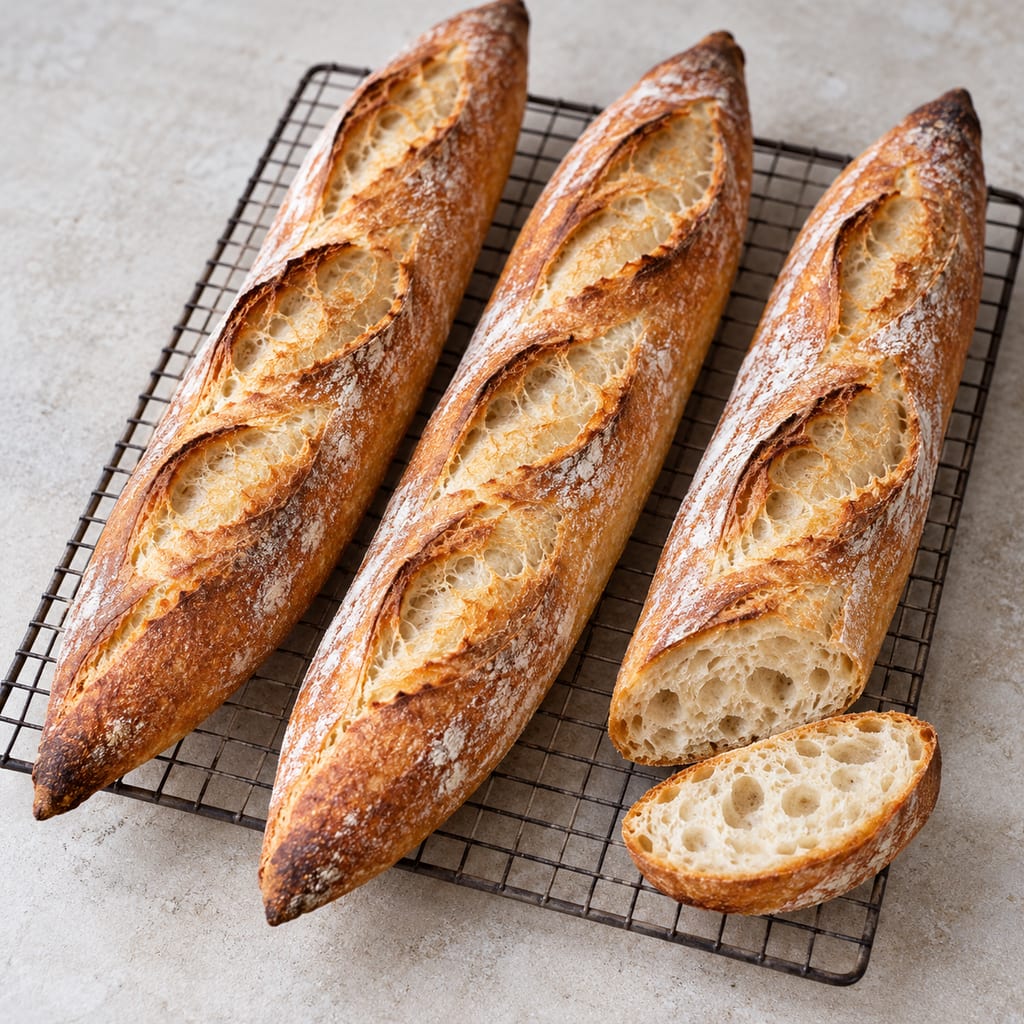
This King Arthur Baking formula makes three long wheat loaves. A small poolish made with flour, water and a pinch of yeast stands overnight; more flour, water, yeast and salt are mixed in the next day. The method then uses two covered rises, a fold, a short bench rest and a final proof before shaping and baking.
UNESCO records the artisanal know-how and culture of baguette bread in France, including fermentation, manual shaping, scoring and baking. The recipe here is a home method from King Arthur Baking, not a single French specification. Its page lists 19 hours 50 minutes total, while the explicitly timed rests plus baking account for less time.
Make a soft poolish with 120 g flour, 113 g cool water and a pinch of yeast. Cover it and leave it at room temperature for about 14 hours, until it has expanded and looks bubbly. For the final dough, mix the poolish with the remaining water, yeast, flour and salt. Knead until the dough is cohesive and somewhat smooth; it can still feel slightly rough.
Cover the dough for 45 minutes, fold its edges toward the centre, turn it over and let it rise for another 45 minutes until puffy. Divide it into three equal portions and round them loosely. Cover and rest for 15 minutes, or up to an hour if needed.
Flatten one portion at a time, fold it nearly in half and seal the seam with the heel of your hand. Repeat to build tension, then roll the seam-side-down dough into a log about 16 inches long, tapering its ends. Set the loaves seam-side down on a lined tray or in the folds of a floured cloth. Cover and proof until lighter and slightly puffy, around 45–60 minutes at roughly 20°C.
Heat the oven to 450°F (232°C) with a cast-iron pan low in the oven or a baking stone on a middle rack. Move cloth-proofed loaves to parchment. Just before loading, make three to five diagonal cuts along each loaf.
Heat 1½ cups water to boiling. Load the loaves onto the hot stone or keep them on a tray. Carefully pour the boiling water into the preheated cast-iron pan and close the oven promptly; the steam helps the loaves rise and forms a shiny crust. Bake for 24–28 minutes, until deep golden brown, then cool on a rack.
Flour can carry harmful bacteria before baking, so do not taste raw dough and wash hands, bowls and tools after mixing. The steam step also exposes the baker to boiling water and a hot oven; use oven gloves and keep hands and face clear.
UNESCO inscribed the artisanal know-how and culture of baguette bread in France in 2022, describing its ingredients, stages and social context. That inscription does not establish a first date for the baguette or this home formula.
Yield 3 baguettes · Scaling: source batch only
Flour is uncooked until the baguettes bake; raw flour or dough should not be tasted.
Hazard sourceThe method pours boiling water into a preheated cast-iron pan inside a hot oven, producing steam.
Hazard sourceDo not taste raw dough; wash hands and utensils after handling flour.
Control sourceWear oven gloves and keep face and hands away from the oven opening when pouring boiling water into the hot pan; close the door promptly.
Control sourceDo not taste raw flour dough.
The boiling-water steam step can burn; use oven gloves and keep clear of the steam.
Contains wheat gluten.
UNESCO documents baguette bread know-how and consumption in France. This King Arthur home formula is an adaptation, not a protected specification or claim of exclusive origin.
An enriched Alsatian yeast ring with raisins and almonds, kneaded with butter, proofed in a fluted mould and baked until browned.
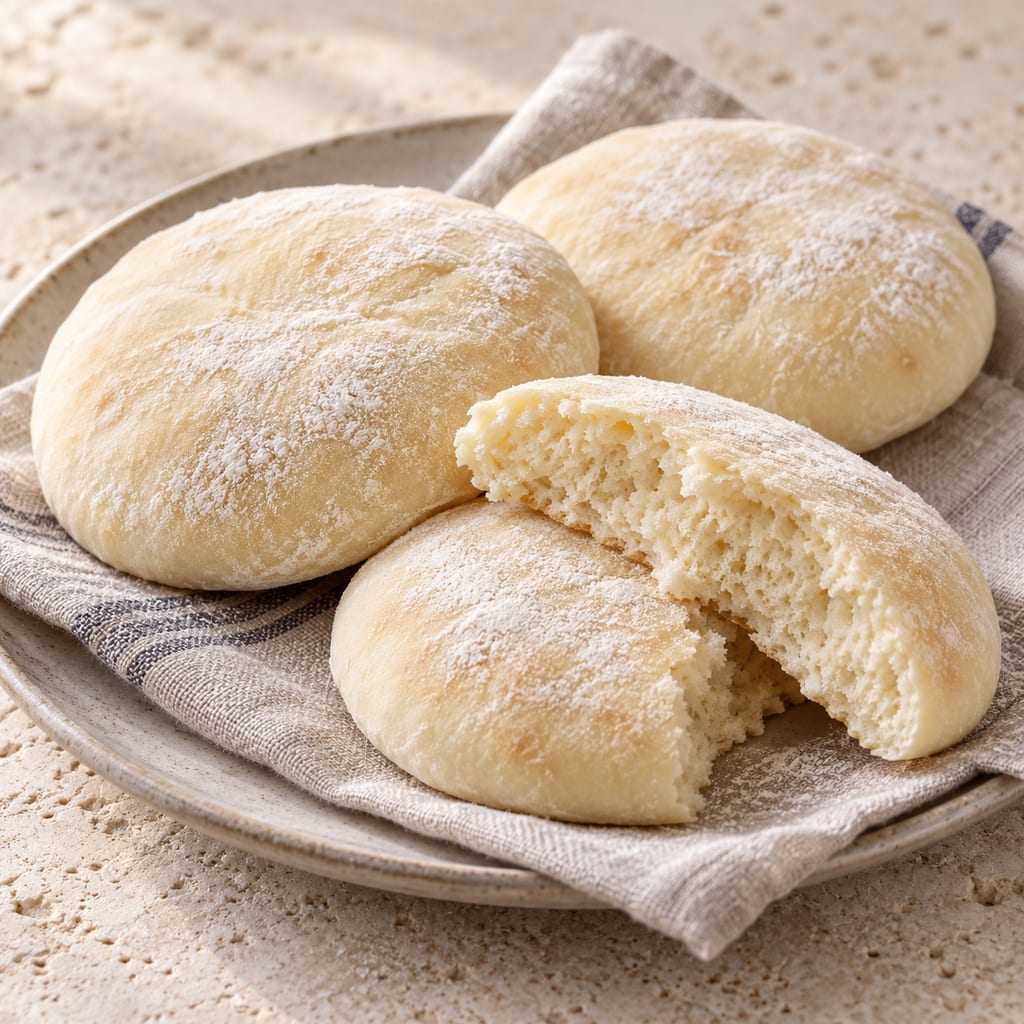
A pale, softly baked, low-profile bread associated with northern France and Tournai. This source-specific household method makes four large faluches; it differs from older accounts of leftover bread dough baked during communal bread baking.
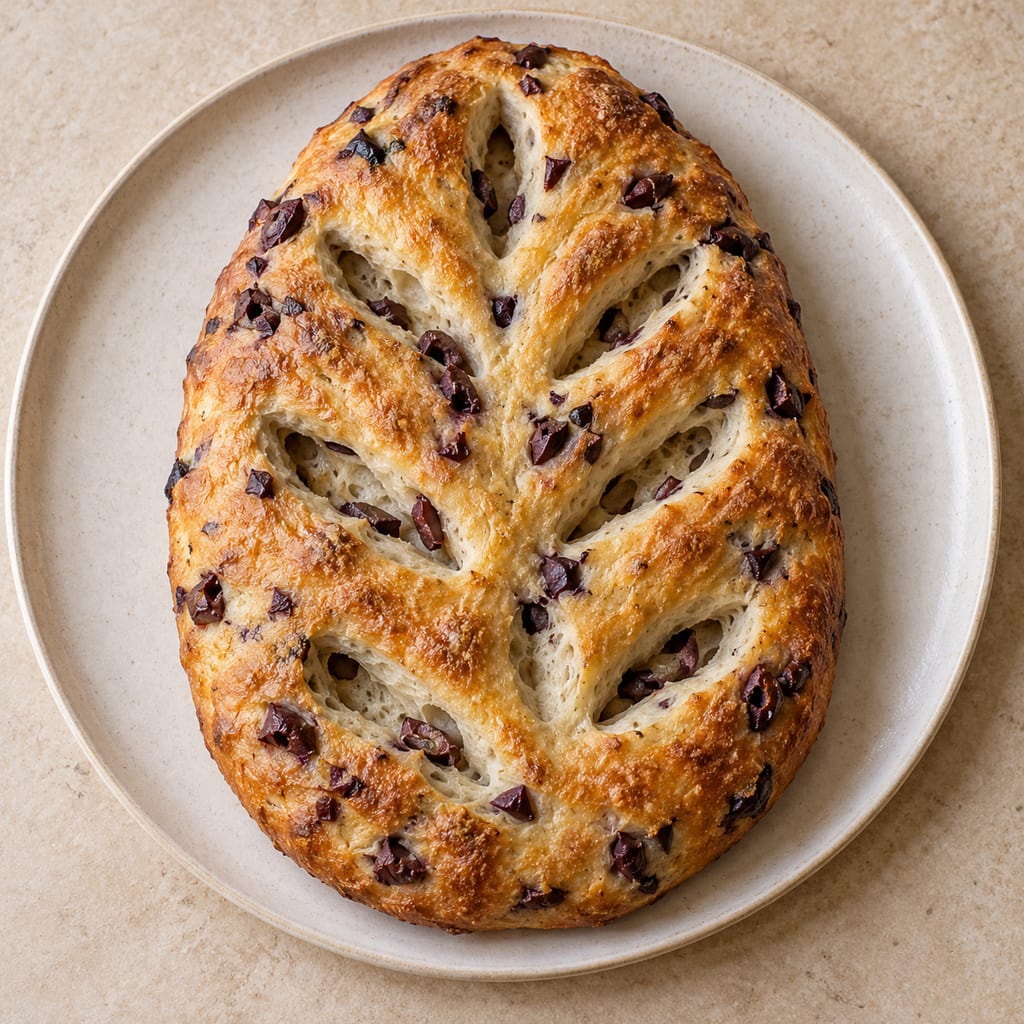
A Provençal olive bread shaped as a flattened oval with seven open slits. This Le Cordon Bleu formula uses wheat flour, fresh yeast, olive oil and Kalamata olives.
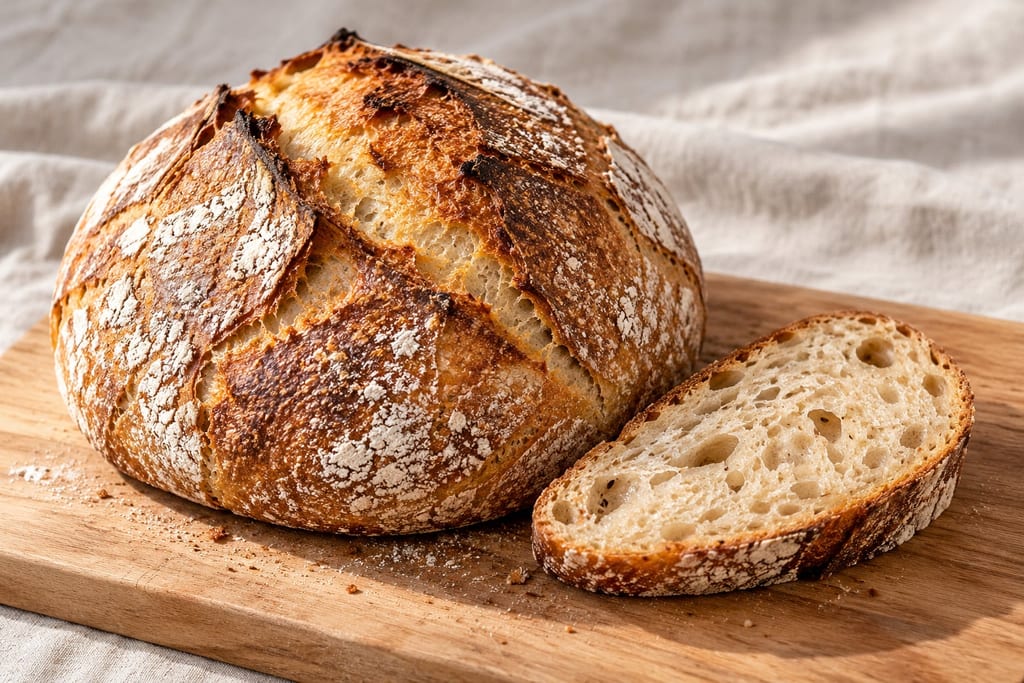
Two large French-style wheat loaves use unfed sourdough starter, whole-wheat flour, long room-temperature fermentation and a covered-pot bake.
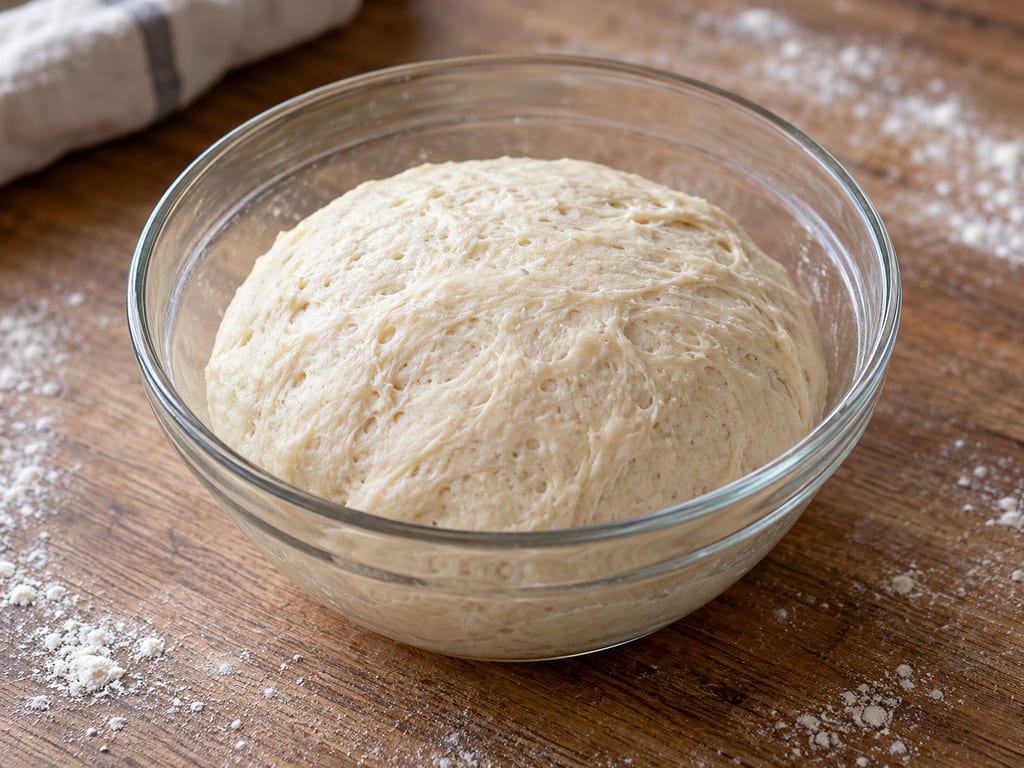
Pâte fermentée is a bread preferment made from salted, yeasted dough set aside to ferment and mixed into a later batch, carrying developed dough and fermentation products with it.
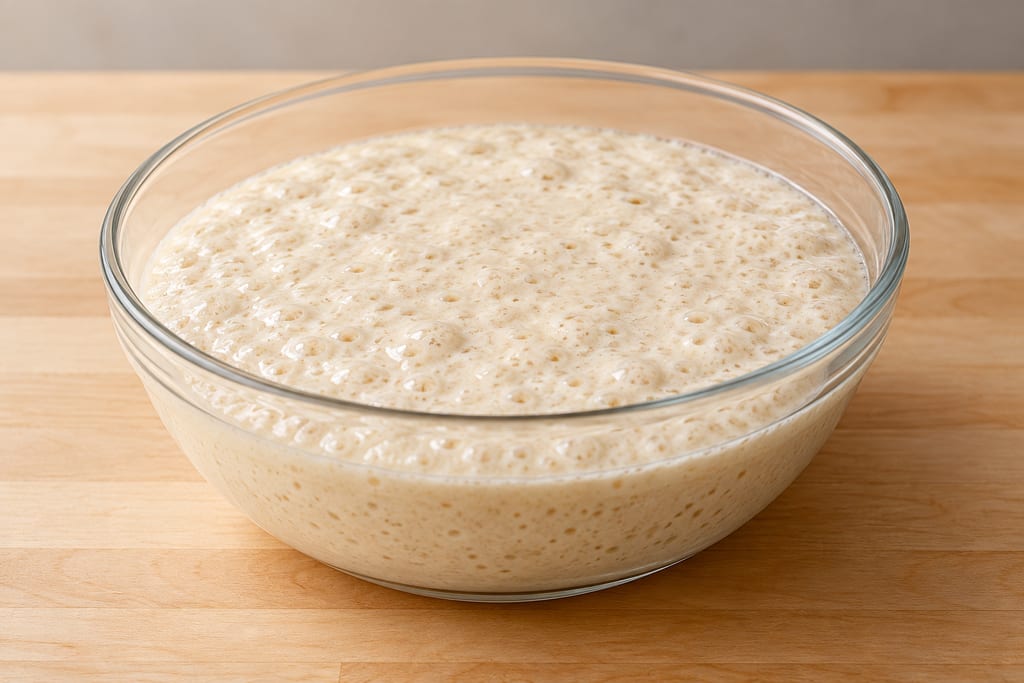
Poolish is a loose, unsalted bread preferment of roughly equal weights of wheat flour and water with a pinch of baker's yeast, left to ripen before it goes into the final dough.
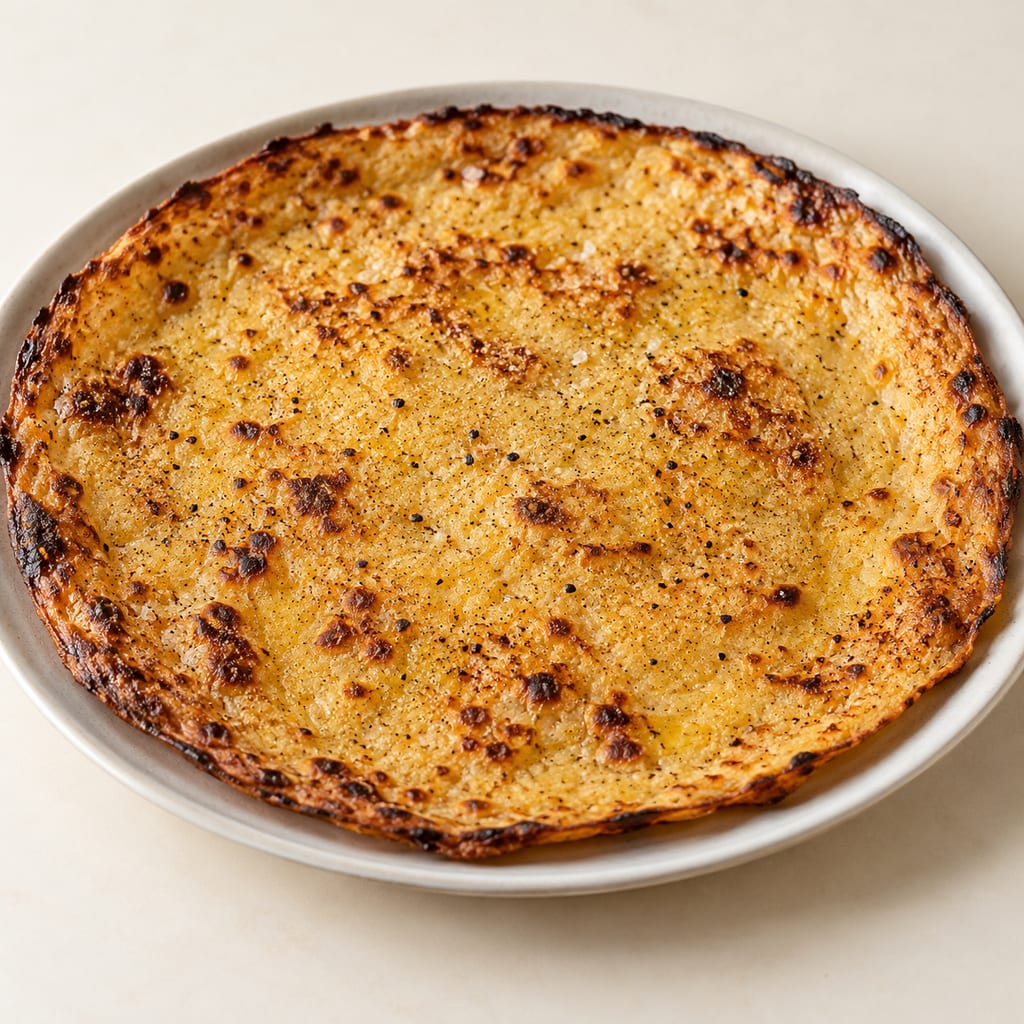
Socca is a thin chickpea-batter pancake from Nice, cooked on a very hot copper plate and served piping hot. This page follows the Nice source; the Genoa farinata formula, which conflicts on water quantity, is not blended in.
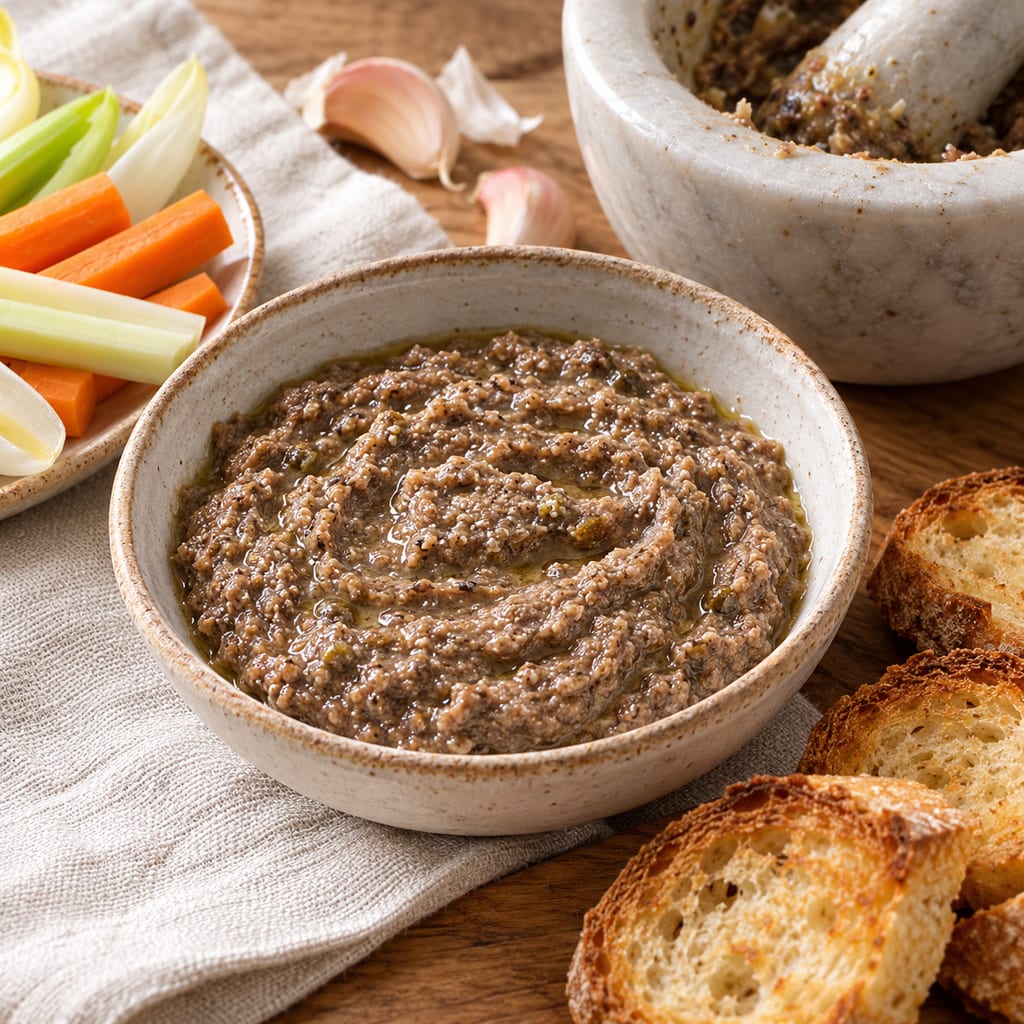
A Provencal dip of anchovies, garlic, capers and olive oil, pounded or blended to a creamy paste and served with raw vegetables, bread and eggs.
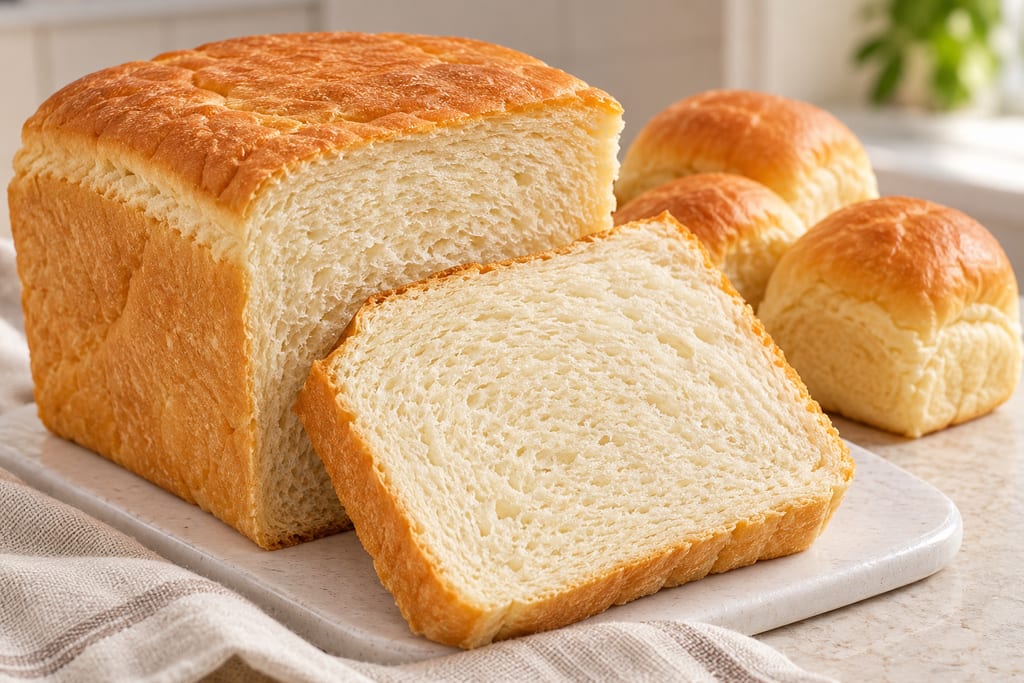
This softer home-style Agege bread uses a scalded flour paste, an enriched yeast dough and a 9×5-inch loaf pan, with rolls from the extra dough.
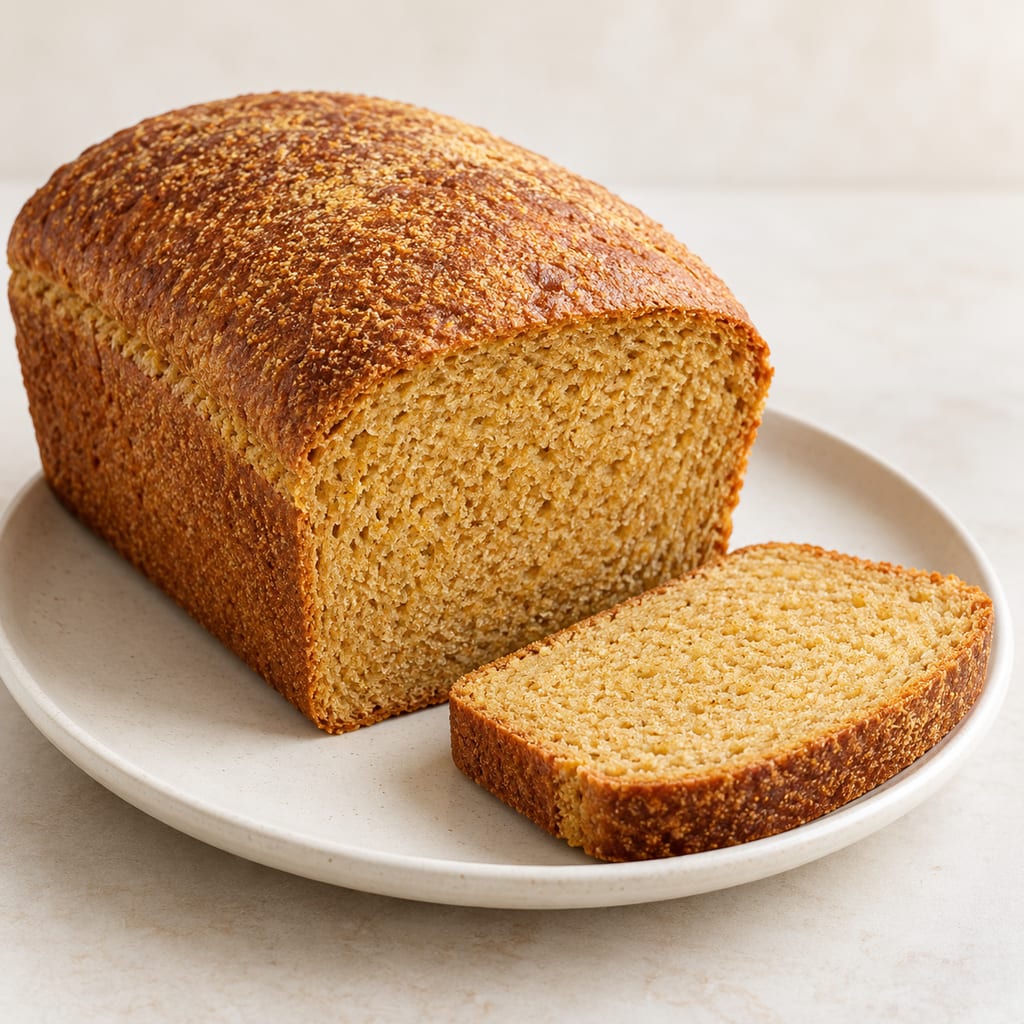
Anadama is a New England yeast loaf made with wheat flour, cornmeal and molasses. Scalded cornmeal enriches the dough, while molasses lends sweetness and a dark crust; it is especially good toasted or beside soup and baked beans.

A yeast-raised wheat ring shaped from a firm dough, briefly boiled and baked. This source-batch formula gives a gently malted crust and a chewy crumb.
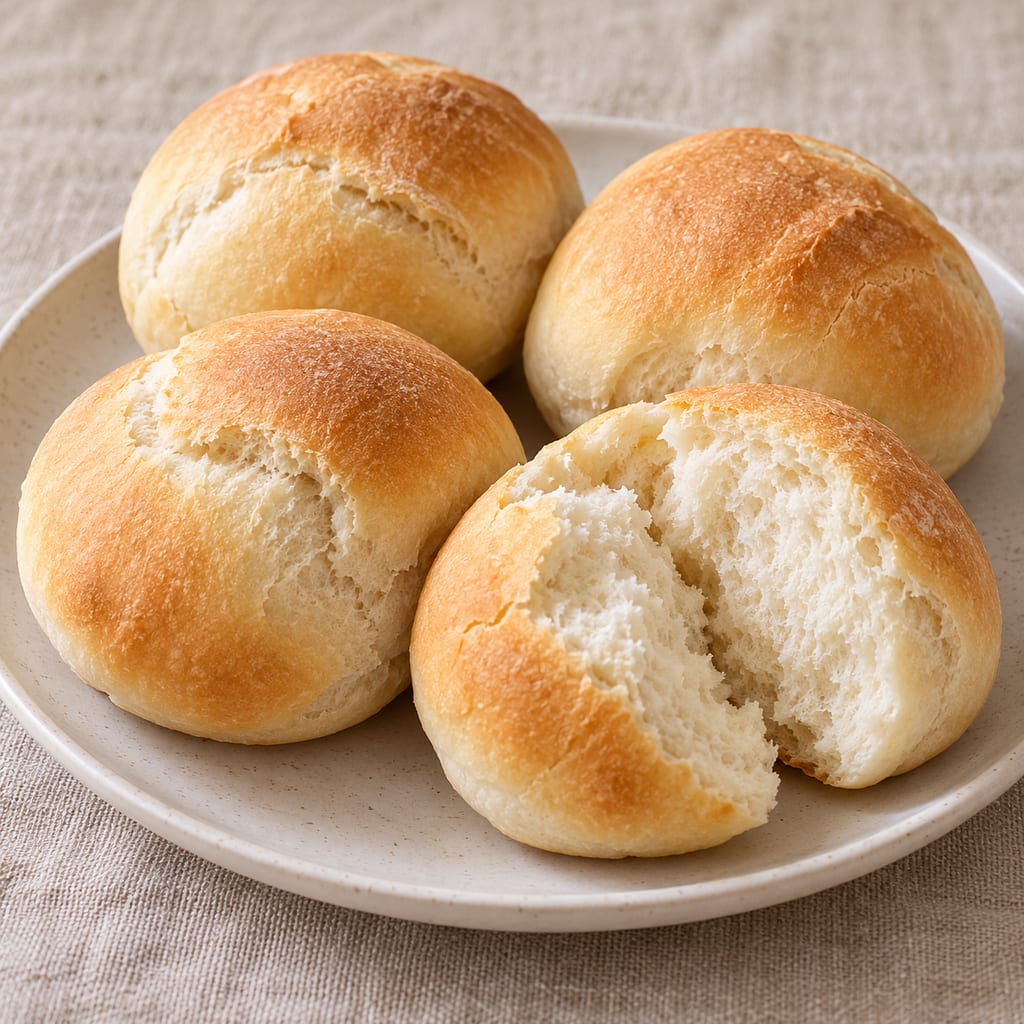
A lightly salted, yeast-raised Barbadian roll, baked in a dozen-roll home batch and often split for cutters.
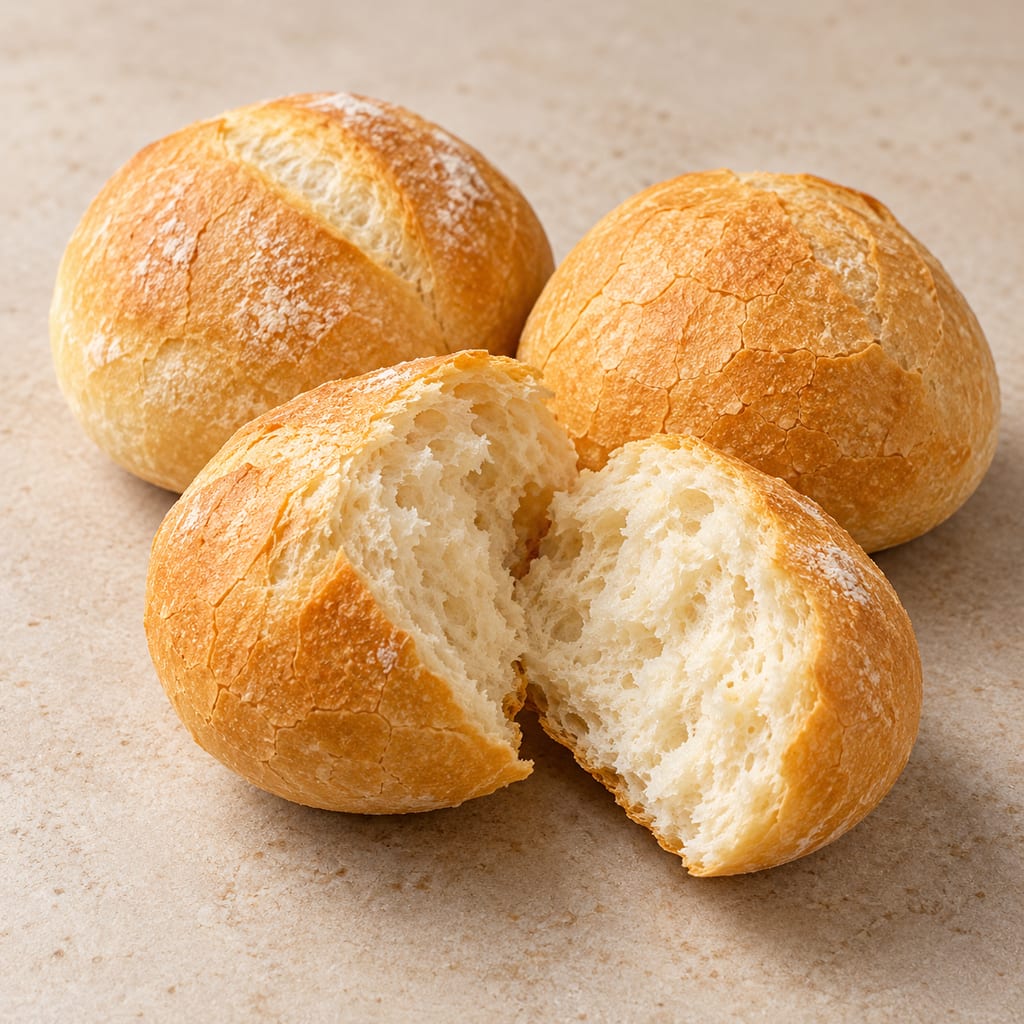
A crisp Belgian roll made from a supplier’s Croc-flour dough, mixed by hand or machine, proofed in rounds and baked with steam.
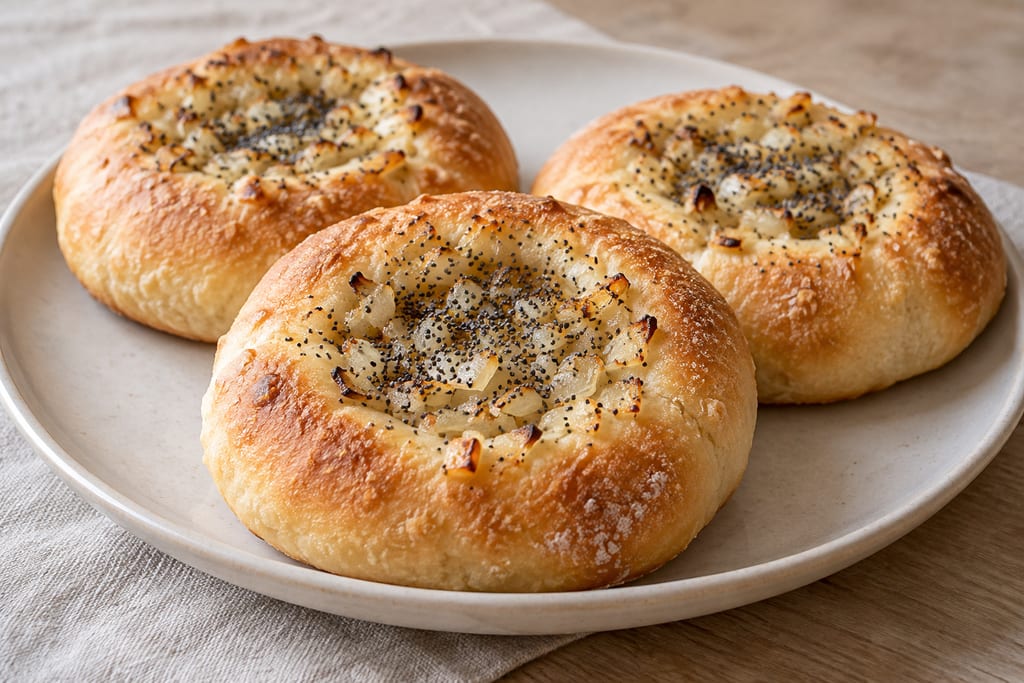
Bialys are soft, yeasted wheat rolls baked without boiling, each shaped with an onion-filled central depression instead of a hole.
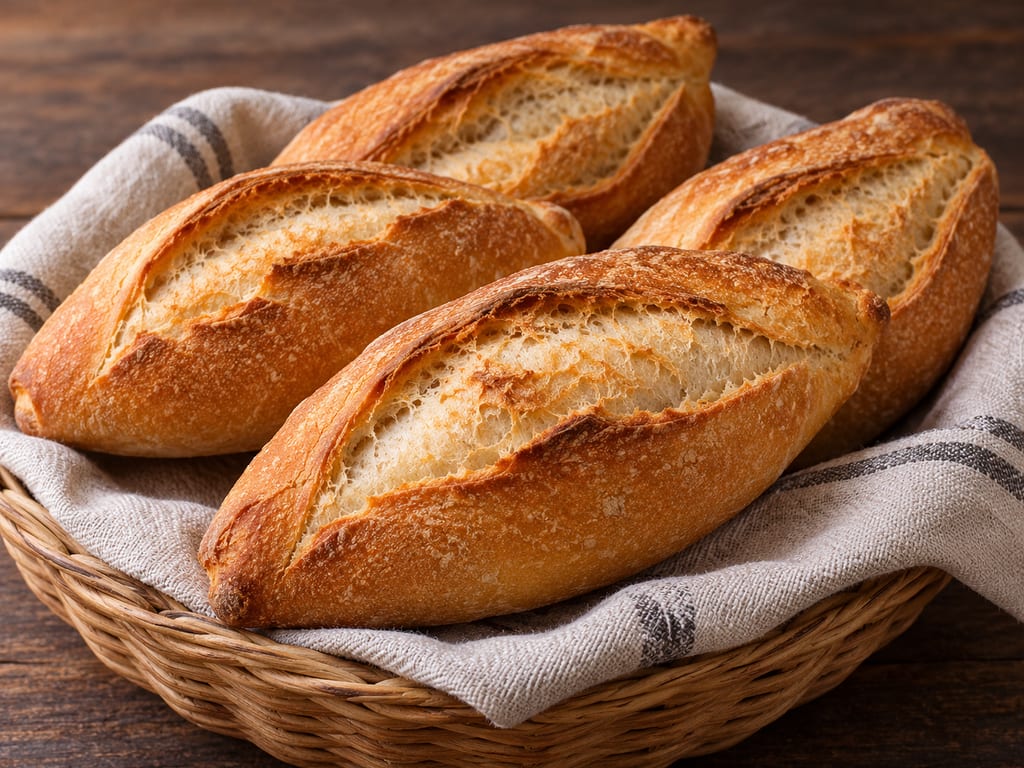
A measured, commercial-yeast home method for Guadalajara-style birote salado, with a six-hour preferment, shaped rolls and a two-temperature steam bake. This formula contains no egg.
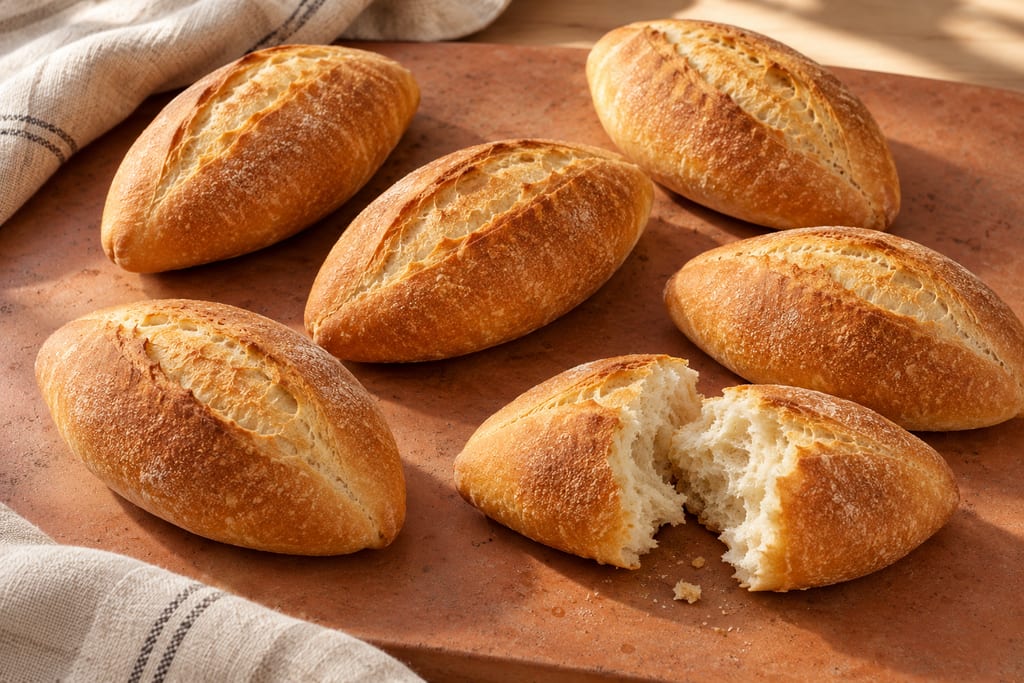
Small, lightly enriched rolls with tapered ends and a scored top; this six-roll formula bakes on a hot stone with steam for a thin, crisp crust.
No community contributions have been published for this entry yet.
Sign in to contribute. Published comments and photos are free to read.
King Arthur BakingInspiration · Method · Food use
Classic BaguettesThe formula makes three baguettes from a poolish of 120 g flour, 113 g water and a pinch of yeast, plus final dough with 420 g flour, 255 g water, 1½ teaspoons yeast and 12 g salt.
The page specifies a poolish rest of about 14 hours, two 45-minute dough rises with a fold between them, loaf shaping, a 45–60-minute final proof and a bake at 450°F for 24–28 minutes.
The method scores each loaf and creates oven steam by pouring boiling water into a preheated cast-iron pan; a baking stone, sheet pan, cloth or peel are options.
The source lists 19 hours 50 minutes total time; that listing does not reconcile with the explicitly timed stages.
The current page recommends storing leftovers in a paper bag overnight and freezing for longer storage; it gives no longer freezer duration.
Cited in: A home baguette with an overnight poolish; Mix and ferment; Shape, proof and score; Bake with steam
UNESCO Intangible Cultural HeritageGeography · History
Artisanal know-how and culture of baguette breadUNESCO inscribed France's artisanal know-how and culture of baguette bread in 2022 and describes the traditional stages, four basic ingredient types, French consumption and transmission through work-based training.
The inscription documents cultural practice; it does not date the first appearance of baguette bread or set a single product formula.
Cited in: A home baguette with an overnight poolish
U.S. Food and Drug AdministrationSafety
Handling Flour Safely: What You Need to KnowRaw flour can carry harmful bacteria; do not taste uncooked dough and clean hands and utensils after handling flour.
Cited in: Bake with steam