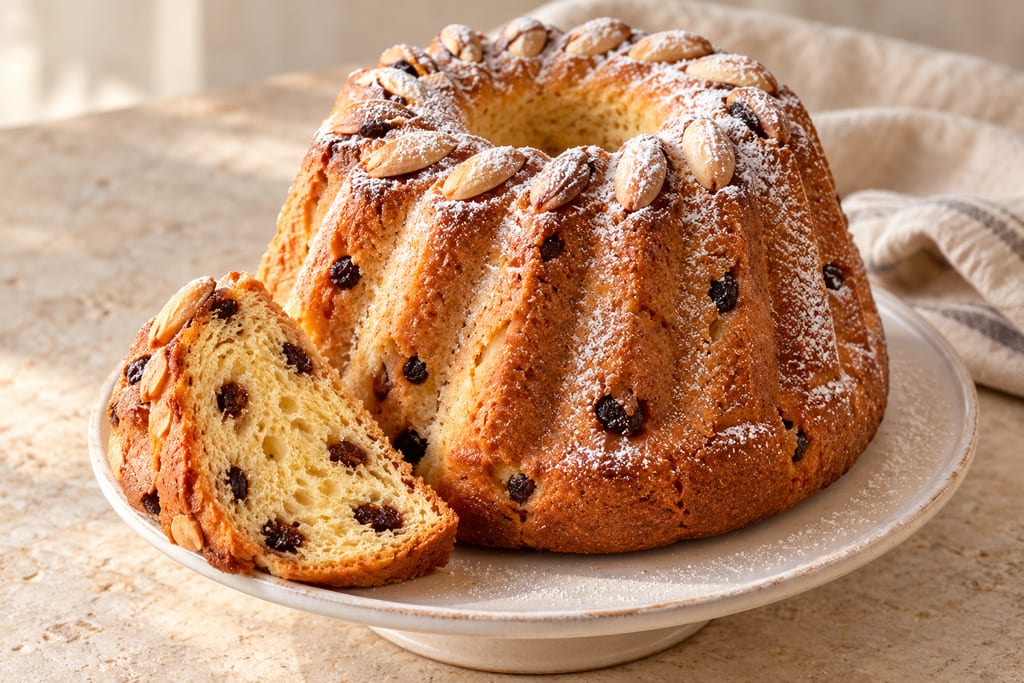
Alsatian kouglof
An enriched Alsatian yeast ring with raisins and almonds, kneaded with butter, proofed in a fluted mould and baked until browned.
 FermenteaWhere food goes to change
Fougasse · Fougasse aux olives
A Provençal olive bread shaped as a flattened oval with seven open slits. This Le Cordon Bleu formula uses wheat flour, fresh yeast, olive oil and Kalamata olives.
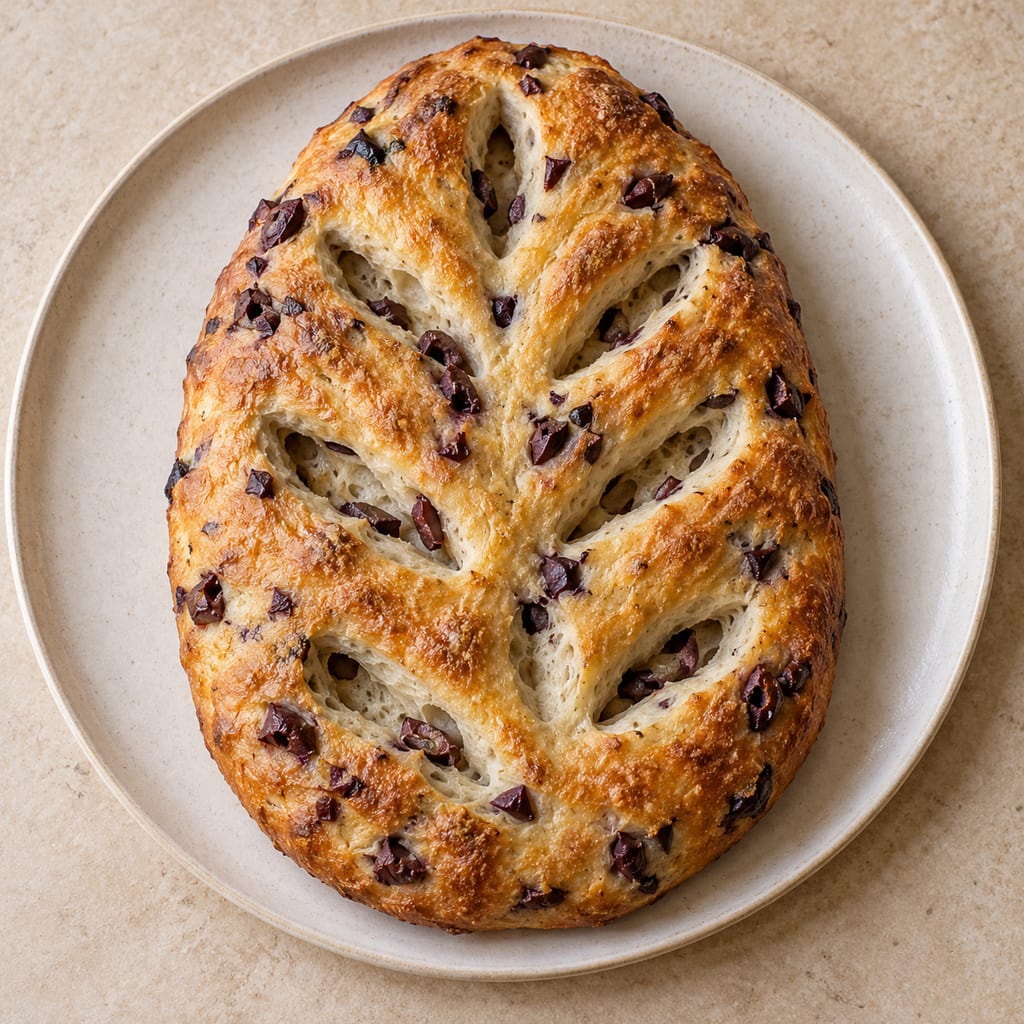
Le Cordon Bleu describes fougasse as a French bread typically associated with Provence, though it is also made in other regions. Some versions are sculpted or slashed into a pattern resembling a head of wheat. The recipe here comes from the school's L'École de la Boulangerie cookbook and makes two olive fougasses. Its provenance supports a Provençal association, not a precise birthplace or one formula for every baker.
The dough uses T65 wheat flour, olive oil and roughly chopped Kalamata olives. After shaping into rectangles, the baker opens seven cuts in each loaf. This method gives dimensions for the dough and trays as well as the number of slits. It does not claim the olives or exact cut arrangement are required in every fougasse.
The method begins in a stand mixer: yeast, water, flour and salt mix for five minutes on low speed, then knead for eight minutes on medium. Olive oil goes in gradually at low speed, followed by the olives. The dough rests covered for an hour at room temperature, receives one fold, and ferments for a second hour. Le Cordon Bleu specifies the time and room-temperature location but gives no measured dough temperature.
Divide the dough into two portions of about 530 g. Shape them loosely into ovals and rest for ten minutes. Flatten each to a rectangle about 25 by 18 cm on a parchment-lined tray. Make seven slits with a dough cutter and open them by hand before the final 30–45-minute proof; the branching gaps define the form. Bake both trays in a conventional oven at 230°C for 20–25 minutes, then brush the loaves with olive oil on a wire rack. The finishing oil has no stated amount.
The U.S. Food and Drug Administration warns that raw flour can carry harmful bacteria. Do not taste the dough before baking, and wash hands, bowls and utensils after handling it. The recipe uses a 230°C oven; use oven protection when moving the hot trays.
Le Cordon Bleu describes fougasse as a French bread typically associated with Provence, while also found in other regions. Its olive-filled recipe is credited to the school's L'École de la Boulangerie cookbook. This supports a regional association and one current baking method, not a precise birthplace or a single universal fougasse formula.
Yield 2 fougasses · Scaling: source batch only
Raw flour can carry harmful bacteria; uncooked dough should not be tasted.
Hazard sourceThe method uses a 230°C oven and two hot baking trays.
Hazard sourceDo not taste raw dough. Wash hands, utensils, bowls and work surfaces after handling flour and dough.
Control sourceUse oven protection when loading and removing the trays.
Control sourceDo not taste the raw dough; keep it separate from ready-to-eat food and clean up after handling flour.
The oven is set to 230°C. Protect hands when handling the hot trays.
Le Cordon Bleu describes fougasse as typically associated with Provence while noting that it is also found in other French regions; this is an association, not an origin claim.
An enriched Alsatian yeast ring with raisins and almonds, kneaded with butter, proofed in a fluted mould and baked until browned.
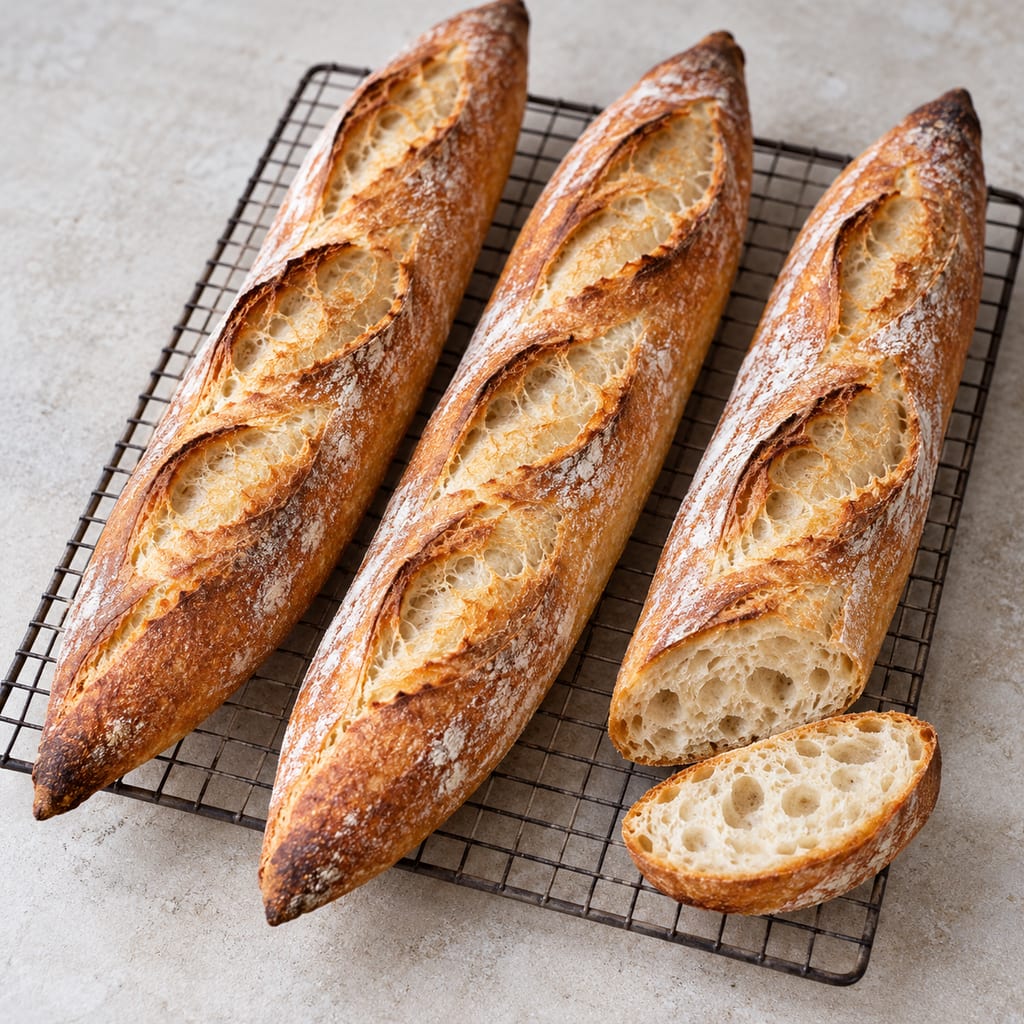
Three long, crusty wheat loaves made with an overnight yeast poolish, shaped by hand and baked with steam for a crisp crust.
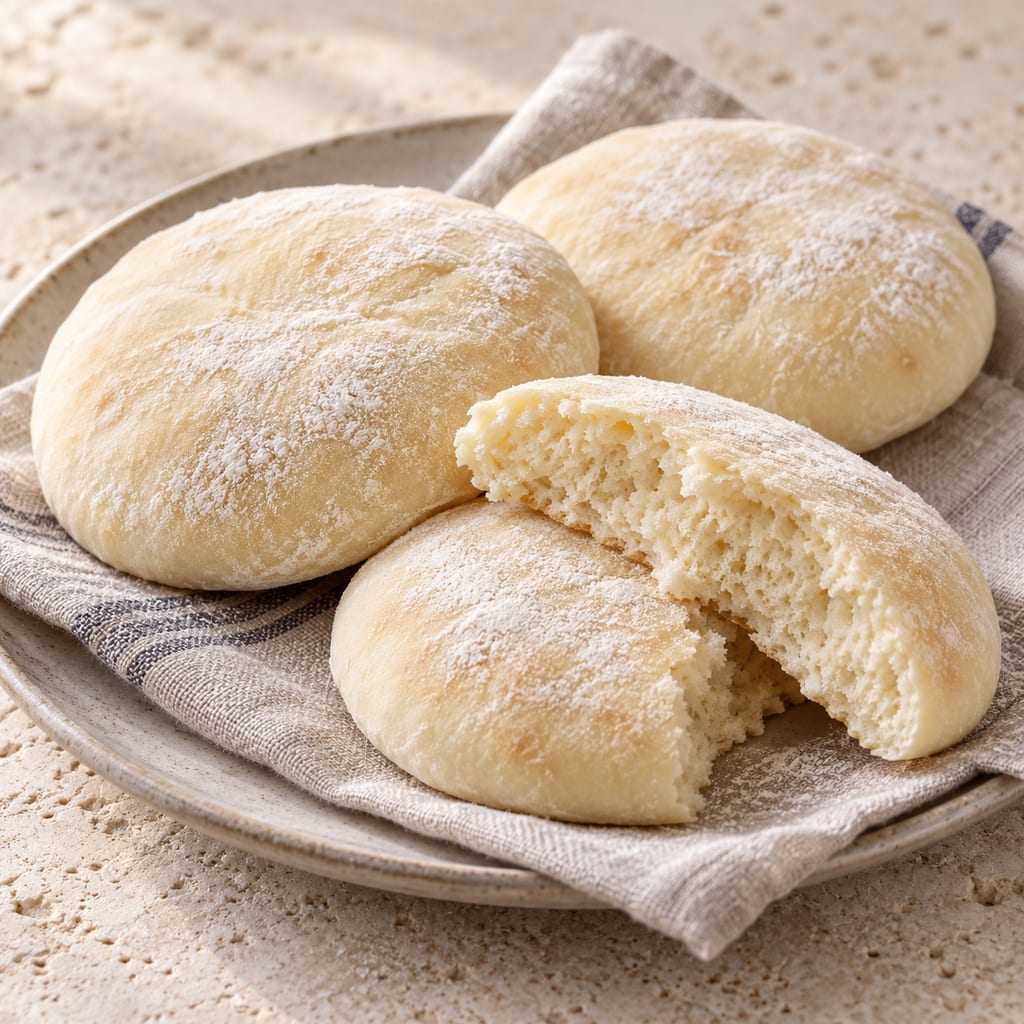
A pale, softly baked, low-profile bread associated with northern France and Tournai. This source-specific household method makes four large faluches; it differs from older accounts of leftover bread dough baked during communal bread baking.
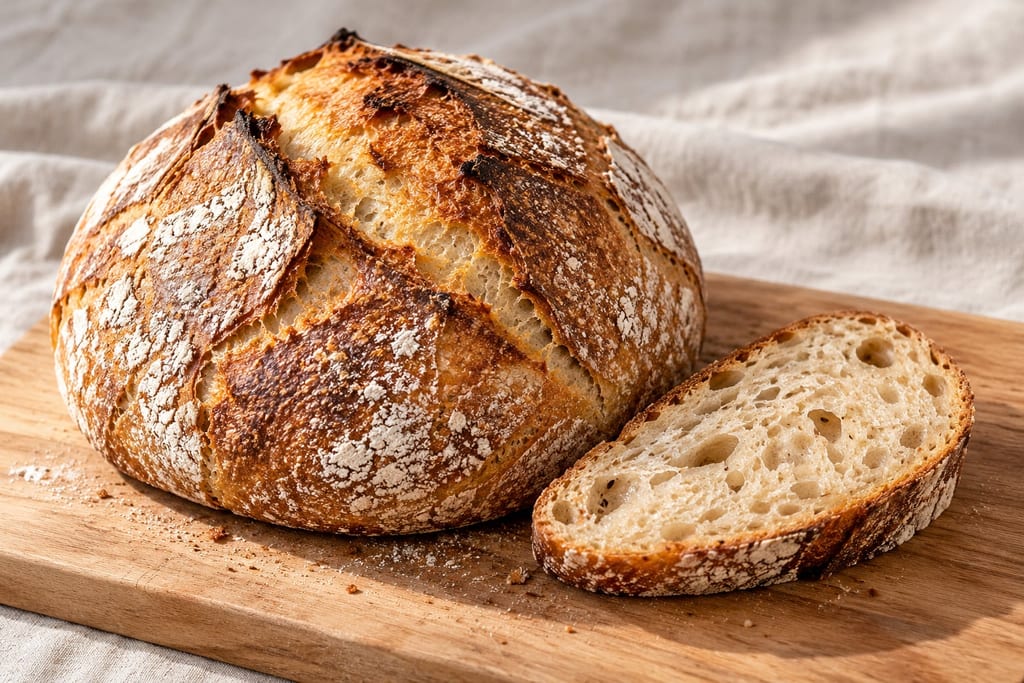
Two large French-style wheat loaves use unfed sourdough starter, whole-wheat flour, long room-temperature fermentation and a covered-pot bake.
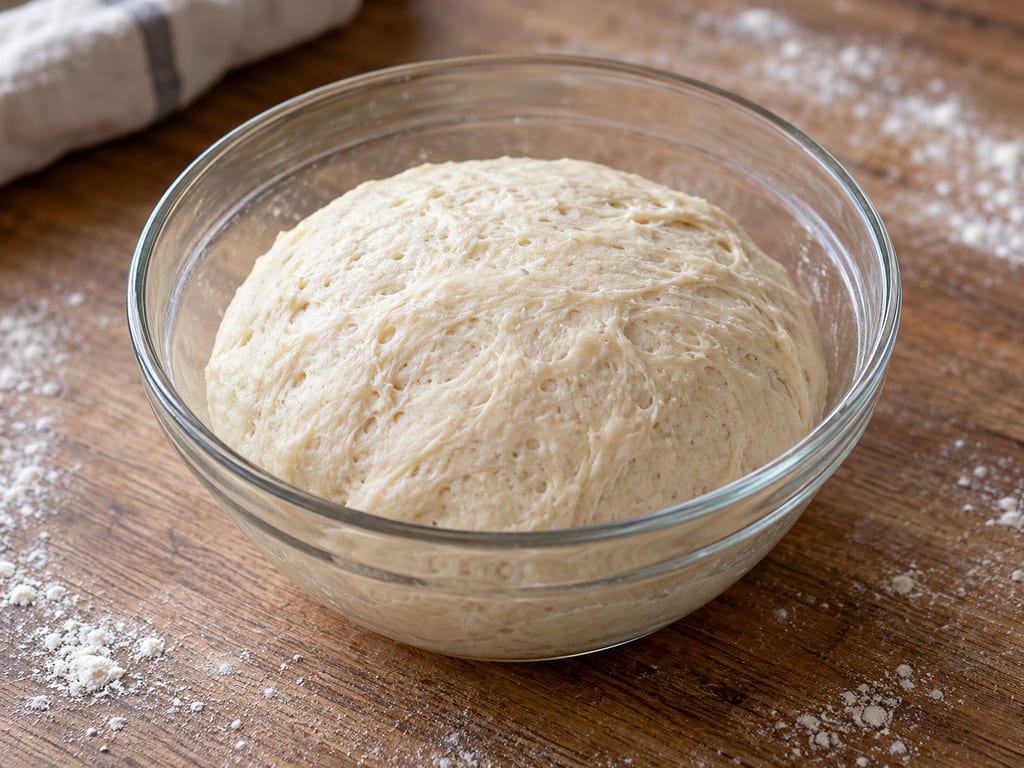
Pâte fermentée is a bread preferment made from salted, yeasted dough set aside to ferment and mixed into a later batch, carrying developed dough and fermentation products with it.
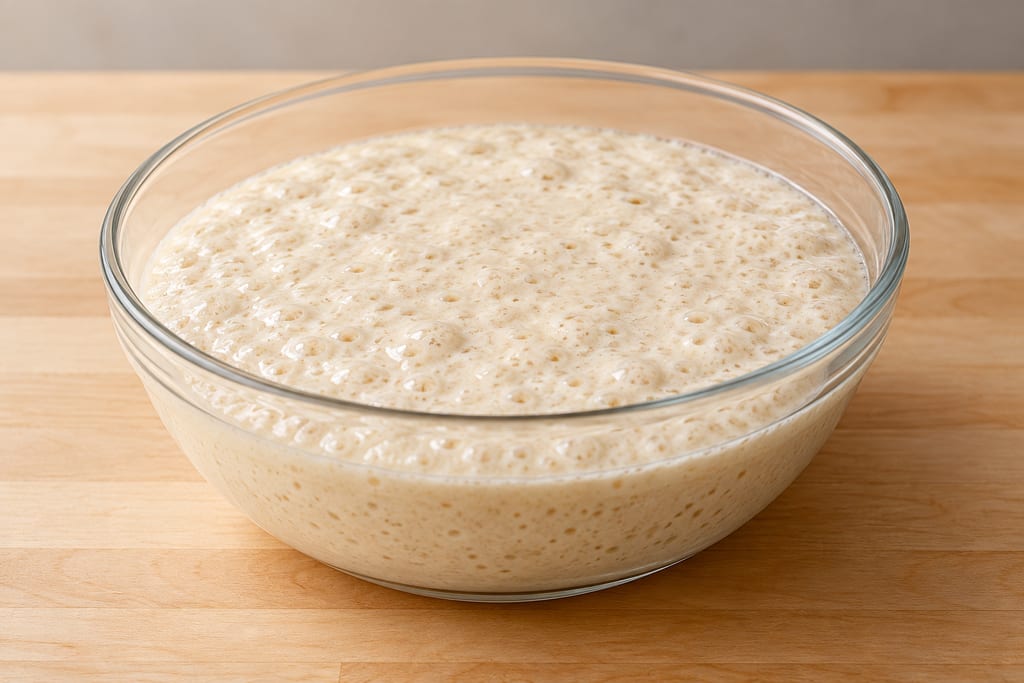
Poolish is a loose, unsalted bread preferment of roughly equal weights of wheat flour and water with a pinch of baker's yeast, left to ripen before it goes into the final dough.
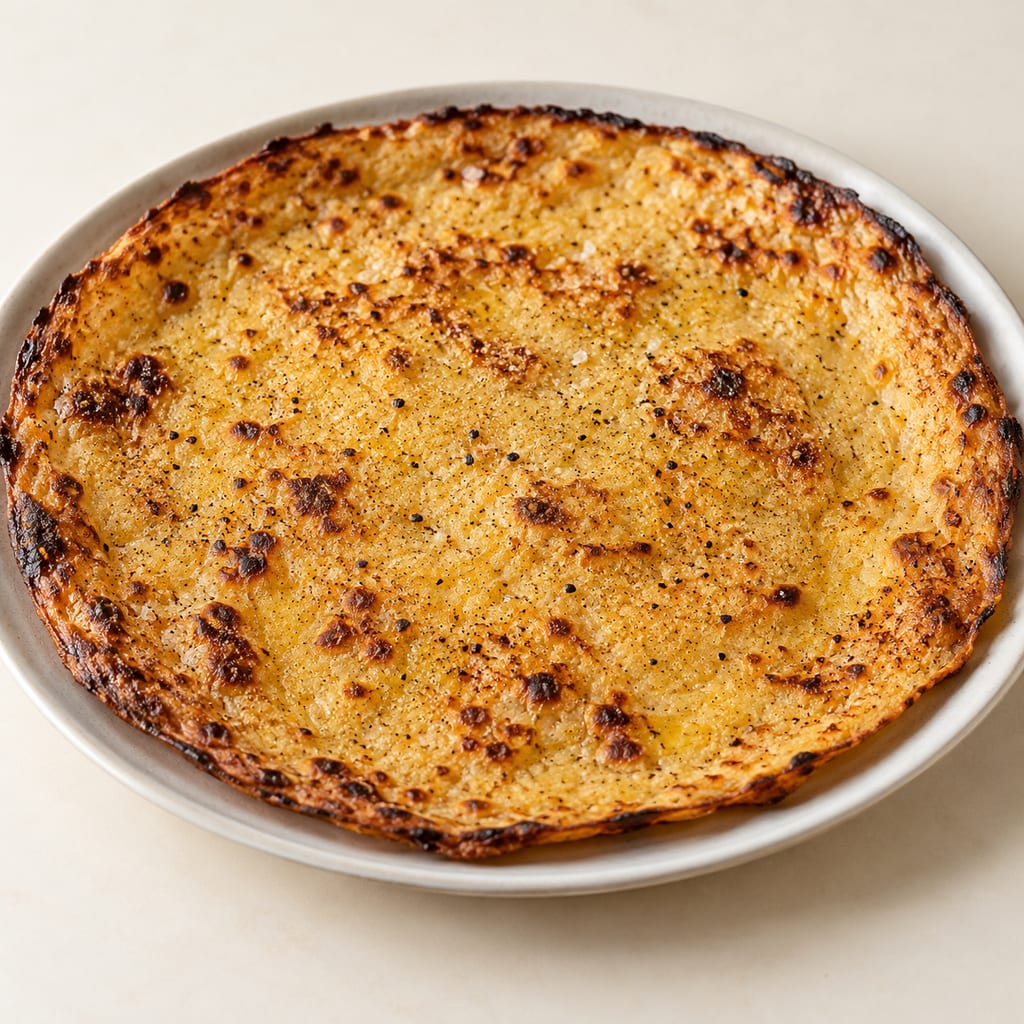
Socca is a thin chickpea-batter pancake from Nice, cooked on a very hot copper plate and served piping hot. This page follows the Nice source; the Genoa farinata formula, which conflicts on water quantity, is not blended in.
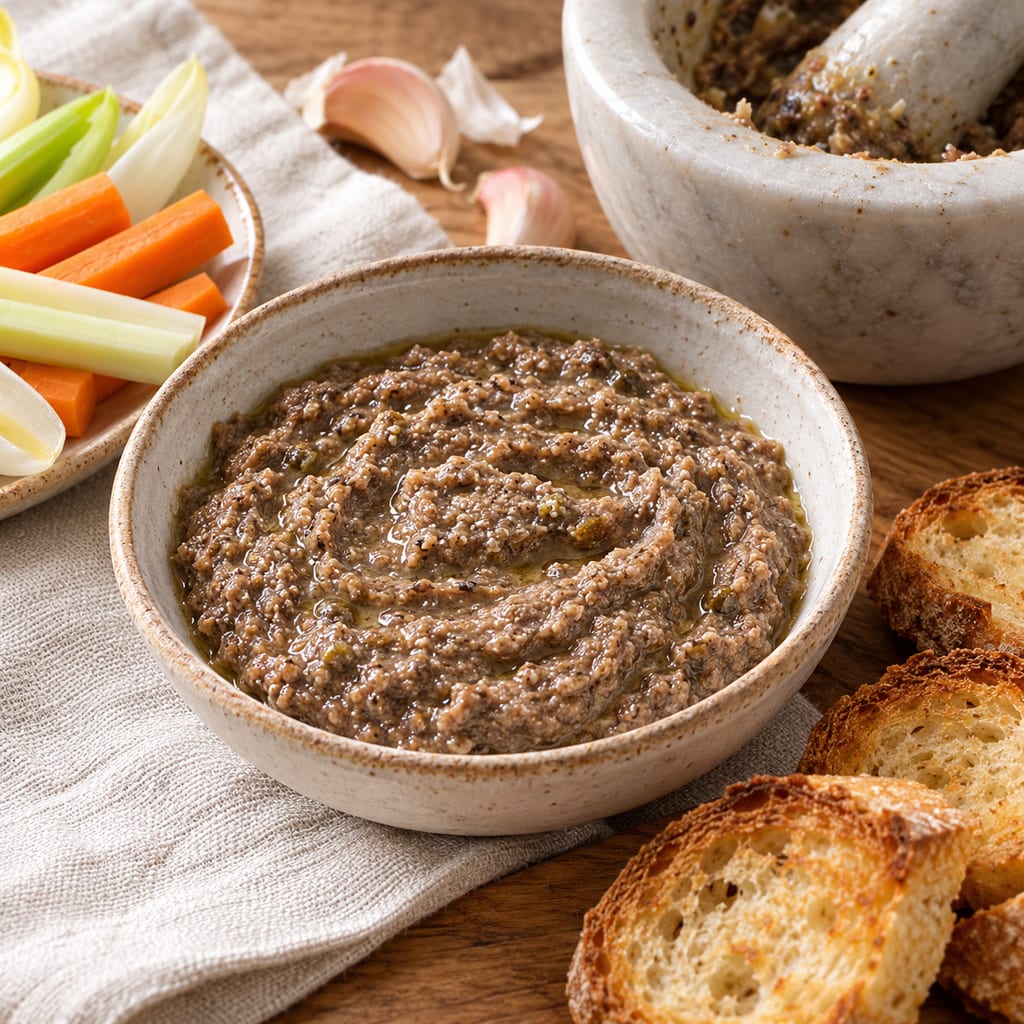
A Provencal dip of anchovies, garlic, capers and olive oil, pounded or blended to a creamy paste and served with raw vegetables, bread and eggs.
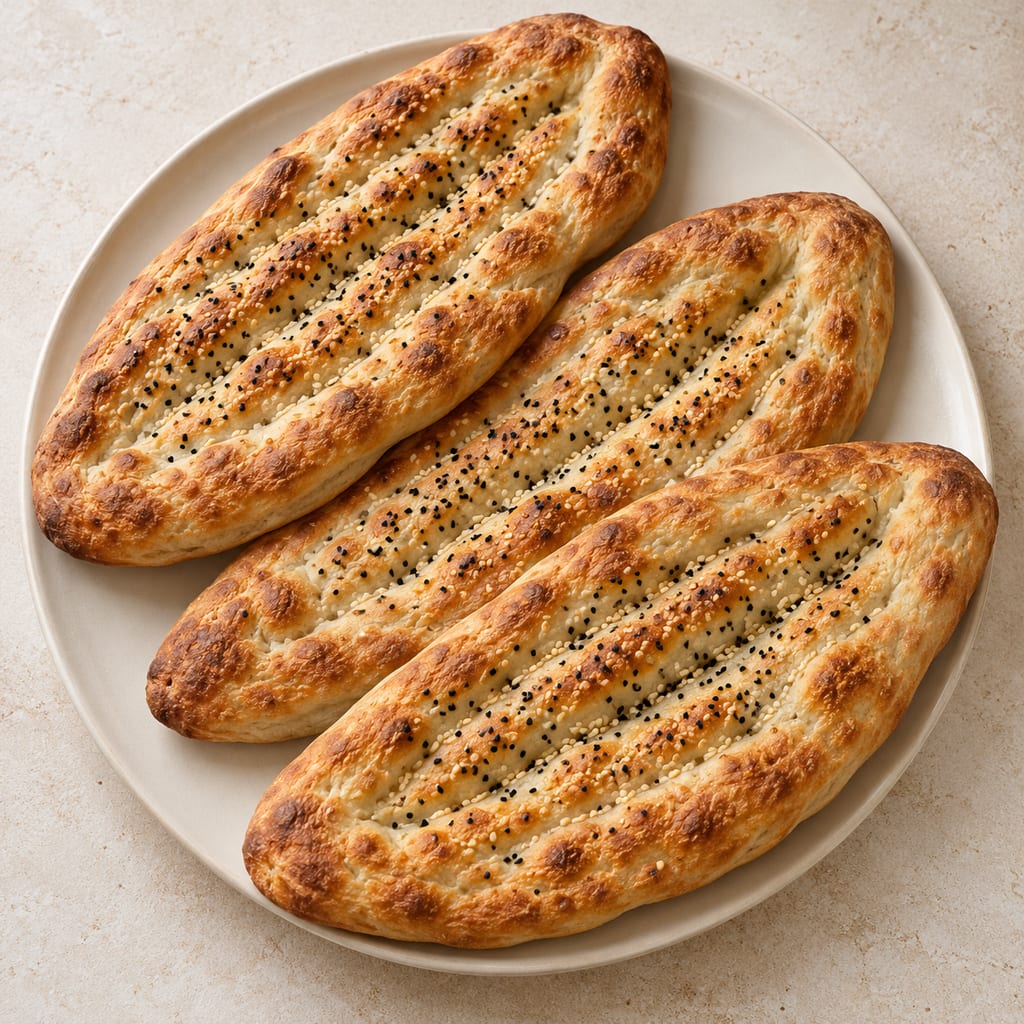
A long oval Afghan wheat bread, leavened with yeast, grooved along its length and baked until crisp outside and chewy within.
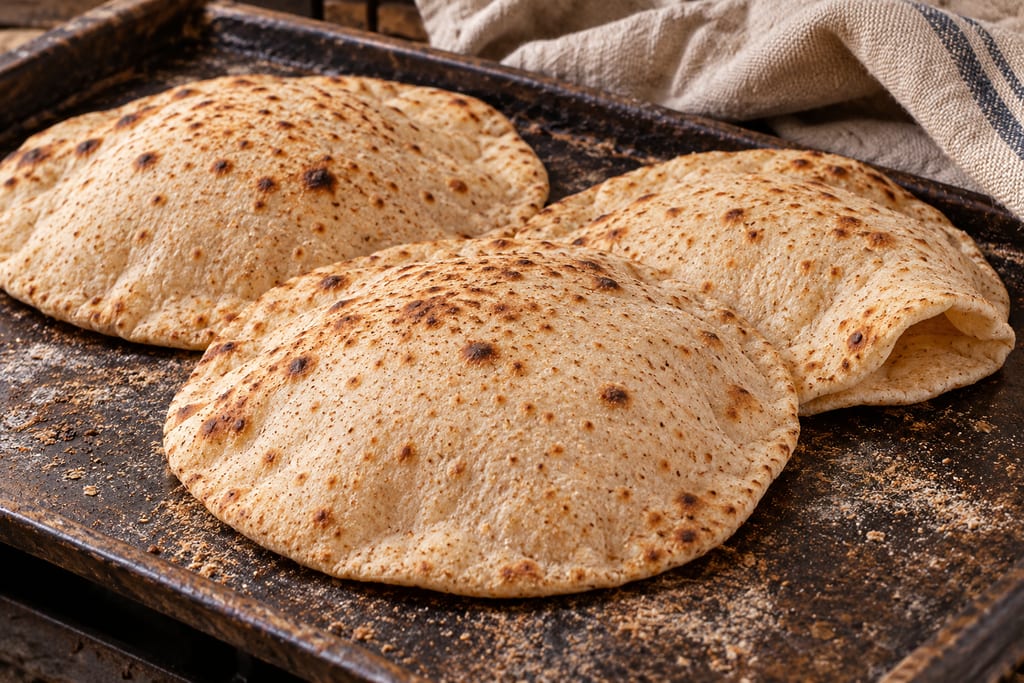
This home adaptation of Egyptian aish baladi uses a refrigerated yeast biga, whole-wheat dough, bran dusting and a very hot baking surface to make 16 pocketed rounds.
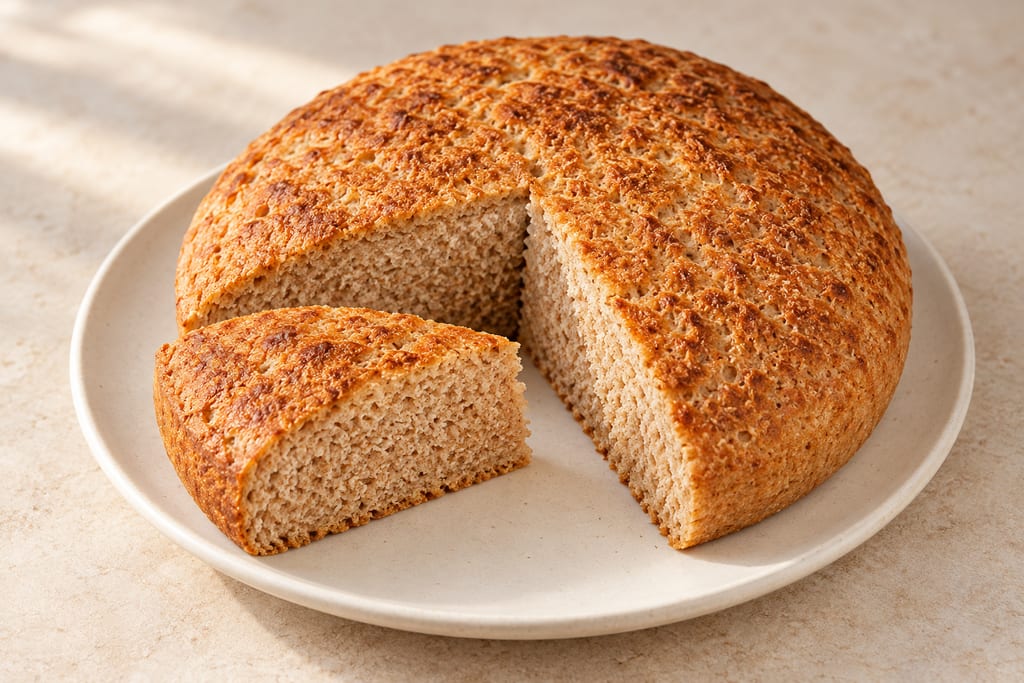
This oven-baked Amdo balep uses yeast, whole-wheat and white flour, a long covered rise and a two-sided bake in a heavy oven-safe pot.
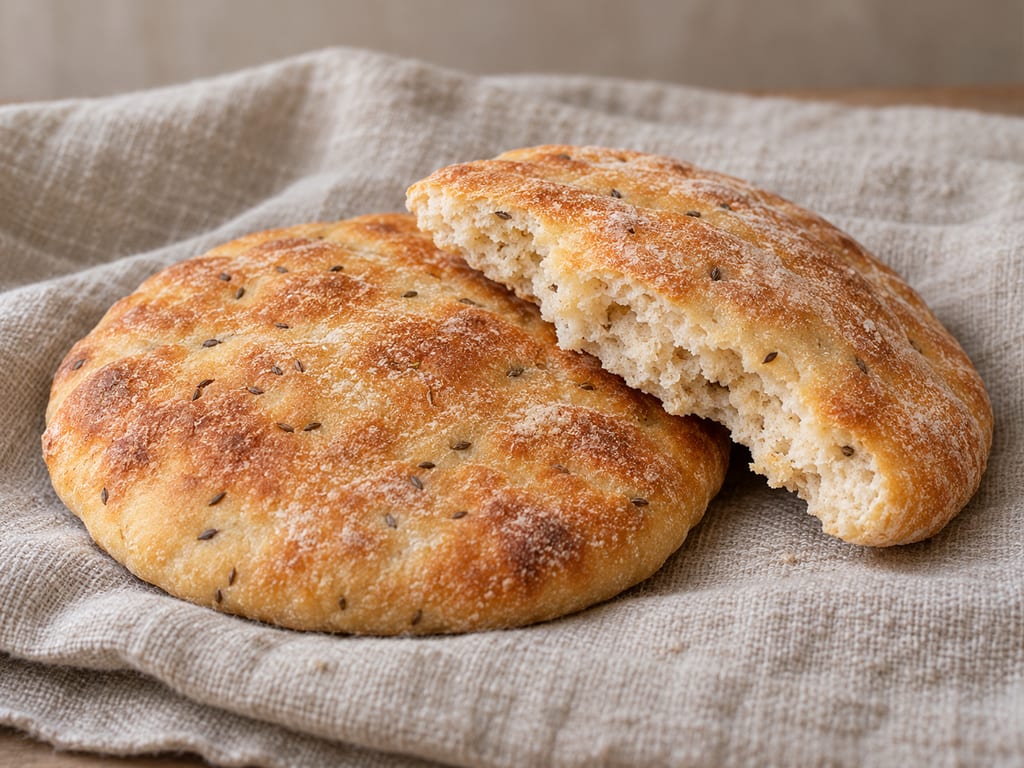
A measured, yeast-raised Ayacucho chapla home method shared by Thermomix Peru presenter Roxanna Salaverry. It makes thin, anise-scented rounds baked at 240°C; the historic qunchu-leavened form is documented separately.
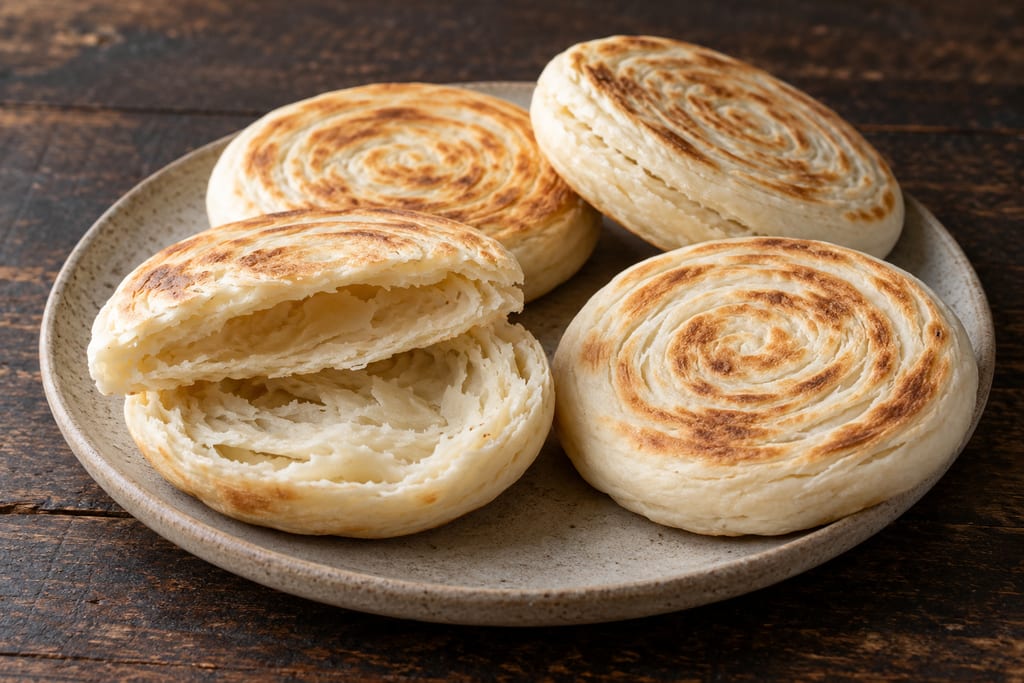
This Shaanxi-associated yeast flatbread uses a simple water dough, coiled shaping and a skillet bake. It is the bread used in roujiamo, not the filled meat dish.
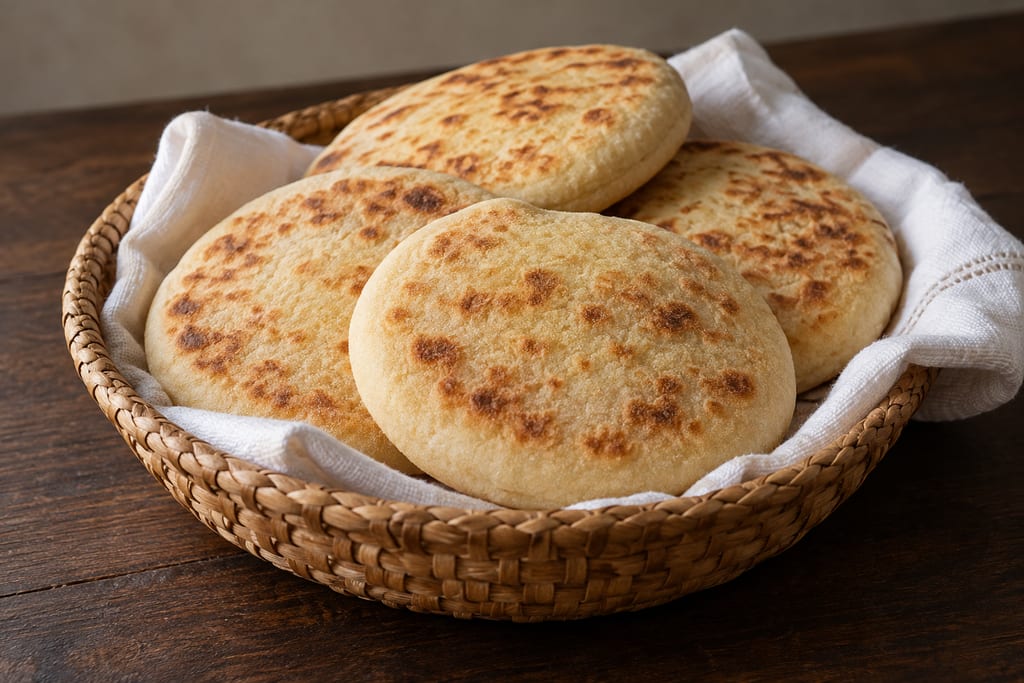
A Moroccan yeast-raised semolina pocket bread cooked on a dry pan or griddle; this measured batch makes about twenty 4-inch rounds.
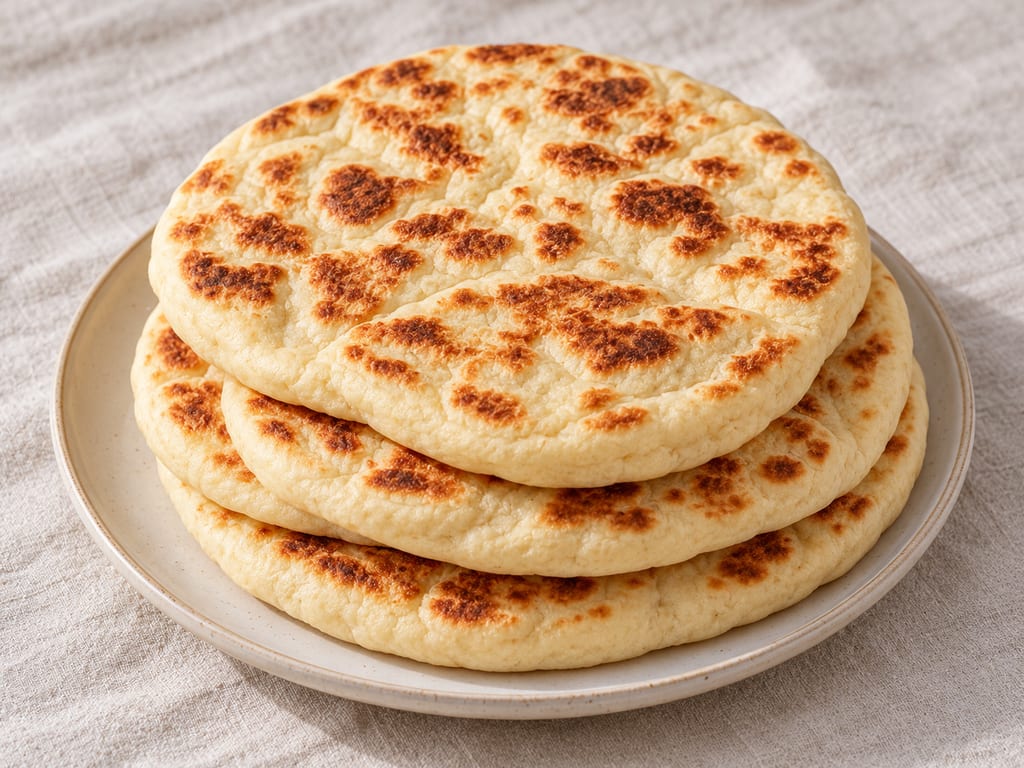
This Turkish bazlama uses yeast, plain yogurt and olive oil for a soft dough cooked in a skillet. Shape it into twelve small or six larger rounds, flip as bubbles appear, and wrap the breads to keep them soft.
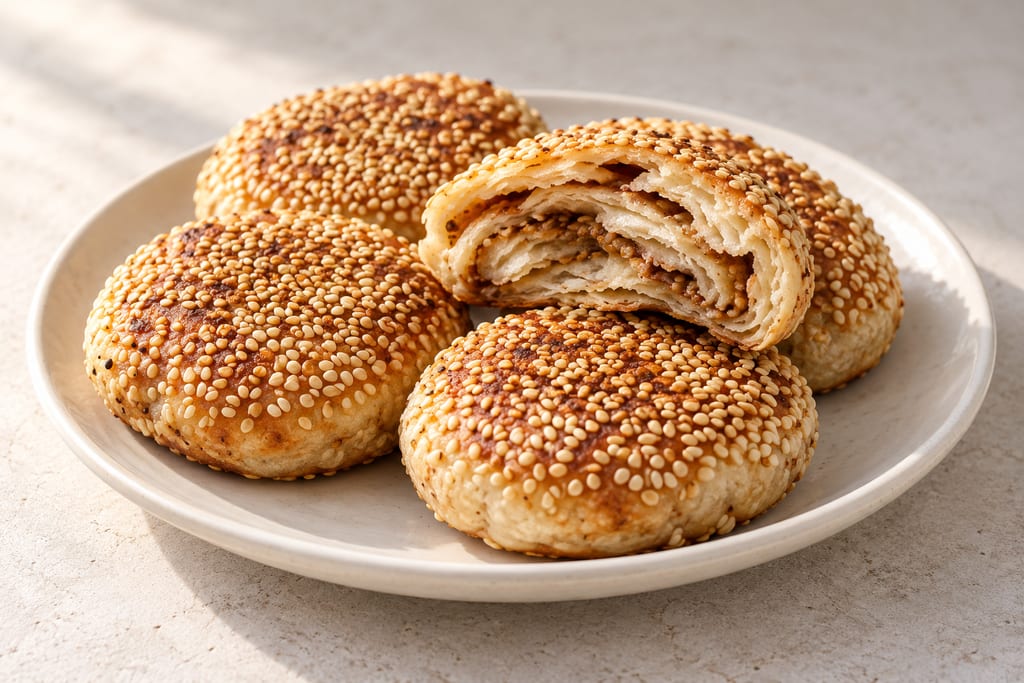
A Beijing-style yeast dough is layered with seasoned sesame paste, sealed into small buns, briefly pan-fried, seeded, and baked.
No community contributions have been published for this entry yet.
Sign in to contribute. Published comments and photos are free to read.
Le Cordon BleuInspiration · Method · History · Food use
Make fougasse the Le Cordon Bleu way this Bastille DayLe Cordon Bleu describes fougasse as typically associated with Provence but also found in other French regions, and says the recipe comes from L'École de la Boulangerie.
The recipe makes two fougasses from 540 g T65 flour, 330 g water, 5 g fresh compressed yeast, 11 g salt, 40 g olive oil and 150 g Kalamata olives, with an unspecified amount of finishing oil.
The method gives kneading, fermentation, shaping, seven slits, proofing and a 230°C, 20–25-minute bake.
Cited in: A Provençal bread with open cuts; Ferment, shape and bake
U.S. Food and Drug AdministrationSafety
Handling Flour Safely: What You Need to KnowRaw flour may carry harmful bacteria. Do not taste raw flour or dough; wash hands and utensils after handling.
Cited in: Flour and oven handling