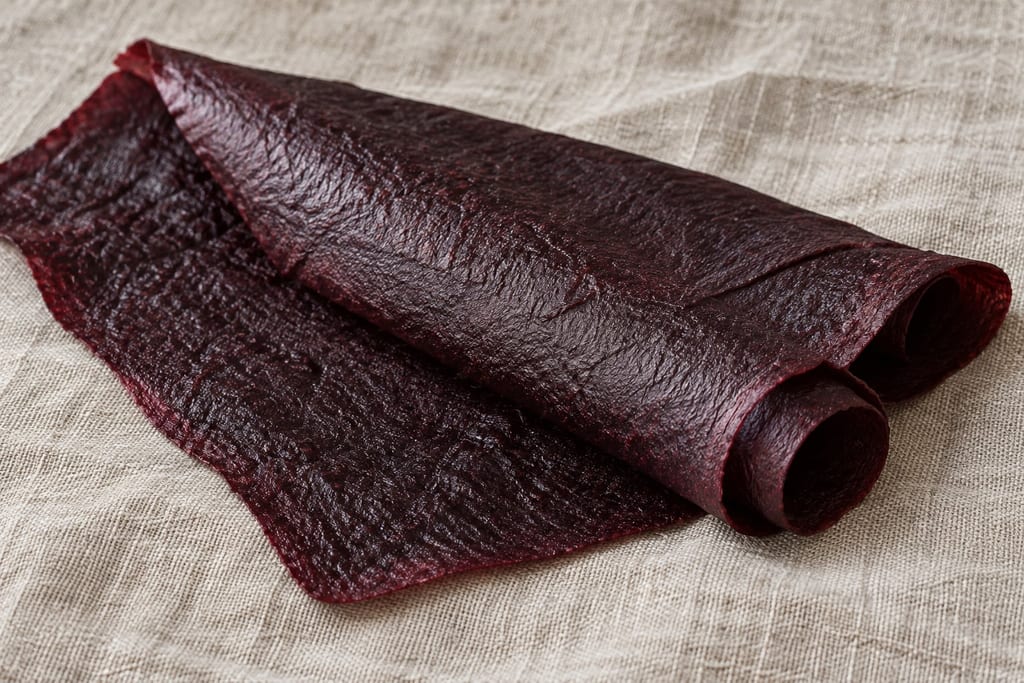
Mulberry tklapi
Georgian field notes describe mulberry tklapi with wheat flour but omit how the paste is cooked. FDA warns raw flour can carry harmful bacteria; this incomplete account is documentary, not a home recipe.
 FermenteaWhere food goes to change
Substrates
Wheat flour is milled wheat grain, from whole meal to fine white flour, used to make bread, thicken liquids and appear as an optional ingredient in fruit pastes such as Georgian mulberry tklapi.
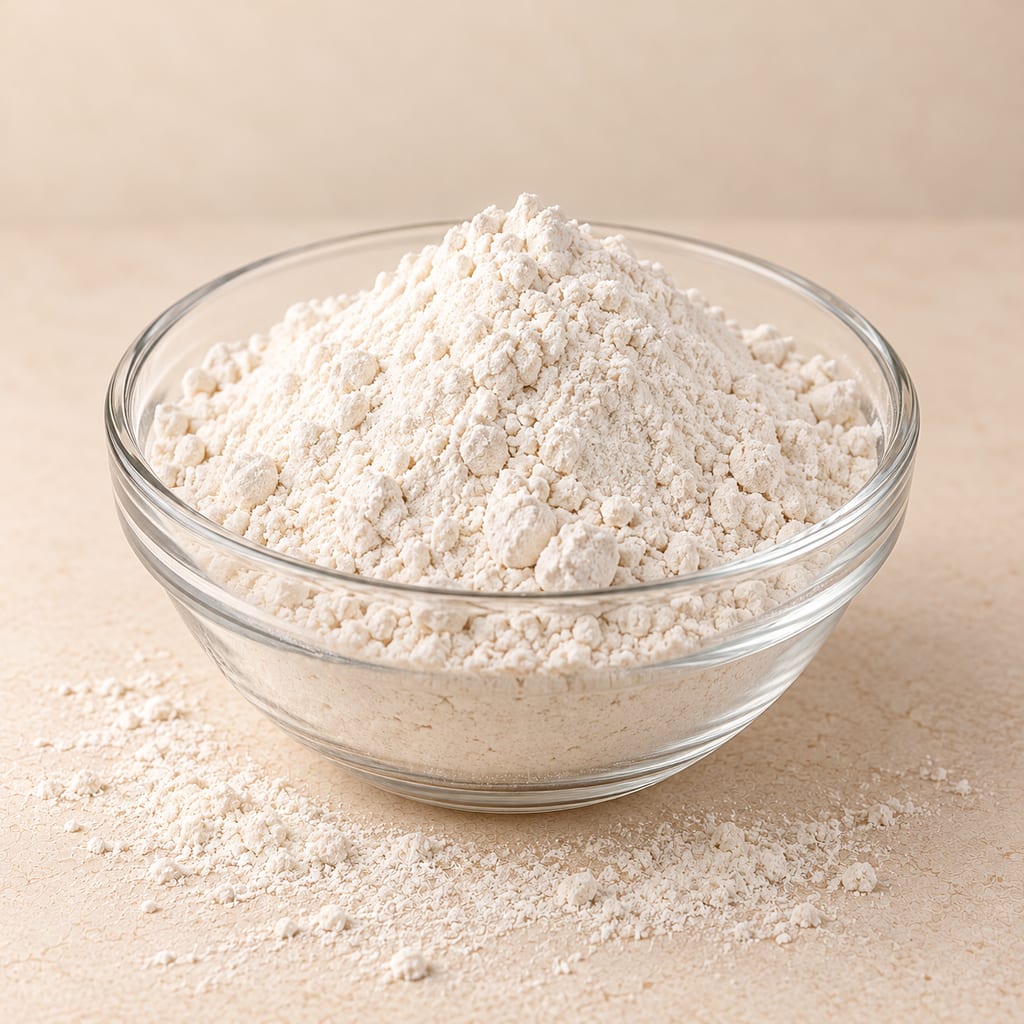
Wheat flour is wheat grain milled until the kernel is fine enough to hydrate and disperse through food. A kernel has three parts. The bran is the layered outer coat, the germ is the small embryo, and the endosperm is the large starchy store that makes up most of the grain: roughly 2 to 3 per cent germ, 13 to 17 per cent bran and 80 to 85 per cent endosperm. Whole wheat flour mills all of it into the powder. Most white flours represent only about 72 per cent of the original grain, because the dark bran and the germ are sifted away and the endosperm becomes a fluffy white flour. The flour a cook calls “wheat flour” is therefore a family of products, from a coarse whole meal to a very fine white starch-and-protein powder.
National definitions draw the line in different places. Indian standards define wheat flour, atta, as the product of milling or grinding clean wheat with nothing taken out, and maida as refined wheat flour from which the bran and germ are essentially removed. A third product, “resultant atta,” is made by blending fractions in roller mills after semolina or maida has been separated. In the United States, refined flour is enriched with iron and the vitamins thiamin, niacin and riboflavin, and most enriched wheat flours must also carry folic acid. The word that follows “flour” on a bag, such as bread, cake, all-purpose, whole wheat or atta, says more about its use than the word “wheat.”
In Georgian the word is ფქვილი (pkvili), “flour” in general; wheat flour is ხორბლის ფქვილი (khorblis pkvili), from ხორბალი (khorbali), wheat. In Meskheti, in the southwest of the country, cooks call wheat doli (დოლი) and wheat bread dolis puri (დოლის პური), and they use flour that has been sifted through a wooden sieving box and, for pastry, through a fine sieve.
Flour began as a way of eating wild grass seed. Wild einkorn went into the oldest known bread-like products, baked by hunter-gatherers in what is now Jordan about four thousand years before agriculture began. Einkorn, Triticum monococcum, was then the first wheat to be domesticated, around 10,000 years ago in the Fertile Crescent; the genetics of wild and domesticated populations point to the Karacadağ mountains of southeastern Turkey as the place. From there cultivated crops spread along two main routes, west into central Turkey and later Europe, and east into Transcaucasia, the region that holds present-day Georgia.
Georgia sits in the West Asian region that the botanist Nikolai Vavilov named a centre of origin of cultivated plants, a major area of domestication for wheat, barley, pea, lentil and grape. A national plant-genetic-resources report records 14 cultivated wheat species in Georgia, four of them endemic: Triticum makha, T. timopheevii, T. zhukovski and T. georgicum. Farmers grew landraces of bread wheat with names such as dolis puri, khoulugo, ipqli and rachula, and the Georgian wheats have been used in breeding as a source of resistance to disease and drought; T. timopheevii, for example, is a known source of resistance to scab and rusts. During the twentieth century breeders’ varieties replaced the old ones, and the old landraces survive mostly in collections. Wheat covered between 75,000 and 200,000 hectares in the decade before the report, and winter wheat is a main dryland crop of eastern Georgia. About 95 per cent of the wheat grown worldwide is hexaploid bread wheat, Triticum aestivum, which supplies most of the world’s flour; most of the rest is tetraploid durum wheat, T. durum, milled mainly for pasta.
The first flour was made by hand. A saddle quern was a flat or dished stone with a smaller stone rubbed back and forth across it, usually by a woman kneeling behind it, and it was the main grinding tool for thousands of years. Rotary querns, two round stones with grain fed through a central eye and the top stone turned by a handle, appeared by the fifth century BC in Catalonia, where the earliest dated examples come from, and reached Britain around 400 BC. By the third century BC, animal-driven hourglass mills stood in bakeries across the central Mediterranean, and in about 25 BC the Roman writer Vitruvius gave the earliest written description of a corn mill turned by a vertical waterwheel through gears. At Barbegal near Arles, in the second century AD, two rows of eight mills stepped down a hillside.
Milling was also a source of power and money. The Domesday Book of 1086 recorded more than 6,000 mills in England, and by the early fourteenth century there were an estimated 10,000 water and wind mills. Lords claimed “suit of mill,” the right to have all the corn grown on their manor ground at their own mill, and enforced it, at times by confiscating tenants’ handmills. The miller’s payment, the multure, was taken in kind from each person’s grain, in practice anywhere from one thirtieth to one tenth. The flour of that world was whatever the stones and the sieves of the day produced.
Roller milling changed what flour was. Dedicated roller mills built in Hungary and Switzerland in the 1820s failed, and success came after Abraham Ganz introduced chilled cast-iron rolls in Hungary in 1870, with grooved rolls to break the grain and smooth rolls to reduce it. Britain’s first complete roller mill, the Albert Mills in Liverpool, converted in 1870. The driving forces were a growing taste for white bread and imports of hard wheat from North America, Russia, Australia and India, which gave a higher-gluten flour that the gradual reduction process handled well. By an 1887 survey of the United Kingdom, only 461 of 8,814 mills were complete roller mills, yet they made 65 per cent of the country’s flour. The pale, uniform flour that resulted was easier to chew, to digest and to keep without refrigeration than whole meal, because the bran and germ and their oils were gone.
Wheat flour is mainly starch with a smaller share of protein, and the two behave differently as water and heat arrive. Starch granules absorb water and swell when a flour-and-water mixture is heated. In a laboratory test on a wheat-flour suspension, the ordered structure of the starch was largely disrupted at 70 °C and the starch was fully gelatinized at 80 °C. The swollen starch thickens the liquid, and on cooling it can set into a gel. That is why a spoonful of flour stirred into a hot liquid, as in the Georgian soups below, turns it from thin to spoonable.
The protein behaves another way. Two families of wheat proteins, the gliadins and glutenins, form gluten when flour is hydrated and worked, an elastic and stretchy network that traps gas in dough. In the same laboratory test, soluble protein aggregated into insoluble polymers above 70 °C, mainly through disulfide bonds, so heat sets the protein as well. In bread dough, kneading develops that network; in the stirred pastes and soups below, nobody is trying to.
Flour also carries enzymes. Cereal flours contain amylases, which break damaged or gelatinized starch into dextrins and the sugar maltose. In dough those sugars feed yeast, raising gas production and improving crust color and flavor. Wheat flour is therefore both a structure and a food for fermentation: its own enzymes supply the sugar a culture works on.
The Meskhetian kitchen shows how many jobs one flour can do. Bread there is raised without bought yeast. Cooks keep a bread mother: while kneading, they set aside a fistful of dough, store it salted in a clay pot for a week so that it sours and acquires the ability to rise, then take it out the day before baking, knead it in a small trough and leave it overnight in a warm place. In the morning they add flour and work the dough to the size they want. The loaves named include lavash, shoti, kokora (a bread with a hole in the middle), long lavash and the round somini. Bazlama is baked on an iron saj, a large round griddle that is heated until a sprinkling of flour on it does not burn, and ukha is a thin flatbread made quickly without leavening. Kada, a layered pastry brushed with melted lard, was once baked on feast days such as Easter and weddings, and its flour is first sifted through a fine sieve.
Flour is also a thickener. Hasuta is made by heating clarified butter and bakmaz, boiled-down mulberry juice, together in a wide pan and stirring flour in slowly with a wooden spoon until the mixture thickens to a porridge-like paste, which is worked a little longer so that it loses its raw-flour taste and eaten with bread. Jifu’a is wheat flour stirred into boiling water and milk to a thin porridge. A tart soup is made by tearing dried tklapi into small pieces, softening them in cold water, adding them to boiling salted water and thickening the pot with two or three spoonfuls of flour, then adding clarified butter, onion and garlic. A nettle soup is thickened with flour stirred into a cup of its own broth, with a beaten egg added. In each, the cook is using the same property: flour dispersed in liquid and heated thickens it.
The Meskhetian tklapi shows the method at scale. Four to five buckets of cooked mulberries are pressed and strained for juice. While the juice boils, up to 4 kg of flour is stirred into a bucket of juice, thinned until it passes a strainer, and cooked at low heat with constant stirring. The grain of this flour is not named. A Georgian recipe uses wheat flour: mulberries are chopped finely, sieved and boiled to one-tenth of their volume, a thick paste of wheat flour and water is made in a separate pan and added at 0.5 kg of flour to three litres of fruit, and the dense mixture is spread over linen and dried in the sun for about a day. When the surface is lightly dampened, the sheet lifts off, is rolled up, and keeps at room temperature for a long time. The same chapter notes that tklapi can also be made without flour. Flour in tklapi is therefore an option, not a requirement.
Choose flour for its job. A recipe that says only “flour” leaves the choice of refined or whole, strong or soft, to the cook, and the difference is real: whole wheat flour keeps the bran and germ with their fiber, oils and nutrients, while refined flour has lost them. Keep flour in an airtight container in a cool, dry place with humidity below 60 per cent; refrigerating or freezing extends the life of whole wheat flour, which holds the oil-rich germ, and the package date is the guide for the rest.
Flour is a raw agricultural product. It comes from grain grown in fields, which can carry Salmonella and pathogenic Escherichia coli, and milling does not kill them. Raw flour, dough and batter should never be tasted, flour should be kept apart from ready-to-eat food because it spreads easily, hands and surfaces should be washed after handling it, and home heat-treatment of flour is not advised because it may not kill every bacterium. Baking, boiling or frying the finished food is what makes it safe. That includes the thickened soups, porridges and fruit sheets above: flour added to boiling liquid is cooked, but a sun-dried sheet is not a safety step.
Wheat is one of the nine major food allergens under U.S. labeling rules, and wheat flour contains gluten. Celiac disease, in which gluten damages the small intestine, is treated with a strict gluten-free diet, and wheat allergy is a separate immune reaction that does not cause that long-term damage. Neither condition can be managed by choosing a different grade of wheat flour.
Neither Georgian account names the wheat class, protein level, extraction or mill behind its flour, and the Meskhetian tklapi passage does not say whether its flour was wheat. No source gives a flour-to-fruit ratio that can be scaled for the Meskhetian bucket method, because the bucket size is not stated.
wheat, gluten
Flour is documented in tklapi, bread, pastry and porridge; the sources do not locate these uses more precisely than Georgia and Meskheti.
Cultivation row: wheat growing and endemic species in Georgia, separate from the preparations that use the flour.
Genetic evidence points to this area for the domestication of einkorn, the first domesticated wheat; it does not locate the origin of flour.
Georgian field notes describe mulberry tklapi with wheat flour but omit how the paste is cooked. FDA warns raw flour can carry harmful bacteria; this incomplete account is documentary, not a home recipe.
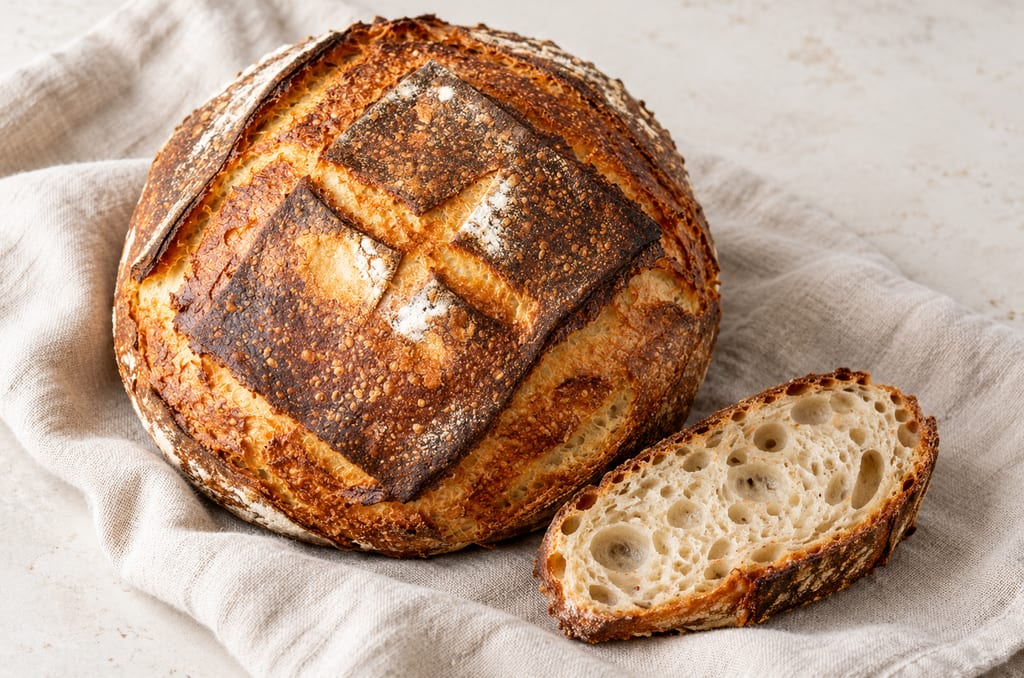
A ripe sourdough starter leavens this modern low-handling loaf. Three hourly folds organize the sticky dough before a long refrigerator rest, final proof and covered bake.
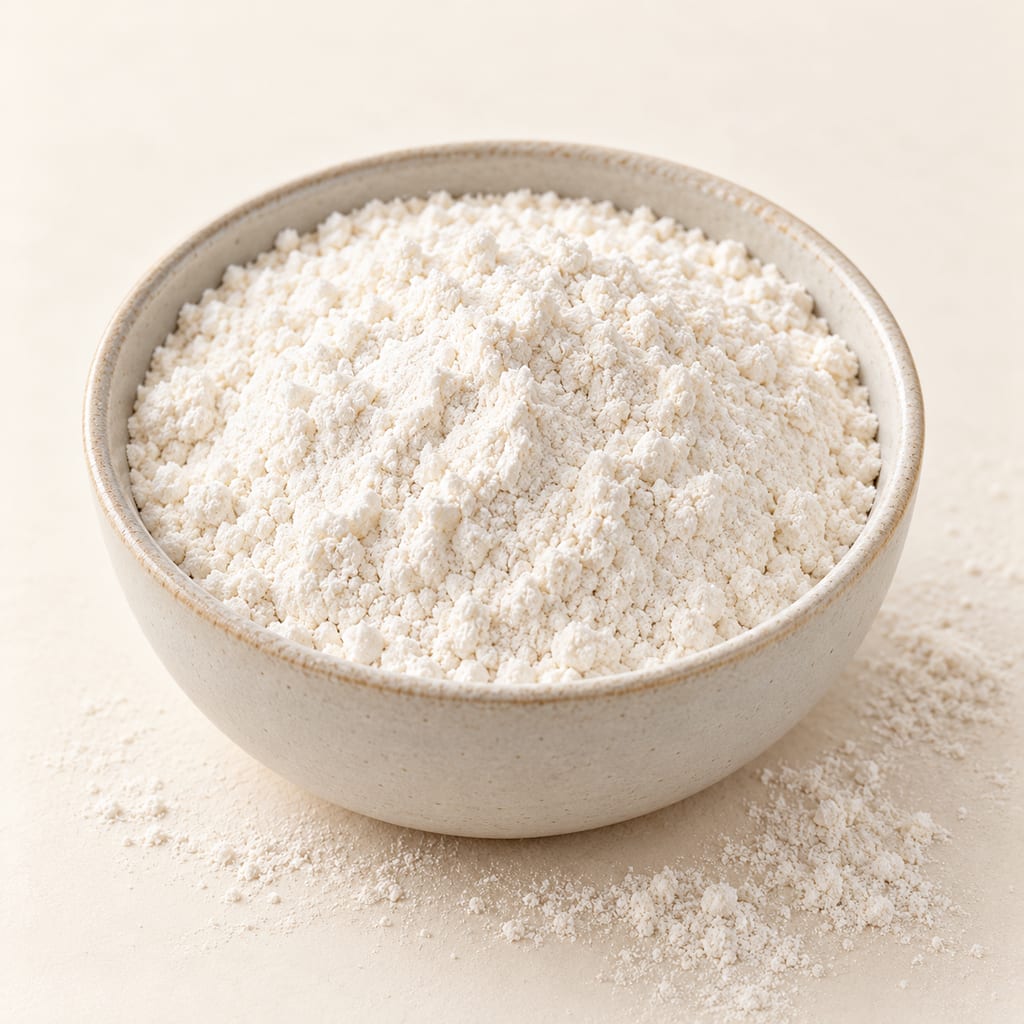
Bread flour is wheat flour chosen for dough strength and gas retention. Its protein level and baking performance vary by wheat, mill and product.
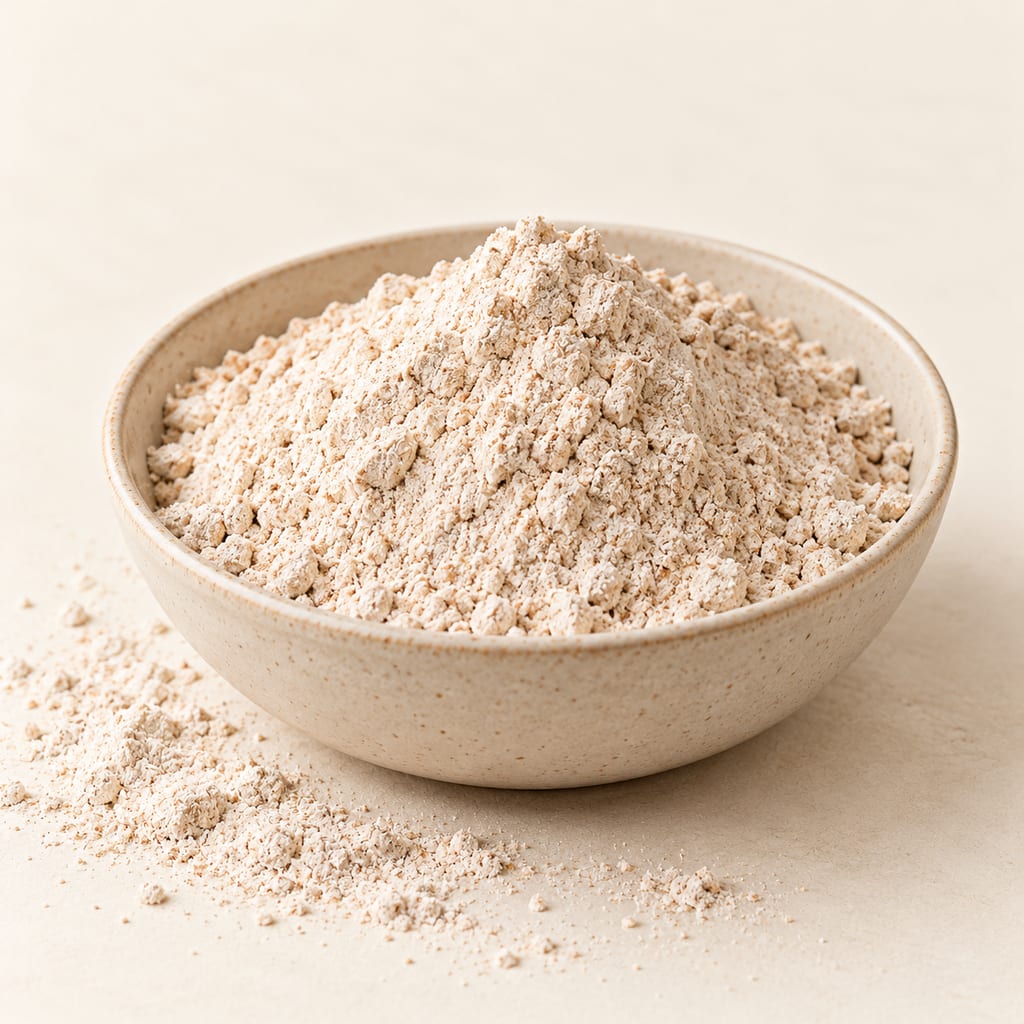
Whole-wheat flour contains the bran, germ and endosperm of wheat in their original proportions. Its fuller grain flavour and dough behaviour depend on the wheat and milling.
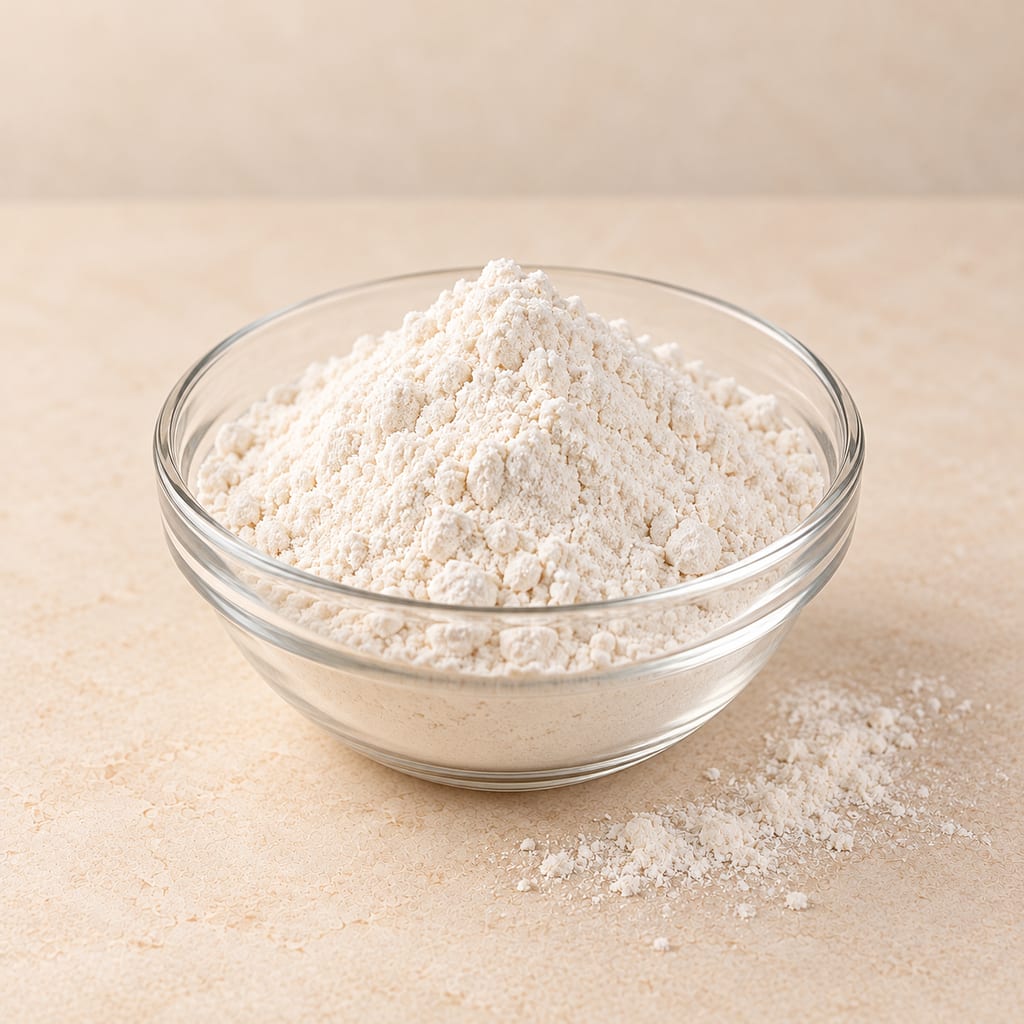
Bread flour and all-purpose flour give yeast dough its gluten network; pan de cristal and pain de mie use them in different ways.
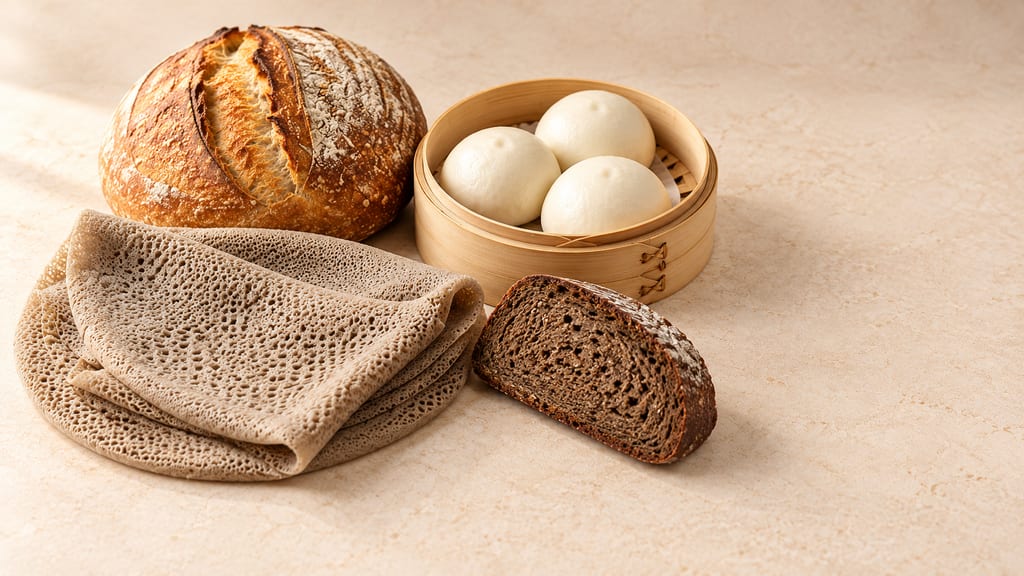
From the baguette and the steamed bun to injera, titiyas, Finnish rye and cassava bread: how grain, microbes and heat answer the question of what bread is for.

At North Abydos in Egypt, a fixed early Dynastic brewery comprised parallel semi-subterranean installations with rows of ceramic mash vats; excavation reports revise their number, scale and estimated batch capacity.

Ají amarillo is the orange-yellow Peruvian chilli cultivar group of Capsicum baccatum, used to colour and season huancaína sauce and ají de gallina. Published heat estimates do not establish one range for the named cultivar.

Toasted almonds are whole sweet almond kernels dry-roasted until golden to brown. Heat replaces their marzipan note with a roasted, nutty one; they thicken and flavour romesco.

Kodiak salmon, halibut and cod cut as seg'aq and hung on an initaq rack to become tamuuq, with kac'amaasaq and kupcuunaq named as different results.

Aniseed is the dried ripe fruit of Pimpinella anisum, an aromatic Apiaceae spice commonly called a seed. It adds a sweet, warm aroma to breads such as Moroccan krachel and South African mosbolletjies, and is distinct from star anise.

A fixed Late Chalcolithic installation in Areni-1 cave combined a shallow clay pressing basin with a large jar set into the cave floor and storage vessels nearby.

Ripe avocado flesh is the soft, buttery, fat-rich pulp of Persea americana, eaten raw. It is low in acid, so it is a fresh ingredient that needs care in chilled dishes.

A portable dome and pan used over a hearth, with embers on the lid and heat from below. Regional peka and saç forms share this principle while differing in materials, pan shape and how the food is cooked.
No community contributions have been published for this entry yet.
Sign in to contribute. Published comments and photos are free to read.
Food and Agriculture Organization of the United NationsIngredient identity · Process or context
Gardens of Biodiversity, chapter 4A Georgian mulberry tklapi: chopped, sieved mulberries boiled to one-tenth of their volume, mixed with a paste of wheat flour and water at 0.5 kg flour to three litres of fruit, spread on linen, dried in the sun for about a day, lifted after dampening the cloth, rolled and stored at room temperature for a long time; tklapi can also be made without flour.
Cited in: Flour in a Georgian kitchen; What the sources do not give
Georgian Travel GuideIngredient identity · Process or context
Meskhetian Dishes (მესხური კერძები)Meskhetian cooks use well-sifted wheat flour (ხორბლის ფქვილი) for dough; flour for kada and khachapuri is sifted through a fine sieve.
Meskhetian bread is raised with a bread mother kept from the previous dough: a fistful of dough is salted and stored in a clay pot for a week to sour, then kneaded the day before baking and left overnight in warmth before flour is added.
Breads named include lavash, shoti, kokora and somini; bazlama is baked on an iron saj and ukha is a thin unleavened bread; kada is a layered festive pastry made with lard.
Hasuta is flour stirred into clarified butter heated with bakmaz, boiled-down mulberry juice; jifu’a is wheat flour stirred into boiling water and milk to a thin porridge; tart tklapi soup and a nettle dish are thickened with a few spoons of flour.
In mulberry tklapi, up to 4 kg of flour is mixed into one bucket of juice and thinned until it passes a strainer; the passage says only “flour”.
Cited in: Wheat flour: the grain, the powder and the names; Flour in a Georgian kitchen; What the sources do not give
Georgian national authorities via FAOIngredient identity · Process or context
Country Report on the State of Plant Genetic Resources for Food and Agriculture: GeorgiaWheat is one of Georgia’s most important food grains; 14 cultivated wheat species are identified, four endemic (Triticum makha, T. timopheevii, T. zhukovski, T. georgicum); landraces of bread wheat include dolis puri, khoulugo, ipqli and rachula; old varieties were replaced by breeders’ varieties during the 20th century; wheat area varied from 75,000 to 200,000 ha; winter wheat is a main dryland crop of east Georgia.
Cited in: Where wheat comes from
USDA Agricultural Research ServiceIngredient identity · Process or context
Wheat: the Whole (Grain) StoryWheat kernels have bran, germ and endosperm; most white flours represent only 72 percent of the whole grain; whole wheat flour mills 100 percent of the kernel; refined flour is enriched with iron, thiamin, niacin, riboflavin and, in most cases, folic acid.
Cited in: Wheat flour: the grain, the powder and the names; From quern to roller mill; Choosing, storing and using it safely
FoodsIngredient identity · Process or context
Investigation on the Molecular and Physicochemical Changes of Protein and Starch of Wheat Flour during HeatingIn heated wheat-flour suspensions, starch order was largely disrupted at 70 °C and starch was fully gelatinized at 80 °C; soluble protein aggregated into insoluble polymers above 70 °C, mainly through disulfide bonds.
Cited in: What the starch and protein do
U.S. Food and Drug AdministrationIngredient identity · Process or context
Handling Flour Safely: What You Need to KnowFlour comes from raw grain, and milling does not kill Salmonella or pathogenic E. coli; raw flour, dough and batter should never be tasted; wash hands and surfaces after handling; do not try to heat-treat flour at home.
Cited in: Choosing, storing and using it safely
Nature; Ahmed et al.Origin
Einkorn genomics sheds light on history of the oldest domesticated wheatEinkorn was the first domesticated wheat, around 10,000 years ago in the Fertile Crescent, with domestication traced to the Karacadağ region of southeastern Turkey; cultivation spread west into central Turkey and Europe and east into Transcaucasia; wild einkorn went into the oldest known bread-like products, baked in Jordan four millennia before agriculture.
Cited in: Where wheat comes from
The Mills Archive Trust; Martin and Sue WattsMilling history
The first milling stonesGrain milling began with the domestication of wild wheat and barley in the eastern Mediterranean about 10,000 to 12,000 years ago; saddle querns were the main grinding tool for thousands of years; rotary querns are dated as early as the fifth century BC in Catalonia, and reached Britain around 400 BC.
Cited in: From quern to roller mill
The Mills Archive Trust; Martin and Sue WattsMilling history
The application of animal and water power: From the Mediterranean to BritainAnimal-driven hourglass mills spread through Mediterranean bakeries by the 3rd century BC; Vitruvius (c. 25 BC) gave the earliest written description of a water-powered corn mill; Barbegal near Arles had two rows of eight mills in the 2nd century AD.
Cited in: From quern to roller mill
The Mills Archive Trust; Martin and Sue WattsMilling history · Economics
Medieval mills and millingDomesday Book (1086) recorded more than 6,000 mills; windmills appear in writing from the 1180s; English mill numbers peaked at about 10,000 in the early 14th century; lords claimed suit of mill, the right to have all corn of the manor ground at their mill; the miller’s toll (multure) was taken in kind and ranged from one thirtieth to one tenth.
Cited in: From quern to roller mill
The Mills Archive Trust; Martin and Sue WattsMilling history
Roller milling: A gradual takeoverFirst dedicated roller mills in Hungary and Switzerland in the 1820s failed; Abraham Ganz introduced chilled cast-iron rolls in Hungary in 1870; Britain’s first complete roller mill, the Albert Mills in Liverpool, converted in 1870; demand for white bread and imports of hard wheat drove the change; an 1887 survey counted 8,814 UK mills, of which 461 complete roller mills made 65 percent of the flour.
Cited in: From quern to roller mill
Food Safety and Standards Authority of IndiaDefinition
Food Product Standards: Cereals and Cereal Products, Chapter 2.4Wheat flour (atta) is the product obtained exclusively by milling or grinding clean wheat; maida (refined wheat flour) is the product in which bran and germ are essentially removed.
Cited in: Wheat flour: the grain, the powder and the names
Frontiers in Nutrition; Khalid, Hameed and TahirComposition
Wheat quality: A review on chemical composition, nutritional attributes, grain anatomy, types, classification, and function of seed storage proteins in bread making qualityA wheat kernel is about 2–3% germ, 13–17% bran and 80–85% endosperm; gliadins and glutenins are the gluten-forming proteins, and the glutenin composition of a wheat accounts for more than half the difference in baking potential.
Cited in: Wheat flour: the grain, the powder and the names; Where wheat comes from; What the starch and protein do
American Society of BakingEnzymes
AmylaseCereal flours contain amylases in the endosperm, bran and germ; alpha-amylase acts on damaged or gelatinized starch and releases dextrins and maltose; the sugars feed yeast and increase gas production, crust color and flavor.
Cited in: What the starch and protein do
Clemson Cooperative ExtensionStorage
Selecting & Storing Cereals & GrainsFlour is kept in airtight containers in a cool, dry place with humidity below 60 percent; refrigerating or freezing extends whole wheat flour’s life.
Cited in: Choosing, storing and using it safely
U.S. FDAAllergen
What is a major food allergen?Wheat is one of nine major food allergens under U.S. allergen labeling requirements.
Cited in: Choosing, storing and using it safely
U.S. National Institute of Diabetes and Digestive and Kidney DiseasesDietary context
Definition & Facts for Celiac DiseaseGluten, a protein in wheat, barley and rye, triggers celiac disease, treated with a strict gluten-free diet; wheat allergy is a separate reaction that does not cause long-term damage to the small intestine.
Cited in: Choosing, storing and using it safely