Oat flour
Oat flour is milled oats, from fine whole-groat powder to flour with some bran removed; its low gluten-forming capacity changes how it behaves in dough.
 FermenteaWhere food goes to change
Flatbrød · Norwegian flatbread
Thin, unleavened Norwegian flatbread made from sifted wheat and oat flours, fine whole rye, salt and water, then rolled with barley flour and cooked on a takke.
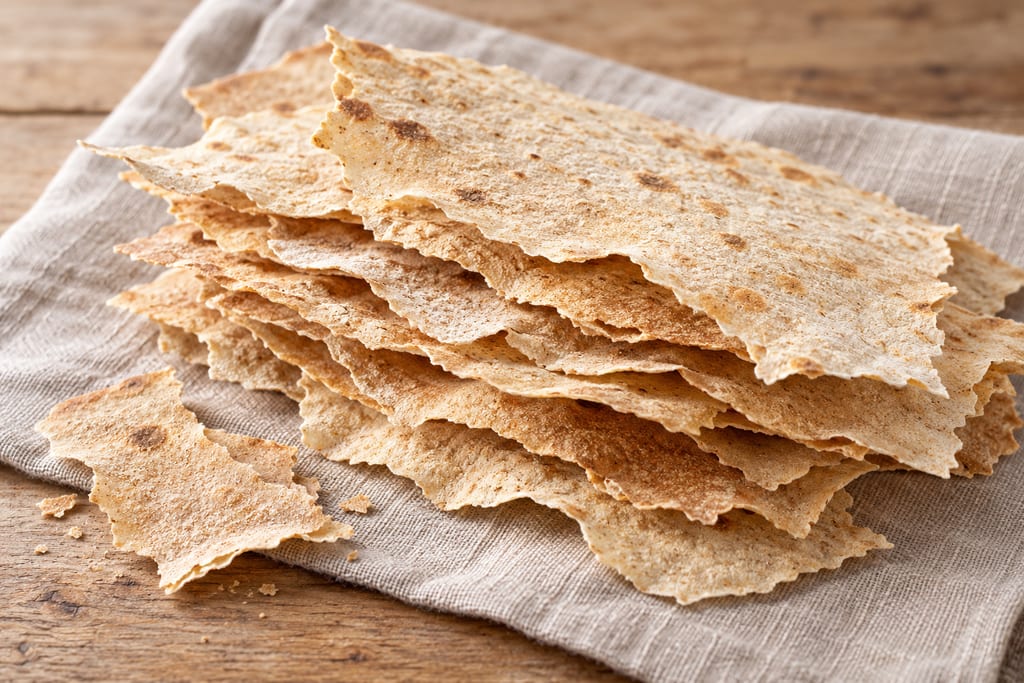
Norsk Tradisjonsmat records this recipe as an old formula from Onsøy in Østfold and attributes it to Lisa Kjenne, born in 1850. The page gives a measured mix of sifted wheat flour, sifted oat flour, fine whole rye flour, salt and water. It does not say when Kjenne wrote or used the recipe, so her birth year is not treated as a date for the formula.
The source lists 1 kg wheat flour, 600 g oat flour, 400 g rye flour, 3 teaspoons of salt and 5 decilitres of water. Barley flour is used while rolling but is not measured. The recipe page lists 60 minutes without distinguishing active and total time, and it gives no yield or size for the breads.
Stir the 1 kg wheat flour, 600 g oat flour, 400 g rye flour, 3 teaspoons of salt and 5 decilitres of water until an even dough forms. Roll it thin with barley flour and cook the flatbreads on a takke, a griddle used for this kind of bread. The recipe gives no exact thickness, dough-rest time, surface temperature or cooking duration; those measurements are not supplied by the recipe page.
The NIBIO-authored Store norske leksikon entry describes flatbrød generally as cooked on a takke until dry and crisp. It also distinguishes the crisp bread from soft lefse. Norsk Tradisjonsmat's page describes this particular dough and cooking surface but does not give a measured drying test. Visit Norway likewise describes flatbrød as a thin crispbread eaten with soup, cured meat or rakfisk; these are serving contexts, not a formula for this batch.
This dough contains raw flour before cooking. Do not taste it uncooked, and wash hands and utensils after mixing. The recipe source does not provide a validated internal doneness measure or a storage duration. Store norske leksikon says flatbrød generally keeps well when stored dry, but that broad statement is not a measured shelf life for this formula.
Norsk Tradisjonsmat presents this as an old Onsøy recipe attributed to Lisa Kjenne, born in 1850. The attribution does not date the recipe's composition. The NIBIO-authored Store norske leksikon entry describes flatbrød more broadly as unleavened, traditionally dried crisp on a takke, with historic regional grain mixtures and meal uses. These general national notes are not evidence that Kjenne's exact formula was used throughout Norway.
Scaling: source batch only
The dough contains raw wheat, oat, rye and barley flours; flour can carry harmful bacteria and should not be tasted uncooked.
Hazard sourceThe recipe cooks thin dough directly on a takke; contact with the hot surface can burn.
Hazard sourceDo not taste raw dough; wash hands and utensils after handling flour and dough.
Control sourceKeep hands clear of the hot takke and use suitable tools to turn and remove each flatbread.
Control sourceContains wheat, rye, oats and barley; it is not gluten-free.
Do not taste the raw dough; flour can carry harmful bacteria.
The takke becomes hot during cooking.
Norsk Tradisjonsmat labels this as an old Onsøy recipe and attributes it to Lisa Kjenne, born in 1850. This records the named locality of the recipe tradition, not a precise birthplace for Norwegian flatbrød as a whole.
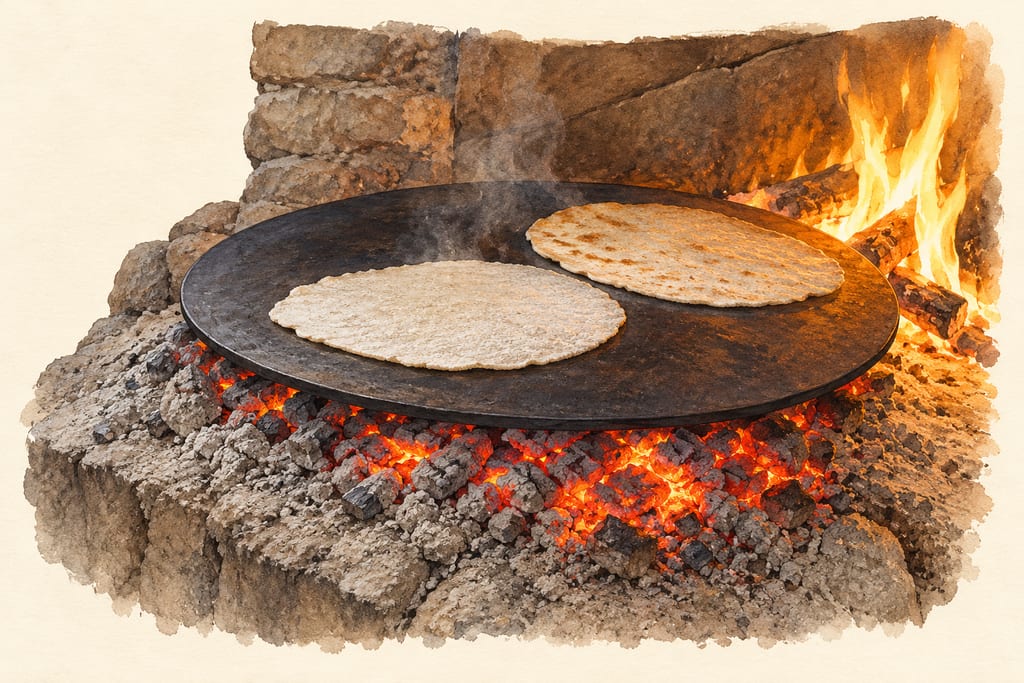
A heated iron or stone plate for fat-free baking of thin breads. Norwegian sources document the takke and stone bakstehelle, from wood-fired hearths to modern electric models.
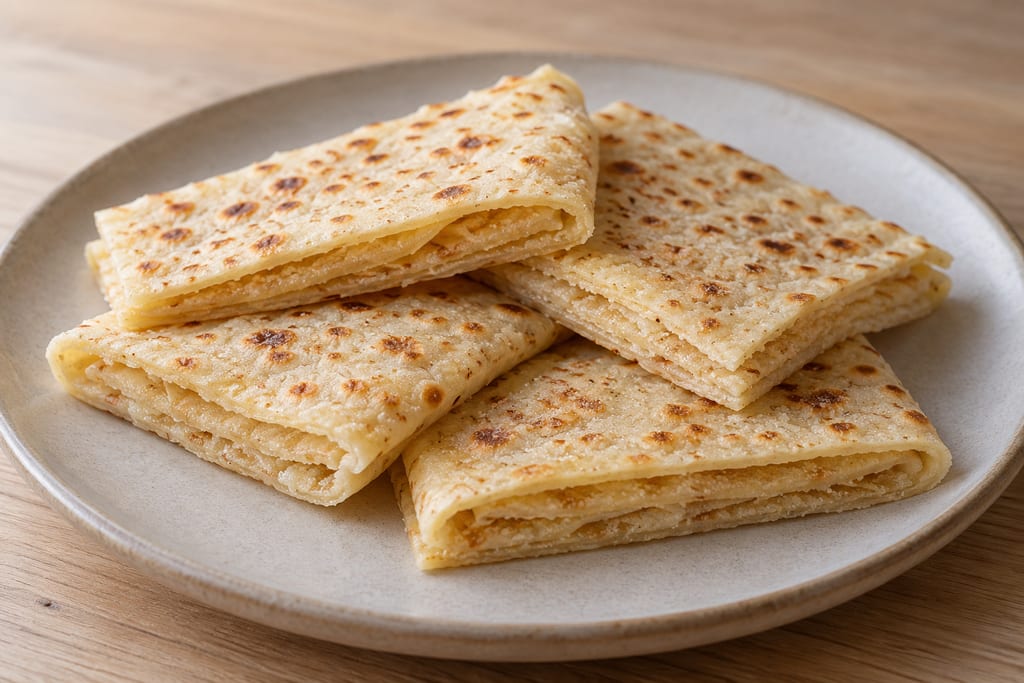
Soft Norwegian wheat and semolina flatbreads, cooked thin on a griddle and finished with butter and sugar.
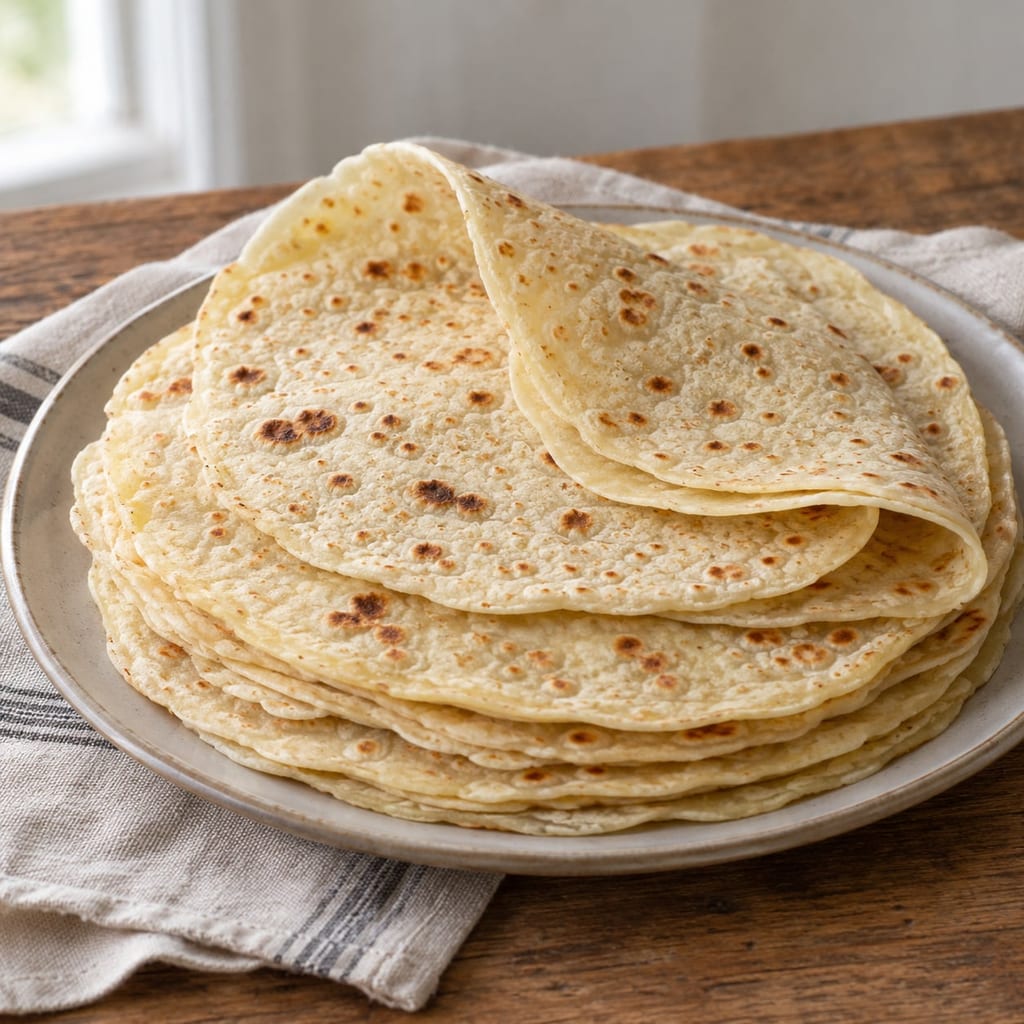
Soft Norwegian potato flatbreads with wheat and sifted rye flour, rolled into rounds and cooked on a dry griddle.
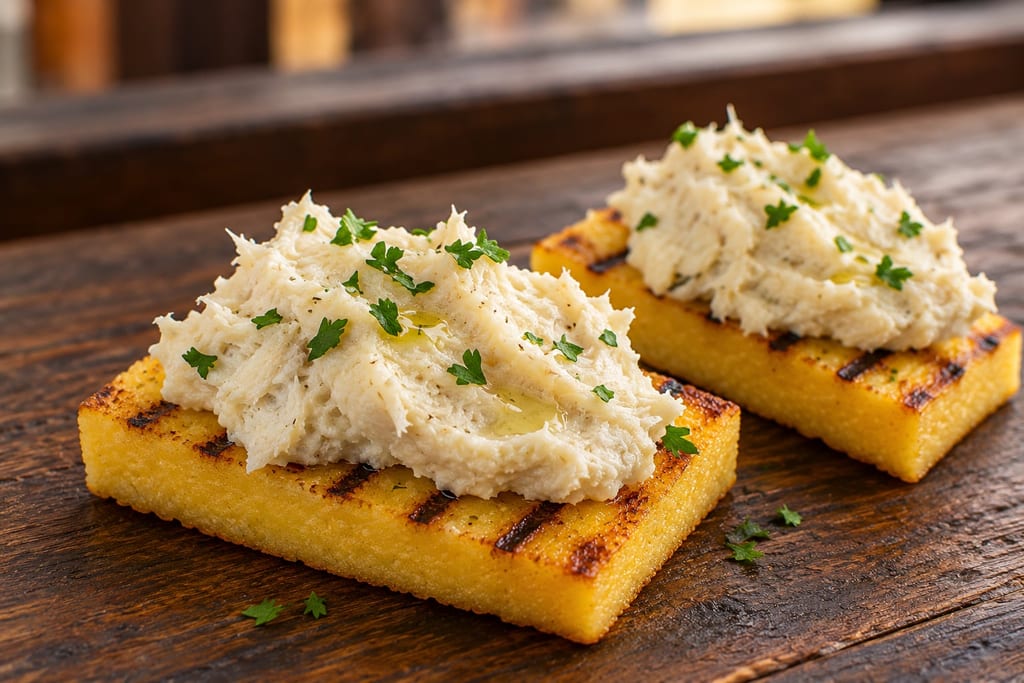
A Venetian cicchetto of cooked unsalted stockfish beaten with oil until it turns into a pale, aerated cream, spooned onto grilled polenta in the city's wine bars.
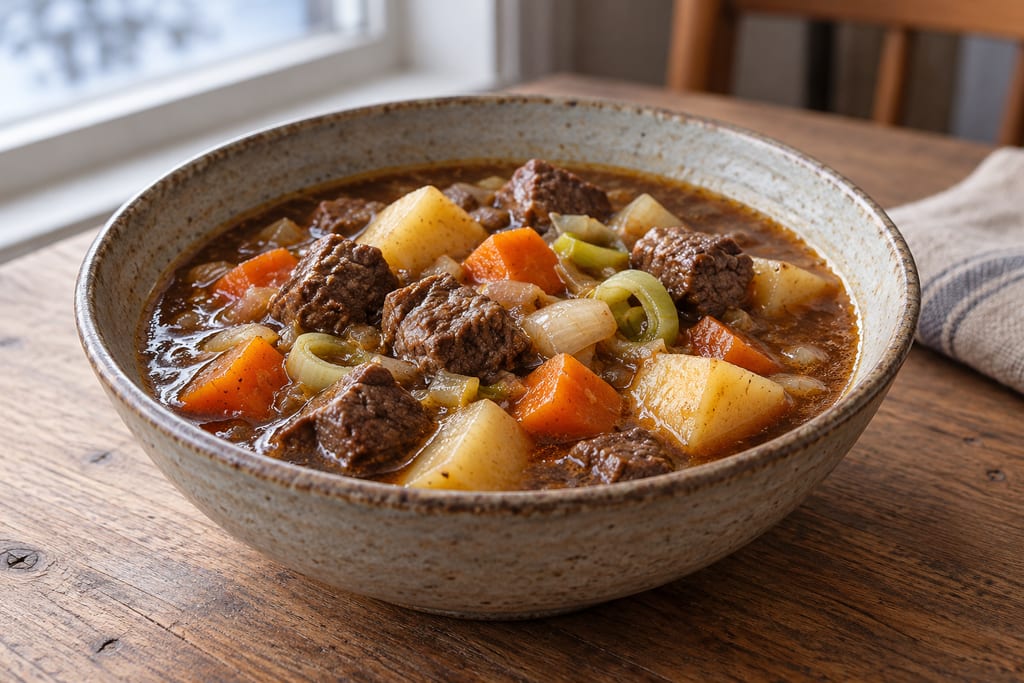
Ann-Kristine Bongo's four-serving bidus from Sami Siida in Alta is a contemporary, festive reindeer stew simmered with onion, carrots and potatoes.
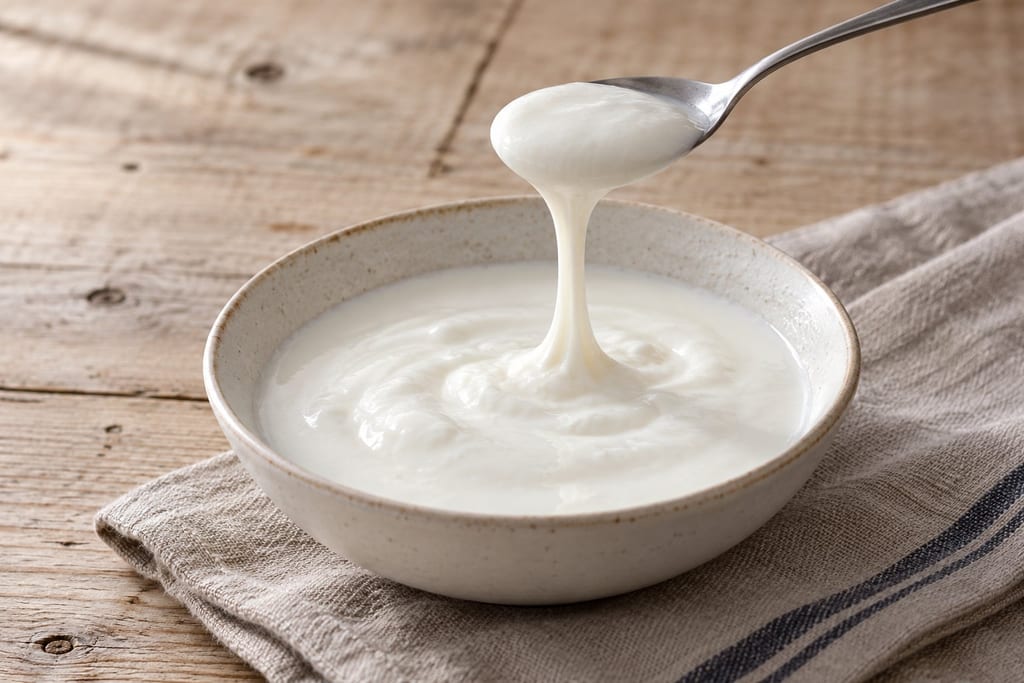
Långfil and tettemelk are traditional Swedish and Norwegian cultured milks with a mild sour taste and a stretchy texture produced by ropy lactic acid bacteria.
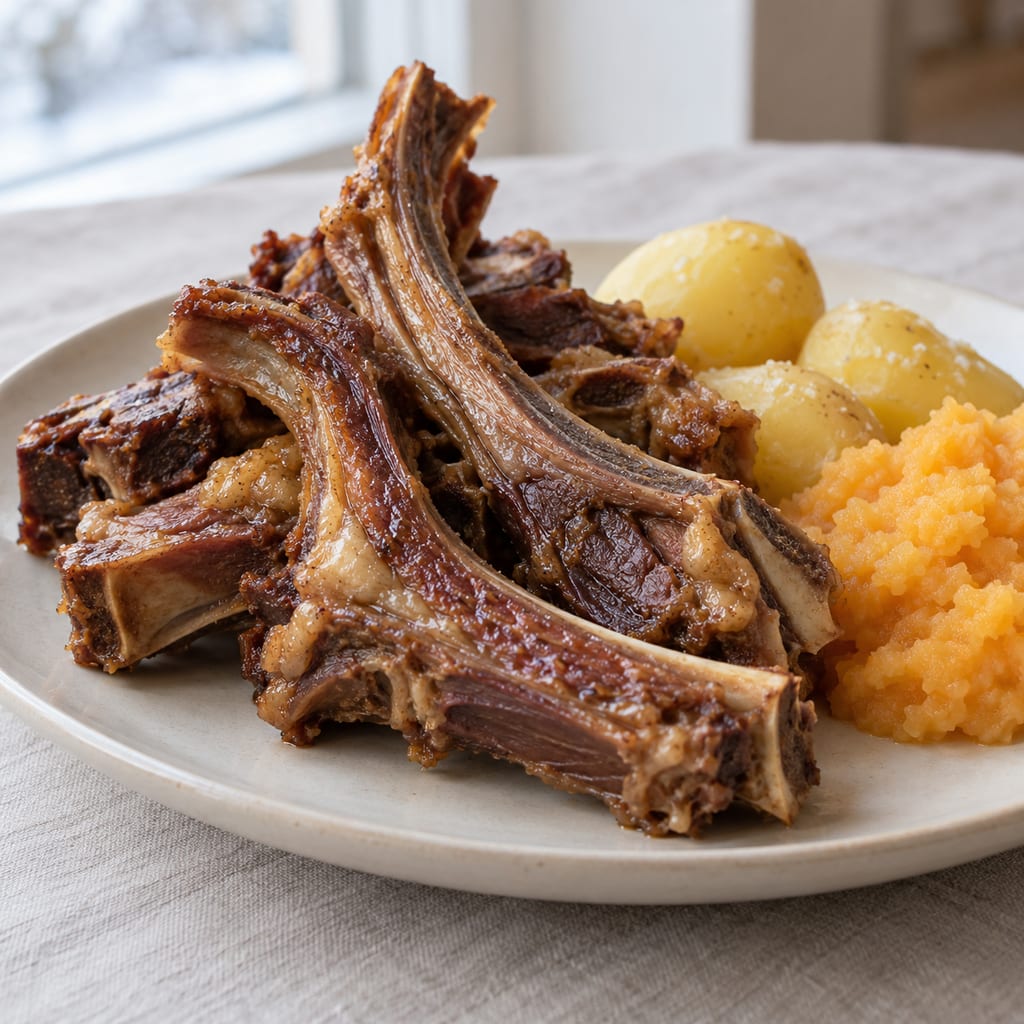
Norwegian Christmas lamb ribs, salted, matured and dried, then soaked and steamed over birch twigs. Smoked and unsmoked versions are both made.
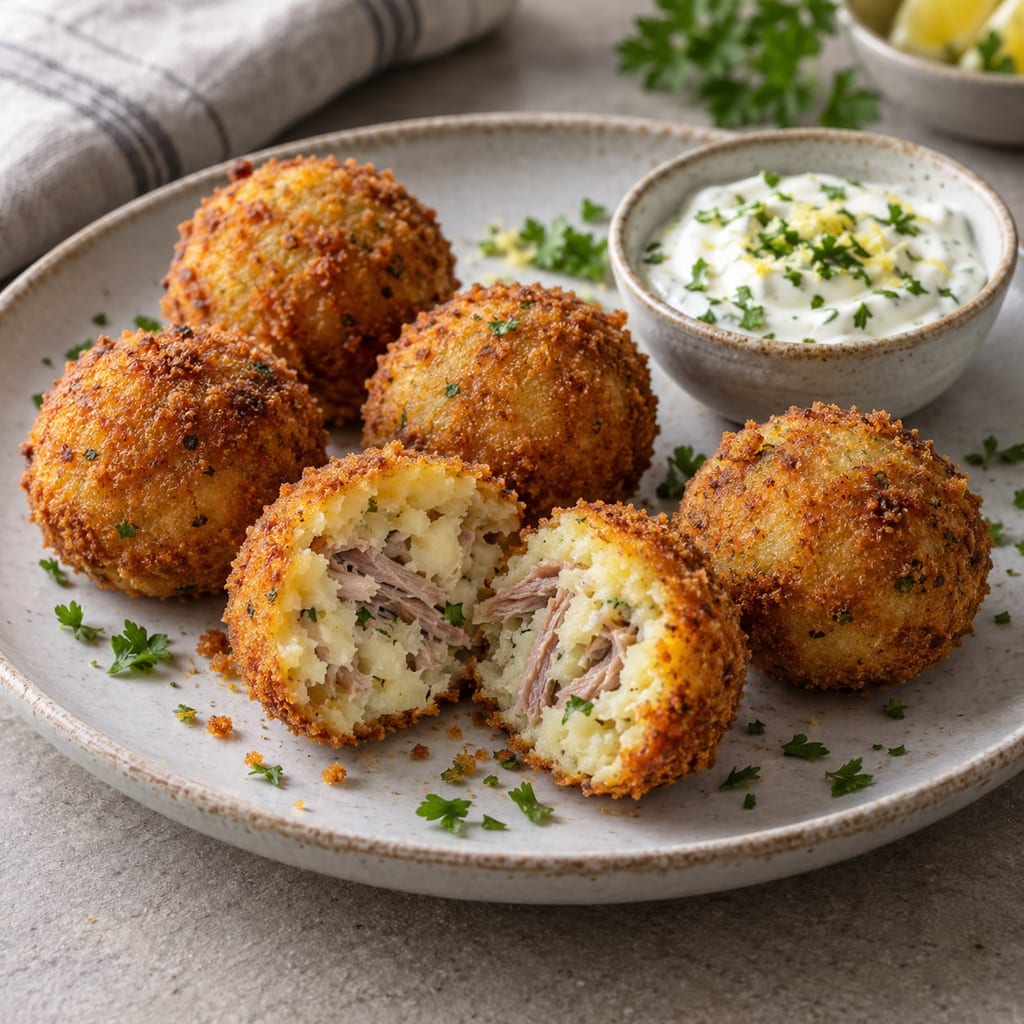
Pinnekjøttboller are potato-and-pinnekjøtt balls coated in breadcrumbs, deep-fried and served with lemon-parsley sour-cream dip.
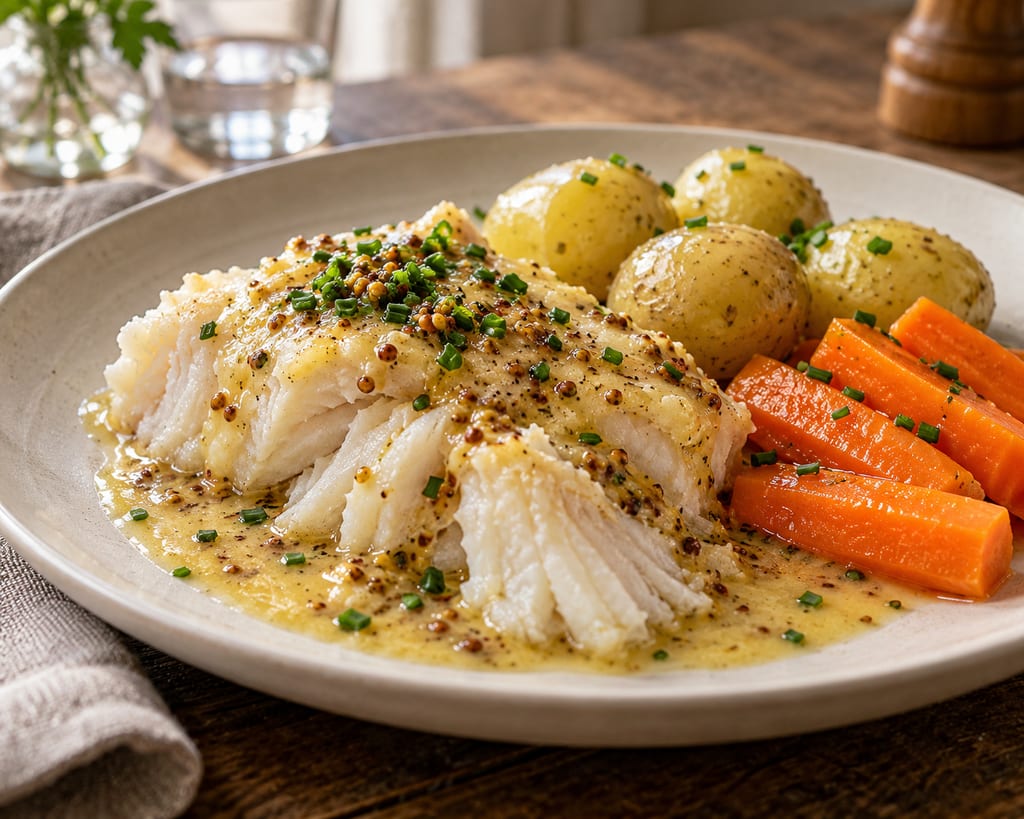
Rehydrated air-dried Norwegian cod simmered until it flakes, served with boiled potatoes and carrots under a wholegrain-mustard butter whisked from the fish's own poaching liquid.
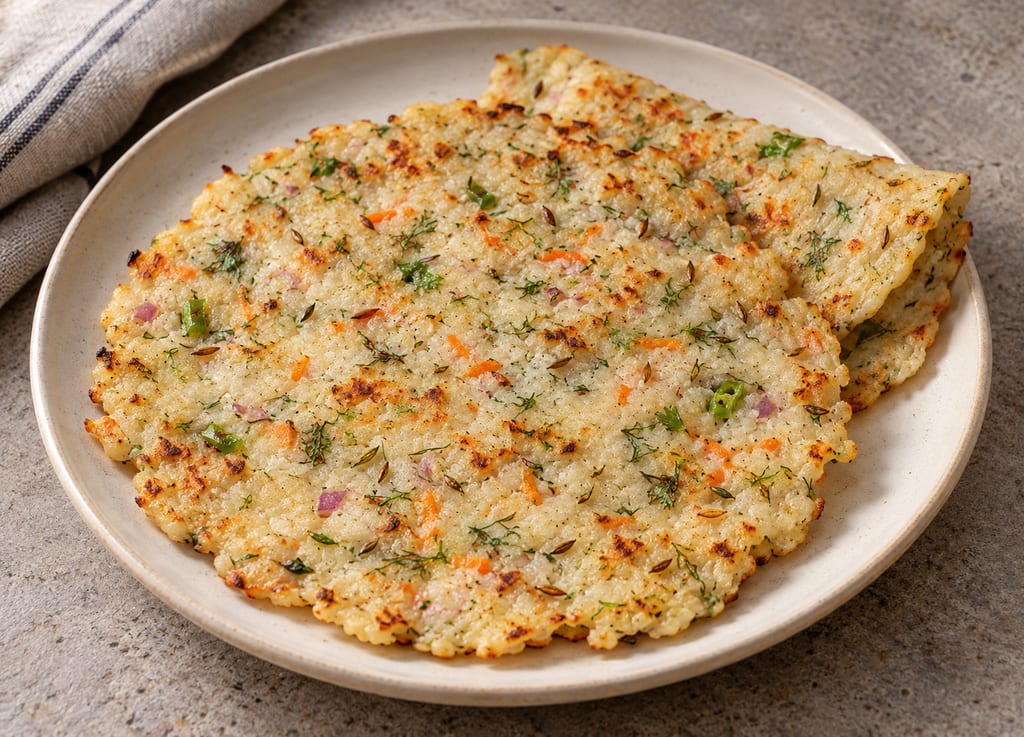
This Karnataka-style akki rotti mixes fine rice flour with vegetables, coconut, herbs and spices, then hand-pats and griddle-cooks the dough.
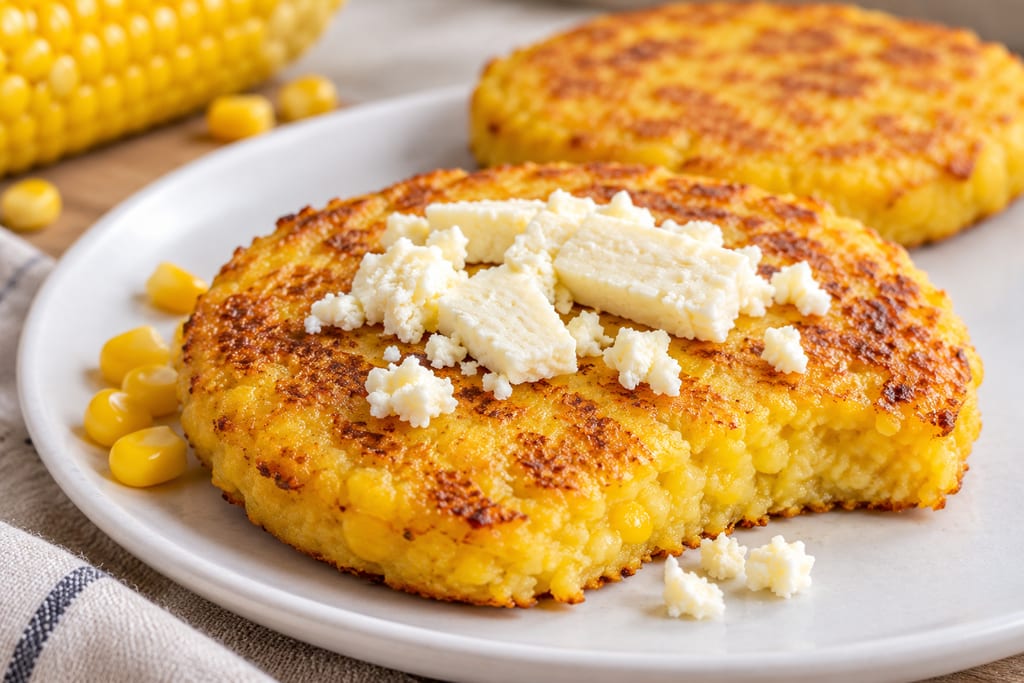
A Colombian Andean griddle cake made from fresh sweet-corn batter, cooked in butter and served with white cheese.
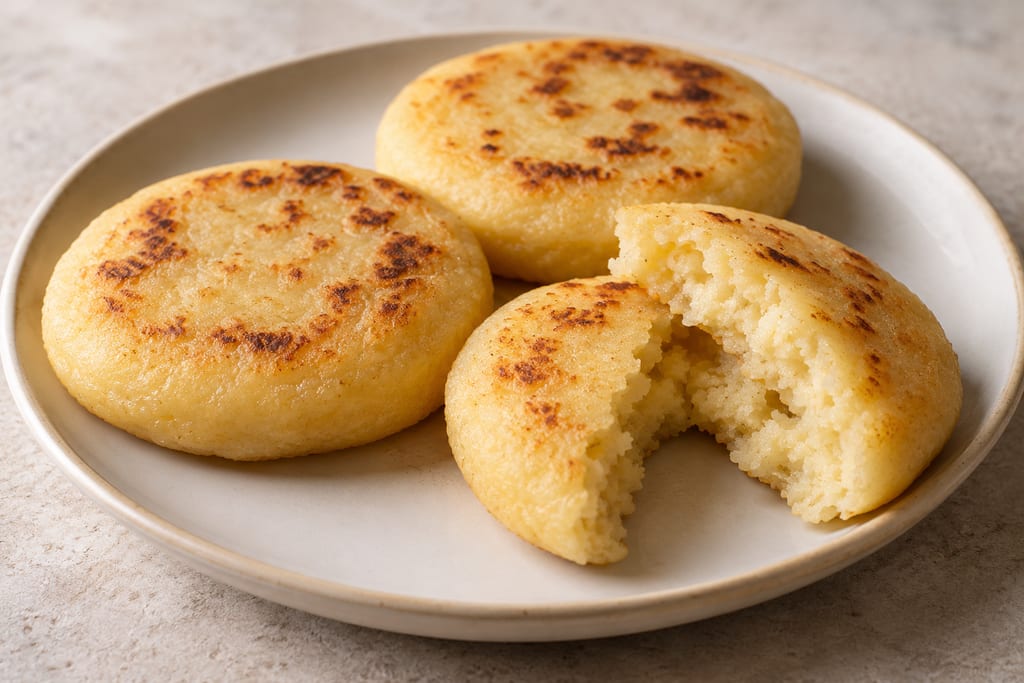
This household version combines precooked corn flour, warm water and salt, then cooks thick rounds on a lightly oiled skillet or griddle. It is one source-specific arepa method, not a universal Colombian or Venezuelan formula.
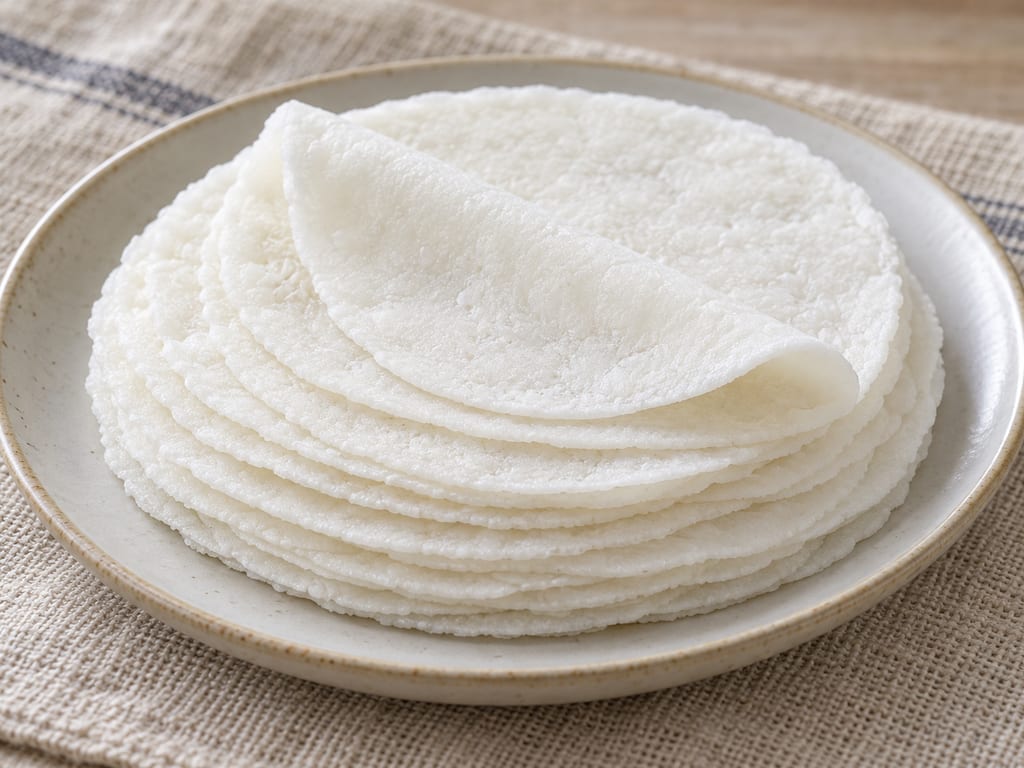
Thin Malabar rice-flour rounds made from roasted rice flour cooked into salted boiling water, kneaded after cooling, and rolled to about 1 mm. They cook on a hot griddle without taking on colour.
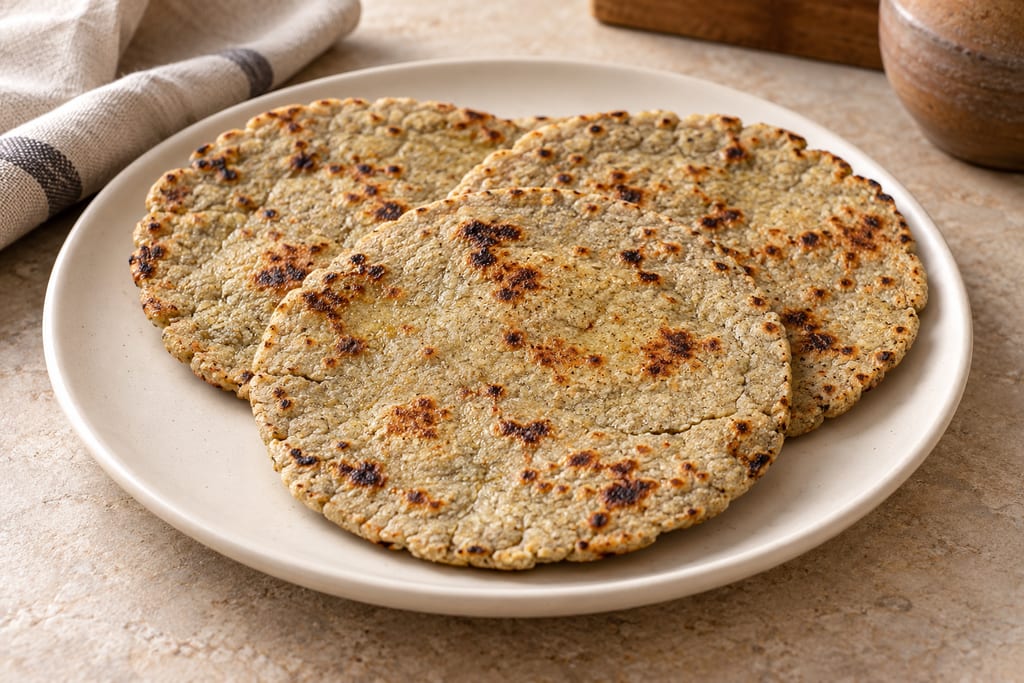
A pearl-millet flatbread shaped between sheets and cooked on a hot tawa. This home batch makes eight.
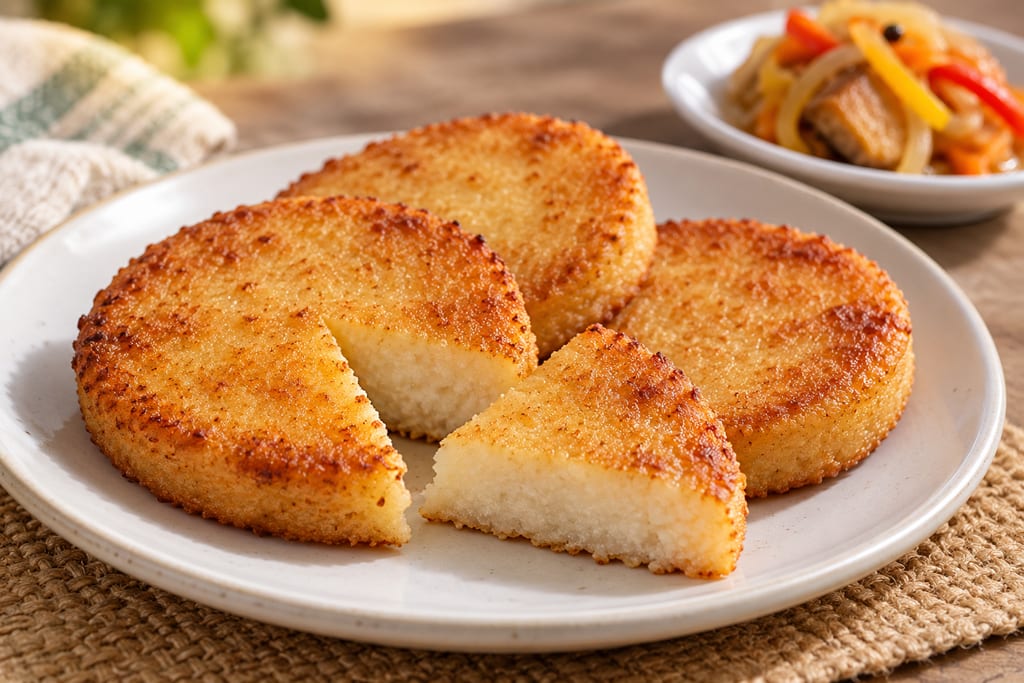
A serving method for approved, prepared bammy rounds: soak them in coconut milk and refry until golden. It does not process raw cassava.
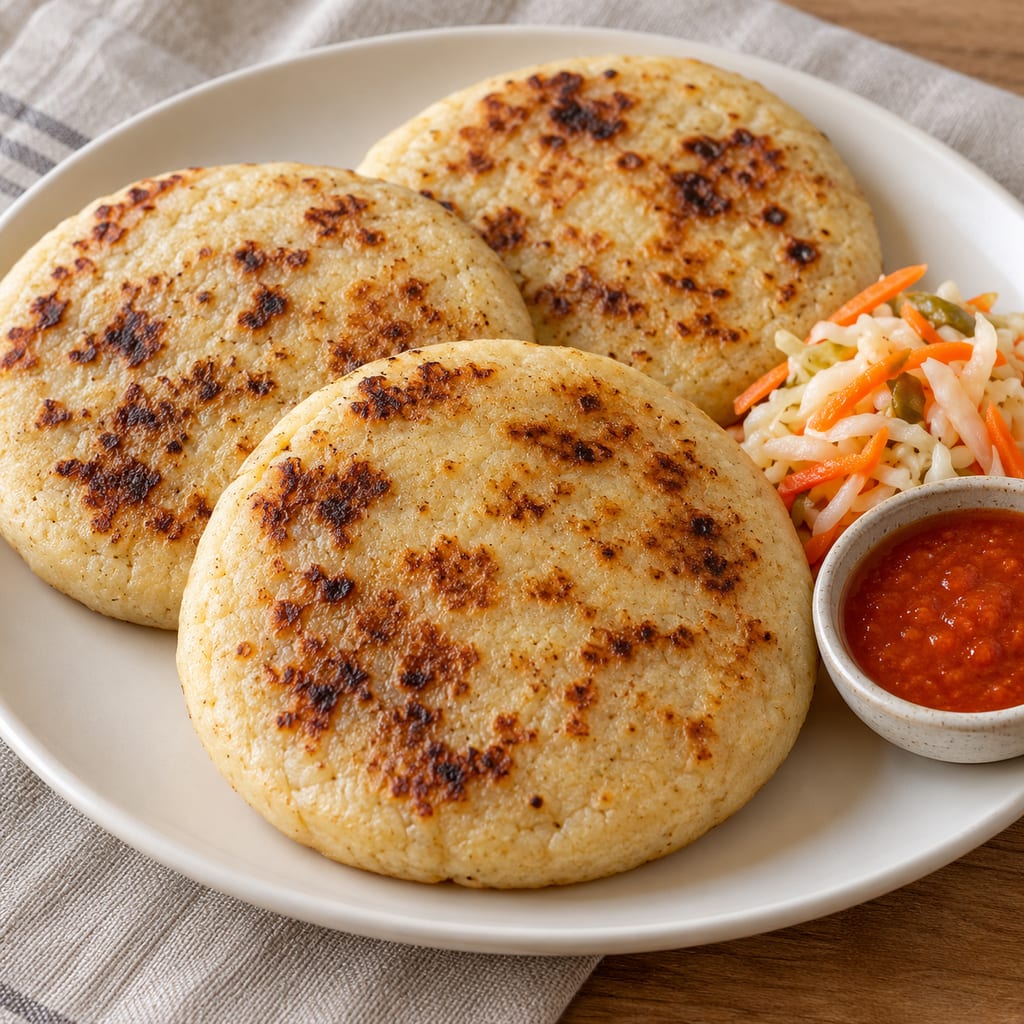
Salvadoran-style masa harina cakes filled with refried beans and cheese, sealed and cooked on an oiled skillet.
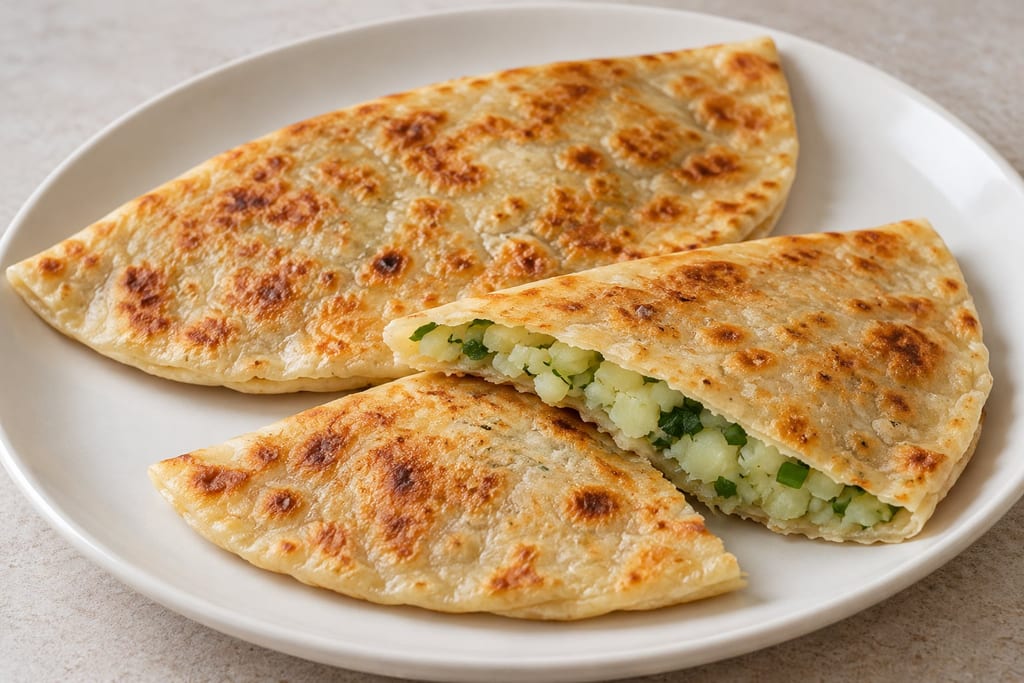
A thin, unleavened Afghan flatbread filled with mashed potato, scallion and cilantro, folded and pan-browned. This version uses a dough made from scratch.
No community contributions have been published for this entry yet.
Sign in to contribute. Published comments and photos are free to read.
Norsk Tradisjonsmat, Norges BygdekvinnelagInspiration · Method · History · Geography
FlatbrødThe Onsøy recipe lists 1 kg sifted wheat flour, 600 g sifted oat flour, 400 g fine whole rye flour, 3 tsp salt and 5 dl water; barley flour is used for rolling.
The method mixes the ingredients to an even dough, rolls thin flatbreads with barley flour and cooks them on a takke. The page lists 60 minutes but gives no batch yield, rolling thickness, cooking temperature or cook duration.
The page calls it an old Onsøy recipe and attributes it to Lisa Kjenne, born in 1850. It describes flatbrød baking twice yearly and bakstekoner baking for payment, without dating that account.
Cited in: The Onsøy formula; Roll and cook on the takke
Store norske leksikonHistory · Food use
flatbrødThe entry defines flatbrød as unleavened, rolled thin and cooked on a takke until dry and crisp; it describes flour types used more generally and distinguishes soft lefse.
The entry describes broad Norwegian historical context, including flour storage, seasonal milling and later potato use; it is not evidence for the specific Onsøy formula.
It says flatbrød is highly shelf-stable when stored dry but supplies no duration or validated storage endpoint for this recipe.
Cited in: Roll and cook on the takke; Flour and storage
Visit NorwayFood use · History
Lefse: the magic Norwegian wrapThe article distinguishes thin, crisp flatbrød served with soup, cured meats and rakfisk from soft lefse.
It gives a broad cultural account of Norwegian flatbread and lefse varieties; it does not give the Onsøy recipe or establish a precise origin date.
Cited in: Roll and cook on the takke
U.S. Food and Drug AdministrationSafety
Handling Flour Safely: What You Need to KnowRaw flour can carry harmful bacteria; do not taste raw dough and wash hands and utensils after handling flour.
Cited in: Flour and storage