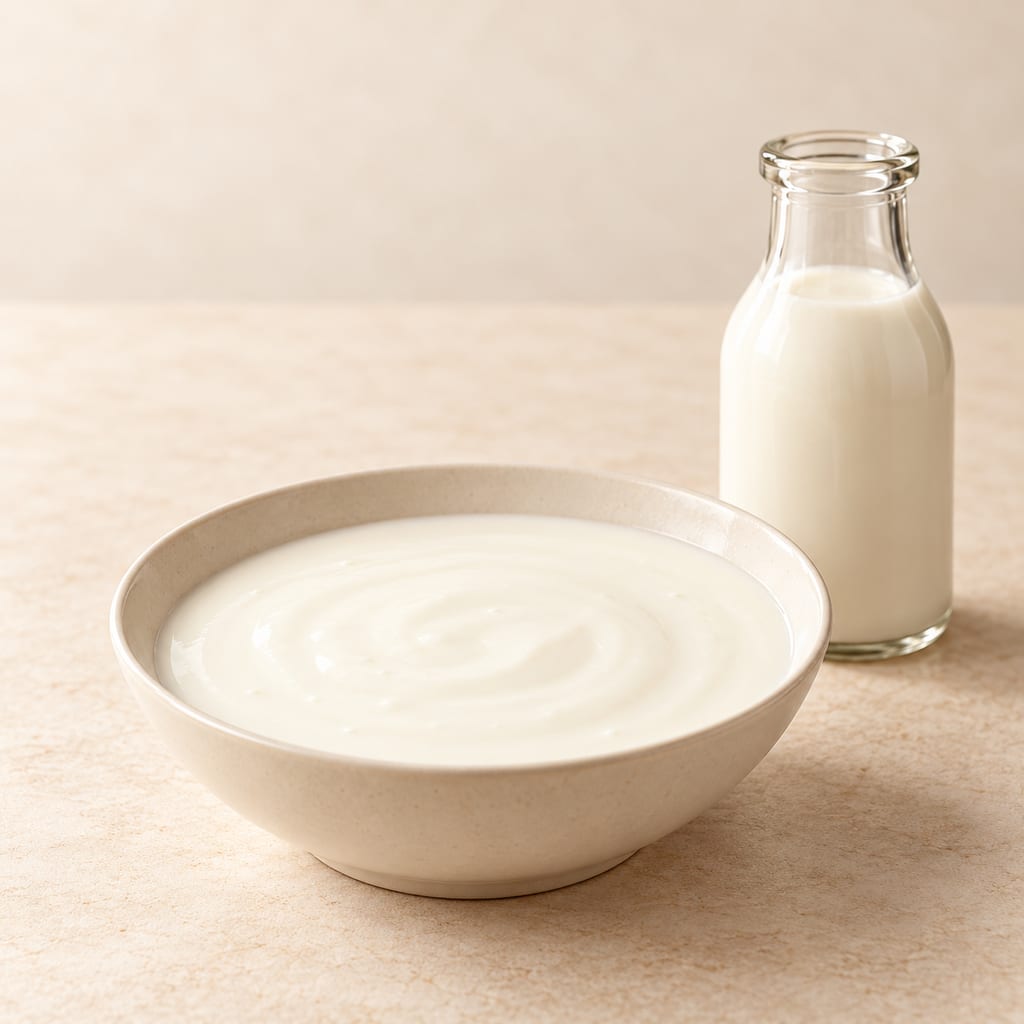
Filmjölk
Filmjölk is a Swedish cultured milk with mild acidity and a spoonable body. This recurring batch uses filmjölk from the previous batch to culture fresh milk.
 FermenteaWhere food goes to change
Traditional method
Långfil · Långmjölk · Tätmjölk · Tättmjölk · Tätmilch · Tjockmjölk · Segmjölk · Källarmjölk · Sätmjölk · Sættemelk · Tettemelk · Tettemjølk · Tjukkmjølk · Tjukkmelk · Tette milk · Thick milk · Ropy fermented milk · Stringy cultured milk · Nordic ropy milk · Økologisk Tjukkmjølk fra Røros
Långfil and tettemelk are traditional Swedish and Norwegian cultured milks with a mild sour taste and a stretchy texture produced by ropy lactic acid bacteria.
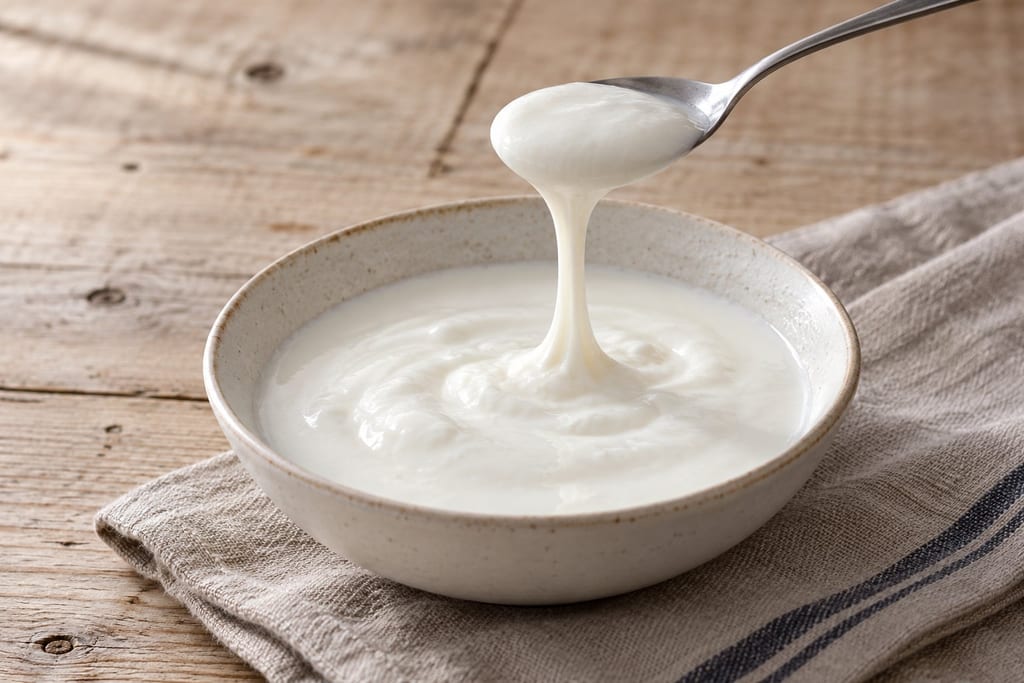
Långfil and tettemelk are northern Scandinavian cultured milks known for how they stretch. Where ordinary cultured milk sets to a short curd, these develop a viscous, elastic body that can be drawn into long threads on a spoon. Långfil is the Swedish name, with långmjölk and tätmjölk as relatives; in Norway the words are tettemelk or tettemjølk, and tjukkmjølk belongs especially to the Røros district. They are close but not one recipe or one culture.
The ingredients are milk and a living starter, Swedish täte and Norwegian tette. A suitable starter holds bacteria that make extracellular polymers, which give the ropy body. Lactococci lead, above all strains long called Lactococcus lactis subsp. cremoris, now Lactococcus cremoris, and they also ferment lactose to lactic acid for the sour taste and thickening. The milk is mild and cleanly sour, white to cream, like a thick pudding when freshly set and more fluid when stirred or shaken. The Norwegian dairy information service calls tettemelk full-bodied and slightly chewy, and the strings are intended, not spoilage.
Households kept the culture alive by moving a little finished milk into fresh milk, and borrowed starter from a neighbour if their own was lost. Tradition also ties the first culture to butterwort, Pinguicula vulgaris, tettegras in Norway and tätört in Sweden. Researchers have found lactococci and exopolysaccharide genes on butterwort leaves, which does not make collected wild leaves a reliable or safe way to ferment milk.
Långfil and tettemelk sit in a Nordic family of mesophilic cultured milks with Swedish filmjölk and Finnish viili, and they are not interchangeable. Ordinary filmjölk lacks the long texture, and traditional viili may carry a surface layer of Geotrichum candidum that långfil and tettemelk do not need. What defines them is a maintained, ropy lactic starter used on milk, usually cow's milk.
Ropy cultured milk is documented in northern Scandinavia from at least the early eighteenth century. Jonas Ramus linked tettegras to thickened milk in his Norriges Beskrivelse of 1735, and Carl Linnaeus met string-forming fermented milk on his Lapland journey in 1732 and noted the practice of putting a little finished milk into another batch. Nils Gisler described tätmjölk preparation in 1749 and Johan Ernst Gunnerus wrote a Norwegian dairy treatise in 1774. These attest the practice and not its date of origin.
The tradition mattered where summer dairy work had to carry households through leaner seasons. In Sweden it belonged to northern and central farming districts and the summer pasture dairies, fäbodar, and the Swedish Institute for Language and Folklore holds accounts of retained starter, its passing between households and storage in cool buildings. A Haverö recipe in Medelpad, collected by Stina Sahlin from J. Olsson in 1897, specifies skimmed milk and retained tätte, and a Leksand account of 1928 describes keeping a culture going by daily renewal.
Norway's protected-name regulation records tjukkmjølk in Røros and Nord-Østerdal from at least the 1850s, as an important food for mining families. Both Norwegian and Swedish records describe keeping starter on pieces of linen or cotton dipped in cultured milk and dried, a way to carry a living culture before refrigeration.
The butterwort story is more tangled. Older descriptions use its leaves to start fermentation, though attempts to repeat it often fail. Kjell Furuset argued in 2008 that the plant's protein-coagulating enzymes belonged to an older, drained-milk preparation and are not needed for modern ropy tettemelk, and a 2016 dairy microbiology study found Lactococcus and polysaccharide genes on butterwort leaves, which makes a microbial link plausible without giving a dependable wild starter.
Industrial dates are firm. Arla records commercial Swedish långfil from 1965. In Norway, local tette cultures were collected and compared in 1995, Rørosmeieriet began production in 1996, and the name Økologisk Tjukkmjølk fra Røros was protected in 2004, with a culture combining three regional starters from Røros, Os and Tolga.
Two microbial jobs give långfil its character: making lactic acid and making extracellular polymers. The main organisms are mesophilic lactococci, with other lactococci and small numbers of Leuconostoc in mixed cultures, and yeasts reported in traditional Nordic milks though no yeast is needed to explain normal långfil or tettemelk.
Lactococci split lactose with beta-galactosidase, take the sugars through glycolysis, and lactate dehydrogenase turns pyruvate into lactic acid while regenerating NAD+. As acid rises, colloidal calcium phosphate dissolves from the casein micelles, the network loses stability, and near pH 4.6 the proteins gel. That explains souring and curd, but not the long strings.
The strings come from bacterial exopolysaccharide, which raises viscosity and gives an elastic, thread-forming body. A 1991 study isolated a slime-forming strain, Lactococcus lactis subsp. cremoris LAPT 3001, from Swedish långfil; its purified capsule contained rhamnose, glucose, galactose, glycerol and phosphorus and was read as probably deacylated lipoteichoic acid. That describes the strain and not every ropy culture. Polymer output depends on strain genetics, growth conditions and the milk, so a generic yoghurt culture can acidify and thicken the milk while losing the defining texture.
Butterwort brings in a separate mechanism: its leaves hold protein-degrading enzymes that can coagulate milk, which is enzymatic curdling and not acidification or polymer production. In 2016 researchers checked 20 Pinguicula vulgaris leaf samples from five Norwegian places and four commercial tettemelk samples, found Lactococcus on every leaf and lactococcal EPS-associated genes on 14. DNA detection does not show that untreated leaves make safe milk, and the finished product should be made with an authenticated active culture.
The ingredients are milk and an established ropy starter. Cow's milk is the usual base; whole milk gives a fuller product, and skimmed milk was common historically because cream was kept for butter. The starter supplies the lactococci that acidify and make the strings, and an ordinary yoghurt or filmjölk starter is not necessarily suitable.
The household recipe here is the Haverö one: 3 litres of skimmed milk and 1 decilitre of fresh tätte, meaning retained thick cultured milk. The milk is warmed to 15 to 18 C, the tätte is mixed in, and the milk stands in a warm room for a day to set, then goes to a cold cellar. The text claims the finished milk kept as long as six months in a suitable cellar, a storage custom and not a modern shelf life. It says nothing on pasteurisation, which predates the recipe, and gives no room temperature for the day's standing.
A Leksand account of 1928 mixes three or four tablespoons of mature tätmjölk into a litre of fresh milk held at about 15 to 20 C and expects the next day's milk to be thick. It says the culture must be renewed regularly and that the stringiness disappears if the starter is neglected.
Norway's protected Røros product gives a controlled comparison: organic milk, skimmed and pasteurised but not homogenised, a traditional tette culture at 0.5 to 1.5 per cent, held at 20 to 23 C for about a day until the consistency develops, filled into cartons on the day and fermented in a controlled facility, with the culture renewed regularly. These are specifications for a named Norwegian product, not a Swedish långfil recipe.
Each step has a job. Pasteurisation cuts milk-borne hazards, cooling before inoculation protects the starter, mixing spreads the bacteria, controlled incubation lets acid and polymer develop, and refrigeration slows change. Leaving the set milk undisturbed keeps the gel coherent, though the finished milk may be stirred. Butterwort expresses a traditional belief and is not a modern starter or safety method.
Swedish records describe a family of ropy milks and not one fixed product: långmjölk, tätmjölk, tjockmjölk, segmjölk and källarmjölk. They are tied to central and northern Sweden and seasonal summer pastures. In some districts the milk was skimmed first and elsewhere richer milk was used, and texture, acidity and storage depended on the culture and household. The commercial term långfil does not reproduce every historical version.
The archive records differences in detail. The Haverö recipe uses skimmed milk and fresh tätte, the Leksand account describes a culture renewed with fresh milk each evening, and a 1939 collection from Valbo in Gästrikland remembers making starter from butterwort gathered near the summer pastures and adding milk in stages until it turned stringy. They are ethnography, not controlled microbiology.
Norwegian tettemelk covers the Røros and Nord-Østerdal tradition and northern variants, and tettemjølk and tjukkmjølk are broadly similar products. Store norske leksikon names kjellermelk as a related cellar-stored milk, generally less viscous, and settmelk as a concentrated preparation with whey removed, which is not the same as ordinary undrained tettemelk.
Økologisk Tjukkmjølk fra Røros is the most standardised version. In 1995 local groups gathered and compared household starters, the commercial culture drew on three traditions from Røros, Os and Tolga, production began in 1996 and protection followed in 2004. It is sold at different fat levels, including 1.5 and 4 per cent, keeping the mild acidity and elastic texture. Finnish viili and Swedish filmjölk are related but separate products.
It is eaten from a bowl or stirred until drinkable. Fresh milk can be as thick as a pudding, and shaking or stirring breaks the gel. The flavour is mildly sour and aromatic, and the basic milk needs no sugar or flavouring.
Swedish records put it in ordinary meals. The 1897 Haverö recipe says the tjockmjölk was eaten alone or with porridge, bread or potatoes at midday or evening in warm summer weather, and other folklore accounts use cultured milk with grain foods and as a refresher during farm work. Røros dairy material describes eating tjukkmjølk plain, with flatbread or with breakfast cereals, and the current product suggests muesli, berries and porridge, smoothies and breakfast bowls.
Rørosmeieriet also cooks with it in waffles, sveler, dressings, dips, soups, sauces, marinades and desserts. In baking the milk adds moisture and acid, which can react with bicarbonate of soda to give gas. Strong heat may destabilise the acidified protein, so it behaves differently in cold sauces and hot dishes.
The culture itself was a household resource: a little finished milk was kept to start the next batch, neighbours swapped starters, and accounts describe drying culture on textile for later use or travel. That preserved the means of making more cultured milk, but its safety and viability were not guaranteed. Långfil and tettemelk should be kept apart from strained curds, skyr, kefir and viili when indexing dishes.
A good batch smells mildly acid and cleanly of milk, and when a spoon is lifted the milk stretches into threads. How stringy depends on the starter and process. Norway's Røros specification describes a firm, full-bodied, pudding-like product that thins when stirred or shaken. A less elastic batch may still be properly soured milk without the defining character.
Loss of stringiness usually points to the culture. Ropy texture needs bacteria that keep the ability to make extracellular material, and a plain lactic starter will acidify milk without strands. Temperature, milk, starter age and repeated propagation also matter, and the Leksand account records the stringiness fading when the culture was neglected. Adding generic yoghurt culture does not restore a lost ropy trait.
A batch that stays thin and sweet has not acidified enough: inactive starter, wrong temperature, contamination or poor handling. A very sour, separated or grainy one has gone past its endpoint or the gel was disturbed. The ropy polymers hold water but cannot make up for every process failure, and both acid and consistency count in judging a batch.
Mixed traditional communities can include lactococci, leuconostocs and occasionally yeasts or moulds, but vigorous bubbling, swollen containers, alcoholic smell or visible mould are not characteristics of modern långfil or Røros tjukkmjølk, and surface growth that is normal on some viili is no reason to accept mould here. Do not repair a poor batch by re-warming or adding starter of unknown character.
Butterwort needs caution: the 2016 study found Lactococcus DNA in all 20 leaf samples and EPS genes in 14, among other bacteria, which supports a possible historical source but does not make a leaf a safe starter. Wild-leaf inoculation should not stand in for an established food-grade culture.
The historical six-month cellar storage and Rørosmeieriet's shelf life for its packaged product do not carry over to homemade milk. Raw milk can carry Campylobacter, pathogenic E. coli, Listeria, Brucella and Salmonella. Use pasteurised milk, clean equipment, a characterised starter, a verified acid endpoint and prompt refrigeration. Sourness, stringiness and a history of successful backslopping are not proof against pathogens. GABA has been measured in tjukkmjølk, which does not establish a particular health benefit.
Documented from the early eighteenth century; invention date unknown.
Traditional household production predates pasteurisation; raw milk may carry Campylobacter, Salmonella, pathogenic E. coli, Listeria and others that fermentation does not reliably remove.
Hazard sourceA retained culture may differ from a tested commercial one; a starter that makes acid does not necessarily make the ropy polymers, and texture cannot establish safety.
Hazard sourcePinguicula vulgaris leaves carry Lactococcus and polysaccharide genes but also other environmental microbes, and untreated wild leaves are not a validated or safe starter.
Hazard sourceThe recipe says only a warm room; poor or fluctuating temperature can delay acid and let unwanted microbes grow.
Hazard sourceMilk may thicken without reaching the acidity of a controlled cultured-dairy process; sour smell and stringiness do not prove safety.
Hazard sourceContainers, utensils, hands and the surroundings can contaminate a retained culture; drying starter on cloth or keeping it in wooden vessels is not validated sanitary handling.
Hazard sourceRepeated transfers can shift the microbial community so that a starter still acidifies but loses the ropy trait.
Hazard sourceFinished långfil is perishable; an unmeasured cellar is not suitable modern storage.
Hazard sourceGas, unusual surface growth or offensive smell may signal a changed population and are not part of the intended ropy fermentation.
Hazard sourceLactic fermentation does not remove all lactose or destroy cow's-milk allergens.
Hazard sourceUse commercially pasteurised milk.
Control sourceUse an authenticated food-grade ropy culture with known handling and incubation.
Control sourceKeep to the documented proportions when describing the Haverö process.
Control sourceWarm the milk before inoculation as the recipe says.
Control sourceFor the protected Røros process, use its defined culture and incubation.
Control sourceVerify acidification in a validated process.
Control sourceUse clean containers and protect the milk from contamination.
Control sourceRefrigerate the finished milk promptly.
Control sourceDo not substitute wild butterwort leaves for a food-grade starter.
Control sourceThis archival 1897 Swedish recipe has not been validated as a modern home protocol.
The 15 to 18 C value is for warming the milk; the fermentation room temperature is not given.
The one-day standing period is not a universally safe incubation time.
Use pasteurised, not raw, milk.
A true reproduction needs an active ropy tätte; ordinary yoghurt or filmjölk may acidify without the long texture.
Do not build a starter from organisms named in research papers.
Do not collect butterwort or other wild plants to inoculate milk.
A stringy texture does not guarantee enough acid.
A pH below 4.6 does not prove an unvalidated fermentation is free of pathogens or toxins.
Do not extend a failed fermentation or rescue it with unidentified starter.
Discard on gas, mould, offensive smell or odd colour; some hazards leave no sign.
The historical six months of cellar storage is not a modern shelf life, and Rørosmeieriet's 80-day best-before applies only to its packaged product.
Repeated backslopping does not guarantee a stable, safe starter.
Långfil, tettemelk, viili and filmjölk are not microbiologically interchangeable.
The milk still contains cow's-milk allergens and some lactose.
Region-level.
A quantified household recipe.
Describes keeping a culture by daily inoculation.
Memories of butterwort starter.
Country-level; later made with selected cultures.
Documented in the protected-name regulation.
Two of the three regional cultures in the Røros product.
Filmjölk is a Swedish cultured milk with mild acidity and a spoonable body. This recurring batch uses filmjölk from the previous batch to culture fresh milk.
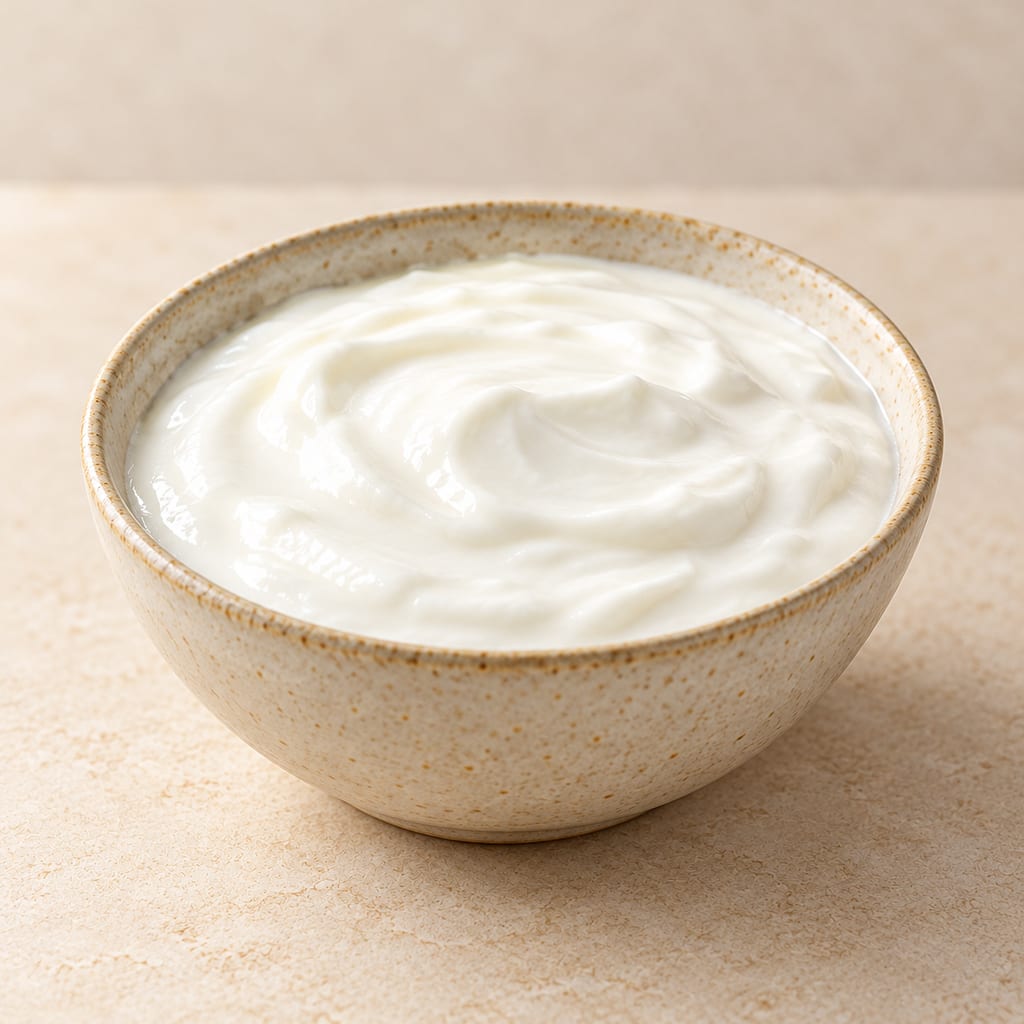
Katyk is a traditional fermented milk of Turkic-speaking peoples, made by souring heated milk with lactic bacteria, often with a spoonful of the last batch, into a thick, sour curd.
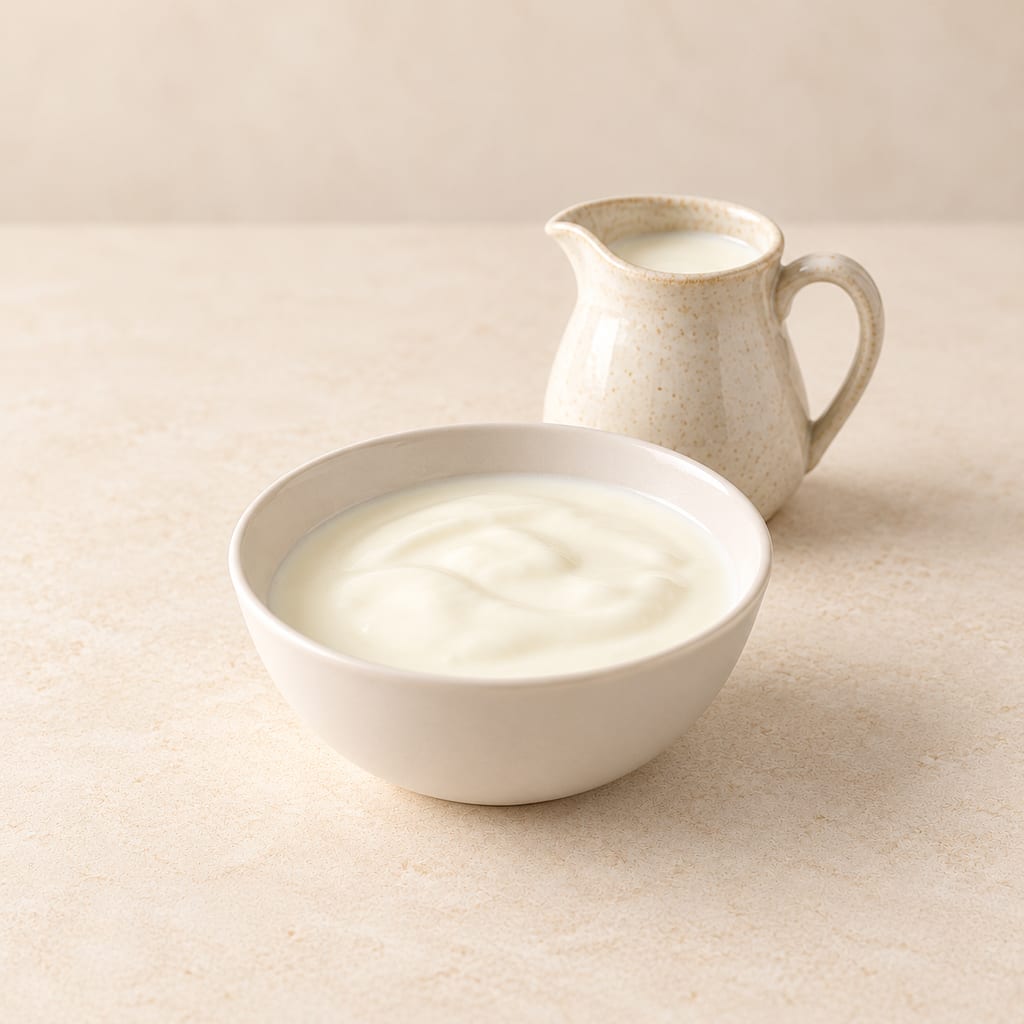
Viili is a Finnish cultured milk with a soft set and, in its western form, a stretchy texture. This small recurring batch uses a spoonful of previously cultured viili.
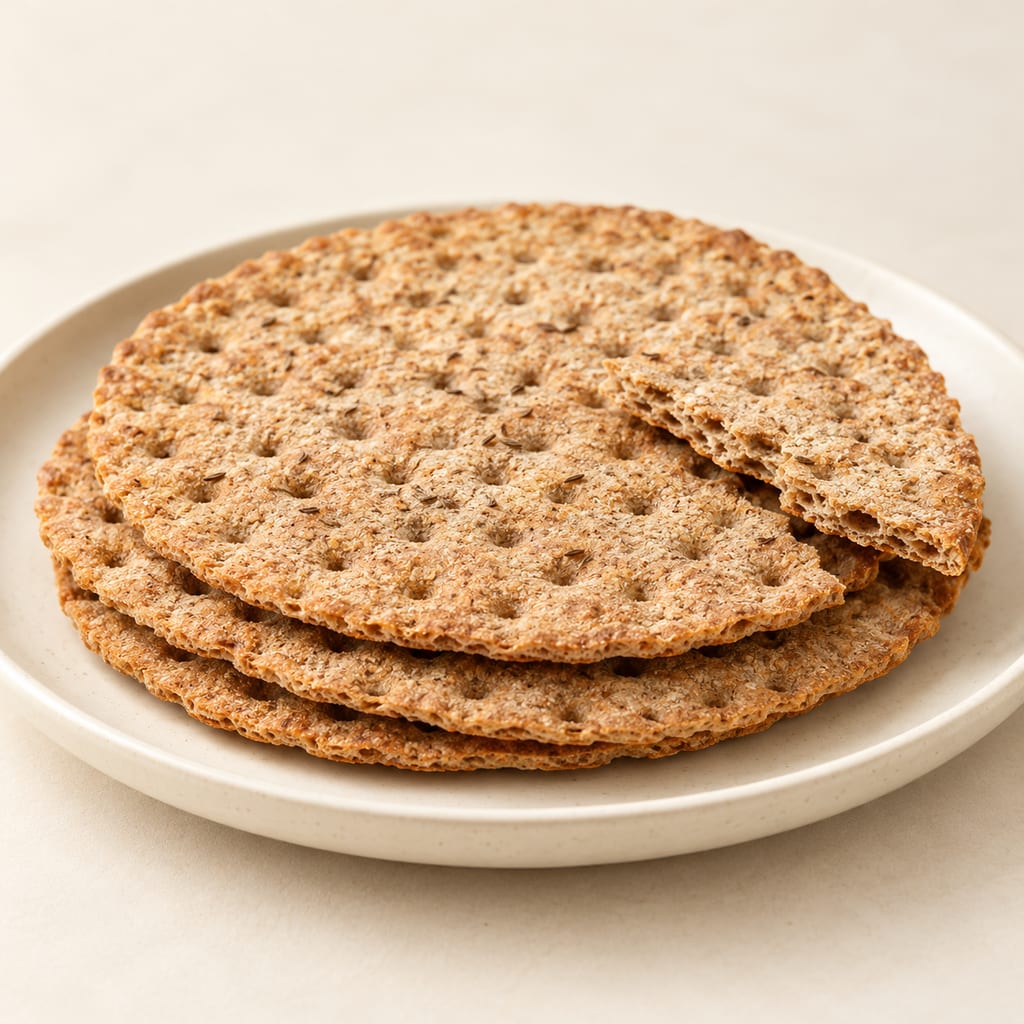
A Swedish home batch of eight thin rye-and-wheat crispbreads, yeast-risen once and baked until hard.
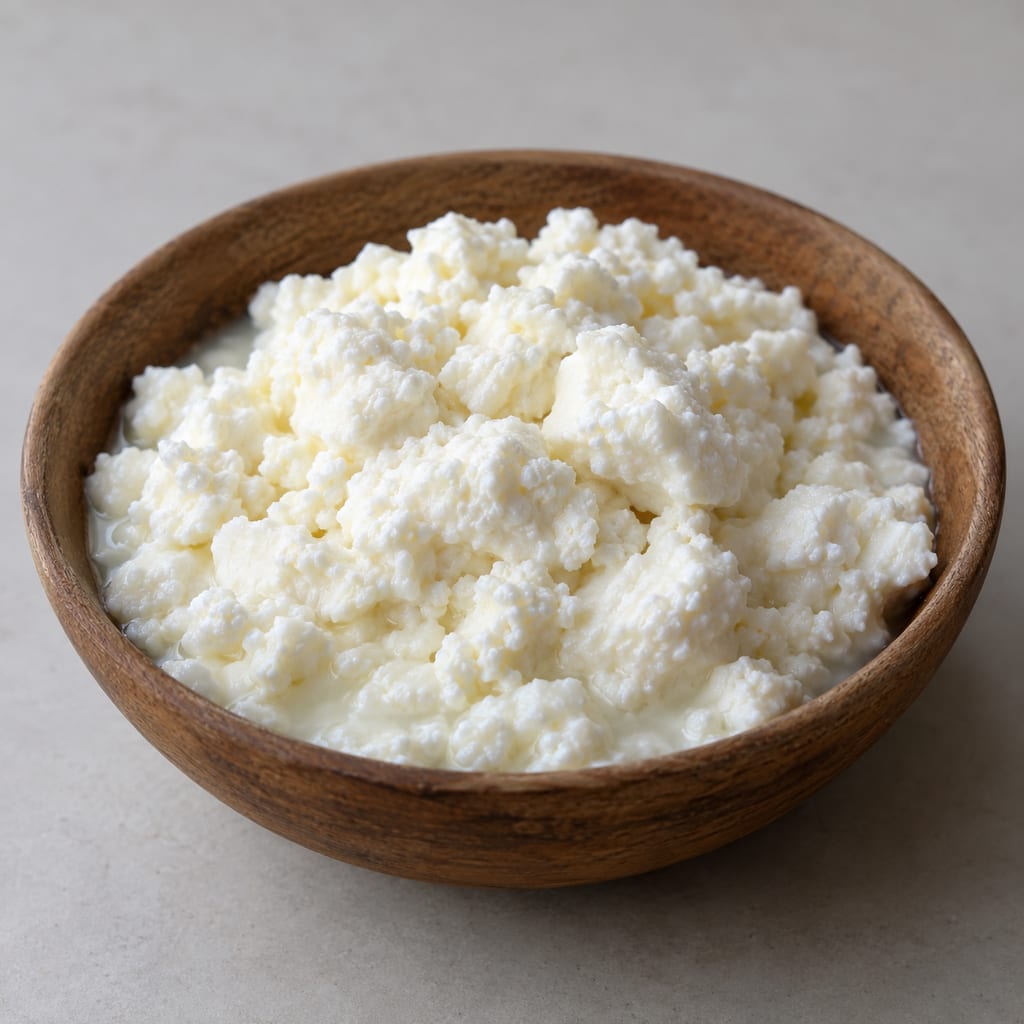
Aarts is a soft Mongolian curd made by draining boiled fermented yogurt; it remains wet, unlike aaruul, which is dried.
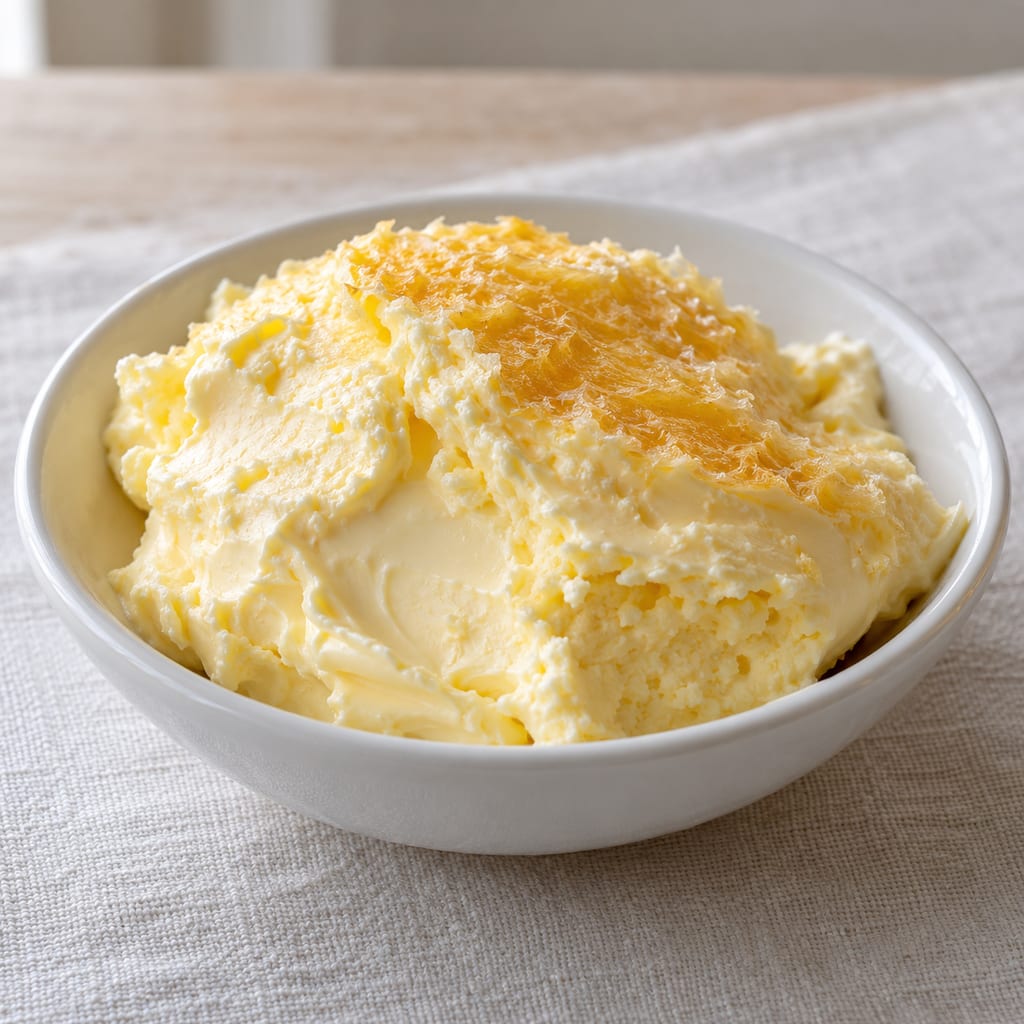
High-fat cream scalded below boiling for at least an hour until a thick crust forms, then cooled hard so the crust sets and the cream beneath thickens.
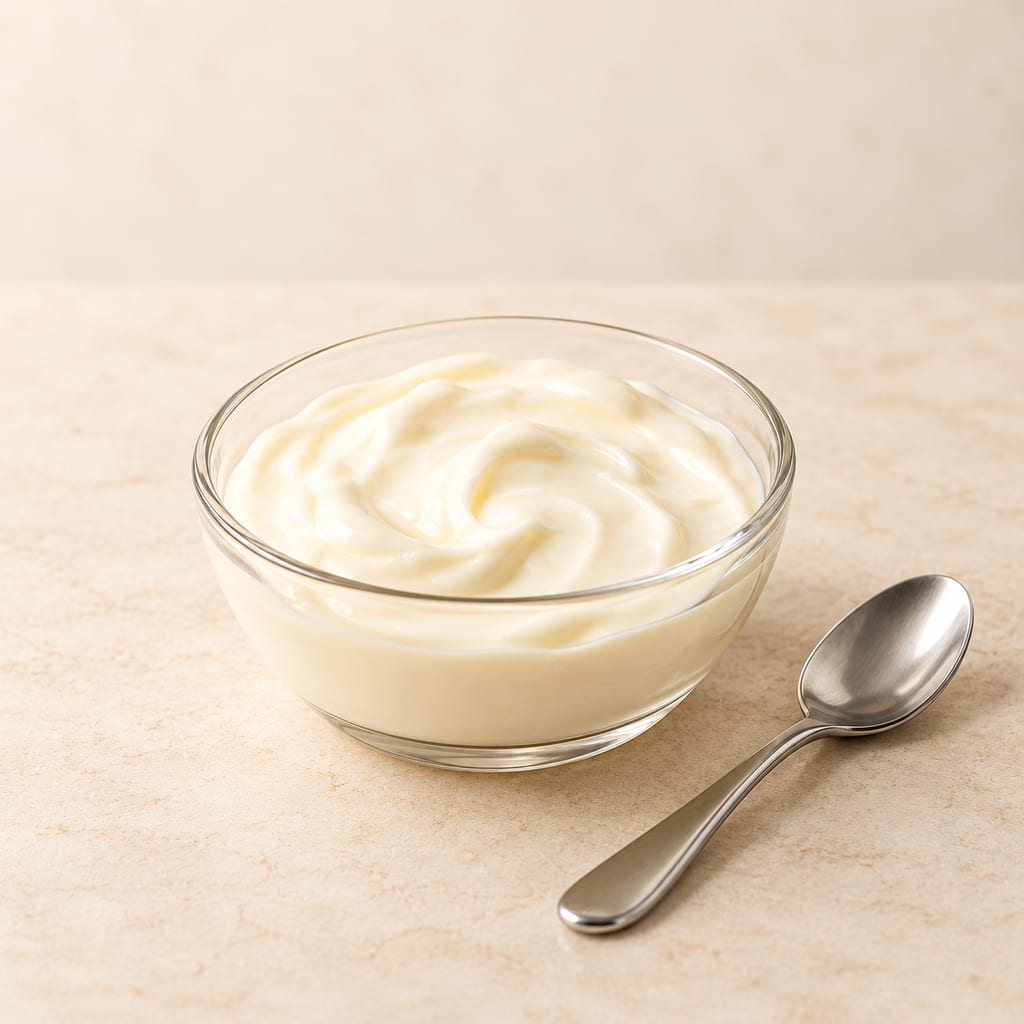
Crème fraîche is cream soured by lactic cultures into a thick, mild topping. It suits fruit and desserts as well as soups, sauces and other savoury dishes.
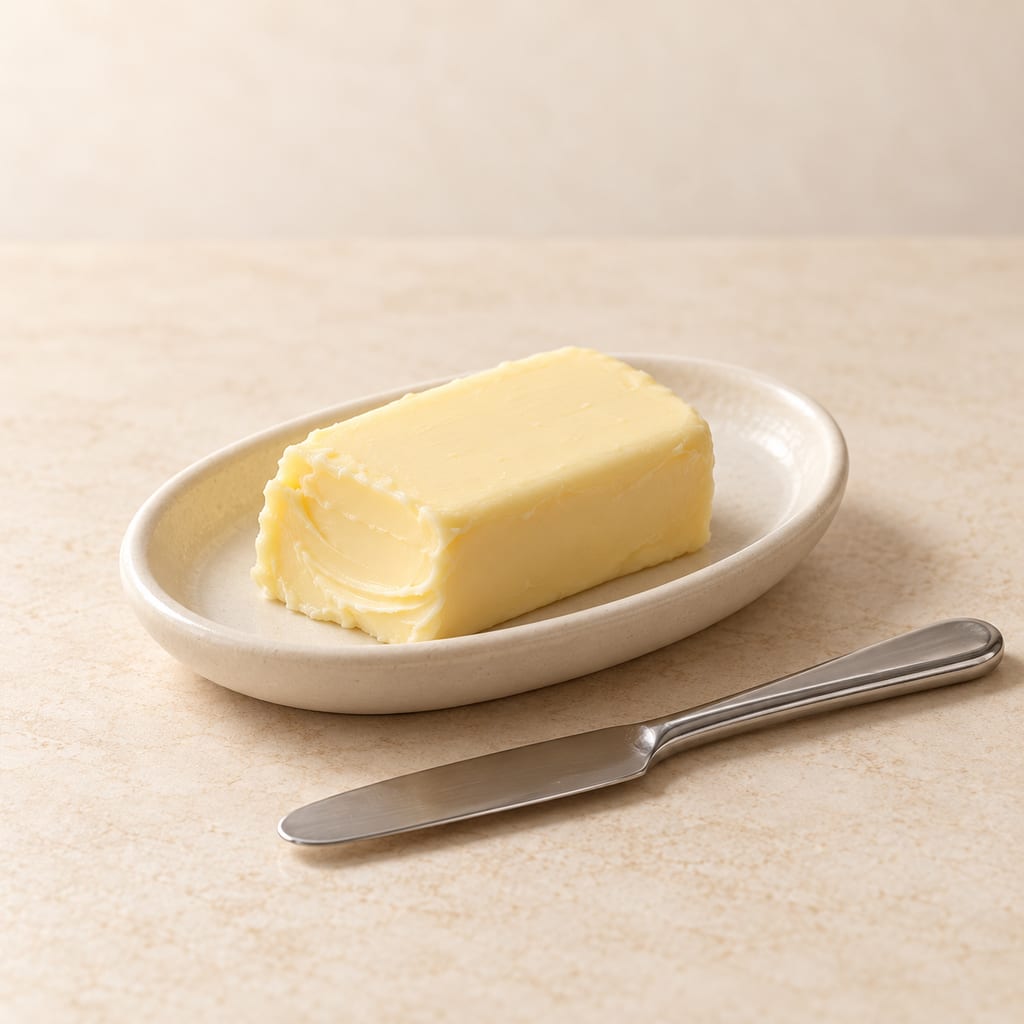
Cultured butter is churned from cream soured with lactic cultures. Its lightly tart flavour comes from the cultured cream, which separates into butter grains and buttermilk.
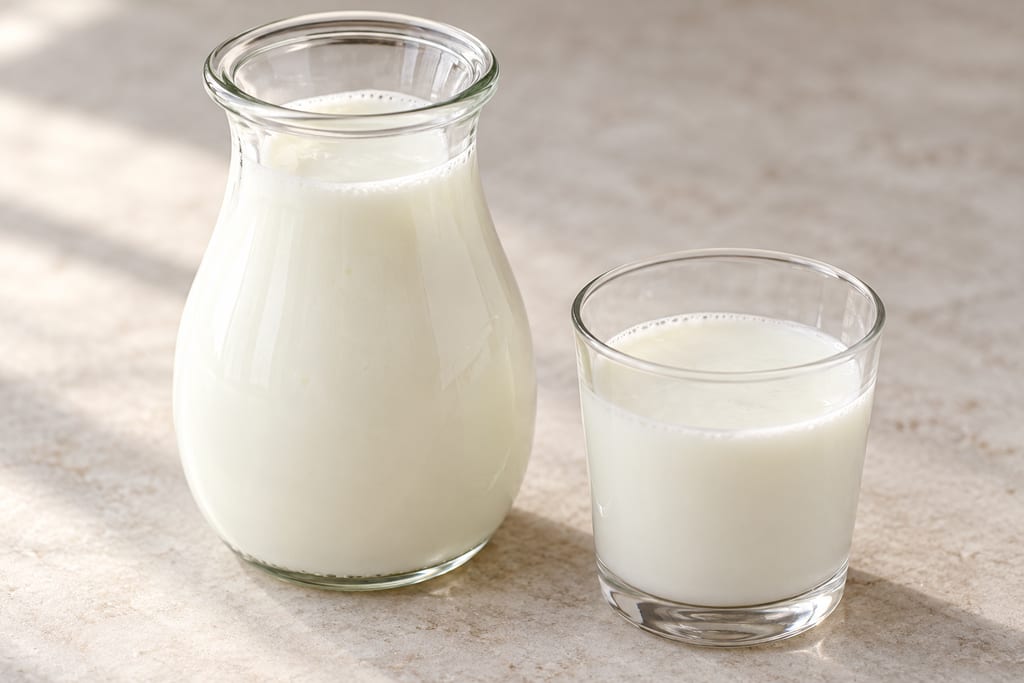
Cultured buttermilk is skim milk soured with a lactic starter into a tangy drink. This Canadian home method sets the milk without churning cream.
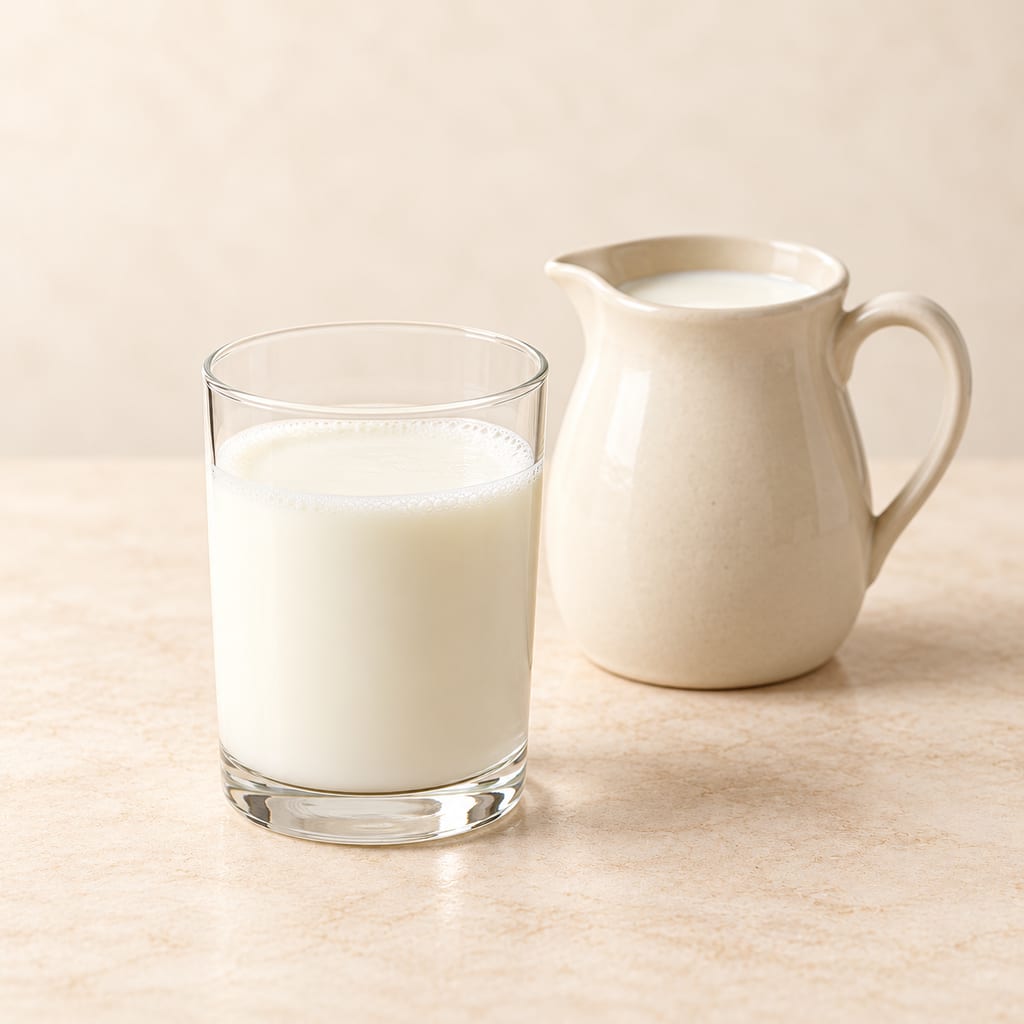
Milk thickened with a packet of buttermilk culture makes a tangy drink and a baking ingredient. This warm-incubated version uses whole milk.
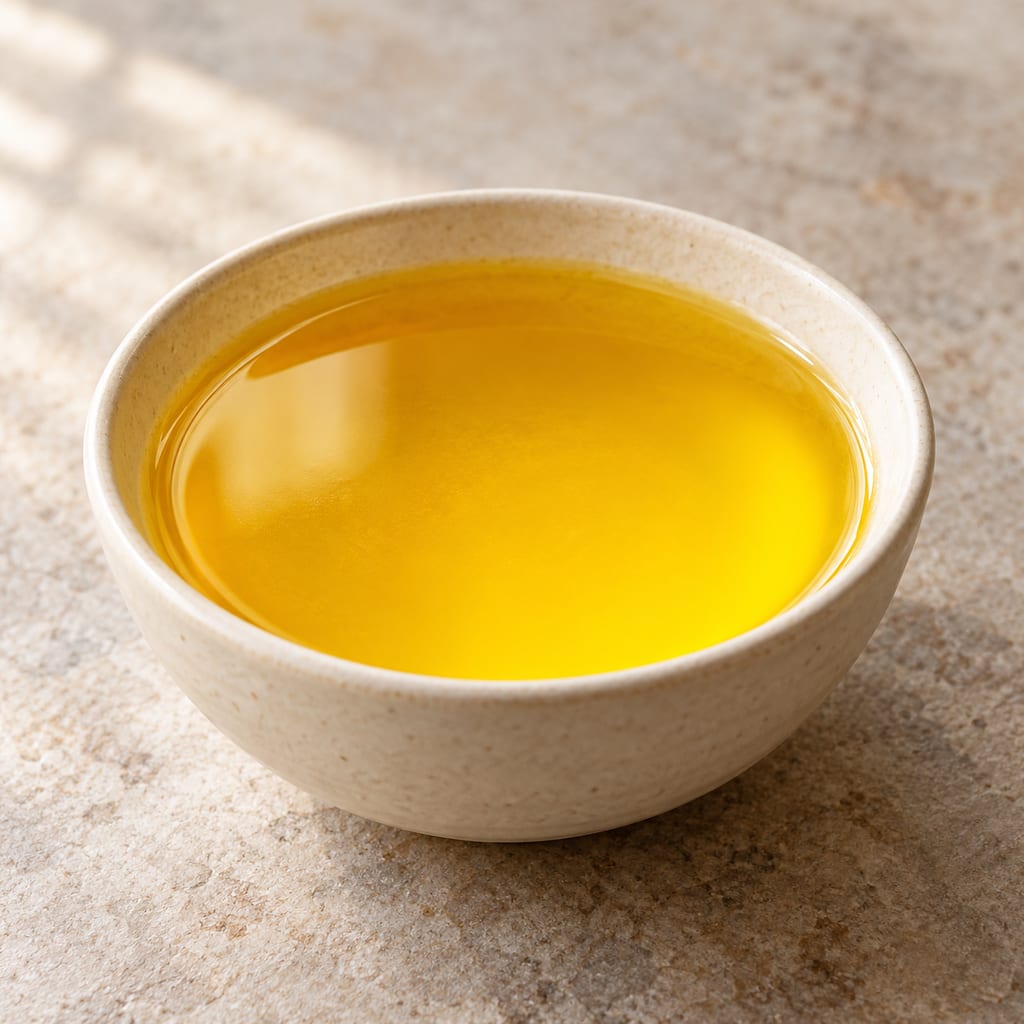
Butter heated until most water leaves and the milk solids separate, giving a fat that keeps far longer than butter. Rendering applies the same heat to animal tissue to make lard and tallow.
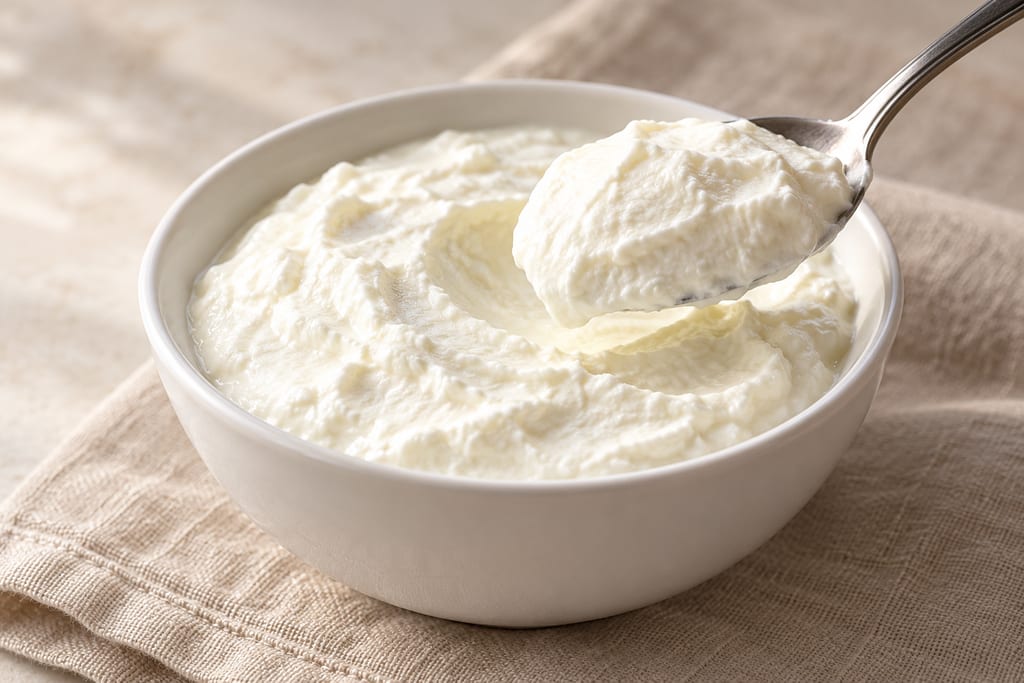
Greek-style strained yogurt is cultured whole milk drained through cloth to remove whey. This modern Utah home method makes a thick yogurt from a gallon batch.

A gelling polysaccharide extracted from red seaweeds, sold as kanten strips or powder; it sets firm at a low concentration and stays solid until about 85 °C.

A Dominican table and seasoning condiment of sour orange juice, mixed with lime and salt and bottled raw; garlic, oregano or a hot pepper may be added for meat or a spicier bottle.

Cicerbita alpina is an alpine perennial whose tender shoots and leaves have been eaten raw or cooked. Sámi milk preparations and modern Carnian dishes are distinct uses, with serious identification and preservation limits.

Japanese skipjack tuna cooked, then repeatedly smoked and dried over a wood fire by the hand-fired tebiyama method into a hard block for shaving into dashi: the first stage of katsuobushi.

A Swedish-style spirit vinegar made by fermenting neutral alcohol with live vinegar bacteria, with a separate guide to commercial ättika strengths.

A yeast-raised wheat ring shaped from a firm dough, briefly boiled and baked. This source-batch formula gives a gently malted crust and a chewy crumb.

A warm dip of garlic, anchovy and olive oil, often enriched with butter, that Piedmont serves over a flame with raw and cooked vegetables and bread.

Bechamel is a white sauce of milk thickened with a butter and flour roux, one of the French mother sauces, and the base from which Mornay and other cheese and cream sauces are made.
No community contributions have been published for this entry yet.
Sign in to contribute. Published comments and photos are free to read.
Matkult, Institute for Language and Folklore (Institutet för språk och folkminnen)Method · History
Tjockmjölk från Haverö3 litres skimmed milk and 1 decilitre fresh tätte; milk at 15 to 18 C; a day in a warm room, then a cold cellar
kept up to six months; eaten with porridge, bread or potatoes
Cited in: The record of its past; How it is made and why; Variations; Eating and using it; Reading results and problems
Matkult, Institute for Language and FolkloreHistory · Variation
Långmjölk, surmjölk och kärnmjölknames långmjölk, tätmjölk, tjockmjölk, segmjölk, källarmjölk
Leksand 1928 and Valbo 1939 accounts; Arla introduction in 1965
Cited in: What långfil and tettemelk are; The record of its past; The bacteria and the strings; How it is made and why; Variations; Eating and using it; Reading results and problems
Matkult, Institute for Language and FolkloreVariation
Långmjölk från Hälsinglandregional långmjölk recipe
Cited in: Variations
Mattilsynet, via Lovdata, 2004Method · History
Forskrift om beskyttelse av produktbetegnelsen Økologisk Tjukkmjølk fra Røros som Beskyttet geografisk betegnelseskimmed, pasteurised, non-homogenised organic milk; 0.5 to 1.5% tette; 20 to 23 C for about a day
Røros production from at least the 1850s; culture from Røros, Os and Tolga
Cited in: The record of its past; How it is made and why; Variations; Reading results and problems
RørosmeierietUse · Method
Ofte stilte spørsmål (FAQ)commercial culture and product questions
Cited in: What långfil and tettemelk are; The record of its past; How it is made and why; Eating and using it
RørosmeierietUse · Variation
Økologisk Tjukkmjølk fra Røros 1,5 % fettfat levels; suggested uses with muesli, berries and porridge
Cited in: Variations; Eating and using it
Melk.no, Norwegian Dairy CouncilDefinition
Tjukkmjølktettemelk as full-bodied, slightly chewy and able to form strings
Cited in: What långfil and tettemelk are; Eating and using it
International Journal of Food Microbiology 12, 1991Science
Capsular polysaccharide of a slime-forming Lactococcus lactis ssp. cremoris LAPT 3001 isolated from Swedish fermented milk 'långfil'slime-forming strain LAPT 3001 from långfil; capsule of rhamnose, glucose, galactose, glycerol and phosphorus
Cited in: The bacteria and the strings
Journal of Dairy Science 99, 2016Science · Safety
Short communication: Presence of Lactococcus and lactococcal exopolysaccharide operons on the leaves of Pinguicula vulgaris supports the traditional source of bacteria present in Scandinavian ropy fermented milkLactococcus on all 20 leaf samples; EPS genes on 14
Cited in: What långfil and tettemelk are; The record of its past; The bacteria and the strings; Reading results and problems
Food Standards ScotlandSafety
Know the food facts: Raw milkraw milk hazards; choose pasteurised milk
Cited in: Reading results and problems
Utah State University ExtensionSafety
Homemade Fermented YogurtpH 4.6 or lower; controlled incubation; prompt refrigeration
Cited in: Reading results and problems
Utah State University ExtensionSafety
Tips to Safely Ferment at Homemeasure acidity; control time and temperature
Cited in: Reading results and problems
FoodSafety.govSafety
4 Steps to Food Safetyrefrigerator at 4 C or below
Cited in: Reading results and problems
US National Institute of Diabetes and Digestive and Kidney DiseasesSafety
Eating, Diet, and Nutrition for Lactose Intolerancelactose remains in milk