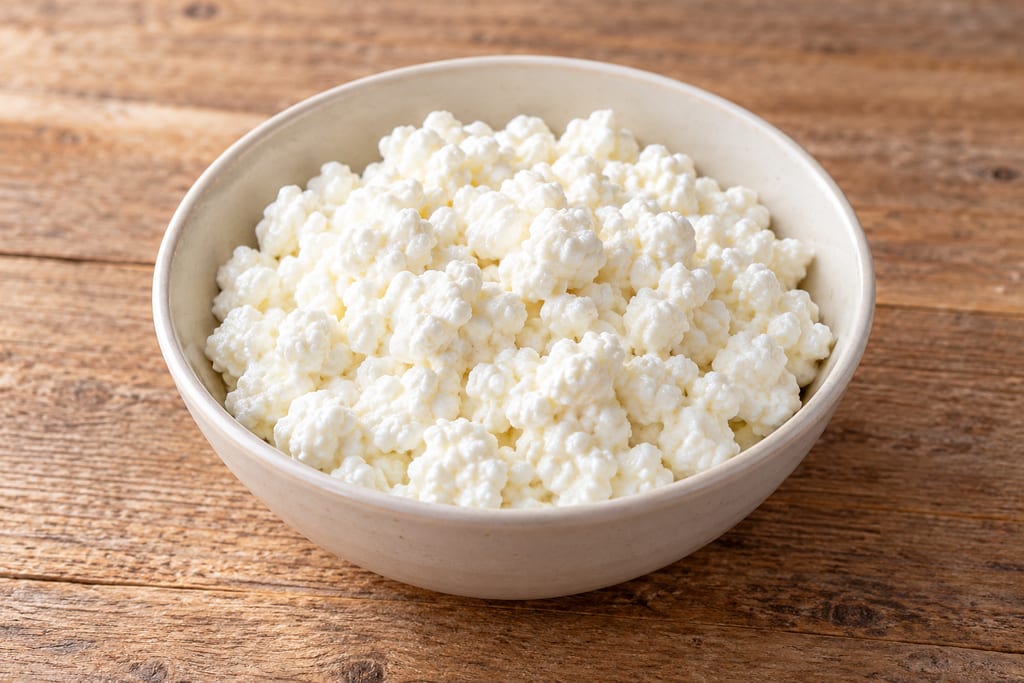
Cottage cheese, long-set
Skim milk is cultured slowly, cut into curds, warmed and drained to make fresh cottage cheese. Cold-water washing softens its flavour before cream and salt are added.
 FermenteaWhere food goes to change
Cultures
A dairy inoculum grown before use to direct souring in household cheese, including acid-set and rennet-set preparations.
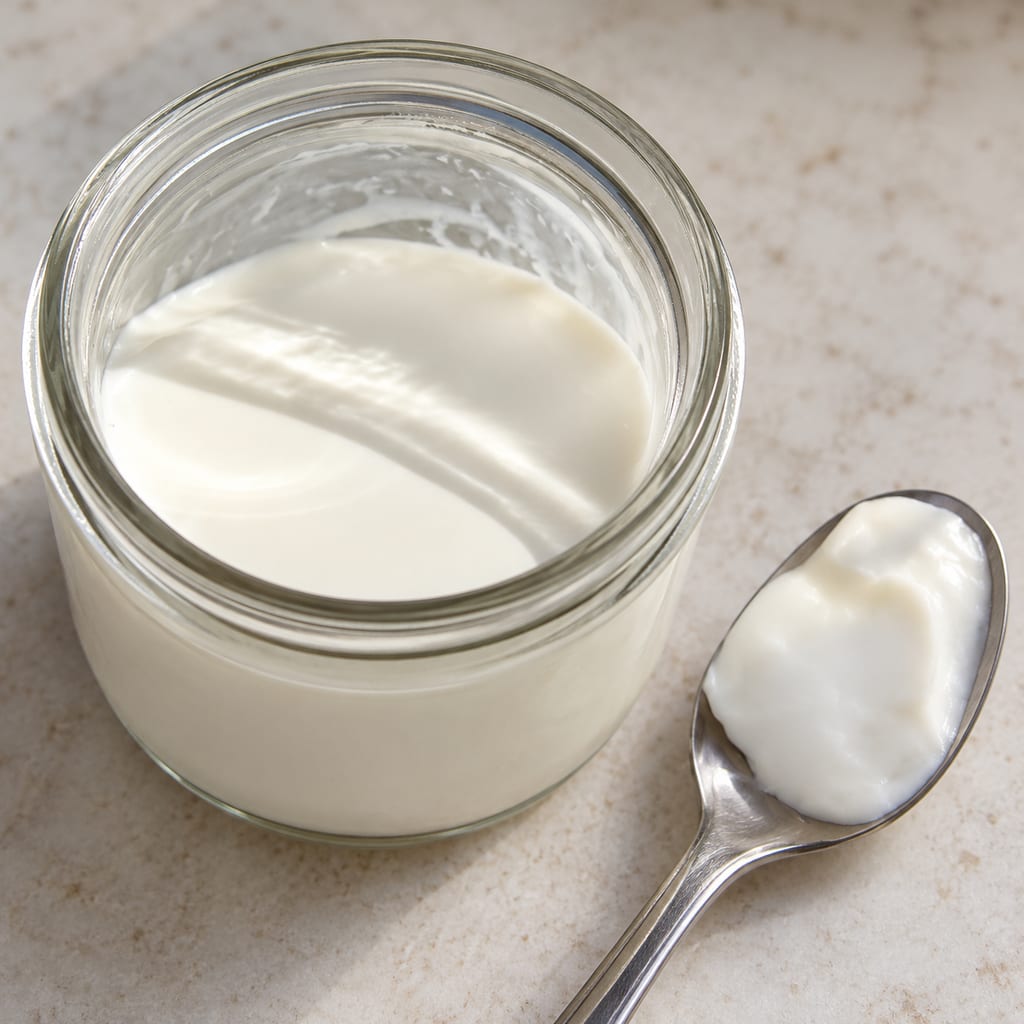
An actively growing dairy starter is an inoculum that has been prepared for use in milk or cream. In the household cheese methods described here, it is measured in millilitres and added to the dairy material before the curd is formed. The word starter names its job: it introduces the culture that directs souring. The words actively growing describe its condition at use, rather than naming a species.
The starter used for these household dairy preparations is cultured milk or reconstituted skim milk, grown to a firm, smooth set. Its strain, microbial blend and commercial packet are unspecified.
This distinction prevents several common confusions. Rennet is a coagulant and has a separate role. Dry starter powder is a preparation from which an active culture may be made. An already cultured dairy food can serve as starter only where a method supports that use. These forms belong to related dairy work, but their quantities and functions cannot be treated as identical.
Dairy fermentation depends on the growth and metabolism of microorganisms. In starter-led production, the maker introduces a selected inoculum rather than relying entirely on whatever organisms arrived with the milk and equipment. This makes culture choice part of the product’s design. The desired pace of acid development and the character of the finished food are connected to that choice.
Technical accounts of cheesemaking describe the shift from natural dairy cultures toward commercially produced starters. Greater consistency became important as production changed in scale and hygiene. A previously fermented milk could carry an established community into another batch, while selected commercial cultures offered a way to make the inoculum more deliberate. Those are different approaches to culture management, not evidence of one universal organism behind every cheese.
The wider history also explains the language of dairy starters. The term can refer to a microbial preparation, a propagated liquid culture or a culture selected for a particular product. An ingredient named only by activity therefore needs its recipe context. The phrase does not tell a reader which packet to buy, which temperature class it belongs to or which flavour compounds it will produce.
A liquid starter is grown in a medium such as milk. A frozen or freeze-dried starter carries organisms in another physical state and comes with its own storage and use instructions. Physical form affects how the material is transported, stored and introduced. It does not by itself establish the organisms’ intended product or their performance in a particular recipe.
Cultures can also be described by composition. A defined culture has known microbial components, while mixed cultures may contain combinations whose exact strain composition is less completely specified. These terms concern what the inoculum contains. They are separate from the everyday observation that a prepared starter has thickened its milk medium.
The older FAO dairy manual groups starters by temperature preference, physical form, composition and intended use. Its classifications help a reader ask the right questions of a product label. They do not identify the Agriculture Canada ingredient, whose culture type is unnamed. A modern mesophilic or thermophilic label should be attached only when the particular culture is documented as such.
Milk supplies the culture with a watery environment containing lactose, proteins, minerals and other components. Lactose is the milk sugar used in lactic fermentation. The proteins also matter to the visible result, because acidification changes how casein particles interact. The medium is therefore both a place for microbial growth and the material that becomes the cultured food.
Reconstituted skim milk is another medium described in the household booklet. It begins with powder and water, so it has a different processing history from fresh liquid milk. Its use for growing starter does not establish that it can replace liquid milk in every cheese formula. A culture medium and the principal substrate of the finished cheese are separate uses with separate evidence.
Preparation of the medium occurs before inoculation. Heating and then cooling it are not stages carried out on a culture already expected to grow in it. The sequence matters: the medium receives treatment first, then reaches the conditions specified for adding the starter. A dry preparation, a treated medium and a finished active culture occupy different points in that sequence.
Lactic cultures ferment lactose and produce lactic acid. As acidification changes milk, casein particles become less stable and can form a network. In an acid-set fresh cheese, that network provides the curd from which whey is later removed. Starter activity thus changes the dairy material before a bag, sieve or draining mould begins its physical work.
In a rennet-set cheese, acid development and enzyme coagulation have distinct roles. The starter changes the milk’s chemistry while rennet acts on casein to enable a different route to gel formation. Their interaction belongs to the selected cheesemaking process. More starter is not simply another way to supply more rennet, and the measured quantities cannot be exchanged.
After setting, cutting, stirring and cooking affect whey loss. Salt and ripening conditions can change the cheese further. The starter helps establish the conditions in which those later stages occur, but it does not cause every change by fermentation alone. Separating biological acid production from mechanical drainage and enzyme action gives a clearer explanation of why cheesemaking has several stages.
Different lactic cultures can contribute different metabolic products. Alongside acid production, technical dairy literature discusses pathways that produce aroma compounds and changes to proteins and fats. Their effects depend on the organisms, strains and conditions involved. A culture selected for a particular cheese therefore contributes to a broader process than simply making milk taste sour.
This does not justify assigning every possible pathway to an unnamed starter. The same general category contains cultures chosen for different products and characteristics. The Agriculture Canada ingredient has no disclosed organism list, so its flavour contribution cannot be narrowed to a specific species or compound profile. Its documented role is to supply active culture within the named household methods.
Flavour also depends on the rest of the make. The milk, curd moisture, salting and ripening conditions influence the finished cheese. An acidifying inoculum is one important input among several. This helps explain why the same broad starter description can appear in different cheeses without making those cheeses equivalent or giving them the same texture and keeping properties.
Home-made dairy products by J. A. Elliott and D. B. Emmons was copyrighted in 1978 and reprinted in 1981. It gives starter culture a place in household dairy work, alongside thermometers, curd-cutting equipment and sanitation. It permits purchased starter and, for products other than yogurt, fresh commercial buttermilk or sour cream as starting materials.
Its starter-growing method heats the dairy medium to 82°C for 30 minutes, cools it to 22°C and adds 10–20 mL starter per litre. It expects a smooth coagulum in 14–16 hours. These are the booklet’s own instructions for its medium and culture context, not a universal propagation schedule or a current validation for every commercially available starter.
The cheese formulas then use active starter in different amounts and conditions. Semi-soft cheese and cheddar-type cheese combine it with rennet; cottage cheese relies on acid coagulation before cutting and heating the curd. The amounts remain part of those recipes. Acidification is their shared function, while rennet use, temperature, timing and curd handling differ by cheese.
Starter activity concerns the course of acidification as well as the eventual appearance of a set. Current Canadian dairy-processing guidance calls delayed acid development a slow vat. It identifies influences including bacteriophages and residues of antibiotics or cleaning agents. These can interfere with the intended culture while other organisms have an opportunity to grow.
Commercial controls therefore monitor acid development against an expected timeframe and require corrective action when it falls behind. This is more specific than simply waiting longer for milk to thicken. The relevant expectations depend on the product and process; the guidance supplies no single replacement time for the unnamed household starter.
The older booklet’s troubleshooting chart also recognizes several causes for a failed or defective culture, including poor culture, contamination and inhibitory material. Its observations are useful evidence of the practical problems the authors addressed. They are not laboratory identification or a safety test. A problem with activity can require replacing the culture or investigating the milk and handling, rather than extending an uncertain fermentation indefinitely.
An active culture is introduced after the medium’s heat treatment, so the equipment and transfer can affect what enters the next stage. Canadian processing guidance emphasizes controlled treatment of the medium, hygienic preparation and proper storage. It also directs processors to follow the manufacturer’s preparation instructions. The same physical sequence explains why a clean starter cannot compensate for contaminated equipment.
For a purchased culture, read its intended product, ingredients, physical form, storage directions and preparation instructions. A direct-use powder may have different directions from a culture intended to be propagated first. Measuring one as though it were the other changes the inoculum. Neither the old booklet nor the generic ingredient name establishes that substitution.
Choose pasteurized dairy material where the preparation requires it and avoid contact with raw-milk utensils. Pasteurization and culture activity do different work: one treats the starting dairy material, while the other directs fermentation afterward. Maintaining the culture requires attention to both the medium and its handling, not only an interest in whether it eventually thickens.
A starter propagated in milk or skim milk powder contains milk proteins and is relevant to milk allergy. A commercial powder may contain carriers or other ingredients, so its label must be checked rather than assuming it is pure bacteria or dairy-free. Fermentation does not establish that lactose has been removed, and the unnamed culture has no measured lactose specification here.
The milk used to grow a starter also travels into the finished preparation. For someone checking ingredients, the small inoculum is still part of the recipe. Its role as culture does not remove the need to account for that dairy medium.
Storage requirements depend on the preparation. Directions for an unopened freeze-dried packet do not establish the life of a propagated liquid culture. The older Canadian household practice renews the culture with freshly purchased commercial buttermilk or sour cream. In retail fermented-dairy production, acid-tolerant Escherichia coli may grow during fermentation when yogurt saved from a previous batch is used as starter. AFDO recommends a new commercial starter for each retail batch. That prior-batch yogurt practice differs from renewing a household culture with a newly purchased commercial cultured dairy product. Neither establishes a universal storage period for this unspecified active starter.
Its origin, organism composition, activity assay and product-specific shelf life remain unknown. Canada is the setting of the documented household use, rather than a proven birthplace for the culture itself. These limits keep the ingredient useful as an explanation of the named recipes while making clear why a particular starter must be selected through evidence for its intended dairy process.
milk
The Canadian household booklet documents this use; culture organisms, lineage and geographic origin are unspecified.
Skim milk is cultured slowly, cut into curds, warmed and drained to make fresh cottage cheese. Cold-water washing softens its flavour before cream and salt are added.
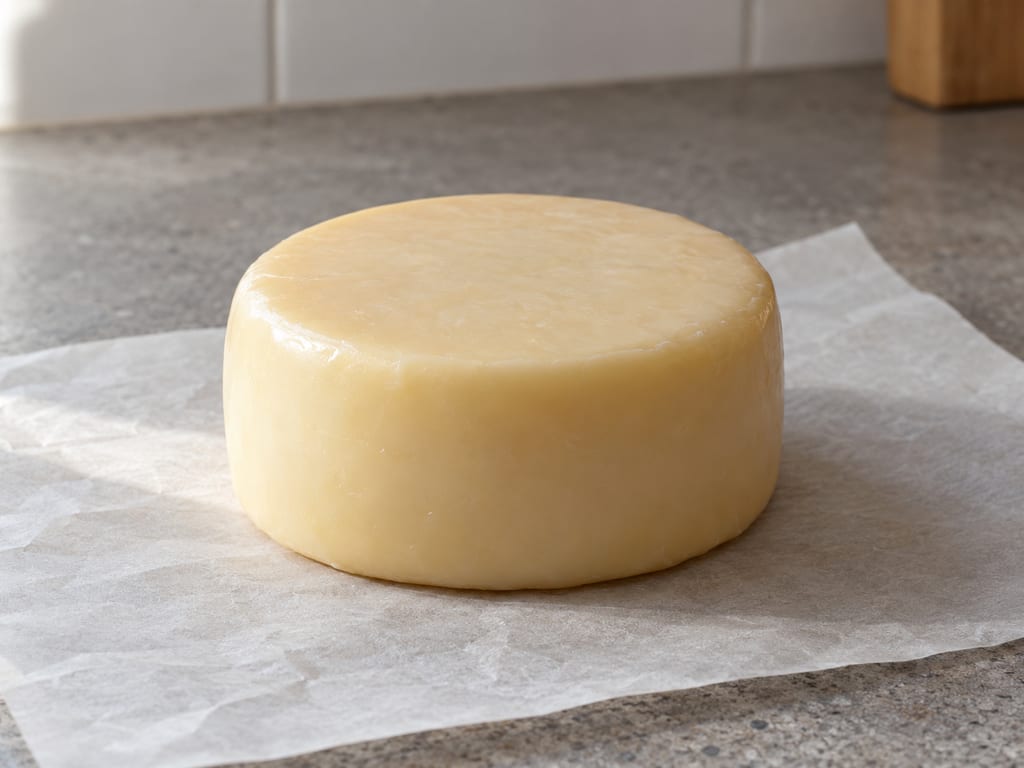
A mild whole-milk cheese set with starter and rennet, drained in a mould, dry-salted and ripened. This small-batch method appeared in Canadian home-dairy guidance.
No community contributions have been published for this entry yet.
Sign in to contribute. Published comments and photos are free to read.
Agriculture CanadaIngredient context
Home-made dairy products, Publication 1669Printed pp.3–6 describe household equipment, sanitation, dairy materials, culture growing and troubleshooting; pp.7–10 cover starter uses, cottage cheese and cream cheese. These are historical household preparations.
Cited in: A culture already at work; A household culture in Canadian print; Activity has to keep pace with the process; Dairy identity, storage and remaining limits
Food and Agriculture OrganizationIngredient context
Small-Scale Dairy Farming Manual, Volume1, Technology Unit10.1: Starter CulturesPages 181–193 explain starter roles, physical forms, classification, growth media and propagation. The manual's culture categories provide general dairy context rather than identification of the unspecified household inoculum.
Cited in: A culture already at work; Liquid, frozen and dried forms; Milk is the growth medium; Preparing and transferring a dairy inoculum
Microbiology Spectrum / American Society for MicrobiologyIngredient context
Mesophilic and Thermophilic Cultures Used in Traditional CheesemakingThe abstract describes starter roles and the historical development of natural and commercial cultures in cheesemaking; it does not identify the culture used in the household preparations.
Cited in: Directing souring rather than waiting for it; Acid production changes the curd; Flavour is more than sourness
AIMS MicrobiologyIngredient context
Lactic acid bacteria as starter cultures: An update in their metabolism and geneticsThe introduction and metabolism sections distinguish selected and backslopped starters, defined and mixed cultures, and general pathways affecting acid, aroma, protein and fat.
Cited in: Directing souring rather than waiting for it; Liquid, frozen and dried forms; Flavour is more than sourness
Tetra Pak, Dairy Processing HandbookIngredient context
The Chemistry of MilkGeneral milk chemistry explains the emulsion, casein and whey proteins, lactose, acid gel formation and heat effects. It provides mechanisms rather than measured endpoints for the household preparations.
Cited in: Milk is the growth medium; Acid production changes the curd
Food and Agriculture OrganizationIngredient context
Small-Scale Dairy Farming Manual, Volume 1, Technology Unit10.3: Small Scale Cheese MakingGeneral cheesemaking instruction distinguishes acid and enzyme coagulation, curd and serum separation, and subsequent curd handling.
Cited in: Acid production changes the curd
Government of Canada PublicationsIngredient context
Home-made dairy products / by J.A. Elliott and D.B. EmmonsThe catalogue identifies the publication's authors and its publication and reprint history.
Cited in: A household culture in Canadian print
Canadian Food Inspection AgencyIngredient context
Dairy processing: Non-thermal processing systemsIndustrial dairy guidance covers acid-development rates, slow-vat causes including inhibitors and phages, controlled starter media, hygiene and following culture-manufacturer instructions.
Cited in: Activity has to keep pace with the process; Preparing and transferring a dairy inoculum; Dairy identity, storage and remaining limits
Health CanadaIngredient context
Unpasteurized or raw milkThe milk guidance explains pasteurization, harmful microorganisms in raw milk and choosing milk labelled pasteurized.
Cited in: Preparing and transferring a dairy inoculum
Health CanadaIngredient context
Milk – A priority food allergenMilk-protein allergy requires ingredient and label checking and differs from lactose intolerance.
Cited in: Dairy identity, storage and remaining limits
Association of Food and Drug Officials; Iowa Food Protection Task Force hosted copyIngredient context
HACCP guidance for specialized processes at retail: Dairy FermentationsRetail fermented-dairy guidance on printed117/PDF123 identifies possible growth of acid-tolerant Escherichia coli when yogurt saved from a prior batch is used as starter, and recommends a new commercial starter for each retail batch. This is retail guidance rather than universal household-starter conditions.
Cited in: Dairy identity, storage and remaining limits